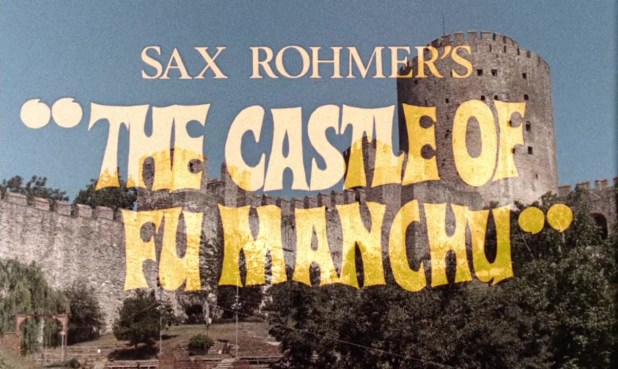
WEIRD WEDNESDAY: Castle of Fu Manchu (1969)

Man, Christopher Lee may rival Donald Pleasence for not being able to say no — I say this with full knowledge that the former turned down Halloween while the latter said yes to that series more than he should have — and here he played Sax Rohmer’s “yellow peril” character of Fu Manchu, who is joined by his just as sadistic daughter Lin Tang. She’s played by Tsai Chin, who was a Bond girl twice in You Only Live Twice and Casino Royale, topped the music charts with “The Ding Dong Song,” and played Auntie Lindo in The Joy Luck Club.

Rosalba Neri is also in this, and you know, as bad as this movie might be, Rosalba Neri is in it. You should be so lucky as to get to spend 92 minutes with her.

This is the fifth and final time that Sir Lee played Fu Manchu, if you can believe that. Also starring in this movie is a substantial amount of pilfered footage, including the entire opening effects sequence from A Night to Remember and the dam bursting sequence taken from Campbell’s Kingdom.

There’s lots of fog, which I appreciate, and a plot about freezing the oceans, which I am also totally down with. Man, is Fu Manchu the good guy?

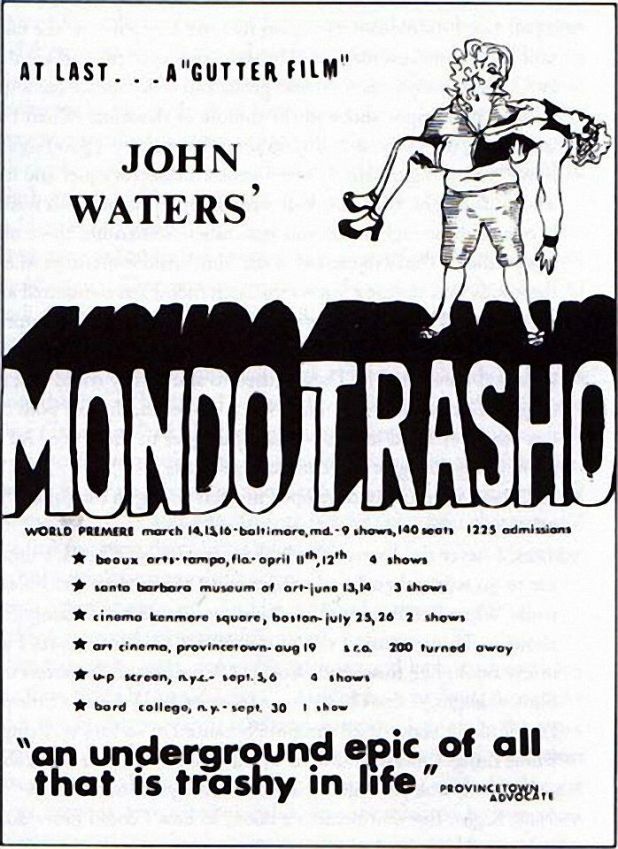
Sizzlin’ Summer of Side-Splitters 2025: Mondo Trasho (1969)

June 30- July 6 Puke Week!: Throwing up isn’t very funny, but making your internet friends watch a puke movie is!

Chickens lose their heads. The Bombshell (Mary Vivian Pierce) rides the bus and reads Hollywood Babylon. A foot fetishist (David Lochary) appears and licks her toes while she dreams that she’s in a fairy tale, which ends with Divine running her over. She’s not dead, so Divine drives her all over Baltimore. Divine then prays to the Virgin Mary, asking her how to be divine and is given a wheelchair to ride The Bombshell around in.

Their car is stolen, they end up in a mental hospital and Mary comes back to give them a knife. She leads a revolt in the sanitarium, gets The Bombshell bird feet that allow her to fly and nearly dies before being given divinity of her own.

Paying tribute to both the mondo genre and Russ Meyer’s Mondo Topless, this movie is filled with music that could never be licensed today. It wasn’t a movie that John Waters, the director and writer of the film, liked, but things would get better or grosser very soon. However, this is the movie where Waters was given the title the Prince of Puke.

You can download this movie from the Internet Archive.

WEIRD WEDNESDAY: 99 Women (1969)

This movie is quite literally the Justice League — more like the Legion of Doom — of scumbag film superstars.

It was written and produced by Harry Alan Towers, who transitioned from syndicating radio and TV shows to being arrested, along with his girlfriend, Mariella Novotny — who was played by Britt Eklund in Scandal — for operating a vice ring. He jumped bail and ran to Europe while his lover revealed that Towers was a Soviet agent using his girls to get info for the Russians. And Novotny, a high-class call girl, had already been linked to both John and Robert Kennedy, as well as having experience working for MI5.

Once he settled down in Europe, Towers married actress Maria Rohm — she’s in this, as well as several other Jess Franco movies — and started writing and producing movies based on the novels of Agatha Christie, the Marquis de Sade and giallo father — one of many, but a father nonetheless — Edgar Wallace.

Plus, he worked extensively with the second member of our rogue’s gallery: Jesus “Jess” Franco.  This may have been the first film that Jess and Towers worked on, but they would go on to make The Girl from Rio, Venus in Furs, Justine, and Eugenie. The Story of Her Journey into Perversion, The Bloody JudgeCount Dracula, The Blood of Fu Manchu and The Castle of Fu Manchu.

Franco made at least 173 movies and took a gradual slide from horror, Eurospy and softcore films into grimier and grimier films. He’s an acquired taste that I’ve grown to enjoy, yet for every well-made movie like Bloody Moon, you’ll find one where you wonder if Franco had even seen a film before, much less made one.

The reason for that is often the funds that Franco had at his disposal. He’s the kind of filmmaker who would make ten bad movies instead of one good one, provided he had the chance to make a movie.

He reminds me a lot of the third member of our exploitation army of evil, and that would be the man that edited this movie — and from all accounts, directed the pornographic insert (pun intended) scenes — Bruno Mattei..

The French version of this movie features eight minutes of fully adult footage, shot with body doubles in similar settings, all to create the illusion that this movie is much more hardcore than it actually is.

To be perfectly frank, this movie is an aberrant work of absolute indecency, even without seeing gynecological footage of the old in and out.

New inmate Marie (Rohm, yes, the producer’s wife, yet she endures so much that you really get the idea that this is not an example of nepotism) has arrived at Castillo de la Muerte, an island prison where she’s given the number — she no longer has a name — 99.

She’s joined by Helga, now known as 97. She’s played by Elisa Montes, who had appeared in several peplum and westerns before this. And Natalie Mendoz — 98 — is played by Luciana Paluzzi, who was SPECTRE assassin Fiona Volpa in Thunderball, as well as showing up in everything from The Green Slime to A Black Veil for LisaThe Man Who Came from Hate and The Klansman.

They’re suffering under the oppressive sapphic rule of Thelma Diaz, a tough warden who is, shockingly, played by Oscar-winner Mercedes McCambridge, who won that award for All the King’s Men, was nominated for Giant and was also the voice of Pazuzu. She’s berserk in this movie, laying it all on the line, unafraid to go over the top and then keep her upward trajectory.

“From now on, you have no name, only a number. You have no future, only the past. No hope, only regrets. You have no friends, only me,” she barks at them before they even get into the prison.

Eventually, Diaz takes things too far, but even the new warden, Caroll (Maria Schell, who had an affair so memorable with Glenn Ford that she remembered it two decades later and gifted him with a dog named Bismarck who became his constant companion) can’t improve this hell on earth. So the women escape at the same time that several men break out from the similarly brutal rule of Governor Santos (Herbert Lom).

What happens when you have several damaged women on the run being followed by men who haven’t even seen a woman in decades? And what if that happens in a Jess Franco movie? Yeah, you can see where this is heading.

Rosalba Neri — Lady Frankenstein! — is also on hand to pretty much set the film on fire in every single frame that she shows up in.

Every Women in Prison movie that would follow in the slimy wake of this film would be based on the path it blazed, including Mattei’s own The Jail: Women’s Hell, which he waited nearly four decades to make and adhered mainly to what Franco had started. Well, he was also following the even more berserk template he’d established with Violence In a Women’s Prison and Women’s Prison Massacre. Man, if you want a WIP movie, call Bruno Mattei. Sadly, you can’t. He’s dead.

Or you could call Jess Franco, if he were alive. He made nine WIP movies in his career, including Isla the Wicked WardenJustine, The Lovers of Devil’s IslandBarbed Wire DollsWomen Behind BarsLove CampSadomania and this movie.

This is one of the Franco films where he’s not just making a movie, but a good one. The focus is soft, the feel is surreal and the interplay with the Bruno Nicolai score is fabulous.

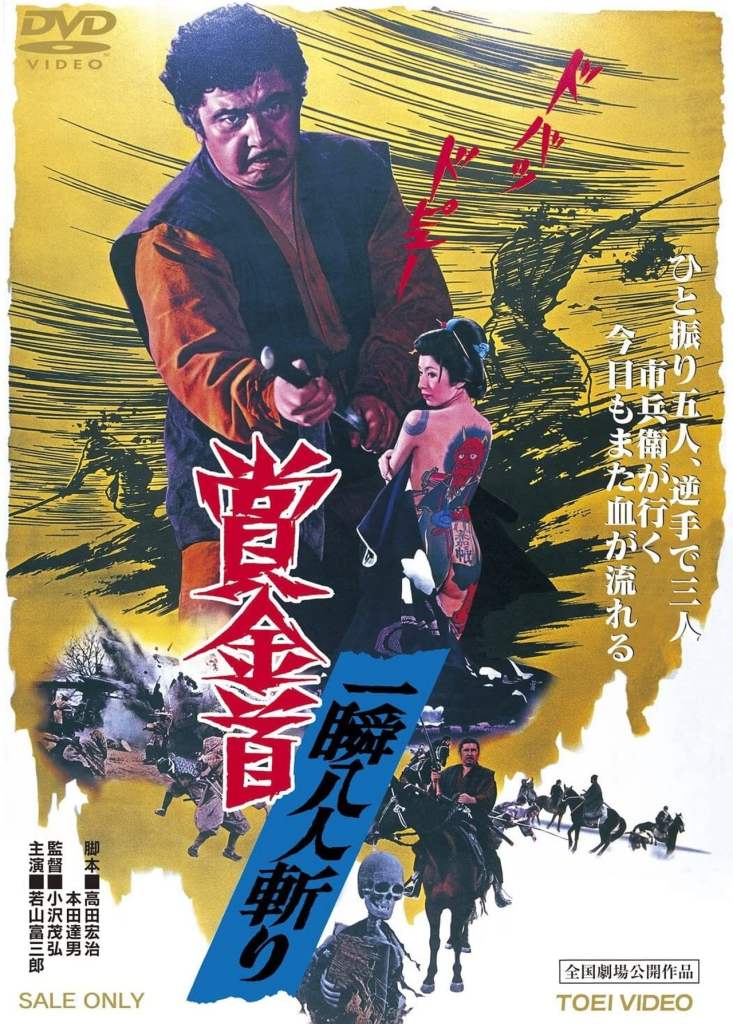
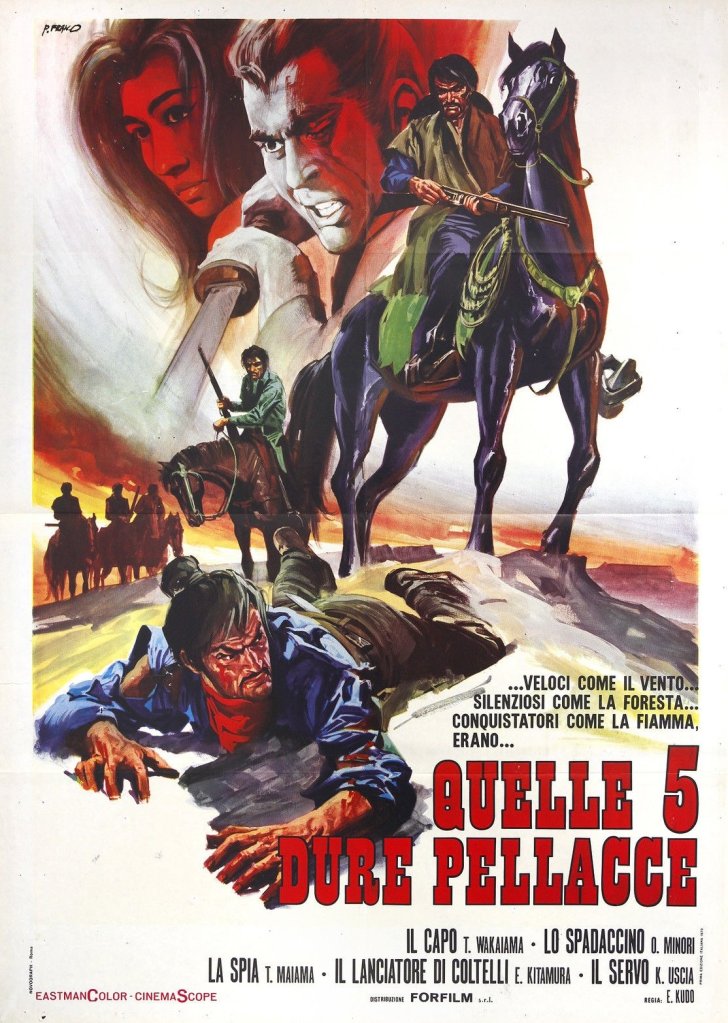
RADIANCE BOX SET RELEASE: The Bounty Hunter Trilogy (1969, 1972)

We all know Lone Wolf and Cub in the U.S. Before that, Tomisaburô Wakayama starred in these three films, which combine Italian Westerns with Eurospy for a series of saucy, spicy and delicious dishes.

Killer’s Mission (1969): Directed by Shigehiro Ozawa, this film introduces Ichibê Shikoro, a secret agent/doctor/all-around tough guy who has been hired to protect the only person who can save Japan. Shikoro even has gadgets like any good spy of the time, such as a sword cane, a folding pistol and knives that emerge from his sandals. He’s joined by a female spy who has a comb that doubles as a dart gun!

The Satsuma clan wanted to purchase a thousand rifles from a Dutch ship that would give them a modern edge against their rivals, the Tokugawa, and change the balance of power. Of course, Ichibê Shikoro is more than up to this challenge, even fighting another samurai in a Sergio Leone-inspired duel. Well, Leone stole from Japan first, you know?

I’d never seen any of these films and am frankly amazed by how fun they are, even if the hero never works as a bounty hunter.

The Fort of Death (1969): Coming out the same year as the first movie, this Eiichi Kudô-directed movie brings back Ichibê Shikoro in the service of the villagers of Enoki Village, who have hired him to stop the elite from taxing them into oblivion.

Seeing as how its hero starts the movie dragging a dead body while on a horse and smoking a little cigar, and it ends with a Gatling gun-powered massacre, this is very much the West going to Italy before coming to Japan. Als,: They brought some ninjas.

This is the kind of film where the bad guys take a dead body of their comrade and throw him like a bomb at their enemies, only to be bested by a massive gun that needs to be cooled by the only liquid left, urine. That said, the only weapon it really needs is Ichibê Shikoro, dual wielding a katana and a six-shooter, somewhere between the West and the East in his own strange time zone, killing everyone in his path, no long a spy, still a doctor, always a bad ass.

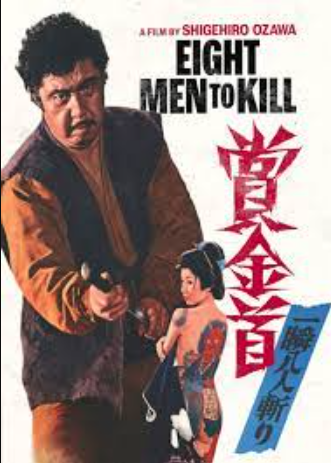
Eight Men to Kill (1972): Three years later, Shigehiro Ozawa would direct the final film in this trilogy. Ichibê Shikoro must find the missing gold in five days before a solar eclipse happens and Japan falls into turmoil again.

Everyone else that he comes into contact with only wants the gold for themselves, making our hero the lone center of morality in a grim and bloody world. How grim? How about at least two scenes where bellies are sliced open to reveal stolen gold, as well as numerous heads, hands and arms all sliced off.

This feels like it mimics the Italian Westerns’ move to darker and more horror-filled ideas before comedy took over. It’s very open about how little its hero cares about the government and how they handle their business; even when the villains pay for their crimes, there’s still very little hope by the end.

This Radiance Films box set has extras including audio commentary on Killer’s Mission by Tom Mes, an interview with film historian and Shigehiro Ozawa expert Akihito Ito about the filmmaker, a visual essay on Eiichi Kudo by Japanese cinema expert Robin Gatto, a series poster and press image gallery, trailers and more. You can get this from MVD.

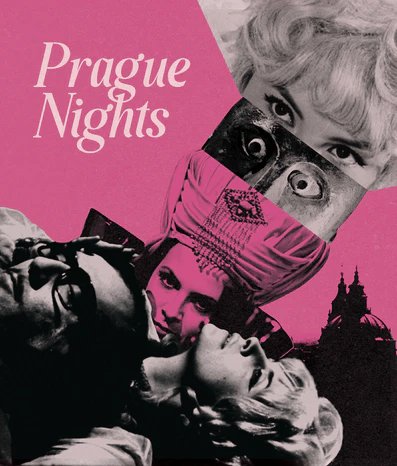
DEAF CROCODILE BLU RAY RELEASE: Prague Nights (1969)

Deaf Crocodile Films, in association with distribution partner Comeback Company, has restored this little seen in the U.S. late 1960s Czech occult/horror anthology. Prazske Noci (Prague Nights) is inspired by Black Sabbath and features episodes directed by Milos Makovec, Jiri Brdecka and Evald Schorm.

I love how they referred to this movie: “a gorgeous and supernatural vision of ancient and modern Prague: caught between Mod Sixties fashions and nightmarish Medieval catacombs, and filled with Qabbalistic magic, occult rituals, clockwork automatons and giant golems.”

I mean, I’m already in love.

Filmed during the 1968 Soviet invasion of Prague, Prague Nights begins with a businessman named Willy Fabricius (Milos Kopecky), who is lonely and lost in a foreign city, looking not for love but for some form of lust. Then he encounters the much younger, more gorgeous, and way more mysterious Zuzana (Milena Dvorská), and they travel through the sleeping city in her vintage limousine. As her driver, Vaclav (Jiríi Hrzan), pulls into a cemetery, she begins to tell him the three stories that make up this movie:

In Brdecka’s chapter “The Last Golem,” Rabbi Jehudi Löw (Josef Blaha) has already created and used a golem, a gigantic silent homunculus from living clay. Emperor Rudolf II (Martin Ruzek) hears of this and wants to use the supernatural being for his own aims, and even when told it can’t be revived, a less moral young rabbi named Neftali Ben Chaim (Jan Klusak) claims he can make it happen. But will his lust for the mute servant (Lucie Novotná) and need to inspire her be his undoing?

“Bread Slippers” — directed by Schorm — introduces us to a countess (Teresa Tuszyńska) who indulges all of her passions, whether for kisses from the maids, the sweetest of cakes or affairs that wouscand,alize her town. She’s pushed twin brothers into a duel for her heart that killed them both and now she’s led Saint de, Clair (Josef Abrham) into death at his own hand. And all because he couldn’t get her the shoes she asked for, shoes made of — you read the title — bread. While the peasants go hungry, the countess decides what they yearn to eat.

Yet a strange shoemaker (Josef Somr) can, and once he delivers them, he steals her away to an abandoned mansion, a place filled with mechanical servants, dust, and cobwebs. A place where she will die—forever with her many victims.

Makovec’s “Poisoned Poisoner” shares the adventures of a murderess in the Middle Ages who kills off sex-crazed merchants set to the music of  60s Czech pop star Zdeněk Liška. Yet what happens when a woman who kills men and takes not only their money and jewelry but their hearts falls for one of her victims?

Prague Nights ends with the truth of Zuzana and why she needed the businessman so severely on this — and only this — night. What we have experienced is. We have experienced. That is so unlike what we’ve seen that it nearly feels animated. s change from black and white to monochromatic to more colors than we can almost stand; cars drive into graves; lovers can be trapped in Hell forever. Yet it all makes your heart and mind and eyes sing. This film is pure magic and yet another film that Deaf Crocodile has put in front of me and won over every fiber of my being with.

This Deaf Crocodile Blu-ray has a new video interview with Czech film critic and screenwriter Tereza Brdečka on her father, Jiří Brdečka (co-director and co-writer of Prague Nights, covering his famed career as a filmmaker, animator and screenwriter; new audio commentary by Tereza Brdečka and Czech film expert Irena Kovarova of Comeback Company; two superb and haunting Jiří Brdečka animated short films: Pomsta (Revenge) and Jsouc na řece mlynář jeden (There Was a Miller On a River); a new essay by Tereza Brdečka on the making of the movie and new art by Beth Morris. You can get this from MVD.

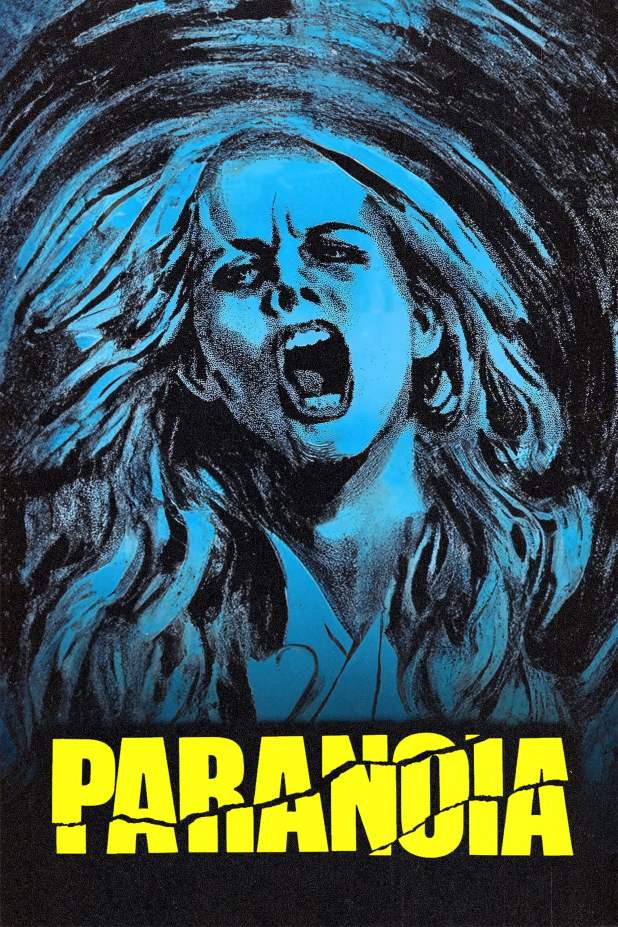
Cinematic Void January Giallo 2025: Paranoia (1969)

EDITOR’S NOTE: Cinematic Void will be playing this on Monday, Jan. 20 at 7:00 p.m. at Los Feliz 3 in Los Angeles, CA (tickets here). For more information, visit Cinematic Void

Umberto Lenzi, come on down! We’re eager for you to shock us, titillate us, and perhaps even thrill us a bit. Oh, and you’ve brought Carroll Baker with you! Please, show us the tale you’ve crafted!

Released in Italy as Orgasmo, this was released as one of the first X-rated movies in the U.S., which was definitely played up in all of the ads especially because it had Baker in the movie. She had left America a single mother with two children and her prospects weren’t great in Hollywood. In Italy, despite making movies that she said “What they think is wonderful is not what we might,” she found a career. Later, she would admit that it showed her an entirely different world and brought her back to feeling alive again.

What’s confusing is that Lenzi’s next movie was released as Paranoia in Italy and A Quiet Place to Kill in America.

I love this interview that she did with Tank Magazine, answering if she ever did any avant-garde projects: “Some of the films in Europe, of course, but a lot of them I haven’t even seen. The one I’m curious about is called Baba Yaga; it was a really far out, wild, cartoonish sort of thing. I play the title character, a 1,500-year-old witch, and all my sisters were witches, too. I didn’t have to be completely naked, but in every Italian film, there was a scene where you had to show your breasts. Usually, I was talking on the telephone or reading a book. One day they announced a nude scene – I couldn’t believe it. But the make-up artist and hairdresser were already there, dying the other girls’ pubic hair to match the hair on their heads.”

In this story, Kathryn West (played by Baker) is a glamorous American widow who moves to Italy just weeks after her wealthy older husband’s death. She settles into a huge villa, but her life feels lonely and boring until Peter enters the picture. His free-spirited nature shakes her out of her rut, and soon he moves in with his sister, Eva. However, things aren’t what they seem—they are not actually siblings, and their relationship evolves into a complicated love triangle. When Kathryn tries to break free from this arrangement, Peter and Eva keep her prisoner, constantly keeping her under the influence of drugs and alcohol while playing the same haunting song on repeat, driving her to the brink of insanity and suicidal thoughts. That’s what happens when you get gaslit and everyone is feeding you pills. Don’t worry — everyone pays for their sins by the end.

Caroll Baker started off as a Hollywood sex symbol before retreating to Europe where she’d make Baba YagaSo Sweet… So Perverse and The Sweet Body of Deborah, amongst others. Eventually, she’d move back to America and become a mature actress. As for Lenzi, he’d go on to make Eaten AliveCannibal FeroxNightmare City and more.

If you appreciate melodramatic twists, layered narratives, and visually striking sex scenes, then it’s time to indulge in this film. You can find it as part of The Complete Lenzi/Baker Giallo Collection set from Severin, which also has So Sweet…So PeverseA Quiet Place to Kill and Knife of Ice.

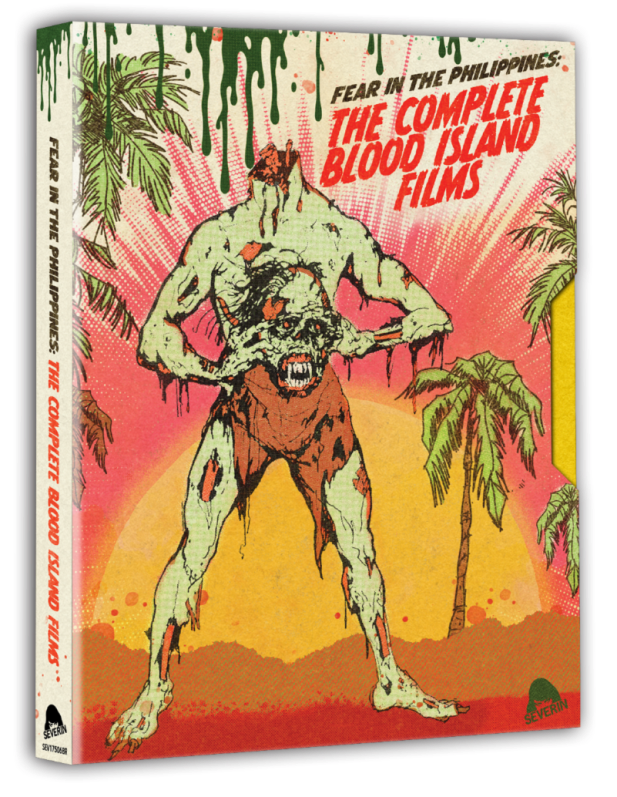
SEVERIN BOX SET RELEASE: Fear In the Philippines: The Complete Blood Island Films

From 1959 to 1971, Filipino filmmakers Eddie Romero and Gerry de León —along with Hemisphere Pictures marketing consultant Samuel M. Sherman—booked flights for drive-in audiences to Blood Island. This dark den of zombies, medical experiments, wanton women and terror would last four movies that fans of exploitation films have obsessed over ever since.

I’ve loved these movies ever since I first discovered them when Severin’s first re-releases came out a few years ago. I was so lucky to see many of them at the drive-in.

Now, Severin is re-releasing all of them – scanned uncut in 4K with improved color and audio plus over 8 combined hours of special features – in a new box set that you can get directly from the Severin Films Webstore.
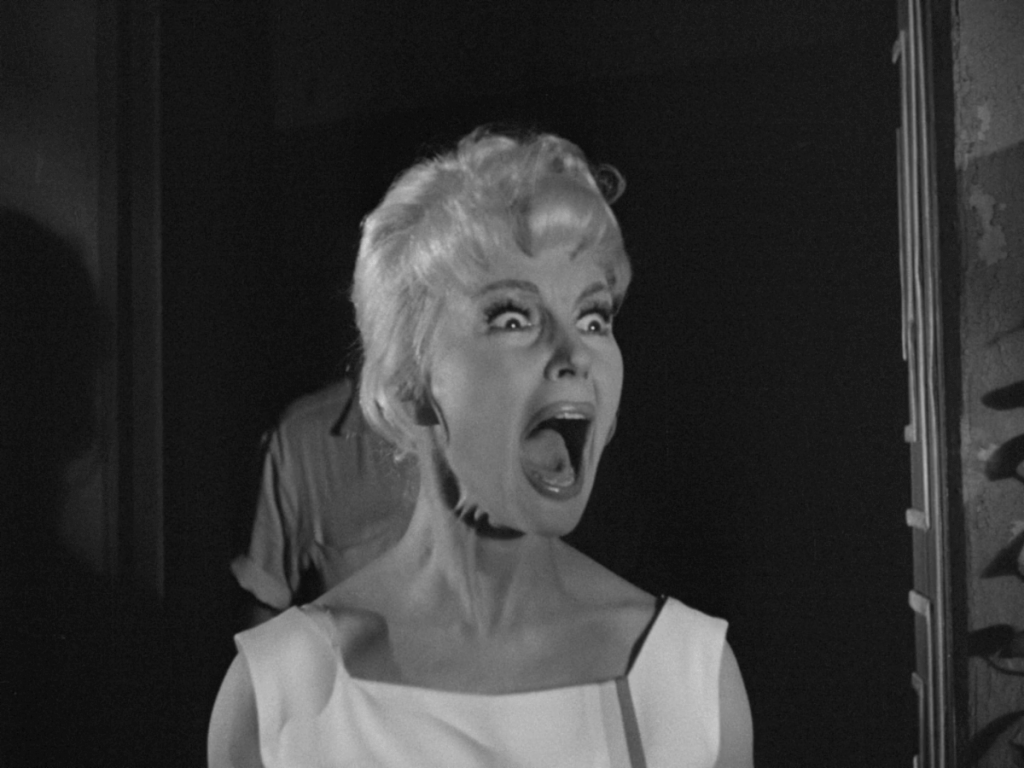
Terror Is a Man (1959): Call it Blood Creature, Creature from Blood Island, The Gory Creatures, Island of TerrorGore Creature, or its most well-known title, Terror Is a Man, but what you should really call it is the first of the Blood Island films. These movies, produced by Eddie Romero and Kane W. Lynn, include Brides of Blood, The Mad Doctor of Blood Island and Beast of Blood.  You can also consider The Blood Drinkers a Blood Island movie.

This movie was in theaters for nearly ten years—until 1969, when distributor Sam Sherman re-released it as Blood Creature with a warning bell that alerted the audience to impending gore.

William Fitzgerald (Richard Derr, who was almost The Shadow in a TV pilot that was turned into a movie called The Invisible Avenger) is the lone survivor of a ship that has crashed on Blood Island. Also, there are Dr. Girard (Francis Lederer, whose Simi Hills home is considered a landmark residence), his frustrated wife Frances (Greta Thyssen, who was in three of the Three Stooges shorts and Cottonpickin’ Chickenpickers) and his assistant Walter Perrera.

Much like The Island of Dr. Moreau, Girard is making half-man, half-animals like the panther he’s been experimenting on that tends to attack villagers. Of course, the doctor’s wife falls in love with the protagonist, and the beast gets loose and kills all sorts of people, including his creator. But hey — that mummy-like cat-eyed fiend seems to survive at the end, as a small island boy sends him away on a rowboat.

Gorgeous natives. Strong men. Crazy doctors. Werecats in bandages. Blood Island. Indeed, this one has it all.

The Severin release includes extras such as interviews with Samuel M. Sherman, co-director Eddie Romero, Pete Tombs (co-author of Of Immoral Tales), and critic Mark Holcomb, a trailer, and a poster and still gallery.

Brides of Blood (1968): This movie, which was originally known as Island of Living Horror, was rereleased with Count Dracula’s Great Love. The former was retitled Cemetery Girls and the latter was renamed Grave Desires.

Much like all of these Filipino horror films, it’s completely bonkers.

The tropics are the place for three Americans to find, well, complete insanity.

Dr. Paul Henderson, a nuclear scientist investigating nuclear bomb tests, is played by Kent Taylor. He was once a major star, playing the title role in fifty-eight Boston Blackie movies. His name is also half the inspiration for Superman’s alter ego (the other star is Clark Gable).

He’s married to the gorgeous but always ready-to-cuckold Carla, Beverly Powers. Beverly was once the highest-paid exotic dancer in the world before becoming an actress and starring with Elvis in SpeedwayKissin’ Cousins and Viva Las Vegas. She also pretty much played herself in Breakfast at Tiffany’s. After all that acting, she became a minister with The Living Ministry in Maui, Hawaii.

Then there’s Jim Farrell, a young Peace Corps member played by John Ashley. Ashley was an AIP star who appeared in Dragstrip Girl and sang his song “Let Yourself Go Go Go” in Zero Hour! He was also a regular in their beach movies, appearing at Beach PartyMuscle Beach PartyBikini BeachBeach Blanket Bingo, and How to Stuff a Wild Bikini.

After living in Oklahoma for a while, Ashley produced these movies with Hemisphere Pictures, living in the Philippines for part of the year and helping to create these little bits of madness.

Our protagonists soon learn that Blood Island is cursed. It’s now a place that has been irradiated by nuclear fallout from those bomb tests, with vines that attack people and butterflies that bite. There’s also a beast in the jungle that tears women apart to get off because, hey, why not?

Carla learns that the beast is one of the villagers, Esteban, but it comes at the price of her own life. She’s an early “sex and people who want sex must be destroyed” casualty decades before this type of destruction de rigeur.

Between carnivorous trees eating Carla’s remains and the movie ending in a vast orgy, this is probably unlike any other film you’ve seen before. You can say that about every single film from this studio.

The press book for the movie suggested that all female theatergoers would get the chance to become Brides of Blood and receive a free engagement ring. There was even the idea of giving away fake marriage certificates, but legal concerns prevented that.

Extras on the Severin release include commentary from  Samuel M. Sherman; interviews with co-director Eddie Romero, Sherman and Beverly Powers; the alternate Brides of Blood Island title sequence and a Jungle Fury title card; a teaser; a trailer and a poster and still gallery.
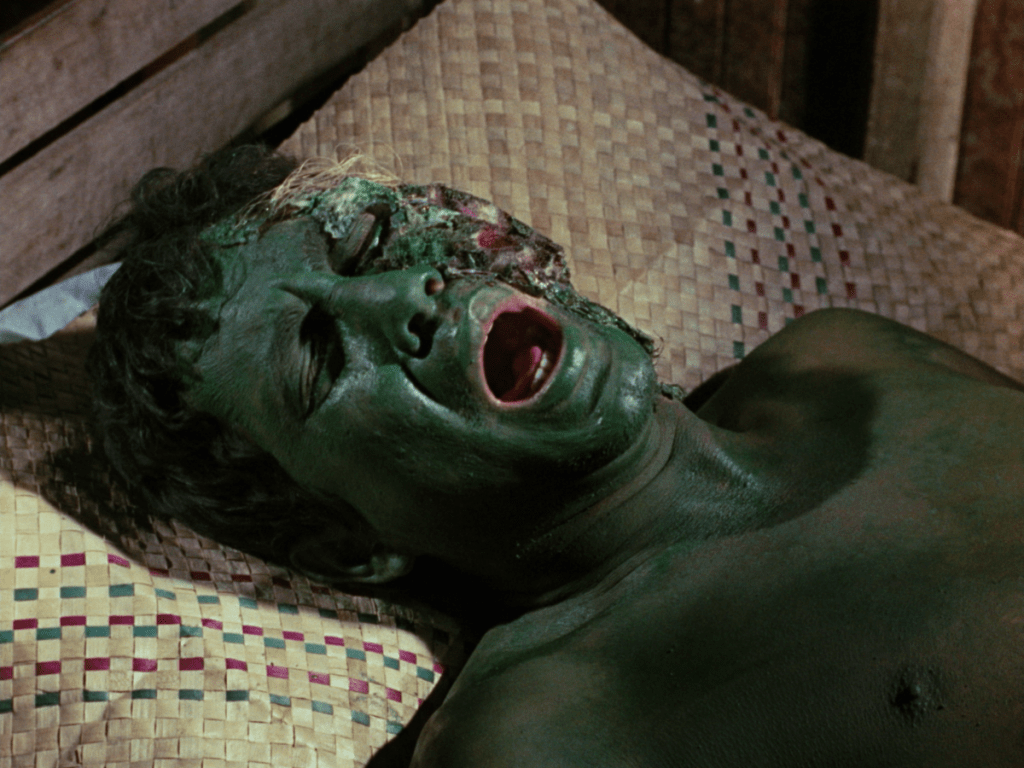
Mad Doctor of Blood Island (1969): We’re back ten years after we first got to Blood Island. Eddie Romero and Gerardo de Leon have returned in the directing chair, and this time, they’ve brought even more blood, beasts and boobs than they did in their last effort, Brides of Blood.

This film was syndicated to TV as Tomb of the Living Dead and is also known as The Mad Doctor of Crimson Island because, in some states, like Rhode Island, the word “blood” wasn’t allowed in movie advertising.

After Brides of Blood, John Ashley discovered that the film was so well-received that distributors asked him to make more. He moved to the Philippines and got to work.

The film starts with an initiation, as at some theaters, you are given a packet of green liquid and asked to recite the oath of green blood so that you can watch the unnatural green-blooded ones without fear of contamination. Years later, Sam Sherman said that he came up with this idea, and he got incredibly sick when he drank one of the packets. The film’s other gimmick is rapidly zoomed in and out, like Fulci on speed, whenever a monster appears. That was to cover the harmful special effects, but it made plenty of theatergoers sick. Man — destructive green liquid and frequent pans and zooms. It’s as if they wanted kids to puke!

A woman runs naked through a jungle before a green-skinned monster kills her. Yes, that’s how you start a movie!

Then we meet our heroes, like pathologist Dr. Bill Foster (Ashley), Sheila Willard (Angelique Pettyjohn, who was famously in the Star Trek episode “The Gamesters of Triskelion” and early 80s hardcore films like Titillation, Stalag 69 and Body Talk) and Carlos Lopez (Ronaldo Valdez, who would become the first Filipino Kentucky Fried Chicken Colonel).

The ship’s captain, who got them there, tells them how the island is cursed and how its people bleed green blood. Everything falls apart — Sheila’s dad, who she hoped to take home, is now a drunk. And Carlos’ mother refuses to leave, even after the mysterious death of her husband.

It turns out that Dr. Lorca has been experimenting on the natives, who just want to be healthy. Instead, they’re becoming green beasts that murder everything they can. Look out, everyone! I hope you’ve drunk your green blood before this all began!

Angelique Pettyjohn claimed that the love scene with John Ashley was not simulated. Seeing how Severin finally found the uncut film, and I haven’t seen any penetration, I think she’s full of it. But who am I to doubt her?

To make this even better, the American trailer of this is narrated by Brother Theodore!

Extras on the Severin release include commentary by Nathaniel Thompson and Howard S. Berger and a second commentary with Samuel M. Sherman; interviews with Pete Tombs, Mark Holcomb and Eddie Romero; a trailer and a poster and still gallery.
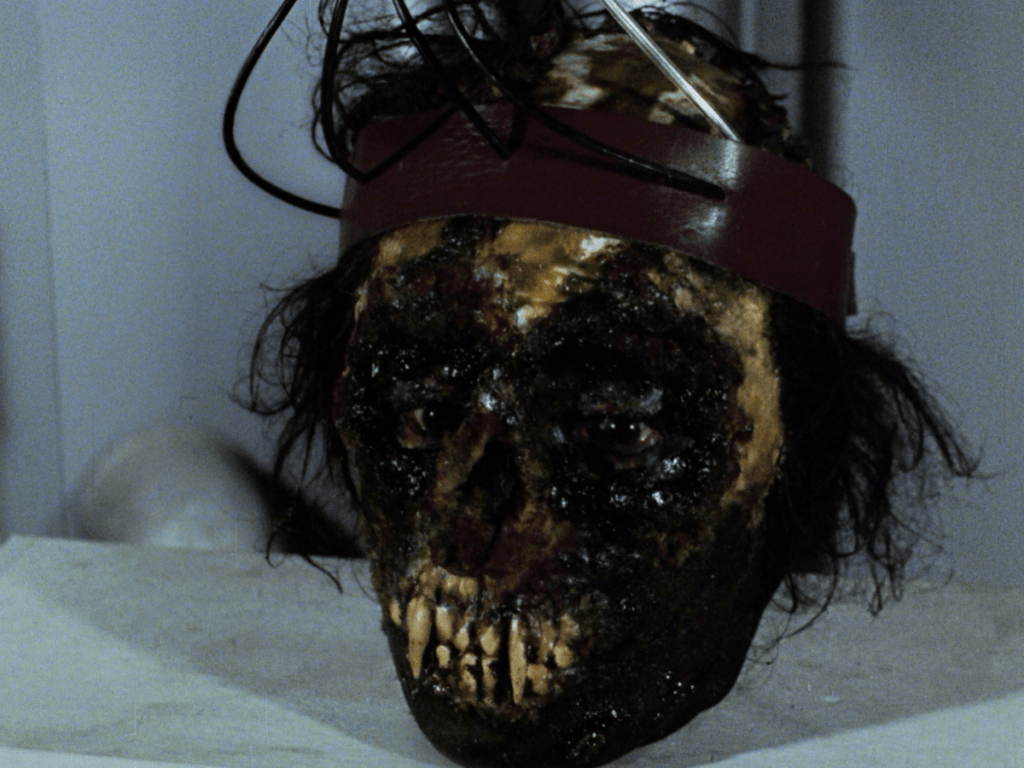
Beast of Blood (1970): All good things must end. This is the final of the Blood Island films and the last movie that Eddie Romero would make for Hemisphere Pictures.

As Dr. Bill Foster (John Ashley), Sheila Willard, her father and Carlos Lopez escape from Blood Island, this movie’s Beast gets on board and goes buck wild, killing everyone he can and blowing up the ship. He survives and heads back to the jungle while Dr. Foster spends months recovering. Everyone he knew or loved is now dead.

Of course, he’s going back to Blood Island.

Dr. Lorca (Eddie Garcia), who apparently died at the end of the last movie, is still alive but horribly scarred. He controls the beast, which can live without its head and even talk and control its own body from afar.

This is less of a narrative movie for me and more a collection of magical images, as bodies squirt blood and beasts have swampy faces and make strange noises while their heads rot inside beakers and lab equipment.

To promote this one, which played a double bill with Curse of the Vampires, the producers printed counterfeit 10 bills that folded in half, with the other side revealing a poster for the film. Those fake sawbucks were scattered all around the neighborhoods where this movie played.

Extras on the Severin release include commentary by Samuel M. Sherman, interviews with Celeste Yarnall and Eddie Garcia; a Super 8 digest version; a trailer; a radio spot and a poster and a still gallery.
MOVIES THAT PLAYED SCALA (AND SEVERIN BLU RAY RELEASE): Satan’s Sadists (1969) and Angel’s Wild Women (1971)

Thanks to the British Film Institute, there’s a list of films that played Scala. To celebrate the release of Severin’s new documentary, I’ll share a few of these movies every day. You can see the whole list on Letterboxd

Satan’s Sadists (1969): Al Adamson made his breakthrough with this movie, going on to direct Dracula vs. FrankensteinCinderella 2000Nurse Sherri and one of the most legitimately unhinged movies I’ve ever survived, Carnival Magic. Even stranger, he was murdered and buried beneath his hot tub in 1995, killed by his live-in contractor Fred Fulford in a plot that could have been one of his films.

However, today we’re talking about his contribution to biker films.

The Satans are a motorcycle club who roam the American Southwest, led by Anchor (Russ Tamblyn, TV’s Twin Peaks) and including Firewater (John “Bud” Cardos, Breaking Point), Acid (Greydon Clark, who directed Satan’s Cheerleaders), Romeo (Bobby Clark, TV’s Casey Jones), Muscle, Willie and Gina (Regina Carrol, Adamson’s wife who appears in nearly all of his films). We’re introduced to the gang as they beat up a man, rape his girlfriend and then push them and their car off a cliff.

They have the bad luck to get in the way of hitchhiker Johnny Martin, a Vietnam vet who is just trying to figure it all out. He gets picked up by Chuck Baldwin (Scott Brady, the sheriff from Gremlins) and his wife Nora. The old man’s a cop and wants to help the young Marine as he travels the highways. They all go to a diner, where we meet Lew (Kent Taylor, half of the inspiration for Superman’s alter ego), the owner, and Tracy, a waitress.

The Satans show up and ruin the budding romance between Johnny and Tracy, as they earn the ire of Chuck and his wife, who tosses a drink in one of their faces. Chuck tries to pull his gun, but the old man’s authority means nothing to the hardened toughs who beat the fuck out of him and rape his woman. Then, they kill all three — but not until Anchor screams out a totally inspired rant:

“You’re right, cop. You’re right, I am a rotten bastard. I admit it. But I tell ya something. Even though I got a lot of hate inside, I got some friends who ain’t got hate inside. They’re filled with nothing but love. Their only crime is growing their hair long, smoking a little grass and getting high, looking at the stars at night, writing poetry in the sand. And what do you do? You bust down their doors, man. Dumb-ass cop. You bust down their doors and you bust down their heads. You put ’em behind bars. And you know something funny? They forgive you. I don’t.”

The Satans don’t leave witnesses. Well, except for our hero and the waitress, who just escaped from Muscle and Romeo. Meanwhile, the gang meets three young girls and start partying with them. Gina can’t take seeing Anchor with other women, so she jumps off a cliff.

Willie tries to kill our heroes, but a rattlesnake saves them (!). Meanwhile, Firewater finds his body and comes to tell Anchor, who has gone insane and murdered all three girls. They fight and Firewater leaves the leader for dead. As he finally finds Johnny and Tracy, he is killed by a landslide (again, nature itself is against the bikers).

Finally, Anchor catches up to them and goes nuts, giving another soliloquy about being Satan. He raises Chuck’s gun to kill everyone, but Johnny simply throws a switchblade at him. “In Vietnam, at least I got paid when I killed people,” he says and at that, he and Tracy ride off on the villain’s cycle.

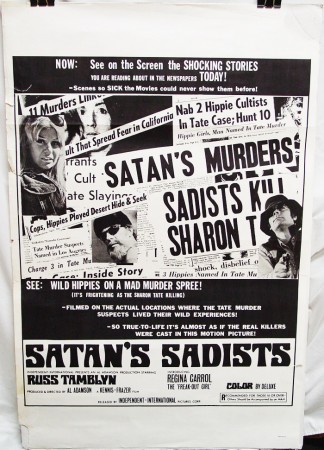
Satan’s Sadists was filmed at the Spahn Movie Ranch in Simi Valley, CA, at the same time the Manson Family lived there. Some movies would hide this fact. This poster will prove that this one wears it on its bloody sleeve.

Truly, this is a movie that does not give a fuck. Just about no one gets out alive or unscarred. Any moments of pleasure are stolen or taken by force. The poster promises human garbage and this film delivers.

Angel’s Wild Women (1971): After two men assault one of her girls, Margo (Regina Carrol) finds him and whips him. In between this movie being Screaming Eagles and tough women in foreign prison movies getting hot, this was reshot and re-edited to make it fit into the changing world of exploitation. Another thing that changed was while movies had been shot by Al Adamson at the Spahn Ranch for a while, now the specter of the Manson Family hung over everything. So when cult leader King (William Bonner) makes life tough for the bikers and also controls the ranch’s owner Parker (Kent Taylor), you get taken out of the movie and wonder how much of this is based on things Adamson and his crew actually experienced.

Sam Sherman told Filmfax: “We even had some members of the Manson gang in it, people who had been hanging around. I don’t know if they were killers or not. What happened in this instance was one of those things you can’t imagine or even predict.”

Ross Hagen is the hero, as much as anyone in a biker movie can be the hero.

Also known as Commune of Death, a title that leans into the Manson parts of this movie, this is a film that ends with Hagen dropping his motorcycle off a cliff and onto a car, which inexplicably explodes.

Both films are available on one blu ray from Severin. Extras include commentary on both movies by producer/distributor Samuel M. Sherman, outtakes, trailers and TV and radio commercials. You can get this from Severin.

RETURN OF KAIJU DAY: The Mighty Gorga (1969)

Director, writer, producer and ape costume wearer David L. Hewitt made some wild movies like The Wizard of Mars, Monsters Crash the Pajama Party, Girls from Thunder Strip, Journey to the Center of Time and Dr. Terror’s Gallery of Horrors before doing effects for films like SyngenorIt’s Alive III, Shocker, Superman IVWillow and many more.

Shot in Bronson Canyon and Simi Valley in California, this is a movie filled with stock footage and stolen monsters, like the cave monster coming from Goliath and the Dragon. There’s also a plastic dinosaur at one point obviously being held by someone’s hand, which had to have been the same effect from One Million AC/DC

Circus owner Mark Remington (Anthony Eisley, who in addition to campaigning for school prayer ended up being in some bafflingly goofy movies that I love, such as The Mummy and the Curse of the Jackals and Dracula vs. Frankenstein) is losing money and sure he’s about to go out of business.  He goes to Africa to find Gorgo, a giant ape, who is known by April Adams (Megan Timothy), one of those white women brought to the jungle by her older scientist father.

I was not expecting her father to be named Tonga Jack (Kent Taylor), but this movie is just ridiculous — and I’m not being so bad it’s good here, this movie is just ready to eat your brain — like having Bruce Kimball play a clown and a witch doctor who is — you knew it — in brownface. Supposedly, the costumes are from a real headhunting tribe. This may also be William Castle ballyhoo.

You can watch this on Tubi.

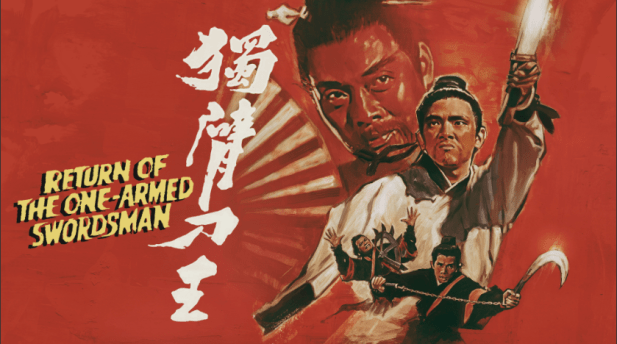
ARROW VIDEO SHAW SCOPE VOLUME 3 BOX SET: Return of the One-Armed Swordsman (1969)

Two years after the original film was such a box office blockbuster, Cheng Cheh and stars Jimmy Wang and Lisa Chiao Chiao returned for this sequel. Yet when it begins, Fang Gang (Wang) has hung up his sword and is living in peace with his wife, Xiao Man (Lisa Chiao Chiao).

There are problems in the martial world that will soon require his attention. The Eight Sword Kings are challenging the masters of all rival schools, with any who refuse to fight being outright murdered. They capture every single master and demand that if the students want their teachers back, they must all cut off their sword arms and give them to them. So one of the students does what he must and kidnaps Fang Gang’s wife to get him to return and kill every single one of the Eight Sword Kings, each of whom also brings their students to the battle.

There’s the high flying Winged Blade (Yuen Cheung-yan), the sickling carrying Hooking Blade (or Ape’s Arms King Yuan Qian, played by Lau Kar-Leung), the camouflaged Buried Blade, the spinning weapon wielding Whirling Blade (Tong Gai), the monstrous Giant Blade (Ku Feng), the smoke throwing Thunder Blade, the seductive Thousand Blade (Essie Lin Chia) and the final boss, Unseen Blade (Tien Feng, who played the One-Armed Swordsman’s master in the first movie!), along with the enforcers known as Guan Heng (Fong Yau) and Guan Shun (Wu Ma).

This being a Cheng Cheh movie, expect all the blood that Shaw Brothers could brew up, as well as numerous deaths on all sides of the battles — lots of people being impaled, which is to Cheh as eyeballs being destroyed is to Fulci — plus the weirdest and wildest weapons you’ve ever seen. You know how Mega Man had to learn how to defeat each of his enemies who all had a unique move? It started here.

The Arrow Video Shaw Scope Volume Three box set has a brand new 2K restoration of The Return of the One-Armed Swordsman as well as commentary by critic Samm Deighan and a trailer.

You can get this set from MVD.