UNSUNG HORRORS HORROR GIVES BACK 2025: Good Boy (2025)

Each October, the Unsung Horrors podcast does a month of themed movies. This year, they will once again be setting up a fundraiser to benefit Best Friends, which works to save the lives of cats and dogs across America, giving pets second chances and providing them with happy homes.

Today’s theme: 21st Century Horror

ABOUT THE AUTHOR: Adam Hursey is a pharmacist specializing in health informatics by day, but his true passion is cinema. His current favorite films are Back to the Future, Stop Making Sense, and In the Mood for Love. He has written articles for Film East and The Physical Media Advocate, primarily examining older films through the lens of contemporary perspectives. He is usually found on Letterboxd, where he mainly writes about horror and exploitation films. You can follow him on Letterboxd or Instagram at ashursey.

As they say, if you want to see an example of unconditional love, lock your wife and your dog in the trunk of your car, come back in 4 hours, and see which one is happy to see you.

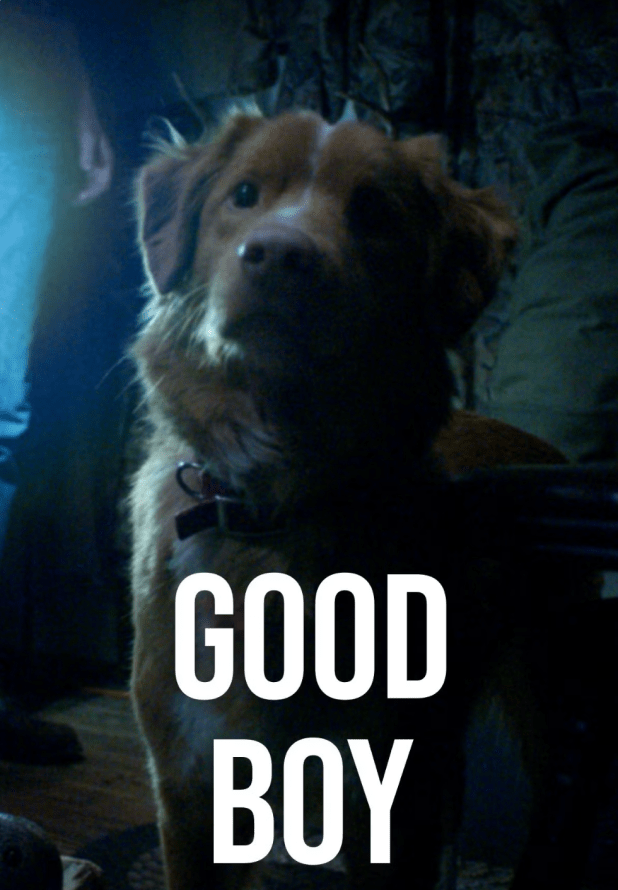
Indy, the canine star of Good Boy, is indeed a very good boy. His human counterpart, Todd (Shane Jensen)…not so much. In fact, he might just be the worst. On one hand, Todd is sick with some sort of serious illness that causes him to require multiple hospital visits, blood transfusions, and cough up copious amounts of blood. Wanting to get off the grid, and perhaps away from his overly concerned sister Vera (how dare she be concerned for her brother by the way!), Todd and Indy take up residence in dead Grandpa’s old, abandoned house in the middle of nowhere. Grandpa is played here by Larry Fessenden, mainly seen in old VHS footage. Grandpa died mysteriously. They never found his dog Bandit. And now, night after night, Indy sees shadows moving in the corners of the room, blackened figures skulking about, and perhaps the cries of another dog in the basement.

But anytime Indy makes any sort of noise, Todd is there to silence him. The sicker Todd gets, the meaner he becomes. He kicks Indy out of the bed at the slightest inconvenience. Pushing him away when Indy tries to comfort him. Eventually banishing him from the house entirely. Still, Indy remains loyal to the very end. And beyond.

Audiences might have a difficult time fully embracing Good Boy. There will undoubtedly be comparisons to another Shudder release that pointed the camera into corners—Skinamarink. Personally, I could not make it through that movie. I tried just about everything, thinking that watching it around 4 AM in a sleepy haze in a totally dark room would bring the atmosphere needed. It did not work.

Good Boy has a bit more going on at least. Director Ben Leonberg does a nice job of bringing the camera down to the ground (Ozu style) to try to provide that dog’s eye view for the audience. And if you are a dog person, you should just be able to look into Indy’s eyes all day long (or at least for the 72-minute run time of this movie) and just melt. I know that I would rather watch Indy stare into the corner for an hour than watch that fake CGI dog in the latest iteration of Superman

It might also change your own perspective when your dog is barking at seemingly nothing. Maybe they are sensing something we can not. Or maybe they are just annoyingly barking at a neighbor having the audacity to walk down their street. No matter the circumstance, we need to be nice to our pets. Definitely nicer than Todd (a low bar to clear). And this month we have the opportunity to give back to some of those pets in need while watching horror movies. 

While Indy may be a good boy, our boy dog, Mr. Beauregard, is the best boy. The vet calls him a distinguished gentleman. We rescued him from a shelter back in 2014. He is always super protective of our daughter. He barks at everything and nothing. He’s just an old hound dog from Deridder, Louisiana, but we wouldn’t trade him for anything.
 

CHILLER THEATER MONTH: The Mummy’s Hand (1940)

EDITOR’S NOTE: The Mummy’s Hand was on Chiller Theater on Saturday, February 12, 1966 at 1:00 a.m., Saturday, March 1, 1975 at 3:00 a.m., Saturday, July 24, 1976 at 1:00 a.m., Saturday, July 29, 1978 at 1:00 a.m., Saturday, July 22, 1983 at 2:00 a.m.

Universal brought back Frankenstein’s Monster with 1939’s Son of Frankenstein, a movie that boasts a deranged Lionel Atwill as a police officer obsessed with his fake arm. It did so well that they reintroduced the Invisible Man a year later in The Invisible Man Returns. Success in Hollywood means more of what works, so the Mummy would come back in this movie, which is a sequel in that it’s very similar without being an actual sequel, and yet, it would have a sequel, The Mummy’s Tomb, and a third in this series, The Mummy’s Curse.

Unlike the days of major league money thrown at these movies, like when the first movie was made in 1932, Universal did this on a budget, reusing sets from James Whale’s Green Hell, using stock footage from The Mummy and stealing the entire score of Son of Frankenstein. The crew worked from 6 a.m. to 4 a.m. some days, grinding down contracted talent and crew.

Andoheb (George Zucco) has come to the Hill of the Seven Jackals to speak with the dying High Priest of Karnak (Eduardo Ciannelli). There, he learns the story of Kharis, a man who loved the bride of the pharaoh, Princess Ananka, and stole the tana leaves that can bring the dead back to life to save her when she was killed. When he was caught, his tongue was torn out and he was mummified alive, used to guard the tomb of the princess for the rest of eternity.

This start of the film got me all fired up for Kharis to rise and destroy, but no, like all Mummy movies, I had to suffer through the humans in this, Steve Banning (Dick Foran) and Babe Jenson (Wallace Ford), who are supposed to be heroic and comedic, respectively, but just made me want to see them get choked out by the curse of the pharaohs. Along with  the head of the Cairo museum, Dr. Petrie (Charles Trowbridge), The Great Solvani (Cecil Kellaway), a stage magician, and his daughter Marta (Peggy Moran), they decide to enter the tomb.

Andoheb makes it seem like he’s an educated man of Egyptology, but he’s also here to protect the treasure, so he raises Kharis (played here by Tom Tyler, who play Captain Marvel the following year) and finally, after what seems like years of comic relief, I get what I want: tannis leaves, bandages and sweet death. That said, Andoheb makes the mistake of falling for Marta, and he tries to take the leaves for himself, making the two of them immortal. The white bread hero ends up shooting him and setting Kharis on fire, making it back to America with all of the riches of the pyramids and the mummified remains of Princess Ananka. This is a happy ending to some. Not to me.

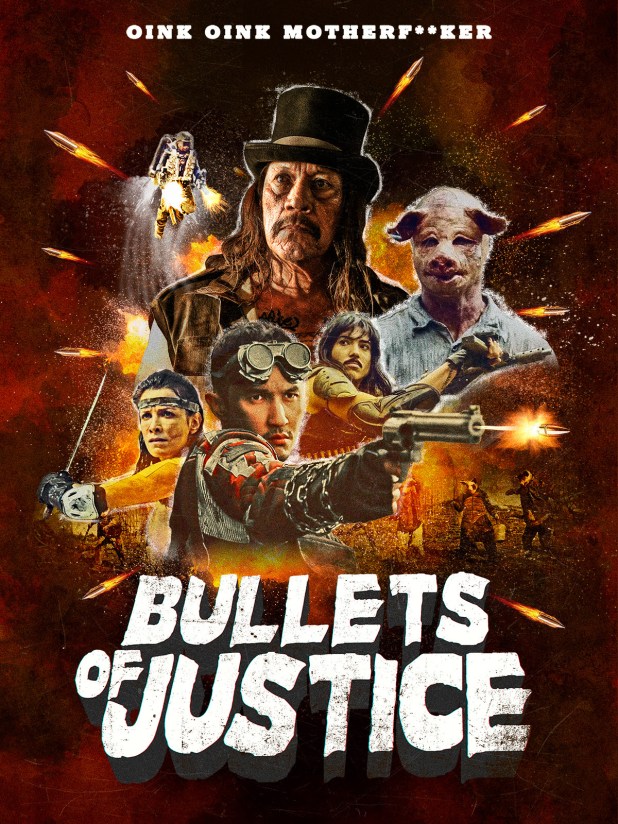
THE IMPORTANT CINEMA CLUB’S SUPER SCARY MOVIE CHALLENGE DAY 4: Bullets of Justice (2019)

October 4: A Horror Film from Kazakhstan

Bullets of Justice starts with a flyover of a post-apocalyptic city, followed by a pigman crapping his pants before being shot directly between the eyes. Now that’s how you get my interest.

Pig men? Well, back during World War III, which is expected to arrive in 2020 any day now, the U.S. government initiated a secret project codenamed Army Bacon. Yes, that sounds like something out of Alex Jones, but here we are. Now, a quarter of a century later, the Muzzles have become the top of the food chain, replacing humans, and only a few humans remain.

Directed by Valeri Milev, who also worked on Wrong Turn 6 and served as second unit director on Van Damme’s We Die Young, and written by Timur Turisbekov, who also plays hero Rob Justice, this film serves as a send-up of pretty much every post-Mad Max movie that I love. No, really. I created a Letterboxd list to track all the end-of-the-world films I’ve watched.

To get this on the shelves of Walmart, Danny Trejo shows up as Gravedigger, the father of our hero, who returns as a ghost to help him. Really, Danny Trejo against pig men is all the review I need to give this. People will want to watch it, much less telling you that there’s a scene where a jet pack flying pig man gets decapitated. Its bloody head drops right into the spread eagle crotch of a female bounty hunter, which slowly dissolves into a lovemaking scene.

Seriously, Trejo is in twenty or thirty movies a month — he and Nicolas Cage must have a running bet — but this is probably the best one you’ll see him in this year, even if his part is incredibly minor. It’s also full of absolutely ludicrous stunts, dirt all over everything, a near-obscene level of gore and a hero who has lost so many girlfriends that he has a shrine to all of them in his car.

There’s also a bad guy named Benedict Asshole and our hero’s new girl, who is also his sister, who has a mustache. And plenty of male frontal nudity. Of course, it’s also all acted phoentically in English, has all the directoral chops of The Asylum and doesn’t have a coherent plot.

The best of times. The worst of times. A lot blows up. I tried not to think too hard. Also, this is a movie that taught me that bullets are birds of justice made of lead, and if you don’t want them to kill you, they won’t. That literally made me laugh for five minutes, which is enough to say that this is a success.

This movie makes me think that Bulgaria and Kazakhstan got together and said, “Why the hell do Italy and the Philippines get to make all of the great Road Warrior rip-offs?”

2025 Scarecrow Psychotronic Challenge Day 4: Kandisha (2020)

4. MYTHICAL CREATURES: Though they are hard to capture, you must see one in this feature.

Three teenage friends — Amélie (Mathilde Lamusse), Bintou (Suzy Bemba) and Morjana  (Samarcande Saadi) — invoke the spirit of Aïsha Kandisha (Meriem Sarolie), the avenging creature of Moroccan legend, by using blood and a pentagram. This seems like the worst idea, but we wouldn’t have a movie to watch otherwise. Anyway, the Kandisha is a folkloric character, similar to a djinn, who appears as a beautiful woman but has hooves. She lives near water and seduces men, making them crazy and then murdering them.

Amélie has issues with Farid (Brahim Hadrami ), an ex who tries to rape her, so they ask Kandisha to punish him. It gets out of hand when she demands more sacrifices, including the men of the girls’ families, such as Amélie’s younger brother Antoine (Felix Glaux-Delporto).

Kandisha is a woman raped at the hands of Portuguese soldiers, but her rage kept her from the next world. If one calls her name, they can summon her for revenge. Kind of, sort of Candyman. She’s not the seductress of legend, actually. She exists to destroy men. Sadly, this reminds me that for all the horrors in the movies we love, women have it much worse in the real world.

Directors and writers Alexandre Bustillo and Julien Maury also made Inside.

You can watch this on Tubi.

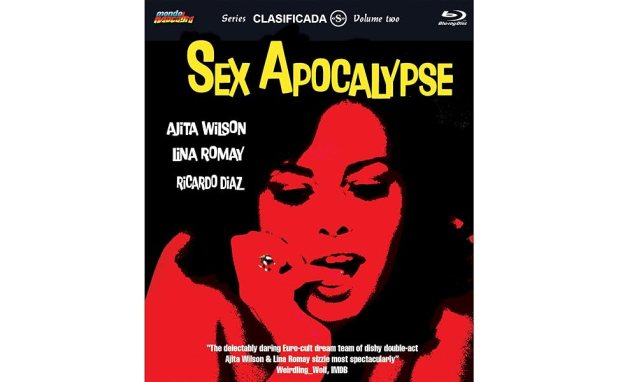
UNSUNG HORRORS HORROR GIVES BACK 2025: Apocalipsis sexual (1982)

Each October, the Unsung Horrors podcast does a month of themed movies. This year, they will once again be setting up a fundraiser to benefit Best Friends, which works to save the lives of cats and dogs across America, giving pets second chances and providing them with happy homes.

Today’s theme: Lina Romay

According to Letterboxd, Lina is the most-watched actor in my history, having appeared in more than one hundred movies, trailed only by Christopher Lee, John Carradine and Dick Miller. Well, Carla Mancini is gaining, even if you never see her in the movies she’s in.

Directed by Carlos Aured (House of Psychotic Women, The Mummy’s Revenge) and Sergio Bergonzelli (Blood Delirium) — maybe or maybe not… — and written by Aured, this has a gang that is either pulling off crimes or having sex with one another. Then they decide to kidnap a millionaire’s daughter, Patty Hearst-style. They are Liza (Ajita Wilson, an American-born transgender actress who is also in Macumba Sexual and Sadomania, amongst other films), Ruth (Romay), Tania (Hemy Basalo, also known as Eva Palmer; she’s in Night of Open Sex), Antonio (José Ferro, Macumba Sexual) and Clark (Ricardo Díaz, El fontanero, su mujer, y otras cosas de meterCut-Throats 9), their leader. The virginal rich girl is Muriel (Kati Ballari, who appears in only one other movie,  La vendedora de ropa), and she could be more perverted than all of them.

Speaking of crime…

Two versions were released: an R-rated and an uncensored hardcore version with explicit sex scenes. At one point, the hardcore version wasn’t legal in Spain, where it was made, so it was distributed in countries where it was allowed. Some of the actors who participated in the hardcore sex scenes signed contracts assuring them that the version would never make it to Spain, where it might harm their careers. Obviously, Lina didn’t care.

Aured claimed that he filmed the sex scenes with the help of a professional hardcore actor, as not many men could stay hard when the cameras rolled.

After the law was liberalized, there was an explosion of Clasificada S films, which the softcore version was released as. The Italians got the hardcore. Strange, somewhat, that Aured, who did four movies with Paul Naschy, was making adult films.

The Italian version has a more ironic tone to the voiceover, while the Spanish one claims this is a true story and tries to tie it to Charles Manson. There’s also a square-up at the end, trying to ask how society can make such horrible people, said just minutes after we’ve watched all of them make love, sometimes for real, depending on the cut.

The end is kind of an apocalypse, but not as sleazy or end-of-the-world as you would hope. Then again, a chance to see Lina not being directed by Jess and, as always, her smile makes me happy.

You can get this from Mondo Macabro.

CHILLER THEATER MONTH: The Curse of the Crying Woman (1963)

EDITOR’S NOTE: The Curse of the Crying Woman was on Chiller Theater on Saturday, May 10, 1969 at 1:00 a.m.

An older Mexican horror film that actually played in the U.S. — American-International Pictures offered it for syndication in 1965 — The Curse of the Crying Woman is another film that attempts to translate the legend of La Llorona, the crying woman, and does the best job of any I’ve seen.

The film begins with a full realization of the weirdness and wildness within, as a carriage ride is interrupted and all three passengers are hunted down by a mysterious woman in a long black dress, accompanied by her three monstrous dogs and an even more frightening henchman. In case you wondered, “Did Black Sunday play in Mexico?” this scene will definitely answer affirmatively.

That’s when the film introduces us to Amelia, our heroine, who has come to stay with her Aunt Selma, a place shrouded in cobwebs, where the cries of a woman can be heard at night. The bodies of generations of relatives decompose in the basement. One particular relative was a powerful witch who would return to power and take Selma to an afterlife filled with black masses and blood drinking, a fact that she excitedly related to a shocked Amelia.

From there, the film descends into wild scenes of Selma transforming into the Crying Woman, an eyeless creature surrounded by thousands of eyes, as well as a black mass filmed in negative and dead bodies coming back to life. It’s a movie that transcends its inspiration and delivers its own artful—and scary—take on a legendary story.

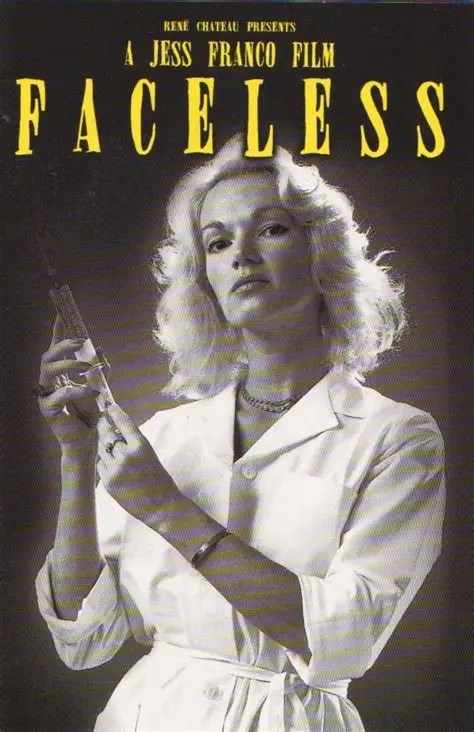
UNSUNG HORRORS HORROR GIVES BACK 2025: Faceless (1987)

Each October, the Unsung Horrors podcast does a month of themed movies. This year, they will once again be setting up a fundraiser to benefit Best Friends, which works to save the lives of cats and dogs across America, giving pets second chances and providing them with happy homes.

Today’s theme: Lina Romay

ABOUT THE AUTHOR: Adam Hursey is a pharmacist specializing in health informatics by day, but his true passion is cinema. His current favorite films are Back to the Future, Stop Making Sense, and In the Mood for Love. He has written articles for Film East and The Physical Media Advocate, primarily examining older films through the lens of contemporary perspectives. He is usually found on Letterboxd, where he mainly writes about horror and exploitation films. You can follow him on Letterboxd or Instagram at ashursey.

I really do not have the expertise to write anything about a Jess Franco film. It’s not going to stop me though. 

Faceless is only the sixth Franco film I’ve watched. And the ones I have watched may not be the ones that spring to mind. Venus in Furs and Bloody Moon seem to be popular (at least according to Letterboxd). My favorite film of his has been The Other Side of the Mirror. And then I’ve watched some really random ones: Night of the Skull and Bahia Blanca. So I do not have a great handle on Franco’s filmography.

I have seen Eyes Without A Face. And I’m not the only one apparently. Faceless owes a lot to Georges Franju’s classic tale of a doctor trying to successfully graft another person’s face onto the face of his daughter. I’ve never really tried to make a ranking of my favorite horror films of all time, but if I did, this one would surely be high on the list.

Apparently, Jess Franco uses this motif a good bit in his films about Dr. Orloff (played by Howard Vernon). Again, I’m really at a disadvantage because I just have not watched these films. But I really want to. And after watching Faceless, I feel a great need to prioritize these Franco films.

In Faceless, we are treated to Helmut Berger as a plastic surgeon who has made an enemy in a former patient who blames him for a botched procedure. When this patient tries to throw acid on his face, he ducks and unfortunately his sister receives the burn. So one does what one has to—get his assistant (Brigette Lahaie, an actress whose films I should also prioritize) to start kidnapping models, and contact the infamous Dr. Orloff to perform face transplants. Unfortunately for them, one of the models they kidnap is the daughter of Teddy Savalas (criminally underused here). He hires Christopher Mitchum (of all people) to go to Paris and find his daughter.

Faceless has pretty much everything I look for in a horror movie this time of year. A stellar cast. An interesting enough plot to keep my interest. Some over the top gore. I really cannot ask for much more.

This selection feels a bit like a cheat since it was supposed to highlight Spanish actress Lina Romay, long time collaborator and eventually the wife of Jess Franco. In Faceless, she only appears in a cameo as Dr. Orloff’s wife. There were definitely plenty of other films to choose from. If nothing else, this day has been a good reminder that I really should focus on more Jess Franco in the new year. Maybe I will make a goal to have Franco be my most watched director of 2026. 

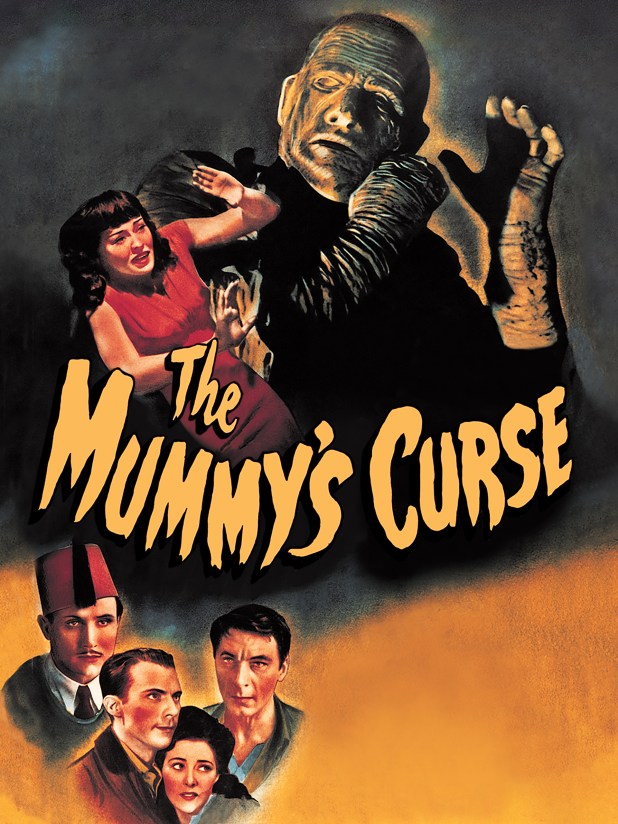
CHILLER THEATER MONTH: The Mummy’s Curse (1944)

EDITOR’S NOTE: The Mummy’s Curse was on Chiller Theater on Saturday, September 25, 1965 at 1:00 a.m., Saturday, February 10, 1968 at 1:00 a.m., Saturday, September 30, 1972 at 1:00 a.m., Saturday, January 25, 1972 at 1:00 a.m., Saturday, September 20, 1975 at 1:00 a.m. and Saturday, April 23, 1977 at 1:00 a.m.

The fifth entry in Universal’s original Mummy franchise, this is a direct sequel to The Mummy’s Ghost. Kharis (Lon Chaney Jr.) and his beloved Princess Ananka (Virginia Christine ) remain in the swamp, even if the swamp has moved from Massachusetts to Louisiana—even if the accents don’t always sound right.

The Southern Engineering Company — one of those TVA or New Deal kind of public works projects — wants to drain the swamp, but the locals are afraid of even going there. Sure, they’re poor, but would you want to deal with a mummy, much less two?

Scripps Museum sends Dr. James Halsey (Dennis Moore) and Dr. Ilzor Zandaab (Peter Coe) to investigate, just as a worker is killed with all the handmarks — literally of Kharis. But never trust science, as Zandaab is really a priest of the pharaohs and is working with Ragheb (Martin Kosleck) to fully return the Egyptian royalty to life within the mucky confines of this deep southern bog.

Thus follows brewing the tea leaves and killing a monk as Kharis rises, filled with power anew. Ananka also rises, being found by a bulldozer and washing herself clean. She’s found by beloved local Cajun Joe (Kurt Katch) and, of course, taken to the local bar before Kharis busts in and starts killing people. She’s found by Halsey and Betty Walsh (Kay Harding) and is shocked by how much she knows about Ancient Egypt. I was shocked finding out how much English she could speak.

Of course, it ends as it always does, with evil scientists pushing their luck and the Mummy being dead all over again.

Directed by Leslie Goodwins, this had a huge list of writers attached, including Bernard Schubert, Leon Abrams, Dwight V. Babcock, Ted Richmond and Oliver Drake, who would go on to make another mummy movie, many years later and somehow with an even lower budget, The Mummy and the Curse of the Jackals which, outside of the Las Vegas setting, feels like it could be the lost sequel for this film.

Universal had one left — Abbott and Costello Meet the Mummy — but Joe Dante in Famous Monsters Vol. 4 No. 3 wrote that this was one of the most disappointing horror films the studio would release, packed with footage from The Mummy and The Mummy’s Hand instead of new scenes. Between the stock footage and stunt men stand-ins for the occasionally drunk Chaney Jr., The Mummy is played by at least three people, including Boris Karloff and Tom Tyler.

I kind of love this, as the swamp is a fun place. If we follow the timeline of these movies, with The Mummy’s Tomb set in 1970, The Mummy’s Ghost two years later and this twenty-five years after all that, it should be 1997. It does not feel like 1997 at all.

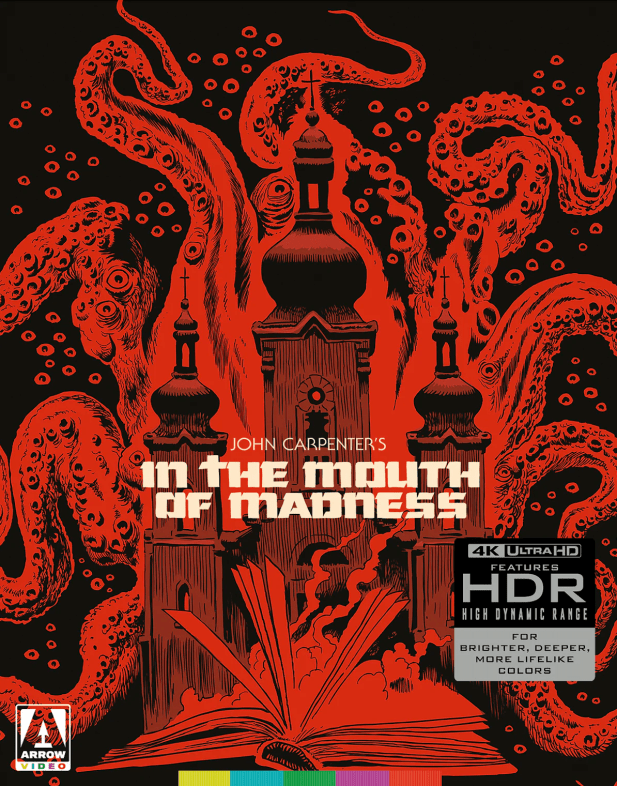
ARROW 4K UHD RELEASE: In the Mouth of Madness (1994)

After The Thing and Prince of Darkness, this is the third and final part of John Carpenter’s Apocalypse Trilogy. It’s a film that explores the very notion of reality, how fictional characters perceive themselves within a narrative, and issues of creation itself. It’s a natural next step after Prince of Darkness, playing with many of the same themes.

The film begins with a narrative device familiar to readers of H.P. Lovecraft, as Dr. Wrenn (David Warner, The OmenFrom Beyond the Grave) visits a patient in a psychiatric hospital who has written all over the walls and himself, covering them with crosses.

John Trent (Sam Neill, Jurassic Park) is an insurance investigator who can smell out a co like no one else. We’re shown an example in the beginning, as he breaks down a scam being perpetrated by a business owner (Carpenter, regular Peter Jason). Later, he meets with the owner of an insurance company (Bernie Casey, Gargoyles) who gives him a new case: investigating a claim made by Arcane Publishing that their biggest-selling author, Sutter Cane, has disappeared.

Just then, a man attacks them with an axe. He stops to ask Trent, “Do you read Sutter Cane?” The police shoot him, and later, we learn that this man was Cane’s agent, who was so influenced by reading his latest manuscript that he killed his entire family.

Trent meets Arcand Publishing owner Jackson Harglow (Charlton Heston!), who asks him to look into the disappearance with the help of Cane’s editor, Linda Styles (Julie Carmen, Fright Night Part 2). As he begins to read Cane’s books, Trent learns that his readers have been known to suffer from disorientation, memory loss and paranoia firsthand.

He’s also convinced that this disappearance is a publicity stunt. Yet he spends plenty of time tearing apart Cane’s book covers, which depict the state of New Hampshire and mark Hobbs End, the location for many of Cane’s stories—a setting quite similar to Castle Rock in Stephen King’s tales.

As they travel to the fictional town, Linda begins to see things, and they both lose track of day and night. Once in the city, the people and landmarks are precisely as they appeared in the written word. Trent believes this is still a publicity stunt. Linda comes clean and says that the disappearance started as a stunt, but no one can find Cane. Everything that happened from now on is real, she claims.

For example, inside their hotel room, Trent claims there should be a black church out the window. The only problem is that he didn’t read the books closely enough. While the first window he opens reveals nothing, the evil cathedral is shown when he opens the window that faces east.

As they travel to the church, an army of black dogs emerges to defend Sutter Cane (Jürgen Prochnow, DuneThe Keep), who sits inside. Linda confronts him, but simply being exposed to his final novel, In the Mouth of Madness, drives her insane.

The fabric of reality has begun to tear asunder. A man (former pro wrestler Wilhelm von Homburg, who played Viggo in Ghostbusters 2, who led an insane and demented actual life) tells Trent that Cane has his son, and he can no longer save him. His own daughter attacked him, and he could do nothing to stop her. He wishes that he could tell him more, but this is how Cane wrote him. With that sentence hanging in the ether, the man blows his brains out with a shotgun.

The townspeople have become monsters, and the story beats of each of Cane’s tales have started to come true. Trent tries to drive away but keeps coming back to the center of town. He takes Linda with him, but she transforms into a monster. Finally, he crashes his car and wakes up inside the church. Cane explains to him that his stories ended up being true, an almost Bible for a new and more horrible world. As more of his readers began to believe in his stories, they raised a race of Ancient Ones from the before times. Again, this is well-trod ground for anyone who has read Lovecraft, but it is not something that often makes it to the screen.

Cane explains that Trent is just one of his characters, and his role is to help end humanity by delivering his final story to Arcane. He then tears his face open, sending Trent to the dimension of the monsters from beyond time and space. As he runs down a long tunnel to return to the real world, he begs Linda to come with him. She says that since she has read the whole book, she can’t.

Once Trent returns, he destroys the story. But once he visits Arcane, he learns that Linda never existed, and the final book has already been published. In fact, they are almost done making a movie. Trent is then arrested after attacking readers of the book with an axe.<

We come back to the asylum, where Dr. Wrenn laughs off the story and walks away to leave, only to have the attendant, Saperstein (John Glover, Gremlins 2), ask him, “Do you read Sutter Cane?”

Trent barely sleeps at night, convinced that people are fighting and dying outside the walls of his cell. He awakens to find the hospital and most of the city abandoned, with only the pages of Sutter Cane books left behind. A radio announces that mass murder and suicides are happening in every major city, with some people mutating into monsters.

Finally, he wanders into a theater where In the Mouth of Madness is playing. As he watches the entire movie replay, he begins to laugh hysterically before breaking down and crying. He is just another character in another story, never real in the first place.

Between characters named Pickman and the closeness of Cane’s titles to Lovecraft’s (Sutter Cane’s novels have similar titles to H.P. Lovecraft stories: The Whisperer of the Dark is The Whisperer in Darkness, The Thing in the Basement is The Thing on the Doorstep and The Haunter Out of Time is almost The Haunter of the Dark or The Shadow Out of Time), this is probably the closest we’ll get to a significant budget Lovecraft film that isn’t Re-Animator. All of the words read from Cane’s books are also from Lovecraft, including parts of The Rats in the Walls and The Haunter of the Dark.

Beyond that, even the town’s name — Hobb’s End — is a reference to a work that is close to the heart of Carpenter. It’s the train station where the spaceship is found in Quatermass and the Pit. The inscription on the church, “Let these doors be sealed by our Lord God and let any who dare enter this unholy site be damned forever,” is similar to the words “Terribilis est locus iste” found at France’s Rennes Le Château. In English, that should read “This place is terrible.”

Even more interesting, if you pause and read the movie poster for the movie within the movie, you’ll learn that, aside from the three main characters, all the actual people who worked on the film are listed. So is the movie real? Was Cane ever real? Was Trent just a made-up character? Are we real? Is reality just an illusion?

The Arrow 4K UHD of In the Mouth of Madness has a new 4K restoration from the original 35mm camera negative by Arrow Films; commentary with director John Carpenter and producer Sandy King Carpenter; another with Carpenter and director of photography Gary B. Kibbe; another with filmmakers Rebekah McKendry & Elric Kane, co-hosts of Colors of the Dark podcast; interviews with Sandy King Carpenter, Jürgen Prochnow, Julie Carmen and Greg Nicotero; featurettes and appreciations of the movie; behind-the-scenes footage; theatrical trailer and TV commercials; a reversible sleeve featuring original and newly commissioned artwork by Francesco Francavilla; a double-sided fold-out poster featuring original and newly commissioned artwork by Francesco Francavilla and a perfect bound collector’s book featuring new writing on the film by Guy Adams, Josh Hurtado, Richard Kadrey, George Daniel Lea, Willow Catelyn Maclay and Alexandra West. You can get it from MVD.

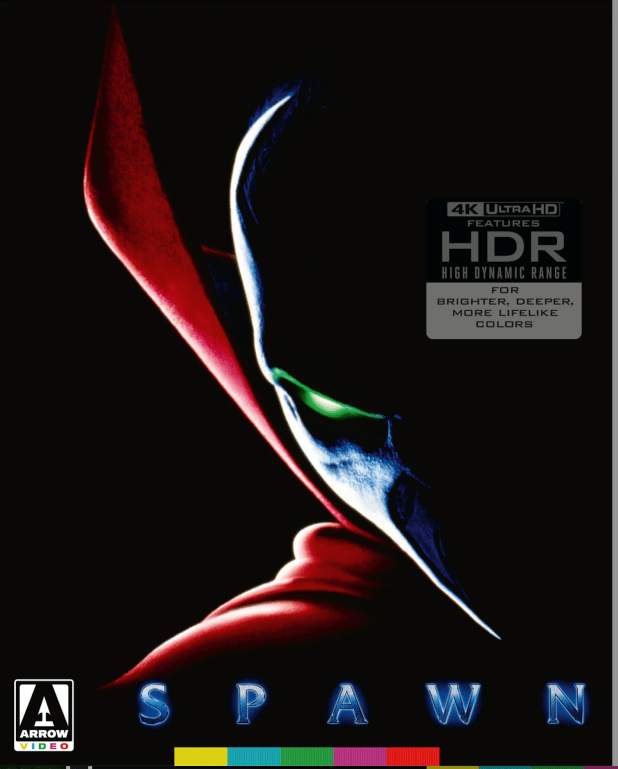
ARROW 4K UHD AND BLU-RAY RELEASE: Spawn: Director’s Cut (1997)

There was a time when comic books were not celebrated. When only the disenfranchised cared or knew about them instead of the mainstream. And in those ancient times — let’s call them 1992 — no news was bigger than when Marvel’s biggest creators left en masse to form Image Comics. At the time, these artists were derided as style over substance. Many of them weren’t known for hitting their deadlines. Or even how to draw feet properly. But one of them — Todd McFarlane —  took the opportunities that his new home presented and made the most of them, creating his signature character: Spawn.

Spawn is everything that McFarlane loved to draw: a muscular hero covered in spandex, chains and a cape that seems to be way longer than it should be. It was an instant hit, giving birth to a toyline, an HBO animated series (which still holds up) and finally, this movie.

Al Simmons (Michael Jai White, playing one of the first African-American superhero to be a movie lead, as this movie and Shaw’s Steel came out at the same time) is a black ops soldier assigned to a mission to investigate a North Korean biochemical weapons site. But he’s been set up by his boss, Jason Wynn (Martin Sheen) and is killed by Jessica Priest, Wynn’s new top assassin. After being set on fire, he winds up in Hell, where Malebolgia offers him a deal. If Simmons will lead his armies to Heaven’s gate, he can see his true love, Wanda, one more time.

You know how those deals with demons work. They’re rarely fair. When he returns to Earth, Simmons learns that Wanda is now married to his best friend Terry(D.B. Sweeney, Fire in the SkyThe Cutting Edge), who is raising his daughter, Cyan.

Malebolgia sends one of his demons, Violator (John Leguizamo), to mentor Simmons. But there’s also Cogliostro (Nicol Williamson, The Exorcist III), who also sold his soul to become a Hellspawn but who has found his way to Heaven.

Meanwhile, Simmons becomes Spawn and attacks Wynn, now a powerful arms dealer. He easily defeats his killer, Jessica, and escapes an attack by an army of mercenaries thanks to his new powers.

Violator — who either appears as a clown or an Alien-esque demon — gets Wynn to add a device to his heart that will release Heat 16, a biochemical superweapon, if he dies. Malebolgia wants Simmons to kill Wynn and start the end of the world. But Violator has his own agenda and nearly kills our hero before Cagliostro saves him. As he learns how to use his powers just as he also learns that Wynn plans on killing everyone he loves.

What follows is a battle on our earth and in Hell, where Spawn denies his contract with the Devil, bests Violator and returns to our reality, ready for the sequel which never came.

Spawn is very of its time, a film packed with early CGI (nearly half of its effects were unfinished until two weeks before it was released) and a soundtrack that mixes techno with hard rock and metal (the Atari Teenage Riot/Slayer mashup “No Remorse” is a highlight). It’s a decent enough film but is a sanitized version of the chaos inside every panel of the Spawn comic. It just feels like something is missing. There’s no real heart in the film, nor any real threat to our hero.

After years of talk of a sequel, McFarlane announced a new Spawn adaptation in 2015, with the goal of the creator writing the script and directing. In July of 2024, it was confirmed that this was true, with the film being produced by Blumhouse. Here’s hoping for something great.

The Arrow 4K UHD and Blu-ray releases of Spawn have 4K restorations of both the Director’s Cut and Theatrical Cut of the film from the original camera negatives by Arrow Films. The reversible sleeve featuring two original artwork options, plus you get an illustrated collector’s booklet featuring new writing on the film by John Torrani and a double-sided foldout poster featuring two original artwork options.
The director’s cut has new audio commentary with comic book expert and podcast host Dave Baxter; archival commentary by Todd McFarlane, Mark A.Z. Dippé, Clint Goldman and Steve Williams; interviews with Michael Jai White, Melinda Clarke, D.B. Sweeney, Howard Berger, Greg Nicotero, Happy Walters and Michael Knue; multiple featurettes; a trailer; scene-to-storyboard comparisons; original Todd McFarlane sketches and a Spawn concept and sketch gallery.

You can order this on 4K UHD or Blu-ray from MVD.