WEIRD WEDNESDAY: The Bees (1978)

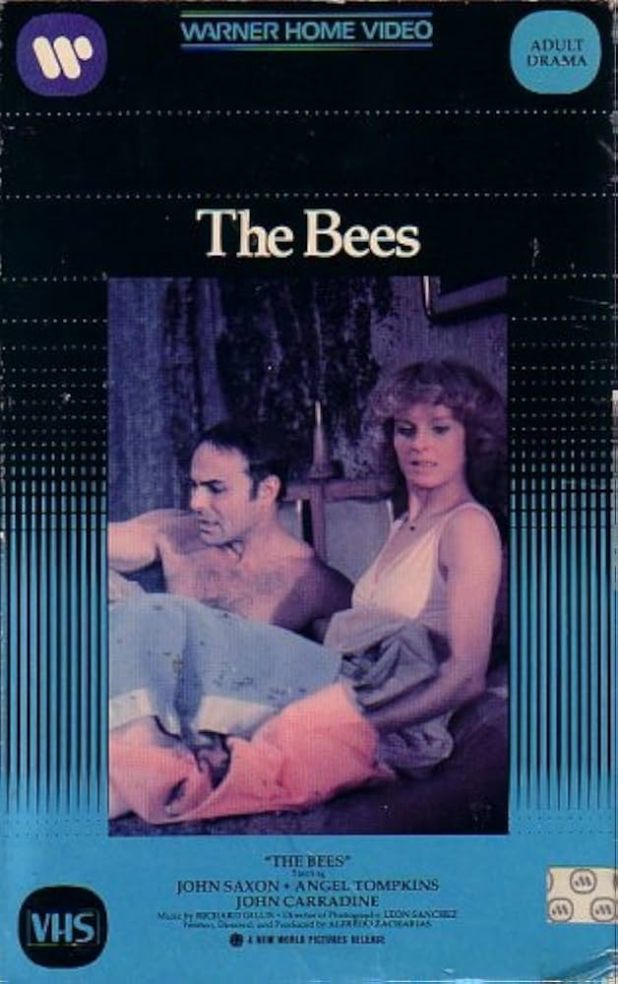
Alfredo Zacarías made Demonoid, and we should thank him for that. He also took advantage of the sheer terror that ensued when the Africanized honey bee was on its way to America. Initially used in Brazil to increase honey production, 26 swarms escaped quarantine in 1957 and spread throughout South America, incredibly defensive and angry bees that supposedly can chase a person for a mile. These bees have killed a thousand people, with many of their victims being stung over and over again. Just imagine six-year-old me watching this on the news every night as we were told repeatedly how close these bees were to us and how doomed we all were.

I also blame the exploitation film industry, which seized upon this and made so many killer bee movies, as they had all the news doing their advertising work for them. There was the 1974 TV movie Killer BeesThe Swarm and this movie, ads filled with just bee after bee, and I’d watch when I was outside, sure today was the day I’d be stung to death.

Jack Hill went uncredited on this as a writer, as he was supposed to direct it, but life didn’t work out that way. It’s the story of South American killer bees who haven’t just been smuggled into the country for experiments, but have also mutated into even smarter than your average bee and use that to kill humans.

It all happens when Dr. Miller (Claudio Brook) is trying to crossbreed the aggressive bees with a much calmer species to make more honey. A local tries to break in and steal the bees, which leads to his angry family and friends burning down Miller’s house, and the bees escaping. Meanwhile, Miller’s wife Sandra (Angel Tompkins) takes the queen to her uncle Dr. Sigmund Hummel (John Carradine, of course) and Dr. John Norman (John Saxon), who have the same goals as her husband, except there’s a honey spy ring trying to make more money off the bees and that means murder.

There’s a scene where Carradine falls to his doom, and I won’t lie—I watched it nine times, and with each rewatch, I loved this movie even more. Also, John Saxon speaks to stock footage of the UN.

You can watch this on Tubi.

WEIRD WEDNESDAY: The Baron (1977)

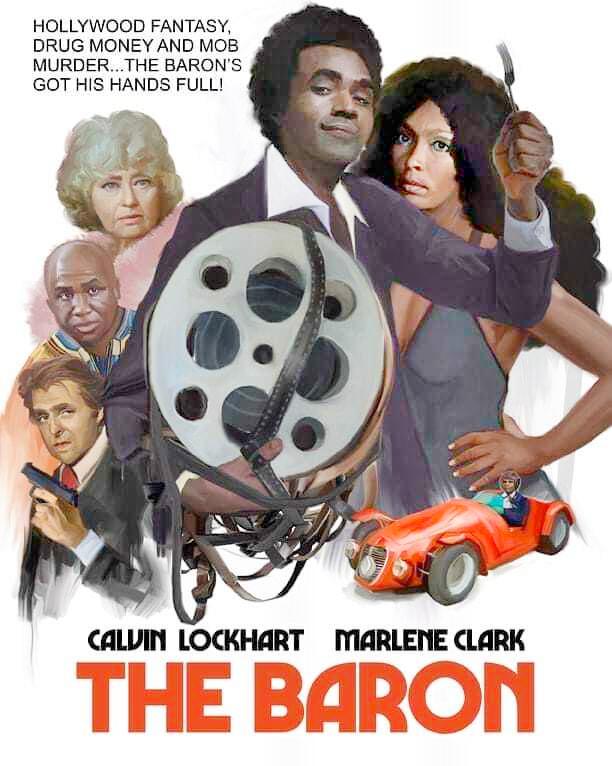
Jason (Calvin Lockhart) is trying to make his auteur — or vanity — project, a movie about Baron Wolfgang von Trips. But the studio wants to buy the project and replace him as director and actor. And then the connection to the studio dies, leaving Jason holding the. bill for the mob who was really paying for this. They send Joey (Richard Lynch) to collect the money as Jason gets hired by The Cokeman (Charles McGregor) to service Old Hollywood actress Joan Blondell, who is playing Mama Lou. As you can expect, his girl Caroline (Marlene Clark) can’t understand. Neither can I. That’s Ganja herself! What are you doing, Jason?

Somehow, in the middle of all this, Gil Scott-Heron did the music.

Also, Calvin Lockhart said, “There’s no stopping what can’t be stopped, no killing what can’t be killed,” in Predator 2.

Director Phillip Fenty also wrote Super Fly, and co-wrote this with his wife Linda and  Nelson Lyon (the writer/director of The Telephone Book!?!). It’s something—a movie past the blacksploitation timeline but with elements of it, Lynch chewing the scenery, dropping sexist, racist and just plain evil dialogue on everyone.

You can watch this on YouTube.

JUNESPLOITATION: Sugar Hill (1974)

June 4: Junesploitation’s topic of the day — as suggested by F This Movie— is Blaxploitation!

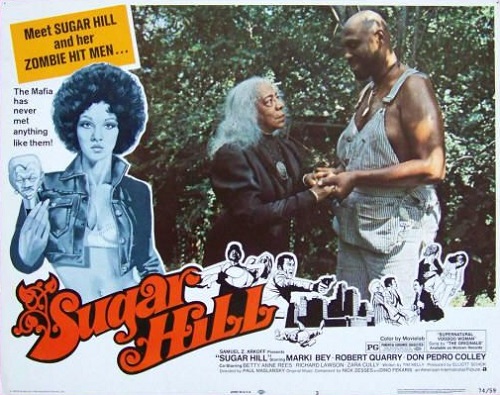
After Blacula and Scream, AIP had already combined Blaxploitation and horror. Now, Diana “Sugar” Hill (Marki Bey) is using zombies to get revenge on mob boss Morgan (Robert Quarry in his last film for the studio) for the death of her man, nightclub owner Langston (Larry D. Johnson). She goes to Mama Maitresse (Zara Cully) and together, they call on the Lord of the Dead, Baron Samedi (Don Pedro Colley), for his assistance.

Unlike the post-Romero zombies, this is calling back to the zombies of movies made in the 1930s. The preserved bodies of slaves brought to the United States from Guinea, they only cost Sugar her soul to get the vengeance she needs. By that, I mean feeding bad guys to pigs and saying, “I hope they like white trash.”

This is the only film directed by Paul Maslansky, who also produced Castle of the Living Dead, Death Line, The She Beast, Damnation AlleyRace With the Devil and, perhaps most importantly, the Police Academy movies. Writer Tim Kelly also scripted Black Fist and Cry of the Banshee.

There weren’t enough mixes like this, but there’s also BlackensteinAbbyGanja and HessJD’s RevengeDr. Black, Mr. HydePetey WheatstrawBones, Def by Temptation, Hood of HorrorBlack Devil Doll from Hell, Tales from the QuadeaD Zone, Killjoy and the Tales from the Hood series.

JUNESPLOITATION: Circle of Iron (1978)

June 3: Junesploitation’s topic of the day — as suggested by F This Movie— is David Carradine!

This movie is fantastic bullshit.

Bruce Lee originally was to write and appear in this, saying in the intro he wrote, “The story illustrates a great difference between Oriental and Western thinking. This average Westerner would be intrigued by someone’s ability to catch flies with chopsticks, and would probably say that has nothing to do with how good he is in combat. But the Oriental would realize that a man who has attained such complete mastery of an art reveals his presence of mind in every action…True mastery transcends any particular art.”

Working with James Coburn and screenwriter Stirling Silliphant, Lee didn’t just want to make the first Western movie about martial arts. He tried to make a movie that would introduce audiences to the philosophy behind martial arts; more than fighting, more about mastering the self.

Coburn and Lee eventually got frustrated by one another—small stuff, like Coburn getting a better hotel room and treatment than Lee, be like water indeed, or Lee nonstop humming pop songs until Coburn screamed at him—and Lee went to Hong Kong to make Fist of Fury, become a star and die.

Lee had intended his movie — you know, the same one that would teach Eastern theories of the martial world — to have  Thai, Cantonese, Arabic and Japanese dialogue, explicit Tantric sex and scenes of genital destruction.

A few years later, Stanley Mann rewrote it, added comedy and brought on board a bunch of the finest all-white actors—some of whom could do martial arts. And that’s how we got this movie, which is ridiculous in all the best ways.

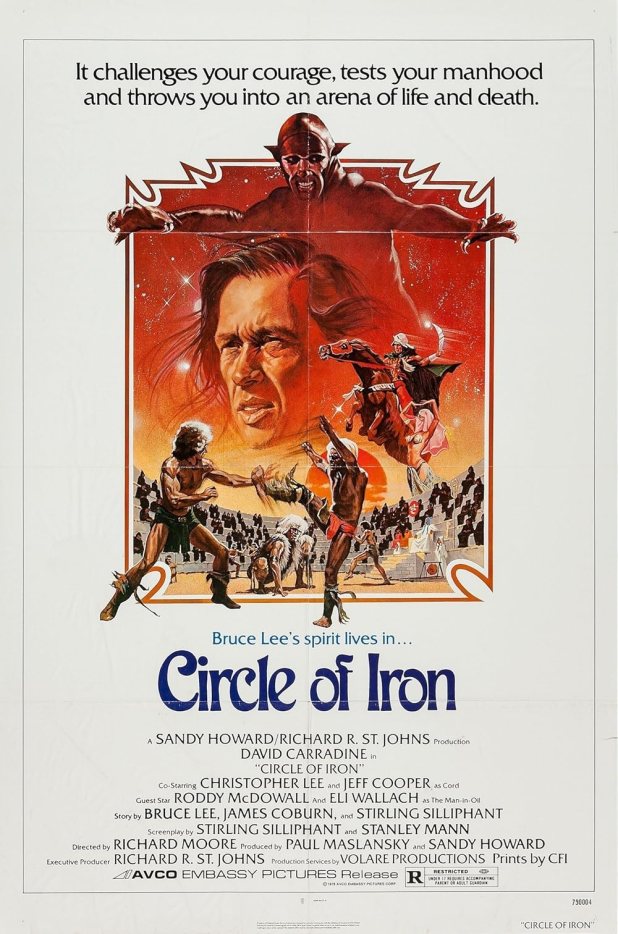
Cord (Jeff Cooper, who played Kaliman in a few Mexican movies) is a fighter who is undisciplined and kicked out of the temple by Roddy McDowall. Yet he still wants to find The Book of Knowledge, which is held by Zetan (Christopher Lee). The man sent on the quest instead of him, Morthond (Anthony De Longis, Blade from Masters of the Universe), has been nearly killed — and demands help to die with honor — and it seems like a fool’s errand. Then Cord meets the mysterious Blind Man (David Carradine) and starts his own quest.

Carradine also plays Death, a Monkey Man and Chang Sha, who uses his wife Tara (Erica Creer) to seduce our protagonist before leaving him behind and her crucified. Cord also runs into Eli Wallach, who has been sitting in a pot of boiling oil for a decade in the hopes that his penis falls off. I did not make that up.

Also known as The Silent Flute, this has director Richard Moore (his only full-length, but he shot the underwater footage for Thunderball and was the cinematographer on The Wild AngelsDevil’s AngelsMyra BreckinridgeThe Stone Killer and Annie) making a mix of a king fu movie and a Zen koan that feels more Holy Mountain than Enter the Dragon.

The flute Carradine plays in this is the same one from Kill Bill: Volume 2.

So yes, this movie is complete bullshit but it’s wonderful bullshit. None of the people other than Carradine seem to know how to do martial arts, and I couldn’t care less. With Lee, this would have been a classic, perhaps, but as it stands, it’s this majestic attempt at something, a movie with dialogue like this:

Blind Man: A fish saved my life once.

Cord: How?

Blind Man: I ate him.

The sound of one hand clapping? You’re watching it.

You can watch this on Tubi.

One Million Babes BC (2024)

No matter what happens in the rest of the world, you can rely on Mark Polonia to keep making movies with awesome posters, great titles and moments where dinosaurs fart, stock animation and footage is used, and eventually, a dinosaur poops all over someone. You might wonder, “Will these cavewomen have sex with one another?” No. There’s no time for that, as we need to be inside a cave made of plastic tarps and brown paper, decorated with marker artwork.

I will not have it any other way. Other people might look at a Polonia movie and get angry, wondering who would want to watch a microbudget movie with dumb jokes and a plot that makes 70 minutes feel like weeks, but just leave the rest of us alone. The world is a rough place; people barely can get along these days, and if I want to sit in my basement and just screen movies like this and wonder what Polonia will make next, I feel like I’m making my part of the world better.

As for the IMDB user who wrote, “Despite the title One Million BC, no babes appear in the film,” you don’t have to be so rude.

You can watch this on Tubi.

JUNESPLOITATION: Devil’s Kiss (1976)

June 2: Junesploitation’s topic of the day — as suggested by F This Movie— is Zombies! 

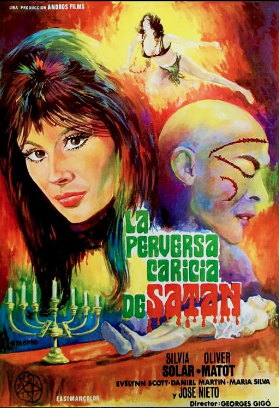
Director and writer Jordi Gigó wrote Exorcismo and wrote and directed Porno GirlsL’espectre de Justine and, well, that’s it. Other than this movie.

Countess Claire Grandier (Silvia Solar, Danger!! Death Ray, Cannibal TerrorEyeball) and telepathic Professor Gruber (Olivier Mathot) have bought a castle, a place where they can ride horses, have lavish dinners, make sweet love and, you know, get a dwarf (Ronnie Harp) to help them create the living dead. But when they’re not doing that, they’re using the castle for fashion shows, which is how we get a bevy of Eurocult ladies to show up, turn on, tune out and get nude. Man, the fake eyelashes budget on this…

Also, the Countess hates the castle owner, Duke of Haussemont (José Nieto), whom she blames for killing her husband, taking her money and forcing her into a life of zombie making and model murdering. Yet he lets them stay in the castle as ghostbusters when they’re the ones making the ghosts or zombies.

The castle looks excellent, the flashbacks feel like a silent movie, it’s more Frankenstein than Romero, there’s full frontal nudity, poor zombie makeup, a Jess Franco feel and by that I mean this movie is beyond horny and wants you to know that, the Book of Astarov, Satanic rites, a movie that feels like an Electric Wizard song and appearances by María Silva (Curse of the Devil) and Evelyne Scott (Shining Sex), a strong undercurrent of anything can happens next and lots of fog. Some people would hate this. Those people are jerks.

The original title — La perversa caricia de Satán (Satan’s Perverse Caress or The Wicked Caresses of Satan) — is precisely why I watched this.

JUNESPLOITATION: Almost Human (1974)

June 1: Junesploitation’s topic of the day — as suggested by F This Movie— is Italian crime!

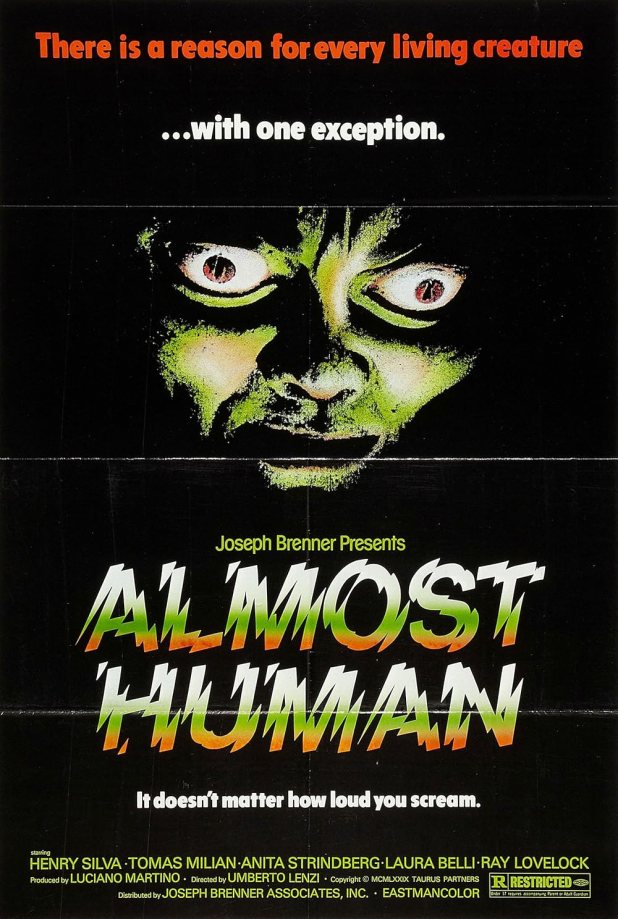
Milano odia: la polizia non può sparare (Milan Hates, The Police Can’t Shoot) is another reminder that Umberto Lenzi is the greatest, regardless of genre. He mastered gialli (Spasmo, So Sweet… So Perverse, OrgasmoSeven Bloodstained OrchidsEyeball) as well as war movies (Bridge to Hell, From Hell to Victory), poliziotteschi (Rome Armed to the Teeth, Violent NaplesThe Cynic, the Rat and the Fist), peplum (IronmasterSamson and the Slave Queen), Eurospy (SuperSeven Calling Cairo008: Operation Exterminate), cannibal films (Eaten Alive!Cannibal FeroxMan from Deep River) and enjoyable junk (Nightmare CityGhosthouseNightmare BeachHitcher In the DarkBlack Demons).

Throw in a script by Ernesto Gastaldi, and you have a war between Giulio Sacchi (Tomas Milian) and Inspector Walter Grandi (Henry Silva). Not everyone in their world will survive. Hell, the two of them might not even make it.

After screwing up a bank robbery and being threatened with castration, Saachi goes absolutely wild and pretty much kills everyone in his path. Tomas Milian must have heard that David Hess was coming to Italy and said, “Let me show you something.” He’s an equal opportunity maniac in this movie, as everyone is in the crosshairs. He might have a gorgeous woman like Iona (Anita Strindberg) in love with him, supporting him, and yet he comes home just to assault her at will. Then, he uses her to take her boss’ daughter, Mary Lou (Laura Belli), and ransom her life, as if life means anything to him.

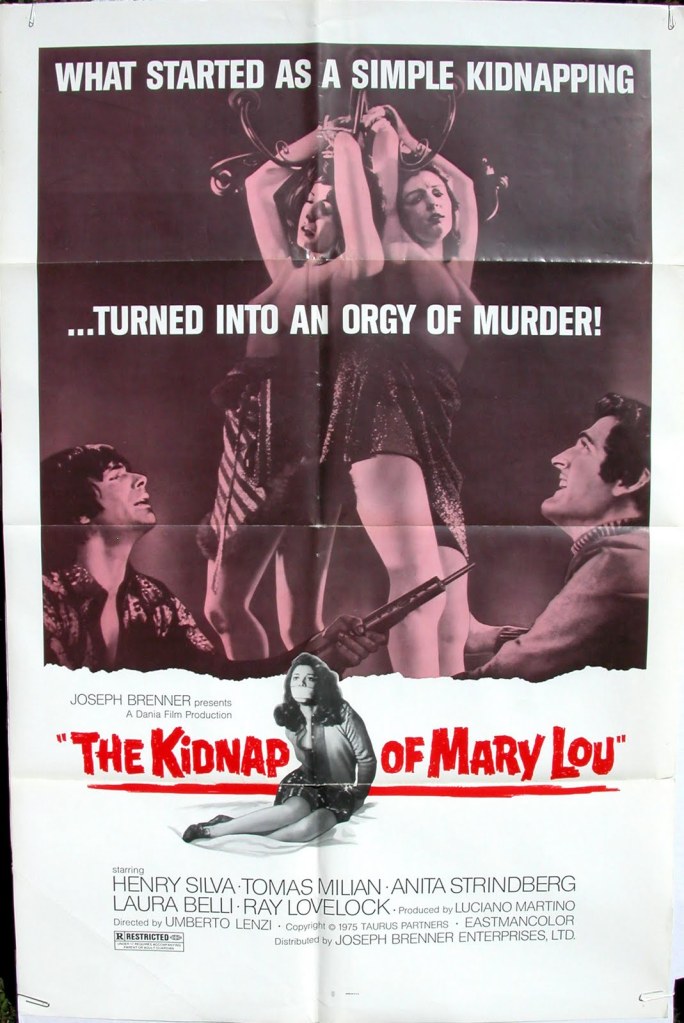
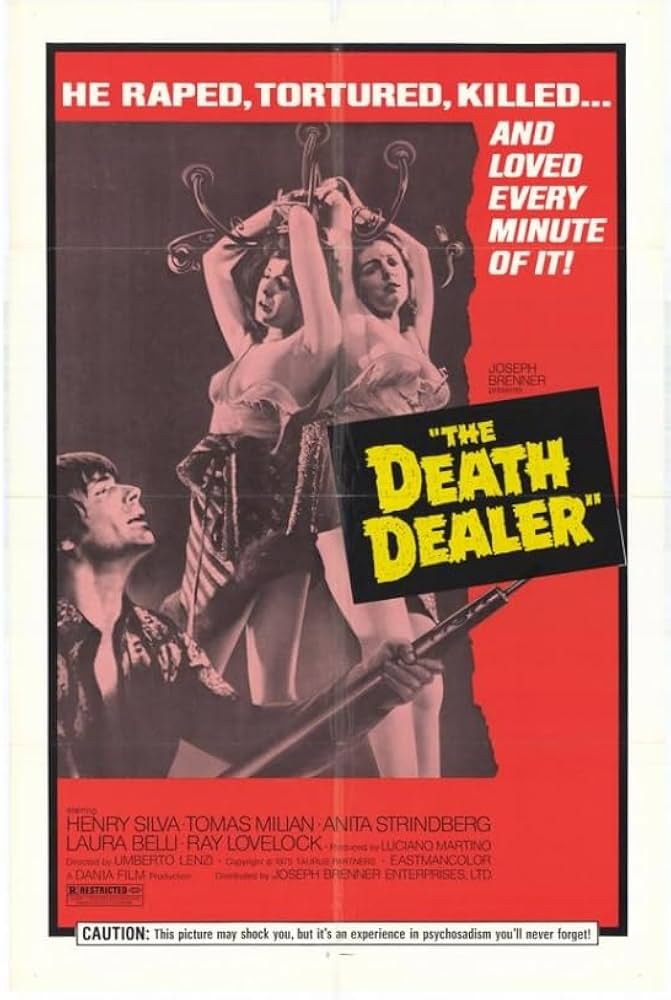
His partners Carmine (Ray Lovelock) and Vittorio (Gino Santercole) aren’t ready for the drugged-up menace that Saachi is about to bring. Tying people to a chandelier and letting it spin as he plays roulette with his victims? That’s just the start. No one is safe, whether that’s old people, people begging for their lives, cops, children…even a man who Saachi forces to go down on his little Giulio while he keeps a gun at his head. They have second thoughts about being in a gang with him, but who will tell him he’s going off the deep end?

Morricone soundtrack, Silva as a cop, you’re just waiting to go insane, lawyers getting scummy crooks off with no charges, justice in the streets—this has it all. And so much more. And wow, it was so close to being a totally different movie, with Richard Conte playing the cop and Marc Porel playing the criminal, but Lenzi found the actor  “unreliable from both a human and professional point of view.”

As it was, Lenzi’s first meeting with Milian didn’t go well. Milian heard that Lenzi was an impulsive director who could go off on his actors, but by the film’s end, they realized they could work together in a love/hate way for seven films. As for how Millian got this performance, in true Method style, he drugged and drank it up before Lenzi said, “Action!”

That’s how you do it.

Over here,  Joseph Brenner released several times, first as The Kidnap of Mary Lou, then a year later as The Death Dealer and finally in 1980 as Almost Human. All hail Temple of Schlock.

You can watch this on Tubi.

Sesso Perverso, Mondo Violento (1980)

Bruno Mattei. Claudio Fragrasso. This was the sequel to Libidomania, or as the Italians called it, Sesso perverso. This was to be directed by Joe D’Amato and edited by Bruno, but he demanded that if he was forced to work on a mondo — so they say — he had to direct it. I imagine Joe just laughed and nodded, then went off and made ten movies in three days.

This time, the movie explores the world of adult films, but as you’d expect with a mondo, it’s all fake. Fake couples telling fake stories about their fake lives, then women eat ice cream in dirty ways, and the movie spends too much time exploring the deviant practice of homosexuality, which, come on, this is 1980, guys. It’s not even remotely deviant. Does it sell pictures any longer?

Speaking of mondo and fake, the end has reporters saving one of their own, a half-nude woman, from a woman who has already had a meal of her husband, who is now a rotten corpse covered by maggots because look, if we Italians love anything more than sex, violence and fake foreign footage, it’s either real animal violence or maggots. I’d rather have maggots, and then another native is castrated while the once captive reporter does a striptease.

Italian adult star Guia Lauri Filzi (who was uncredited and yet played a very memorable role in Emanuelle In America as the actress in the snuff film) and Maurizio Tanfani (Sex of the Witch, Mattei’s AD on The Other Hell) appear, and if you find the right version—look, 20 people or so have even cared about this on Letterboxd, so probably not—there are inserts.

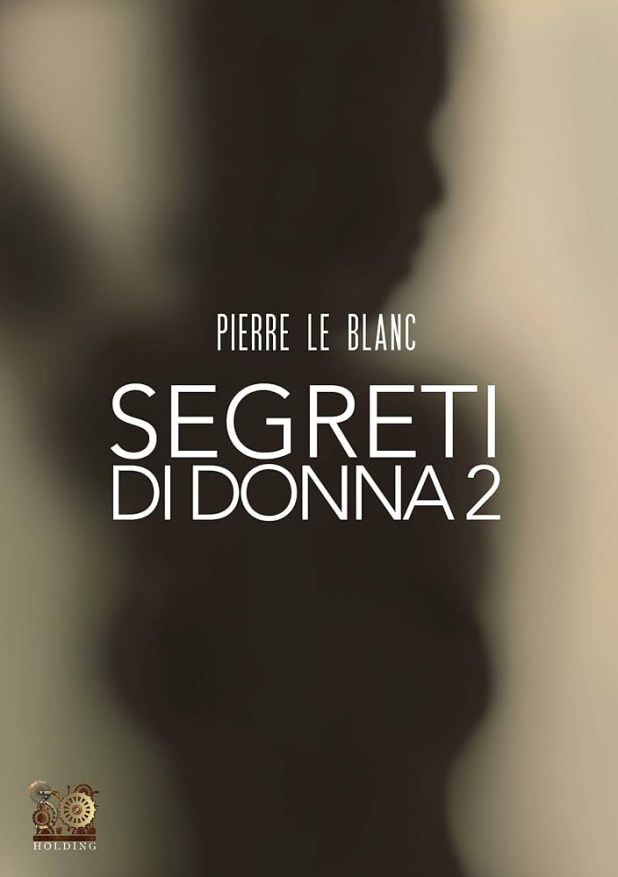
Segreti di donna 2 (2005)

The Dark Side of a Woman was directed by Pierre Le Blanc, but by now, we all know that this is Bruno Mattei. When the rest of his Italian exploitation brothers were either dead, retired or relegated to making TV movies or pornography, Bruno was still out there. Here, he’s 74 years old and still making the kind of movies he directed throughout his entire career.

Jane Dimao (Yvette Yzon, who is seemingly the 2000s version of Laura Gemser for Mattei, appearing in Island of the Living Dead, Zombies: The Beginning (yes, the sequel is the beginning), The Jail: The Women’s Hell and the first film in this series, Segreti di donna) is back from America, working as a women’s sexual pathology psychologist, continuing the work that she studied with her mentor, American sexologist Nicole Wilson. Did you not see the first movie? Good news. Bruno is not above reusing footage.

Jane wants to experience these sexual pathologies for herself, and I have no idea why Bruno didn’t just call this Black Emanuelle 2005. This means that she goes to a swingers club, has sex in a spa and even makes love in front of others. However, when she tries to be a lady of the night, she’s assaulted because Italians love that in their movies. No, I don’t get it either and I’m Italian.

That said, Yzon always gives her all to these movies, and I love that Bruno was heading over to the Phillipines as an old man, shooting dirty—but not really all that filthy—movies on his digital camera and making movies that are nearly quaint when compared to the unleashed carnal depravity anyone can find on the internet.

Ambrogio: The First Vampire (2025)

ABOUT THE AUTHOR: Exploitation-film historian A.C. Nicholas, who has a sketchy background and hails from parts unknown in Western Pennsylvania, was once a drive-in theater projectionist and disk jockey. In addition to being a writer, editor, podcaster, and voiceover artist, he’s a regular guest co-host on the streaming Drive-In Asylum Double Feature and has been a guest on the Making Tarantino podcast. He also contributes to the Drive-In Asylum fanzine. His essay, “Of Punks and Stains and Student Films: A Tribute to Night Flight, the 80s Late-Night Cult Sensation,” appeared in Drive-In Asylum #26.

Ambrogio: The First Vampire is a microbudget horror film produced, executive produced (dude, you shouldn’t credit yourself as both), written, directed, and starring Alex Javo, a young Georgia filmmaker. The short 74-minute feature is, from its press summary, about “Ambrogio, a millennium-old vampire and the first of his kind, [who] encounters a woman who resembles his long-lost love. He calls upon the gods to shield her from rivals hellbent on revenge.” It’s ambitious, perhaps too ambitious, for its own good and tiny budget. Instead of writing a straight review, I’m going to give the filmmaker some notes. There’s some raw talent on display here, and I’d like to see another—and better—film from Javo soon. 

Now you’re asking yourself, what qualifies me to give notes to a filmmaker? Well, I’ve studied and written about film all my life (over 5,000 movies in my Letterboxd list). I have a huge collection of books on filmmaking. I’ve also been involved as an actor in corporate training films. And I’m a trained voiceover artist, with a supporting role in an animated feature on the way, and audio engineer. With that background out of the way, let’s analyze this film.

The basic concept of the film about an origin vampire or “vampire zero,” mixing traditional vampire lore and Ancient Greek and Roman mythology, is creative, and the attractive leads, Javo and Angelina Buzzelli, have nice screen presences. Javo gives it his all as the star—he’s not a bad actor and effects a decent pigeon Italian accent. Buzzelli, on the other hand, doesn’t get much to do; her part is woefully underwritten. The attempt to give her character a backstory as a battered woman doesn’t amount to much in the scheme of things. But the biggest issue I have with the film is that it’s a collection of scenes stuck together without transitions. Instead of a smooth, natural progression of a cohesive narrative, we get a bunch of scenes, sometimes like little sketches, separated by blackouts and whiteouts. You could take most of the scenes and reedit them in whatever order you wanted because they don’t hang together. This is not an uncommon problem, even for a huge-budget studio film, like the James Bond film, Spectre.

With this scene-drop approach, the film is a scattershot affair of origin story, doomed love story between human and vampire (an overused trope if ever there was one), and revenge-o-matic with Ambrogio, Dracula, and King Hades. I would’ve dumped the bad cosplay origin and boring love stories and focused on a single plotline with the three oddball supernatural characters. And while on the topic of oddball characters, I found Roland, Ambrogio’s loyal familiar/servant, to be the most interesting. He’s written to have a kind of droll, nonchalant presence in contrast to his master’s over-the-top emotionality. But while Zane Pappas tries his hardest to make something of the part, it’s beyond his grasp. The character, the film’s comic relief, needs funnier lines that hit harder.

As for the other supporting players, I admire their sincerity and dedication. But even compared to other microbudget films, the acting here generally ranges from not good to barely adequate. I enjoy seeing the now-familiar folks who pop up in these Texas-Georgia-South Carolina regional films. Caylin Sams, so good in David Axe’s excellent Left One Alive, is underutilized in a small part. One scene, featuring three characters with their accents really made my head hurt. (What type of accent does Niko’a Salas’s Dracula have? Pigeon Italian? Pigeon Italian-Czech? Todd Slaughter hammy?)

Moving on to the film’s technical credits, I applaud everyone for making, completing, and releasing a microbudget film. While we didn’t call them “microbudget” films back in the 1970s, we had them, and the foremost proponent was filmmaker Andy Milligan. Like Javo, Milligan was a one-man band who did just about everything, including sewing the costumes. He attempted ambitious period pieces set in England but which were filmed on Staten Island. And his films, while beloved by the craziest and most jaded of cult cinephiles (like me), always featured horrendous acting, modern light switches in “Victorian” mansions, out-of-focus shots or shots that cut off the tops of the actors’ heads, and screaming, lots of screaming. Ambrogio: The First Vampire is so much better made than that, but technically, it still has issues. 

As previously mentioned, the editing mostly just strings together black-out sketches. The cinematography, while competent, makes the film an overly bright affair, with no atmosphere, giving it the look of a telenovela. It’s also statically shot almost entirely in medium and medium-long shots, making for a tiresome watch: Everything’s too tight. (It’s okay to show actors’ legs and feet.) The film needs color timing to even out the way the shots look from scene-to-scene. In Milligan’s day, that was an expensive lab process, way beyond Milligan’s budget. Today, you can cheaply and easily do it using software.

A documentarian friend of mine once told me that while viewers will forgive a few flaws with video, like lens flares (hell, that’s director J.J. Abrams’s stock-in-trade style), audio mistakes are inexcusable. Unlike a lot of microbudget horror films I’ve seen, the audio here is clear. But in a couple of scenes—one with voiceover narration—the actors literally whistle some of their lines. This is what is known as sibilance, the harsh hissing or whistling sound you get when some people pronounce the letter “S.” (I saw a corporate training film once that had so much annoying sibilance that I had to leave the room; it was like needles in my eardrums.) Milligan would’ve had to rely on expensive hardware filters to remove the sibilance — and he had no money for that. Today, you can use a cheap computer plug-in called a de-esser (get it?) for a cleaner sound. As for the score, it seemed unmemorable to me, but then again, it was lost in the sound mix. That’s another thing that’s easily fixable.

Production design, using found locations, is what it is and is fine. The same with costumes and make-up, not bad at all. The few special effects on display are of the “not good, but I’m okay with it” variety. 

Finally, my overarching note. I can only imagine how much work Javo put into his labor of love: drumming up the production money, writing the screenplay, casting, directing, learning an accent, playing the lead, and otherwise hustling on behalf of his film. That unfortunately spread him thin, often a problem with multi-hyphenate filmmakers. (For example, as fantastic as Ed Norton is, he should have limited himself to acting and found someone else to direct Motherless Brooklyn.) For his next project, I would like to see Javo either direct or act, but not do both.

While that may seem like a lot of notes, with more negatives than positives, I like the folks involved with Ambrogio: The First Vampire, and I hope they take my suggestions to heart with their next film. Thanks to Alex Javo for sending me a copy of the film for this review.