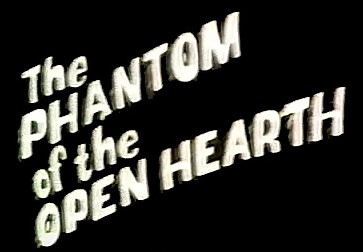
A CHRISTMAS STORY: The Phantom of the Open Hearth (1976)

I saw someone whining that the new A Christmas Story Christmas recast the mother and was a sequel to a movie that didn’t need a sequel. Little did they know that it was the ninth — if you count the A Christmas Story Live! TV movie — story of the Parker family, a series of films that began seven years before its best-remembered installment.

All of these stories are based on the writing of Jean Shepherd, who often told stories of his childhood in the fictional town of Hohman, Indiana (he grew up in Hammond) on the radio. After publishing those stories in Playboy, but he never intended to be a writer.

Hugh Hefner claimed that The Giving Tree author Shel Silverstein asked Shepherd to write down his radio stories, but he never saw himself being a writer. So Silverstein recorded the shows off the radio, transcribed them and worked with Shepherd to turn them into written works.

His first book, In God We Trust: All Others Pay Cash, contains many of the stories of the Parker family, stories that despite having the names of real people and real places, are all from Shepherd’s imagination. These memories come in the form of Ralph, who has returned to his home town as an adult, telling these stories to his friend, Flick, who now runs the bar where their fathers used to drink.

Four of the stories in the book — “Duel in the Snow, or Red Ryder Nails the Cleveland Street Kid,” “The Counterfeit Secret Circle Member Gets the Message, or The Asp Strikes Again,” “My Old Man and the Lascivious Special Award That Heralded the Birth of Pop Art” and “Grover Dill and the Tasmanian Devil,” as well as “The Grandstand Passion Play of Delbert and the Bumpus Hounds” from Shepherd’s second book Wanda Hickey’s Night of Golden Memories make up A Christmas Story.

But before that, on December 23, 1976, The Phantom of the Open Hearth aired as an episode of PBS’s anthological television series Visions. It features Shepherd as the adult Ralphie and David Elliot as the teen version in a story of Ralphie trying to decide between taking Daphne Bigelow (Tobi Pilavin) or Wanda Hickey (Roberta Wallach) to the school dance, all while his father (James Broderick) anticipates winning a major award that this film explains is a leg lamp because the contest was sponsored by Ne-Hi Soda and that was their logo. While all thatis going on, Randy (Adam Goodman) annoys Ralphie and mom (Barbara Bolton) is obsessed with getting free fine china from the movie theater.

Directed by Fred Barzyk (Jean Shepherd’s AmericaThe Lathe of Heaven) and David Loxton (Countdown to Looking Glass) from a script by Shepherd, this led to another PBS movie, The Great American Fourth Of July and was almost a TV series in 1978. The pilot was directed by John Rich and written by Shepherd and was also called The Phantom of the Open Hearth. That’s where the line “Oh, fudge (but I didn’t say fudge)!” comes from.

Its a little jarring to see the adult adventures of Ralphie while still interesting to get a different perspective.

You can watch this on YouTube.

Night Gallery episode 3: The House/Certain Shadows On the Wall

Originally airing on December 30, 1970, this episode of Night Gallery starts to get darker than the season has been up to now.

Elaine Latimer (Joanna Pettet, The Evil) has spent her time in a mental hospital dreaming of a country road that leads to the house of her dreams. Pettet is a fixture on this show, also appearing in the stories “The Caterpillar,” “Keep in Touch – We’ll Think of Something” and “The Girl with the Hungry Eyes.” Consider this a short F giallo, as we wonder if Elaine has lost her mind or perhaps she has finally learned where she belongs.

Directed by John Astin, this story was based on an original story by Andre Maurois and the script was written by Serling.

“Certain Shadows On a Wall” brings Agnes Moorehead back to working with Serling, as her character Emma is killed by her brother Stephen (Louis Hayward), yet remains a shadow on the wall watching as her sisters Ann (Grayson Hall) and Rebecca (Rachel Roberts) plan Stephen’s demise.

Directed by Jeff Corey — who is mostly known for acting; he was Zed in Battle Beyond the Stars and was also in Jennifer and The Premonition — this was also a Serling script, this time based on a story by Mary Eleanor Freeman.

While neither story is fully realized, this episode finds the show heading for the twisted tales that make me adore it so much.

Night Gallery episode 2: Room with a View/The Little Black Bag/The Nature of the Enemy

Originally airing on December 23, 1970, Night Gallery expanded to three stories for this episode.

“Room with a View” was directed by Jerrold Freedman (A Cold Night’s Death) and written by Hal Dresner (The Eiger Sanction) and it’s all about a bedridden man named Jacob Bauman (Joseph Wiseman, Dr. No) who learns that his wife Lila (Angel Tompkins, Murphy’s Law) is sleeping with someone else. His revenge scheme involves the young nurse (an unbelievably young Diane Keaton) who is there day and night with him.

“The Little Black Bag” is directed by Jeannot Szwarc (Jaws 2, making that two Jaws directors who worked on Night Gallery) and written by Rod Serling from a story by C.M. Kornbluth. It tells the tale of William Fall (Burgess Meredith) finding the medical bag of Gillings (George Furth), a doctor from the future. This same story was also adapted on the show Tales of Tomorrow with Charles S. Dubin directing.

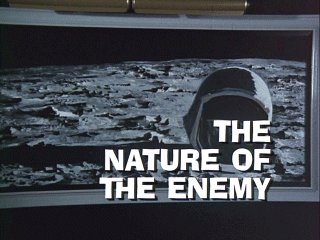
“The Nature of the Enemy” is directed by Allen Reisner and written by Serling from a story by Cyril M. Kornbluth, a science fiction writer who died way too young. The director of NASA (Joseph Campanella) tries to keep control after life is found on the surface of the moon.

The second episode of this series — much like the first — doesn’t live up to the promise of the pilot. Soon, though, this would get much better.

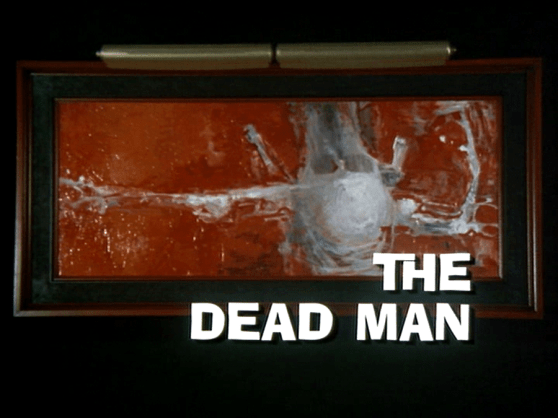
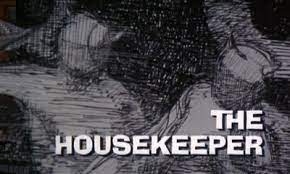
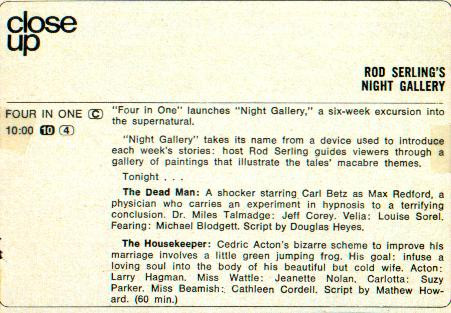
Night Gallery episode 1: The Dead Man/The Housekeeper

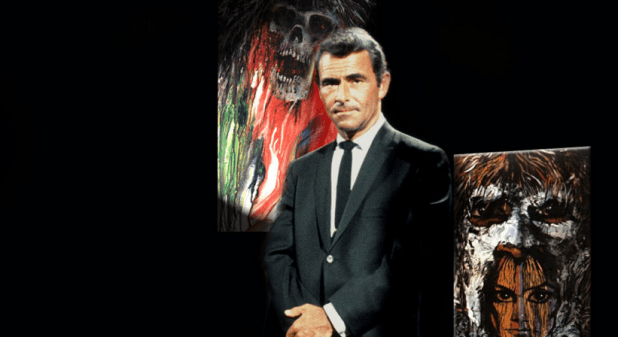
Originally airing on December 16, 1970, Night Gallery returned from its pilot a year later with two new stories, starting with Serling walking out of a floating gallery and saying, “Good evening, and welcome to a private showing of three paintings, displayed here for the first time. Each is a collector’s item in its own way—not because of any special artistic quality, but because each captures on a canvas, suspended in time and space, a frozen moment of a nightmare.”

The first story, “The Dead Man,” was written and directed by Douglas Heyes (Kitten With a Whip). Based on the short story by Fritz Leiber, it’s a very Amicus-style story of Dr. Max Redford (Carl Betz) and Dr. Miles Talmadge (Jeff Corey) discussing a medical technique in which different taps can make a person sick or well. One of those patients, John Fearing (Michael Blodgett), has come back numerous times sick from a variety of afflictions despite looking like the picture of health. Meanwhile, Reford’s young wife Velia (Louise Sorel) is falling for this paranormal patient. Of course, the doctor ends up causing the death of his patient and the mental collapse of his wife.

“The Housekeeper” was directed by John Meredyth Lucas and written by Heyes. Cedric Acton (Larry Hagman) is married to Carlotta (Suzy Parker), a rich woman who is cruel to him. He hopes to move the brain of his new housekeeper Miss Wattle (Jeanette Nolan) into the body of his gorgeous young wife. It’s a comedic instead of a frightening story — Night Gallery would suffer from more of this in the second season — but Hagman is good, just coming off his run on I Dream of Jeannie.

MILL CREEK NIGHTMARE WORLDS: The Disappearance of Flight 412 (1974)

Oh man, 1970s TV movies and UFOs go together like blood and half-naked teenage camp counselors.

U.S. Air Force Colonel Pete Moore (Glenn Ford), the commander of the Whitney Air Force Base 458th Radar Test Group, has sent a crew made up of Captain Bishop (David Soul), Capt. Riggs (Robert F. Lyons), Lt. Ferguson (Stanley Bennett Clay) and Lt. Podryski (Greg Mullavey) out on flight 412, which the title tells us is of course going to, you got it, disappear. Well, the UFO doesn’t cause that, but government spooks sure do. And that means that Moore and Major Mike Dunning (Bradford Dillman) have to find out what happened.

Shot like a documentary, this movie has some major issues when it comes to accuracy. When the first scenes of the jets are shown, they’re U.S. Marine McDonnell Douglas F-4B Phantom II fighters. Later, Grumman F9F Panther fighter aircraft are shown, planes that didn’t fly after the 50s. Maybe that was the government doing that, adding disinformation to a movie that is supposed to give us the real info on aliens.

Director Jud Taylor mainly worked in TV and is known for TV movies like Revenge!Weekend of TerrorSearch for the GodsAct of Love and the TV miniseries of The Old Man and the Sea. It was written by George Simpson (who mainly worked in sound for movies) and Neal R. Burger. They also wrote the 1990 TV movie Ghostboat together as well as the novel it was based on and the books Thin Air, Fair Warning, Severed Ties and Blackbone.

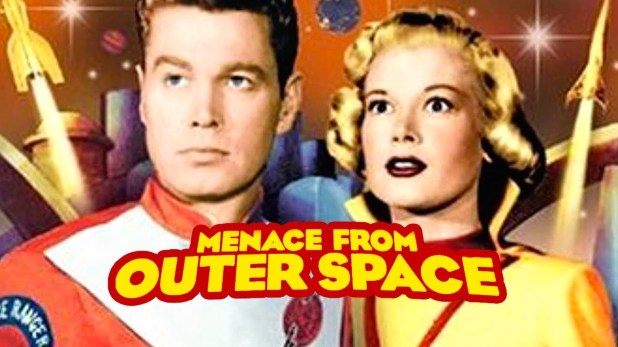
MILL CREEK NIGHTMARE WORLDS: Menace from Deep Space (1956)

Clean-cut, square-jawed Rocky Jones of the Space Rangers was the lead character of a syndicated science fiction series that ran for two seasons from February to November of 1954. Shot in black and white, the show was about Rocky’s adventures as the space policeman for the United Worlds. Flying in his Orbit Jet XV-2 — and later the Silver Moon XV-3 — Rocky was a victim of budgets, as despite having a laser gun, he often defeated villains with his fists. Just as often, those villains were people in costumes speaking English instead of some alien tongue. Also, no matter where women came from — even lead villain Cleolanta, Suzerain of the planet Ophecius — they all love him in a precursor to the way James T. Kirk would be able to land any lady, even the green ones.

Rocky Jones was created by Roland D. Reed and starred Richard Crane as Rocky and former Our Gang member Scotty Beckett as Rocky’s co-pilot Winky. It was sponsored by Gordon Baking Company, which is why one of Rocky’s other ships was called the Silvercup Rocket after one of their bread brands. The show was greeted with a ton of cash-in merchandise, including watches, space dollars, badges, buttons, records, comic books and clothing.

Charactets changed in the last season, due to Professor Newton (Maurice Cass) dying of a heart attack — he was replaced by Professor Mayberry (Reginald Sheffield) — and Winky (Scotty Beckett) being arrested for possessing a weapon after being implicated in an armed robbery at the Cavalier Hotel in Hollywood. He left for Mexico, wrote some bad checks, got in a gun battle with the police and was jailed until he came back to the U.S. in 1954. He was replaced by a new comedy character, Biffen Cardoza (James Lydon). As for Cleodata, the new enemy became Juliandra, Suzerain of Herculon, played by Ann Robinson.

There are 39 episodes of the show with 36 being broken into 3-chapter arcs that were edited into TV movies. Menace from Deep Space are the “Bobby’s Comet” episodes that originally aired on April 6, 1954. The story is all about the Jovian moon Fornax, which is filled with energy crytals that Rocky and his friends — as well as his enemies — all want. Is it a Cold War analogy? Probably not. Yet the villains do dress like Arabic people and Cleodata refers to Rocky as an infidel, which is pretty strange.

There may be a kid sidekick, but Rocky’s love interest Vena Ray (Sally Mansfield) sure has a fancy car.

Ralston also sponsored a show called Space Patrol and working with Blue Bird shoes, gave away a spaceship. Here’s the ad copy courtesy of Solar Guard: “A hugh silver and scarlet rolling clubhouse, the Commander’s rocketship, the Terra IV. The ship is 35′ long, 10,000 lb in weight with a full size motorized flatbed truck to pull the Rocket. You can take the rolling clubhouse on trips, camp outs with your dad, sightseeing trips, or use it for you and your friends Space Patrol Headquarters. It has bunk beds lights, cooking equipment, and lockers for space gear. In addition to the Ralston Rocket there is $1,500 in cash to spend.”

There was also supposedly a rocket that traveled to promote Rocky Jones and for years, I’d hear rumors that people had found it. Imagine having your own space ship.

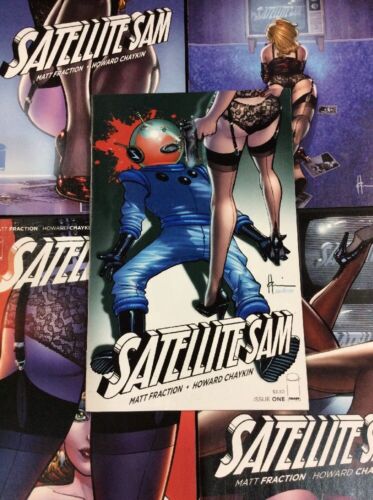
For a fictionalized retelling of the days of space kids TV, check out the Matt Fraction and Howard Chaykin comic book Satellite Sam.

MILL CREEK NIGHTMARE WORLDS: Good Against Evil (1977)

EDITOR’S NOTE: This was originally on the site on December 5, 2018.

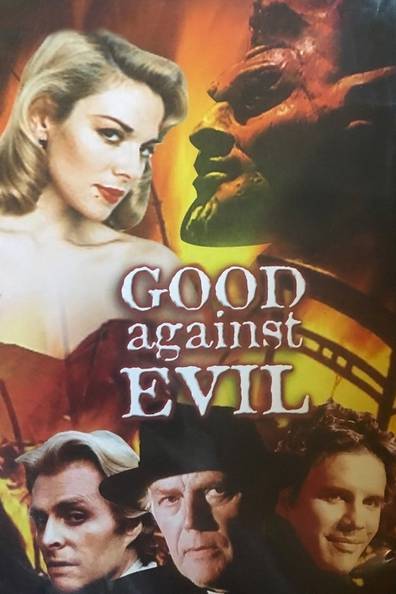
Originally airing on May 22, 1977, this attempt at a weekly series comes from director Paul Wendkos (The Mephisto WaltzSecretsHaunts of the Very Rich) and Hammer veteran Jimmy Sangster (The LegacyScream, Pretty PeggyHorror of DraculaThe Revenge of Frankenstein).

I was really excited about the potential of this one, which promises from its Amazon listing that writer Andy Stuart (Dack Rambo) teams up with an exorcist named Father Kemschler (Dan O’Herlihy!) to battle Satan and a group of devil worshipers led by Mr. Rimmin (Richard Lynch!).

Seems like Rimmin has been after a girl named Jessica from the moment she was born, as her mother was drugged and attended to by nuns who took her baby away the moment it was born. Her mom was then killed by a black cat and Jessica is raised by his people, with her origins kept a secret.

When Andy and Jessica hook up and decide to get married, she’s unable to even get near the altar. That’s because she’s been promised to the demon Astaroth and must be kept a virgin until the beast comes back and puts a devil baby in her womb. Now, the cult that has been behind every moment of her life must keep her a virgin by cockblocking Andy at every turn.

I was totally prepared for pure 1970’s Satanic bliss, only to find myself in the midst of a relationship drama for much of the films first half. Sure, there was a flashback where a woman imagined a nearly nude and totally burned up Lynch — he came by those scars the hard way — attacking her. I was thinking — is this the TV movie version of Enter the Devil — only for cruel reality to make me learn differently.

That said, there are some good moments here, like a woman being killed by her own housecats under Rimmin’s command. And Elyssa Davalos as Jessica has plenty of great qualities that make her a wonderful horror heroine in distress. And while she’s top billed when you look this film up, Kim Cattrall makes a short appearance.

I wanted to love this. It has all the elements that you would think would lead to magic. Yet it can’t put them all together. Sometimes when you deal with the devil, you don’t get what you wanted.

NIGHT GALLERY: Pilot episode

There’s never been a better TV anthology — when it’s firing on all gears, that is — than Night Gallery. Sure, The Twilight Zone is a classic, but there are moments on this show that are still terrifying nearly fifty years later.

I remember as a kid I had a book called The TV Guide Book of Lists that I devoured. I kept coming back — and being afraid — of a list by Anton LaVey that inscribed the ten most Satanic TV shows of all time. Night Gallery was all over that list and for good reason. This show lives up to the quasi-religion he set forth on Walpurgisnacht, April 30, 1966.

“Good evening, and welcome to a private showing of three paintings, displayed here for the first time. Each is a collector’s item in its own way—not because of any special artistic quality, but because each captures on a canvas, suspended in time and space, a frozen moment of a nightmare.”

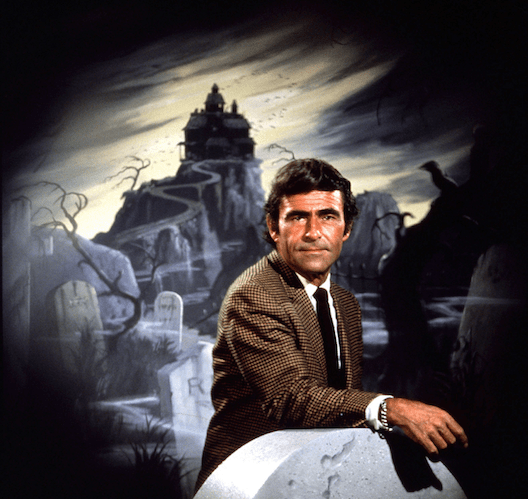
With those words, host Rod Serling would walk out of a gallery filled with paintings by Thomas J. Wright and Jaroslav “Jerry” Gebr. He created the series along with Jack Laird and one of the reasons why this show isn’t seen in the same light as The Twilight Zone is because Laird loved goofy humor in his horror, so there are “blackout” sketches interspersed throughout the show. Serling hated those scenes with a passion, saying “I thought they distorted the thread of what we were trying to do on Night Gallery. I don’t think one can show Edgar Allan Poe and then come back with Flip Wilson for 34 seconds. I just don’t think they fit.”

The show was part of a rotating anthology series called Four in One. This 1970–1971 television series rotated four separate shows, including McCloud, SFX (San Francisco International Airport) and The Psychiatrist. Only McCloud and Night Gallery were renewed and became full series for the 1971-1972 season.

One of the other reasons why this show isn’t held in higher esteem is because so many people never saw it in its original form. In order to increase the number of episodes that were available for syndication, the 60-minute episodes were re-edited for a 30-minute time slot, with many segments severely cut and changed, along with extended new scenes using cut or stock footage. Then, in an even greater indignity, twenty-five episodes of the Gary Collins-starring series The Sixth Sense were added to the syndicated version with Serling filming newly filmed introductions. That show was also an hour originally, so that means that they were also edited into oblivion.

Premiering on NBC on November 8, 1969, Night Gallery began with three stories and aired as a TV movie. “Eyes” and “The Escape Route” are based upon novellas Rod Serling wrote for the book The Season to Be Wary in 1967.
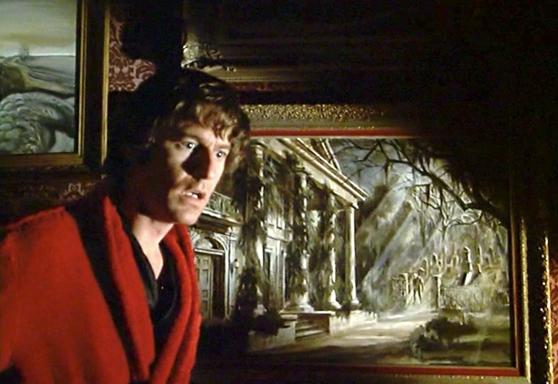
Serling starts the series by stating “Good evening, and welcome to a private showing of three paintings, displayed here for the first time. Each is a collector’s item in its own way—not because of any special artistic quality, but because each captures on a canvas, suspends in time and space, a frozen moment of a nightmare. Our initial offering: a small gothic item in blacks and grays, a piece of the past known as the family crypt. This one we call, simply, “The Cemetery.” Offered to you now, six feet of earth and all that it contains. Ladies and gentlemen, this is the Night Gallery…”

Directed by Boris Sagal (who died when he literally walked the wrong way into a helicopter blade while filming the TV miniseries World War III), “The Cemetery” was written by Serling. It stars Roddy McDowell as Jeremy Evans as a man who murders his uncle to inherit his money and also gains the services of that man’s loyal — and now enraged — butler Osmond Portifoy (Ossie Davis). The effective terror within this episode is achieved with a painting of the family grave that keeps changing, along with great cinematography, editing and sound design that tells us that something undead — maybe — is coming for Jeremy.  His last words, “What in God’s name is happening?”, are actually voiced by John Badham in an overdub.
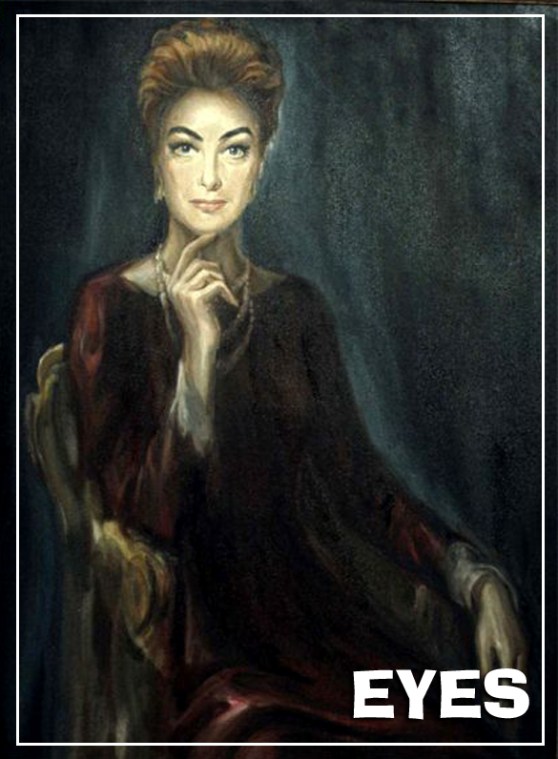
“Eyes” starts with this narration: “Objet d’art number two: a portrait. Its subject, Miss Claudia Menlo, a blind queen who reigns in a carpeted penthouse on Fifth Avenue—an imperious, predatory dowager who will soon find a darkness blacker than blindness. This is her story…”

This was the directorial debut of 22-year-old Steven Spielberg, as well as one of the last acting performances by screen legend Joan Crawford. When she discovered that the young Spielberg would be directing her, Crawford called Sid Sheinberg, vice president of production for Universal Television, to demand that he be replaced but he talked her into taking a chance on him.

Despite her early reservations, the director and star got along well and stayed in touch until her death in 1977.  In fact, before filming, she gave a speech to the crew informing them that she had worked with Spielberg previously and asked them to treat him with the same respect they would garner for an older and more seasoned, director.

Crawford would later say that she loved Rod Serling and his writing, yet remembered that “…his dialogue was the hardest to memorize. There’s a rhythm to his words and if you change one of them, the rhythm is off and you can’t remember.”

She plays Claudia Menlo, a rich woman who has received the eyes of a gambler through loan sharks and has blackmailed Dr. Frank Heatherton (Barry Sullivan) into a surgery that will give her sight for just one day. Surrounded by all of her favorite possessions, she doesn’t realize that a blackout is about to come for New York City.
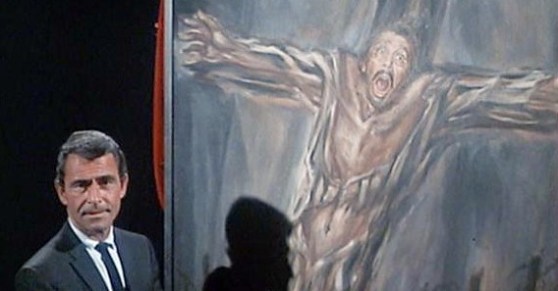
Finally, “The Escape Route,” directed by Barry Shear, begins with this speech: “And now, the final painting. The last of our exhibit has to do with one Joseph Strobe, a Nazi war criminal hiding in South America—a monster who wanted to be a fisherman. This is his story…”

Richard Kiley is Joseph Strobe, a former German soldier on the run after World War II. He makes his way to a museum much like the night gallery that Serling occupies for the series. He speaks to a concentration camp survivor named Bleum (Sam Jaffe) and soon realizes that he was once in charge of the life and death of Bleum’s friends and family. Strobe finds peace in the museum, pulling himself into a dream of fishing through one of the paintings. The next day, Bleum recognizes Strobe, who kills him and must run again from authorities, finally coming back to the gallery and seeking the fisherman painting only to find his horrible final judgment within a painting of a crucified man.

In case you haven’t picked it up yet, I love this show. Between its strange electronic theme — which is different in the original pilot — and the fact that there’s a painting for each story, this has a look and feel unlike any series. Well, except for Guillermo del Toro’s Cabinet of Curiousities, which is directly influenced by this show.

If you love Night Gallery, without reservation I recommend Rod Serling’s Night Gallery: An After-Hours Tour by Scott Skelton and Jim Benson.

Skelton and Benson also created The Art of Darkness, which collects and speaks on all of the paintings used for the show. Sadly, both books are now out of print and quite expensive.

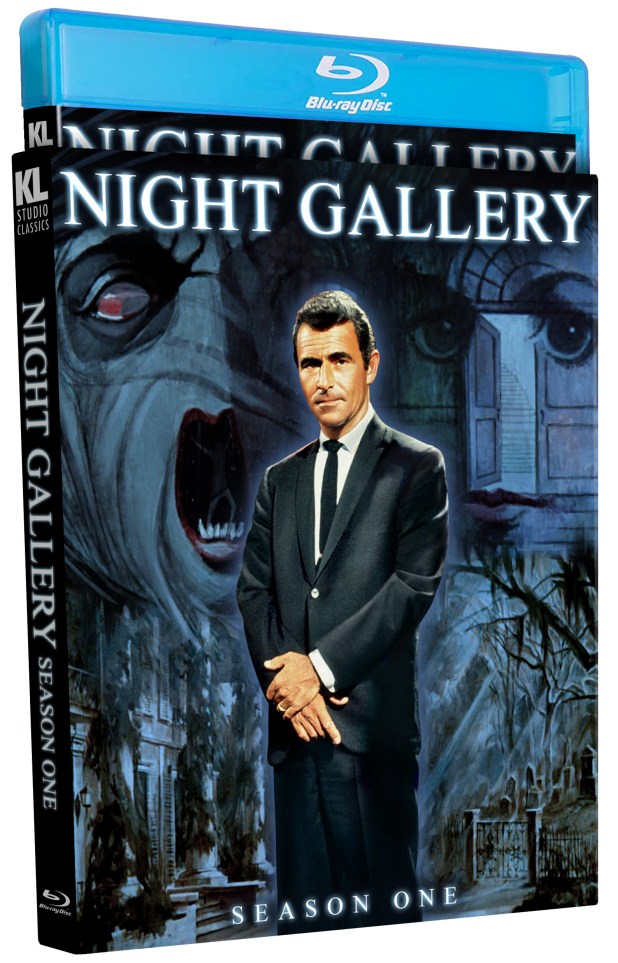
You can get the best quality version of this series from Kino Lorber, who have blu ray sets available of season 1, season 2 and season 3. I still have the gigantic DVD sets that came out for the show and these are a marked improvement on this already awesome collections.

I’m looking forward to writing about each episode in season one. What’s your favorite episode?
MILL CREEK NIGHTMARE WORLDS: All the Kind Strangers (1974)

EDITOR’S NOTE: This was originally on the site on March 6, 2018.

Let’s not judge Burt Kennedy for directing the Hulk Hogan vehicle Suburban Commando. Let’s remember him for something much better — All the Kind Strangers.

Written by Clyde Ware — a writer/director/producer who worked on shows like Airwolf and Gunsmoke, as well as TV movies like The Hatfields and the McCoys and The Story of Pretty Boy Floyd — this film reeks of backwoods menace. No wonder — Ware was born in West Virginia and his second novel, The Eden Tree, was a semi-biographical read which scandalized his hometown.

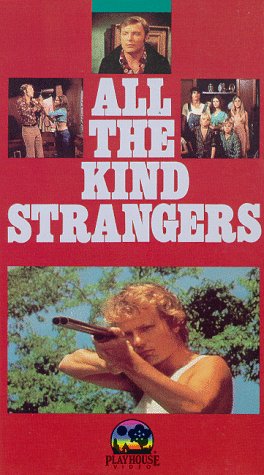
Jimmy Wheeler (Stacy Keach, ButterflyMountain of the Cannibal God) is a photojournalist traveling through via car to Los Angeles. He runs through a small Southern town where he sees Gilbert, an adorable child, walking on the side of the road. Seeing that the kid is hefting some heavy groceries, Jimmy offers him a ride. As the road goes further and further into the woods, the rain increases. Soon, he realizes he’s trapped in a house of seven children.

The oldest, Peter (John Savage, HairThe Deer Hunter) has hidden the fate of his mother and father from the town, using various resources to keep their power on and training vicious dogs to protect the children. Their father was a bootlegger and mother a schoolteacher (what a match!); when she died, he drank until he fell from the roof.

The rest of the children — John (Robby Benson, who sings two songs on the soundtrack), Martha, Rita, James and Baby (named because their mother died before they could name him) — need guidance, so Peter sends the younger ones out to lure people to their home. Then, they evaluate whether or not they’ll be good parents. If they’re fit, they stay. If not, they’re free to go. Or that’s what the kids think. Evidence points to another more grisly fate.

There’s a new mother already in the house. Carol Ann (Samantha Eggar, The BroodDemonoidCurtains) has been taking care of the children for some time. She has seen plenty of other father figures and while she asks for help, she also knows that everything seems pointless.

Jimmy has to convince the kids that he’d make a good dad while trying to find a way to escape. But between the multitude of kids and dogs, as well as his car being sunk in the swamp, he starts losing hope as well.

I have two issues with this film. Things get wrapped up with way too neat of a bow. Jimmy gives a speech to the kids which saves his life and Peter asks him to walk him into town so that they can get some help. Jimmy doesn’t even talk about the police and when you know that these kids have murdered numerous “kind strangers” you have to wonder if he traded his freedom in for some complicity in the crimes. Second, for being a photojournalist, the only camera that Jimmy has is a Polaroid, which would not be good enough to be printable in the 70’s. I know that it makes good theater to have him show Gilbert the photo as it develops, but it’s a stretch.

All the Kind Strangers is a small screen Deliverance, yet it has some fine acting from Keach and Eggar. It’s restrained, but there is more not seen than seen that makes this movie slightly scary.

Tales from the Darkside episode 23: The False Prophet

We’ve come to the end of season one of Tales from the Dark Side but before we close out, we have The False Prophet, a really odd episode all about Cassie Pines (Ronee Blakley, Barbara Jean in Nashville and Nancy’s mom from A Nightmare on Elm Street). Cassie has followed the advice of Madame X, a fortune telling machine, all the way from Iowa to Texas looking for her true love.

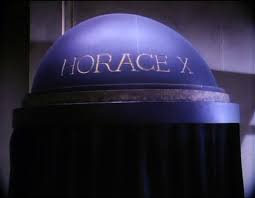
What she finds is not just a man named Heat (Justin Deas), but Horace X, another automatic fortune teller that just might be her quarter-operated lover.

Directed by Gerald Cotts (who did four episodes of this show and three episodes of Monsters) and written by Julie Selbo with the story credit to Larry Fulton, this is just a weird one, stuck inside one closed down bus station in the middle of nowhere yet packed with some off-putting menace. It doesn’t get silly or preachy, unlike so many episodes, and is content with just being odd. Well done.

What’s next after season one of Tales from the Dark Side? You’re going to have to come back next week and find out.