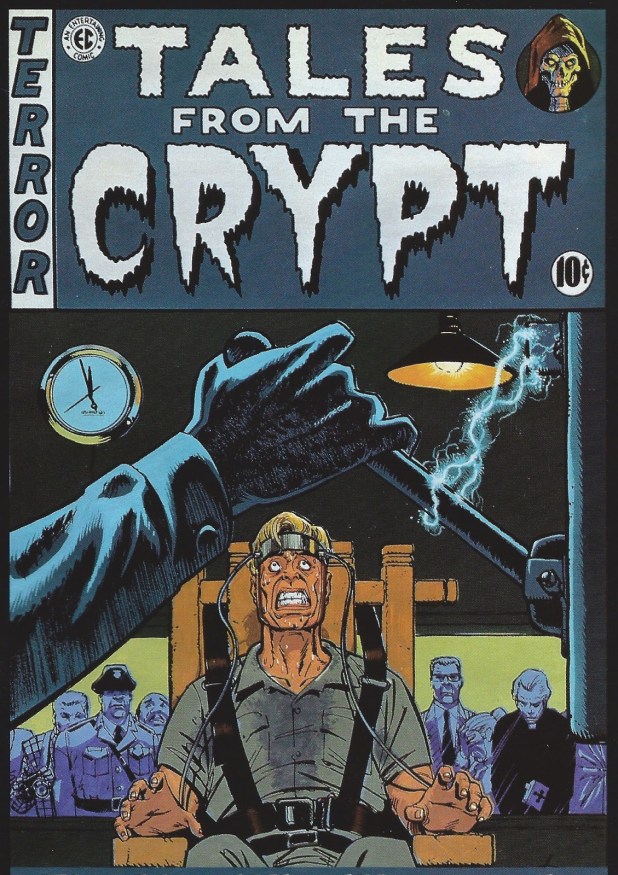
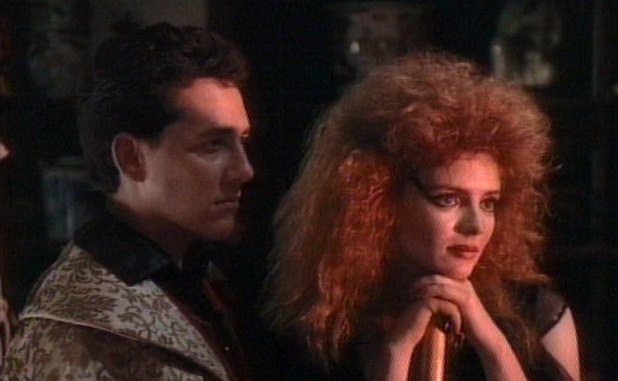
Tales from the Crypt S1 E2: And All Through the House (1989)

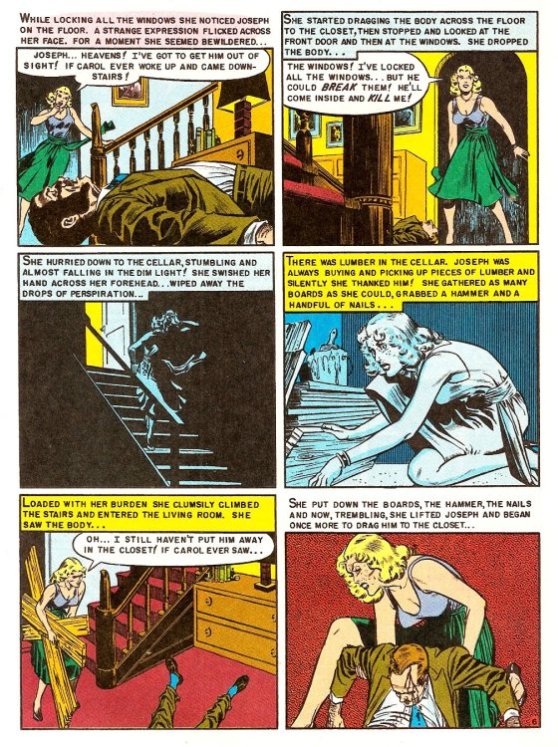
It’s hard for me to be objective about this episode as this story — which originally appeared in Vault of Horror #35 — is also my favorite part of Amicus’ Tales from the Crypt movie. No matter how good this is, I mean, I wrote a song once called “What Are Those Purple Bruises On the Throat of Joan Collins”?

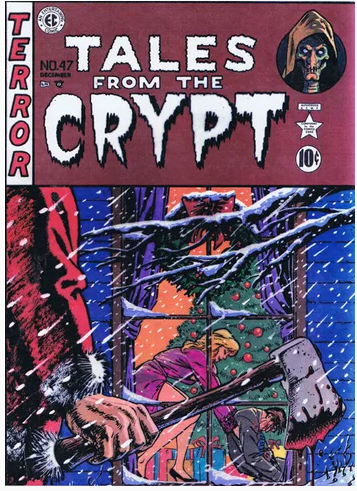
“Ho, ho, ho, kiddies! Just your old pal the Crypt Keeper having a little holiday fun. Why else would I be in this getup…unless there was a Claus in my contract? In fact, I’ve got some Christmas goose for you…goose bumps, that is. Yes, indeedy. A little terror tale, chock-full of holiday fear…I mean cheer, of course. So get a gander of a Yuletide yelp-yarn that goes a little something like this ‘Twas the night before Christmas and all through the house.”

Elizabeth Cayman — not named Joanne Clayton from the original movie version, while the comic story’s protagonist is unnamed — is played by Mary Ellen Trainor, the mom from The Goonies and the kidnapped woman who sets Romancing the Stone in action) has just killed her husband (Marshall Bell) and is keeping it from her daughter (Lindsey Whitney Barry). What she doesn’t know is that a killer (Larry Drake) has escaped the mental home and is considered extremely dangerous. She’s pretty rough herself, much more capable than the other two versions of the character even if they share the same fate.

Directed by Robert Zemeckis and written by Fred Dekker and Steven Dodd, this episode is actually closer to the comic — Elizabeth is blonde — than Amicus was. There’s even a reference to EC publisher Willam Gaines — it takes place in Gaines County — and the cop’s name is Feldstein, which is for Al Feldstein, the reason for so many EC Comics stories.

Perhaps the best part of this episode is the Crypt Keeper dressed as Santa, which is something that has gotten me through so many holidays.

If you’re wondering why it looks so good, just look to who did the cinematography. Dean Cundey.

Tales from the Crypt S1 E1: The Man Who Was Death (1989)

From June 10, 1989, to July 19, 1996, HBO aired Tales from the Crypt, which was based on the EC Comics series. Ah, Tales from the Crypt, the scourge of parents in the 50s, which somehow ran for only 27 issues and yet we’re still discussing it today.

EC publisher William Gaines and editor Al Feldstein loved horror, so they published a story called “Return from the Grave!” in the comic Crime Patrol #15. This was the first appearance of the Crypt-Keeper and a few issues later, the title became The Crypt of Terror — in my high school art club, this is what we named our haunted house and yes, it totally was an EC Comics reference, I was the hugest nerd — and then took on its real title a few issues afterward.

Drawn by Johnny Craig, Feldstein, Wallace Wood, Al Davis, George Evans, Jack Kamen, “Ghastly” Graham Ingels, Harvey Kurtzman, Al Williamson, Joe Orlando, Reed Crandall, Bernard Krigstein, Will Elder, Fred Peters and Howard Larsen, the look of Tales from the Crypt — and its sister comics The Vault of Horror and The Haunt of Fear — may have the greatest line-up of artists ever.

Gaines often was inspired by — outright ripped off — other stories and movies for the tales inside the comic. Those include the works of H.P. Lovecraft as well as the films The Man in Half Moon StreetVampyrThe Beast with Five Fingers and several Ray Bradbury b0oks. Unlike nearly everyone else, Bradbury actually read EC Comics and wrote to them: ““You have not as of yet sent on the check for $50.00 to cover the use of secondary rights on my two stories THE ROCKET MAN and KALEIDOSCOPE which appeared in your WEIRD-FANTASY May-June ’52, #13, with the cover-all title of HOME TO STAY,” he wrote to EC. “I feel this was probably overlooked in the general confusion of office-work, and look forward to your payment in the near future.”

EC did more than thirty Bradbury stories and yes, paid him. They appear in the Fantagraphics collection Home to Stay!: The Complete Ray Bradbury EC Stories.

But it was not to last.

Dr. Fredric Wertham had already written an article in Collier’s entitled “Horror in the Nursery” and for the American Journal of Psychotherapy he turned in “The Psychopathology of Comic Books.” In 1954, the next book by Wertham, Seduction of the Innocent, and a highly publicized Congressional hearing on juvenile delinquency made comics look so bad — not to mention a government breakup of the monopoly that distributed magazines — ruined the industry.

Gaines wanted the surviving companies fight outside censorship and repair the industry’s damaged reputation with the Comics Magazine Association of America and its Comics Code Authority. There had to be a comics code on every cover of every comic published, which isn’t what Gaines wanted. He also learned that other companies pushed for the words horror, weird and terror to not be allowed on the covers. This basically was everything he published.

All three horror books and the SuspenStory comics were canceled in 1954.

Incredible Science Fiction #33 was the last EC comic book to be published and a reprint of the story “Judgement Day” was nearly censored because at the end, the hero is revealed to be black. Gaines went nuclear.

By the 1960s, EC was sold — MAD Magazine was all they published — and became part of Warner Communications. You may know the two Amicus movies that were licensed — Tales from the Crypt and The Vault of Horror. And because Warner also owned HBO, that brings us to this show.

Thanks to an incredible group of producers — David Filer, Walter Hill, Richard Donner, Robert Zemeckis and Joel Silver — and aired on HBO. This meant that hardly anything got censored.

With A-listers in the casts, great special effects and an original Danny Elfman song, Tales from the Crypt was a big deal.

A lot of credit goes to the Cryptkeeper, who was performed by a team of puppeteers — Van Snowden, David Arthur Nelson, Anton Rupprecht, Shaun Smith, Mike Elizalde, Frank Charles Lutkus, Patty Maloney, David Stinnent, Mike Trcic and Brock Winkless — and voiced by John Kassir. Even kids loved him, which led to toys and a cartoon based on this bloody horror show, making the children of the parents who lost their EC Comics upset that their kids were watching such a program.

On June 10, 1989, the first episode “The Man Who Was Death” aired. It was based on a story that originally appeared in The Crypt of Terror #17.

“Aww, poor little fellas. When I think of their childhood, all those cute little maggots. Hahahahaha. Our story is about a man with nobler ambitions. He likes to kill human pests and he does it in front of an audience. Now that’s entertainment! Hahahaha. So hang onto your hats kiddies, this one’s a real shocker.”

The Cryptkeeper was here and he was ready to share a story directed by Walter Hill, who wrote the script with Steven Dodd and Robert Reneau.

Niles Talbot (William Sadler) has been promoted to being the man who flips the switch on the electric chair. But when the death penalty is abolished, he becomes a vigilante who punishes criminals who get away with it. All until, well, he gets caught and the death penalty returns.

Biker Jimmy Flood (Robert Winley), Theodore Carne (Gerrit Graham) and Cynthia Baldwin (Cindi Minnick) are all executed until the idea of killing the guilty goes to Niles’ brain and he starts wiping out exotic dancers.

That’s the first episode! It aired the same evening as “All Through the House,” but let’s get to that one next week.
UNSUNG HORRORS HORROR GIVES BACK 2023: Friday the 13th the Series Season 1 Episode 5: Hellowe’en (1987)

Each October, the Unsung Horrors podcast does a month of themed movies. This year they will once again be setting up a fundraiser to benefit Best Friends, which is working to save the lives of cats and dogs all across America, giving pets second chances and happy homes.

Today’s theme: Series episode

“Lewis Vendredi made a deal with the devil to sell cursed antiques. But he broke the pact, and it cost him his soul. Now, his niece Micki, and her cousin Ryan have inherited the store… and with it, the curse. Now they must get everything back, or the real terror begins.”

Friday the 13th: The Series was created by Frank Mancuso Jr. and Larry B. Williams and was going to be called The 13th Hour. Mancuso Jr. never intended for there to be an outright link to the Friday the 13th film series, but instead referenced “the idea of Friday the 13th, which is that it symbolizes bad luck and curses”.

That said, the creators did try to tie-in Jason Vorhees’s hockey mask but the idea was discarded so that the show could exist on its own. Mancuso Jr. was afraid that mentioning any events from the films would take the audience away from “the new world that we were trying to create.”

That said, the title was what was needed to sell the show. It did so well in late nights that some stations moved it to prime time. In all, it lasted 72 episodes over 3 seasons.

An antique dealer named Lewis Vendredi (R.G. Armstrong) got wealth and power from Satan for selling his soul, along with being the conduit for people to purchase cursed objects from his store Vendredi’s Antiques. When he tries to get out of the deal, the devil has him killed and gets his soul anyway.

The store is inherited by his niece Micki Foster (Robey!) and her cousin Ryan Dallion (John D. LeMay). They sell off many of the cursed antiques before being stopped by Jack Marshak (Chris Wiggins), who once collected antiques for Lewis before learning that he was evil.

Airing on October 26, 1987, “Hallowe’en” was directed by Timothy Bond (The Lost WorldReturn to the Lost World) and written by Bill Taub. The cursed object in this episode is the Amulet of Zohar and it can transfer a spirit into a deceased body.

Jack thinks that Micki and Ryan should have a Halloween party at the antique shop to try and fit into the neighborhood. The basement — where all the evil things exist — is off limits, but you know that they’ll soon be used and for the first time in the series, Uncle Lewis will appear. Well, the ghost of Uncle Lewis, who tries to come off as a hero and say that just wants to save the soul of his wife Grace, whose corpse is in a secret room in the store that they have never been to.

Now that he has the Amulet, Lewis has three hours to find a new body and escape back into the real world. He leaves behind Greta (Victoria Deslaurier), a demon who will do anything he asks, to battle Micky, Ryan and Jack.

I was let down that this show wasn’t part of the Vorhees saga when I was young but now I love it. At all times, I have had a major crush on Robey. Come on. Who didn’t?

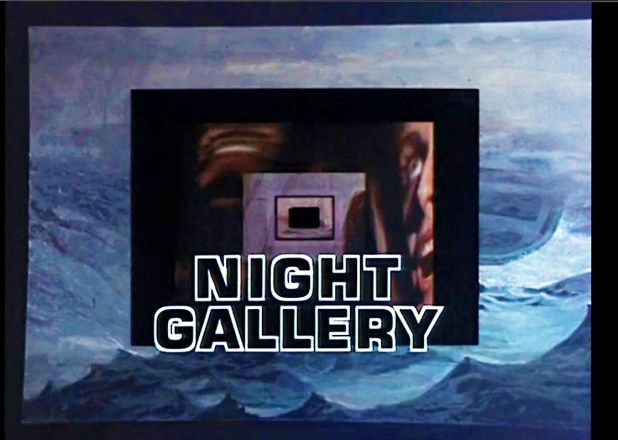
NIGHT GALLERY recap

Over the last year, I’ve watched and written about every episode of Night Gallery. Now, I’d like to recap every episode for you. Click on any link to read the entire post.

Season 1: You can get the blu ray set of every episode from Kino Lorber.

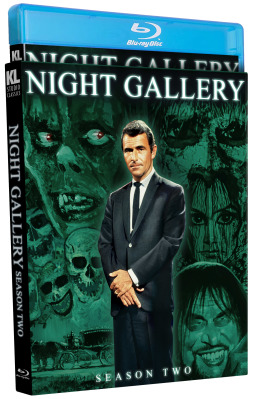
Season 2: You can get the blu ray set of every episode from Kino Lorber.

Season 3: You can get the blu ray set of every episode from Kino Lorber.

Night Gallery Season 3 Episode 17: Room for One Less (1973)

As much as I hate to admit it, this is the last chapter of Night Gallery.

If you thought it’d be an incredibly poignant story from Rod Serling, you’d be remiss.

No, the last thing of the show is…a Jack Laird directed and written black out comedy tale.

“Room for One Less” takes place in a crowded elevator that stops to let in several more people in. A monster (Lee Jay Lambert) points to a sign that says “Occupancy by more than 10 passengers prohibited by law” to the elevator operator (James Metropole), which used to be a thing up until at least the 90s, as my art school had them. The monster has a sophisticated accent when he says, “Quite.” He then blows up the elevator operator.

The end.

Ah, it’s been a journey watching all of the Night Gallery episodes and writing about them for you. Did you have a favorite episode? Did any of these bring back memories for you? This gave me a sense of joy as there is so much good here, as well as some sadness, as by the middle of the second season you can start to see that Serling wasn’t getting to tell the stories that he wanted to. Commerce always conscripts creativity but my memories before now were so rose-lensed that I forgot that even a show that I consider great has moments of not being all so good. That said, the great is enough to forget all of the one minute silly sketches that Jack Laird threw in which prove that sometimes, something extra can ruin the recipe.

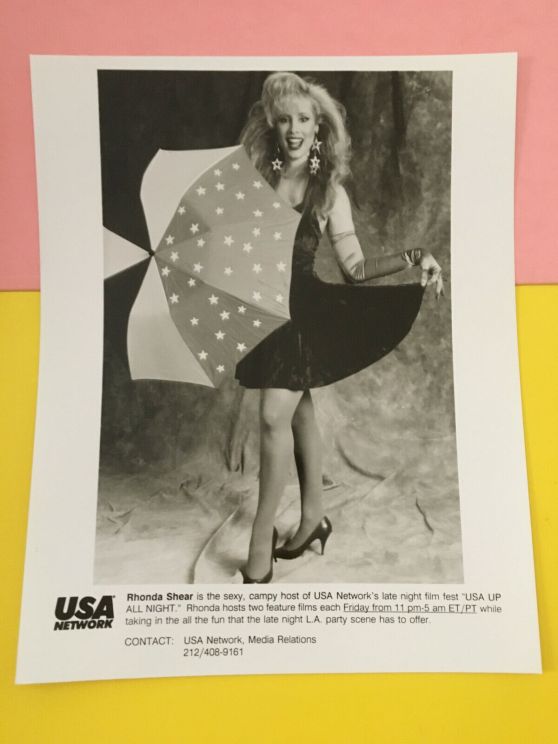
USA UP ALL NIGHT MONTH: Personals (1990)

EDITOR’S NOTE: Personals was on USA Up All Night on September 25, 1992.

A made-for-TV movie in which a quiet librarian is a by-night femme fatale (Jennifer O’Neill, which is the whole reason why I watched this) who uses the personals to find her victims. Evan Martin (Robin Thomas) is a reporter who gets caught by her and his widow Sarah (Stephanie Zimbalist) must hunt her down.

Personals was directed by Steve Hilliard Stern, who also made Rolling Vengeance and The Park Is Mine. It was written by George Franklin (The Incubus), Arlene Sanford (who went on to direct plenty of projects) and Brad Whiting Jr.

It’s a Canadian made-for-TV erotic thriller without much erotic that originally aired on USA.

You can watch it on YouTube.

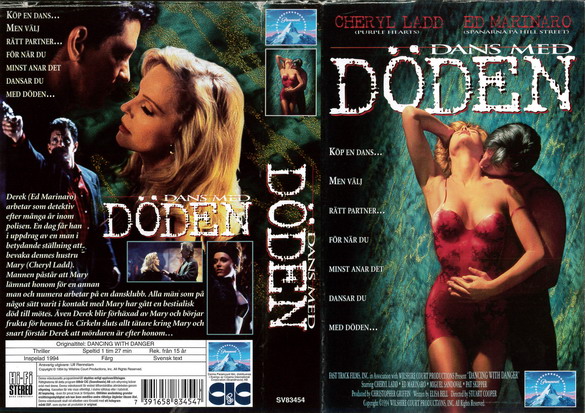
USA UP ALL NIGHT MONTH: Dancing With Danger (1994)

EDITOR’S NOTE: Dancing With Danger was on USA Up All Night on December 30, 1995.

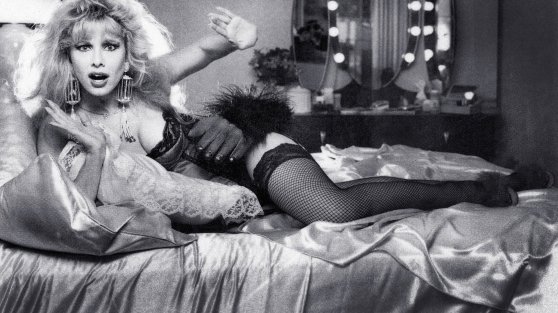
Mary Dannon (Cheryl Ladd) is a taxi dancer in Portland. Not a private dancer, but a dancer for money. Do what you want her to do. You know how it goes. Now, I don’t believe that taxi dancers existed outside of movies by 1994, but who am I to dispute a Cheryl Ladd made for TV movie?

Mary saw a murder in Atlantic City so she moved to Portland and put on her dancing shoes at the Star Brite. Her husband, a rich investment banker named Arthur (Stanley Kamel), has dispatched private investigator Derek Lidor (Ed Marinaro) to find her. Like any ex-cop with a drinking problem, he’s horrible at his job and the plot just happens to him versus him driving any of it forward in a positive manner.

Derek becomes one of the many men who dance with Mary but that dance card is getting less full as her customers start getting killed with scissors, which points to Mary as the killer as she’s training to be a hairdresser. Of course she and Derek get in bed together. All the while, this can’t decide if it’s a noir movie, a parody of those movies or a slasher or an erotic thriller. Everyone smokes. It can’t rain all the time. Neon everything. Hats aplenty for Ms. Ladd.

Directed by Stuart Cooper and written by Elise Bell — who went on to write Vegas Vacation —  this movie is a delirious and goofy mess. I kind of love it for trying.

You can watch this on YouTube.

USA UP ALL NIGHT MONTH: Wheels of Terror (1990)

EDITOR’S NOTE: Wheels of Terror was on USA Up All Night on February 12, 1994.

Directed by Christopher Cain, the director of The Next Karate KidPure Country and Gone Fishin’ — as well as the father of Dean — and written by Halloween 4: The Return of Michael Myers writer Alan B. McElroy, this movie is all about the unseen driver of a primer-colored Dodge Charger who is kidnapping, assaulting and murdering young women in Arizona.

Laura (Joanna Cassidy) has just moved to Copper Valley from Los Angeles to raise her daughter Stephanie (Marcie Leeds) in a safer environment. Except, you know, that car drifting around like a shark wiping out young women the same age as her daughter.

She gets a job as a bus driver and the town starts locking itself up after one of Stephanie’s friends, Kim, is found dead, the victim of the car. It goes even further — I say it as we don’t see the driver — and kidnaps Stephanie leading to a bus against sportscar chase that finds a motorcycle cop get obliterated.

This movie understands something that The Car also did. If you want to stop a killer car with an unseen driver, you need to blow it up.

Night Gallery Season 3 Episode 16: Die Now, Pay Later (1973)

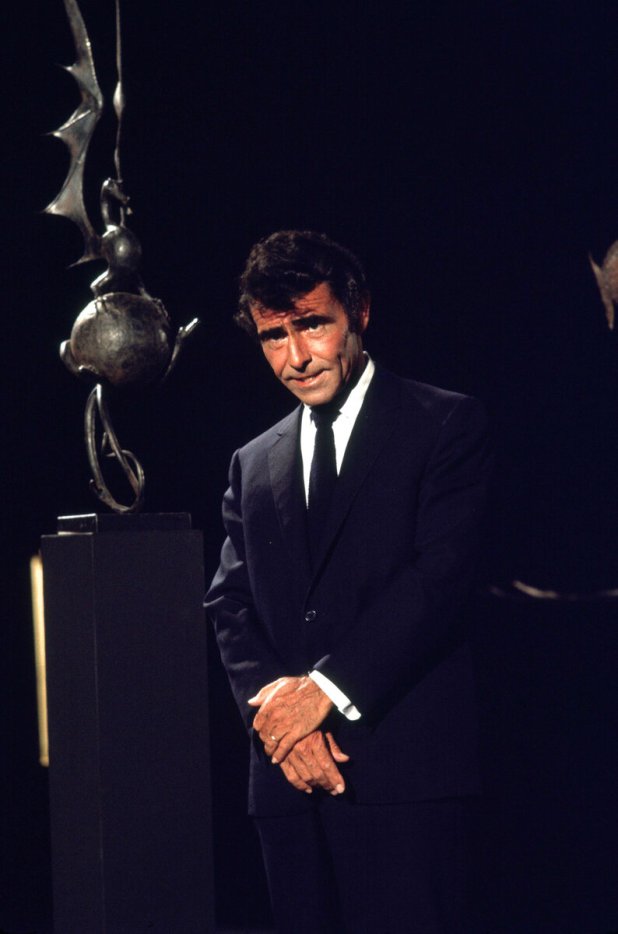
Directed by Timothy Galfas (Black Fist) and written by Jack Laird from a story by Mary Linn Roby, “Die Now, Pay Later” never aired during the original run of Night Gallery. Instead, this and next week’s episode, “Room for One Less” were unaired stories from season 2 added to the syndication package along with episodes of The Sixth Sense. Rod Serling came back to record new introductions for these stories as well as those unconnected stories of the Gary Collins series.

Sheriff Ned Harlow (Slim Pickens) thinks that the death rate in Taunton, Massachusetts is increasing because of the January clearance sale of funeral director Walt Peckinpah (Will Geer). According to Harlow’s wife, Peckinpah has relatives in Salem and may be a relative of a warlock who was burned after the witch trials. But after getting all excited, Harlow’s wife calls the funeral home and yells at him.

The sale continues with the sheriff perhaps being a customer.

This is, as you can guess by Laird being involved, an episode of low quality. Why it’s a half hour is beyond me. Ah well — we should probably just enjoy the good stories and not be so sad about the rough ones.

Night Gallery Season 3 Episode 15: Hatred Unto Death / How to Cure the Common Vampire (1974)

Just seeing the name of the second story of this episode says to me Jack Laird and I already get a bit upset with it. Maybe I should give it a chance. I mean, there’s only a few episodes left. Actually, this was the last episode that ever aired on May 27, 1973. There are two more episodes that only played in syndication.

“Hatred Onto Death” was directed by Gerald Perry Finnerman (who mostly worked as a cinematographer and directed this tale and two other TV episodes, one of Moonlighting which he shot 58 episodes of and another of Salvage 1) and written by Halsted Welles (3:10 to Yuma) from a story by Milton Geiger.

Grant (Steve Forrest, Greg Savitt!) and Ruth Wilson (Dina Merrill) come upon a captured gorilla in Africa. Grant and the animal instantly hate each other and just the opposite, Ruth and the gorilla sense something in one another. He brings it back to America to study, despite his wife begging him to set it free.

As he studies the animal at his museum, a colleague named Dr. Ramirez (Fernando Lamas) tells him that he believes that at one point, Grant and the gorilla were enemies. Maybe in another life, they battled before. Ruth tells the gorilla a story of two of his kind battling over a woman. It goes wild and she releases it. This allows Grant to fight his enemy once more.

Maybe I shouldn’t have been so down on the Jack Laird story because this story is really bad. Maybe he can save this episode.

This is how Night Gallery ended its network TV life. With a Jack Laird two-minute blackout sketch called “How to Cure the Common Vampire.”

Directed and written by Laird, it stars Richard Deacon as the Man with the Mallet and Johnny Brown as the Man with the Stake. It has no good joke and is as pointless as you thought it would be.

Look, I love Night Gallery. But perhaps with all the issues of season three, it was best that it died when it did. That’s so hard to admit.

But hey — two more episodes coming! Maybe those will be good.