Originally airing on January 24, 1973, Go Ask Alice is an adaptation of the 1971 book. The film, much like the book, delves into the personal struggles of a troubled teenager, a theme that resonates with many of us. While the book is more of a diary and is written by Anonymous, most people believe that therapist and author Beatrice Sparks wrote it. She’d go on to write several similar books that were also supposed to be the actual diaries of troubled teenagers.
Jamie Smith Jackson portrays Alice, a teenager striving to blend in at her new school, as she confides in her diary. Her quest for acceptance leads her to experiment with LSD at parties, plunging her into a world of substance abuse and family discord. The portrayal of her parents, played by William Shatner and Julie Adams, reflects the societal attitudes towards youth in the 1970s.
Mackenzie Phillips — who would later have drug problems of her own — shows up, and Andy Griffith (the film’s best part), Robert Carradine and Ruth Roman (from The Baby!) all make appearances. Their performances, especially those of Andy Griffith, add depth and intrigue to the film. It’s pretty schmaltzy in parts, but it’s a preachy 1973 TV movie. You kind of expect those kinds of things.
Bonus: You can listen to Becca and I discuss this on our podcast.
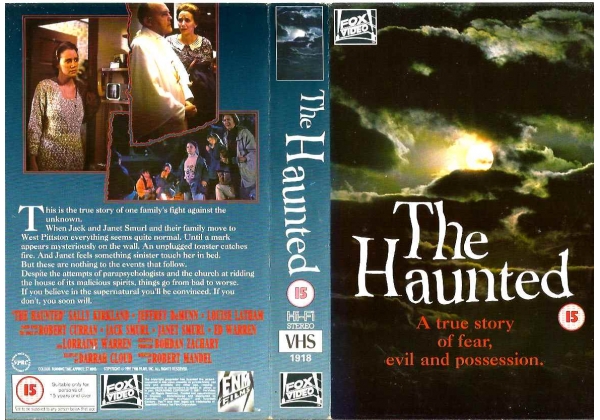
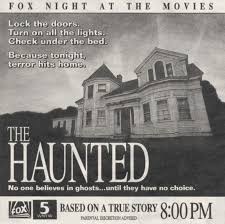
Jack and Janet Smurl of West Pittston, PA say that a demon was in their house for nearly 15 years between 1974 and 1989, despite the denials of the Catholic Church, psychologists and scientific skeptics. Luckily, they had Ed and Lorraine Warren on their side, who encouraged their beliefs and even helped them write the book that this movie was based on.
Sally Kirkland was nominated for a Golden Globe award for her work in this movie as Janet Smurl. Jack is played by Jeffrey DeMunn, who you may know as Dale from TV’s The Walking Dead. Or if you’re like Becca and never watched that show, you’ll know him as the sheriff from the remake of The Blob.
Louise Latham from Marnie plays the grandmother and George D. Wallace — Commander Cody himself! — is the grandfather, who doesn’t believe any of this is happening but has a great part where he fends off the media on the porch with a rifle.
Joyce Van Patten — the domineering mom from Monkey Shines — shows up as a neighbor, with Stephen Markle and Diane Baker playing the Warrens, way before The Conjuring series of films (I kind of Lorraine also appeared on Road Rules: All-Stars before Hollywood truly came calling). Keep an eye out for the reporter who collapses on the Smurl’s front lawn — that’s Lorraine.
The best part of this movie? The crazy way it visualizes the demonic presence as a black formless bit of nothing that has multiple voices. The funniest? There are numerous moments, but I kind of love that copyright issues meant that when the kids watch Lost In Space, they dubbed over the actor’s voices.
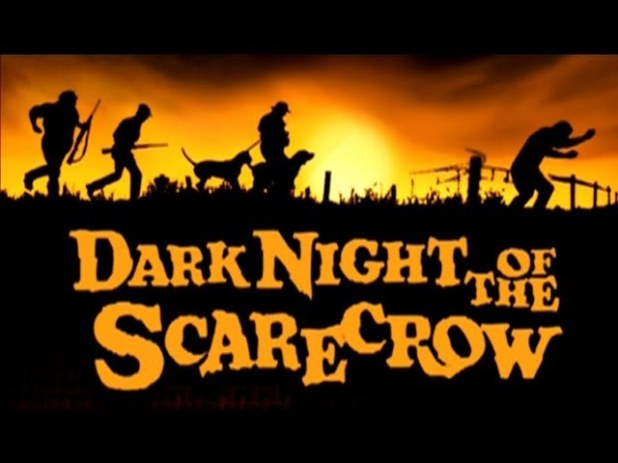
Originally airing on October 24, 1981, Dark Night of the Scarecrow was directed by Frank De Felitta, who wrote Audrey Rose and TheEntity. It was originally intended to be an independent film, but was bought by CBS.
Somewhere in the Deep South, a mentally challenged giant named Charles Eliot “Bubba” Ritter (Larry Drake) becomes friends with a young girl named Marylee Williams. This being a small town, people start to talk, with postman Otis Hazelrigg (Charles Durning) being the loudest of them.
When Bubba saves Marylee from a dog attack, Otis believes that the simple man really caused the damage. He gathers a posse to hunt him down, but Bubba’s mom has hidden him in the field as a scarecrow. But that doesn’t stop bloodhounds from finding him and the four men form a firing squad, killing the man with no trial.
Of course, Marylee is alive and Bubba should be the hero, but the four men lie in court, claiming he tried to kill them with a pitchfork. Marylee refuses to believe her friend is gone and slowly, the rest of town discovers that she might be right, as the scarecrow keeps showing up to frighten the guilty men.
Otis knows he’s guilty and believes that Bubba’s mom is behind all of this, so he tries to intimidate her. She is so shocked by him that she has a heart attack and he sets her home on fire. He starts wiping out everyone who could connect him of the crime before finally coming after Marylee.
I love how this film ends, with Otis running from a plowing machine and the very tool that he used to blame Bubba being part of his demise. Does Bubba return? I also really love that the film kind of leaves that decision up to you.
Made for TV movies used to be a real source of great horror. You’d do well to track down this movie — it’s available for free on Tubi — as well as others.
Bonus: You can listen to us discuss this on our podcast.
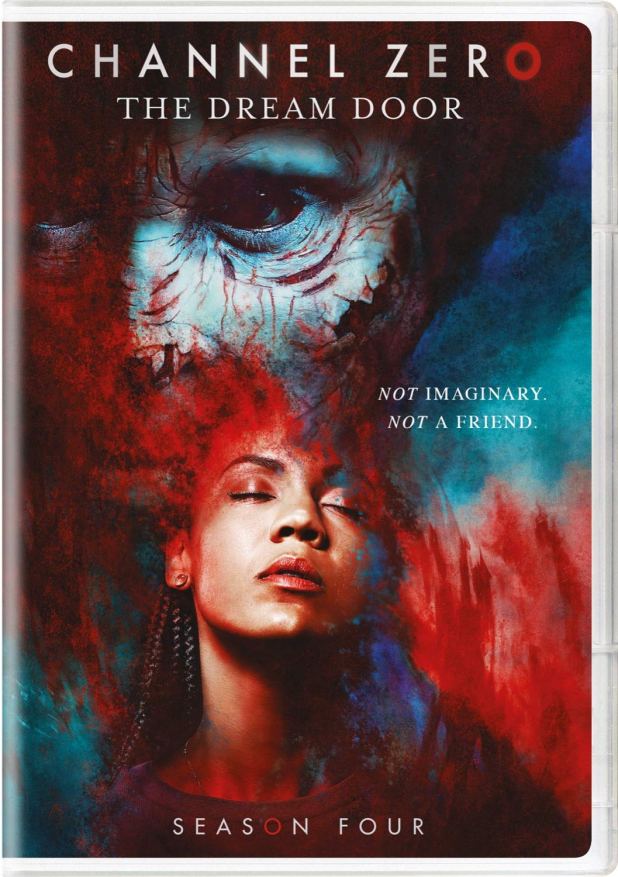
Written by Nick Antosca (whose series The Act has just finished on Hulu) and directed by E. L. Katz (Cheap Thrills), the final season of Channel Zero presents an intriguing premise in its first episode: a newly married couple is given the husband’s childhood home. One day, a door that was never there before just shows up. Would you wonder what was behind it?
Jillian (Maria Sten, who is incredible in this season) and Tom (Brandon Scott, who was Luke Vanczyk in Channel Zero: Butcher’s Block) are newlyweds who were childhood friends. At some point, Tom may or may not have had a child with another woman, a secret he kept from his wife. He also has a strange therapist played by Barbara Crampton that she doesn’t know about. It’s so much for her therapist — Steven Weber! — to help her with.
These problems would be enough if it wasn’t for the dream doors that she discovers that she can create and open, as well as the childhood monsters that can escape from them. One such character is the flexible and near-unstoppable Pretzel Jack (Troy James, a true talent), who will kill anything to protect Jillian.
Then there’s Ian, the next door neighbor who may be way closer to Jillian than she could ever dream.
The theme of the dangers of nostalgia has come up in each of Channel Zero‘s four seasons. Here, The Dream Door goes even deeper to show that the traumas that we didn’t deal with in our youth can come back and threaten to consume us as we grow older. Every marriage faces issues, but not every spouse can spontaneously create monsters.
It’s a real shame that this is the last season of Channel Zero. Each one has been great and while I’ll be watching to see what its creators are doing next, I feel like there are so many great stories that are now left untold. For all the hype the new Twilight Zone series is getting, these four seasons are heads above in terms of story and presentation.
You can watch the entire season on SyFy’s website.
In 1977, we didn’t have too many options when it came to superhero movies. Superman was a year away and otherwise, we would have to make do with repeats of the 1960’s Batman show and a Spider-Man TV series that was so cheap, his web shooters were a grappling hook. Yes, it was pretty bleak.
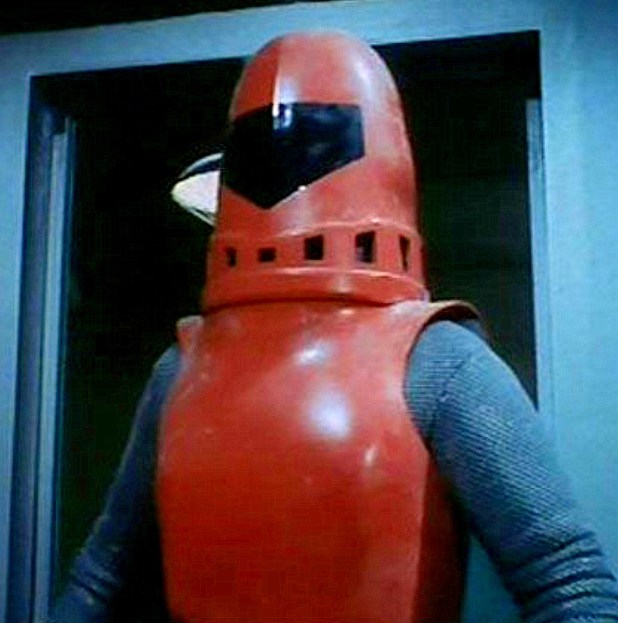
Into this sad landscape strides — well, waddles — Exo-Man, a made-for-TV movie that I definitely watched and drew — and redrew — again and again for weeks after it aired. What can I say? 1977 didn’t have much else after Star Wars and the made-for-TVThe Incredible Hulk.
Dr. Nicholas Conrad (David Ackroyd, The Dark Secret of Harvest Home) is injured and paralyzed in a mob hit, so he has to use his research into exo-suits to become, well, Exo-Man. It takes literally 75% of the movie’s running time before he’s finally in the costume and lumbering his way toward the bad guys.
Based on a book by Cyborg author Martin Caidin — that original story became The Six Million Dollar Man — this movie also has plenty of 1970’s guest stars, like future Alf mom Anne Schedeen; soap star A Martinez; Rosemary Clooney’s two-time husband Jose Ferrer and one of the stars of The Sentinel; the man who would chase TV’s The Incredible Hulk later in 1977 as tabloid reporter Jack McGee, Jack Colvin; Dragnet and M*A*S*H* star Harry Morgan, Invasion of the Body Snatchersstar Kevin McCarthy; and Donald Moffat, who appeared in John Carpenter’s The Thing.
It’s all directed by former supporting actor Richard Irving, who was behind plenty of episodes of the formerly mentioned The Six Million Dollar Man. Supposedly, Calder hated the costume but was told that Universal TV’s marketing department had created it with the hope of making toys. Despite high ratings and the hopes for a series, that never happened, probably because NBC picked up the canceled The Six Million Dollar Woman and decided to turn The Man from Atlantis into a series after four made-for-TV movies.
Obviously, five-year-old Sam had more patience for superhero movies than forty-six-year-old Sam. You can watch the entire movie here:
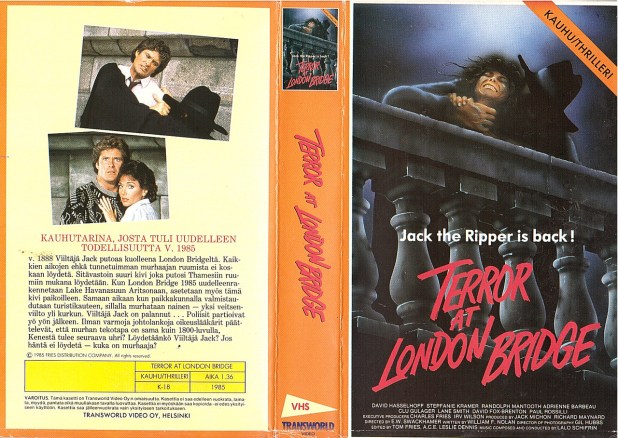
Originally airing on November 22, 1985 on NBC, this made for TV movie was written by William F. Nolan, who wrote the novel Logan’s Run, as well as the scripts for The Norliss Tapes, Burnt Offerings and Trilogy of Terror. It was directed by E. W. Swackhamer, whose credits include episodic television across all genres.
Also known as Bridge Across Time and Arizona Ripper, this movie begins with Jack the Ripper drowning in the Thames river. A century or so later and London Bridge has been rebuilt across the world in Lake Havasu City, Arizona.
From the moment the final stone is set into the bridge, strange murders start happening. No one knows how they’re happening, but one man has a theory. And that man is policeman Don Gregory. played by David Hasselhoff. He thinks that Jack the Ripper is back.
This movie is packed with some of your favorite TV and genre stars. Stephanie Kramer from TV’s Hunter plays the love interest. Randolph Mantooth, Clu Gulager and Adrienne Barbeau all show up, as does Rose Marie from The Dick Van Dyke Show.
If you can believe that Hasselhoff can be a cop, you can swallow that blood on the rocks of London Bridge can bring back Jack the Ripper. It’s an 80’s TV movie, so it’s not the fastest moving thing you’ve seen. But it’s a nice reason to shut your mind off and enjoy seeing Clu and the Hoff go one on one. And hey — Adrienne Barbeau!
This movie crushed me as a child. I had always loved Bud Abbott and Lou Costello, watching their thirty-six films on Sunday mornings, right after Ma and Pa Kettle films. Seriously, weekends in Pittsburgh in the 70s and 80s were amazing. You stayed up all night watching Chiller Theater and then woke up late and took in some Abbott and Costello. Ah, memories.
That said, when this aired on November 15, 1978, I excitedly watched it from my parent’s black and white kitchen TV, ready to have fun reliving my favorite memories of the comedy duo. I wasn’t ready to learn how much they hated one another and their foibles. Cut me some slack — I was six.
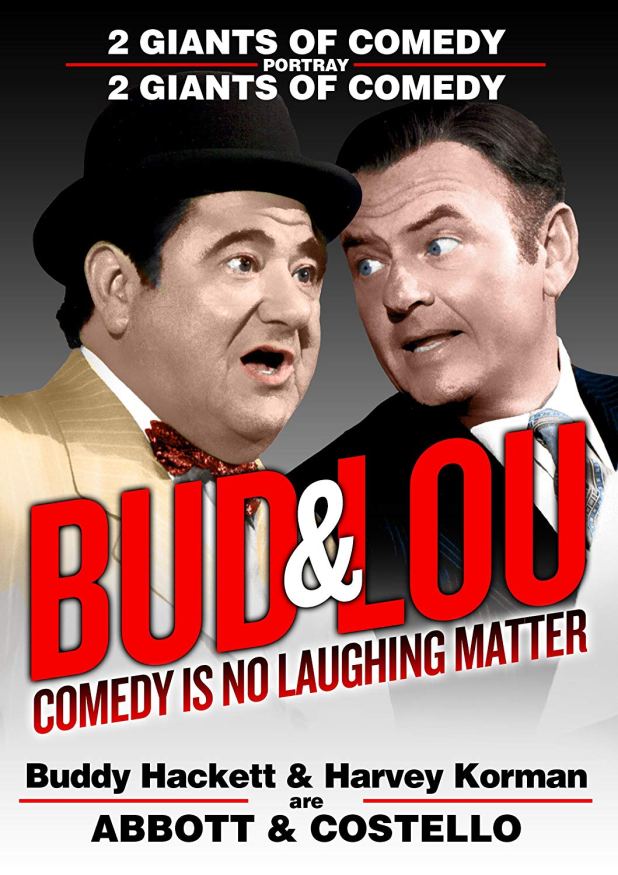
Abbott and Costello are played by Buddy Hackett and Harvey Korman. Interestingly, Hackett and Hugh O’Brian replaced the team when Costello’s health forced them to drop out of 1954’s Fireman Save My Child.
The team came together when Abbott’s original partner was ill and it gelled pretty quickly. The film hints that Bud used to date Lou’s wife — this is unproven — but as we’ve learned from tabloid-style films, facts are rarely important. For example, while they did debut on The Kate Smith Hour on February 3, 1938, they didn’t do the “Who’s On First?” routine until a month later and they had developed their distinctive voices (audiences initially thought they sounded alike until Costello came up with his high-pitched, childish affect).
They debuted their own show, The Abbott and Costello Show, as Fred Allen’s summer replacement in 1940 before joining Edgar Bergen and Charlie McCarthy on The Chase and Sanborn Hour in 1941. That was also the year that their first two films — Buck Privates and Hold That Ghost — debuted (they made their actual first film appearance in 1940’s One Night in the Tropics, essentially playing their greatest hits from burlesque on screen).
By 1942, they were the top box office stars in the country, earning over $789,000 ($12 million in today’s money) that year alone. To show how big of stars they were, a 35-day War Bonds tour in the summer of 1942 earned $85 million dollars ($1,299,767,105 today!) in war bonds purchases. This is important — because soon, the government would come calling for this money and forget all about this. That’s a major part of the film.
Here come the bad parts. Abbott had epilepsy, which in the film just means you have to sit down every once in a while, as well as drink way too much. Costello got rheumatic fever from a military base tour and was bedridden for the rest of 1942 and into ’43, when he returned to radio after a year layoff. That very same day, his infant son drowned in the family’s pool and the comedian was never the same. He was quick to anger and constantly vindictive to the point that a major rift happened when In 1945 a rift developed when Abbott hired a servant who Costello had fired. That led to Costello refusing to speak to his partner except when performing. From them on, they would play separate characters in films, rather than be a team. This led to their loss in popularity when faced with other teams like Martin and Lewis.
Abbott resolved the rift when he suggested naming Costello’s charity the “Lou Costello Jr. Youth Foundation.” Finally some good news — this charity still helps underprivileged youth in the Boyle Heights district of Los Angeles.
Despite their dip in popularity, they still starred in several films with the Universal monsters and hosted The Colgate Comedy Hour. From 1952 to 54, Costello created, owned and syndicated The Abbott and Costello Show, paying Abbott a salary, a point this movie hammers home as proof that any reconciliation was only on one man’s part. That said, the movie totally ignores that this show was a success and aired in reruns for a long time.
The film never gets into the point that the duo was overexposed and worried about creating new material, which is one of the reasons why Universal couldn’t reach a contract with them. They were forced to sell all of their assets to the IRS to pay taxes, a point the movie definitely makes.
After one last film, Dance with Me, Henry and Lou appearing on This Is Your Life, the duo split for good in 1957. Errol Flynn claimed in his autobiography that he was the reason. At a party he had invited Bud, Lou and their families to, he showed hardcore pornography and Bud and Lou both blamed the other. This is skipped by the movie, because how would you explain that on TV in 1978?
The movie makes it seem that Costello died quickly after the pair split, but he lived until 1959, after ten appearances on The Steve Allen Show doing old routines without his partner. He died shortly after finishing his last film, The 30 Foot Bride of Candy Rock.
In 1960, Abbott formed a team with Candy Candido, a voice actor in Disney films. He also did his own voice for the Hanna-Barbera Abbott and Costello cartoons. He died of cancer in 1974.
Let’s go back to me being a kid. I always thought that Lou was the nice one, with Bud being the mean adult, always grumpy with him. Little did I know the truth — or what passes for it in this movie. I remember crying my eyes out during the last scene where Lou dies.
This whole movie is based on the book by Hollywood correspondent Bob Thomas and trust me, it’s as over the top and ridiculous as you hope it is. It’s been said that Thomas got most of his gossip from Eddie Sherman, Abbott and Costello’s longtime manager who had been fired by the duo, so obviously there was a reason why it’s so venomous. It’s also remarkably unfunny in the comedy segments, which is weird when you consider who is starring in it. Arte Johnson and Robert Reed also show up, just to remind you this is a made for TV movie.
Both the book and movie upset Lou’s daughter Chris so much that she wrote the book Lou’s on First to refute many of its claims.
I’m not the only one obsessed by this film. On his podcast, Gilbert Gottfried has brought the death scene at the end up several times. I wasn’t the only one shattered by it, I guess.
I guess if you want to catch up on memories, you should skip TV movies and go right back to the real movies. But as you may have learned by now, I love junk.
EDITOR’S NOTE: Bud and Lou was on the CBS Late Movie on December 25, 1984 (Merry Christmas!) and June 3, 1987.
This movie crushed me as a child. I had always loved Bud Abbott and Lou Costello, watching their thirty-six films on Sunday mornings after Ma and Pa Kettle films. Seriously, weekends in Pittsburgh in the 70s and 80s were amazing. You stayed up all Night watching Chiller Theater, then woke up late and took in some Abbott and Costello. Ah, memories.
That said, when this aired on November 15, 1978, I excitedly watched it from my parent’s black and white kitchen TV, ready to have fun reliving my favorite memories of the comedy duo. I wasn’t prepared to learn how much they hated one another and their foibles. Cut me some slack — I was six.
Buddy Hackett and Harvey Korman play Abbott and Costello. Interestingly, Hackett and Hugh O’Brian replaced the team when Costello’s health forced them to drop out of 1954’s Fireman Save My Child.
The team came together when Abbott’s original partner was ill, and it gelled pretty quickly. The film hints that Bud used to date Lou’s wife — this is unproven — but as we’ve learned from tabloid-style films, facts are rarely necessary. For example, while they did debut on The Kate Smith Hour on February 3, 1938, they didn’t do the “Who’s On First?” routine until a month later, and they had developed their distinctive voices (audiences initially thought they sounded alike until Costello came up with his high-pitched, childish effect).
They debuted The Abbott and Costello Show as Fred Allen’s summer replacement in 1940 before joining Edgar Bergen and Charlie McCarthy on The Chase and Sanborn Hour in 1941. That was also the year that their first two films — Buck Privates and Hold That Ghost — debuted (they made their first film appearance in 1940’s One Night in the Tropics, essentially playing their greatest hits from burlesque on screen).
By 1942, they were the top box office stars in the country, earning over $789,000 ($12 million in today’s money) that year alone. A 35-day War Bonds tour in the summer of 1942 earned $85 million ($1,299,767,105 today!) in war bond purchases to show how big of a star they were. This is important because the government would soon call for this money and forget all about it. That’s a significant part of the film.
Here come the bad parts. Abbott had epilepsy, which in the film means you have to sit down every once in a while, as well as drink way too much. Costello got rheumatic fever from a military base tour and was bedridden for the rest of 1942 and into ’43 when he returned to radio after a year layoff. That very same day, his infant son drowned in the family’s pool, and the comedian was never the same. He was quick to anger and constantly vindictive to the point that a significant rift happened.
In 1945, Abbott hired a servant whom Costello had fired. That led to Costello refusing to speak to his partner except when performing. Then, they would play separate characters in films rather than work together, which led to their loss of popularity when faced with other teams like Martin and Lewis.
Abbott resolved the rift by suggesting naming Costello’s charity the Lou Costello Jr. Youth Foundation. Finally, some good news: this charity still helps underprivileged youth in the Boyle Heights district of Los Angeles.
Despite their dip in popularity, they still starred in several films with the Universal Monsters and hosted The Colgate Comedy Hour. From 1952 to 54, Costello created, owned and syndicated The Abbott and Costello Show, paying Abbott a salary, a point this movie hammers home as proof that any reconciliation was only on one man’s part. That said, the film ignores that this show was successful and aired in reruns for a long time.
The film never gets to the point that the duo is overexposed and worried about creating new material, which is one reason Universal couldn’t reach a contract with them. The movie definitely makes the point that they were forced to sell all their assets to the IRS to pay taxes.
After one last film, Dance with Me, Henry, and Lou appeared on This Is Your Life, the duo split for good in 1957. Errol Flynn claimed in his autobiography that he was the reason. At a party he had invited Bud, Lou and their families to, he showed hardcore pornography and Bud and Lou both blamed the other. The movie skipped this because how would you explain that on TV in 1978?
The movie makes it seem that Costello died quickly after the pair split, but he lived until 1959 after ten appearances on The Steve Allen Show doing old routines without his partner. He died shortly after finishing his last film, The 30-Foot Bride of Candy Rock.
In 1960, Abbott formed a team with Candy Candido, a voice actor in Disney films. He also did his voice for the Hanna-Barbera Abbott and Costello cartoons. He died of cancer in 1974.
Let’s go back to when I was a kid. I always thought Lou was the nice one, and Bud was the mean adult who was always grumpy with him. Little did I know the truth—or what passes for it in this movie. I remember crying my eyes out during the last scene when Lou dies.
This movie is based on the book by Hollywood correspondent Bob Thomas, and trust me, it’s as over the top and ridiculous as you hope it is. It’s been said that Thomas got most of his gossip from Eddie Sherman, Abbott and Costello’s longtime manager, who the duo had fired, so obviously, there was a reason why it’s so venomous. It’s also remarkably unfunny in the comedy segments, which is weird when considering who is starring. Arte Johnson and Robert Reed also showed up; to remind you, this is a made-for-TV movie.
The book and movie upset Lou’s daughter, Chris, so much that she wrote Lou’s On First to refute many of its claims.
I’m not the only one obsessed with this film. Gilbert Gottfried repeatedly mentions the death scene at the end of his podcast, and I wasn’t the only one shattered by it.
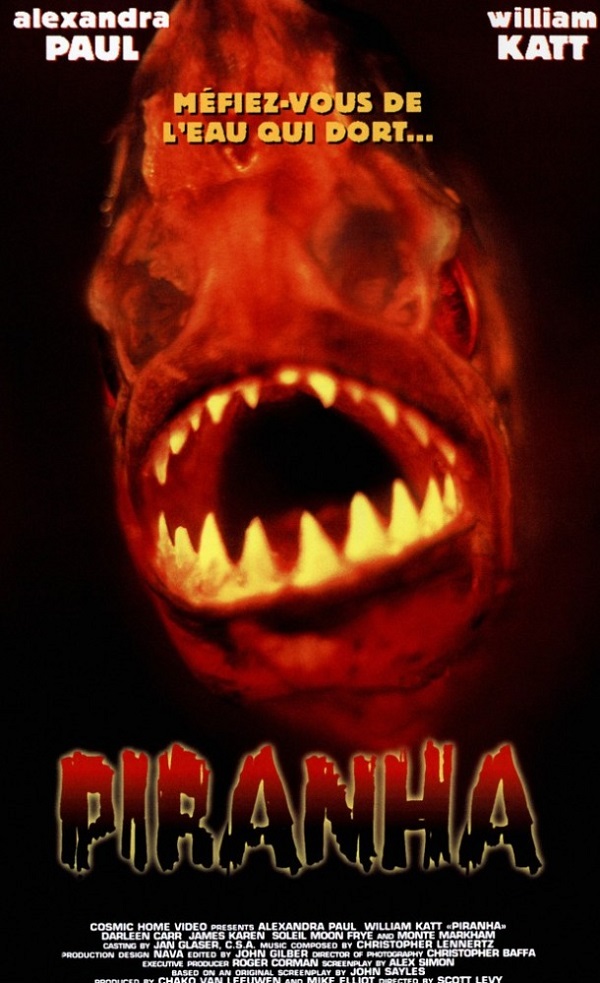
In case Piranha wasn’t enough for you, Roger Corman produced this 1995 Showtime movie that’s a shot for shot remake of the original. It gets better — or worse — because instead of shooting new special effects for the film, Corman recycled the special effects and the screenplay from the original minus the humor. If you listen to the commentary of the original film by Joe Dante, it’s obvious how little he enjoyed the remake.
Alexandra Paul (Christine) takes over the role of Maggie and William Katt (Carrie) is Paul as they investigate the disappearance of a young girl. Yep — it’s the same movie you’ve already seen, minus Barbara Steele or even the role she played, Dr. Mengers. Punky Brewster herself, Soleil Moon Frye, shows up and future star Mila Kunis had her first role in this picture. And hey! There’s James Karen from Return of the Living Dead!
There’s not much else here for me to recommend, because this is so close to the original but missing all of the parts that actually make Piranha a much better movie than it ever deserved to be. Maybe this was just to try and hold onto the copyright to the title, but it’s really not fun at all.
In the mid-1980’s, prime time soaps like Dynasty and Dallas were still big news. I can see the meetings on this potential series in my mind: what if we took some Dark Shadows, a little bit of Satanic panic and then mixed them all in with the greed of the Me Decade? The potential for a series was here, but The Covenant only winded up being a strange TV movie featuring evil cats, José Ferrer and lots of fire.
The Nobles are a fabulously wealthy family but all their power comes with a secret: they’ve pledged themselves to the devil. Now, they’re grooming their youngest child to remain a virgin until she’s 21 — man, I thought Satanism came with lots of sex — so that she can be part of the blood sacrifice that must occur every hundred years.
The Judges are the only ones that can stop them, but it also turns out Diana (Jane Balder, who used to eat mice on V), the young second wife of the family’s patriarch VIctor Noble (Ferrer), has some secret machinations of her own that could cause even more chaos.
Want to know how evil Victor is? He used to advise Adolph Hitler. Yep. That evil. And his wife Diana is also his niece so we can check off Satanism, Nazis and incest all in one movie.
She also has a twin sister, Claire, who is played by Michelle Phillips. All of the women in the family have supernatural powers, such as the ability to set dudes on fire. Which comes in handy, trust me.
You’ve also got Kevin Conroy (the voice of Batman!) in the cast, as well as Barry Morse as Zachariah, the leader of The Judges; Jennifer Cooke (Megan from Friday the 13th Part VI: Jason Lives); Judy Parfitt (Vera Donovan from Delores Claiborne); Bradford Dillman; James Saito (the Shredder from Teenage Mutant Ninja Turtles) and even a quick part for a young Tia Carrere.
Director Walter Grauman also directed 53 episodes of Murder, She Wrote as well as the TV movies Are You in the House Alone? and Jacqueline Susann’s Valley of the Dolls. He was also a distinguished war vet, being awarded the Distinguished Flying Cross and eight other air medals for his 56 combat missions during World War II.
Dan DiStefano, who worked on cartoons like Teenage Mutant Ninja Turtles, Flash Gordon, Chuck Norris: Karate Kommandos, Mr. T as well as the short-lived TV series Misfits of Science, wrote this. He was joined by J..D. Feigelson, who was the writer of Wes Craven’s Chiller, Dark Night of the Scarecrow and Horror High.
Grauman, DiStefano and Feigelson also were behind another TV movie, Nightmare on the 13th Floor, which is all about a reporter discovering that a hotel has a hidden 13th floor where a murderer lives.
I would have been 13 or so when this show aired and while it would have intrigued me with its dark parts, all the machinations and soap opera would have probably bored me. Now that I’m old, I can see how this show could have worked. But then again, I’m also enough of a realist to know that it would have aired on Friday nights, the dead zone for horror and science fiction related TV.
Want to see it for yourself? I posted the YouTube video above and you can also buy it at True TV Movies.
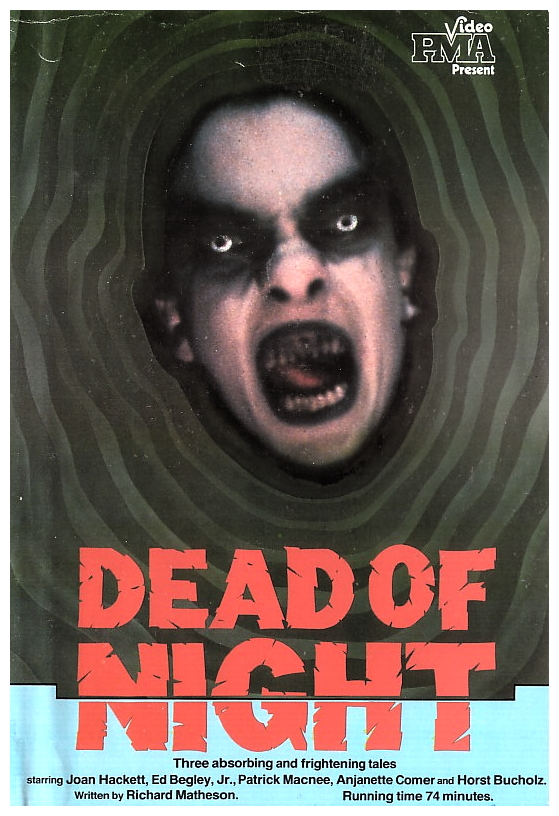
Much like Trilogy of Terror, Dead of Night is made up of tales written by Richard Matheson (the first segment is based on a Jack Finney story) in a portmanteau format. Originally airing on March 29, 1977, this TV movie is not as well remembered.
There are three stories: “Second Chance,” where Ed Begley Jr. buys a car and goes backward in time; “No Such Thing as a Vampire,” which has The Avengers‘ Patrick Macnee as a doctor trying to deal with an undead man who keeps attacking his wife; and finally “Bobby,” which is all about a mother trying to figure out how to deal with the loss of her son (played by Ben‘s Lee Montgomery).
Of these tales, only “Bobby” is actually scary. Trilogy of Terror is much better overall, but that’s not to say that you won’t find some enjoyment watching this. Dark Sky put this out on DVD in 2009 and included the pilot, “A Darkness At Blaisedon,” for a TV series version that Curtis tried to sell in 1969. The same music from that pilot was used when this movie was finally filmed.
There was also a British anthology series with the same name that aired in 1972, with seven episodes filmed and only three that still exist.

 B&S About Movies
You must be logged in to post a comment.