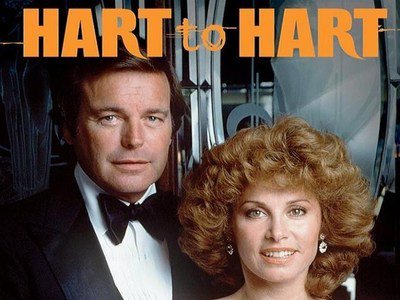
Hart to Hart Returns (1983)

Hart to Hart aired from 1979 to 1984 and was all about Jonathan and Jennifer Hart, a married rich couple who — much like The Thin Man or McMillan and Wife — solved mysteries together. Much like Jessica Fletcher, every single person they come into contact with usually dies.

Screenwriter and novelist Sidney Sheldon created the show — it was originally going to be a CBS TV movie called Double Twist — in the 1970’s before it was finally bought by Aaron Spelling and Leonard Goldberg. Tom Mankiewicz, who directed the Dan Aykroyd version of Dragnet and also wrote Diamonds Are Forever, Live and Let DieThe Man With the Golden Gun and Superman: The Movie, was brought in to update the script and get it ready to be a prime time show. Mankiewicz made his directorial debut with the pilot episode and remained a creative consultant throughout the shows original run.

Spelling and Goldberg’s initial choice for the role of Jonathan Hart was Cary Grant, but since he was retired, they felt that Robert Wagner had the same style. Wagner wanted his real life wife Natalie Wood to play his wife, but the producers suggested Suzanne Pleshette, Kate Jackson and Lindsay Wagner before they settled on Stefanie Powers.

Wagner wanted boxer Sugar Ray Robinson to portray Max the butler before Lionel Stander was cast. He’d worked with Wagner on his older series It Takes a Thief, also playing a lifelong friend named Max. Strongly liberal and pro-labor, Stander was an outspoken political activist and helped found the Screen Actors Guild. He also spent nearly twenty years blacklisted from Hollywood, a true tragedy that served no purpose other than to advance political careers. While in Europe, he was in Leone’s Once Upon a Time In the West and Boot HillHart to Hart was actually the reason why he moved back to the United States. He’s also in one of my favorite ridiculous TV movies, the Larry Cohen written and directed, Bette Davis starring Wicked Stepmother.

As Jonathan Hart contemplates what to give Jennifer for their anniversary, a murder is committed and Jonathan is being set up to take the fall. There’s some corporate espionage and all manner of red herrings thrown about before our loveable heroes resolve things and kiss.

This episode has plenty of fun guest stars. Just like Murder, She Wrote half the fun of these shows is seeing if you can name who everyone is. Mike Connors — Mannix himself — plays Johnathan’s old Air Force buddy Bill McDowell and Lance Guest — yes, from Halloween 2 — pays his son Peter. Paul Williams shows up in several of these Hart to Hart films as a tipster and Kevin Brophy (Hell Night and the wolf-themed 1970’s quasi-superhero show Lucan), Ken Howard (The White Shadow) and Dakin Matthews (Colonel Cochrane from Childs Play 3) all show up.

Sadly, Freeway the dog is deceased, but his son Freeway Junior shows up. Obviously, Lionel Stander is really old in these. It’s kind of sad, but it’s also great that he got to be in five of these movies before he passed on.

You can get this movie as part of the new Mill Creek Hart to Hart Movies Are Murder Collection, along with seven other Hart to Hart mysteries. I love this set and definitely recommend that if you love made for TV murder shows, you should totally pick it up.

DISCLAIMER: This set was sent to us by Mill Creek. That said, we probably would have bought it.
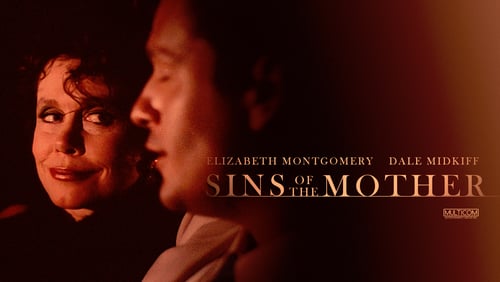
Sins of the Mother (1991)

The bizarre relationship between an overbearing mother and her son, a convicted rapist? Sounds like a giallo, but it’s a 1990’s made for TV movie. That said, it’s based on a novel by Jack Olsen and also based on a true story.

Yes, Kevin Coe (Dale Midkiff, Pet Sematary) may be a horrible real estate agent, but he’s good at one thing: assaulting and murdering women. Maybe that’s two things. Regardless, he has to put up with the taunts of his socialite mother (Elizabeth Montgomery, BewitchedThe Legend of Lizzie Borden).

Now, his new girlfriend Ginny Perham is getting too close and she just might unravel all his secrets. Hey — Talia Balsam is in this, which makes me happy, as I always celebrate when her dad shows up in horror films. And Caroline Williams — Stretch from The Texas Chainsaw Massacre 2 — shows up.

Not much else happens, sad to say. Maybe I was hoping for more of a trip into the psychosexual mind — I blame the trailer for Torso for that line — but got nothing.

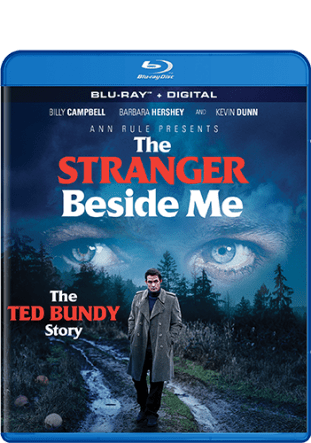
The Stranger Beside Me (2003)

The Stranger Beside Me is based on Ann Rule’s New York Times bestseller. Before she became a true crime writer, amazingly enough Ann became close friends with one of the most notorious serial killers — Ted Bundy.

Ann Rule (Barbara Hershey, The Entity) is an ex-cop and single mother who volunteers on the suicide hotlines in Seattle. That’s where she meets Ted Bundy (Billy Campbell, The Rocketeer), who comes off as the nicest man she’s ever met.

Of course, that changes. She’s already been called in to help with the murders of women that have stretched from Utah to Seattle and may have provided a criticial piece of insight on the fact that Ted fits a sketch and drives the same car as the suspect.

As their lives go in separate directions, Ted stays in touch with Ann, always convinced of his own innocence. While she may have stood up for him in the past, by the end, she only knows him as a monster.

It’s directed by Paul Shapiro, who also directed the new VC Andrews adaption Heaven which airs later this month, as well as an upcoming remake of one of my favorite Lifetime films, Death of a Cheerleader.

While the film jumps all over the place way too much, Campbell is great as Bundy, proving why so many could find him so attractive and above such crimes. It’s well worth a watch if you’re interested in this case.

The Stranger Beside Me is available for free on Tubi and from Mill Creek Entertainment.

DISCLAIMER: This movie was sent to us by Mill Creek Entertainment, but that has no bearing on our review.

Black Brigade (1970)

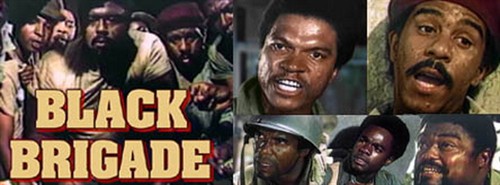
Originally entitled Carter’s Army, this made for TV movie debuted on ABC on January 27, 1970. It was written by David Kidd, who would also write The Swinging Cheerleaders, and Aaron Spelling, who would go on to dominate 1970’s TV with Mod SquadThe RookiesS.W.A.T.Starsky and HutchFamilyVega$Charlie’s AngelsFantasy IslandHart to Hart and many more.

Captain Beau Carter (Stephen Boyd, who was the main bad guy in Ben-Hur as well as appearing in The Devil Has Seven Faces/Bloody Mary) is placed in charge of a unit of African American soldiers, including comedian Richard Pryor, football player/needlepoint enthusiast/apprehender of Sirhan Sirhan Rosey Grier, Trouble Man Robert Hooks, Glynn Turman from Cooley High, Billy Dee Williams (do I need to tell you who he is?) and Moses Gunn, who is Detective Turner in Amityville II: The Possession.

These soldiers have been relegated to cleaning latrines and removed from the front lines, but now they must secure an important dam or the Allied advance will be delayed. Carter must get past his racism to lead the men to victory.

Susan Oliver — whose life may be more interesting than any movie, is also in this film. After a near-disaster on a plane the day Buddy Holly died, she got hypnotized to get around her fear of flying. She became an incredibly competitive pilot, finally the 2760-mile transcontinental race known as the “Powder Puff Derby” and becoming 1970’s Pilot of the Year. She also was one of the original 19 women admitted to the American Film Institute’s Directing Workshop for Women and left most of her estate to that organization.

Black Brigade is an intriguing film to include on a blaxploitation box set, as it does anything but glorify violence or combat. It was a real surprise to me and it’s definitely worth your time.

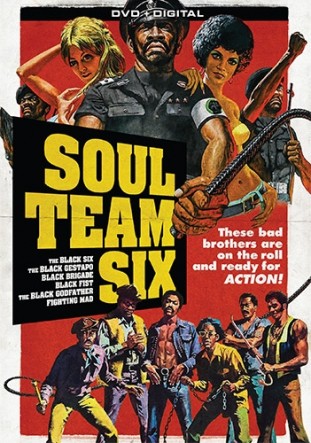
You can get Black Brigade on Mill Creek’s new Soul Team Six DVD collection, along with five other films.

DISCLAIMER: Mill Creek sent us this set, but we were planning on buying it anyway. It has no bearing on this review.

Seeds of Yesterday (2015)

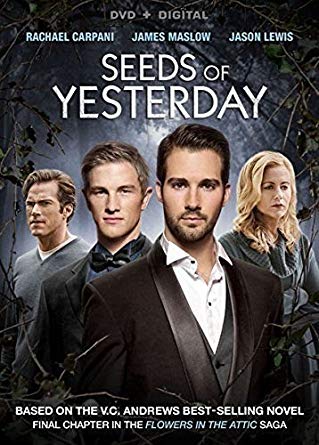
After four V.C. Andrews movies — and the original Flowers in the Attic — nothing should surprise you. Any happy ending that the Dollanganger family finds will always be ruined in the very next film.

Thirteen years later, Cathy and Chris are invited to Foxworth Hall, the same place they spent their childhood imprisoned within. Bart is now the owner and has fixed it up while walking away from his family, even changing his last name. He might love his mother, but he has a near unhinged hatred for his uncle and stepfather.

Meanwhile, his brother Jory and his wife, Melodie are about to have twins. What would make this even worse? That’s right — Bart wants to get with his brother’s wife. And don’t worry — he still hates his adopted sister Cindy.

At Bart’s birthday party — no one over 21 should have a birthday party and even fewer should throw on for themselves — Jory and Cindy perform a ballet that ends up with Jory paralyzed because V.C. Andrews. Everyone thinks Bart is behind this, but he denies it. And Melodie starts to lament that her husband will never dance — vertically or horizontally — again.

So much happens in this movie — Jory tries to drown himself in a pool, Bart keeps winning back Melodie and then rejecting her, Bart catches his sister Cindy in bed with her new boyfriend and flies into a tantrum — this is movie is packed with more melodrama than the first three, which I felt wasn’t possible.

Even after Melodie gives birth to twins, she’s lost her will to live and abandons the family. And oh yeah — Bart gets with Cindy and still rejects her.

Maybe a new house will fix things, thinks Chris. They even hire a nanny named Toni that they hope Jory will get with. Nope — Bart seduces and dumps her as well. He then tops all of his behavior by trying to drown one of the twins during her baptism. It takes the accidental out of nowhere death of Chris to bring the family back together.

Jory recovers, marries Tony and they raise the twins and a child of their own together. Bart becomes a TV preacher and marries his adopted sister. Only Cathy remains behind, sitting in the attic window, eventually dying of a broken heart.

This is the end of the line for this crazy family. By the end, we’d seen everybody go through hell, such as dance accidents, incestual unions and getting hit by cars. If anything, this movie should teach you to never have sex within your bloodline and to always put out road flares when you’re changing a tire.

BONUS: You can listen to the podcast where we discuss this movie.

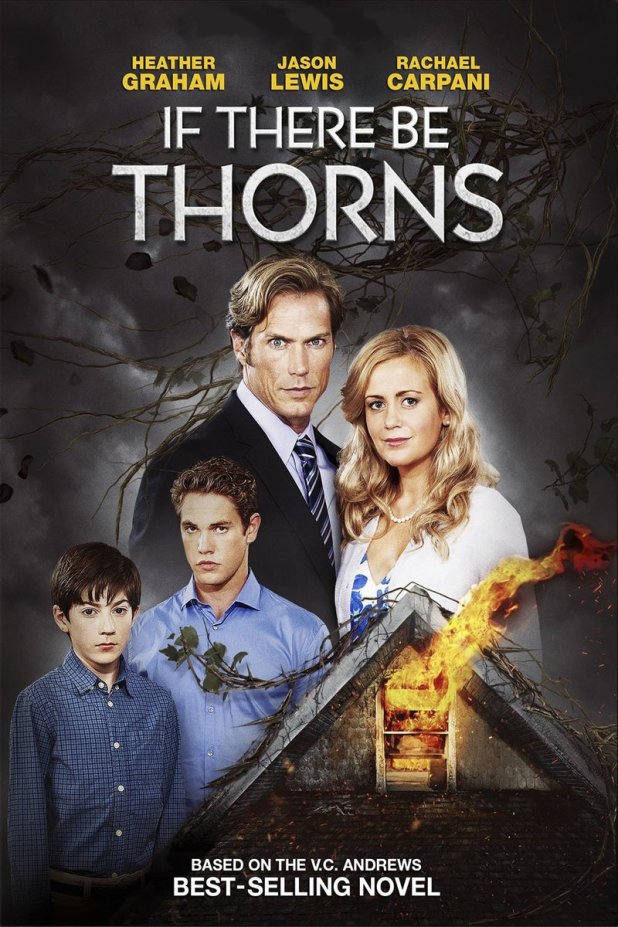
If There Be Thorns (2015)

Let’s say you slept with your brother, watched your husband die, then set your childhood prison on fire, which sent your mother to the looney bin and your grandmother to hell. What would you do next?

This part of the Dollanganger series is set in the 1970’s. It looks like it — cinematographer James Liston utilized vintage anamorphic lenses to create more depth and atmosphere, just like the films of that era.

https://www.dailymotion.com/video/x55dgol

Six years later, Cathy and Chris have escaped to California with her sons, Jory and Bart, who feels constantly in the shadow of his older brother. One day, a woman in black moves next door and invites the boys over for tea. She’s rich but her only family is her butler, John Amos. Then, she asks if she may have a photo of the boys.

Jory decides to never come back, but Bart keeps coming back. She gives him gifts, like a pet snake and a journal that belonged to his great-grandfather, Malcolm. Their relationship must remain a secret, because she is really his grandmother Corinne (Heather Graham, the only actor to return from the previous movies, despite rumors that her part was going to be taken over by Goldie Hawn).

Malcolm’s journal is bonkers, filled with hateful rants about women being whores, so of course, Jory loves it. After all, of the two people who could be his dad, one is his mom’s brother and the other was a maniacal ballet dancer who put glass in people’s shoes.

Cathy starts to hide beds in her attic, convinced that her children will be taken from her once everyone learns about all the incest. Chris is worried, but that’s forgotten when they adopt Cindy, a girl from Cathy’s ballet class who died from cancer.

Bart disappears and is found in the woods with an infected cut. This all leads to his grandmother dropping the bomb on him that his mom and stepfather are siblings. He reacts pretty much like how you expect — like a complete maniac, even listening to John Amos about how he needs to escape the sins of his family. For some reason, this means killing the family dog. And then Corinne reveals that Bart’s real dad is her husband and seriously, my head is spinning so I can only wonder how this kid is keeping it all together.

Actually, he’s not doing well at all, trying to drown his adopted sister, which lands him in the attic, where he starts talking a whole lot like his insane grandmother from the previous two films.  That’s when everyone finds out that mom is living right next door.

The hits keep on coming — Cindy sees her mother while dancing and falls, losing the ability to ever do the carioca again. Jory’s grandmother tries to expose the incest and steals her grandson. And then John Amos knocks out Corinne and Cindy, throws them in a barn and tries to burn them alive to finally ends the family’s cycle of abomination. Luckily, that makes mom and daughter love one another again. It doesn’t save her from a burning building, but it still seems like everything ends up pretty happy.

Except, you know, this is a V.C. Andrews story. Bart still has the journal and has started dressing like his grandfather. Looks like there’s one more movie to get through.

Bonus: We discussed this movie on our podcast.

Petals on the Wind (2014)

Ten years after escaping from their mother, the surviving Dollanganger children — Cathy, Chris and Carrie — have tried to move on with their lives. But now, Cathy decides that enough is enough. She’s finally ready to take her horrible revenge on her mother, vengeance that was only hinted upon in the first film.

After the death of the man who took them in, our three heroes have moved on with their lives. Meanwhile, their grandmother Olivia is now an invalid after a stroke while their mother Corinne has fully taken over Foxworth Hall, the site of their imprisonment.

Cathy (Rose McIver, The Lovely Bones) has become a ballet dancer while her brother Chris (Wyatt Nash, whose career started on the reality show Survivor) learns to be a doctor and her sister Carrie (Bailey De Young) is bullied in high school.

On the eve of Carrie leaving town to try her luck on Broadway with her new boyfriend Julian, she gives in to her passion for her brother. That’s when it’s revealed that they almost had a child that miscarried. She leaves in the hopes of a new life while her brother remains behind, unable to love anyone but her. That’s bad news for the daughter of his boss at the hospital, Sarah Reeves, who falls in love with him.

Meanwhile, Julian is the rogue you probably figured he would be. He abuses her and even drops her at the try-out, breaking her leg and ruining her dreams of being on the Great White Way. That said, he does sabotage the girl who wins the lead by putting glass in her shoes and getting Cathy into a restaging of Romeo and Juliet. However, he starts getting touchy with her sister and an argument causes him to drive so badly that he wrecks and dies. Want to bet that Cathy is pregnant with either her brother or Julian’s child?

That said, Carrie is still a mess. She falls in love with a minister named Alex, but when she meets her mother and invites her to the wedding, her refusal leads to suicide. Cathy finally enacts her plan — seduce her mother’s husband Bart Winslow and then ruin her life. She also shows up to kiss her brother the day before his wedding, causing him to lose his new bride and his job as a doctor.

Chris decides that Cathy and her son Jory should come to California, where they will start a new life where no one knows them. But hey — why do that when you can go to a Christmas party and reveal to your evil mother that her husband’s baby is growing inside you?

The ending of this — how do I even get into it? Corinna and Olivia get in a shouting match, which ends with the old woman revealing that she kept the skeleton of her grandson Cory. Everyone but Cornnine, Chris and Cathy dies in the ensuing inferno, leaving for California while their mother is institutionalized.

This one has everything you want — if what you want is crazy people acting crazy and shouting recriminations at one another.

BONUS: Becca and I discussed this movie on our podcast.

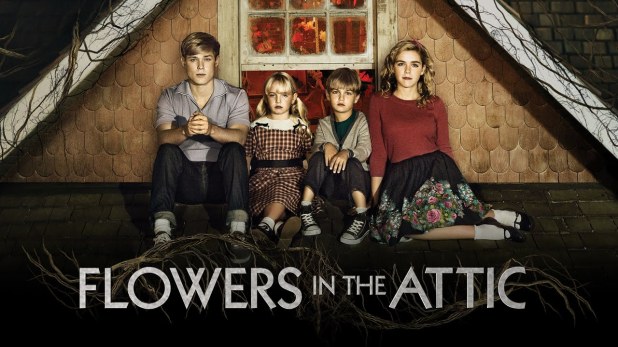
Flowers In the Attic (2014)

Has any author been more made for Lifetime than V.C. Andrews? Nope. So it was no surprise when the network announced that four movies based on the Dollanganger saga would begin airing on its network in 2014. Unlike the 1987 theatrical film, the ending follows the book.

Of course, it’s the same basic story of the Dollanganger children Chris (Mason Dye, MTV’s Teen Wolf), Cathy (Kiernan Shipka, Mad Men and Netflix’s The Thrilling Adventures of Sabrina) and the twins Carrie and Cory who must endure after the death of their father and eventual abandonment by their mother Corrine (Heather Graham) inside the attic room of their brutal grandmother Olivia (Ellen Burstyn).

However, where the original film only hinted at the incest between Chris and Cathy, this one uses it as the bait to keep you watching the movie. Hey — it’s 2019. For some reason, 90% of all pornography seems to be incest based these days. Perhaps V.C. Andrews was on to something.

Instead of trying to tie the ending off with a neat — or poorly realized — ending, this time the story naturally leads to the second book of the series, Petals on the Wind, which aired four months later.

I’m pleased to state that I have all four of these films — are you surprised? — and I didn’t even wait for the four pack from Walmart. No, I have them all individually because I bought them the moment they came out. Not every movie has doughnuts killing mice and children, you know.

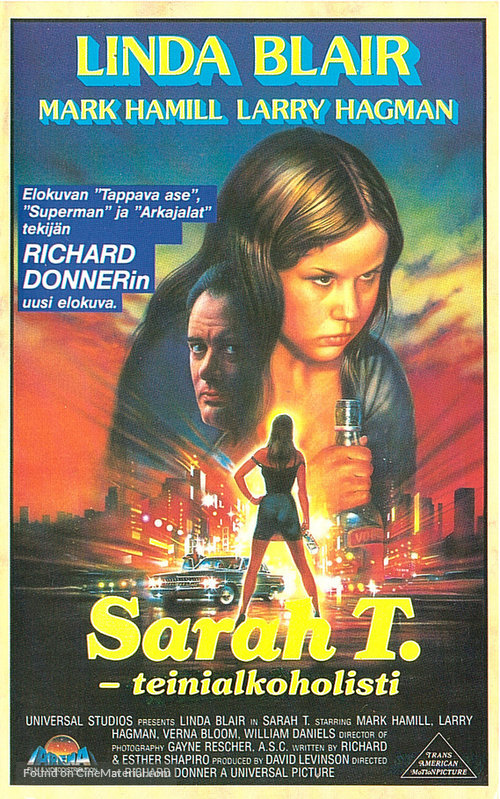
Sarah T. – Portrait of a Teenage Alcoholic (1975)

The last film Richard Donner would make before The OmenSarah T. – Portrait of a Teenage Alcoholic is a hard-hitting made for TV movie all about how easily teens in the 1970’s could become full-fledged alcoholics before they even graduated high school. It’s written by Richard and Esther Shapiro, who would go on to create Dynasty.

Sarah Travis (Linda Blair!) is fifteen and feels all alone. Her parents are divorced, with her drunk father (Larry Hagman!) being pretty much absent and her mother (Vera Bloom, Animal House) concentrating on her new marriage (William Daniels — the voice of KITT from Knight Rider — plays the stepfather).

Sarah feels overshadowed by her older sister Nancy (Laurette Spang-McCook, Cassiopeia from the original Battlestar Galactica) and tries to live with her father, but he can barely take care of himself.

As the movie starts, she’s already drinking at her mother’s parties and is dealing with major feelings of anxiety and feeling out of place. And when her mother sets up a blind date with Ken (Mark Hamill!), she really shows off how much she can handle at a series of parties. While her parents disapprove of the boy, they bond over his horse Daisy and become friends.

But Sarah’s alcoholism starts to impact others. She gets a maid fired who her mother blames for watering down their booze. And she already started to drink to get through school.

Things get much worse when Sarah tells Ken that she’s in love with him. He gently tells her that he’s not interested — honestly he looks and feels ten years older than her — and when her father rebuffs her again, Sarah goes off the deep end. From getting hammered while babysitting to riding Ken’s horse into traffic, our heroine is trapped in a downward spiral.

This is a great reminder of how made for TV movies once looked as good or better than theatrical films, particularly if they had a message like this one. Blair is quite good at conveying the tailspin that her character endures, another of her “girl in danger” roles like another great made for TV movie she made, Born Innocent.

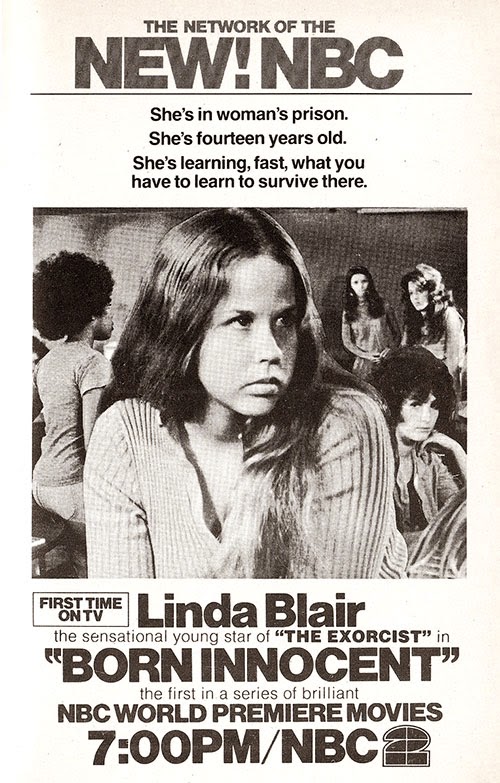
Born Innocent (1974)

For years, Bill Van Ryn from Groovy Doom has told me how disturbing this made for TV movie is and I kept thinking, someday, I’ll do an entire week of Linda Blair movies and make sure to include it. Now I’m hitting myself for waiting so long.

Blair plays a runaway who ends up trapped between her abusive family, an uncaring system and even more horrifying children, with only one care worker on her side. Highly publicized and incredibly controversial due to its graphic content, Born Innocent was the highest-rated television movie to air in the United States in 1974.

Christine “Chris” Parker (Blair) is fourteen and has been arrested so many times that she’s ended up in reform school. Her abusive home may be the cause, as her father (Richard Jaeckel, Chosen Survivors) beat her so much that she ran away from home, with her mother (Kim Hunter, Dr. Zire from Planet of the Apes) watches on, unfeeling and unable to stop it from happening. Only her older brother knows the truth, but he has his own life now.

The system blames Christine for her behavior and only a counselor named Barbara (Joanna Miles, The Dark Secret of Harvest Home) tries to save her from the apathetic system that allows for a destructive system within the reform school, including a gang that brutally assaults Chris in a scene involving a toilet plunger that was censored from future broadcasts.

After a pregnant girl miscarries due to staff abuse, Chris starts a riot. As the film closes, Barbara realizes that she has lost her, as Chris has gone from a smart and innocent girl with morals to someone who is manipulative and feels no remorse. Once an adult, she’ll basically go from this system to the prison system with no hope for being saved.

As stated before, the original cut of Born Innocent contains a scene where Blair’s character is attacked in the shower by several girls. This controversial scene led to the Family Viewing Hour, which became briefly mandatory for the networks in the late 1970s.

Born Innocent was criticized by the National Organization for Women, the New York Rape Coalition, and numerous gay and lesbian rights organizations for its depiction of female-on-female sexual abuse. In fact, the Lesbian Feminist Liberation considered the movie propaganda against lesbians, claiming that “Men rape, women don’t.” There was even a lawsuit over a copycat crime that was eventually dismissed.

Whew — this is one downbeat, brutal slice of 1970’s dread.