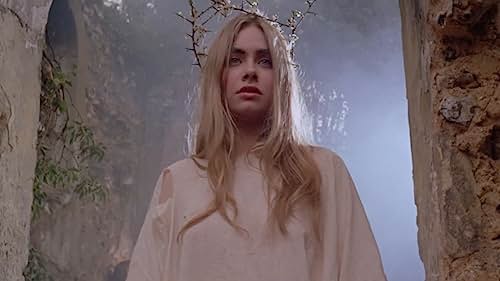
Bucheon International Fantastic Film Festival: Woodlands Dark and Days Bewitched: A History of Folk Horror(2021)

If you have even a passing interest in the world of folk horror, Kier-La Janisse’s exhaustive exploration — which clocks in at 3 hours and 14 minutes and could have been a thousand more if I had my way — is the film of a lifetime. The ‘unholy trinity’ that launched this trend on to screens — Michael Reeves’ Witchfinder General, Piers Haggard’s Blood on Satan’s Claw and Robin Hardy’s The Wicker Man — are not just names, but significant milestones in the history of folk horror. This movie is quite literally the last word in what folk horror is, what it means and how it’s still part of the world of cinema today, perhaps more than ever before.

With more than fifty significant names in the world of horror and horror writing — everyone from Amanda Reyes, Piers Haggard, Adam Scovell, Jeremy Dyson Samm Deighan, Kat Ellinger, Robert Eggars, Ian Oglivy, Kevin Kölsch, Dennis Widmyer and around forty more voices appear with great insights — there’s never been a more well-rounded approach to tackling a movie genre within a genre. This feels like the kind of film that I’ll be coming back to again and again.

Beyond the expected anchors of the genre, I was so excited to see lesser-known films get their due, like Alison’s Birthday (which is on the gigantic All the Haunts Be Ours box set that Severin is releasing), beDevilDark AugustEyes of Fire (also being released by Severin), Grim Prarie TalesLemora (which seemingly has footage from the mysterious blu ray of the film that never materialized) and Zeder.

This is the kind of material you want to pause, write down, make notes on, and keep updating your Letterboxd while watching it. This isn’t just a movie about films. This is a true celebration of the magical wonder hidden within the flickering image, an exploration of a genre of all the dark old things and a journey through how each country documents the unknown through their media.

There aren’t enough stars in the firmament out of ten to rate this one. You can preorder this film from Severin now or watch it on Shudder. You can also visit the film’s official site.

Thanks to the fantastic Letterboxd list Films mentioned in “Woodlands Dark and Days Bewitched: A History of Folk Horror by Jon Ursenbach, here’s a list of the films as well as links to reviews of them that we’ve done on our site.

I watched this film as part of The Bucheon International Fantastic Film Festival (BIFAN). You can learn more at their official site.
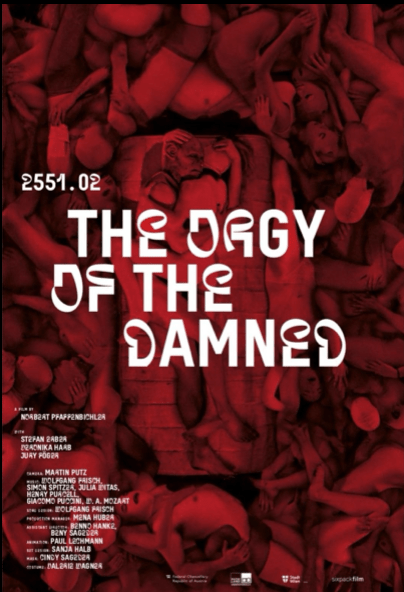
Bucheon International Fantastic Film Festival: Orgy of the Damned (2023)

In the sequel to 2021’s 2551.01, director Norbert Pfaffenbichler presents a visually unique world. In it, a man in a monkey mask navigates a strobing and flashing landscape of deviancy and pain. He’s pursued by a plague doctor and his army while attempting to rescue an abandoned child. But this is just the surface of a film that truly comes alive when you immerse yourself in its striking visuals, allowing them to sear into your consciousness.

Following the monkey man’s shooting, a masked woman intervenes, leading to a blossoming romance. Yet, beneath this love story, there’s a pervasive sense of ennui and helplessness. The protagonist is always on the brink of his objective but perpetually ensnared by violence and a sexual frenzy that has seized these future inhabitants. All of this unfolds against a backdrop of electronic soundscapes and classical music, adding depth to the film’s exploration of these themes.

This movie warns you from the start: it has disturbing images, sexualized moments and strobing. It’s either going to be totally something. You vibe to or the exact opposite. I get the feeling there’s really nowhere in between.

I watched this film as part of The Bucheon International Fantastic Film Festival (BIFAN). You can learn more at their official site.


Bucheon International Fantastic Film Festival: AUXILIO – The Power of Sin (2023)

AUXILIO (Help) is a captivating film directed by Tamae Garateguy, who is known for her previous acclaimed work on She Wolf. The narrative centers around Emilia, a spirited young woman portrayed by Cumelen Sanz. She finds herself in a challenging situation after her father sends her to a secluded convent. This drastic decision is a reaction to her defiance in rejecting the marriage proposal from a man chosen for her, reflecting the societal pressures she faces and her refusal to conform to traditional gender roles.

Upon arriving at the convent, Emilia encounters a strict and cloistered world governed by the rigid rules of the Sisterhood. Guided by Rebeca, a compassionate nun played by Paula Carruega, Emilia begins to navigate the complexities of her new life. As she attempts to adapt, she gradually becomes aware of a mysterious and deeply buried secret that lies within the convent’s walls—a secret that grants supernatural powers to the nuns. This revelation introduces an enthralling layer of suspense and intrigue, drawing Emilia deeper into the enigmatic world around her.

The film intricately weaves themes of hidden romance and passion, hallmarks of the nunsploitation genre. The interactions between the characters reveal much about their desires and conflicts, emphasizing the tension between their spiritual vows and earthly yearnings. Mother Superior, portrayed by Marcela Benjumea, serves as a formidable figure, adept at hiding the convent’s darker secrets and protecting its inhabitants—often societal outcasts—from the outside world. Her complex character adds depth and a sense of urgency to the plot as she navigates the fine line between authority and compassion.

Throughout its runtime, AUXILIO raises profound questions regarding faith, identity, and the nature of belief. Are the residents of the convent divinely inspired beings, or are they merely ordinary individuals seeking solace and purpose? This exploration invites viewers to reflect on their own definitions of spirituality and the human experience, making the film not just a visual spectacle but an engaging meditation on the struggles and strengths of its characters.

I watched this film as part of The Bucheon International Fantastic Film Festival (BIFAN). You can learn more at their official site.
Bucheon International Fantastic Film Festival: Bldg. N (2022)

Directed and written by Yosuke Goto, Bldg. N is based on actual events that happened in a Gifu Prefecture apartment complex in 2000.

Shiori (Minori Hagiwara) is a college student that has a fear of death known as thanatophobia which keeps her from sleeping but also haunts her every waking moment. To try and escape her constant depression, she joins her ex-boyfriend Keita (Yuki Kura) and his current girlfriend Maho (Kasumi Yamaya) to film a rural housing plan where rumors of ghostly activities have been reported.

The three college students lie and explain that they are looking for a place to live. Invited to a welcome party, they learn that the building’s residents live with ghosts quite literally. As their leader Kanako (Mariko Tsutsui) explains, that means trying to understand them. Then someone runs over a rail and kills themself.

This would be the time to leave.

So you end up with a death cult meeting up with a girl whose fear of death leads her to be irrational about everything. While she’s also quite tiny, she’s also a killing machine. And while the film eventually becomes a more standard J-horror movie than the opening may promise and its characters make some of the dumbest decisions ever, at least Hagiwara is great as the lead and it looks interesting.

I watched this film as part of The Bucheon International Fantastic Film Festival (BIFAN). You can learn more at their official site.

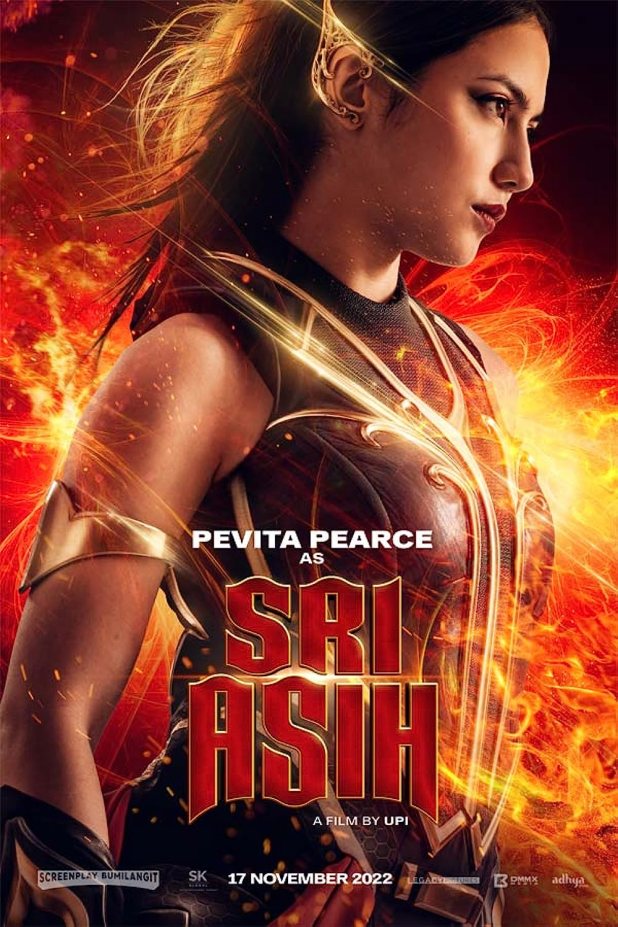
Bucheon International Fantastic Film Festival: Sri Asih (2022)

Sri Asih was created in 1953 by RA Kosasih, the father of Indonesian comic books. According to the Bumilangit Cinematic Universe Wiki, this is her origin: “Nani Wijaya, is the daughter of a wealthy family, is a bead of Goddess Sri from the Kahyangan Kingdom. As an adult, Nani works as an agent of the Bureau of Criminal Investigation to defend truth & justice. However, when he struggles, Nani can transform herself into Sri Asih by translating “Goddess Asih!”” This allows her to access her powers as the reincarnation of Dewi Sri, the goddess of rice and fertility still worshiped in Java, Bali, and Lombok islands.

Her powers include strength, speed, durability, flight, duplication, a healing factory and the ability to grow in size. As a BCI agent, she already had martial arts and detective skills, adding to her superhuman powers.

Sri Asih was such a popular character that her first movie, directed by Tan Sing Hwat and Turino Djunaedy, was made a year after her debut. Unfortunately, the first superhero movie made in Indonesia is lost.

This version of Sri Asih is the second installment of the Bumilangit Cinematic Universe, a series of superhero films based on more than 500 comic book characters in the library of Indonesian publishing company Bumilangit, which started with 2019’s Gundala.

Directed by Upi, who co-wrote the screenplay with Gundala director Joko Anwar, this tells the story of the third Sri Asih, who is Alana at the start of the movie (Pevita Pearce). She’s been a fighter for her entire life and had to hold back the rage inside her. That makes sense, as she was nearly killed by the volcano that made her an orphan when she was just an infant.

After being raised by a female martial artist, she becomes an MMA fighter in her adulthood, which brings her into the cage against the privileged Mateo (Randy Pangalila). By the end, she will have to battle one of the top five villains of the BCU — the five commanders of the Goddess of Fire — known as Evil Spirit.

I may not know these characters at all, but I think it’s awesome that other cultures are attempting to leverage their own comic book mythologies. That’s why I hate that people talk down on comic book movies—they are no different than the myths of any culture throughout time—and translate them to the screen and give themselves representation.

This might not have the budget of a Marvel movie, but the fights look better, and the CGI looks just as good. At the end of this movie, there’s even a post-credits cameo. Much like Sri Asih showed up at the end of Gundala, Mandala appears briefly.

For those of us in the U.S., Shout! Factory has the rights to this and will release it this year. Check it out when you can because it’s such an incredible opportunity to learn about the heroes of other places and see them in action.. The series

I watched this film as part of The Bucheon International Fantastic Film Festival (BIFAN). You can learn more at their official site.

Bucheon International Fantastic Film Festival: Satan Wants You (2023)

At the height of sheer Q-Anon craziness — I think probably when a shaman in red, white and blue facepaint led an army of people into government buildings, and people defecated on the walls, maybe — people were grasping for straws and pearls and wondering, “How could this happen?”

I’m here to tell you that this has always been here.

In the 1980s, high school me was the same as old me. I was always in black, with long hair, and I only cared about music, movies and studying weird things. As such, I was brought into the Core Group, a team of teachers led by an occult expert cop who studied which students could be worshipping Satan. This group was led by my godmother.

The Satanic Panic wasn’t started by Michelle Remembers, but it felt like it was. The union of Canadian psychiatrist Lawrence Pazder and his psychiatric patient (and eventual wife, but we’ll get to that) Michelle Smith. In the mid-70s, while treating Michelle for depression due to a miscarriage, she confessed to him that she knew that something horrible had happened to her and could not recall what it was. Using hypnosis, Michelle was soon screaming for 25 minutes non-stop and speaking in the voice she had as a child. 14 months and 600 hours later, a conspiracy was found: Michelle’s mother and other citizens in Victoria were members of a worldwide Church of Satan.

At one point, Michelle was part of a ritual that lasted 81 days that Satan himself showed up for, and during that time, she was tortured, raped, witnessed others get killed and was covered with the blood of murdered babies until St. Michael the Archangel, Mary and Jesus appeared, healing all of her scars and blocking all of her memories of the years of Satanic desecration of her body and soul.

None of these stories were challenged, even a decade after, when Michelle and Laurel Rose Willson, who wrote Satan’s Underground about being a breeder for Satanists and having two of her children killed in snuff films, were on Oprah Winfrey and at no moment did Oprah challenge either of them, in 1989. The year, I was repeatedly questioned and challenged and told that I was giving my soul to Satan.

I was a white kid from a small town, and in no way have I ever dealt with racism, sexism, transism or any isms in any other way again. This experience, however, showed me a small, tiny glimpse into what it’s like to know you’re right and everyone is sure you’re wrong based on no facts at all.

By the 80s, Pazder was an occult expert, consulting in the McMartin preschool trial and appearing on a 20/20 segment called “The Devil Worshippers” that stoked the flames of the Satanic Panic. That report claimed that movies like The GodsendThe IncubusAmityville II: The Possession, Exorcist II: The HereticThe ExorcistThe Omen and Omen 2 allowed people to visualize and be inspired by the devil. This aired in prime time on ABC, a major cable network. They also refer to The Satanic Witch as a book filled with evil rites. And then, of course, heavy metal. As Anton LaVey was in his era of not speaking to the media, this also has footage taken from Satanis.

As part of the Cult Crime Impact Network, Pazder got into business working with police groups and consulting on Satanic ritual abuse, while lawyers used his book while doing cases, and social workers used Michelle Remembers as their training manual.

According to NPR host Ari Shapiro, “One reason these fictions were so appealing was that they gave people a sense of purpose. They had a mission – to defend the innocent.”

This is what’s happening today. It’s why trans people are grooming children, why Democrats are eating babies, and why elections are being seen as conspiracies. Because the truth — the idea that things happen randomly for no reason — is less frightening than Satanism or Q-Anon.

Man, did I digress?

In Satan Wants You, filmmakers Sean Horlor and Steve J. Adams explore the history of Michelle Remembers and what most people don’t know, such as how Pazder and Smith left their families to be together and how the book was debunked. It would be one thing if their sessions led to a book and some press, but it would be another if they kicked off an entire movement.

The directors have stated: ““This is the first time that Michelle’s sister, Larry’s ex-wife, and Larry’s daughter have gone on the record to tell their side of this story. This was a once-in-a-lifetime opportunity to combine all these stories together to reveal the true origins of the Satanic Panic and show how they connect to the Pizzagate and QAnon conspiracies of today.”

This movie must be seen, even if we’ve entered a time when feelings matter more than facts. But did facts ever matter?

This film also found an anonymous source sending Michelle’s actual tapes, which have never been heard until now.

I don’t discount that she went through some trauma. Yet, how many lives were destroyed along the way?

The sad fact is that no one has learned anything. That same refrain of “protecting the children” exists today. And yes, that’s a noble endeavor. But as someone who grew up in a town of 7,500 people that had more than one Catholic priest abusing children in the last fifteen years of my life, Often, the abuser is someone the abuser has known and trusts.

Just like a worldwide Satanic network — paging Maury Terry and The Family, a book that lost a court case to the Process Church over false claims — and a public ritual lasting 81 days seems complicated to swallow, so do all the claims of the far right today.

Back when I was a kid getting grilled over my slasher movie magazines and love of Danzig, I figured, “Well, someday soon, all of these close-minded people will die off, and we can get past racism, and we can learn how to be more open-minded together.” But now, everyone is close-minded. No one seemingly wants to learn. And this movie is a great teaching tool — it’s a must-see, an intense documentary worthy of rewatching — because it happened before, and yes, it’s going on all over again. The message may have shifted, but it’s still the message.

And it’s still wrong.

I watched this film as part of The Bucheon International Fantastic Film Festival (BIFAN). You can learn more at their official site.
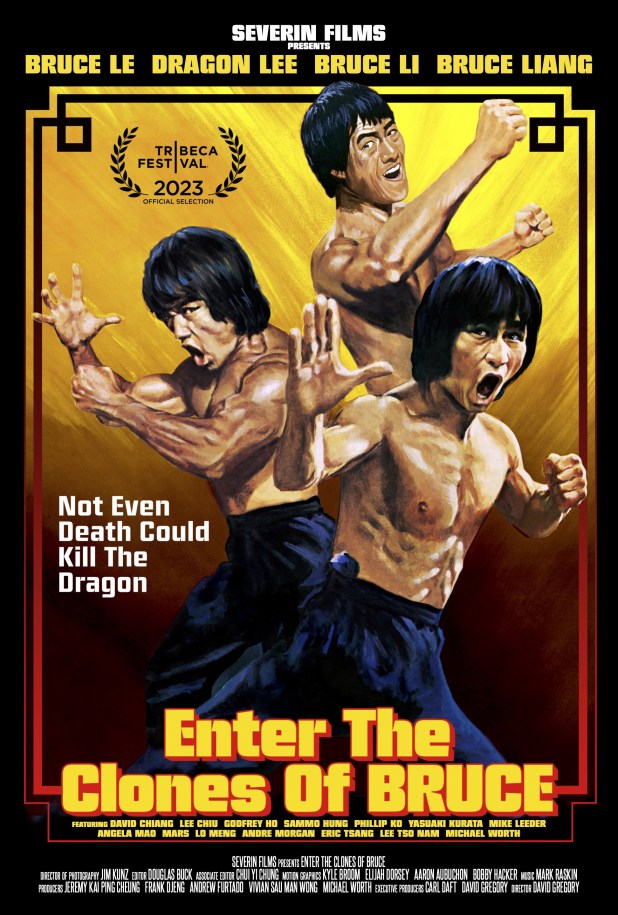
Bucheon International Fantastic Film Festival: Enter the Clones of Bruce (2023)

Bruce Lee died in 1973 after four major movies: The Big BossFist of FuryThe Way of the Dragon and Enter the Dragon. Yes, he had been acting since his teens and also appeared on The Green Hornet and worked in Hollywood, but he became a cultural force through those movies. The world of film—more than that, pop culture, martial arts, and cultural identity—were all shaped by a man who died at the age of 32.

Just when the world had started to love Bruce Lee, his sudden departure left a profound void in the cultural landscape.

What happens when the demand exists and there’s no supply?

You invent a supply to fill that vacuum.

Brucesploitation is a truly unique film genre that revolves entirely around one individual. Actors like Ho Chung-tao and Moon Seok transform into Bruce Li and Dragon Lee. The titles of these films are so reminiscent of Bruce Lee’s movies that they even incorporate footage from his funeral. These films, which initially portray the life stories of these actors, often delve into sequels of Bruce Lee’s films or even venture into the realm of pure fantasy, where Bruce Lee can be seen fighting characters like Popeye and Emanuelle in the afterlife.

Directed by David Gregory and featuring contributions from Carl Daft, Frank Djeng, Vivian Wong, and Michael Worth, Enter the Clones of Bruce is a film that not only entertains but also educates. It is a must-watch for those unfamiliar with this unique genre, as well as for those who have delved deep into its peculiar and potent flower.

David Gregory, known for his work on Al Adamson’s life in Blood & Flesh: The Reel Life & Ghastly Death of Al Adamson and the making of The Island of Dr. Moreau in Lost Soul: The Doomed Journey of Richard Stanley’s The Island of Dr. Moreau, brings us another gem. Enter the Clones of Bruce, like his previous works, avoids being overly academic and never ridicules its subject. Instead, it celebrates how Bruce Lee revolutionized the portrayal of Asian men in Hollywood and why his films were so crucial. It also argues that these imitations were perhaps just as necessary in the healing process following the martial arts legend’s death.

The true joy of this film is in hearing from the performers and how it made them feel to become stars while living in the shadow of the man they were impersonating. Like Bruce Le, who was in Shaw Brothers’ Infra-Man before changing his name from Ho Chung-tao and appearing in movies like The Big Boss Part IIReturn of BruceMy Name Called Bruce and many more, including a cameo in Pieces. Or Dragon Lee was once Moon Kyung-seok, the star of The Real Bruce LeeKung Fu Fever and Dragon Lee vs. the Five Brothers. Or Bruce Li, who was in Goodbye Bruce Lee: His Last Game of Death and Bruce Lee: The Man, The Myth.

The film also offers a wealth of knowledge from martial arts film experts, including Mike Leeder, Christophe Lemaire, Michael Worth, Christophe Champclaux, and Stephen Nogues. Their perspectives, along with those of director Lee Tso Nam, Golden Harvest producer Andre Morgan, Jean-Marie Pallardy, Uwe Schier, and Aquarius Releasing’s Terry Levene, provide a comprehensive understanding of the genre.

Perhaps one of the most insightful voices is Valerie Sou, professor of Asian studies at San Francisco State University, who explains why Lee meant so much to Asians not just in America but worldwide, as well as his cultural relevance to African-American audiences.

Even better, the film has many of the great martial arts actors of all time, including David Chiang (The 36th Chamber of Shaolin), Lee Chiu (The 8 Diagram Pole Fighter), Mars (Enter the Dragon), Phillip Ko (Heart of Dragon), Lo Meng (The Kid With the Golden Arm), Roy Horan (Game of Death II and the father of martial arts actress Celina Jade), Bruce Liang (The Dragon Lives Again), Caryn White (He’s a Legend, He’s a Hero), Eric Tsang (The Dragon Lives Again), Lo Meng (Five Deadly Venoms), Casanova Wong (Warriors Two), David Yeung (son of Bolo), Angela Mao (I lost my mind when she showed up and got emotional; obviously she was in Enter the Dragon but her films are so inspirational. She even thanks the audience for watching her movies, a charming thing to do); “Black Dragon” Ron Van Clief (Fist of Fear, Touch of Death), Wang Dao, Shan Charang, Japanese actor Yasuaki Kurata (Bruce Lo) and perhaps the greatest cinematographer of fighting ever — as well as a Bruce Lee comedy clone in The Fat Dragon — Sammo Hung.

Another amazing moment is when this film gets not just Joseph Lai but also Godfrey Ho to speak on the traditions of creating products in a demand vacuum. I couldn’t be more pleased with this movie!

Enter the Clones of Bruce does what every good movie about movies should do. It makes you want to watch all of the films in this. I love the stranger examples, like Fist of Fear, Touch of Death and The Dragon Lives Again, but I think Bruce Li in New Guinea might outdo them!

Severin also plans on a box set of Bruceploitation films that will include Challenge of the TigerThe Real Bruce LeeDragon Lives AgainBruce’s FingersEnter the Game of DeathNinja Strikes BackClones of Bruce Lee (a movie that combines Dragon Lee, Bruce Lai, Bruce Le and Bruce Thai) and The Death of Bruce Lee. I’ll be first in line to buy it.

If you’d like to get a head start on the movies in this genre, I’ve compiled a Letterboxd list of the movies the film mentions. Watch them all, scream loudly at the camera and remember, “An intelligent mind is one which is constantly learning.” Or watching movies.

I watched this film as part of The Bucheon International Fantastic Film Festival (BIFAN). You can learn more at their official site.
I watched this film as part of The Bucheon International Fantastic Film Festival (BIFAN). You can learn more at their official site.

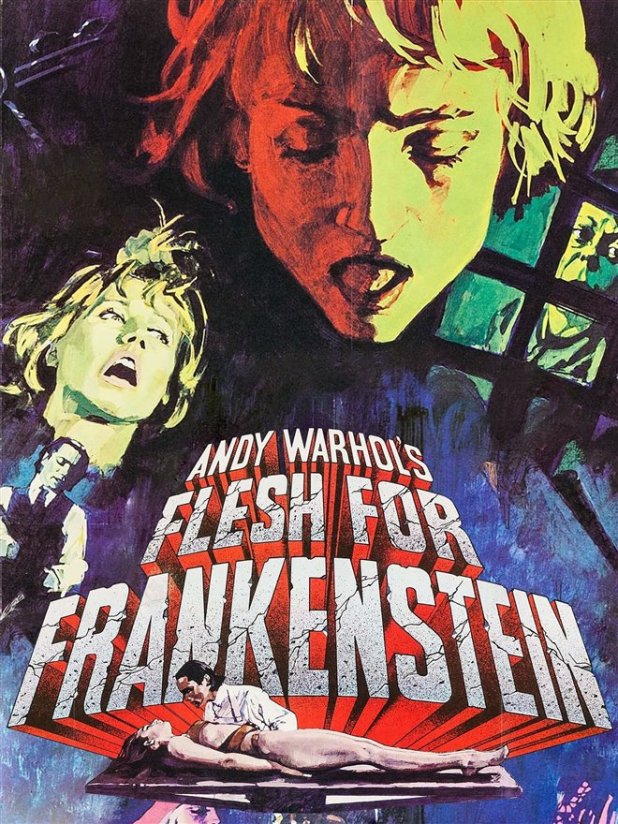
Bucheon International Fantastic Film Festival: Flesh for Frankenstein (1973)

Joe Dallesandro is one of those nexus points for so many movies and parts of culture that I love. Born to a Navy man and a mother who was serving fifteen years in a federal pen for auto theft by the time he was five, Joe went from foster homes to knocking out his high school principal and stealing cars just like his mom. He got shot in the leg, and when his dad took him to the hospital, the cops arrested the fifteen-year-old and sent him to the Catskills, specifically the Camp Cass Rehabilitation Center. He escaped within a few months and made it back to New York City, where he went from nude modeling to being the star of Warhol’s films.

After roles in Lonesome Cowboys, Trash, Heat and Warhol’s two monster films, Joe decided to stay in Europe, where he made all sorts of movies in all the types of genres that I love. Yeah, there’s the American The Gardener, Serge Gainsbourg’s Je t’aime moi non plusSavage Three, Killer NunMadnessLe Marge with Sylvia Kristel and many more. He even shows up somehow in Theodore Rex. Yes, the same man whose bulge is on the front of the Rolling Stones’ Sticky Fingers, and the cover of The Smiths’ first album was in a movie about dinosaur cops.

This is the movie that Joe, who never once gave it away, came to Italy to make with Paul Morrissey.

Baron von Frankenstein (Udo Kier) has made his sister Katrin his wife, yet ignores her as he works to create the perfect human being, going through corpses of men and women to craft his Serbian ideal. You know, when he isn’t literally having sex with the body parts of dead women while shouting, “To know death, Otto, you have to fuck life… in the gall bladder!”

He wants Nicholas (Dallesandro) to be the body of his creature, but he escapes and makes his way to the castle, where he begins to satisfy the Baroness. Once she reveals the fact that she only cares about herself, she betrays him and, in return, is given what she really wants: The opportunity to have sex with the Baron’s creation, who responds by loving her to death. Another even more graphic scene happens when lab assistant Otto literally screws the guts out of the female monster (Dalila Di Lazzaro, Phenomena), causing the angry Dr. Frankenstein to kill him.

I kind of dig that the end of this film echoes both A Bay of Blood and Manson’s quote about “These children that come at you with knives — they are your children” by having the Frankenstein children holding scalpels that they will either use to help or to hurt. The movie doesn’t tell you what happens next.

That A Bay of Blood comparison is easier to make when you realize that one of the kids is played by one of the adorable and murderous kids from that movie, Nicoletta Elmi. In the 70s, if you wanted a frightening Italian red-headed child, you went with Nicoletta, who also appeared in Baron BloodWho Saw Her Die?Deep Red and many more. She also played the red-head usher in Demons when she grew up.

Despite his name appearing on this film, Andy Warhol’s contributions were minimal. He may have visited the set once and briefly examined the editing. Perhaps a more involved talent was Antonio Margheriti—Anthony Dawson—who claimed to have directed some of the film. He may have just been there so that the film could claim to be Italian, as it would need a director from the country to obtain Italian nationality for the producers.

I watched this film as part of The Bucheon International Fantastic Film Festival (BIFAN). You can learn more at their official site.
Bucheon International Fantastic Film Festival: Terrifier 2 (2022)

The moments that work in Terrifier are the ones without the gore. Art the Clown (David Howard Thornton) is just walking with a bag of glass, and there are moments in the pizza shop and him on that bike. The disquiet of those moments was so upsetting that I was excited to see where the next movie would go.

Directed, written, edited and produced by Damien Leone, this takes place a year after the first movie. It’s Halloween again, and Art has returned from the dead, killing the coroner, inspecting his body, and seeing The Little Pale Girl, an entity that follows him throughout the movie.

Sienna (Lauren LaVera) and her brother Jonathan (Elliott Fullam) are obsessed with the drawings in their dead father’s sketchbook. While Sienna takes to the angel whose costume she is making for a party, Jonathan loves the pictures of Art and his victims. Their father died of brain cancer, which they claim led to the visions inside his books; that night, a fire wipes out Sienna’s costume, but her sword—a gift from her father—remains.

When she goes to a costume shop to rebuild her wings, Sienna has a panic attack instead of talking to her friends Allie (Casey Hartnett) and Brooke (Kailey Hyman) about Art the Clown’s victim, Victoria Heyes (Samantha Scaffidi, the final girl of the original). She has a nervous breakdown on live TV and murders talk show host Monica Brown.

By day, Jonathan watches Art and The Little Pale Girl play with a dead opossum while Art kills the costume store owner, Allie and Allie’s mother at night. That sentence in no way explains just how far these murder scenes go, some of which feel like they descend into Herschell Gordon Lewis-level gore porn for laughs.

Jonathan shows Sienna and their mother, Barbara (Sarah Voight), the sketchbook, as he has learned that The Little Pale Girl was Art’s first victim, Emily Crane. Jonathan believes their father knew how to stop Art, but his mother destroys the books and slaps him around. There is no need for revenge, as she dies moments later at the hands of Art, who takes the sword and Jonathan.

After a midnight party where Brooke doses Sienna with MDMA, our heroine is lured to the abandoned The Terrifier amusement park ride. There, she is killed by Art and resurrected by an unseen force before killing the clown numerous times to save her brother. One final time, she uses the sword to cut off Art’s head, which is taken by The Little Pale Girl. Moments later, Victoria Heyes gives birth to the living head inside the mental home, setting up the third movie.

Somehow, on a budget of $250,000, this movie made $16.1 million. There was hardly an ad campaign, either. The idea that a film that caused people to pass out and puke definitely had some allure.

I also have no idea why this movie is 2 hours and 18 minutes long, but 15-year-old me would have loved it. 51-year-old me thinks this movie is too long but recognizes that people tend to want to keep playing loud and fast when you’re playing loud and fast. I wish there had never been any information on Art, where he came from, or that he had any special powers, but I’m not making this movie. I’m just watching it. And any movie that has a comedy moment where a killer clown shreds a person and then reappears to pour bleach and salt on them has transcended criticism and just exists on its own.

I watched this film as part of The Bucheon International Fantastic Film Festival (BIFAN). You can learn more at their official site.

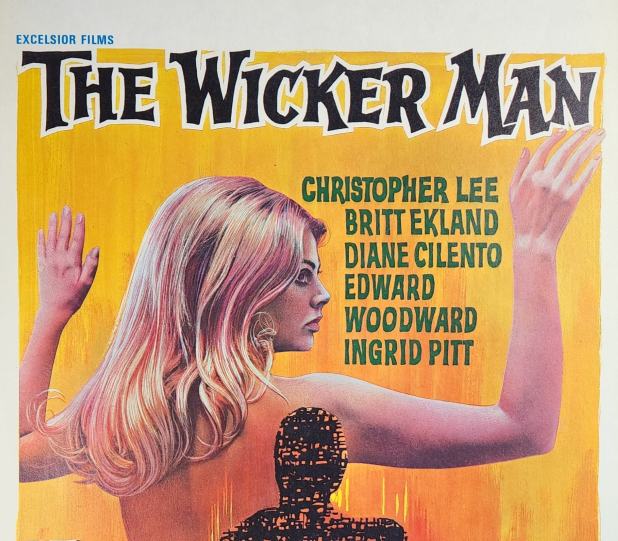
Bucheon International Fantastic Film Festival: The Wicker Man (1973)

The Wicker Man begins with Christopher Lee, a Hammer star, talking to writer Anthony Shaffer about more interesting roles. Shaffer had read the David Pinner novel Ritual — which had first been written as a script for Michael Winner, and I can’t even imagine what he would have done — and turned that inspiration into his own story.

Shaffer’s vision for the film was unique. The story delves into the intersection of modern religion and ancient pagan practices. It departs from the typical blood and gore of horror, opting instead for a creeping, unknown terror that lurks in the shadows. This unique approach is what we now refer to as folk horror.

The Wicker Man stands at the crossroads of art and horror, somewhere between movies like Performance and The Devil Rides Out, but with a twist, as the traditional rules of horror no longer apply. The concepts of good and evil, as defined by Judeo-Christian beliefs, are absent in this story. Instead, it’s a journey into the unknown, exploring ancient ways that have existed long before the modern era.

Christian Sergeant Neil Howie (Edward Woodward) is initially presented as the virtuous hero. He is on the island of Summerisle investigating Rowan Morrison’s disappearance, yet the villagers refuse to admit that she ever existed.

He’s shocked at these people’s ways, which include putting frogs in their mouths to cure illness and dancing around phallic maypoles. He finds images of past May Queens. He meets Lord Summerisle (Lee), who leads this village. And he sees the answers that he seeks, despite perhaps not liking them.

There’s also tempted by Willow MacGregor (Britt Ekland, who was three months pregnant; she was dubbed by Annie Ross, and her body double was dancer Rachel Verney), and there’s a scene where she dances with a wall between her and Howie that is volcanic. It has no nudity, but it’s filled with sensual energy.

Director Robin Hardy also made The Fantasist and The Wicker Tree, a very loose sequel to the original movie. Hardy first published the sequel as a novel, Cowboys for Christ, about American Christian evangelists who travel to Scotland and end up in a similar situation. Lee plays the Old Gentleman, who is either Summerisle or not.

Shaffer also wrote The Loathsome Lambton Worm, a direct sequel that begins immediately after the ending of The Wicker Man. In it, Howie is saved by his fellow police officers. The movie features a fire-breathing dragon and is much more fantastic than the first one.

I watched this film as part of The Bucheon International Fantastic Film Festival (BIFAN), along with the Folk Horror: Lands of Cruelty, Beliefs of Terror program. It includes films like Valerie and Her Week of WondersEyes of Fire, Kill List, the 2019 French version of la LloronaWoodlands Dark and Days BewitchedBldg. NIn My Mother’s Skin and To Fire You Come at Last. You can learn more at their official site.