THE FILMS OF BRIAN DE PALMA: Blow Out (1981)

EDITOR’S NOTE: This was originally on the site on April 26, 2023.

Neo-noir. Hitchcock influenced. Mystery thriller.

Or just call it a giallo.

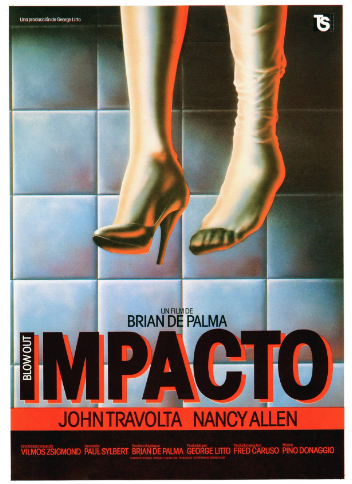
Blow Out is even based on an Italian film — Michelangelo Antonioni’s Blowup — but switches photography for audio recording and trades future giallo star David Hemmings for John Travolta, a man who follows the path of many a giallo hero. Once he believes that he has recorded the sounds of a killing, he must become a detective as his need to know is too much.

In post-production on the low-budget slasher film Co-ed Frenzy, sound technician Jack Terry (Travolta) is searching for better wind effects and the perfect scream. As he takes his equipment into a park late at night, he watches a car fly off the road and with no hesitation, dives into the water to save Sally Bedina (Nancy Allen). As he sits with her in the hospital, he asks her to get a drink and is asked by associates of the man killed in the car — Presidential candidate Governor George McRyan — to get her out of the hospital.

Sally has used her feminine wiles to ruin men before, working with Manny Karp (Dennis Franz), a man who just so happened to film the accident. Jack wants Sally to work with him to solve the murder, but he’s blinded to her because, well, she’s gorgeous and he’s the hero, a man who left behind a government commission to stop police corruption after an exposed wire caused the death of an undercover cop named Freddie Corso.

This is the kind of conspiracy where you think there is one because there is one. Sally and Karp were just pawns in the schemes of  Burke (John Lithgow), who wanted to go beyond just getting photos of the politician with a sex worker and blew out his tire with a bullet. But now that he’s ruined that, he has to clear up loose ends and is killing any hooker who looks like Sally as the Liberty Bell Strangler.

He eventually lures Sally to meet him and we learn that Jack is the hero, but not a perfect one. He’s able to stop Burke but not before Sally dies. All he has left of her is her final scream, recorded as he tried to find her, and that’s what lives forever, or as long as Co-Ed Frenzy plays grindhouses. He covers his ears because he’s reduced someone he grew close to into just another piece of sound in just another movie.

I literally yelled at the screen.

Working again with Travolta and Allen, De Palma also gathered others he’d made movies with before. In this, he is different than Argento — an artist I often compare him to, as they have so many similarities such as the same age, following Hitchcock, marrying and divorcing their leading lady, having a middle-age career decline — who seemingly switched up crews between films. Here he’s working with De Palma filled the film’s cast and crew with a number of his frequent collaborators: Dennis Franz (Dressed to Kill, Body Double), John Lithgow (who was in the Tenebre ripoff shot in Raising Cain) cinematographers Vilmos Zsigmond (Obsession) and Lazlo Kovacs (who came in when the parade scene footage was lost), composer Pino Donaggio (who also scored modern giallo Nothing Underneath) and editor Paul Hirsch (who worked on another giallo-tinged De Palma film, Sisters).

Pauline Kael said that this movie was one “where genre is transcended and what we’re moved by is an artist’s vision…it’s a great movie. Travolta and Allen are radiant performers.” Roger Ebert said that it was “inhabited by a real cinematic intelligence.” It sits with Rio Bravo and Taxi Driver as Tarantino’s top three movies. And yet it failed with the public. Today, however, it’s seen in a much warmer light.

The opening where Travolta wanders out of the recording studio and into the film office is a joy, as you can see posters for Island of the Damned (one of the American titles for Who Can Kill a Child?), FantasexThe Food of the GodsSquirmEmpire of the AntsThe Other Side of JulieThe Incredible Melting ManBlood BeachWithout Warning and The Boogey Man.

I have no idea why I waited so long to watch this movie. It’s perfect — a film about making films, a movie where movies don’t play out like movies and a thrilling exploration of how De Palma can guide you through a film and into places you had no idea you would go.
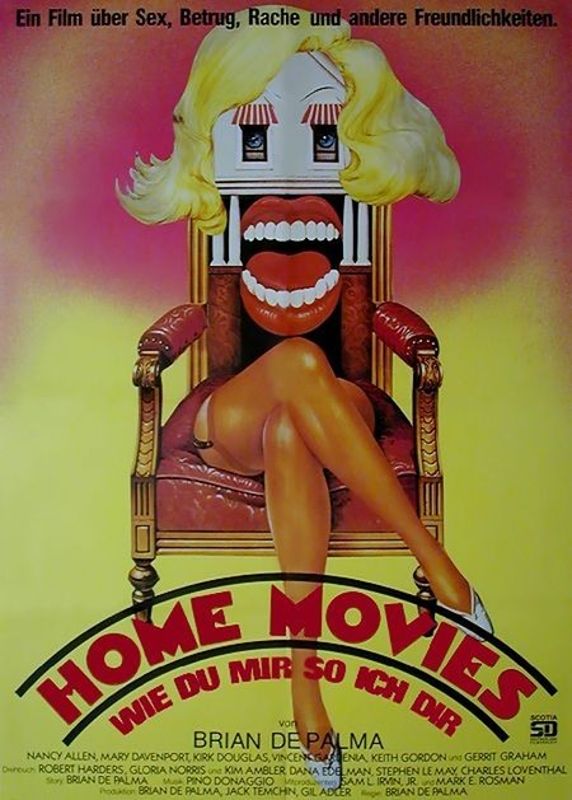
THE FILMS OF BRIAN DE PALMA: Home Movies (1979)

Never forget that Brian De Palma started in the underground and initially had setbacks in Hollywood before coming back to be a success. He didn’t forget the fight.

He didn’t forget his alma mater Sarah Lawrence College either.

Home Movies was created as a hands-on training exercise for students he was teaching at Sarah Lawrence. They were given the responsibilities of raising money, arranging the shooting schedule and editing the film, all under De Palma’s supervision. Students like Gilbert Adler (the producer of Tales from the Crypt for HBO and the House On Haunted Hill remake), Sam Irvin (Oblivion, Elvira’s Haunted Hills), Mark Rosman (The House On Sorority Row) and Charlie Loventhal (My Demon Lover) all went on to produce and direct their own films.

Kirk Douglas plays The Maestro — he’s credited with the film — a teacher tor loosely modeled on De Palma while Keith Gordon is one of his pupils who films everything that happens. So much of this movie — and what happens to Gordon’s character, much like what would later happen to him in Dressed To Kill — were modeled on events from De Palma’s young life, particularly his sibling rivalry, having a mother prone to dramatic outbursts and a father who was always cheating.

He was able to get Vincent Gardenia as dad, Geritt Graham as the older brother and Nancy Allen as his fiancee.

In addition to De Palma, it had six writers: Loventhal, Kim Ambler, Dana Edelman, Robert Harders, Stephen Le May and Gloria Norris, who was Woody Allen’s assistant on Stardust MemoriesA Midsummer Night’s Sex Comedy and Zelig.

It’s ramshackle and often self-indigent, but still an interesting reminder of where De Palma came from.

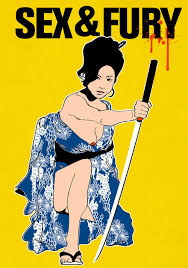
Junesploitation: Sex and Fury (1973)

June 22: Junesploitation’s topic of the day — as suggested by F This Movie— is Revenge! We’re excited to tackle a different genre every day, so check back and see what’s next.

Norifumi Suzuki is probably best known for the ten-movie Torakku Yarō series in which Momojiro Hoshi and Kinya Aikawa race around Japan in dekotora or highly decorated trucks. Suzuki also wrote Red Peony Gambler, which became an eight-film series. He also made School of the Holy Beast.

Christina Lindberg, the star of Thriller, was on a plane to Stockholm when she was approached by two Japanese men who asked if she’d like to be in a movie. That sounds like the plot of a TV movie, but she said, “Why not?” and in a few weeks was making this movie and Sadao Nakajima’s Porno Queen: Japan Sex Tour for Toei.

The star of the show, though, is Reiko Ike. She first appeared in Toei’s Hot Springs Mimizu Geisha just a year before and claimed that she was only sixteen when she was nude in that movie. The scandal made it one of Toei’s biggest movies and her a star. One of the icons of Japanese Pinky violence films, Ike is on the same level as a Pam Grier or Tura Satana here in America. She’s in all four Terror Female High School movies, as well as one of the Battles Without Honor or Humanity sequels and The Street Fighter’s Last Revenge. She even released an album, Kōkotsu No Sekai (World of Ecstasy) AKA You, Baby before she was busted for drugs and then illegal gambling before her retirement.

Look out Donna Summer, because the entire album is basically spy lounge with Ike orgasming over it. It’s also beyond incredible.

Ike plays Ocho Inoshika in this, a young girl living the life of a small-time criminal in 1920s Tokyo. While all she does is gamble and occasionally steal from people, she’s also seeking the men who killed her detective father when he learned too much about the wrong powerful people.

After watching a young anarchist get killed, she listens to the young man’s dying request. He asks Ocho to take all of his money and free his sister Yuki from a life of prostitution. When she meets the brothel owner, he demands that Ocho play against female gambler Christina (Lindberg) for Yuki’s ownership. During this game, we see flashbacks to the lives of both women. And Christina is here for a reason, as she’s tracking down the anarchists to keep the local government running or so she says, because she’s really here because a young Japanese anarchist made love to her like no one before or since. He also has made a slave of Ocho’s mother, so as you can imagine, everyone is going to die.

Ocho is getting closer to those who killed her father — they have the tattoos of a deer, a butterfly and a boar on their backs — and that means plenty of bloody sword battles, including one where she emerges from a tub fully nude and battles into the snow. As she kills everyone in her path, limbs fly through the air, blood sprays like it’s being shot out of a cannon and her nude form is covered in plasma. It’s one of the most incredible scenes that you will see in any movie ever.

There’s also a battle in front of a stained glass window of Jesus, a whipping scene that aspires to become anything but exploitation junk and an ending in which our heroine emerges triumph amongst a snow of falling playing cards.

Any time people get all high and mighty about films and act like scholars, I’m reminded that I’ll never get there because this is the kind of movie that I prefer. I would have it no other way.

This has a sequel as well, Female Yakuza Tale: Inquisition and Torture.

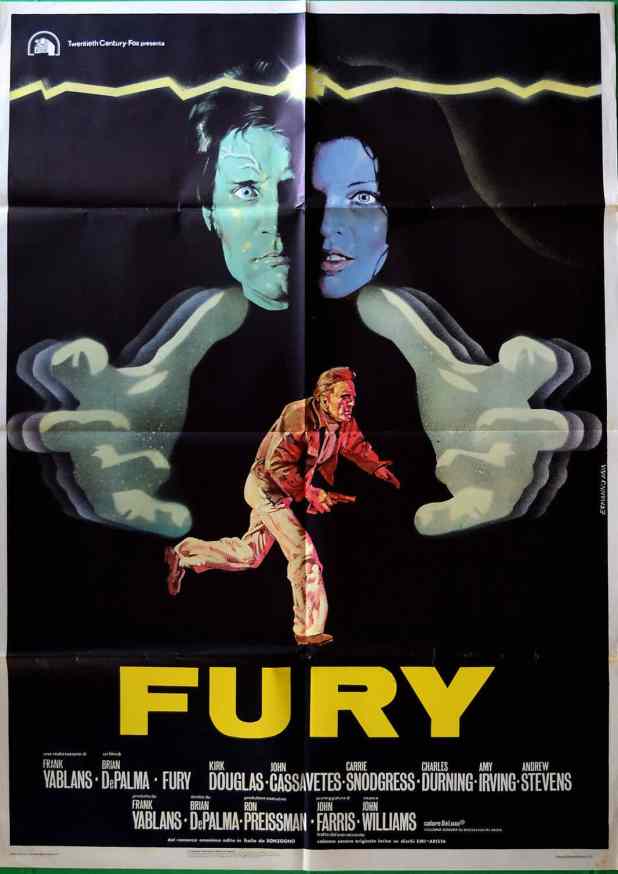
THE FILMS OF BRIAN DE PALMA: The Fury (1978)

Roger Ebert said of this movie, ” I’m not quite sure it makes a lot of sense, but that’s the sort of criticism you only make after it’s over. During the movie, too much else is happening.”

Ex-CIA agent Peter Sandza (Kirk Douglas) and his psychic son Robin (Andrew Stevens) meet up with Ben Childress (John Cassavetes), one of Peter’s old spy friends. Peter is leaving the life behind, but Ben is prepared. He stages a terrorist attack that nearly kills his supposed friend and takes his son away.

Across the world, student Gillian Bellaver (Amy Irving) learns that she has powers of her own. She can barely control them, so she goes to the Paragon Institute, a front for the same organization that Childress is running, one that kills parents and takes their psychic teens away to make them into weapons for the U.S. government. Thanks to having a girlfriend (Carrie Snodgress) on the inside, Peter starts to track down his son.

Gillian grows in power and soon meets Robin psychically. Childress determines that she knows too much, so he plans to eliminate her, while Peter plans on following her to find his son. Working with Dr. Susan Charles (Fiona Lewis, between this and Strange Behavior not someone I would trust with my teenage child), they have successfully transformed Robin into a killing machine. That said, he can’t be controlled and his abilities have already caused one mass homicide at a theme park.

As Peter and Gillian break into Childress’ mansion, Robin goes full-on mental and thinks that PSU wants to replace him with Gillian. He kills his handlers and even tries to murder his father, who tries to keep him from falling. When he responds by scratching Peter’s face and causing his own death. Seeing his son dead, the old agent decides life isn’t worth living and he kills himself.

As he lies dying, he gives Gillian all of his power, power she soon uses to cause Childress to bleed from the eyes and then to literally blow up. It’s one of the wildest stunts ever and one that took two tries. De Palma told The Talks, “I had 8 or 9 high-speed cameras and he explodes. He explodes. And the first time we did it, it didn’t work. The body parts didn’t go towards the right cameras and this whole set was covered with blood. And it took us almost a week to get back to do take two.”

How was this achieved? In the same interview, the director said, “Nobody had ever done this before. I had these incredible high-speed cameras that the astronauts use and about three of them jammed because they were going so fast. They were all shooting super, super slow-motion – this is in the ’70s – and then it’s all over and you look around and the set is completely in shambles.”


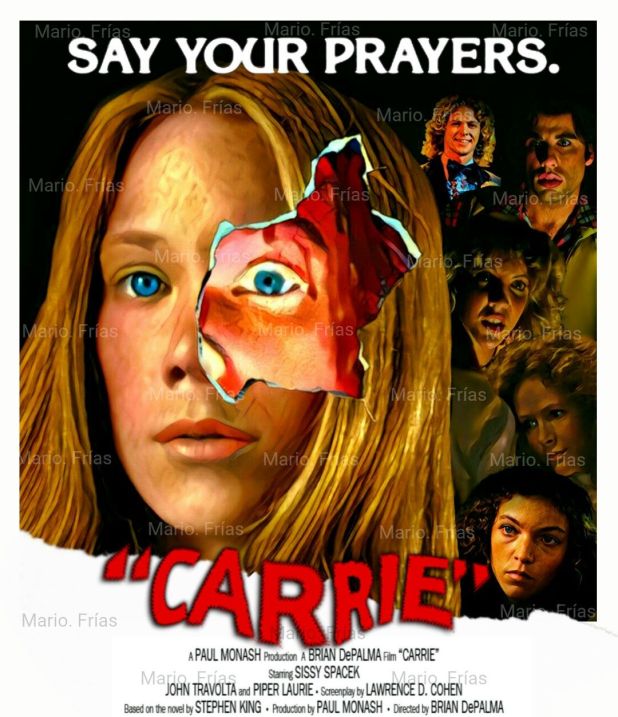
THE FILMS OF BRIAN DE PALMA: Carrie (1976)

EDITOR’S NOTE: This was first on the site on .

This is King’s first novel to be published and first one to be adapted to the silver screen. And if you ask me, it’s probably my favorite. Credit where it’s due — Brian De Palma presented a master class in how to build intensity and intensity in this film. It’s so perfect that it brings me to tears.

The difference between this film and any other teenager being abused who learns they have powers and gets revenge film is that we actually care about the teenagers. They’re real. Other than one of them being able to move things with her mind, their issues feel genuine. Some characters have shades of gray. And no one emerges unscathed in the end.

The film starts with shy Carrie White (Sissy Spacek) having her first period in the shower, surrounded by other girls. This typical nightmare scenario, one we expect to wake up from, like dreaming we’re stuck in school naked, is happening to her as the other girls pelt her with sanitary napkins. Christine Hargensen (Nancy Allen, Dressed to Kill) leads the others as they yell “Plug it up!” Carrie’s terror goes off as light bulbs explode and her teacher, Miss Collins (Betty Buckley, who is so perfect in this), has to console her.

At home, Carrie is abused further by her mother (Piper Laurie, Twin Peaks) who screams at her for her sinful thoughts. Dragged into a prayer closet, she must beg God to forgive her.

One of Carrie’s classmates, Sue Snell (Amy Irving, the only actress to show up in the sequel — more about that travesty tomorrow) feels guilty, so she asks her boyfriend Tommy (William Katt, House) to take Carrie to the prom. Miss Collins makes the girls pay for the way they treat by sending them to detention, where Chris’ behavior leads the teacher to slap her and suspend her from the prom.

That’s when Chris comes up with a horrible plot: they will name Carrie as prom queen and dump blood upon her, a scheme that she gets her boyfriend Billy (John Travolta) to make happen.

Carrie’s mom learns that she is going to the prom and accuses her of witchcraft. She uses her powers to throw her mother down. While at the prom, Carrie finds happiness that she has never known until now. She feels accepted. She feels love. And she has her first kiss with Tommy.

What follows is what makes this movie a classic.

Chris’ friend Norma (Totally P.J. Soles!) rigs the election and Tommy and Carrie walk to the stage to be crowned. At the last second, Sue tries to stop things and fails. And that’s when De Palma uses nearly every trick in his book to amp this scene up. Split screen, multiple angles, time distortions…it’s pure cinema.

This scene took two weeks and 35 takes to shoot, including an intense dizzying scene that was created by placing Spacek and Katt on a platform that spun in the opposite direction of a camera that was dollied away from the actors.

After all that build and suspense, the bucket of pig’s blood covers Carrie and knocks out Billy. Our heroine has a hallucination that her mother’s warning of everyone laughing at her has come true and she unleashes the full fury of her powers. Right and wrong, good and evil, everyone pays.

You’d never guess that Sissy Spacek was her high school’s homecoming queen.

Carrie walks away as Chris and Billy try to kill her with his car, but she easily makes it flip over and explode. Soon, she is back home, crying in her mother’s arms. Margaret confesses that Carrie is a child of rape, then stabs her in the back. She fights back by crucifying her mother and burying herself within the house.

As Sue comes to the grave, months after this all happens, she is startled by a bloody hand that emerges from the tomb to attack her. Yet it’s all a dream in a shock ending that has been — and will be — copied over and over.

This is a movie that has lost none of its power. If it’s not in your collection, you don’t have one to speak of.

THE FILMS OF BRIAN DE PALMA: Obsession (1976)

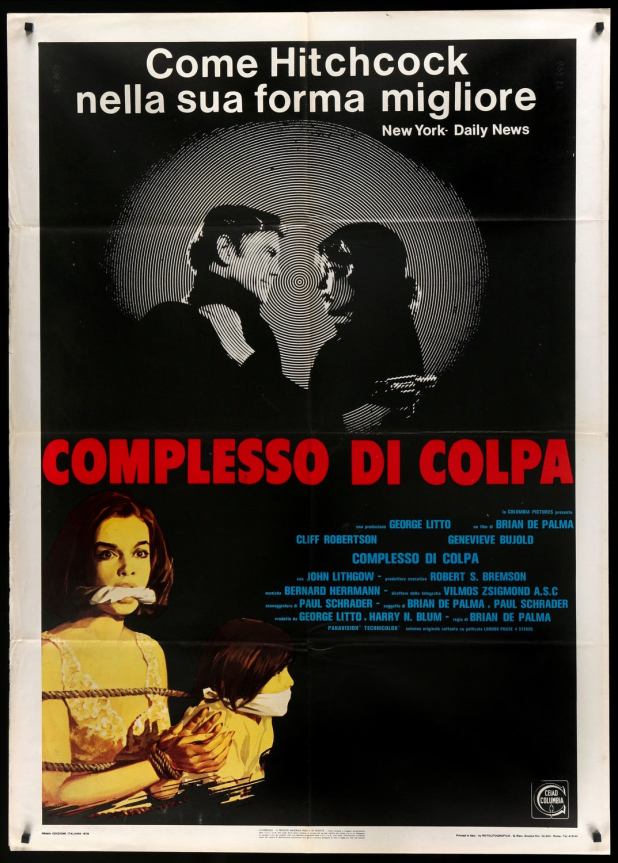
What’s the difference between a neo noir and a giallo? No, really, I want to know. Because in America, this even had a yellow poster and in Italy, it was called Compless di Colpa (Guilt Complex), which sure sounds like either a Hitchcock or giallo title.

Well, this is maybe more of the Hitchcock side of the equation, as this film takes the central theme from Vertigo while also have a score by Bernard Hermann.

Paul Schrader’s script was extensively rewritten and pared down by De Palma before shooting, which didn’t go over well with the writer. Yet that Hitchcock idea — a businessman is haunted by his dead wife before he falls for a young woman who looks exactly like her — remains. De Palma said, “Paul Schrader’s ending actually went on for another act of obsession. I felt it was much too complicated, and wouldn’t sustain, so I abbreviated it.” Herrmann agreed, telling the director that the script would never work. But Schrader’s idea of the movie going the whole way until another ten years past its conclusion — as he said, “an obsessive love where transcended the normal strictures of time” — as something he couldn’t bear to lose. It led to a rift between the two that las for years.

Michael Courtland (Cliff Robertson) is that businessman, a successful real estate developer whose wife Elizabeth (Geneviève Bujold) and daughter Amy (Wanda Blackman) are kidnapped and held for ransom. The police recommend that he give them paper instead of the cash, but the hand-off ends with a car chase and the kidnappers and his family killed in an explosion. Blaming himself for listening to the police, Courtand sinks into depression.

16 years later, he’s so obsessed by the loss that he’s even built a monument in America to the place where he first met Elizabeth, the Basilica di San Miniato al Monte. His business partner Robert Lasalle (John Lithgow) thinks he should get away and so they go to Florence, the original site of this building, and while there, Michael meets Sandra Portinari, a woman who looks exactly like his wife (and is also played by Geneviève Bujold). Of course, Courtland falls for her and works to transform her into the living version of his dead wife, even taking her home to be his new bride.

Of course, she gets kidnapped on their wedding night. The same ransom note from before sends Michael over the edge he’s already on. And once he learns the truth, well…everything gets very, very bloody. You kind of need to see it for yourself, because it’s pretty astounding — and very giallo — what the actual truth is.

The best review of this came from Roger Ebert, who said “Sometimes overwrought excess can be its own reward. If Obsession had been even a little more subtle, had made even a little more sense on some boring logical plane, it wouldn’t have worked at all.”

De Palma believes that Cliff Robertson was the biggest issue with this film. Sure, it was a success, but he sees the flaws because of the actor. He believes that Robertson would deliberately deliver a poor performance and line readings when shooting opposite Bujold. The actor also insisted on a dark tanning makeup, which seems wildly inappropriate for his role. It made lighting him so difficult that at one point cinematographer Vilmos Zsigmond shoved him against a wood wall and screamed, “You! You are the same color as this wall!”

Speaking of obsession, Herrmann became infatuated with Bujold as he scored the film. She made a surprise visit to the recording sessions and Herrmann’s friend Charles Gerhardt remembers, “As she spoke to Benny in a heavy French accent I could tell he was about to get the hanky out. She told him of all the trouble she’d had with Cliff Robertson because he spent all his time in makeup and didn’t make their love scenes meaningful. She said, “Mr. Herrmann, he wouldn’t make love to me — but you made love to me with your music.” And Benny started to cry. He would tell that story over and over at dinner, and start crying again every time.”

Hermann died five months later — he was to score Carrie but didn’t live long enough — and his widow found a photo of Bujold in his wallet.

THE FILMS OF BRIAN DE PALMA: Phantom of the Paradise (1974)

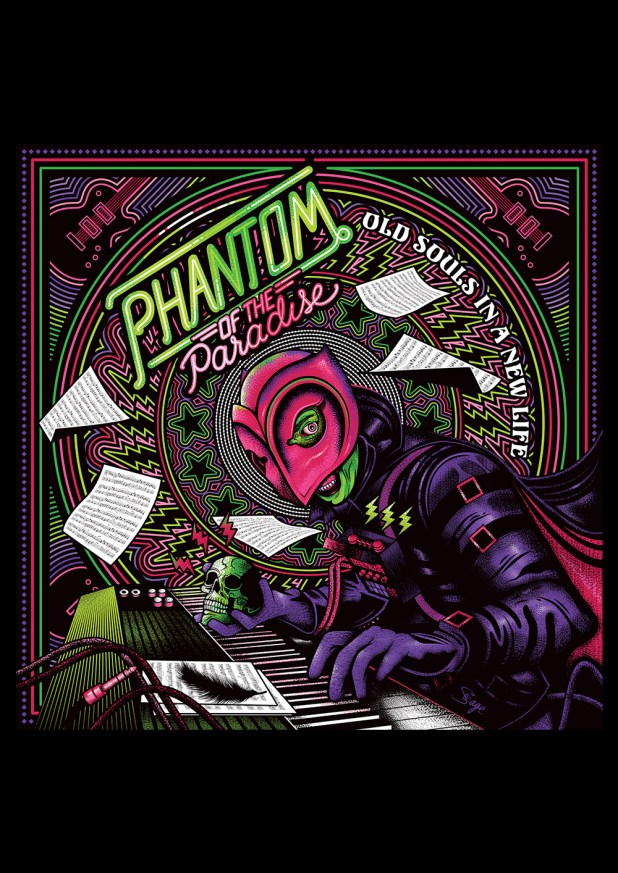
EDITOR’S NOTE: This was first on the site on . The art for this came from the website of Si Heard.

After Sisters and before Carrie, Brian DePalma wrote and directed this musical take on The Phantom of the Opera by way of Faust and The Portrait of Dorian Gray. That’s a simplification of this astounding movie, which wows me every single time I watch it.

Singer-songwriter Winslow Leach (William Finley with Paul Williams singing) plays his music for the sinister record producer Swan (also Williams). It’s the perfect music to open The Paraside, Swan’s new concert hall. Instead of paying Leach for his music, Swan steals it with the help of his strong arm henchman Arnold Philbin.

Months later and Winslow sneaks into Swan’s Death Records (it was originally filmed as Swan Song, but Led Zeppelin sued and every single mention had to be changed at great expense, but a few sneak through) and watches women rehearse his music for their audition. He falls for one of them, Phoenix (Jessica Harper, Suspiria) who he thinks has the perfect voice.

Leach tries to sneak in one more time, dressed in drag, but he’s beaten and framed for drug dealing, then jailed and his teeth replaced with metal fangs. Six months later and The Juicy Fruits have taken one of his songs to number one. He flips out and tries to destroy the records as they’re being made. The recording press accidentally catches him and his face is crushed and burned, along with his vocal cords being destroyed. He falls into the river and is presumed dead.

Now, Winslow is gone and all the remains in the Phantom, clad all in black and wearing a silver owl mask. He haunts and attacks Swan and any musicians who sing his music, but the evil music producer cons him into composing the ultimate album for him, even giving him a special recording studio and electronic voice box that allows him to sing again. Working on his new project, Faust, the Phantom throws himself into his work. But the music was never intended for his beloved Phoenix. No, Beef (Gerrit Graham) will be singing his music and the contract has been written in blood.

Throughout the film, the backing band switches identities, from the 1950’s doo-wop of The Juicy Fruits to the surf rock Beach Bums to the shock rock band The Undeads. As Beef sings “Life At Last,” The Phantom dispatches him with a neon lightning bolt. He tries to tell Phoenix who he is and begs her to leave.

That night, he watches through a skylight as Swan and Phoenix embrace. The moment destroys him so he stabs himself in the heart, but he can’t die until Swan does, thanks to their contract. And he can’t kill his enemy with a knife, because he’s under contract too to someone much more sinister.

Following the first performance of Faust, Swan and Phoenix will be married. The Phantom then finds the videotaped contract between Swan and the Devil, as well as the contracts that he made with the producer and a new one with Phoenix. Even worse, he learns that his love will be killed during the wedding ceremony.

Right before that happens, The Phantom swings out and saves Phoenix, then reveals that Swan is a monster. Like literally a monster. As they battle to the death, both of their wounds take their lives while Phoenix finally embraces The Phantom and recognizes him.

I love that Rod Serling is the intro voice here. To tell you the truth, I adore every moment of this movie, which is DePalma going completely wild with split screens and camera tricks to tell this bonkers tale. There’s an amazing lift of a scene from Orson Welles’ Touch of Evil as The Phantom places a bomb in the trunk of The Juicy Fruits’ car.

Two of the stars of Carrie assisted on this film and you’ll never see them. First, Betty Buckley who plays Miss Collins in that film, provided all of the singing and character ADR work for the audition and orgy scene. And Sissy Spacek assisted her boyfriend Jack Fisk, who was the film’s production designer, as a set dresser.

As with almost every other musical I’ve covered this week, this movie flopped badly. Everywhere, that is, except Winnipeg, where it played for over a year and sold 20,000 copies of its soundtrack. It even came back to play theaters in the 1990s and 2000s there. The city even held an annual Phantompalooza convention.

It also was a big hit with two French teenagers, Thomas Bangalter and Guy-Manuel De Homem-Christo. You might know them better as Daft Punk. Thomas claimed that the movie is, “our favorite film, the foundation for a lot of what we’re about artistically.” It’s no coincidence that they’ve worked with Paul Williams or that the metallic helmet and jumpsuit of The Phantom inspired their onstage personas.

Also: Paul Williams did “The Hell of It” on The Brady Bunch Variety Hour, a fact that still blows my mind when you listen to the lyrics.

THE FILMS OF BRIAN DE PALMA: Get to Know Your Rabbit (1972)

People always want to know how much money I make writing this site if I put this much work into it. Yes, there are times when I put forty or more hours a week in and get nothing in return. Well, everything else in my life is for commerce. Sometimes, you need art. I make something more important than money.

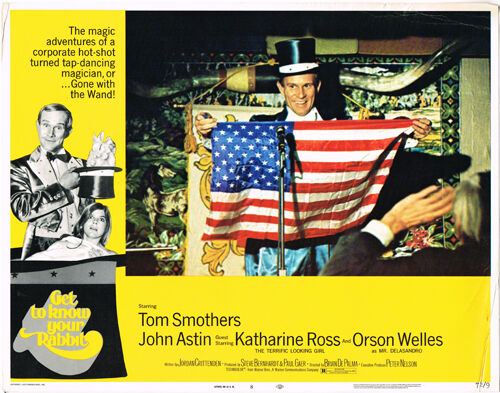
This movie made me consider that. Corporate executive Donald Beeman (Tommy Smothers) is sick of work. So sick of it that he quits his day job and becomes a traveling tap dancing magician as he studies under Mr. Delasandro (real life magician Orson Welles).

Meanwhile, his old boss Mr. Turnbull (John Astin) wants him to come on back to the nine-to-five life and he convinces Donald to help other businessmen with Tap Dancing Magicians, a course — and corporation — that will teach them what he has learned. It’s a success, a wild success, but Donald is back to being a rat in a maze.

Directed by Brian De Palma and written by Jordan Crittenden, this was a Warner Bros. movie made after Easy Rider in the days when studios were looking to the film brats and young people to save their bottom line. The studio — and Smothers — felt uneasy about De Palma’s experience. Smothers so disliked this movie that he disappeared for several days and refused to return for retakes. Making matters worse was that executive producer Peter Nelson recut it and added a new sequence to the film, which the studio had no idea how to promote and one that they dropped as fast as they could.

While the movie ends with Smothers alive and well after his final escape trick, it was originally supposed to end right after the trick, implying that Smothers may have committed suicide. Even wilder, De Palma wanted to end it with him killing his rabbit live on TV to ruin his career and pull off a bigger escape.

I’ve always struggled with De Palma’s comedies, so when he moved into obsession and strange behavior with Sisters, all was right with the world.

Junesploitation The Sheriff and the Satellite Kid (1979)

June 21: Junesploitation’s topic of the day — as suggested by F This Movie— is Aliens! We’re excited to tackle a different genre every day, so check back and see what’s next.

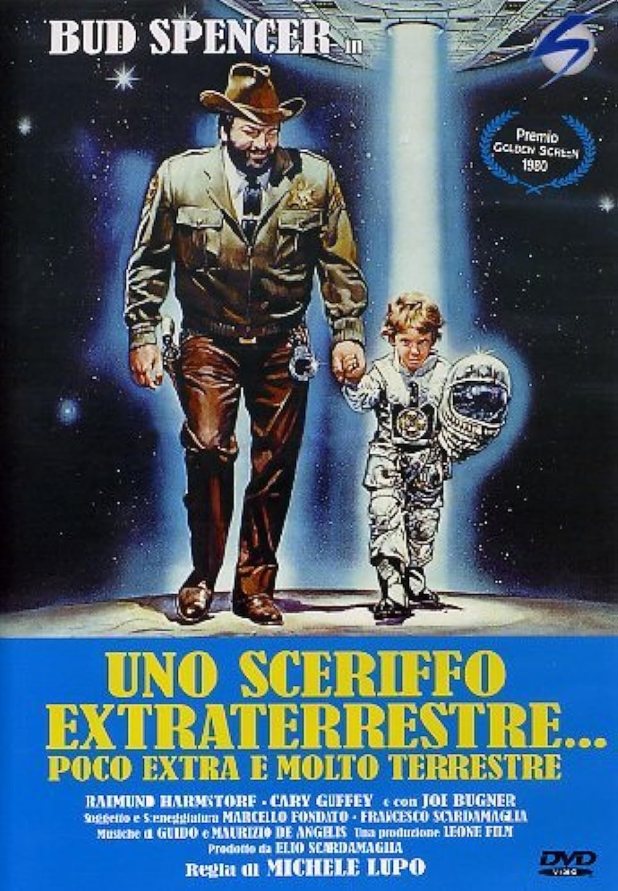
Shot in Newnan, GA* — look for a scene outside Stone Mountain — Uno sceriffo extraterrestre… poco extra e molto terrestre (An extraterrestrial sheriff… a little extraterrestrial and very terrestrial) is exactly what I want out of the movies that I watch. I got more enjoyment out of this film than probably anything new that I will watch this year. What can I say? Movies where Bud Spencer punches people and Oliver Onions are on the soundtrack are my true joy in life.

Directed by Michele Lupo (The Weekend MurdersArizona Colt) and written by Marcello Fondato (Blood and Black Lace) and Francesco Scardamaglia (Kill Them All and Come Back Alone), this starts as the town sees a UFO touch down, which means that everyone loses their mind. Everyone but Sheriff Hall (Spencer), who doesn’t believe in aliens. So let crooks like Brennan (boxing champ Joe Bugner) use aliens to try and break the law. The big burly Sheriff will keep things normal.

Until later that night, when he gets the call to save a lost kid at Six Flags Over Georgia. He easily finds him but also finds another who calls himself H7-25. He’s played by Cary Guffey, who was Barry, the little boy in Close Encounters of the Third Kind. And this is also why I love Italian cinema, because they put him on the poster and can make it seem like this movie is connected in some way to that blockbuster.

H7-25 convinces Hall that he’s an alien by healing his deputy’s rheumatism, repeatedly saving him with his alien weapon and even blasting him with enough bio-magnetic energy that he can catch gigantic fish and speak with horses. He returns the friendship by teaching H7-25 the wonders of baked beans. Yes, it really is a Bud Spencer movie.

At the same time, Air Force man Briggs (Raimund Harmstorf) is trying to take in H7-25 for dissection. Even Brennan ends up helping the sheriff and the alien escape. By the end, the alien child likes Earth so much that he decides to stay for a little longer, which would be the sequel, Everything Happens to Me, which is a lot like Stranger Things and was made 36 years before it.

*Georgia is also the home of so many wonderful Italian movies. The Last SharkThe VisitorCannibal ApocalypseCity of the Living Dead and Madhouse.

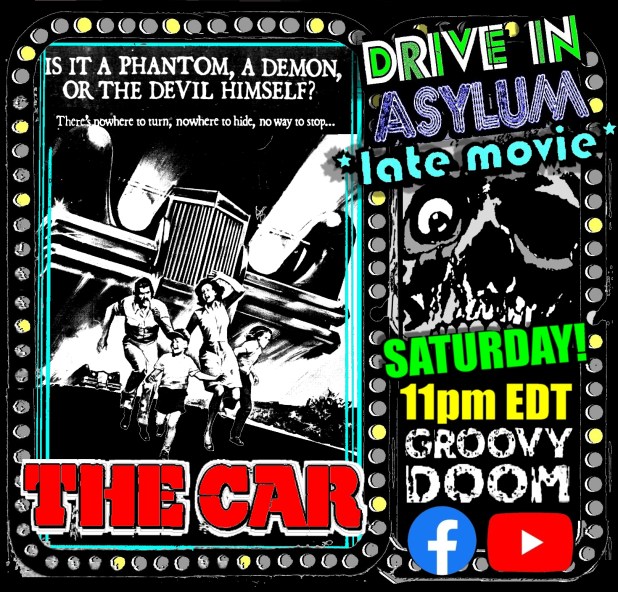
THE CAR IS COMING TO THE DIA LATE MOVIE!

This Saturday at 11 PM EST, join Bill and me for one of our favorite movies ever, The Car. Be part of the most fun chat room around in the Groovy Doom Facebook and YouTube channels and watch the movie, then come back and discuss it with us.

Every week, we watch a movie, talk about it and have a drink. Here’s the week’s cocktail.

Black Lincoln Continental 

  • 1 oz. whiskey
  • 1 oz. Jägermeister
  • 5 oz. cola
  1. Add ice to a glass. Pour in whiskey, then cola.
  2. Top with Jägermeister and hide in a cemetery.

See you Saturday!