Junesploitation: Heaven’s Revenge (2022)

June 25: Junesploitation’s topic of the day — as suggested by F This Movie— is Vigilantes! We’re excited to tackle a different genre every day, so check back and see what’s next.

I’m consumed by the idea that African American movies on Tubi flow from the same filone as American giallo or sex thrillers without their filmmakers ever having seen a traditional giallo. Heaven’s Revenge feels like the direct to video softcore murder movies of the 90s but infused with the viewpoint of a filmmaker who may have read about them but again, didn’t experience them.

This started as a 22-minute short before being expanded to a full length movie. It was directed, written and produced by LaNease Adams, who was the first African American women e to be a contestant on The Bachelor. She also stars as Heaven, who falls in love with professional wrestler Jackson Davis (Marcus Nel-Jamal Hamm).

She told Heart and Soul, “My new feature film Heaven’s Revenge was inspired by classic films such as Misery, Fatal Attraction, Unfaithful and A Thin Line Between Love and Hate. We wanted to make a film that was a thriller, but with strong passion, strong dialogue, and a film that leaves the audience with an opinion on what they’ve just seen. A lot of the feedback has been different from men, than women. Men tend to believe that Heaven Bailey, our leading character, was crazy. But women overwhelmingly see the issue with how Jackson Davis treated Heaven in the relationship, which made her act crazy.”

Both actors wrote the script with Miranda Bowden and it feels like a lot of this movie is ad libbed. It’s really strange because so much is them arguing and every time it feels like they’ve reached some kind of accord, a screaming match ensues. I mean, yes, Heaven did break into Jackson’s house and shoot him, then convince his family — if not the police — that she saved him and is nursing him back to health when she’s really throwing him in the shower and slapping him around while he makes crying noises like that burned up guy played by Jordan Peele in the crowd that cries as Keegan-Michael Key makes fun of him. She also lures his new girlfriend Sarah (Jeni Jones) to his house, gets her drunk and then flips out and murders her.

The democracy of Tubi movies is so pure to me. It seems like nearly anyone can tell the story that they want to tell and it can air there where just about anyone can find it. It’s the closest thing to the video store that today’s streaming world has.

You can watch this on Tubi.

CHATTANOOGA FILM FESTIVAL 2024: House of Usher (1960)

Adapted from Edgar Allan Poe’s short story The Fall of the House of Usher, this film marked the beginning of a series of eight Poe adaptations by Roger Corman, often in collaboration with writer Richard Matheson. Shot in a mere fifteen days, it was a bold departure for American-International Pictures, known for its black-and-white double features. This venture into color cinema with a substantial budget was a significant risk by AIP’s standards, adding a unique twist to the film’s production history.

Central to the narrative is the tragic fate of the Usher family, cursed to descend into madness. This ominous prophecy has not only engulfed their home but also the very ground it stands on, leading to its gradual decay and destruction.

Philip Winthrop (Mark Damon, Black Sabbath) traveled to the House of Usher to take his fiancee Madeline, who is opposed by her brother Roderick (Vincent Price), who is determined to see his family’s bloodline end with this generation. This leads to an argument so brutal that Madeline’s catalepsy is triggered, making her appear dead, and when she’s buried alive, she fully gives in to the madness within the Usher family, bringing the entire home down in flames all around everyone but our hero, who leaves with nothing.

Although Corman and Lou Rusoff are usually given credit for the AIP Poe cycle of films, Damon spoke up on a Black Sabbath commentary track, claiming he gave Corman the idea and was even allowed to direct The Pit and the Pendulum. This story hasn’t been confirmed, as there are several images of Corman directing that movie.

The success of House of Usher not only paved the way for more collaborations between Corman and Price but also set a precedent for reusing the same sets and special effects. The iconic Usher house set, which was actually a scheduled demolition, was set ablaze, and the footage used in multiple films, a testament to the enduring influence of this production.

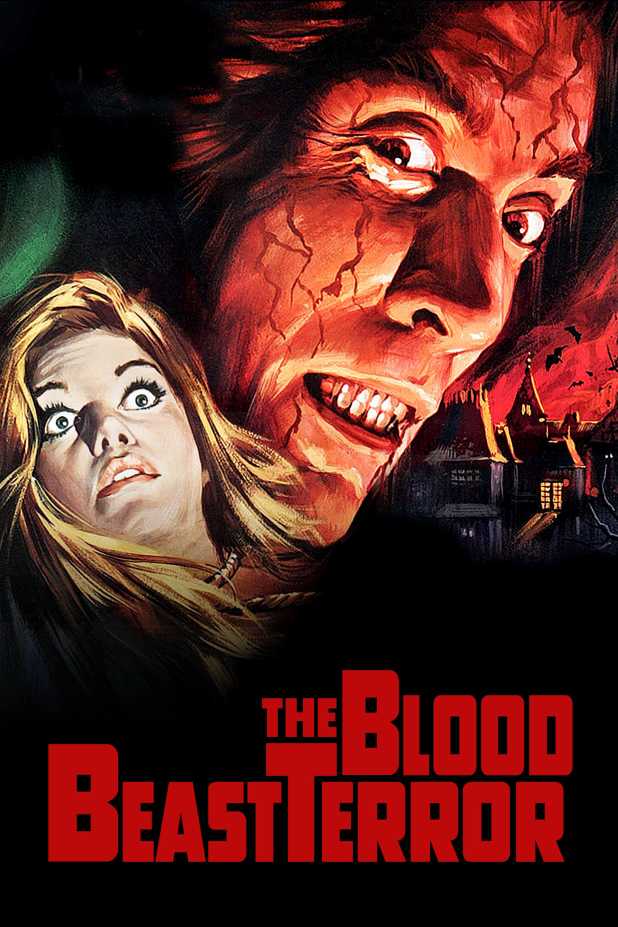
The featured image in this article comes from Mad Duck Posters.

You can watch this and so many of the films at CFF by buying a pass on their website. I’ll be posting reviews and articles over the next few days, as well as updating my Letterboxd list of watches.

Chattanooga Film Festival 2024 Red Eye #3: Nightflyers (1987)

Before he became known for Game of Thrones, George R. R. Martin wrote a 23,000-word novella titled “Nightflyers,” which was published by Analog Science Fiction and Fact. A few years later, encouraged by his editor James Frenkel, Martin turned it into a longer story which was published in a split book with Vernor Vinge’s True Names as part of their Dell’s Binary Star series.

You don’t need to know this, but this is in the same “Thousand Worlds” universe as other Martin stories such as Sandkings, A Song for Lya, The Way of the Cross and Dragon, With Morning Comes Mistfall, the short stories in Tuf Voyaging and Dying of the Light.

Director Robert Collector (Red Heat, the Linda Blair and Sylvia Kristel one) left shooting before the movie was finished and used the name T. C. Blake. Writer and producer Robert Jaffe (he wrote Demon SeedMotel Hell and the deranged Scarab) took the short version as his inspiration.

First off, kind of like Fulci with Conquest and his fog, this entire movie is supposed to look this misty. It was a deliberate choice by the producers, director and cinematographer who wanted the movie to look like a dream. Seeing as how it’s never been released in any high definition media, the VHS look of this makes it appear even more phantasmagorical.

The Volkryn are ancient space gods kind of like Kirby’s the Celestials, as they go blindly through the galaxy creating stars in their wake. An unseen pilot named Royd Eris (Michael Praed, Prince Michael of Moldavia on Dynasty) has brought together a crew of scientists with Miranda Dorlac (Catherine Mary Stewart, who seriously rivals Jessica Harper for being in multiple cult movies that lunatics like me obsess over; as for her, she’s in movies I go wild over like The Last StarfighterNight of the Comet and The Apple) as our heroine. There’s also Michael D’Brannin (John Standing), Audrey Zale (Lisa Blount, forever from Prince of Darkness), Keelor (Glenn Withrow), Eliza (Annabel Brooks, who replaced Bianca Jagger), Glenn Withrow (Michael Des Barres, yes, the guy from the band Detective who was on the remade WKRP In Cincinnati) and Darryl (James Avery, the voice of the Shredder and Uncle Phil).

Royd and Miranda are into one another, which has some issues, as he’s a clone of his mother Adara, who is also the computer that runs the ship and decides that this woman — in a power suit with mirrored shades — is going to take her son away from her, so she goes all HAL and kills everyone. This would fit in well with a lot of Alien clones, even if it’s not all the way on Alien. Maybe a late Galaxy of Terror? An early Event Horizon? It’s flawed, sure, but so is Lifeforce and both of these movies would go together well.

I mean, take a look at Stewart in that outfit. Murder computer mom is so correct.

This was also a SyFy series in 2018. It lasted for ten episodes.

You can watch this and so many of the films at CFF by buying a pass on their website. I’ll be posting reviews and articles over the next few days, as well as updating my Letterboxd list of watches.

You can also watch this on YouTube.

Chattanooga Film Festival 2024: Bride of WTF (Watch These Films)

Are you looking to achieve higher states of consciousness using nothing but the raw ass power of cinema? Would your friends or family describe you as “the weird one?” We want you to know that we’re here for you. We’ve carefully constructed our WTF (Watch These Films?) and BRIDE OF WTF short film blocks with weirdos JUST LIKE YOU in mind. Our yearly salute to the stranger side of short cinema is in fine form this year, with a slate of shorts positively guaranteed to make mush of your mind, which feels REAL cool. WE KNOW. We’ve seen them. Also, we aren’t telling you to go out and hot box your car before you watch these films, but we also aren’t telling you to NOT hot box your car before you watch these films!

Krampuss (2023): Known as Þið kannist við… (You Know…) in its native Iceland, this Guðni Líndal Benediktsson directed (with a script co-written with Ævar Þór Benediktsson) has a holiday tradition I’ve never heard of before. The Yule Cat, which eats people who don’t get clothes as Christmas gifts.

I’m amazed because this is a real thing. Jólakötturinn is “a huge and vicious cat from Icelandic Christmas folklore that is said to lurk in the snowy countryside during the Christmas season and eat people who do not receive new clothing before Christmas Eve.”

The Yule Cat was often used by landowners as a threat to their field workers to finish collecting wool before autumn was over. Those who didn’t work hard enough were made to fear this holiday beast.

This short looks gorgeous and has a really great effect for the cat. When else will you see a horrifying Christmas kitten?

A.A. (2024): Directed by Auden Bui, this has a very simple idea: There’s more to A.A. than alcoholics anonymous. Bui has some great talent in this — Anna Akana, Malcolm Barrett, Ryan Decker, Sage Porter, Brandon Potter, Bobby Reed and Uttera Singh — who lean way hard into their roles. Can you imagine going out for an open casting call and getting the role of “Member of Asseaters Anonymous” much less have to say dialogue like, “There I am with four dingleberries in my face?” Acting is a rough business. That said, this is a short worth being proud of, a basic story told well and even a little twist at the end.

Disciple (2024): Made as a student film while director and writer Boston Enderle was at Western Kentucky University, this is a bold and well-made film about Isaac (Coltyn Parks), an abused preacher’s (Greg Brandenburg) son. When he doesn’t pay enough attention to his father’s teachings, he’s forced to pray while slicing stigmata — the wounds of Christ — into his hands. Then, he has a meeting with the Verdant God (Trinity Graves), an ancient being, and finds that he can finally escape the brutality that he and his family have lived with for their entire lives. A truly interesting idea that is treated with the care that it deserves, I’d love to see a longer and deeper take on this.

A Visual Poem (2024): Directed by Benjamin Walant with original music by William Walant, this short is described as “surreal environments take center stage in this visual odyssey.” Benjamin works as a digital matte painter and concept artist in the VFX industry. He says, “As a professional digital matte painter (DMP artist), I wanted to harness my extensive VFX experience to push what can be done with this age-old technique; transforming what is usually the backdrop to center stage.”

I would compare this to Koyaanisqatsi, which is meant as a big compliment. I really felt the energy in this and was soothed, challenged and inspired by it.

All Is Lost (2024): Todo está perdido is the tale of the Pérez family. They may seem normal, but so much of this short is about them fertilizing an egg that the laid of the house has just laid. Directed by Carla Pereira Docampo and Juan Fran Jacinto, who wrote the script with Paco Alcázar, this looks like nothing else, a puppet-style presentation with artwork that as much retro as it is unfamiliar. The colors are so gorgeous and vivid as well. I can’t even imagine how long this took to make, because it feels so meticulous. Yet it is open and airy, filled with a light comedy touch. This is something else.

Catacombs (2024): I love the slasher Prison. More horror movies should be set in correctional facilities and Catacombs is a strong entry in this unexplored genre. As a thunderstorm is just outside the walls, a guard has to go deep into the sections of the old jailhouse, confronting the horrors that wait within. Director and writer Chad Cunningham really needs to expand this into a feature, as I’d love to see what he can do with a bigger budget and more time. Mike (Kenneth Trujillo) is faced with more than he ever expected and — again — I’d love to see how this buried part of this correctional facility affects the rest of the prison.

Burn Out (2024): Director and writer Russell Goldman says of this short, “Burn Out is a gonzo, high-octane horror story inspired by my post-concussive syndrome and all-consuming bosses. This short is about how we push ourselves in breakneck work environments and make disastrous compromises with our bodies and minds. Nothing is scarier (or more absurd) than what we can do to ourselves.”

Again, as in all the best shorts, it’s a simple tale told well. Virgil (Everett Osborne), an assistant, will do anything to get his presentation in front of Gower (Tommie Earl Jenkins), the big boss. In fact, he’ll even set himself on fire.

Produced by Jamie Lee Curtis and Film Independent, this has incredible effects and captures the way that I felt in my years of working in advertising when I was allowed to approach a boss and genuflect before their brilliance as they would take a moment to give me their great secrets. I learned nothing. But this movie brought that all back.

Adding another layer to the corporate madness in this, it was shot in the abandoned Quibi offices.

Don’t You Dare Film Me Now (2023): Director and writer Cade Featherstone is a British filmmaker and award-winning designer who worked as a graphic artist for films such as The Favourite and Fantastic Beasts and Where to Find Them. Now getting an MFA in narrative filmmaking at NYU, he’s made this short, which is advanced beyond his years.

A drone finds an elderly woman who is, at the start, angry that the machine is invading her privacy. By the end, they have strangely bonded, both close to the end of their charge, as it were. This made me sit back and take notice.

Fck’n Nuts (2023): Sandy (Maddie Nichols) may be 19, but she’s still a child. She still lives at home with her parents (William E. Harris and Michele Rossi) and every man she introduces them to leaves her. She’s in love with Dan Deakins (Vincent Stalba), who is kind and sweet and hey, he knows wine. He’s in love with her too, but that means that he has to meet the family. Things go as absolutely bad as they can, beyond embarrassment and into pus-oozing anaphylactic shock.

This movie has a look that lives up to its name. Director and writer Sam Fox has created something truly special here, a piece of art that takes what in lesser hands would be sophomoric and here aspires to masterpiece. Here I was worried meeting my far right wing in-laws for the first time. I had nothing to worry about. I mean, I’m still alive.

A must watch!

Hunky Dory (2024): The 4,320 drawings in the film were drawn by hand on index cards, colored with Copic markers and Prismacolor pencils. The entire short was made in two years of full time work and each drawing is unique with no computer animation.

The story “juxtaposes scenes of animal life with images of human existence, observing the quirky and unexpected ways in which we are similar.” The banjo music  comes from Béla Fleck and his bandmates in My Bluegrass Heart. This has such a beautiful look and totally chilled me out. I’m going to save it to watch again for when things get edgy.

You can learn more at the official site.

Ouchie (2024): Mona (La Daniella) has had a bad experience with a new lover named Grace (Sara Lynn). She can’t even feel better with the self help recordings that she uses to give herself confidence. As a side note, I use these as well and my wife always comes in to make fun of me while I’m just trying to get the ability to make it through the day.

Mona soon begins to see strange rashes on everyone, including herself. Are they real? Or is the problem inside her? Director Kyle Kuchta and writer Jeanette Wall are asking the roughest questions here, where we must try and realize that the scars that we carry aren’t as visible as the ones on display here with great FX. Instead, we all have them and must all come to understand ourselves. Such a great short!

Shadow (2024): Ahtna (Katy Wright-Mead) and her daughter Elise (Valentina Gordon as the younger child, Christy St. John as the grown up) are playing when things grow rough. The mother gives chase and her daughter slams her fingers inside a doorframe. Then, her shadow begins to chase Elise through the home, changing in shape, size and even appearance, looking like her mother sometimes and something frightening when you get closer.

There’s no dialogue to speak of, but there is a mother repeatedly banging her head into the kitchen floor, an everyday piece of fright mixed with the black and white starkness throughout. Director and writer Kamell Allaway is someone to watch.

The Crossing Over Express (2024): Hank (Luke Barnett, who directed and wrote this with Tanner Thomason) wants to speak with his mother one more time. This brings him to a white truck. In the back is Dr. Gale Gustberg (Dot-Marie Jones), who can help him get the closure he seeks.

If you were given this opportunity, what would you do? There are so many people I wish I could just have one more moment with, so I would probably find myself paying that money and wondering if I was being screwed over, just like this film’s hero. I know I say this quite often about shorts, but I’d love to see even more of this story and these characters.

Quiet! Mom’s Working! (2024): “What happens in mom’s basement, stays in mom’s basement.” Yes, why is Del (Shane Brady) strapped to a table? Why is mom (Ana Krista Johnson) threatening him with a phallic drill? Will the daughter (Jillian Shea Spaeder) stop fighting with her brother? And what will dad (Jim O’Heir) say when he gets home?

Patrick Hogan is known for his sound work (Fire Country, Cobra Kai) but this is a short that he directed and wrote. And it’s an absolute burst of fun, one filled with tough talk, angry mom faces and dildo nunchucks. You may see the ending coming, but when it’s done this well, does that matter?

You can watch so many of the films at CFF by buying a pass on their website. I’ll be be posting reviews and articles over the next few days, as well as updating my Letterboxd list of watches.

The Sizzlin’ Something Weird Summer Challenge 2024: Swinger’s Massacre (1974)

Uschi Digard week (June 23 – 29) Digard is best known for her work with Russ Meyer but she became an SWV fan favorite for two gargantuan reasons, her charm and her prolific career. The Swiss actress fled to America in 1968 and began a long career filling the silver screen from corner to corner with her overflowing positive energy. Show the lady some respect and watch one of her movies.

Also known as Swinger’s Massacre and Super Swinging Playmates, this is the kind of scuzzy, ugly and dingy movie that doesn’t even try to make its sex sexy. Instead, it’s just an excuse for a man to lose control of his perfect life and gradually become a killer.

Charlie is an older suburbanite lawyer who has been married to his gorgeous wife Amy for about ten years. He feels like their love life has been stilted, despite her claiming that she’ll do anything he wants. And what he wants is to swing, because it’s 1974, and heads to a party thinking that once he’s there, his old man body will turn all the ladies on. Well, shockingly he gets one willing lover but can’t perform while his wife does more than enjoy herself. She soon becomes the one asking him to engage with other lovers.

Before you know it, anyone who has ever touched Amy must die.

Shot inside Filthy McNasty’s, a bar on the Sunset Strip where Evel Knievel, Phyllis Diller, Elvis Presley and Mick Jagger once were regulars and would one day become the Viper Room, many years after this movie was forgotten.

Directed by Ron Garcia and shot back-to-back with most of the same cast and crew as Don Jones’ Abduction, this movie somehow has Uschi Digard, Marsha Jordan and Rene Bond in its cast and still comes off as one of the unsexiest sexual films you’ll ever see. Garcia also made The Toy Box, which plays in a very similar space but is somehow even stranger. It’s like he wanted people to think that his movies were titilating and then, he’d club them over the head with weirdness or just plain brutal scenes of murder. No wonder he directed several episodes of Silk Stalkings.

Look, if you’re Charlie and you can’t rise to the occasion when you’re in bed with Jordan, who was in plenty of Harry Novak movies and Count Yorga, well I guess that your only choice is to start killing all your swinger friends. Good thing Viagra finally was created.

The thing is, Charlie is presented as sympathetic when he’s the one that wanted to be part of the free love scene, talking his wife into it and just because she’s enjoying pleasure and just because others are enjoying her, well, be careful what you ask for. Sure, it’s problematic, but if you’re looking for a great message in a 1974 exploitation movie that Something Weird release, maybe you should sit and spin.

Junesploitation: Mirage (1990)

June 24: Junesploitation’s topic of the day — as suggested by F This Movie— is Cars! We’re excited to tackle a different genre every day, so check back and see what’s next.

I’m a big fan of killer car movies. We can subgenre this into filones, such as possessed automobiles (The CarChristineFerat Vampire, Maximum Overdrive, Super Hybrid), killers in vehicles (DuelJoyride, Death Car on the Freeway, Death Proof, Wheels of Terror) and movies that have killers who get in and out of cars (The Hitcher, Hitcher In the Dark).  There are even ones where the hero drives a car to get revenge (Rolling VengeanceThe WraithThe Gladiator).

Mirage is somewhere in the middle of these, as a black pick-up truck is seemingly driven by a young man who could also be a demon. And all he wants to do is kill everyone that comes to his desert to make out.

My wife lived in Vegas for a few years and when I went out to meet her family, we went and shot guns in the desert and had a picnic. She said no matter how many times she went to parties or events in the middle of said desert, she never saw anyone just take off their tops and get drunk in the middle of a place where you get dehydrated immediately.

Chris (Jennifer McAllister) and Greg (Kenneth Johnson) are introduced to us as they’re making love in the back of their truck with a toolbox on the accelerator as it just drives out in the infinite space of the desert, as if nothing could stop it or hurt them. Along with another couple who are just as into arguing as they are having make-up sex, Trip and Mary (Kevin McParland and Nicole Anton), and her ex Kyle (Todd Schaeffer) and his new girlfriend Bambi (Laura Albert), the desert seems as good a place as any — I recommend a furniture store like in Chopping Mall — to soft swing. Also: Kyle is Greg’s brother, which suggests that Chris is a horrible person.

Yes, after a day in the sun of being stalked by a black truck and having Greg and Kyle get in a punchup, the kids find a note written in blood that says, “You are all going to die!” This note is more than prophetic as the driver of the black truck even has grenades that he uses to blow these kids up real good. Thanks to Unsung Horrors, I learned that the bad guy — known only as Villain in the credits — is B.G. Steers, who may be Burr Steers, who was one of the radio voices in Reservoir Dogs and the “Flock of Seagulls” character in Pulp Fiction. His character — other than the out there Trip, who dies bleeding from the mouth and speaking of the astral plane.

Steers, if he is Burr Steers, also directed 17 AgainIgby Goes Down and Pride and Prejudice and Zombies.

This was directed by William Crain, who also made Midnight Fear, and co-wrote it with Chuck Hughes and Michael Crain. It’s interesting in that there are too few desert and daytime slashers, even if you can see Chekov’s bow and arrow appear from the very open of the film. Also: the best part is when one of the jocks utters a gay slur and promptly gets run over by a truck. Well, the best part other than the effects by R. Christopher Biggs, who went on to work on Demolition Man and the TV series Martin. One imagines he transformed Martin into Sheneneh.

Strangely, this movie has an SST Records soundtrack with bands like Sister Double Happiness, Minutemen, fIREHOSE and Dinosaur Jr. What, no Saint Vitus or Negativland?

My friends from Unsung Horrors did an episode about this, which you can listen to here:

You can watch this on YouTube.

Junesploitation: Wavelength (1983)

ABOUT THE AUTHOR: Exploitation-film historian A.C. Nicholas, who has a sketchy background and hails from parts unknown in Western Pennsylvania, was once a drive-in theater projectionist and disk jockey. In addition to being a writer, editor, podcaster, and voice-over artist, he’s a regular guest co-host on the streaming Drive-In Asylum Double Feature and has been a guest on the Making Tarantino podcast. He also contributes to the Drive-In Asylum fanzine. His most recent essay, “Of Punks and Stains and Student Films: A Tribute to Night Flight, the 80s Late-Night Cult Sensation,” appeared in Drive-In Asylum #26.

EDITOR’S NOTE: Thanks to A.C. for sending this. It would fit Junesploitation on June 12, which was New World day. This was also covered in “Exploring: 10 Tangerine Dream soundtracks.”

These days, we live lives of great convenience. Just about any movie we want to watch is only a few clicks of the remote control or keyboard away. Yet, even with this luxury, I yearn for the days of old when I used to scour the catalogs of mail-order businesses like Video Search of Miami and Sinister Cinema or the dealers’ tables at cons in search of elusive films. Those treasure hunts were thrilling when you unearthed a gem that had never been released on home media in the United States, such as Death Line a/k/a Raw Meat (my blurry VHS dupe bore the title Tren de la Mort and had Spanish subtitles) or Jess Franco’s The Bloody Judge a/k/a Night of the Blood Beast (my copy was
entitled The Throne of Fire and was in French with no English subtitles).

But I realized those fun times were over when even Franco’s Vampyros Lesbos, a film never released theatrically in the United States, got a special edition DVD. For years, I’d stared at the same three stills from that film in books on horror films. But now, it was mine to own. Today, everything, no matter how obscure, gets an official home-media release. Well, almost everything. Wavelength, a science-fiction film from 1983, still has never been released to DVD or streaming in this country.

Robert Carradine is a down-on-his-luck musician. One day, when things are looking bleak, he meets an attractive young woman in a bar. She’s played by the estimable Cherie Currie of the groundbreaking rock band The Runaways. They quickly hit it off, hook up, and become a couple. He soon learns that his new girlfriend is psychic. She starts hearing strange voices, leading them to an underground bunker in the desert where the evil government is experimenting on three captured aliens. With the help of a drunken old coot played by Keenan Wynn (of course), they work to free the child-like aliens so that they can return to their mothership and go home. In other words, it’s the same plot as E.T. the Extra-Terrestrial with bigger ambitions, but on a fraction of the budget. The beautiful special effects shot in the finale delayed the film’s release until after E.T. had become a box-office behemoth. Perhaps in an alternate universe, Wavelength came first. One can only imagine.

Sincerely written and directed by Mike Gray, a former documentary filmmaker who wrote The China Syndrome and Chuck Norris’s Code of Silence, charmingly acted by Carradine and Currie, with a typically great score by Tangerine Dream, Wavelength was once a staple of HBO. Now it’s fallen into the black hole of forgotten films. (A soft-looking rip from an old VHS tape is available on YouTube.) It’s not a world-beater, but it’s a well-done B-movie, which was released theatrically by New World Pictures with little fanfare and even less box-office success. (I saw it in an empty theater during its original run.) Here’s to Wavelength’s rediscovery. Like an artifact from a film grail quest in the good old days, it’s a tiny gem.

The Sizzlin’ Something Weird Summer Challenge 2024: Cherry, Harry and Raquel (1969)

Uschi Digard week (June 23 – 29) Digard is best known for her work with Russ Meyer but she became an SWV fan favorite for two gargantuan reasons, her charm and her prolific career. The Swiss actress fled to America in 1968 and began a long career filling the silver screen from corner to corner with her overflowing positive energy. Show the lady some respect and watch one of her movies.

This is the first appearance in a Russ Meyer movie of Charles Napier. He plays Harry Thompson, a California border sheriff and marijuana smuggler who also somehow — spoiler warning — comes back from the dead to die again in Supervixens.

But as for this movie, it starts with a narration that blames marijuana for so many evils in society. Harry has ignored all that as he Harry works his sheriff job in between illegal activity. He lives at the site of a close silver mine with his English nurse girlfriend Cherry (Linda Ashton). As for Raquel (Larissa Ely), she’s a writer who has an interest in sexually pleasuring men. The two women learn of one another but Harry doesn’t want them to make love for some reason. When we first see Raquel, she’s in bed with Harry’s partner Enrique (Bert Santos). The two men work for Mr. Franklin (Frank Bolger), the town’s main politician, to move drugs. One of their other associates, the Apache (John Milo) is screwing everyone over. Franklin asks for him to be killed, but he gets away and steals Harry’s Jeep.

Now, Enrique knows too much and he must be killed. But the Apache gets to him — and Mr. Franklin — first. Raquel finds his body and is so upset, she must be hospitalized. Good news. Her nurse is Cherry and they finally get together to make love, all while Harry and the Apache do the exact opposite and kill one another.

But ah — it was all a story that Raquel was writing. This strange ending may be because a lot of the film’s footage was accidentally ruined by the color lab. Roger Ebert said, “The result is that audiences don’t even realize anything is missing; a close analysis might reveal some cavernous gaps in the plot, and it is a little hard to figure out exactly how (or if) all the characters know each other, but Meyer’s subjective scenes are so inventive and his editing so confident that he simply sweeps the audience right along with him. Cherry, Harry and Raquel! is possibly the only narrative film ever made without a narrative.” Uschi Digard, the lover of the Apache, was also added Linda Ashton quit and you have to admit that she adds a lot to the film. Meyer claims the other actress quit over her pomeranians ruining the carpets of the motel they were staying in and the owner getting upset.

He also said, “The picture is the most successful film I have on cable television-or hotel-vision-because you never have to come in at the beginning. It doesn’t matter. It could be a loop.”

It also has one of the first instances of mainstream full frontal male nudity, which made it a controversial movie all the way back in 1969.

Junesploitation: The Mummy and the Curse of the Jackals (1969)

June 23: Junesploitation’s topic of the day — as suggested by F This Movie— is Free Space! We’re excited to tackle a different genre every day, so check back and see what’s next.

Oliver Drake may have started as an actor, but he’s probably best-known as a prolific screenwriter (151 movies!) and director (41 films, including two adult movies — Angelica: The Young Vixen and Ride A Wild Stud as Revilo Ekard and he was not fooling anyone with that Alucard scam) of low-budget Western films.

A former cattle rancher, he brought his own trained horse with him to Hollywood. 1917, appearing with his trained horse. After acting in silent films, he directed, wrote and produced films for Gene Autry, Tex Ritter and others for RKO, Monogram and Republic. He was so invested in the Western film genre that he used his Pearblossom, California ranch for location shooting.

But by 1969, he was pretty much done in Hollywood. He’d moved to Las Vegas and decided to make a horror movie. Many claim that he didn’t ever work in horror before, but he wrote the 1968 proto slasher No Tears for the Damned AKA Las Vegas Strangler as well as The Mummy’s CurseRiders of the Whistling Skull, the giallo-esque Sinister Hands and Weird Woman.

In Tom Weaver’s Interviews With B Science Fiction and Horror Movie Makers, this movie’s star Anthony Eisley (Dracula vs. Frankenstein) said, “The director was quite senile at the time — the absolute epitome of total confusion.”

That claim is denied by the director’s daughter, who said on IMDB, “Oliver Drake would have agreed with these reviews. I should know because he was my father. He was his harshest critic & did not enjoy watching this after it resurfaced on VHS. It is also incorrect that this was the only monster movie he ever made, The Mummy’s Curse comes to mind. But I completely disagree with comments by Anthony Eisley that my father was senile during the making of this film! Its true that this film was never finished and sat on the shelf for years. My father went on to write two books, both of which were very well received by critics. He attended many Western Film Festivals as the guest of honor and gave very informative and entertaining speeches about the early days of film-making.”

The Mummy and the Curse of the Jackals was written and co-produced by William C. Edwards. He only has three movies on his IMDB page with one being the aforementioned Ride A Wild Stud (“When men were men — and women didn’t forget it!”) and Dracula (The Dirty Old Man), another movie that has a jackal-man, as Dracula — using the Alucard name, see it never gets old — enslaves Dr. Irving Jekyll, making him a werejackal and forcing him to bring women to his cabin. It’s the kind of movie where you can see the stick that’s holding up a vampire bat.

Man, Edwards loved the Alucard trick. After all, this has a mummy named Sirakh instead of Kharis and the Ananka character — yes, he also adored Universal horror movies — is Akanna. Well, guess what? This movie is kind of, sort of a sequel to that movie, as it brings back the werejackal under the name Irving Jackalman.

So how did this get made? Well, Drake ended up in Vegas and Edwards was working with Vega International Pictures. According to an article in The Las Vegas Sun, this was just the first of many films the studio had in the works: “The Mummy and the Curse of the Jackal is designed as a breakaway from the high camp and pseudo-intellectual spook picture. Said one Vega executive, “There’s no social comment and no hidden meaning. The horror characters were designed to scare the hell out of the audience and that’s that.””

Supposedly, the production ran out of financing before it was completed and all of the footage was confiscated by an unpaid contractor, which is how it ended up on VHS when Academy released a decimated looking copy in 1985, complete with sitar music — I guess that’s Egyptian, said someone — and surf rock instrumentals instead of whatever music the filmmakers intended. Or maybe Drake himself was looking to sell it at one point. There are also vague reports of it playing in 1969 at an L.A. theater for investors and on a horror UHF show. Somehow, Drake sold They Ran for Their Lives to the CBS Late Movie, so anything is possible.

Maybe I should tell you the story of this movie now.

The sarcophagus of Princess Akana (Marliza Pons, who was a famous belly dancer in Las Vegas and supposedly had an uncredited part in Cleopatra and is also in Did Baby Shoot Her Sugardaddy? along with Rene Bond) is being displayed by controversial archeologist Dave Barrie (Anthony Eisley), along with another mummy. She’s remarkably well-preserved and he falls in love with her, falling for the curse of the jackal, which transforms him into a jackal by the light of the full moon. And by jackal, I mean he looks a lot like my chihuahua.

Let me tell you, the place that he stores these mummies is in no way hermetically sealed or scientific minded. It’s a shack probably in Hendersonville and it looks like a total mess.

The princess wakes up and Dave falls in love with her, taking her on dates and teaching her how to put on a bra, which is a modern invention that she doesn’t understand. I have to tell you, I’ve seen a lot in movies but nothing prepared me for a movie where a werejackal by night explains to an undead Egyptian how a Maidenform works. They also go see a Vegas show, at which point the other mummy awakens and attacks an exotic dancer before blasting his way through a wall.

I was wondering, how could this get better? And then John Carradine shows up for all of a minute to say scientific things like, “I can tell from the mold accumulation that this casket is 4,000 years old.”

Is this heaven? Yes, if heaven has a werejackal and a mummy battling on Fremont Street back when Vegas was seedier and cooler and filled with tourists who just look and keep gambling, because yeah, sure, you see monsters fighting every day but you only get the chance to do Vegas once every few years.

Can it get better? Well, the mummy is played by a man named Saul Goldsmith, which is the least frightening mummy name ever.

This is eighty minutes of film with two sentences of plot, which is just how I like it. You come here wanting to see monsters and man, you get monsters. It also completely rips off the Universal version of The Mummy but adds in a Herschell Gordon Lewis-style tongue ripping out effect. It also has a scene where Dave takes Akana — who also has a magic ring that can hypnotize people — on a double date where he claims that “She’s not from here. She comes from … back east.”

The cinematographer of this was William G. Troiano, who also worked on the Vegas productions Ride a Wild StudThey Ran for Their Lives and No Tears for the Damned. He’d follow this by going to work on Horror of the Blood Monsters. He also shot She FreakThe Devil’s Messenger and The Wild World of Batwoman. What a career!

The makeup effects — such as they are — are by Byrd Holland, whose credits stretch across the gamut of my cinematic obsessions, working on everything from Rabid and The Baby to LemoraThe Undertaker and His Pals and Terror Circus. Supposedly, he spent days doing a transformation scene that was cut from the film. He was assisted by Jack Shafton (the creature developer for The Intruder Within and effects on Jennifer) and Tony Tierney (effects for Dracula vs. Frankenstein and The Astro-Zombies). Its effects come from Harry Woolman, who was also on EvilspeakHangar 18In Search of Historic JesusThe Incredible Melting Man, RattlersSupervanLove Camp 7, Dolemite, Don’t Go Near the Park and so many more movies. Again, what a career!

This movie really is a nexus point for my fascinations.

It has no fewer than four assistant directors. Wyott Ordung shot second unit for The Navy vs. the Night Monsters and wrote Robot Monster. Willard Kirkham was on second unit for The Dark and Plan 9 from Outer Space. Russell Hayden only worked on this film, but Robert Farfan was an assistant director on Rebel Without a Cause, which is classy, and more movies I’d be proud to say I worked on, like Bride of the Monster and Moonfire.

This is a movie filled with werejackal murders of winos and cops. I’ve oversold it beyond belief so when you watch it, you may wonder why I love it so. I love the idea of it, I adore the fact that it exists and this to me is why movies are made in the first place. It has Carradine solemnly intone, “We can’t just stand by and let a 4,000-year-old mummy and  a jackal man take over the city!” It was made by people who had astounding careers both before and after. And here we are, in a world where we can say, “I know I could watch a movie that critics worldwide agree is true cinema that makes the blind see and the lame walk, but I’m going to watch The Mummy and the Curse of the Jackals and disappoint everyone.”

Severin is releasing this as a totally cleaned up version that I can’t wait to watch. They found a print at Ewing “Lucky: Brown’s Los Angeles estate sale and added two hours of special features, including another Vega International Pictures film, the once lost movie Angelica, The Young Vixen.

Until then, you can watch the battered original VHS version on YouTube and Tubi.

A lot of the info for this post came from the amazing Monster Kid Classic Horror Forum.

Chattanooga Film Festival 2024 Red Eye #2: Pin (1988)

In Paperbacks from Hell (page 143 to be exact), Grady Hendrix explains what PIN is all about:

“Leon and Ursula have lived together ever since their parents died in a car accident. The kids grew up thinking dad’s anatomical model, PIN, was alive, and now Leon throws his voices unconsciously, keeping PIN talking. PIN eats with them, listens to Leon’s weird recitals, and when Leon and Ursula have incest sex, PIN likes to help. If you’re a completely insane lunatic shut-in with ice waters in your veins and screaming bats inside your skull, this would be paradise. And for Leon, it is.”

PIN was written by Andrew Neiderman, who has written forty-seven novels under his own name, but is perhaps better known for the sixty-eight — and counting — that’s ghostwritten from V.C. Andrews and her Flowers in the Attic series.

1988’s Canadian movie adaption skips most of the incest, but trust me, it’s no less strange.

Directed by Sandor Stern (the writer of the original The Amityville Horror and writer/director of the Patty Duke starring Amityville: The Evil Escapes), PIN starts with Dr. Frank Linden (Terry O’Quinn, forever The Stepfather in our hearts), who keeps a human size, anatomically correct Slim Goodbody-esque medical model in his office that he’s named Pin. He uses Pin — throwing his voice to make him speak — to explain how the body works without it being awkward. The doctor is a cold and distant man; only his interactions through the doll seem warm.

Leon has problems. He probably has some mental illness, which isn’t helped by his domineering mother, who doesn’t allow him to play outside or bring friends home. Pin is his only friend in the entire world. Imagine his shock when he goes to visit Pin one day and a nurse is having sex with the doll. Isn’t it delightful when a movie can just make your jaw hit the floor? Well, keep watching Pin.

The doctor and his wife constantly feel like they could kill one another at any moment. And Leon may not ever want to think about sex, but his sister can’t stop thinking about it. Jump cut ahead in time and she’s literally having sex with most of the football team while her brother is scrubbing graffiti about her off a locker. After Leon angrily fights several boys who are lining up to have their way with her (remember what I said about the surprising strangeness of this one), she agrees to stop having sex. That said, she needs an abortion, an operation that her father coldly does in front of Leon, telling him that he needs to watch this procedure for when he does it himself. They’ll just tell mother she had some cramps.

One night, Dr. Linden and his wife are leaving for a speech. He forgets his notes and runs back to his office, where he finds Leon talking to Pin. Realizing his son has lost his mind, he takes Pin away. However, a car accident caused by his speeding (or is it Pin?) kills the parents off. As Leon investigates the crash, he takes Pin with him.

Leon and Ursula enjoy their freedom from their mother’s strict cleaning habits and menus, but as other people try and enter their lives, like Aunt Dorthy or Stan, Ursula’s love interest, Leon and Pin take them out. At this point, Pin is now dressing in Dr. Linden’s clothes and has latex skin and a wig so he can appear human.

Oh! In the middle of all of this, Leon has a date with a redhead who is all over him. He panics and runs to Pin for help, then uses the frightening doll to chase the girl away from the house.

Leon believes that Stan is only interested in Ursula’s money and to put him away. To be fair, they did discuss how crazy he’s been acting and what they should do. I’ve never had to meet the doll friend of a girlfriend’s brother, somewhat amazingly. Pin tells Leon how to dispose of Stan, but he’s interrupted by Ursula, who is on her way home from her library job.

Upon finding blood on the carpet, Ursula starts to run. Leon blames Pin, who flips out on him, telling him that he has never lied for him or to him. His sister returns with an axe as the screen goes white.

Fast forward: Stan is OK and still with Ursula. She comes home to see Pin, who asks whether or not she’s seen Leon. She answers, “No.” It’s then revealed that Ursula destroyed the doll, but now Pin has become Leon’s full personality. He is now the doll.

Pin is unsettling. It’s relatively bloodless, but that doesn’t stop its power to shock, whether you’re reading it in book form or watching the movie.

Here’s the episode of my podcast about Pin.

You can watch this and so many of the films at CFF by buying a pass on their website. I’ll be posting reviews and articles over the next few days, as well as updating my Letterboxd list of watches.