12-year-old Hugo Cabret (Asa Butterfield) has lost his father in a fire and is trying to fix the automaton they made together but can’t find the heart-shaped key that it needs to become alive. He’s living in a railway station with his Uncle Claude (Ray Winstone), who has gone missing and to keep station master Gustave Dasté (Sacha Baron Cohen) from sending him to an orphanage, he keeps fixing the many clocks within the train station.
In order to keep fixing the clocks and his robot, Hugo steals from a toy store. Caught by the owner, he has his notebook taken from him and must work in the store. There, he meets the man’s goddaughter Isabelle (Chloë Grace Moretz) and the two discover that the old man is actually filmmaker Georges Méliès.
This film makes me very emotional, as the first World War and bankruptcy kept Georges from living out his dreams. It takes a young boy, a robot and the realization that his films are seen as works of art and not wastes of time to bring the old man back to his dreams.
Much of the life story of the filmmaker are true: He was inspired by the Lumière brothers’ camera; he really was a magician and toymaker, creating automata; he owned the Théâtre Robert-Houdin) but was forced into bankruptcy and his film stick was melted down. After, he became a toy salesman at the Montparnasse station before history remembered him and he was awarded the Légion d’honneur medal.
Sadly, this movie was a bomb, losing $100 million. But the truth is, in time, that won’t be remembered. The emotion and the joy within this film will.
The Arrow Video 4K UHD release of Hugo is beyond filled with magic. There’s a 4K UHD of the 2D version of the movie and a blu ray version of the 2D and 3D cuts. Plus, the package is incredible, with a double-sided poster with original and new artwork by Tommy Pocket, who also created the sleeve artwork. There’s also an illustrated collector’s book with writing by film critic Farran Smith Nehme.
Extras include commentary by filmmaker and writer Jon Spira, publisher of The Lost Autobiography of Georges Méliès; a trailer; interviews with author Brian Selznick, composer Howard Shore and Ian Christie, the editor of Scorsese on Scorsese; a visual essay by filmmaker and critic Scout Tafoya; French film historian and author Julien Dupuy exploring the life and the legacy of Georges Méliès; film critic and historian Pamela Hutchinson exploring the history of the start of cinema; a visual essay by filmmaker and writer Jon Spira and five archival featurettes on the making of the film.
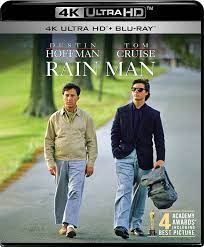
Directed by Barry Levinson and written by Ronald Bass and Barry Morrow (in fact, the characterization of Raymond was based on Kim Peek and Bill Sackter, two savants that Morrow met and had already written about in the script for the movie Bill), Rain Man is the story of how Charlie Babbitt (Tom Cruise) has a brother, the aforementioned Raymond, that he never knew about. Even more vexing, his father has given all of his estate to Raymond.
Once he thinks back to his childhood, Charlie realizes that Raymond was the Rain Man of his childhood, someone that the adult version of himself saw as an imaginary friend. Instead, he was a real person who was eventually put in an institution when their father believed that he tried to scale his younger brother in the bath.
After seeing how Charlie treats his brother, his girlfriend Susanna (Valeria Golino) leaves him. Yet the more time the two brothers spend together, the closer they become, even if Raymond is difficult for him to deal with and costs him his latest deal to sell four collector cars.
Originally, Dennis and Randy Quaid were going to play the brothers, then Bill Murray as Raymond and Dustin Hoffman as Charlie. Luckily, things in our universe worked out the way they did, as I couldn’t see any other actors in these roles. That said, when Hoffman studied Peek’s Savant Syndrome, he felt that the character of Raymond needed more, so he also made the character autistic. As this movie was such a big deal, it led to many in the public thinking that all savants are also autistic or that autistic people are all savants, when only 1 in 200 have these gifts. To be fair, Hoffman was really concerned with his performance, telling Levinson, “Get Richard Dreyfuss, get somebody, Barry, because this is the worst work of my life.” He and Cruise felt like the movie would bomb and called it Two Schmucks In a Car.
This was also filmed during a writer’s strike — completed just hours before it began — which is why the ending wasn’t debated and an alternate ending shot.
I’m fascinated that Sir Michael Caine is such a big fan of this movie because he actually lived it. He found out late in his adult life that he had a brother that he had never met before, one who had been hospitalized due to an extreme case of epilepsy.
The MVD 4K UHD release of Rain Man has a 4K Ultra High Definition version of the movie that was scanned in 4K from the original camera negative and approved by director Barry Levinson, who also provided an audio commentary. There are also two other commentaries, one by Barry Morrow and another by Ronald Bass.
This set also includes a trailer, a featurette on the making of the movie, another on autism, deleted scenes and a limited edition slipcover.
Swamp Thing can trace his roots — yes, it’s a he — back to “It,” Theodore Sturgeon’s short story that ran in the pulp magazine Unknown in 1940. The story is all about a man — Roger Kirk — who dies and is reborn in a swamp.
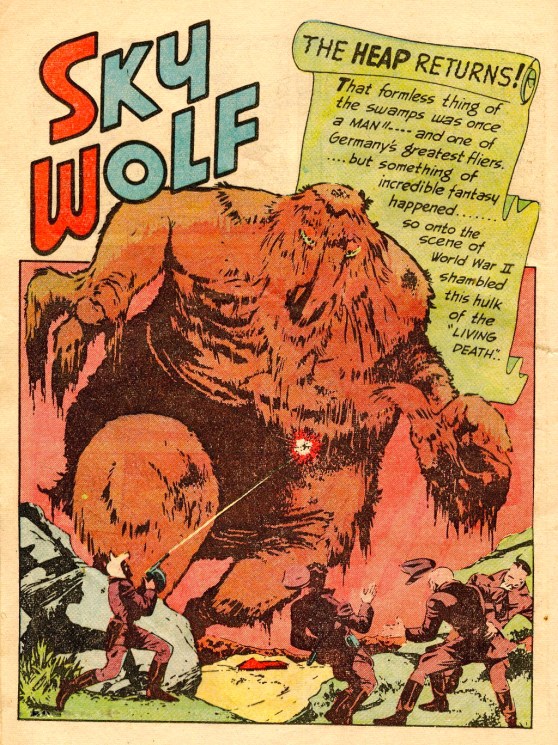
This was an influential tale whose roots — pardon the pun — took hold throughout comic books, which were the younger brother of the pulps. In Air Fighters Comics #3, published in 1942, Sky Wolf (a World War II fighting ace given to wearing the mask of a wolf and helping Airboy battle the Axis) the muck-encrusted form of World War I German pilot Baron Eric von Emmelman returned from the grave in the same way that Roger Kirk did two years before.
Thanks to his immense force of will and the help of the goddess Ceres, as the Baron’s body decayed, he became one with the vegetation of the swamp that he was shot down over. Now, he was more marsh than man, and fought Sky Wolf until discovering the fanaticism of his countrymen.
Before long, The Heap was the heroic star of his own backup in Airboy Comics, with adventures lasting from 1946 to 1953. He’d return in 1986 as part of Eclipse Comics’ reboot of Airboy before being bought by Image Comics, where he’s now part of Todd McFarland’s Spawn Universe.
After EC Comics (the creators of Tales from the Crypt and The Vault of Horror amongst others) and other horror comics publishers were taken to task for their extreme material, the Comics Code Authority outlawed all monstrous characters unless they had literary roots. In fact, until the year 1989, you weren’t even allowed to say the word zombie in a mainstream comic book (Marvel got around this by calling them zuvembies, if you can believe that).
As the CCA relaxed its rules at the start of the 70’s, two different characters that both grew from the Heap started at both Marvel Comics and their cross-town rivals, DC.
Man-Thing was created by Stan Lee and Roy Thomas (who’d go on to write Fire and Ice and adapted plenty of Conan stories, including the one that would be filmed for Conan the Destroyer). A series of conversations led to five different potential origins for the character, with the name being recycled from another character that had already appeared in Tales of Suspense #7 and #81.
Thomas would tell Alter Ego that Lee “had a couple of sentences or so for the concept — I think it was mainly the notion of a guy working on some experimental drug or something for the government, his being accosted by spies, and getting fused with the swamp so that he becomes this creature. The creature itself sounds a lot like the Heap, but neither of us mentioned that character at the time.” Lee also had the name for the character, which would lead to perhaps my favorite comic book title of all time: Giant-Sized Man-Thing.
While you’d think that Man-Thing would be a one-note character — he never speaks and he just kind of shows up in the swamps — but he grew from his first appearance, where he battled Marvel’s Tarzan-esque Ka-Zar to become something much different thanks to the deranged hands of Steve Gerber, who made Man-Thing the center of the Nexus of All Realities, which just so happened to be inside his swamp.
Once biochemist Dr. Theodore “Ted” Sallis and a former co-worker with Dr. Curtis “The Lizard” Connors, the man who would become Man-Thing was working on a version of Captain America’s Super Soldier formula with Dr. Barbara Morse (who would become Hawkeye’s wife Mockingbird, man, I read too many comics as a kid) when techno soldiers from Advanced Idea Mechanics (A.I.M.) and his betraying wife attacked. The result? You guessed it. Fused with the swamp, no brains and a tendency to wander. That said, Man-Thing also gained the ability to burn anyone who felt fear in his presence, so he had that going for him.
Man-Thing became a story engine for Gerber (who contended that he was just a reporter for the very real tales of the character, as he appeared as a fictional character within the comic), who used these stories to introduce sorceress Jennifer Kale, the barbarian Korrek who emerged from a jar of peanut butter, the serial murdering Foolkiller, Dakimh the Enchanter and Howard the Duck. Yep, Gerber’s Man-Thing was pure imagination writ large across the comic book page. After leaving comics, Gerber would write for plenty of cartoons, including Dungeons & Dragons, which his work had a major influence on.
At pretty much the same time, Len Wein came up with the idea for a swamp-based character as he rode the subway. “I didn’t have a title for it, so I kept referring to it as that swamp thing I’m working on. And that’s how it got its name!” Master illustrator Bernie Wrightson (he drew the comic cover for Creepshow) designed the character’s visual image and helped tell his first few adventures.
The Swamp Thing was once Dr. Alec Holland, who was working with his wife Linda to invent a solution for the world’s food shortage problems. After some thugs blew up their lab, his destroyed body was coated in one of his formulas and grew within the swamp, transforming him into a conscious plant with all of his old memories. Of course, once Alan Moore came on board — after this movie brought the character back to comics — we would learn that Swamp Thing was really the latest in a long line of Earth elementals that protect the Green.
If this all sounds like DC was stealing ideas from Marvel — well, they were all stealing from the Heap who was stealing from Theodore Sturgeon — let me blow your mind a little further. Swamp Thing writer Len Wein and Man-Thing’s co-writer, Gerry Conway, were roommates.
Despite the first version of Swamp Thing appearing in House of Secrets #92, Len Wein would later say, “Gerry and I thought that, unconsciously, the origin in Swamp Thing #1 was a bit too similar to the origin of Man-Thing a year-and-a-half earlier. There was vague talk at the time around Marvel of legal action, but it was never really pursued.”
It was decided that this was just a strange coincidence and after a while, the characters became so different, no legal action was necessary.
If you’d like to learn more about the fascinating lives of comic book swamp men, I recommend TwoMorrows’ Comic Book Creator 6: Swampmen.
Whew! I told you all that so I can tell you this: In 1982, Wes Craven wrote and directed an adaption of the comic, long before comic book movies were a thing. His intent was to show the major Hollywood studios that he could handle action, stunts and major stars, all while doing it under his $2.5 million dollar budget. Good news — he succeeded.
A top-secret bioengineering project in the southern swamps is dealing with sabotage, so Alice Cable (Adrienne Barbeau, playing a mix of the comic’s Matt Cable and Abigail Arcade) has been dispatched to replace one of the scientists who has been killed. She soon meets lead scientist Dr. Alce Holland (Ray Wise) and his sister Dr. Linda, who together have developed a glowing plant with explosive properties, as well as a combination animal/plant hybrid.
The real issue is that the secret base is being eyed by the evil Anton Arcane, a paramilitary leader who wants the fruits — and vegetables — of all this labor for himself. He’s played by Louis Jourdan, who is absolutely perfect in the role, oozing menace from every pore while remaining aloof and almost high cultured in his pursuit of evil.
Soon, Arcane’s forces attack, murdering Linda and blowing Alec up real good. However, just like the comic, he now rises as Swamp Thing, played by stuntman DIck Durock (who was also the pie-eating champion in Stand By Me). Now, he must protect Alice and his notes, keeping them both from Arcane.
The movie differs from the comic in that Holland’s formula unleashes whatever dominant personality trait exists within each person. For Holland, it’s the ability to heal and transform his inner strength into outer muscle. Yet Bruno (Nicholas Worth, who played the heavy in plenty of films and lent his voice to the Reaper in The Hills Have Eyes Part II), the biggest of Arcane’s henchmen, becomes a small rat-like creature and Arcane himself becomes a gigantic boar.
Another of Arcane’s henchmen — Ferret, the one who gets his neck snapped by Swamp Thing — is played by David Hess, who was Krug in The Last House On the Left. Also, Karen Price, who plays one of Arcane’s messengers, was Playboy‘s Playmate of the Month for January 1981. I tell you that because it’s her centerfold that appears on the tail of Gyro Captain’s copter in The Road Warrior.
There was one bit of controversy this film caused, more than a decade after it was released.
In August 2000, MGM released this movie on DVD and although it was labeled PG, it actually included the 93-minute international cut, which amps up Adrienne Barbeau’s ample charms and nudity in the skinny dip sequence. Two years after that, a woman rented this film in Dallas for her kids and was shocked and dismayed by what her family saw. Trust me — they should be so lucky!
Durock and Jourdan — along with much of the crew, including producers Michael E. Uslan and Benjamin Melniker — would return in 1989 for Return of Swamp Thing. It’s directed by Jim Wynorski and features Heather Locklear as Abigail Arcane, who heads to the swamp to confront her stepfather Dr. Arcane. He’s been brought back to the dead by the evil Dr. Lana Zurrell (Sarah Douglas, Ursa from Superman) along with an army of mutant Un-Men, all ready to do battle with Swamp Thing.
If anything, that movie gave us more than a series on the USA Network and a cartoon complete with Kenner action figures (of course I bought every single one). It also gave us this, a PSA where Swamp Thing speaks for Greenpeace.
Good news. Today you learned way more than you ever thought you would about 20th century popular fiction involving swamp-based creatures. Would it help even further if I told you that Man-Thing also appeared in a 2005 SyFy movie directed by Brett Leonard (The Dead Pit, The Lawnmower Man, Hideaway)? I sure hope so.
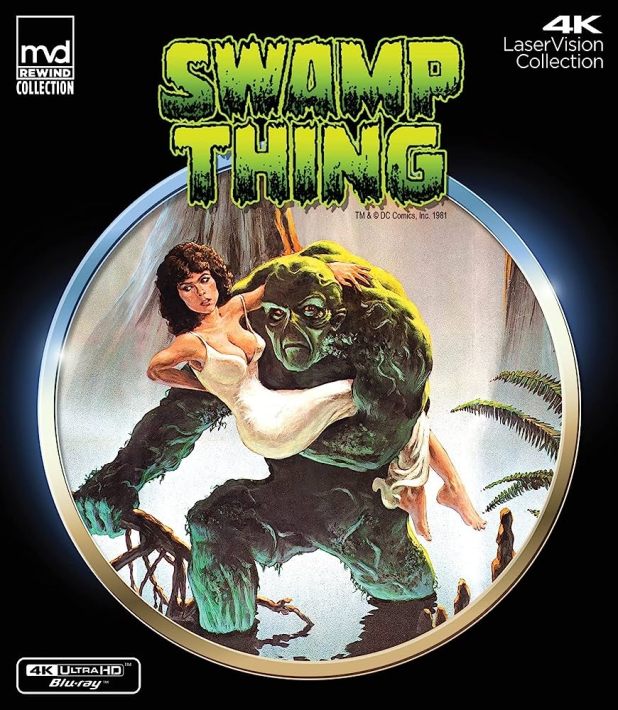
The MVD 4K UHD/bluy ray combo of Swamp Thing include a new 4K restoration — a 16-bit scan of the original camera negative — of the U.S. theatrical PG and unrated international versions of the film. There’s archival commentary by Craven moderated by Sean Clark, as well as alternate commentary with makeup artist William Munn moderated by Michael Felsher. Yoy also get a collectible 4K LaserVision mini-poster and a limited edition slipcover.
Special features include interviews with Adrienne Barbeau, Reggie Batts and creator Len Wein, as well as features on drawing Swamp Thing and Craven’s direction. Plus, there’s a photo gallery of the posters and lobby cards, photos from the film, behind-the-scenes photos and a trailer.
EDITOR’S NOTE: Mae West was on the CBS Late Movie on May 4 and August 11, 1987.
At the age of ten, I had a huge crush on Ann Jillian even if I had no idea why I felt that way.
Now I do and I still have that crush.
Directed by Lee Phillips (The Spell, Sweet Hostage) and written by E. Arthur Kean, this has Jillian as Mae West and takes you through enough of her career to see how she went head-first against small-minded censors. Jillian is great in it and has several performances of West’s songs, too.
James Brolin is Jim Timothy, her manager and former love interest, while Roddy McDowall plays her co-writer Rena Valentine — based on Julian Eltinge — and Piper Laurie is West’s mother Matilda. I wouldn’t depend on this film for factual accuracy, but if you’d like to see JIllian pretty much put on a one woman show, it’ll definitely deliver on that. The costumes are pretty great, too.
EDITOR’S NOTE: Honeyboy was on the CBS Late Movie on January 29, June 25 and December 21, 1987.
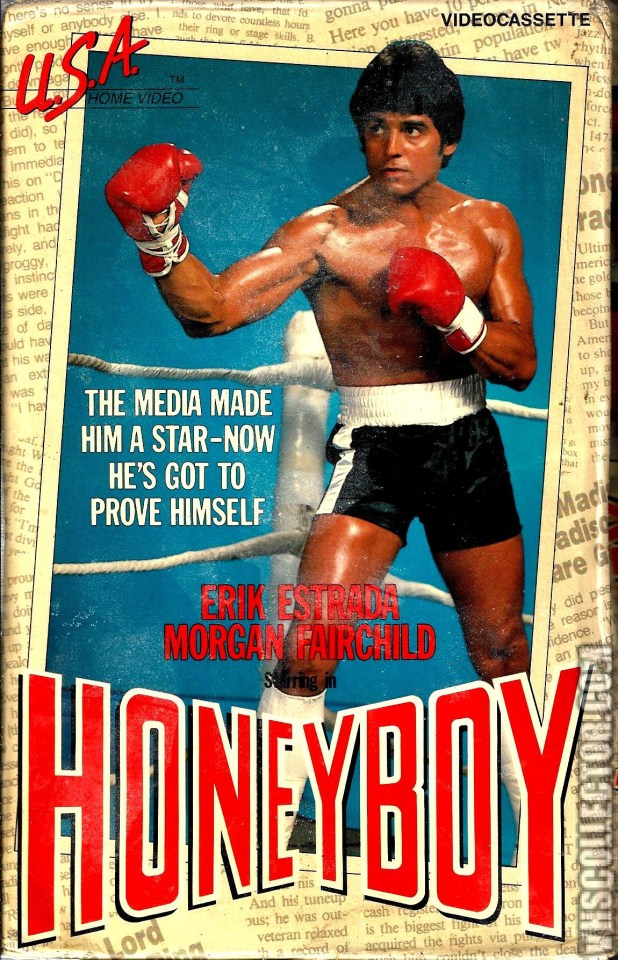
Erik Estrada is pretty much going to get a whole week of movies on this site before too long but until then, let’s look at this movie, in which he plays Rico “Honeyboy’”Ramirez, the son of a boxer (Hector Elizondo) who never made it and walked out on his family.
This was an NBC TV movie of the week and came out while Estrada was fighting with his bosses on CHiPs over his salary. He was replaced on that show by Bruce Jenner, but came back for the last season.
To get to the top, Honeyboy gets a PR agent named Judy Wellman, played by Morgan Fairchild, so this movie had some incredible wattage when it came to early 80s TV starpower. He’s on a quest to win the title from Tiger Maddox (Jem Echollas), who claims that the fight promoter that got Honeyboy this far worked all his fights like pro wrestling matches. Or, you know, pro boxing for the most part.
Of course the third act is all Honeyboy chasing away everyone who got him this far, but if you know boxing movies, you know he’s going to win. I kind of loved the scene between Sugar Ray Robinson — that’s really him — and Honeyboy’s father. Their title match was as far as he got and Sugar Ray is pretty much giving him a little bit of recognition and you can see that Emilio doesn’t want it but really does want it and it’s some masterful acting for such a small moment in such a tiny TV movie and man, I’ve been thinking about it for several days and it still makes me choke up a little.
This was directed by John Berry, who co-wrote the script with Lee Gold. Berry was a member of Orson Welles’ Mercury Theater and ended up blacklisted in 1950. He had agreed to direct a short documentary on the Hollywood 10, the group that had refused to cooperate with the House Un-American Activities Committee as they tried to find Communists in Hollywood. After directing He Ran All the Way, Hollywood 10 member Edward Dmytryk — who had been jailed for contempt of Congress — named Berry as a Communist when he was released from prison as part of his hope to get work in Hollywood again.
Settling in Paris, he co-directed Atoll K, the last comedy film of Stan Laurel and Oliver Hardy, and spent the rest of his career there, even after being permitted to make movies in Hollywood again, like The Bad News Bears Go to Japan.
EDITOR’S NOTE: This episode of Kolchak: The Night Stalker didn’t air on the CBS Late Movie because ABC packaged “it with “Legacy of Terror” as the TV movie The Demon and the Mummy.
The monster of the week this week is a succubus, a demon who reanimates the corpses of freshly dead women to coerce young men into sexual situations, at which point it sucks the life out of them. And best of all, one of Kolchak’s other enemies shows up, Captain “Mad Dog” Siska, played again by Keenan Wynn. He was last in “The Spanish Moss Murders.”
Illinois State Tech is a wacky school, what with Morticia Adams — Carolyn Jones — as the registrar, Jackie Vernon (the voice of Frosty the Snowman and the star of Microwave Massacre) as a coach and Andrew Prine as Prof. C. Evan Spate, the archaeology professor who Carl tries to pry info about the Mesopotamian demoness out of.
It ends as all episodes must with Carl pretty much alone against supernatural evil, trying to smash a stone tablet with a hammer while demonic winds blow in and threaten to overwhelm him. That said, Spate actually covers for him, which is more than anyone else has done in this series.
Vincenzo has plans to turn the paper into an upbeat and dignified place, which seems to suggest that there’s no place for Carl in that world. I wonder what he would have thought about AI content creation.
Directed by Don Weis and written by Michael Kozoll and David Chase, this also played in syndication as The Succubbus.
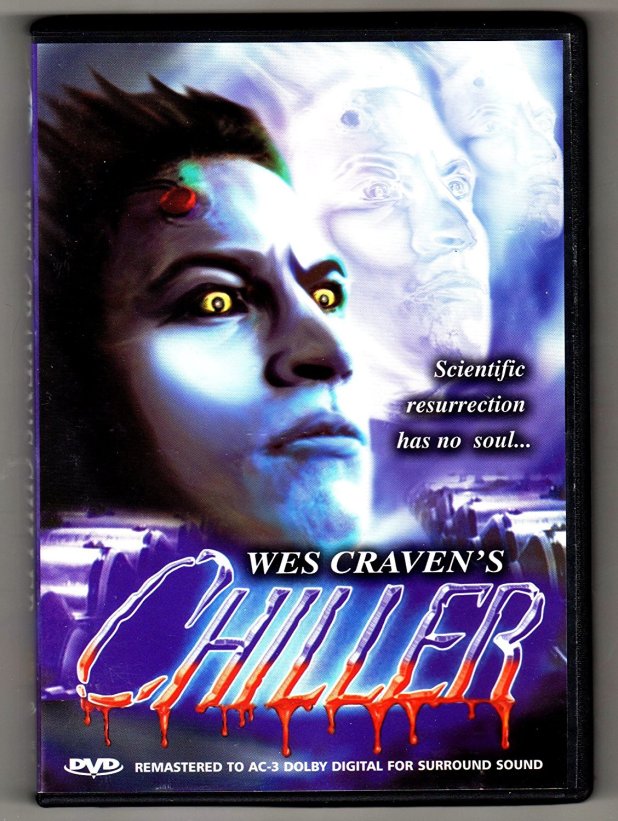
EDITOR’S NOTE: Chiller was on the CBS Late Movie on May 6, 1988.
Miles Creighton (Michael Beck, Xanadu) is frozen at the point of death, but begins to thaw ten years later. His mother decides to see if he can be saved and a miracle surgery brings him back — without a soul! His mother Marion Creighton (Beatrice Straight) doesn’t believe that her son could be evil, much less be killing people, yet it’s true. He even tries to kill friend of the family Reverend Penny (Paul Sorvino) and his stepsister Stacey (Jill Schoelen) is next on his list.
Directed by Wes Craven — this came out on VHS as Wes Craven’s Chiller — and written by J.D. Feigelson (Dark Night of the Scarecrow), Chiller has an amazing moment when the zombie CEO tells the priest ““I’ll tell you what’s on the other side. Nothing. Absolutely nothing. You die and there’s simply darkness. No streets of gold. No harps. No halos. No angels and saints. It’s all here, so you better live it up, holy man, because this is all there is.”
I tend to prefer Craven’s small screen movies to so many of his big screen efforts. This one has a pretty bad script, to be honest, that has some interesting ideas of the beyond and never really shows us some important things, like why everyone thinks Miles is so great. Instead, we only know the blue-faced tyrant strip-mining his father’s company.
That said, if you’re up late, it’s certainly a good movie to be half-awake to.
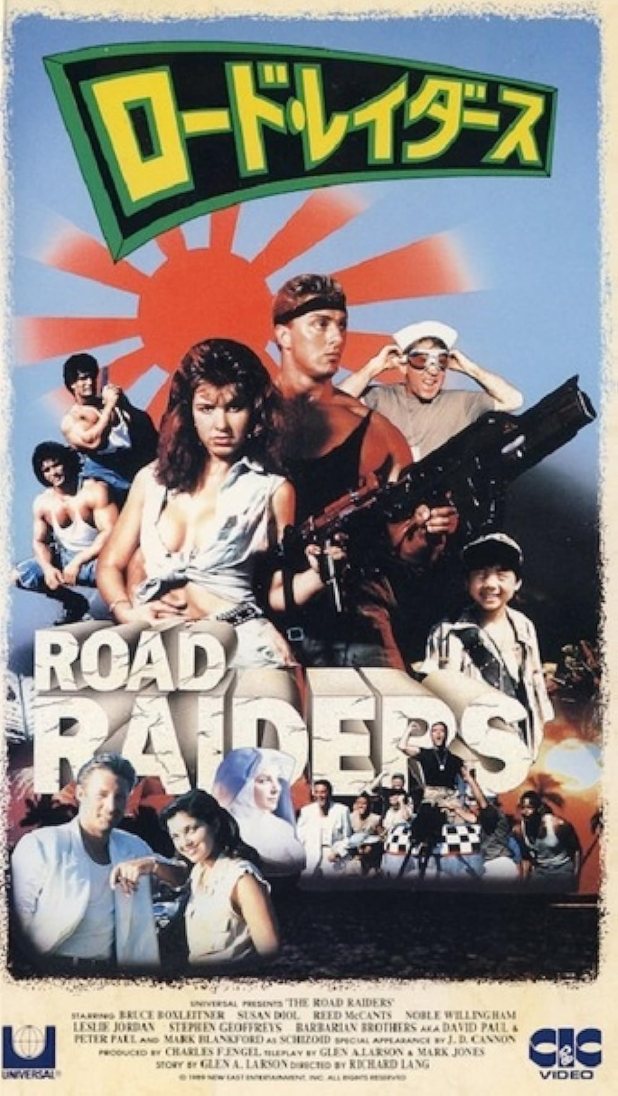
EDITOR’S NOTE: The Road Raiders was on the CBS Late Movie on June 22, 1990.
Directed by Richard Lang and written by Mark Jones (Leprechaun) and Glen A. Larson, The Road Raiders was a pilot that wasn’t picked up and aired as a TV movie.
It stars Bruce Boxleitner — who had just finished Scarecrow and Mrs. King — as Captain Rhodes, a disgraced soldier accused of being a deserter who is hiding from officials in the Philippines during World War II. When an officer comes to arrest him and dies, he takes that man’s identity to get back to the actual fighting. Teaming up with Harlem (Reed R. McCants), Lt. Johanson (Susan Diol), Crankcase (Noble Willingham), Einstein (Stephen Geoffreys), Schizoid (Mark Blankfield) and the twin brother muscle of Black and Blue (David and Peter Paul, the Barbarian Brothers), he just might save the U.S. Army from Japan, which is represented by Clyde Kusatsu, John Fujioka and Tia Carrere.
It feels a little like The A-Team, a bit like The Dirty Dozen, and it’s an anachronistic take on the war. The Barbarian Brothers even drove a monster truck at one point. This all means that if this had been a series in 1989, there’s more than a complete chance that I would have watched every airing.
EDITOR’S NOTE: Poor Devil was on the CBS Late Movie on August 8, 1977.
Sammy Davis Jr. battled racism throughout his career, even from the wings of the stage as his Rat Pack cohorts would call him racist names like smokey.
In an interview with Roots author Arthur Haley in Playboy, the entertainer talked about the first time he came up against his race: in the Army. He was beaten for looking at a white female commanding officer while she was giving him orders, with his body covered with anti-black graffiti and covered in turpentine. That night, as in every night he served, he was still asked to perform for the troops. That’s when Davis learned he’d have to fight to be respected. And once he was in, he’d stay in by any means necessary — even coming off as insincere.
Despite being a member of the Hollywood crowd, Davis still could never be a full member. His romance with white girls like Kim Novak rubbed people the wrong way. And even though he was a large financial supporter of the Civil Rights Movement, he still had a complex relationship with the black community.
For example, he earned plenty of ire when he supported Nixon in 1972. Although he was originally a Democrat and supported JFK in 1960 and RFK in 1968, John F. Kennedy would go on to revoke an inauguration invitation to “Mr. Show Business” because he married white actress May Britt. So maybe his conversion makes sense because Nixon invited him to be the first black guest at the White House.
Once, Jack Benny asked Sammy about his handicap on the golf course. He answered, “Handicap? Talk about a handicap. I’m a one-eyed Negro Jew.”
That said — it’s also believed that Davis was introduced to Anton LaVey’s Church of Satan at an orgy at the nightclub that he owned, The Factory. This also makes sense. There are plenty of stories about how Sammy loved the free-swinging sex scene of the 70s, even learning how to deep throat from the woman who introduced it to the zeitgeist, porn star Linda Lovelace.
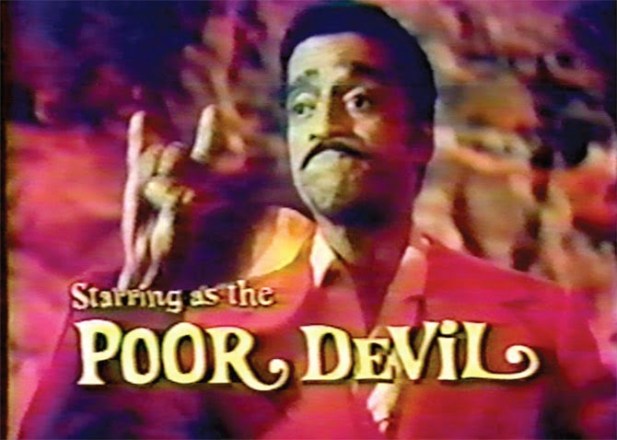
Anyways — I could go on about Sammy Davis Jr. He was a fascinating man — who could smoke four packs of cigarettes a day, draw and fire a Colt Single Action Army Revolver in a quarter of a second and was able to both be a parody of himself and parody himself seemingly at the same time. But today, we’re here to discuss a strange TV pilot that Davis was in, one that would lead to him accepting an honorary second-degree membership in the Church of Satan.
Originally airing on February 14, 1973, on NBC, Sammy would star as Sammy in this series pilot. He’s a demon who has screwed up for the last thousand or so years and now wants to succeed and prove himself to his boss Lucifer, who is played by Christopher Lee. If you don’t immediately stop reading this and go watch this show, allow me to share this photo of Sir Christopher Frank Carandini Lee CBE, CStJ, with a gorgeous head of hair.
To win over his boss, Sammy has to convince Burnett J. Emerson (Jack Klugman!) to sell his soul. In return, he’ll get revenge on his boss (Adam West!) and gain wealth for seven years (and then go to Hell for eternity, which is a lot like Miami, only less humid).
Davis would flirt with The Church of Satan for some time, painting one fingernail red, wearing the Baphomet medallion and flashing the horns from time to time before dropping out by the mid-1970s (around the time that Anton LaVey went into seclusion).
One wonders where this show would have gone if it had become a weekly series. Would the Devil tempt a new celebrity every week? Would Klugman stick around? Would LaVey make a cameo?
All we have is this pilot, which is filled with Satanic imagery, a lack of a laugh track and plenty of early 1970s strangeness. What a weird time to be alive, one that we’ll never truly comprehend today. Still, if all that came of this was this photo of Davis with LaVey and future Temple of Set leader Michael Aquino, I’ll consider it a success.
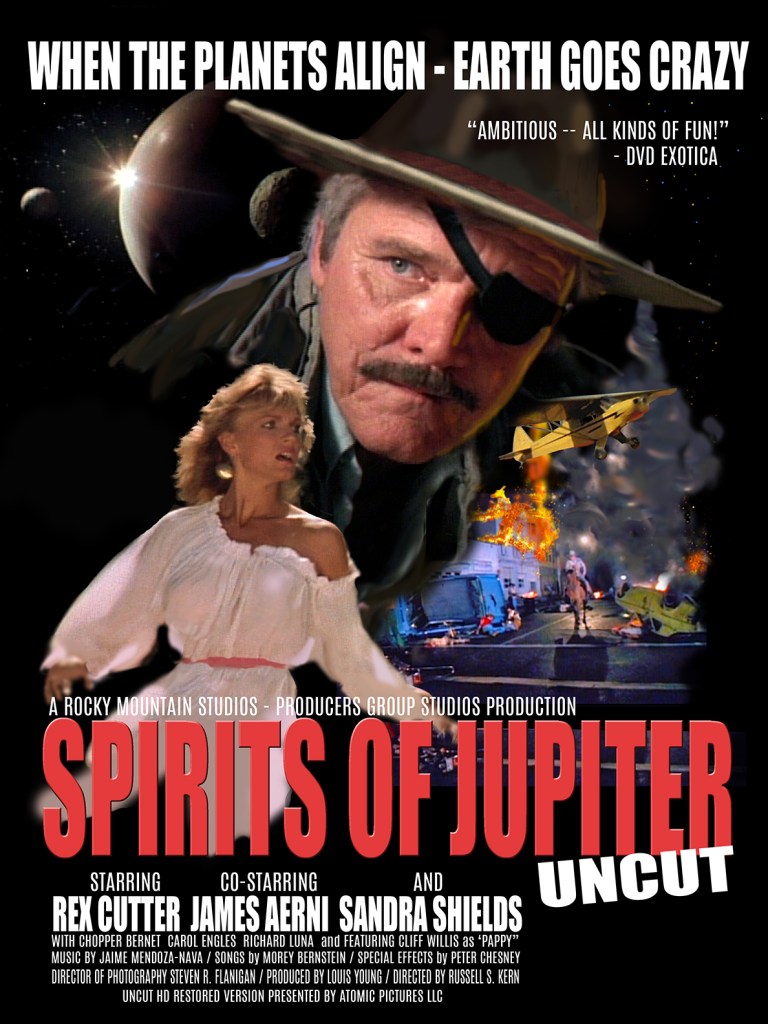
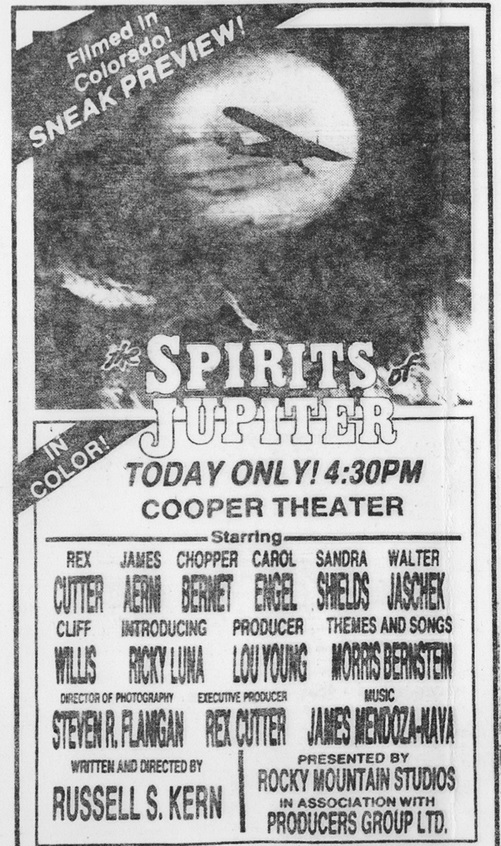
Never doubt the powers of the discriminating VHS tastes of us Allegheny pugwackers splashin’ about the Three Rivers confluence . . . as it all began with an “Apoc Week” review in November 2021 of the lost Denver, Colorado-made sci-fi action-western, The Spirits of Jupiter. Now, the reissue has arrived!
Now . . .
Initially released locally in Denver in 1984, the film never received an official U.S. release — only to finally arrive on U.S. shores by way of overseas VHS bootlegs. Yeah, there’s nothing like a 40-year cult following pulling a lost VHS’er out of the analog snows of VCR dreams and into our digital streaming clouds.
and then . . .
Russell Kern, the writer and director of this lost, home video classic, has released a test-print of his completed restoration of the film to celebrate its 40th anniversary. Unlike the ’80s bootlegged-version print we know and adore, which clocked in at a never-intended-for-release one hour fifty minutes (110 minutes), the new “Uncut” version offers the opportunity to watch the intended one hour twenty minute version (80 minutes) — with a full image restore. Cross those fingers and toes for a wider platform release, including a hard-media version for our home libraries.
You can watch the world of Russell Kern — one where “Yellowstone meets The Night of the Living Dead” — on Amazon Prime. And be sure to visit with our original review from November 2021 to enjoy Russell Kern’s July 2022 insights behind the film’s production.
Our thanks to Mr. Kern for the B&S About Movies exclusive on this exciting news!










 B&S About Movies
You must be logged in to post a comment.