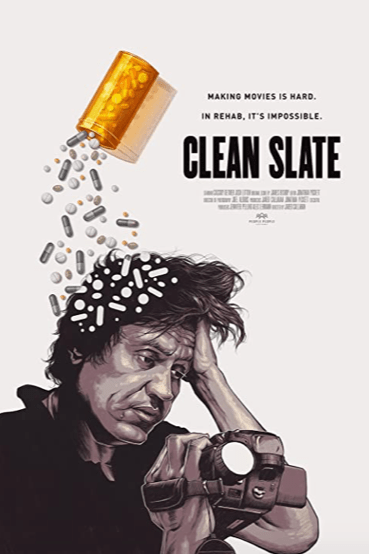
Clean Slate (2021)

Two friends — Joshua Litton and Cassidy Detmer — in a Southern drug recovery program decide to express themselves and try to escape their addiction and mental illness by making a short film about the pain they’ve caused their families. They are in an 18-month, zero-tolerance program sponsored by A Better Way Ministries that will give them access to professional filmmaking equipment to make their film. Yet Cassidy relapses and the film they plan on making is now in danger.

Cassidy has reached a level so low that he can’t get a janitor job because of his record and his mother matter of factly says that she knows he will just go back to doing drugs again. One wonders if making his movie On the Fence will be enough.

Director Jared Callahan worked with both men and along with making this film. As for Josh, he relapsed twice before they make the film. The future is unclear for both men but at least this film exists to be a document of them trying to escape the life that they have created for themselves which is no easy task.

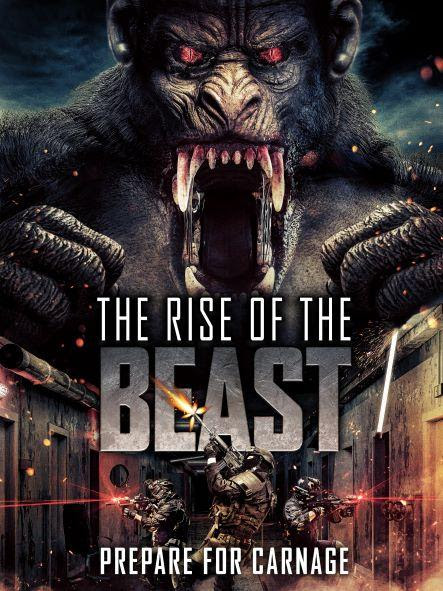
The Rise of the Beast (2022)

A group of activists breaks into a corporate facility to put an end to animal testing but little did they know that there’s literally a Kong-like ape being held inside and once loose, he won’t care who gets in his way and who has to die for him to be free.

Directed by Jack Ayers, written by Max Brooks — yes, the guy who wrote World War Z — and produced by Scott Jeffrey and Rebecca Matthews, who have brought so many made for streaming horror films our way was of late, The Rise of the Beast has a CGI monster that doesn’t always appear to be in the same physical space as the actors he’s menacing, but I think this year is the year I get past stuff like that and just say, “Well, we’re never going back to rubber suits or miniatures.”

It’s a movie smart enough to name its evil company the Darrow Corporation and have a Dr. Kafka be in charge, yet still dumb enough to have people running and screaming from a maddened monkey. There are times this wants to be a satire, other times it’s super serious and it does in all in under 80 minutes, which is some kind of small victory.

The Rise of the Beast is now available on digital and on DVD from Uncork’d Entertainment.

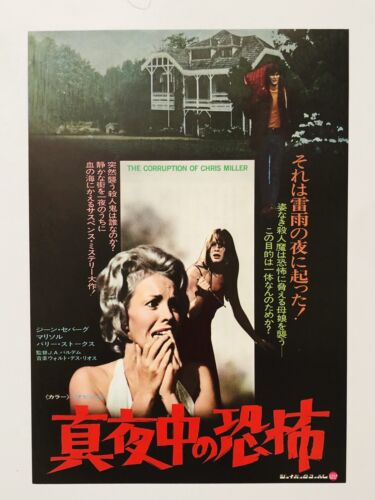
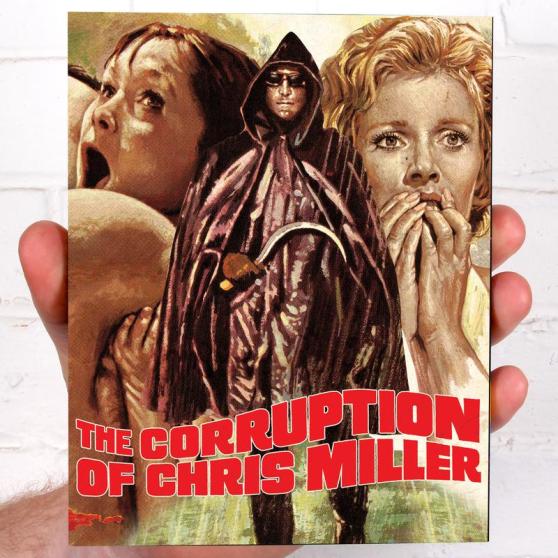
Cinematic Void January Giallo 2023: The Corruption of Chris Miller (1973)

EDITOR’S NOTE: Cinematic Void will be playing this on Saturday, Jan. 7 at 7:30 PM at the Sie Film Center in Denver, CO (tickets here) with Four Flies On Grey VelvetFor more information, visit Cinematic Void

Chris Miller (former Spanish child star Marisol; when she married dancer Antonio Gades, Fidel Castro acted as their godfather) lives with her stepmother Ruth (Jean Seberg, the haunted and doomed beauty who was also in Breathless and Saint Joan). The loss of Chris’ father has damaged both of them, so when a drifter named Barney (Barry Stokes, Prey) shows up, it changes their lives. Maybe not for the better, what with a killer slicing his way through the village…

This Spanish giallo was directed by Juan Antonio Bardem (yes, the uncle of Javier) who also made Death of a Cyclist and wrote A Bell From Hell. It was written by Santiago Moncada, who was also the pen behind Hatchet for the HoneymoonRicco and The Fourth Victim.

Ruth blames Chris for her husband leaving, so she uses Barney to seduce her stepdaughter, who is recovering from the dual loss of her father and being assaulted at school. Her plan? When daddy comes home, he won’t love his daughter much any longer because she’s no longer a virgin. Meanwhile, the killer keeps on killing, including a scene where he dresses like Charlie Chaplin.

Also released as Behind the Shutters Sisters of Corruption and , this movie is also a proto-slasher, rife with bloody murders, including a moment when the rain slicker-covered villain kills an entire family in slow motion.

This is a film that deals as much with trauma as murder, that has the sound of running water causing horrifying flashbacks and has no easy ending for anyone in the film, as the guilt of the killings won’t disappear with the death of any suspect.

Vinegar Syndrome recently released this on blu ray, complete with a newly scanned 4K capture from the original 35mm negative.

Guns of Eden (2022)

Buffalo policewoman Megan (Alexandra Faye Sadeghian), her partner Jeremy (Peter Johnson) and his friends Blake (Dominic Luongo) and Gabriella (Nicole Colon) go camping for the weekend to get Megan’s mind off of an accidental shooting during a holdup. Except, well, you know how it goes. They witness the execution of a drug trafficker by Sheriff Preacher (Bill Kennedy) and his deputies and try to get out of town, only for the sheriff to send an armed militia after them.

Gregory Lamberson directed and wrote something entertaining here,as sure, we know that Megan is going to make it — the tagline says “Against all odds she will survive” — but for a low budget gun movie, he makes something pretty entertaining with plenty of twists and turns that surprised me.  And hey — Lynn Lowry is in the cast! If you’re looking for a movie with plenty of hardware — they even got a helicopter for the militia — this will definitely more than do the job. I also appreciate that a sequel is teased at the end.

Guns of Eden is available on digital and on DVD from Uncork’d Entertainment.

TUBI ORIGINAL: The Ex Obsession (2022)

Kim (Chaley Rose) is a stylist happily married to John (B.J. Britt) who has a man crush on his new co-worker Grant (Anthony Dalton II). Coincidentally, Kim and Grant used to be a couple and they still have some attraction, so while discussing how to break the news to John, they end up having sex, as you do. They decide to tell him that they used to date — they elect to skip the fact that they have recently horizontally danced — but as John arrives home to find his once friend, now rival on the couch and goes off, critically injuring Grant. As he goes upstairs to get medicine and towels, Kim coldly dispatches of her ex-lover and orders her man to start impersonating Grant, which ends up driving him mad.

Directed by Michael Civille and written by Ellen Huggins, this movie exists in a world where DNA evidence does not exist, everyone but the villain is a moron and men can go so crazy that they not only kill other men they are friends with, but freak out, then they are them and dig up their bodies and hug them.

I realize this is a Lifetime film, but seriously, is there such a thing as urban giallo? Because this would somewhat fit, even if it doesn’t have the stranger in a strange land aspect, it does have sex, fashion, identity issues and murder. What other movies would fit into this unexplored category? When the Bough BreaksObsessedThe Perfect GuySingle Black FemaleFatale?

You can watch this on Tubi.

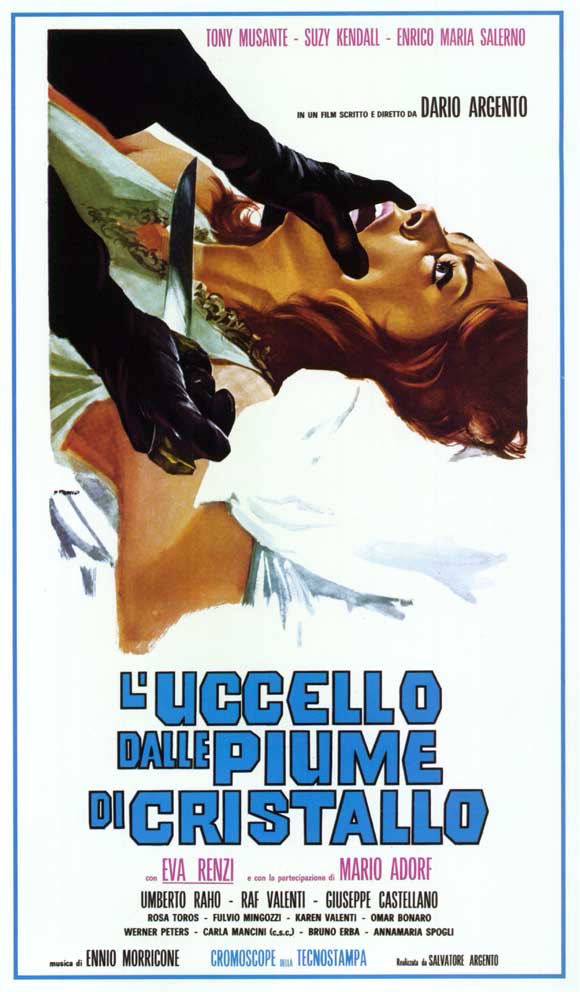
Cinematic Void January Giallo 2023: The Bird with the Crystal Plumage (1970)

EDITOR’S NOTE: Cinematic Void will be playing this on Thursday, January 5 at 7:30 PM at The Little Theatre in Rochester, NY (35mm print with tickets here) and Thursday, January 12 at Central Cinema in Knoxville, TN. For more information, visit Cinematic Void. If you can’t get there, I recommend the Arrow Video UHD edition.

Other than the films of Mario Bava (Blood and Black LaceThe Girl Who Knew Too Much), there’s no other film that has no influenced the giallo. In fact, the most well-known version of the form starts right here with Dario Argento’s 1970 directorial debut. Until this movie, he’d been a journalist and had helped write Leone’s Once Upon a Time in the West.

Sam Dalmas (Tony Musante) is an American writer suffering from an inability to write. He’s gone to Rome to recover, along with his British model girlfriend (yes, everyone in giallo can score a gorgeous girl like Suzy Kendall). Just as he decides to return home, he witnesses a black-gloved man attacking a girl inside an art gallery. Desperate to save her, he can only watch, helpless and trapped between two mechanical doors as she wordlessly begs for help.

The woman is Monica Ranier and she’s gallery owner’s wife. She survives the attack, but the police think Sam may have had something to do with the crime, so they keep his passport so he can’t leave the country. What they’re not letting on is that a serial killer has been wiping out young women for weeks and that Sam is the only witness. That said — he’s haunted by what he’s survived and his memory isn’t working well, meaning that he’s missing a vital clue that could solve the crime.

As you can see, the foreign stranger who must become a detective, the missing pieces of memory, the black-clad killer — it’s everything that every post-1970 giallo would pay tribute to (perhaps rip off is the better term).

Another Argento trope shows up here for the first time. It’s the idea that art itself can cause violence. In this film, it’s a painting that shows a raincoat-clad man murdering a woman.

Soon, Sam is getting menacing calls from the killer and Julia is attacked by the black-clad maniac. The police isolate a sound in the background of the killer’s conversations, the call of a rare Siberian “bird with the crystal plumage.” There’s only one in Rome, which gets the police closer to the identity of who is wearing those black gloves (in truth, it’s Argento’s hands). It’s worth noting that the species of bird the film refers to as “Hornitus Nevalis” doesn’t really exist. The bird in the film is actually a Grey Crowned Crane.

Alberto, Monica’s art gallery husband, tries to kill her, finally revealing that he has been behind the attacks. Ah — but this is a giallo. Mistaken identity is the main trick of its trade. And even though this film was made nearly fifty years ago, I’d rather you get the opportunity to learn for yourself who the killer really is.

I may have mentioned before that my parents saw this movie before I was born and hated it to a degree that any time a movie didn’t make any sense, they would always bring up “that weird movie with the bird that makes the noises.” Who knew I would grow up to love Argento so much? It’s one of those cruel ironies that would show up in his movies. I really wonder if my obsession with giallo and movies that are difficult to understand is really me just rebelling.

An uncredited adaptation of Fredric Brown’s novel The Screaming Mimi, this film was thought of as career suicide by actress Eva Renzi. And the producer of the film wanted to remove Argento as the director. However, when Argento’s father Salvatore Argento went to speak to the man, he noticed that the executive’s secretary was all shaken up. He asked her what was wrong and she mentioned that she was still terrified from watching the film. Salvatore asked her to tell her boss why she was so upset and that’s what convinced the man to keep Dario on board.

The results of all this toil and worry? A movie that played for three and a half years in one Milan theater and led to copycats (and lizards and spiders and flies and ducklings and butterflies and so on) for decades. Argento would go on to film the rest of his so-called Animal Trilogy with The Cat O’Nine Tails and Four Flies on Grey Velvet, then Deep Red before moving into more supernatural films like Suspiria and Inferno.

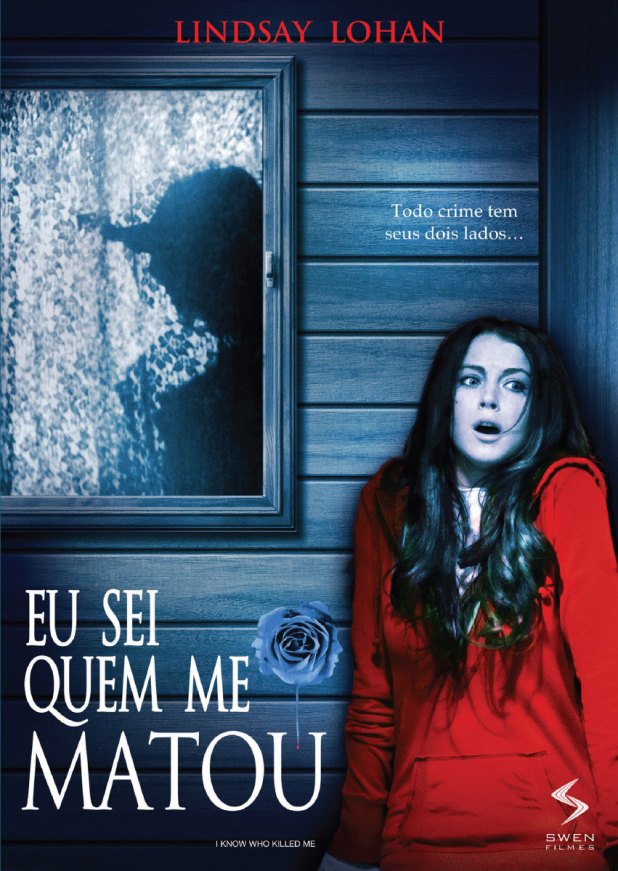
Cinematic Void January Giallo 2023: I Know Who Killed Me (2007)

EDITOR’S NOTE: Cinematic Void will be playing this American giallo on Wednesday, January 4 and Friday, January 7 at 7:00 PM at the Central Cinema in Knoxville, TN along with Dressed to Kill. It also is playing on January 21 at 9:30 PM at Sie Film Center, Denver, CO (tickets here) and January 30 at 7:00 PM PT at the Los Feliz 3 in Los Angeles (tickets here). For more information, visit Cinematic Void.

I’m going to start this off with an unpopular take. This is not a bad movie. When I first met my wife, she used to tell me how much she loved it and I thought she was crazy. Surely, everyone online that went out of their way to destroy it had to be right, right?

Wrong. Go with me on this alternative universe logic — if Lindsey Lohan were a disgraced movie star in 1967 instead of 2007, she would have gone to Italy to make movies for directors like Bava, Argento, Martino and Antonio Margheriti. She would have been in the same company as Anita Ekberg, Florinda Bolkan, Elke Somer and even Edwige Fenech.

The film has all the hallmarks of giallo: a serial killer is abducting, torturing and killing young women in the suburb of New Salem. An evening of fun for Aubrey Fleming (Lohan) turns into weeks of torture as she wakes up bound and gagged on an operating table, her hands deep in dry ice.

The FBI Task Force has already given up hope of finding the killer, but a driver discovers Aubrey on a deserted road in the middle of the night. To the shock of her parents, she declares that she’s really a stripper named Dakota Moss and has no idea who Aubrey Fleming is. And then she realizes that she’s missing her hand and half of her leg.

At this point, you’re either going to give up on this movie or dive in. I advise diving right in.

While the police, the doctors and her parents believe that this is all PTSD, Aubrey/Dakota insists that she is not who anyone thinks she is. Things get weirder when FBI agents discover a story on Aubrey’s laptop about a girl with an alter ego named Aubrey. And DNA confirms that Dakota really is Aubrey. This inversion of identity is key to the main tenets of classic giallo.

Dakota has a theory of her own: She’s Aubrey’s twin sister and her injuries are Corsican Brothers-like (or Tomax and Xamot, if you prefer) sympathetic wounds as she experiences the plight of her symbiotic sibling.

Sure, her mother has a pregnancy ultrasound that shows only one fetus. But Dakota confronts her father (or Aubrey’s, stay with me) as she believes that her mother lost that child soon after its birth and that she and Aubrey were the twin children of a crack addict named Virginia Sue Moss. Aubrey was taken to live in comfort city mouse style while she stayed with Moss, trailer park mouse style. The complication? Virginia Sue Moss was yet another character from Aubrey’s short story.

Richard Roeper claims that this is the worst movie of the 2000s, calling the film “a ridiculous thriller (minus the thrills)” and saying that it’s filled with a” nonsensical plot that grows sillier by the second, tawdry special effects, heavy-handed symbolism that’s big on electric-blue hues and mechanical performances are all culprits as far as the title’s concerned.” Has Roeper even seen a giallo? Because reading that sentence makes me want to watch this movie all over again!

Back to the movie: Dakota starts to see visions of the killer slicing up his captive which draws her to the cemetery. As she investigates the grave of another victim, Aubrey’s friend Jennifer, she finds a blue ribbon from a piano competition. Aubrey was a noted pianist and there’s a note attached from her (and Jennifer’s) piano teacher, Douglas Norquist. As her father (or Aubrey’s, look, it’s not a giallo if you don’t get confused) looks on, she declares, “I know who killed me.”

That’s because the ribbon says, “Blue Ribbons Are For Winners, Never Settle For The Red, Rest In Peace, Douglas.” It’s a metaphor for the lives of the twins: Aubrey is the blue chipper with a boyfriend that loves her, good grades, plenty of friends and a bright future. Dakota works in the red light district and faces a life of poverty.

Without any police backup — again, this happens all the time in giallo — they confront Norquist. Daniel is killed before Aubrey leaves the safety of the car and enters the house. She fights Norquist, cutting off his hand, before she’s tied up. He asks her why she returned after he buried her alive before she frees herself and kills him. She heads into the woods where she digs up Aubrey, verifying that she was not insane and had been right all along. Then, she lies on the ground with her twin sister.

Some of the few critics who liked this movie compared it to Brian DePalma or David Lynch films. Sure. Or you could go right to the source — Italy.

If you replaced the score of the film (that said, I love that The Sword and The Melvins are heard in this film) with some insane synth or orchestral music (someone get Claudio Simonetti, Piero Umiliani or Morricone on the line), if you made the homes space age lounges filled with improbable furniture and if you had more than one scene of Lohan stripping (any of the sex in this movie is honestly the unsexiest sex ever, they should have really studied Sergio Martino movies), this movie would fit perfectly into my DVD collection between Hatchet for the Honeymoon and Inferno. Who am I kidding? It’s on my shelf already!

This is not the first time Lohan played twins on film, thanks to starring in the remakes of Freaky Friday and The Parent Trap. Again, this is perfect giallo casting — not to mention pure exploitation — showing her gone to seed as two twins who couldn’t be more different.

However, this was not an easy movie to film for director Chris Sivertson, as Lohan had an appendix operation during shooting. Plus, there were times when she would not show up at all — necessitating a body double be used to film the end of the movie. Even worse, she was followed by paparazzi throughout the shoot and some of them are still in the background of a few shots!

There are giallo techniques used throughout the film, such as a neon sign outside the strip club that foreshadows Dakota’s injuries and the fact that Bava-esque blue and red lighting determines which character is on screen between Aubrey and Dakota.

While so many decry this film for not making any sense, if you’ve made it through any number of classics (sure, the director claims Hitchcock as a primary influence, but you can say that he’s the well from which all giallo flows) like The Bird With the Crystal Plumage or Deep Red or A Lizard in a Woman’s Skin, you’re going to be just fine. The world was just ready to devour Lindsey Lohan and this film would be its sacrificial lamb. Oh if only there were an Italian film industry for her to turn to and appear alongside Ivan Rassimov!

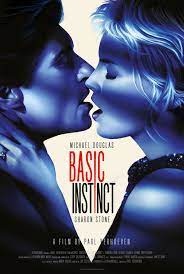
Basic Instinct (1992)

You can call Basic Instinct a neo-noir or erotic thriller, the name that every film after it would use, including some by Italian masters.

But it’s a giallo.

Written by 13 days by Joe Esterhaus — who made $3 million from it before leaving the film because he thought the lesbian sex scene was exploitative — and starring a then-unknown Sharon Stone and a frightened Michael Douglas who wanted an A-List star up there to share the screen and blame, it was a huge success and had reviewers comparing it to Hitchcock.

Or, you know, giallo.

San Francisco homicide detective Nick Curran (Douglas, notching another film in his rule of king of the 90s scumbag heroes) is investigating the murder of rock star Johnny Noz, stabbed to death with an ice pick by a blonde he was in mid-horizontal dance with. That blonde seems to be his current love interest, crime novelist Catherine Tramell (Stone), who just so happens to have written a book with that very same crime. She does the cardinal sin of being rude to a room of male cops who interrogate her, even uncrossing her legs and revealing her sex to them. Stone would claim for years she was tricked into this by director Paul Verhoeven, even slapping him in the face at a test screening, while he says that she knew what was happening all along. She passes a lie detector test and goes free, but there’s that pesky matter of her being around so many murders, like her family annihilator friend Hazel Dopkins (Dorothy Malone, who was in the giallo Carnal Circuit) and girlfriend Roxy (Leilani Sarelle, Neon Maniacs), who killed both of her brothers in her teens.

Nick isn’t a hero himself, what with having shot two tourists while high on cocaine during an undercover assignment and oh yeah, his wife killed herself. He’s sleeping with the person who is supposed to be counseling him, police psychologist Dr. Beth Garner (Jeanne Tripplehorn) and literally punishing her with brutal lovemaking. He also learns that Catherine’s next book is about him and she has his file, which she got from internal affairs officer Lieutenant Marty Nielsen (Daniel von Bargen), who is murdered soon after getting in a fracas with Nick. He thinks she’s the killer and gets put on leave as he’s obsessed with her case.

Of course, Nick and Catherine have to make violent love and of course Roxy tries to kill him and dies in the attempt. Where does this become a giallo? Well, when the plot twists get so twisted that it turns out that Catherine and Beth dated in college, one of their killed another professor just like the recent ice pick killing of Johnny Noz and both claim the other was obsessed. It also has an ending that at once ties it all up and leaves things open ended.

It’s missing the stranger in a strange land trying to solve a crime, the music and the fashion, but otherwise, the giallo has become the erotic thriller.

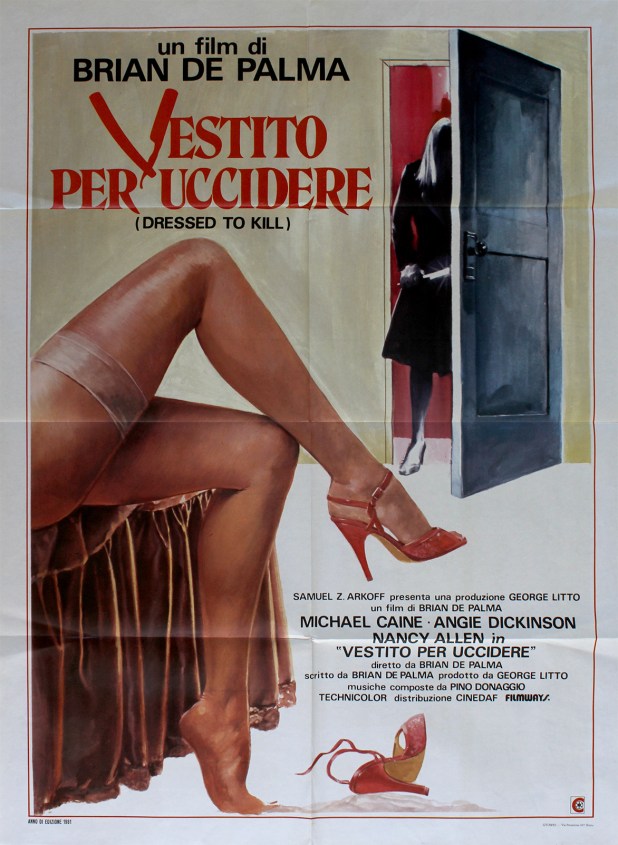
Cinematic Void January Giallo 2023: Dressed to Kill (1980)

EDITOR’S NOTE: Cinematic Void will be playing this American giallo on Wednesday, January 4 and Friday, January 7 at 7:00 PM at the Central Cinema in Knoxville, TN along with I Know Who Killed Me. For more information, visit Cinematic Void.

Let’s get this out of the way: Brian De Palma, much like Giallo, was heavily influenced by Hitchcock. In fact, when an interviewer asked Hitchcock if he saw the film as an homage, he replied, “You mean fromage.” That said — Hitchcock died three months before the film was released, so that story could be apocryphal (it’s been said that the famous director made this comment to either a reporter or John Landis).

What is true is the interview that De Palma did after Dressed to Kill (Rolling Stone, October 16, 1980).  The director claimed, “My style is very different from Hitchcock’s. I am dealing with surrealistic, erotic imagery. Hitchcock never got into that too much. Psycho is basically about a heist. A girl steals money for her boyfriend so they can get married. Dressed to Kill is about a woman’s secret erotic life. If anything, Dressed to Kill has more of a Buñuel feeling.”

However, I’d argue that this film has more in common with Giallo than anything the “Master of Suspense” directly created. That’s because—to agree with DePalma above—this film does not exist in our reality. Much like Argento’s The Bird with the Crystal Plumage, it exists in its dream reality, where the way we perceive time can shift and change based on the storyteller’s whims.

Yet what of DePalma being dismissive of Argento in interviews, claiming that while he saw the director as having talent, he’d only seen one of his films? Or should we believe his ex-muse/wife Nancy Allen, who claims that when she told DePalma that she was auditioning for Argento’s Inferno, he said, “Oh, he’s goooood.”

Contrast that with this very simple fact (and spoilers ahead, for those of you who worry about that sort of thing, but face facts, this movie is 37 years old): DePalma rips off one of Hitchcock’s best tricks from Psycho: he kills his main character off early in the film, forcing us to suddenly choose who we see as the new lead, placing the killer several steps ahead of not just our protagonists, but the audience itself.

And yet there are so many other giallo staples within this film: fashion is at the forefront, with a fetishistic devotion to gloves, dresses, spiked high heels, and lingerie being displayed and removed and lying in piles all over an apartment or doctor’s office. This is the kind of film that makes you stop and notice an outfit, such as what Kate Miller (Angie Dickinson, Big Bad Mama, TV’s Police Woman) wears to the Metropolitan Museum of Art or the blue coat that Liz Blake (Nancy Allen, CarrieStrange Invaders) wears to meet Dr. Robert Elliot (Michael Caine, how could we pick any movie other than Jaws 4: The Revenge).

Then there are the music cues from Pino Donaggio, who also scored Don’t Look Now, Fulci’s The Black Cat, and Argento’s Do You Like Hitchcock? The film not only looks the part, but it has intense sound, too.

We also have characters trying to prove their innocence, investigating ahead of the police. Or the son of the murder victim who wants to discover why his mother really died. Or her doctor, who has an insane patient named Bobbi who has stolen his straight razor and demands that she give him more time than the rest of her patients. All of them could be the killer. Giallo gives us no assurances that just because we see someone as the protagonist, there’s no reason they couldn’t also be the antagonist.

Let’s toss in a little moral ambiguity here, too. Kate is a woman who is bored with her life. She’s raised a son and seen her marriage lose any hope of sexual frisson. Liz is a prostitute — no slut shaming here, she’s a strong businesswoman more than anything  — but she’s also a practiced liar, as a scene shows her deftly manipulating several people via phone to get the money she needs to buy stock based off an insider tip she receives from a client. Dr. Elliot is obviously attracted to Kate but claims that his marriage prevents him from having sex with her. Yet it seems like he has secrets beyond informing the police of the threats of his obviously unbalanced patient, Bobbi. And then there’s Peter, Kate’s son, who has no issues using his surveillance equipment to spy on the police or Liz. If this character seems the most sympathetic, remember that he is the closest to the heart of DePalma, whose mother once asked him to follow and record his father to prove that he was cheating on her.

Finally, we have the color palette of Bava’s takes on giallo mixed with extreme zooms, split screens and attention to the eyes of our characters. The blood cannot be redder.

The film opens with Kate in the shower. While the producers asked Dickinson to claim that it’s her body, it’s really Victoria Johnson (Grizzly) as a body double. Her husband comes into the shower to make love to her, but she finds it robotic and not the passion she feels she deserves. Directly after, she tells Dr. Elliot that she’s frustrated and attempts to seduce him, but he rejects her.

More depressed than before the appointment started, she heads to the Metropolitan Museum of Art. Despite being surrounded by inspiration, such as the statue of Diana by Saint-Guadens, West Interior by Alex Katz and Reclining Nude by Tom Palmore (a tip of the hat to the amazing I Talk You Bored blog for an insightful take on the film and the research as to what each work of art is), she absentmindedly writes entries in her schedule. Planning the holiday meal gets her through the mindlessness of her life, flowing penmanship reminding her to “pick up turkey” instead of slowing down and appreciating not just the artwork around her but the people. There’s a young couple in lust if not love. There’s a young family. And then, a man with dark glasses catches her eye before brazenly sitting down next to her.

We are used to male characters chasing after female characters who aren’t defined by anything other than being sex objects. Instead, we have Kate pursuing the man, making the first, second, and even third moves until we realize that she was just following the man’s breadcrumbs.

Of note here is that color plays an essential role in the scene, as do expected manners. Kate is a wife and mother. She is who society expects to have virtue, and she is clad in all white, but her intentions are anything but pure. She finally has what she wants—the thrilling sex life that she may have only read about in trashy paperbacks.

This scene is a master class in pacing and movement. Imagine, if you will, the words on the page: Kate follows a mystery man through the museum. And yet, those are just eight words. We get nearly nine minutes of wordless pursuit, yet it never grows dull.

Finally, Kate follows the man out of the museum, but she loses him until she looks up and sees her glove dangled from a taxi. But blink, and you miss death in the background as Bobbi blurs past the camera.

When we catch up with Kate, it’s hours for her but seconds for us because this movie is a dream universe. She wakes up in bed with a stranger. There’s a gorgeous camera move here as DePalma moves the camera backward, an inverse of how a lesser director would have treated this scene. Instead of showing the two lovers tumbling through the apartment and removing clothes at every turn, we see Kate reassembling herself to move from her fantasy world to reality and toward her real world, which will soon become a nightmare. The camera slides slowly backward as she gets dressed, remembering via split-screen and sly smile how she doesn’t even remember where her panties have gone. She’s still wearing white, but under it all, she’s bare, her garments lost in a strange man’s house. A man whose name she doesn’t even know.

So now, as she emerges from realizing her sexual fantasies, she feels that she must make sense of it. She wants to write a note to say goodbye but doesn’t want to overthink it. Maybe she doesn’t even want it to happen again. And then she learns more about the man. It starts with his name and then becomes more than she ever wished to find out: his health report shows that he has multiple STDs.

Kate leaves the apartment and makes her way to the elevator, where she tries to avoid anyone’s eyes. In the background, we see an ominous red light, ala Bava. Bobbi—death and punishment for sin—is coming.

The death scene — I hold fast to my claim that The New York Ripper is close to this film but made by a director who doesn’t have the sense to cut away from violence — DePalma stages his version of the shower scene. But more than Psycho, we’ve come to identify with Kate. She’s a woman fast approaching middle age who wants a thrill, and yet, she’s punished by disease and death. She didn’t deserve this, and her eyes pleaded not to the killer as much as they did to the camera. And to us.

Here’s where we have to wonder aloud about DePalma’s long-discussed misogyny. This film was protested by women’s groups, who stated in this leaflet that “FROM THE INSIDIOUS COMBINATION OF VIOLENCE AND SEXUALITY IN ITS PROMOTIONAL MATERIAL TO SCENE AFTER SCENE OF WOMEN RAPED, KILLED, OR NEARLY KILLED, DRESSED TO KILL IS A MASTER WORK OF MISOGYNY.” Is DePalma guilty of the slasher film trope of “you fuck, and you die?” Maybe. Perhaps if she had remembered her marriage, at best, she wouldn’t be here. At worst, she wouldn’t have forgotten her ring in the stranger’s apartment and would have survived.

The way I see it, the death of Kate allows us to make the transition from past protagonist to new heroine, as the doors open post-murder to reveal a grisly scene to Liz and her john. The older man runs while Liz reaches out to Kate, their eyes meeting and fingers nearly touching. Kate’s white purity has been decimated by the razor slashes of Bobbi, the killer. As their transference is almost complete, Liz notices Bobbi in the mirror. Remember that we’re in a dream state? Time completely stops here, so we get an extreme zoom of both the mirror and Liz’s face. She escapes just in time, grasping the murder weapon and standing in the hallway, blood on her hands as a woman screams in the background, figuring her for the killer.

At this point, the film switches its protagonist. Unlike the films of David Lynch, like Mulholland Drive, this transference is not a changed version of the main character, but her exact opposite. Kate wore white, was older, and had a marriage and child, yet she slowly came to feel like an object to the men in her life. Liz wore black, was young and single, but was wise to the games of sex and power. She isn’t manipulated, turning the tables on men by using their needs for personal gain. Kate may have seen sexual fantasy as her greatest need, but for Liz, it’s just a means to an end.

Kate and Liz are as different as can be. For example, Kate goes to the museum to find inspiration. Liz only sees art as commerce, and she spends plenty of time explaining to Peter how much money she could make by acquiring a painting.

Dr. Elliott discovers a message from Bobbi on his answering machine (these machines and the narrative devices they enable must seem quaint and perhaps even anachronistic to today’s moviegoers). Once, Bobbi was his patient, but he refused to sign the paperwork for their (as the pronoun hasn’t been defined, so I’ll use they/their) sex change. In fact, Dr. Elliot has gone so far as to convince Bobbi’s new doctor that they are a danger to herself and others.

The police, however, have arrested Liz, and Detective Marino (Dennis Franz, TV’s Hill Street Blues and NYPD Blue) doesn’t believe a word she has to say. There’s a great moment here where Liz goes from wide-eyed ingenue to knowing cynic in the face of Marino’s misogynistic tone. Meanwhile, Kate’s son Peter (Keith Gordon, Jaws 2Christine) uses his listening devices in the station to learn more about his mother’s death than the police are willing to let on.

He begins tracking Liz, obsessively noting the times that she comes and goes from her apartment. He’s doing the same to Elliot’s office. But he’s not the only one tracking people. Bobbi has been stalking Liz, including a sequence where our heroine goes from being chased by a gang of black men to talking with an unbelieving police officer to Peter saving her from Bobbi with a spray of mace.

Because Peter has seen Bobbi also emerging from Dr. Elliott’s office, so he joins forces with Liz to discover who she is. That means that Liz uses her chief weapon — sex — to distract the doctor long enough to discover Bobbi’s real name and information. We learn that Liz’s mental sex game is as strong as her physical attributes here — she says that she must be good to be paid as well as she is. She knows precisely the fantasy Dr. Elliott wants to hear. But perhaps she also knows the fantasy that the mainly male slasher/giallo viewer wants: the woman submitting to the killer holding the knife.

Peter watches outside in the rain when a tall blonde pulls him away. Has he been taken by Bobbi? No — Liz returns to have sex with Dr. Elliott; he has been replaced by the killer. Bobbi lifts the razor as Liz helplessly crosses her arms in front of her face for protection. But at the last minute, the blonde who grabbed Peter outside is revealed to be a police officer, as she shoots Bobbi through the glass. That shattered pane also breaks Bobbi’s illusion and mask, revealing that Dr. Elliott is the man under the makeup and clothes.

The killer is arrested and goes into an insane asylum; Dr. Levy explains that while the Bobbi side of his personality wanted to be free, the Dr. Elliott side would not allow them to become a true woman. Therefore, whenever a woman broke through and aroused the male side of the persona, the female side would emerge and kill the offending female.

Inside the mental asylum, a buxom nurse attends to the male patients. The room is bathed in blue light, a cool lighting scheme that echoes Mario Bava’s films. The movie has moved from a dream version of reality to a pure dream sequence. It intrigues me that Carrie and Dressed to Kill both start with a shower scene and end with a dream threat to the surviving secondary heroine.

Within the asylum, Dr. Elliott overcomes the nurse and slowly, methodically, folds her clothing over her nude form. As he begins to either dress in her clothes — or worse, molest her dead body — the camera slowly moves upward as we realize that there is a gallery of other patients all watching and screaming. This scene reminds me of the gallery of residents watching a doctor perform surgery, yet inverted (have you caught this theme yet?) and perverted.

Bobbi emerges once again, and because she is dead, she cannot be stopped. Liz is bare and helpless in the shower, and nothing can protect her from being slashed and sliced and murdered — except that none of this is real. She awakens, screaming in bed, and Peter rushes in to protect her. And for the first time in the film (again, thanks to I Talk You Bored for noticing), she is wearing white.

Many find this a hard movie to stomach due to its misogyny. I’ll see you that and tell you it’s a misanthropic film that presents all of humanity, male and female, negatively. The men in this film are actually treated the way women usually are in films, as either silent sex objects (Warren Lockman), sexless enemies (Kate’s husband), shrill harpies that need to be defeated (Detective Marino) or sexless best friends who provide the hero with the tools they need to save the day (Peter). Seriously, in another film, one would think Peter would have a sexual interest in Liz, but despite her double entendres and come-ons, he remains more concerned with schedules and numbers and evidence.

Bobbi, the combination of male and female, comes across as a puritan punisher of females who benefit from sex, either emotionally or monetarily. Or perhaps they are just destroying the sex objects that they know that the male side of their brain will never allow them to become. Interestingly, Bobbi’s voice doesn’t come from Michael Caine but from De Palma regular William Finley (The Phantom of Phantom of the Paradise).

What else makes this a giallo? The police seem either unwilling to help at best or ineffectual at worst until they tie things up neatly at the end. And the conclusion, when the hand emerges not from the doorway — but the medicine cabinet — to slash Liz echoes the more fantastic films in the genre, such as SuspiriaAll the Colors of the Dark and Stagefright, where reality just ceases to exist. At the end of all three films, the heroine has confronted the fantastic and may never be the same.

In the first, Suzy narrowly escapes from hell on earth and emerges laughing in the rain. Is she happy that she survived? Has she achieved a break from reality? Is she breaking the fourth wall and laughing at how insane the film has become, pleased that the torture is finally over?

In the final scene of All the Colors of the Dark, the fantasy world is all a ruse, yet our heroine, Jane, is now trapped in the dream world. She can tell what will happen before it does; she knows that her husband has both slept with and killed her sister, but he has saved her from a fate worse than death. Yet all she can do is shout, “I’m scared of not being myself anymore. Help me!”

In Stagefright, the final girl walks out of the scene and out of reality as she defeats the killer. She has transcended being an actress to removing herself from fiction.

In all these films, the characters are not unchanged by their experiences with the dream world. In Dressed to Kill, the final dream sequence renders Liz truly frightened for the first time in the film. It’s the only time we see her as vulnerable — even when faced with an entire gang of criminals on the subway, she retains her edge. As Peter reaches out to comfort her — the only sexless male in the film and not just a sublimated one like Dr. Elliott — she recoils from his touch before giving in to his protective embrace.

In the same way, the film changes us. It has thrilled us, made us think, or even made us angry. True cinema—true art, really—makes us confront what we find most uncomfortable. Sure, we can deride and decry many of this film’s choices, but the fact that I’ve devoted days of writing and over three thousand words to it speaks to its potency. Thanks for reading if you’ve made it this far.
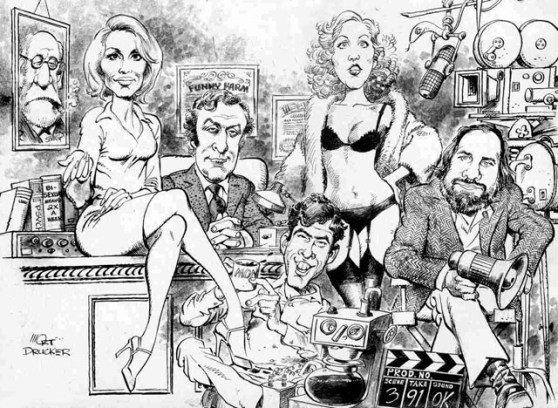
PS—I’ve often discussed—in person and on podcasts—that I experienced so many R-rated movies for the first time via Mad Magazine. I’m delighted I could find the Mort Drucker illustration for his skewering of Dressed to Kill.
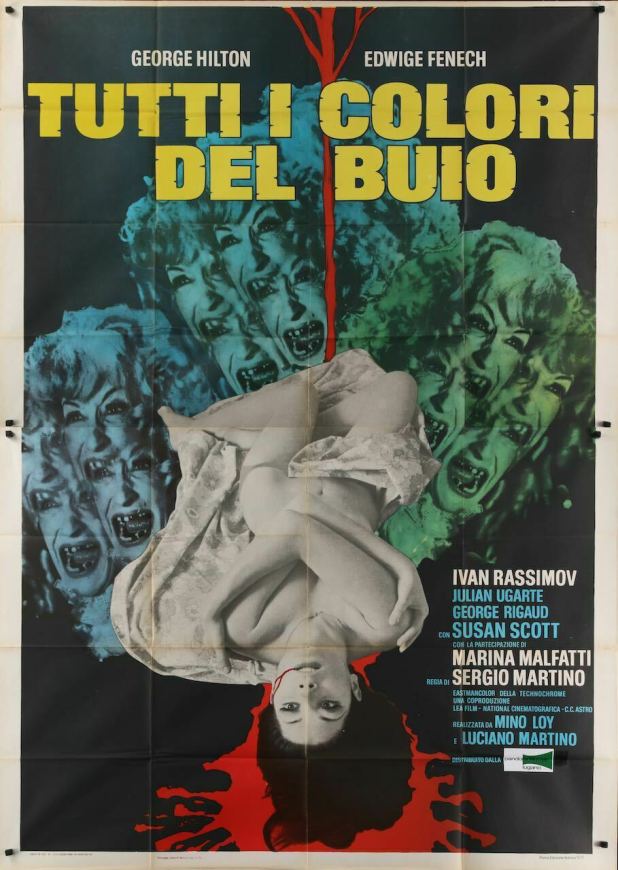
Cinematic Void January Giallo 2023: All the Colors of the Dark (1972)

EDITOR’S NOTE: Cinematic Void will be playing this Giallo classic Monday, January 3 at 7:00 PM at the Music Box Theater in Chicago. You can get tickets here. For more information, visit Cinematic Void.

The first five and a half minutes of 1972’s All the Colors of the Dark (also known as Day of the Maniac and They’re Coming to Get You!) subvert what I call Giallo’s “graphic beauty” in intriguing ways.

An outdoor scene of a stream slowly darkens, replaced by an old crone with blackened teeth, dressed as a child and a dead pregnant woman are both made up to be anything but the gorgeous creatures we’ve come to expect from these films; even star Edwige Fenech (The Strange Vice of Mrs. Wardh, Five Dolls for an August Moon and so many more that I could go on and on about) isn’t presented in her usual role of a sex symbol. She’s covered in gore, eyes open and lifeless. As the camera zooms around the room and begins to spin, we see a road superimposed and hear a car crash. Even when Edwige’s character in this film, Jane Harrison, wakes up to shower, we’re not presented with the voyeuristic spoils that one expects from Giallo’s potent stew of the fantastique and the deadly. She stands fully clothed, the water more a caustic break with the dream world than an attempt at seducing the viewer or cleaning herself.

Again — in a genre where words possess little to no meaning — we are forced to wait five and a half minutes until the first dialogue. Richard (George Hilton, Blade of the Ripper), her husband, bemoans that he must leave but feels that he can’t. His therapy is a glass of blue pills and lovemaking that we watch from above; his penetration of her intercut with violent imagery of a knife entering flesh.  Instead of the thrill we expect from this coupling, we only sense her distance from the proceedings.

As Richard leaves her behind, we get the idea of the madness within their apartment: a woman makes out on the sidewalk with a young hippy man who asks when he’ll ever see her again. Mary (Marina Malfatti, The Night Evelyn Came Out of Her Grave, The Red Queen Kills Seven Times), a mysterious blonde, glares down at him, somewhat knowingly. His wife looks lost and trapped. Without dialogue, we’ve already sensed that some Satanic conspiracy is afoot. Echoes of Rosemary’s Baby? Sure, but you could say that about every occult-themed 1970s film — the influence is too potent, a tannis root that has infected all of its progeny.

Last year, a car crash took the life of Jane’s unborn child. Her sister Barbara (Nieves Navarro, Death Walks at Midnight, Emanuelle and the Last Cannibals) has advised therapy, which Richard laughs at. As Jane waits to see the doctor, she sees a man with the bluest eyes (Ivan Rassimov from Planet of the Vampires and Django in Don’t Wait, Django…Shoot!) — eyes we’ve seen before, eyes that hint at blood and murder and madness.

Even when surrounded by people, such as on the subway, Jane is lost in her thoughts and in another world, one of inky blackness and isolation punctuated only by the cool blue eyes of the sinister man who tracks her everywhere she goes. Even the teeming masses of the city make her feel more lost; only the light of the above-ground world erases the nightmare of her stalker. That is — until he finds her in the park, where she screams for him to stop following her. The camera is detached, following her from high above, watching her run away, needing the refuge of her home. Even then, the man is still there, banging on the door, demanding to be part of her reality.

The thing is — Richard has no faith in his wife’s sanity. And even when he’s telling her sister, Barbara, how he doesn’t trust psychiatry, he’s also watching her undress in a mirror. This scene really hints that they’ve had sex in the past (perhaps the past was just five minutes ago).

Jane finally finds a kindred soul—her neighbor, Mary, whom we saw earlier in the windows. Mary tells Jane of the Sabbath, the black mass and how it helped her. She sees Jane as a lost soul who needs to be saved and agrees to take her to her church.

The blue-eyed man returns, chasing Jane past a spiraling staircase, ax in hand. The camera spins, making us dizzy as it cuts from the building to the man to Jane’s car to the man. Jane demands to be allowed to go to the Sabbath as she fears the madness that seems ready to overtake her.

As we approach the old mansion where the rite will occur, we feel more of a sense of belonging, a warmer color palette instead of the washed-out nature of the urban sprawl we’ve experienced until now. Everything is lit by a candle. Mary appears to have achieved a glow, and Jane stands in stark contrast to the beatific zombies of the assembled congregation. A taloned priest murders a dog in front of Jane’s eyes as Mary caresses her (trust me, this isn’t a Fulci realistic dog murder, although I hid my mutt Angelo’s eyes for this scene). The priest tells her that if she drinks the blood, she will be free. Hands and lips and bodies overtake her as an orgy breaks out, a bacchanal that she seems to want none of. This sex is presented as horror, as anything but pleasure, yet Jane seems ill-equipped to resist.

Immediately, we see her enjoying her husband, no longer frigid and everything back to normal, as he says. However, Jane tells her that she doesn’t feel real any longer. She walks to the bathroom, seeing multiple reflections of herself that harken back to the kaleidoscope effect we saw as the priest took her to the altar.

No matter what peace, love, and sex happen, Jane can’t escape the blue-eyed man. Even on a romantic lunch date with her husband, he’s there, outside, waiting for her. A taxi drives her back to her home, the only sanctuary against the invasion that the man presents. As she goes through her husband’s effects, she finds a book of the supernatural emblazoned with a pentagram. He claims it’s just a second-hand book and accuses her of hiding things from him.

Jane returns to the Satanic church, this time willing to give herself over and actually seeming to enjoy lovemaking for the first time in this film. Mary intones, “Now you’ll be free.” Again, the long-fingernail priest takes her while the blue-eyed man watches her, his hands covered in blood. The members of the church dance around her as Mary calls to her. The priest tells her that Mary no longer exists. She is free to go, as she brought Jane to the church. The final act is for Jane to murder her, to send her away. Jane screams that she can’t do it, but Mary tells her that they must part, that this act will free her, as she lowers herself onto the dagger that Jane clutches.

Jane awakens, fully clothed, in a field. The blue-eyed man is there, telling her, “Now you are one of us, Jane. It’s impossible to renounce us.” He offers his hand, telling her to follow him. She’s expected. He takes her to an altar that is the same design as the pendant we just saw her wear during the orgy. She demands to know where Mary is, but the only answer she gets is that she belongs to the cult and will now be protected. Mary is gone, and Jane’s sacrifice allows her to be free. They show her Mary’s body, covered in black lace, as she runs screaming.

Perhaps in retaliation for the ritual, dogs chase her through the woods, tearing at her, stopped only by the blue-eyed man who knocks her out. She awakens, clad in virginal white, surrounded by white sheets. Her husband leaves a note in lipstick on her mirror. She looks, and the symbol is on her arm, which is covered in blood. When she goes to Mary’s apartment, an old woman lives there instead.

Jane is totally lost — the ritual has brought her nothing but more madness and the blue-eyed man even closer. Her husband is away on business, her sister is on vacation, and her therapist is dismissive. Even her apartment walls, which offer security, have become a maze of fear. The colors shift to Bava-esque hues of blackness and reds as we see the blue-eyed man attack her over and over again, with constant repetition of the frame as she screams — and then there’s no one there, just the room filled with red and a broken piece of pottery embedded in her hand.

After examining Jane, the doctor leaves her with an elderly couple. Her husband can’t find her and asks Barbara to help.

Jane awakens in a white room — of course, the blue-eyed man is waiting outside the house in the gauzy early morning hours. Yet there is an ominousness about the proceedings — no one is there. A tea kettle is boiling on the stove while the old man and woman sit there, in still repose, dead at the breakfast table. She’s trapped in the room with them as she frantically calls for help. She tells her doctor that the man is there and has killed everyone. He calmly tells Richard and Barbara that he has another patient to deal with, as he doesn’t trust Richard and wants to keep him in the dark. However, he does reveal the truth to Barbara. That lack of trust goes both ways as Richard follows the doctor.

Meanwhile, the blue-eyed man finds Jane, telling her she cannot renounce them. He tells her that the knife that he holds killed her mother when she tried to deny them. And it’s the same knife that killed married. He tells her she is beyond reality and will never find it again.

Following the sound of a hound, she finds the doctor’s car in the driveway — and, of course, he’s dead, too. The blue-eyed man gives chase and finally tries to kill her, but he’s stopped at the last minute by Richard, who stabs him with a rake. He stomps on the man’s hand repeatedly, revealing the tattoo symbol he stares at.

Meanwhile, Mary arrives home to a green-hued apartment, where Richard is smoking and accusing her of being part of black magic. He sees the symbol when he watches her undress, and she tells him that she wants him, that she can make him forget her sister. She promises him untold power and that he can become anyone he wants. As she leans in for a kiss, he shoots her, tossing the envelope of a letter that he received that explains it all.

Cut to a hazy white room where Jane has been given a sedative. An inspector — the priest from the cult! — demands to see her. Richard arrives and embraces her, telling her he will take her out the main door. They speed away in a car and return to their apartment. But all is not well — Richard is killed by an unseen person, and Jane is left holding the dagger. The police that arrest her all have the symbol on their wrists and are led by the leader. The camerawork becomes tighter and claustrophobic as we see the cult descending on her.

Wait — it’s all a Wizard of Oz dream, with the police and her husband at her bedside, explaining the film’s entire plot, which ends up even more ridiculous than everything that we’ve seen up until now (which is really saying something). Turns out there was no real magic. The cult was just a drug ring. Mary was real and just a heroin addict. Her sister was behind it all because she wanted all of the money from the will of their mother’s murderer, who wanted to give 600,000 pounds to both of them.

Jane rejects this reality, saying that this cannot be true after all that she’s seen. The cop replies that he kept trying to call her, and she never answered, so he wrote it all in a letter — the letter that Richard showed Barbara after he shot her. It’s worth noting that the American version of the film ends with Jane being killed by the cult and all of the ending — nearly six minutes worth of important story and denouement — exorcised.

We return to where we were, with Richard going upstairs — just like we’ve seen before. Jane screams that she knows what will happen. The cult leader attacks him, blaming her for Barbara’s death. Richard follows him to the roof, where they fight, and the priest is thrown from the roof. Jane tells Richard that she knew the man was there; she knew that her husband had killed her sister, that it wasn’t a suicide, and that some strange force was guiding her. She asks for help, and the credits roll.

With this film, director Sergio Martino (Torso, 2019: After the Fall of New York) crafted an intriguing blend of the supernatural and the Giallo. Even the procedural elements come only after the film has descended into surrealism as if a cold glass of water splashed in the face of a viewer who needs an explanation. Magic is madness, and we can’t even trust our heroine at the end when she begs to escape the power inside her.

This film is terrific, with Edwige Fenech turning in a strong performance. You really feel the isolation and madness that surround her and empathize with her. The strong visuals and the break from the genre conventions of masked killers, gloved hands and inept police make watching this film an absolute joy. From beginning to end, it makes you question not only the reality that it presents but also the objective trustworthiness of our heroine. And while it betrays an obvious inspiration to the aforementioned Rosemary’s Baby, it is not slavish in its devotion, making a powerful statement on its own merit.

Here’s a cocktail recipe.

They’re Coming to Get You

  • 1.5 oz. J&B
  • .5 oz. lemon juice
  • .5 oz. simple syrup
  • 1 egg white
  • 3 dashes Angostura bitters
  1. Shake all ingredients in a cocktail shaker filled with ice.
  2. Strain into a glass and enjoy.