What’s On Shudder: January 2023

As we start a new year, Shudder is here with an entire month of films and series. Plans start at under $5 a month and you can get the first week free when you visit Shudder.

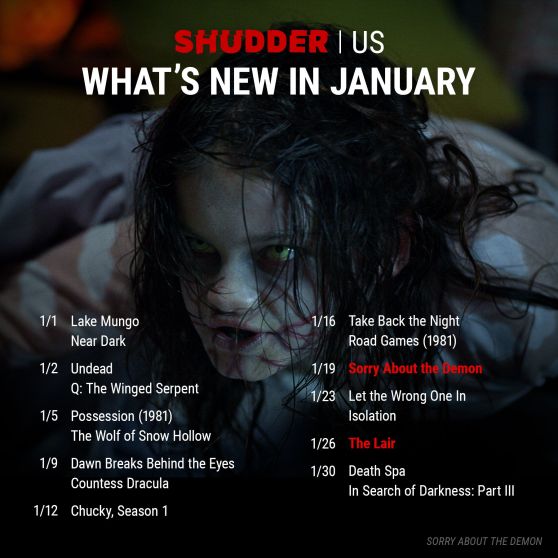
Click on any of the links to see an in-depth article on the movie.

January 1: Lake Mungo, a film I’ve wanted to see for some time debuts, as does vampire classic Near Dark.

January 2: Australian shocker Undead and Larry Cohen’s Q: The Winged Serpent come to Shudder.

January 5: The Wolf of Snow Hollow shows up, as does Possession and now you have no excuse to not see it.

January 9: Dawn Breaks Behind the Eyes is awesome! Plus, see Countess Dracula and fall in love with Ingrid Pitt.

January 12: The first season of Chucky is now on the streaming horror service.

January 16: Take Back the Night is a challenging film and pairs well with Road Games.

January 19: Shudder original Sorry About the Demon starts.

January 23: Let the Wrong One In and Isolation.

January 26: Shudder original The Lair debuts.

January 30: Talking heads discuss horror during In Search of Darkness 3 and look out! Death Spa is on Shudder!

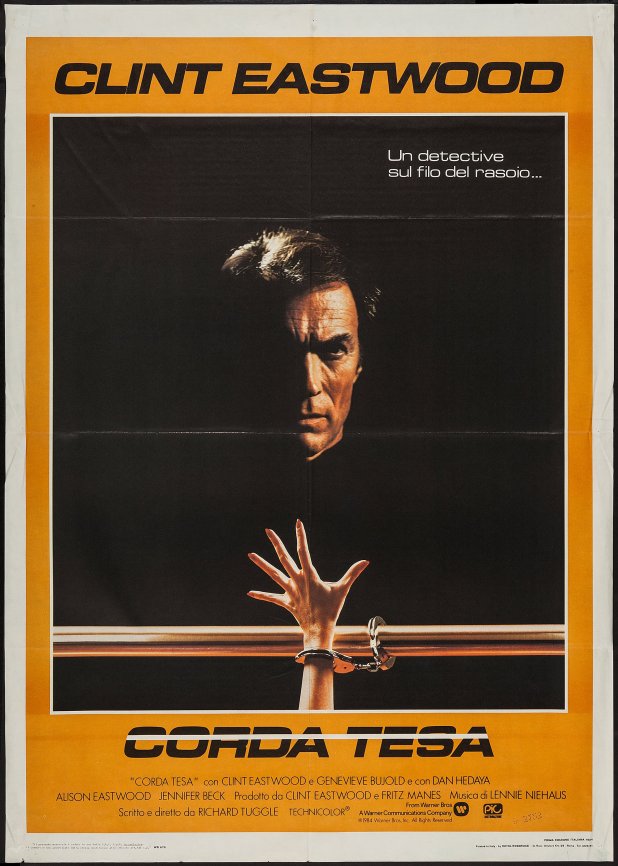
Cinematic Void January Giallo 2023: Tightrope (1984)

EDITOR’S NOTE: Cinematic Void will be playing this movie on Tuesday, Jan. 24 at 7:00 PM at the Music Box Theatre in Chicago, IL in 35mm with CV’s Jim Branscome in person (tickets here). For more information, visit Cinematic Void.

Directed and written by Richard Tuggle (who also wrote Escape from Alcatraz), this film is described by Wikipedia as a “neo-noir psychological mystery slasher crime thriller film,” but come one.

This is a giallo.

New Orleans police detective Wes Block (Eastwood) is the kind of guy who will take in stray dogs and raise his daughters instead of his estranged wife but also has a drinking problem, skips taking his daughters to a Saints game because he’s obsessed with work and has no problem being seduced by a sex worker while investigating his next case in which ladies of the night are being killed by someone that leaves behind a ton of forensic evidence and also wears Kabuki-like masks.

Actually, Block has no problem sleeping with a lot of these women as he interviews them and of course, one of the women he does have sex with ends up dead in a hot tub. He’s also getting close to a rape counselor played by Beryl Thibodeaux (Geneviève Bujold, Coma).

Want more giallo evidence? The killer sends notes to Block via dolls which direct him to a dungeon where a dominatrix tells him that an unknown man has hired her to be whipped by him and then he’s to go to a gay bar and have sex with a man. Yeah, Clint went into some dark territory so unlike himself here.

Block also left behind a necktie, which is left at a crime scene, and even when he tries to take Beryl on a nice date with his family, the killer is hiding close by. The crime — and the alcoholism and the trauma and who knows what else — leave our hero unable to rise to the occasion and make love to his new girlfriend later that night. He soon has a dream where he’s dressed as the killer and murdering her.

That killer isn’t waiting to be caught. He breaks into Block’s home, kills his nanny and several dogs, then attempts to kidnap his daughter Amanda (Alison Eastwood). He also nearly kills the detective, who is saved at the last minute by one of his dogs. And he’s not done yet.

With a great performance by Dan Hedaya as Det. Joe Molinari and Eastwood pretty much taking over the film to direct it when Tuggle was too slow for him. He also had already gotten angry at the director for not wearing underwear in the muggy New Orleans heat and was angry when Tuggle’s tackle was sticking out of his shorts one day.

So yeah. It’s a giallo. The main character is conflicted by the world that he finds himself in, a hero who may not be one, in a red-tinted world filled with easy sex and even simpler death. Variety said that this movie “trades extensively on the theme of guilt transference from killer to presumed hero which for so long was the special domain of Sir Alfred Hitchcock,” or you know, Argento. Or Martino. Or Lenzi.

If you want any more evidence, the Italian poster for this movie is yellow.

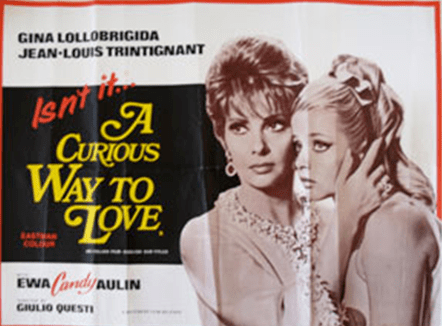
Cinematic Void January Giallo 2023: Death Laid an Egg (1968)

EDITOR’S NOTE: Cinematic Void will be playing this film on Monday, Jan. 23 at 7:00 PM PT at the Los Feliz 3 in Los Angeles (tickets here). For more information, visit Cinematic Void.

Let me put it out there right now: This movie is completely insane.

Let me see if I can summarize it.

A high tech chicken farm is trying to create birds that have no heads or bones. A love triangle develops between the three people who run it: Anna (international sex symbol and the photojournalist who was one of the first to interview Fidel Castro, Gina Lollobrigida), her prostitute killing husband Marco and their secretary Gabriella (Ewa Aulin, the near goddess who appeared in films like Candy and Death Smiles on a Murderer).

Yes. Headless and boneless chickens, all inside a fashionable proto giallo filled with sex and murder. You better believe I’m all over this movie.

Director Giulio Questi was also behind Django Kill… If You Live, Shoot! and Arcana. I’ve seen this movie explained as a “socio-politically sophisticated avant-garde giallo,” which is pretty much the best way I can think of telling you what it’s all about. It’s also around 40 years ahead of its time yet blissfully stuck in 1968.

Despite being Anna’s cousin, Gabri hooks up with her husband and they debate running away together. However, Gabri is already married to Mondaini and their plan is to kill Anna and frame  Marco. There’s also the issue of Anna wanting to have something special and strange with Marco, which instead of being a child, ends up being these Eraserhead-ish chicken balls that scream and bleed worms when he kills them.

When Marco discovers his wife’s body in a hotel room, he cleans the scene up and brings her body to the farm to turn it into chicken feed. That’s when we learn his big secret: he doesn’t really kill prostitutes, but instead role plays the murder and sends them away with plenty of cash. But then, as he tries to feed his wife into the machine, he falls in just as the police arrive to catch him disposing of the body. Gabri and Mondaini are eventually caught as we watch the chickens chow down on human food. Nothing good is gonna come out of that. I mean, poultry that feeds on human flesh seems like way worse than any steroids or hormones.

I’ve never seen a movie that straddles being an art film, a drug film, a murder mystery story and science fiction examination of man trying to change nature along with psychedelic film techniques and non-linear editing techniques. It’s also a satire of the highest order. I have no idea why people aren’t constantly discussing this movie and I’m going to do my best to drive people nuts talking about it over and over again.

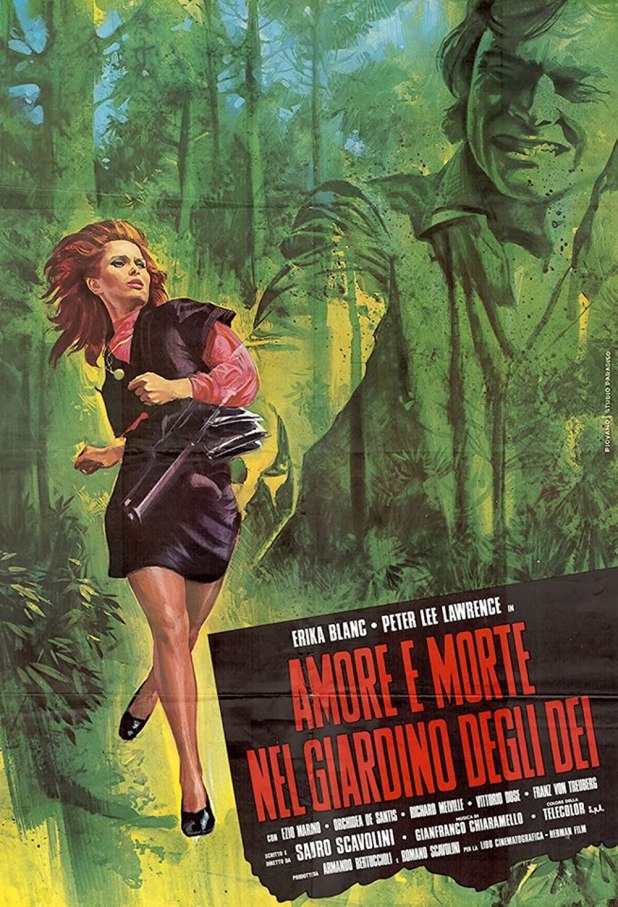
Love and Death in the Garden of the Gods (1972)

There’s a scene in this movie where Erika Blanc walks down some steps wearing a white coat and I swear that if I hadn’t already been through puberty, I had my second one. I try to be above such things when I write of giallo (and gothic horror and women in prison and nunsploitation and Jess Franco and man, maybe I am scum) but I think I now believe in some form in Divine Spark and I will argue it with you at will.

Anyways, director Sauro Scavolini didn’t direct many other movies, but he did write All the Colors of the DarkYour Vice Is a Locked Room and Only I Have the Key and American Tiger amongst many others. He also wrote this along with Anna Maria Gelli.

When a professor moves into a new home, he finds a mess of tape in the woods. When he cleans it, he finds himself drawn into the life — and death — of Azzurra (Blanc), just married to Timothy (Rosario Borelli) but in love with her brother Manfredi (Peter Lee Lawrence) and on a one-way ticket to suicide.

It may seem like the only nod to giallo is that the old man teaches ornithology and is only at the house to try to study a rare bird. It’s more a journey backward through the tape, as we see the many tragedies that led to greater tragedy. After she slices her wrists — nude in the bathtub so you don’t forget that this is a giallo — she’s saved by her brother’s supernaturally gorgeous new lover Viola (Orchidea de Santis, Seven Murders for Scotland Yard) and then falls for her and vice versa.

It also looks gorgeous, with cinematography by Romano Scavolini, Sauro’s brother and the man that would one day make Nightmare In a Damaged Brain. Somehow, a garden fried chicken party becomes a psychedelic freakout and even Blanc simply walking takes on a dreamlike tone.

Some people find this one too strange and too talky and not much happens but look, there are plenty of giallo that have actual killers and stalking and you can go watch those. If you want to be challenged, this one is ready.

You can watch this on YouTube.

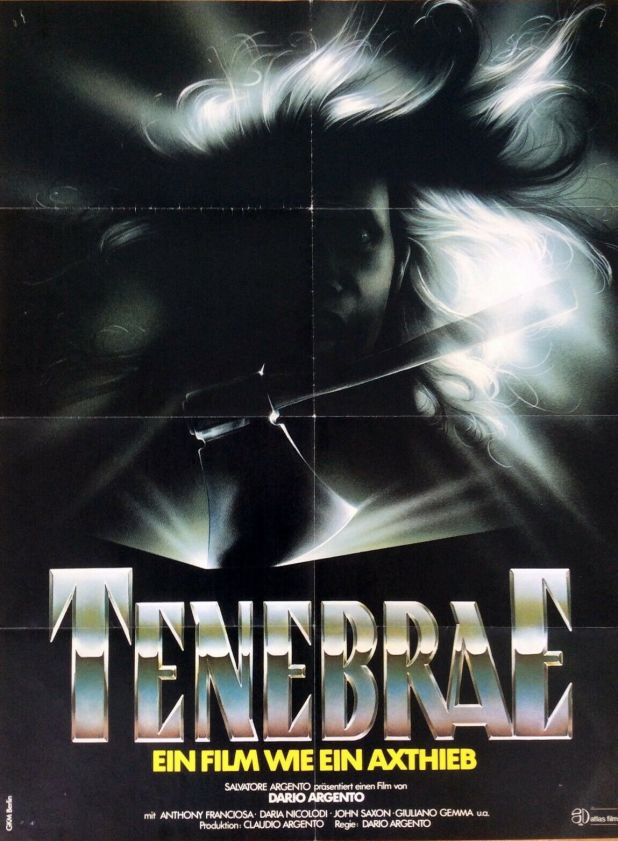
Cinematic Void January Giallo 2023: Tenebre (1982)

EDITOR’S NOTE: Cinematic Void will be playing one of my favorites — it’s really the last word in giallo in my opinion — on Saturday, Jan. 21, 2023 at midnight at The Belcourt Theatre in Nashville, TN (tickets here) and Saturday, Jan. 27 at midnight at the Coolidge Corner Theatre in  Brookline, MA (tickets here). For more information, visit Cinematic Void.

By 1982, Dario Argento had moved beyond the constraints of the giallo genre he had helped popularize and started to explore the supernatural with Suspiria and Inferno. According to the documentary Yellow Fever: The Rise and Fall of the Giallo (which is on the Synapse blu ray of this film), the failure of Inferno led to Argento being kindly asked — or demanded — by his producer to return to the giallo with his next film.

Tenebre is the result and while on the surface it appears to be a return to form, the truth is that it’s perhaps one of the most multilayered and complicated films I’ve ever seen. And while I’ve always believed that Phenomena is Argento’s strangest film — a girl who can talk to bugs befriends a monkey to battle a cannibal child in a foreign country — I have learned that Tenebre just might be even stranger.

To start, Argento intended for the film to be almost science fiction, taking place five years after a cataclysmic event, in a world where there are less fewer people and as a result, cities are less crowded and the survivors are richer. Argento claims that if you watch Tenebre with this in mind, it’s very apparent. While he only hinted that the survivors wanted to forget some mystery event, in later interviews he claims that it takes place in an imaginary city where the people left behind try to forget a nuclear war.

In truth, this could be an attempt to explain why Argento decided to show an Italy that he never had in his films before. Whereas in the past he spent so much time showing the landmarks and crowded streets that make up The Eternal City, he would now move into a sleek futuristic look, a Rome that exists but that films had never shown its viewers before. This pushes this film away from past Argento giallo such as his animal trilogy and Deep Red, as well as the waves of imitators that he felt undermined and cheapened his work. There is no travelogue b-roll time wasters in this movie — the actual setting is there for a reason; stark, cold and alienating.

Argento had started that he “dreamed an imaginary city in which the most amazing things happen,” so he turned to the EUR district of Rome, which was created for the 1942 World’s Fair, and intended by  Mussolini to celebrate two decades of fascism. Therefore, more than showing a Rome that most filmgoers have never seen, he is showing us a Rome that never was or will be; a world where so many have died, yet fascism never succumbed.

Instead of the neon color palette that he’s established in Suspiria or the Bava-influenced blues and reds that lesser lights would use in their giallo, production designer Giuseppe Bassan and Argento invented a clean, cool look; the houses and apartments look sparse and bleached out. When the blood begins to flow — and it does, perhaps more than in any film he’d create before or since — the crimson makes that endless whiteness look even bleaker.

Tenebre may mean darkness or shadows in Latin, but Argento pushed for the film to be as bright as possible, without the shadowplay that made up much of his past work. In fact, unlike other giallo, much of the plot takes place in the daytime and one murder even takes place in broad daylight.

Again, I feel that this movie is one made of frustration. As Argento tried to escape the giallo box that he himself had made, he found himself pulled back into it in an attempt to have a success at the box office. In this, he finds himself split in two, the division between art and commerce.

As a result, the film is packed with duality. There are two killers: one who we know everything about and is initially heroic; another who we learn almost nothing about other than they are an evil killer. Plus, nearly everyone in this film has a mirror character and soon even everyday objects like phone booths and incidents like car crashes begin happening in pairs.

Peter Neal (Anthony Franciosa, Julie Darling) is set up from the beginning of the film as the traditional giallo hero: he is in a foreign place, deaths are happening all around him and he may be the inspiration or reason why they’re happening. He has more than one double in this film, but for most of it, his doppelganger is Detective Giermani. The policeman is a writer himself and a fan of Neal’s work, claiming that he can never figure out who the killer is in his books. Their cat and mouse game seems to set up a final battle; that finale is quick and brutal.

This conversation between the two men sums up the linguistic battle they engage in throughout the film:

Peter Neal: I’ve been charged, I’ve tried building a plot the same way you have. I’ve tried to figure it out; but, I just have this hunch that something is missing, a tiny piece of the jigsaw. Somebody who should be dead is alive, or somebody who should be alive is already dead.

Detective Germani: Explain that.

Peter Neal: You know, there’s a sentence in a Conan Doyle book, “When you have eliminated the impossible, whatever remains, however improbable, must be the truth.”

This last sentence is of great interest to me when it comes to giallo. Normally, these films are not based upon Sir Arthur Conan Doyle, but instead, use Edgar Wallace as a touchpoint. They are also filled with red herrings and nonsensical endings where the impossible and improbable often becomes the final answer to the mystery.

Even the movie’s plot is split in half and mirrors itself. This next sentence gives away the narrative conceit of the film: the murders are solved in the first half, belonging to Christiano Berti (John Steiner, Shock), a TV critic who interviews Neal. The second murders are all Neal’s, who uses an axe instead of a straight razor, and his crimes are personal crimes of passion that aren’t filled with the sexual aggression of Berti’s; they are quick and to the point. Much of giallo is about long, complicated and ornate murder, as well as trying to identify the killer. As the film goes on, with the main killer revealed and the murders becoming less flashy, it’s as if Argento is commenting on the increasing brutality of the genre he helped midwife.

The movie itself starts with the book Tenebre being burnt in a fireplace with this voiceover: “The impulse had become irresistible. There was only one answer to the fury that tortured him. And so he committed his first act of murder. He had broken the most deep-rooted taboo and found not guilt, not anxiety or fear, but freedom. Any humiliation which stood in his way could be swept aside by the simple act of annihilation: Murder.”

That’s when we meet Neal, an American in Rome, here to promote his latest work of violent horror, Tenebre. This bit of metafiction is but the first bit of a film that fuses the real and fictional worlds. Joined by Anne (Fulci’s wife Daria Nicolodi) and agent Buller (John Saxon!), Neal begins his press tour.

Before he left, Neal’s fiancée Jane vandalized his suitcase. And moments prior to him landing in Rome, a shoplifter (Ania Pieroni, the babysitter from The House by the Cemetery) who stole his book has been murdered by a straight razor, with pages from said book — again, Tenebre — stuffed into her mouth. Neal has received an anonymous letter proclaiming that he did the murder to cleanse the world of perversion.

Throughout the film, we see flashbacks of a man being tormented, such as a woman chasing down a young man and forcing him to fellate her high heel while other men hold him down. Later, we see the stereotypical giallo black gloved POV sequence of her being stabbed to death.

Next, one of Neal’s friends, Tilde and her lover Marion are stalked and killed. This sequence nearly breaks the film because nothing can truly see to follow it. In fact, the distributor begged Argento to cut the shot down because it was meaningless, but the director demanded that it remain. Using a Louma crane, the camera darts over and above the couple’s home in a several-minutes-long tracking shot. Any other director would film these murders with quick cuts between the victim and listener in the other room or perhaps employ a split-screen. Not Argento, who continually sends his camera spiraling into the night sky, high above Rome, across a maze of scaffolding; a shot that took three days to capture and lasts but two and a half minutes. In one endless take, the camera goes from rooftop to window, making a fortress of a home seem simple to break into; it’s as if Argento wanted to push the Steadicam open of Halloween to the most ridiculous of directorial masturbation. It’s quite simply breathtaking.

Maria, the daughter of Neal’s landlord, who is presented to us as a pure woman (much of giallo, to use Argento’s own words in Yellow Fever: The Rise and Fall of the Giallo, is split between the good girl and the bad woman), is killed when she discovers the killer’s lair. Neal mentions that Berti, the TV personality, seemed obsessed with him and his words echoed the letters from the killer. As Neal has now become the giallo hero, he must do his own investigation, taking his assistant Gianni (Christian Borromeo, Murder Rock) to spy on the man. They discover him burning photos that prove he is the killer.

As Gianni watches, Berti says, “I killed them all!” before an axe crashes into his skull. Whomever the second murderer is, the young man can’t recall. He finds his boss, Neal, knocked out on the front yard and they escape.

That night, Neal and Anne make love, the first time this has ever happened between the two. And the next morning, Neal leaves his agent’s office and discovers his fiancée Jane is secretly sleeping with someone he once considered his best friend.

Giermani asks Neal to visit Berti’s apartment, where they find that the dead man was obsessed with the writer, but don’t discover any of the burnt evidence. The idea that someone could become so obsessed with your work that they’d kill comes directly from Argento’s life. In Los Angeles in the wake of Suspiria‘s surprising international success, an obsessed fan called Argento’s room again and again. While those calls started off nicely enough, by the end, the fan began explaining how he wanted “to harm Argento in a way that reflected how much the director’s work had affected him” and that in the same way that the director had ruined his life, he wanted to ruin his. Argento hid out in Santa Monica, but the caller found him, so he finally went back to Italy. He claimed that the incident was “symptomatic of that city of broken dreams.”

Back to the real story — or the movie story — at hand: Neal decides to leave Rome. Jane receives a pair of red shoes, like the ones we’ve seen in the flashbacks. Bullmer is waiting for Jane in public before he is murdered in broad daylight. And then Neal’s plane leaves for Paris.

Gianni, however, is haunted by the fact that he can’t remember the crime. He returns to Berti’s apartment and it all comes flooding back to him. This moment of visual blindness — and eventually recovery — suggests that Gianni will be pivotal in the resolution of the film and become a hero; ala Sam in The Bird with the Crystal Plumage or Marcus in Deep Red. Not so in the world of Tenebre, as he’s killed within moments.

Argento’s callbacks to his past films are not complete — Jane enters her apartment and walks past a sculpture, again directly and visually recalling The Bird with the Crystal Plumage. She’s called Anne and has a gun, so one assumes that she now knows that she’s not the only unfaithful one in her relationship. An axe shatters the scene and the window as Jane’s arm sprays blood everywhere, almost like some demented surrealist painting. This scene was the cause of numerous cuts with Italian censors and the uncut version still packs plenty of punch.

A quick note — for a movie where Argento was supposedly answering his critics that his work had become too violent and anti-female — the fact that he answers them with an inversion of even more gore and dead women is either the most metacomment of all time or he truly does not give a fuck.

Inspector Altieri enters and is also killed, revealing Neal as the murderer. Anne and Giermani arrive, just in time for Neal to testify to killing Berti and everyone afterward before he slits his own throat.

The flashbacks return and we realize they were Neal’s. While Argento never outright shows it in the film, the girl in the flashbacks was played by transgender actress Eva Robin’s (who got her name from Eva Kant from Danger: Diabolik and the author Harold Robbins), so this further adds to the mirrored theme, as one of Neal’s foremost sexual experiences was not just one of humiliation, but of sublimation and even the greatest heterosexual male fear, penetration. That repressed memory of his childhood sexual trauma and revenge, for some reason unlocked, restoked the bloodlust that he had kept in check for years.

As the detective returns inside, we’re gifted with one of Argento’s most arresting pieces of imagery: as Giermani studies the murder scene, his body contains the shape of Neal, who had faked his death. As he looks down and moves out of frame, the killer is revealed. In essence, the inverse doppelganger is revealed. Brian DePalma, a director who trods the same psychosexual violent domain as Argento, used –stole? — a similar shot in his 1992 film, Raising Cain.

Neal waits for Anne to return. When she opens the door, she knocks over the metal sculpture that referenced Argento’s past work and the sculpture impales the killer. This sequence was copied nearly shot for shot in Kenneth Branagh’s Dead Again, a movie just as influenced by Argento’s work, but also one that would receive much more critical praise.

Surrounded by unending horror, Anne simply screams into the rain, unable to stop. This is another meta moment that we can view on multiple levels:

A. Her character is reacting to the hopelessness of the film’s climax in the only way she has left.

B. Nicolodi, like the other Italians in the film, had little to no character to work with. Frustrated, she bonded with lead actor Franciosa over Tennessee Williams plays, leading to her husband Argento growing increasingly jealous as filming progressed (the couple would split three years later). Therefore, her screams are a genuine reaction to the hopelessness she was feeling for real and took the entire crew by surprise.

C. Asia Argento, the daughter of Dario and Nicolodi, has stated that this scene and her mother’s commitment to it, would prove to her that she should be an actress. As she matures in age, it’s notable that Argento’s films make a shift toward female protagonists (and even Asia in that lead role in his movies TraumaThe Stendhal SyndromeThe Phantom of the Opera and the final film in the Suspiria Three Mother’s cycle, The Mother of Tears).

I’ve written nearly three thousand words on this film and feel like I could type so many more. It strikes me on so many levels. According to the audio commentary on the Tenebre blu ray by Kim Newman and Alan Jones, one of Argento’s reoccurring theme is that art can kill. You can take this literally — certainly the sculpture at the end ends Neal’s life — or you can see how the darker art gets, the more it impacts the life of its creator (see Fulci’s Cat in the Brain and Craven’s New Nightmare for variations and mediations on this same theme).

Here, the critic Berti’s obsession with the creator Neal’s work compels him to kill in homage to the writer. Is this Argento’s metacommentary that critics — who have never been kind to his work — can only aspire to slavish devotion to his themes and no new creation of their own? That said, the artist isn’t presented as much worthier of a person. He believes that his violent acts of fiction and violent acts of reality are one and the same, all part of the same tapestry of unreality. When he’s finally confronted by what he’s done, all he can do is yell, “It was like a book … a book!”

The second event in Argento’s real life that informs this film comes from a Japanese tourist being shot dead in the lobby of the Beverly Hilton while the director stayed there. Combined with a drive-by shooting that he saw outside a local cinema — which has to feel like a killing outside of a church to a devotee like Argento — the sheer senselessness of murder in America was another reason that Dario left the country.

He would later remark, “To kill for nothing, that is the true horror of today … when that gesture has no meaning whatsoever it’s completely repugnant, and that’s the sort of atmosphere I wanted to put across in Tenebre.”

I can see some of that, but for someone who has presented murder as works of art — perfect preplanned symphonies of mayhem — the stunning realization that real life death is ugly and imperfect must have punched Argento right in the metaphorical face.

Cinematic Void January Giallo 2023: What Have You Done to Solange? (1972)

EDITOR’S NOTE: Cinematic Void will be playing this classic on Saturday, Jan. 21 at midnight at the Coolidge Corner, Theatre in Brookline, MA. For more information, visit Cinematic Void.

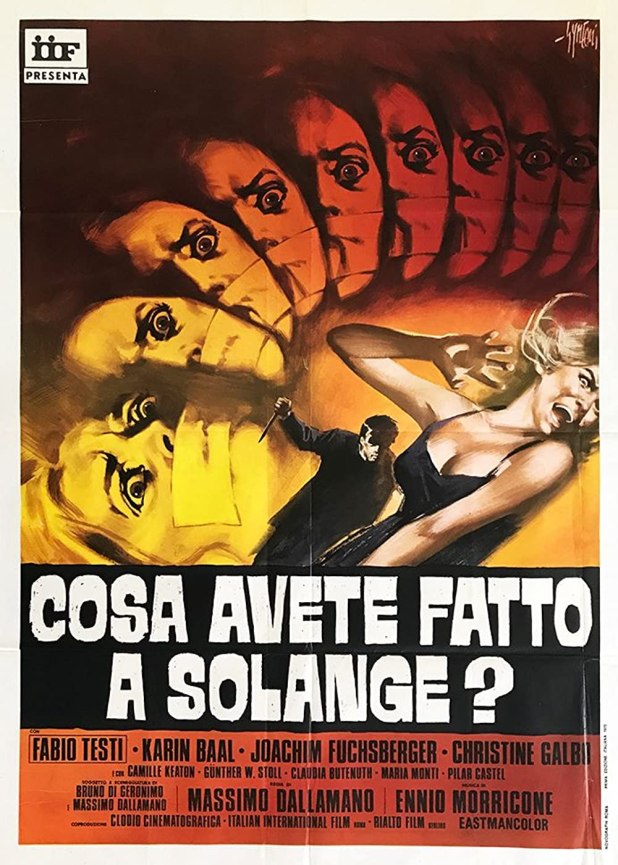
London. The 70’s. Professor of Italian Enrico Rosseni (Fabio Testi, The Four of the Apocalypse) is on his boat, making out with Elizabeth (Cristina Galbó, The Living Dead at Manchester MorgueThe House that Screamed) and trying to get her to go further than she has before. Right when it seems like he’s going to finally conquer her, she looks up to see a woman being stabbed on the shore.

After angrily rowing to the shore, Rosseni and Elizabeth find no evidence of a crime. He accuses her of being too religious, like all the girls at the school her uncle sent her to. The next morning, while he dresses and argues with his wife Helga, he hears about a horrid murder on the banks of the Thames river. He drives to where he and Elizabeth were and finds tons of cops. And there are even more at the school where he works!

The victim was one of Elizabeth’s friends, so she wants to tell the police what they know. However, he doesn’t want the affair exposed. However, his pen has been found near the body and he shows up in the crime scene photographs in the newspaper.

More murders. More clues in Elizabeth’s mind. More priests doing evil things. More anger from Helga. More of Rosseni trying to solve the crime. And all he has is one clue: Who is Solange and what was done to her?

The movie takes a turn when Elizabeth is killed inside the apartment that Rosseni has rented for the two of them to continue their affair. And at that point, Helga starts being much nicer to our hero. As their relationship improves, her makeup grows softer, her clothing gets more fashionable and her hair comes down. How strange to find a giallo about a relationship coming back together as the result of murder!

What happened to Solange (Camille KeatonI Spit on Your Grave)? She was given an abortion that all of the murdered girls were there for. In a kitchen, no less. And all of those girls were involved in doing drugs and dating older men.

So what do the cops do? Oh, just set up a sting operation with all of the surviving girls. And of course, Solange just happens to show up, walking through the park. Here’s the second of course — the cops bungle everything and the killer takes Brenda, asking her the story of Solange, as he did every other victim.

This is one well-put-together film, thanks to Massimo Dallamano, who was the cameraman for Sergio Leone’s A Fistful of Dollars and For a Few Dollars More. Joe D’Amoto was the cinematographer and added plenty to the film. And you can’t deny the power of having an Ennio Morricone score!

This film is an interesting combination of the German krimi film and the Italian giallo and gave way to Dallamono’s Schoolgirls in Peril trilogy, which includes What Have They Done to Your Daughters? and Rings of Fear.

I always love seeing what titles films get released and re-released under. What Have You Done to Solange? has so many, including an attempt to sell it as a teen comedy entitled The Rah-Rah Girls! You can learn more at the amazing Temple of Schlock site. And for an awesome police report of the events of the film, head to The Giallo Files.

So who was the killer? No spoilers here.

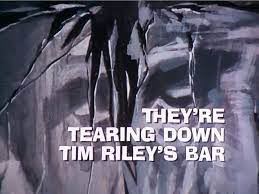
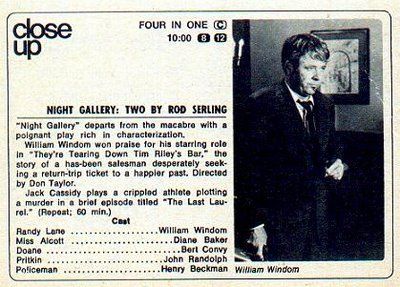
Night Gallery episode 6: They’re Tearing Down Tim Riley’s Bar/The Last Laurel

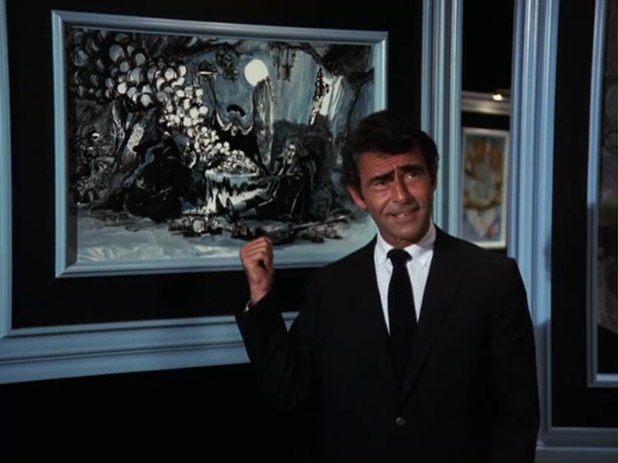
First airing on January 20, 1971, this episode of Night Gallery fully embraces the darkness of the world, as a man grows old and the world changes around him in the first story, one I have gone back to watch again and again.

“They’re Tearing Down Tim Riley’s Bar” is directed by Don Taylor (Damien: Omen IIThe Final CountdownEscape from the Planet of the Apes) and written by host Rod Serling is the story of Randy Lane (William Windom), who returned home from the war, had a party at Riley’s, got married and found a great job in plastics. But that was 25 years ago and now, his wife is dead, the job is a dead end and they’re tearing down Tim Riley’s Bar.

His boss (John Randolph) has forgotten him. His assistant (Bert Convey!) is after his job. The only person who seems to care is his secretary (Diane Baker) but he’s blinded by grief and can’t see it. All he can do is drink himself into oblivion and wander the old places of his life and bear witness to the ghosts of the past, much better spirits than he sees every day.

Not really horror, not even scary, this is one of the best segments of the show and was nominated for an Emmy. The older I get, the more it upsets me, but that’s why when Serling is good, there’s no one better, even if the ending is way too simple.

“The Last Laurel” was directed by Daryl Duke, who would go on to make The Silent Partner and The Thorn Birds. Written by Serling from a story by David Grubb, it suffers by comparison to the first half of this episode. Jack Cassidy plays Marius Davis, a man dying and unable to stop his gorgeous wife Susan (Martine Beswick) from sleeping with the man treating him in his last moments, Doctor Armstrong (Martin E. Brooks). Of course, there’s revenge by astral projection.

This ends the first season of Night Gallery yet it feels like things are just getting started.

What’s your favorite episode?

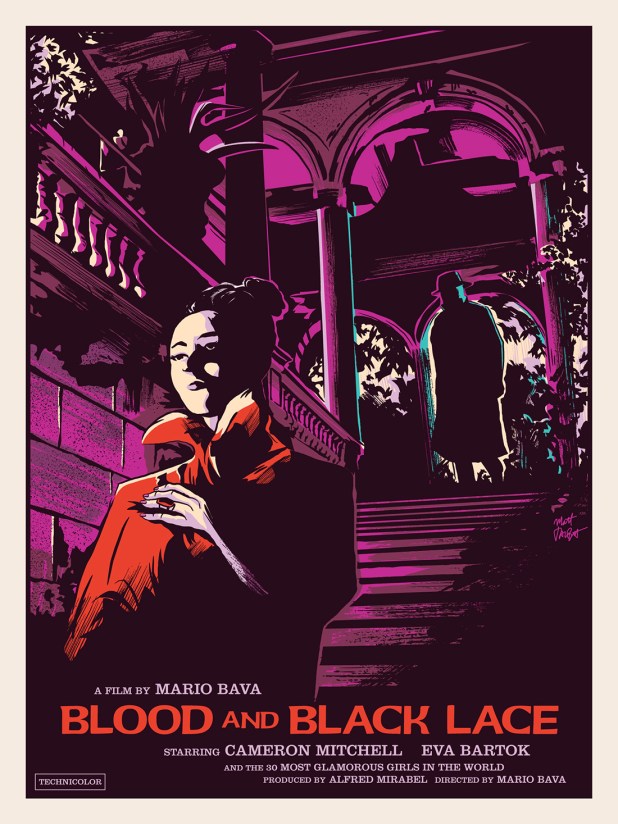
Cinematic Void January Giallo 2023: Blood and Black Lace (1964)

EDITOR’S NOTE: Cinematic Void will be playing the most classic of all giallo on Friday, Jan. 20, at midnight at The Belcourt Theatre in Nashville, TN (tickets here). For more information, visit Cinematic Void.

There’s no way to calculate the influence of Blood and Black Lace. It takes the giallo from where Bava started with The Girl Who Knew Too Much and adds what was missing: high fashion, shocking gore and plenty of sex. The results are dizzying; it’s as if Bava’s move from black and white to color has pushed his camera lens to the brink of insanity.

Isabella is an untouchably gorgeous model, pure perfection on human legs. But that doesn’t save her as she walks through the grounds of the fashion house and is brutally murdered by a killer in a white mask.

Police Inspector Sylvester takes the case and interviews Max Morlan (Cameron Mitchell!), who co-manages the salon with his recently widowed lover, the Countess Christina Como. Soon, our police hero discovers that the fashion house is a den of sin, what with all the corruption, sex, blackmail, drugs and abortions going on under its roof. Isabella was murdered because she had kept a diary of all the infractions against God that happened inside these four walls.

Nicole finds the diary and tells the police she will deliver it, but it’s stolen by Peggy. As she arrives at the antique store her boyfriend Frank owns, the killer appears and kills her with a spiked glove to the face. The killing is shocking. Brutal. And definitely the forerunner to the slasher genre.

Even after the cops arrest everyone in the fashion house, the murders keep on piling up. Peggy claims that she burned the diary, so the killer burns her face until she dies. Greta is smothered to death. And Tilde is killed in the bathtub, then her wrists are slit open, spraying red into the water and marking her as a suicide.

So who is it? Come on. You’re going to have to watch it for yourself.

The success of Black Sunday and Black Sabbath had given Bava the opportunity to do anything he wanted. His producers thought that this movie would be a krimi film along the lines of an Edgar Wallace adaption. Instead, Bava gave more importance to the killings than the detective work, emphasizing sex, violence and horror more than any film in this form had quite before.

Blood and Black Lace was a failure in Italy and only a minor success in West Germany, the home of Edgar Wallace. And in America, AIP passed on the film due to its combination of sex and brutality. Instead, it was released by the Woolner Brothers with a new animated opening.

Today, Blood and Black Lace is seen as a forerunner of body count murder movies and the excesses of later giallo films. To me, it’s a classic film, filled with Bava’s camera wizardry and love of color. It is everything perfect about movies.

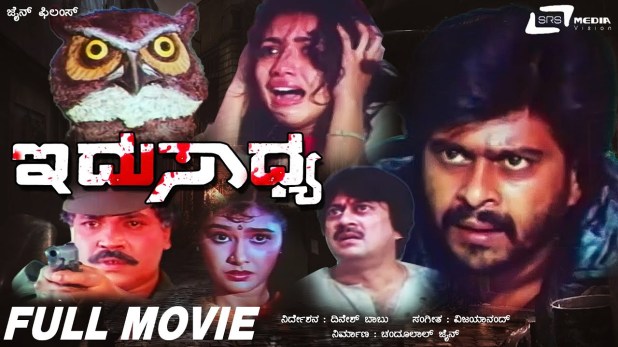
Idu Saadhya (1989)

The title of this movie is This Is Possible and it proves it. It was shot in 48 hours and is, yes, the Indian Kannada remake of Michele Soavi’s Stagefright but has nearly an hour of comedy before becomes a remake of that film, except that the owl-masked killer in this is nearly cute in costume while equally being horrifying while out of it, ranting, spewing blood and sweating himself into a frenzy.

Director and writer Dinesh Baboo is known for films like Amrutha Varshini and Inspector Vikram. This somehow has cops that aren’t as ineffectual as the originals, but that movie sets such a bar for the worst police work in the history of giallo, if not film itself.

This movie also has some deranged music — check it out on YouTube — that somehow mixes an evil voice saying “Beware!” with a swing beat, distorted guitars and a sing-along chorus that shouts “Somewhere!” It also tends to alternate between English and Kannada and has rap parts and drums that had to come from an 808 they found at a swap meet. It’s so good.

In case you ever get down, remember that you live in a world that did not only create Stagefright but also this remix remake ripoff of it and that it’s actually good. I mean, the chainsaw scene makes it in here, even if it’s a budget version, but how wonderful are movies that can cross the borders of ythe world?

You can watch this on YouTube.

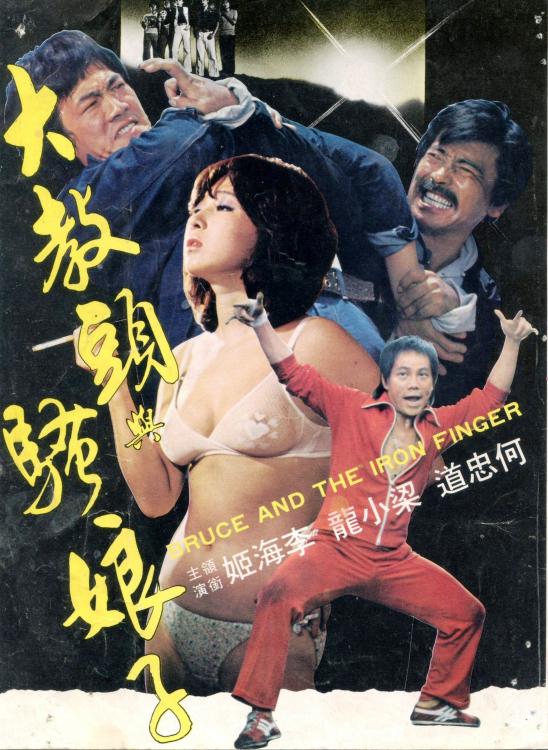
Bruce and the Iron Finger (1979)

Despite being billed so often as Bruce Li as he led the pack of Brucesploitation actors, Ho Chung Tao used his own name for this film. He plays a cop visiting Hong Kong who finds himself in the midst of a case, as a number of martial arts masters have been found dead with two puncture wounds in their necks. This isn’t the work of a vampire, but instead a masked martial arts madman played by Ku Feng that has used his secret skill to turn his entire skin into steel, an act which has robbed him of his ability to make love, so he’s gone even crazier. I mean, he will die if he has sex and screams that at one point.

Ho Chung Tao also fights — and then teams up — with fellow replacement Dragon Bruce Leung. Yet the real joy of this movie is that yes, it is somehow a kung fu giallo set on the grimy streets of 1979 Hong Kong and has a bravura performance by Lee Hoi Gei as Ku Feng’s woman LuLu. She’s obviously unsatisfied by her man, so she keeps cucking him by bringing so many fighters back to their bed, getting them all worked up and then having her man come on in and penetrate them — in the neck — with his iron fingers. Sure, LuLu is also involved in human trafficking and a horrible person, but I was charmed by the fact that she never wears anything in this movie that isn’t see-through and at one point rides a man like a pony around their small apartment and then puts a cigarette out in his mouth.

As if I couldn’t love a movie that unites fake Bruce Lee cinema with giallo, well, this also liberally steals from the soundtrack of Death Wish. Also: this was called Bruce Lee Dominator in Italy, which is incredible.

I guess director To Lo Po has as much right as anyone to make a Bruce Lee ripoff, as he was as assitant director om Enter the Dragon.

You can watch this on Tubi.