John Harrison has had an incredible life in the movies. From performing music for George Romero’s films and TV series to playing performed as Sir Pelinore in Knightriders, then working as the 1st Assistant Director for Creepshow and Day of the Dead — not to mention his stunning turn as the villain of Effects — he has done so much. He’s still doing it, writing and directing episodes of the Shudder series Creepshow. He’s also been a touring and recording musician, worked on several TV series and oh yeah — made two ground-breaking Dune mini-series.
I had the amazing opportunity to speak with John for an extended period. I thank him for his time, his openness and all he’s done not just for film, but to get the spirit of Pittsburgh out into the entertainment world.
Thanks to both Dusty Nelson and Tony Buba for their assistance in setting up this interview.
You can learn even more at his official site.
B&S About Movies: What’s it like to have Effects being more celebrated now and a new 4K release coming from AGFA?
John Harrison: Dusty (Nelson) has been working on it with the guys down there. And I think it’s going to be a great release. It is kind of amazing to both of us. All these years later, it’s coming — you know, it’s been revived several times over the past ten years — but after having basically come out in just a few drive-ins and a few small theaters when it first came out and then falling off the grid for all these years, it feels good.
B&S: There’s also the great After Effects blu ray.
Harrison: I gotta give Michael Felsher a lot of credit. He put it out and he did a terrific job on that. He was very responsible for getting Effects revived. I was doing a signing for some of my scores that I did for Romero at a place called Dark Delicacies in Burbank and a guy came up to me and said, “Hey, whatever happened to Effects? It’s like, a cult treasure, and everybody talks about it, but nobody can find it.”
I gave him the whole story about the film and its distribution and the guy said, I know a guy at Anchor Bay, which happened to be Michael. I met him and he was actually leaving Anchor Bay and he said, “I know Synapse and I’ll bet you they’d love to release your movie.” And they did. And when we put out the DVD, I went and did a bunch of interviews with all of us that were involved in it at the time. I had everybody over to my house that day, including George, Joe Pilato, Dusty, Pat Buba and everybody. We filmed it and then sent all this stuff to Michael and he made that documentary. I think it’s terrific.
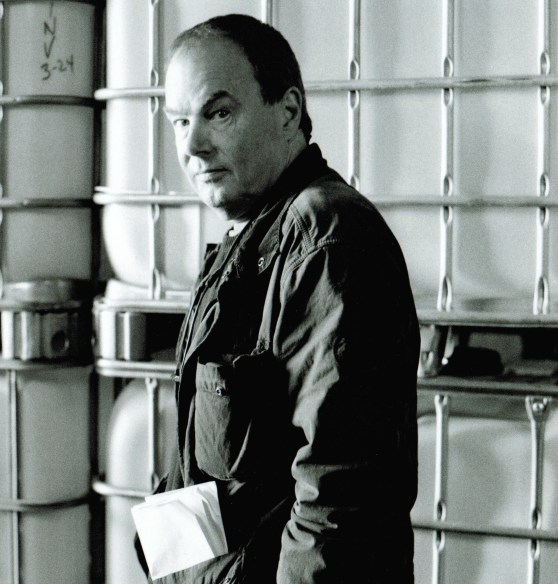
B&S: I’ve bought the DVD, the blu ray, the After Effects blu, so…yeah, I’m ready to upgrade again. (laughs)
Harrison: I’m just glad that a new generation has found our film. You know, we run into people that weren’t even born when we made this movie. I’m just so happy that people are seeing it because we put a lot of time and effort into that thing. It was a great time in our careers, really when we were just getting started. Obviously, there was also our relationship with George and then deciding to strike out on our own. It was a special time. We didn’t have any money. All we had was energy.
B&S: Yet sometimes, those days are more memorable than when you do have money and been doing this for some time.
Harrison: It was a great time. Everybody that was trying to do it. And so everybody was really supportive of everybody else, working on each other’s films, going to see them and commenting on them, trying to help get them made. It was really a lovely time. And we were fortunate that George was there and kind of took us under his wing. We were doing very much the same things with our company. Image Works that he was doing with Latent Image. We were doing industrials and commercials and just trying to make a living. But we always had the intention of trying to do a feature-length film. And we just said, “What’s stopping us?” We went around and borrowed and stole and ended up with like 50 grand and some unused shorts ends of film stock. We went out and made it.
B&S: Today, movies get shot here, but they don’t get made here.
Harrison: There was George. There was a company called TPC, which was a commercial production house but one of the first video tape production houses in the country and they had really sophisticated equipment. That’s where we shot all the stuff that’s supposedly in Lacey’s basement where he has all the video recording gear set up. We actually shot that in TPC’s control room. And then there was WQED and they were doing all kinds of production at the time. And you’re right, a lot of it was being originated in Pittsburgh, the writing and the production. And I’m glad that people are still coming into the city to make movies because first of all, I love the city. It’s my hometown. And I love that there’s enough work to support crews and so forth. But it would be great if people could originate material from there like we used to.
B&S: How did your music career start? Was it on a parallel path to filmmaking?
Harrison: Well, it’s kind of it’s really odd. When I was growing up, I was always a musician. I had professional experience pretty much all through my life either working in church choirs or singing. I had a band all through high school, we played around and then I was on the road with them in the late 60s and early 70s. That band broke up and I moved back to Pittsburgh because I got serious about my filmmaking career. I didn’t see myself as Mick Jagger and trying to crank out a living as a musician.
It was always part of my life and getting involved in the music of the films was really an accidental enterprise because I was the guy with the piano. Everybody knew that and when I was working with George, for example, we were doing Creepshow and he wanted to use library tracks originally for the score, which is how he had done all his movies in the past. But a lot of those cues weren’t really working out and I told him that I could come up with some interstitial material that might bridge the gaps and enhance some of them.
He said, “Well, look, I need a theme. I need a title music.”
I ended up scoring most of the film. And you know, that just led to more. When we were doing commercials with Image Works, I would do the jingles and stuff like that. And then I was on the road with a guitarist named Roy Buchanan for about four years. My friend Jay Reich was his manager and he brought me into the band so it was kind of a parallel track there for a while. But I never intended to make a career out of scoring movies. It was really just something that happened. And I was lucky enough to have opportunities to do it for George and then for Effects and then for my own stuff when I did Tales from the Darkside, both the movie and the TV show. But for a long time, I guess you could say that it was kind of a parallel thing, but it wasn’t something that I was going to do exclusively.
B&S: Was Tales from the Darkside a major learning experience?
Harrison: I’ve said this many times before, but it was the best film school I ever could have gone to. I never went to film school, so having that opportunity with George and then Richard Rubinstein was an opportunity to basically do everything. They were low budget, so we didn’t have any money and we had to do everything ourselves. I wrote, directed and did the music for my episodes and, as I said, it was the best film school I could have had because.
I didn’t come out of it with just training to be a director. I came out of it having to do everything, learning from it and you couldn’t ask for anything better than that.
B&S: It came at the right time, for you and for horror.
Harrison: It spawned a bunch of other things. I mean, Spielberg saw it and he created Amazing Stories. (laughs) You’ve got Tales from the Crypt and even now Greg Nicotero is doing the new Creepshow on Shudder, Guillermo del Toro has Cabinet of Curiosities on Netflix, there was Masters of Horror. It’s great that people love anthologies and I liked them because if you can find an umbrella theme for the idea and then put in individual stories, you know, as opposed to just single movies, you can make it work. Short stories are really a whole different kind of narrative discipline. You’ve got to really tell the story quick.
B&S: You have so much experience in them — the series and movie Tales from the Darkside, series and movie Creepshow, Monsters… What I love about the Tales from the Darkside movie is that the wraparound story is so strong. It’s not just shorts thrown in without any reason.
I have to confess, the first time I saw the Raw Dawn Chong ending, it was in the middle of the night, I was a teenager and probably drunk and it freaked me out so badly that I stayed away from the movie for some time. It’s really scary. It really works.
Harrison: I’m very proud of that movie. And again, it blows my mind that we made that thing in 1991 and it’s still popular. I mean, it’s always on TV somewhere and then at Halloween, it’s on every day.
The other day, I spoke with a popular romance and horror writer named Cynthia Pelayo and she was just raving about it and how it affected her when she was young. It was one of the most important things in her life. I don’t go to horror conventions very often, but I’ve been to a couple and people come up to me to tell me how much they love that movie. It’s like thirty years old now.
B&S: Savini is a fan. He says it should have been Creepshow 3.
Harrison: Yes, he said that to me.
B&S: The cast is so strong, too.
Harrison: I have to really credit the producers with that. Richard Rubinstein and Mitchel Galin were really determined. It was Julianne Moore’s first movie role. They went after names and they were lucky to get people like Christian Slater, William Hickey, Steve Buscemi and Debbie Harry.

kinopoisk.ru
B&S: Was doing Tales from the Crypt different?
Harrison: On Tales from the Crypt, we obviously had much bigger budgets. They were a little harder-edged than Tales from the Darkside. On HBO, you could get away with more. I will say this: those episodes had great crews and great writers and I’m really fond of the ones that I did for them.
Then Creepshow came along for Shudder. I will say that Nicotero has been determined to maintain the style and spirit of the original movie. And I think he has pulled it off and I really applaud that. We haven’t tried to invent something new or turn it into something that it isn’t.
B&S: Creepshow came around in my life at the right time, as EC Comics were being reprinted and that movie is the best realization of a comic to film.
Harrison: Stephen (King) and George (Romero) were very specific about how they wanted to bring a comic book to life.

B&S: You also have worked on a major franchise, as you did two mini-series of Dune for SyFy.
Harrison: They’re kind of like the crowning achievement of my career. I had a great time doing those and it was a book that I loved. I was able to put together a team of artists that were really fantastic.
It’s really hard to get anything made. I did a couple of TV movies that I had written which turned out well, but I never pursued series television. I might have made a hell of a lot more money. (laughs)
But in the 2000s I met a producer named Dean Devlin and I did a show called Kindred. And Dean produced Godzilla and Independence Day. Huge Hollywood movies. We met and he loved me, we became friends and I’ve done a lot of work for him on Leverage and The Librarians. I also did a TV movie for him, Blank Slate.
Back to Dune: In the late 90s, it came along and that took about four years of my life. Doing both of those films were fantastic experiences. And now, with the new movies, people are rediscovering them and that’s great. We brought the whole franchise back after David Lynch’s movie. People kept thinking that Dune was not a movie that could be translated to film. I was lucky because the producers wanted to do a mini-series, so it was really fantastic.
B&S: In Jodorowsky’s Dune, Jodorowsky says how nervous he was to see Lynch’s Dune. Did you feel that way seeing Denis Villeneuve’s movie?
Harrison: I don’t think I’m being arrogant saying this, but I think that the success of my mini-series gave people the idea that well, maybe we could get this translated. Maybe we could do a movie again. And so we went through that process because I was still attached to it. Richard Rubinstein and I were still attached to the process. We went through a bunch of trial and error trying to find somebody who could do it. Some of the attempts were really miserable, so I was kind of worried about it. I do like this director quite a lot. I’ve loved all his movies. So I was kind of excited when I heard he was interested in doing it. So it’s very different, you know, and I’m okay with that. I’m really glad that he has another movie to do the story because the first one was only part of the story. And I would have been really disappointed if it ended then. Because there was so much.
But you know, they’re different and mine will always be there. People still talk about it and they still love it and watch it so I’m okay with it.
B&S: That’s a really healthy attitude to have. If people like that movie, they’re going to find yours.
Harrison: I hope so. Yeah. I mean, the differences are that the new movie is very poetic, cinematically, and obviously he had a lot more money than I ever did. So he could do some things that I would have never been able to do.
The important part of it was that I had brilliant artists working with me. I had Vittorio Storaro and all these people to help me. I was concentrating on making the story coherent and do it all in six hours. So it was much more important to me to have the story be really compelling.
B&S: When you saw the Lynch one in the theater, they have you a pamphlet so you could understand what was happening.
Harrison: That was a bummer. There was some beautiful imagery in his film, but it’s not the book.
I read the book and I knew what was going on and I was still lost.
B&S: It’s a weird idea to think Dune can be a toy-selling movie.
Harrison: Lynch is just an artist of a different color.

B&S: You’ve also acted in a few films.
Harrison: Well, you know, I did start out going to Emerson College studying acting for a while, and I quickly realized that I would rather be behind the camera than in front of the camera.
I wanted more control. I wanted more. I wanted to control my destiny a little bit more. But, you know, I think I’m not unhappy that I did it because I think it’s given me a way of communicating to actors, because I know what’s going on. I know what they’re going through. I know what I expect and how to talk to them. So it’s all been worthwhile to do it.
In Effects, Dusty and Pat wanted me to be in it and I had no intention of acting in the movie. I was only reading against other actors during auditions. But I guess we saved some money by having me play Lacey. (laughs)
B&S: Dusty told me he thinks you’re the reason the movie works.
Harrison: I give him credit for it then, because he directed me in a way and told me what he wanted out of the character. So I appreciate that.
You know I never had any illusions that I was going to go on to a fabulous career as a movie icon or anything like that. But you know, I enjoy it. I’ve done a few big parts here and there for different things over the years. I always enjoy it because I don’t have the pressure of being the director and instead of having to worry about everything, I just come in and do what they tell me.
B&S: You’re in Rowdy Harrington’s Jack’s Back.
Harrison: That’s the movie that put him on the map.
I was in Striking Distance too, but I got cut.
I was a suicide jumper on the Ninth Street Bridge that Bruce Willis gets pissed off at when he comes up on the boat. He says, “Look, man, if you’re gonna jump, just do it. I don’t have time.” And then he starts shooting off his guns and at me, I don’t jump and just say, “Forget it.”
But it didn’t make it into the final version.
B&S: Your wildest credit is being listed as a writer on some Gorillaz songs.
Harrison: They just sampled some of the Day of the Dead score. It was also used in Stranger Things and in Grindhouse. They sampled it, they got the rights to it and they put me in the credits as a writer. It made me seem kind of cool to my kids. (laughs)





 B&S About Movies
You must be logged in to post a comment.