CANNON MONTH 2: Flesh+Blood (1985)

EDITOR’S NOTE: Flesh+Blood was not produced by Cannon but was theatrically distributed by Cannon Tuschinski Film Distribution.

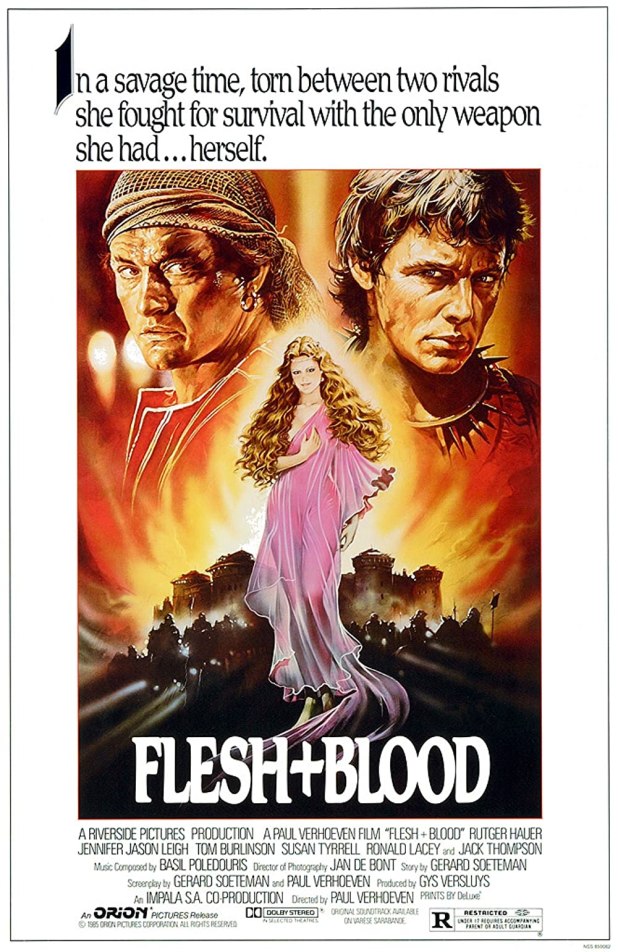
Directed by Paul Verhoeven and written by his frequent collaborator Gerard Soeteman, Flesh+Blood started as ideas that Verhoeven, Soeteman and Hauer didn’t get to do on the TV show Floris. It was filmed as God’s Own Butchers and would be released in the U.S. as The Rose and the Sword.

Verhoeven had previously had his movies paid for by the Dutch government. To escape all of that stress, he got money from Orion Pictures to make this; they soon started asking for changes, like adding a love story. Verhoeven would later say, “The triangular relationship of Martin–Agnes–Steven is now the main story line, but in retrospect I think we should have stuck with Hawkwood and Martin. The failure of Flesh+Blood was a lesson for me: never again compromise on the main storyline of a script.”

Shot in an improvisational style, Hauer went against Verhoeven’s wishes of making the character morally ambiguous. After all of the fighting between the two — the crew demanded they fight in English so they could understand what was happening — they would never work together again. When Hauer died in 2019, Verhoeven revealed that they had made amends.

When his city is lost due to a coup, Arnolfini (Fernando Hilbeck) promises an army of mercenaries an entire day to go wild inside the city walls if they succeed in retaking it. They do; they do. In fact, they go so out of control on that day that Arnolfini wants them gone. He pays Hawkwood (Jack Thompson) to turn on his former soldiers and lead a charge against Martin (Rutger Hauer) and his followers, who soon see their madness as divine mandate when Martin’s son is stillborn and interred under a statue of Saint Martin of Tours, the patron saint of both )winemakers and reformed alcoholics.

Arnolfini’s son Steven (Tom Burlinson) is to marry Agnes (Jennifer Jason Leigh), an arranged marriage that is moved forward by a magical ceremony where they eat mandrake together. At that point, the entire wedding party is attacked by Martin’s men. Arnolfini is badly wounded, the dowry is taken, the lady in waiting is stabbed and murdered (it’s Nancy Cartwright, yes, the voice of Bart Simpson) and Agnes is nearly gang raped before Martin does that all by himself. She gives up on her past life and joins with him in ruling the mercenaries. At the same time, Steven has gone mad wanting revenge and forces Hawkwood to leave his now quiet life and destroy his former friends. Thanks to gunpowder, Martin has the upper hand and Steven is taken; Hawkwood cures himself from the plague and decides to use that illness to destroy his enemy, launching a dead dog into the castle.

At the end, nearly everyone must die and everything must be destroyed; Steven and Martin find themselves needing to help one another before battling to what could be the death. Agnes remains aloof and on no side other than her own. Hawkwood yearns to escape all this fighting and return to the nun he’d saved from Martin.

Oh man — Susan Tyrrell shows up in this and so does Bruno Kirby. I did not expect either of them to appear in a medieval war movie!

The financial failure of Flesh+Blood is why Verhoeven moved to America, all to better understand its culture. The central theme of this movie — how horrible the Middle Ages were — didn’t resonate with audiences that wanted fantasy.

Nevertheless, this is a strong film, one filled with big ideas, gorgeous visuals — Jan De Bont was the director of photography — and the ambiguous morality its creator sought.

You can watch this on Tubi.
CANNON MONTH 2: Jungle Raiders (1985)

EDITOR’S NOTE: Jungle Raiders was not produced by Cannon but was theatrically distributed by Cannon Releasing Corporation.

Cannon released several Italian films that they didn’t have a hand in making, like this one, directed by Antonio Margheriti (Cannibal ApocalypseAnd God Said to CainYor Hunter from the Future) and written by Giovanni Simonelli (John Travolto da un insolito destinoThe Crimes of the Black Cat).

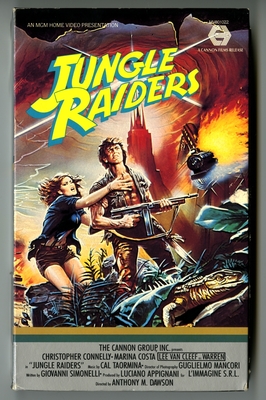
Duke “Captain Yankee” Howard (Christopher Connelly) and Gin Fizz (Luciano Pigozzi) sell fake jungle adventure dreams to rich foreigners who want a story to brag about when they get back home. But one day, U.S. government man Warren (Lee Van Cleef) tells them that he’ll expose their scan if they don’t guide museum curator Lansky (Mike Monty) and Maria (Marina Costa, who is also in The Final Executioner, another Italian movie that Cannon released; she has Carolynn De Fonseca’s voice) and find the Ruby of Doom. Or Gloom. Sometimes both. To get it, they’ll have to fight some river pirates, led by Tiger (Protacio Dee). Luckily, Captain Yankee has a child in his crew that has a near-psychic rapport with a deadly cobra, which is something you don’t see in many Raiders redux movies.

So yes, this might be Raiders of the Lost Ark, but so are two other movies Margheriti made, Ark of the Sun God and Hunters of the Golden Cobra. Video store shelves were starving for more treasure hunting rogues and he was the man to film these ripoffs, remixes and remakes.

Also: the use of miniatures and action figures to get big explosions in this movie is utterly charming. If you’re the kind of person that finds that cheap and off-putting, perhaps stop watching Italian 80s exploitation movies now. Or never start.

PS: The snake even gets a love interest.

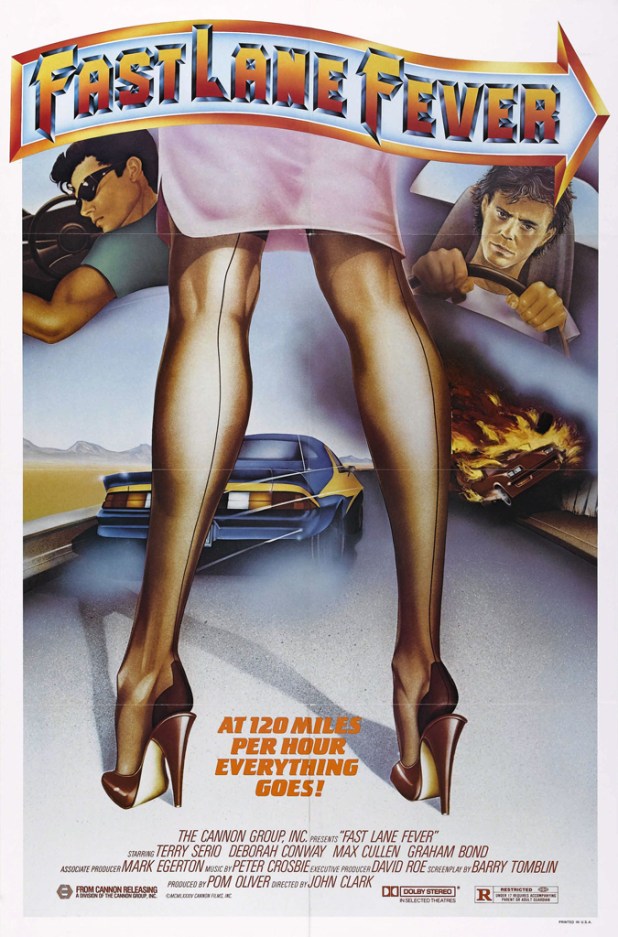
CANNON MONTH 2: Fast Lane Fever (1982)

EDITOR’S NOTE: Fast Lane Fever was not produced by Cannon but was theatrically distributed by Cannon Releasing Corporation.

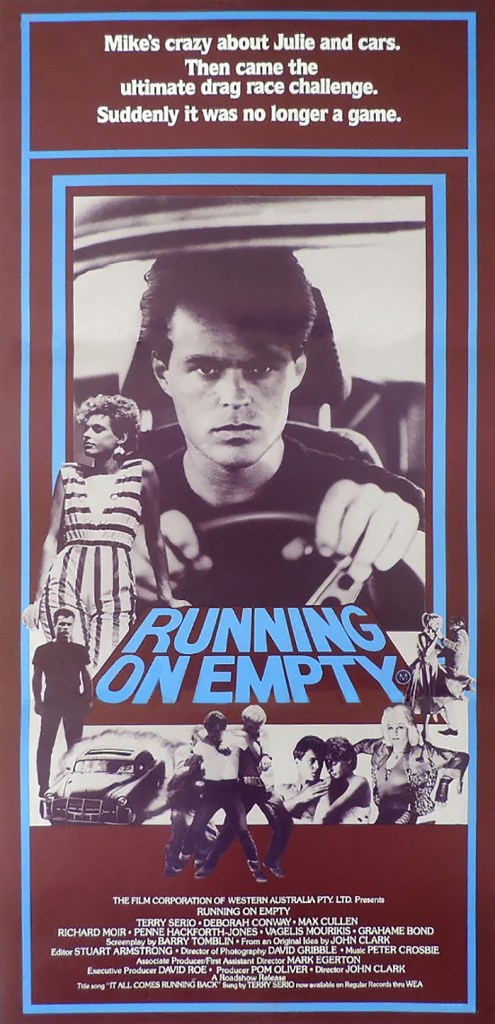
Also known as Running On Empty, this Australian film is all about two steelworkers named Mike (Terry Serio, who was in the band The Elks) and Tony (John Agius) who dream of racing and the Ford Falcon GT-HO Phase III they drive and keep in one piece.

Fox (Richard Moir) is a street racer with his own gang and a problem: no one wants to race him after the last challenge ended up with his opponent dead by car-assisted rage suicide. But Fox is smart; he knows that he can get Mike to race by telling him he can have his girl Julie (Deborah Conway, singer for the band Do Re Mi) and maybe even his Dodge Challenger if he wins.

Director John Clark came up with the idea for this movie and even wrote its songs. He didn’t make anything else until 1992’s Kideo. Scriptwriter Barry Tomblin helped him get the story on screen.

Somehow, this Ozploitation film combines a new wave look with the 50s racing movies of the past — I do so love a good car gang — and it’s a lot of fun. Here’s to Cannon for bringing to America.

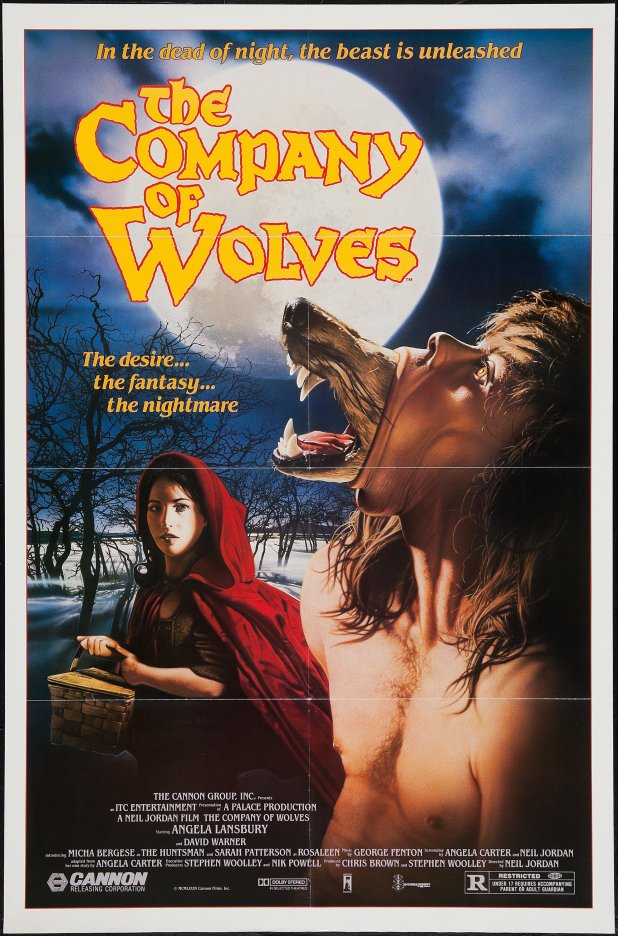
CANNON MONTH 2: The Company of Wolves (1984)

EDITOR’S NOTE: This was originally on the site on August 28, 2020The Company of Wolves was not produced by Cannon but was theatrically distributed by Cannon Releasing Corporation.

Back before Neil Jordan made The Crying Game, he made an adaption of one of the stories in Angela Carter’s The Bloody Chamber. The author had already made a radio version of the story and worked with Jordan on the script.

This was Jordan’s second film and it was made on a very low budget. In fact, to get across the idea of multiple wolves in some scenes, most of the monsters shown in the film are actually Belgian Shepherd Dogs*.

The narrative device that drives this film concerns Rosaleen, a modern girl who dreams that she is in the past, a strange place where her sister Alice is hunted and killed by wolves. Her grandmother (Angela Lansbury!) warns her, as she gives her a red cloak, to beware men whose eyebrows meet. As the villagers soon hunt a wolf whose dead body reveals a man, this dire proclamation takes on some truth.

She soon meets a huntsman, who dares her to a race to her grandmother’s house. He arrives first and eats the old woman, yet our heroine can’t hate the man. Even though she wounds him, she still cares for him and ends up becoming turned into a lycanthrope herself. Finally, the story breaks into today’s time, as the wolves crash through the windows of Rosaleen’s modern world, symbolizing the end of her pre-pubescent innocence.

This framing story also allows the grandmother and Rosaleen to tell stories that concern wolves, man and desire. They include a young werewolf (Stephen Rea) running from his wife and young family, the devil (Terrence Stamp!) showing ip in a Rolls Royce, a witch that transforms a family of noblemen and a wolf woman (experimental musician Danielle Dax) treated kindly by a priest.

The film also offers some truly horrific and bloody transformation scenes that were featured prominently in the advertising when this ran in the U.S. I remember seeing these commercials and being horrified by them, but they are just part of the overall journey for a movie that is more allegory than genre film. And hey — David Warner is in it and he always makes everything he’s in so much more interesting for his presence.

*There were also two wolves used in the film, which required snipers to also be on set. That’s because these wild animals can never truly be tamed.

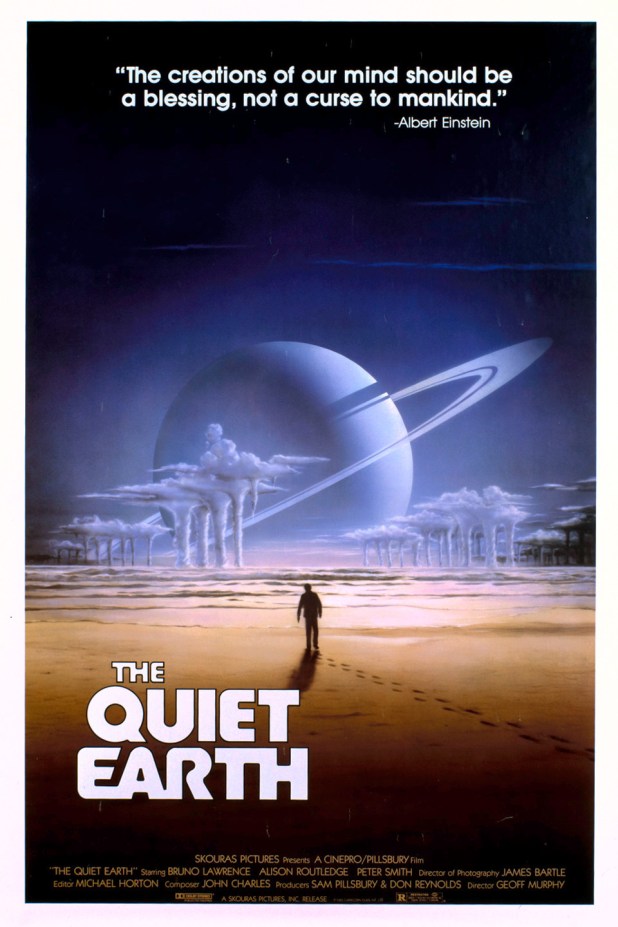
CANNON MONTH 2: The Quiet Earth (1985)

EDITOR’S NOTE: The Quiet Earth was not produced by Cannon but was theatrically distributed by them. For another take on this movie, read this.

Loosely based on the novel by Craig Harrison and kind of, sort of a remake of The World, the Flesh and the Devil, this movie has the world end on 6:12 a.m. on July 5. Hmm…that’s the same time the clock stopped in the Twilight Zone episode “Where Is Everybody?”

Zac Hobson (Bruno Lawrence) is a scientist working on Project Flashlight for Delenco, part of a United States-led international consortium. The goal? A wireless global energy grid that can power military equipment anywhere. He wakes up and is the only person alive. There are no bodies, even when he finds a burning airplane. There are no animals. There’s just him.

No bodies, that is, until he finds the corpse of his boss. The mass disappearance of everything alive was caused by activating Flashlight. He hears his own voice saying: “One: there has been a malfunction in Project Flashlight with devastating results. Two: it seems I am the only person left on Earth.”

Zac then goes insane, declaring himself President of this Quiet Earth and performing for a crowd of cardboard figures before blasting Jesus off the cross within a church. He nearly kills himself — that’s what he was doing before, an overdose of sleeping pills kept him asleep during the Flashlight effect — and it’s good he stays alive, because he soon meets Joanne (Alison Routledge) and Api (Pete Smith). There’s a love triangle, as the ways of the old world continue into the new, but Zac decides that he should sacrifice himself to ensure that the effect doesn’t destroy any more of the Earth; it’s then that he goes on an entirely new journey into another even more quiet world.

Director Geoff Murphy would go on from this art take on the end of the world and make movies like Young Guns IIFreejack and Under Siege 2: Dark Territory. Laurence not only starred in this, he also wrote the script with Bill Baer.

CANNON MONTH 2: Emmanuelle IV (1984)

EDITOR’S NOTE: Emmanuelle IV was not produced by Cannon — shh, Roger Corman was the uncredited producer — but was theatrically distributed by Cannon Releasing Corporation.

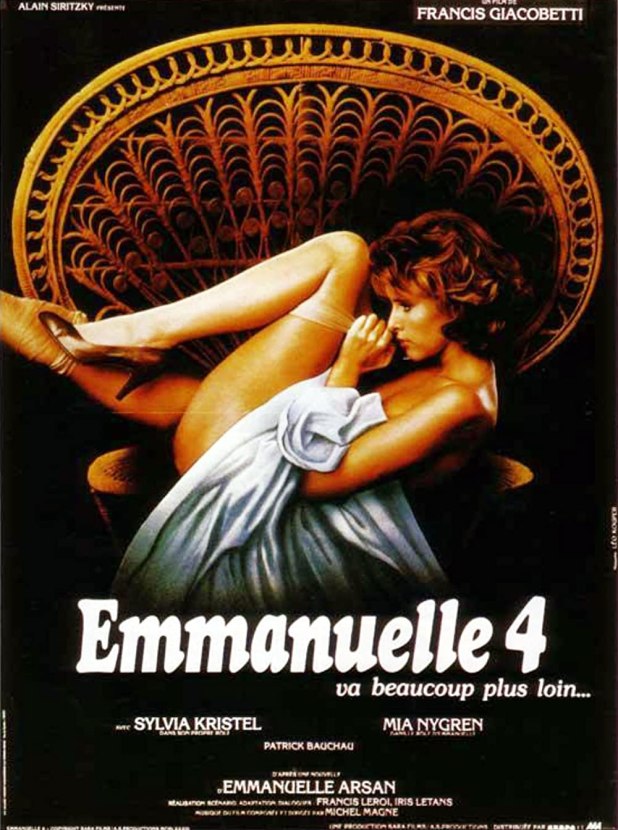
Director and written by Francis Leroi (who would make a ton of Emmanuelle content, such as Emmanuelle Forever, Emmanuelle’s Revenge, Emmanuelle In Venice, Emmanuelle’s Love, Emmanuelle’s Magic, Emmanuelle’s Perfum, Emmanuelle 7 and Emmanuelle’s Secret) and Iris Letan, this movie pulls a big switch: Emmanuelle (Sylvia Kristel) escapes a love affair with Marc (Patrick Bauchau) by going to Brazil where near-magical plastic surgery transforms her into a twenty-year-old virgin played by Swedish actress Mia Nygren.

The original French version was shot and released in ArriVision 3-D, but new scenes were shot for the US version in StereoVision 3-D and composited within the film. There were also hardcore inserts shot for this not featuring the main actors. That explains Christoph Clark and Marilyn Jess being in the credits. I was surprised to see Brinke Stevens, who isn’t in the credits.

Challenged by her therapist Donna (Deborah Power) to explore not only her new body but her new soul, Emmanuelle travels the world and pretty much takes advantage of any opportunity to have sex. That said, this may not look as gorgeous as Just Jaeckin’s original, but it has a charge to it that other sequels didn’t. There’s definitely a budget and definitely good casting; thankfully Kristel shows up in flashbacks and dream sequences, so she doesn’t totally go away. It is audacious, though, to have Nygren sitting in a wicker chair just like the superior first movie.

CANNON MONTH 2: Thor the Conqueror (1983)

EDITOR’S NOTE: This was originally on the site on July 4, 2022Thor the Conquerer was not produced by Cannon but was theatrically distributed by Cannon Releasing Corporation.

The craze of making barbarian movies post-Conan the Barbarian had to feel like going back home for director Tonino Ricci, as he worked on the second unit on Thor and the Amazon Women all the way back in 1963, as well as other peblum movies such as Sword of the ConquererErik the Conqueror and Taur, il re della forza bruta. You may also know him for the films he directed, like Kid il monello del westUn omicidio perfetto a termine di legge, RushPanic and Encounters In the Deep.

Writer Tito Carpi wrote plenty of movies I’ve yelled with joy during, such as MartaTentaclesWarriors of the Wasteland and Sinbad of the Seven Seas.

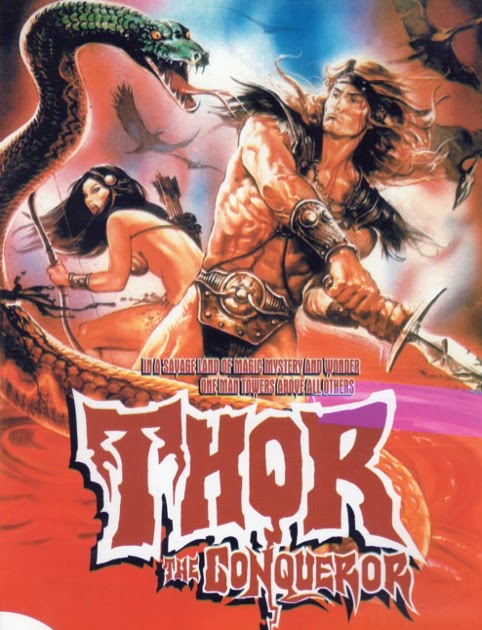
Kind of taking a page out of the aforementioned Arnold movie — but not really — this starts with the death of Thor’s parents. Sure, we see Gant The Annihilator (Angelo Ragusa) speaking with the owl wizard Etna (Christopher Holm) as Thor’s mom squats him out behind a tree, but it’s only minutes before the army of Gnut (Raf Falcone) kill everyone but the wizard and the baby as Gant’s sword turns into a snake.

Thor grows up to be Bruno Minniti, who will grow up to be Rage and Rush. He has to find that sword to become the greatest chief of all time and to get there, he must become the most misogynist hero you’ve ever seen, repeatedly sleeping with women while his ghost owl magician adoptive father watches and yells stuff out and man, Italian movies.

One of those women, a virgin warrior named Sheeba (Maria Romano, Violence in a Women’s Prison) ends up becoming his slave and then his wife after saving him and then bears Thor a child, so sometimes getting caveman dragged into lovemaking can be a meet cute, if we believe a 1983 Italian exploitation movie and we never should.

There’s also Ina (Malisa Longo, who is also in Gunan, King of the Barbarians and was Helga, She Wolf of Stilberg), another virgin warrior that our hero who isn’t a hero must battle.

In the final battle, Etna sends Thor an animal to help him and says, “In days to come, they will call this a horse” and I laughed so hard that even thinking about it now makes me laugh even more.

You can watch this on YouTube.


CANNON MONTH 2: The Ballad of Narayama (1983)

EDITOR’S NOTE: This was first on the site on January 6, 2021The Ballad of Narayama was not produced by Cannon but was theatrically distributed by Cannon Film Distributors (UK) Ltd.

The Ballad of Narayama came late in the career of director Shôhei Imamura who claimed that a viewing of Kurosawa’s Rashomon inspired him to imagine that a new freedom of expression was possible in post-war Japan. Starting as an assistant to Yasujirō Ozu, he soon was dissatisfied, as he wanted to show a different take on how he saw Japan.

He left Shochiku for a better salary at Nikkatsu and became the assistant director to Yuzo Kawashima, who was known for his tragic satire. From his first film as a director, Nusumareta Yokujō (Stolen Desire), he courted controversy, unafraid to show the lower caste of Japan and frank sexuality.

Imamura saw himself as more of a cultural anthropologist than a filmmaker and was all about being an iconoclast, even starting his own studio and pushing for projects that would fail, having to make small films for most of the late 70’s and early 80’s due to Kamigami no Fukaki Yokubō (Profound Desires of the Gods), a deeply personal film that took a year and a half to make and wasn’t seen as a success at the time.

By the 1980’s, Imamura was able to mount larger-scale movies, including this one, a remake of Keisuke Kinoshita’s 1958 The Ballad of Narayama.

A key member of the Japanese New Wave, Imamura is one of the few directors to keep making films through the 21st century and the only director from Japan to win two Palme d’Or awards (for this movie and The Eel).

My grandmother died last month. I’m not telling you that out of a need for sympathy, but to tell you where my head was while watching this movie. It’s about ubasute, which is translated as abandoning an old woman, which was the ancient Japanese practice of carrying an infirm or elderly relative to a mountain or other desolate place and leaving them to die.

You may think that this is a barbaric practice. But in our world of modern medicine that keeps people alive well beyond the time that they should be deceased, I wonder sometimes that we keep people with us for so long that it becomes torture. I don’t have the answers but I’ve tried to keep an open mind as I watched this movie, sometimes overflowing with emotion.

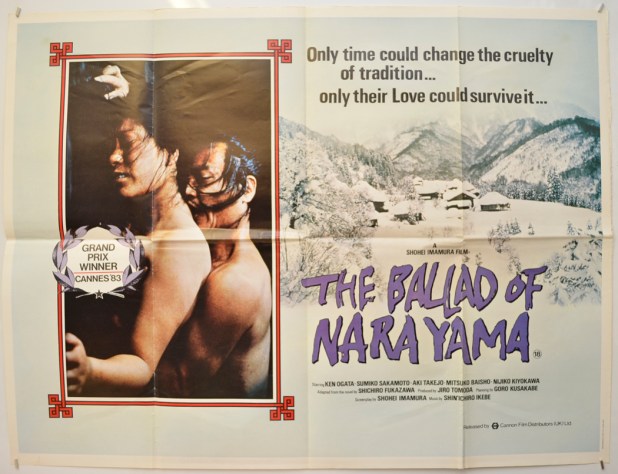
In a small Japanese village in the 19th century, Orin (Sumiko Sakamoto, who Imamura cast in two other of his movies, The Pornographers and Warm Water Under a Red Bridge; she won the Japanese Best Actress from Nihon Academy for her performance in this film, as well as a kiss from Orson Welles) realize that at the age of 69, she is but months from having to go up the mountain to die. She’s of sound mind and body, but doesn’t want to be like the old men who fight every step of the way, screaming that they want to stay alive.

Over the next year, we see her life, whether it’s the negative of young people referring to her as an old witch or the positive, where we see her fix the problems of the village, help her son Tatsuheito (Ken Ogata) to find a wife and set things right before stoically going on to her death in the snow.

As we see the lives of the villagers, we also see nature intrude, whether that’s through the birds in the trees or the snake that is always near, even in moments of incredible joy.

How strongly did Sakamoto believe in this role? She extracted four of her teeth just to play the scene where Orin smashes out all of her teeth to convince her family that she must die.

Beyond Sakamoto’s awards, this movie also won best film at the Japanese Academy Awards numerous best actor awards for Ogata, who played Sakamoto’s son, a best supporting actress award for Mitsuko Baisho, best sound and an excellence in cinematography award.

This is a film of juxtaposition, of the lowest and most base of humanity in contrast with ones that will sacrifice everything. Moments of sheer beauty stand hand in hand with scenes of violence and pain. It’s a heartbreaking film yet one that reaffirmed my belief in life, in the cyclical nature of death and rebirth. And it is by no means an easy watch.

You can find The Ballad of Narayama on the new Survivor Ballads: Three Films By Shohei Imamura set from Arrow Films. This is a must-buy, as each film demands to be part of any film lover’s collection. You can get yours from MVD.

CANNON MONTH 2: Last Rites (1980)

EDITOR’S NOTE: Last Rites was not produced by Cannon but was theatrically distributed by Cannon Releasing Corporation.

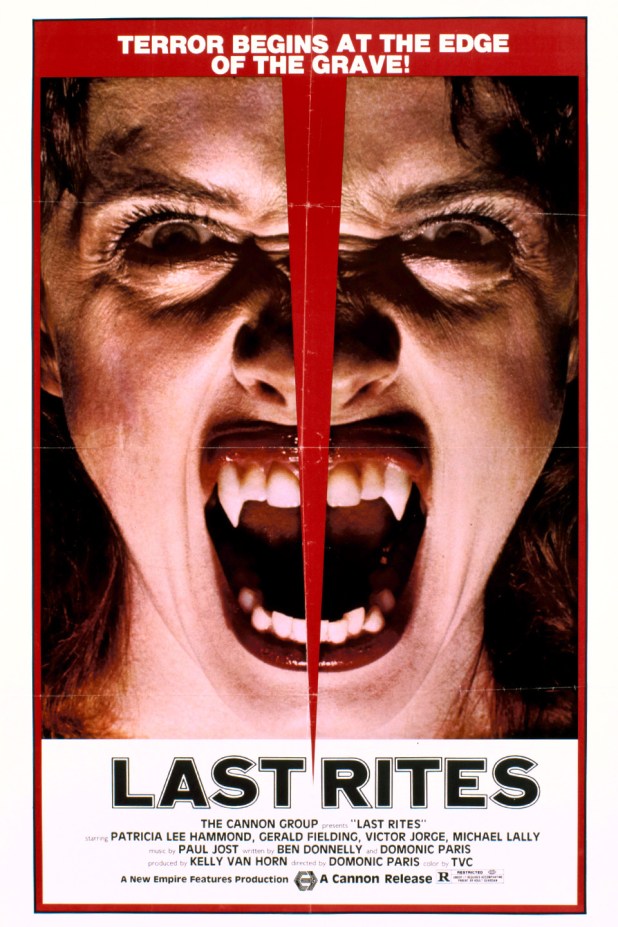
You know, vampires think they’re so smart. They’ve been pulling that Alucard scam for decades and humans haven’t figured it out. Like in this small town, where a drag race leads to two injured teens. The girl is declared deceased — she isn’t — and rushed to the A. Lucard Funeral Home. Soon, A. Lucard himself(Gerald Fielding), Dr. Cummins (Victor Jorge) and an assistant drink her blood and then stake her. Yes, the most important people in town are vamps and they’re using the locals as feeding stock.

Marie (Patricia Lee Hammond) and Ted Fonda (Michael Lally) call Dr. Cummins when her mother (Mimi Weddell) gets sick. He gives her a sedative, says she’s dead and drinks up. Then he calls in Lucard to bury the body. Then Marie decides she wants a home funeral — what kind of maniacs want a dead body just sitting at home? — so mom comes home. She could turn at any minute, so Lucard sends his assistant to stop that. Well, Ted tosses him out the window and the kindly Mrs. Bradley is now walking the night.

A low budget regional New Jersey movie — made in Vineland — that spends as much time hanging with vampiric small-town politicians as it does showing that fanged bloodletting that you expect, this movie has a blue collar take on blood-drinking ghouls.

Director, writer and producer Domonic Paris was also behind the movie Splitz and a series of documentaries including Amazing Masters of Martial ArtsBad Girls of the MoviesAfros, Macks & Zodiacs and Film House Fever. Now he writes movies like A Turtle’s Tale: Sammy’s Adventures.

Of everyone in this movie, Mimi Weddell — who has no lines — did the most afterward. She was already 65 when this was made, but ended up being in everything from Student Bodies and The Purple Rose of Cairo to HitchThe Thomas Crown Affair and an episode of Sex and the City.

I’m all for movies having endings like this one.

CANNON MONTH 2: Don’t Go Near the Park (1979)

EDITOR’S NOTE: This was originally posted on October 26, 2019Don’t Go Near the Park was not produced by Cannon but was theatrically distributed by Cannon Releasing Corporation.

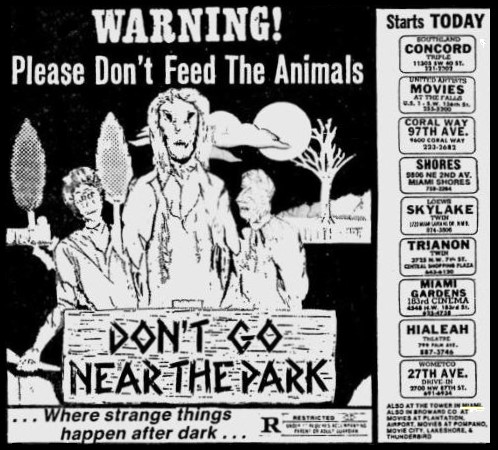
Cannibalism. Incest. Pedophilia. Yes, folks, Don’t Go Near the Park has it all. That’s why it made it to the category 2 video nasty list, a feat for a director who was just 19.

I also have no idea what Aldo Ray’s deal is in this movie. As Taft, he’s an older man who just so happens to make friends with the young Nick and takes him, Bondi and Cowboy home to live with him — and sleep half-naked while he smiles on — as special friends.

That’s the good guy! What is this movie!?!

Let’s see if we can make sense of it.

Thousands of years ago, Petranella cursed her children Tra and Gar (Barbara Bain played both female roles here under the fake name Barbara Monker while the male is Robert Gribbin under the nom de plume Crackers Phinn) to live for 12,000 years eating the flesh of humans. If one of them has a baby after that long stretch, they can live forever.

Fast forward to 1965 and the siblings are killing kids in California. Gar decides to work on the babymaking, reinventing himself as the human Mark and knocks up Linnea Quigley and has a kid named Bondi, who he cares about way more than his marriage. We see years pass in the span of minutes, which is how I’d think immortals perceive time and also really shoddy filmmaking all at the same time.

On Bondi’s sixteenth birthday, Mark gives her an ancient amulet, which finally causes his wife to leave him. Bondi runs away and is nearly raped in a van before she calls on her father to kill them with that amulet.

Bondi wanders into an abandoned house near the park, where her aunt Tra, who now goes by the name Patty, is starting to die. That’s when she makes friends with Nick and Cowboy, who sell flowers in the street and make friends — like I said before — with Aldo Ray.

There’s a whole lot of weirdness that happens — swallowed amulets, corpses rising from the dead to kill out former cave people and a twist ending that throws everything else in the trash. Little Nick is played by Meeno Paluce, who was all over the 80’s with stuff like Voyagers and appearing in the original The Amityville Horror.

I have a soft spot for this film. It’s not perfect, but I want to hug it and protect it from the mean reviewers who say things like it makes no sense and it has shoddy camerawork. What do you want? A classic every time?