JESS FRANCO MONTH: In Search of Dracula (1974)

EDITOR’S NOTE: As we wade through a month of all things Jess, here’s a sideways version of his work, as scenes from Count Dracula were used to complete this documentary on the life of Dracula. This originally ran on our site on March 13, 2021.

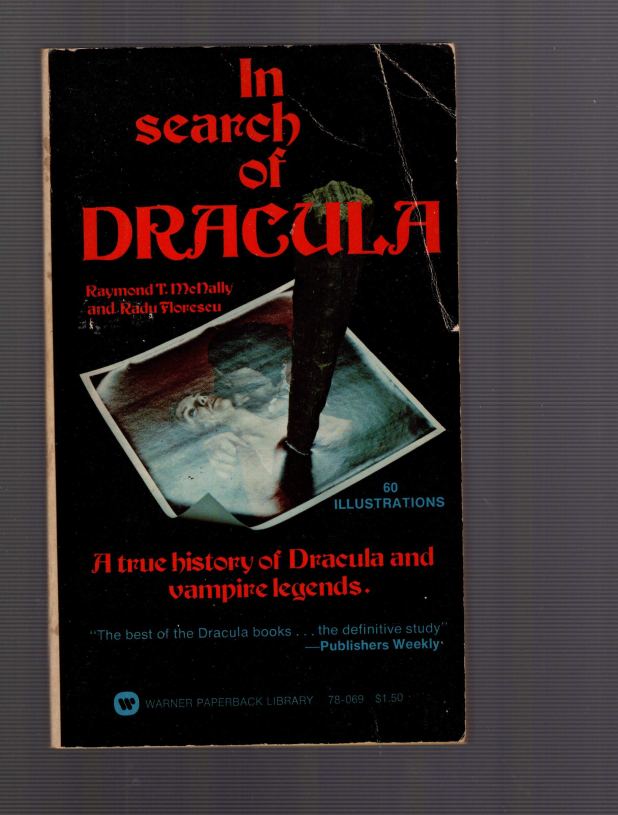
When I was a kid, my dad had a paperback shelf filled with paranormal books that I spied in fear. One of those books was Radu Florescu and Raymond McNally’s In Search of Dracula. Between that tome and the ad in Warren comics for a necklace filled with dirt from Dracula’s grave, I lived in mortal fear of vampires, as if I lived in Santa Carla instead of Southwestern Pennsylvania.

Now that I’m grown up, I’m obsessed with tracking down the early 70’s pop culture paranormal that often expresses itself in Schick Sunn Classic films and movies like this, directed by Calvin Floyd* (Terror of FrankensteinThe Sleep of Death).

To illustrate the history of Dracula, Christopher Lee shows up as Vlad Tepes, Count Dracula and himself** Plus, Swedish actors Tor Isedal and Solveig Andersson show up. They were both in Dagmar’s Hot Pants, Inc. and The Lustful Vicar together and she also played one of the prostitutes in They Call Her One Eye.

Thanks to the research of Florescu, Vlad Tepes is an accepted part of the Dracula mythos and his further research into Frankenstein’s Monster has led to the alchemist Konrad Dippe being associated with that legend. Yes, before he wrote that book, no one knew that Sir Arthur Conan Doyle was influenced by history.

*Floyd is pretty much an auteur, as he also produced this film and composed all of the music. He was also a pianist, author, composer, pianist and president of music-publisher Kalmar, Inc.

**Footage is also taken from the Hammer films and Jess Franco’s version, too.

You can watch this on Daily Motion.
https://www.dailymotion.com/video/x286rqs

ARROW BLU RAY RELEASE: Madame Bovary (1991)

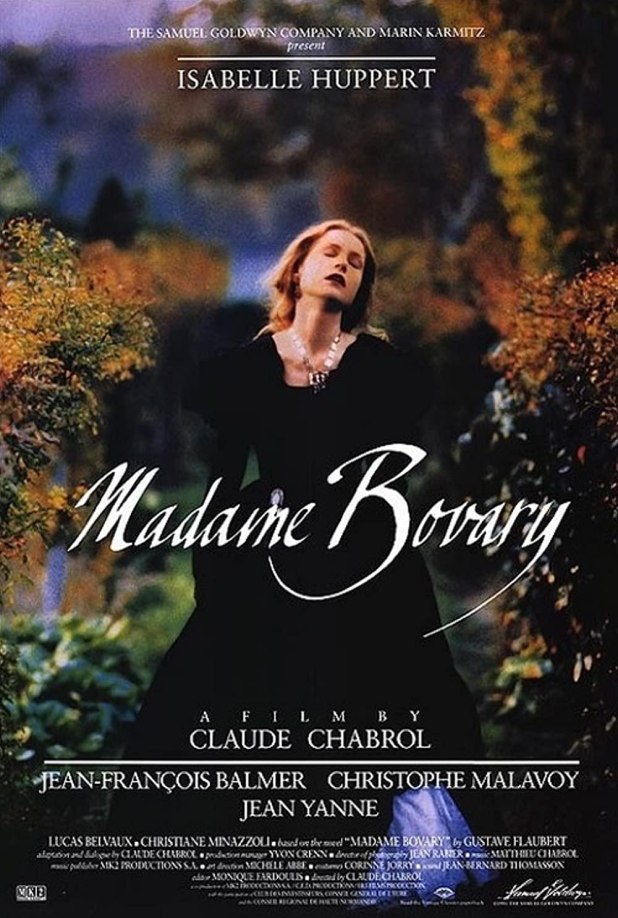
Gustave Flaubert’s Madame Bovary has been made numerous times, as early as Albert Ray’s 1932 film Unholy Love to Jean Renoir, Gerhard Lamprecht and Vincente Minnelli making their own versions. There are three BBC series — in 1964, 1975 and 2000, as well as Hans Schott-Schobinger’s 1969 version (starring Edwige Fenech!), Alexandr Sokurov’s Save and Protect, the Hindu film Maya Memsaab, Sophia Barthe’s Madame Bovary and even David Lean’s loose adaption, Ryan’s Daughter.

Emma (Isabelle Huppert) faced a single life on her father’s farm until he sets her up with Dr. Charles Bovary (Jean-François Balmer), yet he bores her. And even moving to the city does nothing for her interest in him and everything for her interest in others, like Léon (Lucas Belvaux), a court reporter who can discuss all of the culture that she adores as well as giving her the physical love that she needs. Yet he’s soon gone and she moves on to other men, like the wealthy Rodolphe Boulanger (Christophe Malavoy), but when he leaves her after four years, she finds her way back into Leon’s arms.

However, to court him again, it takes money. So she secretly uses her husband’s cash — and a secret deal with shop keeper Lheureux (Jean-Louis Maury) — to pay for clothing, a hotel and gifts. Their home is seized and sold and even the lawyer who should be helping her only wants her for sex. So — spoiler warning for a book written in the 1850s — she takes poison and dies a long and agonizing death, followed by her husband dying from grief and their daughter being sold into factory work.

So you know, basically a heartwarming film that’ll brighten any day.

Arrow Video’s Lies And Deceit: Five Films By Claude Chabrol collected five high definitions (1080p) blu ray versions of Cop Au Vin and Inspector Lavardin to Madame Bovary, Betty and Torment. Each movie has an introduction by film scholar Joël Magny and select scene commentaries by Chabrol. Additionally, there’s an 80-page collector’s booklet of new writing by film critics Martyn Conterio, Kat Ellinger, Philip Kemp and Sam Wigley, trailers and image galleries for each movie and limited edition packaging with newly commissioned artwork by Tony Stella.

Madame Bovary has new commentary by critic Kat Ellinger and Imagining Emma: Madame Bovary On Screen, a new visual essay by film historian Pamela Hutchinson.

You can order this set from MVD.

ARROW BLU RAY RELEASE: Inspecteur Lavardin (1986)

The sequel to the 1984 film Cop au VinInspecteur Lavardin finds the detective (Jean Poiret) demoted to investigations in a small coastal town due to his investigation techniques involving dunking suspect’s heads under water. This brings him into the case of a murdered Catholic writer named Raoul Mons, who has been found dead on the beach with the word pig written all over his back.

It turns out that Raoul wasn’t just a drug dealer, blackmailer and rapist, but also was married to Helene, an old flame that Lavardin hasn’t seen for twenty years. Even stranger, her daughter is named Véronique, the same name he’d always wanted to give to a daughter. And when the truth comes out, will the Inspector stay with his new family or just go home alone with his breakfast obsessions and the photo of a murderess in his wallet?

Two years later, Poiret would return to this role for four episodes of the TV series Les dossiers secrets de l’inspecteur Lavardin, which was written by Chabrol, had two episodes directed by him and also featured his son Thomas.

Arrow Video’s Lies And Deceit: Five Films By Claude Chabrol collected five high definitions (1080p) blu ray versions of Cop Au Vin and Inspector Lavardin to Madame Bovary, Betty and Torment. Each movie has an introduction by film scholar Joël Magny and select scene commentaries by Chabrol. Additionally, there’s an 80-page collector’s booklet of new writing by film critics Martyn Conterio, Kat Ellinger, Philip Kemp and Sam Wigley, trailers and image galleries for each movie and limited edition packaging with newly commissioned artwork by Tony Stella.

Cop Au Vin has new commentary by critic Ben Sachs and Why Chabrol?, a new interview with film critic Sam Wigley on why Chabrol remains essential viewing

You can order this set from MVD.

ARROW BLU RAY RELEASE: Cop Au Vin (1985)

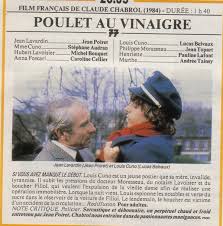
The original French title of this movie — Poulet au vinaigre — means vinegar chicken, but poulet also means cop, so it’s a play on words. The detective film that results, the first several appearances of Inspecteur Jean Lavardin (Jean Poiret), takes the notions of the genre and gives it the spin that director Claude Chabrol is so famous for.

Three men in a small town — a lawyer named Lavoisier (Michel Bouquet), Dr. Morasseau (Jean Topart) and Filiol the butcher (Jean-Claude Bouillaud) — have been conspiring to take the house of Louis Cuno (Lucas Belvaux) and his invalid mother. They continually harass the twosome and take away any joy from their life, so after one particularly bad encounter, Louis puts sugar in the gas tank of the butcher, which leads to a fatal accident and brings Lavardin to town.

That’s just the start of the story, as Lavoisier’s mistress Anna (Caroline Cellier) and Morasseau’s wife Delphine (Josephine Chaplin), who make an odd couple, but both quickly vanish. And then a statue of a nue Delphone shows up in the doctor’s garden and a charred body in another car wreck. It seems like this town has more than its share of secrets.

Stéphane Audran, who plays Madame Cuno, also appears in the TV spin-off Les dossiers secrets de l’inspecteur Lavardin: L’escargot noir as a different character. She was married to Chabrol from 1964 to 1980 and obviously continued working with his professionally after. Their son Thomas appeared in many of his father’s movies and has become a director and screenwriter himself.

Arrow Video’s Lies And Deceit: Five Films By Claude Chabrol collected five high definitions (1080p) blu ray versions of Cop Au Vin and Inspector Lavardin to Madame Bovary, Betty and Torment. Each movie has an introduction by film scholar Joël Magny and select scene commentaries by Chabrol. Additionally, there’s an 80-page collector’s booklet of new writing by film critics Martyn Conterio, Kat Ellinger, Philip Kemp and Sam Wigley, trailers and image galleries for each movie and limited edition packaging with newly commissioned artwork by Tony Stella.

Cop Au Vin has new commentary by critic Ben Sachs, a new interview with film historian Ian Christie, a segment with Christie and Chabrol onstage at the BFI in 1994 and a Swiss TV show that features Chabrol, Jean Poiret and Stephane Audran talking about the film.

You can order this set from MVD.

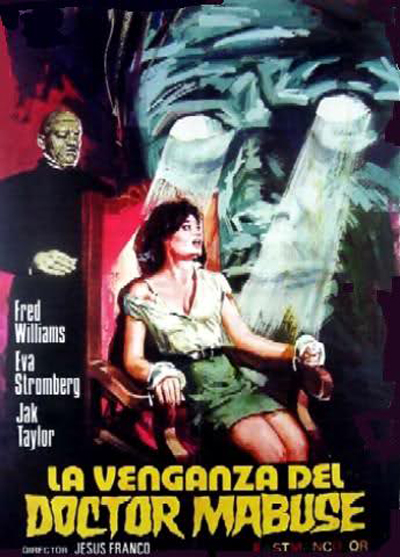
JESS FRANCO: The Vengeance of Doctor Mabuse (1972)

Dr. Mabuse! Master of disguise and telepathic hypnosis! A man able to switch bodies through possession, usually using televisions! The leader of a society of crime! The king of blackmail! A Jess Franco villain if I’ve seen one!

Mabuse first appeared in Norbert Jacques’ 1921 novel Dr. Mabuse the Gambler which became a movie directed by Fritz Lang. A four hour long movie, it was released in two parts that were both box office successes: The Great Gambler: An Image of the Time and Inferno: A Game for the People of Our Age. Rudolf Klein-Rogge came back to work with Lang again to make the sequel, The Testament of Dr. Mabuse (and Lang’s last movie would be The Thousand Eyes of Dr. Mabuse).

A series of German Mabuse films owed more to the Eurospy craze*, but now Jess is in the director’s chair and Mabuse wants to steal a moon rock, so let’s do this.

Mabuse and his accomplices also are stealing all sorts of things — and people — from the National Research Institute so that he can finally make his dream invention, a mind-control ray. So yeah, this is Dr. Orloff all over again or more to the point The Diabolical Dr. Z. Mabuse even mentions that he’s a rival of Dr. Orloff, so my dream of a Franco Cinematic Universe is closer to truth than fiction.

I love reading reviews of this, because those dosed by Franco love it and even enjoy its faults, while those flaws drive anyone non-Franco obsessed absolutely insane, upsetting them because this is a movie that has extended sunsets, nonsensical at best dialogue and heroes that are as inept as it gets.

*The Return of Doctor MabuseThe Invisible Dr. MabuseThe Testament of Dr. MabuseScotland Yard Hunts Dr. Mabuse and The Secret of Dr. Mabuse are the 60s Mabuse films that come before this. There were also other appearances of the character in The Image of Dorian Gray in the Yellow Press, Claude Chabrol’s Dr. M and three movies in the 2000s, Doctor MabuseDoctor Mabuse: Etiopomar and  The Thousand and One Lives of Doctor Mabuse.

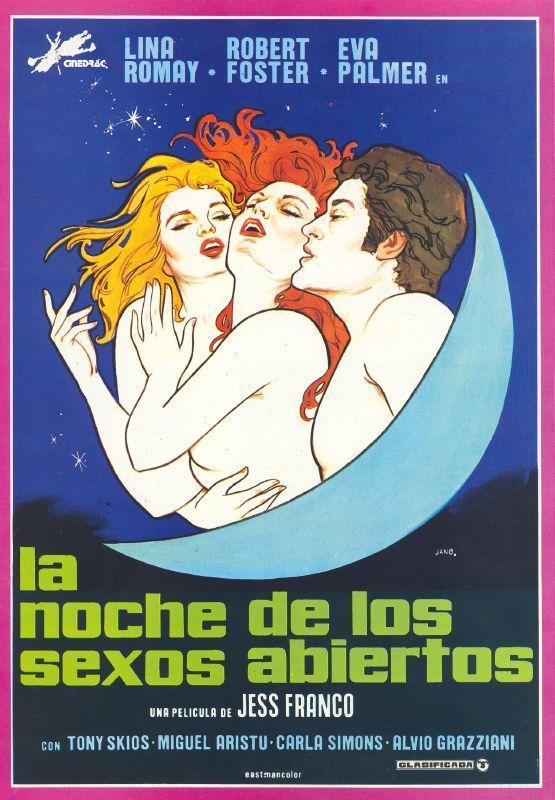
JESS FRANCO MONTH: La noche de los sexos abiertos (1983)

So yes, if there is a Jess Franco cinematic universe, it’s one in which governments have decided that erotic dancers make the perfect spies and are always given the most dangerous missions, like how Moira (Lina Romay, who else) is the only person who can solve the riddle of the Nazi gold when she’s not torturing fellow dancers or doing floor work on the hood of an already crashed car.

Somehow, Franco was able to make a movie that has a curling iron scene that even Judy in Sleepaway Camp — also made in 1983, so which came first — would say was upsetting. This film also does not care if you think quick shifts in tone are disconcerting, so one second it’s a goofy comedy, the next there’s an assault, then a love scene, then some murders. Meanwhile, as always, there’s Romay just going for it.

Do you love your significant other? You can base how much on watching Franco film Romay, filling the screen with dirty magazines and still having her be the only focus, his feverish zoom dedicated to not only finding her most intimate regions but pushing your face into them. I can almost imagine him screaming like a lunatic, “I love her so much that I demand that you peer inside her!”

So what I’m saying is that Jess Franco is a lover. And a maniac. And someone who had no problem turning an Indian restaurant into a strip club for one of his movies.

You can get this from Severin.

Laguna Ave (2021)

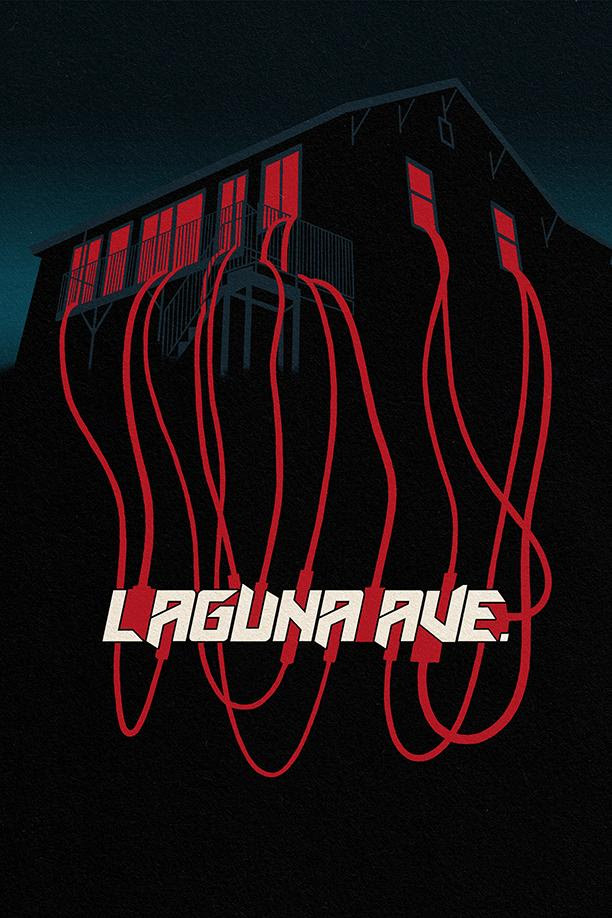
Russell (Russell Steinberg) was a musician but then an accident cost him his hand, so now he lives in a Los Angeles apartment complex with his girlfriend Rita (Stephanie Brait) and he’s just lost his last job because he keeps falling asleep at work. And then he sneaks back in and leaves a dump on the boss’s desk, which proves that he’s in no way ready for the world of adults. So while Rita keeps leaving for mysterious business meetings “up north” that she refuses to discuss with him, he ends up meeting the stylish, mysterious and very tall Gary (James Markham Hall Jr., nephew of Predator actor Kevin Peter Hall) and gets a new hand, a new outlook and well, he pretty much escapes from a movie that’s a black and white character study into a conspiracy comedy that combines equal parts of Tetsuo and Scanners with a side dish of Southland Tales.

And it’s all in black and white.

Gary is a believer in acceleration, a critical and social theory that proposes that social, economic, cultural and libidinal change should be pushed from within to create further radical social change. Seeing as how he’s been laid off and wants revenge as well, it seems only strangely cosmically perfect that Russell and Gary join forces.

Also, Russell has fantasies where he’s some kind of biomechanical black metal god, so there’s that.

Written by Paul Papadeas and directed by David Buchanan, this movie probably cost even less than the last streaming slasher or horror anthology that came my way, but is filled with more ideas and crazy moments than thirty of those films put together.

Laguna Ave is available on the Arrow Player. Visit ARROW to start your 30-day free trial. Subscriptions are available for $4.99 monthly or $49.99 yearly. ARROW is available in the US, Canada, the UK and Ireland on the following Apps/devices: Roku (all Roku sticks, boxes, devices, etc), Apple TV & iOS devices, Android TV and mobile devices, Fire TV (all Amazon Fire TV Sticks, boxes, etc), and on all web browsers at https://www.arrow-player.com.

JESS FRANCO MONTH: Tendre et perverse Emanuelle (1973)

There have been so many Emanuelle movies by so many of my favorite disreputable filmmakers, from Just Jaeckin’s original in 1974 to Joe D’Amato’s always entertaining Black Emanuelle films with Laura Gemser to science fiction takes such as Emmanuelle in Space and Emmanuelle Through Time, as  well as two by Franco, this one and Emmanuelle Exposed.

The original film was so popular — even in the U.S. where the tagline said “X was never like this” and it was sold as a highbrow movie — that a theater on the Champs-Elysees in Paris played it for 13 years.

So how wild that this Franco movie uses Emanuelle in the title a year before Jaeckin made his adaption of the 1959 of the Emmanuelle Arsan book (born Marayat Bibidh, there’s a theory that her husband Louis-Jacques Rollet-Andriane wrote the book; nevertheless she was an adventurous woman given to affairs much like the story she may have written and she and Louis-Jacques eventually settled down to a retirement home named Chantelouve d’Emmanuelle in a triad relationship with his former secretary Nitya Phenkun for nearly twenty years).

Of course, the name was changed to cash in on the success of Jaeckin’s film and this is just as much a murder mystery or even a giallo compared to a softcore movie, but it’s most importantly a Jess Franco film, which means that it’s packed with the strange affectations that are so distracting at first and become so welcome the more of his movies you unspool.

Shot at the same time and in some of the same locations as A Virgin Among the Living Dead, it tells the story of Emanuelle (or Barbara), played by Norma Kastel from The Fish With the Eyes of Gold, She’s found at the bottom of a cliff and the film follows the investigation into her death, which is mourned by a series of lovers of both sexes.

That mourning includes lots (and lots) of sex between the cast members, who include Alice Arno (who would be the actress conducting the insert graveyard orgy that Franco didn’t direct in A Virgin Among the Living Dead) and, in her second Franco film, his lifelong obsession Lina Romay, who is so cool that she has a sapphic scene so volcanic that she forgets to take her glasses off, which speaks to me in a way that I don’t have words.

JESS FRANCO MONTH: Les cauchemars naissent la nuit (1970)

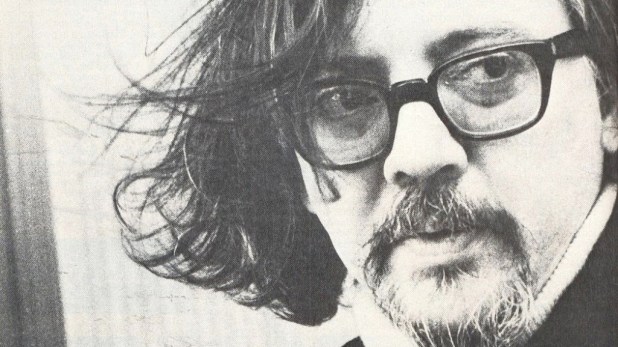
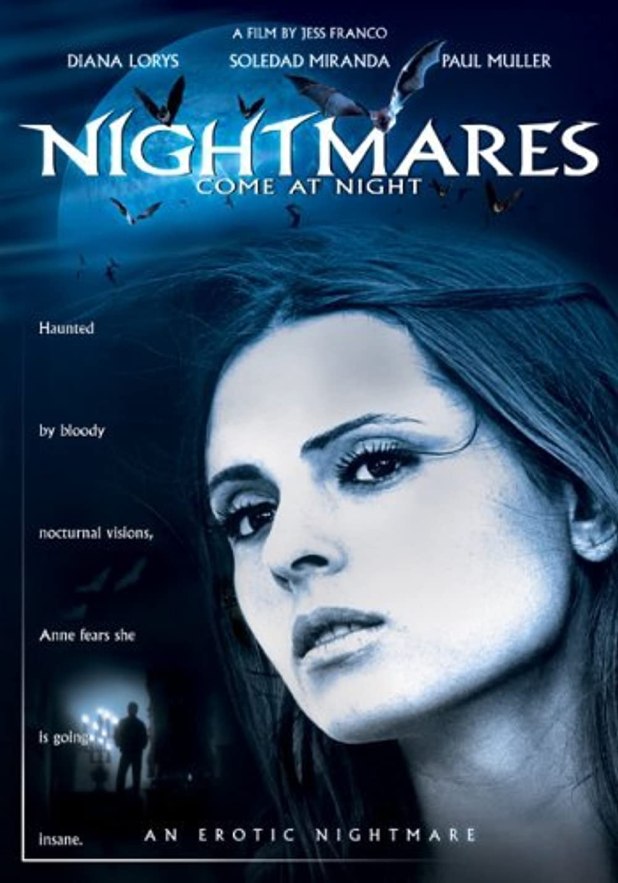
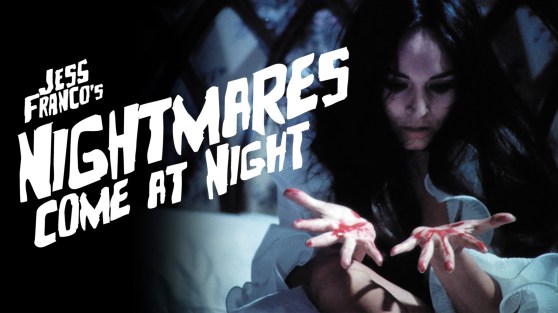
Movies take a lot of work. And yet Nightmares Come At Night only played at a single theatre in Belgium and was considered a lost movie until 2004. So all that sweat and energy and anxiety took years for the world to see. And what they saw was a movie that finds Jess Franco giving in to a new way of making movies and more and more, giving up logic.

Diana Lorys (Get MeanFangs of the Living Dead) is the gorgeous Anna de Istria, a dancer who has become obsessed with another dancer, Cynthia (Collette Giacobine, What the Peeper Saw), an attraction so intense that it causes her to hallucinate, having waking dreams — or nightmares — so powerful that not even medical science can save her.

Meanwhile, Cynthia owes two jewel thieves, played by Jack Taylor and the wonder that is Soledad Miranda, a share of their recent crimes.

When you try to capture your dreams in the morning in writing, it always gets lost in translation. That’s how writing about this movie feels. It’s also two dreams smashed together, an attempt by Franco to save two different films that were unfinished.

Except that this is Jess Franco’s dream, but he was dreaming about his obsessive love for Soledad himself and you don’t speak the language and Jess may have been an alien and you just try and make sense and then give up to it deliriously making no sense, hoping it never ends, that the world could really be a place where jewel thieves can manipulate the most gorgeous of women to wrap and curl and undulate around their fingers, all while Bruno Nicoli sets the most jazz of all jazz scores and you wake up in a cold sweat, fumbling for water and a pen to try and figure out where it all went right.

So at one point, you realize Anna is trapped in her home, but also trapped by lust, but also trapped by her dreams in which she alternatively kills people or listens to men drone on and then the camera pans across a wall that says “Life is all shit.”

The at home equivalent of putting your face in front of a speaker at a doom show and taking handfuls of whatever drugs someone has in their pocket and shining a gel light directly in your eyes while someone whispers in your ear and tells you that you’re pretty great.

Or Jess Franco making his own expensive masturbation mix tape.

Either way, a success.

You can watch this on Kino Cult.

This Jess Franco film is also on the ARROW PLAYER. Head over to ARROW to start your 30-day free trial. Subscriptions are available for $4.99 monthly or $49.99 yearly. ARROW is available in the US, Canada, the UK and Ireland on the following Apps/devices: Roku (all Roku sticks, boxes, devices, etc), Apple TV & iOS devices, Android TV and mobile devices, Fire TV (all Amazon Fire TV Sticks, boxes, etc), and on all web browsers at https://www.arrow-player.com.

Mill Creek Through the Decades: 1970s Collection recap

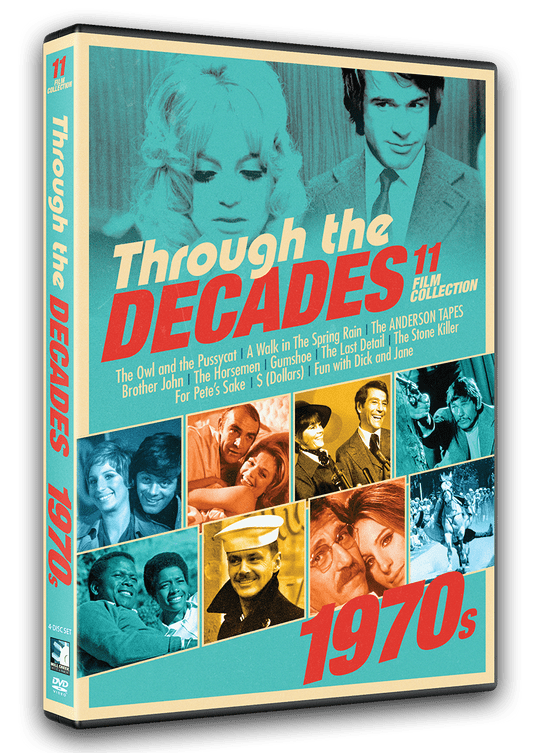
The Mill Creek’s Through the Decades: 1970s Collection is a great set. But you know us — we love Mill Creek. To learn more info on this one, check out their here or order it from Deep Discount.

This collection of 1970s Columbia movies is definitely worth the price, as is their Through the Decades: 1960s Collection.  Click on any of the titles of these films to see our full review:

The Owl and the Pussycat (1970) – A stuffy author enters into an explosive relationship with his neighbor, a foul-mouthed, freewheeling prostitute.

A Walk in The Spring Rain (1970) – The Merediths move to an isolated farm. Mrs. Meredith and the neighbor Will Cade become friends and anticipate becoming lovers.

$ (Dollars) (1970) – A bank security expert plots with a call girl to rob three safety deposit boxes containing $1.5 million in cash belonging to three very different criminals from a high-tech security bank in Hamburg, Germany.

The Anderson Tapes (1971) – After Duke Anderson is released from prison after ten years for taking the rap for a scion of a Mafia family, he cashes in a debt of honor with the mob to bankroll a caper.

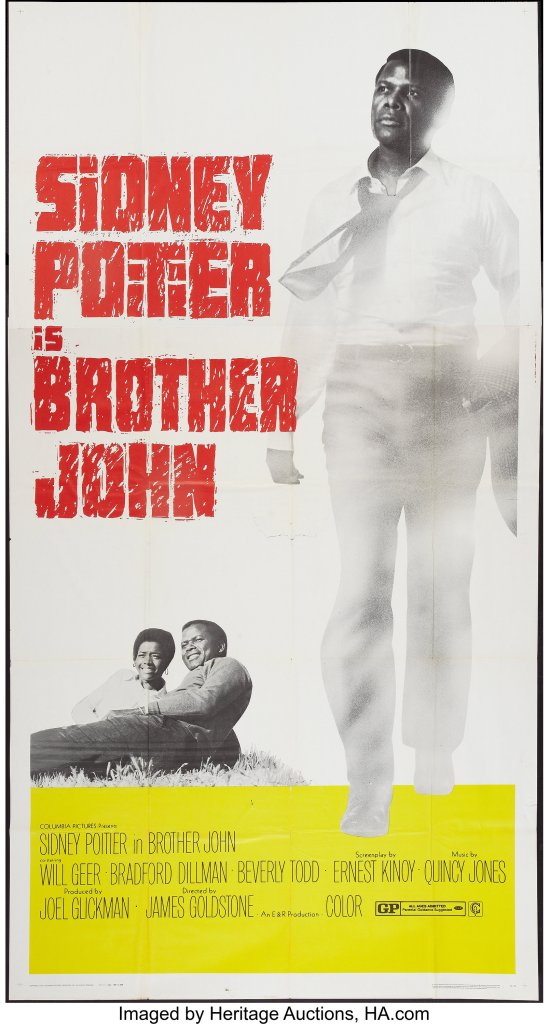
Brother John (1971) – A man who returns to his hometown for a funeral may have a much larger purpose in life than those around him can see.

The Horsemen (1971) – Drama depicting rural life in contemporary Afghanistan and the Afghani people’s love for an ancient traditional sport similar to horseback polo.

Gumshoe (1971) – Nightclub comedian Eddie Ginley puts an ad in the paper as a private eye. The case he gets turns out to be a strange setup and as he digs to the bottom of it his life starts falling apart.

The Last Detail (1973) – Two Navy men are ordered to bring a young offender to prison, but decide to show him one last good time along the way.

The Stone Killer (1973) – A top New York detective is sent to Los Angeles where he must solve a case involving an old Sicilian Mafia family feud.

For Pete’s Sake (1974) – A housewife tries to finance her cab-driving husband’s education.

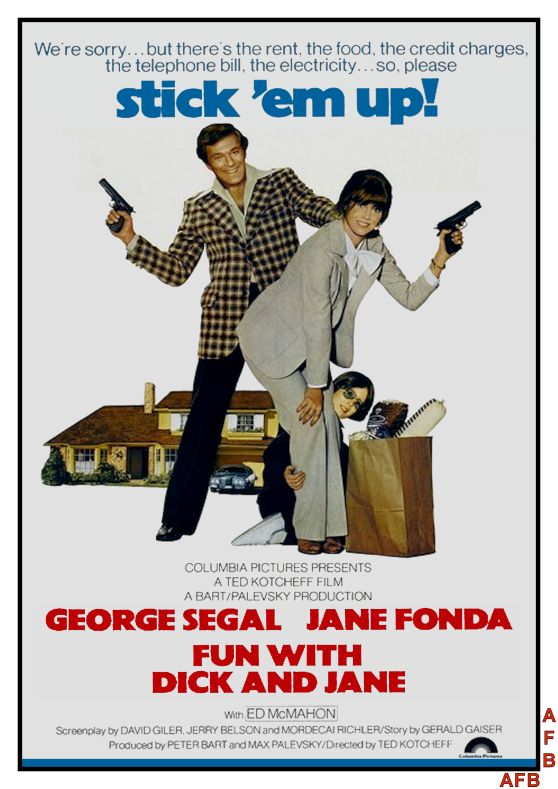
Fun With Dick and Jane (1977) – When an upwardly mobile couple finds themselves unemployed and in debt, they turn to armed robbery in desperation.