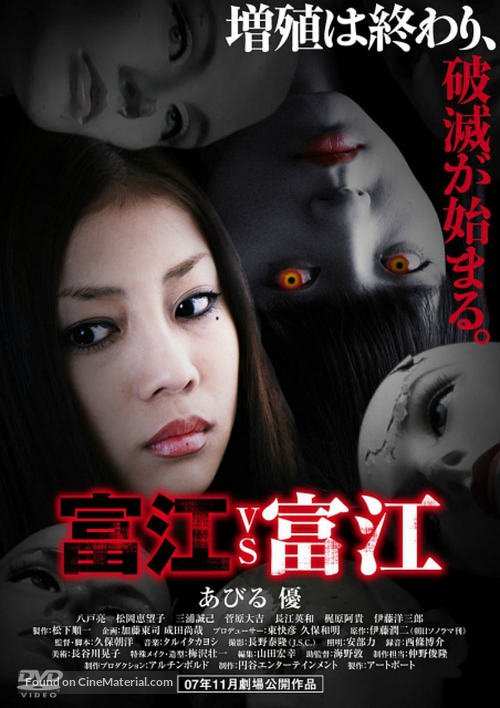
The seventh Tomie film, this one is directed by Tomohiro Kubo and based on Junji Ito’s story The Gathering, which appeared in the third volume of the manga.
For some reason, someone thought that it would be a good idea to inject two kids with the blood of Tomie. This meant that they would grow up into two full Tomies, but flawed as they need the blood of pure Tomies to sustain themselves.
In case you’re wondering if this series has gone on too long…
So where does the male love come in? Well, there’s a factory worker who is pining over his dead girlfriend and can’t move on. Because of that, he won’t fall for the Tomies, who soon get angry about why he won’t fall for them and they begin to fight one another. You know, when two unkillable women go to war over a man showing no interest in either of them, it isn’t pretty.
So yeah, somehow Tomie has moved from being the cannibal queen of a snowy mountain to running a mannequin factory because, well, Japanese horror movies. And as she lurks in the shadows, you know that by the end of the film she’ll be set ablaze and probably eat her way through a man’s body. Both of these things happen, so if you’re a Tomie fan that has stuck around this long — this series is becoming my Japanese Amityville — then you kind of have to watch this. Right?
You can watch this on YouTube. The subtitles are beyond bad on this and are barely even intelligible, even renaming Tomie as “rich river.” Yeah, maybe they actually make this one better. Or funnier, at least.
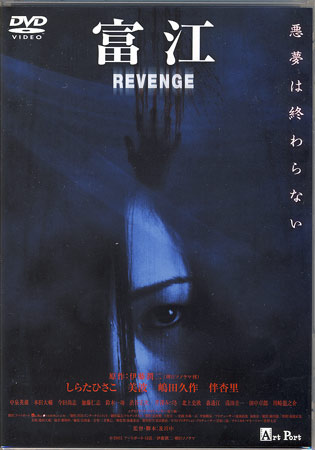
Another Ataru Okiawa directed entry in the Tomie film series, this one is all about a young female doctor who hits a naked woman with her car one night. As she searches for the women through the woods, she finds an abandoned house filled with bodies and one unconscious girl. And oh yeah — the one she hit with her car just happened to have a mole under her eye.
This episode is based on Junji Ito’s manga Tomie Chapter 5:Revenge. In that story, a crew of hikers are looking for a missing man on a frozen mountain and, as often happens around frozen mountains, cannibalism ensues.
The same thing goes on here, except Tomie lives in a cabin with all her male servants, who she occasionally eats when she isn’t screaming stuff that sounds a lot like The Scum Manifesto.
I would advise not watching every Tomie movie in one week, but if you haven’t learned how strong my film-watching endurance is, you don’t know me.
ABOUT THE AUTHOR: Herbert P. Caine is the pseudonym of a frustrated academic and genre movie fan in Pennsylvania. You can read his blog at https://imaginaryuniverseshpc.blogspot.com/.
Those of us who grew up in the 1980s and early 1990s will remember the Gremlins franchise fondly. It combined cute creatures (in the form of the mogwai Gizmo) with wanton destruction and low-level scares – everything a budding genre fan could want! Surely the Japanese, who brought us the Pokemon and Gamera series, came up with something just as innocent and child friendly…
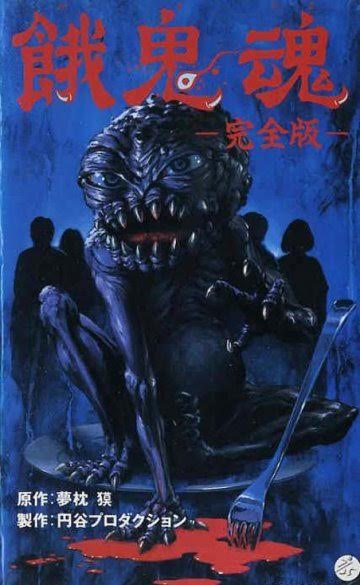
Gakidama – The Demon Within is what you would get if you decided to remake Gremlins, but handed over the writing and direction to David Cronenberg. It is a piece of weirdness that could only come from Japan There are still mischievous little creatures, but they are about as cute as a den of rattlesnakes. The film follows a reporter specializing in paranormal phenomena who goes into the woods to get a picture of a will o’ the wisp, referred to in Japanese as a gakidama. All the while, he is followed by a mysterious man in black. After devouring a slab of beef and turning into a caterpillar, the will o’ the wisp manages to get inside the reporter’s body, giving him a massive appetite.
Unfortunately for our protagonist, which goes in must come out, resulting in him barfing up a grotesque fanged demon who looks nothing like a mogwai. The man in black comes in to catch the brute, but he unfortunately lets it escape. As the film progresses, we learn that vomiting up a gakidama gives you an insatiable craving to eat one. While the reporter and the man in black engage in these culinary pursuits, the reporter’s wife learns that the creature has a drive to be reborn again and again through human bodies, in a scene that removes any doubt about whether this film is intended for children.
Gakidama is an extremely good horror short. While clocking in at only fifty-four minutes, it is brimming with twisted concepts and gory scenes. The special effects are top-notch, having come from Tsubaraya Productions, the people who brought you Ultraman, in a rare adult-oriented outing. The scene where the reporter “gives birth” to the gakidama through his mouth is especially memorable. Meanwhile, the gakidama puppet is convincing in a way that the CGI effects of today simply cannot match.
The short also benefits from a superbly creepy atmosphere. The early scene in the woods is distinctly unnerving with its use of darkness, fog, and silhouettes. The film as a whole has a dark aesthetic, with the reporter’s house often being poorly lit, leaving all too many places for the creature to hide.
Being less than an hour long, Gakidama does not offer much in the way of character development and features some notable plot holes, not the least being how the man in black tracks down those who are about to give birth to the little monsters. The creature’s life cycle is also somewhat difficult to figure out. Still, it is a grisly little outing worth tracking down.
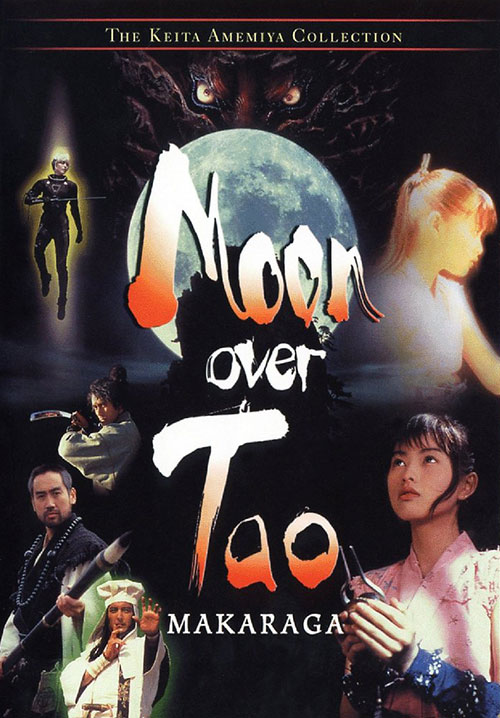
So just imagine if someone made a period samurai movie, then decided to base the monster design on something out of Giger*, all while keeping the sheer insane level of geyser blood that you demand from Japanese sword films.
This is that movie.
A retired warrior returns to visit his former lord and learns that someone is making indestructible swords from an unknown metal. Along with a swordsman and a young beekeeper who has seen three alien women who may be related to this metal, he undertakes a question to determine how to stop the beasts that have found their way to Earth. This issue becomes critically important when the alien monster is soon controlled by the elder warrior and young swordsman’s greatest nemesis.
This movie is completely ridiculous and you can consider that a compliment.
*Actually, they were designed by director Keita Amemiya, who also was a designer on the Onimusha games, as well as Zeiram and several modern incarnations of Kamen Rider.
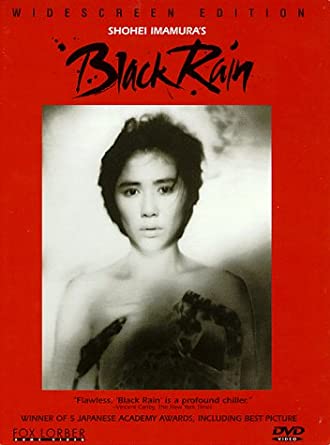
You know, I don’t think anyone watches a Shohei Imamura movie to have a good time. This is a really rough one, explaining how Japan dealt with the aftermath of two nuclear bombs dropped on their country and how the hibakusha* — people who were marked and sickened by the blasts — were dealt with.
The hibakusha faced discrimination when it came to prospects of marriage or work, as most people did not know what the consequences of radiation sickness would be, with many believing it to be hereditary or even highly contagious. As a result, even their children were discriminated against.
Based on the book by Masuji Ibuse, the title refers to the literal black rain that fell on Japan in the days after the two blasts, as firestorm-generated, soot-filled rain with high concentrations of fission products and carbon-14 came down on the survivors.
Honestly, when I first started watching this, I was convinced that it was a movie from the 1950’s. That’s how perfectly the era is captured, as we meet Shizuma Shigematsu and hear and see his journal entries about the differences between Hiroshima in 1945 and five years later.
There’s a harrowing moment in the opening as Shigematsu wanders the streets and sees first-hand the damaged people wandering the streets, seeking cool puddles of water to die in. Their skin is literally falling from their bones and one asks, “Do you not recognize me?”
By 1950, some normalcy has returned for people who weren’t in the blast. Shigematsu and his wife Shigeko become the guardians for their niece Yasuko (Yoshiko Tanaka, who was in the pop group The Candies and appeared in Godzilla vs. Biollante; she sadly died of breast cancer at the age of 55. She won the Best Actress Award at the 14th Hochi Film Award for this movie).
As time goes on, so many of their friends and family die from radiation sickness and Yasuko’s prospects for marriage become more unlikely. In the end, she forms a bond with the poor artist Yuichi, who has been so damaged that he sees cars as American tanks.
This film pretty much swept the 1990 Japanese Academy Awards, winning Best Actress, Best Cinematography, Best Director, Best Editing, Best Film, Best Lighting, Best Music Score, Best Screenplay and Best Supporting Actress. All of these are well-deserved, as this is a stunning movie that will stick with you forever.
The cast worked hard for these awards, as they were forbidden by Imamura to leave location, as he didn’t want them to have a break from the oppressiveness of the past and begin to enjoy the comforts of modern Tokyo before the film was complete.
In America, we were always taught that the Japanese would never surrender and we had to do this. That may be an easy thought if you haven’t had to watch burned babies as ash in a mother’s arms. This is a brutal, uncompromising movie that even goes further, showing how a struggle for things to get better can exist side by side with a worry that this could all happen again.
You can find Black Rain on the new Survivor Ballads: Three Films By Shohei Imamura set from Arrow Films, which is available from MVD.
*Believe it or not, there were also nijū hibakusha. That name refers to the 165 people who survived both Hiroshima and Nagasaki.
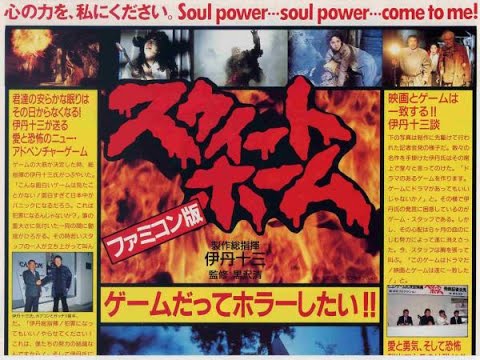
Consider this a Japanese version of The Haunting while remembering that the movie may not be revolutionary, but the video game — which was released at the very same time — certainly was*.
That game’s creator, Tokuro Fujiwara, toured the film’s set to gather inspiration for the game. Director Kiyoshi Kurosawa (Pulse) gave him the freedom to do whatever he wanted with the game, which laid the groundwork for survival horror games like Resident Evil.
In the film — and video game — a small film crew visits the abandoned mansion of artist Ichirō Mamiya in the hopes of finding several paintings he left behind and restoring them. However, minutes after they walk in the front door, poltergeist activity erupts.
Soon, the ghost of the artist’s wife, Lady Mamiya, has possessed one of them. It’s soon revealed that she and the artist lost a child after he fell into the house’s incinerator. She then began killing children to give the ghost of her child playmates before committing suicide. Now, she haunts the home, unless the crew can figure out how to help her pass into the next world.
Neither the game nor the movie were ever released in the U.S., but thanks to the internet, you can experience both.
*In an era when video game adaptions had little or nothing to do with the movies they had the license for, Sweet Home actually expands on the story of the movie.
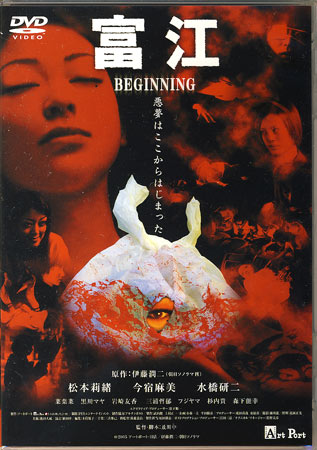
Ataru Oikawa, who directed the first Tomie film, returns with the fifth installment, which is really the first direct sequel, just to prove that it isn’t just American and Italian film franchises that get screwy.
This is a sequel, sure, but also an explanation of what happened before the first film, with Tomie showing up as a transfer student and getting all the boys hotto under the collar. The difference this time is that one of the teachers has pledged to kill her, no matter how many times he has to murder her.
Unlike some of the Tomie films, this is told through the eyes of a female narrator, Matsubara Reiko, who befriends Tomie when she enters school as a new student. We start the film with her and another student — Yamamoto, who is missing an eye — as they stand in what was once their classroom.
Tomie is no victim in this one. Instead, she’s using the obsession that the boys feel to turn them into her servants while the fear that she radiates holds the girls in her sway too, forcing them to drink her cockroach-ridden tea.
It all ends the way it always does, but this time with uber-violence, as an entire class ritualistically murders Tomie, fondling her exposed organs and snapping her head clean off her body. It feels good, sure, but not as good as she feels the next day, showing up looking good as new.
This movie also tries to explain how Tomie can be centuries old by suggesting that she’s sentient blood or something. I really don’t need to know where this soliloquy spouting schoolgirl came from, to be perfectly frank. After all, I’m a big enough supporter of her work that I watched like six or seven of these so far.
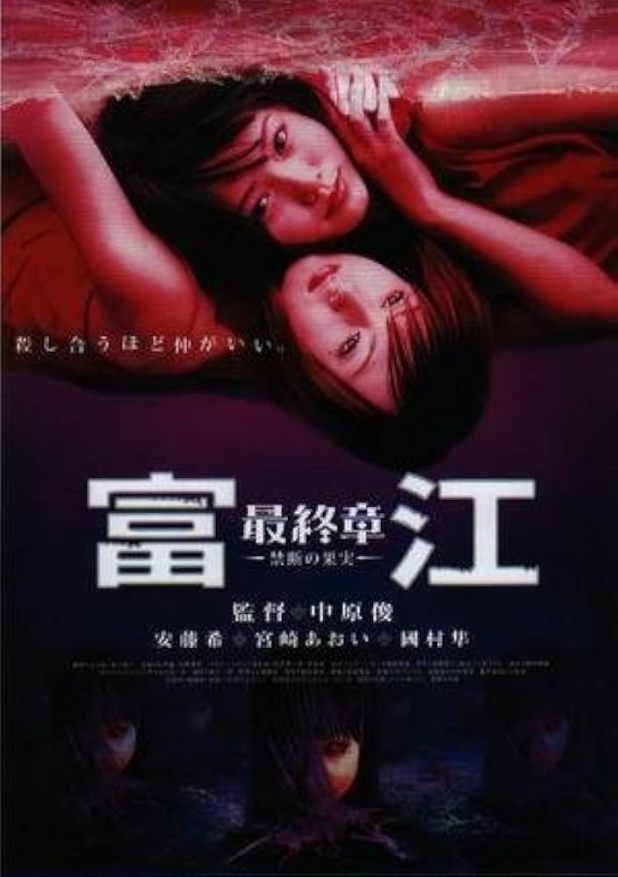
Even though the fourth installment of this series was called Tomie: The Final Chapter – Forbidden Fruit, we all know that any sequel happy series that promises a final chapter are always liars.
Tomie Hashimoto writes vampire fiction and gets made fun of for being a Lolita by the other girls by day and lives alone with her distant and widowed father by night. One day, while trying to jewelry, Tomie H. meets Tomie Kawakami, who she brings into her fictional life. But their meeting was no coincidence.
Tomie H.’s father, Kazuhiko, was involved with Tomie K. years and years ago, back before she was murdered. He even named his daughter after her. Once Tomie K. meets him, she casts her spell and demands that he kill her daughter. He replies by cutting off her head and throwing it into the river, which Tomie H. finds the head and nurses it back into a larval state.
Like many teen relationships, a fight comes between them, so Tomie H. throws her friend off a building, which only brings her back stronger, so she kills her with an arrow and gets her father’s help to freeze and destroy Tomie K., who of course wins over the father and nearly kills our heroine, who is saved by a worker at the ice company.
She goes back to her fictional world, except now she has an ear of Tomie that she is growing to be her true friend.
Shun Nakahara, who directed this, is another young Japanese filmmaker who came from the world of adult video. I found this to be one of the more interesting Tomie movies. As for the lesbian tease of Forbidden Fruit, it’s mostly implied and refers to the pomegranate, which the two eat together in one scene.
Some Jewish scholars believe pomegranates were the forbidden fruit in the Garden of Eden. The fruit is also listed as one of the Seven Species of special products of the Land of Israel and symbolizes the mystical experiences of the kabbalah. Finally, look no further than the Songs of Solomon for this quote: “Thy lips are like a thread of scarlet, and thy speech is comely: thy temples are like a piece of a pomegranate within thy locks.”
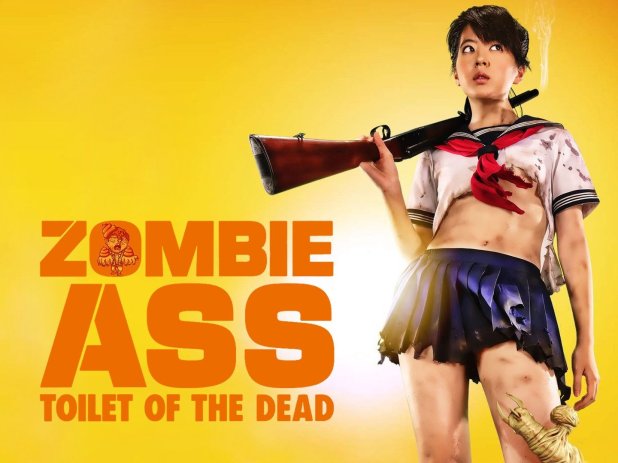
When you have a movie called Zombie Ass: Toilet of the Dead, you’re not expecting subtlety. Well, you’re not getting any with this one, a movie that proved to me that I can still be grossed out and upset me a movie, which I guess makes me happy.
After her sister gets bullied to the point that she commits suicide, Megumi and four friends go on a trip in the woods, which gets out of control when Maki eats a parasitic worm that she finds inside a fish in the hopes that she can keep her weight down. Later, when she’s trying to take the Browns to the Super Bowl in an outhouse toilet — you know the kind that have like a 15-foot drop off into nothingness that scare you when you’re a kid? — and ends up laying eggs and feces all over some bodies that have been hidden in the poop pile.
Director Noboru Iguchi somehow went from adult video to making movies like The Machine Girl and this. That said, his pervy heart is still on display, as this is one of the few movies that I’ve seen where girls pose provocatively while tentacles emerge from their rectums.
There’s also a moment where the girls are in danger because the zombies are attracted to flatulence and fecal matter, so they all have to hold it or die. I would never make it in this zombie apoopcalypse.
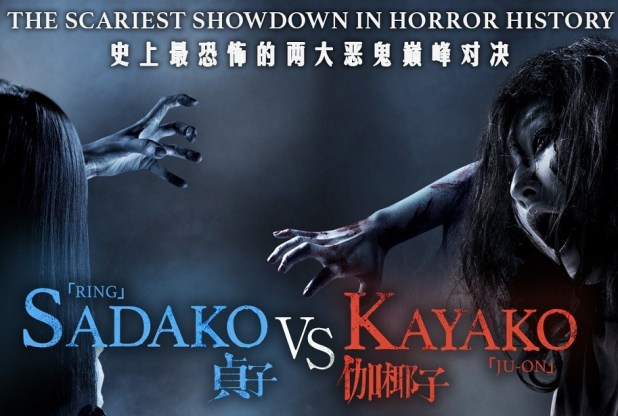
You have to give it to Japanese filmmakers, who are unafraid to mash up franchises and give people what they want. And this was a big deal, combining the Ju-on (The Grudge for Americans) and the Ring franchises.
The promotion for this movie was insane, with a Twitter contest between Sadako or Kayako to pick Japan’s favorite horror icon, with Sadako winning. Then, there was a press conference where Sadako, Kayako and Toshio attended and never broken character, which is awesome. This was followed by the characters interrupting a baseball game between the Nippon-Ham Fighters and the Yakult Swallows.
I mean, there was even a collaboration with Sanrio’s Hello Kitty for this film. That’s saying something.
The craziness starts when a social worker comes to do a wellness check on an elderly patient, who of course has a VCR that is still playing the infamous tape from Ringu. As if to answer, “Who still needs a VCR in 2016?” the player is sold to a shop, where it ends up in the hands of college kids Yuri Kurahashi and Natsumi Ueno, who want to use it to transfer Natsumi’s parents’ wedding tape to DVD.
However, the cursed tape has now evolved, with better-looking footage, an urban building instead of the traditional well and now, only two days for the curse. As the phone rings, Sadako shows up.
The girls go to their professor, an expert on urban legends, who instead of helping them wants to see Sadako for himself. He watches the tape and brings in an exorcist, who is boiled alive by. the vengeful ghost, who also murders the teacher. Before the exorcist dies, she tells the girls that only the psychic Keizo Tokiwa can save them.
Natsumi blames Yuri for her curse and begins to upload the tape to the internet, hoping to somehow pass the curse away from herself. Keizo soon arrives, accompanied by the blind psychic Tamao, and informs them only by pitting Sadako against Kayako Saeki can they all survive. Meanwhile, Natsumi, who has been trying to kill herself, is hung by Sadako.
Meanwhile, the haunted Saeki house has shown up in a new neighborhood and Toshio has been snapping the necks of bullies and dads.
As for that whole put the ghosts against each other plan goes, it backfires not once but twice, as the vengeful ghosts combine to create one unstoppable entity called Sadakaya. It has the body of Yuri, the appearance of Sadako and moves like both spirits, all with the death rattle of Kayako.
While not anywhere nearly as good as the original franchises by themselves, this is pretty much big budget fan service. It takes a long time to get there, but I had a ton of fun watching it. Not bad for a movie that started off as an April Fool’s Day joke, huh?
Still, nothing in this is quite as good as this theater etiquette video, right?


 B&S About Movies
You must be logged in to post a comment.