Before becoming a writer and director, John Carney played for the Irish band The Frames. In fact, the lead singer of that band, Glen Hansard, starred in Carney’s best-known film, 2007’s Once alongside his partner in the band Swell Season, Markéta Irglová. Made on a budget of around $150,000, it ended up earning $23.3 million worldwide. an Oscar for the song “Falling Slowly” and the admiration of Steven Spielberg, who said, “Once gave me enough inspiration to last the rest of the year.”
Carney replied, “In the end of the day, he’s just a man with a beard.”
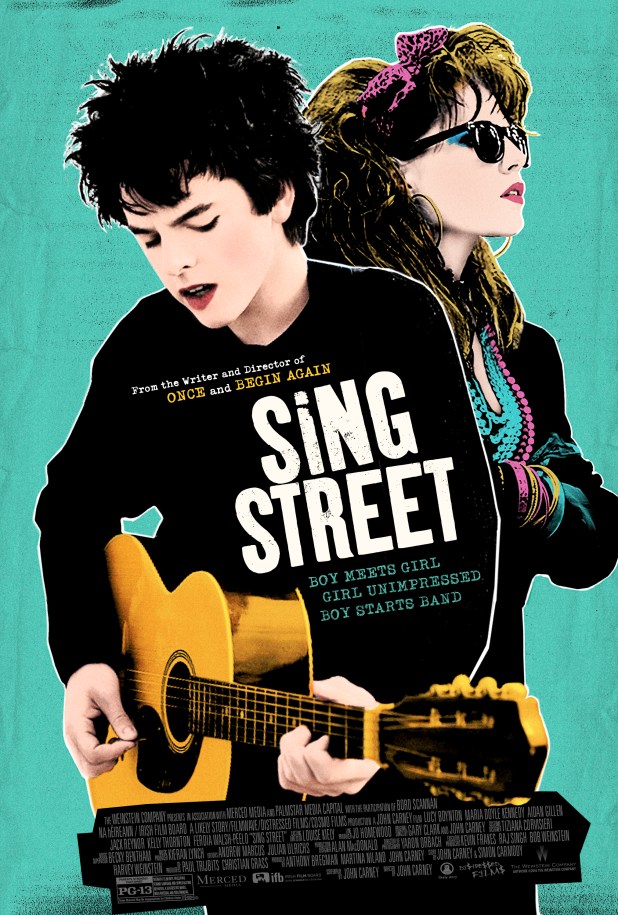
Sing Street tells the story of Conor “Cosmo” Lawlor (Ferdia Walsh-Peelo), whose family is struggling so much that he’s forced to go shoeless at school when they can’t afford the proper ones for his uniform. He’s bullied day in and day out, but soon meets Darren, who becomes his manager, and Eamon (Mark McKenna), who can play any instrument. Initially, the idea of a band is just a way to win over Ralphina (Lucy Boynton, who will soon play Marianna Faithfull in Faithfull), who wants to be a model.
Soon, though, the band becomes a driving force in their lives and even allows for their bully to have a place to belong. It also allows him to bond with his borther Brendan, who teaches him what music should mean in your life.
The close of this film has always made me wonder if everything — please, don’t let me spoil it for you, so stop reading if you haven’t seen it — from the gym sequence to Cosmo and Ralphina sailing away is all just a dream sequence from a music video.
Carney hsa said, “Well, I don’t see it just as a happy romantic ending. I think that’s the tone of the piece, but I think it’s more like… they’re setting off together, that’s true, but I wouldn’t say that’s some huge relationship that’s going to last forever. They’re kids. I sort of hope the scene at the end would look a little like a fantasy sequence. You’re supposed to wonder where the reality ends and the pop video begins. But people are actually taking it very seriously, and people are presuming it’s fully real, which is interesting. That wasn’t the intention.”
If you grew up in the 80’s and dreamed that a girl would fall for you because you were on the verge of becoming a music video star, then this movie will warm your heart. Like all the best films, I wish that it was real.
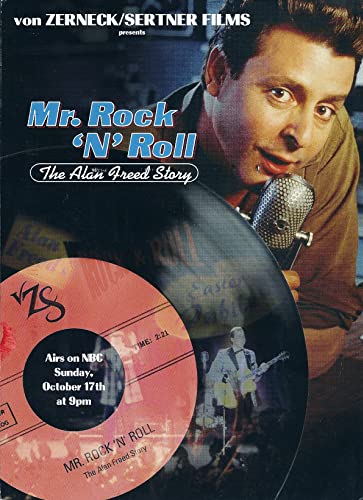
Based on John A. Jackson’s book Big Beat Heat: Alan Freed and the Early Years of Rock & Roll, this is the warts and all story of Alan Freed, who may have invented rock and roll — or at least popularized it — but lived fast and certainly anything but scandal free.
Director Andy Wolk was behind the 2002 film The Christmas Shoes, a movie that I am forced to watch every year. I am still upset that this year, I will have to watch it yet again.
Judd Nelson plays Freed, who rose from small stations in New Castle, PA and Youngstown, OH (WKST and WKBN, which I grew up on) to making history coining the term “Rock and Roll” on Cleveland’s WJW. So if you’re ever wondering why the heart of rock and roll is in Cleveland, Huey Lewis wasn’t just writing a line that rhymed with “believe them.” His wife Jackie McCoy is played by Mädchen Amick from Twin Peaks and Sleepwalkers.
For all the actors playing musical stars in this, Bobby Rydell and Fabian Forte are both in this. Honestly, the fact that I don’t have a Fabian Letterboxd list is a major oversight. And oh yeah — a later love interest is Paula Abdul.
The payola scandal and alcoholism that ruined Freed’s life is touched on, but you get the idea that he loves rock and roll so much that none of that — much less his wife and kids — got in the way of putting on a show for the kids.
Look at that — three versions of Alan Freed — a 70’s movie, his version of the story and the TV movie — all in one day.
Journalist Stephen Maclean was raised by his mother as she worked in a Melbourne pub and had an early career as a child actor. He wanted to make an Australian musical and ended up working with Gillian Armstrong (My Brilliant Career, the 1994 version of Little Women) and production designer Brian Thomson (The Rocky Horror Picture Show, Shock Treatment).
Despite being rated NRC (Not Recommended for Children) in its native Australia, the Jo Kennedy song “Body and Soul” (written by Tim Finn of Split Enz) went to #5 on the Australian charts.
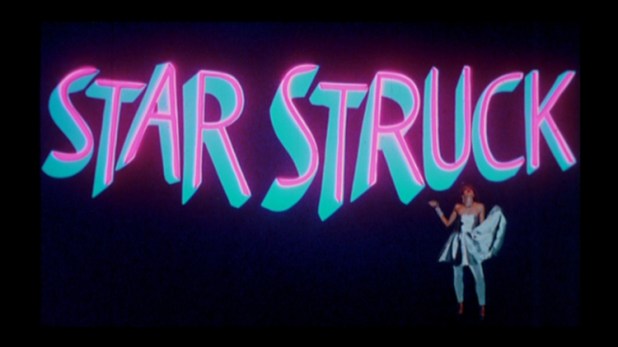
Jackie Mullens (Kennedy) dreams of being a star while working in her mother’s pub. Her young cousin Angus fancies himself her manager, so he gets her in front of The Wombats, a local band, and gets them on the road to appearing on The Wow! Show. That said, he promises that Jackie will walk a tight rope nude to get on, which ends up getting her sent to jail for the day.
Despite dating guitarist Robbie, she soon falls for the show’s host and works on changing her sound to be more commercial. It fails, just as her deadbeat dad comes home and steals what little money her family has left.
Starstruck comes at an interesting time in the Australian movie industry, as three musicals — also including The Pirate Movie and The Return of Captain Invincible — were made between 1982 and 1983.
While this movie pretty much disappeared upon release in the U.S., it had a rental and cable audience that has kept it alive. If you’d like to join that cult, you can watch this on Amazon Prime and Tubi.
Charles S. Dubin was blacklisted but still ended up being a TV director of some reknown five years afterward. He’d go on to direct 44 episodes of M*A*S*H*, as well as TV movies like The Deadly Triangle and the 1979 remake of Topper.
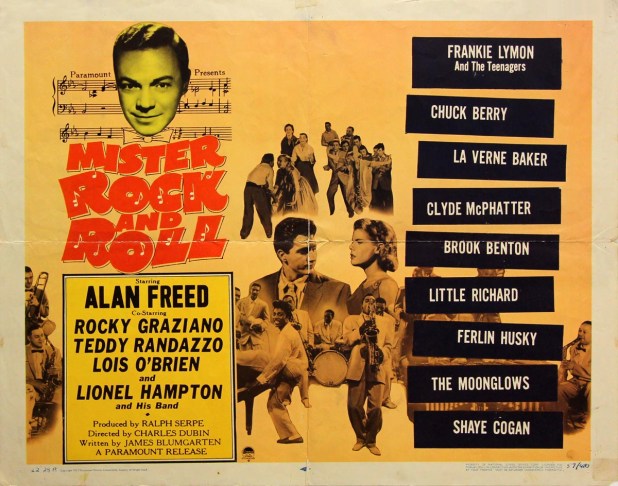
Here, he’s putting together a jukebox musical featuring Mr. Rock and Roll himself, Alan Freed, playing himself.
Freed made his “acting” debut — as himself, natch — with Rock Around the Clock (1956) alongside Bill Haley and the Comets; he followed up with Rock Rock Rock! (1956), Don’t Knock the Rock (1956; shot-for-shot and word-for-word remade as Don’t Knock the Twist with Chubby Checker), and Go, Johnny, Go! (1959), the last which Freed produced. In addition to those films, on the small screen, Freed starred as host of the feature-length Rock ‘N’ Roll Revue (1957), which aired on ABC-TV on May 8th of that year.
Here, in Mister Rock and Roll, we learn the story of how Freed helped discover rock and roll, yet it doesn’t shy away from the roots of the form in gospel, jazz and the blues. You get to see it performed by many of the earliest stars, including Frankie Lymon and the Teenagers, Clyde McPhatter, The Moonglows, Little Richard, Ferlin Husky (attention all fans of Hillbillys In a Haunted House and by that, I’m talking to myself) and Chuck Berry.
Teddy Randazzo plays himself and his love story with Carole (Lois O’Brien) is the central part of the story. She’s a reporter whose boss believes that rock and roll is going to ruin society. Those kids loving this music would grow up to hate hippies and feel the very same way.
Rocky Marciano also shows up for romantic advice in between the twenty some odd songs, making this nearly a 90-minute music video. No complaints. It’s a time capsule worth your time.
What is it about science fiction/horror musicals and why we love those so? The more cult — beyond Rocky Horror, there’s Shock Treatment, Voyage of the Rock Aliens and The Apple — the better, right?
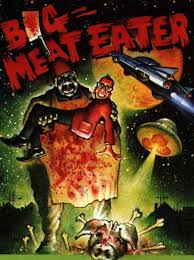
Allow me to present Canada’s 1982 entry to the strange symphony, Big Meat Eater.
Director Chris Windsor co-wrote, co-edited and co-wrote the soundtrack along with producer Laurence Keane (who would go on to make Samuel Lount with the third member of the writing team, Phil Savath; Savath also wrote Fast Company for David Cronenberg and the Jello Biafra sci-fi’er Terminal City Ricochet) while in film school. It’s the story of Abdullah (played by Clarence “Bull” Miller, who was a Kansas City blues shouter so loud he didn’t need a microphone; racial tensions led him to travel the world and finally settle in Edmonton), a butcher (which has to be a pro wrestling reference) who kills the mayor of town and stashes the body at his new job, working for Bob the Butcher, who lives by the motto “Pleased to meet you, meat to please you.”
That would all be strange enough if there weren’t aliens floating above town, obsessed by the large deposits of Bolonium beneath the butcher shop, reanimating the dead mayor to do their bidding. Meanwhile, everyone sings, dalmatians get turned into spotted beef and mutations abound. Oh yeah, and Bob has invented a new language for the town’s future-forward theme park.
What a magical time 1982 was, when a film like this could come out and find just the right people in the right video store to send the right wavelength to. Sure, we can find things easily now, but we can’t get as invested, right?
There was a sequel planned, Teenage Mounties from Outer Space, that never happened. We’re all the poorer for this.
You can download this on Gumroad and visit the official site and Facebook page for more information and to order the blu ray. We take a deeper look at the career of Phil Savath with our “Drive-In Friday” featurette.
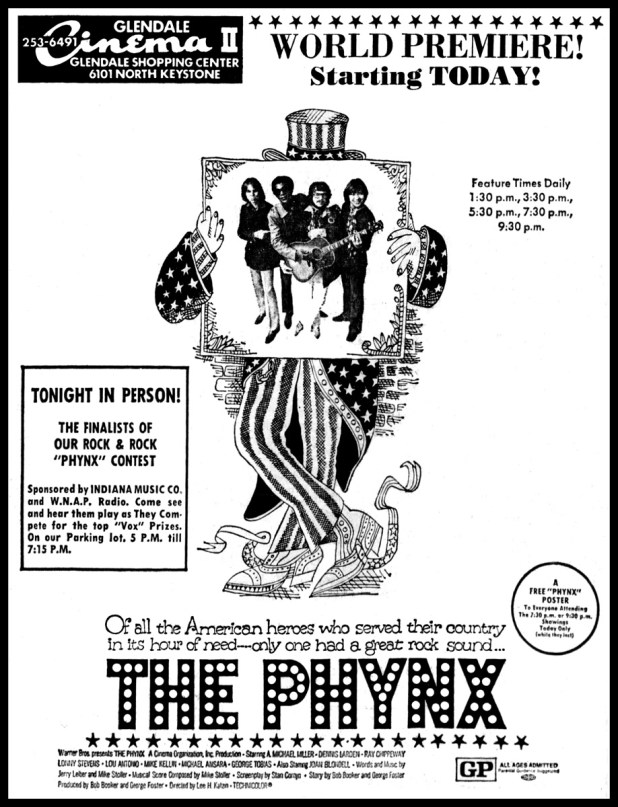
The Warner Archive is the gift that keeps on giving, because before it started making burn on demand DVDs, this movie has such a limited release that few people had seen it. I know I’d been hunting for it for years, as it perfectly hits on so many of the things that I adore. It has elements of the Eurospy genre, an overwhelming amount of cameos and as it was a lost film for some time, the feel of being a cult film.
The Phynx are a manufactured band — kind of like The Monkees — made up of A. “Michael” Miller, Ray Chipperway, Dennis Larden and Lonny Stevens. They’re trained in all manner of espionage and rock ‘n roll, including meeting Dick Clark, record industry emissary James Brown and being taught how to have soul by Richard Pryor.
At once an indictment of the system and the product of the very hand that it is biting, The Phynx occupies the same weird space as Skidoo, i.e. big budget Hollywood films trying desperately to reach out to the long-haired hippy audience, yet fairly to understand them on a near monumental level. Much like that film — or the beach films of just a half-decade hence, which seems like several lifetimes ago — this stars plenty of Old Hollywood former A-listers. Why this would reach “the kids” is beyond me, but this film has more of them than any movie this side of Won Ton Ton: The Dog Who Saved Hollywood.
All of those celebs of the past have been kidnapped by the Albanian government to make some kind of message to capitalist swine. Amongst their number, you’ll discover Patty of the Andrews Sisters (one wonders where Laverne and Maxene were), Tarzan star Johnny Weissmuller and his Jane (Maureen O’Sullivan), Cheyenne star Clint Walker (who we love for Killdozer!, Scream of the Wolf and Snowbeast), Rudy Vallee, gossip queen Rona Barett, Edgar Bergen and Charlie McCarthy, Busby Berkeley, Xavier Cugat (with chihuahua), Cass Daley, Roy Rogers’ sidekick Andy, Devine Fritz Feld (whose claim to fame was the popping sound he could make with his mouth; he also shows up in the aforementioned Michael Winner canine opus), Leo Gorcey, John Hart (who replaced Clayton Moore as The Lone Ranger, here in character) and Jay Silverheels (also in Tonto character), Huntz Hall, Louis Hayward, George Jessel, Ruby Keeler, Patsy Kelly (one of Hollywood’s first out lesbians), Dorothy Lamour, Guy Lombardo, Trini “If I Had a Hammer” Lopez, boxer Joe Louis, Marilyn Maxwell (who “dated” Rock Hudson), Butterfly McQueen (Prissy from Gone with the Wind), Pat O’Brien and Colonel Sanders (!).
Harold “Oddjob” Sakata is also on hand, as well as Lou Antonio (Cool Hand Luke), Mike Kellin (Mel from Sleepaway Camp), Michael Ansara (It’s Alive), George Tobias (Abner from Bewitched), Joan Blondell, Martha Raye, Pat McCormick (Big Enos from Smokey and the Bandit), Warhol superstar Ultra Violet, Susan Bernard (December 1966 Playboy Playmate of the Month and one of the stars of Faster, Pussycat! Kill! Kill!; she’s also the mother of Near Dark‘s Joshua John Miller), Sally Struthers as the band’s number one fan and Rich Little as the voice of Richard Nixon.
Lee H. Katzin (who mostly worked in TV, including the made for TV film What Ever Happened to Aunt Alice?) directed this, working with Robert McKimson for the animated portions. It was written by Bob Booker (who produced and wrote The Paul Lynde Halloween Special) and George Foster with a screenplay by Stan Cornyn. It’s the only script he’d ever write, as he was better known as the head of the Creative Services department of Warner Brothers Records, where he wrote Grammy-winning liner notes (for two Sinatra albums, “Strangers In the Night” and “Sinatra at the Sands”; he also wrote the song “The Meaning of Christmas” and was an innovator when it comes to what would one day be known as the DVD format).
This is the only film where Johnny Weismiller says, “Me Tarzan; You Jane.” So there’s some more trivia for you, which is — sadly — more interesting than this film. Yet it’s worth a watch to see the transition between the La-La Land of old and the new movement of art that would last just a few years before the blockbuster made itself known. I know someone that brought up to me how fortunate we were that Star Wars kicked all these old Catskills and vaudeville-era people out of films and into TV, because what they made was so hacky. The gall of this person upset me to a degree where it has since colored every interaction that I have had with them. I have a warm place in my heart for these bloated failures as the Man tried to reach the youth culture. They may be a mess, but they’re my mess.
Floy Mutrux wrote the musical theater productions Million Dollar Quartet, Baby It’s You! and Heartbreak Hotel after a career in films, including directing Aloha Bobby and Rose and The Hollywood Knights. He’s also written scripts for movies like Freebie and the Bean and Two-Lane Blacktop.
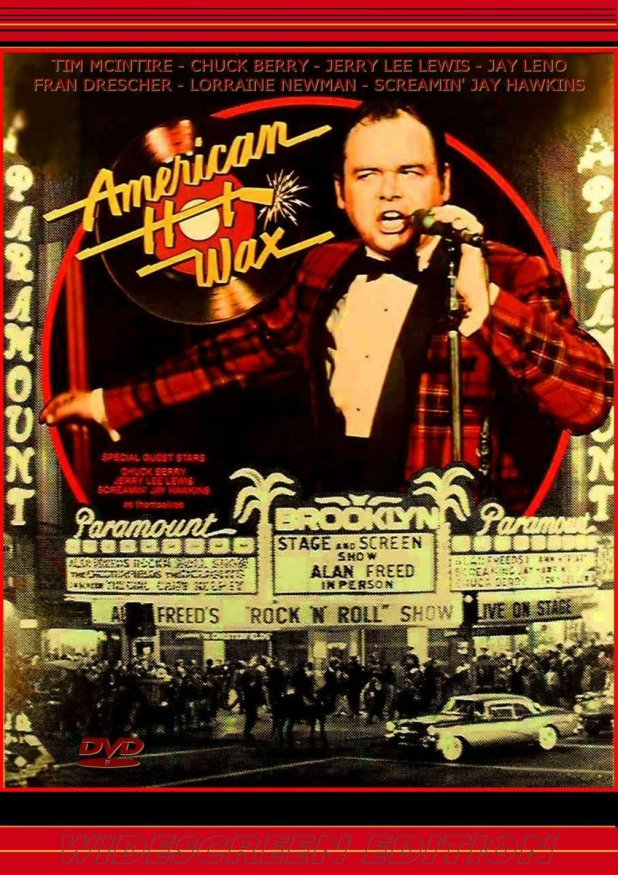
The strange thing is, this movie failed at the box office while its soundtrack went to #31 on the Billboard charts with no pr. And the movie itself is packed with the real artists of the era playing themselves, like Chuck Berry, Jerry Lee Lewis, Frankie Ford and Screamin’ Jay Hawkins.
This movie was well-reviewed — notorious haters Gene Siskel and Pauline Kael spoke well of it — and yet it died nearly unseen.
Tim McIntire — Blood’s voice in A Boy and His Dog — plays Alan Freed, the first DJ to get black artists on mainstream radio (or at least the first to be recognized for such a brave act). He’s also George Jones in Stand By Your Man, if you want to do a music movie double feature.
It’s also a romance, with Freed’s Freed’s secretary Sheryl (Fran Drescher) getting hit by Cupid’s arrow for chauffeur Mookie (Jay Leno). Jeff Altman, who for some reason has shown up in numerous rock and roll movies this week, plays a record exec. And hey — Larraine Newman is here, on break from SNL, as a young songwriter whose parents don’t approve of her being around black people (Carole King but not in name, basically).
NOTE: Thanks to Keith Morris for pointing out that it should be Carole King, not Caroline.
Planet Records owner Richard Perry — the man who produced Nilsson Schmilsson — is a record producer. There’s also plenty of great music and this film takes a more glowing look at Alan Freed than other films. It’s a shame more people don’t know about this movie.
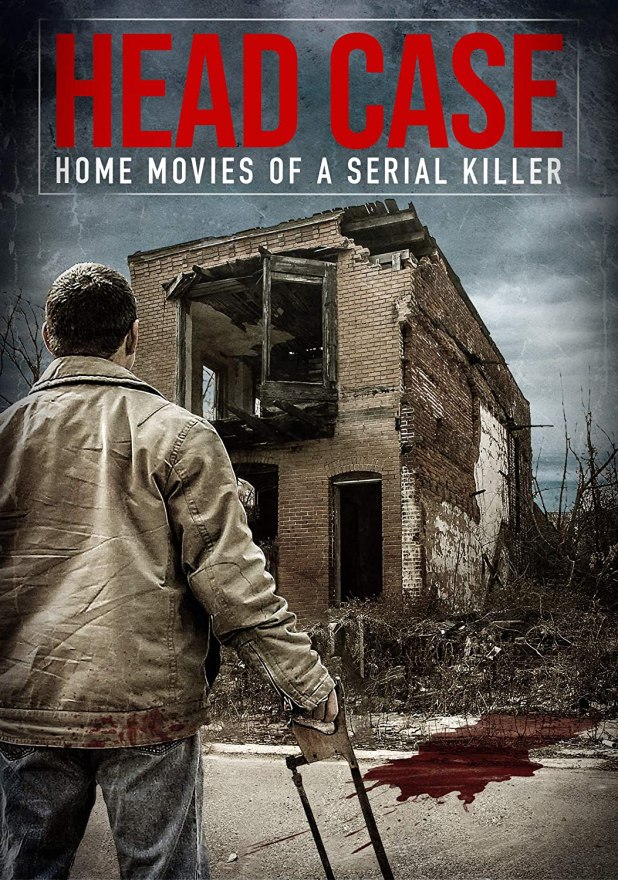
Recently re-released by Wild Eye — who were kind enough to send us a copy — Head Case: Home Movies of a Serial Killer is the first in a series of found footage style that also includes Head Case: Last Days of a SerialKiller, Head Case: Post-Mortem, Head Cases: Serial Killers in the DelawareValley, Head Case: The Lost Tapes and Head Case: Legacy.
While the murders by Wayne and Andrea Montgomery are similar to other serial kills — the IMDB page claims that there was some inspiration from Canadian serial killers Paul Bernardo and Karla Homolka, they are unique fictional characters who have filmed every one of their murders. While this gives them a momento of each kill, it also seems like it gives the police plenty of evidence.
Wayne Montgomery (Paul McCloskey) is a normal guy. Well, you know, except for all the murder, which he uses to cope with the stresses of trying to live the American dream. He used to kill more often before he married his bossy wife Andrea (Barbara Lessin). Now, he’s decided to start all over again, bringing his wife along for the ride.
The entire project is fascinating, as there was no actual shooting script. There was a detailed treatment of the story, with extensive histories on the main character. However, the dialogue is completely improvised based on bullet points given to the actors at the start of each shooting day.
Anthony Spadaccini is the director of all of these films. While found footage is not my style, I can appreciate the volume of content he’s created with these characters. If it’s more your kind of thing, you’d do well to seek this film out. Horror fans will also be pleased to see Brinke Stevens in the cast as Wayne’s mother.
Head Case: Home Movies of a Serial Killer is now available on DVD and on demand. You can grab the DVD on the MVD site. It’s also on Amazon Prime. This was sent to us by Wild Eye, which has no bearing on our review.
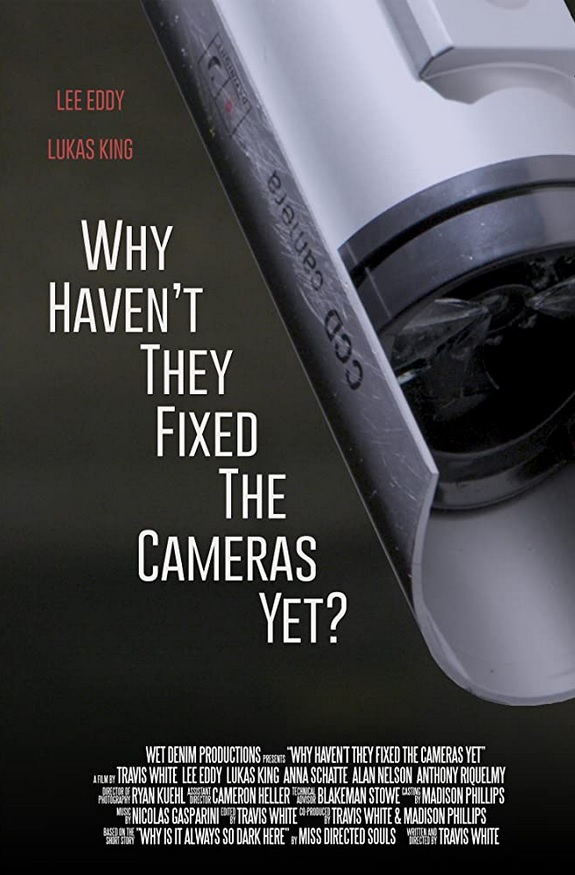
If you’re a frequent visitor to B&S About Movies, you know of my admiration for Law and Order: TOS and SVU. However, while expertly produced and acted, my precious exploits of Captain Olivia Benson and her squad (and Blue Bloods, I think) sometimes falls back on the ol’ the-car-won’t start-at-the-most-inopportune-moment trope of the ol’ our-security-cameras-haven’t-worked-in-months-and-our-bosses-are-too-cheap-to-fix-‘em trope.
But guess what?
It’s not a screenwriting trope. I’ve witnessed four incidents during my 9 to 5 lifetime where crimes-incidents (yes, people do spike coffee pots and icepick tires and key paint and steal food and spread icky-sticky things around and go into cubicle “smack down” mode) occurred in my workplace—and the cameras were broke. And yes, back in the pre-digital epoch when VCRs interfaced with those cameras—the VHS tapes really were “taped over” every 24 to 48 hours. And security cameras really are the new “digital mailboxes,” as wayward teens like to either—due to a lack of a “canvas” to craft an epithet on—spray paint the lenses or give ‘em a whack with a baseball bat, you know, for fun. Those rascally scamps.
Courtesy of digital technologies and through constant hardware miniaturization upgrades, security cameras—that you don’t know are there and everywhere—are recording everything. And if there’s not a camera to capture our societal faux pas, someone is at the smartphone-ready—recording everything. Then there are those high-tech-toys-not-meant-for-boys drones that, as with any piece of technology, are a benefit to man in the right hands—and a nefarious tool in bad hands. And if those technologies aren’t capturing us in an innocent Ridiculousness moment, the digital ethers chronicle our not-so-innocent-moments; ubiquitous technologies that leads to nary the pass of a day that our local and national news or browser portal feeds go without a newsworthy event or crime—thought private—that becomes our “forever” moment. . . .
A young office worker is thrust into that world of false security set forth by those omnipresent cameras capturing our forever moments—cameras that really are sometimes malfunctioning or vandalized and never repaired by our bottom-line employers. And if you’ve worked odd-ball hours in the big city, then you’ve experienced the reasonable fears of those remote, concrete wildernesses known as a parking garage. . . .
And, for this young office drone, that broken security camera in that desolate parking garage becomes a catalyst: her life is about to change . . . but is it for the better . . . or the worst?
Spoiler Alert: Watch the short, now, in its entirety, before scrolling onward.
Prior to watching and reviewing this debut work by Austin, Texas-based writer and director Travis White, I wrote an upcoming review for our October “All Slasher-All Horror Month” for Thom Eberhardt’s (Night of the Comet) horror-thriller Naked Fear (2007)—a film that concerns a woman’s emotional breakdown and catharsis at the nefarious hands of others.
The reason for my critical analogy of these two decade-apart films is that I see the possibilities of White’s short film—which is exactly what a short film is supposed to do: leave you wanting more; to serve as a visual business card to pitch a feature film development deal.
I’m not privy to reading “Why Is It Always So Dark Here?,” the short story on which this film is based, but I look forward to learning about this office worker’s exploits that—considering Thom Eberhardt’s work with the great Sir Michael Caine (1988’s Without a Clue)—remind of one of my favorite films starring Sir Michael: A Shock to the System (1990). In that film, the accidental death of a hated co-worker at Caine’s hands starts off an anti-hero murder-to-right-the-wrongs-and-for-workplace-advancement chain of events.
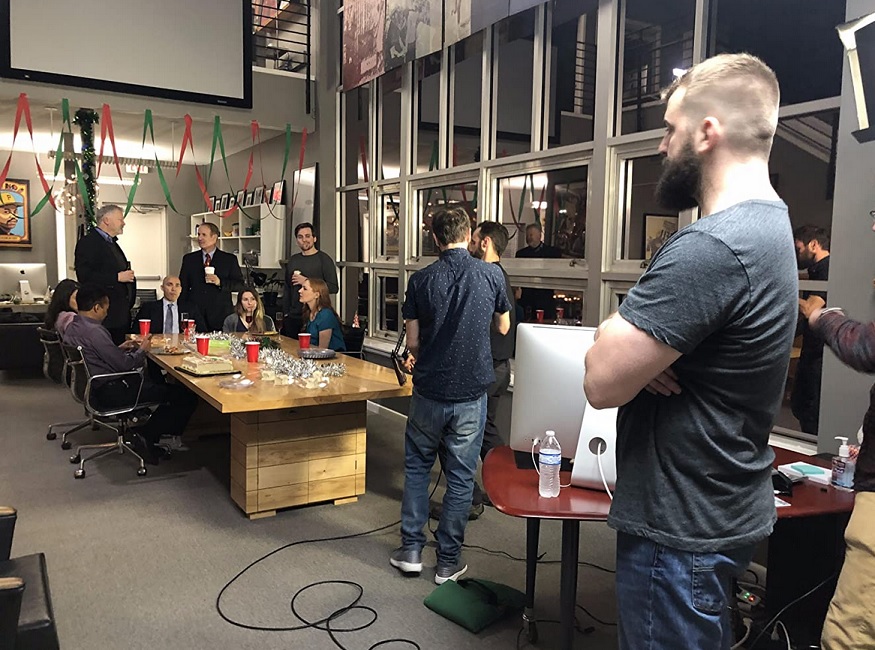
Office Parties: I hate people, but love gatherings. Isn’t it ironic?/courtesy of Wet Demin Productions
You can watch the complete film—and other productions—courtesy of Wet Demin Production’s You Tube page. And, in a special treat, we have an opportunity to share the film’s storyboards completed by writer-director Travis White. As you can see, no matter how long or short the film, an incredible amount of thought, time, effort, and planning goes into a film. It’s not about the length. It’s always about the content. Always.
If this is what Travis White (and producer Madison Phillips) can do in less than five minutes with his debut work, then we’re looking forward to see what he can do with his future works. In fact, he’s currently in the pre-production stages of his next short-narrative, Man Seeking Man (beware of those who ask for “favors”), which will see release in 2021. And you’ll hear about it first, at B&S About Movies.
And bigger things are on the horizon for actress Lee Eddy, here as the nameless office worker. She’s currently in pre-production on Richard Linklater’s (Dazed and Confused, School of Rock) Apollo 10 1/2: A Space Age Adventure, a coming-of-age story set in the suburbs of Houston, Texas, in the summer of 1969, centered on the historic Apollo 11 moon landing. That film stars Zachary Levi (Thor: Ragnarok and Shazam!) and Jack Black (Jumanji: The Next Level). Eddy’s husband, Macon Blair, won the U.S. Dramatic Competition Grand Jury Prize at the 2017 Sundance Film Festival for the Netflix-released I Don’t Feel at Home in This World Anymore. Fans of Scratch Acid and Jesus Lizard may want to check out the film (it’s great, by the way) as it co-stars lead vocalist David Yow (Under the Silver Lake).
Disclaimer: We were provided a screener by the film’s public relations firm. That has no bearing on our review.
About the Author: You can learn more about the writings of R.D Francis on Facebook.He also writes for B&S About Moviesand publishes on Medium.
“Uh, Mr. and Mrs. Yates? How do you like your hedges trimmed?” “I don’t know. Darling, do you like your bush, square or round?” —Mr. Yates multitasking ‘breakfast sex’ and getting rid of Daryl the groundkeeper
For most people residing in the wilds of Arizona (Pinnacle Peak outside of Phoenix/Mesa), when a mountain lion wakes them from a poolside nap . . . well, I know what “function” my body would do. Then there’s Phillip Penza. The beastly encounter inspired him to make a movie: he started to think about the “safety” of the pool; that jumping in the water—if the lion had charged, instead of running off—would have saved his life.
Now, as we’ve said many times before at B&S About Movies: when it comes to the low-budget films that cross our transom, it’s all about the cast that makes us hit that big red streaming button. And in this case, it wasn’t the ubiquitous Eric Roberts—it was Lorenzo Lamas, aka Reno Raines from our beloved 1992 to 1997 syndicated series Renegade (I never missed it!). Lamas currently resides in Arizona and previous worked on Penza’s debut film, My Name is Nobody (2014), along with the just-released (to Amazon Prime) vampire romp, Real Blood: The True Beginning. (Penza’s other films are 2016’s Movie Madness, and 2019’s Fire and Rain.)
We won’t sugar coat: the IMDb and Amazon streamingverse hasn’t been kind to Penza’s third (out of five) film. But again, like we always say here at B&S About Movies: you have to cut generous slack for the filmmakers and actors in the indieverse and view their films through a less judgmental set of eyes. Acting faux pas are par for the course. There’s going to be directorial, cinematography, and editorial stumbles. But there’s bad acting and filmmaking: then there’s filmmakers that are trying. And in the case of Phillip Penza and his crew and cast of unknown, Phoenix-based filmmakers, they’re pleasantly gallant in their efforts.
And Penza certainly knows his way around a script (the well-written line, noted above, spoken by Mr. Yates, himself a successful screenwriter, brought on a laugh-out loud moment). At first, it looks as if we have ourselves a low-budget desert noir of the old ‘90s USA Network variety (back when that channel produced original content before becoming an aftermarket shill for NBC-TV series), with the Yates—the home’s new residents—suffering a violent, home-invasions fate brought on by the home’s previous residents.
Then it veers off course.
When we meet Frank (Lorenzo Lamas), a well-off psychiatrist (They’re always more “defective” than their patients, aren’t they?) with a private, home-based practice inside his desert-mansion spread, he’s in the midst of a poolside tryst with his wife’s best friend—who’s returned early from a business trip. The ensuing knife fight results in Frank drowning his wife—and his lover urging him to “chop up the body and burn her in the outdoor fire pit.”
Yeah, Frankie knows how to pick ‘em. Good Headshinker. Good judge of character.
And Frank—who’s always in it for the nookie—does the deed. And guess who gets the next whack of the ax? Eh, you know how it is when your “disappeared” wife’s $11 million life insurance policy pays off—thanks to your buddy in the police department closing the case: there’s no sharesies for the side action in your life. Ah, but ol’ Frankie made one fatal mistake: he dumped his wife’s ashes in the pool. And she’s pissed off, rightfully so. Yep. This film noir just went supernatural on your ass with “killer water” spilling out of faucets and showers, less-than-forthcoming real estate agents, flickering lights, creaking chairs, missing Santeria priests, J-Horror Yūrei’s disappearing down sink drains, kids walking on water and talkin’ to disembodied playground swings—and one bitch-ass of a backyard pool (that dispatched Frank’s latest secretary-squeeze).
There’s been a lot of aquatic horror movies (we burned through some of that water-resume with our review of 2020’s Underwater); however, for the life of me, I can’t recall any films with “killer water” flowing through a home’s plumbing system. So, to that end: Phillip Penza certainly impressed me with a unique twist to the haunted house genre (which, again, I thought I was getting a neo-noir)—a house lost somewhere between Wes Craven’s “electrified spirit” serial killer romp, Shocker (1989) and the Bruce Dern-starring The Incredible Two-Headed Transplant(1971).
That latter film is recalled courtesy of Big Brody’s effective turn as Daryl Brown (also reminding of the late Michael Clarke Duncan of The Green Mile), the desert abode’s low intelligence-gentle giant that reminds of John Bloom’s heartfelt turn as Danny Norton in that early-70s AIP drive-in classic. But those are more than likely coincidental—and not direct, inspirational similarities—pulled from my personal, analog-film snob cortexes. But what we do get with Water is decent I-didn’t-think-this-was-going-this-way plot twists and a couple of eye-widening, noirish character-defective moments paired with atmospheric cinematography and genuinely creepy special effects.
In the end, the indie spirit of Phoenix, Arizona, is in Phillip Penza’s capable hands. So take a dip in his supernatural neo-noir, will ya? The water’s fine (sorry).
While you can watch Water ad-free on Amazon Prime for a very affordable price, it recently made its debut as a free-with-ads stream on TubiTv. You can learn more about Phillip Penza’s works at the official website and Facebook page of Little Book Films. Penza also discusses the making and release of Water in a radio interview posted on You Tube.
Oh, and speaking of Eric Roberts (The Arrangement and Lone Star Deception): there he is, again! The master thespian co-stars in Phillip Penza’s webseries Scrutiny, now streaming on Amazon Prime Video and Vimeo on Demand.
About the Author: You can learn more about the writings of R.D Francis on Facebook.He also writes for B&S About Moviesand publishes on Medium.
Disclaimer: We were not provided a screener nor received a review request from the filmmakers or their P.R firm. We discovered this film on our own and genuinely enjoyed movie.


 B&S About Movies
You must be logged in to post a comment.