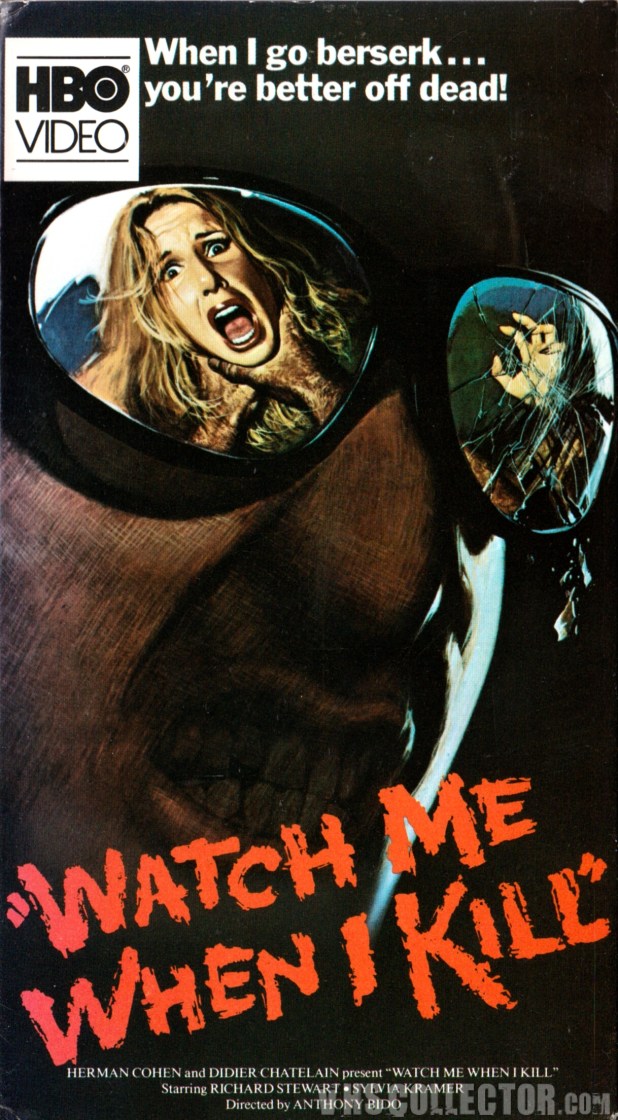
Antonio Bido also directed the giallo The Blood Stained Shadow, which I tend to enjoy more than this one. However, how great is the title of this film?
A pharmacist is murdered and Mara, the woman who saw the killer leave the scene, is now being stalked. Her boyfriend Lukas, being protective, decides to figure out who the killer is and soon learns that it’s anything but a normal crime.
Originally known as Il Giatto Dagli occhi Di Giada, or Cat with the Jade Eyes, as well as The Cat’s Victims, Terror in the Lagoon and The Vote of Death, this film has some unique murder scenes from its killer who has a cat-like mask.
An escaped murderer named Pasquale Ferrante seems the most likely suspect. He’s played by Paolo Tedesco, who was Calo in The Godfather, the bodyguard in Italy who said, “In Sicily, women are more dangerous than shotguns.”
Most of the victims were at his murder trial, but the clues go the whole way back to Axis collaborators during World War II. Giuseppe Addobbati (Nightmare Castle) also appears as a judge.
This movie feels much like a pre-Suspiria Argento giallo, which is not a bad thing.
You can watch this on Tubi. You can also get it on blu ray from Synapse.
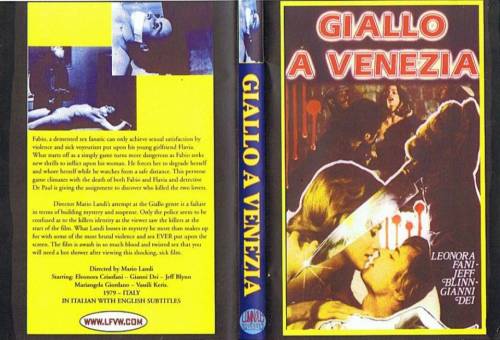
Let’s get it straight: giallo can class it up at times, but at its heart, it’s a scummy and brutal genre. No movie — save perhaps Play Motelor The New York Ripper — is as brazenly profane or messed up as this film. That’s saying something, because this is the kind of genre where the heroine can be totally fine with a man making love to her on broken glass (The Strange Vice of Mrs. Wardh) or absolutely fine with the hero making a joke about having tradesman’s entrance sex with her as a reward (Strip Nude for Your Killer, which predates Kingsman: The Secret Service by oh, three decades or so).
In case you were wondering, this is all brought to you by Mario Landi, who made a sequel to the Australian movie Patrick with Patrick Still Lives, except his movie has extensive sex scenes. Because Italian exploitation, that’s why.
PS: Is it sad — or awesome — that I know that Patrick Still Lives was shot in the same house as Burial Ground?
Oh Leonora Fani. I watch your movies and feel bad for you, like you need protection from the maniacs making your films. Between this movie, Hotel Fear and The House By the Edge of the Lake, one starts to worry for your psyche. Here, she plays one part of a doomed couple — along with Gianni Dei, who played Patrick in the aforementioned Patrick Still Lives — who are killed by a maniac who likes to use scissors on very tender parts of his victim’s anatomy.
Reviewing all of this is a cop with wild hair played by Jeff Blynn, who shows up in Stallone’s Cliffhanger. He’s so hard boiled that he eats hard boiled eggs throughout most of the film’s running time.
Amazingly, Scorpion Releasing restored and re-released this film after they found the legendary uncensored version of this movie hiding in the attic of a Portuguese dental clinic. All copies have been sold out for a while, but man. Movies are weird sometimes.
This isn’t the kind of film that I’d recommend to anyone, however. It has little to no redeeming value, as even its soundtrack is recycled from Interrabang and Burial Ground. For all of the vitriol thrown at The New York Ripper, that movie is positively restrained when compared to this. What do you expect from a movie that outright tells you that it’s a giallo right from its title? There’s nothing subtle at all here.
Man, I feel like Evelyn Quince from Tales of Ribaldry. “Our once bawdy tale is turning into a tawdry tale of pornography! I don’t like it!”
But seriously, this is pretty much the scummiest movie I’ve ever featured on this site and I regularly ingest Joe D’Amoto movies. Watch it at your own peril.
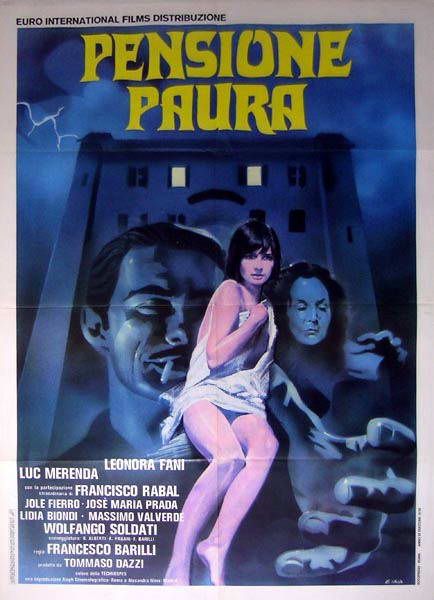
Four years after directing The Perfume of the Lady in Black, Francesco Barilli returned to direct this film. He had wanted to make a movie called L’Occhio, which had a very high budget, but producer Tommaso Dazzi had a treatment for this movie and, well, Barilli needed the money. An arrangement like that led to arguments on set, as the director and producer had very different ideas of the movie that they wanted to make.
During World War II, Rosa (Leonora Fani, who starred in The House at the Edge of the Park and the George Eastman film Dog Lay Afternoon which sounds like the scummiest or weirdest affair in, well, ever — which means I’m on the hunt for it) and her mother mourn the loss of Rosa’s father while running a hotel. After her mother dies myseriously, Rosa is constantly under assault from the insane guests, who are all murdered by a masked killer. Is it her dead father? Is this a gothic romance? Is it a giallo? Is it an exploitation movie? Who can say!
With a color template influenced by Suspiria and a predilection for art, this is one strange movie. I’d compare it to Footprints on the Moon, a giallo that really isn’t a giallo and just has that label because it’s difficult to imagine what the hell it really is. It’s also known as Hotel Fear, which is a fine title for it.
Barilli also wrote Sacrifice! for Umberto Lenzi and Who Saw Her Die? for Alan Lado. He’s still making movies — mostly documentaries — but I really wish he’d made more of these uncatagorizable fantasy films. Is embracing violence part of growing from a girl to a woman? Is all male sexuality inherently brutal? Is Rosa becoming her dad or protected by him? And hey — isn’t it great that this movie gives you no real answers?
I mean — if you’ve been watching giallo long enough, you’re probably ready for a movie that punches your senses in the eyes and then doesn’t care to tell you what it all really means. In that way, the giallo prepares us for real life way more than any other genre. We never get all the answers and are always on the edge, lingering near madness, despair and death. Entertaining, no?
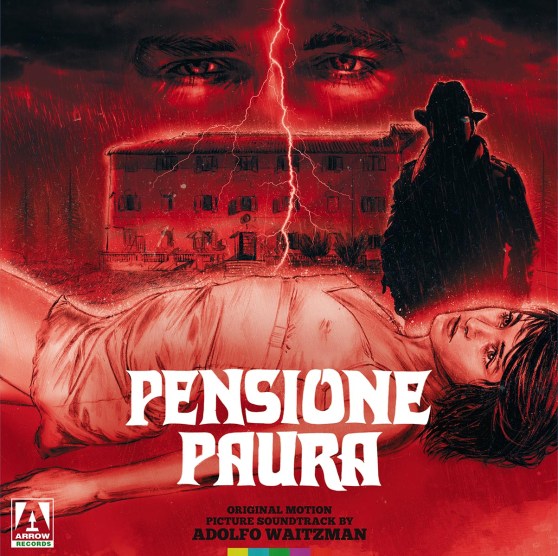
Arrow released a soundtrack for the film, but the movie isn’t available on DVD or blu ray in the U.S. Honestly, I’ve heard that it’s not an easy film to find anywhere. I found an untranslated version of the film — in high quality nonetheless — on YouTube, which I’ve shared below.
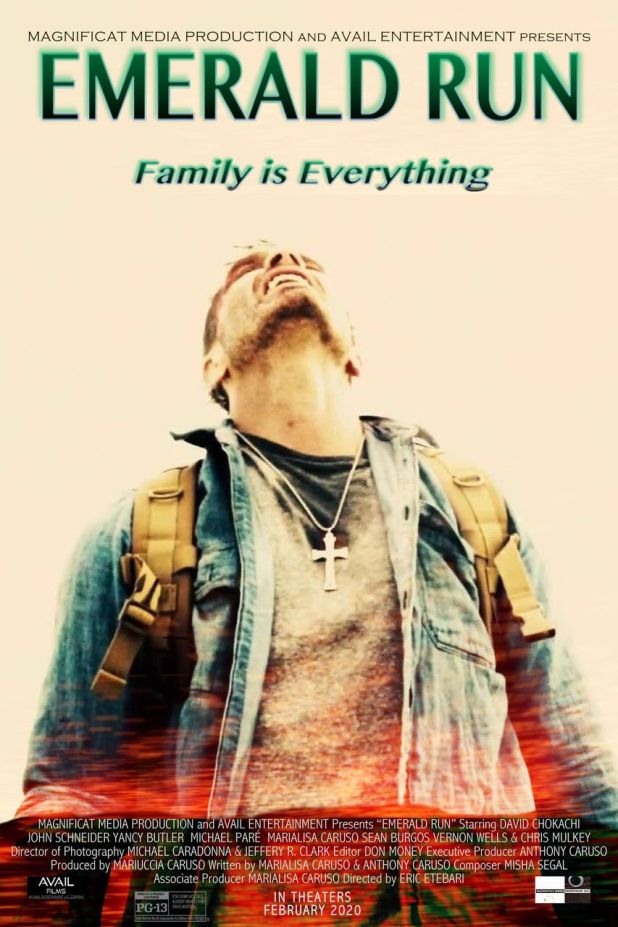
John Thomas (David Chokachi, Baywatch) is faced with his daughter Lisa’s (Marialisa Caruso, who contributed writing to the movie) mounting medical bills and issues at home with his wife (Yancy Butler, Witchblade). That leads him to be part of his father-in-law’s plan to smuggle jewels across the U.S./Mexico border. Things go wrong and he’s left for dead. Can he find his way back to life?
We featured the trailer for Emerald Run a few weeks ago. Now, we have had the chance to watch the movie.
This movie was produced by Anthony Caruso, who also served as the executive story editor. His career started with acting, moved into real estate and then he found his way to reality TV. This is the first film he’s produced and this was directed by Eric Etebari, who played Ian Nottingham on Witchblade opposite Butler.
The cast is packed with people you’ll recognize. There’s Steven Williams, who hunted down Jason in Jason Goes to Hell as Creighton Duke. John Schneider from TV’s Dukes of Hazzard. Chris Mulkey, who has been in everything from Whiplash to Cloverfield. And perhaps most exciting for readers of this site, Michael Pare from Streets of Fire and Vernon Wells, who is one of the best movie villains ever.
Emerald Run will be in a hundred U.S. theaters as of February 21. You can learn more about the film and where it’s playing at the official Facebook page.
DISCLAIMER: This film was sent to us by its PR company.
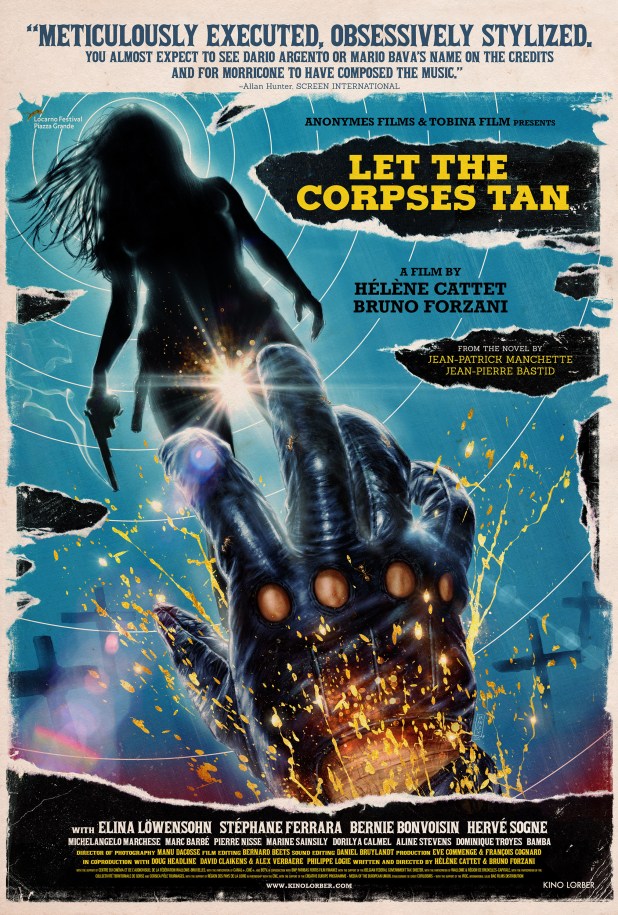
With Amer and The Strange Colour of Your Body’s Tears, the married co-directing couple Helene Cattet and Bruno Forzani announced to the world that they were a new force, bringing back the look and feel of the giallo for a new century.
Based on the novel Laissez Bronzer les Cadavres, this film expands their narrative point of view to take in the crime and Western genres, or as we know them, the polizichetti and spaghetti western.
A thug named Rhino and his gang of malcontents are on their way to the island getaway of Madame Luce with 250 kilograms of gold bullion — about $1.3 million dollars worth. That said, they’re also in the same place as a bohemian writer, his muse and many, many jealous lovers and ex-lovers, as well as the cops that are ready to engage in an all-day gun battle with the criminals.
Throughout the film, there are flashbacks to the performances of a younger Luce where she is tied up, painted with gold, whipped and licked by worshippers when she isn’t urinating on an anthill that looks exactly like the house where all of this violence is taking place. It might not make sense to the non-giallo initiated, but to some, it’s going to be high art.
The soundtrack is also a reference to the past, featuring Morricone’s songs from Face to Face, The Fifth Cordand Who Saw Her Die?, as well as Christophe’s song from Road to Salina and music from Matalo!, Zombie Holocaust and Death Walks On High Heels.
While the films mines the past, it does so to find its own footing. I’m intrigued to see what Cattet and Forzani do next.
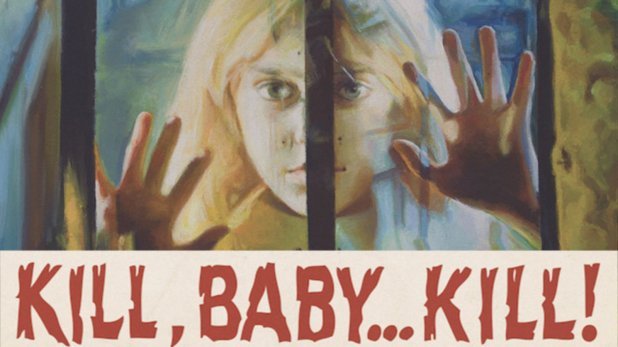
I first encountered Mario Bava’s Kill, Baby, Kill — or Operazione Paura (Operation Fear) — as all great movies should be encountered: in the foggy evening at a drive-in after none too few beers and other intoxicants. The only downside of this movie is that I can’t get back the feeling I had when I saw it the first time.
This movie was Bava’s return to gothic horror, yet it had no budget to speak of, reusing music from other films and with the maestro probably not even being paid for his work. In fact, the entire cast and crew worked for free to finish the film. The budget was so tight that instead of using a crane for one shot, Bava had to make due with a seesaw.
In the U.S., it was released as Curse of the Living Dead, which isn’t anywhere near as great of a title.
Dr. Paul Eswai (Giacomo Rossi Stuart, Knives of the Avenger) has been sent to a small village to perform an autopsy on Irene Hollander, who has died of mysterious circumstances. Medical student Monica Schufftan (Erika Blanc, The Night Evelyn Came Out of Her Grave) has been assigned as a witness; she soon sees something horrifying as a silver coin is inside the dead woman’s heart.
There’s also a ghostly little girl who either frightens people or convinces them to kill themselves. She’s Melissa Graps — actually played by the son of Bava’s concierge Valerio Valeri — the daughter of a baroness who is punishing the town. And Monica may be more involved in this strange town and these spectral doings than she can imagine.
As shocking as a child urging people to impale themselves and slash their own throats is today, I can only imagine how shocking it was in 1966. This movie has moments that feel like pieces of a dream, like when Eswai chases himself continually through the same endlessly repeating room.
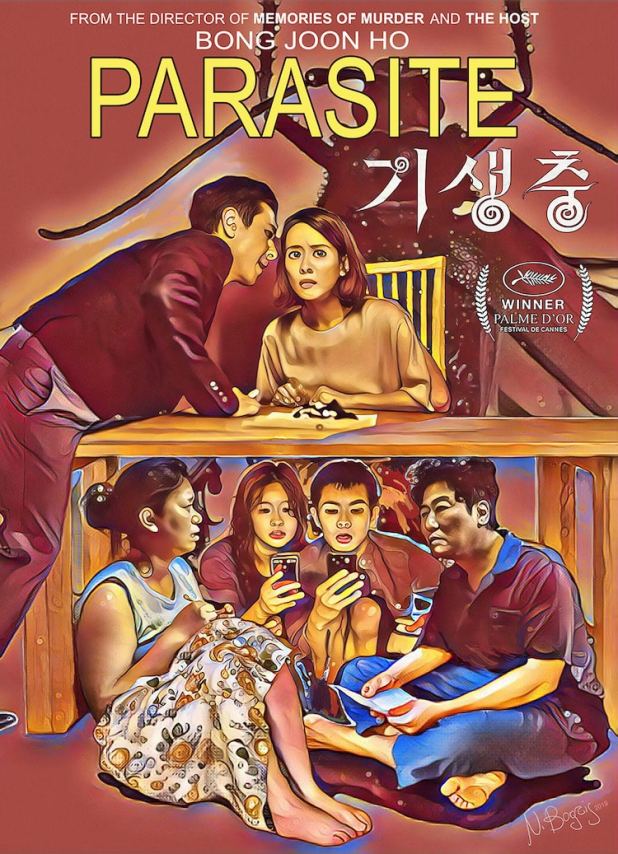
There’s been some anger over this movie winning an Academy Award. It’s hard for me to judge if a movie deserves to be considered the best film of the year, because the majority of movies that I love always end up being Italian end of the world movies or Mexican ripoffs of American horror tropes. Who am I to judge quality, I asked into the abyss, ignorant of the fact that I’ve created an entire site where I do exactly that.
The idea for Parasite comes from Bong’s own experience: he was a tutor for a wealthy family and imagined what it would be like to infiltrate their life. The title, which the director argued for, has a dual meaning. Sure, the poor servants are living off of the rich, but the masters are living off the labor class. They’ve lost the ability to clean and even move around for themselves. Everyone is a parasite in their own way.
Instead of taking an existing home, the house was specially made for the film. That’s because each character has a place that belongs to them and another place that is secret to them. Boon also spent considerable time storyboarding the entire film, as he believes that he must be ready for everything before the cameras start capturing footage.
There’s a phrase in South Korea called Hell Joseon. It means many things — unemployment, economic inequality, excessive work hours, the fact that poverty is inescapable for the lower class and that the system is rigged for the rich — but it generally means that life is hellish and hopeless.
This is not a phrase that is unique to South Korea.
What spoke most to me is that the history of the world — major battles and the plight of Native Americans — has been reduce to party table formations and the hobbies of disconnected children. The poor have been reduced to, at best, slave labor and at worst, ghosts. A ghost that appears to ruin the illusion that money and status seems to afford, but any man, no matter his station, can ruin and end the life of another.
I’ve always realized that no matter how good or bad your life is, there are always people with a status above and below you. But I’ll lean in and show you my hand. If there is any group that I’m prejudiced against, it’s the rich. Yet it’s hard to be for the family in this movie, as their machinations only prove that when they get the status they want — even for one fleeting night as they steal whiskey and a view of a yard that can never be theirs — they still hold down and destroy the lives a level beneath their own, only to then learn that their home has been flooded and taken away.
There is no escape for any of the Kim family yet they try to defeat the system through their attempts at grifting. But the system was built by people with far less scruples and morals. The home that promise luxury is also a prison, offering none of the comforts that Ki-taek dreams of, only a place to sneak out of at night and take his own life in his hands just to steal food.
At the end of the film, I felt worry for each character and knew they were all doomed in their own way. They are all trapped, whether by death or hope or the house itself. No one gets a happy ending, even if we wished for one to come true. Is having hope in the midst of Hell Joseon worth it? I’d like to think so, even as this film doesn’t.
Is it the best film of the year? Is it worth the hype? Is it worth watching? I can’t answer the first two questions, but definitely can say yes to the third. It takes time to get to the point when the staircase to the basement is revealed, but the movie had me from that moment.
It did make me think, as all good movies should. Is everyone a parasite, unable to function alone in this world? Should a father’s pride come in the way of his freedom? Should children be overindulged? How crazy is Morse code? These are the real questions I had.
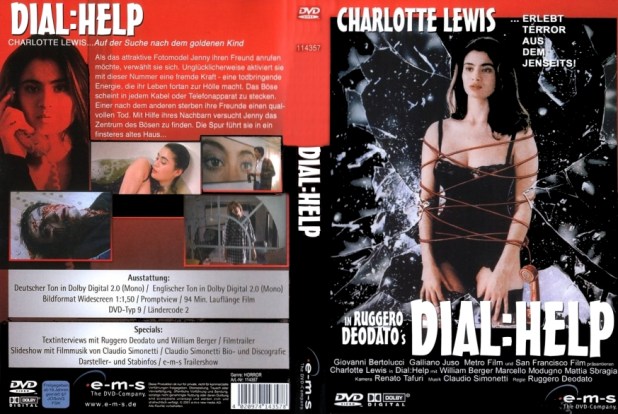
Jenny (Charlotte Lewis, The Golden Child) is a model who has just broken up with her boyfriend and expects him to call her back. Somehow, she gets connected to an abandoned lonely hearts phoneline, which is populated by the dead souls of its former operators, all of whom know how to use telephones from beyond to kill people in some truly innovative and completely insane ways.
Who can we thank for such magic? Ruggero Deodato, that’s who. Here, he’s working from a story by Franco Ferrini, who wrote the Argento films Phenomena, Sleeplessand Opera.
Let me tell you, this movie looks gorgeous. There’s nothing like the colors and look of Italian genre cinema to make me happy. And I love how over the top this movie gets — which is somehow about a phone line for people who had their hearts broken, which has since been abandoned but all of the operators are dead and can reach out from the other side to kill people.
Oh yeah — somehow these ghosts are able to hypnotize Jenny into putting on her finest lingerie and writhing in a bathtub. Because, um, art?
Anyways, the ghosts all live in the abandoned phone line office, which is now filled with pigeons and cobwebs and phones that like to kill cleaning women.
This movie is basically about phones killing people. A payphone shoots quarters at people like bullets. The sound from a phone rips a guy’s pacemaker right out of its chest. And phone cords lynch friends and slice them apart. This is the fate the telemarketers that bother me so often should endure.
All this blood and mayhem is set to a Claudio Simonetti soundtrack. None of it makes any sense, but who cares? It’s more fun than any movie I’ll see in the theater this year and between the colors and camerawork, it’s an impossibly striking piece of film.
Lewis also makes for a perfect Italian horror heroine. She never did much horror other than this film and Embrace of the Vampire, a sleazy slice of direct to VHS junk that burned up the rental shelves thanks to scenes with Alyssa Milano interacting with Lewis.
You can get this from Revok, but here’s hoping for a major release from Severin.
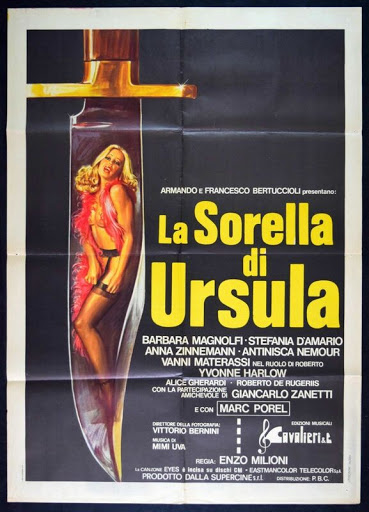
After their father’s death, two gorgeous sisters – the sensitive Ursula (Barbara Magnolfi, Suspiria, Cut and Run) and promiscuous Dagmar (Stefania D’Amario, Zombie, Nightmare City) decide to escape to the seaside resort town Amalfi. Oh, if they only knew the madness that waited there!
The island is quite literally awash with the wrong guys, the wrong girls, the wrong couples and a killer who tears people apart with the biggest member this side of Incubus. Get ready for a movie that isn’t sure if it wants to be sexploitation or giallo but is ready to do everything that it can to entertain you.
Director and writer Enzo Milioni also was behind the Lucio Fulci presented Luna di Sangue. In this movie, he’s created a world of pleasure and murder, which at times exists side by side. It seems from the cut I’ve seen that there may have been even longer — and more explicit — lovemaking scenes.
So who is the killer? Dagmar’s new man Filipo (Marc Porel, The Psychic), who just might also be a drug smuggler? The hotel owner (Yvonne Harlow, who claimed to be the great-granddaughter of Jean Harlow)? Perhaps dad isn’t quite so dead? Or are the sisters both insane? After all, Dagmar is given to loving herself just feet away from her sister, who hates just about everyone she meets.
According to Milioni, Porel was a drug addict who had earned a bad reputation as an actor. Magnolfi got him hired for the film and he behaved for the entire shoot and ended up getting clean. Sadly, while shooting a commercial in Monaco, he relapsed and overdosed.
This movie is also known as House Of Psychotic Women, which is an edited version for U.S. audiences. There’s also an even further edited TV version called House of Doom. I’ll tell you, this is the only movie I can think of where the children’s song “Frere Jacques” plays during murders.
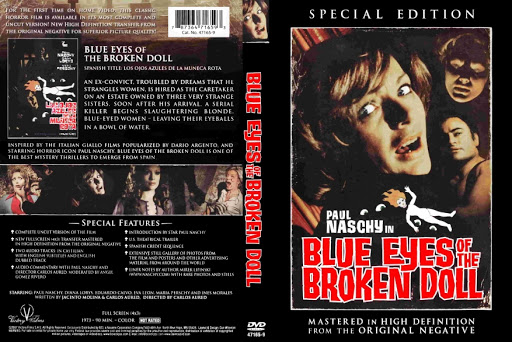
It was directed by Carlos Aured, who would also make Horror Rises from the Tomb, Curse of the Devil and The Mummy’s Revenge with this movie’s star and co-writer, Paul Naschy.
Naschy plays a ne’er do well named Gilles who wanders into a French town looking for work but ends up getting a ride from a woman named Claude (Diana Lorys, Fangs of the Living Dead) with a fake hand. She soon hires him to put in some work on the house that she shares with her sisters, the insatiable Nicole (Eva Leon) and the wheelchair-bound Yvette (Maria Perschy).
Oh yeah — it’s giallo week. I forgot to mention that a black-gloved killer is murdering only blue-eyed women and putting them eyeballs into glasses of water. The top suspect? Lucio Fulci. No, no, it’s Gilles.
All those eyeball scenes earned this movie a spot on the section 3 video nasty list. Trust me — it’s not as rough as many of the films on that list, but it probably disturbed enough people that it got picked. It’s an odd film with a strange atmosphere.
 B&S About Movies
You must be logged in to post a comment.