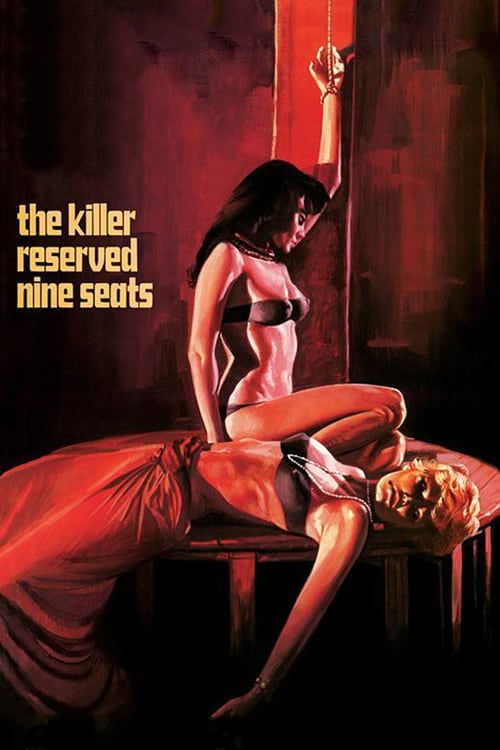
The Killer Reserved Nine Seats (1974)

To celebrate his birthday, wealthy Patrick Davenant (Chris Avram, The Eerie Midnight Horror ShowEmanuelle in Bangkok) brings his friends to his family’s unused theater — empty for a century, which is how long his family has been cursed, which in no way is taken from The Red Queen Kills Seven Times.

There’s his sister Rebecca (Eva Czemerys, Escape from the Bronx) and her lover — look how ahead of its time Italian giallo in 1974 was — Doris (Lucretia Love, who was in The Arena and the astoundingly titled When Men Carried Clubs and Women Played Ding-Dong). And he’s also decided to bring his ex Vivian (Rosana Schiaffino, once called the Italian Hedy Lamarr) and her new husband Albert (Andrea Scotti, Terror Express), along with Patrick’s daughter Lynn (Paola Senatore, Ricco the Mean MachineEmanuelle in America (1977) and Eaten Alive!; due to an unplanned pregnancy and being hooked on drugs, she ended her career by appearing in an adult film, Non Stop… Sempre Buio in Sala before being arrested for possession and trafficking of drugs) and her boyfriend Duncan (Gaetano Russo, Crazy Blood), as well as Patrick’s fiancee Kim (Janet Agren, City of the Living Dead), her ex-boyfriend Russell (Howard Ross, otherwise known as Renato Rossini, The New York Ripper) and finally, to finish off this cast of gorgeous people who all hate one another, some dude no one can really figure out where he belongs (Eduardo Filpone, Flavia the Heretic).

Oh yeah — there’s also a caretaker played by Luigi Antonio Guerra from Spasmo.

Before you know it, everyone starts getting killed, including one death via stabs to the lady business and their cranium being nailed to a board. You’d think with all this mayhem, the movie would be pretty interesting, but sadly, it drags.

The mysterious stranger — when he’s not looking funky fresh in blue blazer and fancy medallion — is given to saying things like, “You know what I like about you people? … You’re so civil to each other as you tear each other apart.” and “I spent a night here a hundred years ago” and “The actors are present and now the play may start…”

Janet Agren gets to act out a scene from Romeo and Juliet before she dies at least.

You know how people decry American slashers because they punish anyone who enjoys sex or drugs or any behavior deemed aberrant? This movie takes that notion and delivers it in spades. Of course, it also presents sin in all its glory but uses violent death as the square up reel.

This is the last movie that Giuseppe Bennati made. It fits in with post-Argento giallo, but doesn’t add much to the form other than a great title and poster.
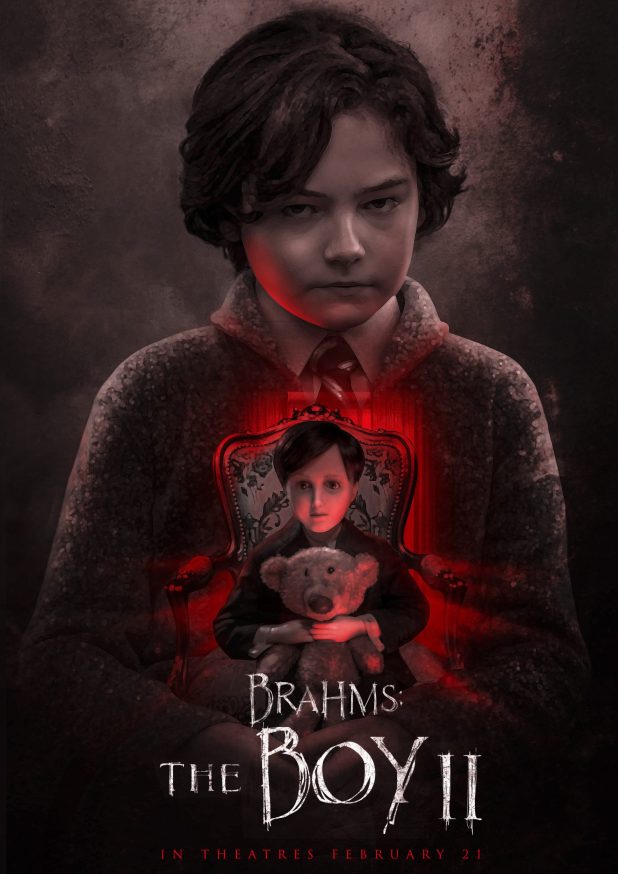
Brahms: The Boy II (2020)

William Brent Bell directed the original The Boy, a movie that pleasantly surprised us when it was released in 2016. This follow-up has been on our radar for some time, yet has been knocked around schedule-wise. Originally set to play theaters in July and December 2019, it finally made its way to the graveyard of films that are the first two months of the year.

I wanted to absolutely adore this movie, but I walked away only liking it. That’s because the beauty of its predecessor was that while it seemed like a supernatural film, there was an even more unsettling reality as to why Brahms, the porcelain boy, could move, communicate and impact his surroundings.

In this installment, the film goes all-in on the otherworldly, sometimes to its credit (the gleefully unhinged look of the villain once his face has been destroyed) and often to its detriment.

In all elevated horror, it seems that the true enemy isn’t the gnawing unknown existing just on the side of our consciousness, but bad marriages and worse parenting. Liza (Katie Holmes, of whom my wife inquired, “Why is she doing this movie?”) and Sean seem as if they’ve had a divide between them since their son Jude was born. He’s a sensitive soul, the kind that enjoys pranking his mother for no good reason before a home invasion renders their lives worse than it was before.

Between Liza’s head injuries, Jude getting shellshocked and Sean seeming not to care at all, the family moves to the country. Obviously, money is not one of their dilemmas. Settling in at the guest house of the first film’s Heelshire estate, they soon meet Jospeh (Ralph Ineson, who post-The Vvitch is the go-to for strangely off UK-based character acting).

Moments later, Jude has stopped his precious handwriting instead of speaking and unearthed Brahms from his earthen grave. While Jude’s therapist sees having the plaything as a positive at first, by the end of the film, the rules of owning Brahms have led to a brutal game of croquet and canine decimation.

While the film has a call back scene to the drowning in the first movie, you don’t need to know that story to watch this. Neither Laura Cohan or James Russell returned, due to scheduling conflicts and not wanting the role.

This will probably be streaming by the time I finish writing this review, but it was a pleasant enough filmgoing experience. There’s an end sequence that reminded me of the much more harrowing doll scene in Argento’s Deep Red, but I really did enjoy the closing moments.

So few modern horror films get the opportunity to become franchises, compared to the movies of my teen years. Brahms: The Boy II engages in world building and trying to place a reason for all the madness, but in my opinion, the unanswered nature of the first film was a much more horrific experience.

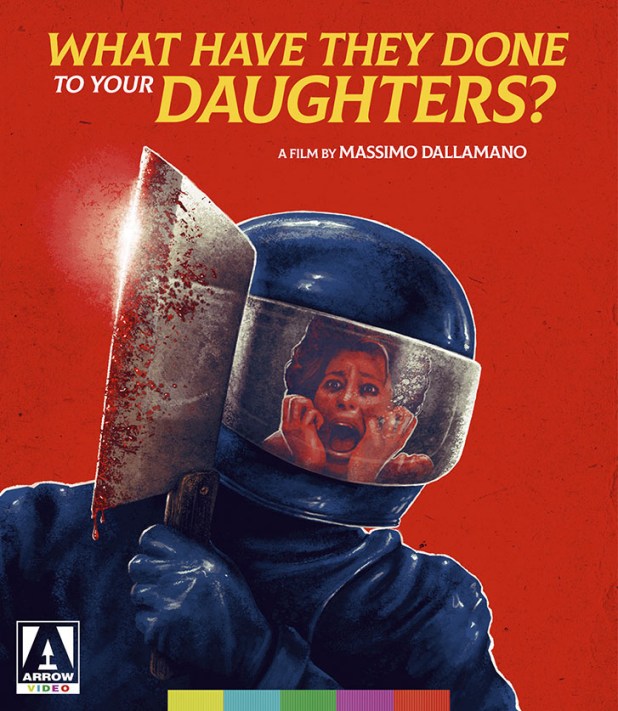
What Have They Done to Your Daughters? (1974)

By 1974, the giallo was waning and the poliziottesco was starting to win over the Italian box office. This offering is a hybrid of both — unlike many giallo, the police are not presented as ineffectual or non-essential. Instead, they’re followed for most of the film.

Massimo Dallamano (The Night Child) made What Have You Done to Solange?, a giallo that exists outside of the Argento archetype. He’d follow it with this rougher and much darker — somehow that’s possible! — semi-sequel.

Deputy Attorney Vittoria Stori (Giovanna Ralli, The MercenarySex with a Smile) is a rarity in giallo. She’s a woman in command of the police and never presented as a victim. She’s in charge of the murder investigation of Sylvia Polvesi (Sherry Buchanan, Dr. Butcher M.D.).

Found hanging in an attic, her suicide is anything but, as Inspectors Silvestri (Claudio Casinelli, Murder RockHercules) and Valentini (Mario Adorf, Short Night of Glass Dolls) soon discover. And oh yeah — there’s soon a leather jacketed biker using a meat cleaver to gorily off his or her victims. And a peeping tom, too! And teenage prostitution! And Farley Granger, showing up to class up the proceedings!

Obviously, the look of the killer in this movie would influence a movie that has no interest in classing up the giallo — Strip Nude for Your Killer — and an American movie that gets so close to a giallo but is missing the murderous set pieces — Night School.

It’s a shame that Dallamano died in a car accident at the somewhat young age of 59. As the cinematographer for Leone’s A Fistful of Dollars and For a Few Dollars More, he certainly had an eye for action and movement, as evidenced by the hallway chase scene in this film that seems as steady as, well, a Steadi-Cam shot (it isn’t!).

The Giallo Files site compared this movie to an episode of Law and Order. That’s an apt comparison. It’s a good movie to introduce someone to the genre with, as while it has some twists and turns, it doesn’t descend into plot hole jumping or an abundance of red herrings as some films of this genre.

You can grab the Arrow Video release of this movie from Diabolik DVD.

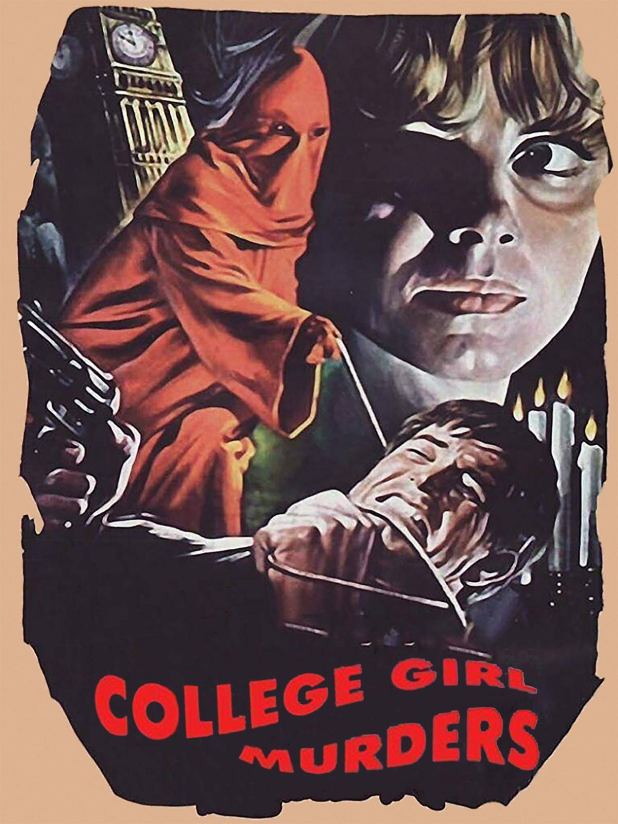
The College Girl Murders (1967)

Beyond Dario Argento and Mario Bava, perhaps the true father of the giallo is Edgar Wallace. And yes, it’s somewhat strange that a British-born writer — in fact, the same man who wrote the original script for King Kong — would beget a uniquely Italian film genre, but sometimes that’s how it works.

Wallace toiled in the army press corps and at London’s Daily Mail, constantly skirting bankruptcy and scandal before he finally became known as the King of the Thrillers. His output was staggering — 170 novels, 18 stage plays, and 957 short stories — with him often dictating his novels just by speaking them aloud as secretaries typed them out. He often worked on three books at once, which was just as well. At one point, he wrote one in four books read in the UK.

Basically, Wallace was constantly on the run from loan sharks and bookies, so he churned out novels to keep them away. It wasn’t until long after his death that his name became even more famous overseas.

Of course, Wallace’s movies had been adapted for the screen for decades, starting with 1916’s The Man Who Bought London and continuing throughout the 60’s with the forty-seven films in the Edgar Wallace Mysteries series.

In 1959, the Danish company Rialto Film made Der Frosch mit der Maske, which started the krimi genre. These films are marked by quick zooms and hidden, yet flamboyant, supervillains. Often, these killers wear a mask and as you watch these films, you can see their influence on the giallo that would come in their wake. Indeed, the very name giallo comes from the garish yellow covers that detective novels by Wallace sported on Italian newsstands.

At the point where The College Girl Murders was made, it’s obvious that the films were not adaptions word for word from Wallace, but used his titles or themes to inform new ways of telling his stories.

There are mad scientists making gases who are soon killed by a  monk wearing a red robe and wielding a whip and another lethal gas weapon that’s hidden inside a Bible. Yes, that’s just in the first few minutes of the film.

Jazzy 60’s music? Creeps staring at women from hidden windows in a swimming pool? Frustrated cops trying to put it all together, yet with a red hooded killer always one step ahead? Pits of alligators ready to menace comely young women? Uschi Glas from Seven Blood-Stained Orchids? Ewa Strömberg from Vampyros Lesbos? Yes, this film has all of that and more.

You can watch this on Tubi.

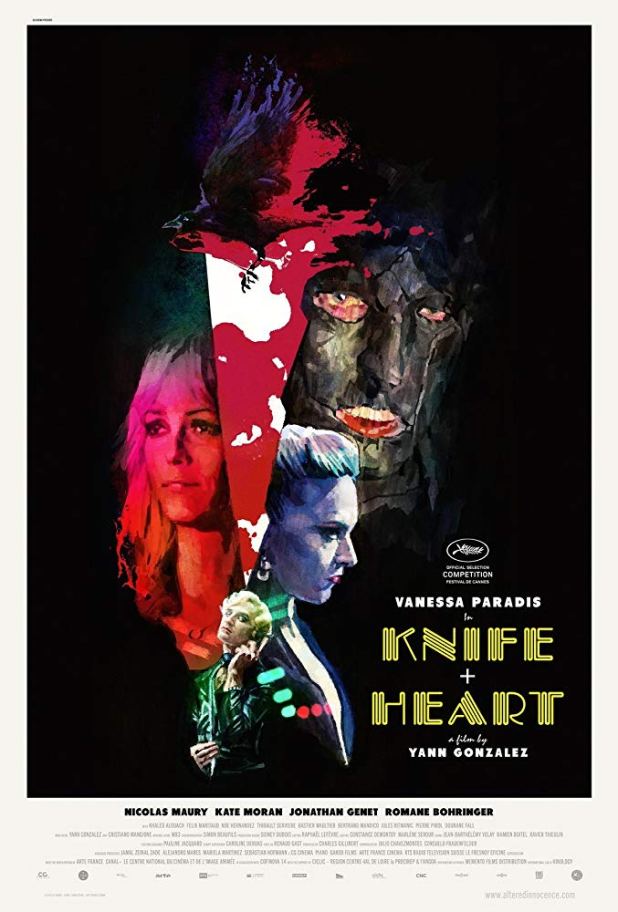
Knife + Heart (2018)

Knife + Heart is a true anomaly when it comes to giallo. It’s from France, a country more given to the fantastique film than the giallo — though there are movies like The Night CallerWithout Apparent Motive and The Night Under the Throat. And its victims aren’t gorgeous women, but the actors of the gay porn industry, changing the psychosexual dynamics of the form.

Instead of featuring the sounds of a band like Goblin or a score by the likes of Morricone or Orlandi, Knife + Heart has music by Anthony Gonzalez of M83 who is director Yann Gonzalez’s brother.

A young man is killed by a masked man whose very sex conceals his murder weapon to open the film. Then, we meet Anne (Vanessa Paradis), an adult film director who has recently been abandoned by her girlfriend and editor Lois. The man killed in the opening was the star of several of her films; now she must find an actor to take his place. That leads her to Nans, who despite identifying as a straight man agrees to be in her movie.

The new film — Homocidal — will be her version of the murders, which continue targeting members of her cast. The police either can’t — or won’t — help. But the movie gets finished and as the group celebrates its completion with a picnic, the killer strikes again, just as Anne pretty much assaults Lois in an attempt to get her back.

The true killer is a man whose father caught him making love to another man. He killed his lover and castrated his son, who was also burned in a fire before being brought back from the dead by a blind crow — the fact that this movie isn’t called Call of the Blind Crow speaks to its non-Italian origins — and seeing one of Anne’s movies brought his memories back.

This being a giallo, there’s also a bird expert with a disfigured hand that looks like he has, quite literally, chicken fingers. Plus, the entire end of the movie is explained via voiceover. The fact that so much of this movie is given to style over substance means that it lives up to the movies that inspired it.

While the murders are in your face, the sex is nearly hidden from view. And Anne is an intriguing protagonist — drunken and bitter instead of the normal virginal giallo and slasher ingenues that save the day. She instead brings the killer closer with each scene that she directs.

You can watch this on Shudder.

Ghouls Across America chapter 6

This time, things get emotional in a good way: “Joe and Alex bid farewell to Pennsylvania as they travel through New York on their way to New England. They hit up the Salem Witch Museum in Massachusetts, and spend a couple of great days in Portland, Maine dining on the best chowder on Earth, touring Casco Bay, and much more!”

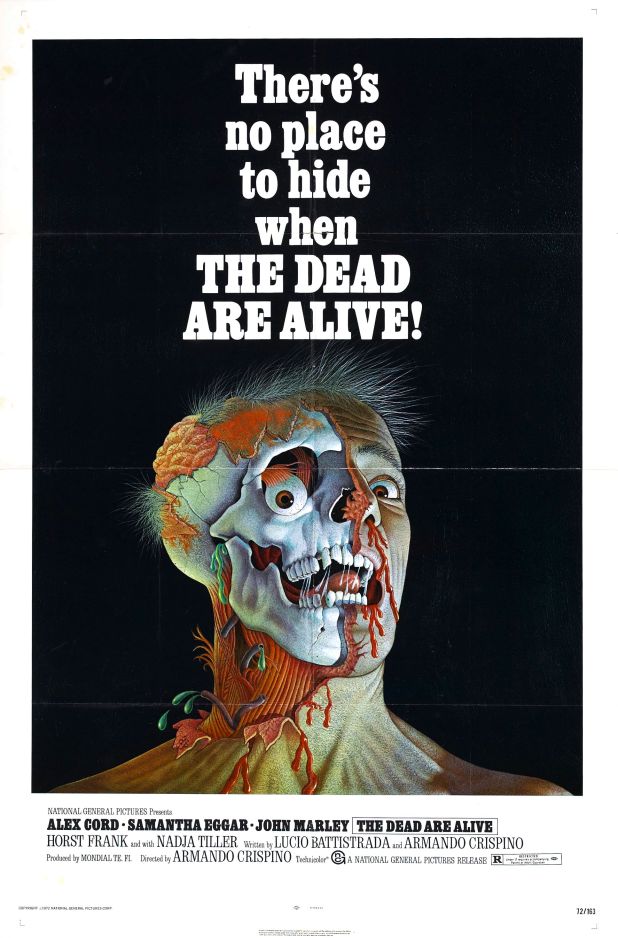
The Dead Are Alive (1972)

Originally known as L’etrusco Uccide Ancora (The Etruscan Kills Again), this film comes to us from Armando Crispino, who made the quite enjoyable Autopsy and the fabulously named Frankenstein Italian Style. It’s based on a novel by Bryan Edgar Wallace, the son of the man who gave inspiration to both the krimi and giallo genres.

It was released in Germany as Das Geheimnis des Gelben Grabes (Mystery of the Gold Diggers), in France as Overtime and as El Dios de la Muerte Asesina Otra Vez (The Death God Kills Again) in Spain.

Two young folks are looking for a place to load the clown in the cannon, but while they’re aardvarking they are murdered within an Etruscan tomb. Oh, if only that tomb hadn’t recently been violated by Professor Porter (Alex Cord, Chosen Survivors) and his team of archaeologists!

Because of how the bodies are positioned, it seems as if they were sacrificed to the ancient Etruscan god Tuchulcha. The bodies soon pile up, but soon, as the title says, the dead seem to be alive. This is a giallo, but more on the supernatural side of the genre. If you’re looking for a movie that makes sense, you know — you’re watching the wrong kind of movies.

Samantha Eggar (Demonoid) shows up as Cord’s ex-wife, as does John Marley (who woke up with a horse’s head in his bed in The Godfather) as her rich new husband, as well as Wendi D’Olive from The Bloodstained Butterfly. Riz Ortolani makes it all better with his soundtrack, too.

The nice thing for non-hardcore fans of giallo is that this movie has the actual dialogue by the original actors, so it doesn’t suffer from a bad dubbing. It also has plenty of great locations and 70’s fashion, which makes it feel pretty fun once it gets past its initial slow going.

Atomic Apocalypse (2018)

Originally called Black Flowers, this post-apocalyptic film follows Kate, her injured husband Sam and their daughter Suzi after the end of the world as they look for a hidden storehouse of supplies. Kate soon finds herself cut off from her family and must battle her way back to them, but things are complicated by Sam’s injuries, Suzi falling for a loner and all of the marauding maniacs that roam the post-Armageddon wastelands.

This film was directed by Martin Gooch, who also made The Gatehouse. It’s basically a mother/daughter story of them finding how people are dealing with the End Times, whether that’s starting a cult, eating people or just having an endless party of drugs and music until death takes everyone.

Atomic Apocalypse is available on DVD and on demand from High Octane Pictures.

DISCLAIMER: We were sent this movie by its PR company.

Crimes of the Black Cat (1972)

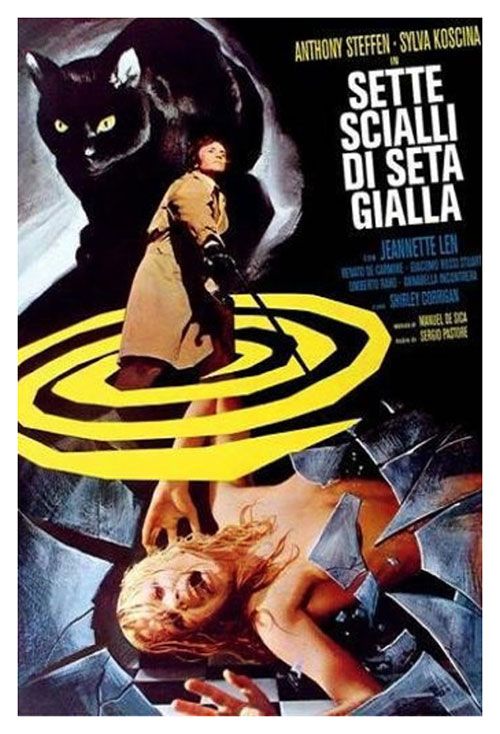
Italy and Denmark unite for a film made in the wake of Dario Argento’s landmark The Bird With the Crystal Plumage. Just look — there are crimes right in the title and some vaguely associated animal name! Actually, a black cat does kill some people in this, so the name makes sense.

Originally titled Sette Scialli di Seta Gialla (Seven Shawls of Yellow Silk), this movie was written and directed by Sergio Pastore.

Several fashion models are killed by a murderer — think Blood and Black Lace — by a black cat that has been alerted to them by gifted shawls laced with chemicals. Such a strange way to kill someone, but hey — we’re in the psychosexual world of the giallo, so why worry?

Paola, the first victim, had been dating Peter Oliver (Anthony Steffen, who was Django in Django the Bastard and also shows up in Play Motel and The Night Evelyn Came Out of the Grave), a blind composer who believes that he’s heard the killer. He and his butler (Umberto Raho, Enter the Devil) are on the case, tracking the cat down to its owner, who is killed before she can reveal who has been taking care of her cat.

Much like the aforementioned — and superior — Bava film, Francoise (Sylva Koscina, Steve Reeves’ love interest in Hercules and Hercules Unchained; she’s also in So Sweet, So Dead and Bava’s Lisa and the Devil) was killing the models to cover up another killing. That’s because Paola was sleeping with her husband and certainly had to pay.

So yeah. The movie is a Bava remix with a lead character taken from another giallo, Argento’s The Cat O’Nine Tails. And the killer’s method comes from Bela Lugosi and The Devil Bat. Don’t let all that copy and pasting get in the way of your enjoyment of this movie. It’s still fun — the fashions are inordinately loud, the zooms are wild and the music is out of control. There’s a vicious shower kill than leaves nothing to the imagination. And it’s still better than anything out there today.

You can watch this on Amazon Prime.

UPDATE: This is finally being released on blu ray in the U.S. by Cauldron Films.

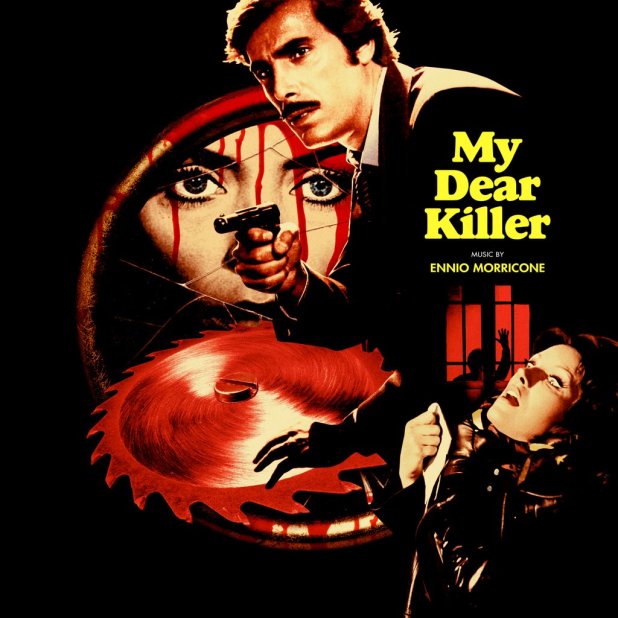
My Dear Killer (1972)

This Italian/Spanish giallo comes to us from director Tonino Valerii, who wrote The Long Hair of Death and directed plenty of great spaghetti westerns like Day of Anger and My Name is Nobody. He’s recruited George Hilton for this film, who was also in Sartana’s Here… Trade Your Pistol for a Coffin, as well as giallo classics like The Sweet Body of DeborahAll the Colors of the Dark and The Strange Vice of Mrs. Wardh. He’s rocking an excellent mustache in this, if that’s what you’re into.

You have to love a movie that starts with a mechanical digger tearing a man’s head clean off his body before female voices singing the film’s Ennio Morricone composed theme over blood red title cards.

An unsolved case of kidnapping and murder has led to a series of seemingly unconnected deaths that Inspector Peretti (Hilton) must put together. All he has to go by is a drawing that a little girl made, but giallo films have been solved with less clues.

While this movie stays more on the police side of the equation than many giallo, it still has some kill scenes that stand out, such as a grisly circular saw murder.

Marilù Tolo — the only woman that fashion designer Valentino claims that he ever loved — is in this. Former roommate of Keith Richards and star of Jess Franco films William Berger also appears, as does Patty Shepard (one of the queens of Spanish horror; she was Hannah Queen of the Vampires, the vampire woman in the Paul Naschy film La Noche de Walpurgis and also shows up in Slugs and Edge of the Axe), Piero Lulli (Kill, Baby, Kill), Helga Liné (The Vampires Night Orgy), Corrado Gaipa (Don Tommasino in The Godfather), Dana Ghia (The Night Child) and Lara Wendel, who shows up in everything from The Perfume of the Lady in Black to TenebreGhosthouse and Zombie 5: Killing Birds.

This film was written by Roberto Leoni, who also wrote Sergio Martino’s Casablanca Express and Jodoworsky’s Santa Sangre. The end of this all feels more Agatha Christie than Argento, but that’s fine. It’s certainly a different feel for the genre.

You can get this for yourself at Vinegar Syndrome, as well as the first volume, which has León Klimovsky’s TraumaKiller Is One of 13 and The Police Are Blundering in the Dark.