ABOUT THE AUTHOR: Robert Freese contributes regularly to Videoscope, Drive-in Asylum, Grindhouse Purgatoryand the Italian language genre magazine Nocturno, as well as the Lunchmeat VHS blog. His interview with Italian screenwriter Dardano Sacchetti and his creation of the slasher film was the featured article for Rue Morgue’s 23rd Anniversary Halloween Issue. Earlier in the year he wrote about a science-fiction movie Mario Bava almost made with Roger Corman for the Videoscope website. He also contributes blogs about films and fiction for the library system he works for, as well as co-hosts the podcast, Two Librarians Walk into a Shelf, which kicked off October chatting with best-selling horror author Grady Hendrix.
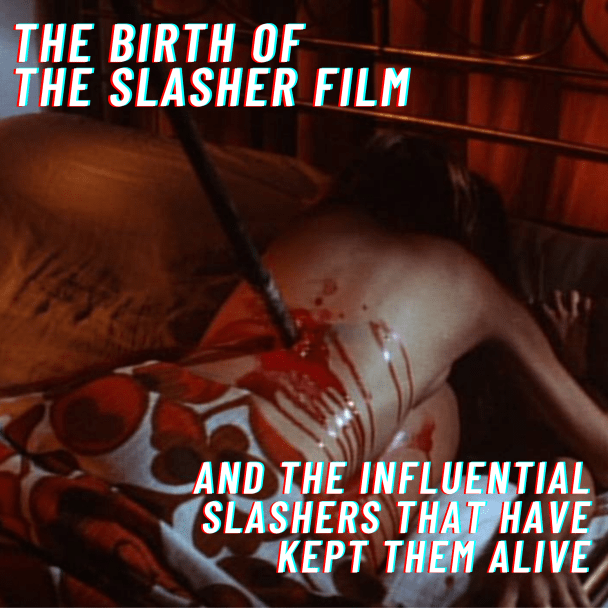
Much like the creeping lunatics that stalk their prey in the films we’re about to discuss, the slasher genre seems to have no end. The maniacs continue to kill in creative fashion year after year, with new fans going back to learn their slasher history and unearth the films that are now considered classic examples of the genre.
Where did it begin? We all have our own theory, fans of the slice-and-dice. As a fan, as someone who enjoys the history of cinema in general and horror cinema specifically, I have my own theory on where these lowly regarded but much-loved films experienced their birth. The slasher film is a beast of many fathers.
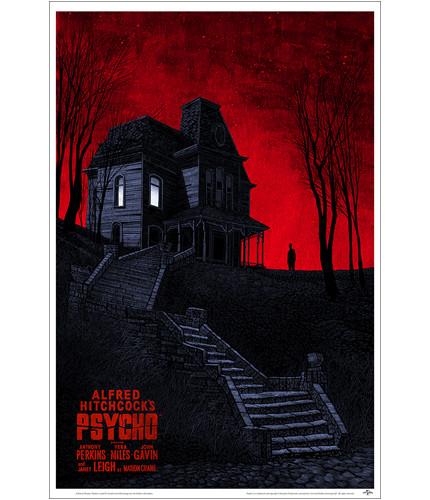
There’s no doubt that Alfred Hitchcock’s Psycho in 1960 is the granddaddy of bloody knife pictures. All the trappings are there: disturbed young man next door, woman in shower, knife, mummified mom in the root cellar. It is a crime story, a mystery, thriller, that is clearly comfortable being described as “horror,” but is it a slasher? I say no, and not because Hitchcock produced it or because it was a studio picture. Let’s be honest, the studio executives didn’t care for the story and couldn’t be bothered to give Hitch enough money to shoot it in color. It was a B-movie from the start, until they saw it and hyped it as an A-movie. Fundamentally, it has the ingredients of a slasher film, but I cannot justify placing it within the slasher canon.
In Italy, Mario Bava was using his camera like an artist uses a paintbrush to produce the wonderful mystery thrillers that became known as giallo, so referred because they recalled a popular series of Italian mystery paperbacks easily identified by their “yellow” covers. (Giallo is the Italian word for yellow.)

Bava delivered what many consider the first giallo with La ragazza che sapeva troppo / The Girl Who Knew Too Much in 1963. Then in 1964 came his 6 donne per l’assassino / Blood and Black Lace, another influential giallo that highlighted the exaggerated death scenes of the fashion models targeted for extermination. The influence of the Italian giallo cannot be discounted when tracing back the ancestry of the slasher film.
Herschel Gordon Lewis’s Blood Feast in 1963 certainly displayed the kind of gore the slasher genre associated itself with, as well as some bare flesh. Other Lewis titles like Two Thousand Maniacs (1964) and Color Me Blood Red (1964), although closer to what I consider a slasher than Psycho, helped steer the slasher in the right direction, but they can take little more credit than that. (In my mind, these are “gore” movies, similar but different enough not to qualify classification as “slasher.”)
Throughout the remainder of the decade, many “knife-kill” pictures were released, all trying to cash in on that sweet, sweet box office green Psycho earned earlier. (In fact, the influence of Psycho can be seen all the way up to 1980s, with a film like Silent Scream, that was kind of a “slasher-lite” but still a solid shocker in the Psycho mold.)
By early 1970, Dario Argento’s L’uccello dalle piume di cristallo / The Bird with the Crystal Plumage re-invigorated the giallo and Argento was hailed as the new “Hitchcock.” The basic skeleton of the slasher film was there, but still this is not what I consider when I hear the word “slasher.”

Ecologia del delitto/Bay of Blood (1971)
Then in 1971, Mario Bava embarked on another giallo. Working with young screenwriter Dardano Sacchetti, they devised an ever-twisting plot and planned thirteen exaggerated murder sequences to push the boundaries of what had been done before. The film was Ecologia del delitto / Chain Reaction, as it was called during the plotting and then Bay of Blood, the title it is most commonly known by today. Bava and Sacchetti worked not so much on the plot, but on the individual murder set pieces, with the director explaining in detail to his writer what he wanted to accomplish with the scene, how he wanted to utilize the camera and lighting to shoot it. He encouraged Sacchetti to keep pushing, to go big, always with the intention on scaring the audience and exaggerating the violence. It was released in Italy in ’71 and then the United States in ’72, where the film went out under various titles, for numerous releases and re-releases over the years.
The story revolves around an idyllic piece of lake front property and a number of people trying to attain it after the owner, Countess Federica Donati, is violently murdered by her husband. This is no spoiler, as it happens within the opening moments of the film.
Murder runs wild in this secluded piece of paradise and the bodies pile up, literally. This is certainly a thriller that you will not get ahead of, as the plot continues to twist and turn right up to its grim finale.
What Bay of Blood has that no other film had up to this time to make me consider it the starting point of the “slasher film movement” is the inclusion of young people, young adults, teenagers. For the first time, right in the middle of a mystery story, two couples show up to do nothing more than get drunk, get high, get laid and get murdered. That, in my opinion is what makes this a true contender for “birth of the slasher film” honors, the inclusion of these young interlopers.
The giallo almost exclusively revolved around an adult, usually a male, becoming involved with a mystery plot and following clues to solve the mystery. Yes, they involved teens, especially schoolgirls as hapless victims, but the fact these young people show up to “party,” puts it squarely in line with what I consider a slasher film today.
To me, the moment at the beginning when the Countess is killed, and her murder takes off his black gloves (an obvious trope of the giallo) and is revealed to be her husband, this is where I feel Bava and Sacchetti are saying, “Okay, everything you know about the giallo is meaningless. This is not a giallo. This is something different.” Once the black gloves are off, the rules of the giallo no longer apply.
Sacchetti has assured me that that was never the intention. It was just one more way to keep the audience off guard, keep them restless to better hit them with the shocks and frights to come. He warns me time and again that, “journalists and scholars often do reconstructions of pure fantasy.” Meaning, we attribute our own meanings to what we see, whether the filmmakers intended them or not.
To be fair, whatever the intention of the filmmakers, once their film is released, it now belongs to the audience that sits down to watch it. If you’re a fan of the film, and I am, I think it is acceptable to draw such conclusions. I have watched and re-watched it many times over the years, so I feel it belongs to me to a certain degree, as much as it does the people who made it. I am invested in it and pieces of it will have meaning for me that maybe don’t have meaning to other fans, or necessarily was ever the intention of the people who created it.
Further probing of Bay of Blood reveals that many of the tropes we connect with the slasher film are present here. The film introduces the idea of the anniversary of a past traumatic event resulting in reckless slaughter, partying young people, bare teen flesh, the killer’s Point-of-View, a cast of quirky characters, the oddball groundskeeper/custodian, graphic and spectacular kill scenes, thirteen murders in total, the finding of hidden bodies, multiple red herrings, murderous parental units and a twist ending. These are all standard features of most slasher films.
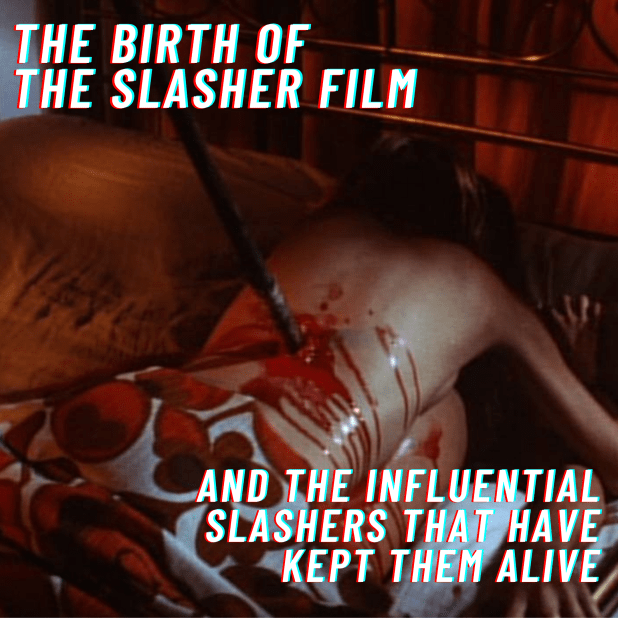
The earliest American slasher film influenced by Chain Reaction is easily Friday the 13th. In fact, the first five Friday the 13th films take a lot of “inspiration” from this template and go as far as copying most of the on-screen slaughter. (Friday the 13th Part 2, in fact, copies both the snaring of two young people in bed with a spear murder and combines the idea of snuffing a victim in a wheelchair with the machete-to-the-face murder of another, among others.) To go one step further, if we assume the on-screen drama is playing out within the year it was released, 1971, it is a diary entry from the year previous, made on February 13, that inspires the following year’s massacre. February 13, 1970 was a Friday. Once it was picked up for distribution in North America, Bay of Blood was released numerous times, appearing on screens in the U.S. as late as 1980 and on screens in Canada as late as 1983, under a variety of different titles. Its first U.S. distributor, Hallmark Releasing, released it to theaters in 1972 under the title Last House on the Left, Part II, selling it as a sequel to their 1970 Sean Cunningham, Wes Craven hit Last House on the Left. (It was also released with promotional vomit bags under the title Carnage.) Just considering how long it continued to appear in theatrical re-release, regardless of how wide, all the way into the ‘80s, is testament to how influential it really was to the livelihood of slasher films. (It was then released on home video, where it became available, being re-released onto each new home video format, to be watched and discovered ever since, under the titles Bay of Blood and my personal favorite, Twitch of the Death Nerve.) It is also worth noting that it will be appearing soon on a drive-in screen in Indiana for a Halloween weekend slash-o-rama, so it is still appearing on big screens today.
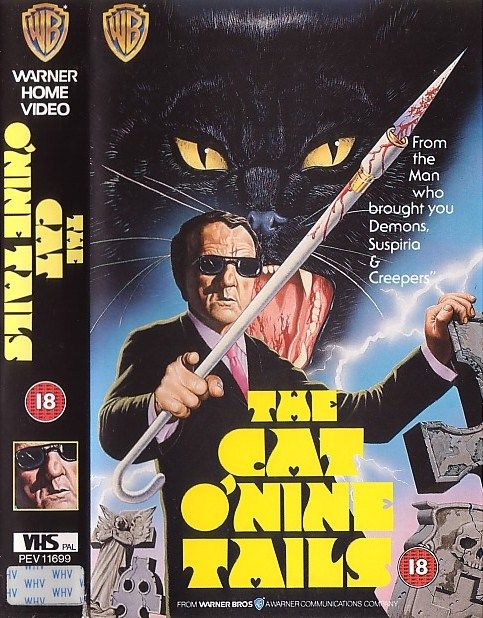
The film that had the most influence on Bay of Blood is Dario Argento’s Cat O’Nine Tails, but not how you would expect. Cat is a straightforward giallo involving a newspaper reporter and a retired blind reporter following clues left by a murderer. It has few of the aspects of what anyone would consider even remotely related to slasher films, but it is safe to say that if this film had not been made, Bay of Blood may never have been made.
The storyline for Cat O’Nine Tails was written by Dardano Sacchetti. After he and friend Luigi Collo had a chance meeting with Argento, the three became fast friends and began writing a story similar to the then-popular hit Easy Rider. After Bird with a Crystal Plumage became a success, they changed gears and tried to devise another giallo. At some point Argento went away for a vacation and restless that nothing was happening, Sacchetti wrote the scenario for Cat. Upon his return, Argento liked the scenario and Sacchetti began writing the script.
In-house friction concerning how the actual writing credits would be attributed on-screen created ill feelings among the men and all went their separate ways. After the film was released, Argento relayed in a newspaper interview that the plot of Cat came to him in a dream while on vacation. Rightly enraged, Sacchetti contacted the newspaper to dispute Argento’s claim. Sacchetti’s comments caught the attention of producer Giuseppe Zaccariello, who then contacted Sacchetti and that lead to him working with Bava. Cat afforded Sacchetti his first screen credit and although he had more interest in being a poet than a screenwriter, the money was good, and he enjoyed the work.
It’s worth noting at this point the strange fate of Luigi Collo. Collo befriended Sacchetti and it was Luigi who wanted to meet Argento to discuss with him the world of cinema. Although he loved cinema and desired nothing more than to create films, he is all but forgotten today.
As I communicated with Sacchetti, I kept referring to Luigi Collo as Luigi Cozzi, to the point of Sacchetti asking me why I kept referring to Cozzi, who he didn’t meet until the late 1970s. I explained that everything on-line pointed to Cozzi when you searched information about Collo, suggesting that Collo and Cozzi were the same person. Sacchetti had no idea and confirmed the same confused information from his own internet searches for Luigi Collo.
When I contacted Luigi Cozzi about this, he confirmed that it has been widely accepted that he and Luigi Collo are the same person, due directly to lazy film reporting. He assures that he and Luigi Collo are not the same person, and he did not work with Argento until Four Flies on Grey Velvet. Forget what the Internet says, it is incorrect.
Sacchetti commented that Collo had a life of bad breaks and bad decisions that never resulted in a career of making movies. Collo’s love of cinema, however, did result in his participation with at least one feature that has stood the test of time. Nearly fifty years later, Cat O’Nine Tails is still available for fans to discover. Collo’s association with that well-known film, unfortunately, through an unforeseen twist of fate, has seemingly erased his participation from the production, at least as far as the Internet is concerned.
Sacchetti offered one final thought on his memories of Luigi Collo. “He could make movies, but he preferred to live his destiny.”
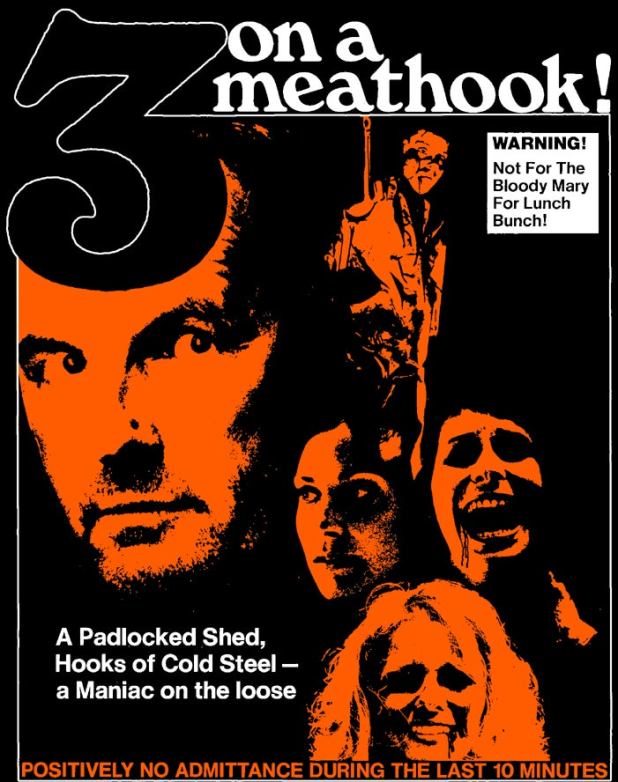
After Bay of Blood, films about murderers and madmen continued to be made, but most continued to be made in the mold of Psycho. (Slight exceptions would be William Girdler’s 1972 Three on a Meathook, a grisly take on the Psycho template, and Sergio Martino’s I corpi presentano tracce di violenza carnale / Torso in 1973, which foreshadows as an Italian version of the later Roger Corman produced Slumber Party Massacre from 1982.) All that changed Christmas 1974.

Black Christmas (1974)
For many fans, Bob Clark’s Black Christmas (aka Silent Night, Evil Night and Stranger in the House) is the first of the modern slasher film and the origin of the slasher. It is easy to see why, as many of what became cliches of the genre seem to be used for the first time here. If you are unaware of the slasher film’s Italian heritage, this would have been one of the earliest films to use these tropes.
We have a group of All-American (or All-Canadian) young women in a sorority house stalked by an unseen killer in the attic. He stalks the girls one-by-one, eluding capture while possible suspects are constantly introduced. Half of the cast runs around never knowing what the other half is doing or even knowing their location.
It is a masterful game of cat-and-mouse, both with the killer and his intended victims, and the director and his intended audience. It’s an edge of the seat shocker that includes heavy breathing, madman’s Point-of-View, horny co-eds, creative (but not necessarily bloody- less is more) murders, quirky adult characters, an open-ending and the blood-freezing gimmick of “the lunatic is calling from inside the house!” (1979’s A Stranger is Watching made that gimmick famous, but to be fair, 1973’s The Severed Arm used it first when the killer stalks a radio DJ and calls his late-night program from within the studio.)
Repeat viewings over time do not diminish the effectiveness of this shocker, and it benefits from Clark’s sense of humor, which helps elevate the horror momentarily before the next scare hits you. Clark’s typical dark humor sees that the film’s first victim, Clare Harrison (played by the wonderful Lynne Griffin) is never found, not even after police arrive on the scene. Her body remains in the attic window as the most twisted Christmas decoration on the block. (I do wonder if anyone ever sets a dummy up in their attic window, dresses it with a plastic bag, lights, and a fake Claude as a Christmas decoration?)
It is worth noting Dario Argento’s 1976 giallo Profondo Rosso / Deep Red, if only because the film’s extreme violence served as obvious inspiration to the glut of 80’s slasher films, particularly Halloween II (1981), which copies its scalding bath water murder.

Halloween (1978)
In 1978 John Carpenter and Debra Hill created the film that really started it all for most of us with their classic horror tale of The Night eE Came Home, Halloween. Although it wasn’t an immediate hit, it built a reputation and a following that is still going strong more than 40 years later.
In 1963, little Michael Myers chops up his teen sister Judith and then, fifteen years later, breaks out of the asylum and returns home. When he does, he sees teenager Laurie Strode, who must remind him of his sister Judith, because he spends the rest of the day stalking her. Myers’ doctor, Dr. Sam Loomis, arrives in Haddonfield in time to assure the sheriff that “Death has come to your little town!”
It is a simple story, inspired, obviously, by Hitchcock’s Psycho, that came during a turbulent time in the 70’s and gave its audience, mostly teens, something to scream about.
Halloween is now considered one of the true classics of not only slasher or horror cinema, but just of cinema in general. The opening scene of little Michael killing his sister Judith was as shocking as Janet Leigh’s murder in Psycho eighteen years prior and is now considered just as iconic. It spawned a long running series that continues to this day. It is one of the few slasher films, or “dead teenager movies” as they referred to them, that both critics Gene Siskel and Roger Ebert enjoyed. It was scary. It is still scary. As I write these words, it is about to be re-released to drive-ins for a whole new generation of fans to scream at.

Friday the 13th (1980)
While Halloween is always given the credit of starting the slasher trend, I think it is more realistic to say that Friday the 13th in 1980 really started the slasher trend, especially for what most fans consider a slasher film. It was made to do two things, make teens scream and make money. It did both.
Friday the 13th tried to capitalize on the success of Halloween by adding the one thing Halloween didn’t really have, graphic mayhem. Tom Savini’s bloody “magic tricks” splatter the screen and opened the floodgates for every gory slasher that was made after. Kids flocked to the theaters for each new installment and every time a new one came out, Siskel and Ebert complained that it was trash and not nearly as well made or entertaining as Halloween. Be that as it may, as one of the teenagers flocking to the theater to see each new installment, I was there for the cheap thrill of bare boobs and bloody mayhem. Never once did I purchase a ticket for a Friday the 13th film hoping I would learn something meaningful about the human condition or glimpse into the true heart of darkness. Nope. I just wanted 90 minutes of cheap thrills with my friends and they delivered nearly every time.
Slasher movies hit a peak in 1981, with a new one opening up nearly every weekend of the year, some weekends seeing more than one new one released. They were everywhere and every kind of killer you could think of, including killers from beyond the grave, beyond the stars and from supernatural origins. But it was mostly a parade of jilted lovers and obsessed psychopaths that filled the big screens over the following years.

A Nightmare on Elm Street (1984)
In 1984, the slasher film got an upgrade from Wes Craven’s A Nightmare on Elm Street. This was the first new idea in slasher films in years, as Craven introduced a killer who stalked the dreamscape of his victims! When you can’t even hide in your head, nowhere is safe. This one kicked off a spate of rubber-reality dream killers, but none worked as well Craven’s prototype and Fred-heads came back for more time and again for a long running series that finally crossed paths with Friday the 13th decades later.

Scream (1996)
The slasher film had a dry spell for the next couple of years. They still made them, and some where pretty good, but nothing really blew up again until Craven returned in 1996 with the self-referential Scream, a smart slasher that turned slashers on their ear and used all that knowledge film nerds learned from watching them.
This was a modern twist on the genre, as the killer knew very well the tropes of the slasher movies of years before and used them to his advantage. Also, modern times made it easier for killers to be more productive and destructive and the cell phone made it easier to call from anywhere in the world.
The film was a hit and I remember the opening night and a packed house screaming at the top of their lungs during the film’s final moments. It helped to kick off a new cycle of slasher films that were hipper and more self-aware than those that came before. I think I saw nearly all of them in the theater and it was a fun way to say goodbye not only to the decade, but to the twentieth century. (Craven directed the entire series, with Scream 4 appearing in 2011. After, an MTV series followed for two seasons and as of this writing, Scream 5 is moving forward.)
Slasher films proliferated in the early 2000’s but now filmmakers were using CGI for gore, which was a bore. It wasn’t long before many went back to practical effects for more of the “old-school” feel. Some use computer trickery to make them look like old, battered films with cuts and missing scenes. Fun as they may be, they really don’t compare to a 35mm viewing of an old film that has played numerous theaters over the years and is full of genuine splices, missing scenes, and tinted red from wear.

Halloween (2018)
The slasher film to make the biggest impact so far in our brave new world of the twenty-first century has been 2018’s Halloween. Love it or hate it, it delivered a fun slasher vibe and even though it is more remake than sequel, it did well enough to rake in a quarter of a billion dollars in ticket sales worldwide (impressive indeed on a ten million dollar budget), solidifying the slasher film as a reliable money maker. It ensured two more films in the new storyline it created. Not only does its success ensure the slasher is here to stay, American Horror Story dedicated it’s 9th Season 1984, to the beloved slasher films of yore, and delivered some of the freshest retro slash-thrills in a long time.
Because of the pandemic and the shutdown of indoor theaters, slasher films returned to the drive-ins in 2020 with a vengeance, along with every other horror movie from the past. Families, couples, and friends who just wanted a night out returned to the giant outdoor screens where all variety of classic 70’s and 80’s horror films, slasher and otherwise, returned to live again where they were intended. It does make you ask, “Why do people want to sit in their cars, outside, and watch an old film they could watch streaming anytime they wanted?”
While more films are consumed through more ways than ever before, especially through countless streaming services, and fewer and fewer are being released theatrically, it seems like there are more slasher films now to choose from than ever before. I continue to watch them, hoping to find the next big thing, as the 15-year-old slasher fan that will always live within me is always hoping for the next big slasher thrill.
These seven films satisfy all the components of what I expect, require from a slasher film, and they all have had some major influence on the genre within the time they were released. Some films that have similar aspects that I don’t consider “slasher” would be The Texas Chain Saw Massacre (1974) and Carrie (1976). Although similar in content, they lack some of the fundamentals required to be considered slashers, and while they come close- Carrie White’s prom night body count alone would make Jason or Freddy blush with envy- they just don’t invoke the same spirit.
I don’t know, but when I hear someone lump those in with slasher movies, I probably transform into a bit of a “slasher-snob.” I have to remember that these films belong to all of us, and not all of us see them exactly the same way.




 B&S About Movies
You must be logged in to post a comment.