Supposedly a remake of a 1940 film, this shot on video oddity is all about, well, a mad monk who claims to be Satan but is closer to the Crypt Keeper. He introduces us to two tales, one of which is about a priest who falls in love with an attractive women in his congregation and ends up knocking her out a window, leading to his crucifix being cursed. Then there’s the story of a couple who uses a magical object and all of the wishes go wrong, as if they were in, oh let’s say The Monkey’s Paw.
All of this effort came from Julio Aldama, who not only directed and starred in this movie, but got his whole family to be part of it. You may think that time with the family is valuable and worthwhile, but did your dad ever ask you to be part of a movie where a horny priest accidentally murders someone he was trying to sexually assault? Nope. I don’t think your dad ever did that.
Obviously, I will watch any movie ever, but man. Once I saw the goofy eye of the Cripta-esque teller of these two tales, I almost checked out. However, I am a brave man and consider you, the reader of this site, special. So I toughed it out for you.
Actually, I did some more research, feeling that this wasn’t enough, and learned that The Mad Monk was a radio series in the 1930’s that started with the monk saying the words, “No one knows, no one knew, the truth about the terrifying case of…”
There were comics of The Mad Monk as well and from the looks of things, they feel very EC Comics inspired, but of course taken to the typical Mexican extreme.
El Monje Loco also appears in a series of memes, too. Who knew?
Known as Vuelven in Mexico, a title that translates as Return, this movie may have introduced many in the rest of the world to Issa Lopez, whose schedule is now packed with future films, including a werewolf Western produced by Guillermo del Toro and a supernatural revenge movie for Legendary Pictures.
This movie depicts the harrowing lives of children in the midst of the war on drugs in Mexico. It is not for the faint of heart, as any rules of how children are treated in film are thrown out the window.
While her teacher is discussing fairy tales, gunfire explodes outside the classroom. Estrella’s teacher hands her three pieces of chalk, telling her that they will give her three wishes.
With her mother missing, Estrella falls in with a group of orphans led by Shine, who has already stolen a gun and phone from one of the most powerful gang leaders. This sets into motion a series of confrontations where the contents on the phone will prove where Estrella’s mother is and doom nearly every member of the young gang of children.
Are wishes real? Is magic real? Can Estrella escape the very real and possibly imagined horrors that she must deal with? These questions are all answered and you may not like where they lead.
As for the wishes, the first is that Estrella gets her mother back. She does, but only as a ghost that never stops following her. The second is for the gang leader to already be dead so that she doesn’t have to shoot him. He is, but the wish may not have been the cause. Finally, she gives her last wish to Shine, who wants his burned face to go away. That wish is the most tragic of all.
None of the children in this film had any acting experience. They did, however, practice in some improvisational workshops with an acting coach before the movie started filming. Interestingly, it was shot in chronological order and the actors were never shown the script, so that the emotional responses felt more genuine.
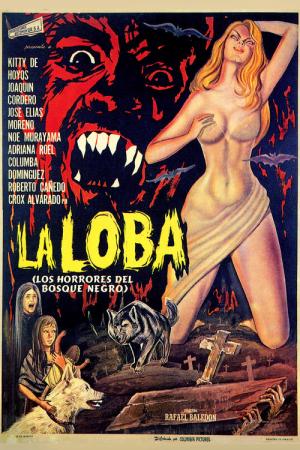
Rafael Baledon also made La Maldicion de La Llorona, yet today I want to discuss this werewolf film, which blows my mind.
Clarisa Fernandez is well-to-do, but is dealing with a curse, which is that she’s a werewolf. Luckily, or perhaps not so much for the humans they encounter, her doctor is a werewolf as well. They fall in love, which seems to be pretty much a happy ending, but not for anyone that knows them.
This is a movie that starts with no dialogue for ten minutes and ends with a werewolf hunting dog saving the say. Honestly, that sounds like the best review I can give this movie, which I adore.
EDITOR’S NOTE: This originally ran as part of our Bastard Sons of Jaws week on December 22, 2018. Seeing as how it is a Mexican shark film, how could we not bring it back for leftovers?
When I was a kid in the 1970’s, I was sitting in a B. Dalton’s reading — parents routinely dropped kids off places to read without any fear of kidnapping back then — and discovered a copy of Alex Comfort’s The Joy of Sex on a shelf. I had no idea what it was at the time, but the drawings (by Chris Foss, who would go on to work on Alien, Flash Gordon and Jodorowsky’s Dune) were upsetting to me. Hairy soft focused seventies post-hippies getting it on didn’t jibe well with my single digit mind.
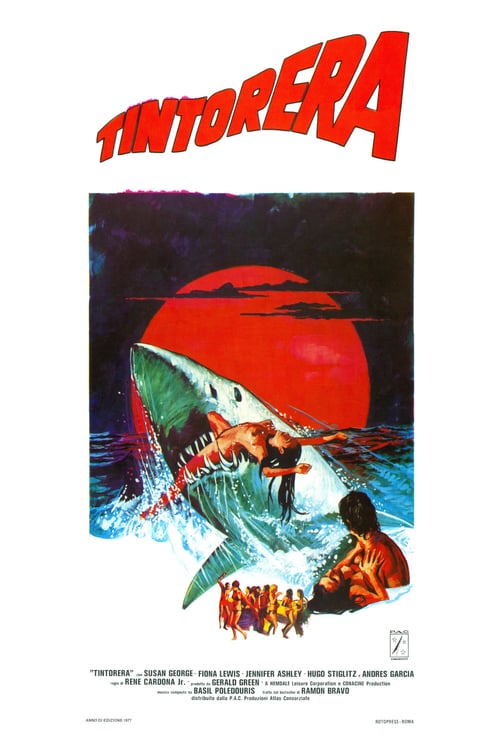
I forgot what that feeling was like. And then I watched Tintorera…Tiger Shark.
This movie is based on the novel of the same name by oceanographer Ramón Bravo, an undersea explorer who studied the 19-foot-long species of shark known as “tintorera” and also discovered the sleeping sharks of Isla Mujeres. You may know him better for his role as the underwater zombie in Lucio Fulci’s Zombi 2.
Here’s the thing — this is a shark movie, but it’s also pretty much a softcore adult movie about the three-way relationship between the heroes. As such, this is the only shark movie I’ve watched all week with full frontal male nudity, which is something of an accomplishment.
Hugo Stiglitz from Nightmare City plays Steven, born in the US but a Mexican businessman here in Cancun for vacation. He falls for Patricia (Fiona Lewis, Dr. Phibes Rises Again) but breaks up with her when he can’t decide whether or not he’s in love with her. Ah, the 1970’s.
Jealousy ensues when she starts hooking up with Miguel (Andrés García, a real-life former diving instructor who is also in Bermuda: Cave of the Sharks), the swimming instructor at the resort. After those two dance the devil’s dance and Steven gets all misty-eyed, she goes skinny dipping and ends up being eaten by a tiger shark that seems to have breathing problems, judging by the soundtrack.
The two fight over what happened to Patricia, but neither ever learn that she was devoured by a shark. That night, the two hook up with Kelly and Cynthia Madison, two American college students looking for fun, and swim to Steven’s yacht as the heavy breathing shark follows them. They swap beds all night long before heading back to the resort and the shark decides to leave them alone. Kelly is played by Jennifer Ashley, who was also in Phantom of the Paradise, Chained Heatand Guyana: Cult of the Damned, while Cynthia is Laura Lyons, which is her real name and not a stage name inspired by the Sherlock Holmes story The Hound of the Baskervilles. She was the Playboy Playmate of the Month for February 1976 and actually led a strike amongst the club bunnies that led to better wages and rights for them. Other than an appearance on TV’s Love, American Style, this is the only other acting role in her career.
Steven and Miguel decide to partner up both in a shark hunting business and in being womanizers. They start shooting all manner of sharks, but Miguel warns Steven that if they ever meet a tiger shark that they must immediately get out of the water.
The guys meet Gabriella (Susan George, Die Screaming, Marianne) and take her shark hunting. She hates it, but falls for both men. They decide to form a triad relationship where they can’t be with any other woman or fall in love with her. Remember those The Joy of Sex drawings I mentioned earlier? Get ready to watch them play out as the three make love, make omelets and sightsee the Mayan ruins.
Sadly, the next time they go shark hunting, the tiger shark reappears — surprise! — and bites Miguel in half. Gabriella is so upset that she leaves, never to return. Steven vows revenge on the shark and beats up every shark he can find, upsetting even the most hardened fishermen. Surely, they tell him, he has killed the tiger shark by now.
Nope. It’s still out there, killing fishermen and lying in wait for Steven. At a beach party with Kelly, Cynthia and two new American girls (one of them is Priscilla Barnes from TV’s Three’s Company and The Devil’s Rejects), everyone skinny dips. As Steven and Cynthia make out nude in the water, the tiger shark comes back and tears the woman literally out of his embrace. Everyone is injured by the shark’s attack and Steven makes a promise to kill the shark himself.
You may be wondering: how will Steven go about killing this shark? If you guessed “he’s going to blow it up” then congratulations. You’ve been watching just as many shark movies as I have. Are explosives the shark’s natural predator?
Anyhow — Steven uses a devilfish to lure the shark close and then he hears its breathing, because that’s how sharks work. He succeeds in turning that shark into a million pieces, but loses his arm in the process. He wakes up in a hospital bed, minus an arm but filled with happy memories of the sexy times he shared with Miguel and Gabriella.
Keep in mind when you seek out this film that there are two versions. One is 85 minutes long and is more of a shark film. Then there’s the 126 minutes long cut that’s chock full of swinging Mexican resort sex. Also, a warning for those of you sensitive to these matters: many of the scenes of fish being caught and killed underwater are unsimulated. That should be no surprise to anyone who has seen a René Cardona Jr. directed film, as he threw live birds through windows in Beaks: The Movie and a cat over a wall in Night of a Thousand Cats. He’s also responsible for the borderline insane film Bermuda Triangle, as well as the scum-ridden cash-in Guyana: Crime of the Century.
Tintorera…Tiger Shark is one of the stranger films I’ve watched, not only in my shark obsessed week of trying to watch every single pre-Sharknado film of this genre, but really in all the films I’ve watched. I have no idea who it is truly for, yet appreciate its willingness to indulge in spectacle and scum, whether that be people hooking up or being eaten in front of your very eyes.
Update: Kino Lorber is re-issuing Tintorera on January 5, 2021 to Blu-ray. In addition to a new audio commentary track by film historians Troy Howarth and Rod Barnett, the Blu also features the original theatrical trailer and optional English subtitles packed in a limited-edition slipcase and reversible cover art. You can learn more about Kino Lorber’s complete roster of films at their official website and Facebook, and watch the related film trailers on You Tube.
A small Mexican village is dealing with not just the death of a man, but the fact that his body has disappeared too. Now, his brother and a cowboy detective friend (Gaston Santos, who played the same role of a cowboy against the unknown in The Living Coffin, Los Diablos del Terror, La Flecha Envenenada and El Potro Salvaje) head out to battle the gang that killed the man and now want his insurance money.
There’s one complication: a man-fish who is just swimming around town.
Seriously, I would have never watched this movie if it wasn’t for the look of this humanoid fishy man. He’s amazing and every moment he’s on screen elevates this movie from typical sagebrush adventure to the realm of absurdity.
Known up here as Swamp of Lost Souls, it was directed by Rafael Baledon, who also brought us Orlak, el Infierno de Frankenstein.
This film is a remake of Who Can Kill a Child, which was a shocking movie in 1976. Guess what? It still is now.
Beth (Vinessa Shaw, Hocus Pocus) and Francis are enjoying their last vacation before the birth of their child. But just like Lewis Fiander and Prunella Ransome before, they soon realize that the island they are is empty except for the children. And soon, those children will descend upon them as well.
Perhaps more interesting than the film itself is its director, who only goes by the name Makinov. A gigantic Russian who started his career as a focus puller, he refused to remove his mask — he had several — during the production of the film, choosing to direct from afar almost like Coppola did during One from the Heart.
He then went to Mexico to shoot two documentary films on shamanism and have a near-death experience, after which he became Makinov, stating that “by punishing the ego through anonymity, he can command the wisdom of being one with another.”
Before the movie played festivals, a manifesto from the director was played. He said, “We must remember we are made of blood. An old proverb says that it is better to murder during time of plague. I would say the same when we talk about cinema. People watching stupid heroes saving the world, when the world is surrounded by pain. What a joke. Cinema should teach us about pain. That’s why I make these precious sad stories. To remind us that life is limited and that we are gonna die. I believe in the mystery of the spirit.”
So is or was the masked director, who claimed that he would go on to direct pornography after this? Some thought he was Eli Roth and others believe that it was either REC director Paco Plaza, Gerardo Naranjo or one of the film’s producers, Diego Luna or Gael Garcia Bernal.
Guillermo del Toro somehow feels like he is one of us, a monster kid to be sure, but also one that has a Best Director and Best Picture Oscar on his shelf along with all the Aurora models and back issues of Famous Monsters. Actually, he owns two homes just for his collections, saying “As a kid, I dreamed of having a house with secret passages and a room where it rained 24 hours a day. The point of being over 40 is to fulfill the desires you’ve been harboring since you were 7.”
The themes of monsters being the heroes and the Catholicism of Mexico run deep within del Toro’s work. More than any filmmaker, I’d love to have a discussion with him. After all, his theory of why Fulci works so well — “He’s getting high on his own supply” — is so all-knowing that statement has informed so much of my writing.
Cronos tells the story of Jesus Gris (Argentine acting legend Federico Luppi, who also worked with Del Toro on The Devil’s Backbone and Pan’s Labyrinth), an antiques dealer who is infected by a mechanical scarab that he has found in the base of an angelic statue.
This device was created by an alchemist who lived for nearly four hundred years, sustained by the blood of the living. Soon, Jesus has started to feel the kiss of youth once again, yet he must pay for it in, you guessed it, blood.
The alchemist is based on Fulcanelli, a French alchemist and esoteric author whose identity remains unknown (some believe that he was Jules Violle, a famous French physicist) and whose life and disappearance were popularized by the Louis Pauwels and Jacques Bergier book The Morning of the Magicians, which heralded the new age of the occult. This isn’t the only movie that deals with Fulcanelli. His book The Mystery of the Cathedrals informs the Michele Soavi movie The Church.
Dieter de la Guardia (Claudio Brook, Castle of Purity) has been looking for this device for decades, seeking statues of archangels as he knows that is where it lies. He sends his brutish nephew Angel (Ron Perlman, who would also freuently collaborate with del Toro) to get the device no matter what.
In the funeral home scene, look for Tito the Coroner and the funeral director, who also show up in Jorge Grau’s We Are What We Are.
Angel does exactly that, nearly beating the old man to death to get the device. Jesus wakes up in a mortuary and soon discovers that his skin burns in the sun. Can he escape the curse that this device has put on his soul, save his granddaughter and escape the evil de la Guardia family? Time will tell.
Sadly, all of the Cronos devices made for this movie were stolen when production was completed. They were never recovered, so the ones that del Toro owns today are just replicas.
This is a different take on vampires and announced del Toro to the world. Watch it and be stunned.
Film Ventures International, we love you. You started — and by you, we mean your owner Edward L. Montoro, by writing, directing and producing the adult film Getting Into Heaven in 1968. That movie, made for $13,000, brought back twenty times its cost.
When other studios innovated, FVI either brought in films from foreign lands — like Boot Hill from Italy and Dragon Lives from Hong Kong — or helped create outright pastiches of more established films.
This trend started with the purchase of 1974’s Beyond the Door, which started its life as an Italian film called Chi sei? and is really a bastard child of The Exorcist. And by bastard child, I mean that it’s pretty much the same movie. FVI would also release the ripoff — let’s saying loving tribute — films Grizzly,Great White and Extra Terrestrial Visitors in the hopes of taking people’s hard-earned cash for cash-in projects.
In 1984, as the company was reeling from lawsuits against that aforementioned shark epic and lower box office expectations for some other releases, Montoro took $1 million dollars out of the safe and disappeared, never to be seen again.
He leaves behind a trail of films that I’d be proud to have been associated with. Just one look at our Letterboxd list of FVI releases should make any film fan’s brain get excited. So how do we pick four of them to show? Trust me. It wasn’t easy.
MOVIE 1: Beyond the Door (Ovidio G. Assonitis, 1974): This is where so many folks’ love of FVI starts, so it was a natural pick. Jessica Barrett (Juliet Mills of Nanny and the Professor) is having the worst pregnancy ever, perhaps because a Satanic ex-lover has cursed her. What follows is a mash-up DJ supermix of all the moments that you loved from The Exorcist, along with Montoro providing the voice of the Devil. This movie is a tribute to the power of marketing, as its title subtly references the porno-chic blockbuster Behind the Green Door while FVI would go to any lengths to promote this movie, including hiring actors to faint during screenings and sending ambulances to pick them up to create hysteria (and one assumes, more revenue).
MOVIE 2: Mortuary (Howard Avedis, 1983): This movie is a crowd-pleaser. Set up to look like a slasher, it’s more a loopy dark ride of constantly switching genres and themes. Christie thinks her dad was killed, even if her mother (Lynda Day George) doesn’t believe her and ends up getting remarried in less time than it took for you to read this paragraph. What follows are occult rituals, parental murders and even possessed houses in a movie that will go out of its way to scare you. If you love Bill Paxton, get ready to fall for him all over again.
MOVIE 3: Grizzly (William Girder, 1976): People have gotten upset at me for saying this before, but let’s face it. This movie is Jaws on dry land. That isn’t to put this movie down. In fact, I celebrate every awesome bit of it, from the astounding Neal Adams-drawn poster to the bear-POV shots and the ending where the bear gets blown up real good with a bazooka shot by Joan McCall.
MOVIE 4: Stunt Rock (Brian Trenchard-Smith, 1978): “It’s super human, super music, super magic and super amazing! You’ll be compelled over the edge of sight and sound and under the spell of mind-boggling action and music! Pushed to the danger zone! It’s a death wish at 120 decibels! Stunt Rock! The ultimate rush!” It’s also one of the few movies that can live up to its trailer. I always love to pick a movie right at the end of the drive-in that rewards die-hard film lovers while offering nothing to the casual watcher. Stunt Rock would be that movie.
FVI release so many movies that we could do several of these evenings. What are your favorite films that they released? What would be in your drive-in night? Let us know and we’ll share it with the world.
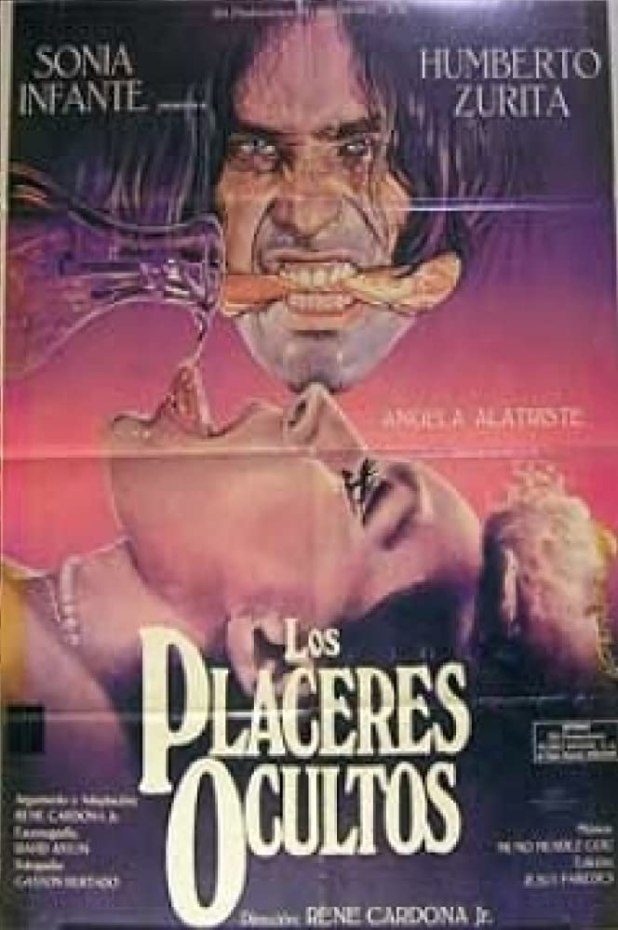
Psiquiatra is a therapist who is abducted by a masked man one night, who takes her to the woods, where he assaults her and leaves her to die. However — and this is incredibly upsetting — she seems to like it and looks for a former patient of hers, promising him “no holds barred” sex while her husband is away on business. What follows is some 9 and 1/2 Weeks style antics with attempted drowning and her turning the tables on her assailant by beheading his dog and pegging him.
Yeah — this is something else. Honestly, it’s the most repellent and fascinating quasi-giallo I’ve seen in a while, filled with gross people doing gross things.
Humberto Zurita, who plays the villain Violador, is still acting to this day. Sonia Infante, who plays the therapist, is also in Beaks: The Movie. This was released in the U.S. on VHS as Playback, which I’m sure gave no indication how massively screwed up this movie is. I can only hope that people rented this and were destroyed by how sickening it is.
Rene Cardona Jr. is the master of low budget Mexican scumfests, particularly because Violador spends some time sculpting Psiquiatra before sailing the seas of mayonnaise all by himself while staring at his work. Magical.
AUTHOR’S NOTE: This film was originally written about on January 16, 2019. We’ve brought it back for our Mexican horror celebration as an object lesson in the fact that life and good taste are both cheap in this cinema that is such a part of our hearts.
René Cardona Jr. didn’t stop with making a softcore porn shark movie with Tintorera…Tiger Sharkor the utterly baffling Bermuda Triangle. Now, he’s back to shock you senseless with the kind of true retelling of the Jonestown Massacre, Guyana: Cult of the Damned. He’s no stranger to strangeness — after all, his father made Santa Claus vs. The Devil.
Reverend James Johnson — just pretend they say Jim Jones — the fanatic and paranoid leader of the Johnson Temple — again, let’s just say People’s Temple — is about to move his 1,000 followers from San Francisco to Johnstown — Jonestown — in the jungle of Guyana, all so he can create a utopia that’s far away from the sins of the rest of th world.
If you know anything of the real tale, Johnson soon gets out of control, inflicting brutal punishment on anyone that dares go against him. He becomes convinced that a conspiracy — the same one that killed both Kennedys, Martin Luther King Jr. and Malcolm X — is ready to take him out.
That’s when Congressman Lee O’Brien — Leo Ryan — goes on a fact finding mission and discovers that it’s more like a slave colony than heaven on Earth. And if they don’t get the people out now, they’ll soon go to Russia. By the end of the film, Johnson has unleashed hit squads on the Congressman, the reporters he’s brought along and the defectors they’re saving from Johnson. And that’s when everyone starts drinking the Kool-Aid (for the sake of fact, it may have either been that brand or the generic Flavor Aid, which they camp also had in its supplies; the flavor was grape, in case you’re wondering).
This movie is rife with historical fallacies, but what can you expect from a Mexican grindhouse movie that was released 14 months after the actual incident? You may notice that most of Johnstown was white in this film, while the reality is that most of the People’s Temple members were black. Also, Susan Ames — Susan Amos — is murdered in this movie by a man with a knife, but the truth is that she killed her two youngest children and then herself with a butcher knife and asked her daughter Liane to kill her, then kill herself.
There are two cuts of this, with the Mexican cut adding 8 more minutes of torture and gore, if you’re looking for that kind of thing. I mean, if you’re reading this far, you probably are.
Stuart Whitman (the boxing priest from Demonoid) owns this movie as the Reverend. He’s just chewing the screen up, as he totally should, giving huge speeches and being a maniac. This is like a dream scum movie role and Whitman grips it and wrings all he can out of it. It’s pretty much as perfect casting as you can get.
Gene Barry plays the Congressman, Bradford Dillman (Piranha) plays the doctor of Johnstown, Yvonne De Carlo plays Susan and you even get a special guest appearance by Joesph Cotten! And look out for Hugo Stiglitz from Nightmare City and Nadiuska, who played Conan the Barbarian‘s mom!
There was a later TV movie, Guyana Tragedy: The Story of Jim Jones, which won Powers Boothe the 1980 Emmy for Outstanding Lead Actor in a Limited Series or a Special. But for my money, I always go with the grindhouse version of things. This is a sordid, grim affair and that’s pretty much why you’re going to watch it.










 B&S About Movies
You must be logged in to post a comment.