Jaume Collet-Serra has two major projects coming soon — Disney’s Jungle Cruise and the DC Comics movie Black Adam. He started his directing career with the remake of House of Wax and this was his third film. He also worked with Liam Neeson on the films Unknown, Non-Stop, Run All Night and The Commuter as well as the shark film The Shallows.
Orphan was written by David Leslie Johnson-McGoldrick, who started his career as Frank Darabont’s assistant before writing films for James Wan like The Conjuring 2 and Aquaman (as well as the upcoming sequels to those films).
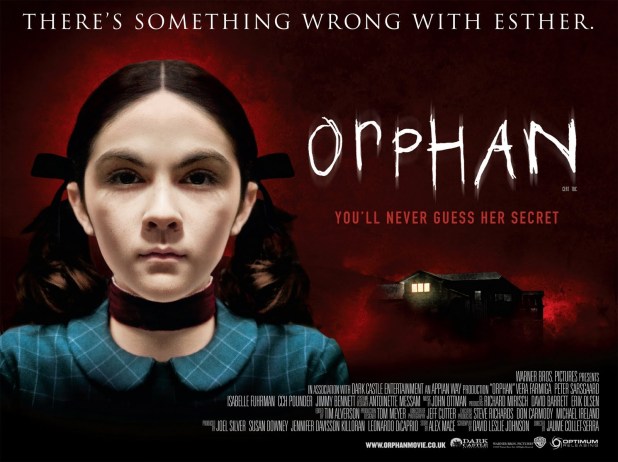
Kate and John Coleman’s (Vera Farmiga and Peter Sarsgaard) have just lost another baby, which devastates them both. They decide to adopt a nine-year-old Russian child named Esther (Isabelle Fuhrman) who their five-year-old deaf and mute daughter Max (Aryana Engineer, Resident Evil: Retribution) falls in love with immediately. However, their twelve-year-old son Daniel (Jimmy Bennett, who was in the remake of The Amityville Horror and who also accused Asia Argento of sexual assault after making The Heart Is Deceitful Above All Things with her) isn’t all that excited.
Esther immediately freaks out any viewer of this film, whether it’s her randomly showing up when her parents are aardvarking or killing pigeons at school or beating other children into oblivion. Oh yeah — she also murks CCH Pounder with a hammer and shoves her into a ditch before hiding the murder weapon in her adopted brother’s treehouse.
That little orphan is the master of gaslighting, taking flowers off a dead child’s grave, cutting brake lines and breaking her own arm to get her new mother in trouble for abuse. She even makes it look like Kate is drinking again, causing a potential divorce.
Karel Roden, who was Rasputin in Hellboy, also is in here as a Russian doctor who helps the family expose the big secret behind all of this mania. I’d rather not give it all away, but it’s a pretty audacious reveal, taking this from a cover version of The Bad Seed and into even more ridiculous territory.
There’s a nice bit of writing in here as Esther is adopted from an orphanage called the Saint Mariana’s Home for Girls. In the Catholic faith, Saint Mariana of Quito is the patron saint for those rejected by religious orders and orphans.
Ironically, ten years after this movie was released, this movie went from fiction into reality. Famous parenting author and motivational speaker Kristine Barnett and her ex-husband Michael were charged with the neglect of their 11-year-old daughter Natalia. The couple had left her to fend for herself in their apartment, but Kristine soon revealed that her daughter — who she adopted from the Ukraine — was actually a twenty-two-year-old woman who was planning to kill them both. The full story is insane and you can read it on Elle’s website.
You have to love this description: “A young space prince on the run from an evil space villain, stranded on Earth and waiting for his grandfather the king to rescue him, befriends an Earth child named Brian and together they evade robots, bears, and triangles.”
Let’s get this one going. I mean, you could be like everyone else watching every Star Wars over and over again, complaining about the stuff that hasn’t been fixed since the 1990’s or you could watch a Greydon Clark movie with his two sons in it (he shows up as well). And oh yeah — his wife Jacqueline Cole is in it, too.
This is the last film that Greydon Clark would direct. You can always go back and enjoy The Uninvited — a movie where George Kennedy is killed by a mutated a house cat — as well as Without Warning, Wacko, Satan’s Cheerleaders, The Return, and Joysticks. This is the time in my life where I sit back and say, “I have wasted my life by watching so many of these.”
Somehow, Clark was able to get Tony Curtis in this movie as King Fendel. I can’t even guess as to why or what they did to make this happen. I’m sorry, Mr. Curtis. Is this the worst role of your career? Well, you were in Sexette and The Manitou, after all.
There are no droids. There are no lightsabres (Curtis has what appears to be a crystal envelope opener). There is no Force. But there is a bear. And you know who saves the kids from that bear? Darby Hinton. Yes, the very same Malibu Express star Darby Hinton. The man has gone from making sweet love to Sybil Danning to being in a Greydon Clark children’s film.
Now I’m depressed.
You can watch this on Amazon Prime. Or, and I’d really recommend this, watch it with Rifftrax on Amazon Prime and Tubi.
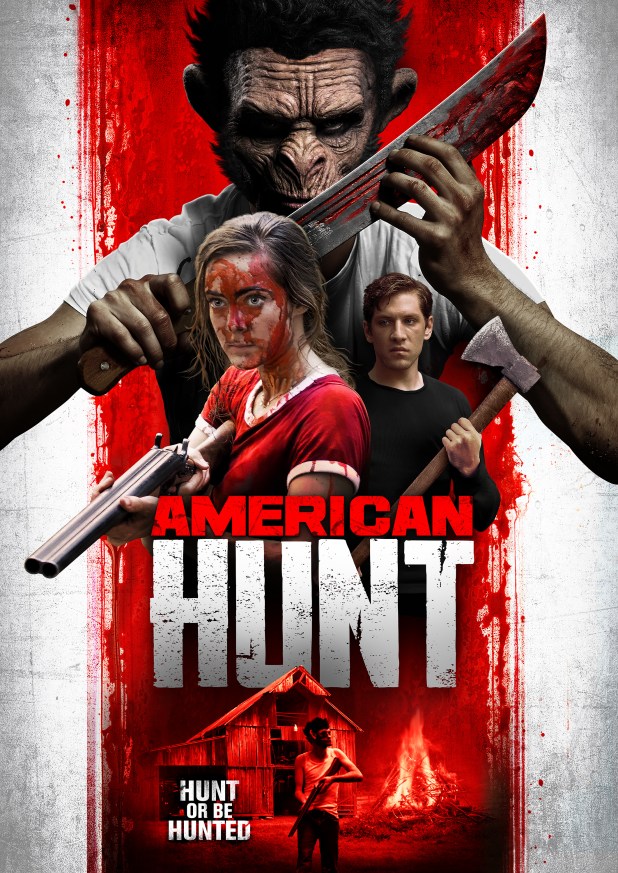
A group of friends is torn apart when they become part of the most dangerous game — two hunters who hunt humans for profit. They’re given ten minutes to hide and then the real hunt begins.
American Hunt was being filmed when Blumhouse began the casting process for The Hunt, which was infamously cancelled and has been shelved indefinitely in the wake of today’s political climate. Then again, that was a $15 million dollar studio film and this is a direct to streaming film. American Hunt is the only one of the two that you can actually see. For now.
This film was directed by Aaron Mirtes, who was behind such films as Curse of the Nun and Clowntergeist.
It’s more of a backwoods slasher than a highly politicized action thriller, despite the PR campaign to sell it. That doesn’t mean that it isn’t worth a watch.
American Hunt is available on demand and on DVD from High Octane Pictures.
DISCLAIMER: We were sent this movie by its PR agency. That has no bearing on our review.
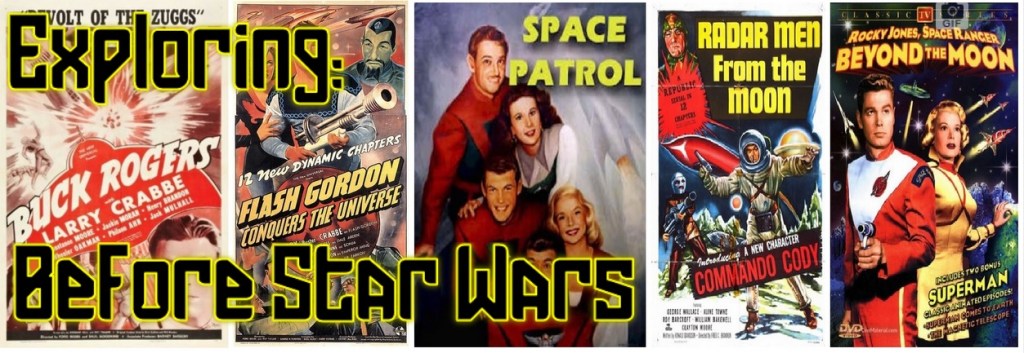
A long time ago . . . on a theatre screen far, far away . . . long before Star Wars: Episode IX – The Rise of Skywalker . . .
It was all George Lucas’s fault. Well, not really. For, in the beginning, the celluloid gods created the Luke Skywalker precursors of Buck Rogers and Flash Gordon.
Enamored with a childhood exuberance for Universal’s twelve-chapter Buck Rogers movie-serial (edited into the 1939 theatrical feature Buck Rogers Conquers the Universe) and Alex Raymond’s Flash Gordon books turned into three mini-serials (in 1936, 1938, and 1940; edited into the features Rocketship, Mars Attacks the World, and Conquers the Universe), George Lucas, flush with success from the film homage to his 1950s hot-rod youth, American Graffiti (yes, we linked the sequel), had a dream: creating a big-budgeted, 2001: A Space Odyssey-inspired tribute to the beloved sci-fi hero of his childhood: Flash Gordon.
To a lesser extent: Lucas was also inspired by the early Rocky Jones U.S TV serials, which were edited into features: 1953’s Forbidden Moon, Crash of the Moons, and Manhunt in Space, along with the Commander Cody movie serials, which were edited into 1949’s Lost Planet Airmen and 1952’s Radar Men from the Moon. Another Star Wars antecedent (never turned into feature films) was the 1951 to 1955 TV series Space Patrol with Commander Buzz Corey. (We’ve since reviewed the Jones syndicated telefilms Beyond the Moon and Menace from Outer Space.)
Today’s science fiction (and all) film critics regard 2001 as a classic; however, at the time of its release, Stanley Kubrick and Arthur C. Clark’s homage to the Russian space epics of the late ’50s and early ’60s (see Pavel Klushantsev’s and Mikhail Karzhukov’s films), while technically stunning, both entranced and frustrated film critics and filmgoers—most whom derided the film. (American actor Rock Hudson infamously stormed out of the film’s premiere and exclaimed, “What the hell is going on?”.)
Despite 2001’s ability to transcend its spiritual-and-psychological-confusing themes about a man’s journey through his “inner space” and find box-office success, the major studios held steadfast to their belief: science fiction was a low-budget genre lacking an analogues audience appeal to the westerns and war movies churned out by the majors. And it’s true: There were more, inept Missile to the Moon’s (1958) and Mission Mars’s (1968) and Mutiny in Outer Space‘s (1965; well, that is one is actually pretty good) than there were Forbidden Planet’s (1956) and It! The Terror from Beyond Space’s (1958) on the big screen in the ’50s and ’60s. Then there were the Earth-bound ones, such as Beginning of the End (1957) . . . starring a giant back-projected grasshoppers’ invasion over photographs of Chicago.
Despite George Lucas’s massive critical and financial success with his second movie, American Graffiti, and exhibiting ingenuity in the science fiction genre with his debut feature, THX 1138 (1971), the studios passed on his Flash Gordon-pitch remake. Also impeding Lucas’s dream: he couldn’t secure the rights to the source materials.
Undeterred, Lucas jumped into the kitchen and broke out the pasta pots to cook up his unique version of the beloved space heroes of his childhood in the form of Luke Skywalker; Lucas’s Emperor Ming was a black-cloaked samurai-inspired Darth Vader; his “Errol Flynn” was a smart-ass space jockey named Han Solo; his Dale Arden-inspired damsel: Princess Leia Organa.
And the studios still balked at the idea of Star Wars: The Adventures of Luke Skywalker. Lucas’s idea of Flash Gordon crossed with 2001: A Space Odyssey (and its 1972 cinematic cousin, Silent Running) wasn’t going to happen — at least not within the Hollywood studio system.
So, flush with cash from the success of American Graffiti (and from his later innovations in film special effects and sound), he financed the 20 million dollar budget himself; Star Wars became the most expensively-produced independent movie of all time.
Meanwhile, as George Lucas developed his space opera, another young filmmaker, later to become one of the most successful American television producers in the ’80s, Glenn A. Larson, devised his biblically-influenced space opera: Adam’s Ark. And, as with Lucas, the studios balked at the idea. “Egyptian-influenced ancient astronauts?” exclaimed the cigar-chompin’ studio executive as he relaxed his shiny-wingtips on the edge of his desk. “Get your ‘Erich von Daniken’ the hell out of here, kid.”
In March of 1977, if Star Wars had been the expensive flop that the studio bean counters predicted, Glenn A. Larson’s vision—which became Universal Studios’ 20th Century Fox-counterprogramming Battlestar Galactica (1978)—wouldn’t have been made. And neither would have the beloved Italian space operas permeating the shelves of this writer’s teenaged, video-store n’ drive-in youth.
However, before the term “Italian Star Wars” entered into film journalism lexicon to describe the Lucas-inspired rip-offs of Luigi Cozzi’s Starcrash and Alfonso Brescia’s Star Odyssey (both 1979), there were the pre-Lucas visions of Antonio Margheriti — themselves inspired by the very same inventive and visually stunning Russian space epics that begat 2001: A Space Odyssey.
An Italian journeyman director (known under his Americanized pseudonym of Anthony M. Dawson) known for creating a unique, visual flair in cheaply knocked out horror films, also made numerous Biblical-Historical “peplum” flicks. Then, when James Bond was all the rage, Margheriti created Eurospy knock-offs. Then he made his contributions to Italy’s Spaghetti Westerns cycle. As did any Italian director, Margheriti created his share of Giallo horror films that served as precursors to the American rip-off genre of “Slasher Films” in the 1980s.
When it comes to Italian sci-fi, Margheriti is noted as an innovator in his creation of Italian cinema’s first two outer space movies: 1960’s Space-Men (known as Assignment: Outer Space in American theatres) and 1961’s Il Pianeta degli uomini spenti, aka Planet of Extinct Men (known as Battle of the Worlds in English-speaking countries).
Since Margheriti exhibited Russian-styled innovations with those two films, despite their restrictive budgets (they were no 2001: A Space Odyssey by any means, but they weren’t a Plan 9 From Outer Space either), he was hired by the Great Lion of America, MGM Studios (ironically the “backers” of 2001), to create a series of four “Italian Space Movies” for direct syndication on American UHF television stations. In a shooting schedule that a major American film studio could never pull off today, Margheriti churned out all four films — back-to-back in three months.
Italy’s first “Star Wars” began in 1965. Known as the Gamma One series, Margheriti presented I Criminali della Galassia, aka Criminals of the Galaxy (Wild, Wild Planet in America), I Diafanoidi Vengono da Marte, aka The Diaphanoids Come from Mars (War of the Planets in America), l Pianeta Errante, aka Planet on the Prowl (War Between the Planets), and La Morte Viene dal Pianeta Aytin, aka Death Comes from the Planet Aytin (Snow Devils in America).
As with Space-Men and Planet of Extinct Men experiencing box-office success, the Gamma One series was a syndicated-ratings success on American television — MGM decided they wanted one more. So, upping the ante with a bigger budget, Margheriti teamed with revered Japanese director Kinji Fukasaku (Tora! Tora! Tora!) to create a fifth film for the Gamma One series: The Green Slime (1968; aka Gamma One: Operation Outer Space).
Then Italian director Primo Zeglio decided: Why should Margheriti hog the kitchen? There’s room for one more cook! So, inspired by the old Flash Gordon and Buck Rogers serials, he produced an adaptation of a book from the Euro-popular Perry Rhodan space adventure series with Mission Stardust (1968).
And somewhere in the Mos Eisley Spaceport’s kitchen, between Margheriti’s and Zeglio’s boiling pots of space pasta, the French elbowed their way to the stove with their pre-Star Wars contribution, Barbarella (1968; starring a young Jane Fonda), and Le Monstre Aux Yeux Verts, aka The Monster with Green Eyes (Planet Against Us in English-speaking countries (1961). Even the Italian director of several Hercules flicks, Pietro Francisci, jumped into the black hole with Missione Hydra, aka Mission Hydra (1968; Star Pilot, 1977).
It was after all of these mid-to-late ’60s Italian excursions into space that along came the vastly superior vision of Stanley Kubrick, which made The Green Slime look like . . . well, you know the putrid color and biological goo this writer is about to describe. If The Green Slime, with a budget that rivaled Margheriti’s first four Gamma One films looked like this . . . then how can the perpetually, financially strapped Italian film industry compete with Stanley Kubrick — with its literally Mattel-cum-Hasbro “toys in space” production design?
And that was the end of Italian Space Films on a theatre screen far, far away . . .
. . . At least until the kitchen duties fell to Alfonso Brescia to create the first-out-of-the-gate “Spaghetti Wars.”
Star Wars: Episode IX – The Rise of Skywalker is scheduled to have its world premiere in Los Angeles on December 16, 2019, and will be released theatrically on December 20 in the United States.
Be sure to visit with us on December 28 as we explore the Italian post-Star Wars movies of the ‘80s and wrap up our two-week Star Wars celebration with “Exploring: After Star Wars,” right here, on B&S Movies . . . so get ready for a lot of review links, young Jedi!
Poster images widely available on the web. Typeface overlay by PicFont.
About the Author: You can read the music and film criticisms of R.D Francis on Medium and learn more about his work on Facebook. He also writes for B&S Movies.
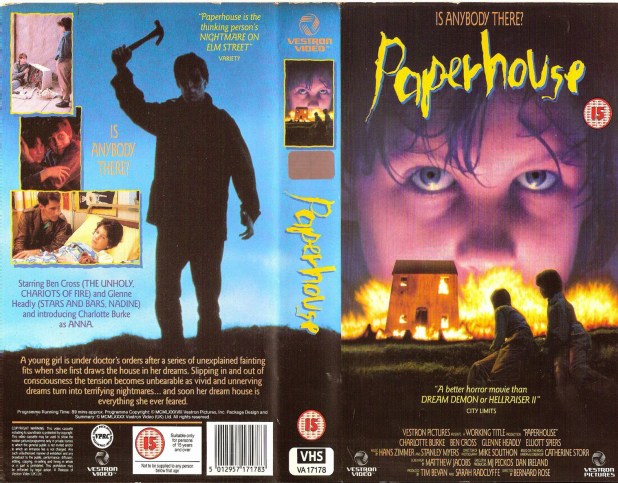
Based on Catherine Storr’s book Marianne Dreams — which was also the inspiration for the early 1970s British TV series Escape Into Night — Paperhouse was an early film from Candyman director Bernard Rose.
11-year-old Anna Madden is dealing with mono and the fever she endures is giving her horrifying dreams in which the house she’s drawn during the day becomes a real place. After drawing a face at the window, she meets someone else, a boy named Marc who is suffering from muscular dystrophy.
Sadly, Elliott Spiers, who played Marc, suffered a negative reaction to an anti-malaria medication that he never recovered from. He dies at the Royal Free Hospital in London just before the second film he appeared in, Taxandria, was released.
Anna’s father is an alcoholic who has been away from his marriage. She draws him one day in the hopes that he can carry Marc away to safety, but her true feelings emerge and she draws him with an angry expression. That drawing becomes an angry ogre who chases the children whole brandishing a hammer.
To top that off, Charlotte Burke — who played Anna — never acted after this film. Years after it was made, she called Rose and told him how much she loved the movie. In fact, she loved it so much that she never wanted to do another film afterward.
This movie is pretty astounding — a dream world where children’s fears become living and breathing monsters. Sadly, it was never released in the US on blu ray or even DVD. Luckily, it is currently available on Amazon Prime. Please check it out while it’s still streaming. It’s so worth your attention.
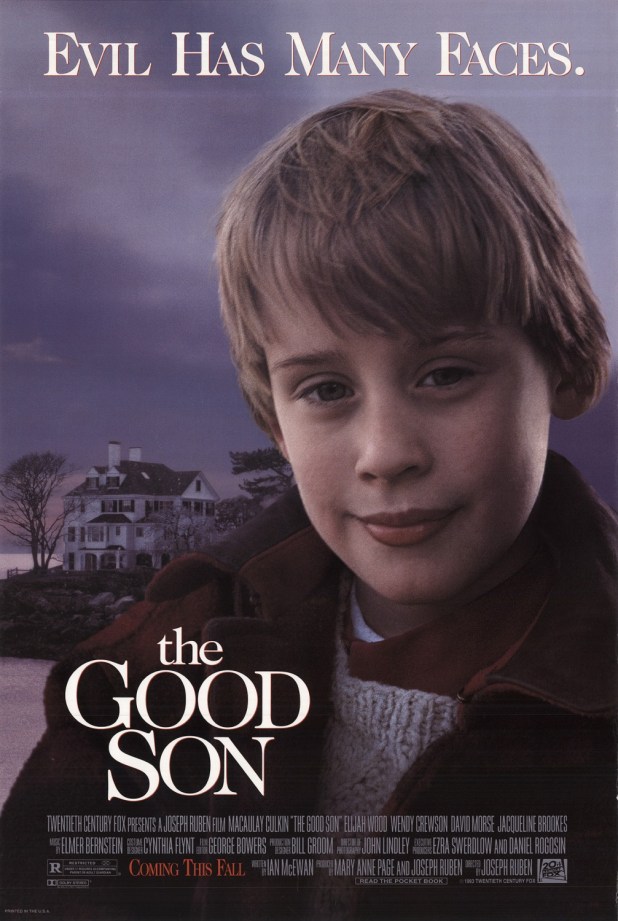
Ever see Atonement? The same screenwriter, Ian McEwan, also wrote this movie, which is all about exactly how we always figured Kevin McCallister was going to turn out. It’s directed by Joseph Ruben, who also was the director of Breaking Away, Dreamscape, The Stepfather and Sleeping with the Enemy.
It probably wouldn’t have happened without Kit Culkin, the father of Macaulay, who was a big man in Hollywood thanks to the popularity of his son. He wanted to prove that his boy could be more than a comedy star, so in order to greenlight Home Alone 2: Lost in New York, Macaulay had to star in this movie first.
Mark Evans (Elijah Wood) may not have even hit puberty yet, but he’s already had to deal with the death of his mother and the fact that he has to stay with his uncle Wallace and aunt Susan, as well as their children Connie (Quinn Culkin, whose role in this movie was contractually obligated) and Henry (yep, Macaulay). The latter child is, of course, nuts and obsessed with the death of Mark’s mom and his own little brother Richard (Rory Culkin and you have to say it for those Culkin’s, they know how to get work for the whole family tree).
Of course, Henry’s little bits of crazy soon manifest themselves in killing small animals, causing huge pile-ups on the highway and shoving his little sister under the ice. The movie asks all manner of psychological questions about the love of a mother versus doing the right thing and whether or not any of us are prepared to kill a child.
The tone of this movie is all over the place. You’re used to Macaulay being funny and dangerous to the right people, so when he does the same thing to the wrong people, you kind of want to keep on his side. Perhaps if the film’s original director, Michael Lehmann of Heathers and Meet the Applegates, had stayed on and hadn’t battled with Macaulay’s dad, things would have been different.
This is the only film in which Culkin plays a villain, but not the only one where he dies. The first would be My Girl, which ruined many a pre-teen video rental. And while this movie is a 1990’s spin on The Bad Seed, it is nowhere as good. Did you expect any different?
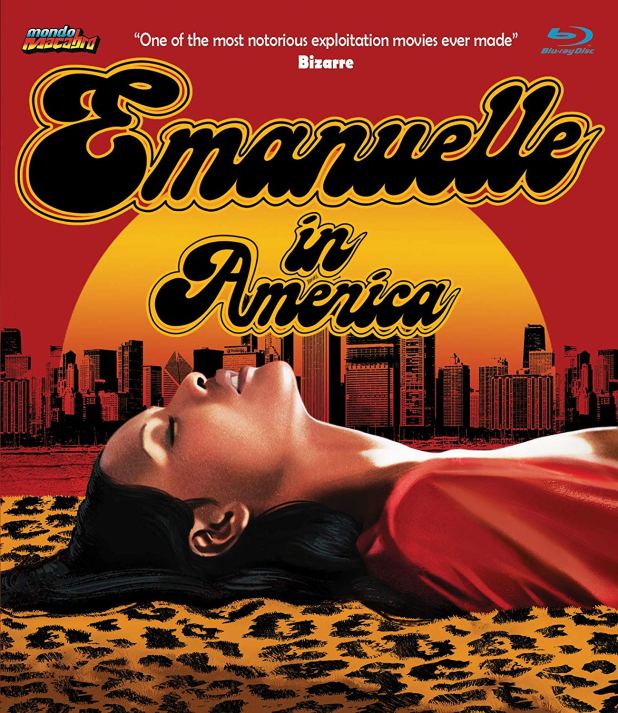
I love Mondo Macabro. They put out amazing releases and clean up neglected foreign films, making things a million times better than they have any right to. Just this year they’ve released a slew of films that have never even been put out on DVD in our country. They’re one of my favorite labels.
However, they nearly got me in trouble by sending me a review copy of this film. With no warning, my wife opened it and instantly called and asked why I bought it. Thanks — I hate looking a gift horse in the mouth (and this movie does way more than look when it comes to horses).
Oh yeah — this entire review is NSFW. You’ve been warned.
This is the second in this series of movies to be directed by Joe D’Amoto. Whatever name he uses, you know exactly the kind of insanity that that name means.
Emanuelle — notice the missing M to denote that this has just enough legally not to do with the French film that starred Sylvia Kistel but just enough to make you think that it may — is a photojournalist out to get a great story no matter what. No matter what often means that she’s getting naked and in trouble, starting with an angry virginal boyfriend of a model that wants her dead.
She’s played by Laura Gemser, who has also used the name Moira Chen, and if you’ve seen a Bruno Mattei or D’Amoto film, you know exactly who she is. I’d recommend her star turn as a psychic who gets menaced by mutant fishmen in Endgamemyself.
Here, she’s on the trail of playboy Eric Van Darren, who is enslaving women and creating a harem. She also hooks up with Italian duke Alfredo Elvize (Gemser’s real-life husband Gabriele Tinti who is in Enter the Devil if you’d like to descend further down the funnel of Italian scum) and his wife (Paola Senatore, Eaten Alive!).
You may be like — hey, this seems like the typical Cinemax After Dark film, albeit with much better production values and one hell of a musical score. That’d be correct until Emanuelle ends up going to an island where every fantasy can become reality. Hold the Ricardo Montalban!
That’s when she discovers that some of the folks there like making love while watching films of young women dying. Yep — snuff films!
Emanuelle is disgusted and quits her job to go on a long vacation with her boyfriend. Of course, she’s soon come back for Emanuelle Around the World, where she meets a guru who promises the ultimate orgasm. And that guru is, of course, played by George Eastman. Ivan Rassimov also shows up, and if you suddenly started searching for this film, you get why I spend so much time writing about movies on this site.
After that, D’Amoto and Gemser would team up for perhaps an even more insane tale than this one, Emanuelle and the Last Cannibals, and one other Black Emanuelle film, 1978’s Emanuelle and the White Slave Trade.
If you saw the version of this that played on Cinemax or Showtime in the 1980’s, you didn’t get the full uncut madness that appears on this blu ray. Honestly, outside of degenerates, I have no idea who is ready for such madness.
You can get this directly from Mondo Macabro. The colors are gorgeous, the music sounds better than ever and the extras, like a documentary entitled D’Amato Totally Uncut: The Erotic Experience, brand new audio commentary by Eurotrash aficionados Bruce Holecheck and Nathaniel Thompson and a brand new interview with author David Flint, are worth just as much as the movie.
But man — you guys gotta warn me when you send me this kinda stuff. Still, much appreciated.
DISCLAIMER: We were sent this movie by Mondo Macabro. Luckily, my marriage survived.
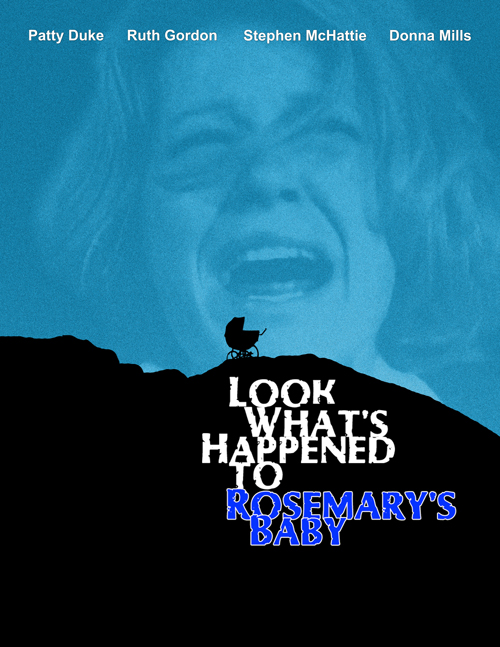
When audiences turned in to the ABC Friday Night Movie on October 29, 1976, they got to see the sequel to one of the biggest horror films ever. However, what they ended up watching had little to nothing to do with its inspiration, 1968’s Rosemary’s Baby, or the Ira Levin-written sequel Son of Rosemary.
The only actor to return from the orginal is Ruth Gordon as Minnie Castevet and we all know that you can’t trust the combination of Old Hollywood and Satan.
Sam O’Steen, an editor on the first movie, directed this sequel. He also directed a ton of amazing films, such as Cool Hand Luke, The Graduate, Chinatown, Straight Time, Silkwood and Working Girl. He also edited perhaps the scummiest and most Italian horror movie to ever emerge from a major American studio, Amityville II: The Possession.
The movie breaks its story down into three different books.
The Book of Rosemary: A coven prepares for a ritual only to learn that Adrian, the son of Rosemary (Patty Duke, who was considered for the original movie, taking over for Mia Farrow) is missing from his room and hiding in a synagogue. Sure, the coven can hurt the rabbis, but because they’re in a house of God, everyone is safe.
The next morning, Guy (George Maharis from Route 66 taking over for John Cassavetes, which is the dictionary definition of several steps down) gets a call from Roman Castevet (Ray Milland taking over for Sidney Blackmer, so at least Old Hollywood stays in the picture) and asks him to keep an eye out for his wife and child. Roman could really care less, because he’s a big Hollywood star now.
While Rosemary calls him, Adrian is bullied by some kids and goes full on Daimon Hellstrom on them. Luckily, a prostitute named Marjean (Tina Louise!) saves them, but you know that she has to be a fallen woman in league with Satan. She calls a possessed bus to pick up Rosemary and drive her away from her son. Now, he belongs to the coven.
The Book of Adrian: Twenty years later, Adrian is living with his Aunt Marjean in a casino and acting up. He’s played by Stephen McHattie (Hollis “Night Owl” Mason from the Watchmen movie) and he loves speeding, drinking, fighting and getting into trouble with his pal Peter (David Huffman, F.I.S.T.). As he arrives at his 21st birthday, Roman and Minnie arrive and drug him, getting him ready for his ascension to be the Antichrist, which pretty much involves him possessing a bunch of people who just want to disco dance and standing by while his father kills his best friend. Oh yeah — Broderick Crawford plays the local sheriff, which means that even more Old Hollywood is here in the service of Old Scratch.
The Book of Andrew: The coven has allowed Adrian to take the murder charge as he wakes up in a hospital. Donna Mills plays a nurse named Ellen who helps him escape. This is probably the second-best thing Ms. Mills has ever done. The first? Her epic self-help VHS tape, The Eyes Have It.
Of course, Ellen is really the granddaughter of Roman and Minnie. Even as they lose Adrian as he runs away after his father hits Ellen with his car — of course she survives — they already have the next generation of the devil all locked up. Why this happens and why we sat through this entire film is the kind of mystery that I’ve made this site for. After all, I’ve watched this epic made for TV turkey so many times that I’m embarrassed to divulge the true number.
Here’s a mixed drink to go with this movie.
Chocolate Mouse Martini
1.5 oz. Baileys Irish Cream
1.5 oz. Kaluha
1 oz. vodka
1 oz. creme de cacao
2 oz. milk
Chocolate syrup
Chocolate shavings
Pour chocolate syrup on a plate, then dip rim of glass into it. You can also drizzle chocolate syrup into the glass.
Shake alcohol and milk in a shaker with ice for twenty seconds, then pour into glass. Top with chocolate shavings.
This movie is more entertaining than anything that will be released in 2019, 2020 and hell, probably even the next ten years. Seriously, the fact that this movie exists and somehow escaped into theaters — for a very short time — astounds me.
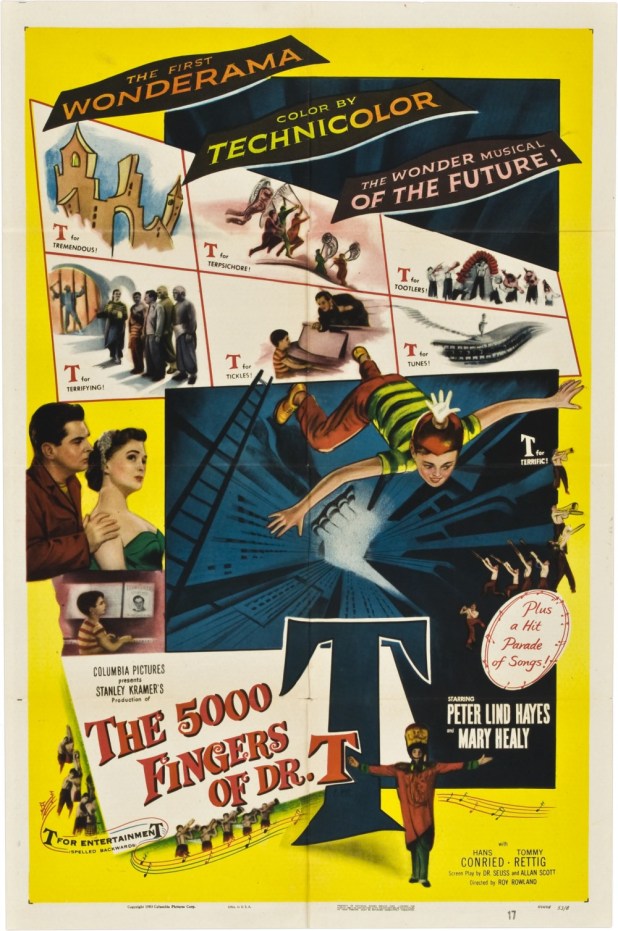
After the success of the animated short Gerald McBoing-Boing, Theodor Seuss Geisel submitted a 1,200-page script for this film, which was packed with “themes of world dominance and oppression coming out of World War II.”
Nearly every frame of this film looks like it escaped directly from the pages of one of his books. Of course, it tested horribly, which meant that nine of the musical numbers were cut from the film and never seen again. Plus, subplots were eliminated, new scenes were shot and existing scenes were rearranged. The film that Seuss intended will probably never be seen.
After all, people started walking out of the premiere 15 minutes in (child star Tommy Rettig was accompanied by Marilyn Monroe) and critics felt that the film lacked humor and enchantment. Geisel referred to the film as a “debaculous fiasco” and never even mentioned it in his autobiography. That said, he did say “Hollywood is not suited for me and I am not suited for it.”
That said — some people noticed. The film has gone on to be a cult film in the best sense of the word. It’s on the Church of Satan film list, after all.
Young Bart Collins (Tommy Rettig, who was the original star of Lassie and would later go on to star with Leave It to Beaver‘s Tony Dow on the 1960’s soap opera Never Too Young) is forced to take piano classes under the stern eye of Dr. Terwilliker (Hans Conried, Snidely Whiplash from Dudley Do-Right). After all, it makes his widowed mother Heloise (Mary Healy, who often was paired with her husband Peter Lind Hayes, including a breakfast radio show that was recorded in their own home) happy. His only friend, if you can call him that, is their plumber August Zabladowski (the aforementioned Peter Lind Hayes), who is at their house way more often than a plumber should be.
While Bart is struggling through his lessons, he dreams that he is prisoner number one inside the Terwilliker Institute, where the mad piano teacher has built a piano so large that it requires Bart and 499 other boys to play it. See — the quite literal 5,000 fingers of Dr. T.
To make things worse, Bart’s mom is now Dr. T’s assistant and bride-to-be and Mr. Zabladowski doesn’t believe him any longer. But by the end, they work together with all the other kids to destroy the giant piano and wake Bart from his dream, where the plumber finally asks out his mother.
Henry Kulky, who was once the professional wrestler Bomber Kulkavich, appears as one of Dr. T’s goons named Stroogo. Then there’s “Hollywood’s ugliest man” and Wallace Berry’s stand-in Harry Wilson and the lead singer of the Lettermen, Tony Butala (he’s also the singing voice for Tommy Rettig). And, of course, a cast of hundreds of children, all plinking away at that giant piano. According to Seuss, one of the kids got sick and vomited on the keys, leading to a chain reaction where nearly 150 others all ralphed at the same time. He joked that it was similar to the film’s reviews.
This whole bit of madness was directed by Roy Rowland (Meet Me in Las Vegas, The Girl Hunters) with many uncredited pieces of direction by producer Stanley Kramer (Guess Who’s Coming to Dinner, It’s a Mad, Mad, Mad, Mad World, On the Beach).
I urge you to see this film as soon as possible. You can get it on blu ray from the fine folks at Mill Creek Entertainment.
ABOUT THE AUTHOR: Mark Begley is the host of horror movie podcast Wake Up Heavy.
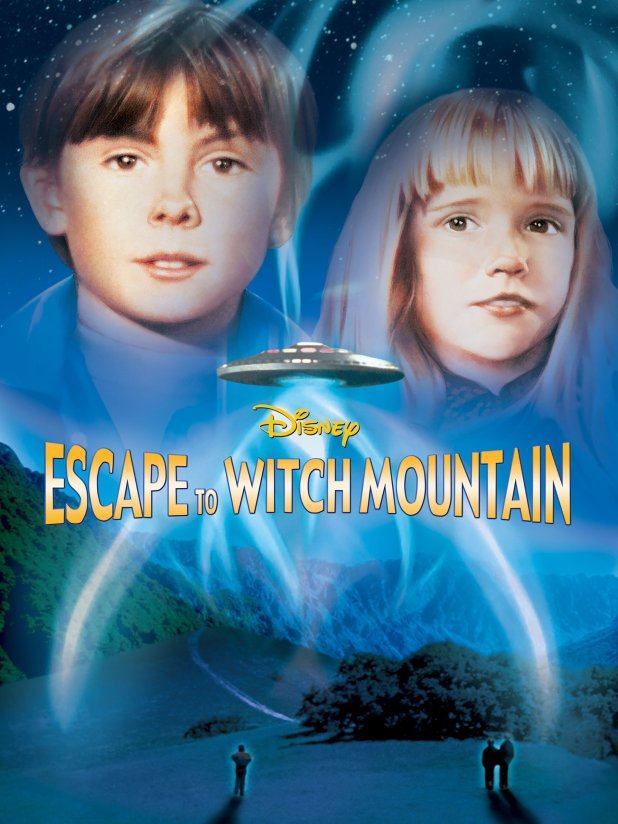
Following the recent Wake Up Heavy episode on Return to Oz that I did with my daughter, I decided to plumb the depths of nostalgia on Disney+ even further. I checked out the Kurt Russell vehicle The Computer Wore Tennis Shoes, then slid into a horror-lite favorite from my childhood Escape to Witch Mountain.
Escape is the tale of two orphaned children (or are they?)Tony and Tia, who possess psychic abilities. On a field trip with the orphanage to see Snow White and the Seven Dwarfs, the twins come to the attention of wealthy lawyer Lucas Deranian. He tells his boss, millionaire Aristotle Bolt, about the twins and their powers and they hatch a plan to take custody of them and exploit their abilities. Once Tony and Tia realize what is really going on, they escape and hide in grumpy widower Jason O’Day’s Winnebago. He reluctantly agrees to help, and the chase is on!
Readers of B&S About Movies may be wondering how this fits into the horror category, and, well, other than the title, it really doesn’t. Yes, we have horror icon Donald Pleasence as Deranian, and John Hough(Legend of Hell House, The Incubus) directing, but there isn’t anything even remotely spooky happening here. But they are kids (or are they?) in peril, so I’m taking some liberties just to write about this childhood favorite. Tony (Ike Eisenmann) and Tia (Kim Richards) use their powers (he can manipulate objects while playing the harmonica and she can communicate with humans and animals telepathically) in mostly cute or comical ways throughout the film. Along the way we see Tony control puppets, make a Winnebago fly, and a helicopter flip upside down, and Tina speaks telepathically to Tony, a cat, a horse, and a bear. I loved this kind of stuff when I was a kid and longed for special powers like that!
Ike Eisenmann and Kim Richards were staples of my childhood. They appeared together in this, Return from Witch Mountain, and Devil Dog: The Hound of Hell, as well as many other Disney shows and features on their own. Just a year after Escape Kim was unceremoniously blown away by a thug in John Carpenter’s Attack on Precinct 13. In 1977, she and her sister Kyle (the inimitable Lindsey Wallace in Halloween) were in The Car as James Brolin’s daughters. I had a major boyhood crush on Kim, and if you had told me back in 1977 that she and Kyle would be on a reality TV show about vapid people in Beverly Hills I wouldn’t have understood what you were talking about! Nor would I have wanted to.
I know I’ll be watching Return from Witch Mountain soon and will have to track down Devil Dog: Hound of Hell now because that title! Am I right? Also, here’s to hoping Disney+ adds some of their spookier treats like Watcher in the Woods and Something Wicked this Way Comes.
 B&S About Movies
You must be logged in to post a comment.