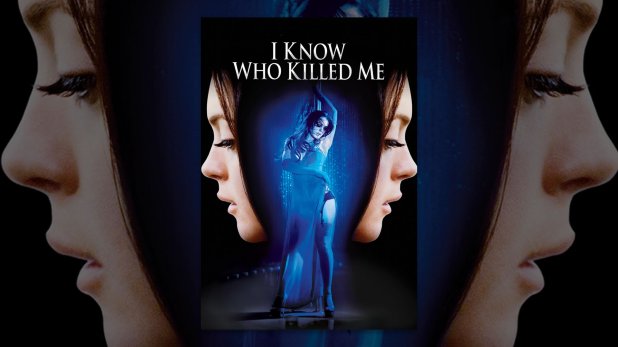
AMERICAN GIALLO: I Know Who Killed Me (2007)

I’m going to start this off with an unpopular take. This is not a bad movie. When I first met my wife, she used to tell me how much she loved it and I thought she was crazy. Surely, everyone online that went out of their way to destroy it had to be right, right?

Wrong. Go with me on this alternative universe logic — if Lindsey Lohan were a disgraced movie star in 1967 instead of 2007, she would have gone to Italy to make movies for directors like Bava, Argento, Martino and Antonio Margheriti. She would have been in the same company as Anita Ekberg, Florinda Bolkan, Elke Somer and even Edwige Fenech.

The film has all the hallmarks of giallo: a serial killer is abducting, torturing and killing young women in the suburb of New Salem. An evening of fun for Aubrey Fleming (Lohan) turns into weeks of torture as she wakes up bound and gagged on an operating table, her hands deep in dry ice.

The FBI Task Force has already given up hope of finding the killer, but a driver discovers Aubrey on a deserted road in the middle of the night. To the shock of her parents, she declares that she’s really a stripper named Dakota Moss and has no idea who Aubrey Fleming is. And then she realizes that she’s missing her hand and half of her leg.

At this point, you’re either going to give up on this movie or dive in. I advise diving right in.

While the police, the doctors and her parents believe that this is all PTSD, Aubrey/Dakota insists that she is not who anyone thinks she is. Things get weirder when FBI agents discover a story on Aubrey’s laptop about a girl with an alter ego named Aubrey. And DNA confirms that Dakota really is Aubrey. This inversion of identity is key to the main tenets of classic giallo.

Dakota has a theory of her own: She’s Aubrey’s twin sister and her injuries are Corsican Brothers-like (or Tomax and Xamot, if you prefer) sympathetic wounds as she experiences the plight of her symbiotic sibling.

Sure, her mother has a pregnancy ultrasound that shows only one fetus. But Dakota confronts her father (or Aubrey’s, stay with me) as she believes that her mother lost that child soon after its birth and that she and Aubrey were the twin children of a crack addict named Virginia Sue Moss. Aubrey was taken to live in comfort city mouse style while she stayed with Moss, trailer park mouse style. The complication? Virginia Sue Moss was yet another character from Aubrey’s short story.

Richard Roeper claims that this is the worst movie of the 2000s, calling the film “a ridiculous thriller (minus the thrills)” and saying that it’s filled with a” nonsensical plot that grows sillier by the second, tawdry special effects, heavy-handed symbolism that’s big on electric-blue hues and mechanical performances are all culprits as far as the title’s concerned.” Has Roeper even seen a giallo? Because reading that sentence makes me want to watch this movie all over again!

Back to the movie: Dakota starts to see visions of the killer slicing up his captive which draws her to the cemetery. As she investigates the grave of another victim, Aubrey’s friend Jennifer, she finds a blue ribbon from a piano competition. Aubrey was a noted pianist and there’s a note attached from her (and Jennifer’s) piano teacher, Douglas Norquist. As her father (or Aubrey’s, look, it’s not a giallo if you don’t get confused) looks on, she declares, “I know who killed me.”

That’s because the ribbon says, “Blue Ribbons Are For Winners, Never Settle For The Red, Rest In Peace, Douglas.” It’s a metaphor for the lives of the twins: Aubrey is the blue chipper with a boyfriend that loves her, good grades, plenty of friends and a bright future. Dakota works in the red light district and faces a life of poverty.

Without any police backup — again, this happens all the time in giallo — they confront Norquist. Daniel is killed before Aubrey leaves the safety of the car and enters the house. She fights Norquist, cutting off his hand, before she’s tied up. He asks her why she returned after he buried her alive before she frees herself and kills him. She heads into the woods where she digs up Aubrey, verifying that she was not insane and had been right all along. Then, she lies on the ground with her twin sister.

Some of the few critics who liked this movie compared it to Brian DePalma or David Lynch films. Sure. Or you could go right to the source — Italy.

If you replaced the score of the film (that said, I love that The Sword and The Melvins are heard in this film) with some insane synth or orchestral music (someone get Claudio Simonetti, Piero Umiliani or Morricone on the line), if you made the homes space age lounges filled with improbable furniture and if you had more than one scene of Lohan stripping (any of the sex in this movie is honestly the unsexiest sex ever, they should have really studied Sergio Martino movies), this movie would fit perfectly into my DVD collection between Hatchet for the Honeymoon and Inferno. Who am I kidding? It’s on my shelf already!

This is not the first time Lohan played twins on film, thanks to starring in the remakes of Freaky Friday and The Parent Trap. Again, this is perfect giallo casting — not to mention pure exploitation — showing her gone to seed as two twins who couldn’t be more different.

However, this was not an easy movie to film for director Chris Sivertson, as Lohan had an appendix operation during shooting. Plus, there were times when she would not show up at all — necessitating a body double be used to film the end of the movie. Even worse, she was followed by paparazzi throughout the shoot and some of them are still in the background of a few shots!

There are giallo techniques used throughout the film, such as a neon sign outside the strip club that foreshadows Dakota’s injuries and the fact that Bava-esque blue and red lighting determines which character is on screen between Aubrey and Dakota.

While so many decry this film for not making any sense, if you’ve made it through any number of classics (sure, the director claims Hitchcock as a primary influence, but you can say that he’s the well from which all giallo flows) like The Bird With the Crystal Plumage or Deep Red or A Lizard in a Woman’s Skin, you’re going to be just fine. The world was just ready to devour Lindsey Lohan and this film would be its sacrificial lamb. Oh if only there were an Italian film industry for her to turn to and appear alongside Ivan Rassimov!
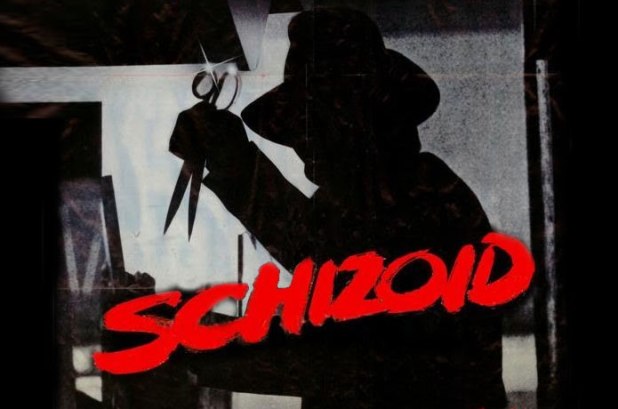
AMERICAN GIALLO: Schizoid (1980)

Julie (Marianna Hill, Messiah of EvilThe Baby) writes the lonely hearts column for a newspaper, but she’s suddenly getting more than letters from the lovelorn. An anonymous person is sending her letters threatening to murder people. And at the very same time, members of her group therapy session are getting stabbed and killed, one by one. Is there a connection?

Schizoid has all the markings of a giallo — the main character is in the middle of a murder investigation and has no idea who is behind it, while many of the killings are from the murderer’s POV. And let’s not forget the black leather gloves!

It’s missing the insane devotion to fashion and interior design, but we can’t hold that against it, as at least Dr. Pieter (Klaus Kinski, a legit real life maniac who always plays maniacs on screen) has an interesting home.

Right from the beginning, when the ladies of Dr. Pieter’s encounter group luxuriate in a hot tub, we get the idea that someone is watching. When one of them leaves, she is run off the road, chased into a farmhouse and repeatedly stabbed with a pair of scissors. Several days later, a couple that’s trying to have sex is surprised by the body.

Are the letters connected? Why do they mention a gun when the murders are done with a knife? Who is the killer? Is it Gilbert (Christopher Lloyd, The Adventures of Buckaroo Banzai: Across the Eighth Dimension), the weirdest person in her therapy group? Is it her ex-husband, Doug (Craig Wasson, Body Double) who argues with her every day because they work in the same place? Or how about Dr. Pieter, because he’s Klaus Kinski? Beyond that, he’s having sex with every single one of his patients, including a stripper named Pat (Flo Gerrish, Don’t Answer the Phone) who he takes against a hot water heater! And hey — his relationship with Alison, (Donna Wilkes, Jaws 2Angel) his daughter, feels super incestual. Maybe that’s who the killer is!

This film also follows the giallo tradition by having police officers that are so ineffectual that they depend on the heroine to do her own investigation with no protection and only a special phone line to help her.

Alison and Dr. Pieter argue repeatedly, especially after he grows closer to Julie, bringing her home to dinner. She begins to dress in her mother’s clothes or as a little girl and even steals her father’s gun.

The police put in the phone line, but every single call seems to be cranky readers who are angry about Julie’s column. Then, Alison calls her from a payphone, gun in hand. Julie gets Alison to come visit her at her house, where her husband (she doesn’t call him ex-husband) is doing some repair work. Alison throws out a whole bunch of the letters and brandishes her gun, but it’s unloaded. Then, the phone rings.

It’s Dr Pieter, who demands to know where this number reaches Julie. He comes to visit, but someone takes a shot at him. We don’t see who, but he assumes that it is Alison. The lights go out and we have no idea who is in the room with him. The phone rings again, but it’s not Alison or Julie on the line. They’re both tied up and a man is on the other line — but who!

Should I reveal it here? I won’t. But I will say that this movie is truly a giallo because it’s the person that is the least likely suspect and the police come running at the last moment. And by that, I mean just in times for the credits.

Director David Paulsen also brought Savage Weekend to the screen, but is more well known for his primetime soap opera work on shows like Knots LandingDallas and Dynasty.

Want to see this one for yourself? Shout! Factory has a great budget double disk of this paired with X-Ray.

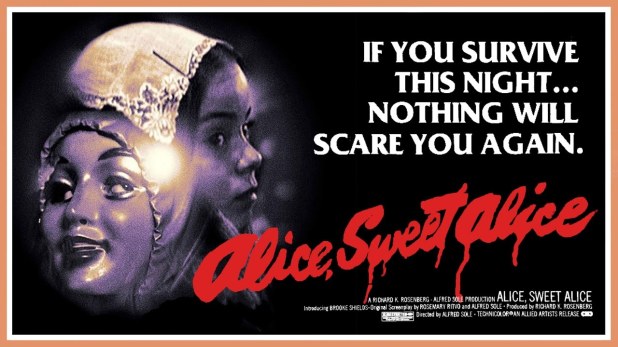
AMERICAN GIALLO: Alice, Sweet Alice (1976)

Bill Van Ryn writes the film blog Groovy Doom, admins the Facebook page of the same name, and publishes the horror and exploitation fanzine DRIVE-IN ASYLUM

Alfred Sole’s 1976 horror thriller Alice, Sweet Alice is that rare horror flick that contains several twists and turns, yet holds onto its ability to shock and disturb even after the surprises are known. Be warned, in talking about this fantastic film and its creepy, multilayered pleasures, I will reveal the identity of the killer.

Catherine Spages (Linda Miller) is divorced from her ex-husband, Dom (Niles McMaster). She lives in a tenement apartment building with their two daughters, Alice (Paula Shepard) and Karen (Brooke Shields). Aside from the pressure of raising the girls without her husband, Catherine is challenged by the rivalry between them; twelve-year-old Alice seems resentful of the attention that her younger sister gets. She terrorizes Karen in a number of ways, including frightening her with a Halloween mask, stealing the girl’s favorite doll, and manhandling the veil Karen is to wear on her first Holy Communion. The parish’s handsome young priest, Father Tom (Rudolph Willrich) also gives Karen a lovely family heirloom rosary as a gift, furthering Alice’s motivations for antagonizing her sister.

The family and the parish are shaken when Karen is murdered on the day of her first communion. She is attacked by a small figure wearing a child’s yellow raincoat and a mask, the same Halloween mask that Alice possesses; after strangling the child to death, the killer hides her body inside a chest and sets it on fire. Devastated by the loss of her daughter, Catherine’s emotional state begins to unravel, leaving Alice even more unstable than before. Could she be responsible?

Of course the movie toys with this idea, and Alice herself is a fascinating character, memorably played by actress Paula Sheppard. Sheppard only appeared in one other film, the 1984 cult classic Liquid Sky, before turning her back on acting and leading a private life. Here, she is the dark core of the film, an ambiguous character who veers between a glowering menace and a frightened child. The story captures her during a moment of passage into young adulthood, ultimately demonstrating the ways that adult conflicts can affect the course of a child’s development. Older than her sister, Alice is affected more deeply by the separation of her parents. Often silent and sullen, she is possibly even dangerous, as evidenced by a scene where she seems to kill a kitten with her bare hands when her lecherous landlord tries to molest her. Most likely, the story establishes these characteristics in Alice so that we believe she could indeed be responsible for the murder of her sister, as well as a violent stabbing attack that is carried out on her manipulative, overbearing aunt Annie (wonderfully characterized by actress Jane Lowry with all the exaggerated shock tactics of a drag queen).

Alice, however, is not the film’s killer. In a twist that predates the sudden arrival of Mrs. Voorhees at the conclusion of Friday the 13th, Mildred Clinton emerges as the mad slasher who carries out her violent revenge on those around her that she deems wicked. She plays Mrs. Tredoni, the rectory’s housekeeper, who we learn had a young daughter who died on the day of her First Holy Communion (shades of Friday the 13th again). Further defying expectations is the fact that the reveal isn’t made at the end, but with the final third still ahead.  She pulls off the mask for a reveal just as she murders Dominic, a character we may have thought would be the hero of the movie. Mrs. Tredoni’s motivations for carrying out this bizarre form of revenge stem from many places; in retrospect, we can see that she targeted Catherine because she considers her a ‘whore’ due to her divorce. Also, she feels a desire to see her own loss of a child inflicted on another woman. She dresses like Alice during the attacks in order to throw suspicion on her, perhaps recognizing that Alice is also a ‘bad’ girl. But also, Mrs. Tredoni harbors a love for the handsome Father Tom that may go beyond her devotion to the church. After murdering Karen, she reclaims the rosary that Father Tom gave her, a clue that Dominic takes to his death by using his teeth to pull it off the crazed woman and swallowing it.

Mrs. Tredoni is one distorted character, but yet another is Catherine’s obese landlord, portrayed by Alphonso DeNoble. With ghoulish circles under his eyes, pale white skin, and a tendency to talk to his cats in a high falsetto voice, DeNoble nearly steals the show. Jane Lowry, as Aunt Annie, also makes a meal out of the scenery, playing a shrewish woman who serves as yet another bad role model for Alice Spages. Annie addresses everyone in the film as if she’s a schoolteacher talking to a petulant student, and orders her weakling husband around like a drill instructor. Linda Miller as Catherine possesses few of these overblown qualities, herself being the ‘normal’ woman surrounded by horrible people—one of whom wants to destroy her life.

One intense moment in the film is a good indicator of the film’s haunting tone; Catherine comes to the rectory to wait for her ex-husband, who has been helping her cope with the loss of their daughter. She’s welcomed by Mrs. Tredoni, who we know has just murdered the man, but she has trouble keeping up a pleasant facade with Catherine, and grows increasingly agitated. While revealing her own tragic past, she suddenly picks up a large knife and casually aims it directly at Catherine. Moments later, news arrives of Dominic’s murder, and Mrs. Tredoni relishes Catherine’s screams of anguish.

The film’s horrifying climax furthers the contrast between Alice and Mrs. Tredoni, positioning them as similar personalities at different stages in their development as monsters. Having been spotted and identified by police at the scene of her latest crime, Mrs. Tredoni is pursued to the church, where Father Tom is saying mass and just about to give communion. At his own request, the detectives allow Father Tom to try to convince Mrs. Tredoni to go quietly with them. Unfortunately, he makes the mistake of refusing her communion after giving it to Catherine. Mrs. Tredoni, now furious beyond reason, pulls the large butcher knife out of her shopping bag and plunges it into Tom’s throat. Tom dies in Mrs. Tredoni’s arms as the police close in, and in the ensuing horror and panic, Alice slips away with Mrs. Tredoni’s shopping bag containing the murder weapon. These events have almost certainly shaped Alice for the worse, perhaps beginning a new cycle of trauma, anguish and revenge.

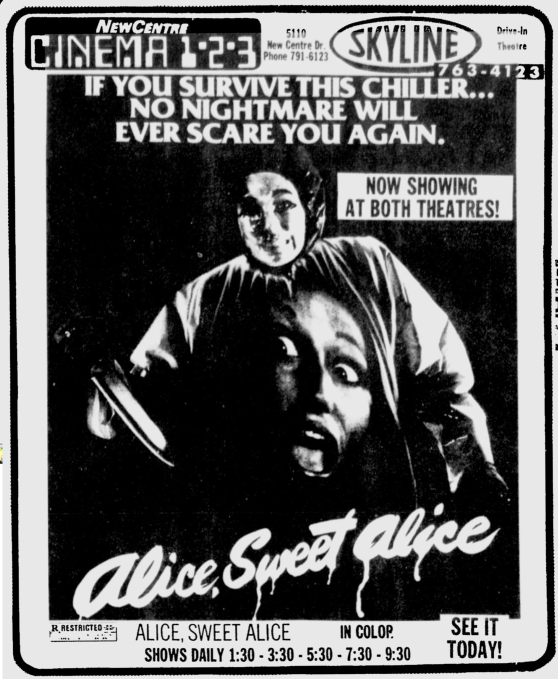
The movie was conceived and originally released as Communion, which is the title of the tie-in novelization. It returned in a limited release as The Mask Murders in 1977, and then was released more widely as Alice, Sweet Alice in 1978. It returned in 1981 with yet another title, Holy Terror, featuring an ad campaign that played up Brooke Shields’ brief appearance in the film, despite the fact that she was about 10 when she made it (and the image of Shields in the ad was current!). Shot in New Jersey, the strange editing, sound design and overall look of the film is that of a European giallo.  The fact that it’s a period piece set in the early 1960s may also have something to do with the fact that it appears to be a European production, as if the film is a foreign storyteller’s take on American angst and terror. It also draws a few themes from Nicolas Roeg’s 1973 Don’t Look Now, namely the use of yellow raincoats, a diminutive adult female killer who disguises herself as a little girl, and the climactic throat slashing with rivers of blood.

The movie is not European, however, and director Sole actually grew up in New Jersey, although he did study architecture in Italy. Like the best horror directors, Sole takes familiar elements (working class families and the culture of Catholicism) and distorts them into grotesque caricatures to disturb and unnerve the audience. This slightly askew viewpoint, along with the performances Sole gets from his able cast, goes a long way in achieving that elusive goal of turning a seemingly ordinary world into a nightmare landscape. It’s a shame he didn’t keep going as a director; frustrated by industry politics, he abandoned directing in 1982, choosing instead to make a long career for himself as a production designer. I’d have loved to have seen him continue making films with modest budgets and the generous imagination he displays in Alice, Sweet Alice.

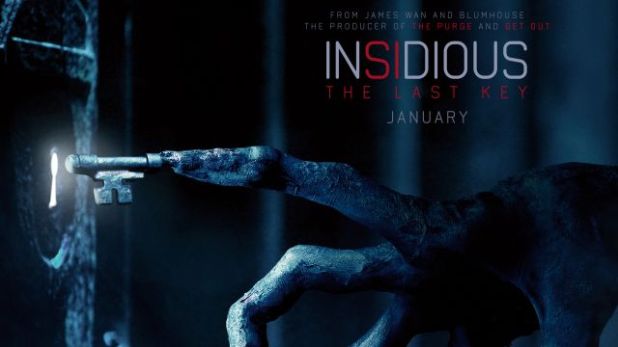
Insidious: The Last Key (2018)

A new horror movie? We went and saw a new horror movie? Yep. We sure did. The results? Well, pretty much exactly what I expected, sadly.

Never forget that before they started the Insidious series, Leigh Whannell and James Wan created the Saw franchise. That one got driven into the ground. And with Insidious: The Last Key, you can feel that the franchise is desperately seeking something new as it whistles past the graveyard, never letting you forget that Elise Rainier (Lin Shaye, A Nightmare on Elm StreetOuijaall of these Insidious movies) died at the end of the first movie.

There’s even a maudlin scene where she talks about how she and her dog have grown old. There are numerous heartstring tugs — well, I should say, attempted tugs — that fall flat.

Where the film succeeds is when it shows us where Elise came from, a home that is possessed by both human and supernatural horror. There’s a sequence there where Elise is sure that there’s someone else in the room with her and her brother that approaches a fright, but the film devolves into by the numbers trips into The Further.

Specks and Tucker (creator Whannell and Angus Simpson) are the other highlights of the film, a welcome bit of fun in an otherwise lumbering mess. The film feels four hours long, with the second half — introducing Elise’s estranged brother (Bruce Davison, The Lords of Salem) and his family — feeling like the only time this film picks up steam.

New baddy Key Face looks interesting (he’s played by Javier Botet, who has a lock on playing spectral evil thanks to roles in Crimson PeakThe Conjuring 2It and the upcoming Polaroid and Slender Man), but we never really learn why he’s doing what he does. I don’t always demand that horror films have backstory — Halloween doesn’t need it — but I felt there was no real motivation here.

This film has been in the can since August of 2016 and was moved from October of last year to make way for Happy Death Day, so the producers have to overjoyed that it’s already made four times of its budget.

Obviously, we’re going to get more of this series. They already set up Imogen Rainier, Elise’s niece, as having her gift. So they can always go back and rewrite the ending of Insidious 2, if they want. I just hope that they try and invest the film with some level of humanity, unlike this effort.

Also, Becca reminded me as we walked to the car that you need to watch these movies in this order: 3, 4, 1, 2. I have the sinking feeling that I’ll be watching the other films this week. I find them all lacking when compared to the Conjuring films.

I just wish that Hollywood would make a horror film I want to see. Looking at the films in Drive-In Asylum makes me sad that at one point, there were so many genre films to choose from. I feel that we have to go out and see every horror film that’s out (fuck, I had to suffer through that It remake this week on video and the trailer for Blumhouse’s Truth or Dare made me throw up blood) just to keep these movies viable. Other than The Witch and Get Out, I’ve been sorely disappointed. Here’s hoping that the rest of 2018’s new horror films easily jump over the very low bar that Insidious: The Last Key sets.

AMERICAN GIALLO: Manhunter (1986)

Silence of the Lambs is a great movie. But you’re reading my words right now, so I want you to know that Manhunter is a way better movie. In fact, it’s nearly a perfect film, one whose perfect union of light, color, tone and sound nearly moves me to tears.

Dino De Laurentiis was involved in this, changing the title from Red Dragon, and being his usual hamfisted self, but Michael Mann was coming in hot from TV’s Miami Vice (he’d previously directed Thief and The Keep before that show caught fire).

William Petersen (who would go on to star in CSI) is phenomenal as Will Graham, a former FBI profiler who has to come out of retirement to help solve a murder. Working on his character with the Chicago and FBI Violent Crimes Units, he learned that profilers often had to compartmentalize their personal lives, because it was near impossible to turn off the things they’d seen. In fact, at the conclusion of the film, Petersen found it near impossible to shake the character.

Tom Noonan (Frankenstein’s Monster in The Monster Squad) researched serial killers, but found himself sickened by what he learned. Instead, he tried to become a man who saw that he was doing good for his victims instead of harming them. He was doing it out of love. Improvising during his audition, he noticed that he was frightening one of the casting agents, so he pushed hard to frighten her even more. He claims that this is what secured the role for him. 

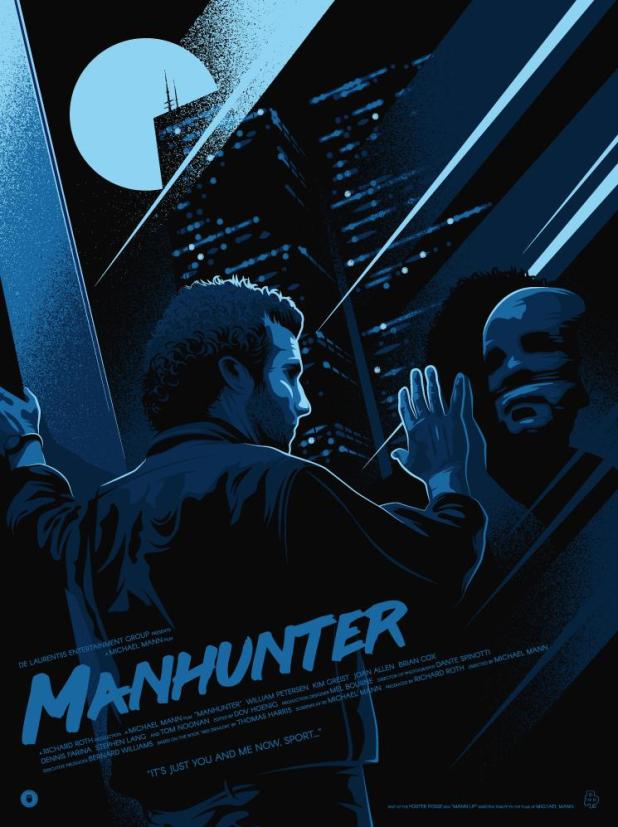
But the real star of the show is Michael Mann’s eye and his work with director of photography Dante Spinotti. There are color tints throughout the film, ala Bava, with cool blue representing love and green with purple and magenta to denote the violent moments. Petersen has said that Mann wanted a visual aura for the film, so the story could work on an emotional level.

Even the framing of the shots — watch how close Petersen is with other characters in the film, particularly how Dennis Farina (whose acting career began in Mann’s Thief) nearly collapses before coming near him at the end of the film, where once they could sit side by side.

Let’s get into the story: Will Graham (Petersen) is a retired FBI profiler who had a mental breakdown after being attacked by the serial killer Dr. Hannibal Lecktor (yes, that’s the correct spelling and Brian Cox (Zodiac) is commanding in this role). His old boss Jack Crawford (Farina) needs him to come back and enter the mind of the Tooth Fairy (Noonan), a killer who preys on families. Graham and Crawford both promise his family — Molly (Kim Greist, C.H.U.D.) and Kevin — that he will only look at the evidence and not get involved.

What follows is a cat and mouse game of trying to find the Tooth Fairy while Graham must return to confront the man who nearly cost him his life and sanity, Dr. Lecktor. Everything the police try backfires, including using a tabloid journalist to draw out the killer, which puts Graham’s family in direct danger when Lecktor gives the killer their home address.

There’s a great scene here where Graham and his son shop. In what would be a throw away scene in any other film, the true humanity of Mann’s work, in contrast to his meticulous editing and color theory, shine through. You can tell that Kevin has been forced to grow up and become the man of the house while his father was destroyed by Lecktor. And now, his father has to prove that he can protect his family again.

Meanwhile, the Tooth Fairy has found love with Reba (Joan Allen, Room), a blind co-worker. She cannot see his hairlip. She isn’t aware that he’s watching his victims while they enjoy a romantic dinner. His love for her and her acceptance has suppressed his bloodlust. Yet just as Graham’s profile discovers just how important that acceptance is, he sees her go home with another employee. It’s simply a ride home, but the killer goes wild, killing the man and abducting Reba. She calls him by his name and he replies, “Frances is gone. Forever.”

What follows is my favorite scene in the film, where we visually see how Graham’s mind works, as he figures out the connection between the murders where families were killed and their eyes replaced with mirrors. He figures out that all of the films came from the same lab. As he looks out the window, sure that he is right and ready to be confirmed, even when the lab says they have different labels, he confidently looks out the window and asks them to peel the label back. His hand against the window, the moon bright, he is proved correct and the chase is on.

As they determine the Tooth Fairy’s identity on the plane, leaving police cars barely enough time to meet them as they land, you know that Graham will not wait for backup. He is back, in his element, no longer a beaten man. As they make their way to the Kansas City riverfront (a bravura scene with a house that was made just for the film), Graham and Crawford race through the woods as the Tooth Fairy begins shotgunning cops.

During the final encounter, Mann shot multiple speeds, so that cameras were recording the same scene at 24, 36, 72 and 90 frames per second. This gives the shootout a feel that Spinotti said was off tempo and staccato. I found it disconcerting, the violence, not Hollywood glamour but messy real life.

Even more intriguing is that the climax was shot after principal photography and when the union crew had run out of hours. There wasn’t even an effects crew on hand,  so the skeleton crew that remained blew ketchup across the set through hoses to simulate blood spray. 

The home of the Tooth Fairy is an otherworldly place, blasting Iron Butterfly’s “In-A-Gadda-Da-Via,” lunar landscapes blocking rooms, before Graham busts through the window, breaking the Tooth Fairy’s carefully created world. Despite this act of heroism, the killer simply drops him to the floor and continues killing cops. yet Graham rises and defeats the man and confronts his victim. When he asks him who he is, he replies, “Graham. Will Graham.” He has left the other demons in his mind behind. He is himself again, ready to leave this world behind and return to his family.

So how is this film a giallo? Simple. Where it has no connection to the fashion and female protagonist that are hallmarks of the genre, the color choices, driven hero and psychosexual motives of the killer are pure giallo. So is the devotion to symmetry in the shots, echoing the work of Argento. However, this is a film stripped of the camp that is at the heart of so much giallo. Yet there it is, inside the DNA of this film.

Robowar (1988)

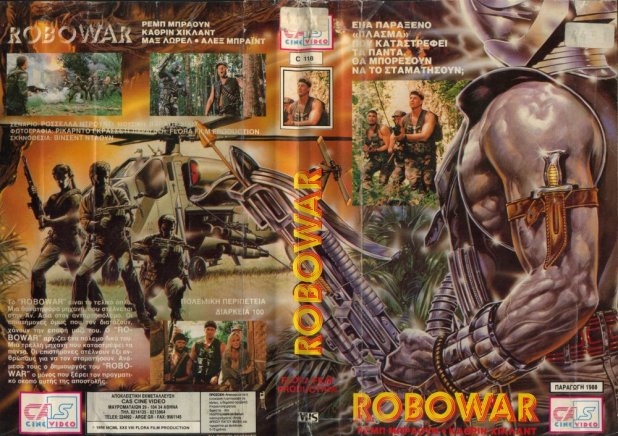
An Italian ripoff of both Predator and Terminator starring Reb Brown (Yor Hunter from the Future), directed by Bruno Mattei (The Other Hell), from a script by the husband and wife team of Claudio Fragasso and Rosella Drudi (who concocted Troll 2, a movie that is at the same time not a sequel and not about trolls)? You had me at Italian ripoff.

Major Murphy Black (yep, Reb Brown) is the leader of a team of commandos that are on a mission in the jungle. Only Mascher knows why they are really there — to test his new invention, Omega-1 (who is played by writer Claudio Fragasso), a robot that looks like a BMX racer with scuba gear.

But first, they have to rescue Virginia (Catherine Hickland, Witchery) from soldiers who are overtaking her hospital camp. Just like Predator, the team easily kills all of the terrorists/evil guys/generic villains, but it’s just to set up the real story. Yep, Masher wanted to see how his creation would stack up against Murphy.

The robot is smart enough to kill everyone, even his creator, and destroy the one device that is supposedly the only thing that can kill it. Also, Omega-1 is really a cyborg with he brain of Murphy’s old friend, Lt. Martin Woodrie.

Only Murphy and Virginia survive, despite numerous attacks by the cyborg. At the end, the cyborg corners Murphy in the jungle and shows him how to initiate his self-destruct sequence. And that’s that.

Are you wondering just how close this movie is to Predator?

There’s your answer right there.

Even I can’t defend the fact that I waste nearly ninety minutes of my life watching this movie. On my deathbed, I will pull my family close and whisper, “I only regret one thing. Robowar.” Hopefully, they realize that I mean a Bruno Mattei movie and don’t think that it’s a Rosebudian cipher and they have to go on a quest to discover what I mean. I also hope that none of them watch Robowar.

That said, it is on Amazon Prime.

AMERICAN GIALLO starts Sunday!

If you’ve been reading this site for awhile, you know how much we love giallo. Well, next week, we’ll be covering American versions of the genre. I’ve been obsessed for awhile with how these films take what we expect from giallo — fashion, music, colors, murder, strangeness — and looks at them with Western eyes.

This week, we’ll cover these films:

Manhunter: Michael Mann’s take on the first book in the Silence of the Lambs, filled with intense editing, camerawork and color theory.

Alice, Sweet Alice: Bill Van Ryn of Groovy Doom and Drive-In Asylum guests stars, covering one of his favorite films.

Schizoid: Klaus Kinski! Marianna Hill! Incest! Murder!

Blackout: The perfect mix of all we love: giallo and TV movie in one!

Dressed to Kill: Brian DePalma’s film has been compared to Hitchcock for decades. But perhaps it’s closer to Argento.

Sliver: A sex-starved divorcee moves into a building where everything is filmed in this  scummy 90’s forgotten favorite.

We can’t wait to discuss these films with you! See you Sunday!

Demon Wind (1990)

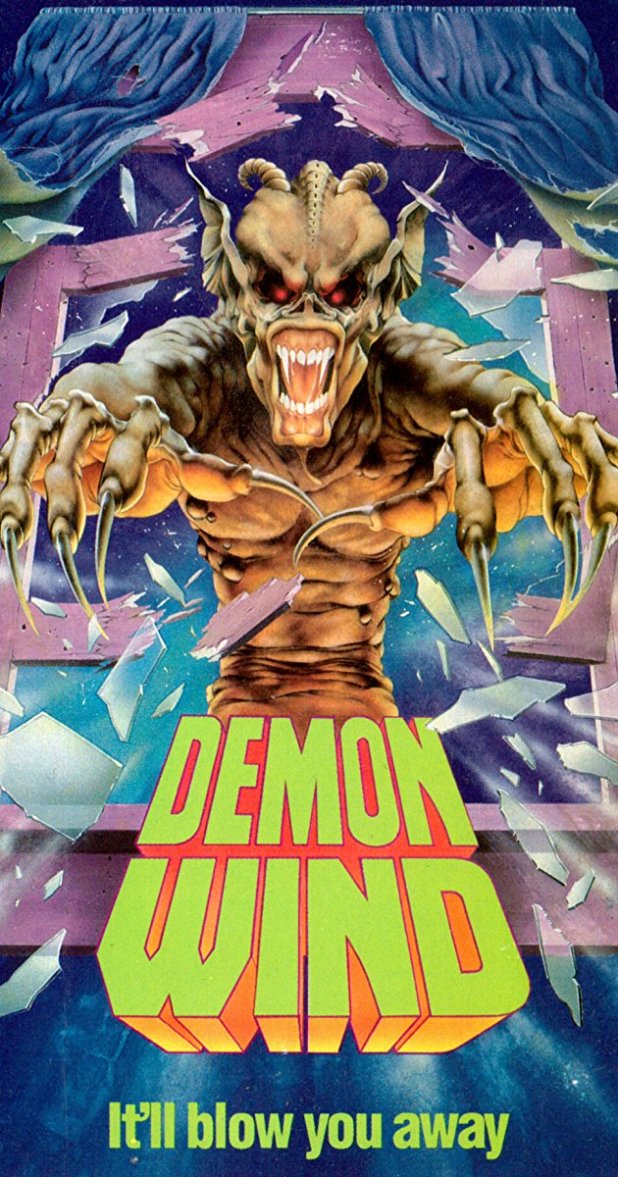
Until Vinegar Syndrome released this film on DVD in October of this year, Demon Wind was one of the very few horror films that had been huge on VHS that had never made the jump in format.

The best description I can find in my head for this film is a mix of Fulci and the Evil Dead, but a movie that makes way less sense. Yes, a film with less sense of plot than The Beyond and none of the aspiration toward art. And yet there’s so much to like!

In 1931, we see a body burned on a cross in the front yard. There’s another in the hallway and plenty of paintings of Jesus, as we hear singing about being washed in the blood of the lamp. We discover that a woman and her husband are trying to hide from demons. Instead, the husband transforms into a demon and kills her.

Fast forward to 1991 and Cory is dealing with the suicide of his father. He’s the grandson of the people we saw in the opening and has decided to go back to the farmhouse where they died. Often in these posts, I try and give advice. Here’s a new piece: if your family has a weird supernatural death or disappearance in its history, just leave it alone. Don’t go back to the cabin. Don’t go into the woods. Don’t go to the farmhouse. Just don’t.

He puts together a gang of his friends to hang out at the farmhouse, but of course a fog rolls in. And some demons. And lots of death. The farmhouse has a shield that keeps the demons out, but one by one, the teens are turned into demons. Luckily, they find some daggers that can kill the demons. Unluckily, the demon’s master arrives and they need to do much more to defeat him.

That said, where you’d expect things to make sense, Demon Wind goes in a much stranger direction. Like when Cory mentions he has been in a gas station before in a dream, we get to see that dream — in which he’s holding a big book while talking to his grandmother. Naked. Buck ass naked.

Also, the kids in these films have weird interconnected relationships. Like Cory’s girlfriend, Elaine used to date his best friend Dell. He greets her by kissing her directly on the lips and then high fives Cory. As you do. Dell’s new girlfriend, Terry, has an ex-boyfriend named Chuck, who brings his girlfriend Stacy, his magic tricks and an arsenal of roundhouse kicks.  I can only imagine that if these kids all worked in a mall together, they’d all have sex in the same room like Chopping Mall. Only Jack and Bonnie seem like they aren’t Eskimo brothers or sisters with someone else.

Despite warnings from old creepy men at gas stations — hello, Friday the 13th — and dead bodies and evil statements in blood on the walls, everyone acts like things are as normal as possible. It’s not just wooden acting. It’s literally like nothing phases these kids.

Bonnie reads the words off the wall a– “Now Satan shall walk” in Latin — and an explosive chicken shoots out of the oven and almost kills everyone. You read that one right. An explosive chicken. Somehow, Bonnie instinctively knows how this all works and has one request: when she dies, please don’t bury her here.

Also — The Fog (or the fog) covers the town, making sure that every escape attempt brings them right back to the farmhouse. And then three little girls take Bonnie, who disappears, leaving behind a burning baby doll.

Everyone decides that they will stay in the farmhouse for protection. Whereas in a film like Night of the Living Dead you’d batten down the hatches and board up the windows, these kids clean the house. Yes, in the face of certain death, the first thing they decide to do is some spring cleaning.

Then another couple just randomly shows up! Demon Wind doesn’t just go off the rails. It throws the rails off a cliff and follows them into the abyss.

The final act of this film just gets more and more bizarre. There’s gunplay. Demons feel up women and trying to get them off just by touching their breasts. Cow skulls eat faces. A female demon strips in the front yard, begging for the guys to come out and have sex, at which point they look at one another and say, “Demon,” like this is some demented Bud Lite commercial. And oh yeah — Cory transforms into a demon himself to battle the final boss.

There’s some decent gore. Some horrible acting. And no relation to the normal world in which you live and breathe. I often joke that there are some films that I just won’t recommend to normal people. Demon Wind is one of those films. But to my friends that I trust, to those that can effortlessly deal with trifling concerns like plot, motivation or dealing with multiple dream sequences, I’ll give this a recommendation.

Update: This is now streaming for free with an Amazon Prime subscription.

Mat Monsters: Robots!

Whew! It’s been awhile, but we’re back with plenty of new about the monstrous side of pro wrestling. And that brings us to…robots.

You can’t discuss mechanical grapplers without Shockwave the Robot. He’s wrestled all over the world, feuded with Mecha Mummy (you can even get a set of figures of the two of them via his website) and he breakdances!

Our good friend Kurt Brown noted that “Oh man, we had Robot C3 here in SoCal in ’78, but he had more staying power in Mexico. Let me think about it… OH! Of course, Lars Anderson as “The Bionic Wrestler” in ’76!” Yep, that’s right. For a short time, Lars Anderson was known as “The Man with the Bionic Arm!”

Even better, Kurt shared an image with us: For Sam Panico, My past, RUR 2000 (Rossum’s Universal Robot, from the Russian play that first coined the term “Robot!”

251648_10150220164828097_1503588_n

You can also call up The New Breed here, as Chris Champion returned from a car injury with a bionic arm.

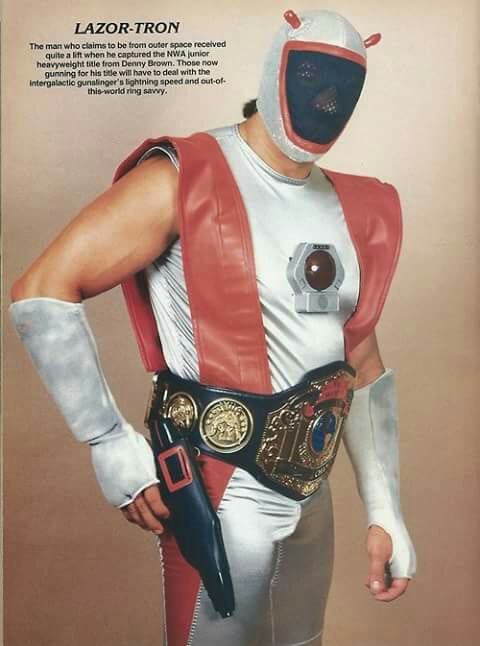
The New Breed also battled a babyface robot named Lazer Tron, who dressed in gear that looked like the kids’ Lazer Tag game. He teamed with Jimmy Valiant in the hopes of sending the New Breed back to the future they came from…2002, where Dusty Rhodes had become President of the United States. They also proclaimed Lazer Tron a “Go-Bot” and swore allegiance to the Decepticons.

Also, John Cena did a cyborg-style character while he was “The Prototype” before making it to the WWE. That said, it was more in promo and not like he dressed like a robot.

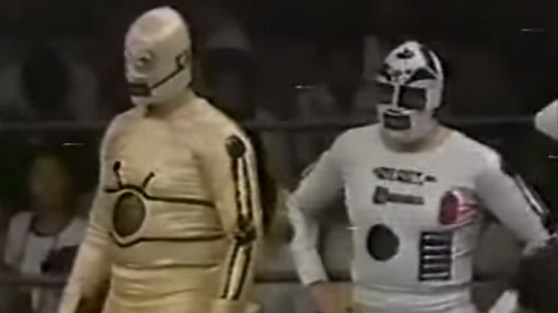
Believe it or not, C3PO and R2D2 have wrestled, notably in the most conservative promotion ever, All Japan Pro Wrestling! Here’s a rare photo of them gearing up to battle junior sensation (and pre-death match king) Atsushi Onita and Masa Fuchi!

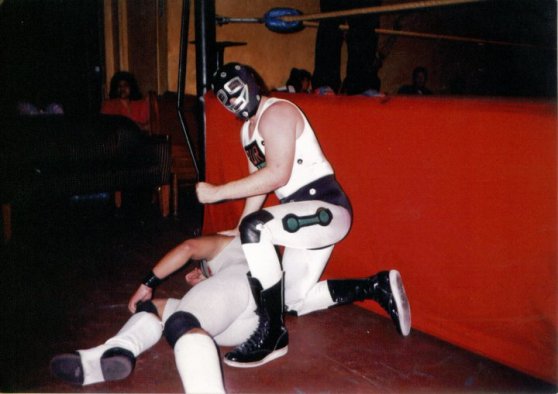
According to a member of the WrestlingClassics message board,  Robot R2e was “better known as El Rebelde. The other guy is small time wrestler Barba Negra (Raul Rodriguez). In one of these interesting wrestling stories: the original Robots R2/C3 wrestled in Mexico City but they had a disagreement with the magazine that created the gimmick, so they basically became independent wrestlers all over the country. Eventually, two new guys took the masks (Rebelde, a veteran by then, and Rodriguez), with support from the magazine.There was a nasty war of words, and a feud was teased, but eventually, the two Robot R2 became a short-lived tag team after the original C3 got injured. However, the original R2 hit it off with the second C3 so they became a regular tag team all over the country where they could make money without having to give a percentage to the magazine. The second R2 kept working for EMLL and was eventually unmasked as Rebelde.”

But if you really want to discuss Star Wars-based robots in wrestling, go no further than Michinoku Pro Wrestling. For years, they’ve been having the Great Space War, where the Mu no Taiyo cult…defend planet Earth from Superman, Darth Vader, Yoda, R2-D2 & C-3PO.

Also, for a short amount of time, Osaka Pro Wrestler Kuishinbo Kamen was forced to give up his character and wrestled as Super Robo K.

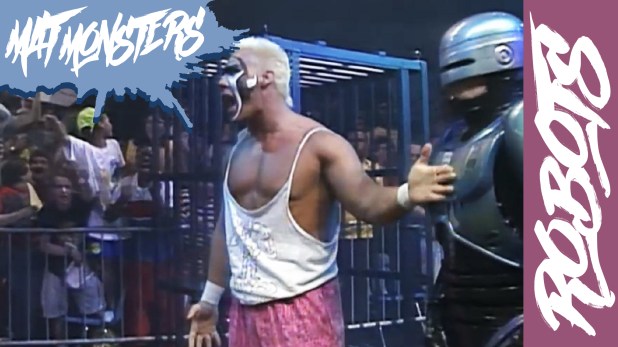
Finally, I wouldn’t be doing my job right if I didn’t mention the time that RoboCopo showed up to help Sting against the Four Horsemen. The less said, really, the better. But here it is…

What’s next? Well, we’ve covered the following so far:

Pro wrestling vampires, part one and two

Frankenstein’s monster as a wrestler

A three-part series on wrestling mummies, including Argentina, Mexico and an interview with Prince Kharis himself!

Undersea and amphibian grapplers

Jason, Nightmare Freddy and Leatherface, too!

But we haven’t gotten to zombies yet, so look for that coming soon! And please share any feedback or ideas you have with us!

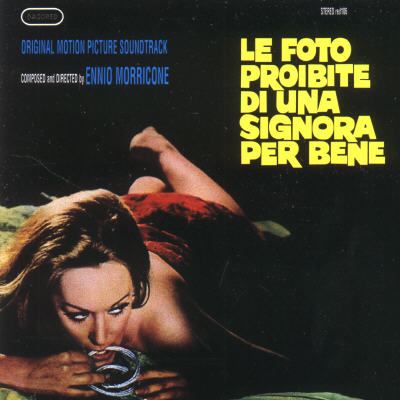
Forbidden Photos of a Lady Above Suspicion (1970)

Minou (Dagmar Lassander, The House by the Cemetery) loves her husband, Peter. But Peter is cold and only really seems to care about work. All she does all day is pine for her husband and take care of a turtle. Yep. You just read that correctly.

One night, a mysterious stranger attacks her, cuts open her clothes and then warns her: her husband is a killer.

The mysterious man is proven correct when a man who owed Peter money shows up dead. He demands that she come to his home, where he blackmails her into sleeping with him. Seeing as how he has recorded their tryst, he now has more material on her.

Even her friend Dominique (Nieves Navarro, All the Colors of the Dark, who was married to the director, Luciano Ercoli) can’t be trusted, as Minou finds photos of the blackmailer in provocative poses in her possession. When she finally gets the police to investigate, the man’s home is empty and Dominique tells the police he never even existed. Oh yeah. Dominique was once Peter’s woman before Minou. So there’s that.

Minou has a nervous breakdown and overdoses on tranquilizers before sobering up and learning that it’s all been a plot against her from the beginning. But come on — if you’ve watched any giallo, you knew that going in.

Despite its lurid title, Forbidden Photos of a Woman Above Suspicion isn’t filled with sex or even all that much violence. It’s more about alcoholism and how women were taught that they had to have the skills to land a man, but not what to do with their lives to make them fulfilled beyond just a relationship.

Director Luciano Ercoli has some gorgeous shots in here that really take advantage of the space age 1960’s aesthetic. And a bossa nova score by Ennio Morricone keeps this film bouncing. It wouldn’t be the first giallo I’d recommend, but it’s not the last, either.

If you have Shudder — and you totally should — you can find this film right here.