Fascism on a Thread: The Strange Story of Nazisploitation Cinema (2020)

Author’s Note: Due to the controversial subject matter of this film, please note this is a film review that addresses the creative art of filmmaking only. This review is not a political dissertation in support of or in contradiction of any sociopolitical belief system and is not intended to incense any reader regarding social or free speech/opinion issues. This review was written to expose a documentary film that attempts to help the viewer reach an understanding regarding the creative development of its subject-film genre.


Filmmaker Naomi Holwill is one of us. She’s a film dork at heart and, like most of us, isn’t content with just watching a film; her fascination runs deeper. She read all of the film books and watched all of the DVD supplements and listened to the commentary tracks, like us. She needed to know what made Spanish filmmaker Jorge Grau and Italian purveyors Luigi Cozzi, Lucio Fulci, and Sergio Martino tick. She wanted to know why the Emmanuelle franchise became a phenomenon.

And she became a filmmaker that is everywhere . . . and nowhere. She’s the dark lady of cinema.

If you’re a cult cinema aficionado of all things Spanish and Italian and horror and sci-fi — chances are you’ve watched more than several of her 150-plus feature-length documentaries and featurettes (as a producer, editor, and director) from her Scotland-based High Rising Productions that, since 2009, is responsible for producing a wide array of supplements for internationally-released Blu-ray and DVD reissues of most of your favorite films from the ’60s through the ’80s.

You want to know more about the influences of Norman Jewison’s Rollerball*? She’s gave us the feature-length documentary supplement From Rollerball to Rome (2020) (which needs its own, separate release). You want to know more about seventies sex symbol Me Me Lai, one of the very first British-Asian pin-ups? Naomi Holwill was the first filmmaker to tell Lai’s story with the acclaimed Me Me Lai Bites Back (2018). And the list goes on and on: Norman J. Warren’s directing career**, Cannibal films, Giallo films, Blaxsploitation, Roger Corman, Jack Hill, George Romero, Slashers, Italian Zombies, and Italian Exorcism films. Since 2009, Naomi Holwill, along with her High Rising partner Calum Waddell, have left no filmmaker, actor, director, or genre stone from our beloved Drive-In ’70s and VHS ’80s unturned.

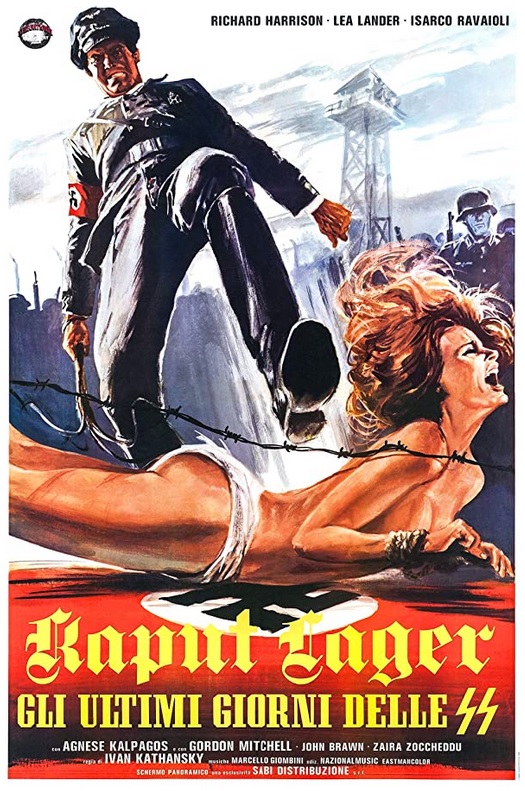
It was only a matter of time until High Rising Productions — with Waddell as writer and Holwill as director — would tackle the taboo sub-genre of exploitation and sexploitation films (and women-in-prison flicks) known as Nazisploitation: films dealing with World War II-era Nazi’s — both men and women — behaving very, very badly in concentration camps; films churned out in quick succession in the 1970s upon the box-office success of Don Edmonds (Terror on Tour) Ilsa: She Wolf of the SS (1975) starring Dyanne Thorne (Point of Terror).

Courtesy of the documentary’s inclusion on The Beast in Heat, the Blu-ray serves Dyanne Thorne’s final on-camera appearance.

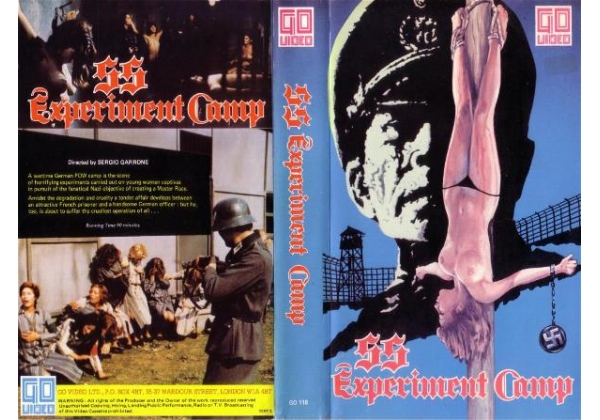
Severin Films contracted Rising High to produce Fascism on a Thread, a feature-length documentary on the genre for inclusion on its May 2019 Blu-ray edition of Paolo Solvay’s The Beast in Heat (aka La Bestia in Calore, aka SS Hell Camp). Included are interviews with genre stars Dyanne “Ilsa” Thorne and Malissa “Elsa” Longo, along with the genre filmmakers Mariano Caiano (Nazi Love Camp 27), Liliana Cavani (The Night Porter), Sergio Garrone (SS Experiment Love Camp, SS Camp 5: Women’s Hell), Bruno Mattei (Private House of the SS, Women’s Camp 119) and Rino Di Silvestro (Deported Women on the SS Special Section). Other filmmakers and films examined are Tinto Brass’s Salon Kitty, Last Orgy of the Third Reich by Cesare Canevari, Alain Payet’s Love Train for the SS, and the more serious and better-made (but the most grotesque-watch of them all), Salo, or the 120 Days of Sodom by Pier Paolo’s Pasolini.

Granted, most Nazisploitation films are admittedly more sensationalistic, but when it comes to Pasolini’s inclusion in the genre, you’re dealing with a film that isn’t using Nazism or Fascism as window dressing. Salo, the 120 Days of Sodom is a masterwork in the horrifying lessons of the absolute corruption of power in the same vein that Otakar Vavra’s Witchhammer (1970) controversially addressed the issue, a film that, itself, was bastardized with a quick succession of scandalous “Witch Trail” films, such as the West German-produced Mark of the Devil, aka Witches Tortured til They Bleed (1970), its sequel Mark of the Devil II, aka Witches Are Violated and Tortured to Death (1973), and the more reserved, Gothic-slanted AIP film that inspired the production of those films: Michael Reeves’s Witchfinder General, aka The Conqueror Worm (1968). Paul Naschy’s “theme” on the corruption of wealthy libertines, in his pseudo-zombie film, The People Who Own the Dark (1975), also has a connection to Pasolini’s art-horror film statement regarding Italy’s fascist state — and their complicity in the rise of Nazism.

While brutally squeamish — but not gratuitous: there’s a point to it all, really — Salo and these works are inspired by the infamous, power mad, pre-Nazisploitation exploits of the Marquis de Sade; which was the question asked by Naschy: “What if the Marquis de Sade existed in the nuclear, Cold War-era of the 1970s?” And that theme — which also adds a message about man’s obsession with beauty and youth — prevails in Fruit Chan’s nerve-inducing masterpiece, Dumplings (2004). These films may not be for the puritanical or faint of heart, but they are statements on how far one will steep into the Seven Deadly Sin for their own personal gain that need to be told. However, that message — and any sociopolitical connotations — is lost in most Nazisploitation films (the worst offenders being Lee Frost’s 1969 knockoff, Love Camp 7, and Garrone’s 1976 romp, SS Experiment Love Camp), so you’ve been forewarned.

When it comes to a quintessential encapsulation of the derided ’70s Drive-In genre that later became an ’80s VHS-based “video nasty” genre, Fascism on a Thread is it. If you’re a film dork that needs to know more and, as with our friend Mike “McBeardo” McPadden*˟, you’re on a quest to consume every Nazisploitation and Italian cannibal film ever made, Naomi Holwill’s directorial effort is a perfect introduction to exploring the genre as you wrap your head around “why” it ever existed in the first place.

After being offered on Amazon Prime as a separate-from-the-Blu stream from The Beast in Heat, you can now watch Fascism on a Thread for the first time as a free-with-ads stream courtesy of TubiTV. We’ve also since reviewed Naomi Holwill’s exploration of the Italian cannibal genre with Me Me Lai Bites Back (2021).

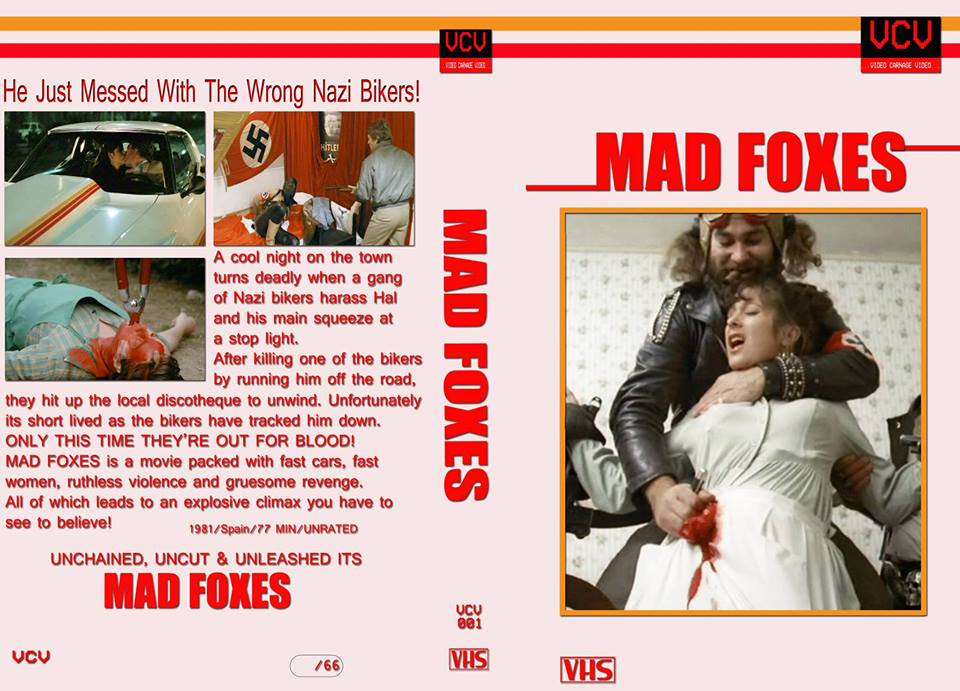
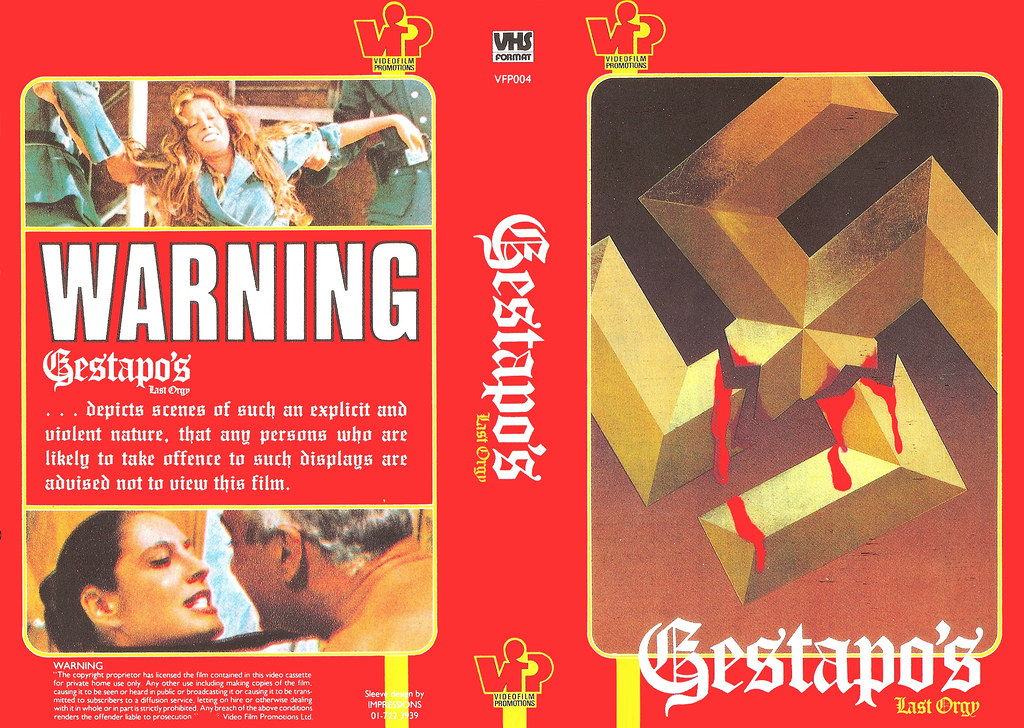
There’s also several fan-complied compilation lists to help you navigate through the genre’s films on the IMDb and Letterboxd. Other films of the genre we’ve reviewed are Achtung! The Desert Tigers (1977) and Gestapo’s Last Orgy (1977), along with the ’80s zombie variants of Shock Waves (1977), Gamma 693 (1981), and Zombie Lake (1981). Then there’s the rape-revenge inversion of Mad Foxes (1981). If you’re in a NaziZom binge-mood and want to see a few of the genre’s predecessors, you can check out They Saved Hitler’s Brain (1964) and its fellow Nazi scientist-cum-world-conquest villains in She Demons (1958), The Flesh Eaters (1964), and Flesh Feast (1970). To a lesser extent, there’s the Nazi we-never-see ghosts of Death Ship (1980).

Click through the images for the reviews.
* We did our own month-long examination of all of those post-apoc Rollerball offsprings with our two-part “Atomic Dustin” and our three-part “Fucked Up Futures” examinations — both features offer review links to over 100 films of every Italian and Philippine end-of-the-world romp you can imagine — and beyond.

** We’re reviewing Norman J. Warren‘s resume in June 2021.

*˟ We had the pleasure of interviewing Mike “McBeardo” McPadden in April 2019, upon the release of Teen Movie Hell: A Crucible of Coming-of-Age Comedies from Animal House to Zapped!, his latest filmpedia follow up to Heavy Metal Movies.

Disclaimer: We did not receive a review request from the director or a P.R firm. We discovered this film on our own and we truly enjoyed the film. And thanks for making this one of our most-successful posts with over 650-hits since January! We hope you enjoyed the film as much as we did!

About the Author: You can learn more about the writings of R.D Francis on Facebook. He also writes for B&S About Movies and publish music reviews and short stories on Medium.


Sacred Cow: The Nutritional, Environmental and Ethical Case for Better Meat (2020)

This film “probes the fundamental moral, environmental and nutritional quandaries we face in raising and eating animals. In this film project, we focus our lens on the largest and perhaps most maligned of farmed animals, the cow.”

Seriously, I never thought that I’d watch or even like a documentary all about why meat production makes sense, but this is well put together.

Yet this film presents an intriguing case study: in the push to create a more heart-healthy — and therefore, more highly-processed — diet, we may be destroying entire ecosystems and even human health thanks to the food that is supposed to make us feel better.

Nick Offerman — who played Ron Swanson on Parks and Recreation, a character who was nearly devoted to the consumption of meat — is the narrator for this story, which takes us from how we got here to how some of America’s farmers are trying to change the narrative by increasing biodiversity, improving soil health and raising high quality, nutrient-dense protein, all while fighting to preserve the family farms of our nation.

Interested in learning more? Or are you someone that subscribes to why being a vegan is healthier? Either way, beginning January 5, the film will be available in the US on iTunes, Vudu, Googleplay, Amazon, DirecTV, Dish Network and iNDEMAND. You can learn more on the film’s official site.

Words On Bathroom Walls (2020)

With Hotel for DogsDiary of a Wimpy Kid and Percy Jackson: Sea of Monsters, Thor Freudenthal established himself as a strong director for effects-driven kid movies. Now, Words On Bathroom Walls takes his verve for imaginative effects and applies them to a story for older teens and young adults.

Based on the novel of the same name by Julia Walton, this is the story of Adam Petrizelli (Charlie Plummer), a schizophrenic student trying to make it through life.

Expelled halfway through his senior year following a psychotic break while in chemistry class, Adam is diagnosed with a mental illness and sent to a Catholic academy to finish out his term. He knows that he won’t fit in and just hopes that he can keep his illness a secret and make it to culinary school while avoiding his mother’s new boyfriend Paul (the always great Walton Goggins).

The film does an admirable job of translating Adam’s mental illness via special effects and personifying the voices within his head. He worries that his life will always be one of hiding until he meets Maya (Taylor Russell), who inspires him to open his heart and not be defined by his condition.

Lobo Sebastian, who plays the Bodyguard inside Adam’s visions, was also in Ghosts of Mars and played Lil Joker in Next Friday. Plus, it’s always great to see Andy Garcia in films, here as a priest who helps our protagonist.

Words on Bathroom Walls is available on blu ray, DVD and on demand from Lionsgate, who were nice enough to send us a copy to review.

Wonder Woman 1984 (2020)

So I finally figured out why this movie is called Wonder Woman 1984. That’s because it takes its inspiration from the pre-Marvel Cinematic Universe superhero movies that are adaptions of the comics in name only. I’m looking at you, Supergirl, which came out in 1984*.

Yes, before superhero movies took over the world, we got movies like Superman IV: The Quest for Peace and the Spider-Man and Captain America TV movies (and Superman III and the Cannon Captain America too, while we’re at it).

In 1984, we were lucky if we got a great superhero film.

In 2020, we forgot what that time was like.

Directed by Patty Jenkins from a script she wrote with Geoff Johns** and Dave Callaham, based on a story by Johns and Jenkins, this is a movie that people have really hated with a passion. So many people have said that it’s campy, but they really have no idea what that word means. This is in no way the 1960’s Batman TV series. It’s not Barbarella. We could only dream that it could be a tenth of a percent as campy as Danger: Diabolik or Flash Gordon***.

It’s the very definition of a movie that has no idea what it wants to be, the story that it wants to tell or how the characters will learn or grow along the way. It only hamfistedly smashes plot points — Honesty is good! Lies are bad! — with all the subtlety of Obnoxio the Clown.

It all starts in the home of the Amazona, Themyscira, where a kid version of Diana Prince competes against the older Amazons and learns that cheating won’t get her anywhere. This is generally called foreshadowing, but again, this is a plot point hammered home so completely that even Bizarro would find himself saying, “Me not get it!”

We move to 1984, sixty-six years after we last saw our heroine in the last movie, and she’s spent the decades pining for Steve Trevor (Chris Pine), who sacrificed himself to save everyone from a bomber filled with poison. Now she’s the senior anthropologist at the Smithsonian, working alongside the mousy Barbara Ann Minerva (Kristen Wiig) when she’s not foiling robberies at malls that look so garishly 1980’s that Nightwing’s first costume would fit right in.

Trust me. I was in the 1980’s. I was eight when they started. Everything in here is exactly the 80’s marketing people think the 80’s are. Anachronism abounds to the point that I was expecting Rip Hunter to show up and ask Wonder Woman to fix things. “Diana! Operation Wolf came out in 1987, not 1984! Per Degaton is ruining everything! The Cro-Mags didn’t release The Age of Quarrel until 1986 and that kid already has the shirt! Cronos is destroying the time-space continuum! That man is walking a goldendoodle, which wasn’t bred until 1990! Monarch is back!”

That’s when this film’s McGuffin comes into play. The Dreamstone can give anyone their wish. Wonder Woman wants Steve back. Barbara wants to be Diana. And Max Lord (Pedro Pascal) wants it all.

Yes, Max Lord. The guy who was behind the Justice League International before coming back to kill off Blue Beetle and ruin the DCU for so many people in Countdown to Infinite Crisis.

While this isn’t a mainstream character, it doesn’t have to be. But the truth is, Wonder Woman 1984 is more Max Lord’s movie than it is Diana’s. He’s the one that takes the journey, who changes and becomes a better person at the end once he sees where his bad decisions have taken him. And much like 1984, the year when comic book movies had nothing in common with their print inspirations, he’s Max Lord in name only****. He’s more Donald Trump than L-Ron’s best pal, but that’s completely intentional.

Within a few days, Lord has pretty much ruined the world with wish after wish*****. Barbara has wished to become an apex predator, a term nobody used in 1984. And Diana has realized that Steve — in another man’s body that had sex with Diana without consent, which was a major issue with so many people and something that while upsetting is also something fictional with no way of happening in our reality and to be blunt, we got bigger things to be upset about in 2020 — shouldn’t be back from the dead.

And that’s pretty much it.

The biggest sacrifice — Steve going back to death — is made by Steve more than Diana. Barbara never gives up her wish, gets electrocuted and still lives. And Max actually comes out as the person who learns the most, telling his son that he is not a good man.

Maybe it’s the amount of horror and exploitation films that I watch on a regular basis, but movies are best between 66 and 75 minutes. This one goes near double that and I already told you the whole story in a few paragraphs. It drags. And drags. And then drags some more for good measure.

It also doesn’t have any real reason to be set in 1984 other than the title and “Welcome to the Pleasuredome” by Frankie Goes to Hollywood getting used in one scene. And yes, to be completely OCD, this movie takes place on the Fourth of July and that song was released until October 29 of that year.

It’s also a $200 million dollar movie that has effects that feel unfinished (just look at the kids turn into obvious dummies when she saves them), a final fight scene that makes the end of Ang Lee’s The Hulk look well lit and invalidates much of what we knew of Wonder Woman in Justice League, which claims that she was in hiding the whole time. As for those who claim continuity doesn’t work, the old DCU was the most continuity heavy universe ever. Ask Ambush Bug. And continuity is a major reason why the MCU works so well.

That said, Gal Gadot is fine as Wonder Woman, for all she is given to do. Kristen Wiig is playing Kristen Wiig and if you told me that this was the same character she was essaying in the Anchorman sequel, I would have believed you. And I guess Pascal is fine, but by the end of this movie, I was moved to ennui and struggling to say anything nice.

I mean, go back and watch that fight scene in the mall. It has almost sitcom level mugging in it. I mean, the worst part for me was when Steve is amazed by an escalator and a subway train. The first movie was set in London during the First World War and all of those things existed there at that time. Maybe Steve is just a moron.

There you go. I’ve spent more time figuring this movie out than it really deserved. Let’s get back to Jess Franco movies, people.

*But some really great comic films came out in 1984. One is based on a comic strip that not many people know called Sweet Gwendoline by John Willie and that would be the strangely great The Perils of Gwendoline in the Land of Yik Yak. The other two aren’t based on any comic book but get the tone perfect and those would be The Adventures of Buckaroo Bonzai Across the 8th Dimension and The Toxic Avenger.

**Who actually wrote some decent comics every once in a while, like DC’s JSA.

***Which is the answer to the question, “What are Sam’s two favorite comic book adaptions?”

****Just like how its mentioned that the Dreamstone comes from Dolos, The Duke of Deception, who was the first major challenge that Diana faced pst-Crisis.

*****One of those wishes is to get his company back from Simon Stagg, who we all know — I’m joking, like four or five of us know — is the father-in-law of Metamorpho.

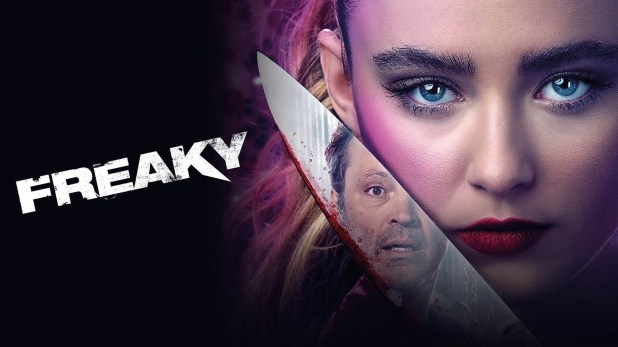
Freaky (2020)

By all rights, I should hate this movie, a semi-remake of Freaky Friday that instead subverts the source material by turning it into a slasher. But you know, it ended up hitting me the right way and I was behind it pretty much all the way.

Directed by Christopher Beau Landon — yes, the son of Michael — who wrote Disturbia — that’s not even a word — and several of the Paranormal Activity movies before directing the Happy Death Day films. If you liked those, well, this will definitely give you more of what those movies offered, this is set in the same universe — Landon said that, “They definitely share the same DNA and there’s a good chance Millie and Tree will bump into each other someday” — and was originally titled Freaky Friday the 13th.

Millie Kessler (Kathryn Newton, Big Little Lies) is a teenager who has been tormented by bullies, both of the teenager and teacher* varieties. Meanwhile, the urban legend of the Blissfield Butcher continues, as he keeps killing her classmates. Now that he possesses a McGuffin called La Dola — an ancient Mayan sacrificial dagger — he looks to gain even more power. But when he runs into our heroine — her mother (Katie Finneran, who is great in this) has left her behind at a football game where all she gets to do is wear a beaver mascot costume — she battles the Butcher and when he stabs her, they end up switching bodies.

So yeah — this turns into a body swap comedy and you’d think, after the gory as hell open, this is where they lose you. But no — if anything, this gets way more fun.

Millie’s friends make for some of the best scenes in the film. Nyla (Celeste O’Connor) and Josh (Misha Osherovich) have been with her through the worst parts of high school, so having their best friend in the body of a killing machine is just another trial to be endured.

Speaking of that killer, Vince Vaughn shines in this. There’s plenty of silly physical comedy, but also some really nice scenes like when he admits to the love interest that she left the note he treasures (body swap pronouns are a little hard) or when he has a moment with her mother while hiding in a changing room.

Landon — who wrote the movie along with Michael Kennedy — said that the film was influenced by the Scream series, along with Cherry FallsFright NightJennifer’s BodyThe Blob and Urban Legend. There’s also a fair bit of Halloween in here, particularly the opening series of murders, and references to Heathers, Child’s Play, Creepshow, Galaxy Quest, Carrie, The Faculty, The Craft and Supernatural. There’s also a bottle down the throat kill that came directly from the 2009 slasher remake Sorority Row.

I had fun with this. Here’s hoping you do the same.

*The funny thing is that the teacher that is the worst to her is Alan Ruck, who knows a thing about bring bullied, what with playing Cameron in Ferris Bueller’s Day Off.

Blood from Stone (2020)

Ugh. Not another vampire movie.

“This guy’s turning. You know that, right?”
“Damn it, Vik, I was still drinking that.”

— Jure to his sister Viktoria, after she cuts him off

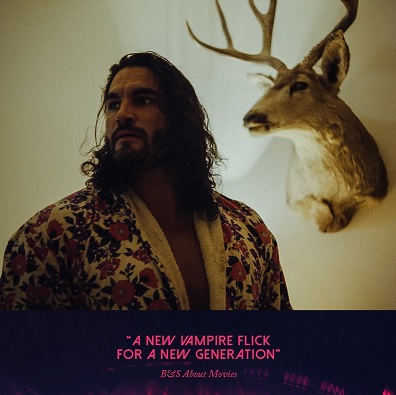
See. This isn’t another vampire movie. So drop that critical stake at the crypt’s threshold, Van Helsing. The caped debonair of Christopher Lee isn’t in there. And neither is the bad-boy dreaminess of Edward Cullen. Nor the anti-superhero backflipping antics of Blade. Or the Brat Packery of Near Dark. For this isn’t your grandfather’s Hammer atmosphere-over-gore vampire flick lurking in that web-strewn sarcophagus. And while it’s bloody, like your father’s CGI gore-over-atmosphere plasma soirées, this is a new vampire flick for a new generation. And this isn’t a horror film. This is a melancholy, neo-noir romantic thriller.

Blood from Stone is a new breed of undead chronicle: a philosophical vampire flick told from the perspective of the cursed ones who deal with the fact that they’re “living” forever. And that, in an ever-changing world, it’s become more difficult for them to exist in modern society. And as hard as they try, in spite of their soulless state, to love and be loved , they’ll never lead the ordinary, conventional lives of the mortals upon which they feed.

Faced with the hopelessness, the immortals in this flick do what mere mortals do in times of personal failures and emotional defeat: become empty vessels of drug and alcohol-induced self-destruction, seasoned with emotional and physical outbursts. And when you’re existing in a spiritual limbo, that self-destruction is even more deadly. Just like mortal junkies — even though you’re six-feet under and living above ground — your “life” also spirals out of control and takes you down, ever deeper: to rock bottom.

“Listen, it’s your choice. Destruction or creation. Vengeance or forgiveness.”
— Viktoria giving Jure a heart-to-heart

So goes the lonely, emotionally-trapped existence of these existential, co-dependent and addiction-afflicted vampires that are never leaving Las Vegas. How sad is their existence? Darya (up-and-coming Hungarian actress Gabriella Toth), the vampire bride of Jure Alilovic (former Serbian MMA fighter Vanja Kapetanovic), hates who she is. The pain she suffers isn’t from her undead state — but the emotionally abusive relationship she endures at the hands of her reckless husband. It’s bad enough that he’s a vampire with a thirst for blood: he’s a vampire with an addiction to drugs and alcohol . . . and he satiates his dual-addiction by feeding on the chemically-altered blood of the drunk and the stoned. Mortals pass out amid empty bottles, dispensed needles, and the stench of bong water. Jure passes out amid blood-emptied bodies. His wealthy family, weary of his selfish co-dependence, threatens to cut him off.

In her quest for a life of normalcy, one of husbands and kids, Darya runs off to Sin City, gets a job in a Casino bar as “Nikko Dee,” and meets mortal men — with the hopes of a husband (which she finds in the arms of a surgeon at the hospital where she steals blood). She babysits for her co-workers and pines for her own children. And, as in any mortal obsessive-abusive relationship, Jure can’t let Darya go. And if he can’t have her, no one can. Now he’s on violent bender leaving a trail of dead bodies in his wake.

One may have a hard time with the thick, Eastern European accents of Vanja Kapetanovic and his co-star, Russian actress Nika Khitrova, who stars as his sister Viktoria. And your steaming-conditioning with most indie-horrors (of the sometimes direct-to-video variety) clocking in at the usual 80-minutes may be tried with this film’s almost-two hour run time. But those points aren’t deal breakers: Kapetanovic and Khitrova are very good here, as is Gabriella Toth (who speaks in non-accented English), and their accents lend to authenticity-acceptance in the central Euro-birthright of the characters.

“If I wasn’t in love with you, I would have killed you already.”
— Nikko to Raymond, her surgeon-boyfriend

As I appreciated the against-the-low budget art design and cinematography of writer-director Geoff Ryan’s reimaging of the vampire myth, I recalled my appreciation of Blair Murphy’s indie-art house vamp romp Jugular Wine. That 1994 shot-on-video passion project, as with Ryan’s digitally-shot take on the genre, also aspired to create a tale that tore down the usual graveyard tropes and strip club clichés of most modern vampire flicks. The mileage of your own, modern vamp romp comparisons, however, may vary.

This isn’t the first time we’ve heard from writer-director Geoff Ryan. Blood from Stone is his third feature film. He made his debut with the war drama Fray (2014) and the online shopping-addiction comedy Haul Oh! (2016). Also a veteran of six shorts and seven film festival wins, he’s currently in production on his forth feature, the thriller-noir, Brother’s Keeper.

You can keep up with the latest on Blood from Stone courtesy of Indie Rights Films at the film’s official Facebook page and stream it on Amazon Prime.

Other recent releases from the Indie Rights Films catalog we’ve reviewed include Banging Lanie, The Brink (Edge of Extinction), Double Riddle, The Girls of Summer, Gozo, Loqueesha, Making Time, and Mnemophrenia.

Disclaimer: We did not receive a review request for this film. We discovered the trailer on social media and requested a screener. And we truly enjoyed the film. Our thanks for the promotional images courtesy of Blood from Stone Facebook — many thanks for using quotes from our review for your campaign.

About the Author: You can learn more about the writings of R.D Francis on Facebook. He also writes for B&S About Movies and publishes short stories and music reviews on Medium.

Gozo (2020)

“Joe, why are you doing this?”
— Christine’s enigmatic cries

In the year 1623, in his essay “Meditation 17,” English poet John Donne compared humans to countries and continents to God as an argument that man can not exist without a connection to each other and with God. No person ever suffers alone and, as we cope with our own pains and of others, we discover an inner strength that draws us closer to God. And a piece of God exists in each and everyone of us.

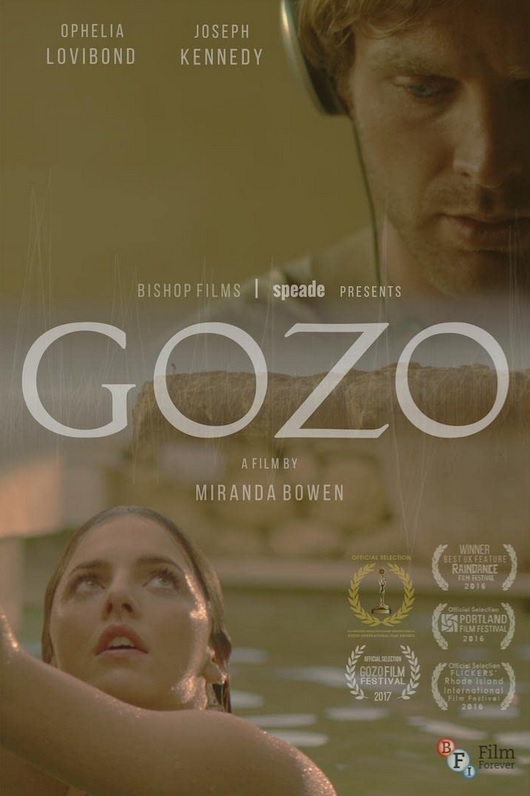
And on the Republic of Malta island of Gozo in the Mediterranean Sea, Joe (Joseph Kennedy, a British stage and TV vet; Sex & Drugs & Rock & Roll) and Lucille (Ophelia Lovibond, a 20-year vet of numerous British TV series; a co-starring role on CBS-TV’s Elementary) come to learn that you never disconnect yourself from past sufferings. You can runaway from the past, but the further you run, the more desperate your isolation becomes, for the “island” you seek is just an illusion. There is no escape. For no man is an island. As Glenn Fry warned us in his lyrical interpretation of John Fowles’s 1965 novel The Magus — itself set on Mediterranean Greek island — you can check out (from the mainland) anytime you like . . . but you can never leave.

For Londoners Joe and Lucille, their lazy-days dream is an old stone farm-house with a swimming pool and a breathtaking view. And while the real reason for their new island existence is Joe sweeping his past affair with Lucille, which lead to his ex-lover’s suicide, he’s convinced himself it’s for his job as a sound engineer, creating a catalog of the island’s unique environs for film soundtracks and commercial jingles. When a young tourist, a redhead resembling his dead ex-lover, Christine, goes missing, the island’s idyllic, open landscapes transform into a claustrophobic nightmare: Joe’s buried guilt and isolation manifests as a series of strange, recorded noises that descends him to a madness that Lucille must escape.

Now, while this sounds like a horror movie — filled with the (subtle) omnipresent hallucinations, spectres, and peripheral phantasms — this feature film writing and directing debut (based on an idea by Joseph Kennedy) by Miranda Bowen (BBC America’s Killing Eve), is anything but. For Gozo is an island where the Hitchcockian meets the Shakespearian; where Joe’s a doomed Prospero living a life of illusion — an illusion shattered by an Ariel that opens his eyes and ears to the tempest of his past.

And leave your A24 or Blumhouse expectations of the paranormal variety on the mainland.

You can keep up with the latest on Gozo courtesy of Indie Rights Films at the film’s official Facebook page and stream it on Amazon Prime.

Other recent releases from the Indie Rights Films catalog we’ve reviewed include Banging Lanie, Blood from Stone, The Brink (Edge of Extinction), Double Riddle, The Girls of Summer, Loqueesha, Making Time, and Mnemophrenia.

About the Author: You can learn more about the writings of R.D Francis on Facebook. He also writes for B&S About Movies and publishes short stories and music reviews on Medium.

Disclaimer: We did not receive a review request for this film. We discovered the trailer on social media, were intrigued by the film, and requested a screener. We truly enjoyed the film.

In Corpore (2020)

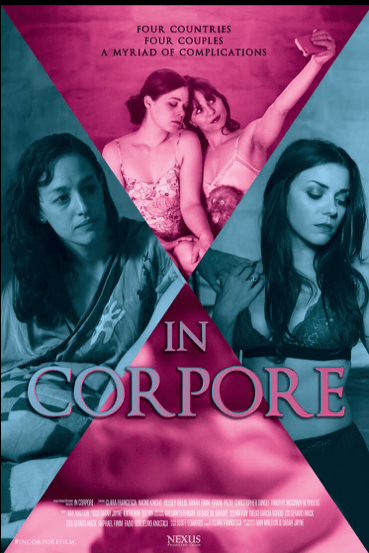
In Corpore is “a sensual, sex-positive exploration of contemporary relationships, shown through four anthological stories set in Melbourne, Berlin, Malta and New York.” It’s all about relationships, specifically what happens when love gives way to lust and commitment deals with infidelity.

Directed by Sarah Jayne and Ivan Malekin, this Australian film tells the stories of four couples who must deal with the consequences of suppressing desire or throwing caution to the wind. They made this movie when they were newly married as a way to openly discuss the definition of marriage and the boundaries of relationships.

I’ve never seen a sex-positive anthology before, so there you go. It’s a pretty interesting film that shows that no matter the label on a relationship, we often find ourselves dealing with the same issues. While there’s plenty of nudity and love making scenes, this isn’t explicit, if that’s a concern. It will, however, make you question the ways that we use love and sex in our lives and with the ones that are part of them.

You can learn more on this movie’s official Facebook, Instagram and web sites.

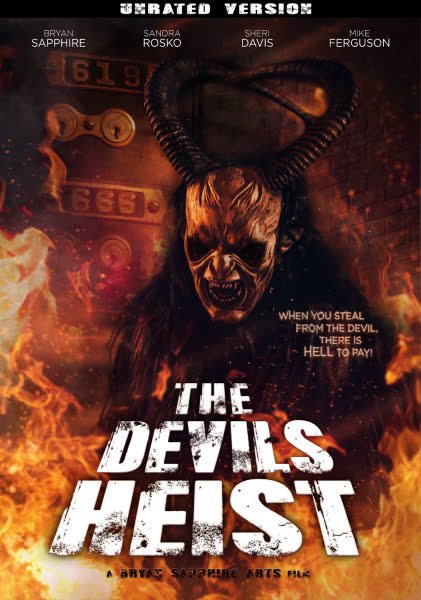
The Devil’s Heist (2020)

After being released from prison, Ted and his associates decide to rob Coven National Bank, later to find out that even more than a mob front, it’s really owned by Lucifer. Oh yeah — and all of the employees are witches who take the souls of the people who owe them money.

This is told through flashback from Ted, who is dead, as he deals with a young couple who mess everything up, as well as the devil (Mike Ferguson), who keeps having threeways and upsetting his wife Lilith. It’s kind of like a Satanic Pulp Fiction, I guess, with more of a silly sense of humor.

So yeah. The devil has a bank. He has marital problems. And he looks like a biker. So there’s a lot to come to grips with, I guess, but I feel like you can handle it.

You can learn more on the official Facebook page.

The Devil’s Heist is available on demand from Midnight Releasing.

Paintball Massacre (2020)

A bunch of British kids decide to turn their class reunion into a day of fun on the paintball course. However, someone is packing more than paint-based ammunition and is ready to kill them all one-by-one in one of the few slashers I’ve seen that brings in the sport of, well, paintball.

The first full-length film by Darren Berry, who often works as a cinematographer, this film stars Katy Brand, Robert Portal, Cheryl Burniston, Lee Latchford-Evans, Lockhart Oglive and Natasha Killip. There’s even a cameo by Nicholas Vince, who played the Chattering Cenobite in the first two Hellraiser movies.

There’s an attempt at humor here, but it kind of fell flat to me. I did like the scene with a mine going off, as I didn’t expect the film to have the budget to handle that. Otherwise, your enjoyment of this will depend upon your love of slashers — mine is high, obviously — and your enjoyment of getting plugged with paintballs.

You can learn more at the film’s official site. It’s available on DVD and on demand from Uncork’d Entertainment.