Poolboy: Drowning Out the Fury (2011)

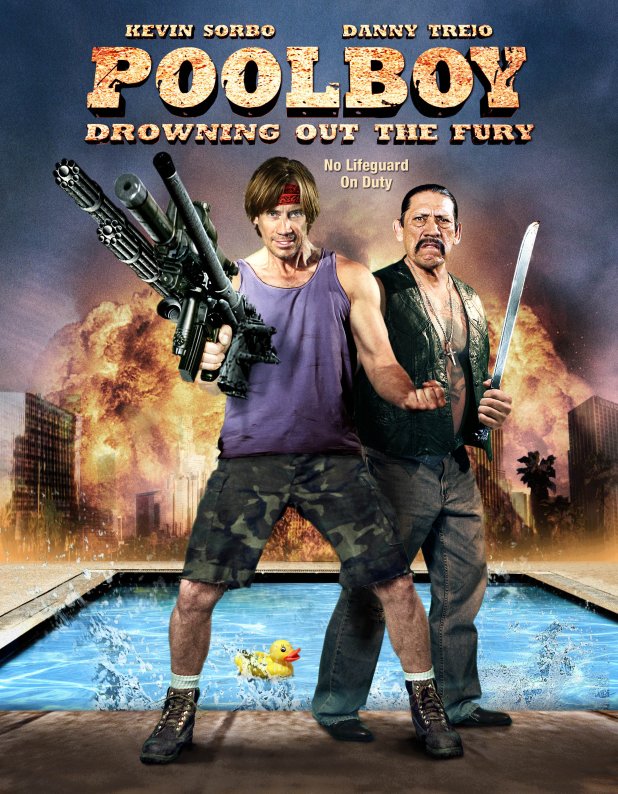
I don’t know how director Garrett Brawith (who also made FDR: American Badass!) and writer Ross Patterson (Helen Keller vs. Nightwolves) got Kevin Sorbo to say some of the dialogue in this, but this movie is less a film than an exercise in saying really off-color things and then claiming that it’s a joke.

Poolboy is supposedly — in the world of the film — the vanity project of Saint James St. James, who made this when he was ten. Well, this is the sequel. The first one was so racist that no one is allowed to see it.

Sorbo is Jan Van Hammer, who plays Sal Brando, the poolboy of the title. He was hoping to come home from Vietnam to start a pool cleaning business with Fontaine (Deon Richmond), but all he has left is that man’s arm. And he gets back to his house just in time to catch his wife in bed with Eduardo (Bryan Callen). He steals the man’s van and pool businesses, which gets his wife and kid killed by Caesar (Danny Trejo), who is part of a huge national Mexico vs. America conspiracy.

At some point, when Jan Van Hammer is nearly killed, his role is taken over by Jason Mewes.

This is a confusing film. It’s going to offend everyone because of what it says, and yet it wants you to love it by saying, “I’m just kidding!” As always, there’s the danger of laughing at rather than with the film’s themes. But it’s still kind of fascinating, even if it’s way too long and runs out of steam after thirty minutes, as it’s a sketch stretched thin.

You can watch this on Fawesome.

The Booth at the End (2010-2012)

ABOUT THE AUTHOR: Exploitation-film historian A.C. Nicholas, who has a sketchy background and hails from parts unknown in Western Pennsylvania, was once a drive-in theater projectionist and disk jockey. In addition to being a writer, editor, podcaster, voice-over artist, and sometime actor and stand-up comedian, he’s a regular guest co-host on the streaming Drive-In Asylum Double Feature and panelist on the Deep Images podcast and has made multiple appearances on Making Tarantino: The Podcast. He also contributes to the Drive-In Asylum fanzine, the B & S About Movies Podcast, and the Horror and Sons website. He currently programs a monthly film series, A.C. Nicholas’s Hidden Gems, at The Babylon Kino in Columbia, South Carolina.

“Show. Don’t tell.” This adage is as old as film itself. Looking at the first quarter of the twenty-first century, perhaps screenwriters have taken that statement too much to heart. Apart from the few films written by folks who can write memorable dialogue, like Quentin Tarantino and David Mamet, the typical film or TV show today is an empty spectacle, or as my father used to say, “parada,” Polish for “show” or “exhibition.” Fathers of my generation would tell kids, “You’d better stop your crying, or I’ll knock you into next Wednesday,” but my dad always used parada when sternly presaging an ass-whipping: “Don’t make a big parada out of it.” And that describes your typical $200 million Hollywood blockbuster—empty, soulless, and cynical, just a series of huge action set pieces strung together by the most perfunctory narrative, a big parada. (Quick, how many films in the past 25 years deal with a fight over “magic junk” or advanced technology, something that if it falls into the hands of the wrong people will cause mass destruction? There’s a Letterboxd list for you, Sam.) Let’s just say the era of dialogue-driven films–“all tell, no show”–such as My Dinner with Andre, Swimming to Cambodia, and Before Sunrise, is but a distant memory 

Which brings us to a weird little item called The Room at the End, which had its genesis as a web series of 62 two-minute episodes. They were later strung together and shown on Canadian and British television before floating around streaming services in this country. How I discovered it years ago, I cannot remember. But it’s something I’ll never forget. It’s one of the best things I’ve ever seen, from anywhere, from any era, in any medium. And, apart from a handful of reviews and posts online, it remains largely unknown. But not for long, I hope.

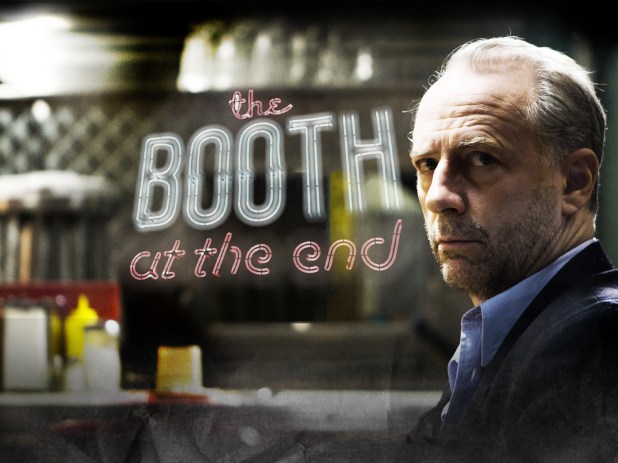
In the end booth of an old-school diner, sits a rumpled guy with a pen and a book. He’s never referred to by name. He’s just “The Man,” and he’s played by long-time character actor Xander Berkeley. As each vignette begins, he’s sitting there, perhaps reading the newspaper or having coffee, when he’s approached by someone who has heard that he can help them with a problem. A man has a terminally ill child. A young woman wants to be prettier. A nun has lost her faith. Each of them tells their story to The Man, who says that what they want can happen, but first, they must complete a task and return to report the details of carrying out that task. He then opens his book, jots a note or two, and tells them what they must do to receive their desire. For the man, his kid will get better if… he kills someone else’s child. For the young woman, she’ll be prettier if… she steals $101,043 from some banks. (The randomness of that number is like the randomness of the universe.) And the nun will hear God again if… she gets pregnant. The Man also tells each of them that they can walk away from his offer. In follow-up vignettes, we hear the decision each made and what happened.

The compiled vignettes form two seasons with a total of 10 approximately 23-minute episodes. (You can, as I did, binge the entire series in an afternoon. And once you get started, I’m betting you will.) Each episode follows the same format: Here is the diner, here is The Man in the booth at the end, and here are the clients entering one after another to either make a deal or give The Man updates. The only other character is a waitress named Doris, who takes on a greater significance in the second season when The Man sets up shop in the booth at the end of a different diner.

Who is The Man? Does he have supernatural powers? What is the significance of the book? How will the clients respond to their assigned tasks? Some of those tasks even intertwine. For example, the guy who must kill a child is unknowingly pitted against a guy whose task is to protect a child. In the end, how do these stories resolve? I think the true nature of the show is subtly found in its title: The Booth at the End. Yes, it’s the “end” booth in the diner, but “end” could also refer to the existential end of a person’s hope.

This is all the brainchild of writer/creator Christopher Kubasik, who got his start working on video games and writing tie-in novels. It’s easy to see that, in writing cut scenes for video games, he had the perfect training to write short-form internet content. Based on The Booth at the End, I wish he’d do more stuff. I was surprised to discover that there was a 2017 Italian movie adaptation of the show called The Place, which was nominated for a whole bunch of Donatello awards, the Italian Oscars. I must seek it out. 

Now before you cry “rip-off of Needful Things by Steve King from the University of Maine,” let me remind you that this plot about getting what you wished for–and then regretting it–has been around for ages and not just in the various adaptions of the short story The Monkey’s Paw. Folklore about wish fulfilment and its consequences goes back to the tales of the Arabian Nights. The Booth at the End is built upon a sturdy and reliable trope. And what makes it so special is how it subverts our expectations of that “genie and three wishes” plot. It does so entirely with dialogue. That’s right. Nothing is shown. Everything is discussed. In each vignette, a client sits in that booth and has a conversation with The Man. And these conversations are riveting, philosophical, and often horrifying. For, you see, life is like that, and Kubasik has stripped everything away, the action, the violence, the special effects, “the showing,” if you will, to concentrate on the thoughtful “telling”–and not a big parada.

On paper, this minimalistic approach would appear either boring or, at best, “twee,” as a cinephile friend likes to say. But watch a two-minute chunk, and you’ll see that it’s breathtakingly brilliant. The stories grab your attention with their complex dilemmas. Forgive me for using that overworked expression that you could do a semester college class in philosophy–or screenwriting–about the show, but it’s spot-on here. (The movie Groundhog Day similarly fits the description.) You, as the viewer, are drawn into this small, bell-jar universe of right and wrong, morality and immorality, and good and evil. It’s impossible not to ponder how you would react if faced with the same decisions The Man’s clients must make. The stories are like modern parables. 

And Kubasik tells these stories like the caveman who told his friends around the campfire how Ook fell into the pile of mammoth dung on their hunting trip, unadorned with CGI or VFX. It’s the oldest, yet most powerful, narrative device: simple storytelling. Too many filmmakers today forget the power of the spoken word. 

But an equally important reason this show succeeds, in addition to the weighty ideas and impressive writing, is the brilliant central performance by Xander Bekeley as The Man. All the actors here are good to great, but this is Berkeley’s day in the sun. While you might not recall his name, you’ll recognize him as a character actor who’s been kicking around for decades, quietly doing solid work in TV shows such as 24, Nikita, and The Walking Dead and the movies Candyman, Air Force One, and Heat, among many others. Lucy Mangan of The Guardian said Berkeley’s performance should be “used as an acting masterclass.” That’s 100% accurate. When the nun, played by Berkeley’s real-life wife, Sarah Clarke, asks him how she can be sure he’s not the devil, Berkeley’s delivery of “you can’t” is chilling. He’s so compelling that he could read a diner menu and be mesmerizing. But he’s equally compelling in his reactions to the details that his clients give him. He may be in a minimalistic show, but his acting is anything but minimal. He’s fantastic, demonstrating that sometimes the greatest acting is not always done by the big star in the big parada.

Over the years, I’ve recommended The Booth at the End to friends with discerning taste—this is not something you recommend to someone like that person who many years ago posted on a CompuServe board I moderated that Grease was the greatest movie ever made–yet no one has ever listened to me and watched it. I guess that description of “all tell, no show” was a buzzkill. Anyway, you’re an exceptional discerning person: Go watch The Booth at the End, which is streaming on Tubi. And then give me the details. I’ll be waiting for you at the booth at the end… of the drive-in snack bar.

2025 Scarecrow Psychotronic Challenge Day 31: Halloween Fan Films: Halloween Nightfall (2023), Michael Myers: Absolue Evil (2016), The Nightmare Ends On Halloween II (2011)

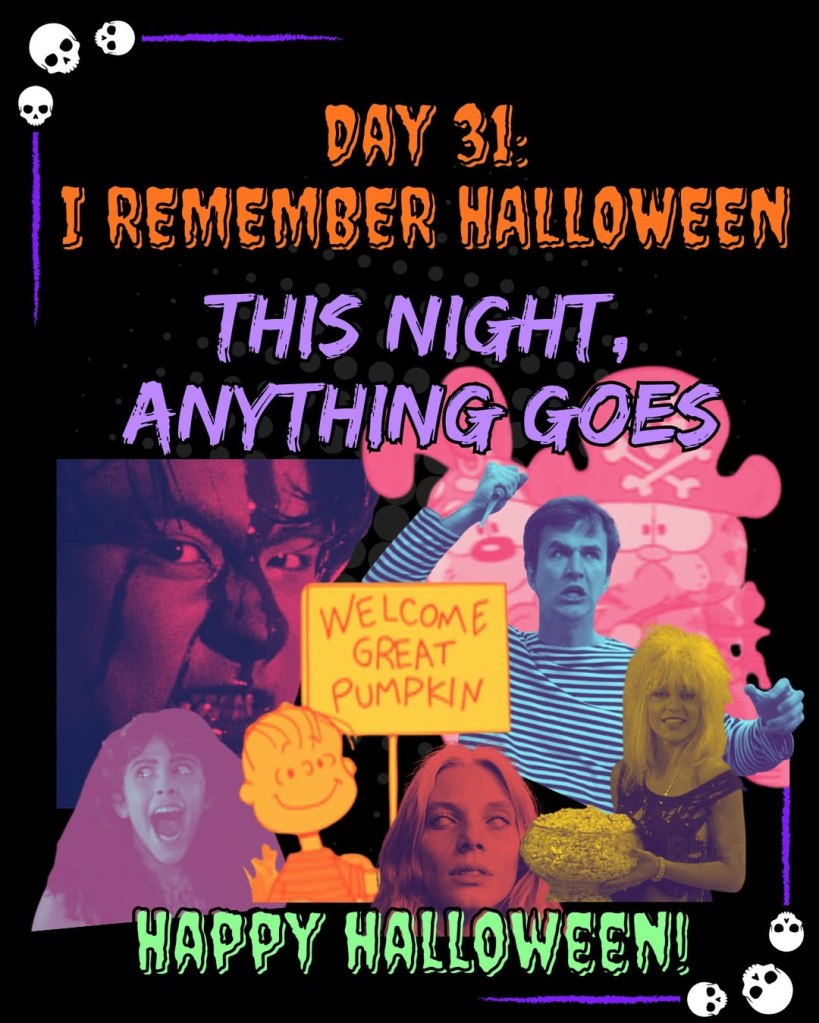
31. I REMEMBER HALLOWEEN: This night, anything goes.

I hate that in the new Halloween films, we’re told the sequels no longer exist, yet they’re still endlessly referenced. Sure, I could be happy with just watching the first two films, but every year, with every new Halloween, the movies that came before seem to get better.

Until we get a good one, there are fan films.

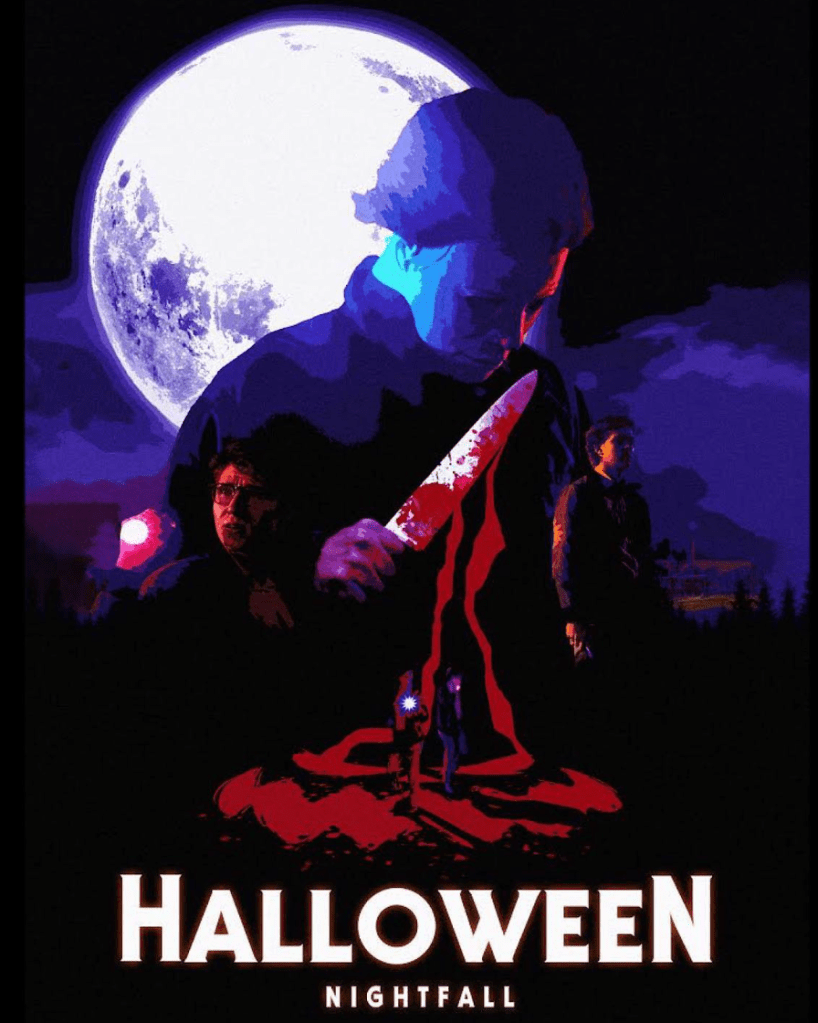
Halloween Nightfall is the kind of movie that you need to shut your mind off for. It tells how Michael got from Smith’s Grove to Haddonfield, but it’s not set in 1978. So you get a Scream mask, a Jason costume, an inflatable Stay Puft Marshmallow Man and “Thriller” playing in the same world where Annie, Laurie and Lynda walk home from school with the same dialogue and the same “Don’t Fear the Reaper.” And you get a way better-looking film than most streaming films, created by director Jackson Bennink.

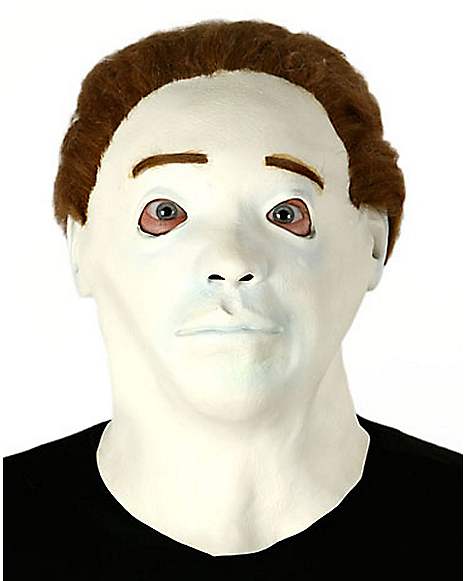
Maybe the Michael in this looks small, perhaps his mask is very Spirit Store, but the director actually took his time doing color balancing and setting up more than just medium shots the entire time, which is above and beyond what I expect for even professional streaming horror these days.

You can watch this on YouTube.

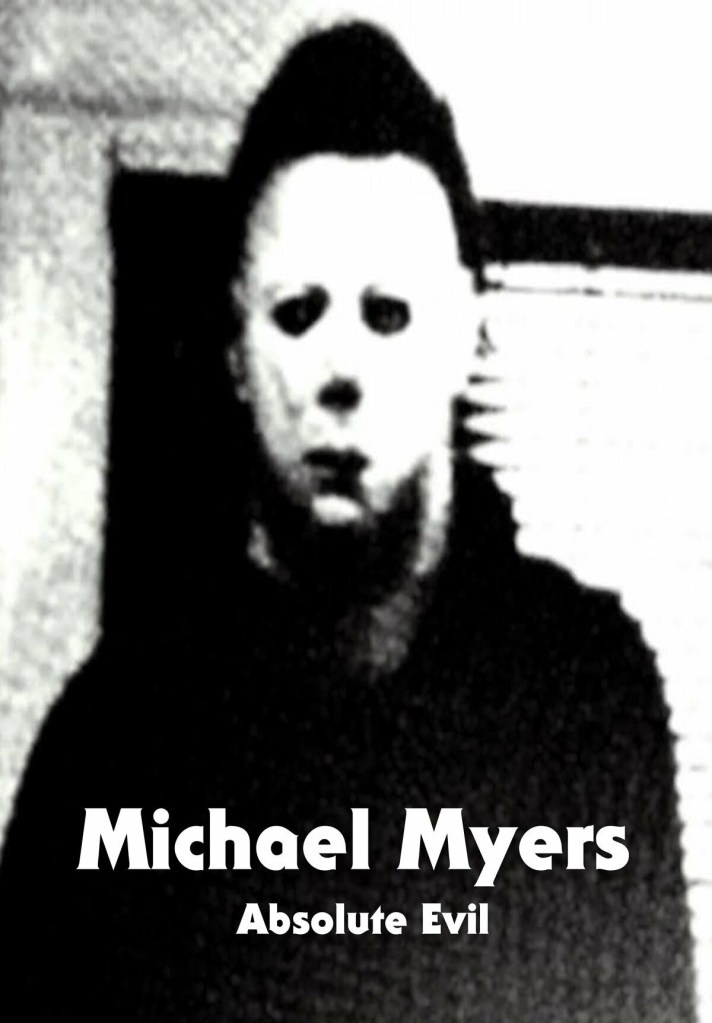
Michael Myers: Absolue Evil (2016): I hate it in true crime when they tell us that before a murder in a small town, that everyone once kept their doors unlocked and after, they knew what evil was. As this short starts, a movie that imagines the Halloween films as if they were real, we hear from Lindsay Wallace, who survived the original attack. She informs us that the entire town knew that he was just a few miles away in Smith’s Grove, at all times, so they had already lived in fear.

With experts like Edgar Warsam, the author of The Devil’s Eyes: The Story of Michael Myers, and filmmaker John Borowski, as well as a news interview with Michael’s mother Edith, director and writer Rick Gawel’s film expands on which of the movies told the right story — yes, the adaptions exist in this world — and an entire sequence that explains the Thorn cult and how it ties into the story of The Shape.

I wish this had a bigger budget; if it had a more TV-like look, it would have been perfect. That said, many of the actors are really great. The sequence that breaks down Halloween II as if it were an actual crime show is absolutely perfect. And going deep into the history of Dr. Loomis is incredible.

This could be a bit shorter and sharper, but for what it is and the budget that it had, it’s pretty good. I’d love to see this with a crew that has worked on true crime and a bit better graphic design. It’d make a great extra feature on a box set.

You can watch this on YouTube.

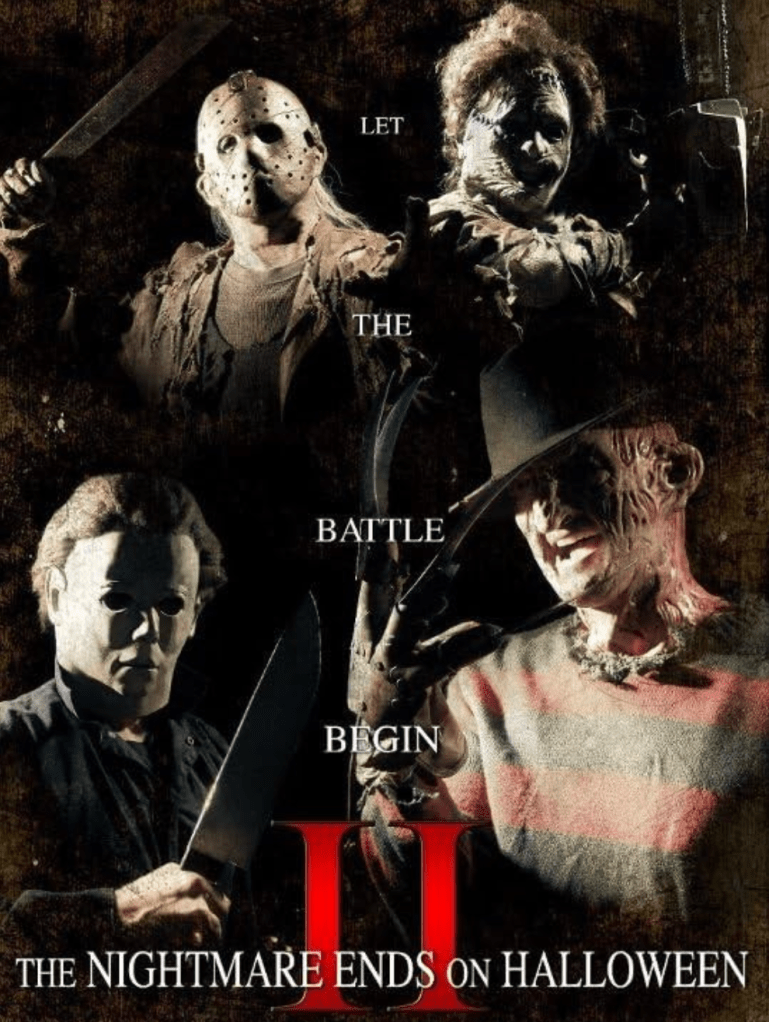
The Nightmare Ends On Halloween II (2011): Directed and written by Chris R. Notarile, this takes the mid-2000s idea of mixing franchises beyond what studios were ready for, creating a trial for Freddy Krueger in which he’s judged by Pinhead and forced to face off with Leatherface, Jason Voorhees, and Michael Myers.

Roberto Lombardi, who plays Krueger, has done so in several other fan films, while Hector De La Rosa, who is Jason, has also been in several Snake Pliskin fan films.

Notarile, who also did the effects for this, has also directed movies about the Black Terror, Red Widow, US Agent, Phantom Lady, Spawn, James Bond, Candyman, The Shadow, Darkman and more. You can see his movies on his YouTube page.

I love that Leatherface and The Shape are the same actor, Anthony Palmisano. Even more, I absolutely love that Freddy defeats Leatherface with a nut shot. “Fucking rednecks,” he says.

You can watch this on YouTube.

Mad In Italy (2011)

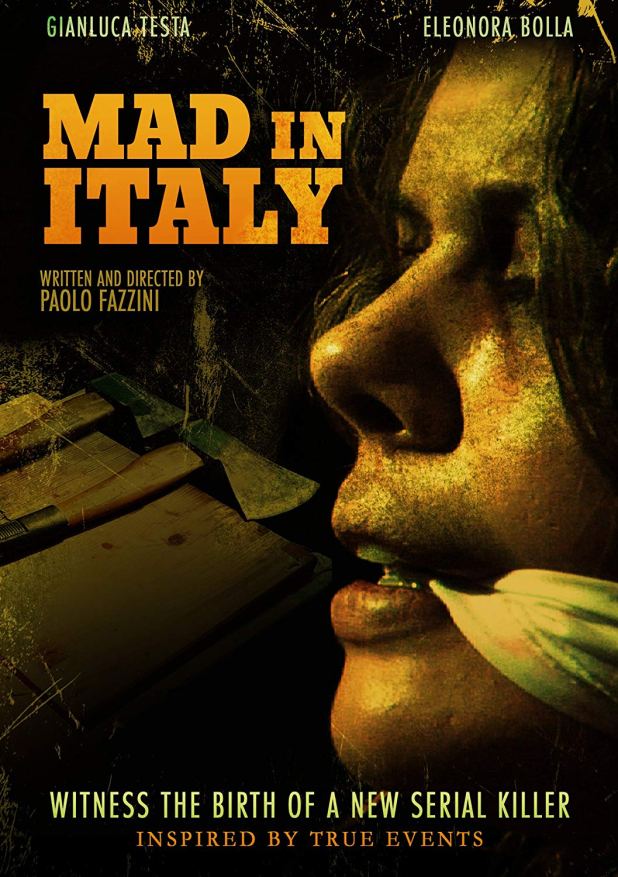
Director Paolo Fazzini also made Hanging Shadows: Perspectives on Italian Horror Cinema, so he understands Giallo. He is telling us about Davide (Gianluca Testa), a blue-collar worker who has lost his job, so he kidnaps “the girl” (Eleonora Bolla), an exotic dancer who is the daughter of a rich factory owner, taking her away from the city to a small home near Sicily. He ties her up and takes care of her, all while looking for work and finally spiraling into becoming a murderer.

His mind is caught between nightmares and waking life, seeing visions of people who want to bite into his flesh in the forest or a woman with no mouth. The film invites us to “Witness the birth of a new serial killer,” but if you’re coming to this for a slasher, it moves slowly, and the time between the violent and caring acts takes time.

It looks wonderful—cinematographer Mirco Sgarzi has talent—and also has one of my favorite things: a claim that it was inspired by true events. Yet whenever I wanted it to expand into more than just sitting, watching, and waiting, it felt like it never wanted to go there. Sure, Giallo inspires it, but it never embraces anything other than the color that fills each moment.

VISUAL VENGEANCE ON TUBI: Sinister (2011)

EDITOR’S NOTE: Did you know that Visual Vengeance has a ton of movies on Tubi? It’s true. Check out this Letterboxd list and look for reviews as new movies get added. You can find this movie on Tubi.

No, not the 2012 movie Sinister, but instead the 2011 Steve Sessions film.

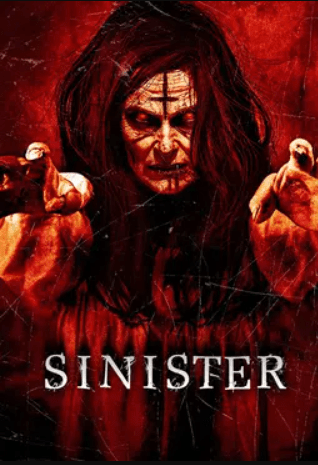
Gerard Prewitt (Lucien Eisenach) starts this movie by slowly possessing a woman (Isabelle Stephen) who gets nude in a bathtub, then has her mind and body taken over before being drowned. Then, Prewitt selects his second victim, Emily (Donna Hamblin), a career woman who has no time for her brother Sam (Donny Versiga).

Yet she needs him — and an expert in witchcraft (Luc Bernier) — when she starts to believe that she’s being haunted by the ghost of her mother. The truth is that Prewitt has picked her as his next victim, using the body of a dead serial killer to stalk her and an animated skeleton to chase her from room to room of her small home.

The slow burn nature, as well as the look and feel of this movie point to a film more rooted in the 70s weirdness that is the kind of place that I like to soak in, like that first bath scene without me having to take off my clothes. Also: How about that golden hearse the bad guy drives?

So many reviews claim this is too slow, that nothing really happens, that so much happens in real time, that it’s more about mood than being scary. Were they trying to sell this movie to me? Because in their effort to leave low scores, they somehow made me love this even more.

VISUAL VENGEANCE ON TUBI: Rat Scratch Fever (2011)

EDITOR’S NOTE: Did you know that Visual Vengeance has a ton of movies on Tubi? It’s true. Check out this Letterboxd list and look for reviews as new movies get added. You can find this movie on Tubi.

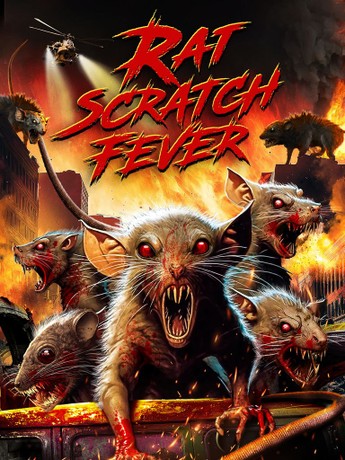
I’m ten minutes into this movie and I’ve already met the cybernetic Dr. Christopher Steele (Randal Malone), a krimi looking robot supervillain; giant rats attacking a spaceship; a rat worm its way into the crotch of heroine Sonia (Tasha Tacosa) and artillery being loaded out of a Space Steele Corporation AC-130 to blow a rocket out of the sky. Needless to say, I’m in love with this and it hasn’t even got started yet.

Jeff Leroy makes movies that feel like they were drawn in Spanish class by a bored 16 year old instead of paying attention. I’m talking stuff like Frankenstein in a Women’s PrisonFurious Road and Giantess Attack vs. Mecha Fembot.

Now, this movie is obviously made with miniatures and no budget — and all the CGI quality that implies — but it’s heart is worth a million blockbusters. I mean, this movie has a mysterious planet just showing up in our solar system and a woman being controlled by a super smart psychic rat that lives where her guts used to be. And this movie is in no way afraid of showing you just how disgusting that would be.

Why does Dr. Steele look like he does and have metal hands? “Probably a rocket explosion. Need to know basis.” This is how you do dialogue. Of course Sonia’s ex is Jake Walsh (Ford Austin), an ex-Special Forces guy who is willing to hide her even if she is bringing rats to destroy our world.

Speaking of giant rats, there was nearly a kaiju movie in the 60s that would have changed the scope of the genre. Giant Horde Beast Nezura was a movie that was directed by Mitsuo Murayama and produced by Daiei Film, but it was shut down by the health department because the brown rats being used for the rat swarm could transmit diseases. Daiei wasn’t put off making kaiju films and soon made Gamera.

Somehow, this movie combines Starship TroopersAliensRats: Night of Terror and every 1950s science gone wild movie along with special effects that go from “how did they do that?” to “that’s obviously a rat from PetSmart with CGI red eyes.” It also remembers that gore is so essential, so why not have a woman eat a man’s throat while blood sprays like the geyser of a Japanese samurai movie?

This is the kind of movie that demands to be watched with an audience, as it has stuff in it like a rat temple on Planet X; a Phantom of the Opera-like scene where we see Professor Steele’s face, Sonia shooting herself in the head and the rats refusing to let her die, so she wears a hat to cover the whole in her head; a drunk named Teddy exposing the rat in her head that uses its psychic powers to blow him into chunks; Jake cutting himself to feed her blood and that scene being shot as if its sexy and, of course, giant rats taking over most of America.

This ends on a cliffhanger and man, I wish Jeff Leroy made ten of these.

2024 Scarecrow Psychotronic Challenge Day 22: The Whisper In Darkness (2011)

22. CTHULHU’S COHORT: Wrap your tentacles around a “weird fiction” tale.

Directed and produced by Sean Branney, Andrew Leman and David Robertson, this movie was distributed by the H.P. Lovecraft Historical Society, a group of live action role players of The Call of Cthulhu role playing game. That game’s creator, Sandy Petersen, contributed money to complete the film.

Miskatonic University professor of mythology Albert Wilmarth (Matt Foyer) is a folklorist exploring the Old Ones, the ancient beings that existed before man in the books of Lovecraft. He’s been writing to Henry Akeley (Barry Lynch), a man whose farm is under attack by something that he believes is connected. He’s also arguing that these creatures can’t exist with Charles Fort (Andrew Leman), who the phrase fortean is named for.

Those eternal monsters are known as the Mi-Go and they promise to take people to space, as long as they are allowed to put their minds into a cylinder.

This same group also made The Testimony of Randolph Carter and The Call of Cthulhu. They understand not just Lovecraft, but making movies, as this changes the original story for the benefit of a more interesting movie. The third act is new, as is the ending. The characters all come from the role playing game, as they are the heroes that the filmmakers used.

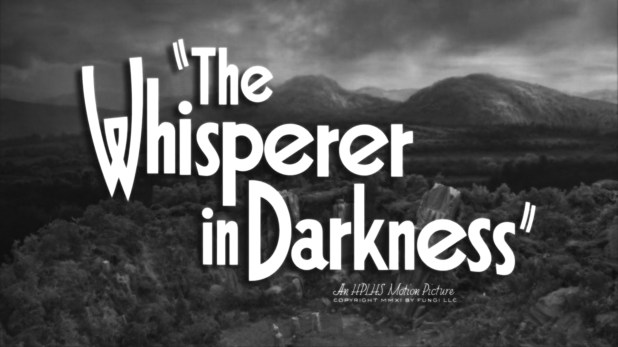
The Whisper In Darkness was shot in a process called Mythscope, which makes it seem like it was made in the 1930s. It comes across like this is a lost film, one filled with at the edges of sanity madness. And isn’t that how it should be?

You can watch this on Tubi.

UNSUNG HORRORS HORROR GIVES BACK 2024: The Wicker Tree (2011)

Each October, the Unsung Horrors podcast does a month of themed movies. This year they will once again be setting up a fundraiser to benefit Best Friends, which is working to save the lives of cats and dogs all across America, giving pets second chances and happy homes.

Today’s theme: Sequel

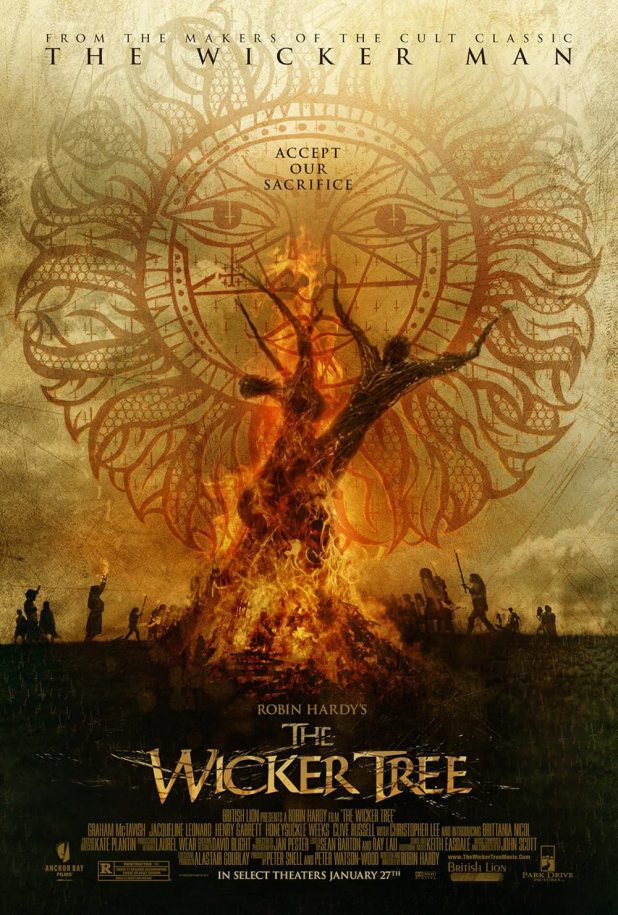
The Wicker Man is a classic, a film I watch several times a year and one that I get something new out of with each viewing. There’s a reason why I’ve never seen the sequel, but I finally powered my way through it and somehow, it’s even worse but strangely better than I thought it would be. Then again, in Ecclesiastes 7:15, the very idea of such conundrums is brought to light: “All things have I seen in the days of my vanity: there is a just man that perisheth in his righteousness, and there is a wicked man that prolongeth his life in his wickedness.”

Directed and written by Robin Hardy — yes, the very same man who made the original — this is about “Cowboys for Christ” Betty Boothy (Brittania Nicol) and her boyfriend Steve Thompson (Henry Garrett) bringing their born-again evangelical Christian music to the godless in first Glasgow and then Tressock, where a nuclear power plant has made everyone infertile.

The couple are barely there for a moment when Steve neglects their promise rings and swims nude, then makes love to Lolly (Honeysuckle Weeks), a village girl who reveals that most of the town worships the ancient god Sulis.

As the town prepares for May Day, a detective named Orlando (Alessandro Conetta) is investigating the cult, which is run by town elder Sir Lachlan Morrison (Graham McTavish). Our protagonists agree to be the Lady and Laddie of the May Day Parade, which means that Steve is chased by the entire village and torn apart by naked men while the music sounds like a remix of “Can You Read My Mind” from Superman while Beth attempts to escape. She ends up stuffed in a case, Lolly has Steve’s child and the village is saved.

While Christopher Lee was to play Morrison, he was injured on a film set. He does, however, appear in a flashback to a mentor of Morrison, who Hardy said was Lord Summerisle. Lee disagrees with this and said that the characters are unrelated. Joan Collins was to play his wife, which is dream casting, but when the younger McTavish was cast, so was Jacqueline Leonard as Delia Morrison. The cook Daisy, however, is the same Daisy from the first movie, also played by Lesley Mackie.

The title was changed several times — The Riding of the LaddieMay Day, and Cowboys for Christ, which is the name of the book that it came from — but ended up with The Wicker Tree, hoping viewers would connect the two movies. Before he died, Hardy was still trying to make one more movie in this cycle, The Wrath of the Gods.

It’s almost like this movie was trying to be a sequel to the Nicholas Cage film instead of Hardy’s own film, with a bombastic score, near digital direct to video looking cinematography and characters that are more stupid than misguided. I really can’t believe I watched this the whole way through. I’d say that it felt like an Italian ripoff of the first, like the Patrick Still Lives to Patrick, but then it would be a good movie. This is anything but.

THE TWILIGHT SAGA 15th Anniversary SteelBook Collection 4K Ultra HD: Twilight: Breaking Dawn Part 1 (2011)

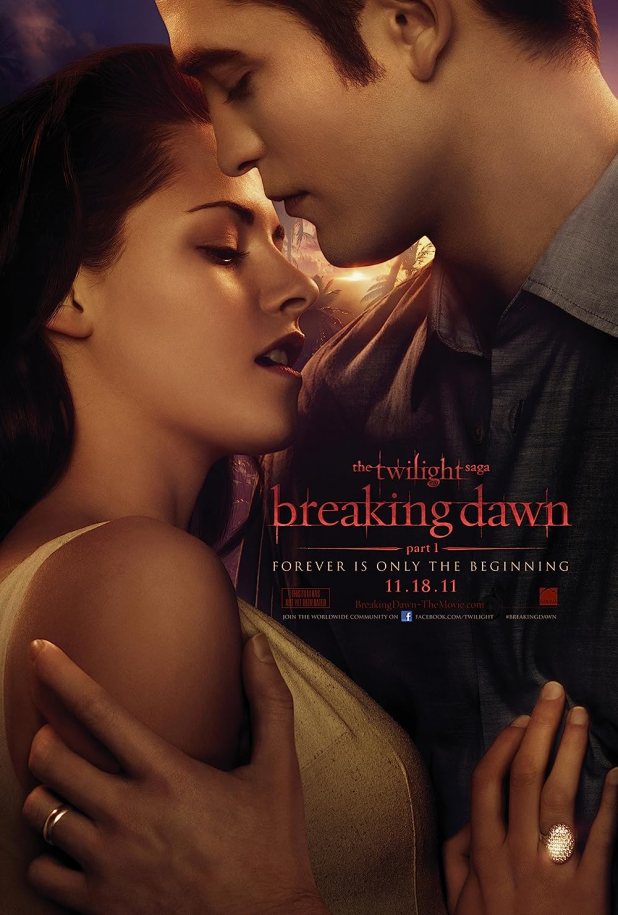
Bill Condon — the guy who made Chicago and started his career with Strange Invaders — was the new director for the last two movies in The Twilight Saga.

Bella Swan (Kristen Stewart) and Edward Cullen (Robert Pattinson) are getting married. Jacob (Taylor Lautner, the inspiration for Taylor Swift’s “Back to December” and I have lost all of my Eurohorror sleazy movie cool points now) comes back but becomes angry when he learns that they plan to consummate their relationship while Bella is still human. This could kill her. Vampire bang it out hard (I have that sleaze back now, thanks).

Well, they raw dog it — actually, wouldn’t it be raw dogging if she was with Jacob? — and the vampiric sperm is so strong that it made her pregnant in just two weeks. Both Edward and Jacob want her to get an abortion but she’s going to have this baby if it kills her. The arguments over this vampire fetus get so bad that even the wolves break up with Sam (Chaske Spencer) and Jacob starting their own packs. Edward hates his unborn baby until he learns that it can read his mind.

Baby Renesmee is born and she kills Bella in the delivery. Jacob attempts to kill the baby but then they look in each other’s eyes and eyes, he imprints on her. This keeps the Lycans from killing her as their most absolute law is not to harm anyone who has been imprinted on. Bella heals and becomes a vampire. But what of our friends the Volturi? Well, they’re about to go to war with the Carlisles.

Everything in the other Twilight movies only served to prep me for this. All the baseball games, all the teen romance games, it all led up to a vampire baby falling in love with a werewolf.

As part of THE TWILIGHT SAGA 15th Anniversary SteelBook® Collection 4K, Twilight: Breaking Dawn Part 1 has extras like a commentary track by Bill Condon, another part of the series-length documentary, extended scenes, Bella and Edward’s personal wedding video and music video’s for Bruno Mars’ “It Will Rain,” Christina Perri’s “A Thousand Years,” Iron & Wine’s “Flightless Bird, American Mouth” and The Belle Brigade’s “I Didn’t Mean It.” Get this set exclusively from Best Buy.

THAN-KAIJU-GIVING: Sexy Rangers (2011)

The Muscle King is taking over the world with his kaiju but he never planned on Pai Energy, the power that comes from gigantic breasts. I am not making this up, trust me. That’s what powers the Sexy Rangers, who are the last — and most attractive — line of defense for our planet.

There’s never any nudity but it’s that Japanese perviness that lingers too long on cleavage, like when a character gets knocked down in an SNK fighting game and you wonder, “Did we need that juggle?”

Enemies include Queen Amorous, Uni Kong and a humanoid Polaroid camera who is called Unicong Camerang that takes photos of the girls in sexy poses. I guess he’s one of the bad guys, even if what he delivers seems positive.

Director Shinji Nishikawa wrote Godzilla vs. Destoroyah and Godzilla vs. Mechagodzilla II and was the designer for Godzilla, Biollante and other monsters on Godzilla: Final WarsGodzilla 2000: Millennium and Godzilla vs. Biollante.

If you watch Japanese female pro wrestling, you may recognize two faces.

Yuzuki Aikawa was known as “The Gravure Queen of the Next Generation” — glamour modeling — who was the first Wonder of Stardom and Goddess of Stardom Champion and the first face of Stardom. She plays Pai Blue.

Yoko Yamada is an arm wrestling, MMA and freelance pro wrestler fighter. She started her career with S Ovation’s and Mariko Yoshida’s promotion Ibuki and is almost like a video game character come to life, as her father left the family when she was young as he was a gambler. He only came back when he had a stroke and she fights to raise money for his care. She plays Queen Amorous.