If there was one movie that was hard to rent at my neighborhood mom and pop video store, this would be it.*
Leonard Maltin gave this movie his dreaded BOMB review, comparing it to 1950s car races and 1970s roller disco movies. Yeah, Leonard. Wondering why everyone liked it so much?
Shot in Alberta, Canada — look for a young Robin Bougie from Cinema Sewer — this movie may have failed in theaters. But like I said above, it was a top rental film for what seems like forever.
Cru Jones has two choices: take the SAT to attend college or race Helltrack, which could mean $100,000, a new Chevrolet Corvette and fame. His mom, Talia Shire, whines so much that you wish Stanley Kubrick would arrive to cause PTSD to take her out of this film, but no, she just cries that he’s throwing away his future. As a 53-year-old, I can tell you she’s right, but have you seen Helltrack?
The thing I never understood about this movie was how Mongoose could have allowed themselves to be portrayed in such a negative light. They were such a big BMX company, and in nearly every scene, their owner, Duke Best, is out to get Cru and to push his own rider, Bart Taylor.
Before she went to jail for that college scam, Lori Loughlin played the tough tom with whom the hero fell in with. Here, she’s Christian Hollings and she BMX bike dances with Cru, setting hearts aflutter. For more Laughlin roles like this, see Secret Admirer and Back to the Beach.
The evil Reynolds twins, who try to destroy Cru on Helltrack, grew up to be Chad and Carey Hayes, the writers of the remake of House of Wax and The Conjuring movies.
Man, this movie still leaves me with so many questions. How could the town raise $50,000 so quick for Cru? How does he have the money to sign up Bart when he gets kicked off the Mongoose team? Why did my grandparents buy me a Schwinn that weighed as much as a Harley when all I wanted was a BMX bike?
Also, look for pro wrestler Hard Boiled Haggerty, who yells to our hero, “Go balls out!” before the Helltrack** race. That was the film’s original title.
*Other movies that fit this bill are Thashin’, The Dirt Bike Kid and The Toxic Avenger.
**None of the stunt racers could complete a lap of Helltrack, with major worries about the giant hill that starts the race. The entire scene took two weeks to film.
The Mill Creek Blu-ray release of Rad includes the feature-length A Rad Documentary, a featurette on Hal Needham in the 1980s, archival interviews with the cast and crew, the “Break the Ice” music video and more.
A triple feature of anime in the middle of the night. What better way to spend the evening?
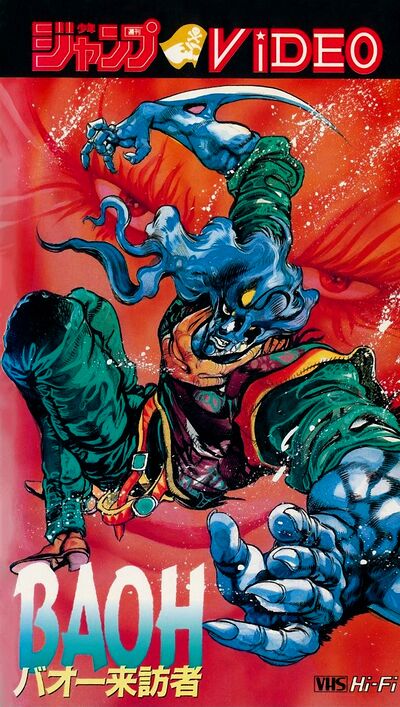
Baoh the Visitor (1989): This movie takes over a year of manga and makes it fit into a 45-minute original video animation (OVA). Created by Studio Pierrot and distributed by Toho, this is an early release by Hirohiko Araki, who would go on to make JoJo’s Bizarre Adventure.
17-year-old Ikuro Hashizawa has been taken by Doress and given a parasitic worm which transforms him into BAOH (Biological Armament On Help), giving him incredible superpowers which will also kill him in 111 days when the worm eats his brain. RFK, eat your stupid heart out.
BAOH is trying to escape along with 9-year-old psychic Sumire and her marsupial, Sonny-Steffan Nottsuo. They are being watched by Dr. Kasuminome, who created — perhaps too well, as he says — BAOH, along with his assistant Sophine and an army of monsters, including Number 22, Colonel Dordo and Walken, a psychic killing machine who melts objects before they can reach him. He sees BAOH as a worthy target and even burns the sigil for the creature onto his chest like some deranged Dr. Manhattan.
Hideaki Anno, who co-directed Shin Godzilla, was an animator on this movie.
Call Me Tonight (1986): We’ve all been there before, right? Phone sex girl Natsumi Rumi decides to actually meet one of her callers, Sugiura Ryo. The problem? When he gets worked up, he turns into a monster. She tells him that she’s familiar with Freud and decides to work out his issues.
So yeah, an anime, My Demon Lover, but also one that has references to Fright Night. It also doesn’t skimp when it comes to the transformation parts, as each time it’s almost a totally different monster. For all the promise of tentacle sex that you would expect in this, it’s more about titillation, as Natsumi wants to keep teasing Sugiura until he can control his transformations. Then what? We never find out, as another girl — and some bikers — ruin everything.
Dragon’s Heaven (1988): In the year 3195, humans and robots have gone to war. During one of the battles, a sentient combat suit named Shaian loses its pilot and shuts down for a thousand years. His enemy, Elmedin, is still alive, but Shaian has found Ikuru, a junker, who joins him as his new partner.
Obviously, creator Makoto Kobayashi loves Moebius, as this looks like his art come to life. He was also a major name in Japan’s scratch-build model world, which means that in this, he decided to make human-sized versions of the robots and have them fight in a live-action opening to the film.
Since making this, Kobayashi has worked as a mechanical designer on Space Battleship Yamamoto 2199 and on everything from JoJo’s Bizarre Adventure toGiant Robo, Mobile Suit Zeta Gundam and Urotsukidôji: Legend of the Overfiend.
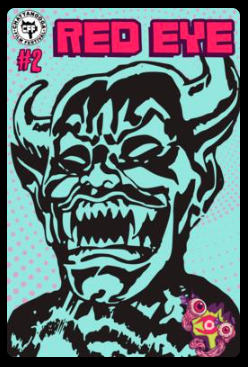
I’ve never seen anything look this gorgeous in an anime. Thanks to the Chattanooga Film Festival for introducing this to me!
Terry Morgan (Lina Romay, who else?) is our heroine, Al Pereira (Antonio Mayans) shows up, Jess has a cameo as Professor Karame and yes, there is a Jess Franco cinematic universe. Somehow, only 29 people have seen this on Letterboxd and 56 on IMDB. Can you imagine this? Is it because I had to go to DVD Lady to get this? That’s where my mania is, paying people $12 for low-quality files of Jess and Bruno Mattei movies so I can cross them off my list.
rllr on Mubi said: “Another “Red Lips” sequel, but this time the characters explain the film through non-stop dialogue. Boring exposition from start to finish. Like some other ’80s films from Franco, I can’t really see ANYTHING remotely interesting to ANYONE, but probably some freak “had a good time with it”.”
Yes, I am triggered.
I watch these movies, however, I can get them and at whatever quality they exist in. You can’t get these in pristine 4K — give Severin time — and so you just have to be happy with things you can barely see, but then Lina Romay’s eyes and smile call out to you through the multi-dub haze and tell you it’s all going to be OK. Sure, your 401K is ruined, you’ll work hard until the day you die and not many people will miss what you’ve left behind — thousands of diatribes about movies under a hundred people even care about — but damn it, she and Jess Franco found one another and built a love story around how much he enjoyed zooming his camera into her lady parts and he won a lifetime achievement ward in Spain, which thrills me every time I think about it. Oh you magical ghost of Lina, captured like amber, smiling back at me, saying that for now, it will all be alright. For now, I will watch you hop into beds with strange men and steal diamonds and leave behind notes in lipstick on their mirrors.
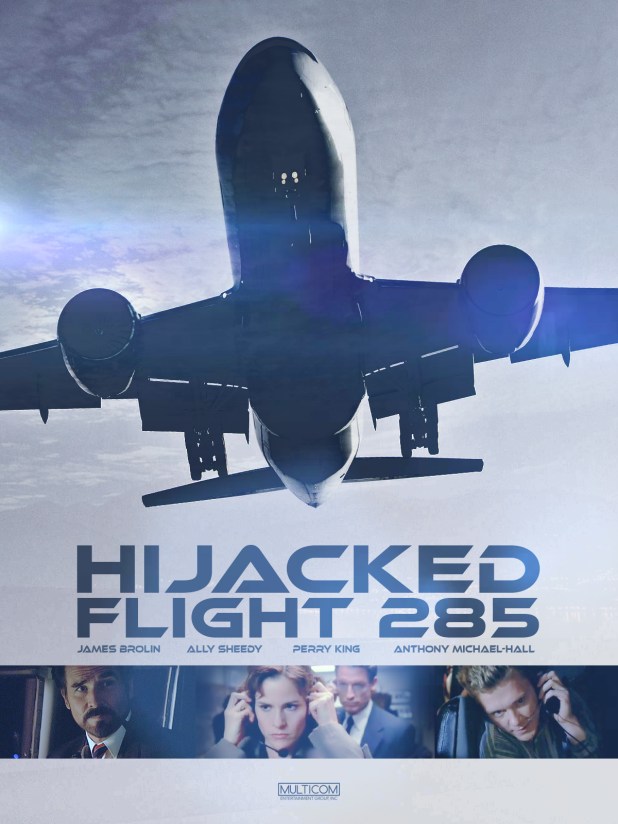
Directed by Charles Correll (who directed a ton of TV and was a cinematographer on movies like Star Trek III, Joy of Sex, Movie Madness, Nice Dreams, Animal House and The Dark Secret of Harvest Home) and written by David E. Peckinpah (who wrote The Paperboyand Hotline), this is the kind of made-for-TV movie that I love: one that has character actors and TV personalities playing out of character characters.
Peter Cronin (Anthony Michael Hall) is a criminal being transported by commercial jet who breaks out thanks to his girlfriend Shayna (Hudson Leick) and henchmen, using a plastic gun and a bomb to take over the whole plane. Now, only FBI agent Deni Patton (Ally Sheedy) — yes, this movie has the Brat Pack go to war with each other — can save everyone. By everyone, I mean pilot Veronica Mitchell (Barbara Stock), her ex-boyfriend and co-pilot Ron Showman (James Brolin), Vietnam crippled vet Ben Horner (Michael Gross), air hostess Barbara (Kim Miyori), an alcoholic — literally, his name is Alcoholic in the credits — played by David “Tackleberry” Graf and the Paulsen family — who many divorce before this ends.
April 19: Record Store Day — Write about a movie starring a musician.
ABOUT THE AUTHOR: Jennifer Upton is an American (non-werewolf) writer/editor in London. She currently works as a freelance ghostwriter of personal memoirs and writes for several blogs on topics as diverse as film history, punk rock, women’s issues, and international politics. For links to her work, please visit https://www.jennuptonwriter.com or send her a Tweet @Jennxldn
In late summer, 1984, Purple Rain was the number one film at the American box office. Its soundtrack was the number one album that spawned two number one hit singles on the Billboard Hot 100 chart. The following year, Prince won 4 Grammys, an Oscar and two American Music Awards.
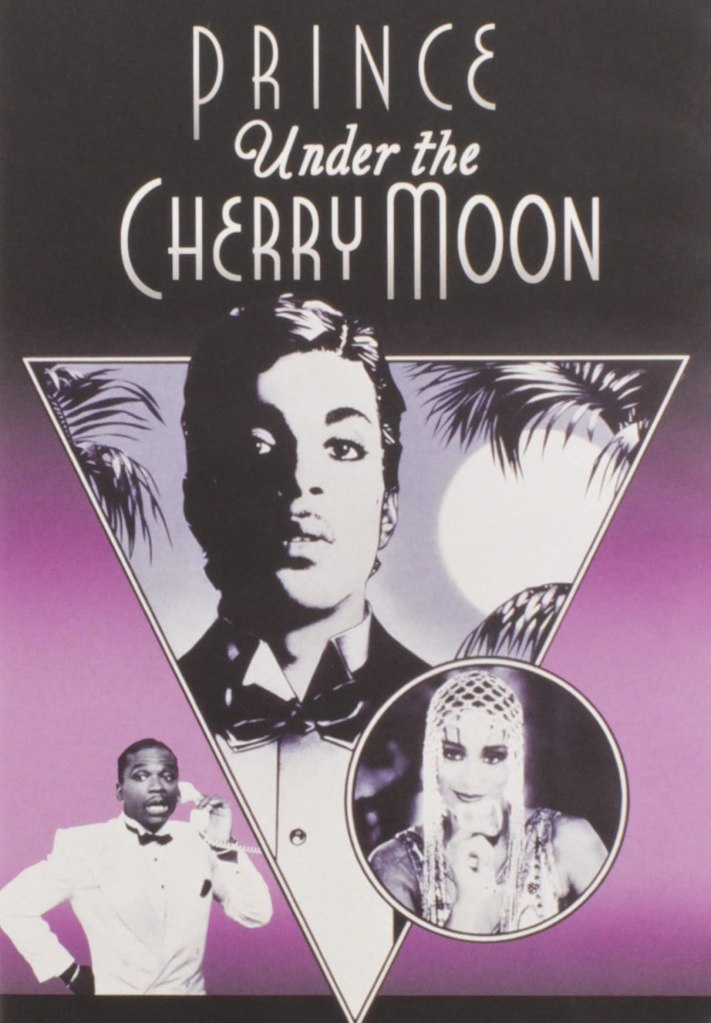
Following the massively lucrative Purple Rain tour in 1985, Warner Brothers let Prince do whatever Prince wanted. He began construction on his Paisley Park studios and quickly began working on a script for another movie. One reflective of his love for old films and his good mood at the time. The result is a black-and-white comedy called Under the Cherry Moon. A film that harkens back the classic screwball comedies from Hollywood’s golden era like Bringing Up Baby and The Philadelphia Story.
Early on, there was chatter that Martin Scorsese would direct the film, but Warner Bros. hired Mary Lambert. A few weeks into production, Prince fired her and took over the helm himself, retaining legendary Michael Ballhaus (Raging Bull) as cinematographer. The film was shot in color, but Prince, being the creative alien he was, insisted all release prints be struck in black-and-white. An unusual choice for 1986.
Prince’s second feature film is about an American pianist/gigolo named Christopher Tracy (Prince) and his best friend Tricky (Jerome Benton.) They live and work in the south of France during the mysterious time in history where people dressed like it’s the 1920s but they have modern computers, boom boxes and speak 1980s modern lingo.
After reading about her in the paper, which is in English, in France. Christopher and Tricky set their sights on heiress Mary Sharon for their next big financial scam to get a hold of some of that sweet paper that Mary will inherit on her 21st birthday from her greedy, philandering father Isaac Sharon played by Steven Berkoff and her long-suffering mother Mrs. Sharon (Alexandra Stewart).
Prince is essentially playing the Morris Day character from Purple Rain. He even stole Jerome Benton for his sidekick. And it kind of works. Sometimes. Jerome plays…well, Jerome. Again. I particularly enjoy the scene where the two friends argue over Mary. Tricky gets drunk and stomps around in a white cowboy hat, declaring to the sky, “It’s a full moon and the werewolf can KISS. MY. ASS.”
Despite their different backgrounds and class distinctions, it isn’t long before Christopher starts wooing Mary, who eventually hooks up with him despite being in an arranged engagement to a tightass named Jonathan. She hates Jonathan and confides in her mother, who herself longs for true love, fun and freedom but is too stodgy to do anything about it.
Mary and Christopher sneak off to have sex in a few different places including a phone booth, a racetrack, and a grotto on the coast where they argue constantly about their class difference and how uptight she is. To complicate things, Christopher is also boinking Isaac’s mistress Mrs. Wellington played by Francesa Annis from David Lynch’s Dune. This really pisses Isaac off. He decides enough is enough and sends his minions out to kill Christopher.
Meanwhile, Mary finds out about Christopher’s original scheme with Tricky to use her for her money and breaks up with him. The chase is on. Can Christopher get to Mary in time to tell her he truly loves her before the bad guys get to him? Nope. Isaac’s minions shoot and kill Christopher, who dies in Mary’s arms over the song “Sometimes it Snows in April”, one of the few songs Prince wrote about death.
Did I say this is supposed to be a comedy? That’s the main problem with this film. It’s uneven tone. Some things, like the cinematography, the gorgeous French Riviera locations, wardrobe and soundtrack work well while some, like the script and acting, don’t. If you watch the trailer, it’s clear that even the studio didn’t know how to market this movie.
Ultimately, it’s all about Prince preening around in awesome outfits being goofy. At one point, he even takes a bath in front of Tricky. In this unforgettable scene, Prince’s character plays with a rubber duckie in the bath while wearing a huge, black sombrero. Before a smattering of dialogue, he growls, “fascist” as he drowns the unlucky duckie in soapy bathwater. Depending on your attachment level to Prince, this scene will either make you laugh or freak you out completely.
Then there’s a cutsie subplot revolving around their inexplicably young, hot French landlady Katy (Emmanuelle Sallet) who hooks up with Tricky in lieu of rent and calls people “Cousin” like she’s from Uptown, Minneapolis.
About a year or so after Christopher’s murder, Mary writes Tricky, now back in Miami, an expository letter to fill in the audience on what happened to her. She is living on her own, grieving for Christopher. She has separated from her family completely, broken her engagement to Jonathan and launched a lucrative transatlantic real estate venture with Tricky and Katy. Mary is cautious at the prospect of finding true love again someday. Because you can’t really do any better than learning what it is to be loved by a male prostitute she knew for a week.
There is never any mention of anyone being arrested for Christopher’s murder or any comeuppance for Isaac Sharon. The film ends with Tricky chasing Katy up a flight of stairs in their new building, demanding the rent. Then, over the credits, we see the music video of Prince and The Revolution playing the song “Mountains” amongst heavenly clouds. The best scene in the film.
Along with this song, the film’s soundtrack, titled Parade, also featured the number one hit single “Kiss” although its music video in no way connects the film, instead showcasing Wendy Melvoin. This album was by far the most experimental released by Prince during his time with The Revolution, who by then had expanded in the number of touring musicians and became known as “The Counterrevolution.”
I love Clare Fischer’s orchestral arrangements on the soundtrack, the best of which is “Mia Bocca”, given to Jill Jones and released separately on her self-titled solo album. Prince and Fischer collaborated by sending tapes through the mail for decades and never actually met.
The film remains an oddity. Beloved by diehard Prince fans and abhorred by just about everybody else. A commercial and critical failure, it stands as an example of what not to do as a follow-up to a hit movie.
The album, however, remains one of my favorites in the Prince back catalogue. While Purple Rain’s music propelled the film’s story and expressed the emotions of its character, the music and the movie for Under the Cherry Moon don’t enjoy the same cohesion. “Girls and Boys” is a real banger of a funk pop tune, but we only get to hear a snippet in the film. “Kiss” was a huge hit, but the make out scene it accompanies is downright awkward compared to the smoke and fire on display in Purple Rain’s sex scenes.
The contributions of Wendy and Lisa on this record cannot be understated nor can the inspiration provided by Wendy’s twin sister Susannah Melvoin.
Susannah was not only engaged to Prince at the time, but she was also meant to play Mary Sharon. The wrecka stow scene? Yeah, that really happened with Susannah. The funniest scene in the film.
To ease her disappointment when the studio rejected her, Prince declared to her at sunrise in a hotel room in Paris, “I don’t want you to be in the movie. I want you to be my wife.” The relationship, like this film, didn’t work out quite the way anyone thought and ultimately led to the demise of the greatest band Prince ever had.
I was lucky enough to see Prince and Revolution on the Parade tour in the summer of 1986 just a month or so before he broke them up. It was the biggest mistake he ever made. They were fantastic. No other band, no matter how great, meshed quite like this one.
Prince died on April 21st 2016. The same day he recorded “Sometimes it Snows in April” in 1985. A few days later, a light snow fell from the sky above Paisley Park.
Note 1. In 2009, Prince watched Kristin Scott Thomas in one of her recent films. He was so taken by her beauty after more than 20 years, that he composed the song, “Better with Time” for her.
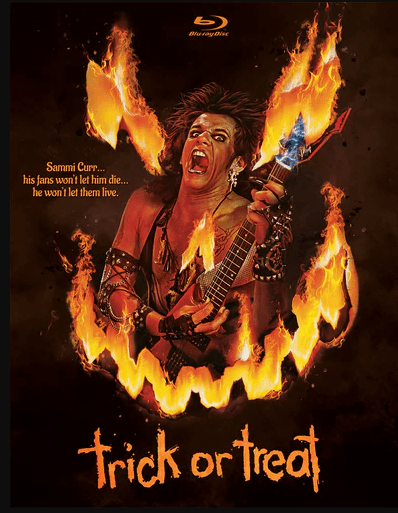
This movie is so important to me. I feel like I’ve talked about it so much, but now that there’s finally a great version of it available, I can’t retire the $1 DVD I have of it that has BUTCH written across it in sharpie.
The director of A Dolphin’s Tale and A Dolphin’s Tale 2, Skippy from Family Ties and one of the stars of A Chorus Line made the most metal film ever. Let that sink in.
I grew up a fat, bespeckled child in a small town with crushing self esteem issues, a love for gore movies and a sarcastic mind that loved the way people treated me when I started dressing all in black. Every single situation that Eddie Weinbauer (Marc Price, the previously mentioned Skippy) endures in this film…I lived it. If a monster Glenn Danzig (Verotika) could take over shop class and kill my tormentors, I would have gladly welcomed such mayhem and menace.
Eddie is a big fan of Sammi Curr, a superstar who went to the same high school Eddie is in, was tormented and bullied the same way Eddie is, became a big star and then died in a mysterious fire. Radio DJ Nuke (Gene “inventor of the devil horns*” Simmons, who played a great transgendered bad guy in Never Too Young to Die while wearing his girlfriend Cher’s clothes) gives Eddie the only vinyl copy of Sammi’s satanic masterwork “Songs in the Key of Death.”
Eddie does precisely what I’d do: he listens to the record and falls asleep. He has a crazy dream about the fire that killed Curr and awakens to the album playing backwards, telling him how to gain revenge on the bullies that torment him.
Eddie chickens out though — he doesn’t want to kill the jocks who have made his life so rough. Sammi takes matters into his own hands, creating an electric surge that allows him to escape the record and return to our reality. Eddie responds by smashing his stereo. Sammi’s response is as fucking perfect as it gets: “No false metal.”
Sammi’s friend Roger gets involved and unwittingly plays a cassette — fucking metal — at the school dance, causing Sammi to leap out of a guitar amp and take the stage. The crowd goes wild before Sammi starts killing audience members, shooting lightning at them and revealing his burned face. Holy shit — I saw this scene at the drive-in this year and the exuberance of hearing Fastaway blasting from car stereos in the fog at 5 AM is an experience I recommend to every single person reading this.
Can Eddie stop Sammi from being played on the radio and attacking everyone that hears it? Of course. It’s an ’80s horror movie. But man — I’m all from more Sammi Curr (sadly, Tony Fields died of AIDS in 1995).
Oh I forgot – Ozzy is a preacher in this that Sammi attacks. It’s a small cameo, just like Gene Simmons’ role, but that doesn’t stop my DVD cover from claiming they starred in this.
If you’re an 80s metal fan (and if not, man, thanks for reading this far), there are so many band logos and posters to spot in this, from the expected like Anthrax and KISS to the out of left field like Raven, Exciter and Savatage. You’ll also be much more likely to not dismiss this film as a piece of shit.
Me? I quote from this film almost every day. “The bait is you. Let the big fish hook themselves. You’re the bait. The bait is you.”
I really hope that people rediscover this movie or discover it in the first place. It’s probably the most perfect of all heavy metal horror movies, which wasn’t hard to do, but that doesn’t mean it’s not incredible.
*Dio has always claimed that he got the gesture from his Italian grandmother, who claimed it warded off the evil eye.
This movie’s Synapse 4K UHD has a 1080p Blu-ray of a 4K restoration from the original 35mm camera negative approved by Director of Photography Robert Elswit, along with audio commentary with director Charles Martin Smith, moderated by filmmaker Mark Savage. There are also interviews with writer/producer Michael S. Murphey and writer Rhet Topham, moderated by film historian Michael Felsher; an audio conversation with Paul Corupe and Allison Lang, authors of Satanic Panic: Pop-Cultural Paranoia in the 1980s; a making-of featurette; a tribute to Tony Fields; Horror’s Hallowed Grounds: The Filming Locations of Trick or Treat with Sean Clark; the Fastaway video for “After Midnight;” trailers, TV commercials and radio ads; a still gallery with an interview with photographer Phillip V. Caruso; a vintage electronic press kit; a limited edition slipcover and reversible cover art. You can get this from MVD.
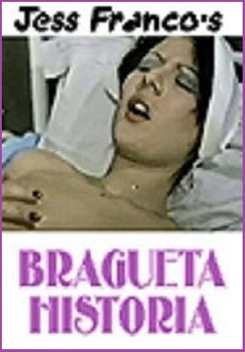
Nobody — well, me — is looking for this movie, but when you’re trying to watch every Jess Franco movie, you hunt down so many films, and then you get to them and wonder, what have you really learned? Is, as Lemmy taught me, the chase better than the catch? This film has no story, just coupling after coupling in
The cast includes Lina Romay (you knew that), Antonio Mayans (probably figured that) and Mabel Escaño. It all takes place in the beds of a hospital, which was simple to film as it could be any room. The hospital dirty movie makes so much sense, as it’s a place close to death and where we often turn to what keeps us alive when confronted by the void.
According to the I’m In a Jess Franco State of Mind site, “problems with producer Emilio Larraga (Golden Films) ruined many projects such as El Rinoceronte Blanco, Teleporno…” and this movie. That, along with the movie Franco produced, iBiba La Banda!, and losses on Phollastia and Phalo Crest, caused Jess to make Dark Mission with Daniel Lesoeur.
Fly Story, as this is called, is one of the hardest Jess movies to find. I got this cover art from Trash Palace, which has it, but there’s not much info on it. But somehow, I found it, I watched it, and it is one of the many movies that brings me closer to watching every one of his films, which is, as they say, the only way to know Franco and appreciate him. From here on, the pickings become slim, and the hunt starts for movies that may not exist.
If you see me on the corner with a handwritten sign looking like an addict, it’s because I can’t find that copy of Blind Target and have resorted to sex work to get even a VHS of it. Please help.
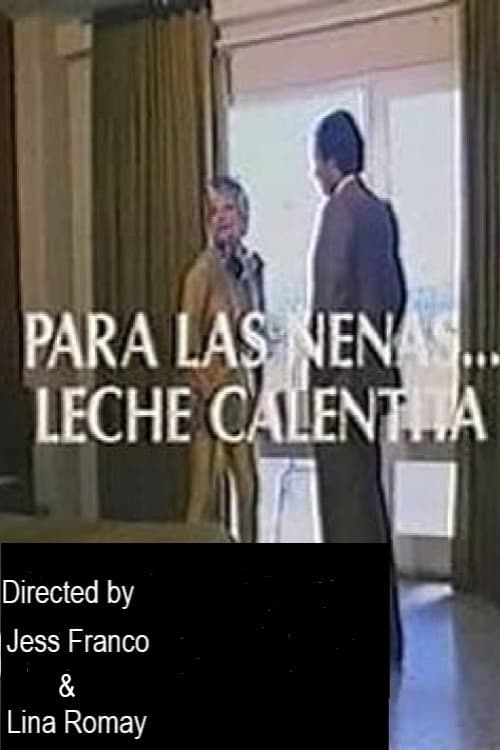
Already made by Jess Franco as Elles font toutin 1979 and El Hotel de los Ligues in 1983, Para las Nenas, leche calentita (Warm cream… for the babes) is like a commedia sexy all’Italiana except because Jess and Lina Romay is involved, we see the sex.
On the Spanish coast, we have three couples looking for something. For Lulu (Lina Romay) and Apollo (Antonio Mayans), it’s a good time, even if he can’t perform because his sister is with them everywhere they go. A lesbian couple is being watched by Pepito and several of his friends. And then there’s Jean and Rossy (Mari Carmen G. Alonso), who can’t stop getting it on.
That’s it. 67 minutes of sex action in the Hotel Venus. Probably made in the hotel where Jess and crew were making something else because, in 1986, he made 12 more movies using names like Clifford Brown for his own adult and Lulu Laverne and Candy Coster for the film he made with Lina.
In these three movies, people who have issues with sex resolve them through sex. How often did Jess feel he had to make something until it was right? Was it ever right? What was he trying to accomplish by going back again? Just adding insertions? Or was there a more significant message at work here?
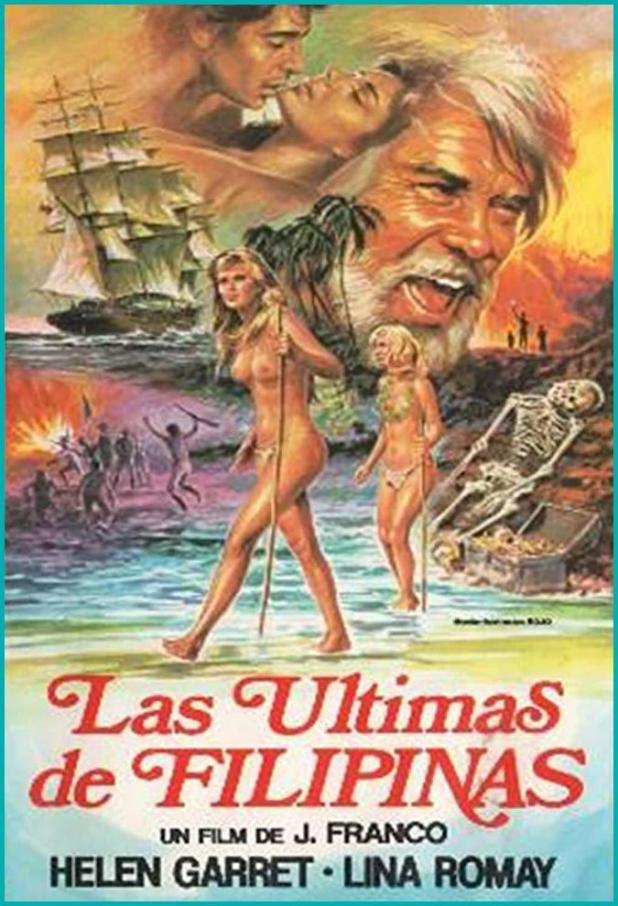
After a shipwreck, two Spanish sisters (Helen Garret and Flavia Mayans) and their teacher, Miss Muro (Lina Romay), find themselves alone on an island. Or they thought they were, as an old man was also there, living in a cave filled with the gold of the many ships that had wrecked into this place.
Based on 1945’s Los últimos de Filipinas, Jess Franco iso making his Blue Lagoon, except there’s a chimpanzee, and the girls’ clothes get stolen pretty early on. That means while this feels as close as Franco ever gets to a Disney TV adventure movie, it also has nudity from characters who are supposed to be in their early teens.
There’s also a talking parrot and Franco’s voice, as usual.
What a strange and fascinating movie, one that makes us consider what if Franco had never learned how to zoom into vaginas and instead madelow-stakess family adventure films that also have young girls becoming women and falling in love with fishermen, while the old man in the cave becomes the teacher’s husband and they swear their vows on a book by Kant. His movies fascinate me because they just can’t be expected; even if you give Jess a creative brief, you’ll get precisely whatever he wants to make, along with an opening that’s stock footage and fog.
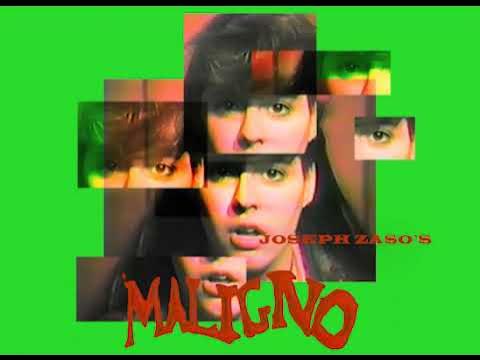
Made by a teenage Joe Zaso, this movie was exactly what I was looking for: a SOV Giallo that’s “Phenomena meets Eyes of Laura Mars by way of an ABC Afterschool Special.” Made in the director’s teen years — he was 15 — it finds Susan Galligan (Karen Komornik) starting at a new school by the name of Hartcourt Academy, a dark and foreboding place — shots from the outside look very Tanz Akademie — that has already claimed the lives of several schoolgirls. Much like an Argento Giallo, Susan is also psychic, which means that she can see things before they happen, leading her to become the detective in this and discover who the killer is.
Between the drone music on the soundtrack, the toughness of the girls with NYC accents and the soft VHS quality, this was a dream odyssey into Joe’s teenage mind. I had the chance to ask him some questions about the making of this film and I’m so excited to share them with you.
B and S About Movies: Joe, I have a million questions.
Joe Zaso: It’s Argento’s Greatest Hits as told by a 15-year-old? If you took a shot for every Argento nod, you’d be bombed within the first 2 minutes.
B and S: I’m amazed you had access to all of these Argento films in 1986 and at such a young age. All we had in my hometown was the VHS of Creepers.
Joe: I had just seen Creepers on video before I made this.
B and S: Had you seen Suspiria before you made Maligno?
Joe: Yep. Donald Farmer from Splatter Times sent me a bootleg VHS of Suspiria (the R-rated version) filmed off a screen and a decent UK screener of Tenebre. I had also seen Deep Red shredded on Channel 9’s Fright Night. Plus, I had just seen Demons in a theater the same weekend that Poltergeist II opened, just before I started shooting.
I was going to do a third horror anthology as well as a very ambitious zombie movie (monsters from VHS rentals come to life) in Horrormax. But after seeing Creepers, I was in LOVE!
B and S: This feels like a slasher made by someone who has just had their mind opened by Italian movies.
Joe: I was into slasher movies and Romero. H.G. Lewis and Argento sparked it. As you can gather, it’s a hodge podge of so many Argentos. It’s my favorite of all my 80s movies, because it probably works the best and isn’t too incoherent or over-ambitious.
It basically foreshadowed the Giallo being my favorite movie type to make.
B and S: It’s a wood-paneled New York Giallo!
Joe: All the music came from Pennsylvania. Tim Frey and Richard Han, who was from New Castle. He was a penpal who almost got me a role as a zombie in Day of the Dead over Thanksgiving weekend.
B and S: I love the accents.
Joe: “Yeahhhh, Mawww. I know. It’s rainin’ really hoddd.”
B and S: It’s just amazing that at 15, you made a full Giallo.





 B&S About Movies
You must be logged in to post a comment.