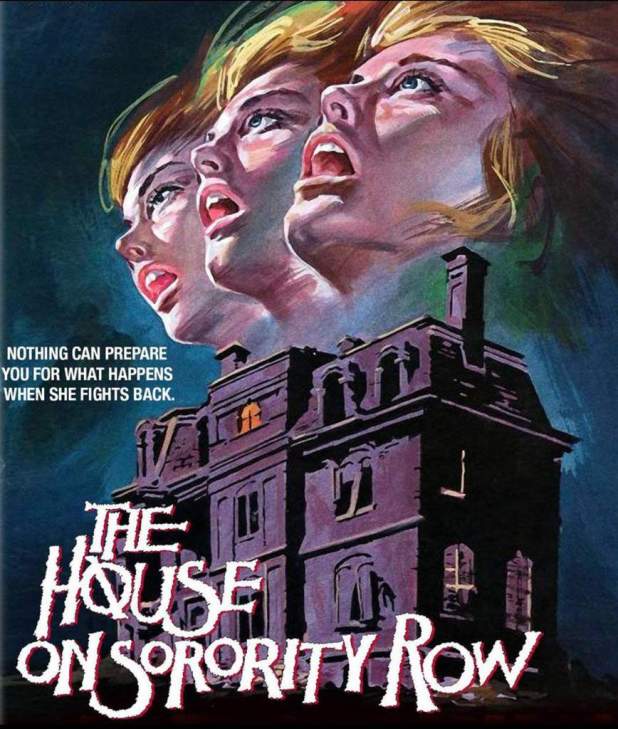
This film was inspired by the 1955 French film Les Diaboliques and was originally titled Screamer and Seven Sisters by its writer and director Mark Rosman. It also has the alternate title House of Evil, but none of those are as evocative and interesting as The House On Sorority Road.
Vincent Perronio, who often works with John Waters, was the film’s production designer. It was shot in Pikesville, Maryland and used the University of Maryland for its establishing shots. The crew used a house that was being foreclosed on for shooting and discovered two squatters living there, who were hired to be video assistants on the film.
The movie opens with a flashback sequence that was requested by its distributor, Film Ventures. It was shot in black and white, then tinted blue. We see a baby being delivered via c-section, but the mother is told that the child died.
Fast forward to today, as seven sorority sisters are drinking up at their own small graduation party. Katey (Kathryn McNeil, Monkey Shines), Vicki (Eileen Davidson, who went from acting on soap operas to appearing in the real-life soap opera The Real Housewives of Beverly Hills), Liz, Jeanie (Pittsburgh’s own Robin Meloy Goldsby, who is now a piano player in Germany), Diane (Harley Jane Kozak, Parenthood) Morgan and Stevie want to spend a few more weeks in their sorority house before heading out into the real world, but their house mother Mrs. Slater isn’t having any of their shenanigans.
Seriously, Mrs. Slater is a real pip. For example, when Vicki is batter dipping the corn dog on a water bed with her boyfriend, Slater bursts in and stabs the bed with her walking cane. So that leads to the girls playing a prank — making the old woman jump into the swimming pool to get her cane at gunpoint. There’s a stumble, the gun goes off and the old woman dies. The seven sisters all decide to hide her body in the pool until after their big blowout.
Of course, that’s when the killer shows up, who is Slater’s deformed son Eric. Turns out that doctor from the beginning had given her an illegal fertility drug that led to him turning out like this. So the doctor drugs Katey — our final girl — and tries to kill Eric to cover up his crimes, but Eric easily dispatches him. This leads to a showdown between a clown-costumed maniac — who has even decapitated one of the other girls and left her head in the toilet — and Katey which ends inconclusively.
Film Ventures also asked for the ending, where Katherine is discovered floating dead in the pool, dead at the hands of Eric. They felt like that the ending was too downbeat, so that’s why we got the ending we did, where Katey stabs Eric but his eyes open right before the final credits.
This is a movie filled with not just plenty of murder, but lots of party scenes too. The Washington, DC-based power pop band 4 Out of 5 Doctors shows up to play five of their songs. If you’ve ever seen The Boogeyman, they’re in that too.
Ronin Flix was selling a limited edition blu ray of this film earlier this year, but it’s currently sold out. It’s definitely worth a watch, as it predates films like I Know What You Did Last Summer where the teenagers are as much victimizers as victims.
You can watch this for free on Popcorn Flix or with Rifftrax commentary on Tubi.
Remember our friend David? Well, he didn’t die at the end of Image of the Beast. No, he’s back and ready to battle the forces of UNITE one more time. He’s rescued by Connie, an Antichrist agent pretending to be a double agent for the Believers’ Underground, who hopes that David can lead them to the hidden base of the Believers. Meanwhile, Armageddon and the Second Coming are on the way and everyone’s going to die and pay for their sins.
This might be my favorite of the four films in this series, as now we’ve entered pure post-apoc territory, with leukemia and facial lesion-having mutants called the Doomsday People wandering the wasteland wearing monks robes, David playing matador with helicopters and a character who does a child’s voice that is not unlike Christian icon Lil’ Markie (trust me, it’s best if I don’t link you to him, let him be the nightmare that only I live).
We also learn that Mark gave up on God after his brother tried to race a train and his car got hit by it. So there’s that.
This movie is packed with sermons, songs that bleed over the dialogue and long explanations of Biblical prophecy. In short, everything you’ve come to expect and more from this series. It also has David watch some ICBMs decimate the forces of UNITE and say, “It’s hard to believe God could use something that hideous for good, but he’s done it before.”
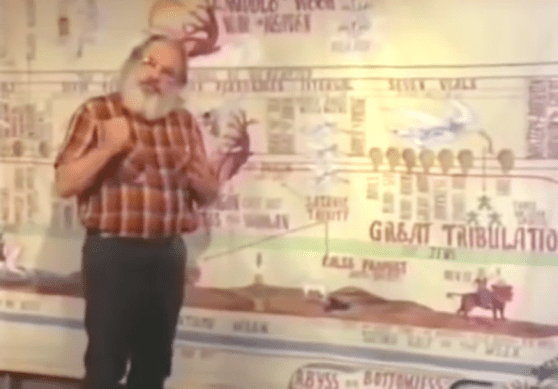
Turner also shows back up and he’s brought his maps of the End Times that we’ve all come to know, love and paint on to our own walls. I have no idea how we’re going to sell this house now that I’ve made the guest room into a mural with the different signs of Armageddon, but that’s our real estate agent’s problem.
Connie has to be the best character in this film, as she suddenly breaks into a mall and loots it for clothes a full year before Night of the Comet and then busts out some insane disco dancing moves for no reason at all. Also, everyone continually mentions how gorgeous she is in this movie. I don’t want to be rude, but she’s the most attractive woman I’ve ever seen in an Armageddon Christian movie and that’s no compliment.
In Marilyn Manson’s book The Long Road Out of Hell, he says “I was thoroughly terrified by the idea of the end of the world and the Antichrist. So I became obsessed with it, watching movies like A Thief in the Night, which described very graphically people getting their heads cut off because they hadn’t received 666 tattoos on their forehead.” Therefore, this movie had the exact opposite effect that everyone wanted it to have, at least for one very special boy.
Finally, Jerry, who has been the porn mustached bad guy of all of these films, sits crying on the floor as nukes go off all around him. B-roll footage plays and the world finally, mercifully, ends.
In the Survival Zone . . . death is a way of life.
Indeed, Mr. Tagline writer. Indeed.
Times were tough for ex-Star Trek and Stanley Kubrick actors . . . so bad that Gary Lockwood (1962’s The Magic Sword and 1977’s Smokey and the Bandit rip, Bad Georgia Road) traveled to South Africa (doubling for the “arid landscapes of 1988 Texas”) to star in a boring, post-nuke talk-fest pastiche of Death Wish and Mad Max. (And that “pitch” is really pushing the filmmaking meaning of the word in this pseudo-western romp.)
As with Def Con 4 and Battletruck, Survival Zone’s post-apoc ambitions sorely suffer from its lack of budget. So there’s no footage of devastated cities. No landscapes of burnt out buildings. No radiation-poisoned zombies. No futuristic hardware or soldiers. No Plisskens, Trashs, or Strykers for heroes. No desperately needed George Eastman-styled villains (Warriors of the Wasteland). There’s not even a Paco Querak to class up the nuclear mayhem.
What we do get is lots of talking and talking . . . and talking . . . with an annoying mix of American and South African accents (in Texas?) spouting dialog as they bitch about kite tails and how the world ended. What we do get are “pockets of low radiation levels” that allows Gary’s family—a hard-ass wife, a bitchy-whiny daughter (who suddenly changes from shorts to jeans while riding a horse), a bratty young son (who vanishes from the film without explanation), and a cantankerous uncle (all who make the stupidest of stupid decisions and you have no sympathy for)—to happily farm their homestead in peace. Then the post-apoc shite hits the fan when a band of marauding Indians—in the form of the apoc genre’s requisite leather-clad punk rock-biker rapists—lay siege. How “bad-ass” are these guys? The lead bad guy has the word “Bigman” emblazoned on his jacket and has a severed doll head fixed to the top of his motorcycle helmet.
Whooo. I’m so scared, Bigman. Let Ankar Moor throw your ass into the Deathsport arena and see how you do. You’d piss out your leather chaps playing Battle Ball in Ground Rules, dickwad.
So if you absolutely must be a post-apocalypse completest and watch every last piece of VHS flotsam and jetsam in Snake Plissken’s wake, then proceed at your own peril . . . it’s on You Tube. You’ve been warned, my fellow apoc-rats: For when it comes to our low-budget, post-nuked rip-off future, stay the hell out of South Africa and head for the Philippines, then Italy, then Australia, in that order.
Director Percival Rubens punched out 12 films in his not-so-illustrious career and gained minor video-store street cred with the popular (and now very, very rare and sought after) VHS rental and Cameron Mitchell starrer, The Demon. If you’re a horror buff completest, then check out that amalgamated mess of a film where John Carpenter’s Halloween meets A Nightmare on Elm Street.
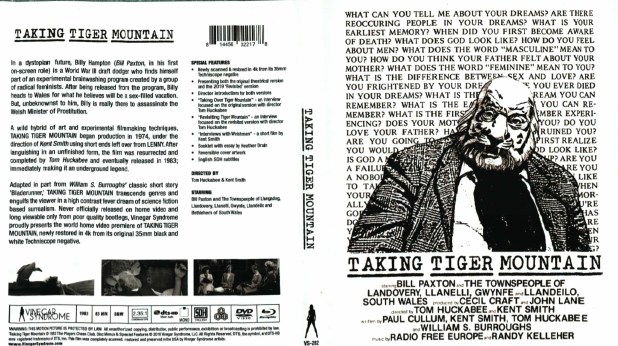
In 1974, nineteen years old Bill Paxton and his friend Kent Smith had some film left over from making the movie Lenny and hit the Morocco “Hippie Trail” to make their own movie. However, they lost their equipment at the Charles de Gaulle Airport where they lost — more like impounded — their equipment and had to pay for it to be released.
That’s what sent Bill and Kent to the UK, where they shot silent footage using locals all around South Wales. The film they made took a decade to see the light of day, but now it is available. And it’s really something else.
Also — the title isn’t a Brian Eno reference. Both this movie and teh musician were inspired by album was inspired by a Chinese revolutionary opera with the same title.
Paxton told Variety that “The original idea was kind of like The Stranger set on the beach. But the story of making the film gets crazier when we get to Wales. We had purchased black-and-white short ends (film stock) from the film Lenny, and we sort of shot things as we came across them. One guy had a Kenyan vulture, so we used that for a scene of eating my entrails. We met some girls and talked them into doing some nude scenes with us. Basically it was a bunch of hippies running around naked. It was all silent, black-and-white footage. Years later, director Tom Huckabee got the rights to some writings of William Burroughs, added an audio track and shot some new footage. So miraculously, he made something out of this, and it did get released. Kind of.”
That’s because in 1975, Smith gave the footage to University of Texas student Tom Huckabee, who based the script on a poem he wrote about the J. Paul Getty kidnapping. Originally, he intended the movie to be a dream about an American waking up a train with no memories before he wanders into a town, has some adventures and dies. But once he assembled the footage, he was unhappy with the results.
That’s how this became a movie about a group of militant feminist scientists who brainwash Paxton and get him to assassinate the Welsh Minister of Prostitution. Throw in some audio recordings of William Burroughs and new footage and the film was briefly distributed by Horizon Films and exhibited In the US by the Landmark theater chain.
Huckabee told Beatdom, “I should mention that I was fairly regularly during this time, maybe once every one or two months, on acid, mushrooms, and baby woodrose seeds… this, added with all the experimental film I was seeing, and avant-garde and erotic and left wing and feminist political literature I was reading, kept my mind open to outré thematic and formal tropes… so, say, if a scene wasn’t working I could always run it upside down and backwards… Also by then I was thoroughly versed in MKUltra brainwashing, psychic warfare, so in that respect I think I was getting a lot of that independently from Burroughs, maybe from the same source he was getting it.”
The constant newspeak throughout the film documenting the fall of American, the overlayering of Burroughs’ words and the bleak black and white footage all contributes to a hallucinogenic and paranoid trip into a post-apocalyptic future that doesn’t appear all that different from our world today — other than New York City being flooded and filled with alligators and sharks.
You can find this movie for free on Archive.org or order it from Vinegar Syndrome. Just be prepared — or excited — to see Bill Paxton’s dong.
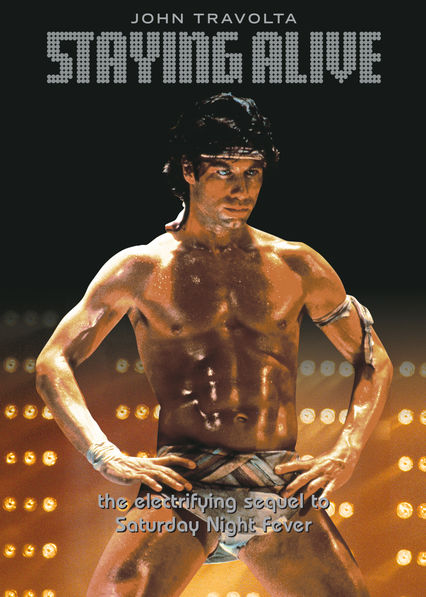
Saturday Night Fever producer and writer Robert Stigwood and Norman Wexler dreamed of a sequel to the film pretty much since the original was released. What they came up with, Staying Alive, was a script that John Travolta disliked. It was too much of a downer and he couldn’t be convinced to do the film for several years.
Finally, after four years of this, Travolta and Stigwood met. The star had an idea. What if Tony Manero became a dancer on Broadway? And what if he was a big star? Wexler thought that it would be better if Manero ended up in the chorus and the two reached an agreement to start the film.
Travolta had just seen Rocky III and wanted the same energy for Staying Alive. Paramount got Sylvester Stallone on board, Travolta told him his idea of the happy ending and toned down the rawness of the original film.
What emerged was…well, whatever this movie is.
Tony Manero was once the king of 2001 Odyssey, ruling the disco dance floor. Now, he lives in poverty and works on his dream of being in a modern dance musical. When he isn’t teaching or dancing, he’s a waiter that’s constantly beset upon by beautiful women. Ah, the sad life of Tony Manero — constantly getting laid and dancing his heart out.
Our hero has changed — moving away from Brooklyn has matured him somewhat and toned down the levels of profanity he used to freely toss around. But he’s still horrible to women, particularly his dancer and rock singer girlfriend Jackie (Cynthia Rhodes, Tina Tech from Flashdance and Penny from Dirty Dancing; she’s also in Xanadu, but let’s cut her some slack). He can go after anyone, but she has to be his alone. Speaking of guys that surround Jackie, Richie Sambora and Frank Stallone play in her band.
Tony’s really into Laura (Finola Hughes, who was nominated for both the Worst New Star and Worst Supporting Actress Razzies for her role in this film; she’s also in The Apple, pretty much damning her soul to bad dance movie hell for all eternity). He pursues her right into a one night stand and can’t understand why that’s all it ends up being. She replies, “Everyone uses everybody.”
Jackie and Tony break up just in time for the two of them — and Laura — to try out for the biggest dance musical to ever hit Broadway — Satan’s Alley. They get small parts and our villain gets the lead. Look for Patrick Swayze as one of the other backup dancers.
This leads Tony into his very own walkabout spirit quest, where he takes the 16 mile walk from Manhattan to Bay Ridge. The 2001 Odyssey is now Spectrum, a gay club, and this makes him realize how much his life has changed. He apologizes to his mother for how he was. She tells him that being so selfish is how he escaped a dead-end life. Of note, Donna Pescow was to return in the audience of Tony’s Broadway show and Tony’s father (Val Bisoglio) filmed scenes that were deleted. Now, the film implies that he is dead.
Tony and Jackie get back together, with her helping him work hard and take over the vacant lead male role. While he and Laura openly hate one another, they have as much chemistry dancing vertically as they once did horizontally. Tony takes things too far on the sold out opening night and kisses her at the end of the first act; she responds by slashing at his face.
Backstage, the director flips out on Tony and Laura tries to lure him back into bed. The second act is everything of the 1980’s — fog, lasers, glitter, silver lame and probably metric tons of white flake. Our hero throws away Laura at the end and goes wild with his very own solo dance before she jumps back into his arms to a standing ovation. He reunites for good with Jackie and celebrates as only he can — by recreating the strut from the beginning of Saturday Night Fever.
Despite being a critical failure — that’s putting it mildly — Staying Alive was a commercial success. The film opened with the biggest weekend for a musical film ever with a gross of $12 million dollars, finally earning $127 million on a $22 million budget.
I have my own theory on this film: it’s a Jacob’s Ladder situation.
Some time after Saturday Night Fever, Tony died. As dance was the most important thing in his life, his limbo — the time between heaven and hell — is spent trying to get a role as a dancer. The play Satan’s Alley is quite literally the place he could go to, if he makes the wrong choice. His apartment building is filled with other dead people; his life of constant temptation is the devil trying to convince him to follow him and give up on purity, just as Satan once led his brother Frank Jr. to renounce the priesthood.
Tony’s walk back to his hometown is literally a journey to the land of the dead — his mother is the one who has passed on and that’s why she can now forgive him. 2001 Odyssey, once a place full of life, has now become Tony’s worst fear, a loss of his masculinity. The place where his racist, gay bashing friends once called home has become their hell.
When Tony dances on to the Broadway stage, he must choose — heaven or hell. Or, as he does, making one’s own choice. He tosses Laura — the scarlet woman, the temptress — down to joyously dance and realize his full potential. He offers a hand in forgiveness to her before realizing his one true love — no, not Jackie. Himself. He struts down the street and on his way to heaven, which is embodied in the alpha and omega of Saturday Night Live and Staying Alive as that strut, down the street, to the Bee Gees.
Sometimes, a movie is so bad that you have to invent your own mythology to get through it. This, obviously, would be one of those films. Just don’t ask me to explain that Stallone cameo in the beginning.
Sam’s note: I’m really excited that R.D Francis has written something for our site. We met through him listening to our podcast and bonded over our mutual love of Italian films and obscure 80’s metal. This is his first — and I hope not the last — article for us.
When it comes to the opinions of contemporary horror movies fans—those of The Conjuring and Insidious universe jump-scares variety (The Haunted,Annabelle: Creation, The Nun, The Curse of La Llorna, Insidious: The Last Key)—there’s no fog-shrouded middle ground with the films of the professional-anglicized Paul Naschy (from his sometimes professionally-used birth name, Jacinto Molina). And it’s not a matter of love versus hate—but love versus boring.
And I’ll admit to this truth: When you edit out the sex, nudity, and gore from Naschy—which happens often with the U.S English-language cuts of his works—his films do have a tendency to lose their pace and logic—but not their powerful, cinematic atmosphere or imaginative story telling. Time and again, when I attempted to turn a fellow horror fan onto Naschy, their summation comes back: This is boring. This is slow. This makes no sense.
But for the Naschy fan (and Spanish and Italian horror fan)—such as yours truly—his films give me everything I need in a horror film:
1. Twenty-something, curvaceously-nude Italian and Spanish models with perfectly made-up faces that never run, drip, or smudge, hair that never loses its Aqua-Net coif, and French-manicured hands that defy rotted monasteries, the dingiest of cellars, the dankest of crypts, and the darkest of twisted winter woods. Check.
2. The aforementioned beauties always wear graveyard-appropriate mini dresses and hot pants. Check.
3.The arousing, unsynchronized gasps and screams of those crypt-kickin’ hotties rival the worst dubs of Asian cinema. Check.
4.Fictional, creepy European historical characters and events based on real-life, creepy European historical characters and events. Check.
5.A horror aficionado’s grab-bag of MGM noir and Universal homages. Check.
7.Deus ex machinas, red herrings, MacGuffins, and POV shots abound. Check.
Dump those seven ingredients into a gothic horror strongbox (decapitated head included), wrap it in giallo paper, and tie it off with a film noir bow—and you got yourself a Paul Naschy movie (and an Armando de Ossorio, flick for that matter).
It’s interesting to note that my fellow, so-called “horror fans” who proclaim “Naschy is boring,” also said that about Don Coscarelli’sPhantasm. I love Phantasm beyond words, but let’s face facts: If Reggie discovered Sally and Susie full-frontal naked being groped by dwarfs in the bowels of Morningside, and the Tall Man was going all “Dr. Carl Hill” on the fortune teller’s granddaughter, strung upside down A Bell from Hell abattoir-style—and some zombies showed up—wouldn’t it have made for an even better film? Think Hitchcock’s Psycho with an over-the-top, gut-spilling graphic shower scene, Norman’s mother fully reanimated, along with all of his female victims back from the grave for revenge—and you got yourself a plot-twisty Paul Naschy bloody fest.
In October, I’ll be contributing a review to B&S Movies’ commemoration of Mill Creek’s Pure Terror 50-film box set—with a review of Naschy’s classic, Horror Rises from the Tomb. The 1973 film introduces the character Alaric de Marnac—based upon Gilles de Rais, a not-so-noble medieval French Knight who mixed his sexual kinks for young boys with witchcraft. (The Swiss metal band Celtic Frost also paid homage to Rais’s exploits with “Into the Crypts of Rays” from their 1984 album, Morbid Tales.)
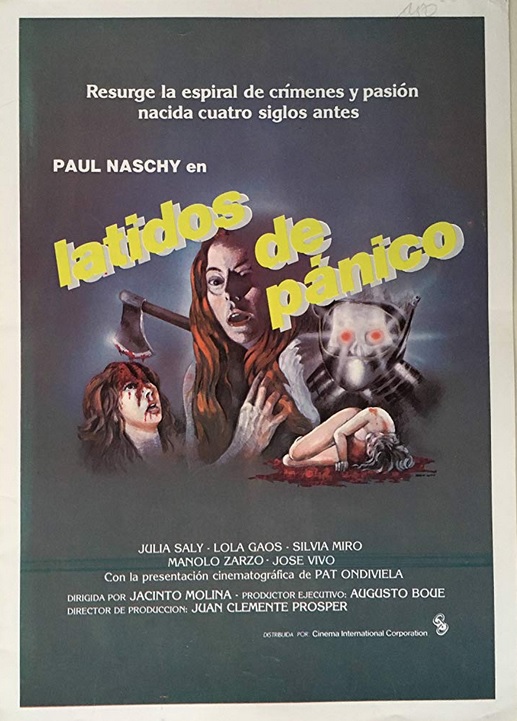
So to gear up for that review, it’s time to fire up its sequel: Panic Beats.
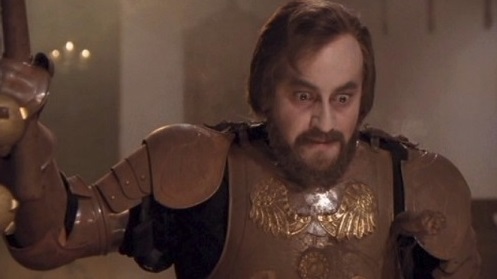
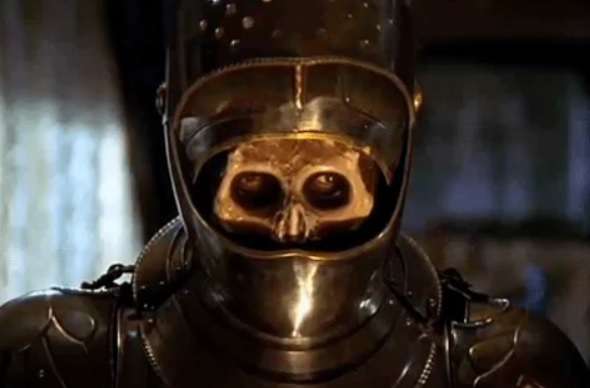
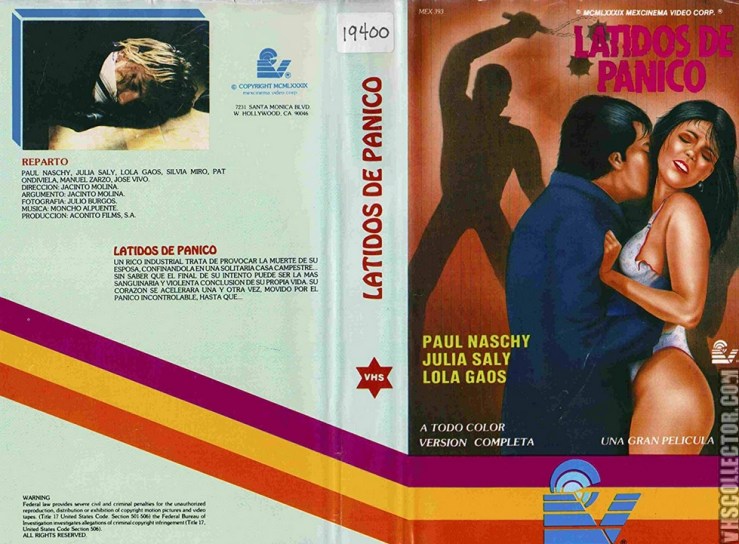
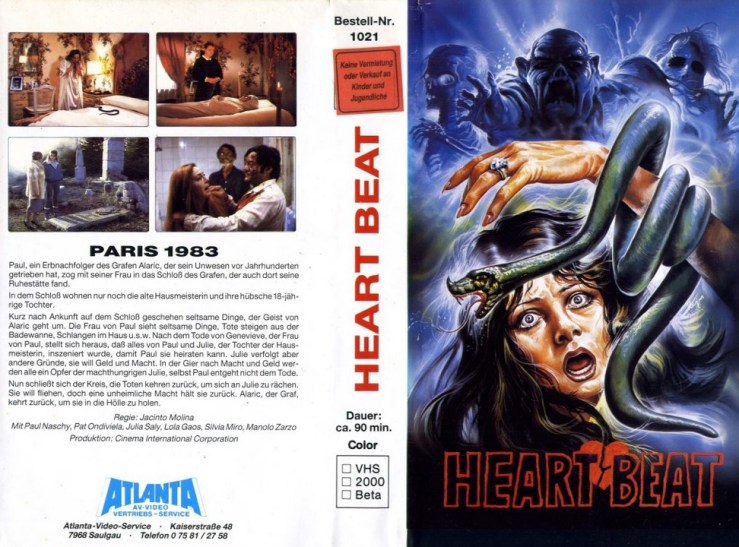
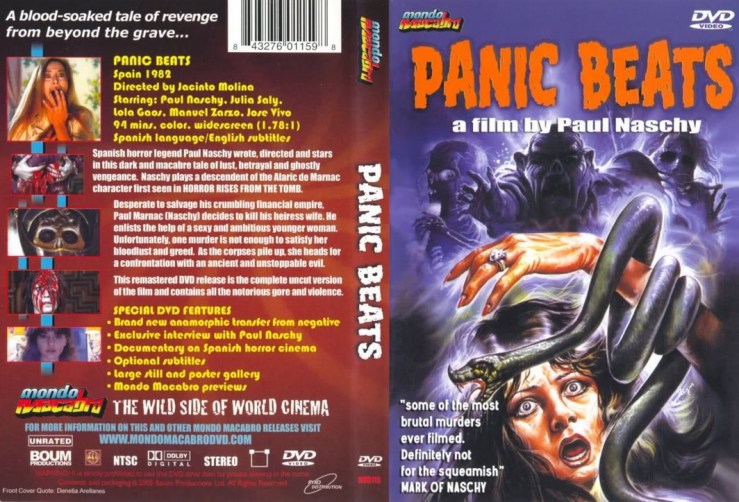
Also known as The Haunted House in the Fog (sound better in the German vernacular), Cries of Terror (lousy), Nightmare House (meh), Heartbeat and Frantic Heartbeat—each with “boring” edits depending on its country of distribution—Panic Beats is the second and final appearance of de Marnac. Naschy would, however, utilize Rais to create an all-new lead character in his 1974 film, The Devil’s Possessed (El Mariscal del Infierno). It would be Naschy’s only other returning film character—one that his fans wished returned more often; the other was his beloved werewolf-cursed Count Waldemar Daninsky—who appeared in twelve films. As is the case with most sequels—see Sam Raimi’s The Evil Dead and The Evil Dead II and Don Coscarelli’s Phantasm and Phantasm II—Panic Beats isn’t so much a sequel as it is a reimaging—with a little bit more money and behind-the-camera-experience. Panic Beats ditches the traditional Universal and Hammer gothic horror touches of its predecessor for a film noir-meets-giallo swirl of supernatural horror-meets-murder-mystery rife with scheming lovers, twisted nightmare/dream sequences, and blood and gore mixed with sex and nudity. While connoisseurs of Naschy cite Universal Pictures’ 1958 Draculaesque horror feature, The Thing that Couldn’t Die, as the inspiration behind Naschy’s Horror Rises from the Tomb, Panic Beats takes the film noir route by way of MGM’s Gaslight (1944), with its drive-the-wife-crazy-for-the-money plot. While some have cited other inspirational film noir-horror hybrids—such as Diabolique (1955), House on Haunted Hill (1958), and The Spiral Staircase (1946) (and I’ll toss in elements of 1948’s Sorry, Wrong Number, 1963’s The Ghost, 1971’s Let’s Scare Jessica to Death and Twitch of the Death Nerve), where every character is plotting against someone or being plotted against for the love of money—the more accurate antecedent would be Alfred Hitchcock’s forgotten classic, Rebecca (1940). In fact, that film’s 1938 multi-million selling literary inspiration—a gothic horror novel written by Daphne du Mauier—is name-checked by the characters as they bedroom-analogize the similarities between their manor’s creepy housekeeper and the monstrous-housekeeper Mrs. Danvers of Rebecca. (Red herring house keeper. Check.) Panic Beats, at first, loosely mirrors its precursor: In less than five minutes, before the title credits role, you have a horse-mounted knight in full armor—swinging a morning star overhead—pursuing a curvaceous, fully naked woman through the misty-shrouded woods. In typical Marnac fashion: his wife is a whore and the bitch must die. (First kill: done. Cue title card. Check.)
Fast forward to present day France: We meet long-suffering architect Paul (Naschy) who cares for his heart-ailed wife, the soon-to-be-gaslighted Genevieve (Julia Saly of Armando de Ossorio’s 4th in his Blind Dead oeuvre, Night of the Seagulls (1974), León Klimovsky’s The People Who Own the Dark (1976), and as Countess Elizabeth Bathory in Naschy’s 1981 feature, Night of the Werewolf ). Meanwhile, Paul’s carrying on affairs with two other women: Mireille (Silva Miro), a hooker who is putting the blackmail screws to Paul to hurry up with the wife-murder plan already, and Julie (the heart-melting Pat “Frances” Ondiviela who, after Panic Beats, disappeared into Euro-television work), who is in on Paul’s plot—or so she thinks . . . and so he thinks. . . .
On the advice of his doctor, Paul decides take Genevieve for bed rest at his family’s remote ancestral country estate—which rests on the site of a castle that belonged to Paul’s ancestor, the infamous Alaric de Marnac, a 16th century knight who murdered his unfaithful wife and their three children before turning to devil-worshiping and a healthy human-blood diet. Helping Paul care for Genevieve is the estate’s creepy, elderly maid, Maville (Lola Goas of 1971’s Academy Award Best Foreign Language Film nominee, Tristana, and Jorge Grau’s 1973 opus, The Legend of Blood Castle), who has “been like a mother to Paul” over the years, along with Maville’s troubled niece—and Paul’s second mistress, Julie.
Another plot similarity to Horror Rises from the Tomb is the ol’ roadside bandits/escaped prisoners-honey-we’re-out-of-gas ploy. The “new” twist: Paul recruited the two bandits into his scare-her-to-death plot, which includes Paul taking advantage of his family’s gruesome folk-tale history. Before you can say “Alaric de Marnac,” Genevieve’s heart stops before Marnac can give her a crack of the morning star, the creepy housekeeper goes down the stairs tripwire-style after she turns the screws on Paul, and Julia, after choking-out her aunt Maville when the stair fall didn’t kill her, takes a (very graphic) axe to Mireille, and Paul “settles up” with the road bandits. Then, when Paul discovers Julie’s love letter to her own piece-on-the-side action, Maurice, he plots to kill her . . . but not before she proclaims, “I’m more evil than you,” and tosses a space heater into Paul’s bubblebath. You go, girl!
But, what the hell? Where’s Alaric in all of this bloody mayhem? I came for the “every 100 years” gory revenge of a Gilles de Rais-inspired Knight and all I got was William Castle and Alfred Hitchcock film fuckery. Did Alaric de Marnac “possess” everyone to do his bidding? Was Paul, Alaric all along? Did Paul really die in the tub?
. . . So, Julie is the last backstabbing bastard standing and, thanks to her quickie marriage to Paul, she got the family fortune. Until . . . oh, shit. The screws are turning again. Now Paul’s photo falls to the floor and bleeds, there’s blood flowing out of shower heads, eyeballs and entrails are in the soap dish, snakes are in the bed—and zombies are knocking at the door. It turns out the Alaric de Marnac legends are true! Julie’s “evil” resurrected Alaric—and he beats her to a (graphic) pulp in bloody blaze of morning star glory in the estate’s chapel. (Deus ex machina knight. Check.)
While the film debut of Marnac (who comes across as a hairy Marlon Brando-Jim Belushi-Jack Black hybrid), Horror Rises from the Tomb, appeared on U.S UHF-TV and cable superstations and VHS in the ‘70s and ‘80s, Panic Beats wasn’t seen by Naschy fans outside of Europe until its 2005 DVD restoration by Mondo Macabro. In fact, Panic Beats never made it out of Naschy’s native Spain—outside of muddy VHS bootlegs (which I got to see many moons ago via an old grey market mail order, VSOM: Video Search of Miami-analog print).
In fact, you rarely found a Naschy movie on a video shelf or seen them on American television. Before the advent of widely-distributed retro-DVD reissues (by companies such as Mill Creek, Shout Factory, and Mondo Macabro), wee horror buffs such as this writer had to rely on reading about Paul Naschy’s celluloid exploits in books and magazines about horror cinema—and hope for that errant UHF-TV showing or VHS Tape appearance of Horror Rises from the Tomb, Fury of the Wolfman, and The Mummy’s Revenge.
But why? Well, the American serial-killer-on-the-loose-in-the-woods genre—derived from Italian Giallo—was in full swing. And here’s Naschy with a homage-throwback, granted, a very bloody one, but a throwback to Universal and Hammer horrors. American audiences wanted non-character developed Jason Vorhees, Michael Myers, and Freddy Krueger child and babysitter-killing knockoffs—not a murderous Knight based on a sociopathic Knight from European history that actually killed children.
As an added bonus: The Mondo Macabro DVD presentation of Panic Beats offers a Spanish horror primer with two scholastic vignettes: Blood and Sand, a 28-minute documentary that features interviews with Jorge Grau (1973’s The Living Dead at Manchester Morgue), Jose-Ramon Larraz (1973’s The House that Vanished and 1974’s Symptoms), and Armando de Ossorio (1969’s Malenka and 1975’s Demon Witch Child), and a 28-minute interview with the maestro himself, Paul Naschy On . . . , as he takes fans through his life and career.
So, if you’ve never seen any of Paul Naschy’s films—and I still haven’t seen them all (120 plus!)—this beautifully restored, uncut version of Panic Beats presented by Mondo Macabro is a great place to start your bloody education into the giallo-soaked and noir-twisted world of Spanish Euro-horror.
Update: February 2021: You can now order the all-region Blu-ray of Panic Beats from Mondo Macabro or through Diabolik DVD. As result, Sam the Bossman gave it a fresh take.
If there’s ever a Paul Naschy biopic, Jack Black is the man for the job.
About the Author: You can read the music and film reviews of R.D Francis on Medium and learn more about his work on Facebook.
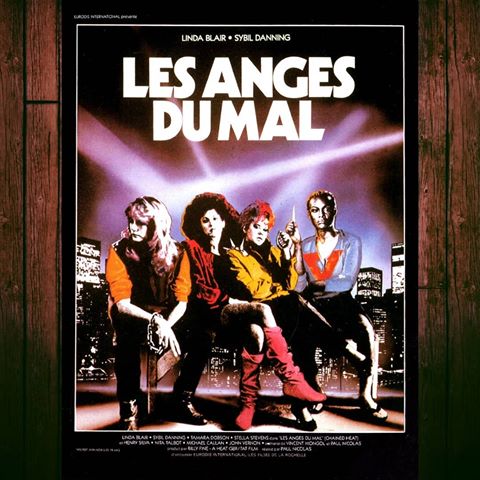
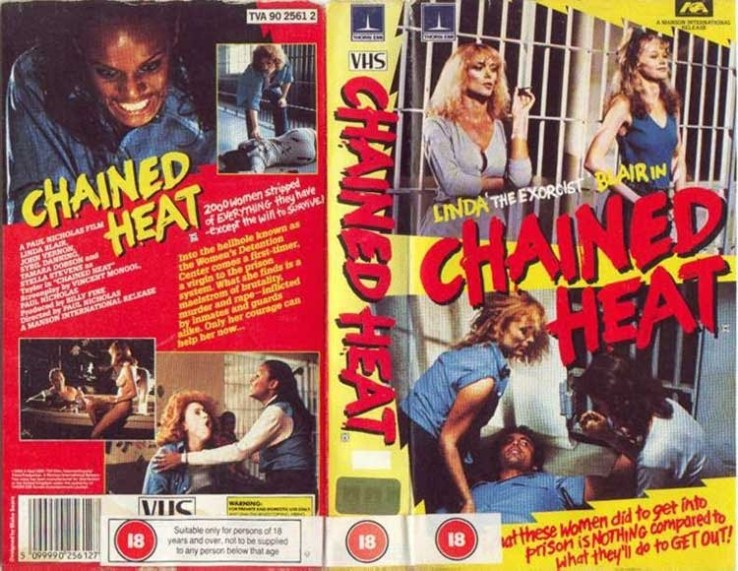
Sometimes I wonder, how far down the toilet can a movie go? Good news — Chained Heat left me with little room to ponder. It’s written and directed by Paul Nicholas, who brought us another slice of insanity, Julie Darling.
This is yet another descent into madness for poor Linda Blair, who has endured some of cinema’s worst tortures. Here, she’s naive teenager Carol Henderson, sentenced to serve 18 months in the slammer for accidentally killing a man. As the new fish, can she survive?
This is one horrifying prison. Warden Backman (John Vernon) has a hot tub where he films pornography with the inmates. Captain Taylor (Stella Stevens) is a madame who uses the inmates to make money when she’s not making whoopee with Lester (Henry Silva). Meanwhile, Lester is making time with the prison’s leader of the white girls, Ericka (Sybil Danning!), who is battling the leader of the black girls, Dutchess (Tamara Dobson, Cleopatra Jones! and strangely TV’s Jason of Star Command) for dominance.
Edy Williams, the former wife of Russ Meyer, shows up, as does Nita Talbot (Marya from Hogan’s Heroes) and Louisa Moritz from The Last American Virgin and New Year’s Evil.
Because this was made in the 80’s, the ladies want to riot in the hopes that they get a better warden. Instead, perhaps they should seek the means of power for themselves. Then again, you can’t expect a 1983 women in prison movie to be woke. You have to realize who, what and when it was made for.
In my perfect world, Sybil and Linda would have teamed up for Thelma and Louise and spent most of the movies running time killing men with chainsaws. This is probably why I don’t get to make the movies, only write about them.
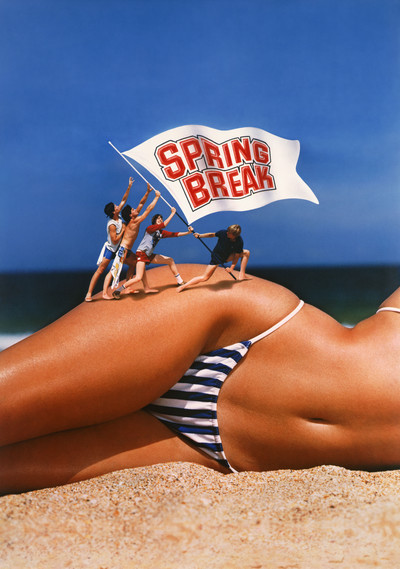
Between the first Friday the 13th and the Houseseries, Sean S. Cunningham made this teen sex comedy. As my wife Becca reminded me, one of the only differences between this movie and a slasher is that no one gets killed for all the sex and drinking. It’s a remnant of some forgotten time, when people in their late twenties could play college students and bars were named things like Games People Play.
Two nerds share a hotel room at the Breeze and Seas in Fort Lauderdale, Florida with two cooler guys from Florida. There — I’ve established most of the plot for you. Ah — one of the nerds is a rich kid with a politico dad who is tracking him down. And also, some guy wants to shut the hotel down.
1983 was a way different time. A time when hijinks could be kind of homoerotic and perhaps no one noticed. A time when dudes could sleep four to a room and one of them could bring back a girl, who would willingly have sex with all of them present and no one thought this was perhaps a bit creepy. A time when things like me too and drunk driving were just future notions. Indeed, there’s a scene where a girl is driving a convertible and holding a can of Miller Lite the entire time.
At the time this was made, Coke owned Columbia Pictures. So just in case you wonder why there’s an extended sequence where a girl remarks how she’s thirsty before sex and would really like a Coke before a guy goes to a large Coke branded machine to buy her a can, there’s your answer.
My favorite bit of trivia for this film is that Corinne Alphen, the former wife of Wiseguy star Ken Wahl, is in it. A two-time Penthouse Pet of the Month and a Pet of the Year, today she’s a professional Tarot card reader. And hey — keep your eyes open for an early appearance by Curb Your Enthusiasm co-star Jeff Garlin.
Cunningham would follow this movie with a much darker film about teens in Florida — The New Kids. What a double feature!
*Update: Mars Callahan, who’s best known for the acclaimed Poohall Junkies starring Chazz Palminteri and Christopher Walken, wrote and directed a failed, never-released remake, Spring Break ’83, which we reviewed as part of our “Box Office Failures Week.”
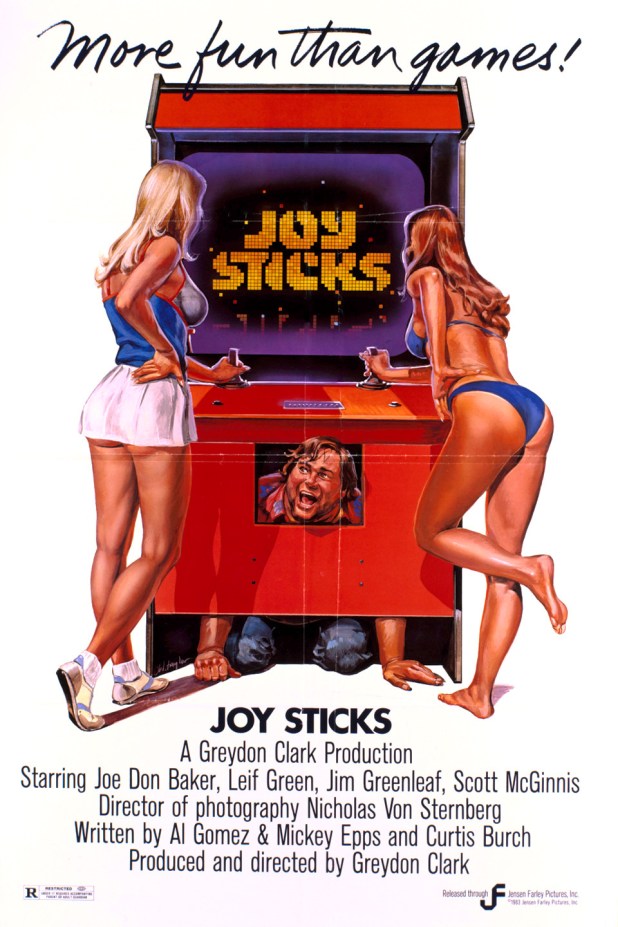
Jefferson Bailey (Scott McGinnis, Star Trek III: The Search for Spock) owns the hottest of all businesses in 1983: a video arcade. It’s driving local business tycoon Joseph Rutter (Joe Don Baker, a man whose name I screamed into the ear of a sleeping girlfriend once, which is a long story I should really get to sometime) nuts, so he gets his two nephews and plans on shutting down the arcade. Mean! Unfair! No!
Bailey’s too smart for Rutter and has two pals named Eugene Groebe (Leif Green, Davey Jaworski from the legendary bomb Grease 2) — who is molested by swimsuit girls before he even gets to the arcade — and McDorfus who are ready to deal with this affront.
This movie was such a big deal that Midway allowed the image of Pac-Man to be used as well as their new game Satan’s Hollow and the as-yet-unreleased Super Pac-Man during the big showdown at the movie’s end.
Corinne Bohrer, who is pretty much teen movie royalty thanks to appearances in films like Surf II, Zapped! and Stewardess School shows up, as does John Voldstad who played “my other brother Daryl” on TV’s Newhart.
There are two real reasons to watch this movie. One is the theme song, which has beeps, boops and promises “video to the max” and “totally awesome video games!” This song will infiltrate your mind and not leave, trust me.
The other big reason is John Gries, who completely owns every scene he appears in as King Vidiot, a punk rock maniac surrounded by punker girls who only communicate in video game noises when they’re not all riding around on miniature motorcycles. In a more perfect world, King Vidiot would be the star of the film. Every other person pales in comparison to his greatness. Gries would go on to steal the show in plenty of other films like Real Genius, Napoleon Dynamite, Fright Night, The Monster Squadand TerrorVision.
This all comes from Greydon Clark, who directed The Uninvited — a movie where George Kennedy does battle with a house cat — Without Warning and Wacko, as well as appearing in movies like Satan’s Sadists.
The saddest part of this movie was that even though the good guys win, arcades would be dead by the mid-1980’s. So really, the bad guys did win. King Vidiot? Well, no one knows what happened to him.
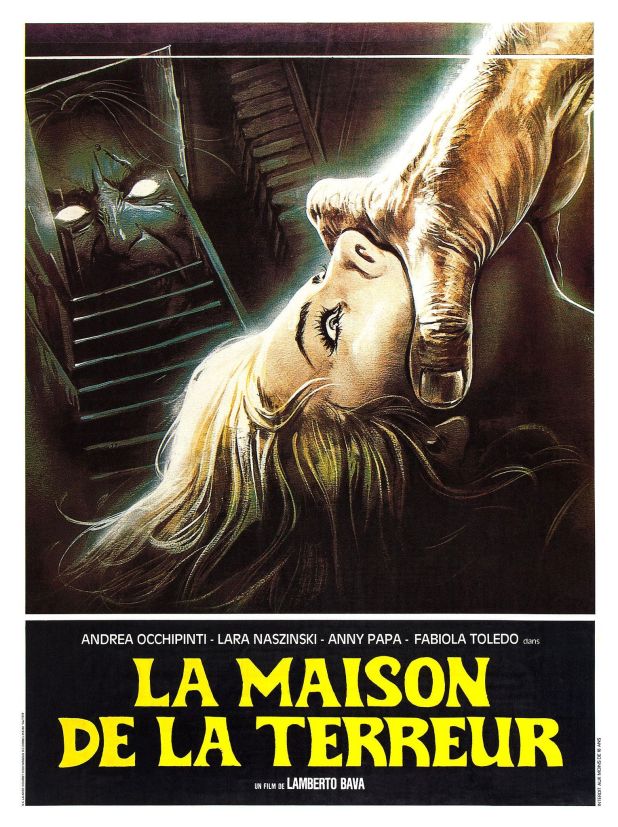
Known in Italy as La Casa con la Scala nel Buio (The House with the Dark Staircase), Lamberto Bava’s A Blade in the Dark was originally intended to be a four-part TV mini-series, with each segment ending with a murder. However, it was too gory for regular audiences, so it was released as a film. It was written by the husband and wife team of Dardano Sacchetti and Elisa Briganti, whose script was often at odds with what Bava wanted to put in his film.
Bruno (Andrea Occhipinti, The New York Ripper) is a composer hired to create the soundtrack for a horror movie. He’s been having trouble concentrating on the job, so he rents a house to sequester himself. He meets two women who used to know his rented villa’s former tenant, but when they disappear, he’s forced to watch the movie he’s scoring closer, as there’s a clue to the razor-wielding killer’s identity hidden within.
Bava worked as Dario Argento’s assistant for the movie Tenebre two years before this movie was made, so that has a big influence on this work. This is a movie unafraid to wallow in gore, feeling closer to the American slasher than the giallo. Then again, Lamberto was an assistant on the movie that predates the slasher, his father’s A Bay of Blood.
For the killer, he had difficulty finding someone who could convincingly appear to be a man and a woman. He turned to his assistant, Michele Soavi, who went on to direct plenty of great horror on his own.
For those that care about these matters like me — Giovanni Frezza, forever Bob from The House by the Cemetery — shows up in the movie within a movie that Bruno is writing the music to. He’s taunted by voices that chant “You are a female! You are a female!”
Also, in the true spirit of giallo and what the word means, every victim — and then the killer him or herself — is called out by the color yellow.



 B&S About Movies
You must be logged in to post a comment.