ABOUT THE AUTHOR: When Frederick Burdsall isn’t at work or watching movies while covered in cats, you can find Fred in the front seat of Knoebels’ Phoenix.
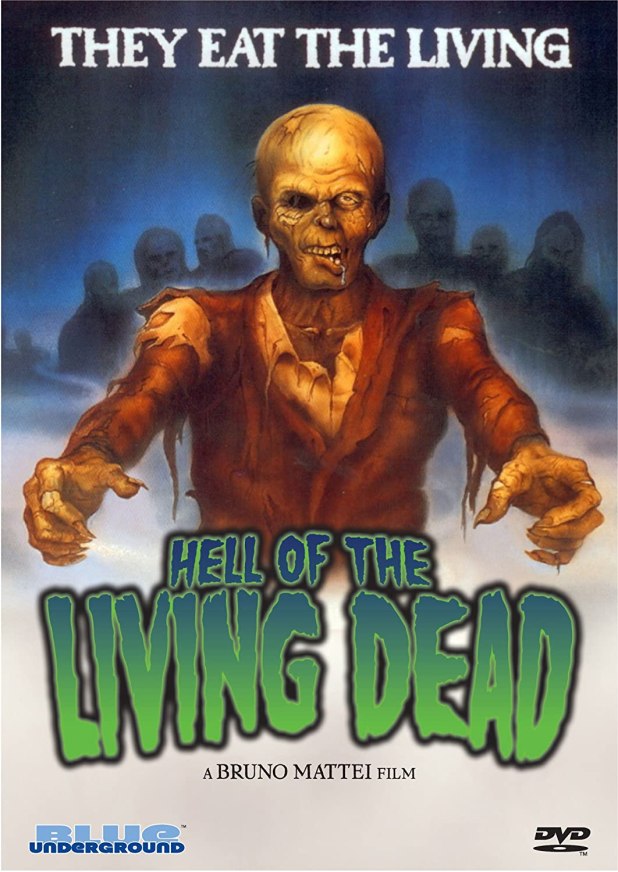
Way back when in the time of the dinosaurs there were these places called Drive-Ins. You can pretty much count on both hands how many still exist today but they were magical and I consider myself fortunate to grow up in a time when they were prolific. The one near me was the Tacony-Palmyra and it boasted 2 huge screens with 3 films every night. One side was your standard movie fare but the other….oh, the other screen was heaven to a guy like me. 3 horror movies every weekend and for 10 straight weeks my friend and I would get some beer and head over to see Maniac, Zombie and whatever third feature had been added for that weekend. Most were forgettable but one in particular remained in my memory and that was the Bruno Mattei film Hell of the Living Dead.
Under the pseudonym Vincent Dawn and assisted by Claudio Fragassi ( who gave us the sensationally awful Troll 2) we start in New Guinea at a chemical research facility named Hope Center 1 where they are working on a project called Operation Sweet Death, a gas which will turn those it comes into contact with into zombies. Unfortunately, a rat in the works has created a leak and now the lab techs are turning on each other.
After the 4 commandos are introduced in a hostage rescue scene (which would have surely resulted in dead hostages in real life) we jump to New Guinea where they are investigating why contact with Hope1 has ceased. Believing it to be just another eco-terrorist takeover they set out in their jeep and cross paths with Rousseau and Max, a journalist and her cameraman already being stalked by the dead.
The group suffers several more attacks, one in a nearby village and another in a seemingly abandoned plantation that is anything BUT abandoned before finally reaching the river and their raft, with the dead hot on their heels. Once across, they finally reach the facility where they discover the grisly truth. Will anyone make it out alive to warn the world of what’s to come?
There is certainly no end of things you could crap on this movie about. The dubbing is comical in a few scenes and Goblin is credited with scoring the movie but in reality they just used Goblin music lifted from Dawn of the Dead. Footage from the film La Vallee was also incorporated into the movie. Shot in Rome and Barcelona it was originally scripted to take place in Africa but was considered too costly. So by all means watch and enjoy Hell of the Living Dead in all of its eye-popping, maggot eating, head crushing glory and I’ll see you at Knoebels.
Editor’s Note: To commemorate the 42nd anniversary of the cancellation of the original Battlestar Galactica TV series in April 1978, we’re taking a look back at the two telefilms culled from the series — Mission Galactica: The Cylon Attack and Conquest of the Earth — for our “Space Week” tribute this week.
As I revisited my used VHS tape of this third Battlestar Galactica feature film cobbling from the TV series — after Mission Galactica: The Cylon Attack — my analog-kid memories time tripped to spending summers with my crazy Uncle Al (Bradley), the king of Italian schlock cinema; he who ripped the space opera torch from the hand of George Lucas and stumbled across the finish line to give us not one — but five (Yes, Sam, five. Not four. End of story!) — Star Wars ripoffs, faux flicks that we love so much amid the B&S worker bee cubicles, we dedicated one of our “Drive-In Friday” featurettes to Alfonso Brescia’s Pasta Wars oeuvre.
For if David Winter’s Space Mutiny is the South African equivalent of Turkey’s Dünyayi Kurtaran Adam, then Conquest of the Earth is Star Odyssey, Uncle Al’s response to George Lucas’s The Empire Strikes Back. For Glen Larson, with his Roger Cormanesque cheap ‘n shamless footage, prop, and costume recycling from his own BSG television franchise — as well as his Buck Rogers in the 25th Century axis (and Universal’s Earthquake and The Six Million Dollar Man*˟, and Irwin Allen’s The Towering Inferno, to boot!) — is a graduate of the Pasta Wars School of Science Fiction Film. (Hey, that prop from Quantum Leap looks like . . . oh, never mind.) Do you remember the time when Adalberto “Bitto” Albertini, he of the 1975 Italian soft-core sexploitation “classic” Black Emanuelle, pilfered Luigi Cozzi’s Starcrash to create Escape from Galaxy 3? Remember how Roger Corman endlessly recycled Battle Beyond the Stars to make the Star Wars droppings* that are Galaxy of Terror, Space Raiders, and Forbidden World (which also pillaged Galaxy)?
Yeah, it’s like that — and more. So much for TV network executives giving credence to viewer write-in campaigns.
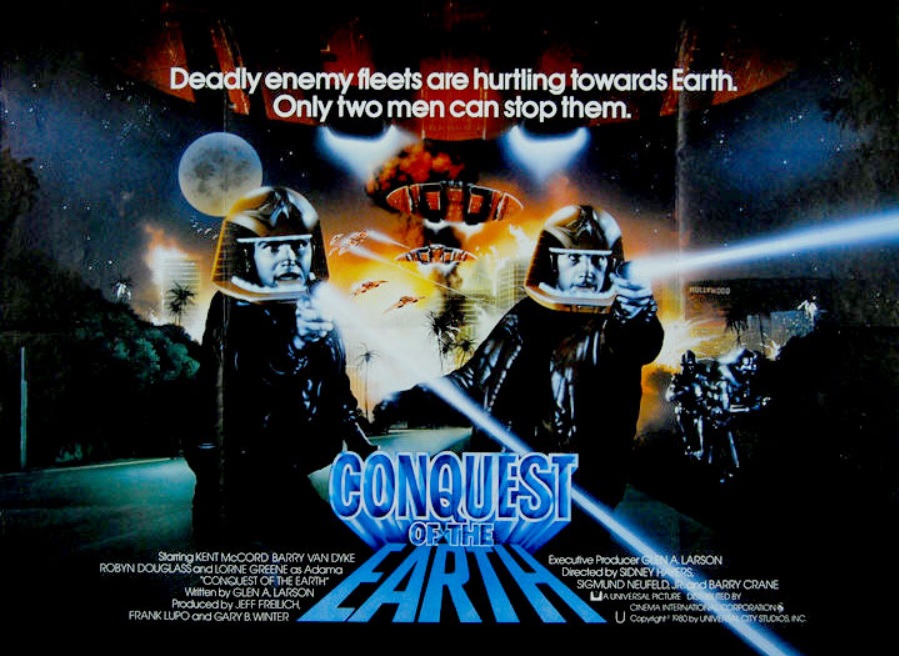
Foreign theatrical one-sheet/various sites.
Set 30 years after the initial series’ final, 24th episode, “The Hand of God,” in the spinoff series, Galactica: 1980, the famed Battlestar finally reaches Earth — only to discover the planet’s technology is unable to defend itself against the Cylons. Centered around the characters of Commander Adama, the now “Colonel” Boomer (replacing Tigh), Apollo, Starbuck and Baltar, the new series would be concerned with Baltar (atoned and now serving as the President of the Council of the Twelve) stealing a time travel ship to altar Earth’s history, so its technology would advance in the present day to the Colonial-Cylon level. At that point, the series would have a weekly “Time Mission,” with Apollo and Starbuck sent into the past to bring back Baltar — who would always, somehow, slip their grasp — and undo his changes to history.
Now, if you know your Glen A. Larson productions, you’ll recognize this time travel concept — slightly tweaked — also served as plot fodder for his more successful, later series Quantum Leap, which ran for five seasons from 1989 to 1993.
But I digress.
The VHS version/multiple sites.
So, as the new spinoff series developed during pre-production, Richard Hatch and Dirk Benedict were soon out — and replaced by TV actors Kent McCord (TV’s Adam-12; you youngins may have seen it on Cozi-TV) and Barry Van Dyke (Diagnosis: Murder on the old n’ stuffy Hallmark Channel alongside those The Golden Girls reruns). They would star as Galactician descendants Troy (Boxey all grown up!) and Dillon: the new (and not improved) Apollo and Starbuck (or Luke Skywalker and Han Solo, if you will). Ann Lockhart’s character of Sheba was also out (who, in turn, was the replacement for Jane Seymour who departed her role as Apollo’s love interest and fellow warrior, Serena); she was replaced by Robyn Douglass (the 10-speed racing romance Breaking Away) as earthling Jamie Hamilton, a network news reporter, who assists the Colonials. Also out was the great John Colicos as Baltar; now the “evil” of the show would be portrayed by the equally awesome Richard Lynch (Ground Rules) as Xavier, a high-ranking Colonial officer who defies Adama’s orders to send the fleet into deep space, away from Earth, and steals the time ship.
Of course, Xavier chose to time trip to 1940’s Nazi Germany, since the German wehrmacht was the “most technologically advanced society” in the world at the time. (Ugh, more costume department pillaging-on-the-cheap with the space Nazis from BSG: TOS‘s “Experiment in Terra”). However, after the airing of the three-part pilot “Galactica Discovers Earth,” the network deemed the time travel aspect too expensive to maintain on a weekly basis; it was nixed to concentrate on a more cost-effective “present-day Earth” setting — complete with Troy and Dillon on new mission: integrating a gaggle of (annoying) Colonial children who, courtesy of their being born in space, have developed superpowers in Earth’s gravity. (By the Lords of Kobol, noooo!) And . . . did you know that, when you time travel, your clothing turns snow white? Well, it does when you need to reuse those all-white Colonial Warrior suits from “War of the Gods,” themselves reused in “Experiment in Terra,” collecting dust in the bowels of Universal’s wardrobe department**.
Upon the 10-episode failure of the rebooted series, Universal, to maximize the profits on their investment (the initial Battlestar Galactica pilot cost $20 million to produce; another $20-plus million was spent on the series episodes at one million each), requested Glen Larson recut the series as 14 feature films that would play as theatrical features, TV movies, and home video rentals in the overseas marketplace. The first was Mission Galactica: The Cylon Attack, which was cobbled, in part, from the original series’ “The Living Legend” story arc starring Lloyd Bridges as Commander Cain. The second film (know as Galactica III in some quarters) is the subject of this review: Conquest of the Earth, which was cobbled together from the three-part pilot “Galactica Discovers Earth,” along with footage from the season’s two-parter “The Night the Cylons Landed,” and (to work Baltar and Lucifer into the plot) the old BSG: TOS episode, “The Young Lords.”
Needless to say, there’s a lot of dialog looping afoot, with Lorne Greene, John Colicos, and Jonathan Harris helping stitch together the new, alternate timeline of this theatrical release. And the Dr. Zee character is dubbed as well, so as to explain away why two actors — Robbie Rist (yes, little Cousin Oliver from The Brady Bunch) and James Patrick Stuart (a pisser as failed rocker Perry on CBS-TVs Still Standing; yes he was on Supernatural) — portrayed Doctor Zee; turns out, they’re genetic brothers: Dr. Zee and Dr. Zen! And, thanks to creative editing and (bad) dubbing . . . we have a budding romance between earthling Jamie Hamilton and her space prince, Dillon — a romance absent from the U.S. series.
Just wow. The U.S. series installments were bad enough. But this? Cousin Oliver, flying bikes, humanoid Cylons! Oh, my!
At least the faux sequel Mission Galactica: The Cylon Attack has Lloyd Bridges to distract us from the mismatched scenes and dubbing (most noticeably by on-the-cheap union-rate voice actors and not the original stars). But this overcooked Pasta pot mess . . . not even the presence of requisite baddy Richard Lynch (but a good guy in Steel*˟ ) — against the dry-as-toast thespin’ from our heroes Troy and Dillon — can save it. No, not even those flying Colonial motorbikes! Frack, forget the bikes. For when you have Cousin Oliver bossing Commander Adama, you’re waist-deep in gooey feldercarb.
Starlog #34 (May 1980) that broke the news. Notice, they didn’t push the bikes, but Robyn Douglass, to perk up us young lads/group photo Amazon.
Oh, yeah. The humanoid Cylons.
So, the Cylons were busy on the Base Stars those past 30-years. Not only have they developed a new and improved Raider — with glowing red wings and an expanded, five-manned cockpit — they’ve developed human-looking counterparts! And Andromus, the main Cylon-human hybrid baddie that Troy and Dillion must contend with on Earth, is portrayed by Roger Davis, who you know for his two year, 120-plus episode run as Charles Delaware Tate on TV’s Dark Shadows, as Jeff Clark in the House of Dark Shadows theatrical film, the scuzzy redneck romp, Nashville Girl, and pre-Smokey and the Bandit romp, Flash and the Firecat. It’s bad enough John Colicos was stuck wearing a Cylon Warrior headpiece, like an errant Darth Vader, in “Fire In Space” (” . . . burn, Galactica, burn. You’re finished Adama!”), but wow, sticking Roger in that ridiculous Ed Woodian pointed-silver headgear. There’s got to be a better way to make buck as an actor.
But, hey, at least it gave Ronald D. Moore plenty of fodder to reboot BSG 2004, with his human-Cyclons and glowing-eye Raiders, so ABC-TV greenlighting Galactica: 1980 wasn’t a total loss. And for ditching the space scouts, we thank you, Ron.
Kumbaya, Oh, Lords of Kobol. Kumbaya.
But I digress.
In today’s digital realms, when you access Galactica: 1980 (which was a spinoff series) episodes at NBC.com, it’s cobbled under the Battlestar Galactica banner as “Season 2,” which is now 8 episodes, instead of its original 10 installments. And what we knew as the three-part Galactica Discovers Earth” story arc is now the extended (53 minutes vs. the usual 45 to 47 minutes) single-episode “Conquest of the Earth,” with all of the time travel plotting, the Nazis, the all-white time travel suits, and earthling Jamie Hamilton’s integration into the Colonial society, excised. But, what the frack . . . the bikes . . . and those damn kids . . . are still with us. And the now, second online episode is actually the old, first installment the abysmal two-parter, “The Super Scouts,” which was actually the fourth and fifth episodes . . . oh, never mind, it’s all just feldercarb at this point.
** There’s more recycling from the Universal-Glen A. Larson universe to be had in the frames of Harry “Tampa” Hurwitz’s The Rosebud Beach Hotel. The Currie sisters, Cherie and Marie (know your Joan Jett and the Runaways history), rock out wearing the same jumpsuits Markie Post (NBC-TV’s Night Court) wore during her season one guest stint as Joella Cameron on Buck Rogers in the 25th Century (the 1979 two-parter “The Plot to Kill a City” if you’re interested). As it turns out, the Universal Studios’ wardrobe department made two suits for the episode — and were shocked to re-discover the matching wares, when fitting the Currie sisters for the film. For nothing goes to waste in the Larson-verse. In fact . . . I recall seeing the all-white Colonial, angel-cum-time travels uniforms in another, non-Larson movie. Or was it a TV series? Ugh. By the Lords! What was it?
Quinn Martin was the king of TV for two decades. His QM productions produced a string of successful television series — he had at least one television series running in prime time every year for 21 straight years — that includes Twelve O’Clock High, Dan August,Tales of the Unexpected, The F.B.I., The Invaders, The Fugutive, The Streets of San Francisco, Cannon and Barnaby Jones. He also produced sixteen TV movies, The Force of Evil, Code Name: Diamond Head, Attack on Terror: The FBI vs. the Ku Klux Klan and his lone theatrical movie, The Mephisto Waltz.
This was one of his last productions, other than four Dan August TV movies. This movie has a great pedigree, however, as it’s directed by Harvey Hart, who also directed The Pyx, and was written by Robert W. Lenski, who wrote Who is the Black Dahlia?, Mafia Princess and Farewell to the Planet of the Apes.
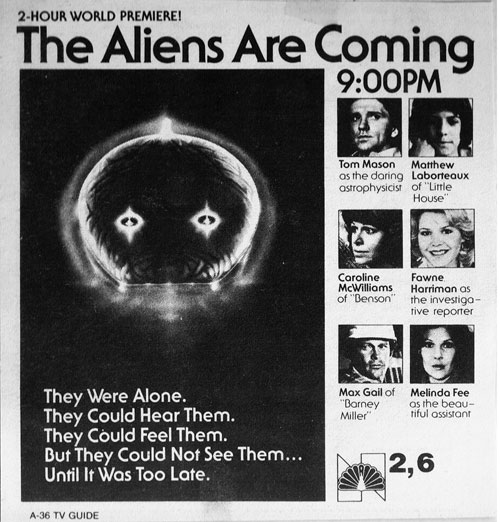
The Aliens are Coming was obviously a pilot that never got picked up. It’s a lot like The Invaders, as aliens are looking to possess humans. Sadly, the budget isn’t what it should be, so a lot of the inside of their ships just look like light shows.
I was quite possibly the only eight-year-old Max Gail fan when this came out, so I know we definitely watched the premiere on NBC. I would have had no idea who Matthew Labyorteaux was at this point in my life because I hated going to anyone’s house who had the gall to make me watch Little House on the Prarie.
Shimmy shimmy ya, indeed. If there’s one thing Hong Kong movies have in store, it’s always plenty of sequels. And yet, we welcome those here with open arms.
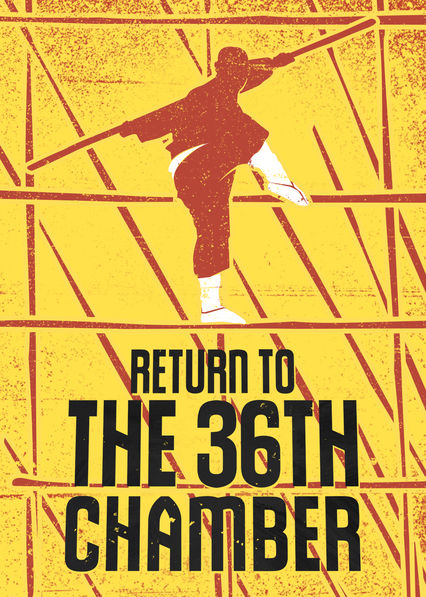
Directed by Lau Kar-leung, this is the spiritual second film in a trilogy. Unlike the first and last movie in said triad, Gordon Liu does not play San Te, but instead an imposter monk Chu Jen-chieh, who just so happens to look like the master of the 36th chamber.
After using his likeness to the famed warrior to help his friends — a scheme that doesn’t last all that long — Jen-chieh runs to the temple, where he’s soon kicked out. Only when he meets San Te is he given the opportunity to build scaffolds all around the temple and renovate the entire complex.
From high above the school, Jen-Chieh is able to watch all of the forms of the monks. Finally, when asked to dismantle his work, he rebels and runs through the chambers with ease. That’s because he changed his work to practice each of the forms, which was exactly the plan of the smiling San Te.
In spite of himself, our hero has become an expert at kung fu. Another lesson from San Te. Jen-Chieh saves his village and continues his training.
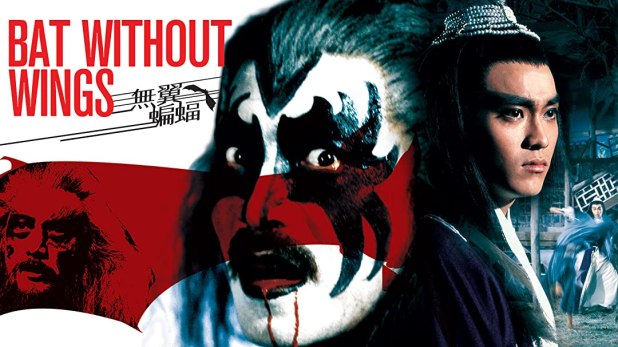
The Bat looks like Gene Simmons and that’s exactly why I chose to watch this. He’s some kind of martial arts supervillain who assaults and murders women and then sends back their body parts one at a time to their husbands. He’s also so strong that he kills twenty-six martial artists before he gets stopped. However, five years later, the killings begin again, despite the original Bat being chained up in a cave, surrounded by the dead bodies of his victims kind of like a Far East Frank Zito.
Oh yeah and the bad guy can fly.
And his real name is Red Baron.
And he has a cave lair filled with traps, like exploding boxes and a pond filled with poison.
Look, this isn’t the best movie you’ve ever seen, but it also has a KISS-looking evil wizard martial artist in an insane cape that can leap hundreds of feet in the air sucking the blood from women and killing men in combat.
If you can’t find a reason to enjoy that, there really is no hope for you.
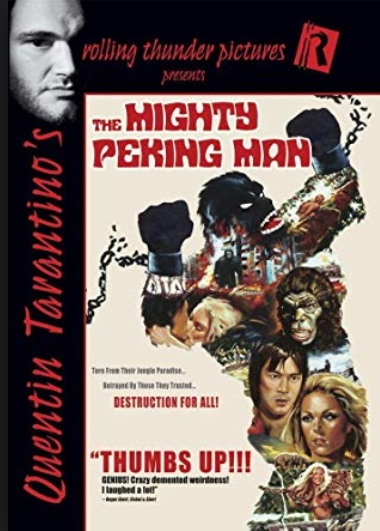
The Mighty Peking Manis a 1977 monster film whose Mandarin title, Xingxing Wang, translates as “Gorilla King” in English (let’s forget the dopey U.S. title of Goliathon). Yep, you guessed it: made to cash in on the 1976 King Kong remake. While Quentin Tarantino’s Rolling Thunder imprint reissued the film in 1998, MPM initially rolled out as a second-biller on the U.S. Drive-In circuit in 1980. It’s the same old story—only told with tongue firmly planted in cheek—featuring greedy explorers who exploit a very large Himalayan Yeti—with a twist: Peking Man raised a beautiful, Tarzaneque woman orphaned in a plane crash who pals around the jungle with a pet leopard. The climax: The Peking Man takes a header off Hong Kong’s Jardine Tower in a hail of helicopter gunfire and jet bombers.
And that Roger Ebert “Thumbs Up!” on the VHS sleeve ain’t no scam: it’s the real deal, as he sites MPM as his “favorite Hong Kong monster film.” And mine too, Rog. Mine, too, as it’s a very well made film. And it should be, as The Mighty Peking Man had a budget of six million Hong Kong dollars under the Shaw Bros. studio (Corpse Mania). The film took over a year to complete—and that time and care shows, in spades—and it was shot in Mysore, India.
While I love it equally, the Shaw Bros. didn’t fair as well with their Hammer Studios co-production of their martial arts vamps going against Peter Cushing’s vamp hunter in The Legend of the Seven Golden Vampires. Their other co-production—the lesser known Shatter—was intended as a weekly TV series, but ended up being a theatrical film dovetailed into the U.S. martial arts drive-in craze of the mid-70s. Oh, and Roger Ebert enjoyed The Mighty Peking Man so much that he re-watched—22 years later and upped on his two and a half star review, for—the Shaw’s 1975 release, Infra-Man. That’s the power of the Q: you gotta love it. And when it comes to Hong Kong cinema, none meets the power of the Shaw Bros.: you gotta love it. As you will this film. Pure awesome.
In a production twist only a B&S Movies reader can love: Koichi Kawaktia, MPM’s assistant director, later worked on Yonggary, the 1999 South Korean remake by Hyung-rae Shims of Yongary, Monster from the Deep (1967). Yonggary ’99’s co-scripter is Marty Poole, who wrote the 1997 Richard Lynch-fronted Rollerball homage, Ground Rules (oh, you gotta watch that film!!).
There’s a lot of online opportunities to watch The Mighty Peking Man, but you know us: we always try to find you the freebie. So watch it on You Tube. It’s campy, it’s whacked, it’s funny and entertaining. Strap on the popcorn bucket and snap the caps off the Dr. Pepper sixer and roll it. It’s the perfect “must watch” of this week’s “Hong Kong Week” tribute of reviews to pencil into your schedule.
Reissue Update: Here we go with another Delirium, UFO: Target Earth, and Calamity of Snakes surprise, again! In this case we were simple scratching a movie off of our above noted Quentin feature . . . or was it our “Planet of the Apes” tribute week . . . no, wait, it was for our “Kaiju Day Marathon” . . . and months later, a DVD restore was announced for release in December 2021. (Duh, it was for our “Hong Kong Week” of films. Hey, gotta work in the links.)
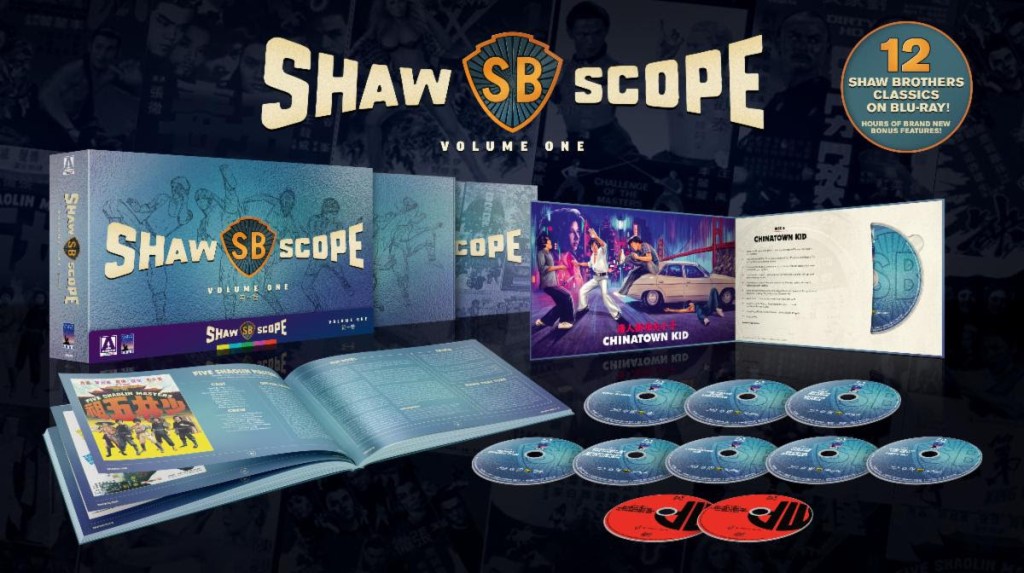
Yes! A reissue of The Might Peking Man is now available as part of Arrow Video’s “Shaw Scope” box set, in this case, Volume One. You don’t want the box set and you’d rather stream it? No worries. It’s also available on the Arrow Player service.
This new Arrow version of The Mighty Peking Man features the film in both uncompressed Mandarin and English original-mono audio, as well as newly translated English subtitles for the Mandarin audio, plus English hard-of-hearing subtitles for the English dub.
The new features also include: A new commentary track by Travis Crawford, a new interview with suit designer Keizo Murase, a 2003 iInterview with director Ho Meng-hua, a 2004 interview with star Ku Feng, a behind-the-scenes vignette of Super 8 footage from the archives of Keizo Murase, an un-restored standard-definition version of the film, alternate opening credits from the U.S.-version of The Mighty Peking Man, known as Goliathon, trailers from the Hong Kong and U.S., German and Dutch versions, as well as the U.S. TV commercial (Oh, boy, I remember seeing that on TV!), and a stills-image gallery.
Streaming online: You can also stream The Might Peking Man by visiting ARROW to start your 30-day free trial. Subscriptions are available for $4.99 monthly or $49.99 yearly. The ARROW Player is available in the U.S. and Canada, the U.K. and Ireland on the following Apps/devices: Roku (all Roku sticks, boxes, devices, etc.), Apple TV and iOS devices, Android TV and mobile devices, Fire TV (all Amazon Fire TV Sticks, boxes, etc.), and on all web browsers at at Arrow Player.com.
About the Author: You can read the music and film reviews of R.D Francis on Medium and learn more about his work on Facebook. He also writes for B&S Movies.
Rankin/Bass had some experience working with Japanese filmmakers after making King Kong Escapes, the Desi Arnaz Jr. feature Marco, Rudolph and Frosty’s Christmas in July, Willy McBean and His Magic Machine, The Bushido Blade (which has Mako, Sonny Chiba, James Earl Jones, Richard Boone and Laura Gemser all in the same movie), The Bermuda Depths and The Last Dinosaur there.
The last two movies we mentioned and this one were made with Tsuburaya Productions, the company that brought us Ultraman.
While this debuted on ABC on April 18, 1980, an extended version would later play theaters in Japan.
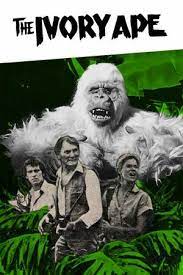
A rare albino gorilla has escaped somewhere in Bermuda, and the hunter who caught it once before (Jack Palance!) is set to destroy it. Can Steven Keats (Bronson’s son-in-law in Death Wish) and Céline Lomez (originally going to play Linda Thorson’s part in Curtains) stop him in time?
Kotani’s work, including The Bushido Blade, is a fascinating blend of Western and Eastern elements. The film, which stars Richard Boone leading sailors versus samurais under the command of Toshirô Mifune, is a unique exploration of cultural dynamics. If that’s not enough to pique your interest, the fact that Laura Gemser is in it might. Kotani’s diverse filmography also includesPinku redi no katsudoshashin, a feature-length movie about Mie and Keiko Masuda, two idol singers whose Japanese success was imported to the shores of the U.S. Their song “Kiss in the Dark” reached #37 in America, making them the first Japanese act to chart here since Kyu Sakamoto’s “Sukiyaki” in 1961. Sadly, their Sid and Marty Krofft developed series – The Pink Lady and Jeff – only lasted six weeks on NBC during Fred Silverman’s disastrous year of 1980, which also unleashed the Supertrain on an uncaring television audience. Kotani’s other works include The Last Dinosaur and The Bermuda Depths.
There’s something truly unique about the 1970s TV movies from Rankin/Bass. Each one carries a certain level of darkness and palpable sadness, making them the perfect choice for a snowy day in 1981 when all you wanted to do was stay under the covers. They still possess that same strange magic today, evoking a sense of nostalgia and appreciation for their historical significance.
Editor’s Note:We planned our “Lee Majors Week” before we came up with our month-long February blowout of Mill Creek box sets . . . and it just so happened this Lee Majors ditty appeared on Mill Creek’s Excellent Eighties 50-movie set (Agency). So, actually, this April review of Agency isn’t a repost: the Mill Creek review from February is the repost. Not that anyone cares.
A millionaire is suspected of buying an ad agency to use it as a way of brainwashing the public for his political ends. Hmm . . . subliminal messaging through inaudible sounds and images hidden in TV audio signals and magazine spreads . . . John Carpenter’s They Live, anyone?
The millionaire here is the mysterious Ted Quinn (Robert Mitchum) who buys out the giant Montreal ad agency Porter & Stripe where Philip Morgan (Lee Majors) serves as its top copywriter and project manager. Of course, as with any corporate takeover, half of the firm’s staff is soon blown out the door and replaced by “Quinn’s people.” And Morgan is getting the old “do you like your job” trope when he complains about being kept out of the loop on the firm’s new accounts.
Next thing you know, the firm’s geeky-and-too-nosey-for-his-own-good Sam Goldstein (very familiar Canadian actor Saul Rubinek), who discovered Quinn is using the firm’s new slew of commercial spots to influence a political election, ends up dead. Now it’s up to Lee and Valerie Perrine, as his love interest, natch, to get to the bottom of the advertising-cum-political tomfoolery.
I love Lee Majors, and Robert Mitchum is always cool in-the-role (but barely here; this is a Lee Majors joint, after all), but when cheapo Canadian tax shelters films masquerade as an American-made film by casting beloved U.S. actors in lead roles, what we usual end up with is, not a theatrical film, but a telefilm that pisses us off by baiting us with Lee Majors.
If this had been made in the early ’70s by a major U.S. studio, say MGM or 20th Century Fox — and cast Charlton Heston as the ad man discovering the subliminal political campaign — and had Paddy Chayefsky adapt Paul Gottlieb’s superior, best-selling novel for Sidney Lumet to direct — Agency could have been a twisted sci-fi version of the Academy Award-winning Network. Or we could have had Madison Avenue taken to task in a political paranoia thriller that reminded of director Alan J. Pakula and screenwriter Robert Towne’s The Parallax View.
I love my Lee Majors joints, but — through no fault of his own (his Fawcett-Majors Productions didn’t back this one) — Agency is a flat-as-a-pancake conspiracy thriller providing a non-intriguing conspiracy devoid of thrills. If you’re in the market for sci-fi conspiracy thrillers of the ’80s HBO-variety, then stick with Micheal Crichton’s Looker from 1981 starring Albert Finney — at least that one had some computer 3D modeling and funky light-hypnosis guns to wow us. Of course, when it comes to subliminal conspiracies of the Canadian variety, none is finer than David Cronenberg’s Videodrome.
You can watch Agency on You Tube or watch it as a free-with-ads stream courtesy of IMDb TV’s Amazon Prime channel (caveat: both are fuzzy VHS-to-DVD rips). In 2001, Anchor Bay issued a now out-of-print DVD version, which, no surprise, is the best of the DVD transfers in the market. If you’re a Lee Majors Canadian film completist, then you’ll want to seek out the 1984 TV movie The Cowboy and the Ballerina (we found a clip on You Tube).
About the Author: You can learn more about the writings of R.D Francis on Facebook. He also writes for B&S About Movies.
You know, it takes some balls to make a sequel to High Noon.
But hey — Elmore Leonard is a heck of a writer and Jerry Jameson made The Bat People and Airport ’77, so he’s OK in my book. And if you’re going to replace Gary Cooper, I guess Lee Majors will do for a TV movie.
Will Kane is now a private citizen and goes back to Hadleyville a year after he threw away at the end of High Noon. Now, the law is J.D. Ward (Pernell Roberts), who allows his deputies to outright terrorize everyone in town and even shoots the horses that Kane came to town to purchase. And now, Ward is hunting down Ben Irons (David Carradine), despite him being an innocent man.
Kane tries to help the wrongly accused man, but can’t save him. Ward attempts to have our hero arrested for aiding a fugitive, but the townspeople turn on him and the local authorities. They reinstate Kane as marshal and he ends up gunning down Ward for resisting arrest.
This film also has some great character actors going for it, like Michael Pataki, M. Emmet Walsh and Tracey Walter AKA Bob the Goon. It was shot at Old Tucson Studio, which was also where The Bells of St. Mary’s, Winchester ’73, Rio Bravo, C.C. & Company, Death Wish, Three Amigos, Tombstone and many more movies were made.
Cauldron Films has put our four movies* and as far as I’m concerned, they’re four for four.
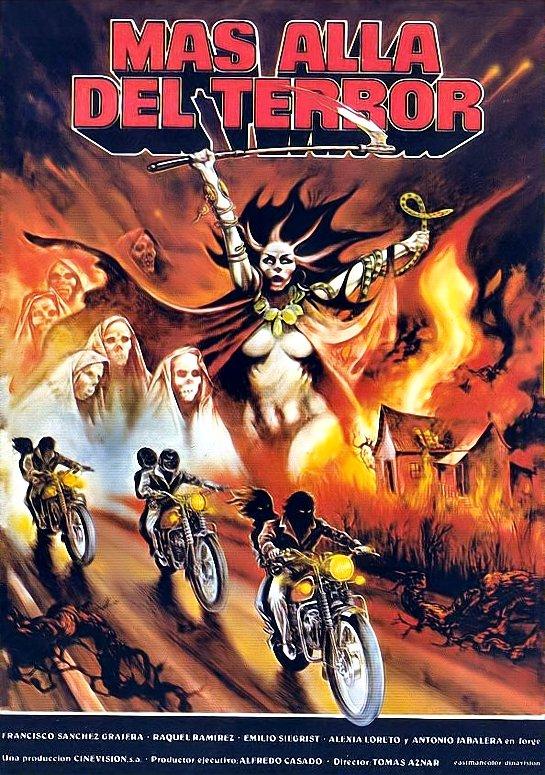
Written and directed by Tomás Aznar, this Spanish biker/slasher/occult freakout thrilled me with every single frame. It starts with one of a group of robbers posing as a prostitute before she brutally knifes a man, then she joins three others to rob a bar.
Taking a middle-class couple hostage and holding out in the home of an old woman and her grandson, they act just like you’d expect a home invasion biker gang to behave, killing everyone in their path when they’re not screwing in churches.
Before they kill her, the grandmother prays to Satan to destroy the bikers and from there on, they see ghastly visions of her dead grandson, you know, when they’re not having sex and killing more people or being chased by Ossorio-like Templars through a desiccated chapel. Oh yeah — there’s also supposedly a fortune guarded by those very same Blind Dead-ish mummies in thecatacombs beneath the ruins.
It’s packed with menace, gore, sex and meanness — exactly the kind of Eurohorror that always played well over here. It has that glorious shot on film soft darkness that I love so much, as well as drugs, shootouts and a final twenty minutes that are a delirious thrill ride.
Más allá Del Terror was never released ever in the United States until now and I have no idea why.
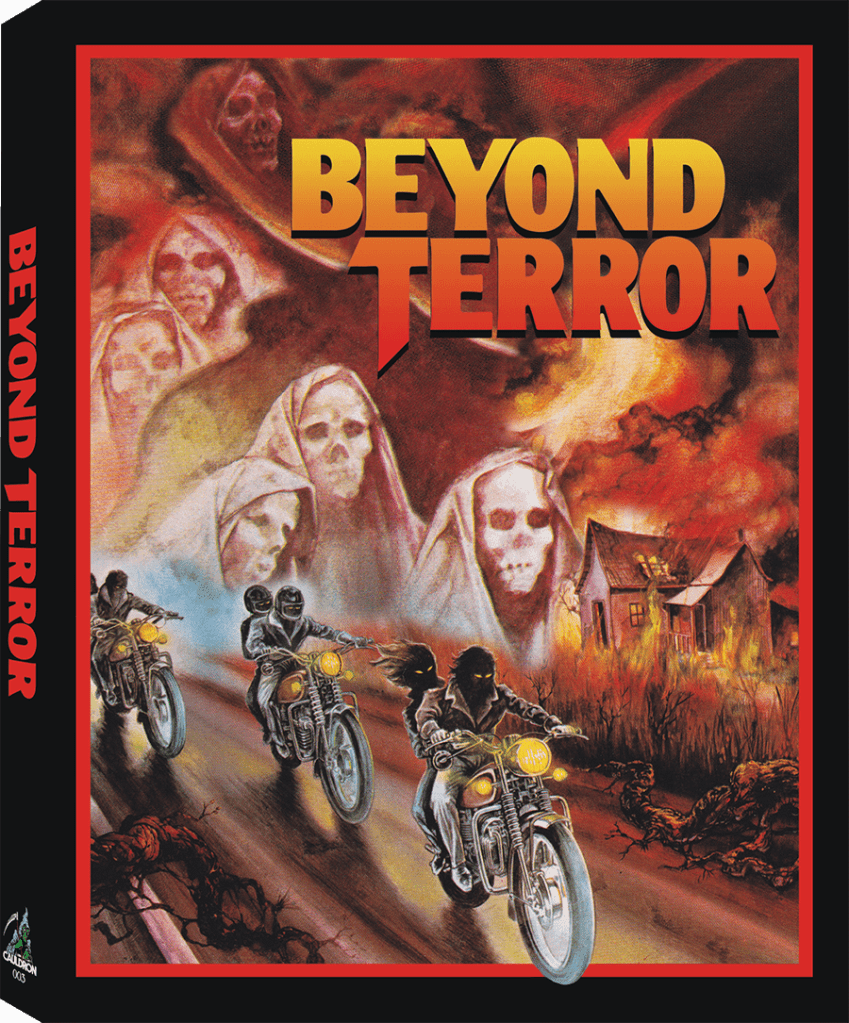
You can right that wrong by grabbing a copy from Cauldron Films. The limited edition slipcase version may be sold out, but there’s another edition coming soon. We’ll update this post when that happens.





 B&S About Movies
You must be logged in to post a comment.