Arturo Ripstein, who also made The Castle of Purity, directed this film, which tells us of the black magic — or maybe not — within the titular aunt Alejandra (Isabela Corona, who started her career as a diva of the screen in the 30’s) causing chaos just by existing.
Alejandra arrives to stay in the house of Lucia, Rudolfo and their three children. A bitter older woman given to mood swings, the children eventually begin to torment her, by which point she reveals her witch nature (if you’ll pardon the pun).
She finds ways to get back at each of them, choking out her nephew through sorcery and setting the house ablaze when one of the children burns her face. This is a film that presents magic as a fact of life — and in some cultures it is — and those who believe that we have aged out of the occult in modern times must pay the price.
As the great conspiracy writer James Shelby Downard once said, “Never allow anyone the luxury of assuming that because the dead and deadening scenery of the American city-of-dreadful-night is so utterly devoid of mystery, so thoroughly flat-footed, sterile and infantile, so burdened with the illusory gloss of “baseball-hot dogs-apple-pie-and-Chevrolet” that it is somehow outside the psycho-sexual domain.”
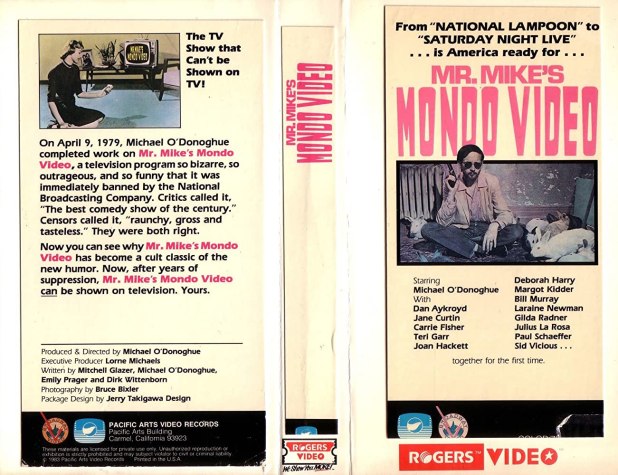
Michael O’Donoghue is one of my heroes. A major contributor to National Lampoon and the first head writer of Saturday Night Live, he was also the first performer to utter a line on that series. When he returned to the show in 1981, as Dick Ebersol hoped that he could add back a sense of the old days to the program, O’Donoghue screamed, “This show lacks danger!” As he said this, he spraypainted the word on the wall, but ran out before finishing the word. It must have worked. Catherine O’Hara quit before she was even in a sketch.
O’Donoghue was fired after writing the never-aired sketch “The Last Days in Silverman’s Bunker”, which compared NBC president Fred Silverman to Hitler, with John Belushi coming back to play the man and a giant Nazi eagle clutching the NBC logo already constructed.
He was hired back by Lorne Michaels in 1985 and he wrote a monologue for Michaels’ friend Chevy Chase that started, “Right after I stopped doing cocaine, I turned into a giant garden slug, and, for the life of me, I don’t know why.” Needless to say, he was gone again.
After a lifetime of chronic headaches, he would die from a cerebral hemorrhage but left behind some wicked humor that still adds up. I always refer to his attack on SNL, referring to it as “an embarrassment. It’s like watching old men die.”
Therefore, it makes perfect sense that NBC would pay him to make a parody of Mondo Cane, including using the Riz Ortolani song “More.” It was also to feature a performance of the Sex Pistols playing “My Way,” but the owners of that song’s copyright would not allow that to happen.
The copy I have of this movie was the version released on home video in the early 1980s by Mike Nesmith’s Pacific Arts label. The Shout! Factory release is missing the theme from Hawaii Five-O.
Much like any mondo, this is a journey through a strange world, with everything from Dan Aykroyd showing his webbed toes and worshipping Jack Lord, Kalus Nomi in a dream sequence, swimming cats, a Tom Schiller-directed take on nudie cuties, Laserbra 2000 and a restaurant where patrons are yelled at.
Tons of famous people are in this, including Carrie Fisher, Teri Garr, Debbie Harry, Margot Kidder, Bill Murray, Laraine Newman, Golda Radner and Paul Shaffer.
Oh yeah — the haunting theme to Mondo Video? That’s “Telstar” with singer Julius La Rosa on vocals, both in English and Italian.
Much like a real mondo, this film at times is uneven and makes little sense. But when it’s good, it’s really good. You can watch this on YouTube.
Along with Albert Brooks and Tom Schiller, Gary Weis created small movies that were an integral part of the early Saturday Night Live. He also directed The Rutles: All You Need Is Cash and music videos for The Bangles song “Walk Like an Egyptian,” as well George Harrison’s “Got My Mind Set On You” and Paul Simon’s “You Can Call Me Al.”
This film goes into the day-to-day life of what it was like to be a member of a gang — either the Savage Skulls and Savage Nomads — amidst the end of the world that was 1979 in the South Bronx. The title refers to the distance between this hell on earth and the opulent jewelry store which is much further away than any physical distance between here and the Upper East Side.
Obviously, things have always been bad. I doubt they’ll get better. But let me tell you, as a seven-year-old watching this world on WOR, I really believed the world was about to end. I still feel that way today, perhaps more than ever before.
After ABC-TV found late-afternoon, weekday rating success with their Afterschool Special, NBC quickly followed with their weekday Special Treat anthology series that debuted in October 1975 and ran for eleven seasons until its 1986 cancellation.
While not as popular ABC’s trailblazer or CBS-TV’s Schoolbreak Special knockoff, Special Treat had its share of standout episodes.
Sunshine’s on the Way (November 1980; You Tube) starred Amy Wright (The Amityville Horror ’79) as a musician and nursing home volunteer who tries to boost the spirits of a legendary jazz musician portrayed by Scatman Crothers (The Shining).
Another was December 1975’s The Day After Tomorrow, aka Into Infinity, which concerned the interstellar mission of the Altares. Produced by Gerry Anderson between the first and second seasons of Space: 1999, it starred Brian Blessed (Flash Gordon) and Nick Tate from that show, along with Ed Bishop from Anderson’s UFO. (Trailers on You Tube/You Tube.)
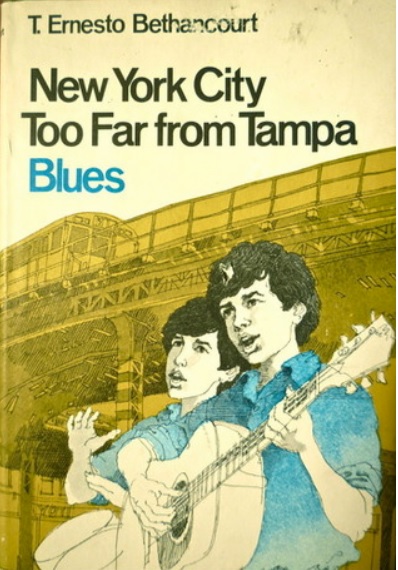
But it’s this musical entry from November 1979 during the fifth season, based on the book by award-winning young adult author T. Ernesto Bethancourt, that’s best remembered by the wee-rockers.
Alex Paez (as an adult, he returned to acting to star on ABC-TV’s NYPD Blue and CBS-TV’s CSI: Miami) stars as Tom, a 14-year-old Puerto Rican kid who moves from Florida to Brooklyn with his family. He finds solace—to the dismay of his hardworking father—in an acoustic guitar he was taught to play by his Uncle Jack. Along with a 12-year-old bongo-playing Italian kid, Aurelio, they become the “Irish” Griffith Brothers. With costumes made by Tom’s mother based on Greg Guiffria’s Angel, they win the local church talent show with their original composition “New York City Too Far from Tampa Blues.”
Everybody checked-out the book from the school library (Kirkus Reviews)—and everybody watched the movie. Then we all went out and bought our first Angel albums. And we were drawing griffins in pastels-on-velvet in art class alongside our portraits of Eddie, Iron Maiden’s mascot. Pair that with our Black Sabbath and Nazareth tee-shirts and long hair . . . to say “Mr. Hand” was a bit concerned is an understatement.
About the Author: You can read the music and film reviews of R.D Francis on Medium and learn more about his work on Facebook.He also writes forB&S About Movies.
Before he made Hill Street Blues, L.A. Law and so many more shows, Steven Bochco made Vampire, a made for TV movie featuring so many of the people beloved by this site. This movie is a revelation, as I had never seen it before.
Richard Lynch stars as Anton Voytek, a handsome millionaire vampire who has used his undead power over women for centuries before coming into the orbit of vampire hunters John Rawlins (Jason Miller from The Exorcist, ironically the father of two future vampires: Joshua John Miller played Homer in Near Dark and Jason Patric was Michael in The Lost Boys) and E.G. Marshall.
The vampire’s lair is disturbed when a new church breaks ground, but his hoarded wealth allows him to quickly move up in modern society so that he can hunt down Rawlins, the architect that he blames for being awake.
Kathryn Harrold (who battled vampire bats in Nightwing and Luciano Pavarotti in Yes, Giorgio), Jessica Walter (Arrested Development), Barrie Youngfellow (also in the vampire film Nightmare In Blood), Michael Tucker (who would later be on L.A. Law), Jonelle Allen (who would one day play evil witch Lucinda Cavender in The Midnight Hour), Scott Paulin (who was the Red Skull in the 1990 Captain America) and Joe Spinell (if I have to tell you who he is, please never come back) all appear.
Originally airing October 7, 1979 on NBC, this was directed by E.W. Swackhamer (the original Spider-Man made for TV movie, Terror at London Bridge) and was intended to be the pilot for a continuing series. After all, Voytek escapes at the end.
1979 was a big year for vampire movies, with Herzog’s Nosferatu the Vampyre, Nocturna: Granddaughter of Dracula, Frank Langella’s turn as Dracula, Love At First Bite, Thirst, Salem’s Lot and The Curse of Dracula, which was part of Cliffhangers!, an NBC-TV series that gave birth to multiple made for TV movies that were re-edited from the episodic content like Dracula ’79 and World of Dracula.
This is way more than worth your time. You can check it out on YouTube:
Gus Trikonis — yes, the same man that brought you Nashville Girl, The Evil, Supercock and Take This Job and Shove It — directed this made for TV movie, which originally aired on NBC on December 10, 1979.
Also known as Someone’s Killing the World’s GreatestModels, it’s pretty much a giallo made for late seventies TV audiences.
Jessica Walter — star of this era’s made for TV fare and the future Lucille Bluth — stars along with Joana Cassidy, “Woman of a Thousand Faces” Eleanor Parker, Corinne Calvet (a one-time starlet who was sued by an ex-husband of using voodoo to control him), Ripley’s Believe It or Not! co-host Catherine Shirriff, Barbara Cason (Exorcist II: The Heretic), Clive Revill, Jim McMullan and Connie Sellecca. They’re all trapped at a fashionable party in the mountains as one by one they’re killed with no way to escape.
1979 was a magical year. Drink it in and watch this on YouTube:
He’d only have a few more movies after this — The Fury of the Karate Experts, The Fist of Death, Chanoc and the Son of Santo vs. the Killer Vampires and Santo vs. the TV Killer — but you have to give it to him to keeping up on the trend and heading off to the Bermuda Triangle.
Two beautiful women, Silvia and Sandra, have disappeared thanks to some aliens who can disappear with a touch of their belts, much like the aliens in Santo vs. the Martian Invasion.
It’s up to our pals Santo, Blue Demon and Mil Mascaras to battle the evil Dr. Gro and find them amongst the vanished ships within the Bermuda Triangle.
The best part of this movie is when the trio gets interrupted while they are lifting weights and then follow the evildoers in a series of cars. Check out Mil’s ensemble — tight shorts, no shirt, a cumberbund and original Nikes.
Keep in mind that Santo was 60 when this was made and he could still kick alien ass. There’s also Iranian karate princesses and assassination, all within a movie supposedly about pro wrestlers and the Bermuda Triangle. There’s also a scene where Mil is carrying home his groceries and a bunch of rudos attack him on the docks, so he throws an entire brown bag of his purchases at them and then does all of his trademark spots. It’s one of the most amazing things I’ve ever seen in a film.
The end of this movie blows my mind. After a beginning where a child finds a Santo mask covered in seaweed, this entire movie has been one long story that ends with a guy saying, “And they were never seen again. The predictions of the apocalypse are coming true. The end of the world is near.”
Then, a nuke goes off. Movies like this make me so happy and I am so overjoyed to share this level of absolute malarky with you, dear friend.
Charles Bind is back — from his last film, No. 1 of the Secret Service— even if Gareth Hunt from The New Avengers is playing him now. It’s time for a Lindsay Shonteff written and directed version of Bond.
You can also find this movie under the titles An Orchid for No. 1, The Man from S.E.X. and Undercover Lover.
This time out, Bind is called in to investigate the disappearance of Lord Dangerfield, which leads him to meet his daughter Carlotta Muff-Dangerfield (Fiona Curzon, Frightmare) who is called “Lotta Muff.”
Yes, that happens. There’s also an American Senator named Lucifer Orchid. Here you thought Bond movies were bad at names.
Genre fans will be happy to see Deep Roy (Fellini from Flash Gordon, Teeny Weeny from The NeverEnding Story), as well as cannibal star Me Me Lai (The Man from Deep River, Last Cannibal World, Eaten Alive!), Imogen Hassell (Toomorrow) and Toby Robins, who went on to play Melina Havelock’s mother in the For Your Eyes Only.
At this point, the Bond films were already a parody, so this movie just takes the ridiculousness even further.
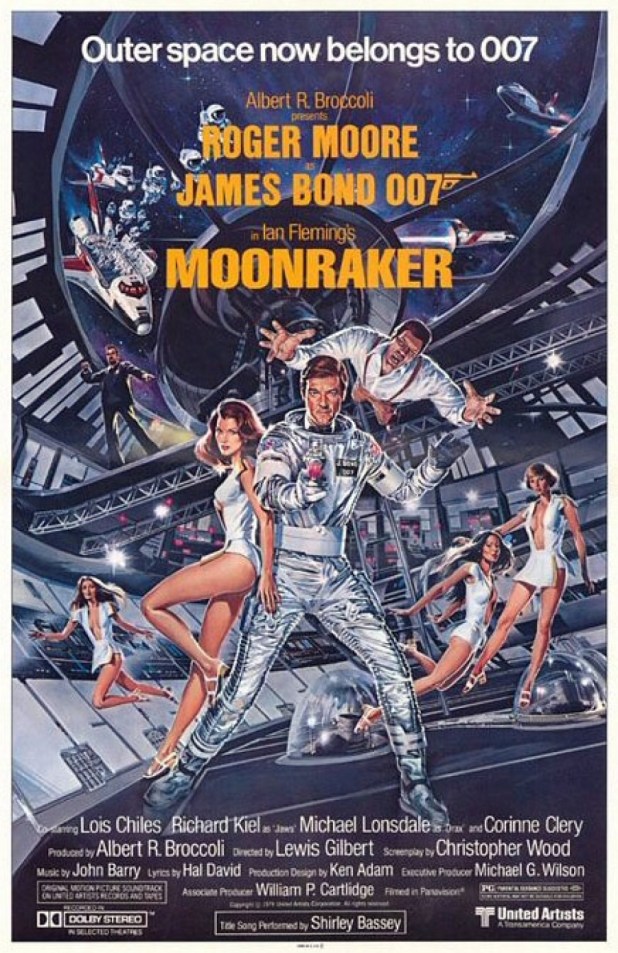
Could James Bond be relevant in a post-Star Wars world? If Moonraker had anything to say about it, yes. Up until GoldenEye, it was the highest-grossing of the series, making $230 million worldwide.
But wait — didn’t the end credits of the last film promise James Bond will return in For Your Eyes Only? Sure they did. However, the producers chose the novel Moonraker because of the aforementioned Jedi-starring George Lucas film.
One could also argue that Hugo Drax’s plan is exactly the same plan as Karl Stromberg’s in The Spy Who Loved Me: blow up the world and go away to build your own civilization. This time, it’s in space versus underwater.
Here’s the weird thing: for such an iconic British character, this movie’s shooting was moved from the tax heavy UK to France. This is also why Michael Lonsdale was cast as Drax instead of James Mason and Corinne Clery was Corinne Dufour. Ah, the 1965–79 film treaty in action. Well, I have no complaints about Clery, who is also in Yor Hunter from the Future and Fulci’s The Devil’s Honey.
Lois Chiles (Creepshow 2) had originally been offered the role of Anya Amasova in The Spy Who Loved Me, but was in temporary retirement. In actuality, bad reviews had sent her back to acting school and she ended up getting the role of Holly Goodhead when she was seated next to director Lewis Gilbert on a flight. Jaclyn Smith had almost signed for the part but had to turn it down due to scheduling conflicts with Charlie’s Angels.
This is perhaps the silliest of the Moore movies — well, there’s also him bedding Grace Jones in A View to a Kill — and it’s nearly overflowing with effects and gadgets. But hey — Jaws turns good, gets a girlfriend and opens a bottle of champagne by biting into it. So there’s that.
There remains an urban legend that Orson Welles was making his own version of this movie, as Fleming intended it to be filmed as early as 1955. The rumor is that 40 minutes of raw footage exists with Dirk Bogarde as Bond, Welles as Drax, and Peter Lorre as Drax’s henchman.
The low-budget genre studios of Crown International and American International Pictures responded to the box office success of George Lucas’s American Graffiti (1973) with a glut of innocuous, teen-driven T&A comedies centered around vans, CB radios, and car cruising.
And Crown International Pictures gave self-professed Luis Bunuel and Federico Fellini-influenced writer-director William Sachs an assignment in December 1978. And he could make whatever film he wanted: provided it had a kid in a van, generous amounts of nudity with hot chicks, drag racing and cool cars, that it starred Playboy magazine 1974 Playmate of the Year, Cindy Wood, and that he shot it in 18 days.
There months later, with a script he punched out in 7 days, Van Nuys Blvd. was on Drive-In screens by March 1979. It became a box-office hit as it played to packed parking lots on double bills with fellow teen T&A flicks The Pom-Pomp Girls (1976), The Van (1977), Malibu Beach (1978), H.O.T.S, and Gas Pump Girls (both 1979).
Get your copy as part of Mill Creek’s “Explosive Cinema” 12-pack.
In interviews Sachs mentions his admiration for Dr. Seuss’s 1953 musical fantasy The 5,000 Fingers of Dr. T, Buneul’s The Discreet Charm of the Bourgeoisie, and Fellini’s 8 1/2 in the same sentence. So that tells you there’s no middle ground with William Sachs: He’s either is a misunderstood genius with a deep understanding of existentialism filmmaking and uses that knowledge to poke fun at the establishment and show us the ridiculousness of trends in our culture. Or he’s a B-movie hack for Crown and A.I.P.
One thing is for sure: William Sachs never gives you a predictable movie.
When the Drive-Ins were clogged with every manner of Vietnam War movie, he responded with the 1974 surrealist war drama, There Is No 13. When tabloid newspapers like The National Enquirer reached circulation milestones, and Sunn Classics struck box office gold with their conspiracy-documentaries The Outer Space Connection, In Search of Ancient Astronauts, and In Search of Noah’s Ark, he responded with the parody documentary-satire The Force Beyond. When Star Wars reignited an interest in science fiction and all manner of galactic slop appeared in the Drive-Ins, he responded with 1977’s The Incredible Melting Man and the 1980 genre homage-parody, Galaxina (again, with a Playboy Playmate of the Year as his star). Remember all of those over-the-top Death Wish-inspired revenge flicks? He made one: 1984’s Exterminator 2.
And that brings us to his car movie satire-homage that features everything that Crown International wanted—and the surrealism of a Fellini film with an underlying theme on the art of living that he wanted. So the angst-ridden kids of the Southern California’s famed “strip” drive off into night for their kicks in their “temporary lives.” And where do they go if their rebellion lacks substance: nowhere. And that’s the point of Van Nuys Blvd.
And why is a chick licking her lips? What’s this got to do with Luis Bunuel and Federico Fellini? Damned if I know. Watch the trailer and figure it out!
So, did Sachs accomplish his goal?
It depends. Van Nuys Blvd. is of a time and place. It’s time capsule of a post-sixties Americana culture filled with optimism and hope of the good old days. Anyone who was born after the mid-1960s might not be able to relate to the movie beyond its low-budget B-movie trappings. And it’ll look like just another T&A movie.
Bobby (Bill Adler, who starred in the aforementioned The Pom Pom Girls, The Van, and Malibu Beach; he also starred in the Quentin Tarantino-admired Switchblade Sisters) is a country kid who dreams of crusin’ in the big city after he sees a news report about California’s famed boulevard. So he sets off in his beat-up van. There he meets the drag-racing babe Moon (Cindy Wood) and her pal Camille (Melissa Prophet, in her acting debut; she later starred with Chuck Norris in Invasion U.S.A and in Scorsese’s Goodfellas and Casino).
When they’re arrested by Officer Albert Zass (Dana Gladstone, whose extensive TV resume led to a role alongside Eddie Murphy in Beverly Hills Cop II), a bullying cop hell bent on cleaning up the boulevard, they meet fellow ne’er-do-well van lover Greg (Dennis Bowen, Gas Pump Girls, TV’s Welcome Back Kotter) who’s filled with dreams but not the tools to achieve them. Along the way the quartet befriends “Chooch,” the requisite, brawny-older wise man and “king of the strip” (David Hayward, another extensive TV resume; he’s still acting, with three projects in production) who’s lost his dreams, and his squeeze, Wanda (Tara Strohmeier of fellow T&A’er Hollywood Boulevard and The Kentucky Fried Movie). Together the sextet stumbles through a series of goalless, plotless misadventures punctuated with non-offensive softcore sex scenes and sophomoric humor. Oh, and keep your eyes open for Renee Harmon of Frozen Scream and Night of Terror in the frames.
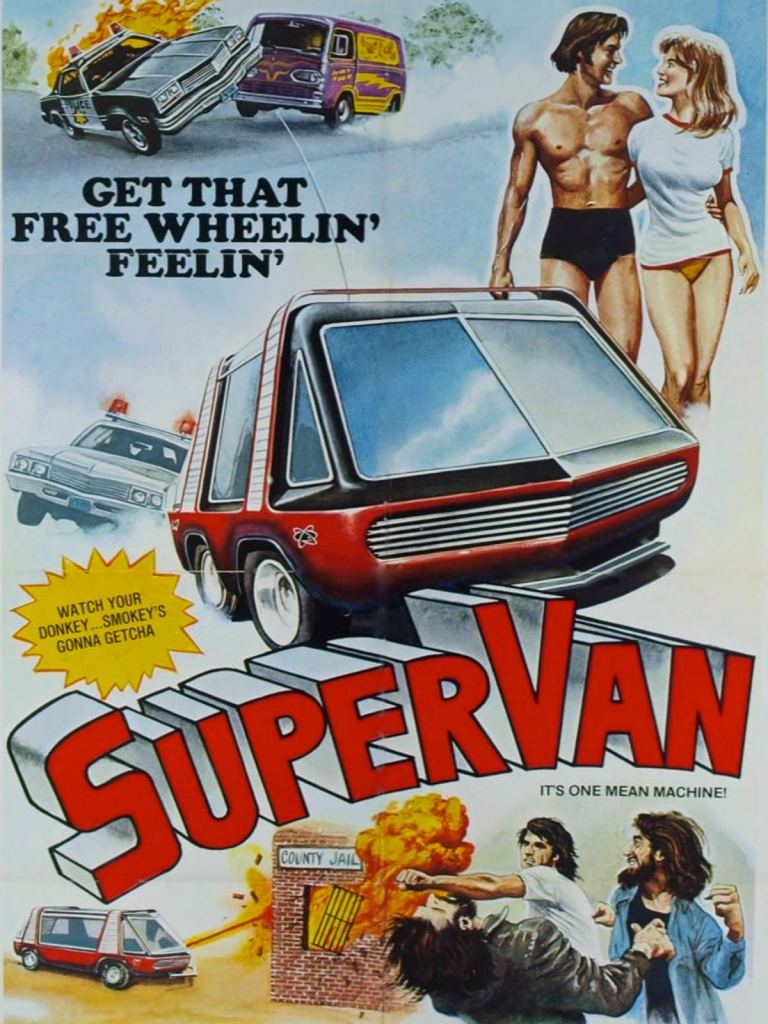
If you’re interested in learning more about the hot-rodding and cruising culture of the ‘70s, you may want to seek out the other films in the short-lived vansploitation cycle with the first film of the bunch: Blue Summer (1973; with Davy Jones, yes, he of the Monkees), then there’s Best Friends (1975; with Richard Hatch), the hicksploitation-hybrids C.B Hustlers (1976) and Texas Detour (1978), Supervan (1977), Mag Wheels (1978), and On the Air Live with Captain Midnight (1979). There’s also a great article by Jason Coffman of the Daily Grindhouse that goes deep into the genre that we totally recommend for a read — with even more watch suggestions.
To learn about the vansploitation era’s roots: you can travel back to the rock ‘n’ roll oriented, juvenile delinquent films of the ‘60s made in the wake of the 1955’s Blackboard Jungle and Rebel Without a Cause. Most of those films were produced by Roger Corman, such as 1958’s Hot Car Girls and 1959’s T-Bird Gang. Then there’s the wealth of ‘60s biker films that peaked with 1969’s Easy Rider, such as 1966’s The Wild Angels and 1967’s Hells Angels on Wheels.
As for the famed “Wild Cherry” van that stars in Van Nuys Blvd.: In 2018, that customized, 1975 Chevrolet G-10 made the news when the van was stolen and thrust into legal limbo. You can read more about the travels of Wild Cherry here and here. And Vansploitation got so insane during the ’70s that A&M Records gave away a Styx Van. Yes, Styx had a van you could enter to win!








 B&S About Movies
You must be logged in to post a comment.