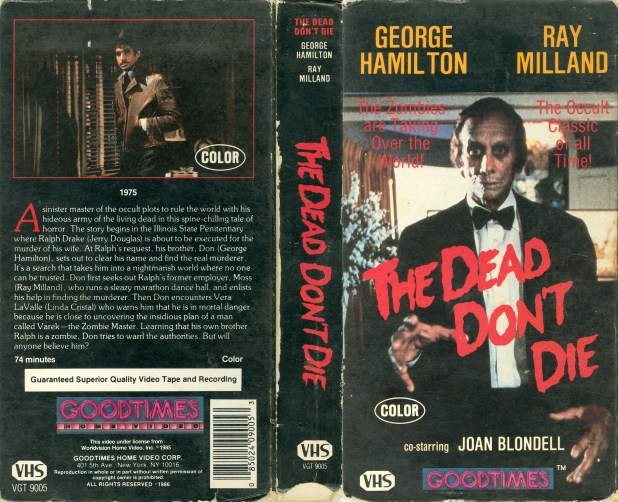
Man, Robert Bloch didn’t like this adaption, saying: “The Dead Don’t Die. Maybe they don’t, but the show did. Despite Curtis’s casting of accomplished character actors, their supporting roles couldn’t prop up the lead. And Ray Milland, who had given such a deftly paced performance in my script for Home Away from Home, merely plodded through his part here like a zombie without a deadline.”
As for me, I loved it. It’s somehow a noir movie, a Poverty Row horror film, a zombie movie and it’s made for TV. More like made for me.
George Hamilton plays Don Drake, a man who comes back from a long trip to learn that his brother fried in the chair for killing his wife, a crime that Drake thinks his brother is innocent of. He tries to clear the name of his sibling, leading him to the Loveland Ballroom, where his brother was involved in a dance marathon run by Jim Moss (Ray Milland).
The problem is, well, the dead don’t die.
Drake soon sees his brother walking the foggy streets, as well as a man he’s already killed once, Perdido (Reggie Nalder, who is in a ton of great movies like Salem’s Lotand Seven). That’s because Moss is also a master of voodoo.
Harrington had to be in heaven with this cast. Joan Blondell and Ralph Meeker may be underappreciated, but he remembered their work.
It’s like a Val Lewton movie made in 1975 and if you know me, you know what kind of praise that is.
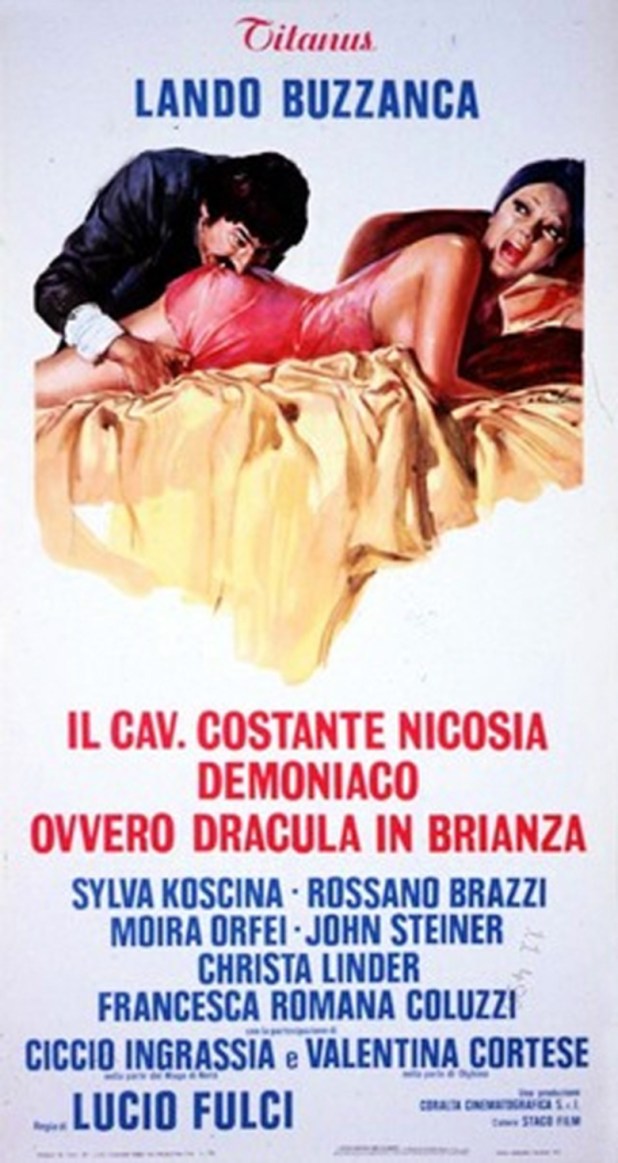
Better known as Dracula in the Provinces, this 1975 film was directed by Lucio Fulci four years before Zombi would change his fortunes and anoint him the Godfather of Gore. Made directly after The Four of the Apocalypse, which is as dark as it gets, this is an example of the comedic side of Fulci and would be among his favorite movies.
It was written by Sergio Corbucci’s brother Bruno (who directed The Cop in Blue Jeans and Miami Supercops) and Mario Amendola (who wrote The Great Silence), along with help from Pupi Avati (The House with the Laughing Windows, Zeder), Enzo Jannacci (a cardiologist by day and one of the most important creative forces in Italian rock ‘n roll by night) and Giuseppe Viola.
Costante Nicosia (Lando Buzzanca, who was in two James Tont movies) is a businessman who married for wealth, inheriting a toothpaste factory and a local basketball team. He’s also a horrible person, abusing his employees and taking particular delight in attacking Peppino, a hunchback whose hump is rubbed daily for luck. And he’s so superstitious that a black cat in his path means finding a virgin to urinate on broken glass, which I’ve never heard of before, but sure, I guess.
He also hates his wife Mariu (Sylva Koscina, Deadlier Than the Male), her family and her brother, whose lazy work ethic leads to a firing which ends up having an aunt curse Nicosia. This will come to haunt him, as a plane ride to Romania introduces him to Count Dragalescu (John Steiner), whose castle will end up where Nicosia will cavort with three of the count’s naked girlfriends and wake up in bed next to the naked noble.
Now, Nicosia is not only a vampire, he’s also become a homosexual. For an Italian man in 1975, this had to have been quite a curse. Not even a magician (Ciccio Ingrassia of the comedy duo Franco and Ciccio) can cure him. The only way that he can escape is to rehire the brother-in-law. But what happens if he accepts his thirst for blood?
Fulci also made another comedy, The Eroticist, with Buzzanca, in which he was a man compelled to punch women’s rear ends. This time, he just takes a bit out of Koscina’s.
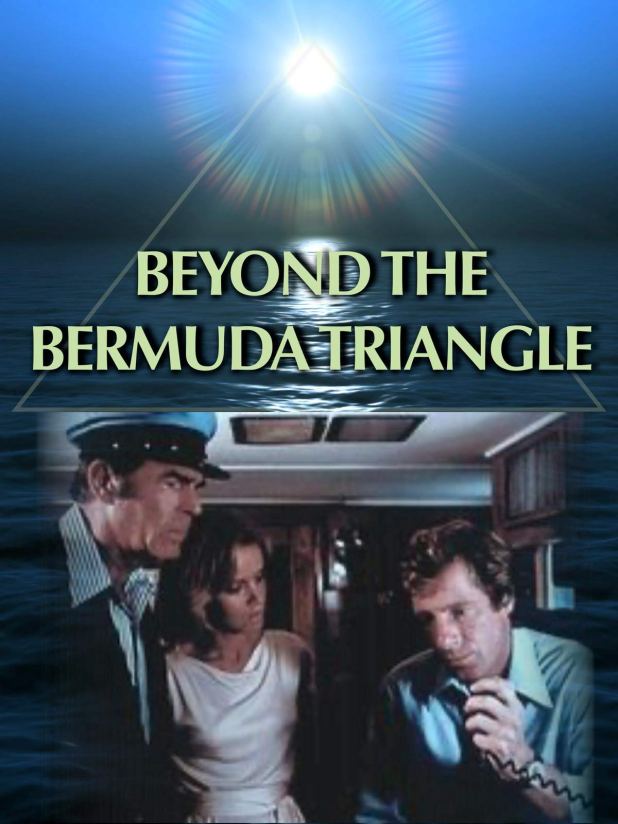
Also known as Beyond This Place There Be Dragons and wow, what a high minded title for a TV movie — this movie is all about Fred MacMurray as a yacht sailing daddy who falls for a gold digger who actually loves him, including a long speech about the first time they made love and how he finally knew what it was like to be a man and you know, all the negative reviews of this movie can go jump in a Bermuda Triangle because this movie is all about old man loss and yearning, including a professor whose wife disappeared and he was afraid to go into the door into another dimension to find her.
There’s also a great speech about being a dreamer, as well as Donna Mills showing up and a young Dana Plato, which also makes me wistful and sad. This was her first acting job.
Sure, it’s languidly paced, but we all live inside now and maybe we need time to reflect on a place that used to take trophy wives from would-be sea captains and men of industry.
Director William A. Graham started in TV back in 1958, so he probably made something you’ve seen, like Birds of Prey, Guyana Tragedy: The Story of Jim Jones, The Last Ninja, Calendar Girl Murders, Elvis and the Colonel: The Untold Story (he also directed Change of Habit, Elvis’ last fictional movie), The Hunt for the Unicorn Killer and Death of A Cheerleader.
This movie was produced by Playboy Productions, which brought 76 productions to large and small screens, including And Now for Something Completely Different, the Oliver Reed version of Fanny Hill, Saint Jack, Young Lady Chatterley II (I have so much to say about that one), the mind-destroying Playboy’s Roller Disco & Pajama Party, A Summer Without Boys and so much more.
This YouTube link is amazing, because not only does it have the movie, but it’s a CBS Late Night Movie complete with commericals for Shirley Jones steaming hot dogs and The Manitou!
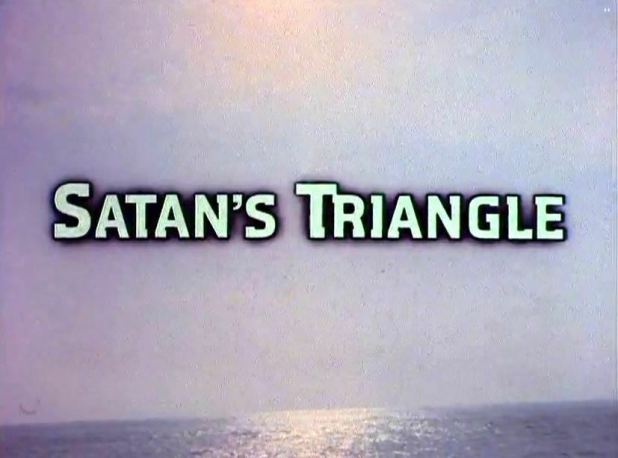
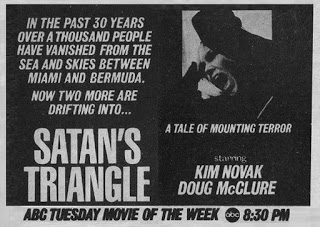
The January 14, 1975 ABC TV Movie of the Week totally had the zeitgeist of the country pegged, because the Bermuda Triangle was all I could remember kids talking about. How could this little section of the ocean keep stealing all these planes and ships? And now, in 2021, no one talks about it at all.
USCG pilot and his winchman Haig (Doug McClure) rescues Eva (Kim Novak), the lone survivor of a wreck who claims that it was all caused by the evil Father Peter Martin (Alejandro Ray, Mr. Majestyk*). Yet all is not what it seems to be.
Sutton Roley directed tons of TV but also did Chosen Survivors and The Loners. He’s working from a script by William Read Woodfield, who started his career as a photographer, shooting Elizabeth Taylor and Jayne Mansfield, as well as nudes of Marilyn Monroe on the set of Something’s Got to Give. He was also the magic consultant on Mission: Impossible.
This movie is a tight 74 minutes and an atmosphere of doom. It’s one of the better Bermuda Triangle movies you’ll find. Other examples are Beyond the Bermuda Triangle, Death Ship, The Triangle, Triangle, The Fantastic Journey, the 1979 documentary The BermudaTriangle, Rene Cardonna’s Jr.’s The Bermuda Triangle, The Bermuda Depths, the lucha film Mystery in the Bermuda Triangle, the 27th dimension threat of Secrets of the Bermuda Triangle, Escape from Atlantis, Lost Voyage, Lost in the Bermuda Triangle and, inevitably, David DeCoteau’s 1313: Bermuda Triangle.
As for Doug McClure, he’s learned nothing about the evils of the ocean and battled it again in movies like Warlords of Atlantis and Humanoids from the Deep.
*This is a movie of Bronson co-stars, as Ed Lauter (Breakheart Pass, Death Wish 3) and Jim Davis (The Magnificent Seven) also appear.
EDITOR’S NOTES: We originally featured this kind of, sort of Emanuelle film back on May 17, 2021. It’s a movie that George Eastman claims he did instead of going to get a cappuccino that morning. It’s way better than that.
This movie is quite literally the Batman and Superman of Italian sleaze filmmaking uniting to create some art. Those two men have many, many names, but for the purposes of this article, we’ll use the names that they used most often: Joe D’Amato and Bruno Mattei.
Producer Franco Gaudenzi wanted to bring the movie The Wild Pussycatto Italy, but it would have never made it past the Italian censors. For some reason, if the movie was made in Italy, it would pass. This is the country where it’s legal to call your movie Zombi 2, but illegal to use Mrs. Ward’s name. Let’s forget the complexities of law when it comes to exploitation cinema and move on.
D’Amato and Mattei took up the challenge of remaking this movie for Italian audiences with both writing the script and co-directing the picture, even if only D’Amato got directing credit. What was important for the producers was that the film could play theaters and it passed the Italian censorship board on November 5, 1975 after some lesbian elements and scenes with sodomy were removed.
Ironically, when this was brought to Switzerland by Erwin C. Dietrich, he added in actual hardcore scenes with French actress Brigitte Lahaie (who is inFascination) and dubbed it into German, releasing it as Foltergarten der Sinnlichkeit (Torture Garden of Sensuality) and Die Lady mit der Pussycat (The Lady with the Pussycat).
Truly, scumbag pictures bring all the nations of the world together, do they not?
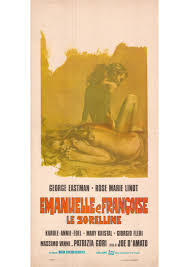
Francoise (Patrizia Gori, The Return of the Exorcist) has had enough of the abuse from her gambler cad of a husband Carlo (George Eastman!), so she jumps in front of a train. Her sister Emanuelle — no, not Laura Gemser just yet, she’s played here by Rosemarie Lindt from Salon Kitty — gets revenge by drugging Carlo and restraining him in a soundproof room. There, she teases him through two-way mirrored glass as he’s forced to watch her make love to numerous men and women, all while he’s repeatedly dosed with LSD.
Finally, Emanuelle enters the room and attempts to castrate Carlo, who has been repeatedly fantasizing about killing her and finally does so for real. His joy is short-lived as while he’s hiding in the secret room, he gets locked in and the police closed down the crime scene for thirty days, basically leaving him to die.
Also known as Emanuelle’s Revenge, Blood Vengeance and Demon Rage, this is exactly the kind of movie that you’d imagine D’Amato and Mattei would make together, filled with numerous sex scenes, frequently spinning and zooming camera angles and a cannibalistic feast sequence.
Back when we reviewed Emanuelle In America, the guys at Severin said, “If you thought that was rough, watch this one.” Their release has a great George Eastman interview in which he says that D’Amato had the ability to do bigger and better things, but preferred doing ten B movies a year than one A film. You can get the Severin edition of this film and see just how good-looking a completely irredeemable piece of trash — I say that with love — can look.
Do you think that when Jack Palance bounded to the stage, ready to do one-arm pushups and accept his Best Supporting Oscar for City Slickers after being nominated for Sudden Far and Shane, that he had a flashback and said to himself, “I’m in the A list tonight, but man, how can it compare to being in a movie where Laura Gemser dances with snakes?”
Seriously, the man who would become a star again at the age of 73 has a wealth of roles in aberrant movies in his past, but playing Judas Carmichael in a Joe D’Amato movie may be the pinnacle. Or the pit.
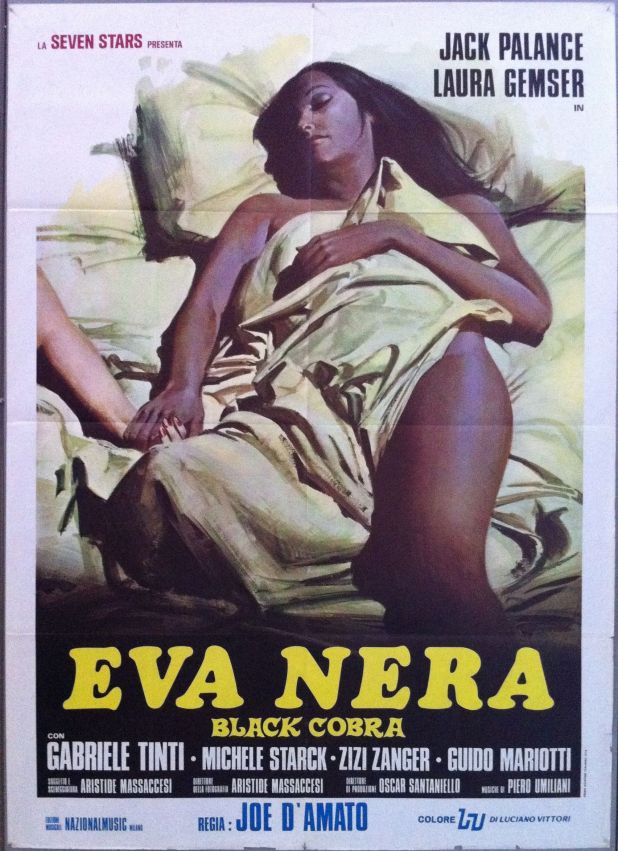
Gemser plays Eva, a snake dancer who obsesses Judas, because he has a snake collection at home — as you do — and he wants to show it to her. So she finally gives in and moves in with him while confining her horizontal dancing to the ladies — including Candy (Ziggy Zanger, who Gemser would go on to appear in Black Emanuelle, White Emanuelle with, along with Nieves Navarro, and just writing that sentence made me a little faint). Judas’ brother Jules (Gabriele Tinti) wants Candy all for himself, so he messes around with the snakes with her — which seems ill-advised — and she gets killed by a mamba. And then he doubles up and kills off Eva’s lover Gerri (Michele Starck, Forever Emmanuelle) and ends up taking Eva from his brother!
Of course, that’s not the end of matters. Eva’s more devious than she looks. And so is Judas. I mean, if your mom names you Judas any time in a year that doesn’t have BC in it, you’re not going to turn out all that great.
Bruno Mattei edited this movie — a fact that makes me love it so much more — and it was also called Emmanuelle And The Deadly Black Cobra, Hot Pants and finally and most awesomely Emmanuelle Goes Japanese, which makes no sense for a movie set in Hong Kong.
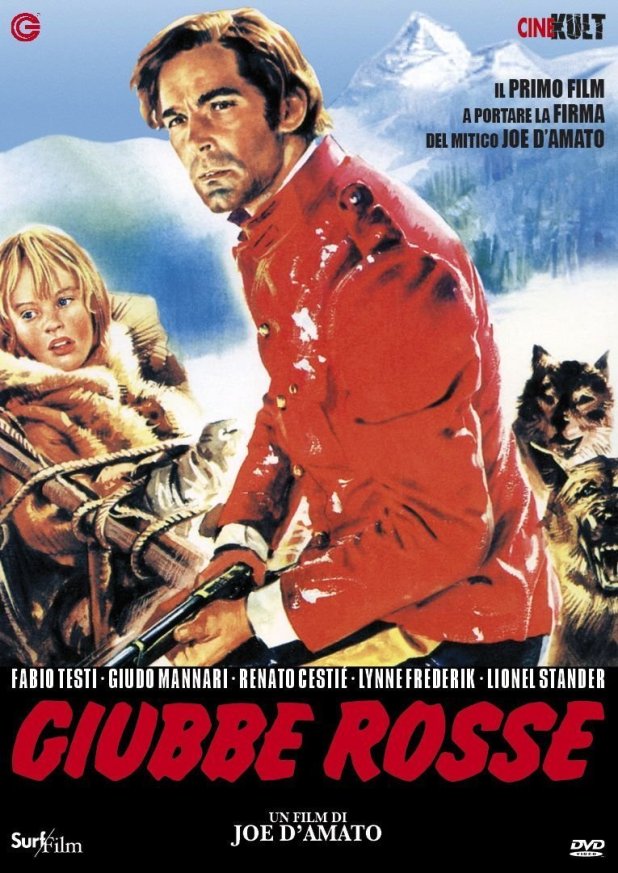
Red Coats was released internationally as Cormack of the Mounties, Killers of the Savage North, Red Coat and Royal Mounted Police and was part of a very short cycle of childrens’ adventure films that were made after the success of commercial success of Lucio Fulci’s White Fang, a film that was Aristide Massaccesi went to Canada to be the cinematographer on.
After shooting the sleigh ride for that film’s sequel — Challenge to White Fang — producer Ermanno Donati asked Massaccesi to stay and direct this movie for him. It would be the first time that the gifted cinematographer would use the pseudonym that so many of use for him to this day.
Joe D’Amato.
It tells the tale of Corporal Bill Cormack (Fabio Testi, Contraband), a Canadian mountie who met his wife Elizabeth (Lynne Frederick, who was also in Fulci’s Four of the Apocalypse with Testi) when he continually rescued her from her drunken husband Caribou.
Years pass and Elizabeth has died, but not before giving Bill a son, Jimmy (Renato Cestiè, who was Italy’s top child star of the 1970s, best remembered for palying neglected children who die by the end of the movie. Italy, you know?), who Caribou has kidnapped and, as Renato does best, young JImmy gets sick and is only saved because of the skills of Doctor Higgins (Lionel Stander, who was blacklisted after the Communist witch hunts in Hollywood for longer than just about anyone else; he was forced to go to act in small stage roles, act as a corporate spokesperson and even a stockbroker while he tried to get back into the movies. Other than voicing over the bizarre noir Blast of Silence, it took moving to London and then Rome for his acting career to make a comeback. He settled into a series of Italian Western roles, such as Once Upon a Time in the West, Beyond the Law and Boot Hill as well as showing up in Fulci’s The Eroticist. After working with Robert Wagner on an episode of To Catch a Thief — playing a lifelong friend named Max — he ended up getting the role that so many remember him for several years later as Max on Hart to Hart. Sorry for the digressing, but Stander’s refusal to back down and late career renaissance make him one of my favorite actors).
When asked which film was the best one he made in the mid 70s by the authors of Spaghetti Nightmares, D’Amato said “Undoubtedly, Giubbe Rosse, which also made a lot of money.” By all accounts, it didn’t.
This doesn’t often get discussed when people bring up D’Amato’s career, but it’s a well-made action film. Of course, when you have other movies where women have sexual congress with snakes, where men keep their wives hacked up bodies in the house and a man impales himself on a fence at the start of the movie, it’s understandable why this low key action yarn isn’t top of mind.
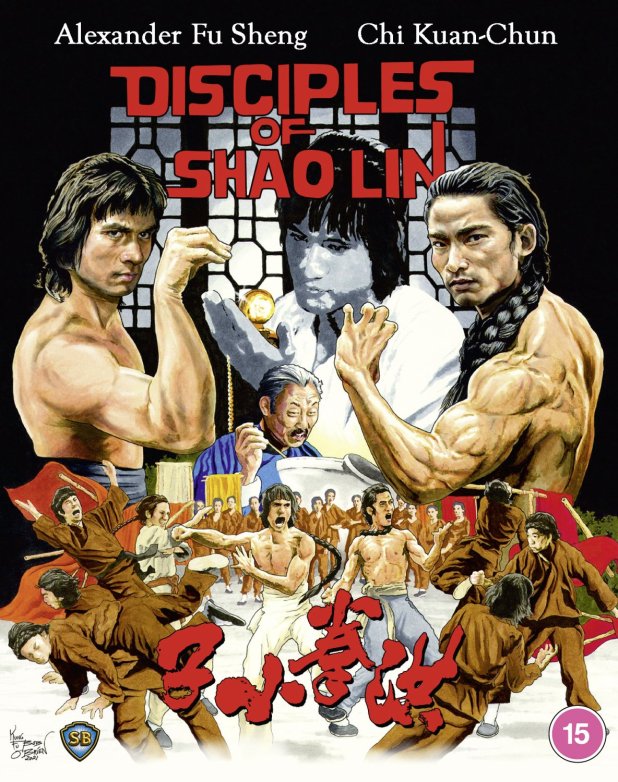
Guan Feng-yi (Alexander Fu Sheng) and Huang Han (Chi Kuan-chun) are a yin-yang of heroes. Where Guan Feng-yi is an impulsive young man ready to fight at any time, Huang Han is dignified and given to deep thought. The Chinese title — The Hung Boxing Kid — makes more sense as this isn’t really a shaolin movie. It really resembles two other movies that Chang Cheh directed for Shaw Brothers, The Boxer from Shantungand The Chinatown Kid.
Together, the heroes protect a textile mill from a rival mill owned by a ruthless Manchurian lord. However, the lure of money and power may be too much for one of our leads. While Guan Feng-yi once only wanted shoes for his feet, he soon learns that the world can pay him so much more.
The really crazy thing about this movie is how many Italian movies it takes its soundtrack from. There’s Gianni Ferrio’s “Crescendo Trionfale,” “Step by Step,” “Anonima Assassini” from La Poliziotta; Claudio Mattone’s “Celio in Amore,” “Tema di Nico, pt. 4,” “Arioso,” “Cugini Carnali” and “Tema di Nico” from Cugini Carnali; and Ennio Morricone’s “Alone in the Night” and “Anger and Sorrow” from Death Rides a Horse.
The 88 Films release of Disciples of Shaolin has two sets of audio commentary, one by critic and author Samm Deighan and the other by Mike Leeder and Arne Venema. There’s also an interview with Jamie Luk, a trailer and the first run will have a slipcase, booklet and poster. It’s a gorgeous package and release. You can get a copy from MVD or Diabolik DVD.
The Old School Kung Fu Fest is back and the Museum of the Moving Image and Subway Cinema will co-present eight newly restored films and one fan favorite classic by Kuo on glorious 35mm. Four titles will be available exclusively online, December 6–13, and another five films for in-person big-screen viewing at MoMI, December 10–12.
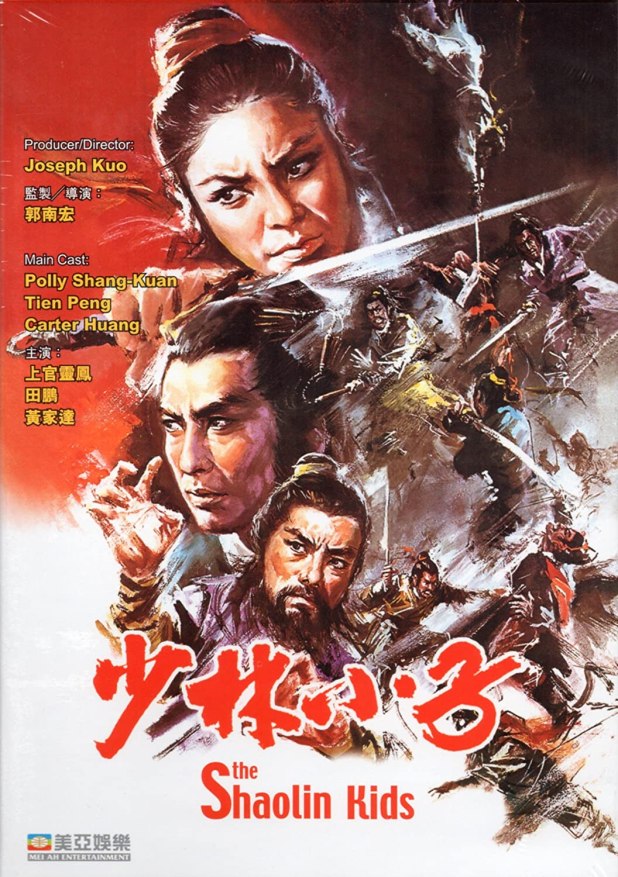
Lui is a powerful ex-minister who opposes the ambitious premier Hu Wei Yen. After Lui is assassinated, his daughter Lui Sin (Polly Shang Kwan) and an assorted group of those loyal to the emperor seek revenge and justice.
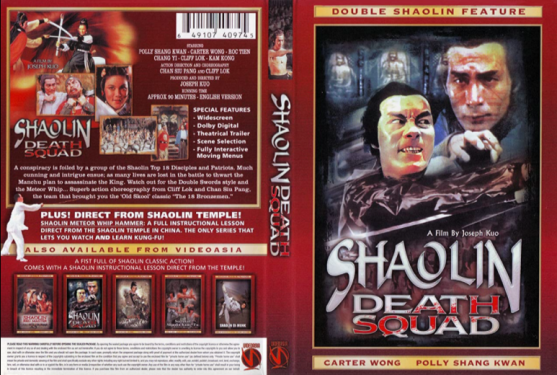
Also known as Shaolin Death Squad and Shaolin Posse — none of these titles are correct as there are no kids, a death squad or a posse — this Joseph Kuo-directed film is about revenge. As Lui dies, he demands that Lui Sin find revenge for him. Meanwhile, Hu Wei Yung has started expanding his empire by working with tha Japanese.
But Lui has something special beyond her martial arts skills. She has a series of battle orders and letters that prove that Hu Wei Yung has killed her father and been treasonous to the emperor.
Keep an eye out for Carter Wong — Thunder from Big Trouble in Little China — amongst the wuxia battles. It’s not the best martial arts movie ever, but it does have a combattant so tough that he cuts his own arm off and goes right back into the fight.
There’s nothing like a hit movie — in this case, a direct descendant of Death Wish (1975) — to dislodge the writing and directing debut its auteur would rather not have seen reissued to the ’80s home video fringes.
The Death Wish rip and auteur we’re speaking of is The Exterminator (1980; yes, we know we linked Part II) by James Glickenhaus. A critically-lambasted action film “of little action with grotesque violence and distasteful scenes” concerned with a vengeance-seeking Vietnam vet with a flame thrower, grossed $35 million against $2 million.
Of course, when a distributor exists in a post-Guyana, Jonestown Massacre world, and the shingle needs to up the exploitation quotient, said movie is renamed as Suicide Cult* to align it with the Jim Jones legend and get it on the shelf as quickly as possible next to the Stuart Whitman debacle that is Guyana: Cult of the Damned (1979). (Well, that’s actually trashy-good, as Stuart does it with gusto.) Better that the film ends up in the “Horror” section of a local video repository because, with the film’s original title of The Astrologer, it would have ended up in the “Science Fiction” section next to the Star Wars-ripped, space opera oeuvres of Luigi Cozzi (Starcrash) and Alfonza Brescia. At least Uncle Lou’s and Uncle Al’s films had action and cheese . . . without the expositional yakity-yaks.
The irony, however, is that this debut effort by James Glickenhaus is neither a horror or science fiction film: its a pure Christploitation, aka Godploitation, romp . . . er, well, since some video-prints tossed an “. . . in the tradition of The Omen” tagline on the box, maybe this Glicken-joint is a horror film. . . . What the hell, why not: Kirk Douglas’s trollsploitation mess (the male version of hagsploitation**) that is Holocaust 2000, with its Alberto De Martino’s The Omen-Antichrist-Apocalypse hornswogglin’, was on the horror shelves next to De Martino’s own Christploiter-cum-Exorcist*˟ rip with The Tempter, aka The Antichrist (1974).
Honestly, if you were stocking shelves at a video store, where would you put a film that is part spy-government conspiracy flick (the thriller/suspense part) with a secret agency that uses astrology and biorhythms (the sci-if part) to track down the Antichrist (the horror part) and the coming of the “new” Virgin Mary (the Christploitation part)?
To say this film is bonkers, yet exciting . . . and expositionally boring . . . at the same time, isn’t an understatement. But hey, all filmmakers have to start somewhere, right? At least Glickenhaus went on to produce Maniac Cop, Frankenhooker, and the Basket Case franchise. As a writer-director, the Glick gave us — at least I think he did — two, pretty cool flicks with Shakedown (1988), starring buddy-cops in Sam Elliot and Peter Weller, and the actioner McBain (1991), starring Christopher Walken. Oh, and don’t forget the mercenary romp, The Soldier (1982), with Ken Wahl, which I saw in theaters.
The Review
In the New York Times article “At the Movies: Jennifer Leigh and her trip from X to R,” Chris Chase sat down with Glickenhaus, who spoke about his debut film:
“I’d inherited some money and I took all of it and lost it making a movie called The Astrologer. I’d been to film school, but film school was oriented more toward the avant-garde in those days, and I didn’t really know what a master was or a cutaway or a closeup. And I had great trouble conveying ideas, except in dialogue. So, The Astrologer, which was about 79 minutes long, was probably 60 minutes of dialogue. I mean, it was interminable. I didn’t think it was interminable then. I thought it was great and interesting and fascinating to listen to [the film took me two years to produce from start to finish].”
So, with that bit of insight from Glickenhaus, now you know you’re getting into a film that A) is boring, yet, B) fascinating, because C) it’s bat-crap crazy with its mix of religion, science, and political intrigue.
INTERZOD, a secret government organization, has developed a method of using computer technology and astrology (i.e., using an individuals zodiacal charts correlated to the environment . . . etc.) as a modern-day “Nostradamus” to predict threats to the world. The latest threat is Kajerste, a Jim Jones-inclined cult leader, wanted for an array of crimes in three countries, who they believe to be the prophesied Antichrist from The Holy Bible‘s book of The Revelations.
The wife of Alexei Abernal (he oversees INTERZOD), an advisor to theoretician Mother Bogarde (read: Madame Blavastky; Wikipedia), is possessed, and in need of a cleansing because, get this: she is possibly the new Virgin Mary, one that Immaculately Concepted a baby (because she won’t/can’t/don’t care have sex with Alexei), which she gave to the Catholic Church.
So, mind you, we learn all of this through talking . . . and talking . . . and, for some reason, this means that INTERZOD must assassinate Kajerste — with a combination of tranquilizers and video tapes (?), and a Congressman — who the Cult subsequently kills due to his betraying the leader (foreshadowing what J.J did in Jonestown that brought on his downfall).
After that . . . well, you’re either lost-in-the-plot, or half asleep, or in a coma. You know, just like when you watched the pre-Wiseauian efforts of director, producer, psychic to the stars, and actor Craig Denney with his zodiacal epic, which, to make this all the more confusing, is also known as The Astrologer. Now, that doesn’t have a Virgin Mary, or Immaculate Conceptions, or Antichrist-slanted cult leaders, but it does deploy a movie-with-a-movie plot about diamond smuggling, high-finance, and murder, so Denny can become the world’s foremost psychic and movie mogul.
Oh, Mr. Denney. If you only had the vision of Mr. Glickenhaus to include an Antichrist subplot or insights on man-made, organized religions, you’d have a Christploitation epic beyond compare.
There’s no trailer to share for Suicide Cult, but you can enjoy the full movie on You Tube. Shockingly, there’s also a copy on Tubi.
Not be confused with the other The Astrologer. Double feature both, for your life will be better for it.
* We previous reviewed this film as part of our “Ten WTF Movies” featurette, as well as one of the site’s earliest reviews back in August 2017. It’s also part of our “Cannon Month” of reviews. Yep! That’s B&S About Movies pull-quoted on the Severin reissue; they also pull-quoted us on their reissue of Delirium.
** You need more trollsploitation flicks with aged-out and down-and-out A-List actors reinventing themselves in a horror film? Then look no further than Tony Curtis in The Manitou and BrainWaves (the latter also with Keir Dullea), Rock Hudson in Embryo, Fritz Weaver in Demon Seed, and Mickey Rooney in The Manipulator.



 B&S About Movies
You must be logged in to post a comment.