Man, two Alberto De Martino giallo movies in one week? You know it.
I’ll be honest right off the bat. I’d watch a movie where Telly Savalas just sat there and read a menu for two hours, so I’m not going to be objective about this movie at all.
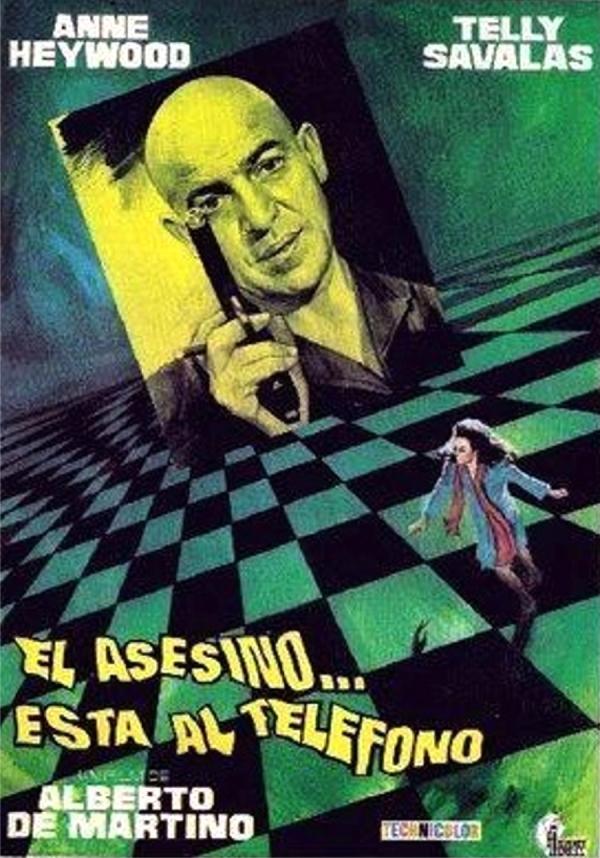
Telly plays Ranko Drasovic, a silent knife-wielding assassin dispatched to kill a UN ambassador trying to stop the oil crisis, which is pretty forward thinking way back in 1972. He also is trying to fulfill another assignment, because one of the few people who has ever seen his face is actress Eleonor Loraine (Anne Heywood, The Fox), as Ranko had killed her lover five years before.
Now, she’s a mess, her head filled with flashbacks which might not be true and lovers she may have never slept with. All she sees is the face of Ranko, a man constantly in the shadows, always one step away from taking her life.
I actually liked this movie more than most critics, as unlike many giallo, it ends with the female lead taking agency over her fragmented life, destroying her many enemies and reclaiming her sanity. It’s a rare positive ending for a giallo heroine, you know?
That said, the direction is just good where it could be great, but any time women appear on screen, the camera seems to perk up and the shots end up getting more inventive. That’s because Aristide Massaccesi is the cinematographer, the man who would one day be Joe D’Amato. And David Hills. And Michael Wotruba. And Raf Donato. And Robert Yip. And…
The alternate title, Scenes from a Murder, isn’t as evocative, but makes plenty more sense. Ranko never calls anyone. He does spend plenty of time buying tin soldiers, which also makes no sense.
Hey — giallo aren’t supposed to make sense. Remember that, love every scene Telly is in and you’ll be fine. Who loves you baby?
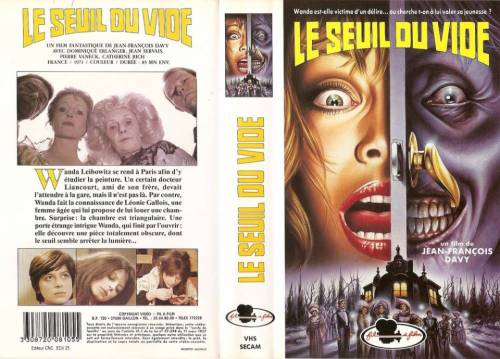
Threshold of the Void is all about an artist named Wanda Leibovitz who comes to Paris to escape heartbreak, only to find a room for rent — once kept for the dead sister of her landlord, now containing a forbidden door — that will dominate her life.
Of course, Wanda is told that she can’t ever open that door, but she does, and once she experiences the exquisite unending blackness of that room, she learns that she can paint better than she ever has in her life. That said, she now feels like she’s dying and that all of the people in her life — like her landlady and her brother’s friend Dr. Liancourt — are not what they seem.
When Michel Lemoine (he directed and starred in Seven Women for Satan and also appears in Castle of the Creeping Flesh) is in a movie, nothing normal is about to happen. This is kind of 70’s slow creeping burn — think Rosemary’s Baby and Don’t Look Now — and proves to me that that decade was the most downer ten years of all time.
Director Jean-François Davy’s career is mostly in adult, with movies like Wife Swapping: French Style and Infidélités to his credit. But this one, well, he’s making an art film that I guess you could call a giallo just because it really doesn’t fit any other category.
Based on an André Ruellan’s novel — the author also wrote the script — this is the kind of forgotten movie that once it comes out on blu ray will blow people’s minds.
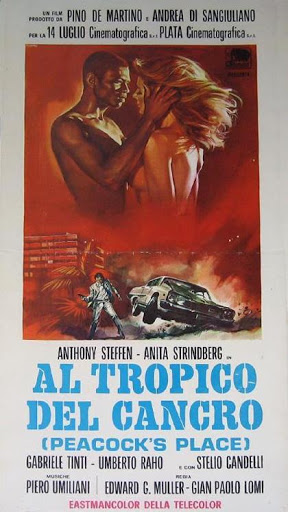
In this film, she plays Grace, the wife of Fred (Gabriele Tinti, Endgame) and their vacation has led them to Haiti and Dr. Williams (Anthony Steffen, who mostly is known for Italian westerns, but also appeared in The Night Evelyn Came Out of Her Grave, Evil Eye and An Angel for Satan), who has invented a new drug that can change the world. It’s so astounding that everyone from drug cartels to drug companies — which are really close to one another, when you really think about it — will kill for its formula.
There’s also a scene where the doctor takes our heroes to watch a voodoo ritual, all so this movie can have a bit of mondo* within it. Because it’s an Italian film, that means we’re about to watch a real bull really get killed and then lose its scrotum in gorgeous living color. The film then tops this with actual cows being slaughtered, so if you’re upset by the side of Italian cinema that doesn’t shy away from putting animal butchery right in your face, make a mark to avoid.
This movie leaves me with so many questions. What kind of doctor is Williams? He says he’s a veterinarian, then he makes a magical anti-venom drug and oh yeah, he’s also a meat packing inspector. And just what kind of wonder drug has he made? And did the filmmakers realize that the Tropic of Cancer is nowhere near Haiti?**
So yeah — most of the movie is spent wondering whether or not Grace is going to succumb to the lure of the native men***. And the best character in it is Peacock (Alfio Nicolosi, who was also in Goodbye Uncle Tom), who pretty much runs the island. Also, the murders in this go from high tech to voodoo-based death and faces getting melted right off, which is different for a giallo****.
And hey — that Piero Umiliani (Orgasmo, Baba Yaga) score is perfect!
It’s not a great giallo, but it certainly is weird, and sometimes, that’s good enough.
*One of the directors of this film, Giampaolo Lomi, was the production manager for perhaps one of the most notorious mondo films, Goodbye Uncle Tom. The other, Edoardo Mulargia, directed Escape from Hell, which was edited into the Linda Blair movie Savage Island. So with backgrounds like those, the scummy mondo nature of this film makes a bit more sense.
*Of course, we can assume that with the Henry Miller novel being such a big deal getting banned and causing controversy that the title itself seemed like a good idea to get curious folks into the theater. Better than Death In Haiti, Peacock’s Place or Inferno Under the Hot Sun.
***The flower that poisons her takes her on an insane erotic fever dream that we all get to watch and the movie is better for this scene.
****There’s just as much — if not more — male than female nudity, too.
Jack Smight, known for his exceptional directing in films like No Way to Treat a Lady, Airport 1975 and Damnation Alley— well, maybe not movie — brings his talent to this TV movie. Working from a short story by Ray Bradbury, he delivers a quick and suspenseful reminder of the unique cinematic style of 1970s TV movies, a style that could truly get under your skin.
Olivia De Havilland plays Laura Wynant, a wealthy former mental patient who has gone to the country to continue healing. That’d be easier if she didn’t keep hearing the pleas of a woman who has been buried alive on her property. Arthritis has robbed her hands of the ability to save the woman and as she brings others in to help her, her family starts to think that she is losing her control over her sanity again.
De Havilland, Cotten, and Pidgeon deliver stellar performances that elevate the movie to another level. Their talent and dedication to their roles are evident, making this TV movie a must-see for any classic TV movie enthusiast.
This is a movie that masterfully builds its suspense, keeping you on the edge of your seat from start to finish. It’s a rare gem that doesn’t let up, a testament to the captivating storytelling of TV movies from this era.
Back in the pre-Internet and pre-cable analog days of the “Big Three” networks, it seemed as if it was a weekly occurrence, as we watch the nightly news on ABC, CBS, and NBC, that yet another airline skyjacking, aka hijacking, occurred. It was ’70s de rigueur for criminals to make buck or advance their political-personal causes. As a June 2013 Wired investigative article written by Brendan I. Koerner tells us, between 1961 and 1973, nearly 160 of hijacks occurred in American airspace.
As this week’s reviews of “airline disaster” TV movies has shown, the “Big Three” TV networks, along with cable channels like USA and HBO — as well as the film studios — knew plot fodder when they saw it. And when Universal discovered box office gold with Airport — and ignited the ’70s disaster movie genre — with their 1970 adaption of Arthur Hailey’s 1968 novel of the same name, you’d knew there be more of the same.
While Paramount Studios’ television division was first out of the gate with their 1971 CBS-TV broadcast movie Terror in the Sky (which is a cousin to Airport by way of Arthur Hailey’s airline-plotted tales), Metro-Goldwyn-Mayer Studios wasted no time getting into business with producer Walter Seltzer; Seltzer optioned David Harper’s late-’60s best-seller Hijacked and began working the material under the titles Hijacked and Airborne.
At the time, Seltzer made four movies with Charlton Heston: The War Lord (1965), Will Penny (1967), Number One (1969), and The Omega Man (1971), so Seltzer had his leading man. (The duo would also make Soylent Green and The Last Hard Men in 1973 and 1976, respectively.) For Heston’s leading lady-lead stewardess, Seltzer brought on three-time lifetime Golden Globe-nominee (also of The Neptune Factor and Jackson County Jail) Yvette Mimieux, who co-starred with Heston in Diamond Head (1962).
During a routine Global Airways Minneapolis-bound flight, a passenger (Susan Dey of The Partridge Family) discovers a lipsticked-scrawl bomb threat on a first-class bathroom mirror urging the flight divert to Anchorage, Alaska. A jazz cellist (ex-NFL’er Rosey Grier) believes his jittery military seatmate (James Brolin of The Amityville Horror) is responsible. The rest of the cast of passengers features Walter Pidgeon as a U.S. Senator and Mariette Hartley as a pregnant woman in crisis-induced labor (Earth II), along with Ken Swofford (Black Roses) and Claude Akins (General Aldo from Battle for the Planet of the Apes). And a suspenseful, Murphy’s Law-thriller mix of failed hijacker subduing, radio and radar snafus, fuel loss, near air collisions, and violation of Soviet airspace — as we say around the Allegheny wilds of B&S’ offices — ensues.
Say what you will about these old, ’70s airline disaster flicks, but Skyjacked cleaned up at the box office, becoming one of MGM’s biggest hits of 1972 alongside Shaft and Kansas City Bomber. And Heston knew a hit genre when he saw one: he jumped back in the cockpit for Airport 1975. And he stuck with the disaster-thriller genre with Earthquake (1974) and Two-Minute Warning (1976) — and they also cleaned up at the box office. Oh, and Chuck hit the cockpit for a one-more-third time with ABC-TV’s Crash Landing: The Rescue of Flight 232 (1992).
You can watch the trailer for Skyjacked and watch the film on You Tube HERE and HERE.
About the Author: You can learn more about the writings of R.D Francis on Facebook.He also writes for B&S About Movies.
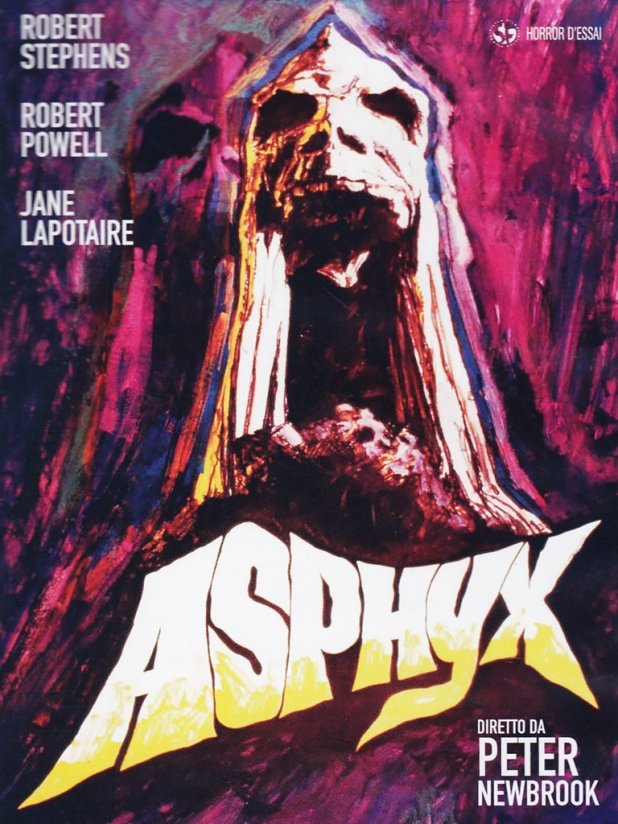
Man, if you’re looking for a British seance movie — and really who isn’t — there’s not a better film for you than this 1972 bit of craziness. Sir Hugo Cunningham’s (Robert Stephens) idea of fun is to film the last moments of peoples’ lives and seeing if a smudge in the images are the soul of the body trying to escape. Man, Victorian England was daffy.
Things get crazier, because when he uses a camera at the party for his engagement, his new fiancée and son are killed in a boating accident. When he watches the movie he made of the tragedy — because why not, right? — he sees that not only has he captured the blur, but that it is moving towards his son. That’s when he starts to believe that these smudges and blurs are something he calls the asphyx, the grim reaper from Greek myth that individually comes for each of us.
Now here’s where things get even more interesting. Because our hero figures that the asphyx must deal with the rules of the physical world. So he invents a special light that uses phosphorus stones beneath a drip irrigation valve that can briefly capture that smudgy black angel, making anyone who keeps asphyx remained imprisoned into an immortal.
Cunningham tasks his ward — how rich and British and Batman do you have to be to get a ward — Giles (Robert Powell) with capturing his asphyx and burying it deep in a family tomb. Because after all, Cunningham’s contributions to science are just too important for him to ever die. They need to bring in another person, Giles’ stepsister (and fiancee, because this is high society England) Christina for help. If they help him become an immortal, he will consent to them getting married.
Nothing works out well for anyone, save perhaps the guinea pig that can’t die. He’s doomed to wander the Earth with an immortal Cunningham, all the way to modern London as seen at the end of this movie.
The Asphyx is a movie that feels like a hard sell to an American crowd. It’s kind of staid and nuanced, but the effects are pretty wild and the idea is definitely high concept.
This is the only movie directed by Peter Newbrook, who also wrote Gonks Go Beat, produced Corruption (which no woman will dare go home alone after watching) and worked on the second unit on Lawrence of Arabia and Bridge on the River Kwai.
If you watch this in the U.S., know that as of now, you can’t see a high quality version. Every version of this movie — so far — has footage mastered from the 35mm negative mixed with footage mastered from a print of inferior quality, which means that the movie’s quality is constantly shifting. That said, the asphyx itself looks awesome and the story is enough to keep you watching.
“(A) versatile and underrated B-movie Renaissance man.” — IMDb, about actor-director John “Bud” Cardos.
That’s the understatement of the century, ye IMDb database scribe. Look at that short — but hit-packed director’s resume: Kingdom of the Spiders (we need to review that one!), The Dark! The Day Time Ended! Mutant! Gor II: Outlaw of Gor! (well, they’re hits for the B&S About Movies crowd). Then there’s Bud’s cable and VHS potboilers that star friggin’ Ernest Borginine, Robert Vaughn, Oliver Reed, and Herbert Lom in the same friggin’ movie: Skeleton Coast (1988), and Act of Piracy (1988) with Gary Busey and Ray Sharkey kicking ass. Then there’s Bud’s acting resume with Al Adamson and the films Hells Angels on Wheels (1967), Psych-Out (1968), The Road Hustlers (1968), The Savage Seven (1968), Killers Three (1968; starring Merle Haggard and a very young Lane Caudell of 2020’s Getaway), Blood of Dracula’s Castle (1969), Satan’s Sadists (1969), Five Bloody Graves (1969), and Hell’s Bloody Devils (1970).
After entering the annals of Bikerdom with his third acting gig in Hells Angels on Wheels (he had support roles in 1965’s Deadwood ’76 and Run Home, Slow), and paying attention on all of those Al Adamson sets and Roger Corman AIP productions, Bud Cardos transitioned behind the lens for the blaxploitation-spaghetti western (Uh, oh. Here we go again with the genre mixin’: Hey! Harry Hope and Harry Tampa of Smokey and the Judge and Nocturna fame, hiya!) with The Red, White, and the Blue, aka Soul Soldier (1970).
And the burgeoning, becoming “hot” and “trendy” drag racing genre was next on Bud’s resume with the youth-oriented (as were all of the ’60s racin’ flicks that simply substituted asphalt for sand) action-drama starring John Davis Chandler?
“Who?”
Seriously? The dude is iconic in a Richard Lynch-amazing kind of way.
John Davis Chandler January 28, 1935 – February 16, 2010
Now do you know him?
Let’s not even get into his extensive ’60s and ’70s television resume . . . just look at the movies: John Frankeheimer’s The Young Savages (1961; a more violent The Blackboard Jungle, if you will) with Burt Lancaster. Sam Peckinpah’s Pat Garrett & Billy the Kid (1973) with Kris Kristofferson, James Coburn, and Richard Jaeckel. Clint Eastwood’s The Outlaw Josie Wales (1976). Across 100-plus credits, JDC was everywhere, and he was nowhere. No truer “dark man” actor was he.
Courtesy of NHRA.com
Here, John Davis Chandler stars alongside Jeremy Slate (Do we really need to get into is resume?) and beach-snow flick bunny mainstay Deborah Walley in this not-a-Frankie-Avalon-Fabian racing flick that stars Mark Slade alongside (as you can see by the drive-in flyer, above) the nation’s top drag racers. (Mark has too many ’60s and ’70s TV series to mention, but by 1967, starred for three years on The High Chaparral; before that, the McHale’s Navy rip, The Wackiest Ship in the Army; he got his start as co-star on Gomer Pyle: USMC.)
Drag Racer is simple tale: Mark Slade is a young man who dreams of tearin’ down the quarter mile with the big dogs that, while it has (it must have) romance, there very little of that dramatic yakity-yak that bogged down the likes of Red Line 7000, Thunder Alley, and The Wild Racers. As with David Cronenberg’s lone non-horror film, Fast Company, Drag Racer is about gritty realism that puts the actors into the pits to mix it up with the real racers (Bill Schultz, John Lombardo, Norm Wilcox, and Larry Dixon) at famed West Coast racetracks Irwindale Raceway, Lions Drag Strip, and Orange County Int’l Raceway.
Is the acting a bit rough in spots? Is the editing and cinematography amateurish? Sure. (It adds to the film’s realistic, documentary quality.) This is one of those films that was once embraced by UHF-TV in the early ’70s (watched it twice), temporarily embraced on VHS (watched it once), then jettisoned. Considering Bud Cardos’s pedigree, this one — is in desperate need — of a full restoration (and not just a rip n’ burn) to DVD. Hint! Kino Lorber, Arrow Video?
This is a classic must-watch for racing fans — even with a muddy, washed-out blurred print. It really is one of the best drag flicks out there. And whadda ya’ know: You Tube comes through again — and with a VHS and not a TV rip! Sweet!
About the Author: You can learn more about the writings of R.D Francis on Facebook.He also writes for B&S About Movies.
Don “The Snake” Prudhomme and Tom “The Mongoose” McEwen were gods to us kids in the ’70. We bought the racing magazines and ripped out the glossy spreads of their cars and persons and Scotch Taped ’em to our bedroom doors and walls — right next to our Runaways (duBeat-e-o) and Suzi Quatro (Suzi Q) posters, and Roger Decoster’s mag-rips of his daring motocross jumps.
When the ABC Wild World of Sports held one of Prudhomme and McEwen’s drag or funny car races on a Saturday afternoon, the neighborhood streets cleared and everyone sat in front of the TV. The Snake and Mongoose were matched only by Richard Petty and Evel Knievel. They were the “Muhammad Ali” of racing. Everyone loved them.
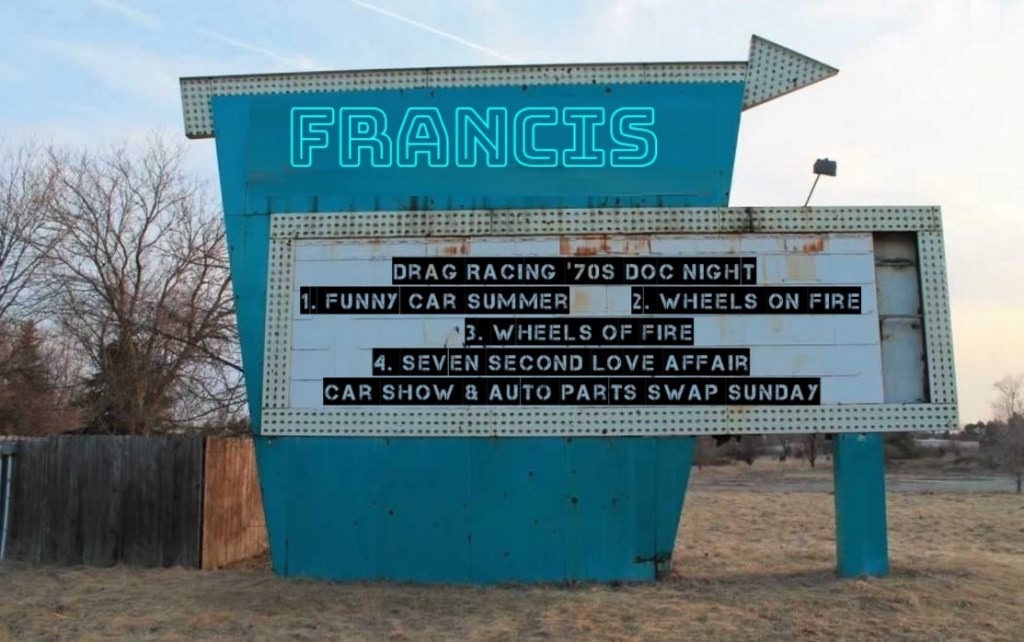
So, to commemorate those “Funny Car Summers” of those youthful days of yore, let’s fire up that silver screen under the stars!
Man, when this commercial came on TV . . . EVERYBODY went to see this documentary that chronicles a summer in the life of “Funny Car” racer Jim Dunn and his family.
The most popular, best known, and best-distributed film of the night — it is also the most disappointing (to those wee eyes of long ago) of the films of the night. You know how great Pawn Stars and American Chopper were when they first went on the air — then they turned into a Kardashians-styled sit(shite)com that’s all about Chum Lee and Corey Harrison bumblin’ about the shop and Junior and Senior fighting? Where’s the neat junk? Where’s the bikes? Where’s Frank and Mike? Who in the hell let Danielle, this Memphis blond chick, and Mike’s bumblin’ brother on the set? Where did the pickin’ go? This is American Pickers, right?
Well, that’s what watching this movie is like: all family drama and little vroom-vroom. Way to go marketing department and Mr. Distributor. You broke our little-tyke hearts — and pissed off our parents, who paid the drive-in fare, because we bitched from the backseat that we were bored — and watched 99 and 44/100% Dead (or was it The Exorcist) through the rear window, instead.
You can watch Funny Car Summer on You Tube HERE and HERE.
Wheels On Fire is a classic motor sports documentary — and also one of the most obscure and hard-to-find (as you can see, it’s even impossible to find a decent image of the theatrical one-sheet). But not in the land of Oz, since this was filmed in Liverpool, Sydney. This one kicks ass because of — before there were web-cam and fiber optics — has the first ever “race cam” strapped onto the drag car, which takes you behind the wheel at speeds above 300 kilometers (miles in the States) per hour.
Again, this one is near impossible to track down on VHS and DVD — and the DVDs are grey market VHS-rips. And there’s no trailer or clips . . . denied.
Intermission! The Snack Bar is Open! Check out our classic drag racing poster art gallery while you wait in line!
Not to be confused (and it is) with the “on” movie above, Wheels of Fire focuses on the lives of five major drag racers of the era: Don Garlits, Don Prudhomme, Shirley Muldowney, Richard Tharp and Billy Meyer, as they are each followed through a complete drag racing season. Yep. This is reality TV before Robert Kardashian had his first kid (I think; too lazy to check K-Dash B-Days), the very same kids who unleashed the ubiquitously-hated broadcasting format.
As with the oft-confused Wheels on Fire, there’s no online streams of this lost, classic drag racing film. It was on You Tube in several parts, but was removed. Only this 10:00 minute clip is available, which we’re posting in lieu of an official trailer (. . . and don’t be surprised if it also vanishes to grey screen; yep, it’s gone). The now out-of-print DVDs are available in the online marketplace from time to time (and, as you can see, it’s impossible to find a decent theatrical one-sheet). The NHRA web platform and their upper-tier cable channel rerun it from time to time.
Documentarian Les Blank of Burden of Dreams fame, which chronicled the making of Werner Herzog’s and Klaus Kinski’s Fitzcarraldo, made his docu-debut with this drag chronicle — its seeds (A Rubber Tree plant, ha-ha! ugh.) planted courtesy of his first behind-the-camera gig shooting drag racers in Long Beach, California.
This one has it all: Souped-up “Blower” Mercurys and Chevys (like in Two-Lane Blacktop), rails, and funny cars. While it chronicles other racers, this one is a showcase for Rick “The Iceman” Stewart as he attempts to grab the world’s record — as Los Angeles’ Canned Heat Blues Band provides the musical backing.
Les Blank has made this easily accessible as an Amazon Prime and Vimeo VOD that’s also available for purchase at Les Blanks.com and on eBay.
And so goes our “Fast and Furious Week: Part Deux.” Can you smell the rubber Big Daddy is cookin’, Dwayne? And, do you have a hankering for even MORE drag racing films? Then check out our first “Fast and Furious Week” reviews of Burnout and Fast Company.
Poster by Dennis Preston for “The Great Bed Race” in Lansing, Michigan on August 11, 1979/courtesy of Splatt Gallery Facebook.
Update: In May 2021, we went drag racing crazy and reviewed several more drag flicks as part of our “Drag Racing Week” theme-feature of the month. Image Courtesy of Vectezzy.
Another drag racing doc? You bet. During out two month “Cannon Month” blow out in July and August 2022, we discovered this Cannon-distributed ditty. Who knew?
In August and December of 2020, we had two “Fast and Furious” tribute weeks filled with the aromas of burning rubberand bubbling oil.
Mill Creek’s “Savage Cinema” 12-pack got us started as we reviewed over 40 filmsin August 2020.
Yeah, we did another week with another 40-plus films.
You say you need more racing films? You mean we haven’t covered enough? Well, then head on over to Demaras Racing under their “Fast Films” section for their reviews on car flicks. From Mickey Rooney in The Big Wheel to a discussion of Dustin Hoffman’s ride in The Graduate to the cars in THX 1138 — so many that we missed or never got around to reviewing — they’ve got you covered.
About the Author: You can learn more about the writings of R.D Francis on Facebook.He also writes forB&S About Movies.
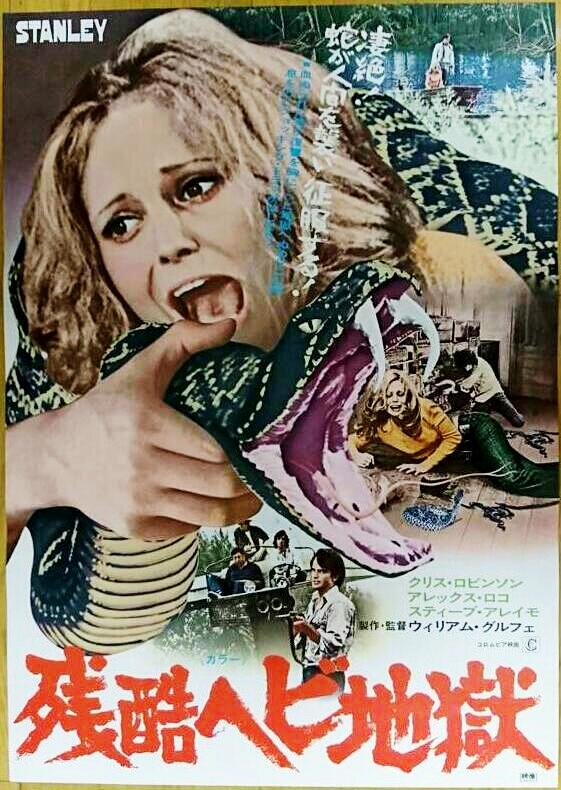
Tim Ochopee (Chris Robinson, who would write, direct and star in 1975’s The Intruder) is a war damaged Seminole just back from Vietnam that wants to live out the rest of his life in the Everglades with his snake Stanley. He didn’t count on Richard Thomkins (Alex Rocco), a maker of leather goods with mob ties, killing his father. Now, all the snakes that Tim has lived with will be the death of everyone who has done him wrong.
Only Grefe could take a ripoff of Willard and somehow make it more disturbing than you’d expect. Yes, this is a movie packed with snakes doing all manner of damage to people and people doing just as horrible things to them, including an exotic dancer playing a geek and biting the head off one on stage as she dances seductively with blood all over her bare chest.
Of course, Tim has to kill everyone in the way and kidnap Thomkin’s daughter Susie (Susan Caroll), but any hope of true love kind of goes the way that you’d expect in a Florida regional horror film that doesn’t stop with just stealing from one film and moves into being a reptile-obsessed Billy Jack.
That said — for a movie so much about protecting snakes, the actual snakes in this movie were defanged and some had their mouths sewn shut. There’s enough human on snake violence in this that you’d expect that it was made in Italy. Grefe still owns the wallet that they made out of the skin of the main snake that played Stanley, which is pretty weird when you dwell on it as much as I have.
Gary Crutcher wanted to do a sequel called Stanley in Miami, but it didn’t happen. He wrote this on two days under the influence of amphetamines, which is the most Florida thing you can say about a movie that is the most Sunshine State movie I’ve seen.
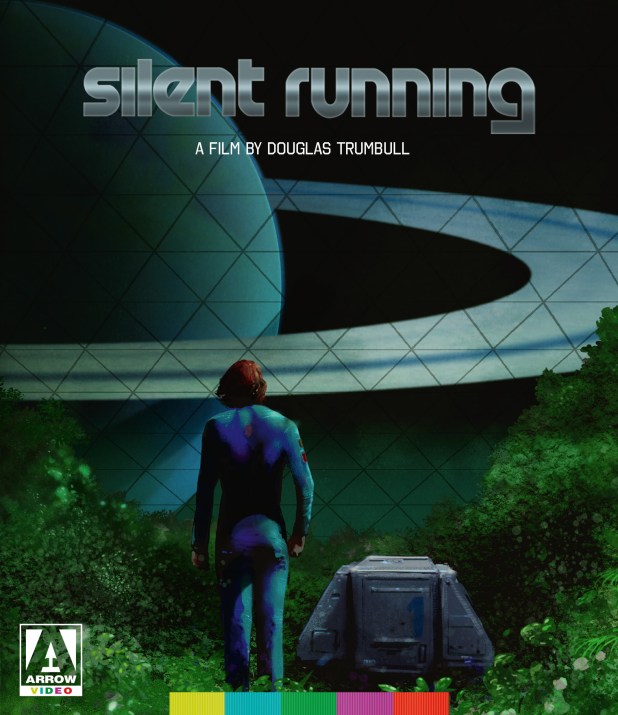
Visual effects pioneer Douglas Trumbull (The Andromeda Strain, Close Encounters of the Third Kind, 2001: A Space Odyssey, Star Trek: The Motion Picture, Blade Runner, The Tree of Life, The Towering Inferno) finally got the chance to direct with this movie and sadly, he didn’t get to capitalize on it
Made for one million dollars, one-tenth the budget of Kubrick’s classic, this movie was helped by all the special effects know-how of Trumbull, who was not originally going to direct it. Lead actor Bruce Dern stated that Trumbull’s creative vision was equal to Alfred Hitchcock, who he had also worked with. And that made the director hot for the briefest of times, as it flopped at the box office.
Trumbull joked “It was just a great experience for me as a filmmaker, but I didn’t know that I was part of an experiment by Universal Studios…to see if it was possible to have a movie survive on word of mouth alone without an advertising campaign.*”
At some point in the future, all that is left of Earth’s ecosystem is floating in space. The crew is ordered to destroy the greenery by the faceless bureaucrats that run what is left of the world and they comply, all save Freeman Lowell (Bruce Dern, The ‘Burbs, Hush…Hush Sweet Charlotte, Coming Home), who has taken three service robots and gone into “silent running” around the rings of Saturn, keeping himself as sane as he can and what is left of Earth’s once lush forests blooming.
Written by Deric Washburn, Michael Cimino (the two would go on to write The Deer Hunter and Cimino would spectacularly self-destruct with Heaven’s Gate) and Steven Bochco (who would go on to create L.A. Law, NYPD Blue, Hill Street Blues and more), this is a quiet tale of a man whose only companions are the industrial droids he renames Huey, Dewey and Louie**.
The effects in this movie are obviously the draw. The ship Valley Forge was reused on the show Battlestar Galactica years later and still held up as a great looking spaceship, even post-Star Wars. And the haunting soundtrack was by Peter Schickele, better known for doing classical music parodies under the name of P.D.Q. Bach.
Without this movie, we’d have no Mystery Science Theater 3000, as the idea of a man lost in space with only robots to talk to resonated with creator Joel Hodgson. And speaking of inspiration, Trumbull was asked by George Lucas to work on this movie, but passed. Lucas asked if he could use a droid in his film inspired by the robots in Silent Running and Trumbull agreed. Six years later, when 20th Century-Fox sued Universal, claiming that Battlestar Galactica was a ripoff of Star Wars, Universal countersued with the theory that Star Wars ripped off Silent Running.
The Arrow Video release of this film has everything you ever wanted on this film and more. There’ a new 2K restoration from the original camera negative, approved by Trumbull that was created exclusively for this release. Plus, you get a new commentary track by critics Kim Newman and Barry Forshaw and one from Trumbull and Dern. There are also features with film music historian Jeff Bond on the film’s score, Jon Spira exploring the screenplay and Dern on his work in the movie. Plus, the artwork is by Aric Roper, who did the art for Sleep’s “Dopesmoker” album.
This was a film I searched for most my childhood, as we couldn’t just grab a DVD or stream films back then. I always saw photos of it in Starlog and wondered what the robots would look like when they moved.
You can get Silent Running from Arrow Video, who were nice enough to send us a review copy.
*Actually, this really was part of a Universal Studios experiment to try and recreate Easy Riderby giving a million dollars or less to young filmmakers and letting them have final cut. The other films are Peter Fonda’s The Hired Hand, Hopper’s The Last Movie, Forman’s Taking Off and Lucas’ American Graffiti.
**The three drones were played by four bilateral amputees (Mark Person as Dewey, Cheryl Sparks and Steven Brown (he’s also in the biker mover J.C.) as Huey and Larry Whisenhunt as Louie). That means they are either missing both arms or both legs. This was inspired by sideshow performer Johnny Eck. Also, in Italy, the drones are named after Paperino, Paperone and Paperina (Donald Duck, Uncle Scrooge and Daisy Duck) because the names for Huey, Dewey and Louie in Italy are Quim, Quo and Qua. Therefore, calling them would have sounding like this; “Vieni qui, Qui,” which would be pretty weird, right?
Unfortunately, Trumbull’s directing efforts didn’t fare much better with 1983’s Brainstorm.







 B&S About Movies
You must be logged in to post a comment.