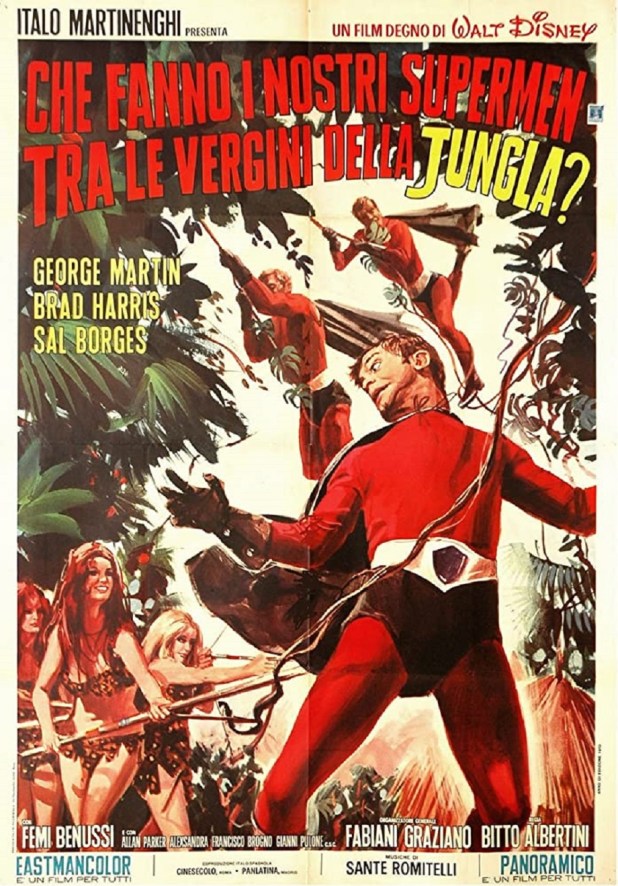
The title of this movie means What are our supermen doing among the virgins of the jungle? but you may know this movie better as Three Supermen In the Jungle, one of eleven films in the Three Supermen cycle of films:
There are attempts at continuity — one of the Supermen, Brad Scott (Brad Harris, The Girl In Room 2A) complains about how they were treated in the previous movie, the two years ago 3 Supermen in Tokyoexcept that he wasn’t even in that film — but the truth is these movies are relatively interchangeable, with the trio always kinda criminals forced to do good for the government.
Along with George (Jorge Martin) and Dick (Sal Borgese), this mission takes them to a uranium mine in the jungle and seeing how this is an Italian movie, you know that they’ll meet cannibals and white female gods to the natives, led by Jungla (Femi Benussi). Personally, I’m shocked that they didn’t beat a monkey into oblivion or murder a turtle just to prove themselves and where they’re coming from.
Director Bitto Albertini made a bunch of these films, as well as some aberrant madness like Escape from Galaxy 3, Put Your Devil Into My Hell, Return of Shanghai Joe and the original Black and Yellow Emanuelle films. Just the director to make what is basically a kid movie.
Something Weird has made out lives so much richer, saving the strange, the smutty, the scary and everything in between. Working with the American Genre Film Archives, they created this mixtape of sheer lunacy which adds up the scare films of the past. You’ll never do drugs again until the next time to do drugs.
This blu ray has the following movies, all uncut and in 2K:
Beyond LSD (1967): This movie astounded me because instead of telling parents that their kids are maniacs, it tells them to listen to them because they’re going through some things. How is this even real?
Director Paul Burnford mainly made shorts and documentary films, like 1944’s Nostradamus IV and the 1943 blood transfusion ten-minute epic Brothers in Blood. He also directed the first movie in the Rusty series and an entry in the A Crime Does Not Pay series, Dark Shadows, which is about a psychiatrist matching wits with a killer.
In short — it’s less about drugs and more about how to treat your kids. It’s still relevant today.
The Bottle and the Throttle (1961, 1968): Narrated by Timothy Farrell, who was one of the two narrators and the psychiatrist in Glen or Glenda, as well Girl Gang,Pin-Down Girl, Dance Hall Racket, Test Tube Babies, The Violent Years, Jail Bait and many more. He was also a bailiff for the Los Angeles Marshal’s Department when he was acting in movies like Paris AfterMidnight, which was raided by the Los Angeles Vice Squad during filming.
A bunch of kids a drinking beach beers — Budweiser, Schlitz and Hamm’s — and Bill has had one too many. He ends up driving home and killing a child and breaking the back of her mother. Was it worth it?
Do you remember that wheel of how many drinks you had and how long until you sober up back in driver’s ed or health class? Man, I used to think of that all the time and here I am, now trying to gauge edibles which are magical and unpredictable lunacy when compared to whiskey.
The major difference between the 1961 and 1968 films is that the former is made with the help of the Culver City Police Department and the Culver City Unified School District while the latter is made with the West Covina Police Department. I’d like to think these organizations were scammed and paid twice for one movie.
“The little girl died on the way to the hospital and the mother will probably never walk again. No matter how your trial comes out, you’ll always have to live with those facts, won’t you Bill. A child dead. A mother crippled. Not a pleasant future to face at the age of 18.”
Pure nihilism.
Sidney Davis Productions also made The Dropout, Boys Beware (an anti-homosexual scare movie), the Ib Melchior-directed — yes, the guy who wrote Death Race 2000 and directed The Angry Red Planet — Keep Off the Grass, Skateboard Sense and LSD: Trip or Trap!
Curious Alice (1971): Dave Dixon, the Culture Czar, was the lead DJ of the legendary “Air Aces” on Detroit’s rock station WABX and the first person to play Sabbath, The Doors, Led Zeppelin and The Doors in the Motor City. Beyond co-writing Peter, Paul and Mary’s “I Dig Rock & Roll Music,” he co-wrote this animated film that explains drugs through Alice In Wonderland which is totally right on with the kids and four years after Jefferson Airplane did the same thing in “White Rabbit.”
The art in this movie is mind-boggling, however, and you’ll be entranced as Alice learns about LSD from the Mad Hatter, speed from the March Hare, heroin from the King of Hearts and barbituates from the Dormouse.
Made by the National Institute of Mental Health in 1971 and meant for use with ten-year-old students, if I had seen this before my teen years I would have done all the drugs in high school. The National Coordinating Council on Drug Education agreed, writing that viewers “may be intrigued by the fantasy world of drugs” after watching it.
The Distant Drummer (1970): A short-lived series of four 22-minute American documentary films that warned the kids about drugs, these were all directed by William Templeton (The Fallen Idol) and written by Don Peterson.
The first two movies in this series, A Movable Scene and A Movable Feast, were narrated by Robert Mitchum, who served 43 days at a California prison farm for possession of marijuana in 1948, a conviction that was overturned in 1951.
Here’s just a sample of Mitchum’s speech: “Thousands of snapshots on police station walls remain the only link between many of America’s most affluent families and the children who embodied their great expectations. Nearly everyone in the hippie community smokes marijuana — whether they call it pot, grass, hemp, gage, joint or mary jane — the marijuana is the basic background for the shared drug experience. The experience is shared to such an extent that roach pipes are always in demand — a roach is a marijuana butt and it requires some form of holder for those last few drags. The new generation, whether they are runaways or rebels-in-residence, use marijuana as a symbol of discontent with the basic values of the establishment. For some, there exists a social imperative beyond flaunting society’s rules — for these adventurers the mind-expanding drugs open a window on a whole new frontier…”
The other two parts, Bridge from No Place and Flowers ofDarkness, were narrated by Rod Steiger and Paul Newman.
Drugs, Drinking and Driving (1971): Herbert Moskowitz is now here to explain why you should never mix the three things in the title. I love that this movie has no issues with using the Mission: Impossible theme over and over and over, flaunting copyright law with each successive refrain.
This also seems pre-Jackass with a stunt where two drivers are each given drugs, one amphetamine and one barbituates, and then told to drive for 36 hours straight until they either pass out or wreck their cars.
LSD: Insight or Insanity (1967): “Now, everybody who takes it admits that there’s always the risk of a bad trip, a bummer, a freak-out, even a flip-out. But, why be lame, baby? Give yourself a real kick. Yes, a kick in the head!”
That’s Sal Mineo talking in this Max Miller-directed (the same dude who made the Sonny Bono anti-drug movie Marijuana) film which explains what LSD is, how it’s made and when people take it they jump in front of cars and take leaps off cliffs like Diane Linkletter out of the windows of the Shoreham Towers, blamed on LSD even if the last person who saw her alive — Edward Dunston — may have also was the last person to see actress Carol Wayne alive. Then again, both Dunstons could be different people and for some other reason, people seem to confuse them with David E. Durston, the man who taught us that Satan was an acidhead in I Drink Your Blood.
See, I may make some detours, but I always get you back on the road.
This ends with a Russian Roulette freakout and Mineo singing over the closing credits, which inform us that everyone in this movie was not an actor. You won’t be surprised.
LSD 25 (1967): Directed by David Parker and written by Hank Harrison — the father of Courtney Love — this movie is narrated by an LSD tab which proves that the creators of this may very well be getting high on their own supply.
“Today, you’re high. Tomorrow, you’re dead.”
Yes, LSD starts all happy explaining all the good things it does and by the end, your fingerprints can’t get out of any police database.
So go ahead and take that sugar cube. You’ll learn all the secrets of the infinite and then, you know, you won’t be able to tell anyone.
Because you’ll be dead.
Narcotics the Decision: Goofballs and Tea (1958): Written by Pittsburgh native Roger Emerson Garris, who was the story editor for the Sherlock Holmes TV series, this police training film is all about barbituates and marijuana. Yes, people once called drugs these words.
Narrated by Art Gilmore, who was on Dragnet and voiced the radio announcer on The Waltons, this movie lets kids know that it starts with sneaking their parent’s booze and ends up with you in jail, dead or worse. Avoid weed, avoid malt shops, avoid everything.
None for the Road (1957): Margaret Travis wrote 83 shorts that we know of, movies like The Other Fellow’s Feelings, Health: Your Clothing and Rowan and Martin on the Driveway One Fine Day, an industrial film for Phillips 66 Petroleum where the future Laugh-In stars run a gas station. This movie, too.
But the director? That’s Herk Harvey, who made around four hundred or more industrial films like Shake Hands with Danger. And one very important movie, Carnival of Souls.
Three men all use alcohol in different ways: not at all, a little and too much. They’re like the lab rats that we later see injected with alcohol, which sounds like a good way to spend a weekend. But wow, we’ve been warning people about drunk driving for 65 years and not everyone listens.
The Trip Back (1970): It’s no accident that an episode of Strangers With Candy was titled “The Trip Back.” Jerri Blank on that show is literally the star of this movie, Florrie Fisher, played for comic effect.
Fisher was married four times by the time she filmed this speech, first an arranged marriage, then to a pimp, then another drug addict and finally to a man she met via the mail. She credited her recovery to Synanon, which was originally established as a drug rehabilitation program and became one of the most dangerous and violent cults America had ever seen.
Wait, what?
Founded by Charles E. “Chuck” Dederich Sr., Synanon — a mix of togetherness (“syn”) with the unknown (“anon”) — was an alternative community centered on group truth-telling sessions called the “Synanon Game”, a form of attack therapy during which participants humiliated one another and exposed each other’s innermost weaknesses. There are theories that Dedereich was given LSD by Dr. Keith S. Dittman and Dr. Sidney Cohen, as well as encouraged to start Synanon as part of the CIA MK Ultra program.
Headquarted in a former beachfront hotel in Santa Monica called the Club Casa del Mar, women who joined Synanon had to shave their heads. Men were given forced vasectomies. Pregnant women were forced to abort their babies. Married couples were broken up and had to take new partners as the group became the Church of Synanon.
After Synanon’s transition into an alternate society in 1968, the game became a 72-hour ordeal for most members. The program of rehabilitation went from two years to a lifetime rehabilitation program, as they now preached that addicts would never truly be well enough to return to society.
Throughout this period, San Francisco area media covered the adult and child abuse caused by the church, but were often sued for libel by Synanon’s lawyers. If all of this sounds like Scientology, well…there was a group within the group called the Imperial Marines authorized to beat members into oblivion.
When NBC started reporting on the church in the late 70s, executives received hundreds of threats and Paul Morantz, a lawyer who had helped members escape, had a de-rattled rattlesnake placed in his mailbox. It bit him and put him in the hospital. A police search found a tape of Dederich speaking about Morantz, saying: “We’re not going to mess with the old-time, turn-the-other-cheek religious postures. Our religious posture is: Don’t mess with us. You can get killed dead, literally dead/ These are real threats. They are draining life’s blood from us, and expecting us to play by their silly rules. We will make the rules. I see nothing frightening about it. I am quite willing to break some lawyer’s legs, and next break his wife’s legs, and threaten to cut their child’s arm off. That is the end of that lawyer. That is a very satisfactory, humane way of transmitting information. I really do want an ear in a glass of alcohol on my desk.”
The teachings of Synanon influenced groups like CEDU, Daytop Village (the very place Nancy Reagan visited and became aware of the drug problem, which led to Just Say No), Phoenix House and those boot camps that always show up on daytime talk shows.
Back to Florrie Fisher.
An interview with David Susskind led to her appearing on The Mike Douglas Show, speaking at schools and an autobiography, The Lonely Trip Back. This film captures her speaking at a New York City high school, barraging the audience with a rambling dissertation on turning tricks, six of her marijuana friends all dying in the chair, jailhouse sapphic antics and shouting things like “I now know that I can’t smoke one stick of pot! I can’t take one snort of horse! I can’t take one needle of cocaine because I am an addictive personality! And that’s all I need is one of anything. Ya know I need one dress. If I happen to like this dress in tan, I buy the same dress in green and black and pink. This is the type of personality I am!”
Despite how horrible Synanon was for some, it worked for Florrie. Sadly, she died during the lecture tour she’s on in this movie due to liver cancer and kidney failure.
This movie is totally worth the price of this entire blu ray.
Users Are Losers (1971): Think drugs are for teens? This kid is saving up his milk money to pay for his habit, doing odd jobs and being incredibly thrifty just to get some marijuana. It made me think, parents are always on kids for throwing their money away, but this kid knows what he wants, works hard for it and then is selfless and shares what he gets with his friends.
Some kids also find one of their friends dead on a mattress and some young narc says, “If you blow pot, you’re blowing your future.” Get off my TV, kid.
Plus, you also get DRUG STORIES! NARCOTIC NIGHTMARES AND HALLUCINOGENIC HELLRIDES, a full-length mixtape from the AGFA team.
Now if you’ll excuse me, I must go blow some pot. Get toasty toast. Go clambaking. Fly Mexican Airlines. Run within an endless field. Walk the green ducks. Roll into the Backwoods. Be a ninja. Do some chiefing at the Rooney statue.
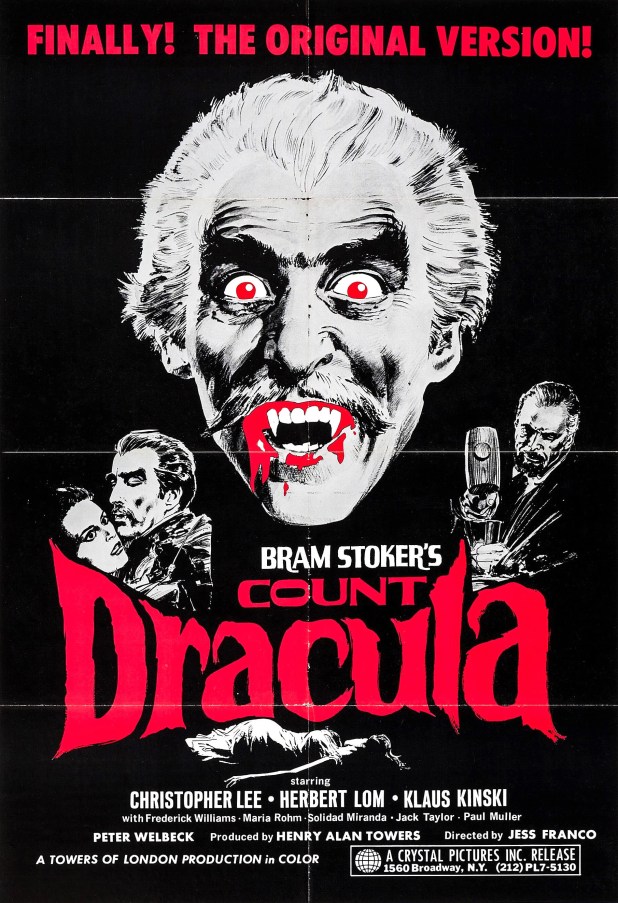
After years of being in Hammer Dracula movies, Christopher Lee starred in this Harry Alan Towers produced, Jess Franco directed version of Bram Stoker’s novel.
There’s a great cast and by that, I mean the kind of cast that I look for in movies. Klaus Kinski, (before he played Dracula in Nosferantu the Vampyre and Nosferantu In Venice) is Renfield, Herbert Lom is Van Helsing, Frederick Williams (A Bridge Too Far) is Jonathan Harker, Maria Rohn (Venus In Furs) is Maria, Paul Muller is Jack Seward, Jack Taylor is Quincey Morris (he had vampire hunting experience after being in the Mexican Nostradamusfilms) and Soledad Miranda — and who else, really? — is Lucy.
This could have had an even wilder cast, as both Vincent Price — sadly under his American-International Picture exclusive contract — and Dennis Price were both selected to play Val Helsing.
At the same time that this was being made, so was Cuadecuc, vampire, which was shot on the same sets with the same actors by the experimental director — and a senator elected in Spain’s first democratic elections who participated in the writing of the Spanish Constitution — Pere Portabella.
As for Franco’s film, it’s one of the first attempts at being faithful to the novel, with Dracula starting as an old man and gradually gaining in vitality as the movie goes on. Lee* was supposedly tired of playing Dracula and was only convinced to join the cast only after being promised that this movie would be faithful to Stoker. It still plays fast and loose; oddly enough Towers has claimed he tricked Kinski into being in this with a fake script. Franco has said that that wasn’t true, but what was is that Kinski ate real flies.
I wouldn’t expect the Franco madness that most associate with him, but this is the first extended time he’d work with Miranda before the films they’d be known for making together (she was an uncredited dancer at just eight years old in Franco’s Queen of the Tabarin Club). But there’s a great Bruno Nicolai score, Lee is super into everything he’s doing, the sparse sets work and Bruno Mattei was one of the editors.
There’s always been a contingent of people who claim this movie is boring, but look, any movie with Soledad Miranda in it is worthwhile.
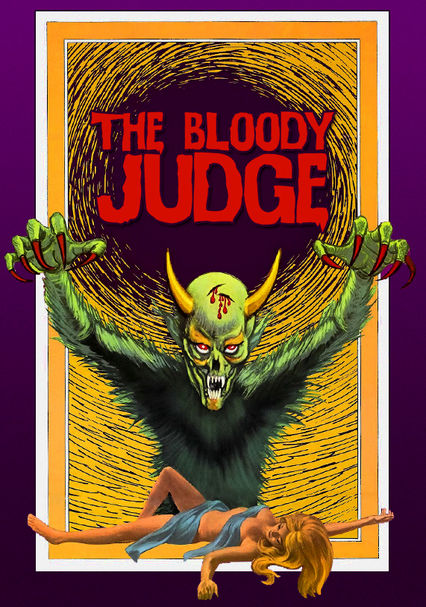
Judge Jeffreys (Christopher Lee) lives up to his title, sending women and men to the dungeons as witches and traitors. And worse, he also sends them to their deaths. Based on George Jeffreys, the first Baron Jeffreys, he was known as “the hanging judge” thanks to the rough handling of his cases, including a series of trials in the West Country in 1865, in which he judged between 160 and 700 men and women of treason against the crown.
During the Glorious Revolution, when King James II fled the country, Jeffreys stayed in London until the last moment as the only legal authority in the abandoned kingdom to perform political duties. When William III’s troops took London, Jeffreys tried to flee and follow the King abroad but was recognized by one of the survivors of his trials. A mob tried to murder him and he begged for mercy. He died in the Tower of London from kidney disease.
You don’t need to know history to know this: this is Jess Franco’s Witchfinder Generaland you’re about to see him go a little wild when it comes to the torture, but nowhere near the madness of Love Letters of a Portuguese Nun or The Demons.
After an innocent young girl named Alicia Gray (Margaret Lee, Our Agent Tiger, Circus of Fear, Venus In Furs) is tortured on the rack and burnt at the stake, despite the efforts of her sister Mary (Maria Rohm, The House of 1,000 Dolls, 99 Women). She falls for a young rebel, but going up against the power of a man given unlimited power by the crown of England isn’t as easy as it sounds. Actually, it doesn’t sound easy at all.
Howard Vernon shows up as a henchman and an uncredited Diana Loyrs is here too. Perhaps my favorite thing about this movie was that Lee still protested that he didn’t know it would have so much sex and violence in it up until it was released on DVD, which is hilarious, because this was not his first or last time working with Franco.
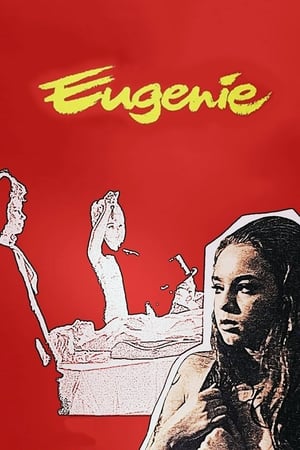
An adaptation and modern-day update of Marquis de Sade’s Philosophy in the Bedroom, this was the second de Sade film made by Jess Franco*, but by no means the last. In fact, it’s not even the last movie called Eugenie that he would make. While this one is Eugenie… The Story of Her Journey into Perversion (or De Sade 70 or Marquis de Sade’s Philosophy in the Boudoir), there’s also the better-known — and Soledad Miranda-starring — Eugenie de Sade.
Eugenie (Marie Liljedahl, Inga, Dorian Gray) has spent her entire life in a convent and despite an exterior that drives men and women wild with list, she’s inexperienced in the ways of the world. Her father (Paul Muller, Nana, Barbed Wire Dolls) wants to bed Madame Saint Ange (the wife of producer Harry Alan Towers who appears in 99 Women, Venus In Furs and The Boody Judge amongst other movies; don’t judge her being in this as nepotism, because she’s amazing in this movie), who agrees as long as she can take Eugenie to her secluded island mansion, where she and her step-brother Mirvel (Jack Taylor, whose career in exploitation movies took him all over the world) can seduce her and probably each other and definitely everyone and play the kind of strange incestual games that only the super rich seem to play.
Sir Christopher Lee also shows up as the narrator for all this wallowing and also as Dolmance, the leader of a cult of fiends that drug young women and beat them with whips and yeah, Sir Christopher claims he had no idea what kind of movie he was in, which I find hilarious, because this wouldn’t be the last time he’d work with Franco. Providing his own wardrobe — the smoking jacket he wore in Sherlock Holmes and the Deadly Necklace — Lee claimed that he was unaware there was a nude woman on the sacrificial altar behind him, as Franco and crew had wrapped drapery over her that they’d yank off as soon as the camera started and would then recover her when he was done with his scene. I mean, I love Jess, but sometimes he can barely focus the camera. One wonders how he’d ever had the chicanery and ability to pull one over on a man that was once quite literally a secret agent.
This movie feels like a dream. I’ve said that of other Franco movies, but trust me, a much better realized and better shot dream, with a score by Bruno Nicolai that makes it seem way classier than it is.
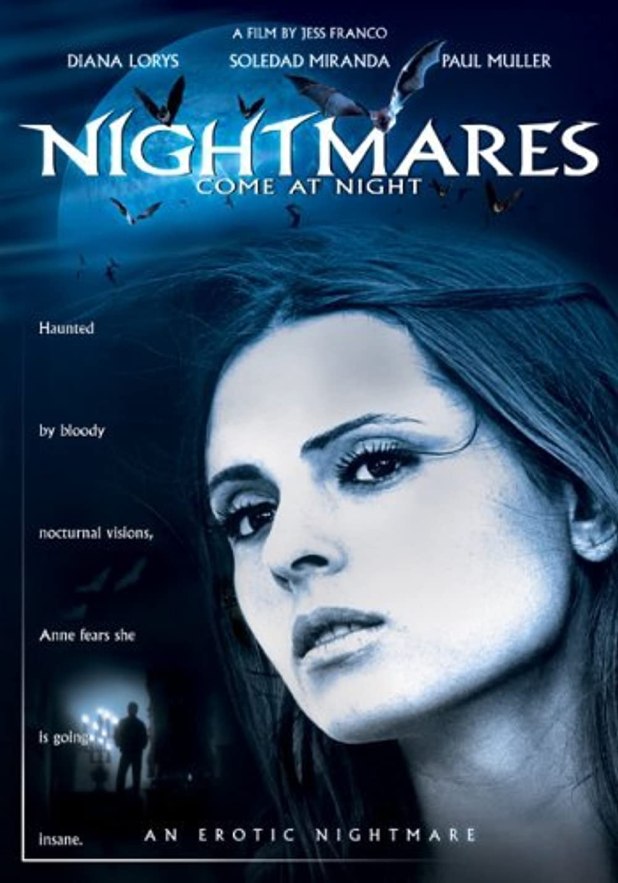
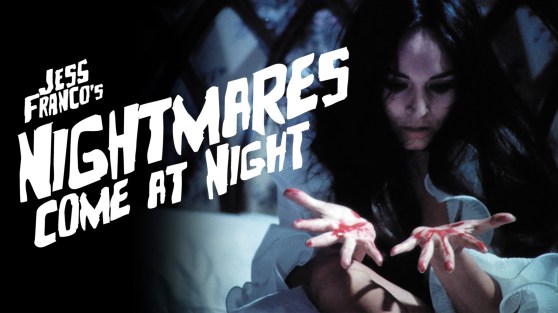
Movies take a lot of work. And yet Nightmares Come At Night only played at a single theatre in Belgium and was considered a lost movie until 2004. So all that sweat and energy and anxiety took years for the world to see. And what they saw was a movie that finds Jess Franco giving in to a new way of making movies and more and more, giving up logic.
Diana Lorys (Get Mean, Fangs of the Living Dead) is the gorgeous Anna de Istria, a dancer who has become obsessed with another dancer, Cynthia (Collette Giacobine, What the Peeper Saw), an attraction so intense that it causes her to hallucinate, having waking dreams — or nightmares — so powerful that not even medical science can save her.
Meanwhile, Cynthia owes two jewel thieves, played by Jack Taylor and the wonder that is Soledad Miranda, a share of their recent crimes.
When you try to capture your dreams in the morning in writing, it always gets lost in translation. That’s how writing about this movie feels. It’s also two dreams smashed together, an attempt by Franco to save two different films that were unfinished.
Except that this is Jess Franco’s dream, but he was dreaming about his obsessive love for Soledad himself and you don’t speak the language and Jess may have been an alien and you just try and make sense and then give up to it deliriously making no sense, hoping it never ends, that the world could really be a place where jewel thieves can manipulate the most gorgeous of women to wrap and curl and undulate around their fingers, all while Bruno Nicoli sets the most jazz of all jazz scores and you wake up in a cold sweat, fumbling for water and a pen to try and figure out where it all went right.
So at one point, you realize Anna is trapped in her home, but also trapped by lust, but also trapped by her dreams in which she alternatively kills people or listens to men drone on and then the camera pans across a wall that says “Life is all shit.”
The at home equivalent of putting your face in front of a speaker at a doom show and taking handfuls of whatever drugs someone has in their pocket and shining a gel light directly in your eyes while someone whispers in your ear and tells you that you’re pretty great.
Or Jess Franco making his own expensive masturbation mix tape.
This Jess Franco film is also on the ARROW PLAYER. Head over to ARROW to start your 30-day free trial. Subscriptions are available for $4.99 monthly or $49.99 yearly. ARROW is available in the US, Canada, the UK and Ireland on the following Apps/devices: Roku (all Roku sticks, boxes, devices, etc), Apple TV & iOS devices, Android TV and mobile devices, Fire TV (all Amazon Fire TV Sticks, boxes, etc), and on all web browsers at https://www.arrow-player.com.
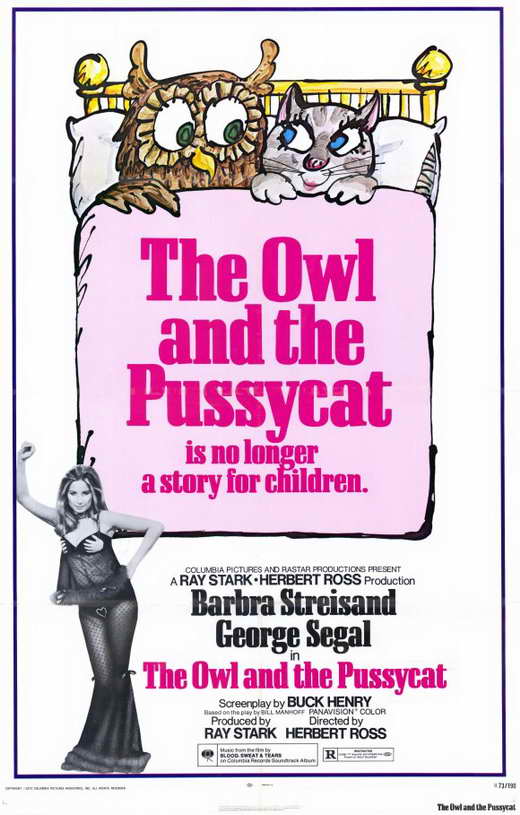
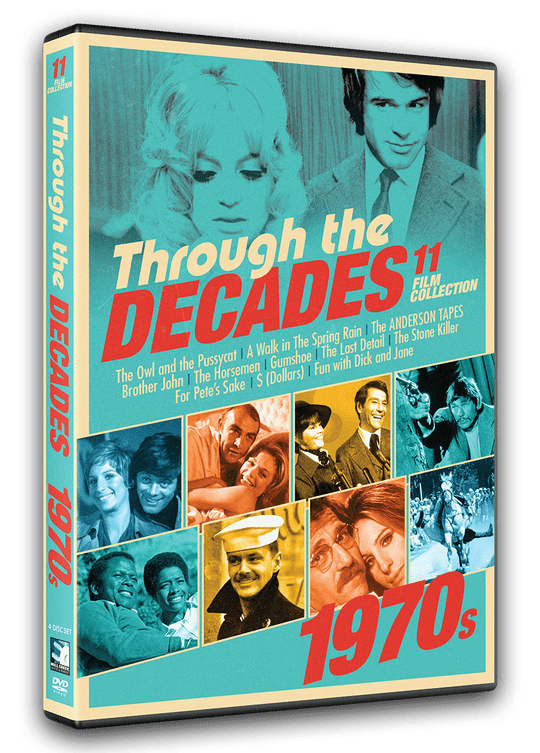
Written by Buck Henry, based on a stage play by Bill Manhoff and directed by Herbert Ross, The Owl and the Pussycat was a huge romantic comedy hit. It stars Barbara Streisand (who did a nude scene for the film that was cut at her request and then published by High Society; Babs sued) as a prostitute who also has acted in two TV commercials named Doris who finds herself living with Felix, her writer neighbor (George Segal) when she’s evicted. Then, they both get evicted when he tries to cure her hiccups.
They end up moving in with Barney (Robert Klein), a friend of Felix, but their arguing — followed by lovemaking — leads to Barney and his girlfriend (Marilyn Chambers, credited as Evelyn Lang, two years before she went Behind the Green Door) leaving. Hijinks, as they say, ensue, like the fact that the two can’t stop falling in love — and driving each other crazy — and that well, Felix may already have a fiancee. Will these two ever just get along?
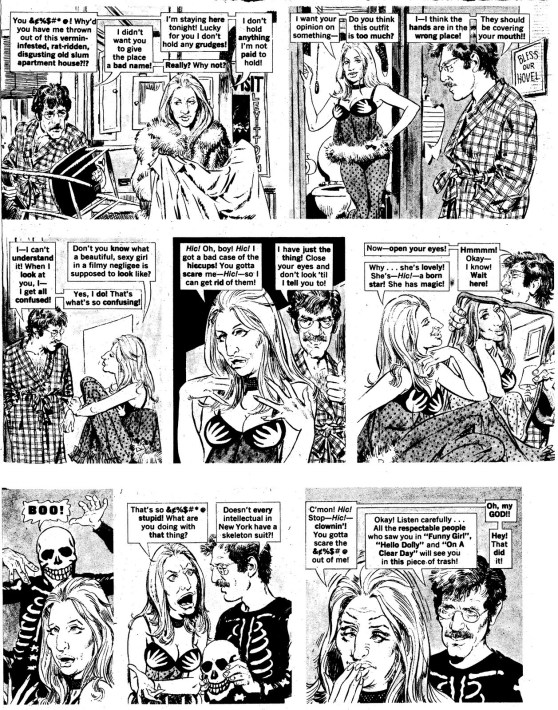
Mad Magazine #145 had a great parody of this movie, The Fowl and the Prissycats, written by Stan Hart with pencils and inks by Angelo Torres.
Hey! Roz Kelly is in this and so is an uncredited Tom Atkins!
Interestingly enough, Sidney Poitier was supposed to play opposite Streisand, yet it was decided that audiences weren’t ready for an interracial romance. Which is even weirder, because this started on Broadway with Alan Alda and Diana Sands as the principals.
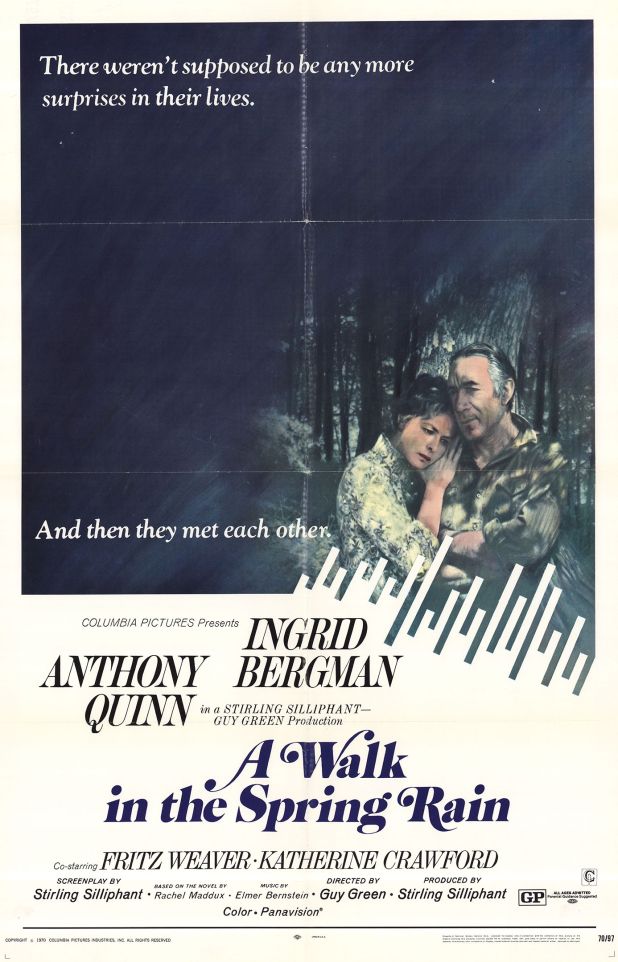
Producer Stirling Silliphant wrote the screenplay for this movie, based on novel A Walk in the Spring Rainby Rachel Maddux. Silliphant’s best known works are In the Heat of the Night, The ToweringInferno and The Poseidon Adventure, but he also created Route 66 and did the screenplays for Village of the Damned, The Swarm, Charly and Circle of Iron amongst many other movies. And oh yeah — Over the Top.
He was also close friends with Bruce Lee, who he studied from and included in movies he wrote like Marlow and the TV series Longstreet. Together, they worked on The SIlent Flute, which was eventually made as Circle of Iron. Lee would coordinate the fight scene in this movie between one of the leads, Will Cade (Anthony Quinn), and his son.
Cade is the next door neighbor of writer Roger Meredith (Fritz Weaver) and his wife Libby (Ingrid Bergman), who soon finds her way into his bed due to the lack of interest of her husband. Everything seems perfect, but the city calls the Merediths back, just as Will’s son stalks and assaults Libby in the woods, which ends up with the aforementioned fight between father and son that ends up costing son his life.
Perhaps most amazingly, the actor who plays the son is Tom Fielding, who we know today as Tom Holland. Yes, the same Tom Holland who wrote The Beast Within, Class of 1984, Psycho II, Cloak & Dagger and created the Fright Night and Child’s Play films.
In the end, the city wins out over true love. And this movie didn’t do well with audiences or critics. But hey — Quinn and Bergman are awesome, as you’d expect.
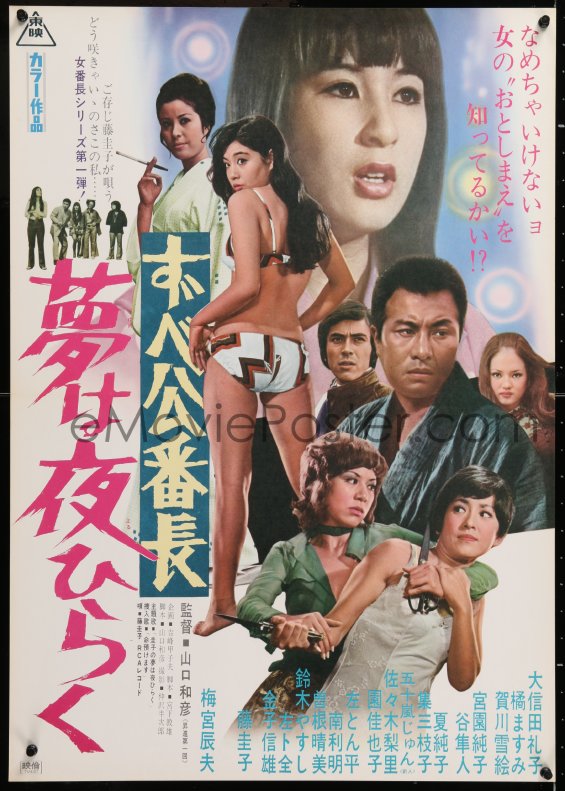
The first movie in the Delinquent Girl Boss series — perhaps not to be confused with 1970’s Stray Cat Rock: Delinquent Girl Boss* — this Kazuhiko Yamaguchi (Sister Street Fighter, Wolfguy: Enraged Lycanthrope) film introduces Rika Kageyama (Reiko Ôshida), the titular girl boss who will appear in a series of four movies.
We find Rika graduating from reform school and supposedly being ready for a bright and cheerful life, putting the crimes of her youth behind her, but would a Japanese Pinky Violence film be interesting at all if Riku stayed on the straight and narrow path?
After a job at a laundry ends with the owner attempting to force himself on her and his wife blaming the victim, Riku gets a job at a hostess club. The Yakuza is trying to muscle in on this place, so she must come to the rescue of the other girls that work there, even if she has to put her own virtue on the line to do so.
While this film doesn’t go to the depraved depths of many Pinky Violence films, it also displays the juxtaposition at the heart of so many films in this genre: it puts its heroines in danger tinged with sexual violence, but it also presents them as capable characters who have agency and stand with one another against the abusive men in their universe. At the same time that these films invite you to watch what happens, it reminds you that you are just as wrong as any of the men who treat these women so horribly.
*Toei made the same series and the band Golden Half shows up in this, playing the same “Yellow Cherry” song that they rocked out in Stray Cat Rock: Sex Hunter.
EDITOR’S NOTE: This made for TV movie was originally on our site on May 19, 2020. As we explore the movies of Curtis Harrington, we’ve brought this article back.
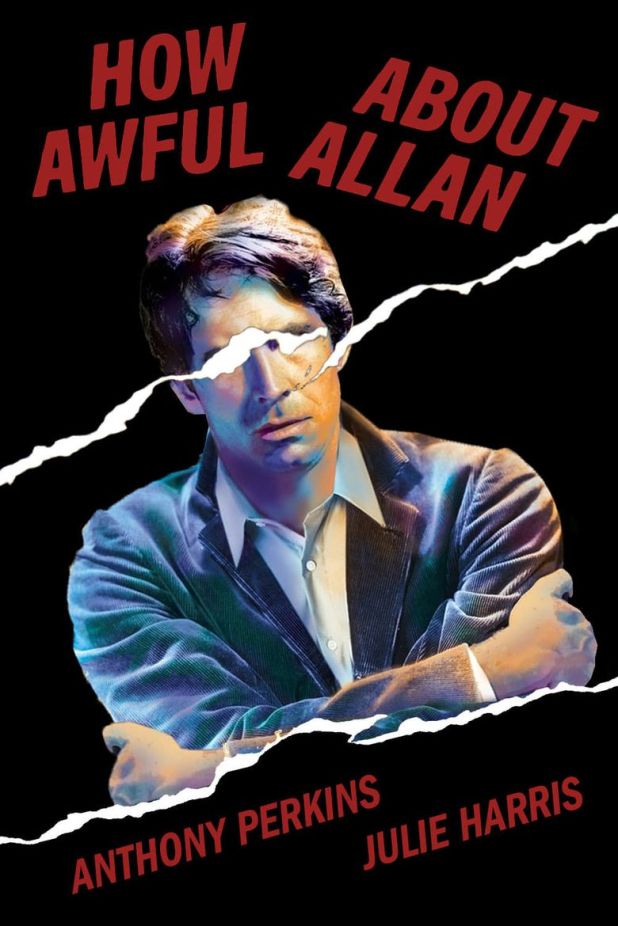
Along with What’s the Matter With Helen?, this movie is one of the two collaborations between writer Henry Farrell and director Curtis Harrington. It was the ABC Movie of the Week on September 22, 1970 and has stood the test of time as one of the better TV movies. And there’s some stiff competition for that.
Shot in just 12 days, it stars Anthony Perkins as Allan Colleigh, who has psychosomatic blindness after an accident — he left paint cans too close to a fire — that killed his abusive father and scarred his sister Katharine (Julie Harris from the 1963 version of The Haunting).
After Allan returns to their home after time in a mental hospital, he’s convinced that everyone is out to get him, including a new boarder with speaks in a hoarse whisper and one of his sister’s ex-boyfriends on the phone.
Joan Hackett — who was in two great TV movies, Dead of Night and The Possessed— appears as Allan’s former girlfriend. She gets caught up in his mania as rooms of the house explode into flames and he’s kidnapped by that mysterious ex.
How Awful About Allan has plenty of actors as comfortable on the stage as they were on the big or small screen. Perkins agreed to wear special contacts that completely made him blind so that his performance would be more realistic.
This didn’t get great reviews when it came out, but do the movies we love ever do?

 B&S About Movies
You must be logged in to post a comment.