Il mostro (1994)

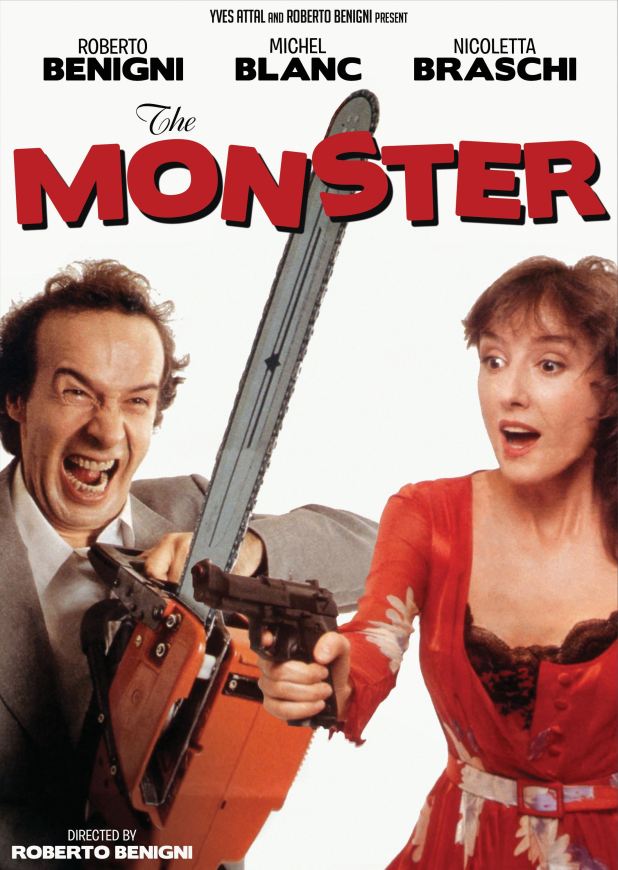
Director, writer — with Vincenzo Cerami — producer and star Roberto Benigni is Loris, who works with mannequins at a department store. He’s barely surviving, owing money to people everywhere and unable to pay rent. At a party, he’s told that there’s a woman who will sleep with anyone. He approaches the wrong woman which gets him named the number one suspect in a series of murders.

Commissioner Frustalupi (Laurent Spielvogel) doesn’t have enough evidence, so he uses undercover officer Jessica (Nicoletta Braschi), who poses as his roommate with the help of police doctor Paride (Michel Blanc). She’s told to be as sexy as possible to inflame his desire and make him try to murder her, including dressing as Little Red Riding Hood. Jessica easily deducts what everyone else should have. Loris is a moron and someone else, someone close to him, is the killer.

For a movie that is inspired by the giallo, this may be the most successful of all of them, as it’s one of the most successful Italian movies ever made.

Usually, I find myself put off by Benigni, but this movie is pretty fun, including him accidentally chasing a woman with a chainsaw.

You can watch this on Tubi.

Cinematic Void January Giallo 2024: Stripped to Kill (1987)

EDITOR’S NOTE: Cinematic Void will be playing this movie on January 8 at 7:00 PM PT at 10th Avenue Arts Center in San Diego, CA. Opera will also be playing. You can get tickets here. For more information, visit Cinematic Void.

Katt Shea was in My Tutor, Preppies, Hollywood Hot Tubs and Barbarian Queen before working with Andy Ruben to make The Patriot for Roger Corman. She’d go on to direct several films and even earn a four-day retrospective at the Museum of Modern Art, where Poison Ivy debuted. You can check out her movies Dance of the Damned, Stripped to Kill II: Live Girls, Streets, Last Exit to Earth, The Rage: Carrie 2, Nancy Drew and the Hidden Staircase and Rescued by Ruby.

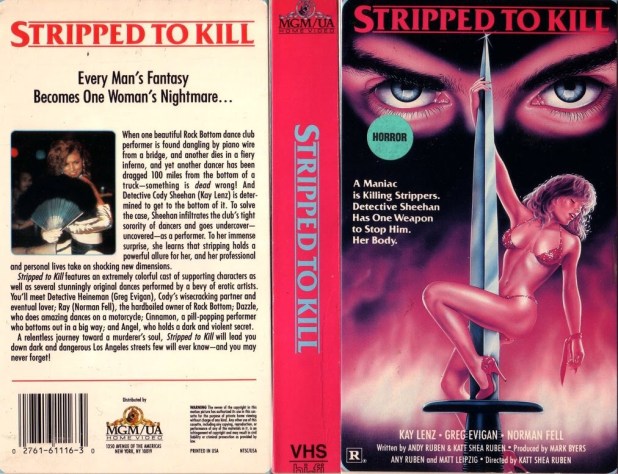
While working undercover, Cody (Kay Lenz) and her partner Sergeant Heineman (Greg Evigan) are too late to save Angel (Michelle Foreman), a dancer who has been thrown off a bridge and set on fire. Of course, this means that Cody must become Sunny, dancing at the Rock Bottom for its owner Ray (Norman Fell).

As she gains the trust of the dancers, they’re all being killed one by one. Cody keeps dancing at the club, defying the orders of her superiors, sure she can catch the killer. Is it Pocket, the one handed creep? Is it Angel’s lover Roxanne (Pia Kamakahi)? And how does Roxanne’s brother Eric fit in?

In a New York Times article, Shea explained how she was inspired by a trip to a strip club: “I didn’t want to go because I felt it was humiliating to women. But I finally got myself there. I sat down and began watching these acts and they’re performing as if they really cared.”

So — spoiler: Roxanne is dead. Eric is Roxanne, taking over her life as he was sure Angel would take his sister away. You can imagine that this is incredibly problematic, as they say, but it’s also a Roger Corman movie. In fact, Corman was convinced that only a woman could be a convincing woman on stage. Shea surprised him and showed him up by fooling him. She would later explain: “He [Corman] turned every shade. He was purple by the end.”

Also, as this is a Corman movie, all the songs that are danced to in this film were added in post-production. They had been filmed with popular songs, but those songs had to be replaced in post, because clearing licensing would be too expensive.

Shea worked with real exotic dancers, teaching them to act. Debra Lamb was one of them and she has been in plenty of movies since this, including Deathrow GameshowAll Strippers Must Die! and Point Break, often displaying her fire-eating skills. Shea works as an acting teacher to this day, with students including Christina Applegate, Alison Lohman, Sophia Lillis and Drew Barrymore.

She also claims that this was the first movie to show pole dancing.

It would not be the last.

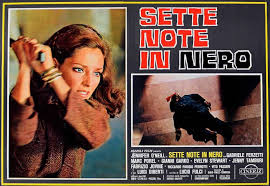
Cinematic Void January Giallo 2024: The Psychic (1977)

EDITOR’S NOTE: Cinematic Void will be playing this movie on January 8 at 10:00 PM PT at Los Feliz 3 in Los Angeles. For more information, visit Cinematic Void.

Before Fulci became known as the godfather of gore, he made movies in nearly every genre. This is the next to last film he’d make — Silver Saddle follows it in 1978 — before 1979’s Zombie announced to the world that he was here to tear eyeballs, unleash bats and provide dazzling if incomprehensible odes to mayhem.

Fulci is no stranger to the Giallo, with some of his most important films being A Lizard in a Woman’s Skin and Don’t Torture a Duckling and the unappreciated Perversion Story. The title refers to the film’s exploration of the duality of human nature, a theme that Fulci often revisits in his work. Here, he’d team up again with writer Roberto Gianviti and begin his long partnership with writer Dardano Sacchetti, who sought to lend a touch of Argento to the original script’s traditional mystery.

What emerged was a film shrouded in mystery and darkness—a rumination where death is inescapable and always close, a world where doom hangs over every moment, captivating the audience with its enigmatic atmosphere.

The film is set in Dover, England, in 1959, a time of social change and upheaval. A woman commits suicide by literally diving from the Cliffs of Dover. Forgive the harmful effects — Fulci tends to use wooden bodies in his films for some reason, much like the end of Duckling. The main point is that her daughter Virginia may be living in Italy, but she can clearly see her mother’s day.

Today, Virginia (Jennifer O’Neill, Scanners) lives in Rome and is married to a wealthy businessman named Francesco (Gianni Garko, Sartana himself!). As she drives him to the airport for his next business trip, she begins to see visions. An older woman is being killed. A wall is torn down. And a letter is under a statue. How strange is it that the house she is beginning to renovate looks precisely like the one in her visions?

When she tears down the wall that looks like the one in her dreams, she finds the skeleton of her husband’s ex-lover and the police want to charge him with the murder. Virginia becomes the detective of the story, obsessed with saving her husband with the help of psychic researcher Luca Fattori. Soon, they believe that the real killer is Emilio Rospini (Gabriele Ferzetti, On Her Majesty’s Secret Service).

So who is the woman? Why was her body in that room, which was once her husband’s bedroom? Why is the woman’s face on the cover of the magazine that Virginia buys? That’s because Virginia’s visions aren’t the past but premonitions of the future.

Meanwhile, she’s given a wristwatch that plays a haunting theme every hour in the house. This eerie soundtrack, composed by Fabio Frizzi, adds a layer of suspense and tension to the film and was reused to incredible effect in Kill Bill. The growing knowledge that the victim isn’t dead yet—and that Virginia may be that victim—darkens every frame of Fulci’s epic.

Quentin Tarantino was so in love with this film that he intended to remake it with Bridget Fonda sometime in the 2000s, but this never happened.

Perhaps just as interesting as the film is the life of its star, Jennifer O’Neill. Possibly best known for her long career as a Cover Girl model, she has been married nine times to eight husbands (she married, divorced, and remarried her sixth husband, Richard Alan Brown). By the age of 17, she’d already attempted suicide so as not to be separated from her dog, had a horse break her neck in three places and married her first husband. She’s also had a horrible history with guns, having accidentally shot herself in 1982 and being on the set of the TV show Cover Up in 1984 when co-star Jon-Erik Hexum accidentally killed himself. While waiting for a delay, he had been playing Russian roulette with a prop gun and was unaware that the discharge could still cause damage. Placing the gun to his temple, he fired and caused so much damage to his brain that he died six days later.

Cinematic Void January Giallo 2024: Closed Circuit (1978)

EDITOR’S NOTE: Cinematic Void will be playing this movie on January 8 at 7:00 PM CT at Music Box Theatre in Chicago, IL. For more information, visit Cinematic Void.

As an audience comes together for an afternoon showing of a western* called I Giorno Dell’Ira starring Giuliano Gemma (A Pistol for RingoArizona Colt), one of the moviegoers is shot by the actor. As his gun smokes on screen, an old man lies dying. The cops investigate and learn that nearly everyone has something to hide, from a couple having an affair to two small-time criminals (Tony Kendall is one of them), some student protesters and a sociologist (Flavio Bucci) who has the feeling that this is all like a Ray Bradbury story.

The police make everyone remain in the theater, basically living there, surviving off of the snack bar and meals brought in from the outside world. The entire situation is photographed and then run back, recreated, which leads to a second person being shot. This frustrates the inspector, who makes the entire theater remain and watch it again, with him sitting in the place where two men have already died.

This is a movie not just about a murder but movies itself. There are posters for Let Sleeping Corpses LieThe Girl in Room 2ADay of Anger, Torn CurtainFour Flies On Grey VelvetYou’ll Like My Mother, SquirmThe Perfume of the Lady In BlackKing KongA*P*E* under the Italian name Super Kong and Tentacles. The moment that changes the movie, the gun being shot, changes the film from something that everyone is watching in a passive way to the most involving viewing they have ever seen. The film come alive, much like Cinema Paradiso or a movie that I am sure this had more than a small influence on, Demons.

Director Giuliano Montaldo made a movie that is at once a giallo and a science fiction story, as well as one that defies being easily figured out.

*It’s actually E per tetto un cielo di stelle (A Sky Full of Stars for a Roof).

You can get this from Severin.

THE FIRST DIA OF 2024!

This Saturday at 8 PM EST, join Bill and me on the Groovy Doom Facebook and YouTube pages for our first double feature of the year.

We’re giving you two blasts of Italian gothic horror weirdness starting with Atom Age Vampire! You can watch it on Tubi and YouTube.

If you’ve never watched the show before, each week we talk about the movie, show the ad campaign and then have a drink recipe that is based on the film. Then, you watch it yourself and come back for a discussion on what we’ve seen and the next movie.

Here’s the first cocktail.

Seddok

  • 2 oz. orange juice
  • 12 frozen raspberries
  • 2 oz. Chambord
  • 6 oz. champagne
  1. Mix orange juice, frozen raspberries, Chambord and ice in a cocktail shaker.
  2. Pour into a glass, then top with champagne.

The second movie is Werewolf in a Girls’ Dormitory. You can watch it on YouTube.

Howl at the Italian Moon

  • 2 oz. rum
  • 2 oz. pineapple juice
  • 1 oz. lime juice
  • 2 oz. ginger beer
  1. Fill a glass with ice, then pour in rum, pineapple and lime juice.
  2. Top with ginger beer and enjoy.

Get ready for Saturday!

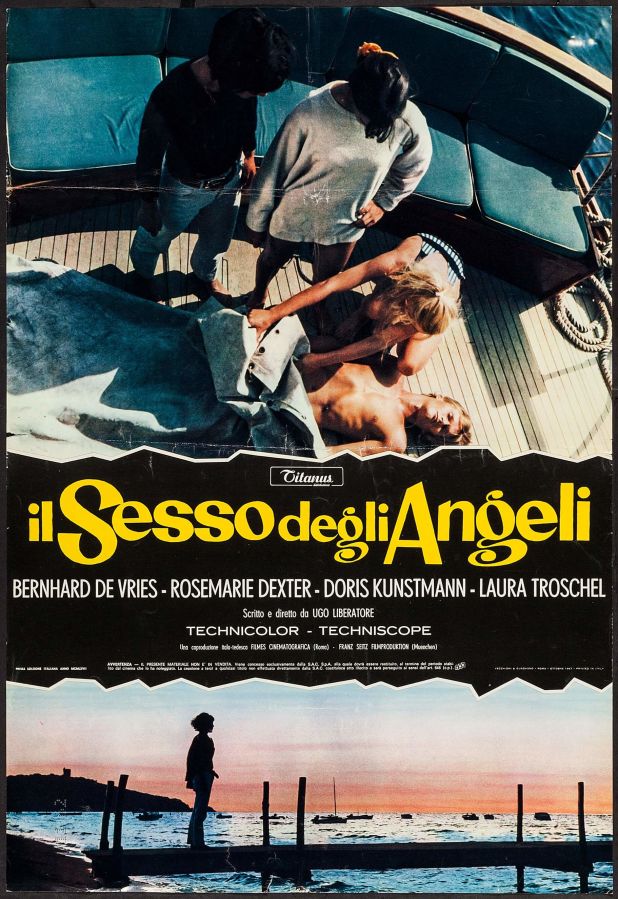
Il sesso degli angeli (1968)

Directed by Ugo Liberatore (Damned In Venice),  wrote it with Frank Seitz, this is all about three women — Nora (Doris Kunstmann, Seven Deaths in the Cat’s Eye), Nancy (Rosemary Dexter, Casanova 70) and Carla (Laura Troschel, Four Flies on Grey Velvet) leaving Nora’s lover Luca (Giovanni Petrucci) behind and taking her father’s boat on a voyage. Stealing Marco (Bernard De Vries) from his lover, they sail out for the Dalmatian coast of Croatia.

Of course, he’s going to be with each of the women, one after the other, but because they also plan on having LSD trips, you can imagine that none of this will work out well for him. Maybe if he had waited until Queens of Evil came out in 1970, Marco would be better armed for this trip. Or trips, right? Or a year for Top Sensation. They take a tape recorder with them to see what happens when they all get dosed, but when Marco wakes up with a bullet hole in his stomach — and no one knows why — things get dark. Should the girls get him help? Or will they try to care for him all on their own?

Despite its title — The Sex of Angels — this promise of carnal freedom comes with a horrible price, which means that it does so much of what exploitation always has: revel in sin yet condemn it at the same time. As Marco slowly and horribly dies from his painful injury, he’s further destroyed as his manhood is withered by being forced to dress in women’s robes and a fur coat, all while they sail past gorgeous coastlines.

Amazingly, The Sex of Angels was released in the U.S. by United Artists. It’s a great lesson in that old, “If it seems too good to be true, it is” moral. If three gorgeous women kidnap you, you’re probably going to die. Not everyone makes it in this and it does have the strange idea that acid will unlock the latent lesbian urge in women. I would say, “Only in Italy,” but I’ve seen it happen in enough films all around the world.

Cinematic Void January Giallo 2024: Deep Red (1975)

EDITOR’S NOTE: Cinematic Void will be playing this movie on January 6 at 10:00 PM MT at Coolidge Corner Theatre in Brookline, MA. You can get tickets here. For more information, visit Cinematic Void.

Deep Red is one of the few Argento movies that I’ve seen in a theater and the drive-in. It’s not the best film for the fast-moving grindhouse or drive-in, but it is a great film. After all, it started with a 500-page script that even Dario Argento’s family felt was too cryptic and continues with not just one, but two references to American painter Edward Hopper. This isn’t just a movie about murder. This is a movie that transforms murder into art.

We begin at Christmas, as two shadowy figures battle until one of them stabs the other. Screams ring out as a knife drops at the feet of a child.

Fast forward to Rome, as a medium named Helga Ulmann is conducting a lecture about her psychic powers. Within moments, she senses that one of the people in the theater is a killer. Later that night, that killer kicks in her front door and murders her with a meat cleaver (which is probably why this movie got the boring American title of The Hatchet Murders).

British musician Marcus Daly (David Hemmings, BarbarellaBlowup, Harlequin), who fits the giallo mold of the stranger in a strange land thrust into the middle of a series of murders that he must solve, is returning home from drinking with his gay best friend Carlo (Gabriele Lavia, Beyond the DoorInferno) when he sees the murder that we’ve just witnessed from the street. He runs to save Helga, but she’s thrust through the window and her neck is pierced by the broken glass of her window in a kill that has become Argento’s trademark.

As he tells the police what has happened, he notices that a painting on Helga’s wall is gone. That’s when Gianna Brezzzi (Argento’s soon-to-be wife, Dario Nicolodi, who met him during the filming of this movie) takes his photo, which ends up on the cover of the newspaper the very next day.

Unlike most giallo women, Gianna is presented as more competent and even stronger than our hero — she sits high above him in her Fiat 500 and continually bests Marcus every time they arm wrestle. Nicolodi is so perfect in this film that she both breaks and warms your heart at every turn.

Marcus isn’t your typical hero, though. When the killer attacks him, he doesn’t stop them by daring or skill. He locks himself in his study to escape them. He does remember the song the killer played — we also have heard it when Helga is murdered — that psychiatrist (and Helga’s boyfriend) Professor Giordani believes is related to some trauma that motivates the killer.

Feeling guilty that she’s caused the killer to come after Marcus, Gianna relates an urban legend of a haunted house where the sounds of a singing child and screams of murder can be heard. The truth lies in House of the Screaming Child, a book written by Amanda Righetti, which tells the truth of the long-forgotten murder. Marcus and Gianna would learn even more, but the killer beats them to her house and drowns her in a bathtub of scalding hot water (directly influencing the murder of Karen Bailey in Halloween 2). As she dies, the writer leaves a message behind on the wall, which our heroes find. They’ve already assumed the investigation — again, in the giallo tradition — and think the police will assume that Marcus is the murderer, so they don’t report the crime.

Marcus follows the trail of the killer from a picture in the book to the real house, which has been abandoned since 1963. As he searches the home, he uncovers a child’s drawing of a murdered man and a Christmas tree, echoing the flashback that starts the film. Yet when he leaves the room, we see more plaster fall away, revealing a third figure.

Marcus tells his friend Carlos all that he’s learned, but his friend reacts in anger, telling him to stop questioning things and to just leave town with his new girlfriend. At this point, you can start to question Marcus’ ability as a hero — he misses vital clues, he hides instead of fighting and he can’t even tell that someone is in love with him.

Professor Giordani steams up the Righetti murder scene and sees part of the message that she left on the wall. That night, a mechanical doll is set loose in his office as the killer breaks in, smashing his teeth on the mantle and stabbing him in the neck.

Meanwhile, Marcus and Gianna realize that the house has a secret room, with Marcus using a pickaxe to knock down the walls, only to discover a skeleton and Christmas tree. An unseen person knocks our hero out and sets the house on fire, but Gianna is able to save him. As they wait for the police, Marcus sees that the caretaker’s daughter has drawn the little boy with the bloody knife. The little girl explains that she had seen this before at her school.

Marcus finds the painting at the young girl’s school and learns that Carlo painted it. Within moments, his friend turns up, stabs Gianna and holds him at gunpoint. The police arrive and Carlo flees, only to be dragged down the street and his head messily run over by a car.

With Gianna in the hospital and his best friend obviously the murder, Marcus then has the Argento-esque moment of remembering critical evidence: there’s no way Carlo could have killed the psychic, as they were together when they heard her screams. The portrait that he thought was missing from the apartment was a mirror and the image was the killer — who now appears in front of him.

The real killer is Martha (Clara Calamai, who came out of retirement for this role, an actress famous for her telefoni bianchi comedy roles), who killed Carlo’s father in the flashback we’ve seen numerous times after he tried to commit her. She chases Marcus with a meat cleaver, striking him in the shoulder, but he kicks her and her long necklace becomes caught in an elevator which beheads her. The film ends with the reflection of Marcus in the pool of the killer’s blood.

While this film feels long, it has moments of great shock and surprise, such as the two graphic murders that end the film and the clockwork doll. The original cut was even longer, as most US versions remove 22 minutes of footage, including the most graphic violence, any attempts at humor, any romantic scenes between David Hemmings and Daria Nicolodi, and some of the screaming child investigation.

This is also the first film where Argento would work with Goblin. After having scored Argento’s The Five Days — a rare comedy —  Giorgio Gaslini was to provide music for the film. Argento didn’t like what he did and attempted to convince Pink Floyd to be part of the soundtrack. After failing to get them to be part of Deep Red, Goblin leader Claudio Simonetti impressed the director by producing two songs in one night. They’d go on to not only write the music for this film, but also for plenty of future Argento projects.

A trivia note: Argento’s horror film museum and gift shop, Profondo Rosso, is named after the Italian title to this movie.

Deep Red is the bridge between Argento’s animal-themed giallo and supernatural based films. While its pace may seem glacial to modern audiences, it still packs plenty of moments of mayhem that approaches high art.
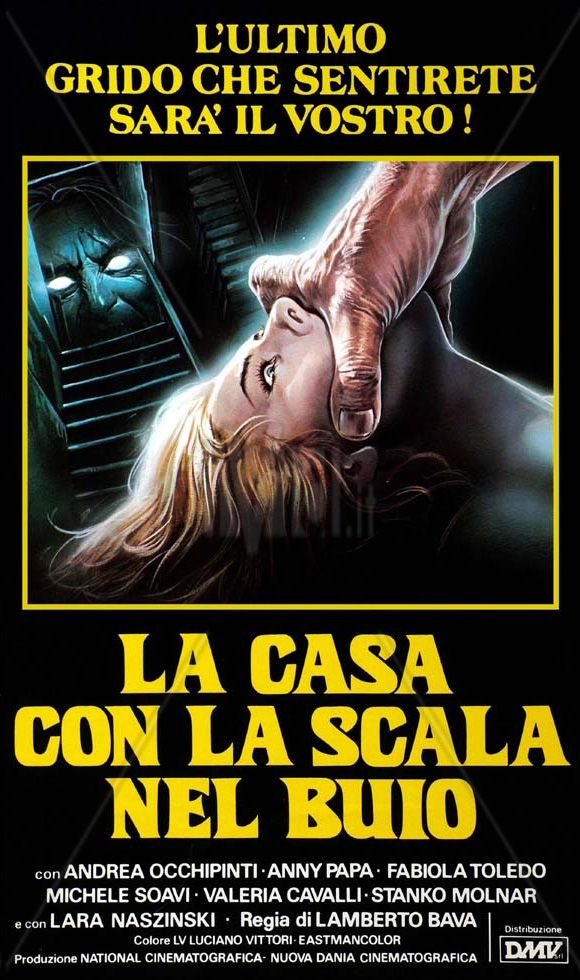
Cinematic Void January Giallo 2024: A Blade in the Dark (1983)

EDITOR’S NOTE: Cinematic Void will be playing this movie on January 6 at 7:00 PM MT at Sie FilmCenter in Denver, CO. You can get tickets here. For more information, visit Cinematic Void.

Known in Italy as La Casa con la Scala nel Buio (The House with the Dark Staircase), Lamberto Bava’s A Blade in the Dark was originally intended to be a four-part TV mini-series, with each segment ending with a murder. However, it was too gory for regular audiences, so it was released as a film. It was written by the husband and wife team of Dardano Sacchetti and Elisa Briganti, whose script was often at odds with what Bava wanted to put in his film.

Bruno (Andrea Occhipinti, The New York Ripper) is a composer hired to create the soundtrack for a horror movie. He’s been having trouble concentrating on the job, so he rents a house to sequester himself. He meets two women who used to know his rented villa’s former tenant, but when they disappear, he’s forced to watch the movie he’s scoring closer, as there’s a clue to the razor-wielding killer’s identity hidden within.

Bava worked as Dario Argento’s assistant for the movie Tenebre two years before this movie was made, so that has a big influence on this work. This is a movie unafraid to wallow in gore, feeling closer to the American slasher than the giallo. Then again, Lamberto was an assistant on the movie that predates the slasher, his father’s A Bay of Blood.

For the killer, he had difficulty finding someone who could convincingly appear to be a man and a woman. He turned to his assistant, Michele Soavi, who went on to direct plenty of great horror on his own.

For those that care about these matters like me — Giovanni Frezza, forever Bob from The House by the Cemetery — shows up in the movie within a movie that Bruno is writing the music to. He’s taunted by voices that chant “You are a female! You are a female!”

Also, in the true spirit of giallo and what the word means, every victim — and then the killer him or herself — is called out by the color yellow.

Cinematic Void January Giallo 2024: Opera (1987)

EDITOR’S NOTE: Cinematic Void will be playing this movie on January 5 at 10:00 PM ET at Cinema Salem in Salem, MA. You can get tickets here. For more information, visit Cinematic Void.

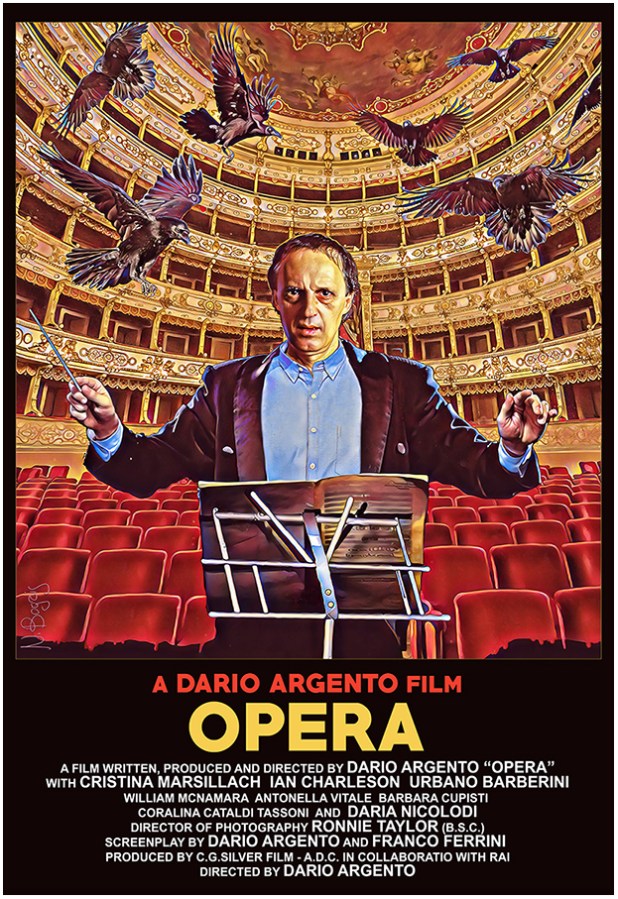
Mara Cecova is a diva and the star of a whole new way of performing Verdi’s Macbeth. But when she’s hit by a car as she argues with the director in the middle of the street, her role goes to her understudy, Betty. Ironically, in his book Profondo Argento, director Dario Argento claimed that the person playing the role of Betty, Cristina Marsillach, was the most difficult actress he would ever work with.

Despite her initial worries, Betty becomes an instant success on her opening night. At the same time, a black-gloved killer sneaks into one of the boxes to watch before murdering a stagehand with a coathanger. Grab your barf bags and motion sickness pills, everyone, Argento is behind the camera!

Of all the powerful shocks in Opera, perhaps the one that means the most to the viewer is that we share Betty’s torture — she’s repeatedly gagged, tied up and forced to watch the killer at work again and again as he tapes needles under her eyes. If she blinks too long or shuts her eyes, they’ll be shredded. It’s like Fulci’s wettest dream ever. In the same way, we are nearly complicit with the crimes we are forced to watch, particularly because they get more and more artfully composed.

Throw in the fact that Betty believes that the hooded killer is the same person who murdered her mother, she follows the giallo path for a protagonist and confides in someone else rather than the police. Her reason? The killer may know who she is.

Inspector Alan Santini (Urbano Barberini, Demons) is on the case, because there are so many clues, like the fact that the producer’s pet ravens were found dead after the show. As for Betty, she runs from the police and calls her agent Mira (Daria Nicolodi, Argento’s former wife and the writer of Suspiria and star of Shock) for advice.

Betty’s costume gets cut to ribbons, so she asks the wardrobe girl for help. While she works on the dress, they find a gold bracelet that they can almost read. But here comes the killer and his needles again, forcing her to watch him kill one more time. The wardrobe girl accidentally swallows the bracelet, so of course, we watch as the murderer slices her throat open to get it back.

Betty runs back to her apartment where Santini is waiting. He promises to send a detective named Soavi to watch over her (yep, The Church director Michele Soavi), but she doesn’t trust the man and leaves her apartment. That’s when her agent answers the next knock on the door by looking through the peephole. What follows is the most grand kill in the entire film — which is saying something — as we follow the bullet POV-style out of the gun and directly through her eyeball. Again, Fulci is somewhere wringing his hands.

Nicolodi had just ended a long relationship with Argento and did not want to be in this film. However, the shocking and complicated murder of her character changed her mind, even if she had to deal with an explosive device being put on the back of her head to achieve the final shot.

Betty escapes the killer again and runs to the opera house, convinced there is a connection between the murderer and her long dead and totally abusive mother. The next night, as she performs, the producer unleashes what is left of his ravens in the hopes that they’ll find the killer. Oh, they do alright — tearing his eyeball out of his head — FULCI ARE YOU THERE, IT’S ME DARIO — and rewarding you, the viewer, with POV shots that threaten you with vertigo. I’m getting dizzy even typing this.

I don’t want to give away the killer or even the second ending where the killer isn’t really dead. I just want to talk about the sheer Argento-ness of the final scene, where Betty wanders in a field and releases a lizard, giving him his freedom. Argento claims that this ending was inspired by Thomas Harris’s Red Dragon. Of interest, the director does NOT like the Michael Mann movie Manhunter. Me? Well, I love that movie. But I’d love to see Argento’s take. There’s was also a thought to another ending where Betty would fall in love with the killer.

Your enjoyment of this film really comes down to how much you like shocking amounts of bloodshed and Argento’s arty side. He based the film on his own failed staging of Macbeth, basing the role of the nervous producer on himself. And the idea of pins under the eyes? It comes from a joke about how Argento hated when people looked away during the death scenes in his films.

Believe it or not, Orion Pictures planned on releasing an R-rated version of this in the US called Terror at the Opera with eleven minutes of mayhem removed, as well as the Swiss Alps epilogue. Argento refused and Orion was losing money at a fast clip, so the movie only saw a limited video release. 

Opera is something else — filled with style and brutality. I loved it, but remember my warning as to how much you can handle.

Il mostro di Firenze (1986)

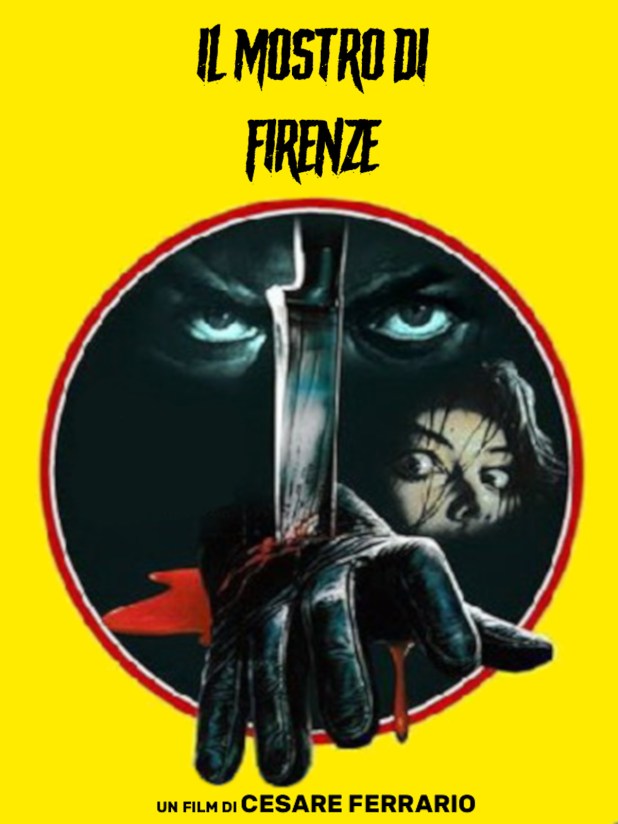
Based on a true story, this is all about a series of sex murders that have been the talk of Florence for almost 15 years. A serial killer is murdering couples while they make love, then cutting off parts of the female anatomy. Whoever the murderer is, they start the film by killing two more people while they are camping.

Hunting for that killer are Giulia (Bettina Giovannini), a journalist who has been tracking the killer for four years, and her fiancee writer Andreas Ackermann (Leonard Mann) who is writing a book all about the crimes. He soon realizes that he’s become obsessed with the case and has constructed a profile of a wealthy man whose parent’s perversions made him impotent.

As the case was not solved when this came out, this film was pulled from theaters. The case was finally resolved in 1998. Four men — all friends — were the killer, including five of the killings committed by postal worker Mario Vanni, along with participation by Giancarlo Lotti and two others who were released due to lack of evidence.

Directed by Cesare Ferrario, this was also released as Night Killer. this has Leonard Mann in his second giallo after Night School.

The same year, Camillo Teti released The Killer Is Still Among Us which is a much rougher and more traditional giallo story.