ABOUT THE AUTHOR: Jennifer Upton is an American (non-werewolf) writer/editor in London. She currently works as a freelance ghostwriter of personal memoirs and writes for several blogs on topics as diverse as film history, punk rock, women’s issues, and international politics. For links to her work, please visit https://www.jennuptonwriter.com or send her a Tweet @Jennxldn

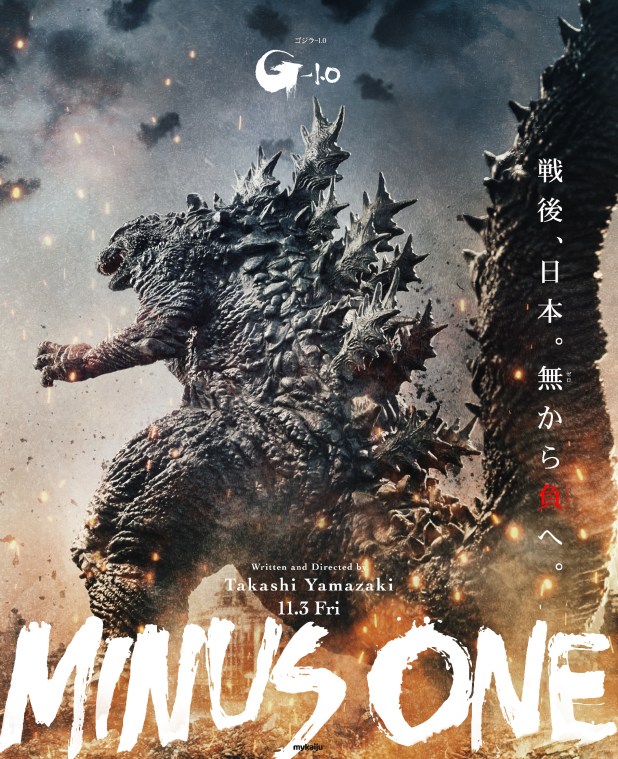
No long-time kaiju fan was more pleased than I when rumors began to swirl that Godzilla Minus One – the first Japanese Godzilla film in more than a decade – wasn’t just good. It was great. I didn’t want my expectations to ruin the experience of seeing the film for the first time, so I avoided spoiler-laden websites and subreddits.
Secretly, I was super excited. I hadn’t seen a Godzilla movie on the big screen since the 2014 American series launch Godzilla. A film that left me with the same feeling one has when they’re hungry and they eat bad pizza. It fills you up, but the calories are empty. I never saw any of the sequels because I was now certain that Hollywood, regardless of how much money they spend on effects or how many great actors they cast, will never truly be able to make a great Godzilla movie. It’s a film series that is uniquely Japanese. No other country on earth has had an atomic weapon dropped on it in a time of war. And that makes them uniquely qualified to make movies about an atomic monster. The original 1954 film was infused with melancholy and a foreboding sense that no matter how bad things are, they can always get worse.
Godzilla Minus One recreates that feeling better than any other Godzilla film made since then.
The film begins at the end of WW2. When Japan had nothing. Zero. Then Godzilla shows up and things get worse. Minus One.
Kamikaze pilot Kōichi Shikishima (Ryunosuke Kamiki) abandons his mission and lands on nearby Odo Island with “technical problems.” While there, a giant lizard known by the locals as Gojira goes on a rampage. Once again, Shikishima freezes and cannot bring himself to shoot the monster. Tachibana (Munetaka Aoki), the only other survivor of the attack, blames Shikishima for the death of his comrades.
The next act in the film shows an accurate portrayal of the grim life of post-war Japan where people survived on their wits and the kindness of strangers. Shikishimi, now suffering from PTSD and cultural shame, forms a makeshift family with a young woman named Noriko (Minami Hamabe) and an orphaned toddler named Akiko (Sagae Nagatani.)
He gets a job on a boat sweeping mines from the sea and it isn’t long before his old buddy from Odo Island makes his next appearance. This time he’s huge, having grown even bigger from America’s A-bomb test on Bikini Atoll in the pacific.
The boat team crosses the big guy’s path, and a chase ensues. Despite the film’s paltry (by Hollywood standards) 15-million-dollar budget, the jeopardy in this scene feels real. I’ve always loved it whenever Godzilla swims, but it’s the first time I’ve felt like I was watching Jaws with a kaiju.
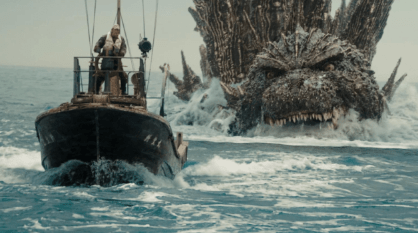
When the big guy finally makes landfall and attacks Ginza, it’s one of the best sequences ever achieved by Toho Studios. Not only is the destruction from G’s heat ray astounding in its execution, but it’s also one of the rare times we see Godzilla himself suffer what appears to be painful injuries after unleashing his weapon. (See GMK from 2001 for another great example of this.)
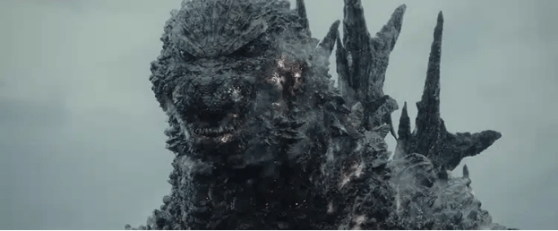
The resulting nuclear explosion blows Oppenheimer’s bullshit a-bomb away. And that’s important. I for one, am pleased as punch to see transnational audiences embrace a low-budget monster movie. IAs I’m writing this, Godzilla Minus One has grossed over 104 million dollars globally and is Oscar nominated for Best Special Effects. It should have been nominated for Best Picture. This movie succeeds on every level where every other budget-bloated major Hollywood 2023 release has failed.
Godzilla Minus One is a compelling drama. It’s also a period piece that’s historically accurate. Are you listening, Ridley Scott? It’s scary, exciting and fun. All for a cool 15 mill. This movie is proof positive that story and well-developed characters matter and you don’t need a billion dollars and 3 hours to do it. Did I mention the film was released globally entirely in Japanese with subtitles? So much for the “audiences don’t like to read” argument.
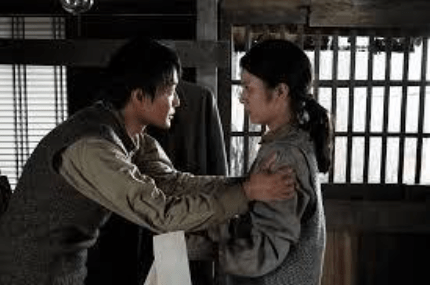
In the finale, Shikishima joins forces with Tachibana and a team of war veterans to do what the Japanese government can’t do and what the U.S. government won’t do. They defeat Godzilla in a thrilling finale. Or do they? Godzilla has powerful regenerative abilities. In Godzilla 2000 these cells were called Regenerator G-1. Here, they don’t name this ability, but it’s a nice callback for die-hard fans and the end result is the same. Godzilla is never defeated for long in any movie. If it were that easy, he wouldn’t be the star of cinema’s longest running series in history. Kudos to writer/director/effects artist Takashi Yamazaki for achieving something I never thought I’d see in my lifetime. He’s made Godzilla relevant again in a serious way. Without cheesy dubbing.
Toho Studios, if you’re reading this,
もっとゴジラ映画をお願いします!
Motto Gojira eiga onegaishimasu!
More Godzilla films, please!






 B&S About Movies
You must be logged in to post a comment.