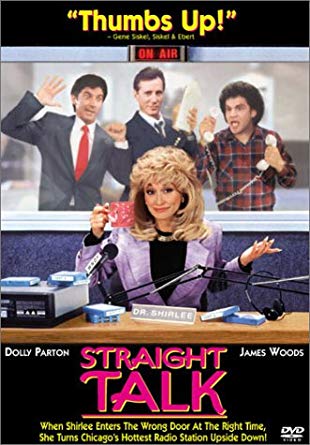
Straight Talk has been sitting on my shelf, part of a Mill Creek set along with VI Washawski, just taunting me, knowing that someday, somehow, someway that it would end up sitting in my DVD player, ready to cast its magic spell.
Writer Craig Bolotin often worked uncredited on films like Desperately Seeking Susan before writing this film. He’d go on to also write and executive produce Black Rain. This one was directed by Barnet Kellman, who is more well-known for his TV work.
The real draw, of course, is Dolly Parton. She plays Shirlee Kenyon, a dance instructor wallowing in Arkansas with her boyfriend, who is played by Michael Madsen. Yes, in the same year that he played Mr. Blonde, Madsen was the backwoods drunk beau of Dolly in a movie that no one remembers.
But he’s not the love interest. Oh no, that’d be James Woods, who plays a crusading reporter who has lost his way. He saves Dolly early in the film when she tries to fish a Jackson off a bridge. Then, of course, she talked a young Teri Hatcher into dumping Mr. Woods, who of course falls for our girl, who falls into a job as a talk radio psychotherapist.
She’s not a doctor, you may yell. Guess what, pal? You just realized the dramatic issue here. Can Dolly keep the job she’s best at? Will Woods divine her secret? Will Madsen screw it all up? And what the hell is up with this amazing supporting cast, which boasts Griffin Dunne, Tony Award-winners Tracy Letts, Amy Morton and Philip Bosco, Jerry Orbach, John Sayles (yes, the man who wrote Piranha, The Howling and Battle Beyond the Stars), Spalding Grey in a cameo as a rival shrink, Charles Fleischer (Roger Rabbit’s voice), Jay Thomas (who was a real radio man himself and plays Zim Zimmerman here)?
It’s also Ron Livingston’s screen debut. So it has that going for it.
Seriously, Straght Talk is way better than it seems that it will be. I don’t think that it presents the right path to radio — it completely rips off an old WKRP In Cincinnati episode’s plot, too — but it’s a quick movie that’s helped by Parton’s limitless charm. Yep — I’ve been front row for several of her shows and an unabashed fan, so your mileage may vary.
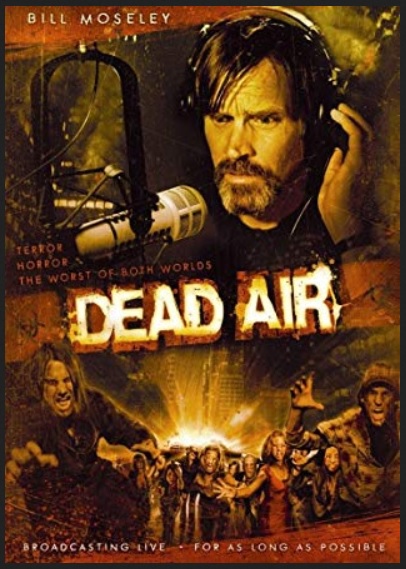
If the Lifetime cable channel decided to make a zombie movie, it would be this low-budget attempt at grafting Danny Boyle’s post-apocalyptic zombie film 28 Days Later (2002) with Oliver Stone’s Talk Radio (1998).
“Hey, wait a minute . . . dude, I know this movie . . . but Dead Air? Is this an alternate title for the Canadian horror film Pontypool (2008)?
That film—and if you’re into radio station zombies, it is clearly the better film (and not by much, to be honest)—starred Steven McHattie (Crown and Anchor, Watchmen). This one reteams Bill Moseley and Patricia Tallman from Tom Savini’s 1990 Night of the Living Dead remake—which was used as a major selling point to sucker us into renting this dead bore. (They’re a bickering divorced couple who still work together as a host and producer team.)
As with Pontypool, a Los Angeles late-night talk show host, Logan Burnhardt (Bill Moseley), and his production team are trapped inside a radio station during a zombie outbreak—this one instigated by a terrorist attack of “dirty bombs” ignited at major sporting events across the United States. Burnhardt’s crew stays on the air and takes calls and feeds information to listeners as the chaos unfolds. Then the terrorist responsible for the L.A bomb hijacks Burnhardt’s show to feed false information to the listeners and “stoke the fires of hatred.”
Yawn.
Lost somewhere in the dead boredom is a “message” about mob mentality and xenophobia, but by that point in the film, you just don’t care about the political propaganda Dead Air is selling. There’s no suspense or thrills. No threat of terror. No fear of violence. Not even a soupçon of horror. The “zombies” are nothing more than a bunch of flailing, petulant children from Central Casting, utterly devoid of violence and gore, with a splash of stage blood on their kissers sent on their way to run and growl. They’re actually not even zombies; they’re just human versions of rabid dogs prone to violence from the bomb’s toxins.
Yawn.
And the equipment in that radio studio! Logan Burnhardt is supposedly the #1 syndicated late-night talk host in the nation broadcasting from Los Angeles, the #2 rated media market in the country—and the studio is equipped with a recording studio audio mixing board as an on-air board? A reel-to-reel deck set on a counter top? This is 2009! All radio stations—especially in the major markets—converted to digital platforms and ditched analog recording over 15 years ago.
But it’s cool, Bill. We know it’s not your fault and we still love you.
Dead Air isn’t incompetent. It’s not awful in a George Romero Italian-green grease paint rip-off zombie kind of way. All of the various film disciplines have checked off all the right boxes. But that’s just it. It’s just “box checking” and everything is flat. It just lays there—and zombies can’t rest. They can never rest. They need to be on the move. But, one must consider that $500,000 budget the film was up against—and you can only do so much with a half million. So the question is: Will your passion for Bill’s work or your passion for cheesy, b-horror films from the video fringe give this a pass. But it’s Bill, right? You can check it out for free on You Tube.
About the Author: You can read the music and film reviews of R.D Francis on Medium and learn more about his work on Facebook. He also writes for B&S Movies.
When you need a suspenseful slasher flick, a neo-giallo or neo-noir thriller competently done on a tight budget, director Fred Walton (April Fool’s Day, The Rosary Murders) is the man to call. His 1979 debut film, the babysitter stalker flick When a Stranger Calls, budgeted at $1.7 million was brought in under budget at $1.5 million in an 18-day shoot. The film subsequently grossed over $21 million and became one of Columbia Studios’ top grossing films for the year.
For reasons unknown, even after the success of those three theatrical films, Walton retreated into low-budget TV work, directing a host of entertaining cable psycho-thrillers: a remake of 1965’s I Saw What You Did (1988), Trapped (1989), Murder in Paradise (1990), The Price She Paid (1992), Homewrecker (1992), the TV sequel to his debut, When a Stranger Calls Back (1993), The Courtyard (1995), and his final film, The Stepford Husbands (1996).
As for the influence of and the respect afforded to When a Stranger Calls: Director Wes Craven paid homage to Walton’s debut by duplicating the film’s 20 minute opening sequence—deemed as one of the scariest openings sequences in a horror film—in the first 10 minutes of his 1996 horror hit, Scream. (If you’ve never seen When a Stranger Calls, it’s highly recommended you do. It’s on You Tube.)
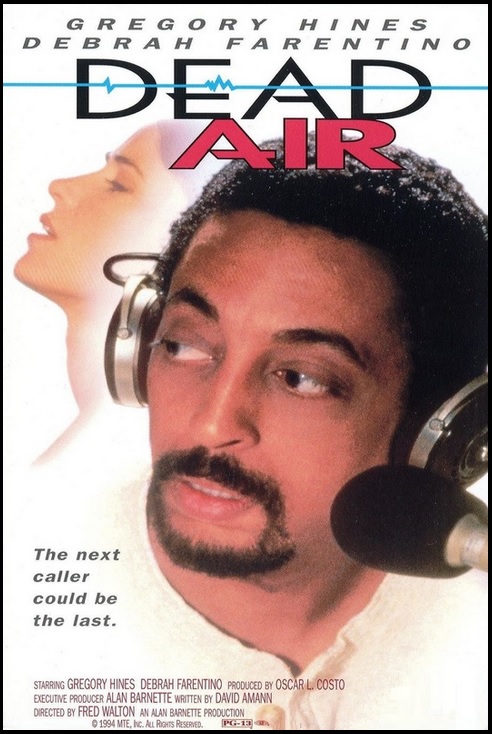
So, with that back story on Walton’s cinema forte—along with this film’s title, its tagline and artwork of the one-sheet—you’ve probably guessed the plot of this film is somewhat similar to the previously reviewed Power 98—with a lone DJ noir-spiraling into a web of murder and deceit driven by a mysterious caller.
And if you’re keeping track of your radio psychos, you know the concept of a killer having a relationship with a radio host dates to Clint Eastwood’s 1971 directorial debut, Play Misty for Me. And you’ll recall the post-Halloween slasher ‘80s brought us the first of several psycho films concerning a serial killer harassing a radio host, which began with the U.K’s Section 3 video nasty, Don’t Answer the Phone (1980). Others in the cycle include Open House (1987) and Outside Ozona (1998), along with the cable films The Night Caller (1998) starring Tracy Nelson, Requiem for Murder (1999) starring Molly Ringwald, and A Lover’s Revenge (2005) starring Baywatch’s Alexandra Paul.
However, don’t let that familiarity deter you from watching Walton’s take on the radio psycho genre.
Three things make Dead Air work—where other low budget, set-in-radio station flicks fail. First, is the well-researched and intelligent script by David Amann (TV’s The X Files, Crossing Jordan, Without a Trace, and Castle) that not only knows its noir cues, but allows the radio station employees to sound like real radio station employees. Second, it was shot inside a real radio station—KKHR outside of Bakersfield, Ca. (the film was also shot in Agua Dulce, Ca. also outside of L.A.) Third, Gregory Hines (Cotton Club, Wolfen) did his research; he handles the equipment, along with the grease pencils and razor blades as he splices audio tape, with the skills of a radio pro.
Mark Jannek (Gregory Hines) is an L.A. DJ who specializes in incorporating his love of film noir into his music programs by re-creating old time, nourish radio dramas (remember: Eastwood’s Dave Garver worked his knowledge of poetry into his shows). After the murder of his girlfriend, Kathie, by an “obsessive fan,” Jannek restarts his life under the on-air name of Jim Sheppard at a small station in a dusty oil field town, far from the glitz and glamour of Los Angeles.
As is the case with most DJs suffering from ego issues: “Jim” is back to his old tricks and ends up at a bar after his shift . . . and meets a girl, Judy, for a one-night stand (dude, did you learn nothing from Nick West in Night Rhythms?). The next night Mark’s on the air, the ever-present #1 fan who’s been obsessively calling the show tells him she has Judy—and murders Judy while he’s on the air. Of course, the cops don’t believe him—and there’s no record of the call. Utilizing his knowledge of the noir genre, Mark starts his own gumshoein’ investigation and tracks down Judy—and finds her body. Then the cat and mouse games ensue with the mystery fan making more untraceable phone calls and leaving messages on self-erasing cassette tapes, with Mark twisting in a web that takes him from victim, to witness, to suspect—not only in Judy’s murder, but in Susan’s, his producer at the station, and, the police believe, Kathie’s murder back in Los Angeles.
Is the person who killed Judy and Susan the same person who killed Mark’s girlfriend in Los Angeles? Is it the jealous DJ who got bumped from his shift to make way for Mark? Is it the psychology student (Debrah Farentino, TV’s NYPD Blue, Earth 2), who’s writing a thesis paper on broadcasting? Is it Kathie’s sister, Lara, who discovers she’s also becoming tangled in a web by her sister’s killer? Is it Morton, the station’s dweeby chief engineer?
The ending of Dead Air is a genuine, twisty shocker. Granted, it’s not a “shocker” of the Fatal Attraction or Basic Instinct nourish level, this is a direct-to-cable movie after all, but a shocker none-the less and certainly above the “shock ending” of other radio-noirs in its wake.
Look for an early role from John Hawkes as Morton, who got his start in the sci-fi cheapy Future-Kill (1985) and made it all the way to the Golden Globes and the Oscars with nominated roles in Winter’s Bone (2010) and The Sessions (2012). Horror hounds will immediately recognize Beau Starr in his role as Lieutenant Marvin Gallis from his roles in Halloween 4: The Return of Michael Myers and Halloween 5: The Revenge of Michael Myers, as well as his much seen roles (thanks their incessant cable replays) in Goodfellas as Henry Hill’s father (1990), and Speed (1994).
The VHS rip of the full film is on You Tube. You can also watch a preview trailer courtesy of Video Detective.
About the Author: You can read the music and film reviews of R.D Francis on Medium and learn more about his work on Facebook. He also writes for B&S Movies.
During B&S About Movies’ “Radio Week,” you’ll notice we’ve reviewed a few Lifetime broadcast “radio psycho” films and mention this modest directorial debut by Clint Eastwood in passing. This tale about a womanizing DJ hooking up with the wrong fan is where the “genre” began. Oh, yes: Jessica Walters goes-for-broke in her portrayal of the troubled Evelyn Draper.
The script was conceived by Jo Heims, whose career dates back to working behind the scenes as a production secretary on 1958’s Missile to the Moon*; her earliest screenwriting credits included 1960’s The Girl in Lover’s Lane, 1961’s The Devil’s Hand and Elvis Presley’s Double Trouble. Coming to know Eastwood through their mutual employer, Universal Studios, Heims co-wrote Eastwood’s influential breakout role: 1971’s Dirty Harry. She also wrote Clint’s follow up to Play Misty for Me, the little-seen romantic drama, Breezy (1973) (he also directed High Plains Drifter that same year). Heims other works you’ve seen are the great John Llewellyn Moxey’s Nightmare in Badham County and the utterly bonkers Death Game (1977; received a Grindhouse Releasing Blu-ray bow in 2022).
The convincing “production values” on the radio station are courtesy of Play Misty for Me not being shot on a set, but as result of being shot inside an actual radio station: Carmel, California’s KRML 1410 AM. Also adding to the realism of the station’s jazz format was the shooting of additional scenes at the September 1970 Monterey Jazz Festival featuring appearances by Cannonbally Adderley and Johnny Otis.
A “live” DJ, carts, turntables, reel-to-reel decks, and rotary pot audio boards? That’s audio heaven.
While the studio initially wanted to go with the title “The Slasher” and market Eastwood’s directorial debut as a horror film, he got the title changed when he obtained the rights to Erroll Garner’s 1954 song “Misty” after he saw the jazz icon perform at the 1970 Concord Music Festival. He then acquired the rights for Roberta Flack’s “The First Time Ever I Saw Your Face” for $2,000; a popular British folk standard originally released in 1957 (You Tube), the song was written by British political singer/songwriter Ewan MacColl and sung by his American folkie wife Peggy Seger. Another song purchased for use in the film was Duke Ellington’s “Just Squeeze Me (But Please Don’t Tease Me).”
Yeah, Dirty Harry Callahan knows his jazz. Punk.
Now for the backstory and the runaway success on Flack’s other hit, “Killing Me Softly with His Song,” originally recorded by Lori Lieberman. (No: it’s not in the movie. We know.)
An early seventies confessional folk-pop singer in the mode of hit makers Joni Mitchell, Judy Collins, and Janis Ian, Lori Lieberman signed a production, recording and publishing deal with the songwriting partnership of Charles Fox and Norman Gimbel who, in turn, signed their own production deal with Capitol Records.
As with most of the forgotten musical acts of late sixties and early seventies during the burgeoning American FM radio era, the Internet exhumed Lieberman’s career frustrations in the wake of her 1971 debut single, “Killing Me Softly with His Song,” when it became a 1997 Grammy Award-winning single for the American Hip-Hop group, the Fugees—remade under the truncated title of “Killing Me Softly,” from the Fugees’ 1996 album, The Score.
From the time the song became one of the biggest-selling number one singles of 1973, as remade by R&B artist Roberta Flack, credits and royalties for the song became a point of contention for Lieberman, as she long claimed she contributed to the song’s lyrics. While the writing team of Fox and Gimbel scored another 1973 Top Ten hit with Jim Croce’s “I Got a Name,” and composed the television theme songs for the ABC-TV Network’s Happy Days and Laverne & Shirley, Lieberman floundered with three more albums for Capitol in the United States. Those albums, however, found a receptive audience in Europe (a country rife with voracious music connoisseurs), which resulted in a top-selling, Euro-only release of a 1976 greatest hits package, The Best of Lori Lieberman.
Lieberman recently released her 17th and 18th albums, Ready for the Storm and The Girl and The Cat, produced by Bob Clearmountain, known for his work with Bruce Springsteen, the Rolling Stones, and Bon Jovi.
Back to Play Misty for Me.
The most awesome aspect of this film is that Universal didn’t have much faith in turning over a film to Eastwood. So he waved his usual acting fee and was paid only as a director. To say Eastwood “showed them” is an understatement. He wrapped the film five days ahead of schedule and made it $50,000 short of its $950,000 budget. Play Misty for Me went on to gross $11 million in its initial release and, when it became a VHS rental in the ‘80s, earned another $6 million.
The influences of Clint Eastwood’s directing debut can’t be denied, as a female DJ-cum-radio psychologist taunted by a killer became familiar damsel-in-distress fodder for the Lifetime cable network, which aired the similarly-plotted The Night Caller (1998), Requiem for Murder (1999; Molly Ringwald), A Lover’s Revenge (2005; Alexandra Paul), and Radio Silence (2021). To a lesser extent, one can place the radio murder-mysteries Night Rhythms (1992), Night Owl (1993), director Fred Walton’s superb noir-slanted Dead Air (2009), and the direct-to-video renter, Shattered Illusions (1998), on the “radio psychos” list.
* You can catch up with more pre-Star Wars sci-fi films, such as Missile to the Moon, with our Exploring: Before StarWars feature.
Update November 2020 : Kino Lorber has just re-released Play Misty for Me as a Special edition Blu-ray in a new 2K transfer. The disc includes commentary by film historian Tim Lucas and a video essay with film historian Howard S. Berger. While Donna Mills appears in an all-new interview, Siegel and Eastwood appear in an “about” featurette. Writer-director Adam Rifkin (The Dark Backward, Detroit Rock City) offers his insights via his “Trailers from Hell” segment (You Tube). And . . . if you’re a Clint Eastwood completist: Kino Lorber has also re-issued Clint’s films The Beguiled and The Eiger Sanction to Blu. You can learn more about Kino Lorber’s complete roster of films at their official website and Facebook, and watch the related film trailers on You Tube.
As result of the Kino Lorber reissue, Sam takes another, new look at the film, here.
Now, the question is: When will Kino Lorber re-release the fellow radio flick A Matter of Degrees to DVD and Blu?
Ted Nicolaou directed Subspecies, TerrorVision and The Dungeonmaster in addition to this film, where two aliens named Cosmo and Lump take over Superstation 66, a small radio station in Pahoota, California. Meanwhile, DJ Dan O’Dare and Flip Humble have a scam going on that involves a car and polka records. If you haven’t figured out by now that Bad Channels is weird, here’s your confirmation.
Most of Bad Channels is made up of music video performances from DMT, Blind Faith and Sykotik Sinfoney, dancing fungus and humans getting shrunk down. Original MTV VJ Martha Quinn shows up. There’s also a nun playing guitar in a shopping cart.
Even crazier, Blue Öyster Cult scored this entire movie!
When Becca and I first started dating, she was looking everywhere for a copy of this movie. I got it for her and it solidified our relationship. Therefore, I love this movie a lot more than your average person.
It amazes me that this movie was made in 1992 and not at any time in the 1980’s. Nurse Ginger from this movie would return in 1993’s Dollman vs. Demonic Toys, a crossover film of Full Moon properties.
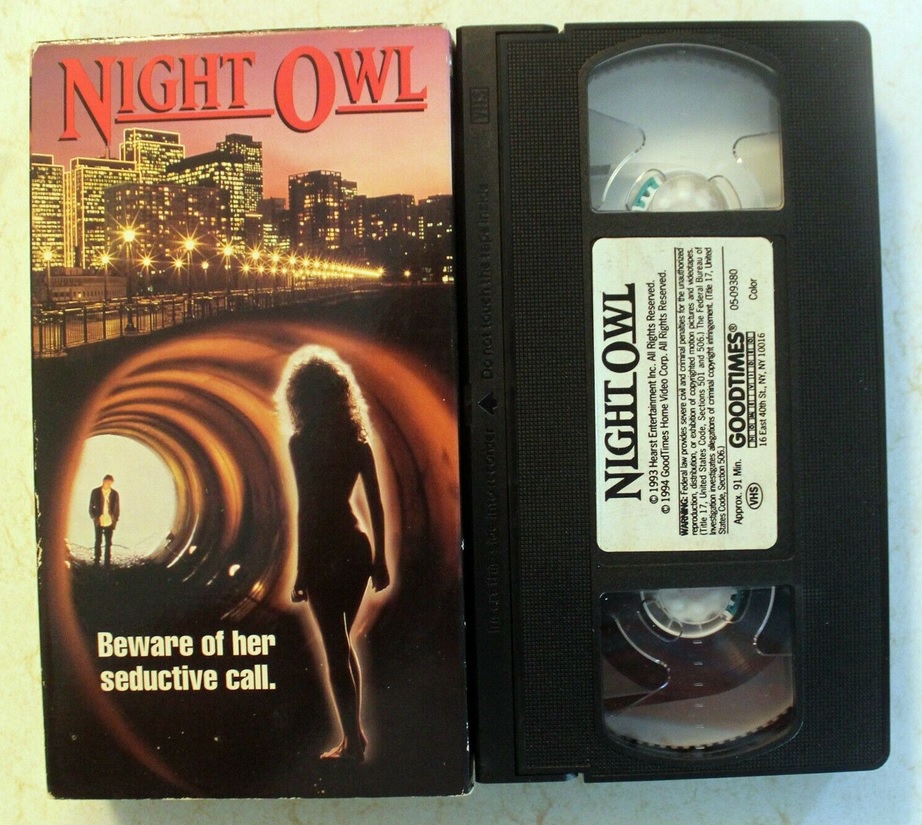
Don’t be logline or synopsis duped and don’t be conned by the film’s jazz score and soft-focus photography: Jennifer Beals (Flashdance, The Bride, and Vampire’s Kiss, Doctor M) isn’t a “pretty female radio DJ” or a “sultry nighttime disc jockey” and this isn’t a Lifetime-styled, soft-core sex thriller set inside a radio station. This is a ghost story. And it’s a fantasy-horror ghost story and not a romantic-fantasy like its inspirational antecedent: 1990’s Ghost, starring Demi Moore.
Julia (Beals) is a successful New York doctor specializing in audiology and speech pathology. She’s ready to walk away from five years of marriage to Harry, her ne’er-do-well jazz saxophone player husband (familiar TV actor James Wilder), who’s prone to cheating on her—and lying about the affairs.
She begins investigating the sudden rash of men self-mutilating (one gouges his ear drums) and committing suicides (Harry’s bandmate freaks out on stage, runs off, and jumps off a building). The one trait they have in common: they scream “She’s in my head!” over and over.
That “voice” is The Night Owl, a sultry overnight jazz disc jockey newly syndicated on the New York airwaves of WPKZ. “Her” voice captivates men—promiscuous men in particular—and feeds on their carnal desires during the full moon of the autumn equinox. And the station’s manager claims there is no “Night Owl.” And the FCC believers her to be a pirate radio operator broadcasting off the coast of New York. And Julia scoffs at the warnings of Dr. Matthews (Jackie Burroughs; The Dead Zone, Willard 2003), a professor of ancient folklore convinced the men are the victims of an ancient Siren.
And The Night Owl’s newest victim is Harry, who’s to be her Halloween sacrifice. And The Night Owl is prone to attacking the lovers of her victims in bed, raking them with her ghostly hand and wrapping a bed sheet around their necks.
Night Owl is a smartly written mystery by the female-writing TV team of Ann Powell and Rose Schacht; they draw their tale from the Greek folklore of Homer’s The Odyssey in which Ulysses and his ship’s crew comes under the bewitching spell of the Sirens. Using the airwaves to attract male listeners—in lieu of ocean waves and sailors—is a nice twist to an old legend. The script’s only weakness is its constricting 88-minute TV movie running time (this ran as a USA Network original before the channel became a rerun shill for NBC-TV; enough with the Law & Order!) that doesn’t allow for a deeper exploration of its themes.
You’ve seen director Matthew Patrick’s work before with his 1989 debut film, the highly-rated USA Network cable movie Hider in the House; Patrick doesn’t host that Gary Busey-starring movie on his personal You Tube page, since that film is owned by Lionsgate.
Beware of those Night Owl grey market DVD-rs in the marketplace, as this one has never been officially released on DVD. Luckily, Patrick shares a VHS rip of the film on his You Tube page to enjoy. He’s also uploaded his follow up to Hider in the House, the 1993 USA Network horror-thriller Tainted Blood starring Raquel Welch.
About the Author: You can read the music and film reviews of R.D Francis on Medium and learn more about his work on Facebook.
Nick West (Martin Hewitt) is a nighttime jazz disc jockey of the Dave Garver variety (Play Misty for Me, 1973): as he spins songs, he coos to lonely, sexually frustrated women who, to listen to the Nickster on the radio, must attire themselves in the latest Victoria Secret fashions. Hey, this isn’t KRML 1410 on your AM dial. This is KHPY 108.9 FM.
Yeah, it’s that type of movie: bogus frequency, babes, and boobs.
One night after his show, Nick ends up at a strip club to visit Cinnamon, his latest girlfriend-bartender squeeze, where he comes to the rescue of Honey, a stripper damsel-in-distress—and humiliates Vincent, the club’s owner and her pimp (David Carradine?!?), in the process (with a realistic 45-Revolver squirt gun that he uses to drink water from while on-the-air, you know, as “character development”).
Yeah, it’s that type of movie: bogus guns, babes, and stripper poles.
The next night, to show her appreciation, Honey (Shannon Tweed’s sister, Tracy) comes to the station—and they have sex in the studio, Eric Swann-style (FM, 1978). Nick’s listeners are shocked when the moaning and groaning turns into choking. Meanwhile, back in the studio, Nick’s passed out on the floor next to Honey’s dead body. So Nick goes on the run with Cinnamon to clear his name. But not to worry: Nick may be on the run for his life, but there’s still time in between the sleuthing for hot, sexual encounters.
Yeah, it’s that type of movie: bogus sleuthing, boobs, and FCC violations.
The questions abound: Did all of Nick’s promiscuous sex, chain smoking, booze and drugs lead to a psychotic break? Is it the station manager from his last station that lost its license over Nick’s antics? Is it one of the jealous, profanity-spewing male listeners who call into his show? Did Bridgette, his career-driven, dog-collar wearing producer, do it? Did Vincent set him up? Did Cinnamon set him up? Was it Jackson, a holier than thou cop (Sam Jones) with a grudge against Nick’s on-air antics? What’s that? Honey and Bridgette are undercover lovers?
Yeah, it’s that type of movie: red herrings, boobs, and no 7-second air-delay.
Now, with a down-on-their luck exploitation cast featuring Hewitt, Jones, Carradine, and Gene Simmons’s sister-in-law, you’re thinking this is a video fringe wet dream: only if you’re a David Carradine completest or if you thrive on the bungled careers of others and experience schadenfreude as once popular actors slum for a paycheck.
Martin Hewitt and Sam Jones are a long ways away from their starring roles in their major studio, feature film debuts of Flash Gordon (1980) and Endless Love (1981)—so there’s something to be said of checking your arrogance and ego at the door. And we all know how far David Carradine had fallen, but to end up in this Basic Instinct (1992) backwashed porn slop (did you know there was a Basic Instinct 2?)?
You can call Night Rhythms a “soft-core erotic thriller” all you want. You can market the film in a very hard “R” version for cable, a soft “X” version for a home video release, an “NR” to stick behind the beaded curtain, or cut out 15-minutes of the gratuitous (including ménage and lesbian) sex scenes and stick it on the shelf of a local Blockbuster Video. No matter how you cut the print, it’s disheartening to see Martin Hewitt go from working with Academy Award-nominated Italian director Franco Zeffirelli (1968’s Romeo and Juliet) on Endless Love—which served as the feature film debut of Tom Cruise—to rolling around in cringe-inducing, gratuitous sex scenes.
Yeah, it’s that type of movie: four crappy versions, boobs, and gratuitous everything. And it’s also the type of movie I love.
Sure, Night Rhythms made money. And the acting, directing and cinematography are solid and above porn-grade, but . . . Basic Instinct is a neo-noir masterpiece recognized for its groundbreaking depictions of sex on film. We experienced sympathy, while feeling distain, for Michael Douglas’s dysfunctional cop (also named Nick!). We were engrossed by the cat-and-mouse game between Douglas and Sharon Stone’s Catherine Trammel. But the same couldn’t be said for the 1993 Madonna-starring knockoff Body of Evidence or William Friedkin’s 1995 knockoff, Jade. And Night Rhythms, which substitutes the trouble cop of those films for a trouble radio disc jockey, doesn’t come close in its goals to exist in a world where “Basic Instinct meets Play Misty For Me.”
Yeah, it’s that type of movie: a great pitch, a worn-out fast forward button, and an ending that should have shown Nick the Dick’s set-up punk ass in a prison cell, listening to the producer who set him up, hosting his old radio show. It’s also that type of movie where your producer wears fishnet shirts and a studded collar, and gums up the control room’s electronics with cigarette smoke.
Flotsam and Jetsam . . .
Charles Band’s Full Moon Pictures has the rights to Night Rhythms and streams it on their Full Moon Amazon Prime page. Based on its 84-minute runtime, and the fact that Amazon is streaming it, we’ll guess that it’s the edited Blockbuster Video version, but to be on the safe side: discretionary viewing is suggested. (The naughty version runs 99-minutes.)
Gregory Dark also wrote and directed the popular B-action sci-fi video rentals Dead Man Walking (1988; full movie) and Street Asylum (1990; full movie) starring the never-not-awesome Wings Hauser.
After working with Martin Hewitt on another soft-erotic thriller, 1992’s Secret Games (trailer), Dark reinvented himself as a go-to music video director with Linkin Park’s “One Step Closer,” Stone Sour’s “Inhale,” and Sublime’s “Wrong Way. His long list of clients also includes Breaking Benjamin, Ice Cube, Mandy Moore, and Xzibit. One of the few adult filmmakers (Google “The Dark Brothers” at your own peril to find those films) to successfully transition into mainstream Hollywood, Dark had his biggest success with the WWE Films and Lionsgate Entertainment co-production See No Evil. Directed by Dark, the 2006 film starring professional wrestler Kane grossed more than $60 million dollars in worldwide box office. Not a bad day’s work for a film that was produced for $8 million.
As for Martin Hewitt: Today he’s retired from the business as a divorced father of two and runs a successful home inspection business in Southern California.
As for Sam Jones: He’s still in the business with two new films in the marketplace: Decapitarium (based on the writings of Edgar Allan Poe; trailer) and Axcellerator (a car thief involved in government intrigue with Sean Young and Maxwell Caufield; trailer).
Meanwhile: Tom Cruise—who worked under Martin Hewitt in Endless Love and came up Hollywood’s ranks alongside Maxwell Caufield and Sam Jones—is back in theaters on June 26, 2020, with Top Gun: Maverick.
That’s how life, rolls.
Two new flicks starring Sam “Flash Gordon” Jones are out now.
Update: In January 2022, B&S About Movies rolled a “Gregory Dark Week” tribute of reviews. That justified another take on Night Rhythms, as well as an exploration of Dark’s music video resume.
To learn more about Gregory Dark, Tom Junod of Esquire Magazine wrote a fantastic exploration on Dark’s career in 2007. Tom Clark also published a telling piece for Diabolique Magazine in 2020.
A whole week of even more radio stations on film? You bet!
About the Author: You can read the music and film reviews of R.D Francis on Medium and learn more about his work on Facebook.
Here’s another winner from the awesome “Big Three” network TV movie-era of the ‘70s. Also known as End of the Line in its overseas theatrical and later U.S TV syndication runs, A Cry for Help stars Robert Culp (Calendar Girl Murders, The Gladiator, Spectre) as Harry Freeman, a cynical and acerbic, Don Imus-styled radio talk show host who abuses his on-air callers. When one of those callers, a troubled young runaway, threatens to commit suicide, Harry dismisses her, but informs the police anyway. However, when the cops dismiss him, he comes to realize his mistake. So he recruits his audience to help him track down the girl—but is it to assuage his own guilt or as a ratings gimmick?
Involved in the mystery are lots of familiar ‘70s and ‘80s TV faces with Bruce “I’m not Bruce Jenner” Boxleitner, Gordon Jump (WKRP in Cincinnati), Michael Lerner, Chuck McCann, and Ralph Manza (you’ll know him when you see him; his career goes back to the mid-‘50s), and Ken Swofford (Black Roses and Hunter’s Blood). You’ll also notice TV actor Julius Harris (Cannon, Ellery Queen, Harry O) from his Blaxploitation resume with the likes of Black Caesar, Friday Foster, Let’s Do It Again, Shaft’s Big Score, and Superfly, and as Tee Hee alongside James Bond in Live and Let Die. (Look out! April is “James Bond Month” at B&S About Movies.)
What is all that stuff? Well, those are carts, cart decks, reel-to-reel decks and VU meters, you adorable, little Spotify youngins. The “radio” in this is, of course, excellent, and Robert Culp did his homework.
If this ABC-TV production plays like a ‘70s TV detective yarn, only with a disc jockey instead of a private eye, that’s because Executive Producers William Link and Richard Levinson were behind the popular TV series Columbo, Ellery Queen, Mannix, and Murder, She Wrote. Writer Peter S. Fincher wrote and directed episodes of Baretta, Columbo, and Kojak, while director Daryl Duke came from the Columbo family as well. Duke also directed the highly-rated 1973 TV movie The President’s Plane is Missing* and the 1978 Elliot Gould-starring theatrical The Silent Partner. And for the country music fans: Duke directed 1973’s Payday** starring Rip Torn as a burnt-out country singer.
You can watch A Cry for Help for free on You Tube. Caveat emptor on those grey market DVDs, as this has never been officially released on video. There’s no trailer, but you can watch a 14-minute film clip on You Tube.
What’s that? Where can you get more TV movies? Not a problem, we love the TV movies of the ‘70s and ‘80s here at B&S About Movies. Be sure to visit our “Week of Made for TV Movies,” “Son of Made for TV Movies Week,” and “Grandson of Made for TV Movie Week” explorations. And there’s even more TV movies to be had with our upcoming “Dan Curtis Week” on March 22 through March 28. And again: April is “James Bond Month,” so join us, won’t you?
* Ugh. Too many movies! How did we miss that one during any of our “TV Movie Week” blow outs or our “Airline Disaster Week” homage?
** Once again! How did we miss that fers errs countryfied “Hicksploitation Week” of reviews?
The film noir and Blaxploitation genres meet in MGM’s follow up to 1971’s Shaft (along with 1972’s Cool Breeze and Hitman), which plays as a more action-packed version of Clint Eastwood’s better known radio romp, 1971’s Play Misty for Me—with a dose of karate.
Instead of a bad mother private eye, Frankie J. Parker (Calvin Lockhart of the box office bomb Myra Breckinridge and Amicus Pictures’ Blaxploitation-werewolf flick The Beast Must Die) is a Los Angeles soul radio disc jockey with martial arts skills, courtesy of a school operated by his best friend, Charles Atkins (Jim Kelly in his film debut, on his way to Enter the Dragon with Bruce Lee and lead roles in Black Belt Jones and Three the Hard Way).
As with all of the smooth talkin’, womanizing jocks, Frankie J. cools his heels after his shows in a nightclub owned by another one of his friends, ex-football player Tank Robinson (Rockne Tarkington of Black Samson, Black Starlet, and The Ice Pirates). And Frankie J. meets the ubiquitous, newly arrived-in-town femme fatale Melinda (Vonetta McGee of Hammer with Fred Williamson, Blackula, Shaft in Africa, and Detroit 9000). And she’s the ex-squeeze of a Chicago gangster. And she has a damning tape recording that can take down the operation. And she’s stupid enough to think that Ross Hagan (Alienator) won’t track her down. And she ends up dead in Frankie’s apartment. And it turns out Tank is involved with the mob. And the thugs kidnap Frankie’s girlfriend Terry (Rosalind Cash of The Omega Man and Tales from the Hood) for the tape.
Does Frankie J. recruit Jim Kelly and his karate students to go “Shaft” on their asses and save Terry? You bet. And it’s awesome—snake-filled cage and all.
Oh, and for the Pandora kiddies: Those are reel-to-reel decks and VU meters and the man in the booth is a DJ.
You also known Lockhart from his appearance as Silky Slim in 1974’s Uptown Saturday Night and 1975’s Let’s Do It Again with Billy Cosby, and his late ‘70s appearances on episodes of TV’s Good Times and Starsky and Hutch.
Then again, maybe you don’t. But that’s how I remember the late Calvin Lockhart the most. You dig?
And you can dig it, through Amazon Prime. You can watch two more clips from the film courtesy of You Tube HERE and HERE.
About the Author: You can read the music and film reviews of R.D Francis on Medium and learn more about his work on Facebook.
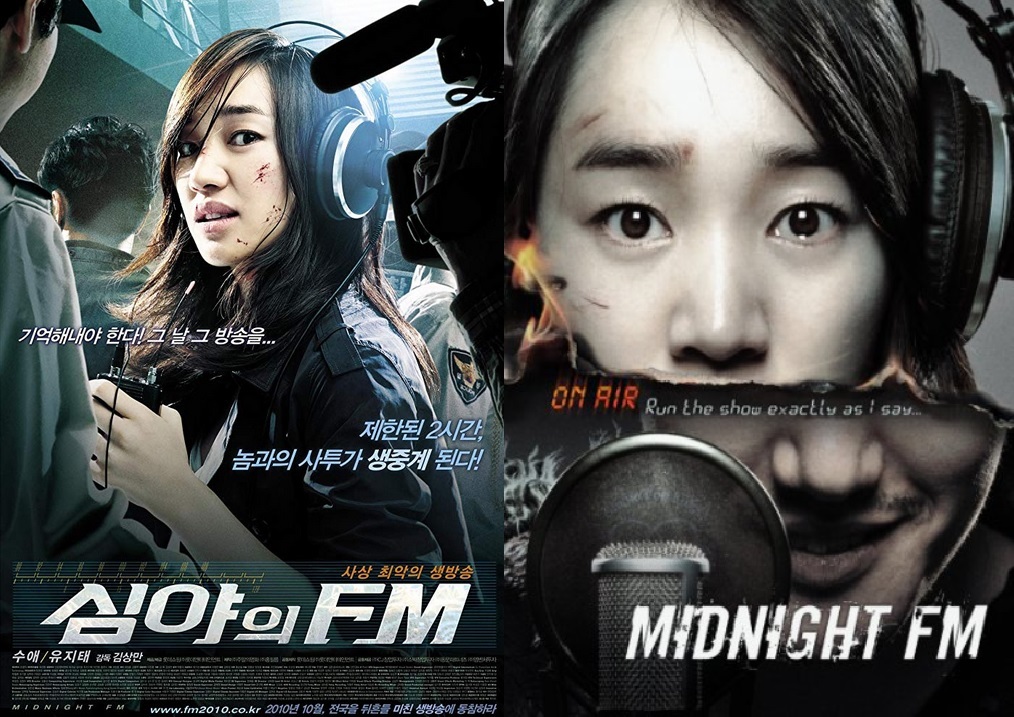
Ko Sun-Young is an arrogant celebrity DJ on the last two hours of her final overnight shift on a highly-rated radio station. While popular with the listeners, Sun-Young also has her detractors for being “too American” in her tastes and, instead of talking up Korean movies and K-Pop, she’s all about the music of Leonard Cohen and the movies of Martin Scorsese. So it’s no surprise Sun-Young’s decided to move to her beloved America for a groundbreaking medical treatment to cure her young daughter’s neck injury-induced mutism.
Someone’s invaded Sun-Young’s home and holds her daughter and sister hostage and forces her to play a deadly question-and-answers game based on the history of her show. And every wrong answer results in a gruesome pain inflicted on her loved ones. Sun-Young is also instructed to play songs featured on past shows and to recreate the introductions verbatim-by-memory.
Now that’s a radio studio! It’s all about the technical details. That, along with great acting, cinematography, and directing and you have a ratings winner.
The best “Americanized” references to guide your viewing on Midnight FM would be Jodie Foster’s Panic Room meets Colin Ferrell’s Phone Booth—only the “room/booth” is the confines of a radio studio. Unlike most Korean thrillers that opt for extreme graphic violence, Midnight FM (Simya-ui FM in its homeland) opts for some good old fashioned, American-styled cat-and-mouse games of the film noir variety between the secret admirer and victim (thus the victim’s love of American film and music). You may also reflect back to the J-Horror hits Pulse (2001) and One Missed Call (2008), only this time the tormenting calls aren’t from the beyond.
You can rent the subtitled version of Midnight FM on Google Play, Vudu, and You Tube Movies. There’s a free version—without subtitles—on Vimeo. There’s also a four-part free version—with subtitles—on the Korean TV Facebook page.
About the Author: You can read the music and film reviews of R.D Francis on Medium and learn more about his work on Facebook.






 B&S About Movies
You must be logged in to post a comment.