Battle of the Mods (1966)

If you’re a fan of the Who — and watched or listened to their 1973 rock opera Quadrophenia — you’re up to speed on the two warring British youth subcultures known as the Mods and the Rockers that came to worldwide notice courtesy their numerous, violent confrontations in mid-1960’s London. And you know about their roots in the frames of Marlon Brando’s The Wild One (1953) and the music of Eddie Cochran and Gene Vincent.

And Euro-cinema knew good fodder for a script when they seen one.

So Ennio De Concini, who wrote more than his fair share of sword n’ sandal and spaghetti westerns, and director Franco Montemurro (internationally known for 1962’s The Police Commissoner and 1964’s Divorce Italian Style), came up with a story about a Liverpool gang war between the Mods (who dress in the latest fashions and style ala Gene Vincent) and the Rockers (adorned in a ’50s greaser style ala Marlon Brando). Ricky Fuller (Euro musician Ricky Shayne), the son of a wealthy businessman, is a Mod musician who, after a bloody a gang fight that leaves his girlfriend dead, flees Liverpool for Rome — and he starts an affair with his father’s mistress.
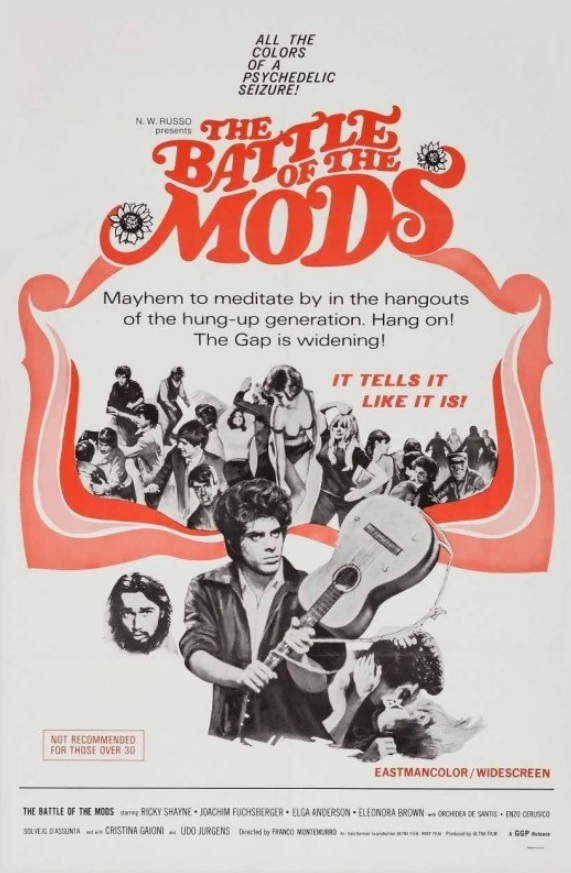
La battaglia dei Mods

A 1970 Radio Luxemburg “Golden Lion” award-winning singer, Ricky Shayne (aka George Albert Tabet) was born to a Lebanese oilman and his mother, a French-born painter, in Beirut, Lebanon. After moving to Paris at the age of 15, he began his music studies; with a move to Italy at 17, he began his recording career and, courtesy of his cinematic good looks, quickly found acting work. In 1965, he co-starred in an Italian rock flick Altissima pressione (Highest Pressure). He quickly transitioned into leading man roles with the 1966 German rock film Siebzehn Jahr, blondes Haar (Seventeen Years, Blond Hair) and the 1967 Italian rock flick Una ragazza tutta d’oro (A Girl All In Gold). Of course, all of the films featured Ricky’s latest hits, with the The Battle of the Mods featuring his tunes “Uno dei Mods” (“One of the Mods”), along with “No No No No” and “Crazy Baby I Got You” (which also served as the film’s alternate title).

American classic rock aficionados came to know Ricky Shayne by way of the American pop band Stories, fronted by Ian Lloyd (1973 U.S. #1 “Brother Louie“). In lieu of importing Ricky Shayne to the States via his 1971 European smash hit single “Mammy Blue” (the German language version hit #7 in that country; the French language version hit #8 in France, the English language version hit #1 in Argentina and Brazil, and the Top 10 in Belgium and Japan), the song was re-recorded by Stories, who placed it in the American Top 50 — and proved to be the last hit by the band. Shayne, meanwhile, became a U.S citizen in 1975, but continued to hit the European charts with a variety of singles while starring in European film and television roles. Now, at the age of 76, he still performs in Eurasia as part of nostalgia package tours.

While a quick search of Ricky’s music on You Tube will turn up a wide array of his singles, here’s his original 1971 version of “Mammy Blue” to enjoy (alternately titled with one “m” or two, depending on country of release.)

A VHS rip of the English dub of Battle of the Mods from a UHF-TV replay is available on You Tube. You can also watch rips of A Girl All in Gold and Highest Pressure, along with an extended clip of Seventeen Years, Blonde Hair, all courtesy of You Tube.

About the Author: You can learn more about the writings of R.D Francis on Facebook. He also writes for B&S About Movies.

Never Too Young To Rock (1976)

This is purely a British film steeped in nostalgia for the short-lived British glam rock movement that spawned the likes of David Bowie, T. Rex (“Bang a Gong“), and Sweet (“Little Willie“), and to a lesser extent — at least for U.S. audiences — Mud (“Tiger Feet“), Slade (“Cum on Feel the Noise“), and Suzi Quatro (of the recent document retrospective, Suzi Q).

Check out the TRAILER.

Like any Beatles flick or British Invasion film romp starring the likes of Cliff Richard and the Shadows (1966’s Finders Keepers), Herman’s Hermits (1966’s Hold On!), and Freddie and the Dreamers (1967’s The Cookoo Patrol), a rock band on tour finds itself in hijinks — with rock ‘n’ roll under attack by the establishment and a rock ‘n’ roll club in danger of being closed down.

To that end: In a “future” set in late 1970s, the establishment has banned rock ‘n roll from television. So a young rocker (British television acting mainstay Peter Denyer) leads the charge against the ban by organizing the biggest rock groups in England to perform at a benefit concert.

Of course, David Bowie, Marc Bolan (of T. Rex), Sweet, Slade, and Suzi Quatro will have none of this amateur cinematic foolishness, so we have to settle for the lesser “stars” of the glam era with the likes of Mud and the Glitter Band (Gary Glitter’s backing band, out on their own), along with the Rubettes — and guest appearances by Peter Noone of Herman’s Hermits (trying to eek a living in a post-British Invasion world) and Midge Ure (later of Ultra Vox) with his glam band, Slick.

This is the type of film with nary a plot, the “action” consists of the old slap stick standby of a food fight in a roadside diner, and lots — and LOTS — of musical numbers padding out the film for its whopping one hour fifty minute running time. The cast is rounded out by members of, get this, the prestigious Royal Shakespeare Company — and beware the bushy mutton chops and sharply-cut side burns — and of the outdated vaudevillian comedy groans presented by British comedians Freddie Jones and Max Wall (insert sad trombone “wah-wah-wah” sfx here.)

However, if you want to trip down the ’70s glam rock memory lane of your youth, or you if want to first educate yourself on the era with a glam primer, there’s not another film quite like this glittery mess of a train wreck of a film.

To say I love this movie is an understatement.

Overseas readers can stream this via Amazon Prime U.K., but we found you a free, three part upload on You Tube HERE, HERE, and HERE. Ha! It’s infectious! I got Sam the Bossman to watch: here’s his take. Yes, it depends which print you watched and where, back when: this came out in 1975 and 1976. Glam, of course, was out by 1976, and punk was on the rise. . . .

About the Author: You can learn more about the writings of R.D Francis on Facebook. He also writes for B&S About Movies.
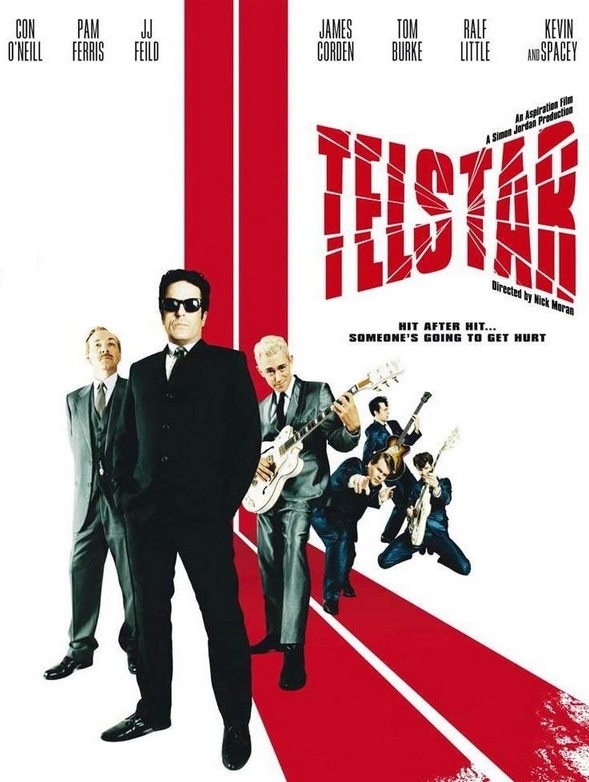
Telstar: The Joe Meek Story (2008)

As with Clint Eastwood’s 2014 film adaptation of the 2005 Tony Award-winning Broadway musical Jersey Boys chronicling the career of Frankie Valli and the Four Seasons, I equally anticipated this rock bio concerned with British record producer Joe Meek. Sadly, as with Jersey Boys, I was left empty. Granted, the production designs of both films (as with Tom’s Hanks’s love letter to ’60s one-hit wonder pop-rock ditties, That Thing You Do!) are fantastic. However, the films underneath the period accurate sets and costumes are derivative raison d’être—despite their quality, one viewing is enough. And, for U.S. audiences, the thick British accents and harsh, Royal Shakespearean moments of actor-emoting can be a bit much to handle. Yes, this is purely meant for U.K. audiences, you yank rocker.

Joe Meek was an electronics-tinkering child prodigy who developed such sound engineering innovations as multi-tracking, overdubbing, sampling and reverb (with addition kudos to guitar and recording innovator Les Paul), and was the original trailblazer in viewing the recording studio itself as “a music instrument”—an instrument Meek skillfully mastered, regardless of his being tone deaf and lacking any playing or composition skills, into “Telstar,” the 1962 worldwide #1 instrumental hit by his assembled studio band, the Tornados.

Sadly, Meek was a tortured genius who suffered from bouts of depression and paranoia that led to fits of rage fueled by his closeted homosexuality (a punishable crime in the U.K. at the time) and his addiction to amphetamines and barbiturates (to fuel his maniacal quest for perfection). As result—even with the financial backing of ex-military officer and business entrepreneur Major Wilfred Alonzo Banks (Kevin Spacey nailing the demeanor and accent of an acidic, cultured British gentleman; but opinions on his performance vary)—Meek was never able to get out of his electrical hodgepodge of a studio on a cramped, second floor flat over a luggage store (and yes, he utilized the loo for recordings).

So acidic his personality, no labels, producers, or managers of note wanted to work with him; Meek was forced out of his business concerns with the U.K.’s pre-Beatles superstar, Billy Fury, (that the Tornados backed; by 1964, it was over for both artists); when Meek received offers to record bands from the likes of the burgeoning manager Brian Epstein, Meek dismissed the Beatles as “awful”; when fan Phil Spector reached out to work with him, Meek accused the “Wall of Sound” creator of plagiarism; Meek also turned away David Bowie and Rod Stewart (and told Rod’s then band, the Moontrekkers, to fire him); he also gave up developing a career for a Welsh lad by the name of Tom Jones—who soon became a star (“It’s Unusual,” “What’s New Pussycat,” “She’s a Lady”) after leaving Meek’s stable.

Outside of his own ego and arrogance, why did Meek turn away those future superstars: for love—the bleach blonde bassist of the Tornados, Heinz (Burt), in particular, with whom he became obsessed in transforming him into a solo artist that would crush the likes Billy Fury and Gene Vincent (who Meek admired-despised).

Sadly, in the end, Meek crushed himself.

When a copyright infringement lawsuit over “Telstar” held up 3 million pounds in royalties and his business partnership with the Major soured as result, Meek was drowning in debt. And because of his arrest for a homosexual-public toilet encounter, he was under suspicion in the 1967 Tattingstone Suitcase Murder.

Meek snapped.

He murdered his rent-griping landlady and turned the shotgun (that he used to threaten musicians into submission in the studio) on himself at the age of 37.

And now for the music trivia: The Tornados backbeat was handled by the portly Clem Cattini (portrayed by U.K. comedian James Cordon; of those annoying, faux-German dubbed coffee machine commercials and his NBC-TV late night gab fest). When it comes to drummers, no other (studio) drummer has appeared on more #1 chart-topping singles (42 in all) . . . and he was almost a member of the New Yardbirds. During his Joe Meek days, Cattini shared the studio/stages with a young Ritchie Blackmore (later of Deep Purple), along with Jimmy Page and John Paul Jones who, at the time, were backing several Meek protégés (Screaming Lord Such in particular; a precursor to the likes of Alice Cooper). When the Yardbirds fell apart, with Page obligated to fulfill touring contracts, the first call he made to reform the band was to Cattini. Telling the story years later, he didn’t think much of the offer and failed to call Page back. He also turned down Paul McCartney’s request to join Wings. After he was sacked/quit the Tornados, Meek replaced Cattini in the studio with future Jimi Hendrix skinsmeister, Mitch Mitchell. Catttini published his memoirs, My Life, Through The Eye of A Tornado, in July 2019.

You can stream this as a VOD on Amazon Prime, Vudu, and You Tube Movies, but we found you a freebie rip on You Tube to enjoy. If you’d prefer a more straight ahead telling of Meek’s life, then check out British sound engineer Beth McGowan’s hour-long TV documentary, The Strange Story of Joe Meek (1991), on her You Tube page.

About the Author: You can learn more about the writings of R.D Francis on Facebook. He also writes for B&S About Movies.

Saturday Night Special (1994)

Ah . . . the ’90s . . . the era of the cheesy erotic thrillers inspired by the likes of Lawrence Kasdan’s far superior Body Heat (1981). And for every Paul Verhoeven noir-giallo Basic Instinct (1992) blockbuster . . . there was the great Willem Dafoe struggling to salvage Madonna in Body of Evidence (1992) . . . then there’s David Caruso bombing hard with William Friedkin’s Jade (1995). And let’s not forget Joe Eszterhas and Paul Verhoeven’s abysmal reteaming with Showgirls (1995). (Did you know there were sequels to both, Basic Instinct and Showgirls? True story. Sadly.)

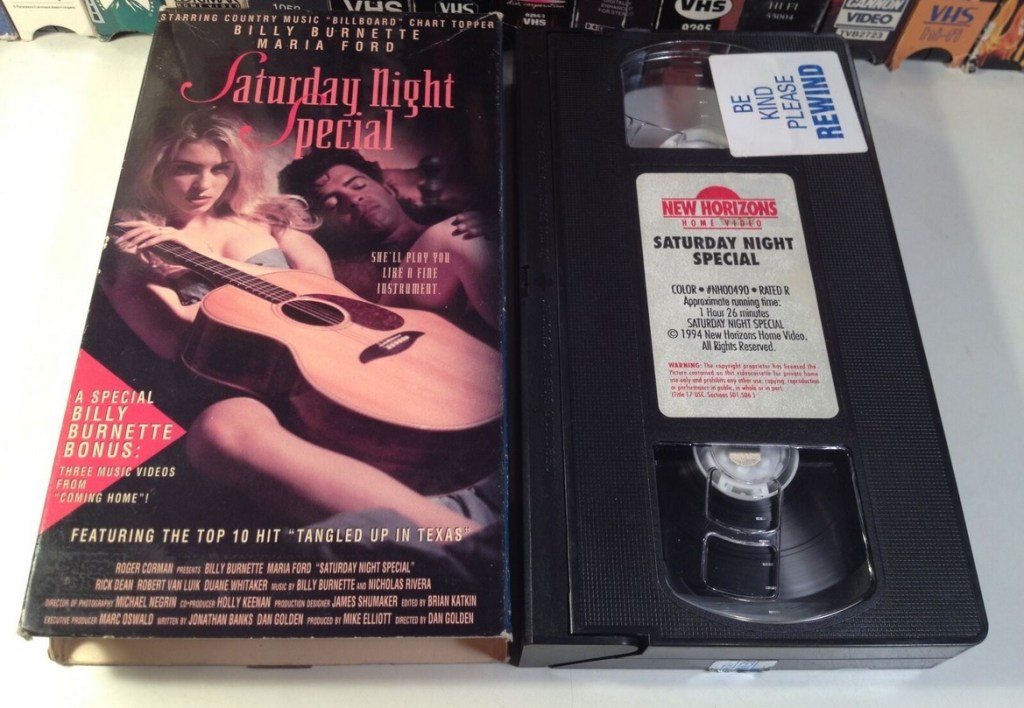
And then there’s Roger Corman’s take on the genre: Saturday Night Special.

Image courtesy of monsterlandmovies/eBay. Here’s the trailer.

And while Corman was never one to let a set or a special effects shot go to waste (see all of his ’80s Star Wars/Alien knock offs as examples*), he never let a script go to waste either. So he made the same movie . . . three times.

First, in 1991, the script was made as Kiss Me a Killer. If you’re a fan of Robert Beltran (Commander Chakotay on Star Trek: Voyager, Paul Bartel’s Eating Raoul, or 1984’s Night of the Comet), you’ll probably want to seek that one out concerning soft-core sexual hijinks in an L.A salsa club. Then Corman took the script and placed it into an Urban Cowboy-styled honky tonk as Saturday Night Special. Then, to capitalize on the media frenzy over Showgirls, he re-tweaked the script inside a Los Angeles strip club as 1996’s The Showgirl Murders. The upside to Saturday Night Special and The Showgirls Murders: both star Quentin Tarantino’s “favorite B actress,” Maria Ford. And of those two films, the one you want to watch is, you guess it, Saturday Night Special.

Yeah, but what does this all have to do with “Rock n’ Roll Week” at B&S About Movies? Well, this Corman noir stars country rocker Billy Burnette of Fleetwood Mac (formerly with Mick Fleeetwood’s side band, The Zoo; Burnette replaced Linsday Buckingham) in his acting debut . . . along with a cameo by Mick Fleetwood himself (remember when Mick showed up alongside Dweezil Zappa in The Running Man?).

Burnette is Travis, a ne’er-do-well drifter-cum-musician who gets a gig as the house musician at a local, dusty town honky tonky. And in typical film noir fashion, along comes Darlene (Maria Ford), the local femme fatale, who seduces Travis to kill her abusive, bar owner husband. Boobs, brawls, dead bodies, and to be honest, crappy country songs by Burnette, ensues. (Keep your eyes open for requisite low-budget screen heavy Duane Whitaker from Pulp Fiction, The Devil’s Rejects, Halloween II ’09 in an early role.)

Double Indemity or Sorry, Wrong Number, this ain’t. Hell, it ain’t even Jade. Or Showgirls. But if you’re a rock n’ roll film dog, like myself and Samuel, then there’s something here for you to watch. (A few of the other classic ’40s to ’60s film noirs we’ve reviewed are A Double Life, Black Angel, Fairwell, My Lovely, My Name is Julia Ross, The Possessed, and So Dark the Night — if you’re interested in the deeper roots that birthed Saturday Night Special. Some of the recent neo-noirs we’ve reviewed include Don Okolo’s recent Eric Roberts starrer Lone Star Deception, along with the early ’90s radio romps Dead Air, Night Rhythms, and Power 98.)

In lieu of bogging this review with Billy Burnette career trivia, his Wikipedia page will give you all you need to know . . . and You Tube will give you all you need to hear. However, in short: Aerosmith fans know the music of Billy’s dad Dorsey and his Uncle Johnny from The Rock ‘n’ Roll Trio with their cover of “Train Kept-a Rollin’“; Billy had his own early ’80s new wave hit with a cover of his dad’s ’50s hit, “Honey Hush” (but you probably know that one better for its kick ass cover by Foghat). Oh, and Billy’s cousin, Rocky Burnette (son of Johnny), had his own 1980 U.S Top 10 hit with “Tired of Toein’ The Line.”

Anyway, back to the movie . . . we all know how the uploads come and go on You Tube. So we’re giving you three links to choose from to watch Saturday Night Special HERE, HERE, and HERE. Sadly, there are no VHS rips of Kiss Me a Killer or The Showgirl Murders online, but we found the trailers for each of them HERE and HERE.

* Be sure to check out our “Ten Movies that Ripped Off Alien” and “A Whole Bunch of Alien Rip Offs at Once” featurettes. Astute Cormanites will be able to pick out his films with ease.

About the Author: You can learn more about the writings of R.D Francis on Facebook. He also writes for B&S About Movies.

Bula Quo! (2013)

One’s enjoyment of this movie hinges on your knowledge of and enjoyment of the music of Britain’s Status Quo, along with your retroism for the Beatles’ movies A Hard Day’s Night or, more accurately, Help! — you know, the one where the band’s on the run (sorry) when Ringo becomes of the target of a religious cult that covets his gaudy ruby ring.

With that being said, this movie isn’t intended for U.S. audiences who came to know the boogie-rock purveyors for their 1968 psychedelic-influenced hit “Pictures of Matchstick Men“; this movie is meant for the U.K. audiences — an audience that helped Status Quo outrank the Beatles, the Rolling Stones, and Queen by placing 61 of the band’s singles in the U.K. Top 40, with 22 of those singles reaching the Top 10 — more than any other U.K. band.

AKA, Guitars, Guns and Paradise

So, in commemoration of their upcoming 30th studio album, Bela Quo!, the band shot this movie in four weeks on a three million dollar shoestring while on vacation in Fiji — along with a corresponding double soundtrack album.

The story is a simple one: Francis Rossi and Rick Parfitt of Status Quo, playing themselves, while on tour with Status Quo on the Pacific Island country of Fiji, become involved in mafia intrique after witnessing a murder. The fact that SNL’s Jon Lovitz (of the later Almost Sharkproof) serves as Rossi and Parfitt’s co-star tells you this film wears its self-deprecating humor on its sleeves — and Rossi and Parfitt play the “aging rock stars” quite well.

Also known as Guitars, Guns and Paradise in other overseas markets (the band has a rabid fan base throughout Europe, Australia and the Pacific Rim counties), the Quo’s lone film isn’t a blockbuster and it’s certainly not an Oscar winner. But it’s a fun film with plenty of action, comedy, and great music by the kings of boogie rock (honorable mentions to Savoy Brown and Foghat, of course).

If you get a chance, do check out a few of my personal .mp3 player favorites from their early ’70’s catalog, such as “Caroline,” “Down Down,” “Down the Dust Pipe,” and “Paper Plane.” Yeah, when it came to down n’ dirty jeans n’ t-shirt (and leather vests) rock ‘n’ roll, Status Quo was the shite and a bag ‘o chips. You can get all the Status Quo you need, and more, over at their official You Tube page.

Now, if only Uriah Heep would make a movie . . . or how’s about Phil Mogg and UFO thwarting a Bond-like madman from stealing a cache of missiles to start WWIII (hey, it worked for Cliff Richard and the Shadows)?

The Quo’s 100th single release!

You have a couple of online choices to watch. Overseas readers can watch Bula Quo! on Rakuten TV. In the U.S. you can watch it on Amazon Prime and in the U.K. on Amazon Prime U.K.

About the Author: You can learn more about the writings of R.D Francis on Facebook. He also writes for B&S About Movies.

Groupie (2010)

Update: Dark Force Entertainment made a February 2022 announcement regarding the Blu-ray reissue of this lost, Mark L. Lester film. You can learn more with their official Facebook post.

And the stars align at B&S Movies once again . . . courtesy of our proprietor, Sam, coming up with the idea of back-to-back “Mark L. Lester” and “Rock ‘n’ Roll”* tribute weeks. So this direct-to-video/streaming outing from the “director of Commando” . . . and our beloved redneck romps Steel Arena, Truck Stop Women, Bobbie Jo and the Outlaw . . . and Roller Boogie . . . and The Funhouse . . . and Class of 1984 . . . and 1999 . . . and Firestarter is the prefect closing transition to our tribute week to all things Mark and our start of all things rock n’ punk! This time out, Lester only directs and leaves the writing to prolific SyFy and Lifetime Channel producer (Lester’s wife) Dana Dubovsky (Sand Sharks, Pterodactyl).

Taking its scripting cues from Great White’s tragic 2003 performance at The Station night club in Rhode Island** (which also served as fodder for “Blaze,” a 2003 “ripped from the headlines” episode of NBC-TV’s Law & Order: TOS that starred John Doe of X as “Teddy Connor,” the leader of the once great Wotan), Travis Bellamy (Hal Ozsan) and Dark Knights (think Buck Cherry’s “Lit Up” and “Crazy Bitch” colliding with Jet’s “Cold Hard Bitch“) love their pyrotechnics — and that love of the flame is what put them on top: Travis sets himself on fire amid a wall of sparks for the band’s encores. . . .

Oops. The club goes up in flames — and a 16-year-old (male) fan is trampled in the ensuing chaos.

Fast forward a year later: Dark Knights are cleared from any wrong doing and back on the road; but without the pyro-gimmicks, the ticket and albums sales are down and manager Eric Roberts (who produces; and is in this one a lot longer than most the films of his 500-plus resume) is urging Travis to “bring back the flames.”

. . . And in steps — instead of a Lifetime movie-inspired psycho babysitter or student or a long-lost “kidnapped” daughter or an orphaned niece infiltrating the family and tempting the emotionally flawed dad — an “innocent” groupie (Taryn Manning of Eminem’s 8 Mile and the Oscar nominated Cold Mountain) who begins to (bloodless and boringly) dispatch press agents, groupies, Eric Roberts (Lone Star Deception), and band members one by one.

Since this rock flick comes from the competent lens of Mark L. Lester, a man who’s blessed me with so many great films during my duplex-triplex theatre and video store youth, I really wanted to get lost in this horror-tinged murder mystery — in the same multiple-watches vein as Ash Avildsen’s intelligence rock n’ horror flick, American Satan (2017). And while Groupie isn’t utterly awful, this probably was going for the feel of Mark Wahlberg’s major studio rock romp, Rock Star (2001), as a slasher flick (with a crazy Jennifer Aniston performance), but it ends up being undone by its against-the-budget set and production design that leaves it meandering one step above a TV movie. (And if not for Lester and Roberts on the marquee — others have name-checked Taryn Manning — I wouldn’t have hit the big red streaming button at all.) I was hoping for some supernatural hocus pocus; e.g., the dead male fan returns as a female for revenge, ala The Wraith. Denied. We got a Hand that Rocks the Cradle twist instead.

Does Lester’s behind-the-camera’s eye and sense of tight pacing (this clocks in at a brisk 78-minutes) make for a more effectively-produced rock ‘n’ horror flick than say, Ferd and Beverly Sebastian’s Rocktober Blood (1984) — which, unlike Groupie, has no “second act” at all — absolutely. However, unlike Groupie, Rocktober Blood lends for repeat viewings because it gives us Billy Eye Harper in his face-painted and ghoul-masked glory, along with memorable, original tunes by Sorcery belted by Nigel Benjamin.

Perhaps if Groupie had the budgetary and creative confluence of American Satan and Rock Star — along with a few more boob shots, blood and, say, the retro-cum-modern rock sounds of Greta Van Fleet standing in for a Sammi Curr-styled rocker (Trick or Treat) fronting Dark Nights — we’d give Travis Bellamy some bow-to-the-alter-of Billy Eye worship. (Or even John Doe’s Teddy Connor and Wotan — who didn’t sing or play a note to achieve their faux band stardom.)

Oh, well. Another trailer embed bites the dust.

So while the film around him spins nothing we haven’t heard before from the rock n’ murder jukebox’s crackling speakers, Hal Ozsan (who you’ll recall in the early-2000’s final two seasons of Dawson’s Creek) shines (he’s the best part of the film) as trouble rocker Travis Bellamy — courtesy of his L.A. based band, Poets & Pornstars, providing the music for Dark Knights. You’ve probably seen Ozsan’s band live during their U.S opening slots for the revamped Alice In Chains (sans the late Layne Staley), the 21st century reinvigorated Bon Jovi, and modern rockers Muse. These days, Hal’s hung up his six strings to concentrate on his newly cast role as “Ryan Porter” on CBS-TV’s NCIS: New Orleans.

Groupie is readily available in the online marketplace as a DVD for your rock ‘n’ roll flick collection, but we found a free (with ads) copy over on Roku’s online streaming platform. There also a free (sign in) no-ads stream on Vudu and PPV streams on Amazon Prime, Google Play, and You Tube.

Attention Tayrn Manning fans: Ms. Manning stars in another indie rock flick with the always awesome Peter Fonda (the wise ex-rocker), along with Jason Ritter (the troubled rocker), and Lucas Haas (the intrepid journalist). A “road movie,” The Perfect Age of Rock ‘n’ Roll (2010) travels the crossroads where the legends of the “27 Club” meets Eddie and the Cruisers — only with the dramatic arc and production quality of the rock flicks Almost Famous (based on the downfall of Humble Pie) and Still Crazy (based on the ’80s Animals reunion). Sorry, no freebies on this one, kids. You can check it out as a VOD on Amazon Prime (where it pulls 4 to 5 stars and a 91% approval), Apple iTunes, Google Play, Vudu, and You Tube Movies. (Never say never: we’ve since given the film a full review proper, so click that above link, wee rocker!)

Poets and Pornstars fans: Check out this playlist from their 2007 second album; you can learn more about their albums on Discogs.

* Don’t forget! July 19 to the 25 is “Rock ‘n’ Roll Week,” and we’ve got some great, deep obscurities to rock you all week long!

* Be sure to check out out review of the Providence, Rhode Island-shot rock-radio flick, A Matter of Degrees, which was part of last October’s Scarecrow Video’s “Psychotronic Challenge.”

About the Author: You can learn more about the writings of R.D Francis on Facebook. He also writes for B&S About Movies.

Suzi Q (2020)

If you’re a fan of Detroit rock ‘n’ roll of the late ’60s—amid all the crazy fandom for all things Alice Cooper, Grand Funk Railroad, Iggy Pop, Bob Seger, and Ted Nugent—you might have heard of Suzi Quatro with her bands The Pleasure Seekers (You Tube) and Cradle (You Tube).

Then she hooked up with British music impresario Micky Most and RAK Records to become one of the U.K.’s biggest glam stars. And that success grew when she began working with Mike Chapman and Nicky Chinn, best known for their work behind the scenes in making Sweet (“Fox on the Run,” “Love Is Like Oxygen”) into international glam stars.

Achieving only minor Top 200 chart placings in the U.S with her Top 10 Euro-hits “Can the Can,” “48 Crash,” and “Devil Gate Drive,” Suzi eventually found notice in America courtesy of her recurring appearances as Leather Tuscadero during the 1977 to 1978 season of the ABC-TV U.S sitcom, Happy Days (you can watch a compilation of all her music appearances on the show in the video below).

Unfortunately, the show failed to consolidate her success on U.S radio, but she did score her lone Top 10 hit, “Stumblin’ In,” a 1978 duet with British singer Chris Norman. Eventually, with the Knack-inspired new wave in full swing, she scored her final two, U.S Top 100 hits with “Lipstick” and “Rock Hard” from her 1980 album, Rock Hard.

Then along came an artist that Suzi inspired: one who achieved that number one single and album in America that eluded her: Joan Jett.

However, while the Detroit-born bassist never found mainstream success in her homeland, she kept on rocking, scoring an international hit with “Strict Machine” from her 2011 album, In the Spotlight, co-produced with Andy Scott of Sweet.

What elevates this Australian made documentary heads and shoulders above other pedestrian “talking head” rock documentaries is that director Liam Firmager chose not to travel the “feel good” promo route and create a puff piece on his subject; he eliminated all of the usual docu-candy coating. Suzi Q isn’t a cookie cutter journal that inserts a talking head here, an old photo there, and a rare film clip here; Firmager chose to tell a story—through over 400 rare archival film clips—that gives Suzi Q the feel of a musical biographical drama. However, unlike other rock bioflicks (The Doors, Ray, Walk the Line) this chronicle on the life of Suzi Quatro has no filtering; there’s no compression or compositing of characters and fabrication of pseudo events for “dramatic effect.”

Firmager not only researched his subject, he spoke to his subject; he got inside his subject. So, while Suzi Q is for the fans of an artist who sold 55 million records around the world, it’s also a film for Suzi Quatro. This is a film that shows rock ‘n’ roll fans that, at the end of the day, a rock star is just a musician. And a musician is just a job. And behind that job is a person. And that person has hopes and dreams, success and regrets, joys and pain. Firmager makes us, the fans, realize that those people behind those records on our turntables and posters on the walls sacrifice life’s normalcies that we take for granted. Through this film, Firmager provided Suzi Quatro a catharsis; a spiritual cleansing and life resolution that most of us will never be blessed; a realization that our lives were worth the journey. And that, maybe, we didn’t end up where we wanted to be or expected to be, but we ended up exactly where we need to be. And Suzi needed to rock ‘n’ roll and be the trailblazer and harbinger for the lives of others.

Suzi Q will launch on DVD, Blu-ray and VOD on July 3, while the film had a planned theatrical release at select U.S cinemas on July 1. However, with the COVID-19 pandemic closing theatres, Utopia Distribution will host a “SUZI Q” virtual event on July 1st featuring the film and an exclusive Q&A featuring Suzi Quatro and a Special Guest (available for 24 hours only) in advance of the film’s traditional release on VOD and DVD on July 3rd. The Q&A will be conducted by Cherie Currie of the Runaways and Kathy Valentine of the Go-Go’s. A portion of the proceeds from the event will support MusiCares, the Recording Academy’s™ charity, to raise funds in support of the organization’s COVID relief fund for music artists in need.

Suzi Q had its U.S. premiere at the Sonoma International Film Festival on March 29, where Quatro made an appearance; it made its theatrical debut last fall in the UK and Australia, where Quatro had her biggest chart successes. You can learn more about the film at its official website. There’s more Suzi tunes to be had at her official You Tube page.

Oh, and since B&S About Movies is a movie review site . . . there’s a “video fringe” connection to Suzi: her sister Arlene, also an ex-The Pleasure Seekers/Cradle member, is the mother of actress Sherilyn Fenn (Crime Zone, The Wraith, Outside Ozona). And here’s a tune from her uber-talented, underrated brother, Mike Quatro: a man who needs his own documentary flick. Speaking of which . . .

There’s more tales from Detroit to discover in the life and career of Sugar Man Rodriguez and the life and times of The Grande Ballroom in the frames of Searching for Sugar Man and Louder Than Love.

About the Author: You can read the music and film reviews of R.D Francis on Medium and learn more about his work on Facebook. He also writes for B&S About Movies.

Disclaimer: This was sent to us by the film’s PA firm and has no bearing on our review.

Desolation Center (2020)

“We played in the middle of the Mojave Desert at a festival called the Gila Monster Jamboree . . . It was a magical night, one of my favorite (Sonic Youth) shows ever.”
— Kim Gordon, bassist of Sonic Youth, from her book Girl In A Band: A Memoir

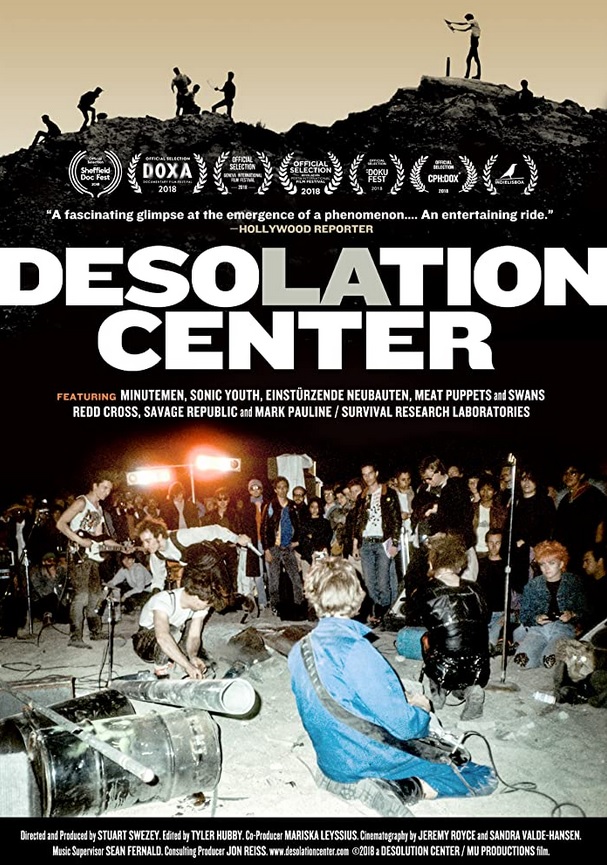
Before the corporate alt-rock explosion of the ’90s birthed the likes of the Burning Man, Lollapalooza, and Coachella rock festivals, there was the Desolation Center: a punk rock version of Woodstock held in the Mojave Desert that hosted the performances of Sonic Youth (1994: The Year Punk Broke), Minutemen (morphed into Firehose; music featured in A Matter of Degrees), Meat Puppets (soundtracks to Lovedolls Superstar, Love and a .45, SubUrbia, Losers Take All), Perry Farrell (of Jane’s Addiction), Redd Kross (Desperate Teenage Lovedolls, Spirit of ’76), Einstürzende Neubauten, Survival Research Laboratories, Savage Republic, and the Swans.

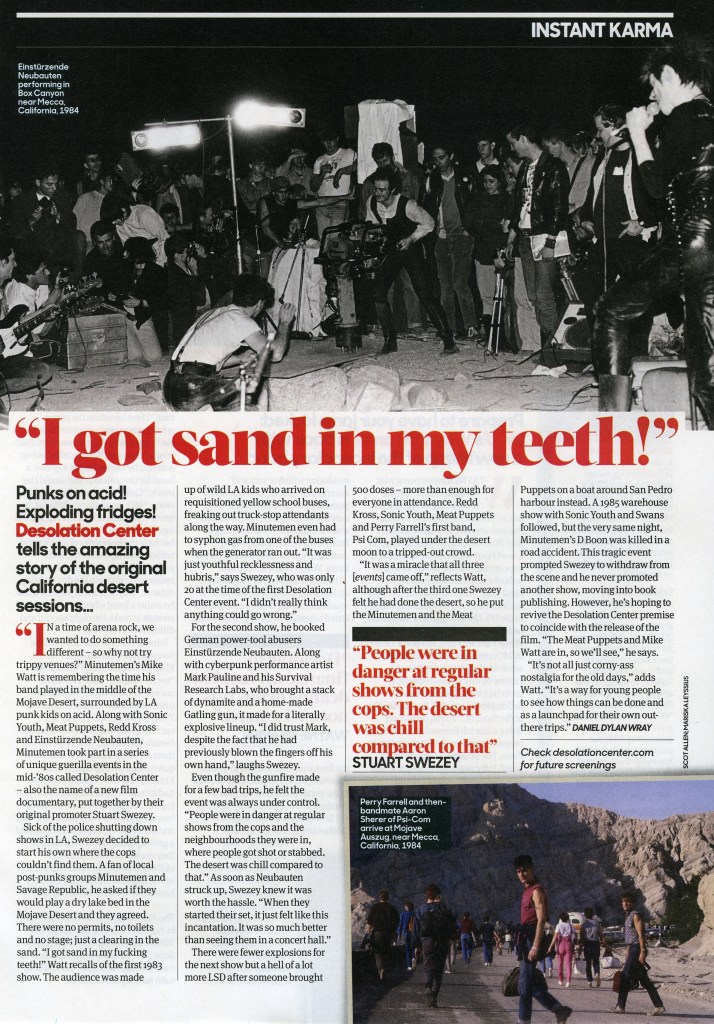
Image of Uncut Magazine article courtesy of MU Productions and CWPR; they also provided the theatrical one-sheet as part of the film’s promotional press kit/materials

It all began in 1983 in the mind of a then 23-year-old Stewart Swezey, and Bruce Licher of Savage Republic, so as to provide a venue for bands, such as Black Flag, forced out of Los Angeles by a police department and local government that saw fit to raid clubs and instigate riots at punk rock shows. So the duo chose a site just outside of Mecca, California, three hours south of Los Angeles, to provide a safe, creative outlet for bands and their fans.

This is great stuff and the leaf-logos on the one-sheet are warranted. Watch it.

Desolation Center became available on Tuesday, June 23 for streaming via Apple TV (iTunes), Google Play, and the Amazon Instant Video platforms. Pair this one up with Social Distortion and Minor Threat in the Another State of Mind and Penelope Spheeris’s The Decline of Western Civilization for a night of retro-punk viewing.

Disclaimer: We were provided a screener by the film’s P.R firm. That has no bearing on our review.

About the Author: You can learn more about the writings of R.D Francis on Facebook. He also writes for B&S About Movies.

A Night of Horror: Nightmare Radio (2019)

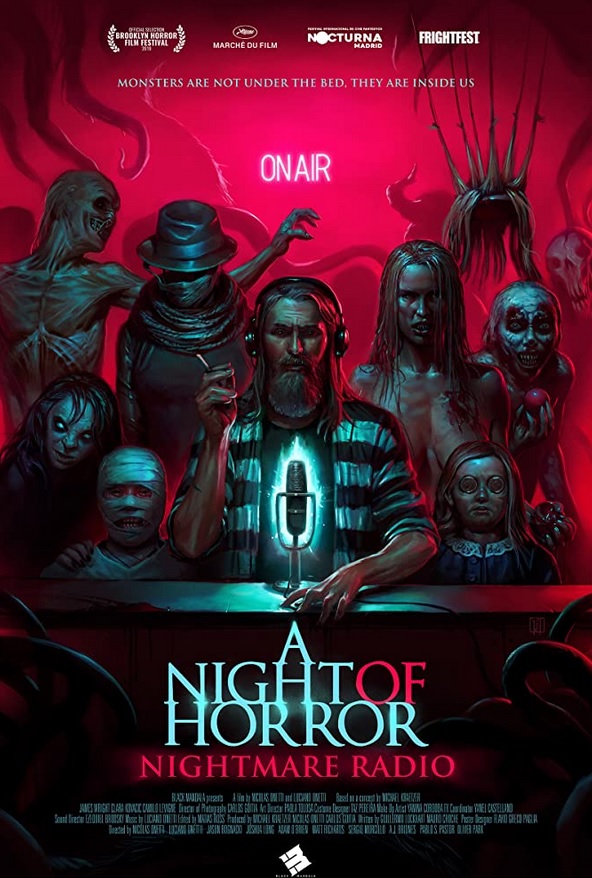
The Argentinean duo-brothers Nicolas and Luciano Onetti are back with another of their retro-Italian Giallos, which began with Deep Sleep (2013) and continued with Francesca (2015), What the Waters Left Behind (2017), and Abrakadabra (2018). This time they step back from their usual writer and director chairs and serve as producers on this horror anthology throwback to the Amicus pictures of old that unfolds as a “greatest hits” package of superior horror shorts from around the world.

Now if this sound a lot like the William Shatner-starring A Christmas Horror Story with our favorite starship captain as the macabre DJ spinning the portmanteau follies, you’ve guess right. But what sets this omnibus package apart: it’s an earnest attempt by the Onetti Brothers to provide an opportunity for unknown, first time filmmakers to present their work to a larger audience.

To package the films, the Onetti’s developed their own wraparound sequence that features—instead of say, a crypt keeper of the Sir Ralph Richardson variety from Freddie Francis and Milton Subotsky’s anthology gold standard, 1972’s Tales from the Crypt—a cryptic radio disc jockey. Unlike most anthologies that strive for long segments across three—but typically five stories—the Onetti’s opt for eight quicker and shorter tales—along with a ninth wraparound—with tales of the macabre.

The anthology flicks of the ‘70s that the Ornetti’s successfully emulate with A Night of Horror: Nightmare Radio are rooted in the classic words of Gothic horror authors Sheridan Le Fanu, Gaston LeRoux, and Guy de Mausspaunt—Sheridan Le Fanu’s influential short-story collection In a Glass, Darkly (featuring the vampire classic “Carmella”), in particular.

The wrap around, if you haven’t already guessed, is the subtitle of the film:

Nightmare Radio: Rod Wilson (James Wright in his film debut; looking a lot like Rob Zombie) is the resident prick of a radio host (is there any other kind in suspense or horror films set inside radio stations?) of an overnight radio program, which he hosts in a converted ranch house, and is dedicated to all things metal and horror, as he spins his own tales and allows listeners to tell their own. Then, one evening, he receives enigmatic phone calls from a troubled child desperate for help. At first, Rod thinks it’s all a joke . . . until he discovers the calls are the clues to uncovering a dark secret of his own life that unravels across the stories:

In the Dark, Dark Woods: An invisible witch haunts a patch of woods and becomes a catalyst for another woman’s life . . .

Post-Mortem Mary: When a young girl dies in a rural Australian village, a neighbor and her young daughter help the girl’s parents prepare her body for burial. Through some post-mortem photography, they discover a sinister force in the woods has possessed her body . . .

A Little Off the Top: And for a little touch of Sweeney Todd, we have a psychologically-bent hairstylist with an unhealthy obsession about the “art” of his profession . . . and over one of his female clients. And that leads him to go Saw on her, strapping her head in a medieval torture device. Then he breaks out the Sharpie and starts to mark dashes on her forehead . . .

The Disappearance of Willie Bingham: A newly hired supervisor at a prison institutes a program (that reminds of Eli Roth’s Hostel) where criminals can atone for their crimes though elective surgery amputations based on the sex crimes they committed . . .

Drops: A professional theatre dancer’s struggles with relationship and professional issues takes a deadly turn when a demon begins to intrude in her life . . .

The Smiling Man: A little girl and a trail of creepy balloons. But it’s not a clown of the Stephen King variety responsible: it’s a gangly demon offering her a tasty treat made of something . . .

Ack! WTF! Watch out for the balloons. It’s The Smiling Man!

Into the Mud: The 10th Victim goes horror as a woman wakes up in the woods and finds herself pursued by a mysterious hunter; her salvation may come in the form of an equally mysterious creature . . .

Vicious: After a late-night out, a woman returns home and discover her sister in terror at the hands of deformed demons who’ve invaded the house.

The best three of the lot are In the Dark, Dark Woods, Post-Mortem Mary, and The Disappearance of Willie Bingham. But The Smiling Man . . . yikes. It’s a serious creep fest that I hope the Onetti’s expanded into a feature film.

Now, when you’re juggling multiple films from multiple writers, and even more directors, and trying to patch them together into a single, cohesive film, that spells trouble. It usually means you’ll end up with a disjointed film lacking in consistency across all the disciplines. Such is not the case with this latest Onetti Brothers’ entry. This looks a lot like Rob Zombie movie: well-shot, well-verse in its Giallo roots and filled with rich colors. Granted, it may have a few clumsy creative moments, and few strained performances in the acting department, but overall the Onetti’s Frankenstein’d a film worthy of a horror fan’s watch from horror’s newest crop of filmmakers.

A Night of Horror: Nightmare Radio recently premiered to a receptive audience at the Brooklyn Festival of Horror this past October and is currently in the market for U.S distribution. You can keep abreast on when it hits all of the usual online streaming and PPV platforms (definitely on Shutter and Netflix) via their Facebook page. You can check out more trailers from the catalog of the Onetti Brothers’ Black Mandala Productions on You Tube.

Update: This will be available on DVD all VOD platforms on September 1.

Disclaimer: We were provided a screener by the film’s P.R firm. That has no bearing on our review.


What’s that? You want more anthology flicks? Then check out our “Ten Horror Anthologies” exploration.

Some other portmanteaus we’ve recently reviewed are:

All the Creatures Were Stirring (2018)
The Dark Tapes (2019)
Dead of Night
(1977)
The Dungeonmaster (1984)
From a Whisper to a Scream (1987)
Hi-Death (2018)
Holiday Hell (2019)
Kwaidan
(1964)
Morbid Stories (2019)
Shevenge (2019)
Tales from the Darkside: The Movie (1990)
Terror Tales (2016)
Trilogy of Terror II (1996)
The Twilight Zone (1983)
Ugestu
(1953)
The Uncanny (1977)
Vault of Horror (1973)

About the Author: You can read the music and film reviews of R.D Francis on Medium and learn more about his work on Facebook.

Street Survivors (2020)

This film’s story—my story—is not just about the plane crash but also about my personal relationship with the genius that was Ronnie Van Zant—whom I loved like a brother and still miss to this day.”
Artimus Pyle

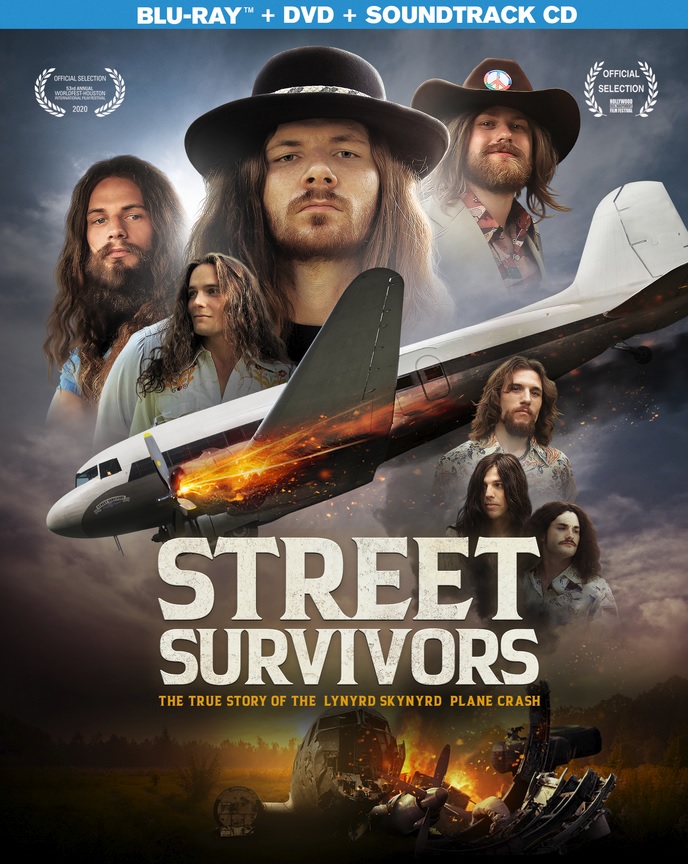
While much has been said about Southern Rock legends Lynyrd Skynyrd over the years through several documentaries, this drama’s period-correct costuming by Lisa Norcia and set design by Eve McCarney—in conjunction with strong performances by its cast of unknown actors—will bring fans something extra beyond those “talking head” chronicles. In fact, being “inside” the plane and seeing it unfold—instead of being told what happened—is an emotionally tough watch (brought to fruition by an extremely well-executed CGI effect).

Ian Michael Shultis, an ex-EFL football player for Germany’s Furstenfeldbruck Razorbacks, shines in his leading man debut: his role as Artimus Pyle is just the beginning of a long career. The multi-talented Taylor Clift as Ronnie Van Zant — who does his own vocals on the classics “Free Bird,” “Call Me The Breeze,” and “Sweet Home Alabama” — also has a bright future ahead of him. And keep your eyes open for ex-Rough Cutt, Quiet Riot, and Dokken bassist Sean McNabb in his small but effective role as ’70s iconic impresario David Krebs (Aerosmith, Ted Nugent, Scorpions); here’s to hoping he scores himself some larger roles as well (he’s been part of FOX-TV’s Sons of Anarchy franchise).

This long-gestating rock bioflick (stymied by lawsuits; see this article at Ultimate Classic Rock) recreates the ill-fated October 20, 1977, crash in the swamps of Mississippi through the eyes of former Lynyrd Skynyrd drummer Artimus Pyle (who narrates the film via vignettes). Following a concert at the Greenville Memorial Auditorium in Greenville, South Carolina, the band boarded a two-prop plane bound for Baton Rouge, Louisiana, where they were scheduled to appear at LSU the following night. (The crash came just three days after the release of their fifth album, Street Survivors.) Pyle not only survived the crash that claimed the life of the band’s founder and frontman Ronnie Van Zant (along with guitarist Steve Gaines and his sister, back-up singer Cassie Gaines), he also physically pulled the remaining survivors out of the wreckage before staggering towards the nearest farmhouse to seek help.

The aftermath of the crash is typical of the rock ‘n’ roll business: Artimus joined the band upon the recording of their third album and wasn’t “under contract” with the record company—thus, Pyle was responsible for his own medical bills. And when the FAA discovered “drugs” (proved to be vials of legal ginseng extract) in Pyle’s recovered luggage, they called in the DEA and threatened to charge Pyle with drug trafficking.

Only in the corporate meat grinder that is the music business.

You can get your copy of Street Survivors on Blu-ray, DVD, and VOD formats on June 30 and pre-order copies though the MVD Entertainment Group. In addition, Cleopatra Records is releasing a standalone official film soundtrack (performed by Artimus and his sons Marshall and Chris). Cleopatra also released Verotika, the feature film writing and directing debut by Glenn Danzig.

Update: August 2021: We’ve since reviewed Cohn’s ventures into the CGI shark-verse with Shark Season (2020) and Swim (2021). Both are fun water romps.

About the Author: You can read the music and film reviews of R.D Francis on Medium and learn more about his work on Facebook. He also writes for B&S About Movies.