EDITOR’S NOTE: The Glass Bottom Boat was one of the first movies on the CBS Late Movie, airing on February 17, 1972. It also aired on July 31, 1972; February 19 and November 5, 1973 and March 12, 1976.
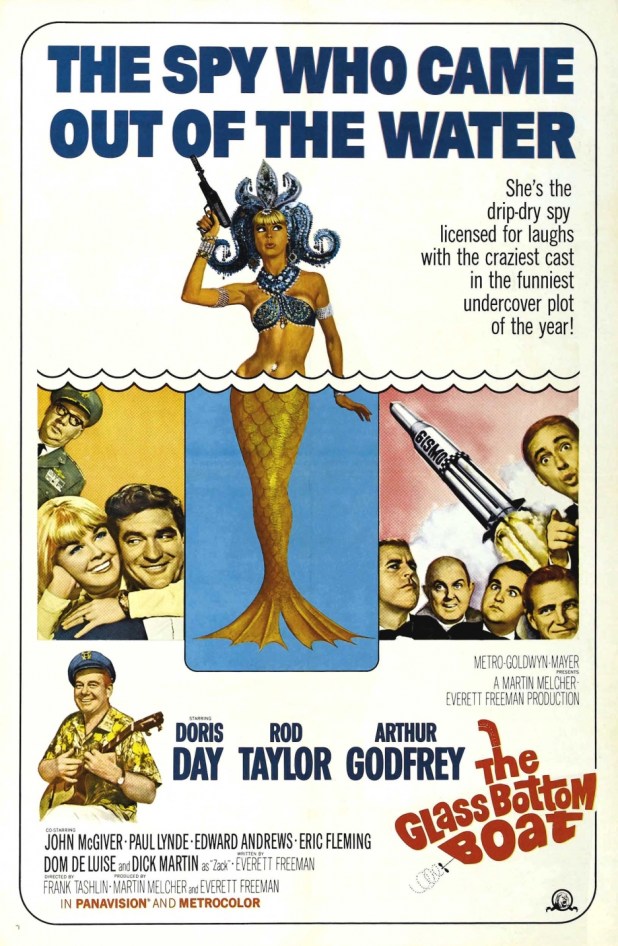
Also known as The Spy in Lace Panties, a title change that was likely made to emphasize the spy plot, this movie teams up animator-turned-director Frank Tashlin (who made one of my favorite movies of all time, The Girl Can’t Help It) and star Doris Day, who gets to sing, of course, but also gets pulled into a spy plot. It was written by Everett Freeman, the writer of The Maltese Bippy.
Day plays Jennifer Nelson, a widow helping her father (Arthur Godfrey) in his tourism business by dressing as a mermaid and swimming under his glass bottom boats. One day, she’s accidentally caught by Bruce Templeton (Rod Taylor) while he’s fishing; the embarrassment of her being nearly nude in front of him is compounded when she realizes that he works at her new position of employment, an aerospace research company.
Bruce’s new project is GISMO, a gravity system, and he hires Jennifer to write his biography. But really, in truth, he just wants to get with her. Jennifer also meets Julius Pritter (Dom DeLuise), a spy struggling to install a stereo in Bruce’s futuristic apartment while gathering information on him, and Edgar Hill (Eric Fleming), a CIA agent protecting Bruce and GISMO.
Love blooms, as it does in romantic comedies, but the issue is that Hill, security guard Homer Cripps (Paul Lynde!) and PR executive Zack Molloy (Dick Martin!) believe that Jennifer is a spy. Why would she call the same phone number multiple times a day and simply hang up after saying, “That’s enough, Vlamdir?”
As it turns out, ‘Vlamdir’ is not a Russian boss, but Jennifer’s dog. The poor pup’s only exercise during her work hours is running around the apartment, irritated by the ringing phone. In a classic rom-com twist, Bruce makes a blunder by underestimating Jennifer’s intelligence. She decides to play along and pretends to be a spy. This leads to a series of light-hearted hijinks at a party, but all’s well that ends well.
For TV aficionados, Norman and Mabel Fenimore (George Tobias and Alice Pearce) are the same characters Tobias and Pearce played on Bewitched. The film also features a memorable cameo by Robert Vaughn, and the theme from The Man from U.N.C.L.E. is heard on the soundtrack. Speaking of the show, Templeton’s ultra-technological apartment was repurposed as the evil spy base on a two-part episode of The Man from U.N.C.L.E., titled ‘The Concrete Overcoat Affair.‘
After this, Day only made four more movies — including the pure spy movie Caprice with Tashlin before starting what many would know her best for: The Doris Day Show. In that show, she sang the theme song, “Que Sera Sera,” which became synonymous with Day’s career and was also featured in her earlier films, like The Man Who Knew Too Much and Please Don’t Eat the Daisies.
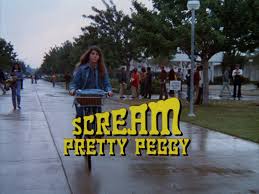
The central character of the film is Peggy, a college student who aspires to become an artist. She applies for a job at the home of noted sculptor Jeffrey Elliott (played by Ted Bessell, TV’s That Girl) and his mother, the iconic Bette Davis. Peggy’s annoyingly chipper character adds a unique dimension to the story.
Let me give you some advice, in case you are a young girl looking for a housekeeping job and find yourself in a 1970s TV movie. If the house you’re working in has an Old Hollywood actress in it, run (refer back to my past rules of always avoiding Old Hollywood actors and actresses). And if you find out that there’s a room that you aren’t allowed to go into, don’t try to go into that room. Just get away as fast as you can.
However, Peggy’s curiosity gets the better of her. She stumbles upon Jeffrey’s collection of eerie demon sculptures, each more terrifying than the last. She also encounters George Thornton, whose daughter used to work in the house. This leads to a confrontation with the formidable Mrs. Bette Davis, a situation one should never find themselves in.
It turns out that Jessica, Jeffrey’s sister, is living in the room above the garage that Peggy isn’t allowed into. Again, get out. Now.
No, Peggy decides she wants to make a new friend. And what if that friend is really Jeffrey, who killed his sister and has split his personality with her inside his head? Oh, Peggy. You brought this on yourself.
Scream, Pretty Peggy is a fine slice of 70s TV movie thrills. Any time you have Ms. Davis deigning to be in a TV movie, you will get something good. But seriously, I wish these girls would wise up. There are better things to do in this world than live in a house of maniacs!
Grace Perkins (Katelyn McCulloch) has had a difficult life. An orphan, she says she went to a dark place before landing on her feet. Now, she has a stable job, a dependable roommate named May (Ericka Leobrera) and the man of her dreams, Rob Whitby (Connor McMahon).
This weekend is a big deal because Rob finally brings her to meet his parents, Stephen (Dmitry Chepovetsky) and Miriam (Kate Vernon). Mom is a rough one, continually bringing up how much she hated past girlfriends and how wrong they were, while Dad seems doting and even childlike.
Of course, this is entering Get Out territory, a reference to Jordan Peele’s 2017 film that explores racial and social issues. In this context, while everyone in the Whitby family is white, there is still the issue of class, and, well, the Whitbys are all certifiable. But have they met the wrong girlfriend?
Between every drink making Grace either drunk or sick and Penelope (Juno Rinaldi), the maid, confiding in her that numerous girlfriends who look just like her have come to the mansion and were never seen again, you can see the plot’s direction against our protagonist. But just when I thought that this was ripping off Jordan Peele, well, the movie flips the script — spoilers from here on out — because the family doesn’t want a slave or a body for old people to body swap with, but instead, they want Grace to become their dead daughter Jenny using mind control, psychic theater and a machine that can either change the color of your eyes or turn your face into gumbo. Those are the exact works in the movie.
Just when you think you’ve got that plot development figured out — and yes, that means that Rob has repeatedly had sex with many of his sisters or at least recreations of his dead sister that he probably — definitely — murdered in a pond — this movie is ready to throw another one at you.
Directed by Sam Coyle, who also made the Tubi original Deadly Estate, and written by Mike Rinaldi, this is one of the more enjoyable Tubi originals I have seen. It continues to lean hard into its premise, like an Italian remake remix rip-off, before finding its own way and closing with a completely outrageous final act that over-delivers on its promise.
EDITOR’S NOTE: Head made its TV premiere on the CBS Late Movie on December 30, 1974. It also aired on July 7, 1975.
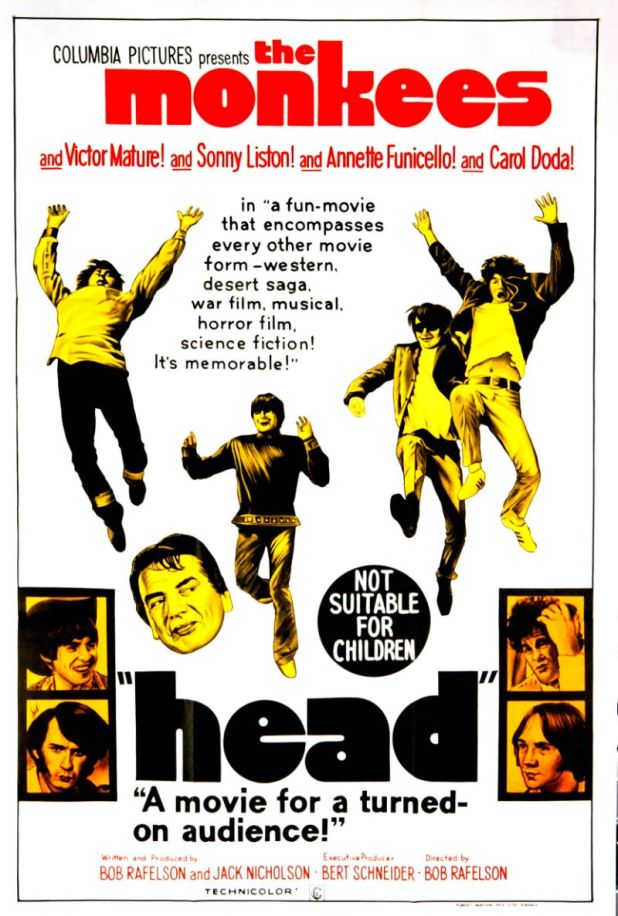
Despite breaking up in 1971, The Monkees remained in syndication throughout the decade, and that’s when I discovered them. A band created for a TV show—a burst of comedy, silliness and catchy songs—instantly appealed to me.
Initially formed in Los Angeles in 1965 by Bob Rafelson and Bert Schneider, the band was Micky Dolenz, Michael Nesmith, Peter Tork and Davy Jones. Producer Don Kirshner initially supervised the band’s music, with songs written by the songwriting duo of Tommy Boyce and Bobby Hart. The four band members were on set filming for nearly twelve hours a day, so session musicians originally played most of their tunes (that said, Nesmith did compose and produce some songs, with Tork playing guitar and all four contributing vocals).
By the TV show’s second season, The Monkees had won the right to create their own music, marking a significant shift in their artistic journey. They effectively became musicians, singers, songwriters, and producers. This growth was further evident in their fourth album, Pisces, Aquarius, Capricorn & Jones Ltd., where the band collaborated with respected session and star talents like the Wrecking Crew, Glen Campbell, members of the Byrds and the Association, drummer ‘Fast’ Eddie Hoh, Stephen Stills and Neil Young. This artistic growth is a testament to their determination and talent.
However, the Monkees continually battled against the notion that they were a manufactured band. Sure, that’s how things started, but they weren’t that way anymore. While their TV show remained successful, they were bored with its conventional format. They proposed making the show a variety program, a format that would allow them to showcase their musical talents and experiment with different styles and genres. But NBC objected, and by then, most of the band wasn’t getting along anyway.
The film’s title, Head, is a nod to the band’s desire to break free from their manufactured image and the constraints of their success. It’s a reference to the phrase ‘to get your head ‘, meaning to understand or grasp something, which reflects the band’s journey of self-discovery and artistic expression. After The Monkees was canceled in February 1968, Rafelson co-wrote and directed this film with Schneider as executive producer. Jack Nicholson, the other writer — a virtual unknown at the time — worked with the band and Rafelson in a jam session weekend with plenty of weed on hand. Later, under the influence of LSD, Nicholson would rewrite the stream-of-consciousness tapes into the script.
When the band learned they would not be allowed to direct themselves or receive screenwriting credit, every Monkee except Peter Tork had a one-day walkout. The studio agreed to a larger share of the film’s profits if the band returned, which ended the professional relationship between the band and their creators.
The filming of Head resulted in a movie that completely alienated their fanbase. Both Nesmith and Tork felt that this movie was a betrayal, a murder of the band by its creators, who seemed to have their eyes on bigger goals. This sense of disillusionment is palpable in their reactions, adding a layer of disappointment to the narrative.
At the dedication of the Gerald Desmond Bridge, an old man politician struggles with his speech. Suddenly, The Monkees appear, racing through the officials and creating chaos. Micky jumps off the bridge to the water below as we hear the words of “Porpoise Song. ” The lyrics intone, “A face, a voice, an overdub has no choice, an image cannot rejoice.” He floats under the waves until mermaids find him and bring him back to life.
After a kissing contest with all four Monkees being called “even” by Lady Pleasure (Mireille Machu, Nicholson’s girlfriend at the time), they launch into a distorted version of the TV show’s theme song:
“Hey, hey, we are The Monkees
You know we love to please
A manufactured image
With no philosophies.
You say we’re manufactured.
To that, we all agree.
So make your choice, and we’ll rejoice
in never being free!
Hey, hey, we are The Monkees
We’ve said it all before
The money’s in, we’re made of tin
We’re here to give you more!
The money’s in, we’re made of tin
We’re here to give you…”
BAM! A gunshot interrupts the proceedings, with the famous footage of the execution of Viet Cong operative Nguyen Van Lem by Chief of National Police Nguyen Ngoc Loan being shown. Head has no interest in being subtle.
From here, the movie becomes a kaleidoscope of ideas and pastiches as each Monkee gains a moment in the spotlight, yet none of them are thrilled with their situation, and each feels trapped. Any escape attempt — whether it’s through dance (Davy has a great scene with Toni Basil, who choreographed Head more than a decade before her hit song “Mickey”), punching waitresses, blowing up Coke machines with tanks, attending a strange birthday party (shot on one of the sets of Rosemary’s Baby, which was under production at the same time), a swami who claims to have the answer and even a rampage through the movie set itself, the boys can’t escape their prison, which is a large black box.
That box could symbolize the lounge area built for the band during the filming of their television show. When they first started filming, the band would wander the set between takes, bored by the filming speed. They’d often get lost, so Screen Gems built a special room where they were forced to remain, smoking cigarettes, playing music and studying their scripts. Whenever a band member was needed on the stage, a colored light corresponding to that member would inform them.
Throughout the film, the band runs into a massive cast of characters, with everyone from Mickey Mouse Club star Annette Funicello, Carol Doda (considered the first public topless dancer), Sonny Liston, Frank Zappa, Teri Garr, Victor Mature and Dennis Hopper.
After evading the box and all of their enemies in the desert, The Monkees run back to the film’s beginning and all leap from the bridge, this time to the triumphant return of “Porpoise Song.” But it’s all another sham: as they swim away, we see that they’re stuck in an aquarium, another big box, and taken away on a truck.
Unyielding sadness. It seems a far cry from “Hey, hey we’re The Monkees and people say we monkey around.”
Head bombed hard on release, bringing back only $16,000 on its $750,000 budget. It may be the ad campaign. While trailers say the “most extraordinary adventure, western, comedy, love story, mystery, drama, musical, documentary satire ever made (And that’s putting it mildly),” none of the band would appear in the ads.
The Monkees were trapped by another fact: younger and more mainstream audiences rejected the more serious side of the band, along with their new sound. While critics agreed that this was the band’s best music ever recorded — Carole King and Harry Nilsson co-wrote much of the music — serious hippies wanted nothing to do with a band they perceived as plastic and pre-manufactured.
Nesmith said, “By the time Head came out, The Monkees were a pariah. There was no confusion about this. We were on the cosine of the line of approbation, from acceptance to rejection…and it was over. Head was a swan song.”
At the end of the film, a still shot of a stylized Columbia Pictures logo appears before the movie skips frames, gets tangled and melts as we hear the soundtrack continue and the laugh of Lady Pleasure. Maybe some joy has escaped the box that The Monkees are trapped in. I want to think so, as Head may have been a failure upon release, but when viewed more than fifty years later, it transcends the divide between real and fake, manufactured and created, commerce and art.
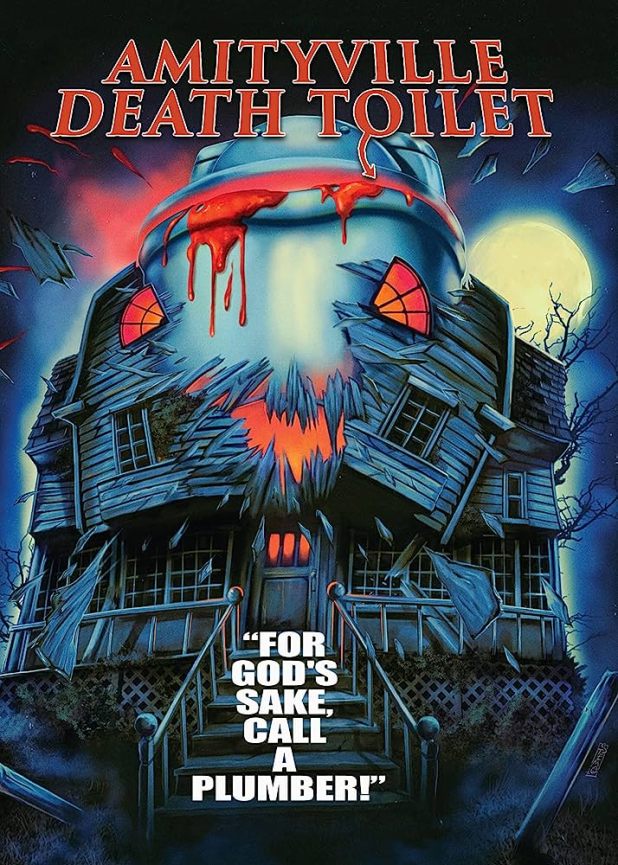
Gregg G. Allin (Isaac Golub, who played Father Dingleberry in five Death Toilet movies, including Death Toilet 4: Brown Snakes on A Plane) — get it, G.G. Allin? — is a paranormal podcaster brought to Amityville by Mayor Dump (Roy Englebrecht, who was the boxing consultant for Celebrity Boxing), who wants him to “kill this toilet,” and by this toilet, I mean the Death Toilet that has been killing people in the same town where Ronald DeFeo Jr. was possessed all those years ago.
After the toilet kills the caretaker, the same man who has been randomly showing up to shoot hot snakes into the bowl, Gregg must battle the bowl, so to speak, to save the anuses of Amityville.
I always wonder about people who get to be in movies, want to brag to their family, and then see the name of their role, like Mike Hartsfield, who in this movie plays Misc. Men Making Mud Mounds.
Evan Jacobs has directed fifty movies, and this is one of them. Yes, all of the Death Toilets were directed by him and written by him. He also made the DV series about a serial killer who keeps filming himself. I would say that when he finally gets to the close of this movie, where animated birds, sharks, and flies all attack, it’s pretty funny. That took 55 minutes to get to, nearly an hour of people repeating themselves as they talk directly into the camera and act as if they’re streaming and being as dull as most streamers when they had every opportunity to retake these scenes and make something better.
However, the film does take a turn for the better, and the unexpected moment of a toilet uttering, ‘Leave!’ managed to elicit a genuine laugh from me. This is a level of humor that most Amityville movies fail to achieve, leaving you pleasantly surprised.
But if you haven’t made it through 47 other Amityville movies to get here, first of all, don’t. Please don’t make the same mistakes I have. Because you’re going to watch five minutes of this and hate yourself, hate cinema and perhaps even give up on life. Then again, if you’ve insulated yourself against things like plot, good sense and movies made with stock fire explosions that you can buy for less than the price of this DVD, dig in. It’s certainly at least as good as Amityville Karenand much better than Amityville Thanksgiving, a movie so caused that I feel like I never stopped watching it. Any second now, I will wake up, and it will start all over again. I’ll be trapped watching it forever and ever, amen.
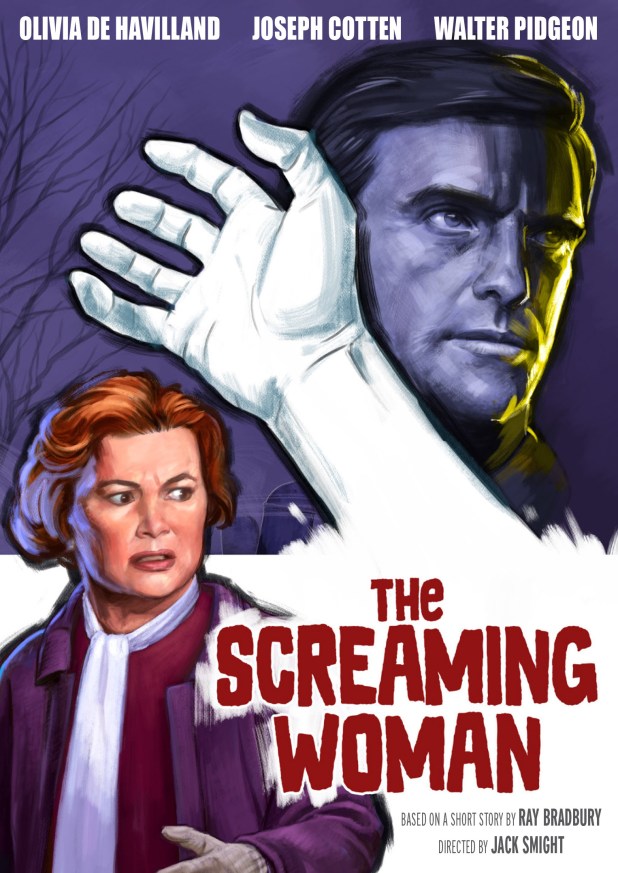
EDITOR’S NOTE: The Screaming Woman was on the CBS Late Movie on November 20, 1974.
Jack Smight, known for his exceptional directing in films like No Way to Treat a Lady, Airport 1975 and Damnation Alley— well, maybe not movie — brings his talent to this TV movie. Working from a short story by Ray Bradbury, he delivers a quick and suspenseful reminder of the unique cinematic style of 1970s TV movies, a style that could truly get under your skin.
Olivia De Havilland plays Laura Wynant, a wealthy former mental patient who has gone to the country to continue healing. That’d be easier if she didn’t keep hearing the pleas of a woman who has been buried alive on her property. Arthritis has robbed her hands of the ability to save the woman and as she brings others in to help her, her family starts to think that she is losing her control over her sanity again.
De Havilland, Cotten, and Pidgeon deliver stellar performances that elevate the movie to another level. Their talent and dedication to their roles are evident, making this TV movie a must-see for any classic TV movie enthusiast.
This is a movie that masterfully builds its suspense, keeping you on the edge of your seat from start to finish. It’s a rare gem that doesn’t let up, a testament to the captivating storytelling of TV movies from this era.
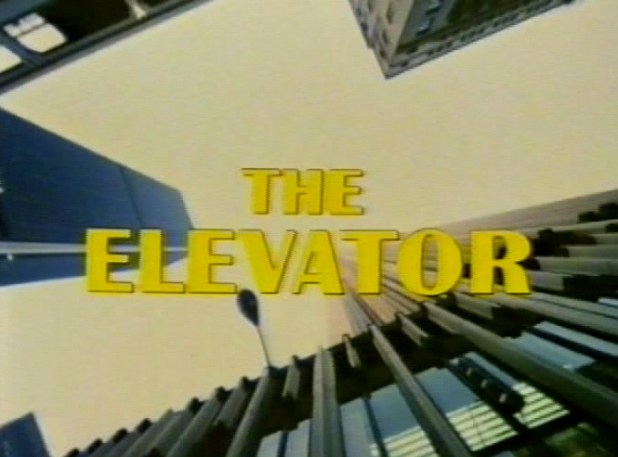
EDITOR’S NOTE: Originally airing on February 9, 1974 as an ABC Suspense Movie of the Week, The Elevator was on the CBS Late Movie on February 24 and October 27, 1975.
Directed by Jerry Jameson (Trapped on the 37th Floor, Hotline, Secret Night Caller) and written by David Ketchum (Agent 13 from Get Smart; he also wrote ten episodes of Happy Days and The Curious Case of the Campus Corpse) Rhonda Blecker and Bruce Sheeley, The Elevator is a unique film that finds an elevator stuck with the entire cast inside.
The Elevator features a stellar cast, including Eddie Holcomb (James Farentino, Dead and Buried), a hitman on the run from his last contract; Marvin Ellis (Roddy McDowall, always perfect), the building’s leasing agent; Dr. Reynolds (Craig Stevens, The Deadly Mantis) and his wife Edith (Teresa Wright, Shadow of a Doubt) and his mistress, Wendy Thompson (Arlene Golonka, who played characters named Millie on The Andy Griffith Show and Mayberry R.F.D.); Amanda Kenyon (old Hollywood represented by Myrna Loy) and young rich kid Robert Peters (Barry Livingston, Ernie Douglas himself), all trapped inside the tiny elevator that could drop at any minute.
While Eddie’s claustrophobia gets to him, Pete Howarth (Don Stroud, Bloody Mama) and Irene Turner (Carol Lynley, The Poseidon Adventure) wait outside in the getaway car. It all gets tense — I mean, would you like to be inside an elevator for a few hours? — and it is sort of a mini-disaster movie.
Kristen (Erica Mena) is a determined, focused young lawyer working for the district attorney’s office. Her latest case of putting away some dirty cops may not win her many fans on the force, but her unwavering determination and focus put her on the fast track toward moving up. She’s also the proud aunt of Angie, who she is watching while her sister Leslie (Rama Montakhabi) and brother-in-law Giovanni (Llewellyn C. Radford II) are on vacation. Despite telling the girl not to go to a modeling tryout the next day, Angie does what she wants to do. That leads to her body being found in a field and Kristen’s life going into a tailspin of grief and rage.
The worst part is that the suspect — fashion photographer Vernon Wilkens (Charles Malik Whitfield, really going for it in this movie and seemingly having so much fun playing such a horrible person) — gets away with it and even taunts Kristen and her family in the courtroom. Vernon, a charming and manipulative man, is not just a fashion photographer but a cunning criminal who has a personal vendetta against Kristen.
If the law doesn’t punish Vernon, Kristen must do it herself.
Directed by Tubi king Chris Stokes (The Stepmother trilogy, The Assistant, You’re Not Alone, Howard High) and written by Chaz Echols and Marques Houston, Picture Me Dead puts everyone in danger. From Kristen’s boyfriend Martin, whose phone is taken and it seems like he’s been kidnapped, all to lure her to a dinner with the killer and then back home to catch her supposed man in bed with another woman, to her other niece Diana, her sister Leslie (who even tries to kill herself at one point) and even potential new boyfriend Detective Pablo Espinoza (Cisco Reyes). The danger is palpable, and Vernon will stop at nothing because he believes that Kristen is the perfect woman, the only one who has come close to his mother, the woman who was killed in front of his eyes while the murderer took photos.
You have to love a movie in which the killer is supposedly one of the most outstanding fashion photographers in the world. He has a black-and-white boombox photo on his wall that looks like it came from Marshall’s. That said, this movie—like all of Stokes’ work—really entertained me. By the end, you’ll be on the edge of your seat, shocked at how many times Vernon can keep coming back to ruin Kristen’s life and how far she has to go to stop him.
Now, let’s get Kristen to go after Zooey, The Stepmother!
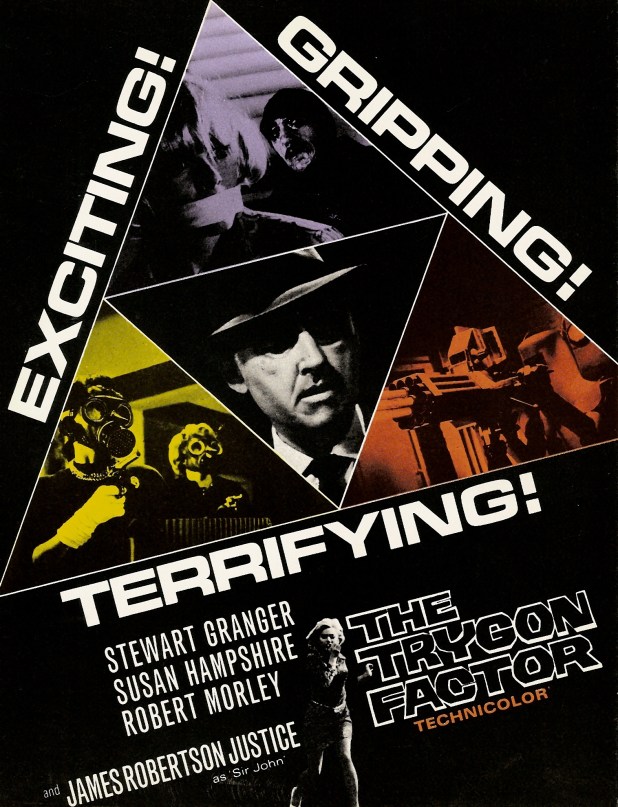
EDITOR’S NOTE: The Trygon Factor was on the CBS Late Movie on January 23, 1973 and January 2, 1974.
Das Geheimnis der weißen Nonne (Mystery of the White Nun) is known in the U.S. as The Trygon Factor and is based on Edgar Wallace’s book Kate Plus Ten.
Inspector Cooper-Smith (Stewart Granger) is on the hunt for a group of thieves who have been stealing various unconnected goods. His investigation leads him to the country manor of the Emberdays, a respectable English family. The mistress of the house, Livia (Cathleen Nesbitt), and Sister General (Brigitte Horney) and the nuns living in her home, are all suspects. Could they be behind the thefts to save the family fortune? The plot thickens when Inspector Thompson (Allan Cuthbertson) is murdered at Emberday Abbey. The Emberday children, Trudy (Susan Hampshire) and Luke (James Culliford), also come under suspicion.
The Trygon Factor leans more towards the Eurospy genre than the nascent Giallo, a style of Italian thriller, as the Krimi cycle of films began to slow down. The Eurospy genre is characterized by its focus on espionage and action, which is evident in the film’s plot and action sequences. Director Cyril Frankel, known for his work on UFO, The Avengers and Return of the Saint, brings his expertise to the film. The script was written by Derry Quinn (Young, Willing and Eager) and Stanley Munro.
One of the most intriguing scenes in the film features a gang member in a striking yellow suit of armor, wielding a gigantic gatling gun to burst through a bank wall. This unique sequence is only topped by the unexpected moment when Stewart Granger’s character punches a nun right in the face.
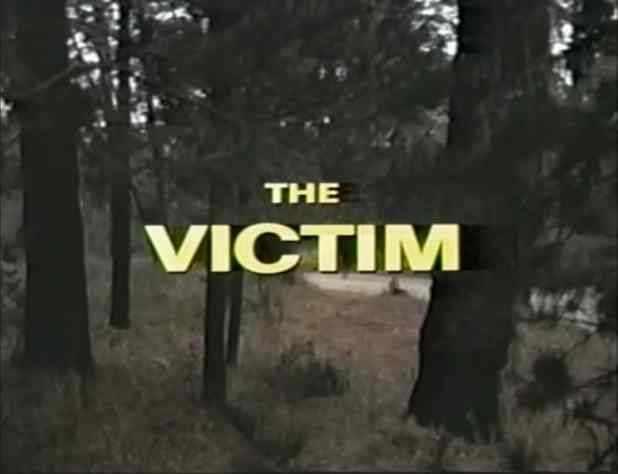
EDITOR’S NOTE: The Victim was on the CBS Late Movie on September 9, 1974; October 6, 1975 and September 8, 1977.
If you ever wonder why I love my wife so much, I watched this movie, and she walked into the room, sat on the couch and excitedly remarked, “That’s Eileen Heckart!” Yes, Becca loves The Bad Seed, a classic psychological thriller where Heckart’s performance as the mother of a sociopathic child is unforgettable. And she isn’t shy about it.
Director Herschel Daugherty’s directorial efforts run the gamut of TV classics, from Star Trek to Alfred Hitchcock Presents, Thriller and The Six Million Dollar Man. He was even the dialogue director for Mildred Pierce!
Kate Wainwright (Elizabeth Montogomery, who you may know from Bewitched, but around here we celebrate her for her role in The Legend of Lizzie Borden) is coming to visit her sister, but unbeknownst to her, her sister is already dead. She has to deal with the increasingly crazy attention of her sister’s maid, Mrs. Hawkes (Heckart), power outages, and an increasingly frightening storm. We soon learn that her sister already fired the maid and plans to divorce her husband, Ben.
While the film opens with the murder of the sister, the identity of the killer remains a mystery. As we witness Kate’s growing fear, Montgomery’s performance is nothing short of superb, keeping us on the edge of our seats.
The McKnight Malmar story this was based on was first filmed for a 1962 episode of Boris Karloff’s Thriller, ‘The Storm,’ also directed by Herschel Daugherty. The Victim was rewritten by Merwin Gerard and doesn’t stick as close to the original story, but it retains the core elements of the original, including the intense psychological suspense and the theme of a woman in peril.
The ending of this movie is bound to stir up some strong emotions. It might leave you feeling frustrated, or you might find it enjoyable, as it maintains a consistent level of suspense and creepiness throughout.


 B&S About Movies
You must be logged in to post a comment.