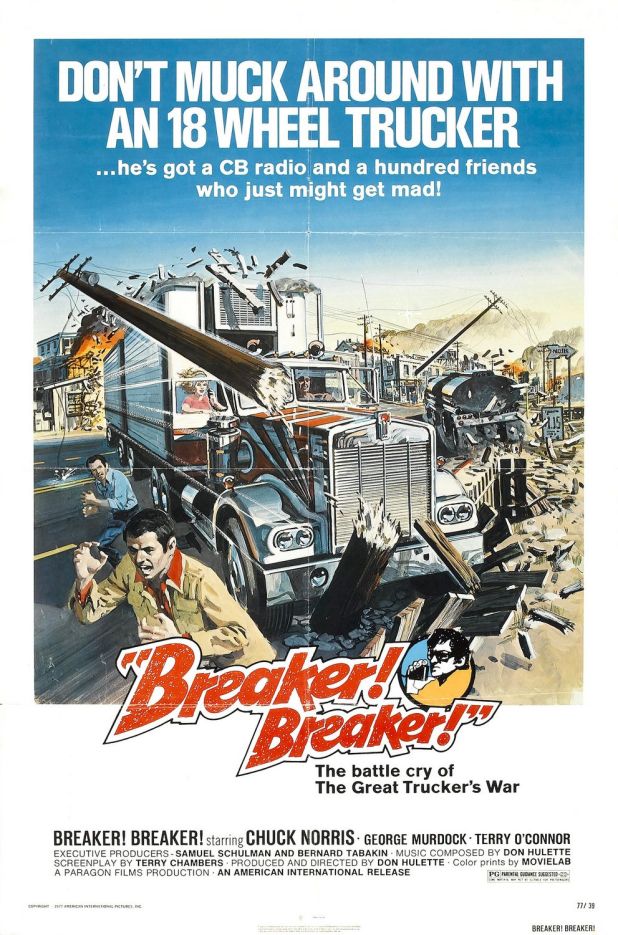
FVI WEEK: Breaker! Breaker! (1977)

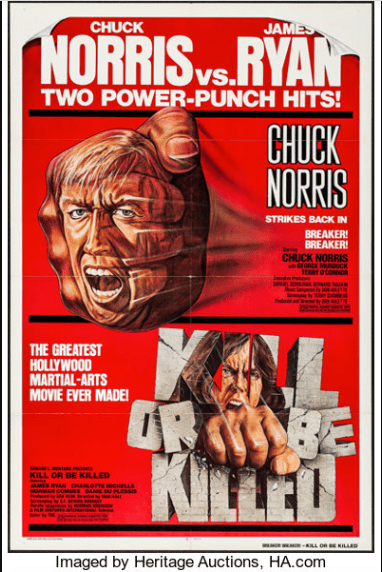
Don Hulette somehow went from the music to Starhops to directing this, which feels like a glitch in the matrix which is IMDB. Kind of the same feeling one gets realizing that they’re about to watch a trucking movie starring Chuck Norris, who said, “I didn’t know anything when I made that movie. We shot it in just 11 days. But it was amazing, people loved it anyway. It’s a down-home kind of movie. It’s still my dad’s favorite.”

J.D. (Chuck Norris) is a trucker from California who learns that his friend was paralyzed after being beaten by Texas City cops Sergeant Strode and Deputy Boles, who have a history of entrapping truckers and sending them to jail. J.D. warns his brother Billy to stay out of Texas City, the kid doesn’t listen and goes missing.

That brings J.D. to town, winning over single mom waitresses and accidentally killing mechanics, which gets him sentenced to death by Judge Trimmings. Luckily, J.D.’s new hash slinging old lady calls in a convoy of big rigs to save him. Jack Nance is in this, too. Yes, the same Jack Nance who was in Eraserhead. Life’s funny like that.

While not a Film Ventures production, it did play on a double feature they distributed along with Kill or Be Killed.

FVI WEEK: The Love Factor (1969)

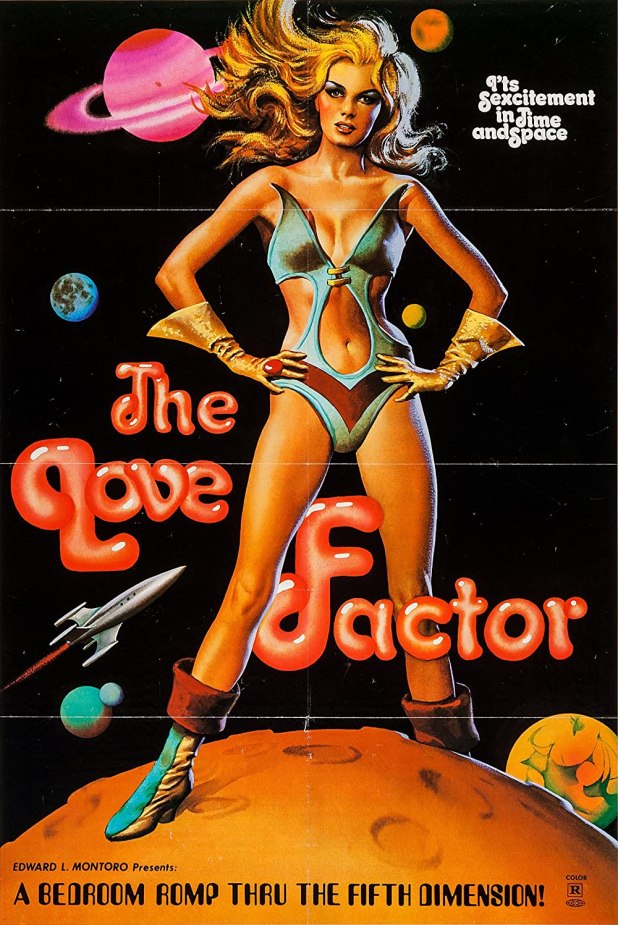
Directed by Michael Cort, who wrote it with Alistair McKenzie and Christopher Neame, The Love Factor is also known as Zeta One. It’s about secret agent James Word (Robin Hawdon) telling his boss W’s Ann (Yutte Stensgaard, Some Girls Do) about his latest adventure just as we also meet Zeta (Dawn Addams, The Vault of Horror) and her cadre of alien women from the planet Angvia — get it, it’s an anagram for vagina — who are trying to find new girls for their planet while also fighting off Major Bourden (James Robertson Justice) and his henchman Swyne (Charles Hawtrey).

Zeta has a formidable force of extraordinary magnitude, including Brigitte Skay (Isabella Duchess of the Devils), Anna Gael (Nana), Wendy Lingham, Valerie Leon (Queen Kong), Kirsten Betts (Twins of Evil) and Carol Hawkins (The Body Stealers).

Released in America by Film Ventures International four years after it played England as Zeta One, it was first shown as The Love Slaves and the next year was renamed The Love Factor. It was produced by Tigon and Vernon Sewell directed some of the scenes.

This is like Bond, Barbarella and pop art mixed with pasties, go go boots and the kind of humor that has the secret agent show up late and just want to make love to the many, many aliens he’s battling. It doesn’t make much sense, but who cares? It starts with a thirty-minute strip poker scene that really goes nowhere as well, but when you’re having fun, who is looking at the run time?

FVI WEEK: Race for the Yankee Zephyr (1981)

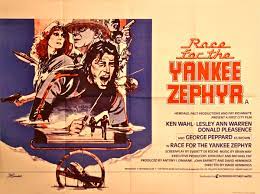
Directed by actor David Hemmings and written by Everett De Roche (Patrick, Harlequin, Link), Race for the Yankee Zephyr is the tale of a World War II-era plane found in the mountains of New Zealand by Gilbert Carson (Donald Pleasence), who runs the hunting lodge with his daughter Sally (Lesley Ann Warren) where Barney Whitaker (Ken Wahl) is visiting.

Once the locals learn that there could be money in the plane, Theo Brown (George Peppard) leads a gang of men who want to take the treasure and get rid of Carson. The money they are after includes a shipment of gold war medals, Christmas mail correspondence, a crate of 100 bottles of Kentucky-made Old Crow bourbon whiskey, 1000 gold-bars in gold bullion and the entire payroll in cash for the American South Pacific Fleet which adds up to $15 million in the film and adjusted for inflation, that would be $50 million in 2024.

Richard Franklin was the original director, but after the cast didn’t have enough Australia actors — three Americans and a British one had the lead roles — it couldn’t get a permit to be shot there. The producers took the film to New Zealand and Hemmings came on. After he was behind schedule directing, Brian Trenchard-Smith was brought in as a potential second unit director. As this was an implied threat of replacement, Hemmings finished the movie on time. He also directed The Survivor that same year.

It’s also the reason why Donald Pleasence wasn’t in The Thing as this went over schedule.

You can watch this on Tubi.

FVI WEEK: Stranded In Space (1973)

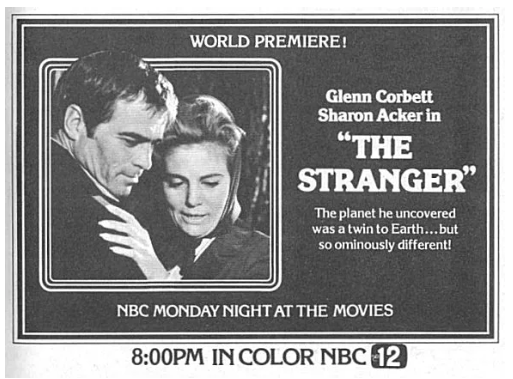
Another of the movies that Film Ventures International redid for TV, this uses footage from Prisoners of the Lost Universe as its opening credits and renamed The Stranger to become Stranded In Space.

Astronaut Neil Stryker (Glenn Corbett) is the only survivor of his mission. He is held in quarantine for such a length that he starts to suspect the government. It turns out that Dr. Revere (Tim O’Connor) and a operative by the name of Benedict (Cameron Mitchell) are pumping him full of drugs and interrogating him. It turns out that Stryker has landed on another version of our world named Terra and is being studied.

On this other world, a war destroyed most of the population and those that remain follow the Perfect Order, a one world government that keeps individual thought out of peoples’ minds. With the help of Dr. Bettina Cooke (Sharon Acker) and Professor Dylan MacAuley (Lew Ayres), Stryker is trying to get on a spaceship and fly it back to our reality.

This aired as the NBC Monday Night Movie on February 26, 1973.

You can watch this on YouTube.

FVI WEEK: Torchlight (1985)

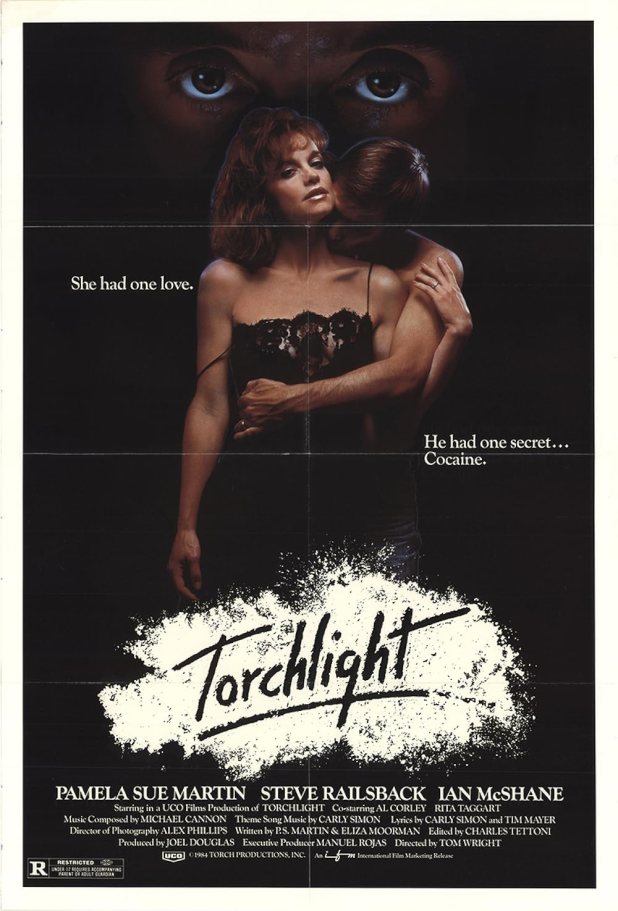
Just how into cocaine do Lillian Weller (Pamela Sue Martin) and Jake Gregory (Steve Railsback) get in this movie? Well, it was also released as Cocaine Paradise.

It’s also the first movie I’ve ever seen where a guy pierces a girl’s ears while they have sex.

Directed by Thomas J. Wright (not only did he direct No Holds Barred but he painted all of the Night Gallery paintings) and written by Martin and Eliza Moorman, Where it shines is that Ian McShane is incredible as Sidney, the drug dealer who helps make all of this addiction happen. Well, she introduces Jake to drugs and he takes it too far, freebasing and finally living in his car. She’s an addict as well but the truth is that she can handle her drugs.

I guess movies like this have had an effect on me because I always think, “I shouldn’t do coke because Steve Railsback — man, his name even sounds like drugs — got all messed up in Torchlight.”

You can watch this on YouTube.

FVI WEEK: Kill and Kill Again (1981)

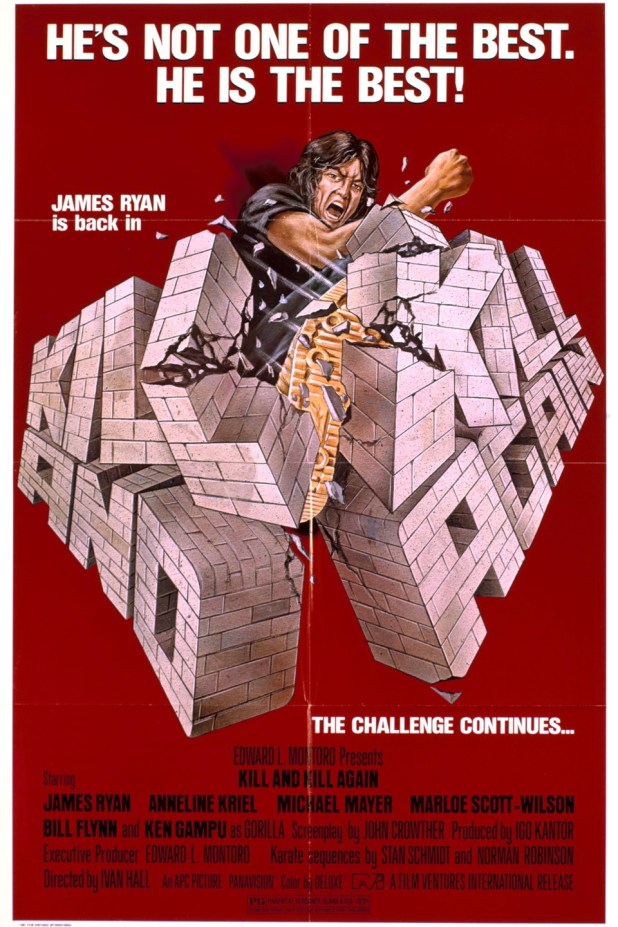
Kill and Kill Again is a sequel to the film Kill or Be Killed and tells another adventure of Steve Chase (James Ryan), a secret agent martial artist who has been hired by Kandy Kane (Anneline Kriel, whose life should be a movie, between having singer Richard Loring writing the song “Sweet Anneline” about her, followed by nude photos she took for his friend Roy Hilligenn being leaked — in 1977 — as well as being present when boyfriend Henke Pistorius — father of Oscar Pistorius, the legless South African athlete who would shoot and kill his girlfriend — shot himself while cleaning his pistol, as well as a singer and Playboy South Africa cover girl, as well as Miss South Africa 1974 and was later crowned Miss World 1974) to find her father Dr. Horatio Kane (John Ramsbottom), a scientist who has learned how to control minds while trying to turn potatoes into an energy source.

Yes, if you thought Kill and Kill Again would be normal, oh no. Oh no.

The government gives Steve $5 million dollars to pick his own team of super agents, which includes former martial arts champion Gypsy Billy (Norman Robinson), the mystic mystery man who only answers to The Fly (Stan Schmidt, a South African master of Shotokan karate), the goofball Hot Dog (Bill Flynn) who when we first meet him is challenging men to stand in a room while he shoots bullets at them and the former pro wrestler and now construction worker gorilla (Ken Gampu, King Solomon’s Mines).

They’re sent to stop Wellington Forsyth III, a billionaire who has now become Marduk (Michael Mayer), who has taken over the town of Ironville and is looking to create an army of warriors to take over the world. He has wanted Steve to come to challenge his champion, The Optimus (Eddie Dori), an unstoppable fighter.

Yes, in the world of South African martial arts, white men are the greatest fighters in the world.

In the commentary track for this movie, James Ryan said that the third film would have been called Most Dangerous Man and had him appear opposite Sharon Stone. However, FVI went out of business and he headed back to South Africa.

This comes from the same director, Ivan Hall, and was written by John Crowther, who also wrote The Evil That Men Do, Missing In Action and Hands of Steel.

You can watch this on Tubi.

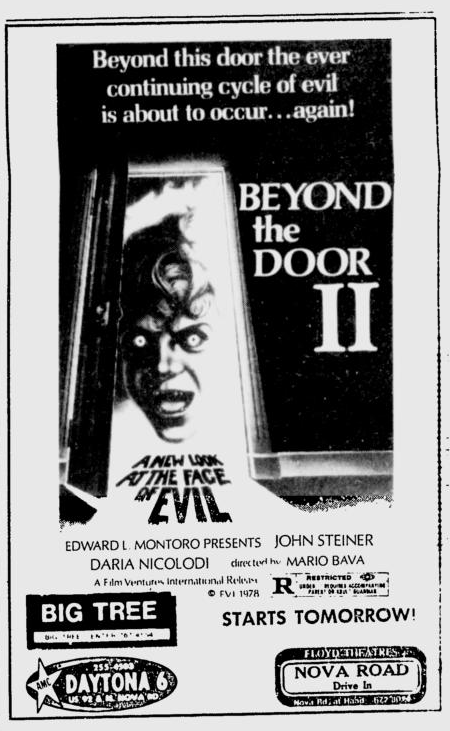
FVI WEEK: Beyond the Door II (1977)

Of course, Beyond the Door II is really Mario Bava’s Shock.
We went to see Blood and Black Lace in the theater once and there was someone who talked about the movie before it began. Maybe he was bad at speaking in public, but in short, told everyone how the movie inspired Friday the 13th (I’d say A Bay of Blood versus that one) and how it had a different title. And that was it. I was incensed. I wanted to get up out of my seat and scream that Mario Bava is the reason why lighting is the way it is and his use of color and how I can cite hundreds of films that he influenced. But I sat in my seat and boiled while the movie unspooled, because I’m really passionate about Mario Bava and don’t need to make a scene and miss seeing one of his films on the big screen.

Shock is Bava’s last film. Following a series of failures to reach theaters, including Rabid Dogs, Lamberto Bava continued to push his father to make a new movie. Originally written by Dardano Sacchetti and Francesco Barbieri after they wrote A Bay of Blood, this movie was loosely based on Hillary Waugh’s The Shadow Guest. Lamberto has also stated that he wanted this to be a modern film — check out Stephen Thrower’s part of the Arrow Video release for more about that notion — that was influenced by Stephen King.

Bava started pre-production as early as 1973, shooting screen tests with MImsy Farmer for the lead role. Shot in five weeks, some of the film was directed by Lamberto based on his father’s storyboards, which is why he has the credit “collaboration to the direction.”

I kind of love that this was called Beyond the Door II here in the U.S., but I really like the original title better. It’s a sparse film — there are only three characters (well, three living characters).

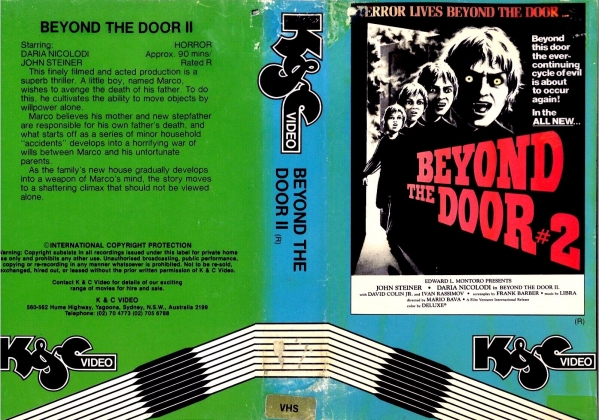
Dora (Daria Nicolodi, who should be canonized for giving birth to both Suspiria and Asia Argento, as well as roles in Deep Red, Inferno, Opera and so much more) and Bruno (John Steiner, Yor Hunter from the Future‘s Overlord) are a newly married couple who have just moved back into her old home — the very same place where her drug-addicted husband killed himself — along with her son, Marco.

Dora’s had some real issues dealing with her husband’s death. And Bruno is never home to help, as he’s a pilot for a major airline. Either she’s losing her mind or her son is evil or he’s possessed or her new husband is gaslighting her or every single one of those things is happening all at once. You have not seen a kid this creepy perhaps ever — he watches his mother and stepfather make love, declaring them pigs before using his potential psychic powers to throw things at them. Then he tells his mom he wants to kill her, followed by nearly making his stepfather’s plane crash just by putting an image of the man’s face on a swing.

While Bava was sick throughout the filming (and his son Lamberto would fill in), you can definitely see his style shine through the simple story. There’s one scene of Dora’s face and her dead husband’s and then her face that repeats vertically that will blow your mind.

The secret of the film? Dora’s ex-husband forced her to take a mix of heroin and LSD, at which point she tripped out and killed him. Bruno dumped his body in the ocean and arranged for her to be placed in an insane asylum until she recovered. Now, the ex-husband’s ghost has returned and demands blood. And he gets it.

Perhaps the finest shot in here is when Dora is lying in the bed and you see her hair fall like she’s upside down, but then it goes back like it’s in the wind, all while it seems like she’s being ravaged. I have no idea how Bava did this shot, but it’s so visually arresting that it’s stuck in my mind for days. There’s also his famous Texas switch where Marco runs into his mother’s arms, only to be replaced by her ex-husband and that horrifying scene with the rake.

There’s also music from I Libra, a Goblin off-shoot. It seems kind of strange against Bava’s old school direction, but that doesn’t mean that I don’t love it. It’s a stylish and scary film that’s way better than any Exorcist clone, despite its U.S title.
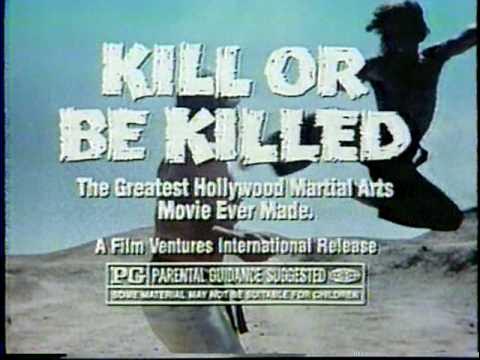
FVI WEEK: Kill or Be Killed (1980)

Martial arts movies make little to no sense most of the time. Then, there’s this movie.

Steve Chase is a martial artist who goes to the desert for what he thinks is an Olympic style meet. Nope. An ex-Nazi general was defeated at the 1936 Olympics by a Japanese martial artist named Miyagi, so he’s out for revenge.  Luckily, Steve and his girl Olga escape.

To fix up his team, von Rudloff’s miniature henchman Chico goes around the world to recruit a new team. And Steve ends up meeting Miyagi and joining his team, which leads to the madcap fight between he and his girl when she is kidnapped and forced to join his team.

Finally, Steve must fight and defeat Luke, the ultimate fighter, leading the Nazi to killing himself rather than face defeat.

I’ve given you a straight reading of the film. To see it is to know how different it is, as it’s either filmed by someone who wants to be an artist or someone who has been in the sun too long. This is often the same thing.

This movie was a success for four years in its native South Africa, where many Japanese martial arts forms were done to perfection. Yes, that makes no sense to me either. Neither does the sequel, but trust me, I’ll be covering that one soon enough, too!

You can watch this on Tubi.

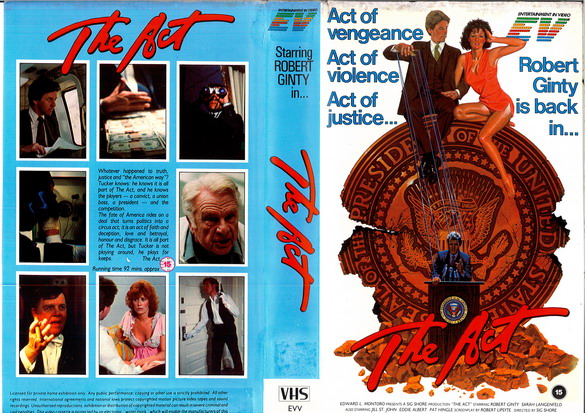
FVI WEEK: The Act (1983)

Directed by Sig Shore (Sudden Death) and written by Robert Lipsyte (who wrote another Shore movie, That’s the Way of the World), The Act is a political thriller and comedy smooshed together. Or, as the sell copy says, “Blackmail, a complex heist, and political snakery collide into a complicated caper full of disguises and surprises, where it’s never clear who’s really working for whom.”

Filmed as Bless ‘Em All, this stars Robert Ginty as Don Tucker, a union lawyer pressed into service as a presidential assistant. He helps get labor boss Harry Kruger (Eddie Albert) out of jail to save him from a hunger strike as long as Krugers successor Frank Boda (Pat Hingle) pays the President of the U.S. (John Cullum) $2 million dollars toward his re-election campaign.

Meanwhile, Boda doesn’t want to pay and gets his man Mickey (James Andronica) to get the payoff back, which has Mickey hiring Julian (Nick Surovy) all while Don and Elise (Jill St. John) are taking advantage of a hotel room. And John Sebastian did the soundtrack, if that brings you in.

There isn’t a single critic review of this on IMDB and 32 views on Letterboxd. Sometimes that means that a movie is an uncovered treasure. This is not one of those times.

You can watch this on Tubi.

FVI WEEK: Il merlo maschio (1971)

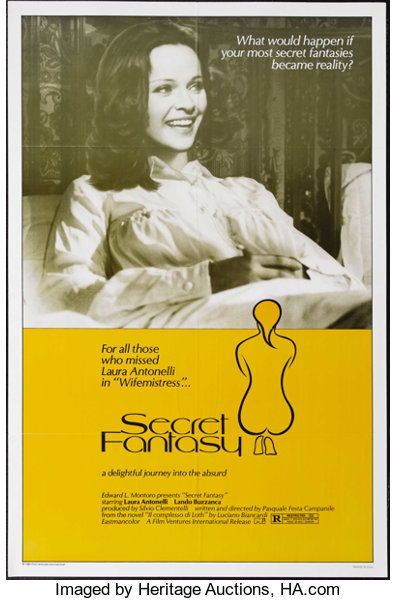
Il merlo maschio (The Male Blackbird) is a film with many other titles. In the U.S. alone, it was released as X-Rated Girl, The Naked Cello and the title it was given by Film Ventures International, Secret Fantasy.

In truth, it’s a commedia sexy all’italiana all about a man who gets pleasure from showing his wife off to other men. Now, this may be a common adult film theme today, but candaulism was not discussed much in 1971.

Niccolo Vivaldi (Lando Buzzanca, Dracula in the Provinces) is a cello player who feels a lack of appreciation from his orchestra conductor. He learns that the more he shows off his beautiful wife Costanza (Laura Antonelli, The Senator Likes Women), the more successful he becomes. She plays along, enjoying him photographing her in a series of more and more ribald poses. The film ends with him disrobing her in public as she plays Verona’s Arena during a performance of Aida.

By the end, Niccolo has gone insane and when his wife visits the mental institution, he sells tickets to touch her. He’s learned nothing.

Director Pasquale Festa Campanile is known for Autostop rosso sangue or, as it was called in the U.S., Hitchhike. He also made another movie that FVI picked up, When Women Had Tails.

You can watch this on YouTube.