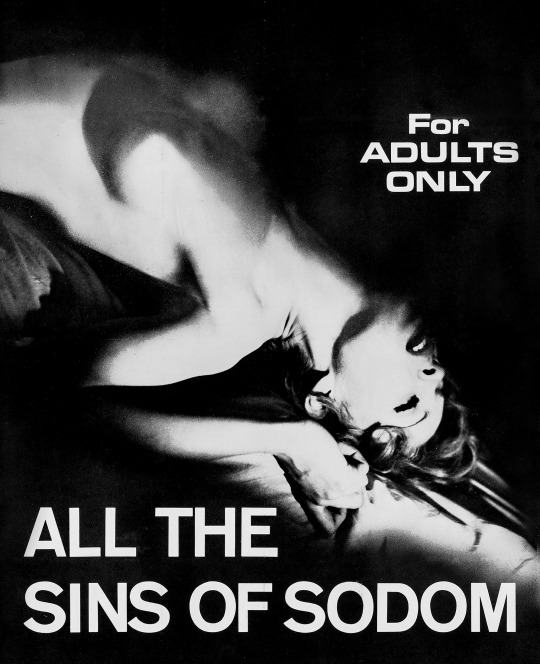
The title of this movie is awesome, but then I found out that it’s also called All The Evils Of Satan, and I don’t know if I could be more enthusiastic about a film.
New York City shutterbug Henning (Dan Machuen) is supposed to shoot some nudes for his agent Paula (Peggy Sarno), but is obsessed with shooting the evil that lives inside all women. To capture this, he takes images of Leslie (Maria Lease, who would go on to be a director of adult films, and Dolly Dearestand the script supervisor on Better Off Dead) as she hangs from the ceiling of his studio. After they make love, and while Henning usually never sees another of his conquests again, she feels different. She’s also mindblowingly gorgeous, which helps.
He also meets another model named Joyce (Marianne Prevost), for whom he feels sorry. She’s homeless and needs a hand up. He invites her to stay in his studio and assist him, but when he grows angry that he can’t capture with his camera what he sees with his eyes, he learns that she’s the perfect muse for his images of base morality. Paula even tells him she sent Joyce his way, claiming, “I sent her to you because she is what you’re looking for. If I ever I saw it, she’s the daughter of Satan.”
That means that things aren’t going to end well for anyone. Again, this is in stark black and white and while the lovemaking scenes are quite erotic, they’re mostly clothed. Then again, when they were made by Sarno, this burned the celluloid.
The first five and a half minutes of 1972’s All the Colors of the Dark (also known as Day of the Maniac and They’re Coming to Get You!) subvert what I call Giallo’s “graphic beauty” in intriguing ways.
An outdoor scene of a stream slowly darkens, replaced by an old crone with blackened teeth, dressed as a child and a dead pregnant woman are both made up to be anything but the gorgeous creatures we’ve come to expect from these films; even star Edwige Fenech (The Strange Vice of Mrs. Wardh, Five Dolls for an August Moon and so many more that I could go on and on about) isn’t presented in her usual role of a sex symbol. She’s covered in gore, eyes open and lifeless. As the camera zooms around the room and begins to spin, we see a road superimposed and hear a car crash. Even when Edwige’s character in this film, Jane Harrison, wakes up to shower, we’re not presented with the voyeuristic spoils that one expects from Giallo’s potent stew of the fantastique and the deadly. She stands fully clothed, the water more a caustic break with the dream world than an attempt at seducing the viewer or cleaning herself.
Again — in a genre where words possess little to no meaning — we are forced to wait five and a half minutes until the first dialogue. Richard (George Hilton, Blade of the Ripper), her husband, bemoans that he must leave but feels that he can’t. His therapy is a glass of blue pills and lovemaking that we watch from above; his penetration of her is intercut with violent imagery of a knife entering flesh. Instead of the thrill we expect from this coupling, we only sense her distance from the proceedings.
As Richard leaves her behind, we get the idea of the madness within their apartment: a woman makes out on the sidewalk with a young hippy man who asks when he’ll ever see her again. Mary (Marina Malfatti, The Night Evelyn Came Out of Her Grave, The Red Queen Kills Seven Times), a mysterious blonde, glares down at him, somewhat knowingly. His wife looks lost and trapped. Without dialogue, we’ve already sensed that some Satanic conspiracy is afoot. Echoes of Rosemary’s Baby? Sure, but you could say that about every occult-themed 1970s film — the influence is too potent, a tannis root that has infected all of its progeny.
Last year, a car crash took the life of Jane’s unborn child. Her sister Barbara (Nieves Navarro, Death Walks at Midnight, Emanuelle and the Last Cannibals) has advised therapy, which Richard laughs at. As Jane waits to see the doctor, she sees a man with the bluest eyes (Ivan Rassimov from Planet of the Vampires and Django in Don’t Wait, Django…Shoot!) — eyes we’ve seen before, eyes that hint at blood and murder and madness.
Even when surrounded by people, such as on the subway, Jane is lost in her thoughts and in another world, one of inky blackness and isolation punctuated only by the cool blue eyes of the sinister man who tracks her everywhere she goes. Even the teeming masses of the city make her feel more lost; only the light of the above-ground world erases the nightmare of her stalker. That is — until he finds her in the park, where she screams for him to stop following her. The camera is detached, following her from high above, watching her run away, needing the refuge of her home. Even then, the man is still there, banging on the door, demanding to be part of her reality.
The thing is — Richard has no faith in his wife’s sanity. And even when he’s telling her sister, Barbara, how he doesn’t trust psychiatry, he’s also watching her undress in a mirror. This scene really hints that they’ve had sex in the past (perhaps the past was just five minutes ago).
Jane finally finds a kindred soul—her neighbor, Mary, whom we saw earlier in the windows. Mary tells Jane of the Sabbath, the black mass and how it helped her. She sees Jane as a lost soul who needs to be saved and agrees to take her to her church.
The blue-eyed man returns, chasing Jane past a spiraling staircase, ax in hand. The camera spins, making us dizzy as it cuts from the building to the man and from Jane’s car to the man. Jane demands to be allowed to go to the Sabbath as she fears the madness that seems ready to overtake her.
As we approach the old mansion where the rite will occur, we feel more of a sense of belonging, a warmer color palette instead of the washed-out nature of the urban sprawl we’ve experienced until now. Everything is lit by a candle. Mary appears to have achieved a glow, and Jane stands in stark contrast to the beatific zombies of the assembled congregation. A taloned priest murders a dog in front of Jane’s eyes as Mary caresses her (trust me, this isn’t a Fulci realistic dog murder, although I hid my mutt Angelo’s eyes for this scene). The priest tells her that if she drinks the blood, she will be free. Hands and lips and bodies overtake her as an orgy breaks out, a bacchanal that she seems to want none of. This sex is presented as horror, as anything but pleasure, yet Jane seems ill-equipped to resist.
Immediately, we see her enjoying her husband, no longer frigid and everything back to normal, as he says. However, Jane tells her that she doesn’t feel real anymore. She walks to the bathroom, seeing multiple reflections of herself that harken back to the kaleidoscope effect we saw as the priest took her to the altar.
No matter what peace, love, and sex happen, Jane can’t escape the blue-eyed man. Even on a romantic lunch date with her husband, he’s outside waiting for her. A taxi drives her back to her home, the only sanctuary against the invasion that the man presents. As she goes through her husband’s effects, she finds a book of the supernatural emblazoned with a pentagram. He claims it’s just a second-hand book and accuses her of hiding things from him.
Jane returns to the Satanic church, this time willing to give herself over and actually seeming to enjoy lovemaking for the first time in this film. Mary intones, “Now you’ll be free.” Again, the long-fingernail priest takes her while the blue-eyed man watches her, his hands covered in blood. The members of the church dance around her as Mary calls to her. The priest tells her that Mary no longer exists. She is free to go, as she brought Jane to the church. The final act is for Jane to murder her, to send her away. Jane screams that she can’t do it, but Mary tells her that they must part, that this act will free her, as she lowers herself onto the dagger that Jane clutches.
Jane awakens, fully clothed, in a field. The blue-eyed man is there, telling her, “Now you are one of us, Jane. It’s impossible to renounce us.” He offers his hand, telling her to follow him. She’s expected. He takes her to an altar that is the same design as the pendant we just saw her wear during the orgy. She demands to know where Mary is, but the only answer she gets is that she belongs to the cult and will now be protected. Mary is gone, and Jane’s sacrifice allows her to be free. They show her Mary’s body, covered in black lace, as she runs screaming.
Perhaps in retaliation for the ritual, dogs chase her through the woods, tearing at her, stopped only by the blue-eyed man who knocks her out. She awakens, clad in virginal white, surrounded by white sheets. Her husband leaves a note in lipstick on her mirror. She looks, and the symbol is on her arm, which is covered in blood. When she goes to Mary’s apartment, an old woman lives there instead.
Jane is totally lost — the ritual has brought her nothing but more madness and the blue-eyed man even closer. Her husband is away on business, her sister is on vacation, and her therapist is dismissive. Even her apartment walls, which offer security, have become a maze of fear. The colors shift to Bava-esque hues of blackness and reds as we see the blue-eyed man attack her over and over again, with constant repetition of the frame as she screams — and then there’s no one there, just the room filled with red and a broken piece of pottery embedded in her hand.
After examining Jane, the doctor leaves her with an elderly couple. Her husband can’t find her and asks Barbara to help.
Jane awakens in a white room — of course, the blue-eyed man is waiting outside the house in the gauzy early morning hours. Yet there is an ominousness about the proceedings — no one is there. A tea kettle is boiling on the stove while the old man and woman sit there, in still repose, dead at the breakfast table. She’s trapped in the room with them as she frantically calls for help. She tells her doctor that the man is there and has killed everyone. He calmly tells Richard and Barbara that he has another patient to deal with, as he doesn’t trust Richard and wants to keep him in the dark. However, he does reveal the truth to Barbara. That lack of trust goes both ways as Richard follows the doctor.
Meanwhile, the blue-eyed man finds Jane, telling her she cannot renounce them. He tells her that the knife that he holds killed her mother when she tried to deny them. And it’s the same knife that killed the married man. He tells her she is beyond reality and will never find it again.
Following the sound of a hound, she finds the doctor’s car in the driveway — and, of course, he’s dead, too. The blue-eyed man gives chase and finally tries to kill her, but he’s stopped at the last minute by Richard, who stabs him with a rake. He repeatedly stomps on the man’s hand, revealing the tattoo symbol he stares at.
Meanwhile, Mary arrives home to a green-hued apartment, where Richard is smoking and accusing her of being part of black magic. He sees the symbol when he watches her undress, and she tells him that she wants him, that she can make him forget her sister. She promises him untold power and that he can become anyone he wants. As she leans in for a kiss, he shoots her, tossing the envelope of a letter that he received that explains it all.
Cut to a hazy white room where Jane has been given a sedative. An inspector — the priest from the cult! — demands to see her. Richard arrives and embraces her, telling her he will take her out the main door. They speed away in a car and return to their apartment. But all is not well — Richard is killed by an unseen person, and Jane is left holding the dagger. The police who arrest her all have the symbol on their wrists and are led by the leader. The camerawork becomes tighter and claustrophobic as we see the cult descending on her.
Wait — it’s all a Wizard of Oz dream, with the police and her husband at her bedside, explaining the film’s entire plot, which ends up even more ridiculous than everything that we’ve seen up until now (which is really saying something). Turns out there was no real magic. The cult was just a drug ring. Mary was real and just a heroin addict. Her sister was behind it all because she wanted all of the money from the will of their mother’s murderer, who wanted to give 600,000 pounds to both of them.
Jane rejects this reality, saying this cannot be true after all that she’s seen. The cop replies that he kept trying to call her, and she never answered, so he wrote it all in a letter — the letter that Richard showed Barbara after he shot her. It’s worth noting that the American version of the film ends with Jane being killed by the cult and all of the ending — nearly six minutes worth of important story and denouement — exorcised.
We return to where we were, with Richard going upstairs — just like we’ve seen before. Jane screams that she knows what will happen. The cult leader attacks him, blaming her for Barbara’s death. Richard follows him to the roof, where they fight, and the priest is thrown from the roof. Jane tells Richard that she knew the man was there; she knew that her husband had killed her sister, that it wasn’t a suicide, and that some strange force was guiding her. She asks for help, and the credits roll.
With this film, director Sergio Martino (Torso, 2019: After the Fall of New York) crafted an intriguing blend of the supernatural and the Giallo. Even the procedural elements come only after the film has descended into surrealism, as if a cold glass of water has been splashed in the face of a viewer who needs an explanation. Magic is madness, and we can’t even trust our heroine at the end when she begs to escape the power inside her.
This film is terrific, with Edwige Fenech turning in a strong performance. You really feel the isolation and madness that surround her and empathize with her. The strong visuals and the break from the genre conventions of masked killers, gloved hands and inept police make watching this film an absolute joy. From beginning to end, it makes you question not only the reality that it presents but also the objective trustworthiness of our heroine. And while it betrays an obvious inspiration to the aforementioned Rosemary’s Baby, it is not slavish in its devotion, making a powerful statement on its own merit.
Here’s a cocktail recipe.
They’re Coming to Get You
1.5 oz. J&B
.5 oz. lemon juice
.5 oz. simple syrup
1 egg white
3 dashes Angostura bitters
Shake all ingredients in a cocktail shaker filled with ice.
Alley Cat has three directors. I have no idea why, but Victor M. Ordonez (who is in Nine Deaths of the Ninja and Hellhole), Ed Palmos and Al Valetta (who is in Sole Survivor, Runaway Nightmare and Hollywood’s New Blood) all had their hand in this movie, leaving Robert Waters, who also wrote Fighting Mad, to write the actual story.
Billie (Karin Mani, who was also in Avenging Angel) is our heroine Billie. She starts the movie by stopping some scumbags from stealing her car. They go to their boss Scarface (Michael Wayne), who decides that he’s going to turn this tiger into an alley cat, a plan that starts by putting her grandmother in the hospital and beating her grandfather something fierce. The one good thing that happens is that she falls for a cop named Johnny (Robert Torti), who ends up having to arrest her with his partner Boyle (Jon Greene) when she defends some joggers from the very same criminals and has a gun without a permit.
When Billie goes to court, she pays twice the fine of the rapists, whose victims are intimidated by Scarface and never show. Billie reacts like a maniac, gets charged with contempt of court, and turns her movie into a WIP film for a little, complete with requisite shower moment.
This is the only women’s revenge movie — yes, Billie gets out and gets said payback — in which the lead character eats at an Arby’s. The old Arby’s had that giant beef hat on the sign before they had the meats and all. And oh yeah — while she’s in jail, her grandmother dies and Billie is robbed of those last moments, so even though her boyfriend wants to legally deal with Scarface, you will be hoping that she shoots him right in the dick.
Richard Pryor may have co-written Blazing Saddles, but didn’t star in it. Fred Williamson thought it was too silly, so the two of them got together and made their own Western comedy. The script was just 12 pages, and Pryor ad-libbed most of it.
Williamson said, “I wanted to give him an idea, a concept, and then just turn the light on him and let him do whatever he wanted. You know what they say about comedians—that you can just open the refrigerator door, and the light comes on, and the jokes roll on out. Well, Richard’s light didn’t come on.” Pryor also said, “Tell them I apologize. Tell them I needed some money. Tell them I promise not to do it again.”
Only the second movie Williamson would direct after Mean Johnny Barrows, he plays Big Ben and Pryor is Sam Spade. Ben is always making up for Spade’s schemes and, well, that’s the movie. You’ll hear the song “Adios Amigo” many times. Like, so many times that you’ll have no problem remembering the name of the movie. Too bad it’s nowhere near as good as it should be.
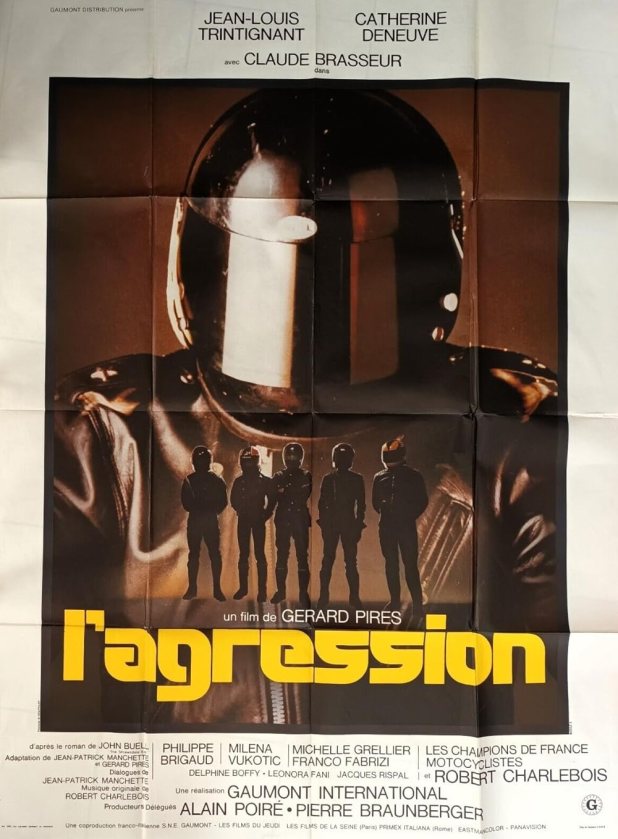
Directed by Gérard Pirès — who wrote the story with the author of the book that it’s based on, Jean-Patrick Manchette, although John Buell’s novel The Shrewsdale Exit has also been cited as an inspiration in other places — L’agression is the story of Paul Varlin (Jean-Louis Trintignant), who obviously has road rage issues. Well, after some bikers hit on his wife, those very same men end up nearly killing him and his family.
Stay tuned. As Paul pulls over, he charges the three helmeted motorcycle maniacs, who knock him out and then assault and kill his wife and daughter. Yes, Paul has screwed up and he can’t admit it to himself. All he wants is revenge.
There’s also Sarah (Catherine Deneuve), the sister of Paul’s dead wife, who realizes that her brother-in-law is going about this as badly as you can imagine. He’s no Paul Kersey. She even saves them both at one point, as she’s a better physical fighter — and maybe even mental — than he is.
Pirès went on to make the comedy series Taxi in France. There’s no hint of that in this movie.
Takanishi (Hideki Saijo) just watched his lover Reiki get killed in a Yakuza crossfire. Instead of just letting it pass, he’s in a V-Cinema movie, which means that he’s going to kill everyone who did him wrong. And because this was directed by Teruo Ishii (The Executioner, Shogun’s Joy Of Torture, Horrors of Malformed Men), that means that revenge is going to be so bloody that you won’t believe it — like a garbage truck chasing down Yakuza until they’re smashed into gore.
This was the first movie the director made in 12 years. He was seemingly ready to go wild.
There’s also catgirl thief Minako Fujimoto, love hotel queen Kimiko Yo, plenty of bad guys to shoot and an ending that’s just guns and naked women in still photos, making you wish that Teruo Ishii made this even longer.
The Hitman: Blood Smells Like Roses is just one of the movies in the Arrow Video V-Cinema Essentials: Bullets & Betrayal set. The set includes a newly filmed introduction by Japanese film critic Masak Tanioka, a video essay by Japanese cinema expert Frankie Balboa and a trailer. You can get this from MVD.
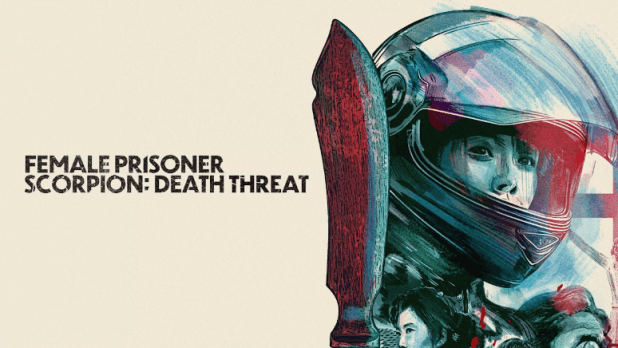
I’ve written at length about the Female Prisoner Scorpion series, as they’re some of my favorite movies ever—Beast Stable is one of the best things the human race has made—so I wasn’t really looking forward to seeing a direct-to-video reimagining of the first movie.
Man, I was wrong.
Nami Matsushima (Meiko Kaji) is — was? — the Scorpion, an unkillable prisoner who did more than get revenge. She is the patron saint of wronged women throughout Japanese prisons, a whispered name that is worshipped and feared.
This begins with an unnamed woman (Natsuki Okamoto) being trapped in hardening concrete before the barrel she’s in falls off a truck, freeing her, before she’s trained by the yakuza to be an assassin, sent to prison and let loose in the catacombs below the cells — the same place Scorpion was in all the way back in Female Prisoner Scorpion: Jailhouse 41 — and murder Scorpion to gain revenge for the warden, who lost his eye to the legendary lady’s sharpened spoon.
But can you kill an idea? Or better yet, can you become one? The systems that keep women in prison, that ruin lives, they want Scorpion dead for sure because she inspires people. When the unnamed heroine finds Scorpion, she’s long gone, walled into concrete, but she is holding her spoon as if she died fighting. Except that her hand opens, releasing the spoon into our new heroine’s hand before disappearing. Now, Scorpion is reborn, but more to the point, she can never die.
Directed and written by Toshiharu Ikeda (Mermaid Legend, Sex Hunter), this movie is about as perfect as a down-and-dirty, low-budget VHS tape can be. How amazing is it that it’s in a perfect Arrow box set, cleaned up and still ready to destroy your brains? I couldn’t love a movie more.
Female Prisoner Scorpion: Death Threat is just one of the movies in the Arrow Video V-Cinema Essentials: Bullets & Betrayal set. The set includes a newly filmed introduction by Japanese film critic Masak Tanioka, a video essay by film historian Samm Deighan and a trailer. You can get this from MVD.
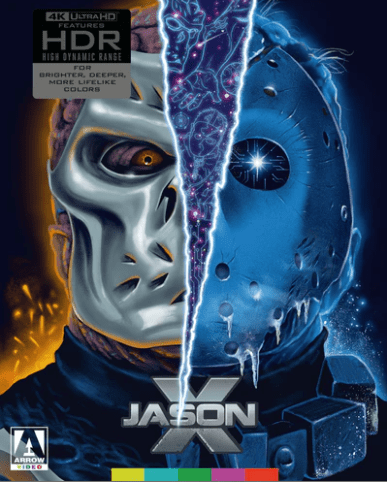
In 2010 — 9 years in the future from when this was made, 15 years in the past from when this was written! — Jason is captured by the U.S. government but can’t be killed, so government scientist Rowan LaFontaine decides to place the killer in suspended animation. Of course, a bunch of soldiers screws the whole thing up and Jason kills everyone in his path before he stabs Rowan and freezing both of them.
445 years later, Earth is ruined, so everyone moves to Earth 2. So why not send some students back to the old Earth on a field trip? Why not send their Professor and an android, too? While exploring the Crystal Lake facility where Jason was experimented on? And why not put the still frozen bodies of Jason and Rowan on the Grendel, their ship? Nothing bad can happen, right?
Well, it turns out that Jason is dead and his body could be worth plenty. The Professor calls his money man, Dieter Perez (Robert A. Silverman, who has been in five Cronenberg* movies and the two episodes of Friday the 13th: The Series that he directed, too), and they discuss how Jason’s body could be worth something to collectors. Luckily — or maybe not — they bring Rowan back to life.
Of course, kids keep having sex around Jason, which brings the maniac back to life. He wipes out nearly everyone on the ship, including all the soldiers on board. He even takes out an entire space station!
The teens upgrade their android, KM-14, which wipes out Jason. Or so everyone thinks — a medical station brings him back as Uber Jason, filled with cybernetics so powerful that he can punch the android’s head off. Not even a holographic simulation or a shuttle crash can slow him down! It takes flying him through re-entry and burning him up to take him out.
That said — two teens see his mask land on Earth 2, so he could always return. He can come back, right?
This was written by Todd Farmer (Drive Angry, the remake of My Bloody Valentine) and directed by James Isaac (House 3). I have a real weakness for this film as it goes places none of the others did. It’s the Abbott and Costello school of running out of ideas and doing something completely off the wall. It’s been a punchline forever, but you owe it to yourself to watch it again!
*Cronenberg shows up in a cameo as Dr. Wimmer, too!
The Arrow Video UHD release of Jason X has an introduction to the film by Kane Hodder, three audio commentaries (film historians Michael Felsher and Steve “Uncle Creepy” Barton; writer Todd Farmer and author Peter Bracke; director Jim Isaac, writer Todd Farmer and producer Noel Cunningham), an interview with Harry Manfredini, a making of, archival interviews with Farmer and actor Kristi Angus, archival docs on the history of the character and the making of the movie, cast and crew interviews, behind the scenes footage, an electronic press kit, trailers and TV commercials and stills, behind the scenes and poster galleries, all inside a reversible sleeve featuring original and newly commissioned artwork by Gary Pullin with a double-sided foldout poster featuring original and newly commissioned artwork by Gary Pullin and an illustrated collector’s booklet featuring new writing on the film by Matt Donato and JA Kerswell. You can get it from MVD.
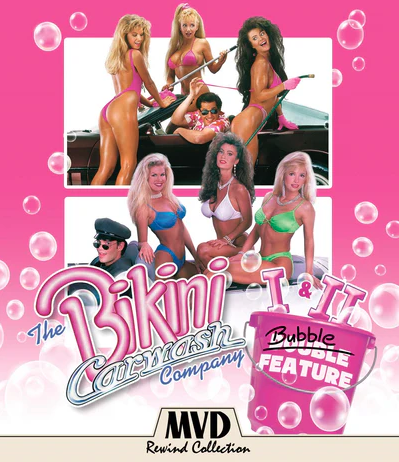
This Blu-ray release from the MVD Rewind Collection marks the first high-definition appearance of both features, presented in their original 1.33:1 aspect ratio. Because both films were originally shot and edited on standard definition videotape, they’ve been carefully remastered using advanced AI upscaling from 480p to 1080p resolution. Packaged with a collectible slipcover, this release is the definitive way to revisit these irreverent, sun-soaked cult comedies that turned a bucket of water and a bikini into box office gold.
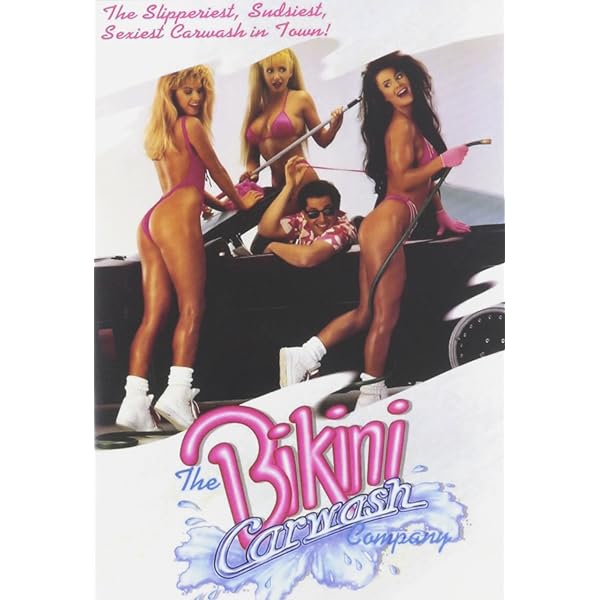
The Bikini Carwash Company (1990): George “Buck” Flower was working on a TV show called Nutz, Yutz and Klutzand it was set in a car wash. He wondered what a movie would be like with attractive women working in a car wash and here we are.
Directed and co-written by Ed Hansen (Takin’ It Off, Takin’ It Off Out West), this starts with Jack McCowan (Joe Dusic) looking for the local Sunshine Car Wash, which he is supposed to manage for his Uncle Elmer (Michael Wright). He meets Melissa Reese (Kristi Ducati, Meatballs 4, Sorceress), makes a date and a business plan. She has plenty of friends who wear swimsuits. Perhaps they can wash cars.
For some reason, things hit a stumbling block when Assistant District Attorney Donovan Drake (Matthew Cory Dunn) and the police show up to try and stop the nearly-naked car spraying. But that’s a minor bump as most of this movie is just breasts on windshields. Seriously, it’s devotion to women buffing and sudsing cars is single-brained.
I mean, there are also butts.
So yes, the car wash is open and Amy (Rikki Brando, Buford’s Beach Bunnies), Sunny (Sara Suzanne Brown, who shows up in the sequel as well as Gregory Dark’s Secret Games 2: The Escort), Tammy Joe (Brook Lynn Page in her only role), Stanley (Eric Ryan), Big Bruce (Scott James) for the ladies and Rita (Neriah Davis, Playboy Playmate of the Month March 1994).
Also: Jim Wynorski shows up.
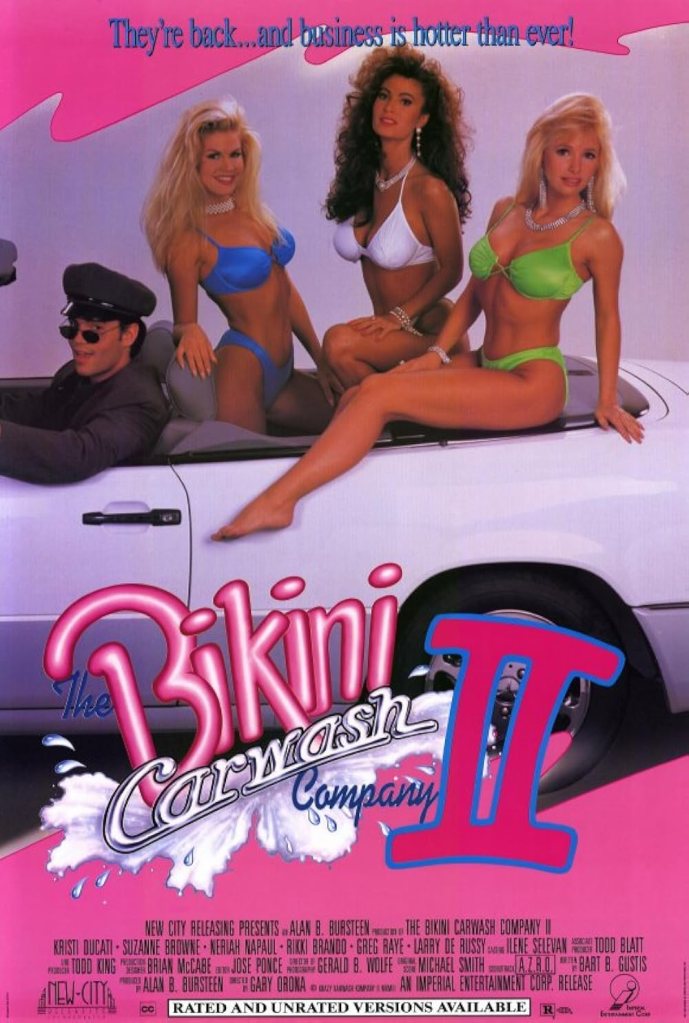
The Bikini Carwash Company II (1993): What questions remained unanswered by the first movie? So many cars need to be washed, so I guess there’s some reason for this movie, which at least has a different director in Gary Dean Orona, who started a career of sexy movies with this effort.
At least this has a reason to be: the carwash gets so big that a gigantic company buys it and the girls need to raise $4 million in a week to get the car wash back. The carwash women — nearly all of them are back, such as Melissa Reese (Kristi Ducati), Amy (Rikki Brando), Sunny (Sara Suzanne Brown) and Rita (Neriah Davis) are here — decide to sell lingerie on TV to get the cash they need.
I applaud that Melissa has become the CEO and Amy the lawyer. They realize their bodies have power but so do their minds. But sometimes, I wonder why so many of my friends are successes. They can discuss strategy and money and investing. I can at length with no research discuss sex comedies.
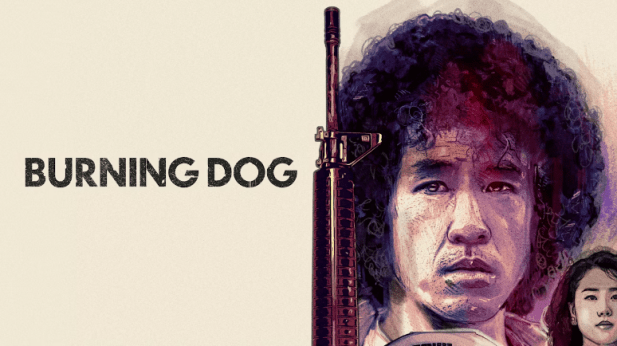
Directed by Yôichi Sai, who wrote it with Wui-Sin Chong, this has a gang of criminals trying to steal a few million dollars from American marines in Okinawa. Seiji Matano plays the leader of these rugged and rough crooks, a long-haired, brooding bad guy who remains in control of every situation while being as cool as possible.
There’s also a jazzy soundtrack that I enjoyed and Okinawa looks beautiful.
While this is longer than most V-Cinema and perhaps not as quickly violent as others, it’s not bad. As usual with criminal films, the gang itself may doom the situation before the USMC or cops catch them.
Burning Dog is just one of the movies in the Arrow Video V-Cinema Essentials: Bullets & Betrayal set. The set includes a newly filmed introduction by Japanese film critic Masak Tanioka, a video essay by critic and Japanese cinema expert Mark Schilling and a trailer. You can get this from MVD.





 B&S About Movies
You must be logged in to post a comment.