CHILLING CLASSICS MONTH: Cathy’s Curse (1977)

John S Berry is back with another entry in this month’s Chilling Classics event. He’s been watching a lot of Big Japan wrestling, which I can totally respect, and has a lot of cool things to say about one of my favorite movies ever. Seriously, I could watch this one every single day of the year. You can read more of his words on his Twitter


Even Linda Blair possessed

Was a more likable kid

Than when Cathy was not cursed

***Gamberlaku 7-7-7 format created by the dude Raven Mack***

I think I have seen Cathy’s Curse multiple times. Similar to the sense of I think I have had that dream before that was out of order and at times it has a pink or sepia tone and characters appeared that I instinctively knew who they were. Also acceptable comparisons are: driving late into the night with heartburn from gas station coffee and your eyes drying up, falling asleep with on a Saturday night where it switches from edited movies to Byron Allen to infomercials about non-stick egg pans and a two hour hayride in the cold Midwest night with not a lot of pay-off.

I do not mention these comparisons in a negative sense, or for that matter a positive one. Cathy’s Curse is its own sense, its own grainy huh? magic. I have watched it several times and am pretty sure even if I have a sudden change of lifestyle and emulate Old Paul I am guessing I will view at least a few more times before I shuffle into a possessed doll or an old lady specter that lives in a cold ass attic.
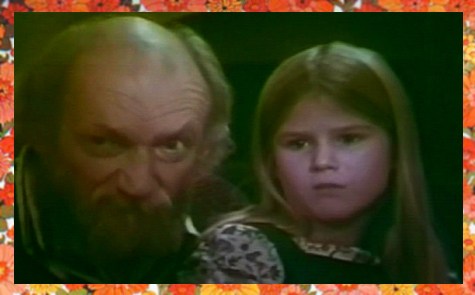
There is an aura about this film and all of the gaps and plot holes just add to all the speculation fun you can have with it. My original viewing of this was with my nephews on a Christmas visit and it makes me proud that the movie is often quoted and will probably live on the next generation and maybe even further. Our family may not have jewelry to pass down but we have plenty of warped.

This is French Canadian film and it looks like most of the actors didn’t really go on to do a whole lot (watch for the scene at the 27-minute mark when Mummy moans “My Baby!” and police investigator puts his hand over his mouth to prevent himself from laughing). A lot of the acting is flat and Mummy seems to be filming two different movies, one where she is a doting mom and the other when she is ready to lock her daughter in an attic and go on vacation with an escaped convict. But this unevenness just adds to the film.

The film starts with a flashback scene to 1947 when a scorned husband decides to wildly drive off with his left behind daughter to catch up with his wife and son. They lose control and meet their end in an awful way in a snowy ditch. Also, this is the start of the great lines which I will not ruin, best to experience them in the moment (I actually envy those who get to hear them for the first time).

Flash to current day and the son that got away actually decides that after his wife’s breakdown it is a good idea to move into his drafty, cold ass childhood home. George just marvels about all the good memories from the house. Maybe he was too young when his mother took him away to remember all the bad times or maybe he is just a clueless putz. I am leaning towards the putz angle.

George never seems to put two and two together and have an Ah-ha moment linking his family history and all the horrible things that are happening around him. He is one of those business as usual guys, housekeeper plunged to her death? Well looks like I better put another ad in the paper tomorrow. Wife having a breakdown in a bloody bathtub and back is all lashed up? She will be fine with some soup and rest.

There is something about this film that just feels cold and also has that spare cold room you have to stay in when you visit a grandma or aunt’s house feel. Maybe you will see your breath when you wake up and for sure you are going to go thru those comforters and blankets stacked on the rocking chair next to the bed. Only thing colder is Mummy’s affection towards the Prince Valiant flat delivery Daddy. Maybe the cold and musty old house smell is not as much of an aphrodisiac that Paul thought it would be (see putz).

It doesn’t take long for the bad vibes to arrive in many forms. Creepy dolls are found, mediums (or extra rares) show up and Mummy’s sanity slides down the cold slippery ditch embankment. Luckily she has a housekeeper to help things run nice and tidy. Well, actually she may be the worst housekeeper since me in college. After for no reason, Cathy shatters a bowl against the wall the housekeeper picks up about 4 pieces and announces “there it is all done.” Shortly after the tidying up, Cathy’s doll plays some Wolf Eyes and Mummy is home just in time to see the lady go out the window.

Mummy is the only one who seems to be kind of shook up about this. Everyone else seems pretty flat and emotionless about it. Mummy has questions and suddenly Cathy can teleport and control objects and Mummy is scared and screaming. Paul seems more upset about having the ambulance out to his place for the second day in a row than his wife being sent away for another breakdown. As the ambulance pulls away I honestly thought the shrill siren was Mummy wailing and crying out. Yup, her voice and screaming and voice is that bad.

I am not sure if Old Paul and the housekeeper lady were married. Paul didn’t seem that broken up by the lady’s stage dive out the window. Maybe that is why he started hanging out with Cathy. I am not sure how or what exactly you did but I owe ya one for getting rid of that old cow. Paul’s home that was once tidy and proper is now a mess with plates piled in the sink, smut mags on the coffee table and piles of old holy underpants now that the lady is gone and he loves it.

He ties one on Cathy is way ahead of the curve in encouraging others to binge drink. The psychic just decides to pay a visit and the duo drives her to stumble to the hills. Paul drinks more and snakes appear. Cathy is going to really be fun at parties when she gets older.

Mummy comes home and immediately trouble brews. Paul tries to sober up and protect her but well let’s just say that did not end up well for poor old Paul. Mummy has a final showdown with the doll and a burned up specter of her husband’s sister. The house chuckles shakes and bellows and George never really figures out that the haunting is by Laura his crusty faced dead sister.

But Mummy smiles at Cathy and the clueless putz strikes again. See everything is fine. I often wonder what life would be like for characters after the movie wraps up. I imagine that things would be back to normal for hmm… maybe an afternoon. By the next cold morning, Mummy is back to screeching and Cathy will never be the same again. George probably completed the cycle of life and ran off with Cathy leaving their mom behind. Hopefully, George put snow chains on and is a better driver than his dad. If not, well they do make a lot of sequels and reboots these days. I’m game.
CHILLING CLASSICS MONTH: The Blancheville Monster (1963)

Thanks to Dustin Fallon from Horror and Sons for this entry. Beyond having a great web site, Dustin has really helped us get people to see our site and get writers for this project. It’s really appreciated! Thanks for watching so many movies for this month’s project!

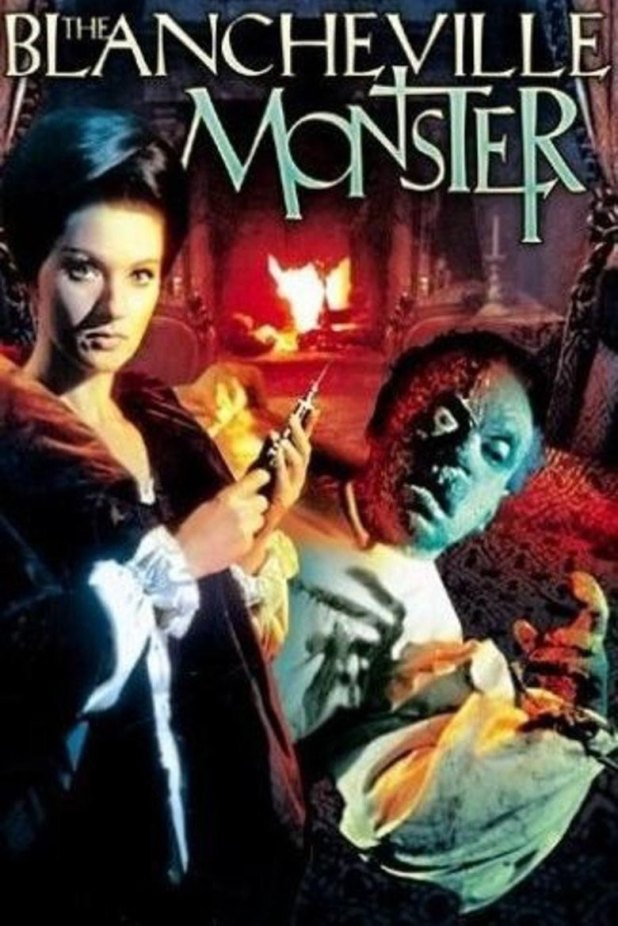
Originally filmed as Terror, the 1963 Spanish/Italian production The Blancheville Monster is a musty, dusty Gothic horror affair that’s just rife with classic horror trappings and features more than just a touch of American soap opera melodrama, although that last part probably wasn’t overly intentional. The film was directed by Italian filmmaker Alberto De Martino, whose later horror credits include 1974’s The Antichrist and 1982’s Blood Link. However, Martino may be best remembered for a film so schlocky that it was featured on an episode of Mystery Science Theater, 1980’s The Pumaman.

Set in Northern France in 1884, the film opens to find young countess Emilie de Blancheville returning home to her family’s ancestral estate after many years away at school. Accompanying her on her trip are her friend, Alice, as well as Alice’s older brother, John. John is secretly in love with Emilie, but it would seem to be a very poorly kept secret. Just as poorly kept of a secret is Alice’s own growing romantic interest in Emilie’s brother, Rodéric, a man that she only knows from hearing Emilie read the letters that he has sent his sister over the years.

Upon arriving at her family’s castle, Emilie is saddened to learn that her father was killed in a fire just a few years prior. Her family’s servants have passed on in her absence as well and have since been replaced. In addition to a new butler, the family has taken on a new housekeeper as well: a much younger, attractive woman named Miss Eleonore. Eleonore is played by one of the better known starlets of 60’s and 70’s (and even later) European cinema, Helga Liné. Liné appeared in numerous horror and genre films, such as Horror Express, Horror Rises From the Tomb, and Nightmare Castle. Liné had a tendency for playing evil or sinister characters, surely due to her ability to be both sensual and emotionless in the same shot.

It doesn’t take long for eerie occurrences to begin around de Blancheville Castle. As they sit for their first meal, a sound much like the howls of an old hound dog or the cries of an injured man can be heard in the distance. Rodéric explains that the sound is indeed just that of an old dog, carried by the wind from one of the surrounding “peasant villages”.

At almost immediately the same time, the new family doctor arrives at the castle. He is introduced by Rodéric as Dr. LaRouche , the tension instantaneous between the two men. Rodéric excuses himself to escort his house guests to their rooms, but essentially warns the doctor that he will return. This leaves LaRouche alone with Eleonore, filling the air with a different sort of tension. There is some vague allusions to double-crosses and other “devious activities” before LaRouche hands Eleonore what appears to be three small vials.

As with any good Gothic horror, a storm rages through the night. Alice is woken by thunder, and begins to wander the darkened halls and corridors of the old stone structure. She hears a gasping sound coming from a stairwell and ascends her way up to a shuttered door. Throwing the door wide, she finds Eleonore standing over the prone body of a severely burned man. A syringe filled with a dark, viscous fluid is clutched in her hand.

Rodéric is forced to reveal that the burned man is in fact he and Emilie’s father, the Count de Blancheville. While the elder de Blancheville had indeed survived his injuries, he had also been driven bat-shit crazy. The syringe that Eleonore had intended to use on him was filled with a sedative intended to help abate the old man’s ravings and rages. Without the injection, the Count has broken free from his chamber and is roaming the castle grounds at large.

Making this family reunion more memorable is the fact that dear ol’ Dad has become obsessed with a curse allegedly placed on his family, one that will befall them should a female descendant reach her 21st birthday. In order to prevent this prophecy from fulfilling, the Count must now murder his own daughter before her next birthday, just mere days away.

The Count de Blancheville appears throughout the castle, usually at his Emilie’s bedside. Almost hypnotically, he frequently makes her rise from her slumber and sleepwalk to the family tomb. There, he systematically attempts to shatter his daughter’s psyche, almost willing her into accepting her impending death. Why he never chooses to actually kill her while he has her in this defenseless state may be the film’s biggest mystery.

The passive-aggressive behavior from our aspiring practitioner of filicide leaves the film free to muddle up the remainder of its runtime with soap opera style love triangles and rampant melodrama, filling the screen with more “red herrings” than a bag of Swedish Fish! Everyone is in love with everyone else, while jilting another all in one breath. You’d be forgiven for expecting Eric Braeden to pop up as “Victor”, but that would be one too many “shady fuckers” for a film to handle.

Buried somewhere in all of this mess is the overlooked fact that the Count de Blancheville is apparently a ninja. Not only can the Count slink from room to room throughout the castle undetected, hiding in the old castle’s multitude of shadowed corners and nooks, but he (or she?) can also launch large blocks at his prey from the castle walls while theoretically still in another room at the time. “Spoiler alert”, or something.

The entire thing culminates in one giant pretzel of double-crosses and fake outs. Characters die only to later return. Ya know, kinda like when “Marlena” supposedly died in that plane crash on Days of Our Lives, only to be “revived” from a coma later on. At least no one in The Blancheville Monster gets possessed by a demon.

Most casual horror fans will probably find The Blancheville Monster to be an insanely boring film… and they’re not entirely wrong. It’s filled with tiresome exposition and moves at a plodding pace. Even ardent Gothic horror fans may be hard-pressed to find much of exception, excluding the beautiful, yet foreboding, architecture of the old castle itself. And despite having Edgar Allan Poe’s name attached to its original title, the film has little to nothing to do with his stories. Skip this one and go watch Barbara Steele in The Ghost, which is conveniently also included in this set.

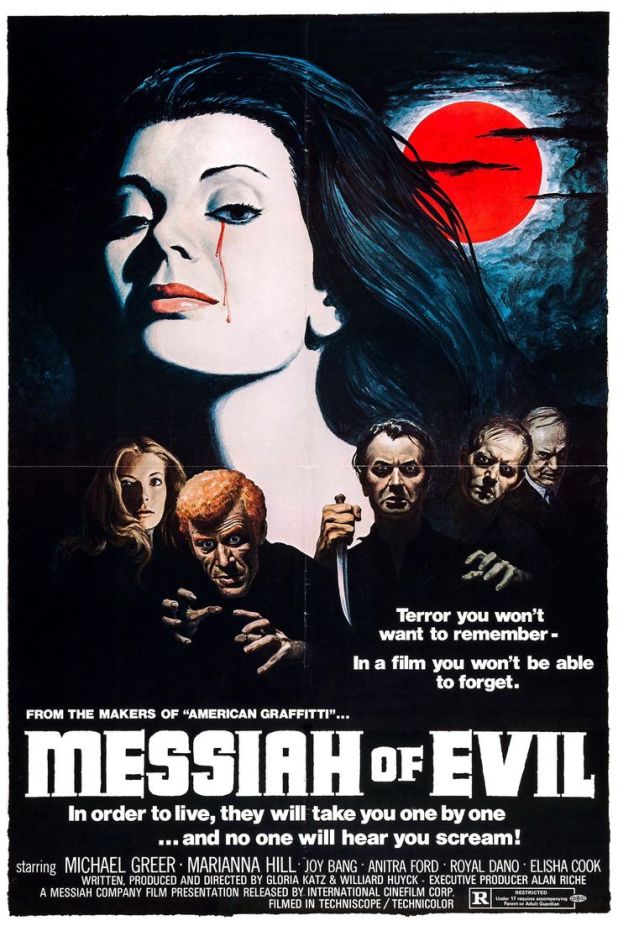
CHILLING CLASSICS MONTH: Messiah of Evil (1973)

Between great design, reviews of junk food and lots of great info on the artists behind horror movie posters, there’s a lot to love about the site Camera Viscera. Here’s one more: Doc, the creator of the site, has sent this article on Messiah of Evil!

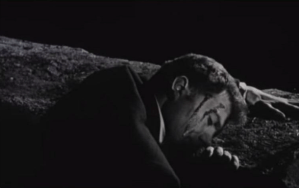
The best word to describe Messiah of Evil (really, the only word to describe the film) is surreal. With its vampire-zombie hybrid antagonists and rundown seaside setting (not to mention its pseudo-satanic undertones) it’s a movie less concerned with weaving a cohesive narrative than it is stringing together as many odd characters and bold set pieces as it can in its belabored 90-minute runtime. But what Messiah lacks in grace (and budget, and continuity, and comprehension, etc.) it makes up for in genuine curiosity.

When the film opens, a young woman named Arletty (Marianna Hill, who also acts as narrator) is driving to Point Dume, a sleepy seaside town along the California coast, in search of her artist father from whom she hasn’t heard in some time. When she arrives at his beach house, she finds no sign of him, but she does find a diary he left, seemingly for her to read. The journal entries are ominous and cryptic, warning her of not only the other-worldly dangers that seem to inhabit the town, but also unsettling changes that are happening to her father.

Through no real explanation, she eventually hooks up with a trio of fellow out-of-towners: Thom, Toni, and Laura (Michael Greer, Joy Bang, Anitra Ford). Thom seems to be on a similar hunt of his own, searching for answers surrounding the type of portents Arletty’s father’s diary warned about. Thom’s motivations are never clearly explained, but that’s par for the course with Messiah.

One of the signs Arletty’s father warned of is a blood moon, which eventually appears in the sky one night, setting off the chain of events described in his diary. Locals wander aimlessly on the beach, their heads transfixed skyward. Hordes of blood-thirsty flesh-eaters stalk the streets at night. People bleed from their eyes. Our titular Man in Black (who we come to learn was a member of the fated Donner Party) shows up to greet his disciples. No one seems to know what the hell is going on, including the viewer.

After a few inspired but poorly executed set pieces (the two best ones involving a supermarket and a movie theater), the film crescendos into a battle of survival for Thom and Arletty at her father’s bungalow. Despite its minuscule budget, the film manages to deliver some surprising action, including a few falls-through-a-skylight and even an extended full body burn. Alas, even these dazzling displays including the supermarket and movie theater scenes aren’t enough to make the film feel anything less than a slog. The highlights are too few and far between, sandwiched amid a shuffle of go-nowhere scenes and mostly sluggish performances.

Messiah was released theatrically in 1973, under no less than four different titles, and getting it to the big screen was no easy task. According to Ford, “…shot in 1971, this movie was originally titled The Second Coming. Towards the end of the filming, investors pulled their money out, and the film was never finished. A Frenchman bought the unedited footage, edited it and released the movie under the title of Messiah of Evil.” And indeed one of Messiah‘s greatest weaknesses is its editing. Scenes abruptly end, dialogue isn’t synced properly, jump cuts abound. It’s all very slapdash, and it shows.

The film was written and directed by husband and wife team, Willard Huyck and Gloria Katz, and to say they have had an interesting career in Hollywood would be an understatement. The same year Messiah was released, the duo who happened to be friends with George Lucas, serendipitously enough ended up being asked to write American Graffiti and later Indiana Jones and the Temple of Doom, as well as being tasked with writing and directing the unanimously derided bomb, Howard the Duck. It’s about as strange a journey as Messiah of Evil itself.

Messiah is arthouse exploitation. Equal doses of trippy visuals (for the pompous types) and goopy low-budget viscera (for the rowdy types). Though not as refined as its contemporaries, it still shares shelf space with the likes of Let’s Scare Jessica to Death, Burnt Offerings, The Witch Who Came from the Sea, and others. It’s a niche but important sub-genre, one whose entries flow with the languid, dreamlike pace that only a movie from this era could. Gauzy visuals and strange happenings like your brain after a long night of drinking.

While I’d recommend a few other titles before this one, Messiah of Evil is worth a watch if you’re an exploitation completist looking for a break from reality.

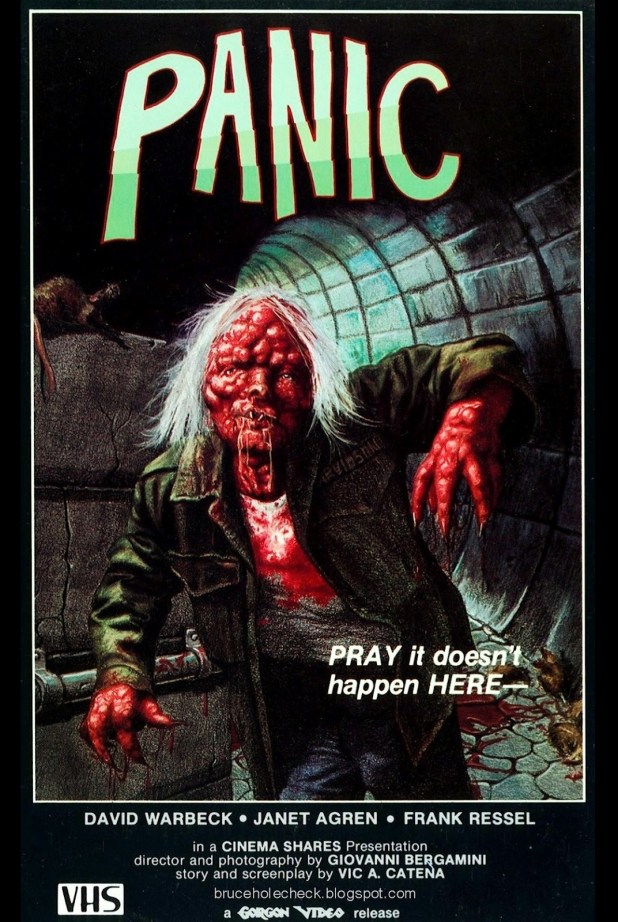
CHILLING CLASSICS MONTH: Panic (1982)

Also known as Bakterion, Nightmare Killing and even Zombie 4 in Greece, this film was directed by Tonino Ricci, Fulci’s assistant director on White Fang and Challenge to White Fang.

It all starts with lab rats going nuts and killing one another, which was not what I was planning on watching while I ate my breakfast while watching this. What was I thinking?

Professor Adams has gone missing — maybe it was a fishing trip — but we all know that he’s behind all of the random killings. The government literally sends Captain Kirk (David Warbeck from The Beyond) to figure out what’s going on. He starts working with Jane (Janet Agren, Eaten Alive!Hands of Steel) to figure out how to stop the infection and save not just the town, but soon the entire world. Yep, there’s plenty of talk about how this mutant virus could end life as we know it, yet all we see is one rotting meatloaf looking doctor.

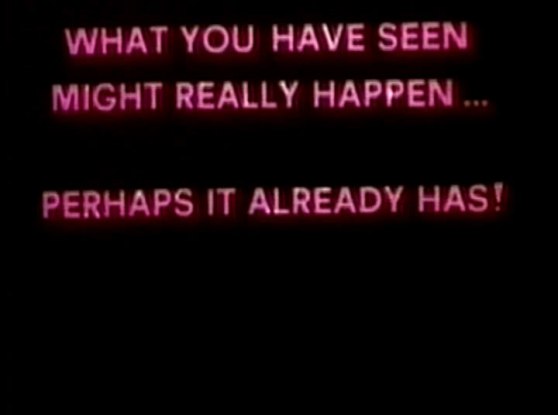
Will the military nuke the town? Can Captain Kirk stop the worst special effect you’ve ever seen this side of Curse of Bigfoot? Will Jane feel bad for the professor, whose face looks like the inside of a stuffed pepper? Did I laugh out loud at this end credit copy?

Ugh, this movie. It’s pretty painful. That said, you can get an uncut version on Cult Action, watch it on Amazon Prime or just grab the Chilling Classics box set.

CHILLING CLASSICS MONTH: Silent Night, Bloody Night (1972)

Hey guys! Paul Andolina is in charge for this review. I met Paul at a wrestling show and we discovered a mutual love of film. Check out his writing at Wrestling with Film.

I love holiday themed horror movies. I probably spend too much time scouring the internet and books to look for more films with a holiday bent to add to my watchlist. Just this October I participated in a friendly movie watching competition. Its theme was holiday-centric horror. When I picked up Chilling Classics I had completely glanced over the fact it contained the film Silent Night, Bloody Night. I already owned it separately on DVD. I finally got around to watching it for this review and I was not expecting what I got. In the end, I was pleasantly surprised.

Silent Night, Bloody Night is a horror thriller released in 1972. It was directed and partly written by Theodore Gershuny. You may be familiar with his work unknowingly as he worked on both anthology television series, Tales from the Darkside and Monsters as both director and writer. Silent, Night Deadly Night is about the Butler house, a one-time asylum with an interesting past. Wilfred Butler the man who restored the house to its current state dies when he set himself on fire on Christmas of 1950. His only surviving relative, his grandson, Jeffrey Butler, is selling the house. He’s in town to settle affairs but his lawyer and other people go missing. What is it about this house? Why does Jeffrey want to sell it and why do the townsfolk seem so eager to acquire it all costs?

The film stars James Patterson, a Derry, Pennsylvania native, as Jeffrey Butler. He died during post-production of the film and his lines were apparently dubbed by someone else. It also stars the director’s then-wife Mary Woronov as Diane Adams, the mayor’s daughter. It largely centers around these two characters. Someone is calling the townsfolk and in whispered tones is asking them to come to the Butler house. The calls sort of reminded me of those placed by Billy in 1974’s Black Christmas. However, the caller is able to convey a creepiness without the crassness of the calls in Black Christmas. There is something deeply unsettling about the hush toned calls from the mystery caller, who says she is Marianne. The movie is deliberately paced and has substantial payoffs both in terms of plot and the kills depicted. Even though there are only two or three kills depicted outright, there is one that will catch you off guard and change the tone of the film drastically. 

The movie takes place around Christmas but it isn’t played up much, apart from some Christmas tunes on the radio, some decorations, and sparse snow. It still has the dreariness one would want in a holiday horror flick and would go well with some spiked eggnog or whiskey laden hot chocolate on a snowy day. There is a particularly interesting use of the church hymn In the Garden as well. It is a recurring theme throughout the movie’s soundtrack and adds an extra dose of oddness to the proceedings. If you enjoy low budget films or holiday centered horror or just enjoy proto-slasher films you’ll find much to enjoy in Silent Night, Bloody Night. I should also point out that not only is this Cannon’s first released film it is also co-produced by Lloyd Kaufman of Troma. I hope you consider watching this film during the upcoming holiday season but must warn that most cuts of the film released on DVD are not the best looking prints.

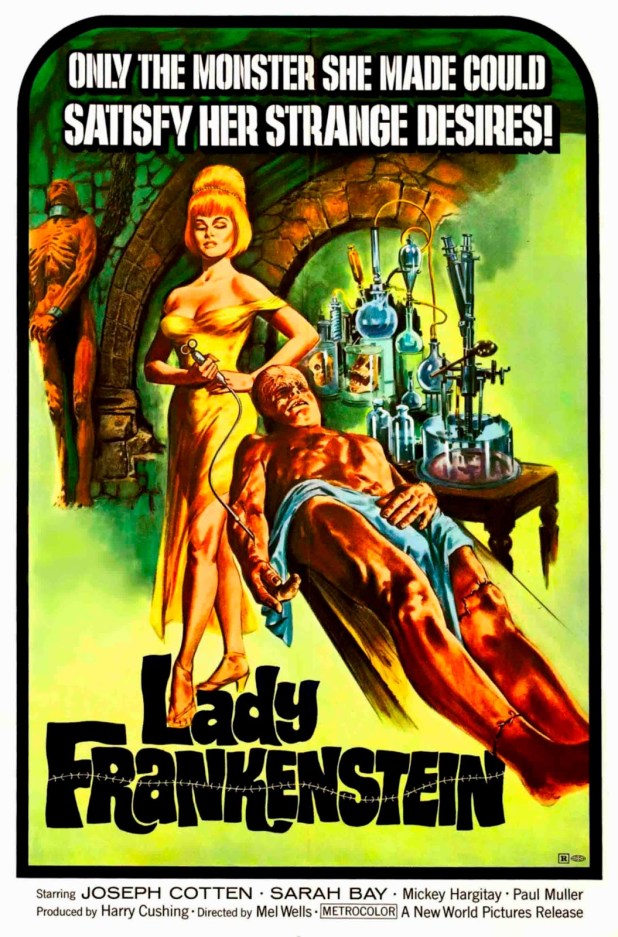
CHILLING CLASSICS MONTH: Lady Frankenstein (1971)

Imagine a Hammer movie where instead of implied nudity and strange sexuality, everything is laid, well, bare. It’s not hardcore, but compared to where horror was pre-1971, Lady Frankenstein is a somewhat audacious concept: the man is no longer in charge and it turns out that the heroine (or villain, there’s no real hero in this movie though) is even more warped and insatiable than those that have come before. If you listen to Rob Zombie, you may know the sample from the trailer for this film: “Who is this irresistible creature who has an insatiable love for the dead?”

Three graverobbers deliver a body to Baron Frankenstein (Joseph Cotten!) and his assistant Dr. Marshall (Paul Muller, Barbed Wire Dolls) to bring back to life. The twist is that Tania Frankenstein (Rosalba Neri, Lucifera: Demon Lover, Amuck!) has completed her studies in medicine and is eager to help her father with his secret work.

The next day, the Frankensteins and Marshall watch a criminal be hung and run into Captain Harris (Mickey Hargitay, the former husband of Jayne Mansfield and father of actress Mariska Hargitay, who was played by Arnold Schwarzenegger in the 1980 made for TV movie The Jayne Mansfield Story), who already suspects them of graverobbing.

That night, Frankenstein brings the man back to life — a scarred, weird headed, giant-eyed beast — who pretty much instantly hugs the Baron to death. Tania and Marshall report the murder as a burglar, but Harris calls their facts into question.

If you thought that killers going after people as they have sex was something that was invented in 1980’s slashers, the creature in Lady Frankenstein is here to show you the error of your ways as he comes upon (no, not like that, get your mind out of the gutter) numerous frolicking couples and eviscerates them.

Meanwhile, Tania makes Marshall confess that he’s always loved her, but his old body can’t satisfy her. This is a polite way to say that the dude has erectile dysfunction and if Viagra had existed in the 1800’s, there would be no need for the movie to continue the way that it does. Tania does find the mildly mentally challenged servant Thomas (Marino Masé, The Red Queen Kills Seven Times) attractive, so she has sex with him while Marshall watches. Thus cuckolded, he snuffs the young man out with a pillow.

Things get better for him, as she puts his brain in the young man’s body, making him superhumanly strong for some reason. While all that’s going on, the creature keeps on terrorizing people until they remember that they’re supposed to pick up pitchforks and torches and take him out.

The monster makes its way back to the castle, where it attacks Marshall, who rips off its arm, allowing Tania to stab it before he smashes its head open. As the castle burns down around them, Marshall and Tania make love as Harris and Thomas’ sister Julia (Renate Kasché, Devil in the Flesh) watch. The flames consume them as Marshall begins to choke out Tania.

Lady Frankenstein isn’t a great movie, but has a great lead who can do anything a man can do, if a man wants to bring the dead back to life and have sex with their reanimated corpses. It’s progress. And if you want, you can watch it on Amazon Prime.

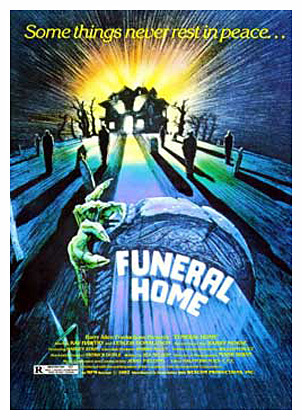
CHILLING CLASSICS: Funeral Home (1980)

After my review of Funeral Home, I was hoping that someone else would write about it as part of our Chilling Classics month. Luckily, Becca, the B of B and S About Movies volunteered. She agreed to be interviewed about her feelings on this movie.

Sam: So did you like Funeral Home? 

Becca: It’s been on for about 40 minutes and no one has any idea what it’s about. Not even the people who are making it. This is really dumb.

Sam: Eventually, stuff happens.

Becca: There’s no real story yet. It’s like they just filmed some people who lived in what was a former funeral home and decided to shoot the whole thing day for night.

Sam: What do you think it’s about?

Becca: Secrets.

Sam: Secrets?

Becca: Secrets.

Sam: And…

Becca: Well, the black cat that keeps showing represents the dark. And more secrets.And whatchamacallit…superstition.

Sam: So a lot of people are getting killed.

Becca: Yes.

Sam: Do you have any idea who the killer is?

Becca: Not yet. But it seems like bad things happen in the quarry, which would have been a better title than Funeral Home. Bad Things Happen in the Quarry.

Sam: Do you have a better title than that?

Becca: Sleepytime Favorites. Or…Good Night!

Sam: Is there a message in this movie?

Becca: Cops are silly.

Sam: Would you stay in the funeral home?

Becca: No, It’s creepy and little kids don’t like it. And you know, Cubby (our dog) is unnerved by this place. He’s saying to me, “I don’t think dogs are welcome here. And that’s not cool, dogs are people too. We deserve a nice place to stay.”

Not a fan of Funeral Home.

Sam: Would you feel safe?

Becca: That goofball cop? No. I don’t feel safe around him.

Sam: So are you enjoying this movie?

Becca: Not at all. Who likes movies like this?

Sam: Bill.

Becca: Of course he does. Nothing happens. It’s his perfect movie.

With that, Becca went upstairs with Cubby to watch Halloween 3, leaving me to finish watching Funeral Home again. I think she made the right decision.

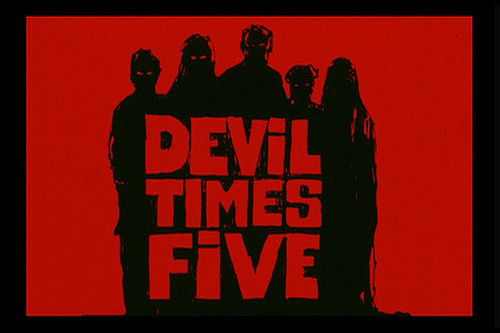
CHILLING CLASSICS MONTH: Devil Times Five (1974)

I’ve been obsessed for years with the trailer and artwork for this movie. Throw in the fact that it has 70’s teen idol Leif Garrett amongst its cast of pint-sized psychopaths and it seems like a recipe for my kind of movie insanity. However, I just never found the time to sit down and watch it. With so many movies on our shelves and streaming online, my to watch list is constantly bulging with films all screaming to be enjoyed. Thanks to Chilling Classics Month, I finally got the chance to spend some time with this film and it lives up to what I hoped it would be.

https://www.youtube.com/watch?v=xD7OHjBl86I

Five children have survived a van accident on a snowy road and unbeknownst to everyone they encounter for the rest of the film, they were on their way to a mental institution for criminally insane young folks. They make their way to the secluded mountain home of Papa Doc, a rich businessman, who has all manner of guests staying with him, like his sex-starved wife Lovely (Carolyn Stellar, who beyond being Leif Garrett and Dawn Lynn’s mother, would go on to design the costumes for the 1978’s utterly brutal Sgt. Pepper’s Lonely Heart’s Club Band), his daughter and her boyfriend, plus Dr. Harvey Beckman (Sorrell Booke, Boss Hogg from TV’s The Dukes of Hazzard) and his wife, Ruth (Shelley Morrison, Rosario from TV’s Will and Grace). Oh yeah, there’s also the dim witted handyman, Ralph (original screenwriter John Durren).

Soon, the power is out, the phones are cut and the kids are killing people left and right. Little actor and budding crossdresser David (Garrett), army lover Brian, Susan the pyro, Moe (Dawn Lynn, who played Dawna in the Walking Tall films) with her plush fish and usage of piranha and last but not least, albino nun Sister Hannah will find their way into your heart, then cut it out and show it to you. Imagine The Bad Seed times five, with none of the great story or acting.

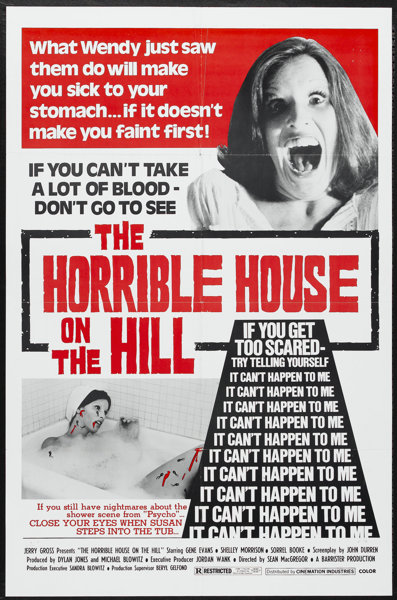
This movie is also known as Peopletoys, Tantrums and The Horrible House on the Hill. Of course, that last title has a Last House on the Left ripoff poster to go along with the similar title.

Devil Times Five was distributed by Jerry Gross’ Cinemation Industries, which also brought Son of DraculaTeenage Mother (“She’s nine months of trouble!”), The Black Six and Idaho Transfer to audiences that had to be absolutely bewildered by their level of pure strangeness.

Original director Sean MacGregor was fired from the production after his footage was unusable and David Sheldon finished the film (you can tell that they switched interior locations because there’s no continuity in the backgrounds). By the time those reshoots happened, Leif Garrett had cut his hair, so he wears a wig that you can easily point out several times.

Even stranger, MacGregor was in a psychiatric ward after leaving this movie and also was dating Gail Smale, who played Sister Hannah. That last bit doesn’t seem all that interesting, until you realize that she was underage and that she was given a nun costume and rose-colored glasses to hide the fact that she was so young and a legitimate albino.

Seriously — how crazy is a movie where Leif Garrett watches as his real-life mom is nude and being murdered by carnivorous fish in the bathtub? This had to be a strange thing for people to watch, as Garrett was already well-known as Oscar’s son on TV’s Odd Couple and his sister was on My Three Sons.

If you’re looking for a movie where children annihilate adults that isn’t The ChlldrenVillage of the Damned or Who Can Kill a Child?, then I guess you should watch Devil Times Five. Actually, I kid. This is a goofy little film that is pretty much the horror version of Home Alone. I enjoyed it, but you know, I also have no taste whatsoever.

You can find this on the Chilling Classics set — obviously! — and you can also watch it on Amazon Prime. Want a much better looking version Code Red.

CHILLING CLASSICS MONTH: A Passenger to Bali (1950)

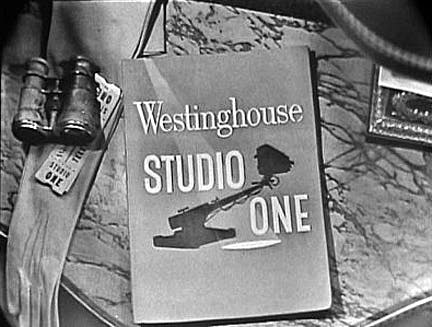
Why would Mill Creek include this on their Chilling Classics set — a made for TV production for CBS’ Westinghouse Studio One that originally aired on March 27, 1950? Who knows — Mill Creek does what Mill Creek wants.

This tale began as a novel, published in 1936 and written by Ellis St. Joseph. It was adapted into a radio play by Orson Welles’ on his Mercury Theater On Air, airing on November 13, 1938, as well as a stage play in 1940 that was directed by John Huston.

The story starts in Shanghai, where the Roundabout freighter picks up a man named <r. Walkes, who claims to be a Dutch missionary headed toward Bali, looking to deliver Bibles and religion. Soon, the truth is discovered — Walkes is a drunken lout, given to speeches and starting fights between the British officers on board and the crew of the ship. And even worse, no port will allow the man off the ship. Now, the Roustabout has become a Flying Dutchman, complete with an evil passenger who can never leave as they endlessly travel from port to port.

Mr. Walkes is played by Berry Kroeger, who was a veteran of numerous genre films like Demon SeedThe Mephisto WaltzThe Incredible 2-Headed Transplant and Raphael Nussbaum’s piece of 1973 strangeness Pets. He’s doing his best Orson Welles here.

The best part of this being on the set is that they didn’t edit out any of the Westinghouse commercials, so you get a great idea of what 1950 TV looked like. Again, I have no idea why this was included, but I still watched it. I’m a completist. And hey — we have an entire month to cover this set.

If you want to see what this movie is like for yourself, it’s streaming for free on the Internet Archive.

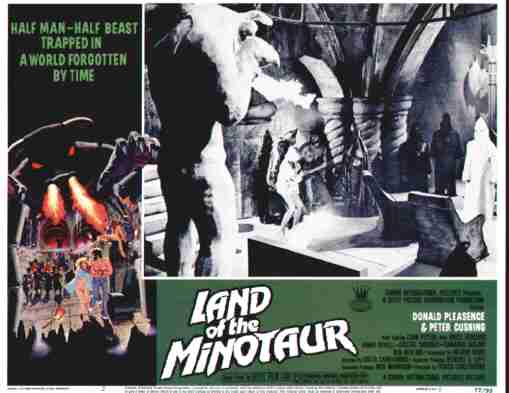
CHILLING CLASSICS MONTH: Land of the Minotaur (1976)

I watch a lot of bad movies. Often, you have to take a part of the movie that you like and use it to get through a film. This one is a case in point. There’s a lot of this movie that would kill the spirit of an average movie watcher. Not me. Not when there are so many hilarious and amazing parts. It’s like giving feedback to an employee: let’s start with a little sugar, some things we like before we really start hammering them with everything they’ve done wrong.

Otherwise known as The Devil’s Men, the first two things you’ll notice good about this film are its two stars; Donald Pleasence and Peter Cushing. This is yet another in the long list of roles that Mr. Pleasence did not turn down. In fact, I wonder what it would have taken for him to refuse to act in a film. True fact: he didn’t even turn down acting roles when he was a prisoner of war in the German camp Stalag Luft I. The longer the film went on, the more things I yelled out at the screen in Pleasence’s trademark shout.

Peter Cushing is so far above this film that it makes you sad to watch his dignified face as he conducts a rather ridiculous ritual to a concrete bull god/minotaur. I can only imagine that his stiff upper lip was sorely tested and he could not wait to get back home to paint his wargaming miniatures and sit at his table at the Tudor Team Rooms in Whitstable. He would never complain, however. It would be beneath him.

The actual movie itself is just a trifle — a cult led by Cushing is kidnapping hippie tourists as they work on a Greek archeological site and Pleasence is an Irish priest who is a friend to the youngsters that joins forces with a private detective to save the kids, growing more and more irritated as time goes on.

Perhaps the most mindblowing thing about Land of the Minotaur is that Brian Eno, of all people, did the music for it. Maybe that, as well as Cushing exploding when Pleasence holds up a glowing crucifix, is enough to say that this movie isn’t a complete waste of time.