CBS LATE MOVIE MONTH: Kolchak: The Night Stalker: They Have Been, They Are, They Will Be…(1974)

EDITOR’S NOTE: This episode of Kolchak: The Night Stalker was on the CBS Late Movie on June 15, 1979; June 12, 1981; October 16, 1987 and February 19, 1988.

Directed by Allen Baron, who did four episodes of Kolchak: The Night Stalker, and written by Rudolph Borchert, who wrote five episodes of the series, and Dennis Lynton Clark, who started his career in Hollywood as a costume designer on A Man Called Horse and Man In the Wilderness, the title of this episode comes from a line in H.P. Lovecraft’s The Dunwich Horror: “The Old Ones were, the Old Ones are and the Old Ones shall be. Not in the spaces we know, but between them; they walk serene and primal, undimensioned and to us unseen.”

A killing force unseen has blown into the Windy City with hurricane strength. It kills by creating an electromagnetic field that sucks the bone marrow from both humans and animals. And, oh yeah, it steals lead and electrical equipment.

Sounds like a story for Carl Kolchak.

Carl’s nemesis, Ron Updyke, has been selected as the temporary sports editor. And he owes Carl, who saved his life from an angry roller derby player a few weeks ago. He promised Carl a World Series ticket and the chance to see the Chicago Cubs play in the biggest baseball game, the first time in nearly thirty years, but he forgot. And now Carl will either get his ticket or a piece of Updyke.

But Vicenzo has worked for him. Today, a cheetah died in the zoo. Carl corrects him and says that it was yesterday and it was a panther. Vicenzo double-corrects him. Two dead jungle predators in two days. Forget the World Series; Carl smells a story.

Carl learns that the police are at an electronic company and arrives just in time to watch a wall explode and a bunch of lead disappear into thin air. Captain Quill (James Gregory) pulls him away, but not before saluting some very important military people. Now, Carl is practically dying to figure out this story.

Keen-reporting instincts lead Carl to the zoo. As he studies where the animals were killed, he can see that the bars are bent, there’s a black goo everywhere, and zoologist Dr. Bess Weinstock (Mary Wickes, Sister Mary Lazarus in the Sister Act movies) informs Carl that a leopard and a panda have also been killed and their deaths appear to be heart attacks. This matches an angry talk radio caller that Kolchak hears complaining about black tar all over Mariposa Way.

After getting a sample of the black substance—and who said this show wasn’t an influence on The X-Files—and getting Weinstock to work with him, Cark learns that it’s a mix of hydrochloric acid, acetone, and bone marrow. As all of the animals killed at the zoo had puncture marks at the major bone joints to drain the marrow, the zoologist theorizes that whatever was doing the killing ate the marrow and then puked.

At the morgue — to discover what happened at the factory explosion — Gordy the Ghoul is willing to talk for a price. Carl’s shocked to learn that Gordy’s boss, Stanley Wedemeyer (Rudy Challenger), tells him that the one dead person from the factory died from a simple heart attack. But Gordy sneakily reveals the truth to Carl and passes him a cassette tape.

The actual cause of death: All of the bone marrow was sucked out of his body.

Carl busts into a press conference and asks questions that get him kicked out of nearly every press conference he ever attends. He grills Captain Quill on what exactly happened at Raydyne Electronics, why everyone’s watches have stopped at the exact time, how the lead bars disappeared and how the animals and humans who have been killed all died from having their bone marrow removed.

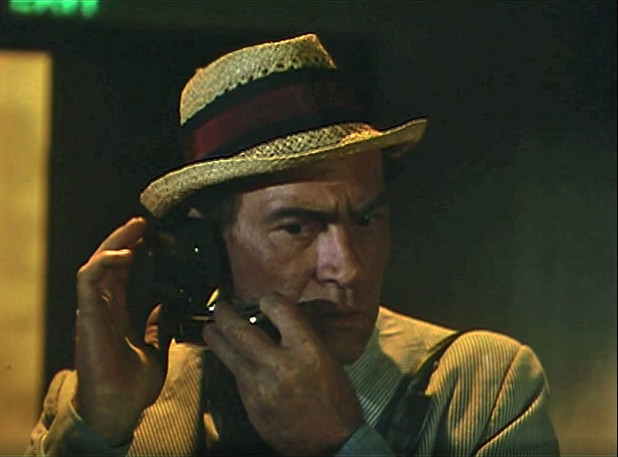
When Vicenzo tells Carl to drop the whole mess — saying, “We don’t need another UFO story” — that only spurs him on. After all, he never said UFO. Who said UFO? Carl definitely finds the thing, a small metal ship, after an attack on an observatory and is nearly killed by the force when it comes back. Only the whine of his camera can protect him.

As always, no evidence remains.

This is one of the first times Carl has been threatened that someone much worse than the police will be taking care of him.

Also, there’s a moment where the zoologist explains to Carl that pandas are raccoons, not bears. Believe it or not, there was a significant debate over this. Only when DNA technology was advanced enough to be used did we discover that pandas are actually bears.
CBS LATE MOVIE MONTH: Scream and Scream Again (1970)

EDITOR’S NOTE: Scream and Scream Again was on the CBS Late Movie on March 22 and August 23, 1974.

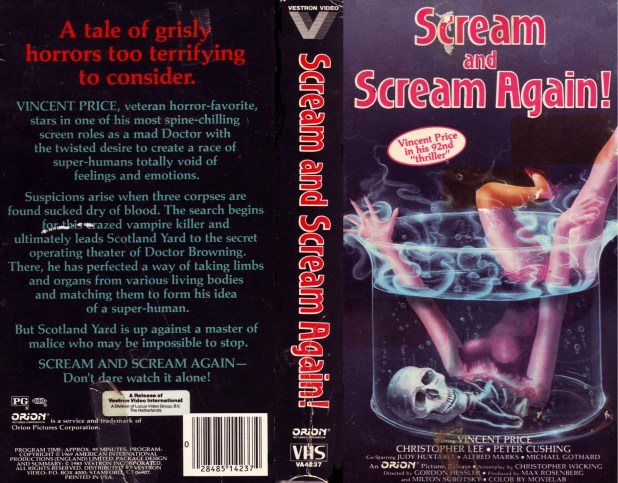
Based on the novel The Disorientated Man by Peter Saxon*, this Amicus film boasts the best line-up potentially ever in a horror film. It features the iconic Christopher Lee, the legendary Peter Cushing, and the master of macabre Vincent Price, all delivering stellar performances.

The film opens with a man jogging, collapsing, and waking up in a hospital, missing his leg. He screams, and then the same scream repeats as he loses every appendage. Meanwhile, an Eastern European spy named Konratz (played by Marshall Jones, Cry of the Banshee) is on a killing spree, targeting his superiors, including Cushing. In another subplot, someone is killing young women in London, and it appears that Keith (Michael Gothard) is the murderer, a blood-drinking super-strong weirdo.

Price shows up as the sinister Dr. Browning, and it all ends up being a conspiracy movie that owes a fair deal to Invasion of the Body Snatchers. However, that movie didn’t end with much of its cast falling into acid.

According to Lee, the villains of this movie were going to be revealed as aliens, but that was cut out for some reason, leaving a lot of the movie unexplained.

This was directed by Gordon Hessler (Pray for DeathScream, Pretty PeggyKiss Meets the Phantom of the ParkThe Golden Voyage of Sinbad).

Team Price, Lee, and Cushing appear in only one other movie: House of the Long Shadows. They barely appear in any scenes together, though.

*A house pen name for multiple authors at Amalgamated Press; the Saxon that wrote this story is Stephen Frances, edited by W. Howard Baker.

Source

Film Still Scream and Scream Again Peter Cushing Christopher Lee 1970 – Richard Thornton Books. https://richardthorntonbooks.com/product/film-still-scream-and-scream-again-peter-cushing-christopher-lee-1970/

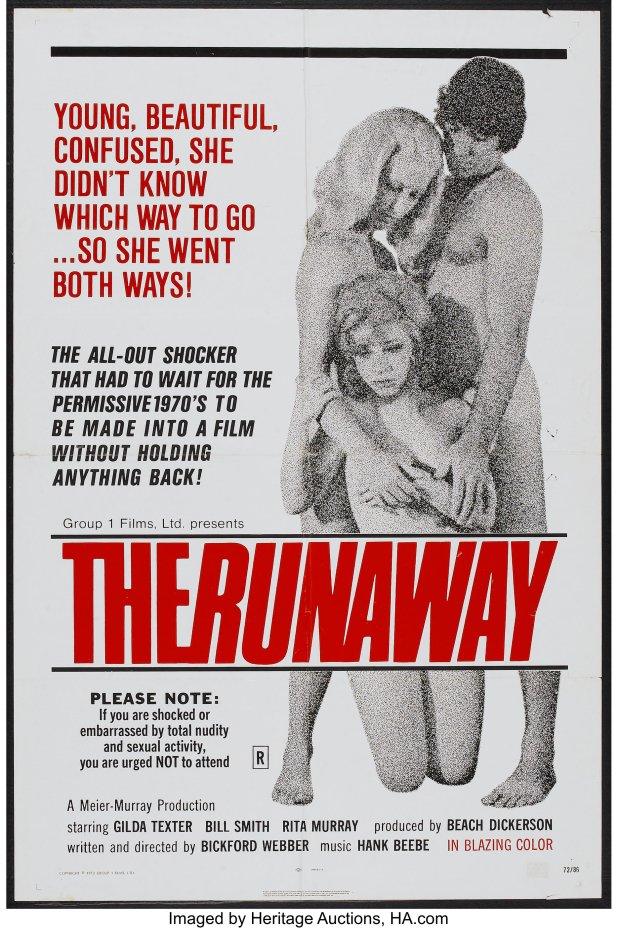
The Runway (1972)

ABOUT THE AUTHOR: Jennifer Upton is an American (non-werewolf) writer/editor in London. She currently works as a freelance ghostwriter of personal memoirs and writes for several blogs on topics as diverse as film history, punk rock, women’s issues, and international politics. For links to her work, please visit https://www.jennuptonwriter.com or send her a Tweet @Jennxldn

It’s rare for me to expel an audible groan at the end of a movie. 

Especially if it’s a movie starring William Smith released in 1972. 

With The Runaway, I did just that. Not because it’s a terrible movie. Far from it.  

The film is a mixed bag of loathsome events, and ‘70s anti-gay sentiment portrayed by competent filmmakers and skilled actors. 

Ricki (Gilda Texter) is a 17-year-old virgin runaway who leaves her unhappy rural desert home in search of a friend named Roger Jordan in California. A man she barely knows, but whom she trusts because he never tried to hit on her. 

During her first 24 hours of hitchhiking, the precarious reality of her new situation is explained via a folksy ballad played over a montage of Ricki fighting back against a string of guys with sexual assault on the brain. Each time, she fights back, proving herself to be a likable, capable protagonist. 

Enter Frank (William Smith), a lonely, drunk private eye hired to find the runaway heiress to a wealthy family. Frank and Ricki strike up a friendship forged in the shared experience of life’s miseries and adorned with creepy sexual tension despite their age difference of at least 25 years. 

In Venice Beach, California, Ricki meets only one nice person. A traveling musician who helps her score money for phone calls and food. Everyone else wants something from her. After sleeping in an alley, she takes up with up with some hippies who take her to their swinging upstairs pad and dose her with acid, so she moves downstairs into the resident hooker’s pad. 

Prostitute Lorri (played wonderfully by Rita Murray) is a lesbian who falls for Ricki hard. She’s supposed to be predatory (as evidenced by the longing stares), but from the vantage point of 2023, she comes off more lonely than anything else. Perhaps it’s Ricki who leads Lorri on and takes advantage of her hospitality. 

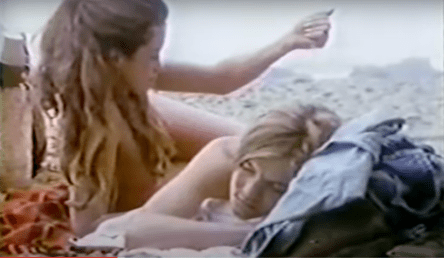
Lorri not only takes Ricki to the beach where the two share a fun day frolicking naked in the seaweed, but she also lets Ricki live with her rent free, buys all the food and cooks all the meals, only to be spurned after they successfully hook up because Ricki is still struggling with the idea that coming out means living a life of always being different. A daunting prospect in 1972. Ricki wants a “nice” life. Whatever the hell that means. 

From here, the movie really ramps up the animosity towards its leading lady. 

In the worst scene of the whole affair, Ricki attempts to hook up with a random guy recommended by one hippy. Even for 1972 this scene is just wrong. There’s no discussion of whether Ricki even finds the guy attractive. It’s just “Hi, come on in, have some coke,” and the dude hops on like a bunny in spring. Of course, it doesn’t work (because that’s not how female arousal works regardless of sexual orientation) and Ricki flees the scene. 

She re-connects with Frank who takes her to the last known address of her friend Roger Jordan. The vaunted man we never get to see but whom Ricki believes will solve all her problems. It turns out Roger never hit on her because he’s gay, too, having stolen the Vicuna sweater of his last lover before peacing out to San Francisco. 

Meanwhile, Lorri is revealed to be the missing heiress, cast in the mold of Warhol superstar Edie Sedgwick whose rebellion stems from an abusive upbringing. We’re told that her father has died and left her a great deal of money, but otherwise her story ends there. Did she ever find love? I’d love to see a sequel focused on this character. 

The next WTF moment occurs when Ricki asks Frank to deflower her. You know… to see if maybe she’ll like sex with a man she trusts. Again, there’s no discussion of whether she fancies him. It’s just assumed that she’ll like it no matter what man she’s with if she can just get past her personal hang-ups. Because of course, it’s all in her head. Sigh. 

Never mind that he’s drunk and old enough to be her father. Frank’s love-making skills are apparently so good that Ricki overcomes her fear of men and is now free to explore a relationship with the nice hippie boy who helped her score food money earlier in the film. Holy shit. 

The final song plays over a long shot of the new couple walking along the beach. “Ohhhh, Ricki…Please let me open your eyes to the magic inside you. You don’t need a disguise. For you’re a woman, Ricki! A full out woman, Ricki!” Holy shit. Again. 

I’m normally not a journalist who scrutinizes old movies through a lens of modern sensibility. I believe every film is of its time and place. That’s the best way to watch The Runaway. The acting and directing are solid. Texter, Murray, and Smith are all given adequate screen time to portray complex characters trying to navigate their way through a cruel, unforgiving world. But, be warned. The overall message is so incredibly outdated that you too might groan during the end credits. 

If you really want to find out, you can watch it in its entirety here: https://youtu.be/yR_D9ss9y5k

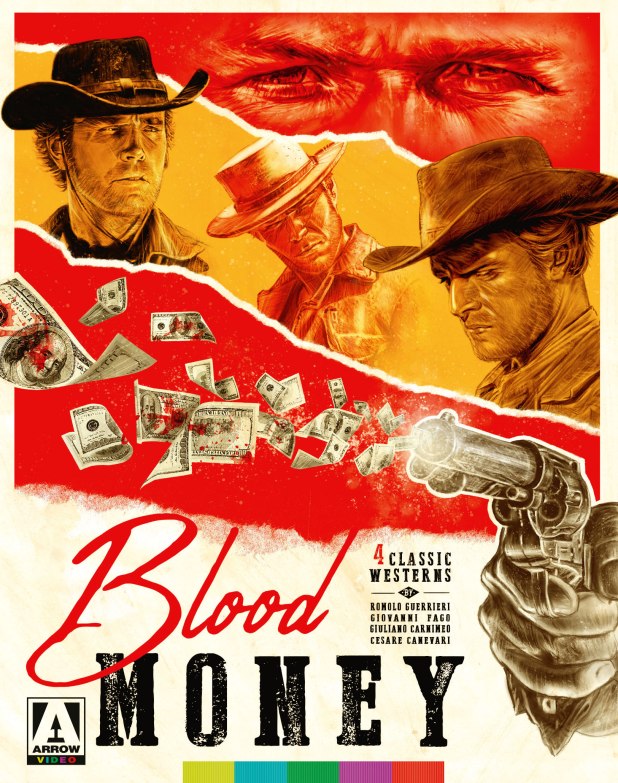
ARROW BLU RAY BOX SET RELEASE: Blood Money: Four Western Classics Vol. 2

I loved Arrow Video’s Vengeance Trails set and am excited that they have released a second series of movies made in the Italian West. The title Blood Money is one that this set lives up to because each of its heroes has a trail of vengeance and pain to ride down, one littered with the bodies of their enemies and loved ones.

Here are the movies in this set:

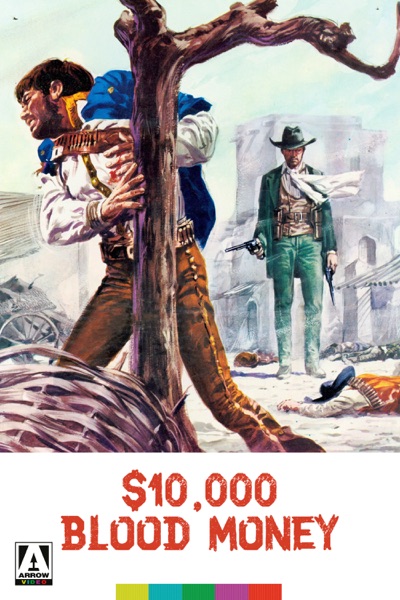
$10,000 Blood Money: Django (Gianni Garko) is a bounty killer who doesn’t go after any target until they’re worth $10,000. When he meets his latest bounty, Manuel Vasquez (Claudio Camaso), they decide to work together to make even more money and it costs him more than he can even imagine.

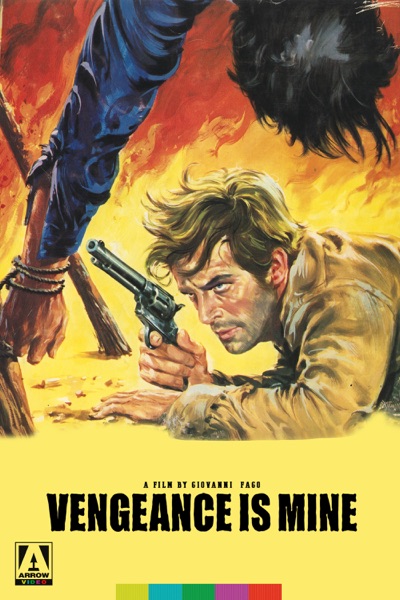
Vengeance Is Mine: John Forest (Gianni Garko) has spent ten years in prison for the death of his father, a murder that his half-brother Clint (Claudio Camaso) committed. Now a bounty hunter, he decides to go after his sibling but promises his dying mother that he will bring him in alive and never take the first shot at him.

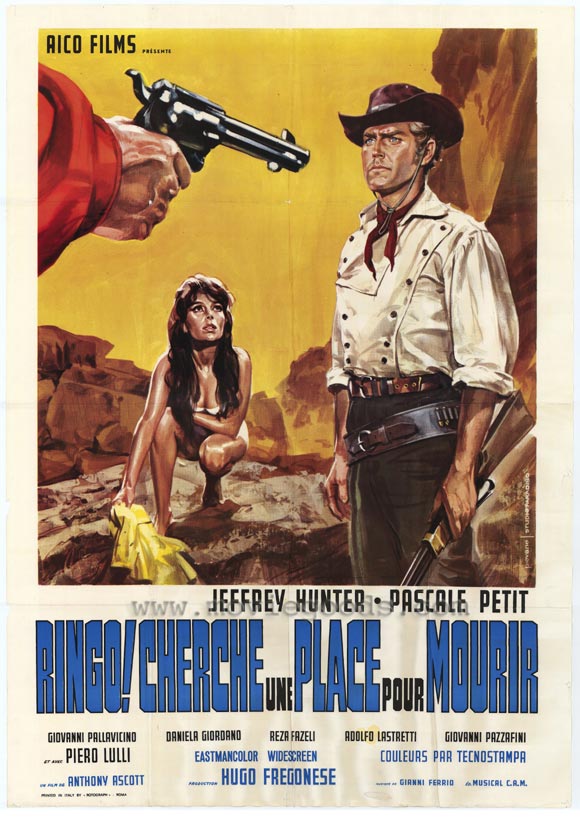
Find a Place To Die: Lisa (Pascale Petit) escapes with her life while her geologist husband does not. She hires Collins (Jeffrey Hunter), a former Confederate officer, and another gang to gain revenge. But all that gold that Lisa and her husband had found — plus her beauty — put everyone against each other.

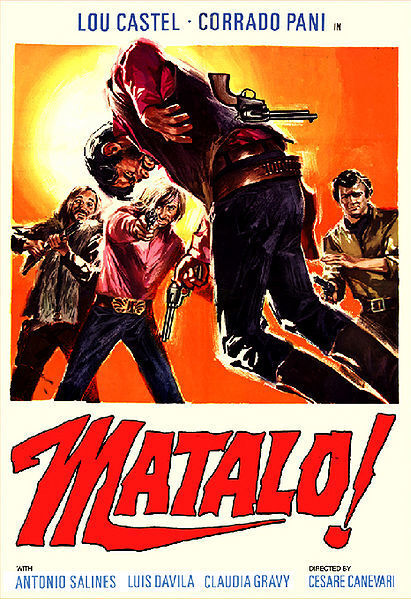
Matalo! (Kill Him)One of the weirdest Italian Westerns, Matalo! is the only one I’ve seen with a boomerang shot from the POV. Claudia Gravy is also an absolute force of savagery in this, an anger-filled monster tougher than any of the men.

As always with Arrow, the quality of these films, the extras and the packaging are at the absolute peak of anything else out there. This is honestly a perfect release for me. Although I may have many of these movies, they’re the exact opposite of the quality here, all packed together on old DVD 50 packs. Seeing them in these new transfers is almost like watching an entirely new set of movies.

The Arrow Blood Money: Four Western Classics Vol. 2 set has 2K restorations of all four films from the original 35mm camera negatives by Arrow Films, original Italian and English front and end titles, restored lossless original Italian and English soundtracks, English subtitles for the Italian soundtracks, brand new introductions to each film by journalist and critic Fabio Melelli, galleries for all four films, an illustrated collector’s booklet featuring new writing by author and critic Howard Hughes, a fold-out double-sided poster featuring newly commissioned artwork by Gilles Vranckx and limited edition packaging with reversible sleeves featuring original artwork and a slipcover featuring newly commissioned artwork by Gilles Vranckx.

You can get it from MVD.

All four movies are also available on the ARROW player. Head over to ARROW to start your 30-day free trial (subscriptions are available for $4.99 monthly or $49.99 yearly). ARROW is available in the US, Canada and the UK on the following Apps/devices: Roku (all Roku sticks, boxes, devices, etc), Apple TV & iOS devices, Android TV and mobile devices, Fire TV (all Amazon Fire TV Sticks, boxes, etc), and on all web browsers at https://www.arrow-player.com.

ARROW BLU RAY BOX SET RELEASE: Blood Money: Four Western Classics Vol. 2: Matalo! (Kill Him)(1970)

It would take other film industries decades to equal the sheer volume that the Italian exploitation machine could accomplish. In the four years since Django and five since A Fistful of Dollars and West and Soda, a traditionally animated movie whose creation predates Leone’s film, hundreds of cowboys thundered out of the European West and several genres emerged from comedies and Zapata westerns to films centered on the tragic hero, horror westerns and this film, Matalo! (Kill Him), which is uncategorizable but could maybe be an acid horror art deconstruction.

Cesare Canevari, with only nine movies under his belt, managed to traverse nearly every genre with his diverse direction: an early Western (Per un dollaro a Tucson si muore), Giallo (A Hyena In the Safe), an early Italian Emmanuelle (A Man for Emmanuelle), Eurospy (Un tango dalla Russia), Ajita Wilson’s first movie (The Nude Princess), late-era giallo with plenty of sleaze (Killing of the Flesh) and Naziploitation (the go all the way madness that is The Gestapo’s Last Orgy).

The film begins with a desperado named Bart (Corrado Pani) walking through the town as cocky as possible, even though he’s headed to the gallows. He even puts his own neck in the noose, knowing that some Mexican bandits are about to save his neck. His walk back out of town is even more audacious, as he’s just stood on the precipice of death and watched the chaos he ordered come true. He somehow tops that by killing off the men who saved him before meeting up with his friends Ted (Antonio Salines) and Phil (Luis Dávila) in a ghost town where the movie decides to slow down as they explore an abandoned hotel as electric guitars scream and wind blows through every frame of this film.

They’re joined by Mary (Claudia Gravy, Yellow Hair and the Fortress of Gold, Tuareg: The Desert Warrior), a snarling force of female nature that finds herself strong enough to be on the side of stagecoach robbing evil. That robbery seems to cost Bart his life, and the film switches gears as the gang hides out in the ghost town, abusing an old woman until Ray (Lou Castel) and a younger widow (Mirella Pamphili) arrive, and they too are abused by the gang. Luckily, Ray has a horse that seems smarter than him, and he’s pretty good with a boomerang, which this movie uses for wild POV shots as he whips them at the gunmen.

What’s wild is that a year earlier, Tanio Boccia directed Dio non paga il sabato (Kill the Wickeds), which is nearly the same movie but shot as if it were a normal film, not the sometimes wandering, other times hyperfocused Matalo!

 The Arrow Blood Money: Four Western Classics Vol. 2 set includes 2K restorations of all four films from the original 35mm camera negatives by Arrow Films, original Italian and English front and end titles, restored lossless original Italian and English soundtracks, English subtitles for the Italian soundtracks, brand new introductions to each film by journalist and critic Fabio Melelli, galleries for all four films, an illustrated collector’s booklet featuring new writing by author and critic Howard Hughes, a fold-out double-sided poster featuring newly commissioned artwork by Gilles Vranckx and limited edition packaging with reversible sleeves featuring original artwork and a slipcover featuring newly commissioned artwork by Gilles Vranckx. Matalo! is a significant inclusion in this set due to its unique and uncategorizable nature, making it a must-watch for fans of Italian cinema and exploitation films.

Matalo! (Kill Him) has brand new audio commentary by critics Troy Howarth and Nathaniel Thompson that I promise to listen to because I know how much Troy hates it when people just list the extras and don’t review them. I promise! There’s also an in-depth interview with filmmaker Davide Pulici discussing the career of Matalo! director Cesare Canevari, as well as another appreciation, this time of the soundtrack and its composer, Mario Migliardi, by musician and disc collector Lovely Jon. There’s also a theatrical trailer.

You can get it from MVD.

ARROW BLU RAY BOX SET RELEASE: Blood Money: Four Western Classics Vol. 2: Find A Place to Die (1968)

Inspired by the American Western Garden of Evil, this Italian Western was directed by Giuliano Carnimeo (Anthony Ascott), who also made Light the Fuse… Sartana Is Coming, Have a Nice Funeral On Me, Amigo… Sartana, Sartana’s Here… Trade Your Pistol for a Coffin, I Am Sartana, Your Angel of DeathThe Case of the Bloody IrisThey Call Him CemeteryRatman and many more. It was written by Lamberto Benvenuti, Giuliano Carnimeo and Hugo Fregonese. Some scenes were also directed by its producer, Hugo Fregonese, who directed Assignment Terror.

In Italy, it was known as Joe… cercati un posto per morire! (Joe…Find a Place to Die!). That title refers to Joe Collins, the hero of this movie, played by Jeffrey Hunter, who also produced and handled the initial distribution in the U.S.

After a long fight with a gang of killers led by Chanto (Mario Dardanelli), Lisa (Pascale Petit, Four Times That Night) escapes with her life while her geologist husband does not. She hires Collins, a former Confederate officer, and another gang to gain revenge. But all that gold Lisa and her husband had found, and her beauty put everyone against each other.

There’s also the crazy character of Reverend Riley, a man of the cloth who doesn’t deny himself the pleasures of the flesh. Played by Alfredo Lastretti he’s the best part of this movie. There’s also the fantastic scene where Daniela Giordano (Four Times That NightYour Vice Is a Locked Room and Only I Have the Key) sings the theme song inside a saloon that was once a church.

Sadly, a year after this movie, Hunter was injured in an explosion gone wrong while making the crime movie Cry Chicago (¡Viva América!). On his way back to the U.S., he went into shock and couldn’t speak or move. Doctors could only find a displaced vertebra and a concussion, yet within seven months, he would suffer an intracranial hemorrhage while walking down the stairs at his home, crack his skull and die after brain surgery was not successful. He was only 42.

The Arrow Blood Money: Four Western Classics Vol. 2 set offers a thrilling viewing experience with 2K restorations of all four films from the original 35mm camera negatives by Arrow Films. The set also includes original Italian and English front and end titles, restored lossless original Italian and English soundtracks, English subtitles for the Italian soundtracks, brand new introductions to each film by journalist and critic Fabio Melelli, galleries for all four films, and an illustrated collector’s booklet featuring new writing by author and critic Howard Hughes. The limited edition packaging with reversible sleeves featuring original artwork and a slipcover featuring newly commissioned artwork by Gilles Vranckx adds to the excitement of owning this set.

Find A Place to Die features extras such as brand new audio commentary by author and critic Howard Hughes, a newly edited archival interview with director Giuliano Carnimeo and an in-depth appreciation of the soundtrack and its composer, Gianni Ferrio, by musician and disc collector Lovely Jon.

You can get it from MVD.

ARROW BLU RAY BOX SET RELEASE: Blood Money: Four Western Classics Vol. 2: Vengeance is Mine (1967)

Per 100.000 dollari ti ammazzo (Will Kill You for 100,000 Dollars) was also released as For One Hundred Thousand Dollars for a Killing and its title in this Arrow Video set, Vengeance Is Mine.

It’s a big film in the life of star Gianni Garko, who met Czechoslovakian actress Susanna Martinkova while making it. She was married to him from 1973 to 1986, and they have a daughter named Maria Clara.

Director Giovanni Fago is billed as Sidney Lean here. Before this film, often using the name John M. Farquhar, he’d worked as an assistant director on films like Werewolf in a Girls’ DormitoryThe Loves of Hercules and Massacre Time. It was written by Ernesto Gastaldi, whose resume boasts some of the most essential films in Italian genre cinema, including All the Colors of the DarkMy Name Is NobodySo Sweet… So PerverseThe Whip and the Body, and so many more. His co-writer? Sergio Martino!

John Forest (Garko) has had a rough life. Ten years in prison for a murder he was innocent of committing, a brother named Clint (Claudio Camaso) who kicked him out of the family when it turned out he was illegitimate and now working as a bounty hunter. And oh yeah, that murder? When their father tried to bring John back home, Clint gunned him down like a dog and said his brother did the deed.

John’s mother dies just as a bounty on Clint’s head is named. She has a dying request for her son: Clint is to be brought to justice but not killed. But John can’t fire the first bullet if there is a gunfight between the brothers.

As always in the Italian West, the lure of happiness — a life for John with Annie (Claudie Lange) and her son — isn’t as strong as money, blood or vengeance. She tells him that they could have a life together. He replies, “Sorrow and hate just don’t mix with happiness, Annie.”

Interestingly, this film is part of the same set as $10,000 for a Massacre, sharing leads, writer, and composer Nora Orlandi. Garko plays a bounty hunter in both, with Camaso as his bounty. The key difference is that Garko’s morals are not in question in this film. Instead, it’s a tragedy, as the rift between brothers has led to a decade in prison for one and a descent into darkness for the other. Both movies are tragic for anyone who tries to build a life with Garko’s characters, serving as a poignant reminder of the destructive power of violence and retribution in the Italian West.

When watched one after the other, they make for a fascinating study of how violence and retribution in the world of the Italian West destroy the lives of its heroes.

The Arrow Blood Money: Four Western Classics Vol. 2 set offers a treasure trove for film enthusiasts. It features 2K restorations of all four films from the original 35mm camera negatives by Arrow Films, original Italian and English front and end titles, restored lossless original Italian and English soundtracks, English subtitles for the Italian soundtracks, brand new introductions to each film by journalist and critic Fabio Melelli, galleries for all four films, an illustrated collector’s booklet featuring new writing by author and critic Howard Hughes, a fold-out double-sided poster featuring newly commissioned artwork by Gilles Vranckx and limited edition packaging with reversible sleeves featuring original artwork and a slipcover featuring newly commissioned artwork by Gilles Vranckx. This meticulous restoration work ensures that these classic films are presented in the best possible quality, preserving their cinematic legacy for generations to come.

Vengeance Is Mine has brand new audio commentary by critics Adrian J. Smith and David Flint; Cain and Abel, a newly edited featurette with archival interviews with actor Gianni Garko and screenwriter Ernesto Gastaldi; an archival interview with composer Nora Orlandi; a new interview with producer Mino Loy and a trailer.

You can get it from MVD.

ARROW BLU RAY BOX SET RELEASE: Blood Money: Four Western Classics Vol. 2: $10,000 Blood Money (1967)

As one of the many unofficial sequels of Django, this film, originally titled 7 dollari su Django (7 Dollars on Django), is a must-watch for fans of the original. It’s also known as Ten Thousand Dollars for a Massacre and Guns of Violence, further cementing its place in the Django universe if such a thing can be constructed from pastiches.

Django (listed as Gary Hudson, but come on, we all know Gianni Garko when we see him) is a bounty hunter — he’s more like a bounty killer, as he never brings back anyone alive — who is watching Manuel Vasquez (Claudio Camaso) as he goes on a crime spree, knowing the more he kills, the more he’ll be worth. Once there’s a price of $10,000 on his head, Django will take care of business.

That price is reached when Vasquez kidnaps the daughter of Mendoza (Frank Little), a rancher. Dolores Mendoza (Adriana Ambesi, who often went by Audrey Amber and is also in Secret Agent Super DragonMalenka and The Bible: In the Beginning…) is a young woman beloved by her older father, so he doubles the reward.

Django was ready to quit killing for money and wanted to settle down with Mijanou (Loredana Nusciak, The Tiffany MemorandumSomething Creeping in the Dark). But the lure of big money was too much, and after all, he’d only be gone for a week.

Yet once he’s on the trail of Vasquez, fate puts them together as partners. Money will do that. But at the end of it all, they have to face one another, this time in a ghost town where only one will walk out alive. That’s because Django — who often kills when his prey isn’t ready and usually continues shooting them long after their dead — has finally screwed up in his cynical pursuit of the almighty dollar, and Vasquez has gotten one over on him by killing Mijanou. To say that this Django has issues that cost him everything that’s putting it lightly. His lover once begged him to leave this life behind. Now, she’s dead, and he’s reached his rock bottom with no prize for clawing his way out.

Now, you’d think that at least Django gets to save Dolores from being with such a horrible man, a criminal put in jail by her father and used to get back at him. But she’s found that she loves this life just as much as Django once did, the excitement, money and blood. So, one more death may bring him that $10,000, but money is meaningless at the end of all this unpayable loss.

Directed by Romolo Guerrieri and written by a talented team, this film delivers on the brutal promise of the Italian West. What sets it apart is the Theremin soundtrack composed by Nora Orlandi, adding a unique and haunting dimension to the film’s atmosphere.

The Arrow Blood Money: Four Western Classics Vol. 2 set has 2K restorations of all four films from the original 35mm camera negatives by Arrow Films, original Italian and English front and end titles, restored lossless original Italian and English soundtracks, English subtitles for the Italian soundtracks, brand new introductions to each film by journalist and critic Fabio Melelli, galleries for all four films, an illustrated collector’s booklet featuring new writing by author and critic Howard Hughes, a fold-out double-sided poster featuring newly commissioned artwork by Gilles Vranckx and limited edition packaging with reversible sleeves featuring original artwork and a slipcover featuring newly commissioned artwork by Gilles Vranckx.

$10,000 Blood Money has brand new audio commentary by author and film historian Lee Broughton; Tears of Django, a newly edited featurette with archival interviews with director Romolo Guerrieri and actor Gianni Garko; The Producer Who Didn’t Like Western Movies, a brand new interview with producer Mino Loy; a brand new interview with screenwriter Ernesto Gastaldi and the theatrical trailer.

You can get it from MVD.

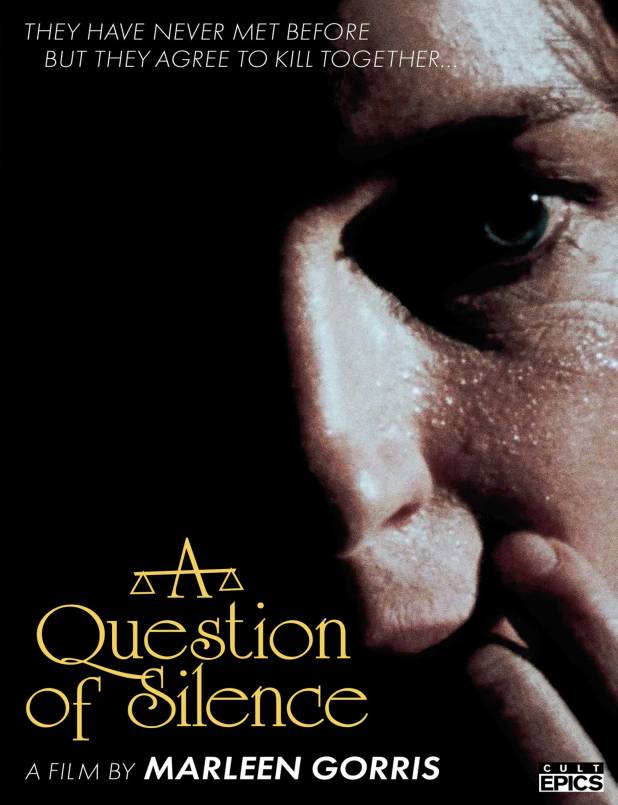
CULT EPICS BLU RAY RELEASE: A Question of Silence (1982)

Three women — a housewife named Christine M. (Edda Barends), a waitress named Ann Jongman (Nelly Frijda) and executive secretary Andrea Brouwer (Henriëtte Tol) — have murdered a male shopkeeper in the middle of the day for no reason. No premeditation. And none of them know one another. A female psychiatrist (Cox Habbema) must now discover why.

Directed by Marleen Gorris, who also made the Oscar-winning Antonio’s Line, this film takes us into the lives of each of the women as the doctor interviews each of them as well as the people in their lives, all to learn if this murder was thought through or was simply a random act.

The movie finally shows precisely how the woman led the man to his death without revealing the actual killing. But we do learn all of the negative experiences they’ve had with men throughout their lives and what would lead them to destroy a man, even castrating him and crushing his face. By the end, they laugh about the murder during their trial and their laughter is repeated by every woman in the room. To the credit of the director and her cast, this movie is still so potent more than forty years later.

The Cult Epics Blu-ray release of A Question of Silence has a new 2K HD transfer and restoration audio commentary by film scholar Patricia Pisters. It also features interviews with director Marleen Gorris and actress Cox Habbema, a promotional gallery, trailers and more. You can get it from MVD.

CBS LATE MOVIE MONTH: The Story of Mankind (1957)

EDITOR’S NOTE: The Story of Mankind was on the CBS Late Movie on August 15, 1974.

Hendrik Willem van Loon, a Dutch-American historian, wrote and illustrated The Story of Mankind in 1921. The book is a unique exploration of the history of Western civilization, told through a series of brief chapters. Van Loon’s narrative style is characterized by his constant questioning of the pivotal role of certain individuals or events in shaping the course of history. He often asks, ‘Did the person or event in question perform an act without which the entire history of civilization would have been different?

Thirty years later, former publicist Irwin Allen, in a bold move, chose the book as his first non-documentary film. He directed, wrote, and produced the movie, initially planning for only an actor and actress to appear in the film. However, he then decided to take a page out of the recent box office hit Around the World In 80 Days and assembled a cast of nearly fifty stars to tell the story. This unique approach, along with the use of lots of repurposed B-roll from other movies and stock footage, makes The Story of Mankind a truly one-of-a-kind cinematic experience.

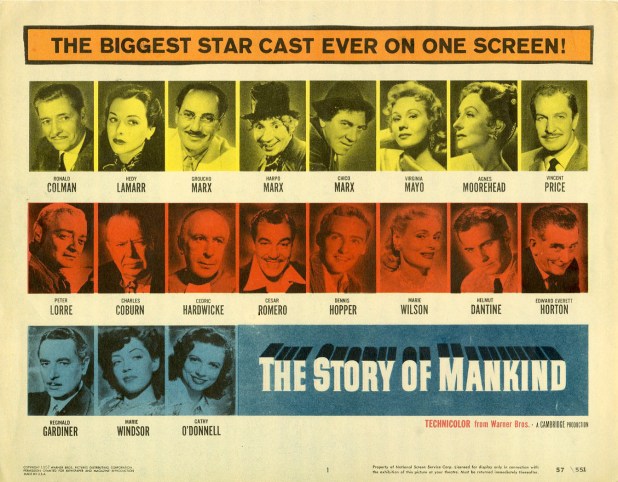
Ronald Colman is The Spirit of Man, and Vincent Price is Mr. Scratch. They’re testifying in front of a tribunal that will decide the fate of mankind, who has created a Super H-Bomb, and the powers that run the universe will determine whether they stop the bomb or allow it to destroy the human race. That leads to a cavalcade of stardom, with Hedy Lamarr as Joan of Arc,  Virginia Mayo as Cleopatra, Agnes Moorehead as Queen Elizabeth I, Peter Lorre as Nero, Charles Coburn as Hippocrates, along with all three Marx Brothers in their last film together.

But wait — there’s more. Cesar Romero! John Carradine! Dennis Hopper as Napoleon!  Francis X. Bushman as Moses! Jim Ameche, taking over the role his brother made famous, Alexander Graham Bell!

They are all on sets that seem made for TV, with dialogue made for the grade school stage. Yes, The Story of Mankind certainly is something else. Everyone in this showed up for one day to film their part and was all paid pretty well. The movie’s odd presentation, resembling a religious epic with no religion, adds an intriguing element to the viewing experience.

When asked if the film was based on a book, Colman replied, “Yes. But they are using only the notes on the dust jacket.”

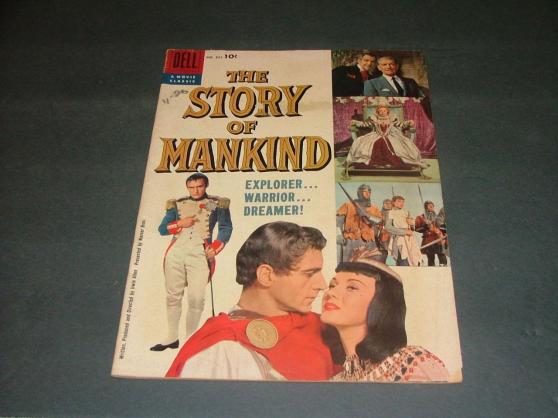
There was a comic book, though. Dell released an adaption written by Gaylord Du Bois and illustrated by Bob Jenney.