Night Gallery season 2 episode 2: Death in the Family/The Merciful/Class of ’99/Witches’ Feast

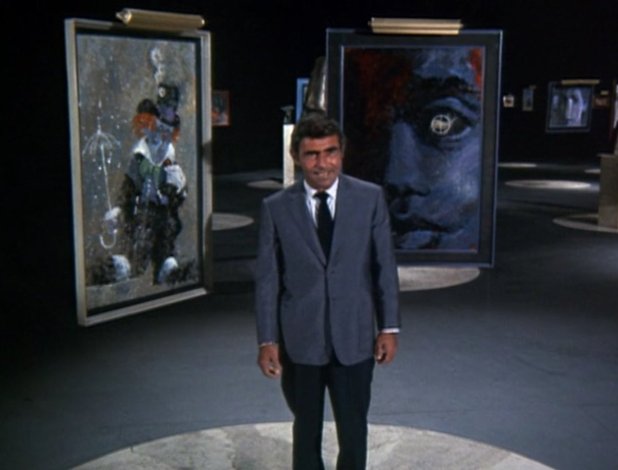
As the second season of Night Gallery goes in two directions — the Serling side growing in dark energy and the Laird side being inane pablum — this episode has three of four stories directed by Jeannot Szwarc, who directed the TV movies Night of TerrorThe Devil’s Daughter and You’ll Never See Me Again as well as BugJaws 2Somewhere In Time and, well, Supergirand Santa Claus: The Movie. Let’s focus on the good like this episode.

“Death In the Family” was written by Rod Serling from a story by Miriam Allen DeFord. This is one of the segments on this show that could be a whole film. Doran (Desi Arnaz Jr., House of Long Shadows) is a prisoner on the run that hides in the funeral home — and home — of Jared Soames (E.G. Marshall), a man who has a secret of his own. The end of this episode is so perfectly dark and yet filled with love, another wonderful trip to Serling’s imagination.

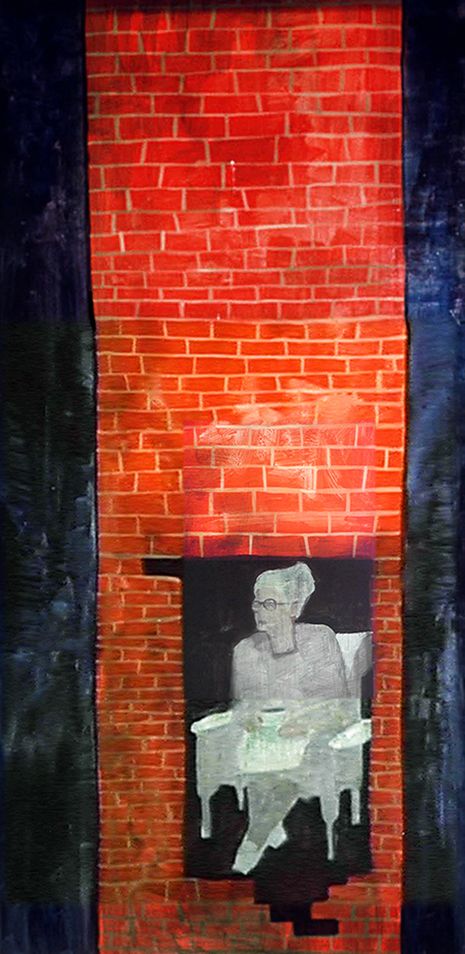
“The Merciful” is another Jack Laird-written chapter, based on a Charles L. Sweeney Jr. story. A man (King Donovan) is kept away from his wife (Imogene Coca) by a brick wall in another sketch that takes from a classic story is over in minutes.

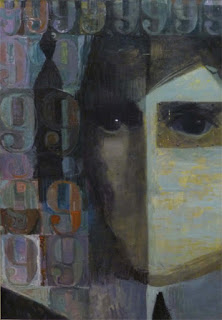
“Class of ’99” works so well not just because of the tight script by Serling, but also because Vincent Price is able to be so sinister — and perfect — in his role of a teacher instruction the students of tomorrow in the violent ways of the past. Classism and racism are explored as he gives his class a final oral test and finds them all lacking. I just read a site that claims that this segment suffered from Serling’s “heavy-handed moralizing and misanthropic undertones.” That’s why I watch Night Gallery.

“Witches’ Feast” comes from director Jerrold Freedman and written by Gene Kearney. The cast is fine — Agnes Moorehead, Ruth Buzzi, Fran Ryan and Allison McKay — yet this is the very epitome of pointless, particularly in the same show that had two classic segments by Serling.

This Pop Matters article sums up the issue of Night Gallery so well: “Laird hated Serling’s downbeat, moralistic material. As a populist, he appreciated the clear cut over the complicated. He didn’t mind the dread or the depression, but there had to be a happy ending — or at least a little light at the end of the tunnel — before the final credits rolled.”

Some think Serling would check out by the end of this season. We’ll see.

Gore-met Zombie Chef from Hell (1986)

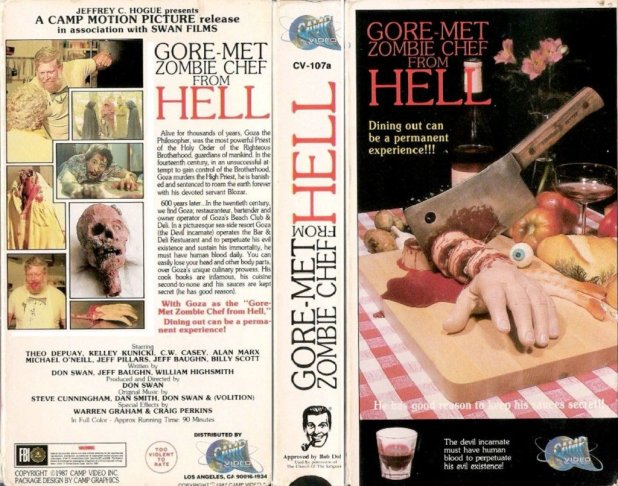
Don Swan directed, wrote and produced one thing and this is it, the story of Gozu, a man damned to be alive forever but forced to feast on flesh, so why shouldn’t he share that with the rest of the world and start chopping up customers and serving it to other customers? For six hundred years, this is the way he’s been doing business, but at least now he’s figured out how to smoke out and wear comfy Hawaiian shirts in addition to masticating on people.

There’s a lot of 80s jazz — there’s a whole band playing live so this has commitment — and lots of women milling around Gozu’s beach restaurant, as well as some health inspectors and a cult called The Holy Order of the Righteous Brotherhood that has watched over the chef for centuries. Also: he is not a zombie, but that title is too good to play with. I guess if he doesn’t eat meat he turns into one.

One of the people he’s already devoured part of, Azog, stands outside the place and yells at people to avoid it. If he and the other hooded members of the Brotherhood are still alive are they eating flesh as well?

Filmed on location at Smokey Joe’s Cafe in Charlotte — which is still open, so eat there at your own discretion — this movie shopped local, as it has dancers from the Paper Doll Lounge. The fact that this business still operates more than forty years later proves that people in North Carolina know how to support mom and pop (and probably a lot of single moms) businesses.

I wrote for a burger restaurant for a few months and they always called out how they didn’t have freezers and ground their meat fresh every day. Goza’s Deli and Beach Club can claim the same thing but perhaps even better — or worse — because some of their ingredients are so fresh they’re still crawling around the plate.

The main drama kicks in when a girl named Stella disappears. Her man Jerry tries to get Tracy, a meat packing hard drinking girl who tells every man to “fuck off,” to help, but she just gets co-opted by Gozu, joins his side and kills the dude who may have been our protagonist. Stella’s roommate Missy, however, may be the prophesized high priestess destined to destroy Gozu.

The sad part of it all is that this movie is aware of itself and if it weren’t, it would be amazing. At least the box art is incredible.

Alien Platoon (1992)

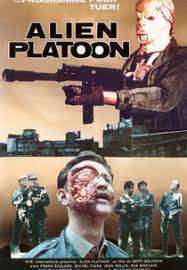
N.G. Mount also directed Ogroff and Dinosaur from the Deep and he’s back here to tell the story of a super soldier that should be able to help their side win the war, but then you discover that he was built by Major Taylor who is really Jean Rollin and man, if you get a robot brain from the man known for fog, castles and haunted women heading for doom, chances are all you’re going to care about is catching some of those women. He’s the alien in the title. There is no platoon of aliens. There aren’t any aliens at all.

There are a lot of reviews that ask, “Why is Jean Rollin in this?”

This isn’t the only SOV video he was in directed by Mount. He’s also in Dinosaur from the Deep and the Reanimator remake remix rip-off Trepanator.

If you’re up for a movie that outcheaps Robowar, good news. This is it as the world’s greatest soldiers go into the German jungle to destroy the former criminal — the Fast Food Killer — turned cyborg called alien.

Yes, it’s as dumb as it sounds. Watch it.

The McPherson Tape (1989)

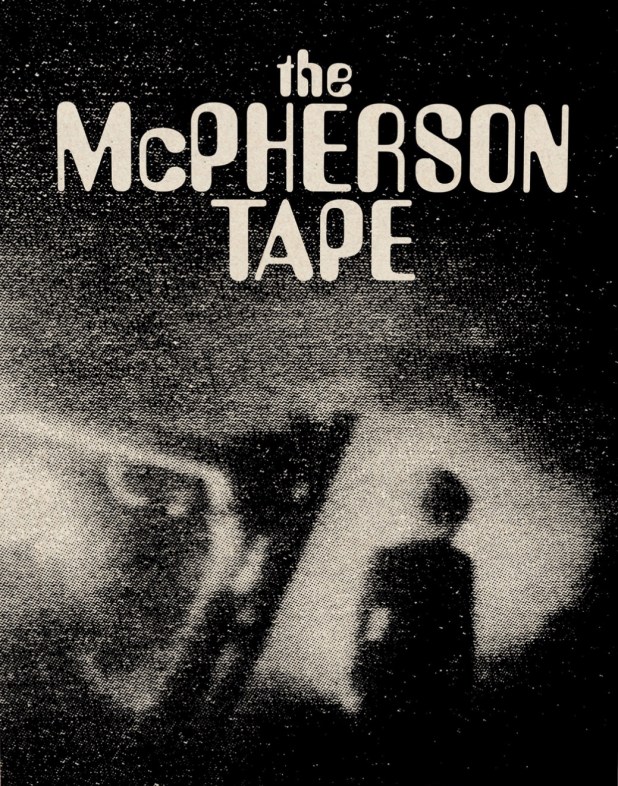
On the evening of October 8, 1983, the Van Heese family gathered to celebrate the birthday of 5-year-old Michelle. As the mother and her three sons Eric, Jason and Michael celebrated along with Eric’s wife Jamie and Jason’s girlfriend Renee, they soon had to solve a power outage. When the brothers went outside, they noticed a red light in the sky. And that’s when things went bad quickly, as red lights in the sky, an alien craft and even beings were recorded by Michael’s video camera.

Except, you know, this was all a found footage shot on video film by director and writer Dean Alioto, who used just $6,500 to make the film. The master tape burned in a warehouse fire shortly after being picked up for distribution, so this was a rare film for some time. In 2018, Alioto released the film on DVD and digital, then AGFA released a  blu ray that’s the best way to see this movie.

So many UFO lovers thought that this was real footage and the 1990s show Encounters even claimed that it was real footage. That’s because the bootlegs that were circulating had no credits. That’s where The McPherson Tape name comes from, as this was really named Alien Abduction. It was remade in 1998 as Alien Abduction: Incident in Lake County.

The film feels a lot like the real life Kelly–Hopkinsville encounter — which I have also heard called the Hopkinsville Goblins Case — in which the communities of Kelly and Hopkinsville in Christian County, Kentucky battled several goblin-looking extraterrestrials. It’s one of one of the most significant and well-documented cases in the history of UFO incidents, even if the Air Force classified it as a hoax in Project Blue Book. Night Skies, which became E.T., and Critters were based on this story.

The Bloody Video Horror That Made Me Puke on My Aunt Gertrude (1989)

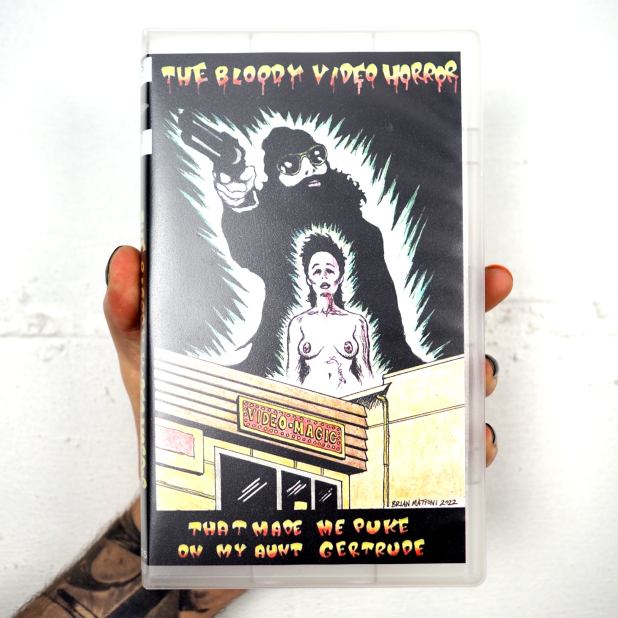
Kind of lost until Saturn’s Core reissued this on VHS a few years ago, this movie mixes both comedy and horror with dialogue that feels like it’s the first time that anyone has even seen the script. It concerns Video Magic clerk Ramon — there’s a poster for Goldengirl up like 12 years after that movie came out — whose boss Joe believes is a killer because one of the videos in their store has someone getting killed on tape. The real killer? Now he’s coming to take out Ramon.

Under the names John Bacchus and Zachary Snygg, this movie’s director has made stuff like The Erotic Witch ProjectPlay-Mate of the ApesThe Insatiable IronBabe and Beaster Day: Here Comes Peter Cottonhell. He’s still at it, too.

I’m sure his later movies are better. They have to be. This, however, is a bunch of teenagers grabbing a camera and trying to show you how hilarious they aren’t.

Yet somehow, as bad as the story and the dialogue is, the camerawork is inventive even on the lowest of budgets. It’s as if some teenagers overdosed on Sam Raimi and the Coen Brothers and that’s because that’s exactly what this is.

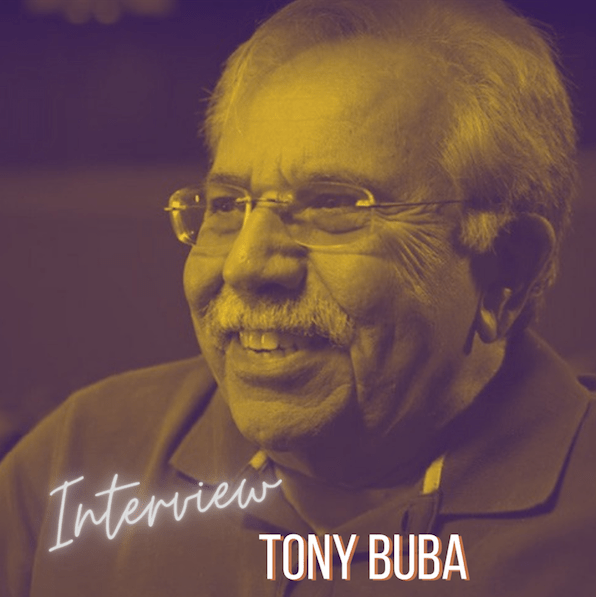
Exclusive interview with Tony Buba

Tony Buba grew up in Braddock, PA, a town that he would return to as he filmed a series of documentary shorts that dramatically showed the changes that were coming in the steel crisis of the mid 70s. After working on sound on several projects for George Romero — and appearing with his brother Pat as drug dealers in Martin and bikers in Dawn of the Dead — he made Lightning Over Braddock, a documentary that doesn’t even go deeper into Pittsburgh’s issues but found new ways to play with the documentary form itself.

Since then, Tony has made a series of documentaries that were included in a New York Anthology Film Archives retrospective on his work as part of their Sometimes Cities: Urban America Beyond NYC series. He’s an incredibly insightful voice that has not only documented the vital history of the city I call home, but also someone who was there as some of Pittsburgh’s greatest films were actually being made. You can learn more about Tony at his official site and I encourage you to watch all of his work.

After a quick introduction, some discussion of panettone, what local restaurants can trace their lineage to Vincent’s Pizza and directing commercials in Pittsburgh, we got to discussing movies. I’m in debt to him for the time he spent talking with me and how much I learned during our conversation.

B&S About Movies: I watched Lightning Over Braddock last week and it’s amazing both how much has changed in Pittsburgh and how little really has.

Tony Buba: There has been a change in terms of politics. What hasn’t changed is that the problems are still the same. Another thing that has changed is there’s no industry and you no longer see those structures or people fighting for jobs. industrial jobs — like at that time of the closures when that movie was made — I just don’t think Pittsburgh has ever really totally recovered yet. I mean, the city has some light but you get once you get beyond those narrow city borders to hit the Mon or Beaver Valley, it’s really no recovery.

B&S: As someone who lives in Monongahela and grew up in Ellwood City, I agree.

Tony: The landscape is just so much different, you know, riding on the parkway and coming into Pittsburgh and not seeing the big JNL smokestacks there. I was so disappointed when they tore them out. That should have been just left standing and become a museum. Or they could have done with these mills what they did in Germany and made those reusable. The disappearance of those structures is like the disappearance of characters I used to know and grew up with. A lot of Lightning can no longer exist today.

B&S: Speaking of characters, how much of Lightning is real?

Tony: It was really a blend. I mean, it’s what I was playing with. I was doing a lot of work with George Romero and I was also doing a lot of questioning of the documentary form. I didn’t want the film to be just the viewer consuming it. I wanted them to leave the theater and question what was real. That’s why I had people like Jimmy Roy in my films. I got them roles in George’s films too, like how Sal is in Knightriders as the pillowman selling cushions.

B&S: Sal Caru feels like a force of nature.

Tony: When I was making that movie, I became a character. I became the Tony Buba in the movie. So when I was on the TV shows being interviewed, I didn’t care what the question was, I would just sort of answer it. I knew that I could play it back on VCR to Sal later and have him respond to it. He would just go off, talking about how I left him out of the newspaper and everything else.

B&S: You’d just wind him up and let him go.

Tony: If I could write like Sal talks, I would be a screenwriter or script doctor making a lot of money. (laughs)

B&S: He’s like a Tarantino character before that was even possible.

Tony: Every time he was on a show or appeared, people were just enthralled by him. If he came around today, he’d be a multimillionaire influencer.

B&S: He reminds me of the old Italians who worked for my uncle’s refrigeration shop. I shouldn’t even say worked. They just all say around and made fun of one another and it was better than any TV show. But none of them ever really helped him fix refrigerators.

Tony: My grandfather was a shoemaker and Sal worked for him for a while. My grandmother said he never sold anything. (laughs)

B&S: What also stayed with me was when you said that a lot of millworkers would buy socialist newspapers and that’s how they got connected to the unions. Today, socialism is such a dirty word in politics. Yet Pittsburgh was such a union place and that word didn’t have the same connotation when your movie was made.

Tony: Yeah, I was working in factories in the mid 60s before I started college. All my uncles were all strong union people. What happened in the unions themselves, of course, started with the Red Scare in the 50s. They started kicking out the union members that were more socialists and Communists.

B&S: I get upset when people who live here now get negative about unions and how they had to fight for the rights we expect today. I always think, “We have a whole cemetery up in Homewood that has bodies of men and women who fought for those rights. And the Pinkerton agents they killed, too.”

Tony: I mean, it did work. In some ways, you go through towns like Braddock and some of these mill towns, they’re not a victim of failure. They’re sometimes a victim of success, because unions got these guys decent pay, so they bought houses outside of the mill town. Their kids went to college and never came back. I remember the big strike in 1959 and it went on forever. My dad cleared this property up in Braddock Hills and we planted corn to help pay the bills. But that strike is why people got big wages in the 70s and 80s. They said they wouldn’t ever do a wildcat strike again, but they also added a cost of living raise. And so what people think were exorbitant salaries in the 80s was really because of the contract. The cost of living adjustment because of the inflation at that time was like 15%. These guys automatically got that kind of raise to cover for inflation. So you had them making the big bucks and people were jealous of the steelworkers, especially people that had gone to college and weren’t making the money that the guys in a mill made.

I can never understand that sort of jealousy of someone making more than you. If someone’s collecting garbage and makes more than you, quit your job and collect garbage. Stop trying to make someone else make less than you.

B&S: My grandfather was in the furnace at J&L for 46 years. He’d come home sunburnt on one side and frostbitten on the other. He would tell me about “hell with the lid off” and I couldn’t understand working like that, but that’s how he provided for his family.

Tony: My dad spent 46 years as a boilermaker and welder. I always tried to get into the mill where he worked and today, I realize he kept me from getting hired. Maybe he thought I was a little too goofy (laughs).

B&S: When people come here now, they always say, “I’m surprised it’s so clean.” Well, it wasn’t.

Tony: There were such heavy pollutants, you would feel burning when you breathed the air. Your nose would ache. You don’t smell the rotten egg smell anymore.

B&S: Come to Monongahela. (laughs)

Tony: I love driving down that way on 837, but you can really see the devastation from the mills closing.

B&S: What was it like being here when movies weren’t just being filmed in Pittsburgh, but actually coming from here? What was the energy like with Romero making his films in the mid 70s?

Tony: There were some movies before. At the time, most of it was non-union and when ABC, NBC and CBS are doing the movies of the week, they were coming in shooting. For people like me, you wouldn’t work on them because you made more money working on industrial videos. Most of the crew on those movies came from outside the city, but when I came back from college in 76, there was so much industrial work shooting things for Westinghouse, U.S. Steel, PPG, they all had their own video units.

It was really like an explosion of talent. What an amazing group of people that were that that were here working. And that’s because of WQED. They had a program that my brother was in where he got his MFA. You basically did like two or three years of labor for almost no money but you got your MFA through Carnegie Mellon and you worked on all these PBS shows that were being produced. Plus you got your degree!

In 1976, all anyone was doing was bicentennial stuff and money for that was flowing in.

So where does the explosion of all the independent films after that come from? Tax shelters. Want to make a feature? You didn’t need much money back then, like $40,000. You could go to doctors or chiropractors, dentists, anybody who was high income. Because I think tax rate might have been 50% at the time. You could invest in high risk businesses — which film was considered (laughs) — and you got a five-to-one write-off.

If you went to the chiropractor and got him to invest like $5,000 into your film, over a five year period, he can write off $25,000.

There was a boom in independent productions but then people started cheating on it. They never completed their films but still got the tax deductions. Then they made up a title and claimed they did have a movie. So Carter got elected and all that money dried up.

B&S: And everyone went to Canada.

Tony: (laughs) Yeah. The Romero project, The Winners, that was a tax shelter project.

You had to have a Canadian percentage of your crew. That happened when a lot of filmmakers from Europe came here and wanted to shoot, too. They needed some Americans on the crew. That’s how Ed Lachman got his start because he got to shoot for Herzog.

B&S: Now it makes sense why Sal keeps flipping out over Herzog in Lightning!

Tony: They come into New York to shoot and you needed a New York union person to shoot who would bring their own camera. Ed did that and got to learn from Herzog.

B&S: Within a very short period of time, you had movies that are so important, from Martin and Dawn of the Dead to a movie your brother was part of, Effects.

Tony: They took that movie all the way to the USA Film Festival, which is now Sundance. And then it played King’s Court and then, well…

I don’t know all about the distribution history but it was a hard thing. I think it’s harder to get stuff distributed today than it was back then. Or maybe it’s harder to get stuff known. One of the big things years ago was getting the upfront money. You had all the gatekeepers on the front end and whether you’re going for grant money or investment money to really go over your project, you had to go through them. But now, there’s no problem getting it made but what do you do on the back end? How do you get anyone to see your movie when there’s so much out there?

How do you cut through all that noise if you don’t have a budget for advertising?

B&S: Martin remains so vital to me, even today. I feel like it’s the most Pittsburgh of all Romero’s films and perhaps you can understand so many of its themes, but if you didn’t spend time here, I wonder if you understand why the radio show is so important for Martin.

Tony: KDKA was a big deal here. And George saw how talk radio was just taking off and he incorporated it into his script.

When I was working with George, I was working for my brother’s company Image Works. On the sports stuff we did, I was doing mostly assistant editing working. Synching up footage. It was fun work and the pay was really good. I was also doing assistant camera work on the road and traveling so much. We got to go film Terry Bradshaw’s parents. We got to know Rocky Bleier.

Right before Martin, I was shooting a Chatham College PR spot with George. And at the same time, he was shooting inserts for this Italian splatter film called Spasmo.

B&S: Really!

Tony: They needed more sex and violence for the American version. So we ended up shooting a sequence that I’ve never seen for the American version. I don’t know if it’s even been released, but we shot all this stuff with mannequins.

George’s usual camera person was Michael Gornick. He got married and was on his honeymoon. And the other person who worked with George all the time was Nicholas Mastandrea who has gone on to an amazing career as an assistant director on films like the Scream movies and Looper.

Nick was playing Frisbee with his friends in the park and broke his arm. George then hired me to work on those two films and then we got to become friends. And then he looked at all the films that I had made about Braddock at that time, and he got entranced with Braddock to the point where it became a character almost in Martin.

Martin predicted the decline of the industry and my attraction to it was with Martin being the vampire, to me, he represented the sort of capitalism that has sucked the community dry.

It was shot in my mother’s house, too! I did a The Moth talk about it.

My grandmother stayed downstairs the entire time they shot Martin getting staked through the heart. She prayed the rosary for hours because she was sure they were going to kill him for real.

That’s also George’s comeback movie. There would be no Dawn of the Dead without Martin.

B&S: Can you explain?

Tony: He was making the sports series and all those industrials to pay off the debts from making Season of the Witch and The Crazies. He didn’t want to stiff his investors.

B&S: That explains all the Calgon commercials, which no one realized was George Romero and came from Pittsburgh.

Tony: I got lucky in the film because there were so many crew people and everybody was helping each other out.

On Lightning, you have the opening shot where J. Roy is singing under the archway. That was built by Jan Pascale, who ended up winning an Oscar for set design for Mank. If you look closely in that scene, the fog machine broke so you can see the crew running around and throwing smoke bombs.

One of those guys was Greg Funk. He kept asking, “Can I blow up a car?” He wanted to have a scene where a car blew up so he could put it on his reel.

B&S: When you were working on Dawn of the Dead, did you have idea how big it was going to be?

Tony: There are people who can verify this but one time, when we were getting ready to roll you, right before I said “Roll sound,” I also said, “This is going to be a classic.”

There was something going on with it and you could feel it in the crew. I didn’t think it was going to last for fifty years, but I did think it was going to be equivalent or bigger to what was hot then, something like The Rocky Horror Picture Show.

Here’s what’s so interesting about making a film that nobody goes into. Whether it’s a documentary, fiction or a short, you never go in thinking your project is bad. You think, “This can be a great film.” But sometimes something takes place while you’re doing it and it turns out to have staying power or something magical about it. And other times it doesn’t and it dawned on me I really sort of felt it when we’re making Dawn. It was going to be something bigger and I had to call attention to it.

The slapstick zombie stuff got added because George didn’t think he had enough footage! He had been shooting 16mm — in addition to 35mm — so that he could see footage sooner and get a sense of the film over the holidays. We couldn’t shoot at the mall so he was editing. And he miscalculated the 35 to 16 for lengths and thought the movie was short on time, so that’s why we did all the stuff in the mall like the pie throwing.

B&S: He was ahead by using the Monroeville Mall the way he did.

Tony: There were a lot of sociology books being written about malls at the time. There’s one I remember called The Malling of America. George was able to take the mall phenomena, the way he captures news and talk shows — the same way he did talk radio in Martin — and he was always there to critique the culture and that’s where his stuff stands out versus just making splatter.

B&S: The scenes in the newsroom came back when COVID-19 coverage first started. It felt like I was watching the chaos of that scene.

Tony: He doesn’t give a big exposition on why this has happened. You’re just thrown into the middle of the situation with no explanation and this is it. He was also fed up with how the news leads to more chaos. He was playing with that at the opening of Dawn, how you just get these bits of news and it causes more panic. And, of course, he was ahead of COVID-19 with The Crazies.
Goblin (1993)

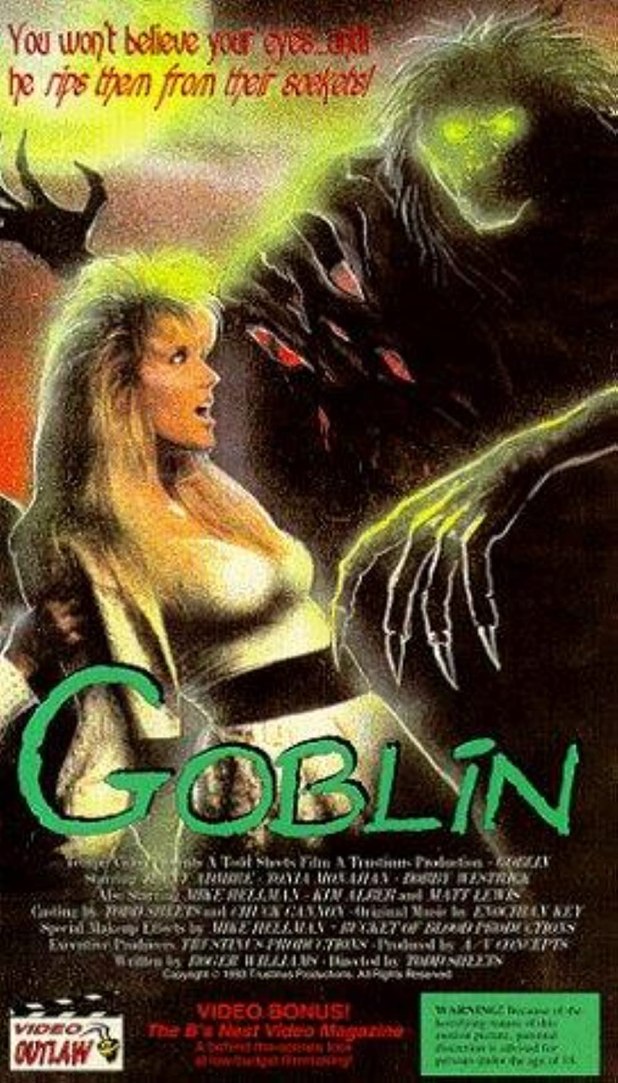
I really like Todd Sheets, because he seems like someone just as willing to passionately discuss his favorite Fulci movie as he is someone ready to make something astounding like Moonchild. He may not be the biggest fan of this movie and sees a lot he could have done better — or so he says — but I had a blast watching it. It made me feel like when I was a teenager and all I cared about was reading Fangoria and driving to other towns to find mom and pop video stores with different libraries of horror movies than the ones I’d exhausted around me.

This movie is exactly what I was looking for.

The plot is simple but that’s just to get the creature into our world and killing everyone he can. A farmer named Romero once wanted his crops to do better so he tried some magic and ended up with, well, a goblin. So he dropped it in a well and years later, when a young couple buys the place, they accidentally unleash it, as you do, and things go wrong for everyone and right for you, the viewer.

So yeah, I would have been 21 when this came out and that was the perfect time for me to enjoy Fulci references, heavy metal soundtracks and people just randomly showing up and trying to speak dialogue that they are ill-prepared to deliver and they still end up sounding like every art school party I ever attended with the cheapest bottle of vodka in my hand.

Now, wondering like why a goblin needs a drill to take out someone’s eyeball is the kind of thing that people wonder about when they get too intellectual about movies like this. Other questions would be why is there so much genital mutilation and why do zombies just show up? These are dumb questions no one cares about. Stop asking questions. Stop making sense.

The goblin looks great, the music is pretty solid and the video quality is absolutely horrible. The guts look like real animal parts which is how they do it in Texas on productions big and small, but this was made in Kansas City. They have good barbecue in both places and I guess the sloppiness of the sauce on the meat translates to how grimy the guts look in horror films too. Why is this movie making me hungry instead of nauseated? Have I gone too far?

This was shot under a full moon with a video camera. That’s as perfect as life gets.

Say no to drugs. Get high on horror!

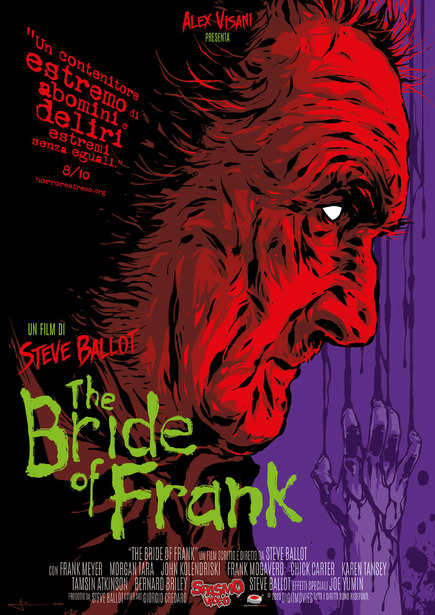
The Bride of Frank (1985)

Frank Meyer was a homeless guy in real life and that’s who he is in this movie, a man who lives in the warehouse of a trucking company where he’s abused by his co-workers most of the time. He also dreams of death and man, it’s not pretty. This is a film desperate to chase away nearly everyone, starting with him smashing a kid’s head open with a pipe, running over her body with a truck and then messily devouring her brain.

Still here?

This was released by Sub Rosa in 2004 after being an underground VHS passaround film and if you’re ready for the kind of weirdness you once needed multiple mixtapes to see, this is it. The guys at the truck garage — introduced in a hilarious pause to see the names Reservoir Dogs style moment — decide to throw him a birthday party and some geeky dude interrupts it. Frank remembers that his mother told him to never lie and always tell people before he kills them. So when Frank tells someone that he’s going to cut off their head and shit down their neck, well, it’s no threat. It’s a promise that we’re going to see.

For a movie that has a man searching for love — alright, gigantic breasts — and killing women left and right, this ends with a sweetness that’s kind of heartwarming if you can get past every moment of sheer black humored piss in your drink madness. I mean, as bad as Frank can be, at least he follows up on his promises and has some cats that he loves, Herman, Frankie, Lily, Mommy and The Maltese Cat.

This was directed, written, produced, edited and shot by Escalpo Don Balde who is really Steve Ballot. Frank starts by telling us that this is a story of love and evil and man, he wasn’t lying. It’s not a road that many will want to travel, but it’s Herschell Gordon Lewis, John Waters and more than anything Bloodsucking Freaks, a movie that you’ll rush to shut off the moment anyone walks in the room excapt that you’re an adult now.

Ballot told Film Threat that the movie was made with his family: “My family had a warehouse business with forklifts, tractor-trailers, truck drivers, warehouse workers and a 133,000 square foot building. I could use all that. There was a former homeless man that the company adopted and let live in the back room. He would be the star. I had a 5-year-old niece that was the cutest little kid in the world. I would start the movie with her. My pot dealer was a classic Brooklyn tough guy. I could use him too. And like John Waters before me, I could cast the movie with weirdos I met on the street. So I started shooting with my $1100 consumer JVC SVHSC camera on the weekends. I shot about forty SVHSC tapes over a four year period, and then spent about six months editing it together with two VCRs.”

You read that right. The little girl that dies in the beginning is his niece.

I can’t even imagine the rest of the footage that didn’t make it into this movie.

You can download this from the Internet Archive.

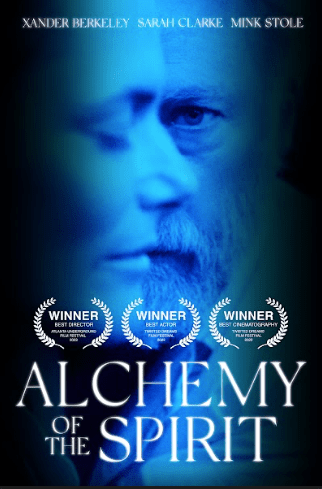
Alchemy of the Spirit (2022)

Director and writer Steve Balderson has created quite a story here. Aging artist Oliver (Xander Berkeley) wakes up next to his wife Evelyn (Sarah Clarke), who has died in her sleep, and refuses tot live a life without her. He keeps her body in the bathtub, filled with ice, trying to keep her looking as she did in life. At the same time, her spirit continues speaking with him for just five days before passing to whatever comes after our world. Oh yes — he’s also been given the greatest art commission of his life by his agent Alex (Mink Stole, wow!) and must continue to create art while going through the greatest change of his life.

A film of magical realism that plays with time, sound, light and color to attempt to share an emotion and mental space that is unshareable, Alchemy of the Spirit was a rough watch — I mean this in a good way — as I try to navigate the loss of my father. Life is unlike it ever was and while the common and rote moments of it never stop, the joys of it seem muted somehow, the colors much more simplistic. I hope this can change soon and that I can take these moments of art and use them to grow and change. You’ll always miss someone. But can you honor them by creating in their missing space?

Alchemy of the Spirit is now available on Prime Video and will soon launch on a number of Cable and digital platforms across North America.

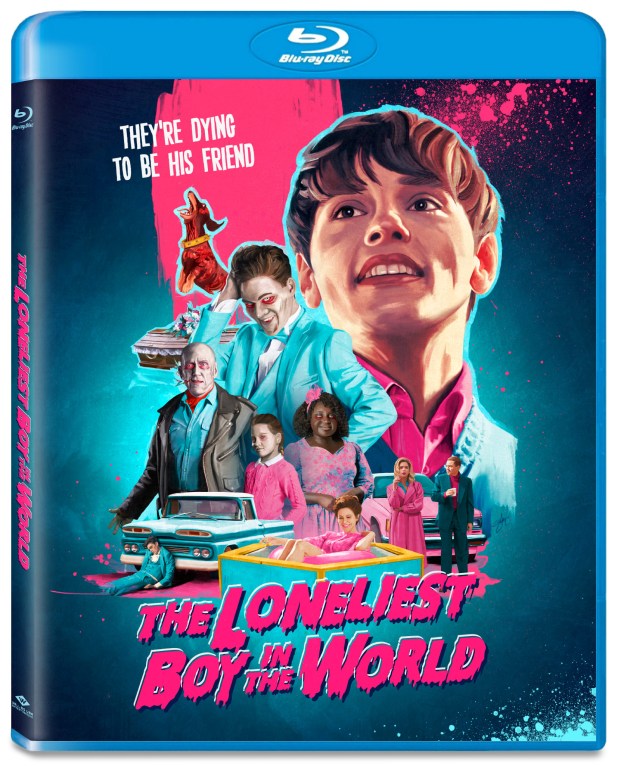
WELL GO USA BLU RAY RELEASE: The Loneliest Boy In the World (2022)

Oliver (Max Harwood) is dealing with the sudden death of his mother and when he’s released from a psychiatric facility, he’s told he has one week to make a friend or go back. All he knows is watching Alf on TV and going to his mother’s gravesite to tell her the details of the creature from Melmac and his interactions with the Tanner family.

Yet when he learns of the death of a young boy around his age named Mitch (Hero Fiennes Tiffin). He decides to dig him up, as well as Susanne (Susan Wokoma), a young girl named Mel (Zenobia Williams), Frank (Ben Miller) and even a dog. He brings them home and sets them up on the couch and it makes him happy.

To his surprise, the next morning they’ve all come back to life and become his family.

Somehow, director Martin Owen (The Intergalactic Adventures of Max Cloud) has taken a story that could have been totally presented as a serial killer origin and turned it into a family comedy with Oliver getting the sitcom mother, father, sister and brother he always wished he had. They teach him life lessons, show him how to talk to girls and how to be happy. Sure, they should be buried but everyone seems fine with their lives.

It has a dark concept — a lost young man in a world that doesn’t understand him that has to make his own world out of corpses — yet somehow it becomes innocent, candy-colored fun. Who would have thought?