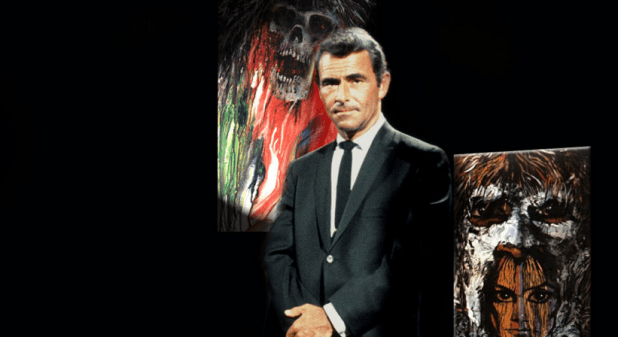
Night Gallery episode 2: Room with a View/The Little Black Bag/The Nature of the Enemy

Originally airing on December 23, 1970, Night Gallery expanded to three stories for this episode.

“Room with a View” was directed by Jerrold Freedman (A Cold Night’s Death) and written by Hal Dresner (The Eiger Sanction) and it’s all about a bedridden man named Jacob Bauman (Joseph Wiseman, Dr. No) who learns that his wife Lila (Angel Tompkins, Murphy’s Law) is sleeping with someone else. His revenge scheme involves the young nurse (an unbelievably young Diane Keaton) who is there day and night with him.

“The Little Black Bag” is directed by Jeannot Szwarc (Jaws 2, making that two Jaws directors who worked on Night Gallery) and written by Rod Serling from a story by C.M. Kornbluth. It tells the tale of William Fall (Burgess Meredith) finding the medical bag of Gillings (George Furth), a doctor from the future. This same story was also adapted on the show Tales of Tomorrow with Charles S. Dubin directing.

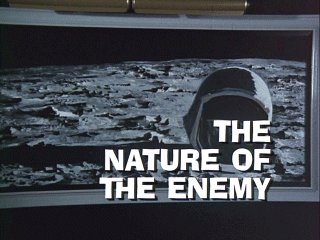
“The Nature of the Enemy” is directed by Allen Reisner and written by Serling from a story by Cyril M. Kornbluth, a science fiction writer who died way too young. The director of NASA (Joseph Campanella) tries to keep control after life is found on the surface of the moon.

The second episode of this series — much like the first — doesn’t live up to the promise of the pilot. Soon, though, this would get much better.

PITTSBURGH MADE: Horror Rock (1989)

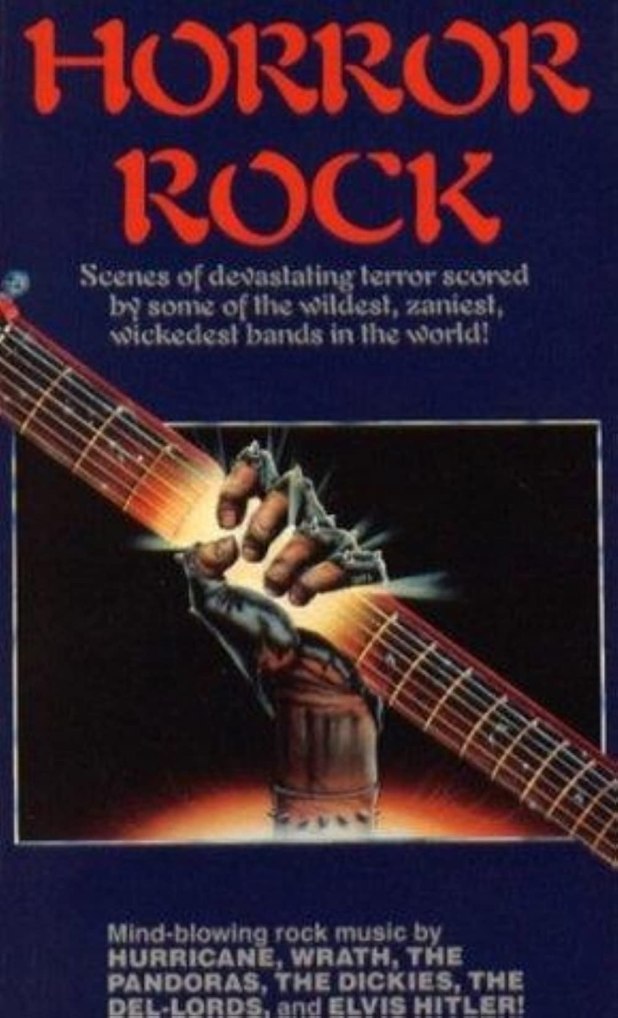
John Russo is a green filmmaker and by that, I mean that he sure does love to recycle footage. But hey — he’s also smart enough to realize that those that love metal generally love horror movies, so why not combine both of them?

His Market Square Productions put this together and it was directed and written by Paul McCollough, who was around to shoot The WinnersThere’s Always VanillaThe Booby HatchFleshEater and Midnight, as well as edit The Booby Hatch, FleshEater, MidnightThe Majorettes and Heartstopper plus also compose music for several of those films and the remake of Night of the Living DeadLegion of the NightSanta Claws and Monster Makeup.

There are seven music videos on this and each has a video — of sorts — to go with it.

Hurricane “Over the Edge”: Hurricane is an American heavy metal band — they’re still around! — first formed in 1983. The original lineup had now current Foreigner lead vocalist Kelly Hansen, Robert Sarzo, Tony Cavazo and Jay Schellen. If some of those last names seem familiar, Cavazo and Sarzo are the younger brothers of Quiet Riot’s Carlos Cavazo and Rudy Sarzo. Robert was the first guitarist to replace Randy Rhodes after he tragically died. Robert and Tony are also the only original members left in the band. I kind of love how the “video” behind their song is just footage of Kennywood, an amusement park outside Pittsburgh.

Wrath “Children of the Wicked”: Wrath plays what they refer to as “progressive, technically demanding thrash metal which has been referred to as Tech-Thrash or Speed-Tech.” Bassist Gary Modica is the only original member left, but they’re still recording.

The Pandoras “Run Down Love Battery”: This band got their start in late 1982 as part of the 1960s garage rock revival and was associated with the Paisley Underground era in Hollywood’s underground rock scene. Sadly, the band split into two factions as It’s About Time LP was released with founder/singer/songwriter Paula Pierce hiring three new musicians and literally going her own way. The band was on Rhino, Elektra and Restless before disbanding in 1990. Keyboardist Melanie Vammen and bassist Kim Shattuck went on to form The Muffs. Even sadder, both Pierce and Shattuck are no longer with us. This is pretty much just the band’s video for the song, but man, it’s infectious.

The Dickies “Booby Trap”: This Los Angeles-based punk band has been in continuous existence for over 40 years. They’re probably best known for doing the music for Killer Klowns from Outer Space.

Elvis Hitler “Hot Rod to Hell”: This Detroit-born psychobilly band was named after the stage name of their lead singer Jim Leedy and had a novelty hit with the song “Green Haze,” which combines the theme song of Green Acres with “Purple Haze.”

The Del-Lords “Judas Kiss”: Founded by The Dictators’ guitarist Scott Kempner, this band had four singers — beyond Kempner, there was Eric “Roscoe” Ambel, Frank Funaro and Steve Almaas — to become an urban roots rock version of the Beach Boys. They were named for the director of several Three Stooges shorts, Del Lord.

N.M.E. “Heartstopper”:  This Pittsburgh band featured guitarists Michael Weldon and Brian Keruskin, Chuck Robinson on bass, drummer Dave Snyder and vocalist Jirus. They broke up shortly after doing the music for the movie Heartstopper.

All of all these songs play over clips of Night of the Living DeadThe MajorettesMidnight and Heartstopper which as you may have put together are all movies owned by Russo (or in the public domain, as is the case with Night). There are also strange garbled voiceover and audio warnings about a character named Uncle Tonoose, who gets mentioned so much in this you might believe that he’s actually someone. Maybe the character from Make Room for Daddy came back from the dead?

Regardless, this is a fun artifact of a past time and for a while was the only way to see Heartstopper. It’s pretty ramshackle, but that’s part of the fun.

Thanks to the magic of the web, you can watch it on Tubi.
PITTSBURGH MADE: The Song Remains the Same (1976)

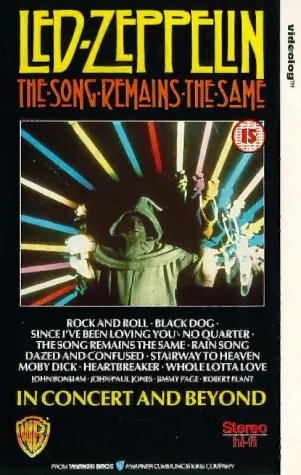
Can you even imagine what it was like to be in Led Zeppelin in 1973? This movie gets you as close as you’ll probably ever get, seeing as how the band was one of the last of the mysterious rock stars that kept most fans at arm’s length instead of constantly giving away their own stories. This movie was described as “the band’s special way of giving their millions of friends what they had been clamoring for – a personal and private tour of Led Zeppelin. For the first time the world has a front row seat on Led Zeppelin.”

The Pittsburgh part of the movie comes in as the band arrives in America at the old county airport in their private jet The Starship and travel by motorcade to their concert at Three Rivers Stadium on July 24, 1973.

With parts directed by Joe Massot (Wonderwall) and others by Peter Clifton, who was brought in when Zeppelin manager Peter Grant was unhappy with the progress of the film. When asked to leave, Massot was offered a few thousand pounds in compensation and Grant sent someone to Massot’s house to collect the film. Massot had hidden the film elsewhere and so Grant’s employee stole an expensive editing machine owned to use as collateral. It all worked out, but Massot wasn’t invited to attend the premiere of the film at New York. He came anyway and bought a ticket from a scalper to get in.

Beyond the Madison Square Garden shows that were shot, any holes in the performance were filled by a stage show shot with no audience at Shepperton Studios. Jones is wearing a noticeable wig in the new footage and Plant’s teeth are fixed.

The band wasn’t happy with the movie, with Page saying “The Song Remains The Same is not a great film, but there’s no point in making excuses. It’s just a reasonably honest statement of where we were at that particular time. It’s very difficult for me to watch it now, but I’d like to see it in a year’s time just to see how it stands up,” John Paul Jones stating it was “a massive compromise” and Robert Plant calling it “a load of bullocks.” The Jimmy Page fantasy sequence outside his home Boleskine — once owned by Aleister Crowley — was laughed at by John Bonham.

Nr. 10 (2021)

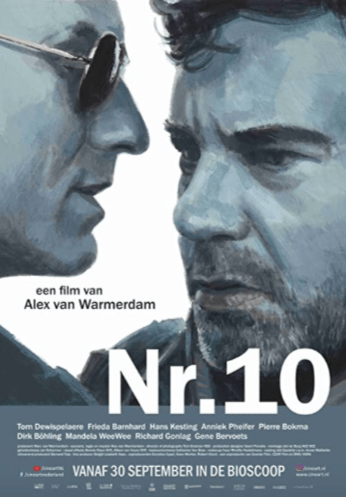
Alex van Warmerdam, who also made Borgman and Schneider vs. Bax, has really made one of the strangest films I’ve seen at Fantastic Fest, which is a real testament. That’s because it starts like some sort of highbrow art film, as a director worries about the opening night of his new play. One of the actors has a dying wife and can’t keep his mind on his lines. And speaking of wives, the director’s wife is currently having an affair with Günter, the lead actor, whose daughter Lizzy has just discovered that she has a rare disease. And oh yeah — he thinks that the world is against him.

And then everything changes on a level that doesn’t just change the story of the film, it fundamentally changes the way that everyone on Earth views the entire universe.

If you want to be as surprised as I was stop reading right now.

When Günter was four years old, he was found alone in a German forest. Raised by a foster couple, he’s never wondered about his past until a man walks up to him in the street and utters the  phrase “kamaihí.” Now, he wants to know exactly who his mother is. And he wants to know what that word means. And he wants to know why so many Catholic priests are following him.

Seriously, this movie does beyond a rug pull. It changes not only the story but the viewer. I know that sounds like pure hyperbole, but that’s what this movie deserves. I watched the last scene several times and blown away by just how audacious it is.

This is a movie that you need to mark down on your watch list. I really don’t want to say much more, because I feel like you owe it to yourself to be surprised.

PITTSBURGH MADE: The Booby Hatch (1976)

Rudy Ricci was a zombie in Night of the Living Dead, as well as one of the motorcycle gang members in Dawn of the Dead. Beyond that, he also wrote the story for There’s Always Vanilla and his writing is credited in Return of the Living Dead and The Devil and Sam Silverstein.

John Russo wrote the screenplay for Night of the Living Dead and also wrote some of The Devil and Sam Silverstein, which came out the same year as this. He’d go on to write and direct plenty more films, most notably MidnightThe MajorettesSanta ClawsMy Uncle John Is a Zombie! and many more.

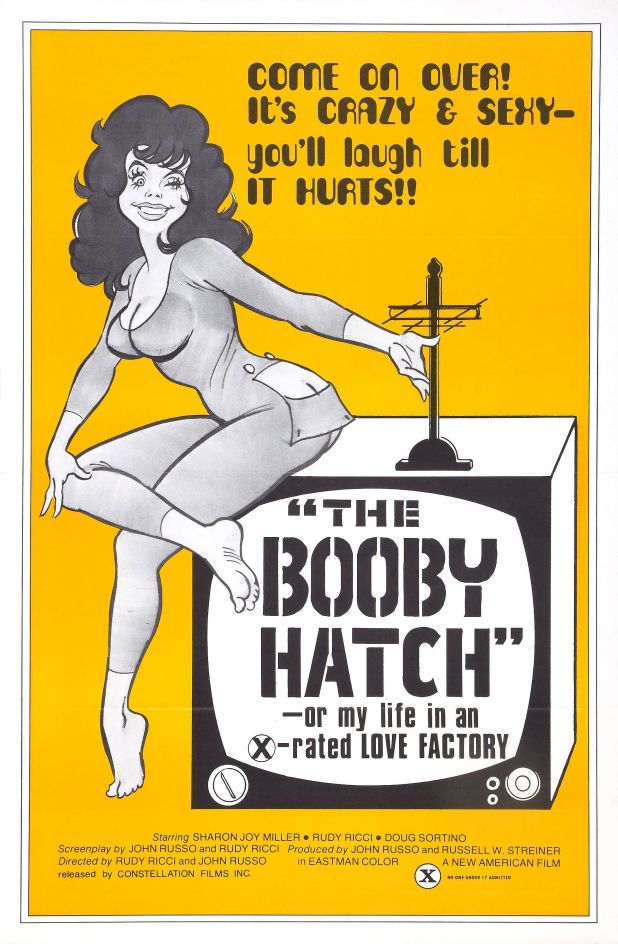
In 1976, the idea that the Living Dead films would continue were way in the future. So if these guys were going to make another movie, why not a sex comedy? Russell Streiner also came on board to produce — and show up as a masked rapist — so this is definitely of interest for those who watch everything connected with Pittsburgh film.

You know. Like me.

Ricci also plays the lead, Marcello Fettucini, a sex machine who works for Joyful Novelties Inc., a company run by Thelonious Suck (N. Detroit, actually Sam Schwartz) that creates the dildos, blow up dolls, French ticklers, lubes, sex dolls and anything it takes to keep America balling. Cherry Jankowski (Sharon Joy Miller) also works there — the alternate title of this is The Liberation of Cherry Jankowski — and she’s also a tester of their equipment. She’s dealing with some rough times as she keeps getting prank calls, getting assaulted by her next door neighbor and has a boyfriend named Herman Longfellow (Doug Sortino) who prefers to dress as a woman and is really into religion.

Marcello isn’t doing all that great. He’s lost his ability to get it up, his father has disowned him and his brother (Dawn of the Dead actor David Emge) laughs at him. Of course these two are goingn to wind up together and then I realized there was ten minutes left, so there’s a whole bunch of sexual hijinks with an industrial film feel. You never see any male nudity, in case you wondered, but according to Russo, some actresses would show their butt, some would only go topless and there’s one brave actress that in no way cares near the end and goes full 70s full frontal.

Keep an eye open for George Kosana as a cop. Seeing as how he was best known for playing Sheriff McClelland in Night that seems right. One of the reporters, Raymond Laine, is another local who was in nearly everything shot in here: Night of the Living DeadSeason of the WitchLady BewareAlone In the Neon JungleDominick and Eugene, Sudden Death and many more. He also did the casting for The Majorettes and Midnight as well as a contributor to The Devil and Sam Silverstein. Paul McCollough, who did the lighting and edited this, wrote The Crazies and composed the music for the 1990 Night of the Living DeadHeartstopperSanta Claws and The Majorettes. Oh man! He also edited Midnight, FleshEaterThe MajorettesHeartstopper and Horror Rock!

There’s a rapist too dumb to be able to take his pants off, worries of erectile disfunction in the days pre-Viagra and when Marcello gets sad, he goes to the lagoon at Kennywood. Russo also had sticker shock when he tried to buy all the marital aids and decided to just make them himself. That explains why a real woman plays the blowup doll and somehow looks as unsexy as possible despite being sold as the pinnacle of sex.

How wild is it that Gray Morrow did the poster for this?

PITTSBURGH MADE: Reflections On the Living Dead (1993)

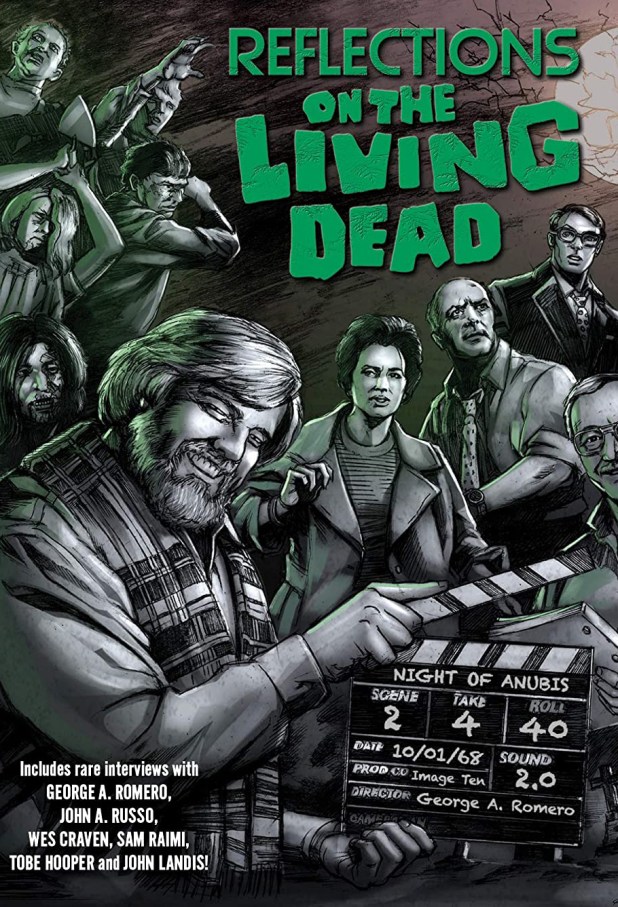
Directed and written by Thomas Brown, this film has a roundtable between George A. Romero, John Russo, Russell Streiner and Karl Hardman as they discuss exactly how Night of the Living Dead was made. You also get to see Karl with Marilyn Eastman as they discuss how they went through library music to get the sound effects and soundtrack for the film under budget, which is worth the price of admission — it’s streaming for free on Tubi but you get the idea — of this documentary.

As a bonus, everyone from Tobe Hooper, Sam Raimi, Wes Craven, John Landis, Fred Olen Ray, David DeCoteau, Chris Gore, David E. Williams and Scott Spiegel speak about what the first modern horror movie means to them.

The best part of this is, as you can imagine, getting the original crew together and hearing how they thought they could make this for $600 each, how that number rapidly increased, the frustration of working for ad agencies, living at the farmhouse, painting a car that was loaned to the production and nearly ruining it, going to Washington D.C. for a quick scene away from Evans City and so much more. It’s a leisurely discussion — the Tempe Video blu ray has the original cut of this and the entire roundtable as an extra so grab it from Diabolik DVD — and everyone seems happy to be there and excited to share their stories.

PITTSBURGH MADE: Aftereffects: Memories Of Pittsburgh Filmmaking (2005)

In the late 70s, a group of ambitious Pittsburgh filmmakers decided to work together to make a movie called The Manipulator and later Effects. Due to a distributor problem, it was never released in theaters or on home video with just two theatrical screenings. One was at the U.S. Film Fest — which is now the Sundance Film Festival — and then the world premiere at the much-missed and long-gone Kings Court Theater in Oakland on November 9, 1979.

26 years later, Effects would finally be released on DVD and shown at the Warhol in Pittsburgh. Today, there’s a gorgeous AGFA blu ray release of the film and you can watch it any time you’d like, but at one point — as Tom Savini reminds you in this documentary — all he could do was tell people about the movie because there was no way to see it.

Directed by Michael Felsher and featuring nearly everyone involved with the film — David Belko, Susan Chapek, John Harrison, Dusty Nelson, Debra Gordon, Joe Pilato, Pasquale Buba, Savini, George Romero and Marty Schiff — the bulk of this story takes place poolside at John Harrison’s house as the cast looks back on a movie that was hidden for so long. There are also moments filmed at the old Mind Over Media building, a place I worked at just a few years afterward.

This was a bonus feature on the releases of Effects, but this new blu ray has so much more, like an exclusive feature-length edition of AfterEffects with over 15 minutes of never-before-seen interview footage, commentary from Felsher, more interview clips with George Romero, deleted scenes, highlights of the evening Effects played the Warhol, the 2005 DVD trailer and a book with all-new tributes to Buba, Pilato and Romero.

I often think that so much of the culture that I love is disappearing, that the people who made it are fading away. This has been shown to me so many times this year. This movie allows me to look back on so many that are gone and sit amongst them, learning how Pittsburgh once made its own films. Great films.

This is worth the watch just to hear how much Pilato loved his first lunch at the Squirrel Cage.

You can get this from MVD and Diabolik DVD.

PITTSBURGH MADE: Survival of the Dead (2009)

The last film in the Living Dead series and the final film George Romero would make before he died in 2017, Survival of the Dead is a movie I’ve avoided for some time. He told Bloody Disgusting, “…the idea was to make a film about war or entities that don’t die, conflicts, disagreements that people can’t resolve, whether it’s Ireland or the Middle East or the Senate…that was the idea. And then I decided that was the best way to depict it. And then I had this other idea about an island would be a logical place for people to go, an idea I sort of played with in some of the other films. So I said OK, the best way to tell this story I think is to have a protagonist go to the island only to find out that it’s in the middle of basically a war that won’t die, between these two old guys. And the moment that came together I remembered The Big Country. And I’m always looking for something different sort of stylistically with these films so that they’re not the same which makes it more interesting for us as filmmakers. All the people on the set, production design, DP, good friends of mine, we sort of work as a big family. So we all sat down and I made everyone watch the big country. And then my thought was “Hey why don’t we go full on with this, go widescreen, not mute the colors, really try to make it look like William Wyler”. So that was something we did as a fun exercise to give it a different taste.”

Filmed in Canada instead of Pittsburgh — yes, this is something that I will always call out — this is the story of Plum Island, Delaware, a place that has always been home to the feud between the O’Flynns and the Muldoons. The rise of zombies has added something new to their war: the O’Flynns are trying to wipe out the living dead while the Muldoons leave their loved ones chained up and waiting for a cure that they believe will soon be invented. It also has the Nation Guard Soldiers from Diary of the Dead getting involved and, as always, an ending that takes out most of the cast.

Alan Van Sprang’s Sargeant “Nicotine” Crockett character is the first Romero character to make two movies, unless you count Tom Savini’s Blades showing up as a human in Dawn and a zombie in Land. You may also connect the unnamed cop Joe Pilato plays in Dawn with Captain Rhodes in Day.

Before he died, Romero was working on Twilight of the Dead, a movie that would be about zombies from Land of the Dead in a world where they are the top of the food chain. Supposedly, it’s still going to get made. There was also another movie called Road of the Dead that had been talked about.

I want this movie to be bigger than it is. I want it to say things that it cannot. I want more and realize that I am being greedy.

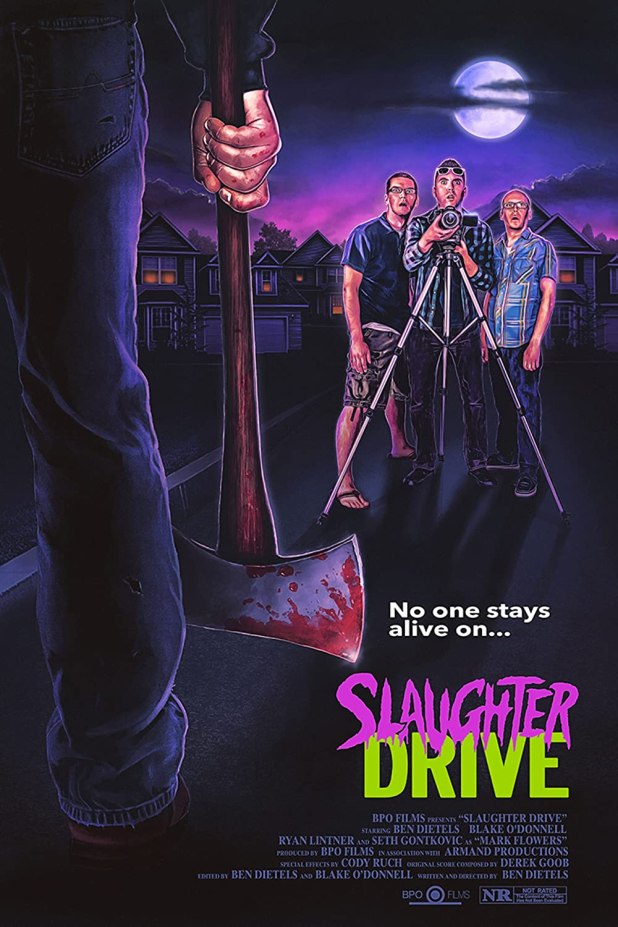
PITTSBURGH MADE: Slaughter Drive (2017)

Doug Stevenson (director, writer and star Ben Dietels, who is also one of the hosts of Neon Brainiacs) feels like a failure but wants to keep filming and trying to make something that people want to see. He accidentally leaves his video camera in a park overnight and films an actual murder, which is probably the second worst thing that has happened to him that day, as he arrived back home to have to listen to his soon-to-be-ex-wife pounding it out with another man.

That said, he was hoping that reuniting with his old friends Todd (Vincent Bombara) and Chris (Chris Crighton) would mean having a fun summer and forgetting the cards that life has dealt. And then there’s that murder.

Slaughter Drive doesn’t shy away from gore, which is welcome, and has the same kind of love for 80s horror — most essentially shot on video slashers — that I do. It could use a little more focus near the end, but the fact that it comes together so well on the budget it has is a miracle. There are so many streaming horror movies that don’t have a fraction of this film’s originality or desire to be great. I never want Ben to stop making movies and trying new things.

PITTSBURGH MADE: Diary of the Dead (2007)

While filming a horror movie about a mummy in a forest, some University of Pittsburgh — yet this was shot in Toronto — students and their professor learn from the news — with the soundtrack taken directly from Night of the Living Dead — that recently dead are awaking and walking.

The fifth film in Romero’s series of Living Dead films — it’s actually a prequel to Land of the Dead — Diary changed the way he shot films. It used computer-generated imagery which allowed for the film to be shot quickly with just a few handheld cameras instead of the multiple angles, long filming sessions and extensive editing he was known for. Personally, I understand the experiment, but I don’t want to see a master like Romero making a found footage movie.

Romero told Cinemablend, “I had this idea that I could use film students out shooting a school project and zombies begin to walk and they document it. I wanted to do this subjective camera thing before I knew anybody else was working on it. I didn’t know about Cloverfield or anything else. I thought we were going to be the first guys out there with one of these.” He still used a cinematographer to try and keep the shots looking less like the shakycam that most found footage makes me nauseated with.

I’d like to report that this film is good but I struggled through every scene. What always worked for me — at least in the first three Living Dead films — is that you find characters to feel for and get to root for. None of these students seem as if they can come close to that. If anything, the subtext has become full text and even more ham-fisted. Seriously, if you think that defibrillator to the zombie’s head is awesome, that’s what the messages in this movie are doing to your brain. Where Dawn hinted, this screams in your face, “Do you get it?”

The effects are pretty good but this whole thing just made me sad. I realize that people need to keep working, money needs to keep being made, but I started to feel like I do when I watch a later Argento movie. I want it to be great, I keep rooting for it and then I just feel this tremendous wave of sadness. I want more from the directors I love and I realize in no way is that fair. They’ve given me enough.