Graphic Desires (2022)

ABOUT THE AUTHOR: Joseph Perry writes for the film websites Gruesome Magazine, The Scariest Things, Horror Fuel and Diabolique Magazine; for the film magazines Phantom of the Movies’ VideoScope and Drive-In Asylum; and for the pop culture websites When It Was Cool and Uphill Both Ways. He is also one of the hosts of When It Was Cool’s exclusive Uphill Both Ways podcast and can occasionally be heard as a cohost on Gruesome Magazine’s Decades of Horror: The Classic Era podcast.

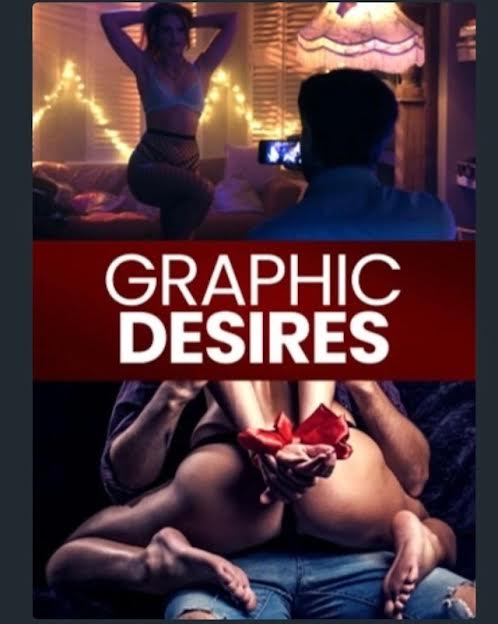
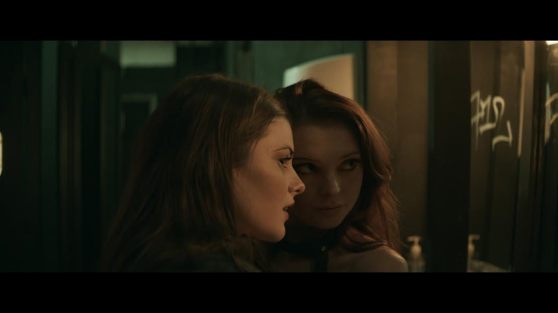
The heady heyday of cinematic erotic thrillers is a few decades behind us, but writer/director Andy Edwards does his best to resurrect the genre for a new generation with Graphic Desires (AKA Graphic Designs; U.K., 2022). 

Edwards sets his feature in our modern, tech-obsessed world as bored work-from-home boyfriend Franklin (David Wayman) decides to try out a hook-up app for the first time when his girlfriend Candida (Sian Altman) goes to Germany on a business trip. He meets 18-year-old Atlanta (May Kelly), a transplant from Kansas to London, and the two hit it off well enough to provide one of the film’s many softcore sex scenes. Trying to keep things like this a secret rarely works out, especially in erotic thrillers, and he gets his app-designer friend Brandon (Ocean M Harris) involved when he thinks Atlanta has disappeared under mysterious circumstances. 

The proceedings can get a bit gonzo at times in Graphic Desires, and I did find myself scratching my head a few times at plot developments, but everything wraps up in an interesting manner. Edwards does a solid job at the helm, aided by impressive performances by the main cast members, and the technical aspects are all quite good. 

For those who enjoy cautionary fable substance with their sex scenes, Graphic Desires (AKA Graphic Designs) is currently available on-demand in the U.K. on Amazon, Apple, Sky, Virgin, etc. via High Fliers. 

ARROW BLU RAY RELEASE: Running Out of Time Collection

Director Johnny To (The Heroic Trio) has created two different tales of criminal masterminds going up against the Hong Kong Police Force, led by Inspector Ho Sheung-sang (Lau Ching-wan).

The Arrow blu ray set comes with both Running Out of Time and its sequel, Running Out of Time 2. Both films appear with high-definition blu ray presentations that have been scanned and restored in 2K. As always, the packaging is incredible from Arrow, with original and newly commissioned artwork by Lucas Peverill plus an illustrated collectors’ booklet featuring new writing on the films by David West.

Running Out of Time has new commentary by Hong Kong film expert Frank Djeng, as well as a second commentary by writers Laurent Cortiaud and Julien Carbon, moderated by Hong Kong film expert Stefan Hammond. There are also interviews with Carbon and Courtiaud, Johnnie To, Lau Ching-wan and Raymond Wong. Plus, there’s a feature entitled The Directors’ Overview of Carbon and Courtiaud, the trailer and an image gallery.

Running Out of Time 2 also has commentary by Djeng, a making-of, Hong Kong Stories, a documentary by director Yves Montmayeur about Hong Kong cinema mythology via Julien Carbon and Laurent Courtiaud’s experience as writers in the HK film industry, the trailer and an image gallery.

You can get this set from MVD.

Running Out of Time (1999): Cheung Wah (Andy Lau) has been diagnosed with cancer and given four weeks to live. One night, as he eats at a diner, he takes notice of the way that Inspector Ho Sheung-sang handles a bank robbery. Impressed, he decides to play a game against the cop, giving him 72 hours to catch him for a series of increasingly daring crimes. Cheung will admit defeat if Ho can take him to the police station before three days are over.

Generally, Hong Kong cop movies are so deadly serious. This has some moments of that, as the disease killing Cheung is no joking matter. But by the end of the film, the two men have somehow earned each other’s respect, even if Cheung keeps outsmarting his police adversary the whole way to the very end.

Lau is an incredibly popular actor but rarely gets any respect. He’s a populist favorite, but this is the movie that finally won him Best Actor at the Hong Kong Film Awards. From stealing diamonds to repeatedly faking his demise, he’s the heart of this film.

Running Out of Time 2 (2001): Co-directed by Johnnie To and Law Wing-cheung, this sequel finds Inspector Ho Sheung-sang returning to match wits with another criminal mastermind, the unnamed man played by Ekin Cheng.

The man introduces himself by faking his suicide by jumping from a roof. He then announces that he has stolen several priceless Chinese treasures and will tell the press, ruining the insurance company that has been hired to protect them. Where Cheung in the first film relied on his brains, this mysterious magician can tightrope walk and seemingly disappear into thin air.

There’s an amazing scene where a chase between the two rivals is paused for water and ice cream. The unnamed man also uses bald eagles to help him steal from people and if that joke means what I think it does, well done.

The follow-up is much funnier than the first film, but it keeps so much of what made me love that movie. It’s definitely worth your attention.

KINO LORBER RAY RELEASE: The Extreme Adventures of Super Dave (2000)

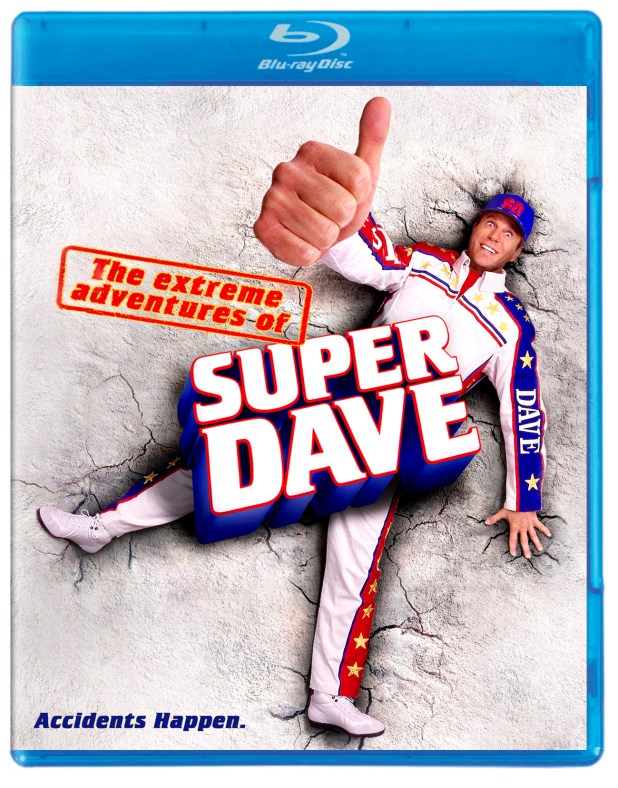
Debuting on The John Byner Comedy Hour, Super Dave Osbourne was really Bob Einstein, the brother of Albert Brooks. At one point — thankfully, right? — he got to spin the character into his own movie, which he wrote with Lorne Cameron, David Hoselton and Don Lake. It was directed by Peter MacDonald, who does a lot of second unit directing, but whose actual directing career is truly all over the place, with movies as different as Rambo IIILegionnaireMo’ MoneyThe NeverEnding Story III: Return to Fantasia and reshoots on Rogue One: A Star Wars Story.

Super Dave survives a near-fatal accident — that’s every time he performs — and learns that he’s broke. His boss has embezzled from him and he loses his home, causing him to retire and settle down with Sandy (Gia Carides) and her son Timmy (Carl Michael Lindner). He needs heart surgery, so Super Dave comes out of retirement to try to outstunt his enemy, Gil Ruston (Dan Hedaya). There’s also Super Dave Jr. (Steve Van Wormer), a young stuntman who also turns on our hero. Luckily, Super Dave has assistant stunt coordinator Fuji Hakayito (Art Irizawa), and sportscaster Mike Walde on his side.

This movie sat on the shelf for two years before going straight to video. I think that if you love Super Dave, well, this is for you. It’s for me. And if you don’t know who he is, well…either this is a good opportunity to learn.

I read a review of this that said that this movie was made for one person and wondered why it was made. Well, as that one person, I’m glad to say it’s in my collection.

The Kino Lorber blu ray release has new commentary by MacDonald, moderated by historian and filmmaker Daniel Kremer, plus a trailer. You can get it from Kino Lorber.

THE CHRISTOPHER LEE CENTENARY CELEBRATION PRIMER: Castle of the Living Dead (1964)

EDITOR’S NOTE: This article originally was on the site on May 21, 2022. Now you can see it this weekend at the Drive-In Super Monster-Rama! Get more info at the official Drive-In Super Monster-Rama Facebook page and get your tickets at the Riverside Drive-In’s webpage.

Castle of the Living Dead is a movie of mystery.

Who directed it?

Warren Kiefer, who couldn’t be directly credited for the film as the film required an Italian director?

Herbert Wise — Luciano Ricci, the film’s first assistant director — whose name was used to fulfill that needed native director credit?

Riccardo Freda, who left I Vampiri for Mario Bava to finish and also made Double Face and Tragic Ceremony?

Michael Reeves, the tragically lost too song director who made Witchfinder General? Depending on who is asked, Reeves either did minor second unit work, a polish on the script’s dwarf character, a complete takeover of the movie or nothing at all.

And did Mario Bava do effects?

So many mysteries!

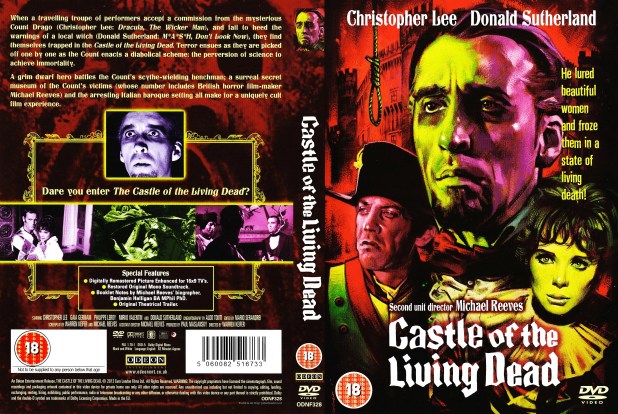
This gothic horror movie stars Christopher Lee as Count Drago, a man who embalms humans and animals, making them part of his eternal theater thanks to a chemical formula that instantly kills and embalms anything that lives, arresting them at the very moment of death.

Beyond Lee, the cast includes Gaia Germani (Hercules In the Haunted World), Philippe Leroy (The Laughing Woman), Luciano Pigozzi (the Italian Peter Lorre), Luigi Bonos (Frankenstein 80) and Donald Sutherland in his first movie playing a witch, an old man and Sergeant Paul.

Co-writer Paul Maslansky would go on to produce tons of movies like Death LineShe BeastRace with the DevilDamnation Alley and Ski Patrol amongst so many others, as well as creating the original concept — and producing — all of the Police Academy movies.

You can watch this on Tubi.

THE CHRISTOPHER LEE CENTENARY CELEBRATION PRIMER: Count Dracula (1970)

EDITOR’S NOTE: This article was originally on the site on February 28, 2022. Now you can see it this weekend at the Drive-In Super Monster-Rama! Get more info at the official Drive-In Super Monster-Rama Facebook page and get your tickets at the Riverside Drive-In’s webpage.

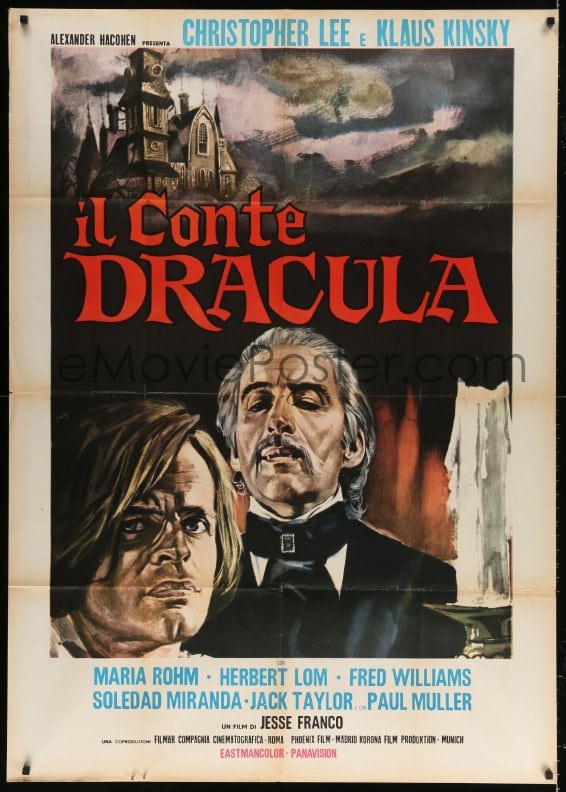
After years of being in Hammer Dracula movies, Christopher Lee starred in this Harry Alan Towers produced, Jess Franco directed version of Bram Stoker’s novel.

There’s a great cast and by that, I mean the kind of cast that I look for in movies. Klaus Kinski, (before he played Dracula in Nosferatu the Vampyre and Nosferatu In Venice) is Renfield, Herbert Lom is Van Helsing, Frederick Williams (A Bridge Too Far) is Jonathan Harker, Maria Rohn (Venus In Furs) is Maria, Paul Muller is Jack Seward, Jack Taylor is Quincey Morris (he had vampire hunting experience after being in the Mexican Nostradamus films) and Soledad Miranda — and who else, really? — is Lucy.

This could have had an even wilder cast, as both Vincent Price — sadly under his American-International Picture exclusive contract — and Dennis Price were both selected to play Val Helsing.

At the same time that this was being made, so was Cuadecuc, vampire, which was shot on the same sets with the same actors by the experimental director — and a senator elected in Spain’s first democratic elections who participated in the writing of the Spanish Constitution — Pere Portabella.

As for Franco’s film, it’s one of the first attempts at being faithful to the novel, with Dracula starting as an old man and gradually gaining in vitality as the movie goes on. Lee* was supposedly tired of playing Dracula and was only convinced to join the cast only after being promised that this movie would be faithful to Stoker. It still plays fast and loose; oddly enough Towers has claimed he tricked Kinski into being in this with a fake script. Franco has said that that wasn’t true, but what was is that Kinski ate real flies.

I wouldn’t expect the Franco madness that most associate with him, but this is the first extended time he’d work with Miranda before the films they’d be known for making together (she was an uncredited dancer at just eight years old in Franco’s Queen of the Tabarin Club). But there’s a great Bruno Nicolai score, Lee is super into everything he’s doing, the sparse sets work and Bruno Mattei was one of the editors.

There’s always been a contingent of people who claim this movie is boring, but look, any movie with Soledad Miranda in it is worthwhile.

You can watch this on Tubi.

*To be fair, Lee played the role three other times in 1970: in One More TimeTaste the Blood of Dracula and Scars of Dracula.

Deadly Blessing (1981)

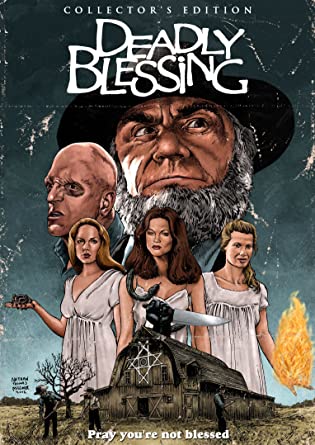
Alright, I’ll admit it, while I don’t like Wes Craven, I liked this movie.

The Hittites are a religious community who “make the Amish look like swingers,” and even when people like Jim Schmidt escape it, they keep getting pulled back in. His wife Martha (Maren Jensen) is pregnant and he soon needs help from midwife Louisa Stohler (Lois Nettleton) and her daughter Faith (Lisa Hartman) but is killed by tractor before that can happen.

Also, William Gluntz (Michael Berryman) keeps calling Faith an incubus.

Martha’s friends Lana Marcus (Sharon Stone) and Vicky Anderson (Susan Buckner) come to comfort her when they should be trying to get her out of this crazy place. William gets stabbed and killed, Martha gets called an incubus by other Hittites, her husband’s brother John (Jeff East) ends up getting smitten with Vicky, Jim’s body gets dug up, blood gets in the milk and Martha has a dream where people put a spider into her mouth. Yeah — it’s a wild one.

I wish I’d not been spoiled by the end of this movie and I will not spoil it for you. It’s so incredible that even if I hadn’t liked what I watched — and how did I forget to mention Ernest Borgnine being in another religious horror movie after he supposedly never would be after The Devil’s Rain! — I would have to like the whole thing just because the ending is so perfectly unexpected. I mean, who the killer is…that’s wild. The ending after that? Producer imposed upon magic.

Also — Craven ripped himself off later with that snake in the bathtub scene.

You can watch this on Tubi.

The Scary of Sixty First (2021)

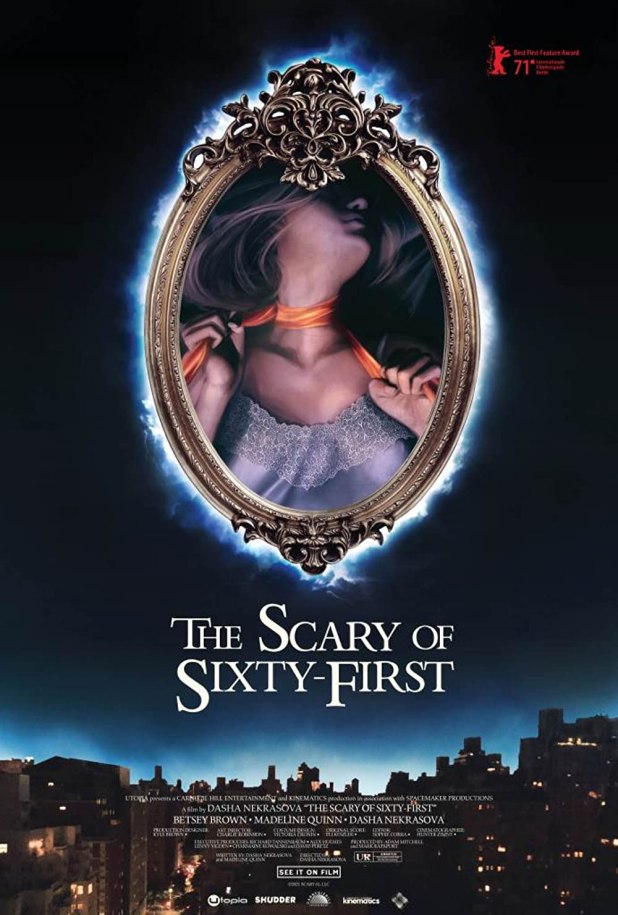
Noelle (Madeline Quinn) and Addie (Betsey Brown) lucked into an apartment with no furnishing but it’s in the best part of New York City’s Upper East Side. Sure, it gives Addie nightmares and Noelle has found a tarot card that upsets her, but what could go wrong?

That’s when the girl (Dasha Nekrasova, who directed and wrote this; she has no name in the film) shows up and lets them know that they’re living in a place where Jeffrey Epstein once assaulted and maybe even ritualistically killed underage girls.

So of course Noelle falls in love with her.

Meanwhile, Addie starts dressing like a child, jilling off to photos of Prince Andrew, wandering the streets and telling her boyfriend Greg (Mark Rapaport) very specific things to say while having sex such as Boeing 727 and “treat me like a 13-year-old” in a demonic voice.

As these things happen, Epstein owned several buildings around the apartment, all in the shape of a pentagram, and even the mention of the place frightens a magic store owner into giving Noelle and the girl a crystal for protection and kicking them out of his store, all while they’re followed by Ghislaine Maxwell as they run toward the Metropolitan Correctional Center where Epstein died, only to find Addie waiting for them.

None of this ends well or how you’d expect. And you know, I have to admire how this movie synergizes giallo, Eurohorror and torn from the headlines tabloid 70s film trash into one sleazy yet artistic ride.

It’s also hilarious that it ends with the same note that Tom Cruise got in Eyes Wide Shut.

You can watch this on Shudder or buy the blu ray from Vinegar Syndrome.

Perfect Stranger (2007)

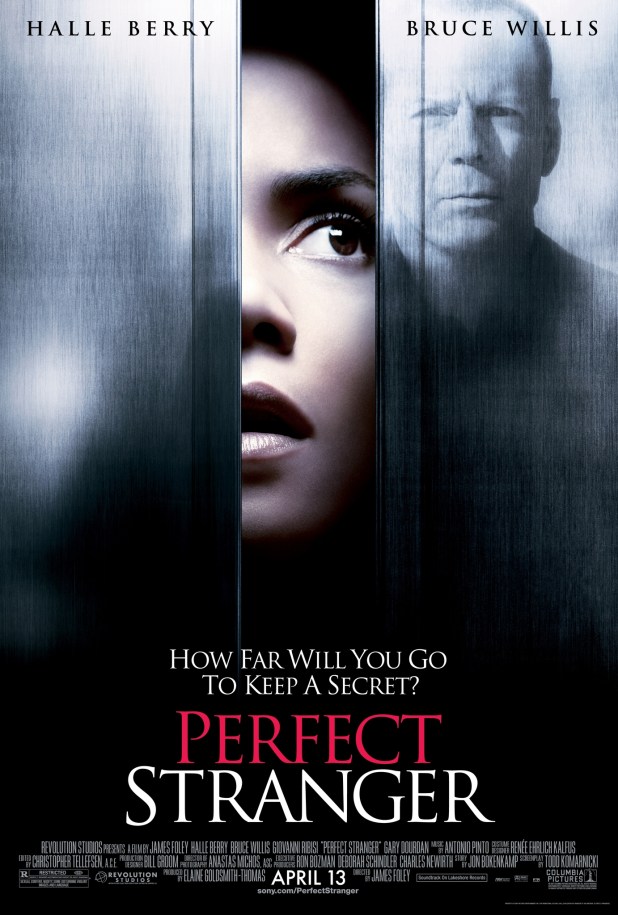
Perfect Stranger is at once the smartest and quite literally dumbest movie I’ve ever seen. I’m not certain it was directed by James Foley, who also made Glengary Glen Ross and two Fifty Shades movies to keep up that intelligent/imbecilic duality, and writers and Todd Komarnicki and Jon Bokenkamp, or if it was all loaded into an artificial intelligence and told the words neo noir, giallo and erotic thriller. This was the best that mid 2000s computer moviemaking got.

Rowena Price (Halle Berry) and her researcher/dick in glass Miles Haley (Giovanni Ribisi) have just been kicked off the biggest story of their careers because powerful men can do that. As she drunkenly stumbles home, her old friend Grace Clayton (Nicki Aycox) finds her in the subway and asks for help taking down the man she just broke up with, married ad executive Harrison Hill (Bruce Willis), giving her pages after pages — don’t print out the internet — of their sex chats.

Yes, this is a movie that hits two of my favorite genres: advertising movies and films in which technology is outdated on release.

Rowena goes undercover and gets a job at Harrison’s company H2A, which is really owned by his rich artist wife Mia (Paula Miranda). So here’s where I tell you that I’ve worked in advertising 27 years and no intern gets that access to their boss, even if she looks like Halle Berry, and the ad campaign that everyone is losing their minds over that H2A did for Victoria’s Secret — “I know Victoria’s Secret” — is the kind of work that gets killed before it even gets written on the wall of ideas that will soon get killed on the first day of the worst ideas.

It’s about this time that I’m reminded that James Foley also directed one of my favorite lunatic films, Fear, a movie in which Marky Mark fingerblasts Reese Witherspoon to The Sundays on the soundtrack while they ride a rollercoaster.

This movie somehow tops that as Berry uses her advanced and antiquated computer to simulate Willis’ voice on her computer so they can have the worst cybersex on the internet.

Back in October 2006, this movie took marketing to new levels, as Grace, Hil’s lesbian bodyguard Josie and his wife all introduced blogs dating back to September 2006, along with YouTube videos of the actresses reading their blogs in character.

That is more future leaning than the shrine to Berry that shows up late in the film, which had to have been animated in 1997. This entire film is like a quest for Berry to make something worse than Catwoman and better than Monster’s Ball and somehow pull both off flawlessly.

They shot three endings of this because they couldn’t figure out what worked best. Can you imagine that? Of course, in true giallo fashion, they went with the least likely suspect, which is the one fact that makes me consider this movie a success. It’s so audacious that again, I can’t decide if it’s the worst writing I’ve ever seen or the best. This movie confuses me so badly and I know I’ll have to watch it again and either hate or like it this time.

THE CHRISTOPHER LEE CENTENARY CELEBRATION PRIMER: House of the Long Shadows (1983)

EDITOR’S NOTE: This article was originally on the site on March 6, 2022. Now you can see it this weekend at the Drive-In Super Monster-Rama! Get more info at the official Drive-In Super Monster-Rama Facebook page and get your tickets at the Riverside Drive-In’s webpage.

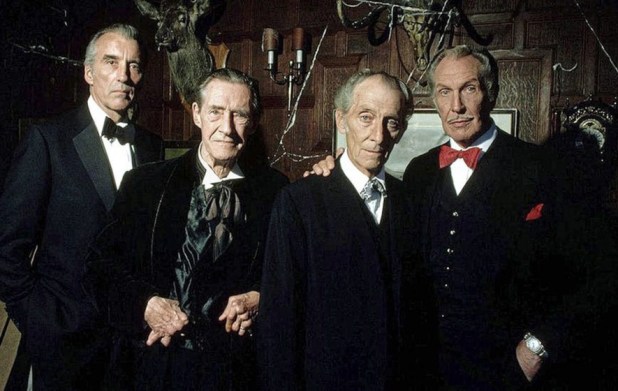
Vincent Price, Christopher Lee, Peter Cushing and John Carradine all in the same film? That’s the whole draw of Cannon’s House of Long Shadows, made by Pete Walker in one of the more chaste films of his career. He’d actually retired and was running a chain of theaters when Golan and Globus asked him to make a movie for them.

Taking cues from Seven Keys to Baldpate by Earl Derr Biggers, the Michael Armstrong (ScreamtimeMark of the Devil) script has writer Kenneth Magee (Desi Arnaz, Jr.) making a bet that he can write a great novel. To make it happen, he heads for the solitude of a deserted mansion that isn’t so deserted; after all, Lord Grisbane (Carradine) and his daughter Victoria (Sheila Keith, House of Whipcord) are living there.

By the end of the night, more guests — Grisbane’s sons Lionel (Price) and Sebastian (Cushing), Magee’s publisher’s secretary Mary Norton (Julie Peasgood), a buyer for the mansion by the name of Corrigan (Lee) and a young couple named Diana (Louise English) and Andrew (Richard Hunter) — all arrive.

The Grisbanes are really in the house to release their brother Roderick, who has been walled into his room for forty years after impregnating and murdering a local girl. But when they open his room, he’s already escaped, which gives Lord Grisbane a fatal heart attack. His demise is soon followed by Victoria being strangled, Diana washing her face with acid and Andrew being poisoned. Everyone’s tires are slashed, so they’re all stuck with a killer.

Roderick makes his way through everyone in the cast, leaving only Mary and Magee alive. But  of course, there’s a twist. Actually two of them. And no, I won’t spoil them.

As the only film in which Price, Lee, Cushing and Carradine appear together, this is a fun trifle. It was sold by Cannon as a straight horror movie when they should have leaned into its comedic side. Golan had dreamed of seeing these horror stars team up, so it’s great for us that he could make it happen, even if he had also wanted Bela Lugosi and Boris Karloff, both of whom were long gone.

You can learn more about House of Long Shadows in Austin Trunick’s The Cannon Film Guide Volume 1: 1980-1984.

You can listen to The Cannon Canon podcast about this movie here.

THE CHRISTOPHER LEE CENTENARY CELEBRATION PRIMER: The Curse of Frankenstein (1957)

EDITOR’S NOTE: You can see this classic this weekend at the Drive-In Super Monster-Rama! Get more info at the official Drive-In Super Monster-Rama Facebook page and get your tickets at the Riverside Drive-In’s webpage.

EDITOR’S NOTE: Curse of Frankenstein aired on the CBS Late Movie on May 24 and September 21, 1972 and June 28, 1974.

Hammer was initially founded in 1934 by William Hinds, whose stage name was Will Hammer, as he grew up in the Hammersmith section of London. They produced the now-lost The Public Life of Henry the Ninth and The Bank Messenger MysteryThe Mystery of the Mary CelesteSong of Freedom and Sporting Love before going out of business. That said, Hinds also co-owned a distribution company, Exclusive Films, with Enrique Carreras, which stayed in business.

In 1947, Hammer was revived after the war and began shooting low-budget radio show adaptations. They learned that they could save money by shooting in country homes rather than film sets—and stayed with that for much of their output—and would remodel Down Place on the Thames into Bray Studios, their best-known base of operations.

Hammer’s first horror movie was their 1955 adaptation of Nigel Kneale’s BBC Television science fiction serial The Quatermass ExperimentThe Quatermass Xperiment and Quatermass 2 were big hits; while the TV show was an unknown entity in the U.S., it was exported here as The Creeping Unknown to play a double feature with The Black Sleep. The results were so successful that United Artists offered to pay for part of the sequel.

Also — in the November 6, 1956 issue of Variety, it was claimed that a nine-year-old boy died of a ruptured artery while watching that movie in Oak Park, Illinois. According to The Guinness Book of Records, this would be the only known case of an audience member dying of fright. William Castle immediately took notice, one imagines.

As production began on Quatermass 2, Hammer needed someone in the U.S. willing to invest in and promote their movies. This led them to Associated Artists Productions. At the same time, Max J. Rosenberg and Milton Subotsky had sent Associated Artists an adaption of Mary Shelley’s novel Frankenstein, or The Modern Prometheus. They’d only made one movie and were hard to bet on, but Associated Artists’ boss Eliot Hyman did send the script to Hammer.

Until the day he died — and beyond — Rosenberg claimed that he produced The Curse of Frankenstein. However, Subotsky’s script was perhaps very close to Universal’s Son of Frankenstein and was only 55 minutes long. Screenwriter Jimmy Sangster said he had never seen Subotsky’s script or was unaware of Rosenberg’s involvement. In fact, he had never seen the Universal Frankenstein films and had just written what he thought the movie should be.

If the names Rosenberg and Subotsky are familiar, well — they became Amicus.

Another issue Hammer had to deal with was that studios had to submit their scripts to censors before making them in England. The censors said, “We are concerned about the flavour of this script, which, in its preoccupation with horror and gruesome detail, goes far beyond what we are accustomed to allow even for the ‘X’ category. We can give no assurance that we will be able to pass a film based on the present script, and a revised script should be sent to us for our comments, in which the overall unpleasantness should be mitigated.

You can only imagine how much more upsetting it would all be in vivid color instead of black and white. Hammer’s new take on horror didn’t avoid blood or gore; compared to the horror of the past, it zoomed in on it and let it take up the screen. It may seem tame today, but in the days before splatter and even Blood Feast, it was incendiary.

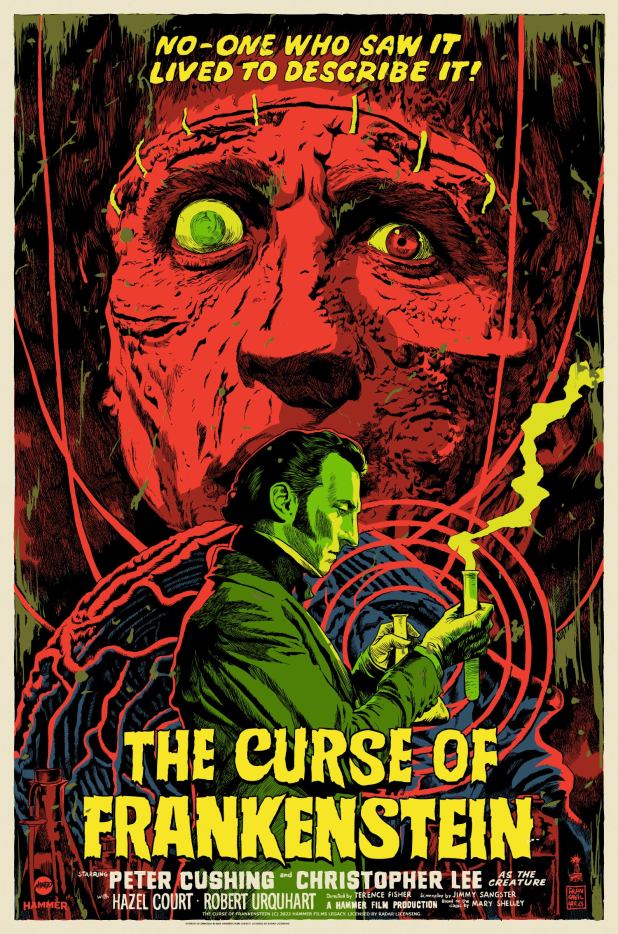
Directed by Terence Fisher, The Curse of Frankenstein has an intriguing opening that puts you right in the middle of the story: As Baron Victor Frankenstein (Peter Cushing in his first significant film role) awaits execution for the murder of his maid Justine (Valerie Gaunt), he reveals his story to a priest (Alex Gallier).

With the death of his mother, Victor owns the Frankenstein estate and pays for his remaining family, Aunt Sophia (Noel Hood) and her daughter Elizabeth (Hazel Court). He also pays for Paul Krempe (Robert Urquhart) to teach him science, which leads to them bringing a dead dog back to life. Indeed, they can do the same with human beings, but as Victor descends into scientific butchery, Paul leaves just as Victor’s fiancee — his cousin Elizabeth — comes to live with him.

His plan is sound, if not maniacal, as the dead body parts are sewn together to make the ideal human being, which will be guided by the brain of a professor. Sadly, that brain is damaged as Paul returns to try and stop Frankenstein. At this point, the scientist is so deluded that he thinks that it’s fine that he’s pushed the old teacher to his death. The creature (Christopher Lee) he brings to life is a madman, and Paul helps him stop it; later that night, Frankenstein still brings it back to life and uses it to murder Justine, with whom he has been having an affair. She seals her fate by claiming that she will reveal that he has impregnated her and is conducting experiments against nature.

Paul is invited back to the house the evening before the Frankenstein wedding, but the creature goes wild and grabs Elizabeth. Victor stops it and sends it into a vat of acid, where it disappears; he is arrested, and Paul refuses to tell the truth. Standing outside with Elizabeth, they remark about the insanity that took Victor as he is led to the gallows.

Released on May 20, 1957, with Woman of Rome in the UK and on July 20 in the U.S. with Hammer’s Quatermass-inspired X the UnknownThe Curse of Frankenstein made back seventy times what it cost. It led to five sequels and one comedic remake, the only time Cushing didn’t play Victor. The look of this film led to a Gothic craze in horror that everyone from Corman to Bava eventually took to greater heights. It sensationalized British critics who hated how bloody and exploitative it was, but as for fans of horror films, well…Hammer was the new name on their lips.