Mill Creek Through the Decades: 1990s Collection: The Matchmaker (1997)

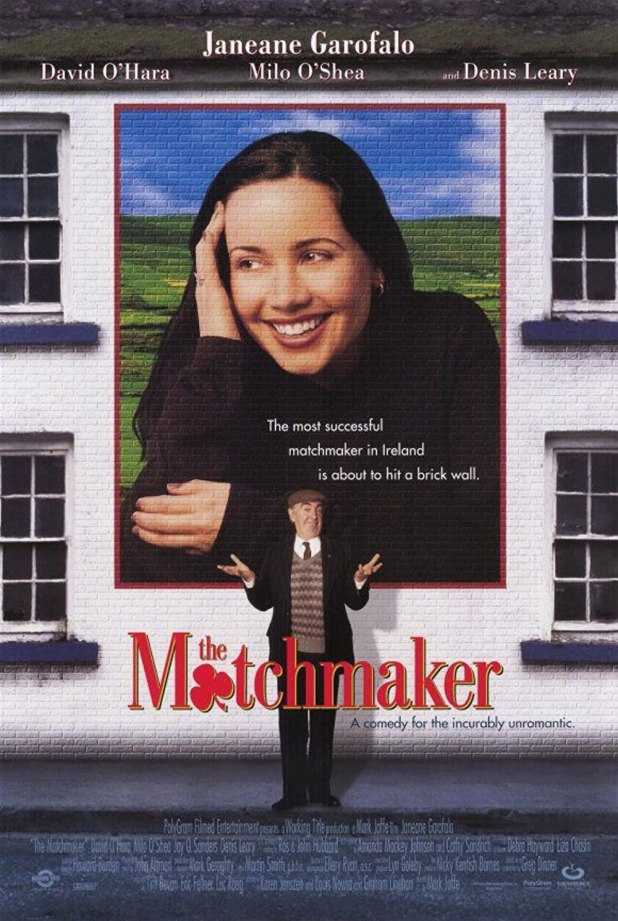
Janeane Garofalo had had some success outside of stand-up by starring in The Truth About Cats and Dogs — a movie that she dislikes, calling it anti-feminist — and turned down the Gail Weathers role in Scream to appear in this movie, her first and only lead role.

She plays Marcy Tizard, who has been sent to Ireland by her boss Nick (Denis Leary) to find a relative that can help the Irish-American vote for Boston Senator John McGlory (Jay O. Sanders). Arriving in Ballinagra in time for the annual matchmaking festival, she’s suddenly the object of competition between two rival professional matchmakers, Dermot (Milo O’Shea) and Millie (Rosaleen Linehan) and gains the attention of bartender Sean (David O’Hara).

Romantic third act hijinks ensue, as they always do, but things work out.

This was directed by Australian director Mark Joffe, who made sure it was authentic by working with Father Ted writer Graham Linehan, who wrote the script with Karen Janszen and Louis Nowra.

When asked, Garofolo said this was one of the few movies that she was in that she liked.

Mill Creek’s Through the Decades: 1990s Collection has some great movies for a great price like HousesitterWhite PalaceOne True ThingDonnie BrascoThe Devil’s OwnAnacondaI Know What You Did Last SummerThe Freshman and The Deep End of the Ocean. You can get it from Deep Discount.

Jackass Forever (2022)

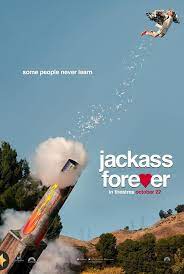
Jackass Forever introduces six new cast members: Jasper Dolphin from Loiter Squad and his ex-convict father Compston “Dark Shark” Wilson; Eric Manaka from Knoxville’s film Action Point; Zach Holmes from Too Stupid to Die; stand-up comedian Rachel Wolfson and Sean “Poopies” McInerney. They take the place of Bam Margera, whose leaving had to be a strange thing I’m certain for the cast to endure, as well dealing with the COVID-19 conditions that they filmed this under.

What emerges is a film that’s filled with the joy of stupidity in the best of ways. It’s a difficult film to review from an objective point of view. You either get it or you don’t. And I get it. I love this stuff and there’s nothing funnier than seeing someone do something completely ill-advised and failing. It makes me nearly pass out with joy, as does the obvious camaraderie of the Jackass crew who truly seem to love one another.

This is a movie that starts as a kaiju film with Chris Pontius’ penis painted to look like a monster and ending with a snapping turtle biting him right in the cock head. Most films would end there. This is where the madness gets started.

They’ve been doing this for two decades. I have no longer how much longer they can keep it up. But I’m here for whatever comes next.

You can get Jackass Forever on digital and blu ray, with the disc edition coming with forty minutes of new stunts that did not appear in the theatrical film:

  • Tarantula Bite
  • Face Your Rear
  • Dark Shark & The Bear
  • Fire In The Hole
  • Broke Zach Mountain
  • Virtual Reality
  • Plug And Arrow
  • The Breakaway
  • Soccer Ball Surprise
  • Poopies Only Wipes Twice
  • Fire Extinguisher
  • Wee Man Throws Zach Under The Bus
  • Toilet Geyser
  • Telephone Pole (Susan)
  • Telephone Pole (Millie)
  • Telephone Pole (A.D.)

Angel of Death (1985)

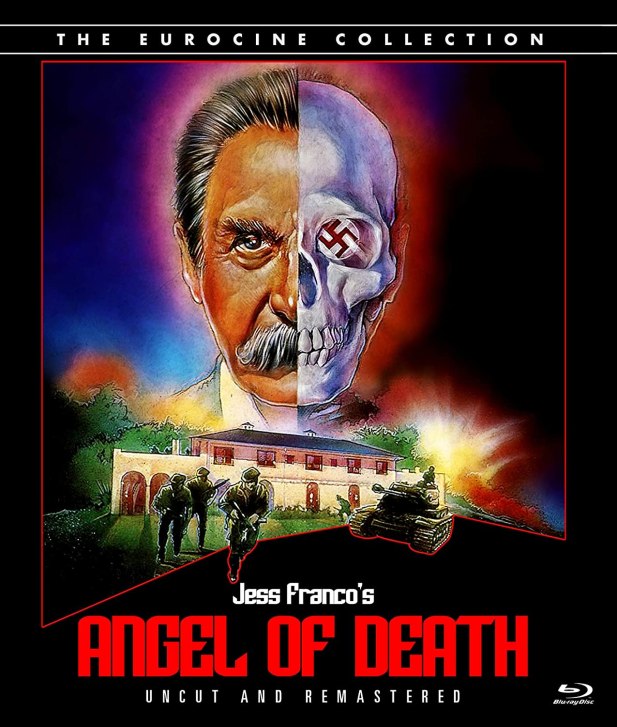
Jess Franco never wanted to claim this movie.

In Jess Franco: From the Margins to Auteur Cinema. Analysis of the Cinematographic Story, he said “I started doing a movie that was titled Gente del Rio, in which appeared Mengele who was hidden there, and was wonderfully played by Howard Vernon. Gente del Rio was a film about some fishermen who live in a town in Central America and know that Mengele lives there, but nobody dares to come up to him. Until some of them attempt to catch him. The movie is their fight to get hold of that bastard. And they get him. It was based on persons I met in Brazil, former Nazis who lived like gods on some fucking rural estates, and what I wanted was to show the clash between these people and the humble people of the river. But the producer wanted to give more importance to the character of Mengele, but in Andrea Bianchi’s shabby action movie way. I did not want to do that with that character, who is a sinister and sordid type, but who must be given another treatment, not as if he was a street whore. So I abandoned the film, and in the end I left it. I did not finish it, nor did I want to finish it, because it was wrong, and I did not want it to appear out there on video. Almost all the material that I did with the Italians is like this, they did me a thousand dirty tricks, everything went wrong, and that’s why I have never admitted the film as mine.”

Nazi hunters Aaron Horner (Jack Taylor) and Marc Logan (Antonio Mayans, who was in nearly all of Franco’s later movies) have hunted down the escaped Nazi war criminal Dr. Josef Mengele (Howard Vernon) to South America, where he and his assistant Gertrud (Shirley Knight) have created a Fourth Reich, which mostly seems to involve experiments that created a monkey man and starting an army trained by crippled Vietnam veteran Wolfgang von Backey (Christopher Mitchum). Luckily, Horner and Logan have an army that includes kung fu experts, a crossbow shooting soldier, an acrobat named Mr. Agility and a female spy named Eva (Suzanne Andrews) already on the inside.

So yeah, while Franco wrote and started this, the aforementioned Bianchi (Burial Ground) finished it. It has little to none of the sleaze you expect from Jess Franco making a movie where soldiers face off against neo-Nazis who experiment on humans. Even Fernando Rey showing up for a cameo can’t make this any better and that’s a shame. This is being sold on the Franco name and it isn’t a Franco film.

The name Commando Mengele is better, though. I also feel that Jess Franco is like pizza or sex. Even if its bad, it’s still pizza or sex.

You can watch this on Tubi.

Junesploitation 2022: Stripped to Kill 2: Live Nude Girls (1989)

June 6: Junesploitation’s topic of the day — as suggested by F This Movie— is slashers! We’re excited to tackle a different genre every day, so check back and see what’s next.

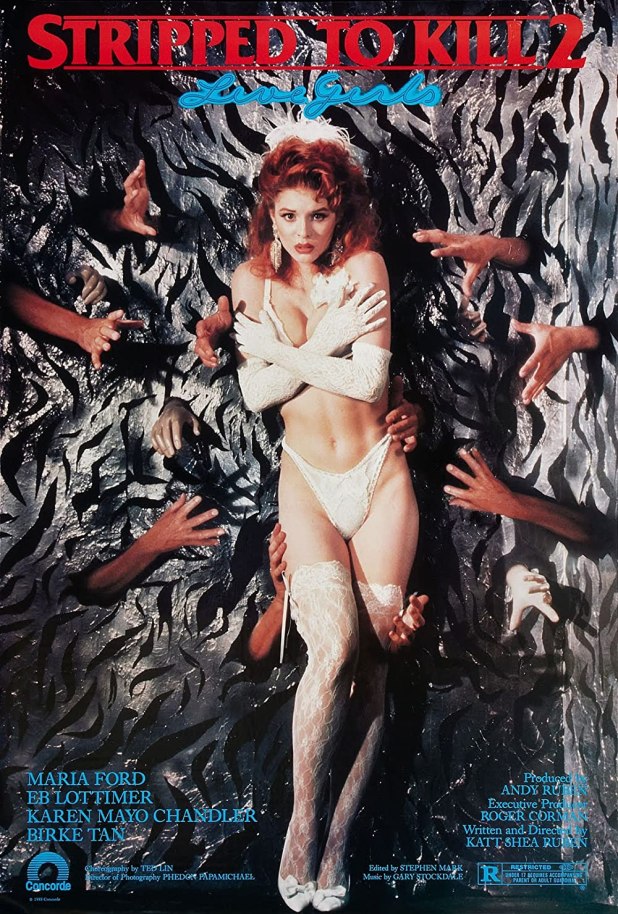
Katt Shea finished Dance of the Damned on a Saturday. Roger Corman asked if she could come up with a movie by Monday because he still had the strip club set for a few more days. On Monday through Friday of the next week, Shea and her crew shot topless dancing footage. Then, she and partner Andy Ruben took three weeks to write the movie around all that bump and grind.

This would explain why the dancing scenes in the follow-up to Stripped to Kill seem to come from another universe, the place where patrons disappear and we mainly see music videos of girls doing interprative dance.

As for the slasher part of the story, Maria Ford’s Shady has the giallo problem of passing out and waking up covered in blood. If that happened one time to you, you’d be concerned. But five times?

Marjean Holden (Sheeva from Mortal Kombat: Annihilation), Karen Mayo-Chandler (976-Evil II), Birke Tan, Debra Lamb (who was in the first movie), Lisa Glaser (Humanoids from the Deep) and Jeannine Bisignano all appear as the dancers who are the target of the killer, whoever he or she may be.

This movie is full of hallucinations, love scenes in the rain and a slasher plot that is really hard to follow to the point that I’m tempted to call it a giallo and figure out another slasher for my Junsploitation slasher day movie. That said, I think we all need more movies with saxophone sex dream sequences and if it takes calling this a slasher to make it happen, that’s the price we all have to pay.

Shea has no idea why people like this movie, one she wrote as she went as Corman kept telling her to put more nude scenes into the product. Sometimes when you’re working under rough conditions, weird magic happens.

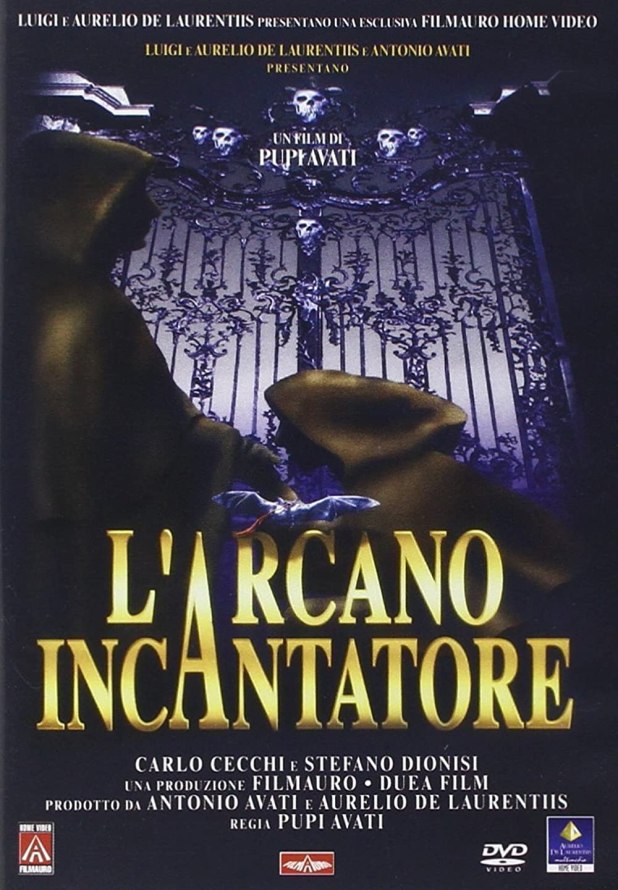
Arcane Sorcerer (1996)

ABOUT THE AUTHOR: A.C. Nicholas, who has a sketchy background and hails from parts unknown in Western Pennsylvania, was once a drive-in theater projectionist and disk jockey, Currently, in addition to being a writer, editor, podcaster, and voice-over artist, he contributes to Drive-In Asylum. His first article, “Grindhouse Memories Across the U.S.A.,” was published in issue #23. He’s also written “I Was a Teenage Drive-in Projectionist” and “Emanuelle in Disney World and Other Weird Tales of a Trash Film Lover” for upcoming issues.

In the world of horror films, there are the great directors who spent almost their entire careers in the genre, like George Romero and John Carpenter. And then there are directors who worked in a variety of genres and, when they dabbled in horror, produced masterpieces. Sometimes just one masterpiece, like Britain’s Michael Powell with Peeping Tom. Or two, like Spain’s Narciso Ibáñez Serrador with The House That Screamed and Who Can Kill a Child? But someone who has three horror masterpieces in his filmography—and is one of my favorites—is the great Italian director Pupi Avati.

Avati has been directing films in different genres for over 50 years. A jazz musician, he even directed a biopic filmed in Davenport, Iowa, about early jazz trumpeter Bix Beiderbecke. I’ve heard him referred to as the “Stephen Spielberg of Italy.” But for me, his three horror films, The House with Laughing Windows (1976), Zeder (1983), and Arcane Sorcerer (1996), stand as some of the least-seen, best horror films ever made. All are slow burns with little violence and action but with the most pervasively chilling atmosphere you can imagine. Perhaps someday folks will recognize Avati as the natural successor to Mario Bava, a director who could create atmosphere with the simplest of things, like the sound of the wind or the movement of a shadow.  I dare you to walk through a cemetery at night after seeing a Pupi Avati horror film.

In Arcane Sorcerer, his third film in the genre, Avati does a couple of striking things. First, he sets his film in rural 18th century Italy. And second, he manages to make a wholly original film, while combining and expanding upon his two previous genre entries.

Without giving much away, the plot concerns a young seminarian played by Stefano Dionisi (Sleepless) who, to avoid prosecution by church authorities for a huge scandal, hides out. He takes a job as the secretary to a defrocked monsignor, a perfectly cast Carlo Cecchi (The Red Violin and Stealing Beauty). The monsignor, who practices the black arts, is a scary figure to the local villagers. Indeed, he lives in isolation in a castle with a huge, foreboding library and does weird stuff like sending coded letters to dead people. Through the course of the film, the young man will see a lot of disturbing things, including a twist that fans of Avati’s work will surely recognize.

Everything about Arcane Sorcerer is first rate. The production design is terrific (love that chandelier in the library), the cinematography is gorgeous, the score by genre favorite Pino Donaggio is spot-on, and it’s all put together with intelligence and loving care. (There’s a memorably creepy scene featuring a long-dead body that must be moved to consecrated ground.) But what impresses me the most is how writer-director Avati scored yet another personal triumph. He has this uncanny, preternatural ability, like Bava, to make the smallest things terrifying. And he makes it all look easy. I have yet to see another living director pull off what he does. (Robert Eggers came close with The VVitch.)  It’s Avati’s special gift, and I’m glad that we have his three horror films. He’s now 83 years old but still working, so I can dream of one last masterwork from this still relatively unknown master of horror.

Apart from a screening at the Toronto International Film Festival, I don’t believe Arcane Sorcerer ever had an official release in any English-speaking territory. Indeed, I only recently tracked down a DVD rip in Italian with dreadful English subtitles loaded with typos. Avati’s The House with Laughing Windows took years to find its U.S. cult following. Arcane Sorcerer would find its cult too if Vinegar Syndrome ever released a Pupi Avati box set. It certainly deserves it.

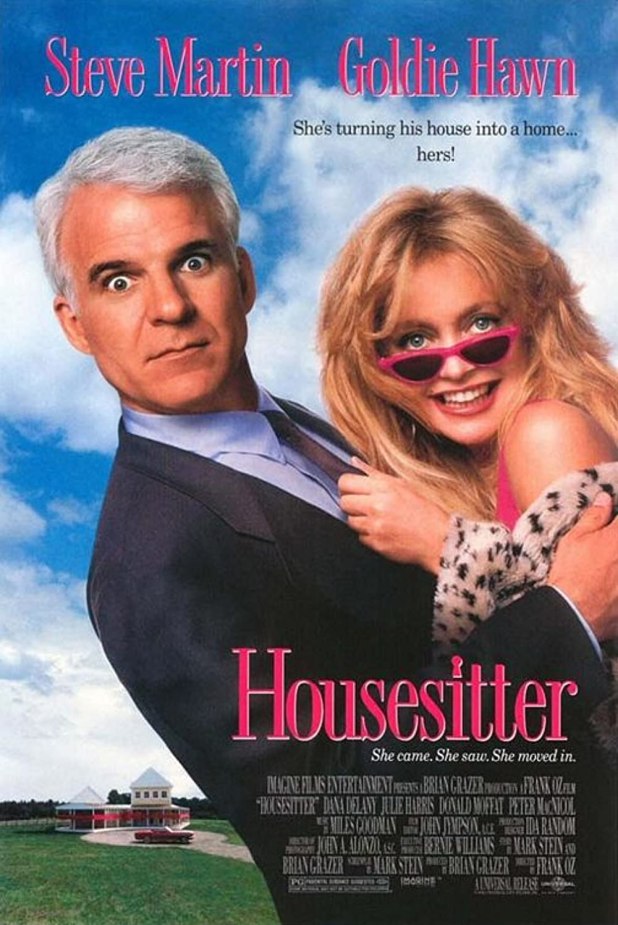
Mill Creek Through the Decades: 1990s Collection: Housesitter (1992)

Newton Davis (Steve Martin) made a dream house for the love of his life Becky (Dana Delany) and proposed. She turned him down and ever since, he’s struggled for a reason to live. Months later, he tells the whole sad story to Gwen (Goldie Hawn), a waitress at a Hungarian restaurant that he thinks can’t speak English. She can and they end up having a one night stand.

Except that Gwen moves in.

Into the dream house.

And she ends up ruining and saving Newton’s life.

The action all takes place in and around a 1800-square-foot, three-bedroom home that won the House Beautiful/American Wood Council Award for Best Small House of 1990. And thanks to a great script by Mark Stein (who wrote the book How the States Got Their Shapes) and Brian Grazer (SplashArmed and Dangerous), able direction by Frank Oz and the timing of Martin and Hawn, this film transcends the cliches of romcoms and delivers a heartwarming and hilarious treat.

Mill Creek’s Through the Decades: 1990s Collection has some great movies for a great price like White PalaceOne True ThingDonnie BrascoThe Devil’s OwnThe MatchmakerAnacondaI Know What You Did Last SummerThe Freshman and The Deep End of the Ocean. You can get it from Deep Discount.

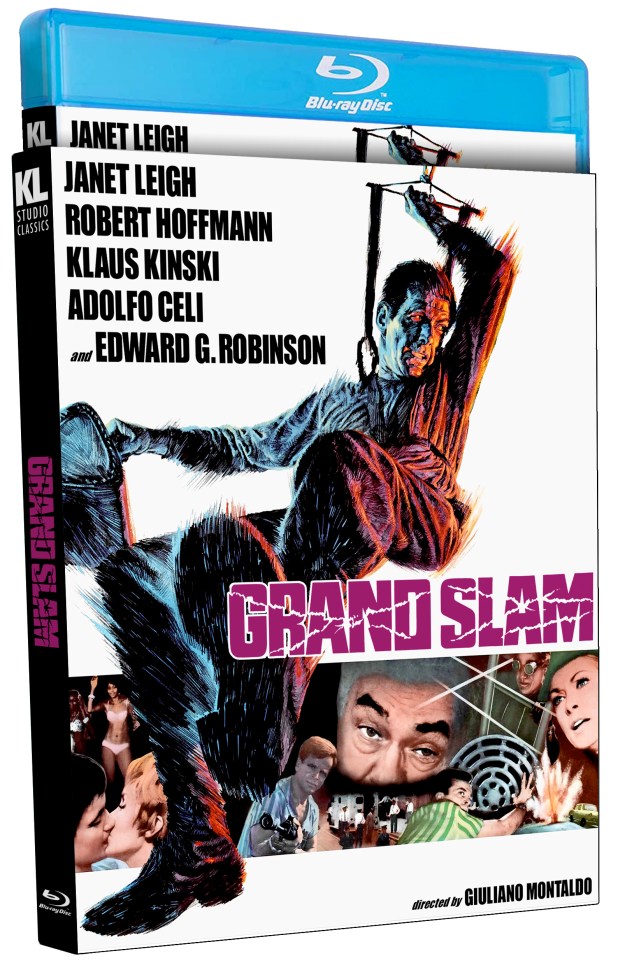
KINO LORBER BLU RAY RELEASE: Grand Slam (1967)

Professor James Anders (Edward G. Robinson) is an American teacher in Rio de Janeiro who grows tired of working every day, so he retires and puts together a team to pull off a diamond heist during the Rio Carnival: Gregg (George Rigaud) the safecracker, Jean Paul (Robert Hoffman) the playboy, Agostino (Riccardo Cucciolla) the electronics expert and Erich (Klaus Kinski) the military man.

Standing in their way is the Grand Slam 70 security system, an alarm that uses microphones to detect any sound. Can they successfully seduce the girl (Janet Leigh), get the key, rob the safe and get out alive? And what if one of them isn’t willing to share the loot? How does Adolfo Celi fit in?

The only other film by director Giuliano Montaldo I’d seen before was the Closed Circuit. This caper film moves quickly and has a great closing scene. It was written by Mino Roli, Augusto Caminito and Paolo Bianchini along with Marcello Fondato, José Antonio de la Loma and Marcello Coscia. It took more writers to do the script for a caper movie than crooks to pull the caper!

The Kino Lorber blu ray release of Grand Slam has commentary by Howard S. Berger, Steve Mitchell and Nathaniel Thompson and a trailer. 

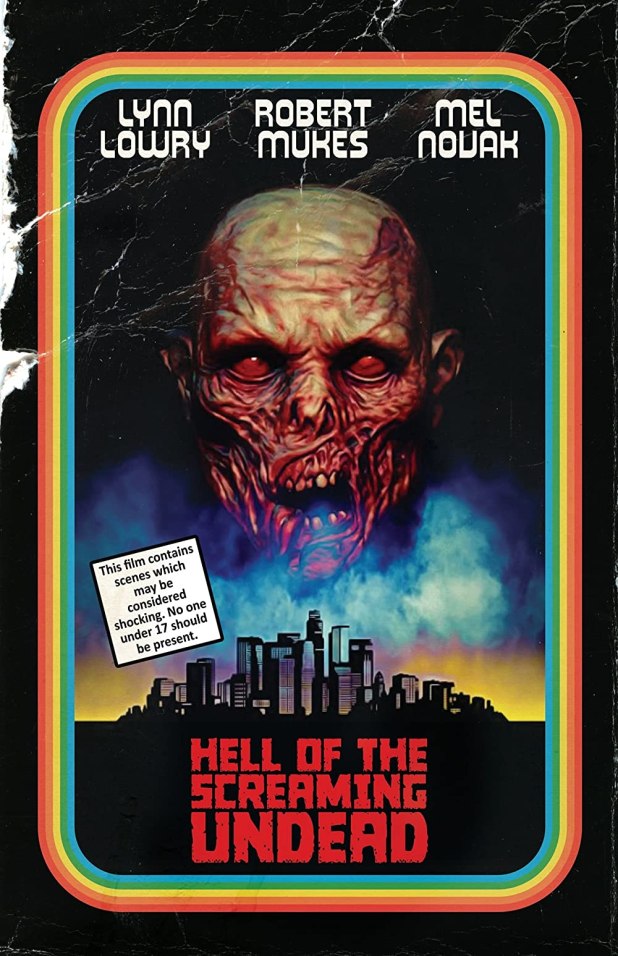
Hell of the Screaming Undead (2021)

First off, the cover art for this film echoes a Bruno Mattei film, so instantly my heart is filled with love and joy. And I’m happy to report that the movie inside — yes, I have a physical copy and you can get yours from SCS — lives up to that aesthetic while also shambling one undead foot into allowing the Eurohorror synth play loud and images to take over the aesthetic, shifting this into absolute movie Fulci territory by the end.

A virus from New Guinea has transformed the streets of Los Angeles into a feeding ground for the walking dead, which gives convicts Warren (Robert Allen Mukes, House of 1000 Corpses)  and Trapper (Ken May, Hollywood Werewolf) make their way to the Valley Relics Museum — an amazing place that collects, preserves, interprets and presents the history of The San Fernando Valley through the objects that it has created, such as BMX bikes and neon signage — to kidnap Mary (Jennifer Nangle, who is also Malvolia the Queen of Screams) and Heather (Traci Burr). As the undead begin attacking outside, they soon find themselves joining forces in an attempt to stay alive.

Director and writer Dustin Ferguson puts out a movie every time you type his name, but that’s a good thing as he actually improves with each film of his that I watch. I love that he has a steady crew that he works with (Lynn Lowry appears as Mary’s mother and Mel Novak is Governor Patrick Adams), as well as nice hints of his inspirations by naming one character Dr. Mattei and having a bar scene that reminds one of City of the Living Dead.

At just around an hour runtime, this movie also doesn’t overstay its welcome. It’s got some decent gore, neat video effects and yeah, that music is toe tapping. Here’s to more wildness from Dustin. Can’t wait to see what he makes next!

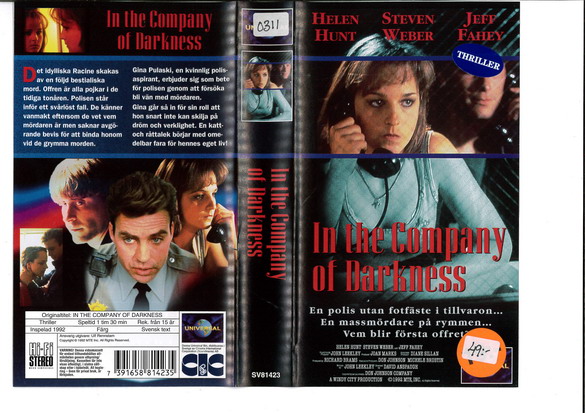
In the Company of Darkness (1993)

Policewoman Gina Pulasky (Helen Hunt) gets accepted like you’d expect a rookie female cop to be accepted by a group of older and gruffer male officers, but then she proves that she can do more than get coffee and be harassed when she handles a domestic disturbance well and shows an affinity for undercover work. She’s also in a romance of sorts with already married cop Will McCaid (Jeff Fahey) and finds herself strangely attracted to the child killer suspect she’s interacting with, Kyle Timler (Steven Weber). A fry cook who is smarter than that job would indicate, she starts working as a waitress and uses her abusive past to connect with him. But soon, she finds herself losing her own identity and perhaps her morals as she gives in and becomes McCaid’s lover.

Directed by David Anspaugh (HoosiersRudy) and written by John Leekley (the creator of Kindred: The Embraced and Wolf Lake, as well as The Omen TV movie), this film gives Hunt a great opportunity to play multiple characters within one role. It’s a solid TV movie and a reminder of a time when films of this quality would be on regular TV every week.

You can watch this on YouTube.

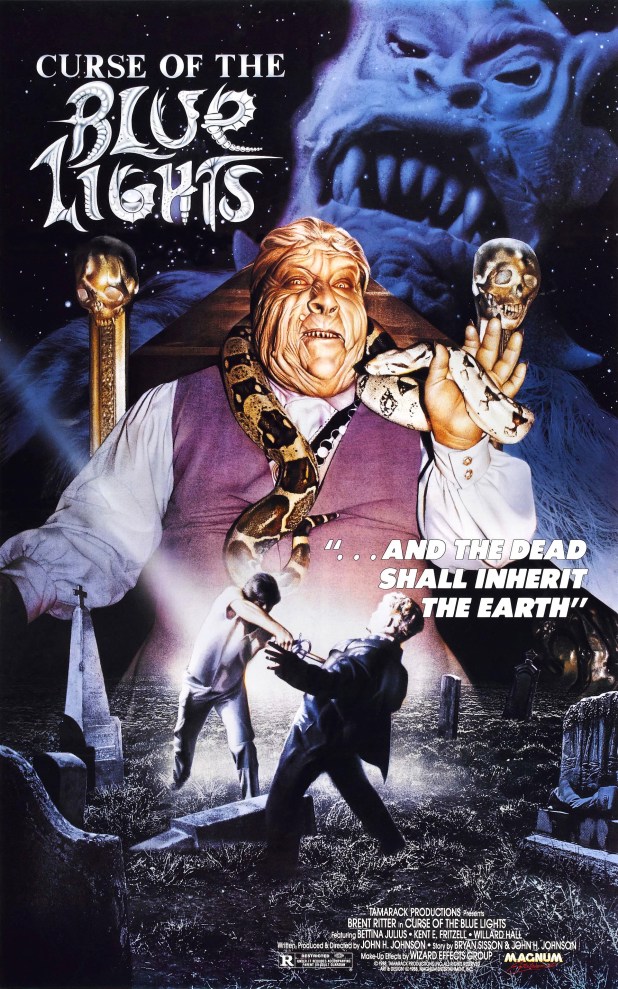
Junesploitation 2022: Curse of the Blue Lights (1988)

June 5: Junesploitation’s topic of the day — as suggested by F This Movie— is free! We’re excited to tackle a different genre every day, so check back and see what’s next.

As the world has grown smaller thanks to all of us being connected 24/7/365, the weird pockets of regional filmmaking may not exist. After all, you can download the latest Polonia movie or watch it on Tubi, right? But in 1988, odd little movies could still just show up at your video store with nothing telling you what they were all about or where they came from.

Dudley is a nothing happening town that only has a few things for teens to do and all of them get you in trouble. The Blue Lights of the title are both a place for them to have furtive backseat car sex and also see the strange glow that could either be aliens or the ghosts of a train wreck from long before any of these kids were born.

Four kids back from college for the summer — Ken (Patrick Keller), Alice (Becky Golladay), Paul (Clayton A. McCaw) and Sandy (Deborah McVencenty) — and three guys who are probably never getting out of Dudley — Bob (Kent E. Fritzell), Max (Tom Massmann) and Sam (James Asbury) — decide on one of those boring long hot summer nights to go see the lights for themselves.

Oh yeah — that train fire also had a petrified monster within its wreckage known as The Muldoon Man and that’s what they find. Now, if I discovered a ten-foot-tall monster in my drunken teens, I would totally not touch it or even be anywhere around it, no matter how much Pucker, Yuengling or Fireball I had to drink. No, instead they decide to haul it off in a truck — what no one wanted to go mudding instead? — and try and make money off it.

If you guess that the creature gets away — or someone steals it — you’ve seen enough horror movies. So instead of doing the sensible thing like drinking on someone’s porch, the teens all head to Sunny Hill Cemetery, more specifically the tunnels under the graves. That’s where they learn the truth: the Blue Lights are to signal the return fo Loath (Brent Ritter), a gigantic undead leader of a cult of zombies who want to return the dreaded Muldoon Man to life by devouring the living. Somehow, they get away, with Paul stealing the disc they need to complete their ritual, and the zombies follow.

How do you stop them? Maybe the witch (Bettina Julius) can help.

If you’re reading this and think, “That’s way too much for one movie,” you’re right and also wrong, because gloriously regional movies existed outside the purview of La La Land and studio notes so deliriously madcap things could happen. Like, well, this movie.

Also, perhaps most amazingly, this movie looks like a million bucks thanks to the sets and special effects by Michael Spatola (Return of the Living Dead, Predator 2) and Mark Sisson (A Nightmare on Elm Street 4: The Dream MasterSubspecies). Sure, there are way too many primary characters and yes, perhaps too many monsters to keep track of, but isn’t it nice sometimes to totally lose track of something and have it still be fun?

Even better, Curse of the Blue Lights is based on several suburban — rural? — legends of  Pueblo, Colorado, which is where it was made. The Blue Lights really is a parking spot for teens where they would see mysterious blue lights in the nearby river bottom.

The Muldoon Man was real, too.

This supposedly prehistoric petrified human body was discovered in 1877 — seven years after his infamous Cardiff Giant hoax — by a con man named William Conant at a spot now known as Muldoon Hill, near Beulah, Colorado. The figure had a brief tour of the United States before it was revealed to be a hoax. Named after pro wrestler William Muldoon, it was made of clay, plaster, mortar, rock dust, bones, blood and meat.

Director and writer John Henry Johnson also made two documentaries, Zebulon Pike and the Blue Mountain and Damon Runyon’s Pueblo. Turns out that the Consumer Infomation Catalogue isn’t the only great thing to come out of that town.

You can watch this on YouTube. Maybe technology isn’t all bad.