Sure, you’ve seen it all in zombie movies, but have you seen them attack a snowy mountain resort? If so, let me know, because this is the first movie of its kind that I’ve seen. It moves fast — 78 minutes — is filled with geysers of frozen and unfrozen bloody appendages, green glowing snowmaking chemicals that make zombies and an old woman packing tons of firepower.
I guess Dead Snow and Dead Snow 2 qualify as wintery mountain undead movies, but this one also embraces the goofy humor of a sex comedy and it kind of works. I mean, this isn’t going to dethrone a Romero movie from its throne, but on a snowed-in winter day, it passed the time and made me laugh a few times.
Shot as Alpine Zombies and filmed in Italy, let’s called this movie by director Dominik Hartl a success.
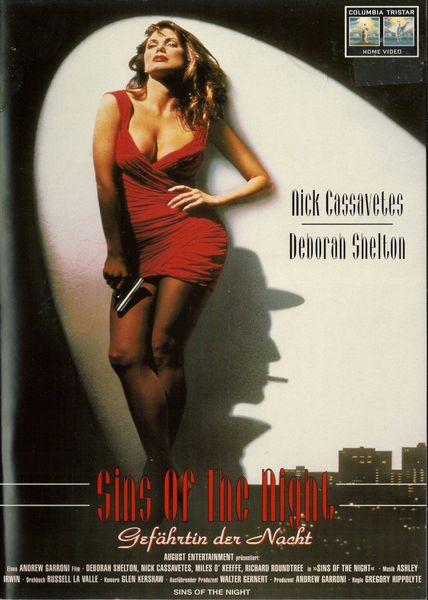
Jack Nietsche (Nick Cassavetes) is an ex-con insurance investigator for Anaconda Casualty Company. He meets his boss Ted Quincy’s ex-lover Roxie (Deborah Shelton, who before she became a star on Dallas made Dangerous Cargo, a movie even rougher than this), who wants his help to kill his boss and her abusive husband Tony Falcone (Miles O’Keefe, Ator himself!).
Richard Roundtree shows up, but perhaps the real stars are the saxophone-rich music on the soundtrack, the foggy nights, the neon-lit streets burning into your eyes across VHS dubs from decades ago.
Gregory Dark started by telling us porn was dead, then created his own genre, the erotic direct to video and cable thriller, which owes a lot to giallo, but still…even the movies that he makes that aren’t perfect have some strange angle to them in some way that’s worth exploring. He claimed on an episode of The Rialto Report that he had an early memory of his mother and her friends in Las Vegas wearing heels at a hotel pool, wondering why they would do that without realizing that she was looking for a new husband. That informs so much of his work, when you think about it.
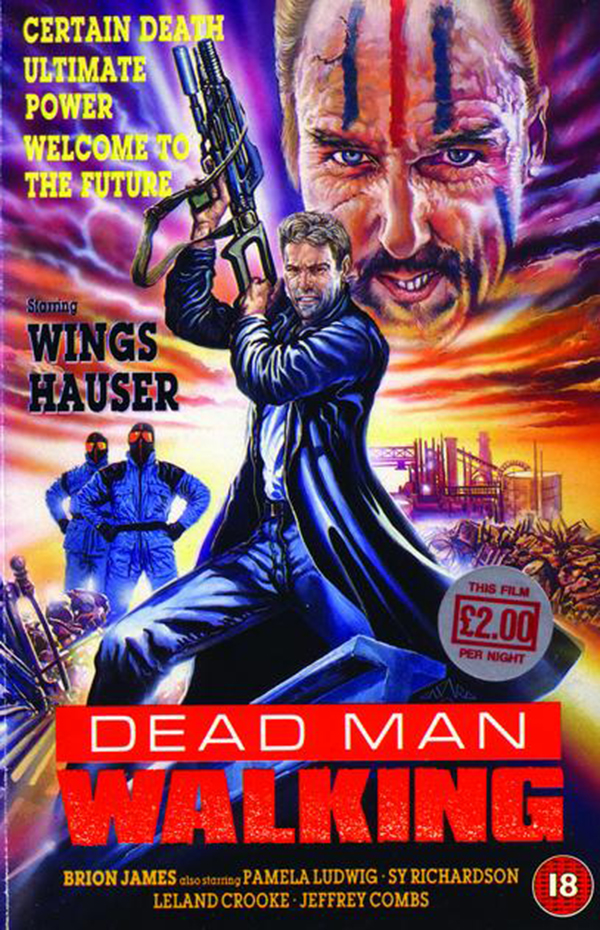
Dead Man Walking has most of the same cast as Gregory Dark’s 1990 film Street Justice — Brion James, Wings Hauser, Sy Richardson — but throws in Jeffrey Combs. And for that, I rejoice.
Chazz (Combs) is trying to save his boss’s daughter Leila (Pamela Ludwig) from a maniac plague victim named Decker (James), so he teams uo with a merc with the same plague (Hauser) to get in and out of the Plague Zone with the girl.
So yeah — in 1997, people get the bubonic plague and even if they survive, they become Zero Men who will die soon enough, which gets them relegated to controlled areas of their own kind. The corporations have the cure, but we know how that works. The people will never get it.
This movie also has chainsaw roulette, which is much more interesting than thinking about a pandemic any more than I have to.
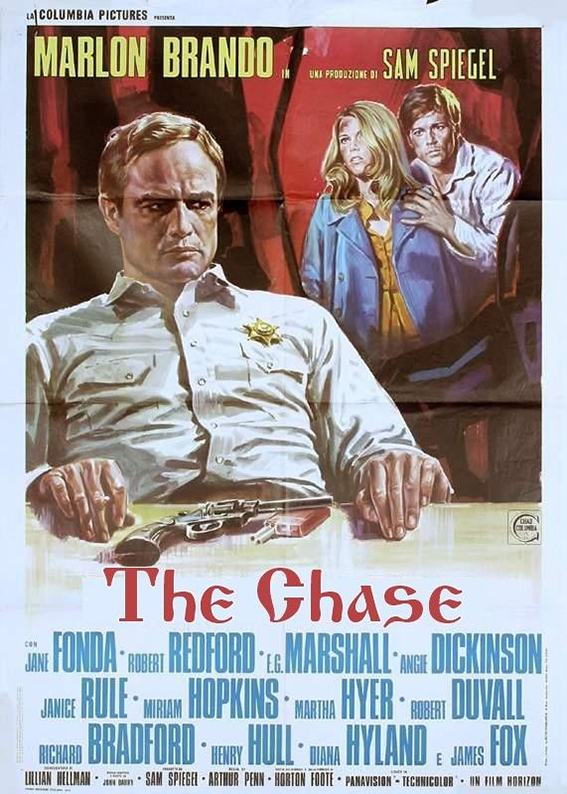
The second Horton Foote adaption on Mill Creek’s new Through the Decades: 1960s Collection — the other is Baby the Rain Must Fall — this Arthur Penn-directed, Lillian Hellman-written movie is even darker than that film, which I didn’t think was possible.
Anna (Jane Fonda) is married to Bubber (Robert Redford), who is currently in jail. She’s still in love with Jake (James Fox), the rich son of the man who runs Tarl County, Val Rogers (E.G. Marshall). And, yes, the best friend of Bubber.
Sheriff Calder (Marlon Brando) believes that Bubber is innocent of his crimes, but when he breaks out, the entire town starts drinking and arguing over when he’ll come back and what will happen. It gets so bad that Calder is brutally beaten by a gang that feels he hasn’t acted to stop Bubber, but he’s saved at the last minute by his wife Ruby (Angie Dickinson).
Everything builds to an inferno — literally — as the vigilantes set a junkyard that Bubber is hiding in ablaze as his wife and best friend attempt to rescue him.
Hill wasn’t happy with the movie, saying “Everything in that film was a letdown, and I’m sure every director has gone through the same experience at least once. It’s a shame because it could have been a great film.” At one point, Penn was asked if he’d like to re-edit the film back to his original vision, but the experience had too many painful memories, such as producer Sam Spiegel refusing him final cut.
Paul Williams wasn’t either, as three months of work led to two lines getting into the actual movie.
ABOUT THE AUTHOR: Matthew Beebe grew up in the Northeast. He studied film at the University of Hartford. He’s held boom mics, wrangled cables, grabbed a camera etc. on little local shoots. He is a music fanatic, and is working on a book devoted to the NYC underground hip hop scene of the ’90s. He plans on following that with writings on obscure hard rock and proto-metal bands of the ’70s. His favorite film is Paul Schrader’s Blue Collar.
Have you ever been struck by how interrogating and shamelessly harsh certain horror titles seem? Who Saw Her Die? and What Have They Done to Your Daughters? are both infamousgialli that without doubt inform the viewer an unpleasant experience awaits. Whoever Slew Auntie Roo? is one of a few examples of psychological terrors directed by Curtis Harrington that also comes to mind; it’s ridiculous sounding, but nevertheless accentuates mystery and violence, particularly, harm to a female. It’s also another title that begins with use of the 5 Ws. The late Harrington was an American filmmaker who often displayed a European sensibility and an extravagant visual style, but this is where most of the similarities between his work and the notorious Italian subgenre end. Something like Alice,Sweet, Alice is regarded among horror obsessives as a perfect American attempt at being thematically and stylistically linked to the best gialli. While no stranger to cinematic bloodletting, Harrington instead falls into a seemingly less celebrated, slightly more restrained and somber cinema of “Personality” horror, a sub-genre that was defined by writer Charles Derry in a 1974 issue of the great CINEFANTASTIQUE (Volume 3 Number 3). That very article serves as an invaluable document in placing Harrington as a major figure in a category that specializes in depicting madness on screen, with a less flashy, slower paced, perhaps old fashioned manner, in comparison to the loud and gorier approaches of his Italian counterparts. The giallo-inspired original Halloween is of course beloved as a film that puts viewers thrilled to the point of clinging to or jumping out of their seats. Watch Harrington’s The Killing Kind on a rainy day or a lonely late night, and you’ll be more likely filled with dread and reflections on the emotional well-being of yourself and those who you know closely. No wonder it seems that Curtis is forgotten by so many! But is he really forgotten? Beginning with the groundbreaking (in my view) piece by Charles Derry, in which he is included with William Castle and Robert Aldrich to complete the triple threat of Personality horror auteurs, there are highly recommended sources to seek out for beginners to Harrington, and maybe even the genre enthusiasts that had written him off as only having a minor role in horror film history. Even if his style and concerns appear to make for an unpleasant chore to some, there’s a lot to unpack in the story of his youth and career in Hollywood, experiences and accomplishments that at the very least grant Harrington as a practitioner of high art.
Let’s go back to the CINEFANTASTIQUE article for a moment. We can easily make the connection between the campy sounding titles What Ever Happened to Baby Jane?by Aldrich and Harrington’s What’s the MatterWith Helen? The latter arrived almost 10 years after the legendary Bette Davis vs. Joan Crawford vehicle, which is arguably the film that launched the “crazy old lady” genre, also often labeled as “hag-horror”. The formula for Aldrich’s 1962 film, based on a novel of the same name, proved to be an overall astounding success. A few years later, Harrington began making similarly titled, disturbing thrillers focused on the fragile mental states of aging women imprisoned in run down mansions, sadly hanging onto memories of a foregone era. The longing for a glorious comeback in the showbiz universe is also a reoccurring element shared between the two directors. So is Harrington an opportunist? Maybe, but in the sense that he saw a chance to be greenlit while also working with imagery, characters and themes that were genuine obsessions of his. His debut feature film was the waterlogged Night Tide (1961) and like the highly regarded Avant-garde shorts he started with as a teenager/young man in the 1940s-1950s, a gloomy atmosphere and preoccupation with loss, madness and death was already prevalent. The CINEFANTASTIQUE overview of Personality horror cinema also includes an early interview with Harrington, and it reveals that he was determined to cast Old Hollywood legend Marlene Dietrich, then in her mid-‘60s in his first major studio film Games (1967), and importantly, in discussing What’s the MatterWith Helen? he says: “To me, the film was a very affectionate recreation of a period in Los Angeles history which I have my own tremendous feeling of nostalgia for. I was trying to show lives on the fringe of Hollywood in the ‘30s.” In addition to being fascinated by middle and older aged women and actresses, Harrington also had a knack for directing them. He was applauded by industry veterans for being able to evoke intense performances from a number of actresses who weren’t known to suffer fools lightly, while managing to also stay friendly.
About those outlandish film titles: they appear to have been imposed on Harrington by studio heads and producers, something that plagued his filmography, just like he was forced to work with screenwriters and cinematographers who he detested. The two Harrington/Shelley Winters films discussed here are based on scripts and stories with far subtler titles. Any interview with Harrington has plenty of sad and frustrating recounts of development hell and productions where he had little choice but to personally fulfill multiple tasks and still find his work compromised when released theatrically, and on television. And home video-the story behind the botched first videocassette release of his sole gross out flick Ruby (1977) is laughably perplexing.
Another major genre magazine was Fangoria, where Harrington was interviewed in the early 1980s by the late, legendary author of fanzine Sleazoid Express, Bill Landis, in one of his few submissions to the more mainstream publication. This is interesting because if you read the Sleazoid Express book, which covers the exploitation film explosion in the Times Square movie theater scene, neither Harrington nor his films are mentioned. Nothing in the Harrington oeuvre fits Sleazoid. His films undoubtedly played drive-ins and grindhouses, but how likely is it that they splattered across screens to the delight of rowdy crowds in the way that Make Them Die Slowly famously did? Landis’ interest in Harrington is probably a result of their shared connection to a peer from the Avant-garde days, Kenneth Anger, who Landis later authored a biography on. Anger had a falling out with Harrington and eventually Landis, but there was a time when both Kenneth and Curtis, as early as their teenage years, were renowned worldwide as two groundbreaking homoerotic, experimental filmmakers. Anger never involved himself with feature-length studio film production, but he enjoys an almost rock star reputation because, well, he hung out and collaborated with the likes of Mick Jagger and Jimmy Page. There’s also the notion that Anger’s shorts were more electrifying and influential to popular culture than the shadowy, tormented early cinema of Harrington. As mentioned, Kenneth Anger was once a friend but has been known to be a somewhat volatile, difficult personality. Despite making no secret of his constant battles with pushy studio execs, “creative producers”, clueless cameramen, inferior set dressers, incompetent writers, by pretty much all accounts, Curtis Harrington was one of the nice guys.
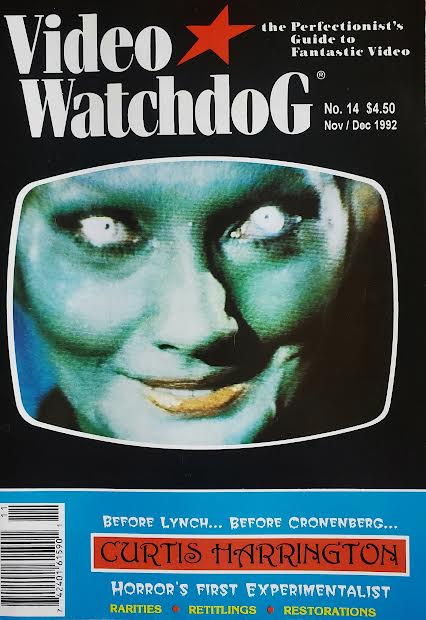
“Before Lynch…Before Cronenberg…CURTIS HARRINGTON” proclaims the cover of the Nov/Dec 1992 issue of Video Watchdog, graced by a chilling close-up of the crazed smile of the Queen of Blood (ironically, one of his more impersonal projects). This issue features an outstanding collection of writing on Harrington, with Stephen R. Bissette’s typically brilliant analysis and historical overview of the early experimental shorts, a videography by VW publisher Tim Lucas and an interview with Harrington conducted by longtime friend Bill Kelley. Throughout, Harrington offers candid recollections of his career-long battles with the Hollywood studio system; at this point, he hadn’t made a feature film in nearly a decade. Something that makes this interview so endearing is how he often finds himself laughing at the absurdity of the film business. He has a sense of humor about how his hard work, talent and personal vision can so easily go down the drain. Overall, he seems like a pretty nice guy!
Here’s a weird question: what do ‘90s indie rock darlings/mopes Pavement and Curtis Harrington have in common? No, he didn’t direct one of their videos. They both were handled by sophisticated record label Drag City, in Harrington’s case publishing his posthumous autobiography aptly titled Nice Guys Don’t Work In Hollywood in 2013. The same year, Drag City in collaboration with Flicker Alley also released The Curtis Harrington Short Film Collection on Blu-ray. Both, of course, are unequivocally essential.
Some further Harrington recommendations:
Scream Factory’s gorgeous Blu-ray release of the hypnotic Games, his best film
Vinegar Syndrome’s Blu-ray/DVD release of The Killing Kind, his most blistering film
VCI Entertainment’s Blu-ray/DVD release of Ruby, which is simultaneously his most fun movie and troubled production. This one is a very dingy and ridiculous piece of work. And very ‘70s, even though it was, like many Harrington’s, a period piece. The transfer is decent enough and the cut is thankfully his preferred version. The bonus features include interviews with Harrington conducted by David Del Valle, a saint to the genre, who surely is Harrington’s biggest fan, from 1988 and 2001. There are multiple audio commentaries with Del Valle, excellent liner notes (!) by Harrington expert Nathanial Bell and yet another audio commentary, this time with Harrington and Ruby herself, actress Piper Laurie
Also, on some dreary day or especially dark evening, take a look at two specific television movies of his, How Awful About Allan and The Dead Don’t Die, charming and spooky little gems that Harrington doesn’t disown, and that can be easily found online.
EDITOR’S NOTE: I love movies that pose a question in the title. We tried to answer why this movie is so good on May 2, 2020 and have brought it back for this week of Harrington films.
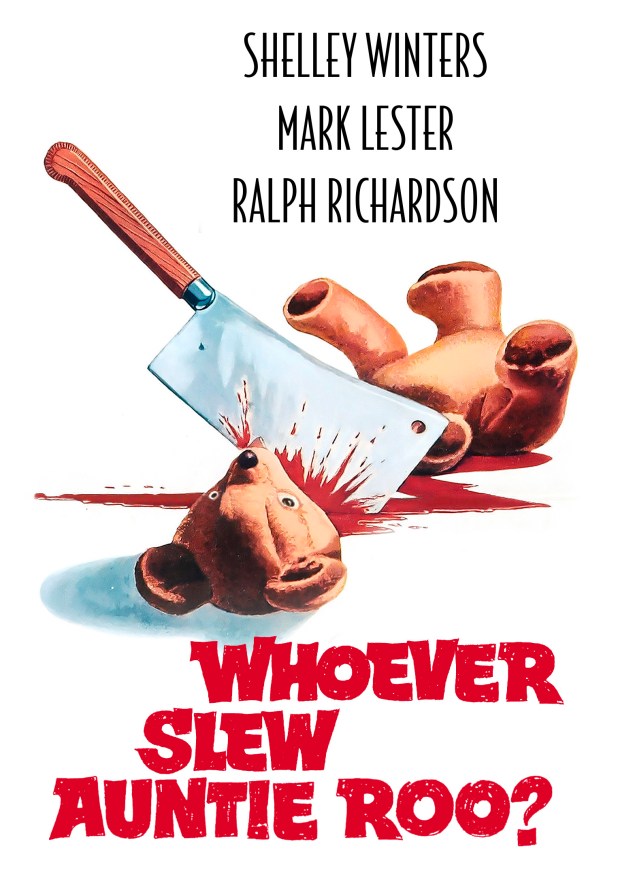
Following the success of What’s the Matter with Helen?, Curtis Harrington directed this intriguing psycho-biddy film. In it, Mrs. Rosie Forrest (Shelley Winters), the Aunty Roo of the title, is known by the children of a local orphanage as a kindly old lady who throws a huge Christmas party every single year for them. However, the truth is far more sinister. She’s obsessed with her dead daughter Katharine, whose mummified body lies in state in her attic so Aunty Roo can sing lullabies to her every night.
Mark Lester and Chloe Franks from The House That Dripped Blood play Christopher and Katy Coombs, two orphans who find themselves in Roo’s clutches. She believes that Katy might be her daughter, and the story takes a turn that’s reminiscent of the classic Hansel and Gretel tale, adding an intriguing layer to the narrative.
Ralph Richardson plays Mr. Benton, a fake psychic who tries to help Aunty Roo connect to the spirit of her long-departed daughter.
The early 70s are filled with what I call enjoyable junk. This would be one of those films with Winters practically devouring the scenery. It makes an outstanding double bill with the aforementioned What’s the Matter with Helen?, which is the superior of the two films. While Whoever Slew Auntie Roo? shares some thematic and stylistic similarities, it stands out for its more compelling narrative and character development.
EDITOR’S NOTE: I love this movie and that was apparent when it was originally on the site on November 19, 2018. As Curtis Harrington week continues, let’s go back and watch it all over again.
I like to play this game where any time the title of the movie is mentioned, I scream and cheer like I’m Pee Wee sitting on Chairy. Good news for me — What’s the Matter with Helen? says it’s title more than once, leading to me wondering if I should invest in the paper bags full of confetti that Rip Taylor always seems to have to throw around.
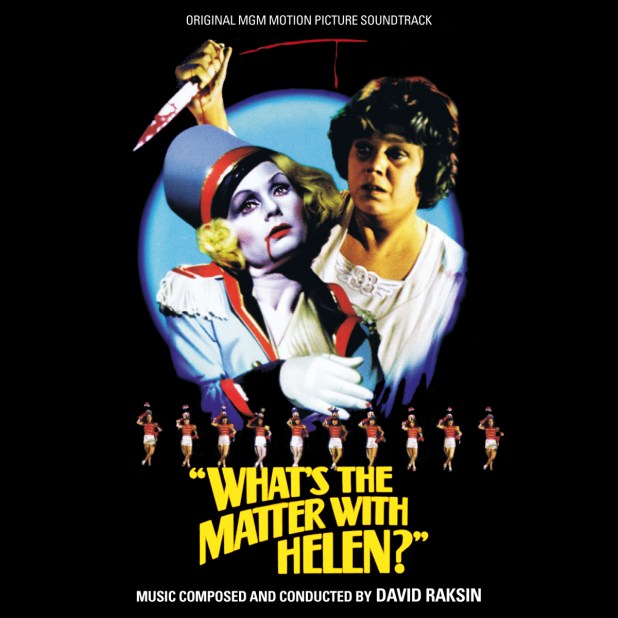
Two young men are going to jail for life after murdering an older woman. Then, we see their mothers — played by Shelley Winters and Debbie Reynolds — as they bravely face an angry mob and drive away. As they make their way home, an anonymous phone call takes credit for the attack which bloodied up Winters’ character Helen. Reynolds character Adelle then reveals her plan to pack up her cardboard standup of herself and move to California to start a dance studio. Soon, the two ladies have changed their last names and gone west.
This is a movie packed with odd situations and even odder characters, like elocution teacher Hamilton Starr and a tramp who continually bothers Adelle. And oh yeah — Helen is madly in love with her friend and becomes insanely jealous to the point that she often sticks her fingers into metal fans when she isn’t listening to Sister Alma (Agnes Moorehead) on the radio. Alma is obviously Aimee Semple McPherson, the 1920’s and 30’s celebrity whose Foursquare Church’s faith healing radio broadcasts were the forerunner of modern televangelism and charismatic Christianity.
Adelle falls for Lincoln Palmer (Dennis Weaver), the father of one of her students. He’s rich as it gets, rich enough to pay for gigolos to dance with her while he watches in yet another one of those moments that would get explored in a modern movie and are just another creepy aside in this one.
Between Helen murdering people who break into their house, then trying to be forgiven by Sister Alma all while having flashbacks to her husband being run over by a plow, her madness soon overtakes the film and things proceed to a rather sudden and shocking conclusion. There’s also an extended miniature golf sequence and numerous rabbit murders, as well as the reveal that Helen may have been right to kill at least one of the intruders.
This movie happened when director Curtis Harrington (Night Tide, Whoever Slew Auntie Roo?) and producer George Edwards approached writer Henry Farrell (What Ever Happened to Baby Jane?) hoping to get a screenplay. Hagsploitation was in, baby, and these dudes wanted in on the action!
According to Debbie Reynolds, Shelley Winters’s psychiatrist had warned her not to take this movie, as she was about to play a woman having a nervous breakdown while she was actually having one. She claims that Winters became her character to the point that the studio considered replacing her with Geraldine Page, who had plenty of hagsploitation cred after starring in Robert Aldrich’s What Ever Happened to Aunt Alice?
Winters also totally caught the lesbian undercurrents — well, they’re not so well hidden, so let’s say overcurrents — in the movie, but the scenes where she really played it up were left on the cutting room floor.
It’s worth noting that this was an Oscar-nominated film — for Reynolds outfits, that is. If you have a Debbie Reynolds crush, good news. This is the movie for you. This is also the movie for you if you love musical numbers about animal crackers.
Every single person in this one is disreputable, even the children, who are forced to dress as showgirls and purr songs like “Oh, You Nasty Man.” This posits What’s the Matter with Helen? as a forerunner of calling out the blatant sexuality of child beauty pageants years before Jon Benet was murdered.
I’ve always wanted to see this movie, despite its trailer and poster giving away the ending. What were they thinking? That said, there’s enough weirdness here to sustain my interest, even if I knew how it was all going to turn out.
Want to see it? Shout! Factory has recently released it on blu ray.
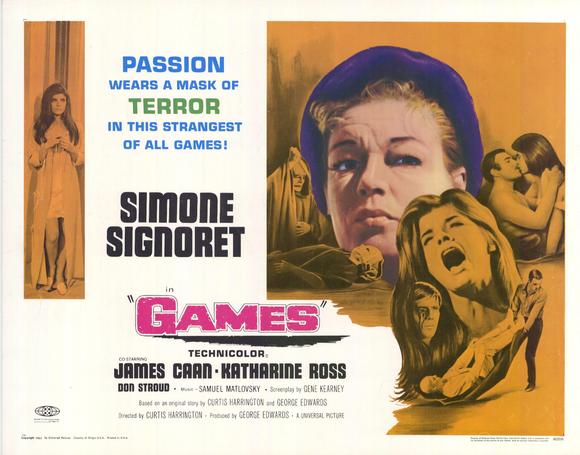
Paul Montgomery and his wife Jennifer (James Caan and Katharine Ross) are wealthy New Yorkers who amuse themselves by holding parties in their townhouse and playing sadistic games on their friends.
Then they meet Lisa Schindler, an older cosmetics saleswoman played by Simone Signoret. She faints as soon as she enters their home and spends the night. The woman may be psychic and definitely fits into the gameplaying nature of the couple, as she sets up some simulated situations for them to argue about, like a grocery deliveryman (Don Stroud) potentially having an affair with Jennifer, just to see how they’ll react.
When the deliveryman comes back the next day, Paul threatens him with a gun after he sees the man make a pass at his wife. But it’s all a joke on his part, as the gun fires blanks, until the second shot murders him and they have to hide his body. But when do the pranks stop? When they encase the man in plaster? Or when his ghost keeps walking through the house?
While the part of Lisa was originally intended for Marlene Dietrich, Simone Signoret makes sense, as the film she may be most famous for, Diabolique, has a similar tone. It’s interesting that in 1967, as everyone was moving to the New Hollywood, Harrington had an eye to the glory days of the past.
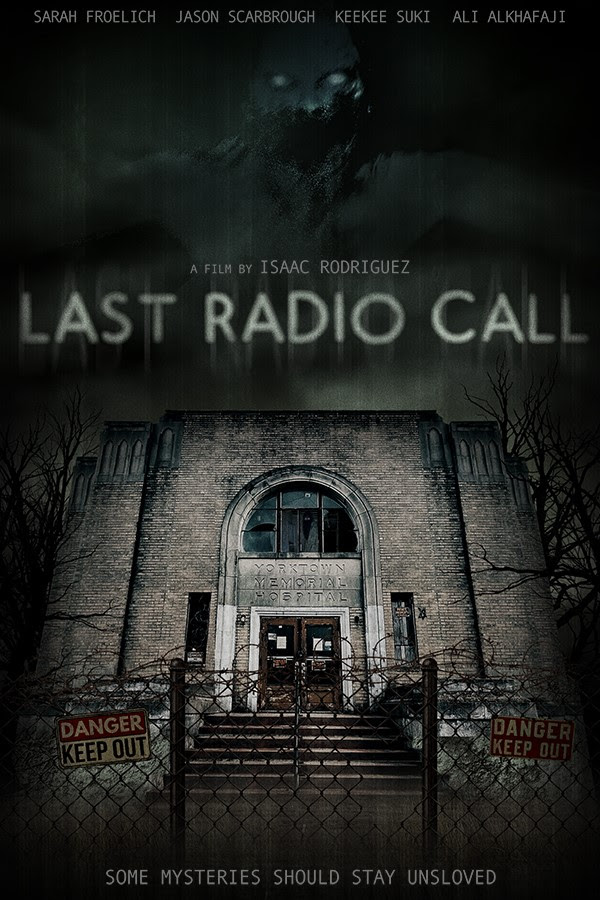
Directed and written by Isaac Rodriguez, Last Radio Call is a found footage movie all about the night that officer David Serling went missing inside an abandoned hospital. When she recovers his body cam footage, his wife tries to put together what happened to him on the night of June 30th
While David’s partner has amnesia, he’s never come back home and after a year is listed as deceased, with the ceremonial Last Radio Call sent out to him by dispatch. Rodriguez had made a previous short called Cop Cam that forms that footage we see if what happened that evening.
I’ve let it be known more than a few times how little I like found footage movies, but this has some decent camera work and build to its scares. It’s an intriguing concept and while I think it would have been better as a narrative film, if you’re a fan of movies like this, you’ll definitely find something to enjoy here.
Last Radio Call will be available across digital and VOD platforms on January 21 and will be available a week later on the Terror Films AVOD Channel on YouTube. You can learn more on their website.
Henry Levin made the Eurospy films Kiss the Girls and Make Them Die, The Ambushers and Murderers’ Row, as well as Journey to the Center of the Earth, The Wonderful World of the Brothers Grimm and Where the Boys Are.
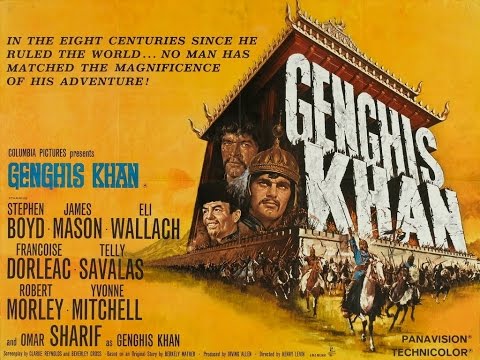
It tells the story of how Temujin (Omar Sharif) — joined by Geen (Michael Hordern) and Sengal (Woody Strode) — goes from a prisoner to Genghis Khan, the Prince of Conquerors. He falls for Bortei (French actress Françoise Dorléac), but loses her to Jamunga (Stephen Boyd) — the man who had imprisoned Temujin before — who assaults her and captures her for his own.
Plus, you get appearances by Eli Wallach, Telly Savalas (and his brother George), James Mason and Yvonne Mitchell. Shot in Yugoslavia, it looks gorgeous, cost a ton and really plays loose with history — and whitewashing — which is how movies were made in 1965.





 B&S About Movies
You must be logged in to post a comment.