Human Telegraphs is a quirky female-driven series that follows three women as they launch an in-person message delivery business in NYC and the hijinks that ensue. There are three girls: Trisha is a demanding boss, Margot has left a strict religious family for an acting career and Lilly is a feminist playwrite.
All three are forced to juggle the demands of their personal lives and dreams while also being caught up in the drama of others and also trying to keep their busienss growing in the big city.
This is a fun premise and if you’re looking for a goofy little sitcom, the first episode is worth the watch.
You can check out Human Telegraphs on YouTube, as well as on the official web site.
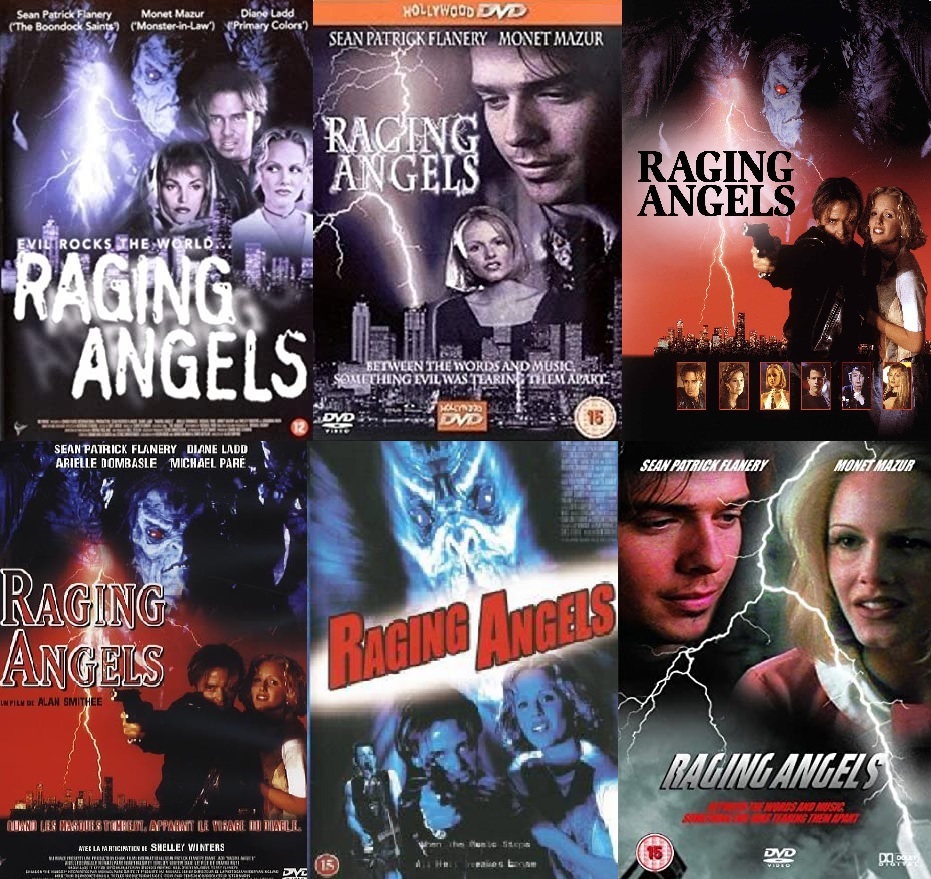
“Between the worlds and music, something evil was tearing them apart.” — Vidmark’s alternate, copywriter hornswogglin’
As the televangelist-inspiring carnival barkers of old once said, “Step right up! You ain’t seen nothin’ yet!”
So, if you are keeping track of your rock ‘n’ roll flicks, and we know you are, you know that Michael Paré (Moon 44) and Sean Patrick Flanery (Boondock Saints, forever!) each made two of them: Sean Patrick Flanery made this, and the even more obscure grunge chronicle, Girl (2000), while Michael Paré made this, and Eddie and the Cruisers.
In Girl, Flanery was an ersatz-Cobain who becomes the love interest of a wayward, college-bound high school girl. In Eddie and the Cruisers, Paré was an ersatz-Jim Morrison who faked his death.
Here, Flanery’s aspiring, oh-so-not-metal rocker (which a film of this genre needs: metal) runs afoul of Paré’s, well, faux-Tom Cruise — if his Stacee Jaxx from the abysmal Rock of Ages was running Scientology and brainwashing teens into hard rock zombies, like Damian in Black Roses. Oh, only if this film were as cool as that last sentence. . . . If this film was as cool as American Satan.
Of the many foreign and domestic VHS and DVD sleeves issued. The original, disembodied floating-head design trope, wins . . . at least this time.
I just don’t know how to describe Raging Angels . . . this political sci-fi rock n’ roll heavy metal horror romantic musical (Phew!). I don’t know how to assume the “Christian” intent of the film, if any . . . what was its spiritual inspiration? And with five screenwriters (well, two on “story” and three scribes) — and with our fair director taking an “Alan Smithee” credit (plot spoiler: It’s Asian actress Hisako Tsukuba aka’ing on the writing front as Chako van Leeuwen; this is a “Chako Film International Production,” after all) — there’s no way to know whom is wholly responsible for this biblical-plot plethora pathos of analog schadenfreude. (One of the scribes taking a pass on it was Kevin Rock, who worked on sequels to The Howling, Warlock, and The Philadelphia Experiment, as well as Roger Corman’s rights-holding tax shelter, The Fantastic Four.)
Imagine Menahem Golan’s biblical tale of the Book of Genesis‘ Adam and Eve colliding with Johann Wolfgang von Goethe’s Faust in The Apple, with its subplot regarding the power of love and music . . . and you thought producer Richard Zanuck greenlighting Russ Meyer, an independent X-rated filmmmaker, and Roger Ebert, a first time, inexperienced screenwriter, for a 20th Century Fox “sequel” with Beyond the Valley of the Dolls was a weird picture, with its cautionary tale of innocent hopefuls chewed up and shat out by the Tinseltown music industry.
I just don’t know. . . .
No matter how you pack it . . . see what we mean?
Did the tape of Jon Mikl Thor’s Rock ‘n’ Roll Nightmare end up inside the VHS sleeve of Sam Raimi’s The Evil Dead on Hisako Tsukuba’s personal home video shelf? Perhaps, after watching Keanu Reeves in The Devil’s Advocate — and taking into consideration his work as a metal head and musician River’s Edge and Bill and Ted’s Excellent Adventure — Tsukuba decided to re-imagine Al Pacino’s Lucifer-as-a-lawyer as a cult-leading rock star? Perhaps it was one too many spins of the likes of ’80s Christian (aka “White Metal”) bands Stryper, Believer, Deliverance, Holy Solider, Messiah Prophet, Whitecross, Trouble (okay, settle, they’re “Doom Metal”), and X-Sinner? (If only I just rattled off the soundtrack listing with that sentence, but alas, I have not.)
Oh, the majesty of it all, with this film’s pinches from Brian De Palma’s Phantom of the Paradise (Gramercy’s concert hall headquarters; the concert assassination), They Live (recruiting the wayward homeless to boost their ranks), and John Frankenheimer’s The Manchurian Candidate (conspiracy, subversion, and government overthrow).
The beauty of Raging Angels is that it is inherently meta: The filmmakers (well, again, Asian actress Hisako Tsukuba, who co-produced Joe Dante’s Piranha, as well as ALL of its sequel/remakes) are using film to push what is best described as a (Tsukuba’s) socialism viewpoint; that a united, one-world welfare state under a supreme leader is the only way for the world to succeed in perpetual peace — which is the very message pushed by the film’s rock star-cum-celebrity spokesperson, Tom Cruise, er, Colin Gramercy (Paré). Ah, it turns out, Gramercy (in a plot twist), isn’t Satan-as-a rocker; he’s been brainwashed by Satan (a George Soros-styled billionaire philanthropist) as the chief advocate for a dopey, 501 c3 tax-evading pseudo-religion masquerading as a “self-help” book and tape-schilling amalgamate.
Like Daddy Rich pimpin’ his prosperity theology says: “There’s a good place in this world for money, and it’s right here in my pocket.”
Yes, praise Green Jesus! By watching this film . . . you will see the light! For watching Raging Angels will quell the “raging angels” within. This film will lead to your spiritual enlightenment . . . as you will learn how to be “your own god.” Yes you can! Just like “prosperity gospel” (i.e., “money gospel”) megachurch overseers Joel Olsteen and Creflo Dollar whom “God tells” to pick the pockets of the flock to buy the Houston Astrodome (to turn into a church; get those flood victims out of here: this ain’t no horse stable with mangers) and private 747s (fitted in real gold-plated fixtures, natch) to “spread the good word.” Hey, God can’t live or fly in junk, dear flockster. Hey, there, Lamor “Brooklyn Bishop of Bling” Whitehead (finally caught by the F.B.I). So, forget that utility bill and tithe to Gramercy: for “God” will provide the water, light, and curb-side pick-ups. The Coalition for World Unity will provide the room and board and you’ll never have to work again . . . as long as you “obey” the word. OBEY!
Eh, sorry, Ol’ Scratch, for I’ve stopped believing. Your attempt to brainwash me into socialism via a bad movie . . . you created a recruitment video for atheism. Besides, your film doesn’t even have backmasking? How can you make a movie with this subject matter and not have someone playing records backwards!
Anyway . . . our not-so-metal-warrior, Chris D’Amico (Flanery), is an arrogant, temperamental rocker on the way up who believes in his hype; and with his alcohol abuse out of control, his band sacks him. And the band he fronts is . . . none other that the aforementioned Holy Solider — ripping through Ronnie James Dio-era Rainbow with “Gates of Babylon” (on screen; here’s the clip), which is this film’s lone high mark (on the soundtrack we also hear their original, “The Pain Inside of Me“). And Chris ends up like Pete Best and Chad Channing (know your Nirvana heritage), as Holy Soldier nets a deal and achieves great success . . . as a metal band . . . during the height of the grunge era (put a pin in that, for more, later).
So, our now penniless rocker, who has beat the bottle and stowed the cockiness, needs a gig. He and his musician-girlfriend, Lila Ridgeway (ex-daytime TV actress Monet H. Mazur, in her feature film debut), audition for gigs in Colin Gramercy’s new, worldwide satellite-cable concert (Paré, unlike in his star-making turn as Eddie, actually sings here, with “The Hunger”). And Colin wants Lila as a back up singer, who quickly falls under the cult-rocker leader’s spell (for all good televangelists have that enclave of chicks to help work through those sermons), but not Chris.
Uh, oh . . . but Lila is changing. She’s not the same girl, anymore. And the drinking didn’t make Chris wreck his car, it was Satan (literally; a ghostly image appears in the windshield). But Lila ain’t buying the excuses, anymore. She dumps him on Gramercy’s word.
Cue Chris’s Grandma Ruth (Shelley Winters!), who, thanks to her horrific dreams and visions (that screws up his new band’s audition), starts with the nagging warnings that “Chris is in danger.” Well, the demons won’t have any of that. Let the demon attack begin. But not before our dead Grandma recruits the eccentric, religious-psychic-preacher Sister Kate (Diane Ladd!) to save Chris and Lila’s souls from eternal damnation. The demeaning of Jesus Christ down to evil-warding, biblical-verse spells and religious trinkets, ensues.
Eh, on the upside: everyone is trying. Grandma Shelly and Aunt Diane are going at it with gusto, and Sean Patrick and Paré always sell the drama — no matter how awful it usually is, as is the case with most of their films.
Finally!
Yes, the final good vs. evil showdown we’ve been waiting for at Colin’s global, subliminal worldwide satellite concert, is here — the concert that will transform the citizens of Earth to the Coalition for World Unity way-of-life once and for all! Well . . . I think it’s best you watch the clip of the final battle, for the rest of the story.
(Sorry video embed elves, not this time; we’re hyperlinkin’ the final battle clip.)
See what we mean . . . did you click through?
Where’s Jon Mikl Thor when we need his bare-chested, bad-ass metal warrior self? Where’s Billy Eye Harper, Lynn Starling and Headmistress with the epic concert show closer? Ah, now I see why the CWU needs to subliminal message their concert: because the concert, with their screeching Christian symphonic rocker signing, Mozart (“One World”), and Colin Gramercy’s “life changing” epic, “The Hunger,” is — as is any Christian “rock concert” held in a church’s chapel-cum-gymcafeditorium that I’ve been too — absolutely, utterly awful (and when you realize the music sucks, they “kidnap” you by blocking the door and will not let you leave before the show’s over . . . and not even then. Screw you, One Bad Pig. Your Red Hot Chilli Peppers-for-Jesus schtick, sucked. At least Ronnie James Dio didn’t abduct me and force me to listen and indoctrinate me).
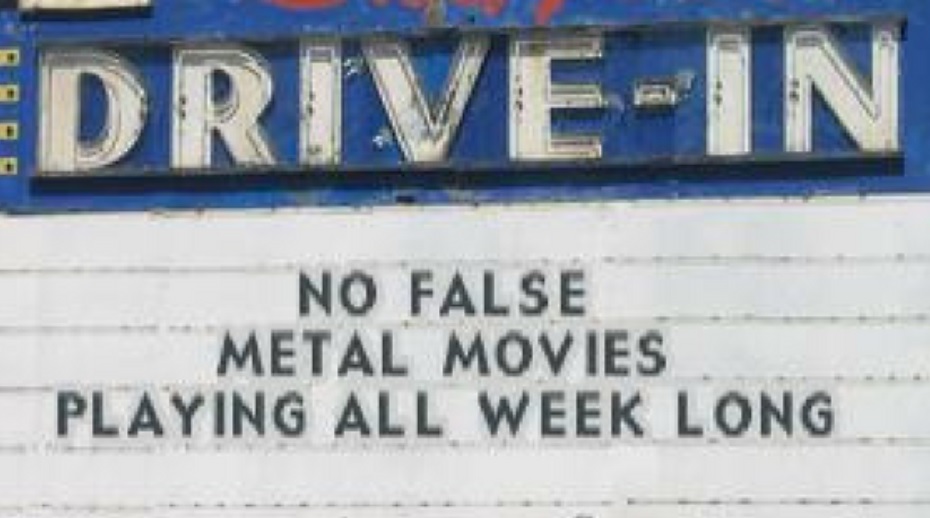
And that is what is ultimately missing from Raging Angels, the one thing that would have taken this Satan-steals-souls-with-rock-music mess over the top: a soundtrack on the level of the “No False Metal” classic Black Roses. For Raging Angels needs the likes of Lillian Axe, Lizzy Borden, and Carmine Appice’s King Kobra masquerading as the faux bands of the film. This film needed Metal Blade Records’ Brian Slagel as its music consultant to transcend it as the “No False Metal” classic it so wants to be . . . and utterly fails to be.
Granted, Sean Patrick Flanery impresses here (yes that is him singing, with “Come In My Mind“; in fact, here he is belting “One Step Forward” in Girl), but for as much as I enjoy any film with the ‘Flan, his character and the related songs are a bit too — through no fault of his own — douchy to pull off the demonic side of the proceedings. The rest of the soundtrack’s mostly B-Side castoffs — faux-Led Zeppelin’ers Kingdom Come (“What Love Can Be”), Golden Earring (?) (“Twilight Zone”), Boston (“Livin’ for You”), The Mission U.K (“Wasteland”), and well, what do you know, the aforementioned Stryper (“To Hell with the Devil”), and Sweden’s “dance rockers” Army of Lovers (“Supernatural”) (a big deal in Europe, but not in the U.S.) — just aren’t lathing the grooves on my vinyl. And, yes, shockingly, that snippet of “Arrow” by a band called Candlebox is the very same, we-relocated-the-band-to-Seattle-to-be-a-grunge-band, Candlebox. (Odette Springer, who scored Cirio H. Santiago’s Mad Max-rips Dune Warriors and Raiders of the Sun, scores here, as well as co-writing, with Hisako Tsukuba, Monet Mazur’s character’s vocal showcase, “I’m Crying Out for You.”)
And if the lack of metal in this Satanic music flick ain’t cuttin’ it, then, chances are, neither are the not-so-special effects.
When was this made? Well, based on the dated-soundtrack, certainly not during the post-1990 grunge-era. Raging Angels reeks as a film shot at some point during the hair metal ’80s — courtesy of its à la Rock ‘n’ Roll Nightmare, practical-sfx rubbery monsters (taking into account that film’s epic “Plan 9 from Outer Space” Satan vs. Angel battle) and burgeoning-technology CGI. Yeah, the dank n’ moldy aromas of years-languishing on the shelf — as most “Alan Smithee” films do — to then be thou looseth on the shelves of oneth’s local Blockbuster Video, permeates.
In the end, what we ultimately have in the frames of Raging Angels isn’t a errant, “No False Metal” heavy-metal horror film: we have an evangelical Christian Cinema precursor to the rash of low-budget, direct-to-video evangelical Revelation/Apocalypse films triggered by Christian author Tim LaHaye’s mid-’90s end-of-the-world Left Behind novel series. Those best-sellers were, of course, produced into a tetraology franchise by Canadian’s Paul and Peter LaLonde Christian-based Cloud Ten Pictures, which specializes in end-times films.
So, forget about the Black Roses and Rock ‘n’ Roll Nightmare analogies. The true spiritual cousins to Raging Angels are those proselytizing flicks starring past-their prime actors, such as the Apocalypse tetraology (1998 – 2001) with Gary Busey, Corbin Bernsen, Jeff Fahey, Margot Kidder, Mr. T, and Nick Mancuso, Six: The Mark Unleashed (2004), with Eric Roberts and Stephen Baldwin, David A.R White’s dopey Rapture-flicks, such as The Moment After (which rip off Schwarzenegger’s End of Days to lesser-and-lesser effect), and the biggie of the bunch: The Omega Code starring Casper Van Dien and Michael York. Raging Angels is all of those premillennialist flicks — only with a Satan-recruits-with-music plot device, and worse production values.
Eh, whatever, ye leaders of the CWU. If douchy music from tapered haircut and scruffy soul-patched dudes is the way to global peace, then give thee chaos. At least Satan has better music to-be-brainwash-by. At least I learned that the way to rock is to sling my axe behind my back and wear glittery tank tops.
Here’s the trailer to check out. As for the VHS tapes: they’re out there, but watch out for those DVDs, they’re grey DVD-r rips. And while they look really good, I am still not jammin’ on those Euro Region 2 copies, either. Emptor the caveats and know your regions before you go hard digital, kids.
In all of my years coveting this film for the VHS collection, I never found a copy. Sure, I could easily buy a copy online these days, but, well . . . it’s just not the same as discovering a copy in a video store’s cut out bin — or at today’s library book drives or second hand stores, is it? For the joy is the thrill of the analog chase and the celluloid discovery . . . and then having your expectations deflated as you struggle to get through the movie, and then apologize to your VCR.
Eh, I’ll just free-with-ads stream it on Tubi with ya’ll.
See the light with Christian Cinema!
Don’t fear Satan! Hail Sammy Curr!
All of the Italian and Spanish Omen ripoffs you can handle.
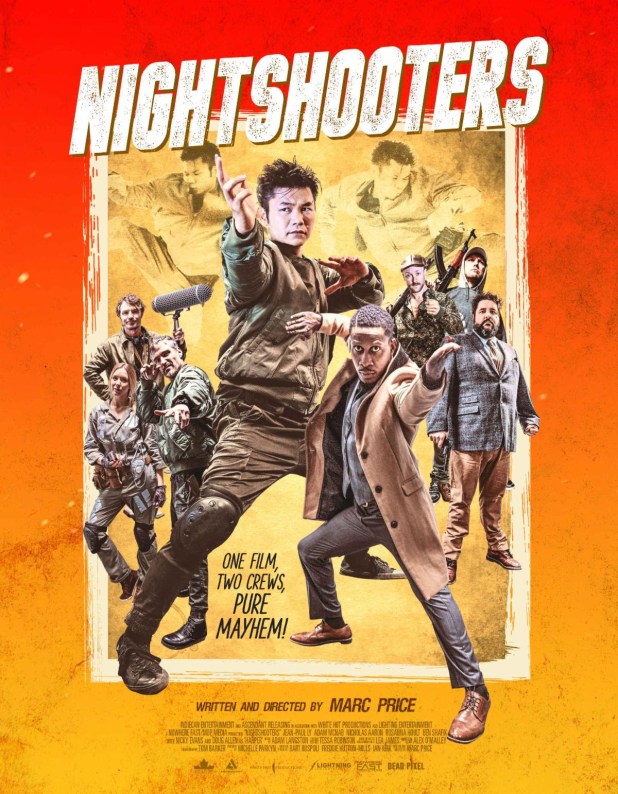
Remember Judgement Night? This film compares itself to that movie, as it’s about a group of filmmakers who find themselves on the run from a violent gang after watching them execute someone. Except there’s one problem — they escape the building that they’ve been filming at, so they rely on their moviemaking skills.
That means that the stuntmen must use their martial arts for real, the special effects guys start making real explosives and even the sound crew start making traps.
Can they survive the night?
The film is heavily influenced by films director and writer Marc Price grew up with, including Alien, Day of the Dead and The Goonies. He even looked to the lighting of Michael Mann and the way Jackie Chan’s 80s films created their action scenes.
Jean-Paul Ly, who plays Donnie the stuntman, is the kind of action star I didn’t think we had any longer. His fights are amazing and he has charisma as well. I’m excited to see him in more movies after this.
If you’re looking for a tense thriller that has great hand to hand combat and characters you care about, this is your movie.
Nightshooters is now available wherever you purchase or rent streaming movies. You can learn more on the official Facebook page.
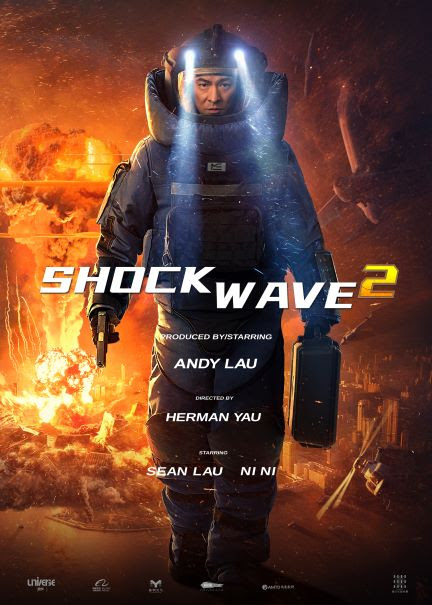
Starring and produced by award-winning actor Andy Lau (House of FlyingDaggers, Infernal Affairs, God of Gamblers), this film finds the actor playing former bomb disposal officer, Poon Shing-Fung.
Despite suffering from amnesia and the loss of his leg in an explosion five years ago, he still becomes the top suspect of a terrorist attack called Vendetta and must also evade the police and stop a terrorist group from destroying Hong Kong. That said, this movie is a new story and has nothing to do with the first movie, so you can come in fresh.
Directed and written by Herman Yau (the first Shock Wave, Ip Man: The Final Fight), this film debuted at the top of the global box office, grossing $63.9 million in its opening weekend.
Beyond Lau, one reason is the action choreography by Li Chung-Chi, the same man who is famous for The Legend of the Drunken Master, Twin Dragons and Rumble in the Bronx.
Also known as Shock Wave: Hong Kong Destruction, this movie starts with Hong Kong Airport exploding and only gets more action-packed as it moves to action scene to action scene. Lau is in his sixties but can still get you cheering for his high energy work, much less doing so much of it with just one leg (thanks to some solid CGI).
If you miss the old days of Hong Kong action, you may want to give this a try.
Shock Wave 2 is available on demand on Xfinity, Spectrum, Cox, and other cable systems, as well as DirecTV, Dish Network, AT&T U-Verse and Sling TV.
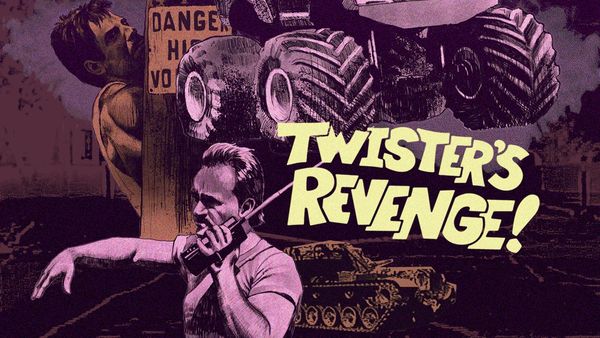
It’s about a talking monster truck named Mr. Twister who is very much KITT from Knight Rider two years after that show was canceled.
It’s a vigilante revenge film — like Death Wish— and also a comedy.
It was made in 1988, three years after Bigfoot had his cartoon.
This was released by Arrow as part of their Weird Wisconsin The Bill Rebane Collection
The answer? All of these things blew my mind.
Also known as Ein Supertruck auf Gangsterjagd! (A Supertruck on a Gangster-Hunt!) in Germany, this movie is about three criminals trying to steal Mr. Twister – after all, his computer is worth $200,000 — before they just decide to kidnap his designer who just so happens to be married to his driver.
The driver wants to grab a shotgun and kill everyone in his path, which I generally endorse, except that Mr. Twister talks — he never has before — and gives him a better plan. Or maybe the driver has a mental disorder brought on by the stress of his wife’s kidnapping and we’re inside his mind. Who can say?
Man, Bill Rebane, you get me every time. There’s no reason why I should like this movie and every reason why I should love it.
Tormented by recurring nightmares of a place she has never been, Marlene becomes tormented by the idea that this place could be real, so she has a breakdown. Her daughter Mona follows the same path her mother was on and ends up in Stainback, a small village with a big secret and a population as obsessed as her mother.
The Sonnenhugel Hotel leads to ultra vivid dreams for both mother and daughter, dreams of the suicides of multiple men and visions of strangulation. Meanwhile, the kindly hotel owner Otto actually dreams of bringing Germany’s power back in ways that are frightening in today’s political climate.
Michael Venus has only made shorts before this, but this is a confident blast to the brain filled with murder, strobing lights and abrasive metal when it isn’t about long and languid dreams of death.
You can also stream this movie on the Arrow player. Visit ARROW to start your 30-day free trial. Subscriptions are available for $4.99 monthly or $49.99 yearly. ARROW is available in the US, Canada, the UK and Ireland on the following Apps/devices: Roku (all Roku sticks, boxes, devices, etc), Apple TV & iOS devices, Android TV and mobile devices, Fire TV (all Amazon Fire TV Sticks, boxes, etc), and on all web browsers at https://www.arrow-player.com.
Producer, writer and director Peter Filardi is a name you know by way of his writing and producing the critically-mixed but box-office successful horror, Flatliners (1990), and the better critically-received and even more box-office successful, The Craft (1996). So, after writing a film about the near-death experience and witchcraft-pursuing teenage girls, it made sense that Filardi, for his third feature film, would tap the myth and legend of drugs, satanism, and murder in the upper class town of Northport, Long Island, in 1984 perpetrated by Ricky Kasso. (In the film: we are in the upscale enclave of Harmony.)
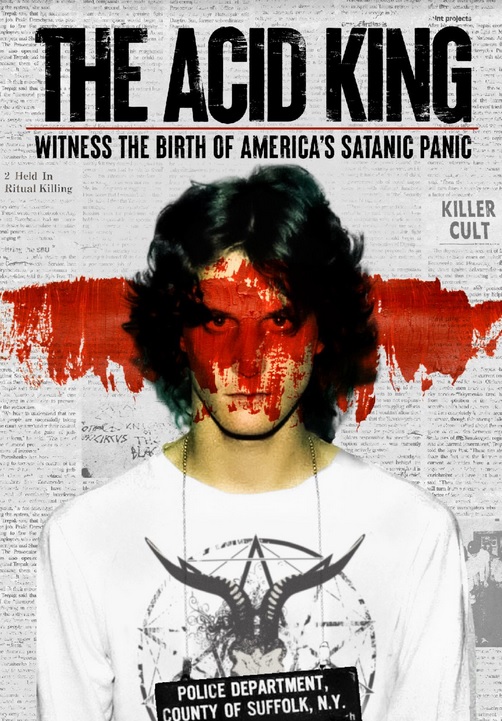
The life and ongoing influence of Ricky Kasso, an American teenager who murdered his friend, Gary Lauwers, along the windswept, Long Island Sound shores are examined at length in Jesse P. Pollack soon-to-be-released documentary The Acid King (2021). In the pages of B&S About Movies, we discussed Kasso’s exploits — and the dangers of the media-driven and religious-opportunistic “Satanic Panic” movement of the ’80s — with our review of River’s Edge (1986). Prior to Filardi’s nonfiction take on the material, Jim Van Bebber (Deadbeat at Dawn) released the short film, My Sweet Satan (1994). The first full-length feature film attempt at bringing Ricky Kasso’s exploits to the big screen was the more fictionalized, Black Circle Boys (1998).
Courtesy of the success of his first two productions, Orion Pictures (ironical releasing the 1978 juvenile delinquency classic, Over the Edge) gave Peter Filardi the opportunity to direct his first feature film: one that garnered two nominations for “Best International Film” at the 2000 Fantasia Film Festival and 2001 Fantasporto Festival — while winning the “Audience Prize” at the Fantasia Festival. It is also to be noted that the cinematographer, here, is three-time Academy Award-nominated Rodrigo Prieto, who received those nods for his work on Ang Lee’s Brokeback Mountain (2005) and Martin Scorsese’s Silence (2016) and The Irishman (2019). Prieto also lensed Eminem’s 8 Mile (2002) and Scorese’s The Wolf of Wall Street (2013) and is the winner of four Ariels (Mexico’s Oscars).
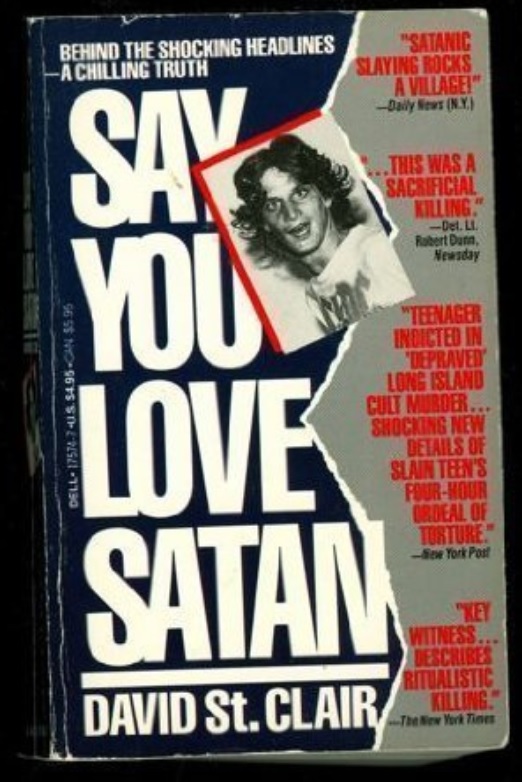
As with Black Circle Boys: David St. Clair’s since discredited, best-selling paperback, Say You Love Satan (1987), fueled Filardi’s more fact-based tale. Then, the film — appropriately filmed in the geographically-similar St. George, New Brunswick, Canada — vanished. Never commercially released by the studio, outside of a smattering of horror-centric film festival showings, the film went, appropriately enough, underground, and came to find a cult audience as a bootlegged VHS and DVD. (There are rumors that DVD copies (generic or “work print” DVD-r rips, or consumer-grade packaged DVDs?) were given to the cast and crew upon the film’s completion. As of 2017, the film began appearing online through fans’ video-sharing accounts and torrent sites.)
So what went wrong?
When are you dudes, finally, going to make a decent movie about me. . . and get the facts, straight?
Well, the film’s closing disclaimer telling us that “some parts of the film were fictionalized, with many names changed and some characters invented” is disconcerting, but what biographical film — regardless of studio or budget — hasn’t taken those narrative liberties?
One Letterboxd reviewer compares Ricky 6 as the WB’s Dawson’s Creek meets River’s Edge (comparisons to a Katie Holmes TV series isn’t a good sign). Another user compares it as Richard Linklater’s ’70s stoner-comedy classic Dazed and Confused meets Lords of Chaos (never a film so anticipated has so disappointed me).
So what do we have here: just another forgotten, ’90s teen-horror romp or a dark, true crime film? For this reviewer: the latter. If anything, the inferior — and more fictionalized Kasso account in Black Circle Boys — is the tenny-bopper misfire.
Peter Filardi has never publicly spoken about the troubles shrouding his lone directing effort (it is, however, horror message boards-rumored the primary copyright holder on the film currently serves time in a South American prison). Filardi has since backed the modernized remakes and sequels to his two previous films, Flatliners and The Craft, as well as adapting Stephen King’s Salem’s Lot as a 2004, two-part mini-series. At press time, there’s no (online) insights from Filardi himself or the mainstream horror press to discover as to what went wrong on the production. Usually, even when a film fails at finding a theatrical release, it finds itself dumped into paid-cable channel rotation (refer back to the aforementioned Over the Edge, which became an oft-run HBO cult favorite in the early ’80s).
In addition to Orion Pictures, KatzSmith Productions — a shingle that later found solo success with their reboot adaptation of Stephen King’s It (2017), as well as Child’s Play (2019) — along with British Columbia-based Bron Studios — which later found acclaim with the DC franchise entry Joker (2019), as well as the “woke”-rebooted Candyman (2021) — backed the film. Three production companies on one film spells trouble. Then there’s those opening credits of six producers. And that the film was an American-Mexican-Canadian film production (chiefly by Terry G. Jones, Juan-Carlos Zapata, and William Vince, respectively). So, with that many fingers in the creative pie, rest assure: we’re dealing with a legal morass that not even the dark prince himself can escape.
The book that started it all. . . and not as “truthful” as we believed.
Vincent Kartheiser (who came to star on the WB’s Angel from 2002 to 2004 and Mad Men from 2007 to 2015; he’s now on the channel’s DC entry, Titans) stars as Kasso, aka Ricky Cowen (“Coven”; cows are a “graven image”), our drug-dealing Satan worshiper. Patrick Renna, who the many know as Hamilton “Ham” Porter in The Sandlot, thespin-shines in a dark, mature role as one of Cowen’s co-conspirators (Ollie, aka the real life Albert Quinones who turned state’s witness) who murders Tweasel (a one-and-done Richard M. Stuart), our drug-stealing, ersatz Gary Lauwers. The always spot-on reliable Kevin Gage (all the way back to Dee Snider’s Strangeland; devastating in David DeFalco’s controversial Chaos) is perfect is his small role as Pat Pagan, aka “Pagan Pat” Toussaint, who took a fatherly interest in Ricky — and introduced him to Satanism. (When police began questioning him in the murder — of which he had no part — he committed suicide-by-train. Since the narrative is voice-over driven by the film’s faux-Jimmy Troiano, the narrative never transitions to Pat’s perspective; so we’re “told” of the suicide.)
While the film ignores some historical accuracy for the sake of narrative and takes low-budgetary stabs at depicting our malcontents’ drug trips and Ricky eventually meeting Satan himself (in a fire-stern swamp inside a hollow tree trunk; backed by Disembowelment’s “Your Prophetic Throne of Ivory”), as well as a murder-intent Jesus in a supermarket, Peter Filardi, while not the most visually stunning director, is a serviceable one, nevertheless (most likely discouraged by the film’s legal boondoggling to never direct, again). He captures — unlike the previous Black Circle Boys — Ricky Kasso’s (in hindsight) heartbreaking, downward spiral of parental mental abuses, drug addiction, homelessness, and discovering a misguided solace in the occult.
Unlike Black Circle Boys, and as with River’s Edge: Filardi did right in supporting the discontent by bankrolling an era-appropriate soundtrack featuring “The Number of the Beast” by Iron Maiden, “Screaming in the Night” by Krokus (who also appeared on Mad Foxes), “Rainbow in the Dark” by Dio, “Street of Dreams” by Rainbow, and “Love Will Tear Us Apart” by Joy Division. Contrary to fan-opinions: “And the Cradle Will Rock” by Van Halen does not appear in the film; that familiar “Eddie” guitar riff is an effective, ersatz copy by Abel Ferrara’s go-to composer Joe Delia (Ms. 45 and Driller Killer). (Too bad there’s no AC/DC, Ricky’s favorite band, and some Metallica and Slayer in the frames. Ah, those licensing rights: which is why our faux-Ricky doesn’t wear any concert shirts. In reality: Ricky Kasso lived in concert tees and jerseys.)
“So, come on! Jump in the fi-yah!”: We review those heavy metal horror flicks of VHS ’80s yore with our “No False Metal Movies” featurette.
The rest of the capable, strong cast features Sabine Singh: in her feature film debut, you’ve seen her work in the U.S. teen soaps Charmed and Dawson’s Creek. Emmanuelle Chriqui rose through the thespin-ranks to co-star alongside Adam Sandler in You Don’t Mess with Zohan, as well as currently starring as Lana Lang in TV’s Superman & Lois; you’ve also seen her as a cast regular on HBO’s Entourage and the modern horror classic, Wrong Turn (2003). Chad Christ (the tale comes from his POV, so he provides the we-can-do-without narrative voice-over as Tommy Portelance, aka the real life Jimmy Troiano, also arrested in the murder) has since left the business, but is best remembered in the late ’90s alt-rock comedy, Jawbreaker. (Chriqui, in a promotional interview for Wrong Turn, briefly spoke about working on Ricky 6 in an issue (possibly June 2003; #223) of Fangoria.)
I loved The Craft and enjoyed Peter Filardi’s take on Salem’s Lot; let’s face it: adapting-compressing Stephen King isn’t an easy task. So, to my critical end: I enjoyed Filardi’s honesty in not only chronicling Ricky Kasso’s exploits, but speculating as to what was going on inside Kasso’s mind: did he really think he finally met Satan in the flesh? So, yes: I wished it all would have worked out for Peter Filardi, as it surely hurt to have his labor of love — his directing debut, no less — cast into legal limbos for now, 21 years. (The only time any parts of the film were officially seen came result of segments of Ricky 6 recycled as “reenactment” padding in the hour-long, 2000 Australian television documentary, Satan in the Suburbs.)
Now, that’s not to say Ricky 6 is a great film: but it’s not an awful film, either. Again, it’s a film where I appreciate Filardi’s serious take on the material — and his ability to work against a slight budget — when compared against the inferior, more comical, over-the-top acted, first feature-length take on Ricky Kasso’s life with Black Circle Boys. Now, before you hate on me for not raving about the film: As we spoke about in our review of Black Circle Boys: The appreciation of a film — whether it is good or bad, well-made or poorly made — is based in the age of the viewer; for film appreciation is of a time and place. So, if you were in middle school or just starting high school at the time Ricky 6 was released — as I was when the juvenile delinquency drama Over the Edge was released in 1979 — rewatching this film will warm the cockles as your own person “classic” film.
The Omen and all of the Italian and Spanish “Satanic Panic” ripoffs.
While Ricky 6 does result in one to reflect back on those dramatic, teenage misanthropes from Over the Edge (1978) and River’s Edge (1984), and the comical, retro-’70s counterpart of Dazed and Confused (1993), Filardi’s lone directing effort is not to the standards set by those classics. We certainly don’t want the brutality of say, the aforementioned David DeFalco’s controversial Chaos (2005), but we do want Atom Egoyan’s beautifully acted and production solid (but wholly unnecessary, in light of Joe Berlinger’s acclaimed, three-part Paradise Lost franchise) Devil’s Knot (2013; based on Mara Leveritt’s Devil’s Knot: The True Story of the West Memphis Three). In fact, when considering Joe Berlinger — in what I thought was a fine, well-made, first fiction film for the documentarian — gave us the dramatic metafilm, Book of Shadows: Blair Witch 2 (2000), I believe he would bring us a definitive Ricky Kasso narrative film.
It’s also too bad that Joseph Gordon-Levitt has aged-out to play Ricky Kasso; if you’ve seen his work in the Metallica soundtrack-backed Hesher (2010), you know what I mean — but Joe would give us one hell of a Pagan Pat. Thinking about Over the Edge: Again, Vincent Kartheiser is mighty fine (maybe a little too soft, clean n’ cute as some have said), here: but can you see Matt Dillon as Ricky Kasso and Micheal Kramer as Jimmy Troiano, as they, instead of tossing him in the lake: kill the narc drug-dealing Tip? Yeah, Over the Edge with a “Satanic Panic” backstory: that’s the Ricky Kasso theater ticket, right there.
Courtesy of Hyaena Gallery; original news source of images, unknown.
In the end: Ozzy Osbourne didn’t “recruit” Ricky Kasso no more than Judas Priest convinced — via “subliminal messages” — James Vance and Raymond Belknap, nor did Ozzy “brainwash” John McCollum — to commit suicide. Nor did Ozzy’s “Bark at the Moon” brainwash James Jollimore to commit multiple murder.
Ricky Kasso was a powerless, verbally and physically (non-sexual) abused child also bullied in school who found solace in drugs at an early age as an escape. He was on the cosine of metal illness. His “model” parents kicked him out of the house to live as a vagabond in the woods, friend’s houses, garages, and harbored, Long Island boats. No one took responsibility for Ricky: not his parents, teachers, or doctors. They all failed him. Then they blamed “Satan” to cover up their mistakes. Now, that doesn’t justify what Ricky did (and let’s not turn him into a Masonesque-cum-Mafiso, anti-folk hero); however, as with Ronald DeFeo, Jr.’s multiple murder in suburban Amityville, Long Island, New York, in November 1974: DeFeo simply wanted to cover up his theft of a large sum of family money. Ricky was out for revenge on a drug theft. Both incidents — as with the victimization of Judas Priest and Ozzy Osbourne — were blown out of proportion in the pages of the since discredited books Say You Love Satan by David St. Clair and Jay Anson’s “true story,” The Amityville Horror.
Satan, indeed. Eh, Tipper Gore needed something to bide her time to keep her out of Al’s hair. Nancy Reagan had drugs: Tipper had Satan: “Just Say No!”. For kickstarting the “Satanic Panic” craze of the ’80s, Tipper, we thank you. . . .
Meanwhile, on the Pacific Northwest side of the country, existed Ricky Kasso’s doppelganger. The “Devil’s rock ‘n’ roll” also got hold of him: he picked up a guitar instead of knife. And for a brief time, Kurt Cobain, unlike Ricky Kasso, became infamous for his musical talents . . . but just as suddenly and shockingly, both burnt out in similar fashion. . . .
The critically-derided Australian TV documentaryfrom 2000.
Regardless of my brevity-lacking, critical sidebaring: Ricky 6 is worth your watch as you delve into the twisted mind of Ricky “The Acid King” Kasso — so as to complement your rental stream of the upcoming The Acid King. Hey, after that documentary’s debut, it just may inspire another film on the sad life of Richard Kasso. It’s “never say never” in Hollywood.
If Ricky 6 is your first exposure to Ricky Kasso’s infamy, you can cut through the books and the films with two, well-written, truncated-quick reads of the true events: Emily Thompson of the Morbidology podcast (August 2018) and Gina Dimuro of All That Is Interesting (October 2020). Another definitive read on the true events is Dave Breslin’s timely “Kids in the Dark” published by the Rolling Stone in November 1984. Again, we discuss Ricky Kasso — and the “Satanic Panic” craze of the ’80s — at B&S About Movies in our reviews of River’s Edge, Black Circle Boys, and Deadbeat at Dawn.
— You can watch rips of Ricky 6 on You Tube HERE and HERE and HERE. The caveat is that they’re all muddy rips from those bootlegged DVDs or probably downloaded from torrent sites. Pick which one works best for your viewing pleasure.
— You can also stream a six-part upload of Satan in the Suburbs on You Tube.
— In addition to supplementing your watch of Ricky 6 with The Acid King, you can also watch two direct-from-television-to-video releases from the “Christian Scare” industry of the ’80s we’ve reviewed: Heaven’s Gates and Hell’s Flames and Devil Worship: The Rise of Satanism.
— You can enjoy Peter Filardi’s newest horror streaming series, Chapelwaite — based on Stephen King’s short story, “Jerusalem’s Lot” — on EPIX. The 2021 Adrien Brody-starring series was co-created and written by Peter’s brother, screenwriter Jason Filardi (Steve Martin’s Bringing Down the House; the Zac Efron-starring 17 Again).
About the Author: You can learn more about the writings of R.D Francis on Facebook. He also writes for B&S About Movies and publishes musical journalism explorations and interviews, as well as horror short stories, on Medium.
I just got back from Seattle a week or so ago and let me tell you, Bigfoot is just accepted out there. And you can see exactly how he can walk out of the terrain there; it just fits.
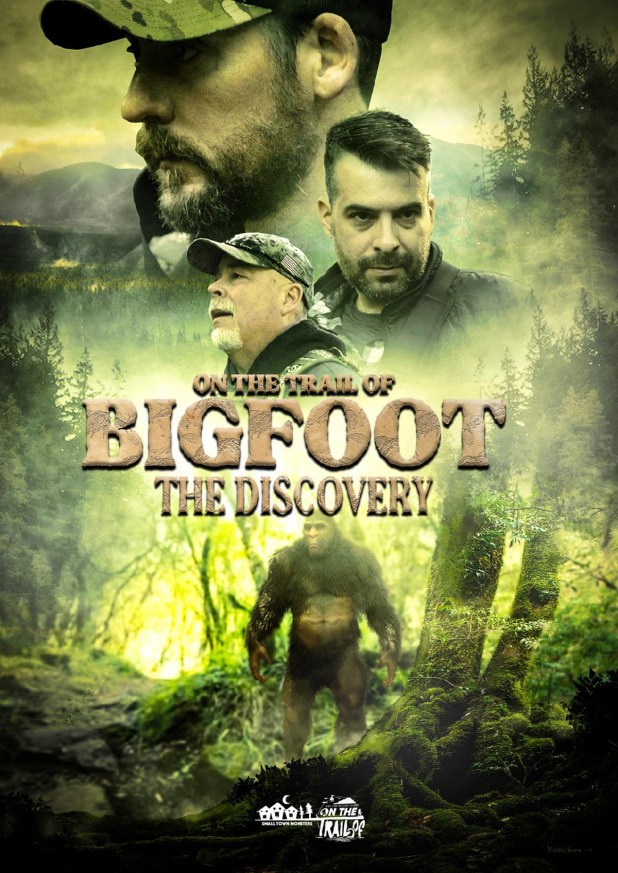
In Seth Breedlove’s new documentary, a sasquatch research group operating out of the Olympic Peninsula area of Northern Washington believe they have finally uncovered definitive evidence.
The Olympic Project is unlike many groups trying to find Bigfoot as they are “an association of dedicated researchers, investigators, biologists and trackers committed to documenting the existence of Sasquatch through science and education.”
They aren’t just a bunch of dudes in the woods knocking on trees and making what they think are sasquatch calls. Additionally, they utilize “comprehensive habitat study, DNA analysis and game camera deployment” all with the goal of getting actual empirical evidence.
In this film, the team travels deep into the forests of the Pacific Northwest and uncovers a nest site that may hold the key to understanding what people are encountering around the United States.
I always enjoy the work that Small Town Monsters puts into these and I found this the best of their Bigfoot films. The Olympus Project feels like the best opportunity for man to learn more about the creatures that live amongst us.
On the Trail of Bigfoot: The Discovery is now available to purchase or rent wherever you digitally watch movies. You can also check out the following documentaries by Small Town Monsters:
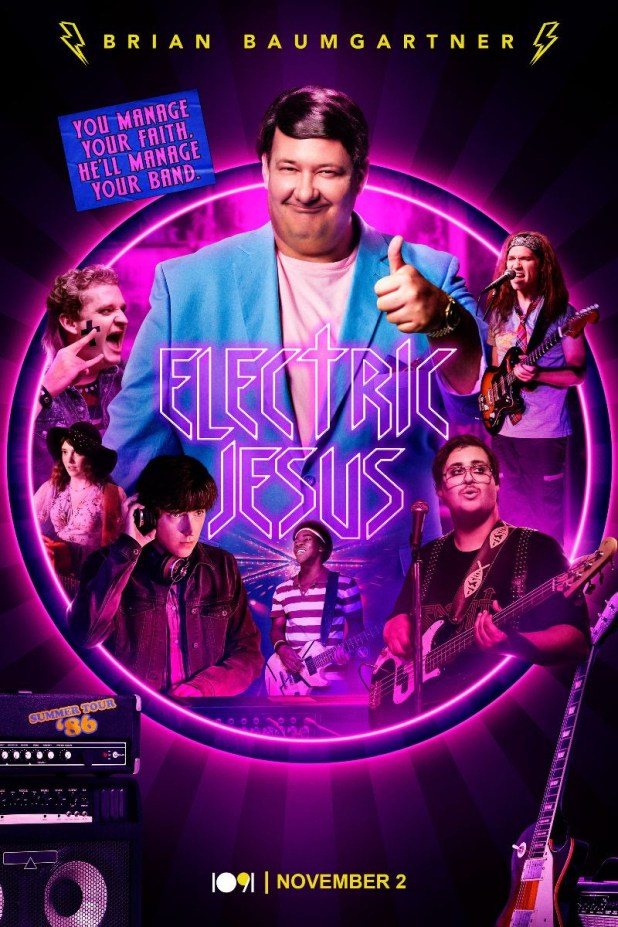
When a flashy promoter (Brian Baumgartner, Kevin from The Office) sells sound man Erik (Andrew Eakle) — who has a rant on Christian rock in this movie that must be heard to be believed, because it goes way beyond just Petra and Stryper — and his favorite local Christian hair metal band 316 on a bus tour in the summer of 1986.
Can they deliver on their desire to make Jesus famous while becoming rock stars? And will their friendship survive?
I was struck by just how much I enjoyed this movie, as it got across what it feels like to be in a band beyond just the joy of playing on stage. Additionally, the struggles between fame and faith felt feal here while keeping the movie focused on being pretty funny.
Judd Nelson plays a minister whose daughter yearns for the open road. And you know, I can’t believe that this movie went from “I guess I’ll watch a few minutes” to making me emotional at the end after learning about where her journey takes her.
Even if you know nothing about the world of 80s religious metal, you have to admire a movie that has a band whose most well-known song is “Commando for Christ.”
This movie is now available digitally. You can learn more about Electric Jesus on the offical site and Facebook page.
Also known as Bloody Mary and Nights ofTerror, this Osvaldo Civirani-directed kinda, sorta giallo stars one of the queens of the genre, Carrol Baker, as well as Stephen Boyd and George Hilton.
Baker plays two roles in here, identical twins Mary and Julie. While Julie is just an innocent on a working holiday in Holland, her sister is a diamond thief who has even sold her own husband out to get ahead.
I say kinda sorta as while this movie looks like a giallo and is named like one, it’s closer to a crime caper or even the Eurospy. Sure, someone is spying on our heroine, but nobody with black gloves is stabbing anyone and there are no psychosexual hijinks.
But hey — I love Baker and this has some fun twists and turns, as well as some romance. Consider it giallo adjacent, I guess.









 B&S About Movies
You must be logged in to post a comment.