And Die of Pleasure (1960)

You have to hand it to French director and screenwriter Roger Vadim: he had a way with the ladies. Unfortunately, he always cast those wives and girlfriends in his movies. His wife Marie-Christine Barrault starred in four of his French TV movies, Bridget Bardot starred in And God Created Woman, and Jane Fonda in Barbarella. And when he opted for a longtime affair in lieu of marrying Catherine Deneuve (Fréquence Meurtre, aka Frequency Death), she starred in Vice and Virtue. And Annette Stroyberg (credited here as Vadim) starred in this “art house” lesbian vampire romp.

Watch the trailer.

If you’ve never experienced Vadim’s work, one must take into consideration that he got his start in the visual arts as a fashion photographer; for his films he employed famous French cinematographer Claude Renoir. So Vadim’s version (French title: Et Mourir de Plaisir; aka And Die of Pleasure; Americanized titles: Blood and Roses/To Die With Pleasure) of Sheridan Le Fanu’s influential short story “Carmilla” (part of his 1872 collection In a Glass Darkly) forgoes the adaptation conventionality of Hammer Studios’ early ‘70s “fleshy” trilogy variations of (the highly-suggested watches) The Vampire Lovers, Lust for a Vampire, and Twins of Evil, aka “The Karnstein Trilogy” (and Hammer’s other effective vamper, Captain Kronos: Vampire Hunter, acts as sidequel). Others lurking in the La Fanu catacombs are the more straightforward, third adaptation, Terror in the Crypt starring Christopher Lee (1964); the first was Carl Theodor Dreyer’s equally-dreamy Vampyr (1932). The creepiest and most atmospheric of them all (unofficially) is Mario Bava’s looser-read of Black Sunday (1964) (which also pinches from Nikolai Gogol’s 1835 Russian vampire tale “Viy” contained in his collection Mirgorod) that stars the heart-weeping Barbara Steele as a vampire-witch hybrid (one of the film’s alternate-titles was, in fact, Revenge of the Vampire).

If you’re raised on cinema’s modernized, CGI-blood suckers—ones that blatantly swish through screenwriter-guru Syd Field’s Paradigm, coughing and wheezing under a rising sun on the run to the medi-script offices of Golden, Towne & Truby—then Vadim’s vamps aren’t your goblet of corpuscles. For this ain’t no fanged fiend of the Al Adamson Blood on Dracula’s Castle variety. This is a vampire of class and style: a Nantucket vampire; not a Bowery bloodsucker.

Vadim is all about impressions. He gives you rich set designs and stunning cinematography awash in colors enveloping dreamy visuals; he fills your eyes with pleasure (a singular drop of blood across flesh of breast; a dreamscape view through a set of French Doors of Carmilla swimming a water-filled room); he fills your cortex with the psychological and the ambiguous.

Is it real? Is it a dream? Is a stunning female vampire thou art loose on the lush Euro-estate of young Carmilla’s family? Or is she experiencing a mental breakdown as result of suppressing her homosexuality for her bisexual girlfriend Georgia (Elsa Martinella of Elio Petri’s “art house” take on Richard Cornell’s The Most Dangerous Game: The 10th Victim) who’s rejected her for marriage to a young squire? As Carmilla ran off to wallow in self-pity, did she stumble into the tomb of vampire? And is that vampire in control and causing Carmilla to commit acts of murder?

Two “Thumb Up,” right Sam? So, have we decided: Am I the “Siskel” here?

About the Author: You can learn more about the writings of R.D Francis on Facebook. He also writes for B&S About Movies.

Deafula (1975)

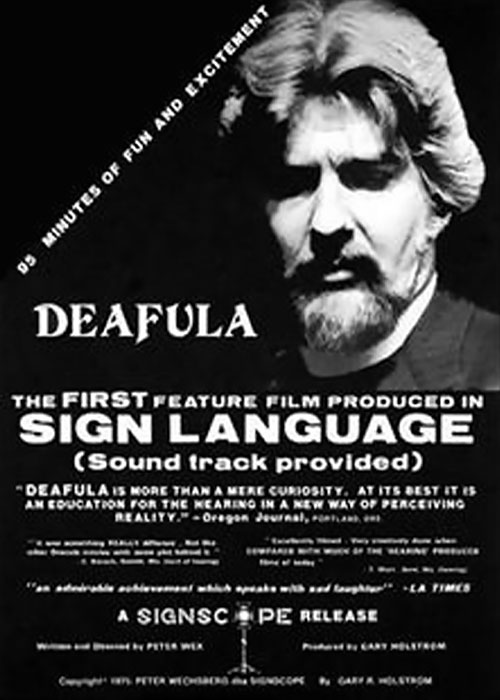
The first — and as far as I know only — horror film shot using American Sign Language, I’ve been looking for Deafula for a long time to see just how weird it is. The good news is that it’s totally strange and exactly what I hoped that it would be. In truth, it’s also the first ASL film ever made.

It was written and directed by — and stars — Peter Wechsberg, using the stage name Peter Wolf. As a student at the deaf-friendly Gallaudet University, he went on to be in the National Theater of the Deaf. In the world of Deafula, everyone is deaf.

Steve Adams (Wolf) is a theology student who starts to believe that he’s a vampire. His best friend, a detective, has hired an inspector who has already battled — and defeated — Dracula to discover who is behind the 27 murders that have already gone done.

Man, there’s so much weirdness in here that I barely know where to start. Steve has always been a vampire and his preacher father has been able to feed him with his blood until his heart gives way. Steve’s mother also left his father for Dracula and sleeps in his grave, while her mother’s best friend Amy — who disappeared many years ago — has a magic ring that tells her when Steve is a bat. Where has she been? Oh, she’s just been living with a handless servant named Zork.

This is the only movie I’ve seen where a vampire prays to God to forgive him.

While this movie was originally silent, they later dubbed it for hearing audiences, adding a really bad Bela Lugosi impression for Dracula.

Wechsberg signed an agreement with the Department of Health, Education, and Welfare to receive twelve copies of the film to show it to audiences. They would eventually bootleg the movie and start sending out VHS tapes, so the creator of this film had to sue the U.S. government for stealing from him.

This is worth tracking down if only to see how a deaf creator sees vampirism.

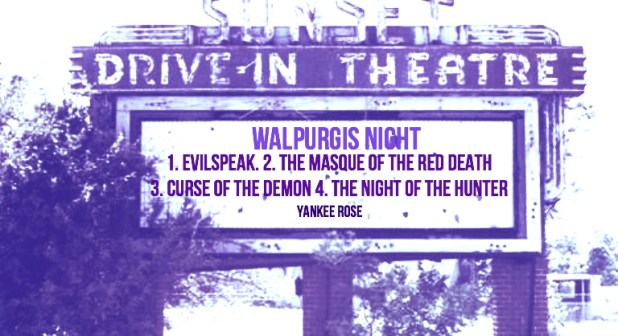
Drive-In Friday: Walpurgis Night

I just read the best quote: “I am not joking. The proliferation of horror movies where the bad guy wins is clearly, obviously, a demonic plot to increase cynicism and teach people that it is stupid to feel hope or expect justice. It is ONE HUNDRED PERCENT a satanic psyop.”

Oh man, welcome to B&S About Movies.

Tonight, we turn to the Church of Satan approved film list to curate a night of parables ready to teach you the ways of the Left Hand Path. Remember — “There is a beast in man that should be exercised, not exorcised.” I believe that there is no better place to celebrate the joy of being alive than the drive-in.

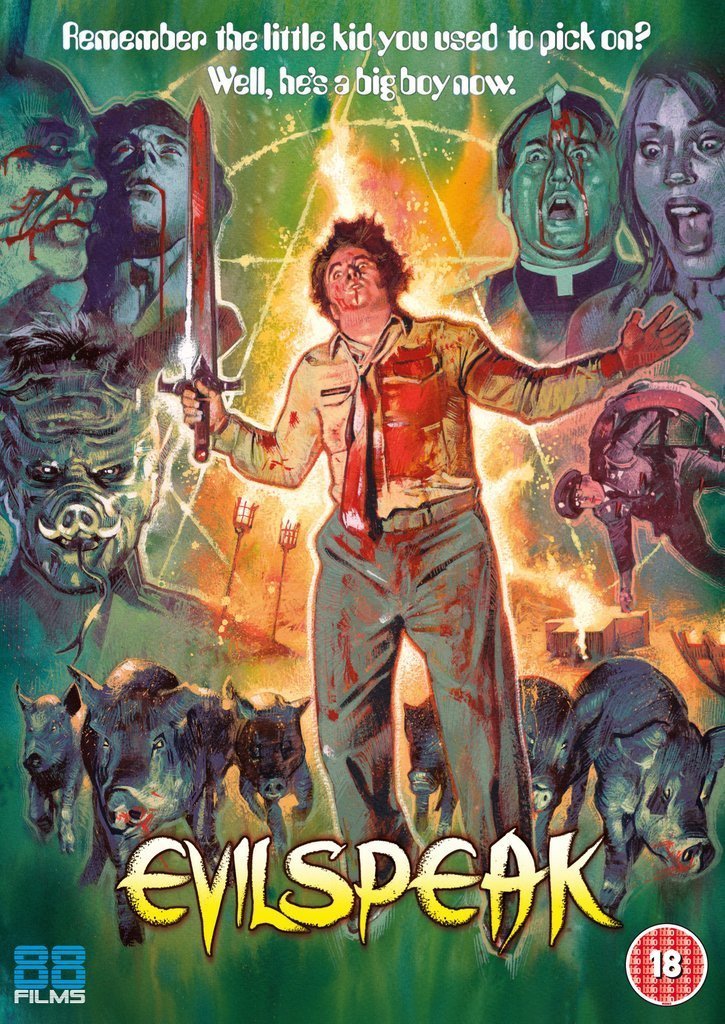
MOVIE 1: Evilspeak (Eric Weston, 1981): This movie brutalizes Clint Howard so badly that no amount of revenge — much less church-based decapitations — is enough. Imagine Carrie with Clint just getting continually abused until he turns to Richard Moll’s ghost. Remember: Satan represents vengeance instead of turning the other cheek.

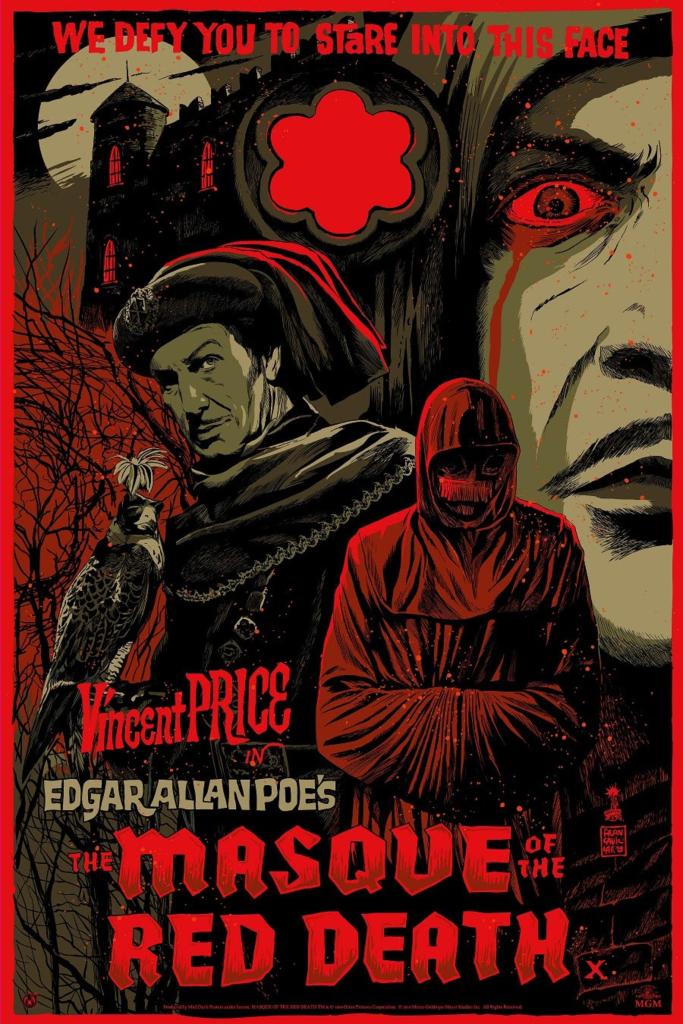
MOVIE 2: The Masque of the Red Death (Roger Corman, 1964): Vincent Price embodies so much of the Satanic ideal — and appears on the list of approved films more than once. This film, about a party against a plague claiming the surrounding world — hmm, sound familiar — is one of the best films ever made. A drive-in viewing decimated me one night, making me question my place in the world and pushing me to do more. That’s one of the reasons this site exists. “Satan represents indulgence instead of abstinence.”

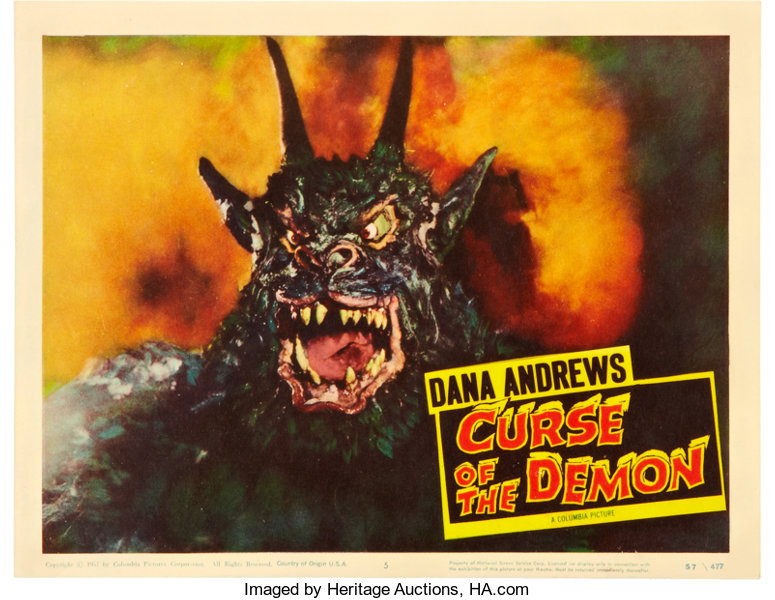
MOVIE 3: Curse of the Demon (Jacques Tourneur, 1957): Often, the movies that frightened me as a child seem silly today. This movie has somehow became even moe frightening and the famous image of the creature doesn’t even need to be in this. You must experience it. “If a guest in your home annoys you, treat him cruelly and without mercy.”

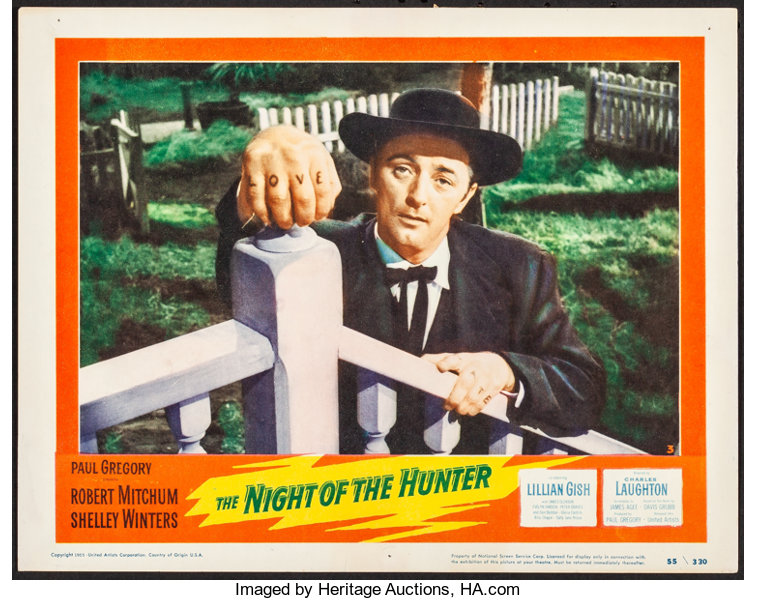
MOVIE 4: The Night of the Hunter (Charles Laughton, 1955): Stupidity is one of the Nine Satanic Sins. That’s the one that I claim for the critics, fools who destroyed this film, a movie that has become a true classic of American film. I honestly am hard pressed to think of a film from this country that can compare. Somehow, this film begins in reality and enters a strange fairy tale world of expressionism and unstoppable evil cloaking itself in the guise of religion. “Do not harm little children.”

As Anton Lavey once said, “On Saturday night, I would see men lusting after half-naked girls dancing at the carnival, and on Sunday morning when I was playing organ for tent-show evangelists at the other end of the carnival lot, I would see these same men sitting in the pews with their wives and children, asking God to forgive them and purge them of carnal desires. And the next Saturday they’d be back at the carnival or some other place of indulgence.”

As for the drive-in lovers, who stay up all night staring into the loving night at the glowing screen, we will be sleeping all day.

Shadow of the Vampire (2000)

Long before “meta” became 21st-century digital filmmaking de rigueur, there was this film-within-a-film account of German filmmaker F.W. Murnau’s unauthorized adaptation of Bram Stroker’s Dracula.

Watch the trailer.

While the vampire Count Orlok of Murnau’s 1922 silent masterpiece, Nosferatu: A Symphony of Horror, was portrayed by German actor Max Schreck, the film plays up Schreck’s unorthodox Method Acting techniques. (By the way, Nicolas Cage produced this: and we all know about his unorthodox methods to get into character.) Schreck would only appear amongst the cast and crew in makeup, would only be filmed at night, and would never break character on set. All of which lead the crew and actors under Murnau’s (John Malkovich) direction to believe Schreck is a real vampire.

No surprise: Willem Dafoe’s portrayal of Schreck as Orlok was nominated for a “Best Supporting Actor” Oscar. (And he also astounds in the recently-released My Hindu Friend.)

And the meta on this gets even freakier—if you watch this alongside Werner Herzog’s Klaus Kinski-starring remake of Murnau’s film, 1979’s Nosferatu the Vampyre. Then Kinski took it one step further: he played the character one more time in the 1988 Italian-made Nosferatu in Venice, which co-stars Donald Pleasence and Christopher Plummer.

I’ve binged all four of these “Nosferatufilms back-to-back several times over the years—and it does screw with your mind. And it’s a chick repellent. And all four films come highly recommended, chicks be damned. (One day, I’ll meet a woman who can embrace silent film and Double K.)

You can stream Shadow of the Vampire on Shudder.

About the Author: You can learn more about the writings of R.D Francis on Facebook. He also writes for B&S About Movies.


Don’t forget! There’s more movies about movies to be had with our “Drive-In Friday: Movies About Movies” featurette, where we also review Shadow, The Disaster Artist, Adaptation, and Dolemite Is My Name.

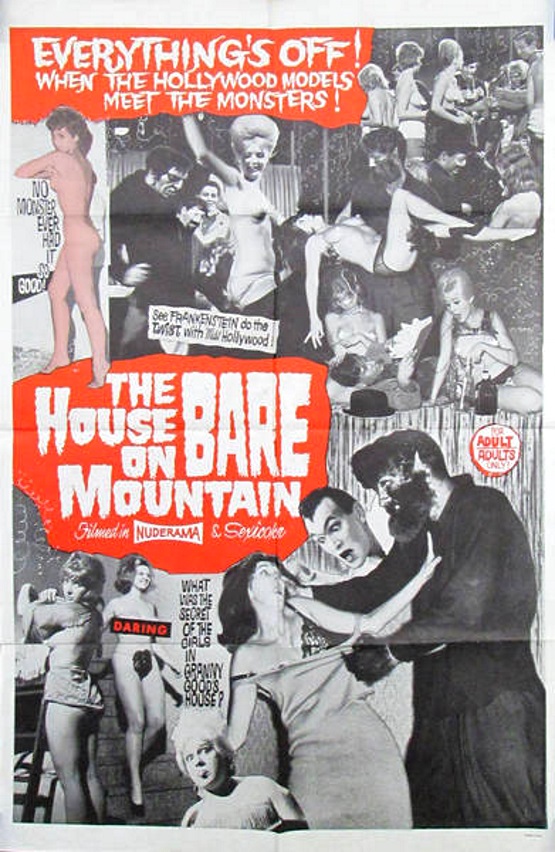
The House on Bare Mountain (1962)

You’ve never seen more! Let us prove it to you when the monsters meet the girls! The nudies meet the nasties! No monster ever had it so good! See Frankenstein do the twist with Miss Hollywood! The gayest girlie spree of all time! Everything’s off when the horror boys meet Granny Good’s girls! The biggest bevy of beauties ever laid before your eyes! For adult adults only!

Get ready for 62 minutes of sheer wildness as directed by Lee Frost and Wes Bishop. If you wonder, with scumbags — and I say that term with the utmost of respect, admiration and love — like this were at the wheel, how far away was Harry Novak? Oh, he was there. He was there.

Granny Good’s School for Good Girls is really a front for girls to get naked and make booze for Granny Good, who is played by producer Bob Cresse. She also employs a werewolf named Krakow. Yes. A werewolf. And when the girls throw a party, that’s when Dracula and Frankenstein’s Monster show up.

Ann Perry, who plays Sally in this, was originally going to be a nun before she met her first husband Ron Myers. After starting her career in Cresse’s softcore films, she went fill hardcore and started her own production company, Evolution Enterprises, in the 1970’s, becomingone of the only women to write, direct, and produce her own hardcore movies. She was also the first female president of the Adult Film Association of America (AFAA).

The adult films of 1962 are incredibly odd affairs today, featuring little to no sex and mostly women taking off their clothes and doing things like reading topless. I find them incredibly charming, almost time capsules of a more innocent time, a place where small movies like this could find an audience of raincoaters who found something, anything erotic in what we would now see as just plain silly.

Sadly for Frost and Cresse, the advent of hardcore would put an end to their films. Then again, Frost would go on to produce and direct one of the oddest — and roughest — films of the golden age of adult films, A Climax of Blue Power. He kept on working right up until 1995’s direct to video softcore thriller Private Obsession. I’d also recommend his mondo films Witchcraft ’70 and Mondo Bizarro. Oh yeah! He also directed The Thing With Two Heads and The Black Gestapo. He also made Love Camp Seven, which also features Cresse acting as a commander of a German prison camp. Wow. I know more about Lee Frost than some members of my family.

You can download this on the Internet Archive. Even better, Nicolas Winding Refn’s ByNWR site has a totally cleaned up version straight from the director’s archive. Man, I want to sit down and talk to that dude someday.

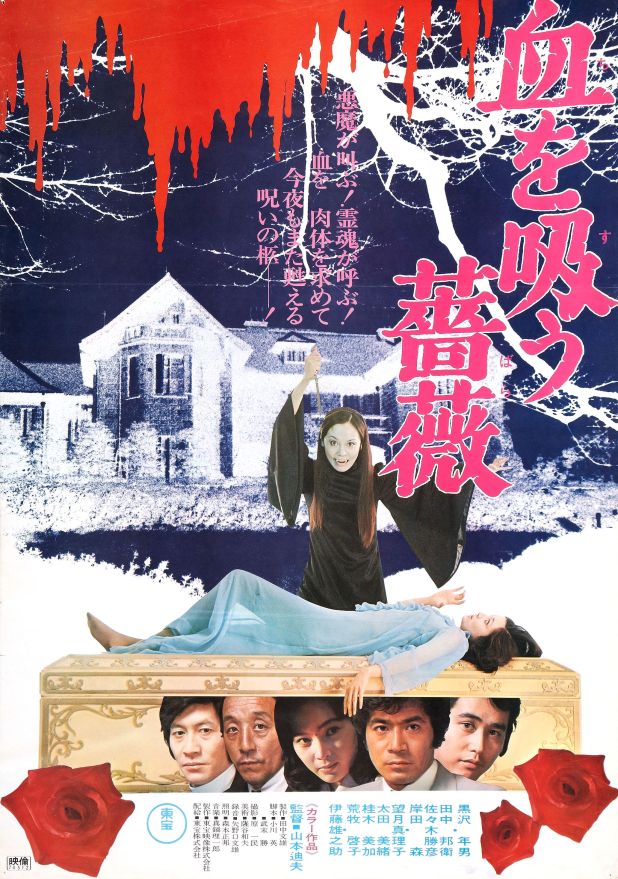
Evil of Dracula (1974)

The third entry in director Michio Yamamoto’s Bloodthirsty Trilogy, this Toho-produced vampire film ends this non-connected cycle by telling the story of Professor Shiraki (Toshio Kurosawa, Lady Snowblood), who comes to teach at a new school and discovers that he may not be ready for this strange place.

You have to love a vampire movie that has Dracula finding himself shipwrecked in Edo period Japan, a time when Christianity was illegal. Forced to spit on the cross and wander the desert, he is forced to drink his own blood to survive. Acquiring a taste for it he soon begins feeding on the blood of the locals.

It turns out that the past principal was also a vampire and has been feeding on his student body. This involves shredding their clothes off their bodies and drinking right from their breasts, which leads me to believe that this movie is more inspired by the later, more naughty side of Hammer.

Shin Kishida is the vampire again — he also played one in Lake of Dracula — but there isn’t any mention of him being the same character. That said, the love going even past death theme that exists in so much Hammer and in later films like Bram Stoker’s Dracula is in full effect here.

You can watch this on Amazon Prime or buy the entire Bloodthirsty Trilogy from Arrow Video.

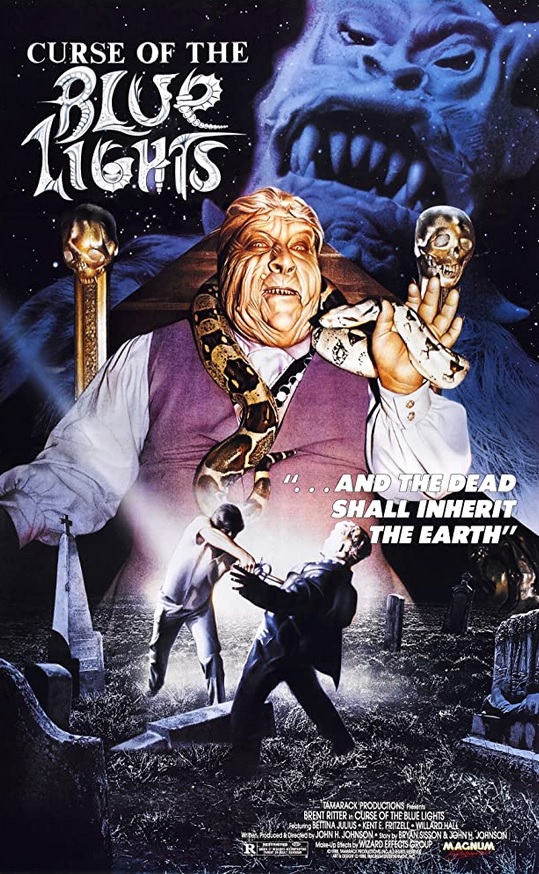
Curse of the Blue Lights (1988)

Editor’s Note: Starting in 2021, we’ve since reviewed several more regional Colorado-shot films. We’ll get to those films, later, in this review.


Okay. I know I’m stretching the “Vampire Week” theme with this SOV ghoul bash, but after reviewing the fellow SOV, “legit” vampire flicks Jugular Wine (1994) and Tainted (1998) . . . for me, these three films just go together, as result of them appearing alongside each other on the shelves of my local 10,001 Monster Video—the one regional mini-chain brave enough to carry Larry Buchanan’s Doors boondoggle Down on Us, the GG Allin document Hated, and the entire line of ’80s mail-order SOVs.

Other SOVs to Enjoy

Say what you will about the production values and thespin’ skills of those shot-on and edited-on 3/4-inch video ditties of the ’80s, but dear lord, my analog nostalgia for those lo-res n’ audio-buzzing, Big Box/SOV celluloid tragedies—from Boardinghouse (1982) to Sledgehammer (1983), from Truth or Dare and Spine (1986) to 555 (1988), from Things (1989) to Gorgasm (1990)—and the granddaddy of the first SOV distributed exclusively via home video shelves (in lieu of mail order, as were the other SOVs noted), Blood Cult (1985)—is unbound. Oh, and we can’t forget Blődaren (1983), Copperhead (1983), and Black Devil Doll from Hell (1984). What’s that? Yeah, we have reviews coming up in October for Evil in the Woods (1986), Dead Girls (1989) and Snuff Kill (1997). Yeah, one day we’ll get to Addicted to Murder (1995), Bloodletting (1997), and The Vicious Sweet (1997). No, we already did Spookies (1986), as you will read, below. The twist to SOV films: Not all were shot-on-video. Some that are critically lumped in the SOV category were shot on 16 mm and released on video, and if it’s released in a direct-to-video format for exclusive, off-the-beaten Blockbuster Video distribution at mom ‘n pop video stores, then it’s an SOV. Got it?

I love them! So, yeah. We are throwin’ the B&S About Movies management binder into the office alley dumpster out back. Screw you, Sam, and your Sheldon Cooper-clauses and subsections tomfoolery. I hear ye dub these graveyard ghouls—vampires! And this an SOV!

Loadin’ Up Curse of the Blue Lights

Over the years SOV fans have dropped the word “Lovecraftian,” and there’s surely a Cthulhuian vibe in these analog proceedings. But don’t mistake this third and final directing effort by John Henry Johnson and the lone writing effort for Bryan Sisson for the premier H.P. Lovecraft “adaptations” by Stewart Gordon of Re-Animator (1985) and From Beyond (1986). And, more accurately, in relation to Curse of the Blue Lights, Gordon’s Dagon (2001)—if you know your Lovecraft flicks, you’ll pick up on that critical analogy.

I’ve had discussions with fellow VHS-heads who draw a throughline from Blue Lights to Eugenie Joseph’s 1986 tale about a sorcerer sacrificing young travels to sustain his dead wife, (in the aforementioned-linked) Spookies. In a past discussion with Sam about this movie, he mentioned, more timely-accurate, one of his personal favs, Neon Maniacs (1986). And while I don’t totally disagree with either assessment: I still say that Spookies, while a weaker (but a fun film), is of a higher quality—and Neon Maniacs even higher than Spookies. (Others mention the even-harder-to-find The Vineyard, but that actually dates two years later, from 1989.)

Me? In terms of filmmaking quality, I liken Blue Lights to Ed Wood’s surreal Orgy of the Dead (1965), with its horror-erotica tale about a young couple stranded-trapped in a ghoul-infected cemetery after a car accident. My analog cortex also loads up VHS-cells of León Klimovsky’s dripping-with-atmosphere The Vampires Night Orgy (1972), concerned with a busload of Spanish tourists stranded in an off-the-map, churchless town. But again, Paul Naschy protégé Klimovsky is by far the superior film.

Now, the Lovecraft is certainly there, but did Ed Wood’s or Klimovsky’s tales inspire John Henry Johnson and Bryan Sisson, as well? I’ll say yes, because, it’s obvious team Johnson-Sisson is cut from the same spindle of 3/4-inch tape as you and I: they known their horror films. I see traces of One Dark Night (1982) in the living dead-zoms, and Sam Raimi’s The Evil Dead courtesy of all the face n’ head meltings. And there’s a definite attempt at a some Dan O’Bannon celluloid stank of the Return of the Living Dead variety.

But something is missing. It doesn’t have that Raimi spark or Don Coscarelli charm. Why did Phantasm, itself a self-financed film employing amateurs and aspiring professionals, rage across the duplexs in the summer of 1979 to gross $12 million on a $300,000 budget, while Curse of the Blue Lights, with the same self-financing and employment ethics, floundered into home video obscurity? If Coscarelli helmed it . . . if Clu Gulager and James Karen were there to help The Mystery Machine gang . . . would this story—complete with Michael Spatola’s snazzy SFXs still in place. . . .

What if, indeed.

Instead we have a higher-budgeted Al Adamson flick, think 1967’s Blood of Dracula’s Castle, crossed with Bob Clark’s pre-Porky’s, pretty fun Romero-knockoff, Children Shouldn’t Play with Dead Things. And that’s not a bad thing. . . .

The Review

So . . . the glow of “blue light” is discovered in the wooded distance near the “Blue Light” necking point on the outskirts of podunk Dudley (not another road sign with a cow skull, ugh) by a group of (annoying) teens (who deserve to be squeezed into ghoul juice for being pains in my VHS-viewing ass). Oh, and the lights and something called the Muldoon Man are part of the town’s local color, because, well, all towns in Hicksville, U.S.A. need to have a local legend for adolescent scoffing.

The lights lead our Ed Woodian 90210-brats to a (shot in Pueblo) Colorado cemetery where underground-dwelling ghouls are pullin’ a Tall Man and Phantasm-robbing the graves above in a plot to create a serum (see, they need “fluids” like vampires!) that will resurrect the Muldoon Man: a giant lizard-man missing link (a very impressive, full-suited in-camera effect). Resurrected scarecrows (the best part of film, as if it was spliced in from another film), disappearing body-statues, disembodied-petrified hands, hysterical-histrionic thespin’, cursed trinket medallions, sheriffs that don’t act like proper law enforcement officers, overacting-folklore Blair witches, time-lasped melting candles, Al Adamson-chained-to-wall crypt chickee-dees, sword vs. axe battles, lots of backgroud-zoms tearin’ up the joint, and (lots) of melting ghouls, ensues.

Are the Gothic sets of the Spirit Halloween variety? Would Konstantin Stanislavski pull a Karl Raymarseivich Raymar (know your acting history and One Dark Night trivia, buddy) and slaughter the cast for soiling the art form he invented? Are the up-against-the-budget special effects (by Michael Spatola; his later credits include HBO’s Tales from the Crypt, Stargate, and Terminator 2: Judgment Day; his earlier work was featured in Hunter’s Blood) impressive? Is the film too long at an hour and a half? An 80-minute home-video appropriate cut would have helped making this a bit more zippy and palpable?

Yes, to all questions.

But, as long as you keep in mind this is a self-financed backyarder of the fun Don Dohler variety (Nightbeast) (well, actully better than a Dohler flick) and appreciate that everyone behind and, especially, in front of the camera is trying, you’ll have fun with this lesser-known baller in the SOV-’80s canons. (Yeah, we know it was shot on 16 mm, but it feels oh-so-SOV . . . and we love it. But, if it was shot on 35 mm . . . oh, shut the hell up, Devil’s Advocate.)

Yes! The Legends are Real!

As it turns out, Curse of the Blue Lights isn’t just the goofy, screenwriting imaginations of regional filmmaker John Henry Johnson. For his freshman and sophomore projects, Johnson mined Colorado/Southwestern history: Damon’s Runyon’s Pueblo (1981), a semi-documentary based on the famed writer’s life in Colorado, while Burgess Meredith narrated the same with Zebulon Pike and the Blue Mountain (1984) about the army Lieutenant known for his Southwest expeditions: it’s how Pike’s Peak got its name.

Yes. Johnson’s horror opus is also based upon Colorado rural folklore: In Pueblo, there really is, well, we’ll let John Henry Johnson tell you (from his website):

“I know quite a lot about Colorado history and Southern Colorado lore in particular. I used two elements as [the film’s] basis: In the late 1800s, the so called ‘missing link’ [of man] was said to have been found and was pitched as such by P.T Barnum. Found near Muldoon Hill, southwest of Pueblo, it was the so called ‘Muldoon Man.’ Secondly, west of Pueblo, [there] was a teenage parking area known as ‘Blue Lights’ where kids parking would supposedly see mysterious, unexplained blue lights in the nearby river bottom.

“[So], I combined these elements into what would become a feature film [first and only]. Teenagers as they are bound to do in such films, accidentally become involved with the underworld when they interrupt the ghoul king Loath and his henchmen as he attempts to bring Muldoon Man back to life.”

As for the Muldoon Man: The legend is real. The “man” is a hoax. The creature was said to be a prehistoric petrified human body—a “missing link”—discovered in 1877 by skilled huckster William Conant at a spot now known as Muldoon Hill, near Beulah, Colorado. Cotant successfully toured his find across the United States before it was revealed to be a hoax: an early SFX amalgam of clay, plaster, mortar, and rock dust, along with animal bones, blood and meat. You’d think that after Conant duped everyone with his “Cardiff Giant” hoax from several years earlier, carnival goers would have known better.

Beware! The Curse of the Digital Caveats:

Those who want this in their physical media collection, take note. The original VHS tapes are the uncut R-version. The Magnum-Code Red DVDs, while a HiDef master created from the original 16mm film elements (that includes an audio commentary track with director John Henry Johnson and actor Brett Ritter), the DVD is not the “original uncensored version.” The DVD is the cut R-rated version missing about three-minutes (a graphic scene where the Muldoon betrays and crushes the demon-snake lord’s face, in particular). The overall quality is grainy (that’s how the original film was shot-processed), but the digital transfer is clearer than the VHS original. (Besides, the occasional emulsion scratch lends to the film’s early ’70s drive-in charm). So, to see the uncut film: you’ll need to watch the VHS. Got it?

However, in any form, do watch this: it’s a nostalgic-retro monster mash.

So, You Wanna Join the Analog “Mile High” Club?

There’s more Colorado-shot films to enjoy with The Jar, Manchurian Avenger, Mind Killer, Night Vision, and The Spirits of Jupiter.

You can catch up with John Henry Johnson at his official website. Yes, as with Russell Kern, who reached out to us regarding our review of The Spirits of Jupiter: Johnson is still in the business as an academic in art and film in Colorado. In May 2022, he sat down with James Bartolo of The Pueblo Chieftain to discuss his career. There’s also more local legends to be had—the Lights of the Sliver Cliff Cemetery, in particular—at Colorado Urban Legends.com.

You can watch the trailer on You Tube, then watch a pretty clean rip of Curse of the Blue Lights on You Tube . . . and not a VHS rip, but a DVD one. Bonus: We found the Polish-Hungarian version on You Tube—which retains some of the Muldoon head squeezing. Geeze. In the midst of all the head meltings . . . what’s the problem with the head crushing and cutting that particular scene from the film, Mr. Distributors?

We be-bopped through the rural blue lights, again, with a new take in June 2022 as part of our annual “Junesploitation Month” of reviews. Yes. By hook, crook, or Muldoon Man: we will make YOU watch this F-in movie!

About the Author: You can learn more about the writings of R.D Francis on Facebook. He also writes for B&S About Movies.
Lake of Dracula (1971)

The second part of the Bloodthirsty trilogy — three unrelated Toho-produced vampire movies all directed by Michio Yamamoto — Lake of Dracula shares the Hammer-inspired look of the other two films, looking as gorgeous as only Technicolor-hued skies can make happen. It transplants the gothic feel of British horror squarely into teh Far East with style.

When she was five, Akiko had a nightmare of losing her dog inside a crumbling mansion until she watched a vampire (Shin Kishida, Godzilla vs. Mechagodzilla) drain the blood of a woman. Now an adult, she finds herself back in the grip of that very same vampire, as he arrives in a white coffin, fully prepared to finally claim her.

He starts by taking her friend Kusaku and sister Natsuko as his thralls. As Doctor Takashi Saki has become involved in the case, he saves her as her sister expires in the sunlight of a beach, begging for her corpse to be burned so that she may never return. However, they take her to the morgue where she rises again from the dead, now a full vampire ready to help her new master take her sister once and for all.

If you watched this in Japan, the vampires all disintegrate at the end of this movie. When it was edited for American television, they just fade away.

You can watch this on Amazon Prime or buy the entire Bloodthirsty Trilogy from Arrow Video.

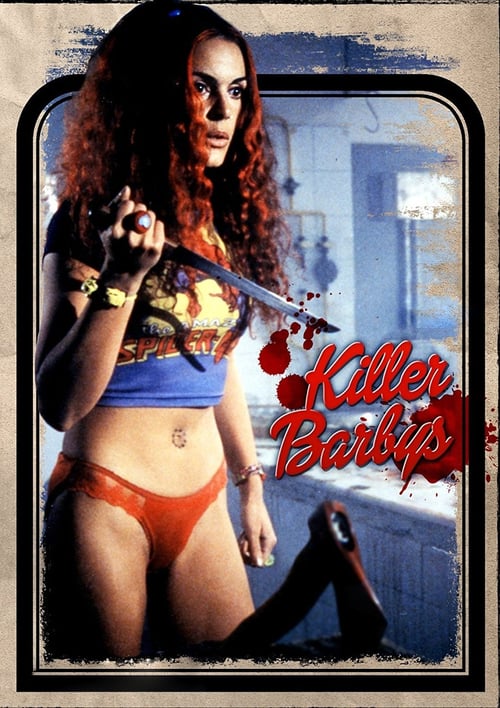
Killer Barbys (1996)

While the movie is called Killer Barbys, it features the Spanish punk rock band The Killer Barbies, who are fronted by Silvia Superstar. They’ve used the alternate spelling to avoid legal action from Mattel, but at other times use the “ie” spelling.

Released along with their first album Dressed to Kiss, this movie finds the band on the road when their van breaks down. Arkan (Aldo Sambrell, who was in everything from Leone’s Italian Westerns to Yellow Hair and the Fortress of GoldSilver Saddle and Operation Condor: Armor of God 2) welcomes them to the castle of Countess Von Fledermaus (Mariangela Giordano, Burial Ground: The Nights of Terror), who is really the artist Olga Luchan, who has remained alive for decades.

Billy and Sharon elect to stay in the van — continually aardvarking throughout the movies — while Flavia, Rafa and Mario all discover the secret of the Countess. Yes, she’s remained young on a diet of semen and blood.

There are only two songs by the band on the soundtrack and you will know them both well by the time the movie is done. You’ll also be amazed that Franco had made way more than a hundred movies before this, but so much of what I love is that you never really know what kind of movie the director would bring you.

Basically, imagine if Scooby-Doo had every character having sex with one another, but pervy sex because Jess Franco wouldn’t have it any other way. What a magical lunatic. The band would also work with Mr. Franco again to make 2002’s Killer Barbys vs. Dracula.

ANOTHER TAKE ON: The Vampire Doll (1970)

ABOUT THE AUTHOR: Mark Rochester is a librarian. Mad about movies and books and film soundtracks. His favorite film is The Private Life of Sherlock Holmes.

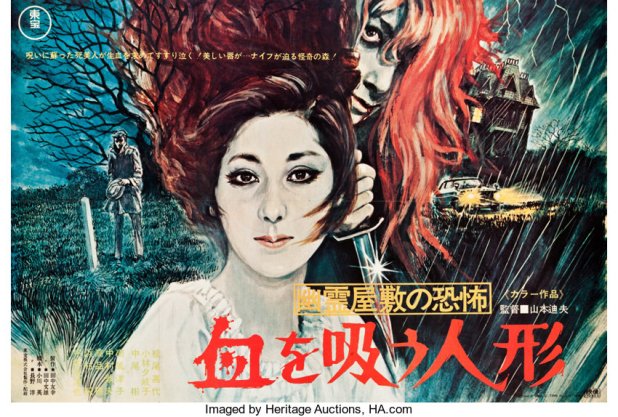
Released by Toho (the Japanese Studio that brought us Godzilla!), The Vampire Doll (1970), or to give the film its full title, Legacy of Dracula: The Vampire Doll,  was the first of a three-part series of Japanese vampire movies (known as the Bloodthirsty Trilogy) which was followed by Lake of Dracula (1971) and Evil of Dracula (1974).  Director of all three of the otherwise unrelated films was Michio Yamamoto, who before taking up directing in 1969, was the Assistant Director on films such as Kurosawa’s Throne of Blood (1957) and Samurai Assassin (1965), starring Toshirô Mifune.

Set in modern-day Japan, The Vampire Doll follows Keiko (Kayo Matsuo) and her fiancé, Hiroshi (Akira Nakao), trying to unravel the mystery behind Keiko’s missing brother,  Kazuhiko (Atsuo Nakamura) and the recent death of Kazuhiko’s girlfriend, Yuko Nonomura (Yukiko Kobayashi). Western audiences may not recognize most of the cast, with only Kayo Matsuo (the supreme Ninja in Shogun Assassin (1980)), Atsuo Nakamura (Lin Chung in the 70’s TV series The Water Margin) and Jun Usami (Tora! Tora! Tora! (1970)) providing the likely exceptions, but they will recognize many of its tropes and distinct plot influences from Gothic British and Italian horror movies and its touches of Mario Bava, Psycho (1960) and the Edgar Allan Poe adaptations from the 60’s made by Roger Corman. For this reason, the Bloodthirsty Trilogy is often held up as Toho’s answer to the horror films made by the British Hammer studio (1957-).

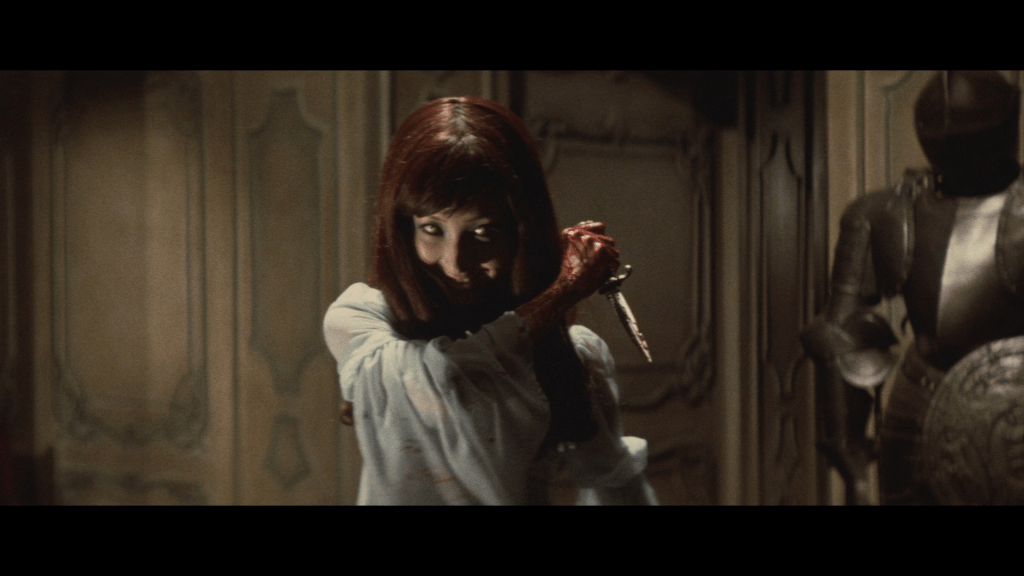
The setting for much of The Vampire Doll is the fabulous Nonomura mansion  – an old, huge Western-style home with a spiral staircase (the scene where Yuko’s mother descends the staircase is straight out of many a Hammer vampire movie), creepy, dark basement, secret doorways, strange cries in the night and even a mute butler called Genzo (who attacks all the guests whenever he gets a chance). The interior design of the house is superb and it is atmospherically, beautifully lit, with some rooms disarmingly bright and welcoming and others so dark with only the characters within lit at all. Some of the interior shots (by Kazutami Hara), especially the ornate shadows cast by flashes of lightning on the brown walls are among the things I enjoyed most about this film. Also impressive is the genuinely scary make-up and look of Yuko Nonomura, who with her green-yellow eyes, long dark hair and pale blue-white dress is more like an Onryō (“vengeful spirit”), a vindictive ghost from Japanese folklore (and movies), instead of one of Hammer’s busty vamps. Horror fans will also appreciate that this film is scarier and a bit less melodramatic than most Hammer films – the blood looks like blood, not like red paint, with the blood-letting scene at the end as realistic as it is spectacular. It is also eerie and atmospheric in places, has a number of genuinely creepy characters, a couple of good jump scares and a disconcerting jump cut out of a (?) dream sequence.

On my list of not so good things about the film are the performances, some of which are a little uneven, and the soundtrack which at times is overbearing and jarring to no positive effect. The middle section of the film, which focuses on the sleuthing and snooping of Keiko and Hiroshi, is a little slow and some of the plot devices (e.g. Hiroshi letting Keiko go back to the Nonomura mansion alone) are unbelievable. It is also very obvious where their snooping is leading. Or so we think !   More intriguing and unusual are the twists and plot lines in the last third of the movie involving the mysterious Dr. Yamaguchi (Jun Usami), Yukio being hypnotized, and maybe not even being dead at all, and her ’empty’ grave –  ok, they may be a bit confusing, and you may want to rewind and watch that last section again to take it all in, but you won’t mind, as many of the best moments are in the last quarter of the movie where Yamamoto takes the story away from traditional Western vampire themes and into the realms of the Japanese supernatural.  And what makes this film worth watching, regardless of its flaws, is that despite its obvious Western influences it still has its own distinct and vivid style.  As such I found it to be an interesting and entertaining Japanese take on the vampire movie.