Monster Force Zero (2020)

While attending a comic con to hype up his comic book Monster Force Zero, Calvin “A.I.” Cashill (Adam Singer, Jurassic Dead) and his cosplaying friends have entered a battle against the evil Destroyers of Destruction cosplay team, but ancient aliens are about to send these wanna-be superheroes on the adventure of their dreams.

Two of the stars of this film have big fandoms who will be ready to seek this out. Garrett Wang, who plays himself here, is familiar to science fiction fans as Ensign Harry Kim from Star Trek Voyager.

The character named The Janitor is played by Pat Tanaka, whose wrestling career has taken him all over the world, including stints in the AWA where he and Paul Diamond were Badd Company, taking that team to the WWE as the Orient Express. He’s also wrestled in WCW (he was El Gato), FMW and New Japan where he was called Goku-Do.

With heroes and villains named Gunns Lazer, Kadabra Couture, Final Boss, Quiplash, Hot-Babe, Squatch (yes, a real sasquatch), Wimpy Vader, Furrious and Ammorama, this film definitely has a fun comic book feel that has its heart in the 80’s. You have to love a mad scientist that is guarded by both a Bigfoot and an evil dinosaur, right?

With a feel that’s part Galaxy Quest and even more The Last Starfighter, this is a feel-good superheroic film that is all about entertaining you. I’d love to see the sequel that the ending seems to promise. And this feels perfect for a tie-in comic, video game and lien of action figures, too!

This is the kind of crazy adventures that comic geeks would draw in class while they should have been paying attention to their teacher. That’s high praise.

You can learn more about Monster Force Zero on the film’s official website and official Facebook page. This film is being distributed by Wild Eye, so look for it on your favorite streaming platform.

The Ghost Train (1941)

Okay, so I’ve absconded with this end of the month throwaway week for some celluloid odd n’ sods and turned into an unofficial “Good Life TV Network” week. Yep, it’s more “good life” memories of watching old movies with good ‘ol pop.

This, like The Rogues’ Tavern we previously reviewed this week, is another dark n’ stormy night type of movie: one that’s part murder mystery and part comedy; one that alternately gives you the frights and the chuckles.

This movie is the punch line to the joke: Did you hear the one about Tommy Gander, (a very corny, ugh-inducing) vaudeville comedian, blonde bombshell Jackie Winthrop, the hot-for-Jackie Teddy, and Jackie’s stuffy snob hubby Richard Winthrop ending up in abandoned train station?

The quartet gets off at Fal Vale Junction in the remote, English countryside, along with Herbert and his fiancée Edna, spinster Miss Bourne, and the (lovable) boozing Dr. Sterling, for a train transfer — which they miss.

Together, with the nearest town four miles away and no cabs available and a storm approaching, they hunker down in the train station — against the conductor’s warnings: warnings of the station being haunted by a “phantom train” and its passengers.

I can’t believe this hasn’t ended up on a Mill Creek Box set. Maybe it has and we just haven’t reviewed that particular box — and we’re on our 10th box, this November 2022! Oh, and might I suggest you pair this one up with Murder by Television (1935) for an evening of retro viewing? Toss The Black Raven (1943) on the VHS fires, as well.

Just another one of those fun, public domain ditties that survives courtesy of You Tube.

About the Author: You can learn more about the writings of R.D Francis on Facebook. He also writes for B&S About Movies.

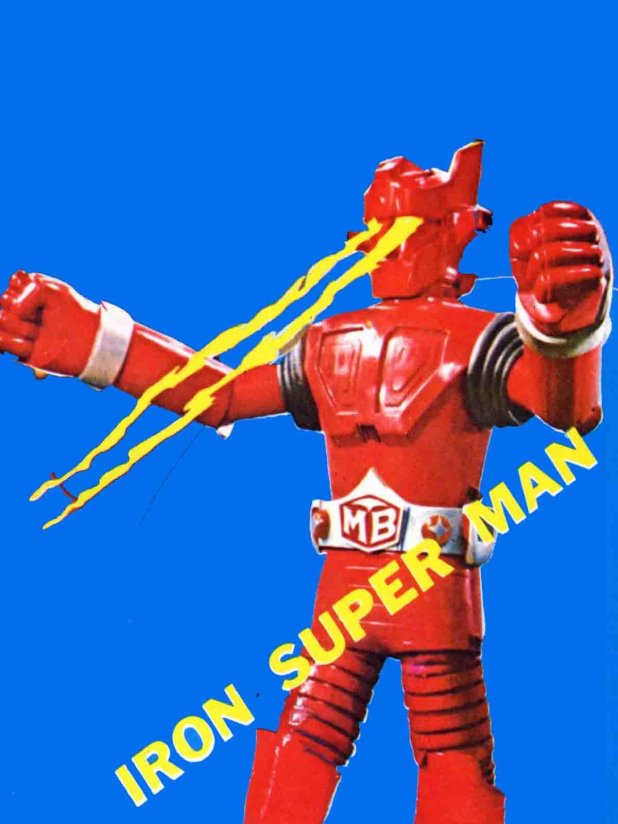
The Iron Superman (1975)

Taken from footage of Super Robot Mach Baron — the sequel to Super Robot Red Baron — this Hong Kong version predates the notion of using native actors within a Japanese show that Power Rangers would perfect a decade or more later.

Stranger still, this was released in Spain as Spain Mazinger Z – El robot de las Estrellas, even though Go Nagai’s famous robot is nowhere to be found.

The Universal Rescue team and their Super Iron Robot struggle to battle the evil that is within the Bermuda Triangle in a movie that smashes together an entire season of a TV show into 86 or so minutes. So you know that it’s going to make no sense — and therefore be awesome — before you even start playing it.

Stephan Yip, who directed Lady Exterminator, acts in this, as does Godfrey Ho, who is probably better known for his multiple ninja movies and insanity like Robo VampireScorpion Thunderbolt and Kickboxer from Hell.

This was originally directed by Koichi Takano, who did the puppet effects in King Kong vs. Godzilla before doing the effects for several Ultraman series, including Ultraman: TigaUltraman Towards the FutureUltraman 80 and Ultraman Leo.

To see a modern version of this, the movie BraveStorm has recently come out in the U.S. on blu ray.

You can watch this on Tubi.

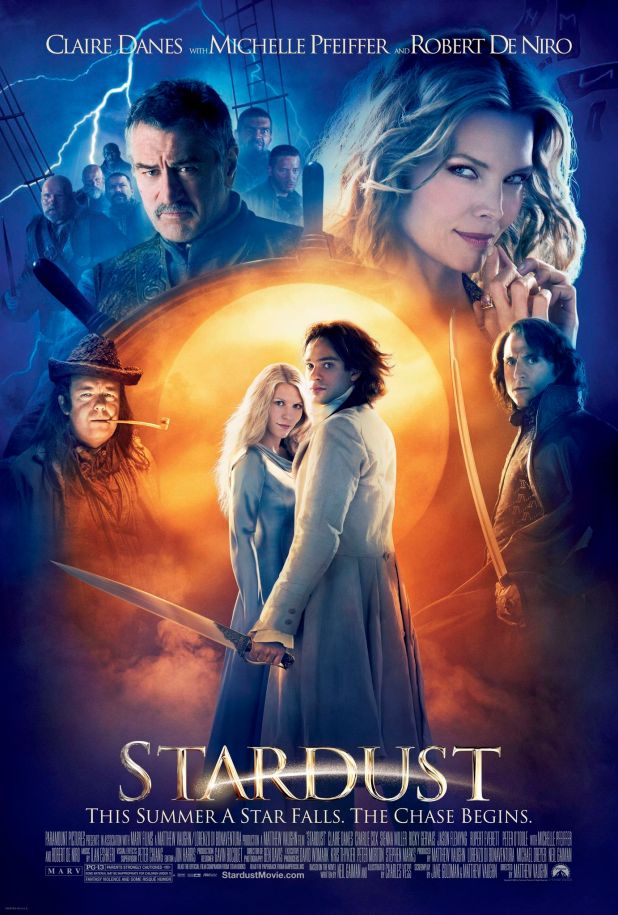
Stardust (2007)

Between directing Kick-Ass, X-Men: First Class, two Kingsmen movies and now this Neil Gaiman story, I think Matthew Vaughn likes comic books.

Here, he’s telling the story — with a huge ensemble cast — of Tristan Thorn (Charlie Cox), who enters the magical Stormhold to retrieve a star for Victoria (Sienna Miller), the woman he loves. Yet inside it, he discovers a woman named Yvaine (Claire Danes) and runs afoul of the many princes of that country and the witch Lamia (Michelle Pfeiffer).

I think the main lesson here is that if a woman asks you to get her a star before he agrees to marry you, your marriage is probably not going to be very good.

Vaughn has never been happy with how the film was sold, as the studio promised Lord of the Rings when this movie is much more The Princess Bride. That’s an apt description, as this has gone on to be well-regarded, the kind of movie that you’ll lay and watch if it comes on on a Sunday afternoon (not that we get that many lazy days around here any longer).

This has a sprawling cast — DeNiro is a cross-dressing space pirate! The Princes are Mark Strong, Jason Flemyng, Rupert Everett, Mark Heap, Julian Rhind-Tutt, Adam Buxton and David Walliams, a cast so big the love interests of five Bridget Jones movies! Peter O’Toole is the king! — and the script does a great job of condensing Gaiman’s expansive narrative down while adding new characters.

I have no horse in the fight between book and film, so if you do, perhaps you feel much differently. I just find this an entertaining film.

The Pope of Greenwich Village (1984)

ABOUT THE AUTHOR: Jim LaMotta is one of Pittsburgh’s premiere wrestling announcers, as well as a great writer. This article originally appeared on Steel City Underground. You can follow Jim on Twitter.

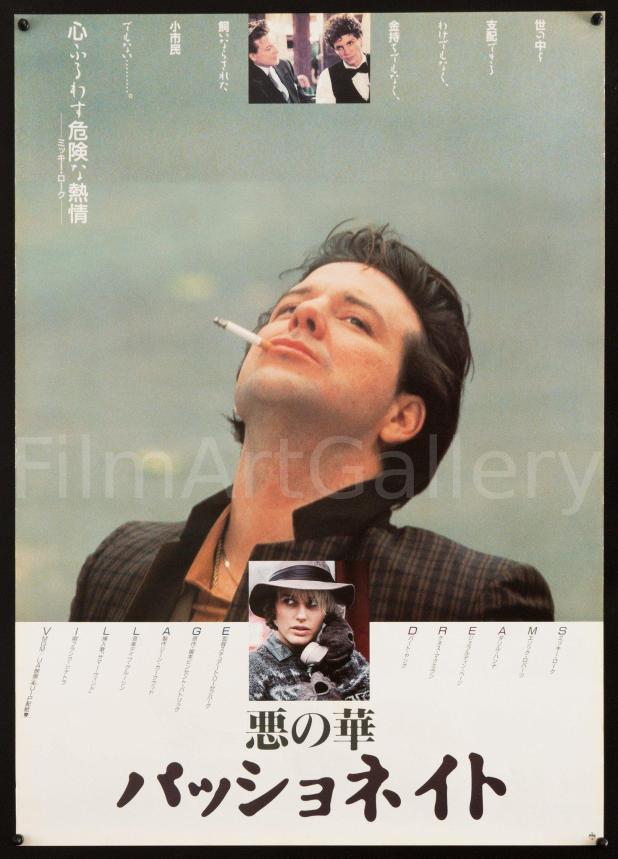
The first article that I penned for this site late last year was about Robert De Niro’s debut as a director, A Bronx Tale, the 1960s street saga based on Chazz Palminteri’s one-man stage show. As mentioned in that original review, I discovered the film when my dad put a copy that he taped from HBO into the VCR. This time, I’d like to discuss another movie that I originally watched from a home recorded copy, The Pope of Greenwich Village. Another street saga, this 1984 release shifts to another famous location in New York, the Greenwich section of Manhattan. With the screen play written by Vincent Patrick, adopted from his novel of the same name, the film blends together tense moments of uncertainty with occasional comic relief, as two wise guys find themselves lost in the shuffle of the hustle of the streets.

Directed by Stu Rosenburg, who has the classic Cool Hand Luke on his resume, the production brought together a tremendously talented cast, including the two main characters, Charlie and Paulie, played by Mickey Rourke and Eric Roberts respectively. At the time the film hit theaters, Rourke, a sharp and charismatic actor, was on an upswing with titles like 1982’s Diner and the Coppola-directed Rumble Fish on his resume. Eric Roberts, the brother of famous actress, Julia, played the role of Charlie’s clumsy sidekick perfectly to give the narrative more depth as the film progressed.

The opening scene finds Charlie swaying to the rhythm of Frank Sinatra’s “Summer Wind” as he files through his closet to pick a snazzy suit to wear for his shift as a manager at a high-end restaurant. In a slight example of foreshadowing, his carefree jam session set to Frank’s suave voice is interrupted by his search of several pairs of his Italian-made dress shoes to look for extra cash to make a payment to one of the loan sharks waiting at the restaurant. As he strolls into the eatery, a co-worker gives his supervisor the heads-up that the crusty owner of the establishment plans to check tabs that night to make sure the waiters aren’t excluding items on the bill in exchange for better tips. This is where we’re first introduced to Paulie, Charlie’s third cousin, who naively disregards the same warning from him. Roberts’ character decides to skip the high-priced items on the bill, which the owner obviously notices and fires both cousins since the manager didn’t catch the underhanded tactic first. The confrontation outside of the establishment when Charlie angrily informs Paulie that his mishap resulted in the pair of cousins getting their walking papers sets the tone for their dynamic in the film. Charlie is a hustler trying to stay above water with hopes of owning his own restaurant someday. Paulie immaturely tries to explain his rational for skipping items on the check before the audience sees that he legitimately feels bad that he costs his cousin the job.

The next scene finds a distressed Rourke at his kitchen table shuffling through bills and late notices in the apartment he shares with his girlfriend Diane, played by Daryl Hannah, who went on to work in dozens of roles in TV and film, including the 2003 cult favorite, Kill Bill. Adding to his financial struggles are alimony, child support payments, and credit card debit. Unwavering, Diane assures Charlie everything will work out for the best, prompting Sinatra’s “Summer Wind” to rejoin the film as we find the freshly unemployed cousins playing stick ball in the neighborhood the next day. The good times were short-lived, as his visit to the bank for a loan was denied and when he arrives home, more pressure was heaped upon him with the news that Diane is pregnant. Back to bop around the village, Paulie tells Charlie about his next outlandish venture in an attempt to hit it big. The dim-witted waiter explains that he bought into a race horse that was conceived through “artificial inspiration” without realizing that he misspoke on the terminology while he makes himself a comically large sandwich. Paulie claims the thoroughbred has the “champion gene,” but the out-of-work waiter needs to score some big cash to bet with, revealing his next narrow-minded scheme.

The two meet Barney McMillian, an eccentric and edgy clock dealer, in a bar. The Irishman explains his work repairing clocks gave him the tools to pick locks. Before the trio can discuss details of a heist of the safe of a shipping company, the hard-nosed officer that patrols the streets tows Paulie’s car, despite his pleas to accept a ticket without getting the car impounded. Finally Charlie agrees to the heist, with the mounting financial pressures in his life as the determine factor.

During the next scene the audience is introduced to Jack Kehoe’s Walter “Bunky” Ritter as he shuffles through the crowded sidewalk into the local mafia hang out. Similar to Kehoe’s character in the film, Serpico, “Bunky” Ritter is a crooked cop on the take, paid to drop off mob collections in exchange for a piece of the pie. Detective Ritter meets with “Bed Bug” Eddie Grant, the local kingpin, to discuss details for his next pick up. “Bed Bug” is portrayed by Burt Young, who famously played Paulie as Sylvester Stallone’s pal in Rocky. Despite the boxing corner man as probably his most well-known role, the Eddie Grant character shows that Young has depth to his acting repertoire, replacing the good natured Rocky role with a sense of danger on-screen as a ruthless mob ruler.

The tense introduction of “Bed Bug” Eddie is contrasted in the next scene when the patrolman that had Paulie’s car towed was back on the street writing tickets when he stopped into the bar to use his position of authority to get a free drink after he used the bathroom. While the cop was taking care of business, Paulie slipped in the bar and put a packet of horse laxative in the cop’s whiskey. The gluttonous patrolman emerges from the restroom, downs the free drink, and goes back to the street to gleefully write more citations. Within seconds, the stomach tremors hit him and he attempts to waddle like a penguin back toward the bathroom before his digestive track can’t offer any more resistance. Paulie rushed to a pay phone and called in an officer down, prompting squad cars to swarm the street, only to find the diarrhea-stricken cop holding his stomach. As an Irish folk song crescendos, Paulie proclaims to the public that the cop defecated on himself.

Back to business, Paulie, Charlie, and Barney meet up that night to break into the shipping company’s offices to crack the safe, hoping to score the $150,000 inside. As fate would have it, as those three prepare to begin work on the safe, Bunky Ritter is shown at the apartment he shares with his mom getting ready to go pick up the same money. Geraldine Page, an actress that had a 40-year career through the stage, film, and television, was nominated for an Academy Award for her role as Mrs. Ritter. Page does such a stellar job with this character, as she authentically presents a no non-sense character, but still brings a caring side to it. Different from Kehoe’s role in Serpico, Detective Walter agreed to the collections as a way to ensure a retirement fund for himself and his mother, who worked as a housekeeper for several years. Bunky’s actions might not be legal, but his intentions are noble, a recurring theme in the narrative of the film.

It’s revealed that Bunky keeps a wire on him during all meetings about the collections as an insurance policy for his safety, and as he drives to the office for the pick up, he acknowledges the other detectives involved in the bribes. Unaware of Bunky’s impending arrival, Barney is cracking the safe while Paulie sips on a coffee and watches the parking lot. Tense drama builds as the former waiter tells his accomplices that someone is walking up to the building. With the lights out, the trio hide as Detective Ritter enters the office that has equipment strewn around the room since the building was being remodeled. The tools don’t phase him, but the hole drilled into the safe is a red flag. Unsure of how recent hole was made, Bunky uses his detective skills to see how warm Paulie’s coffee was. Immediately, Bunky takes out his gun, knowing the fresh coffee meant someone was still in the room. As he backs up and yells for the person to reveal themselves, he fires a shot before he accidentally falls down an unfinished elevator shaft. The trio attempt to check on him, but realize that Walter is dead, with Charlie retrieving the tape that was used to record the audio from the wire the cop wore to the meetings. Despite Charlie’s objections, Barney finishes the safe job, garnering the $150,000 that Paulie promised would be there.

Charlie found the detective’s arrival too suspicious so he confronts his cousin about what else he knew about the situation. With a little pressure, Paulie admits that the shipping company is run by Eddie Grant, which meant they just stole from the local mafia crew. Charlie is almost hysterical as he questions why his cousin would want to steal from the “Bed Bug.” Again, we see the naive side of Paulie because he thought that including his cousin in the heist would make up for getting him fired, but it actually put his life in danger.

The news of the safe cracking and the aftermath have a ripple effect throughout the film, as word of Detective Ritter’s wire makes his fellow officers concerned about their future if their involvement in bribes is revealed. Two gruff cops visit Mrs. Ritter to attempt to search their apartment for the missing recordings. Again, Geraldine Page does such an incredible job in this scene, mixing her grief by clutching a rosary with a tone of toughness, as she aggressively puffs on an unfiltered cigarette and sips a whiskey. When the cops try to intimidate her with the threat of trying to withhold Walter’s pension, she promptly kicks them out of her house before she tearfully hold the rosary close to her, the wall of grittiness finally tumbles down from the waves of grief at the death of Walter at the office. At the same time, Bed Bug Eddie gets word from the street that Paulie and an unknown partner were the ones that stole the cash. A member of Bed Bug’s crew knows Paulie, but Uncle Pete as the waiter affectionately calls him, insist his nephew isn’t a safe cracker. Eddie Grant wasn’t the only one to take the news hard, as Charlie visits Diane at the studio where she teaches dance classes and tells her that he landed $50,000 from the robbery. Diane is livid that Charlie allowed his cousin to get him in another jam, and an argument ensues before Charlie leaves, the situation with her unsolved.

Eventually, Paulie is at the stables to check on his horse with the “champion gene” that he plans to race soon, wagering the cash he lifted from Bed Bug’s safe. He was faced with a game of chance sooner than expected, as Uncle Pete and a few of Eddie Grant’s goons, including Frank Vincent, who made a career of supporting roles in mafia dramas, including Casino, Raging Bull, The Sopranos, and others, were there to meet him. Uncle Pete takes a walk with his nephew, informing him that someone identified him as one of the thieves. Bed Bug Eddie had a reputation for slicing people up, and Pete tells Paulie that the only way for him to leave the stables alive is to tell him who his partner was in the safe job. Paulie begs for a reprieve, but Pete assures him there are only two options in this scenario. As the tension builds, Paulie leaks the information that Barney cracked the safe, but doesn’t mention Charlie in an attempt to protect his cousin from the wrath of the Bed Bug. As Uncle Pete hugs Paulie, the previously mentioned Frank Vincent approaches and cuts off Paulie’s thumb, the penalty for robbing the head of the mafia crew.

With Barney revealed to be the partner, the crooked cops are sent to retrieve him, but the savvy clock dealer was a step ahead and escaped through a side door. Later, Barney gives Charlie his share of the robbery and asked him to mail it to him after he escaped the city. During this conversation, Barney’s motivation for the heist is explained, as he plans to use the extra cash to provide for his wife and care for his special needs child. Again, not exactly legal, but a noble cause.

Charlie finds himself in a cash flow problem of his own, as he returned home with flowers for Diane to smooth over the earlier argument at the dance studio. A message from her on the answering machine tells Charlie that she took $45,000 of the money for their unborn child and decided to leave him. Enraged being the victim of his own theft case, Charlie begins smashing the furniture, pummeling the refrigerator and breaking chairs. The next morning, with a half empty bottle of wine next to him, Charlie is awoken by a faint knock at the door. When he answers, his cousin is standing there delirious with his hand wrapped up from the Bed Bug form of justice. Only after rambling on about his decision to give up Barney as the partner does the medicated Paulie ask what happened to all the broken appliances. Upon hearing the news that Diane ran off with most of the cash, Paulie rants for a while before the reality of his missing appendage sets in when he looks at his hand. In one of the most memorable lines of the film, Paulie proclaims, “Charlie! They took my thumb!” collapsing to the floor after taking too many pain killers before he arrived.

Despite the lovable dork’s mistakes, Charlie immediately tends to his cousin, as the next scene shows him feeding Paulie soup. To make up for the theft, Paulie will have to serve coffee at the mafia hang out and within days, the Bed Bug interrogates him as to the number of people involved in the robbery. After Barney skipped town, another measure of revenge was being plotted, and after tense questioning, Paulie finally cracks, naming his cousin as the third participant in the robbery. As was usually the case, the new coffee server had a plan to get his cousin out of this predicament. With his race horse, “Starry Hope ” set to run at the track, he bought two tickets for Miami as an escape plan for the cousins after they hit it big on the horse bet. Unaware that the Bed Bug knows about him, Charlie bets Starry Hope across the board with his remaining share of the theft, a safer bet than his cousin makes, who put everything on the horse to win. After an exciting race, Charlie’s place or show bet pays off, as he lands $20,000 from the horse’s second place finish.

To celebrate the victory, the two stop at a bar where Paulie nervously confesses to Charlie that he had to give up his name to the mafia crew. Totally irate,  Charlie screams at Paulie and throws trash cans through the street, storming off as Paulie tearfully tries to explain the tickets to Miami are a way to leave. As Charlie listens to Detective Ritter’s wire tape again, he realizes he has evidence and leverage that proofs of Bed Bug’s involvement in crime. There’s a montage that shows Charlie getting ready for an eventual showdown with the kingpin. His finest suit, a manicure, and a hair cut prepare him as he walked into the mob club for the confrontation. He sits across from Eddie Grant and explains that the Bed Bug will give him a pass on the robbery because he has a tape that can link him to the police corruption in the city. Implying that he plans to severe Charlie’s hand, Grant claims, “Nobody but the Pope could walk out of here with this hand.” Without hesitation, Charlie’s response is a nod to the title of the film, “This might be your church, but right now, I’m the Pope, I’m the Pope of Greenwich Village because I have a tape.”

Just as it looks to be seconds away from a physical confrontation, Paulie shows up to serve coffee. A tense stare down takes place between Grant and Charlie, as the mafia leader looks to signal his henchmen. As Bed Beg confidently finishes the expresso in split second, he suddenly grabs his throat and charges through the door and down the street as most of his crew follow him. Paulie exclaims, “Lye! I packed his expresso with lye!” The abrasive chemical rendered the mob leader useless, allowing Charlie the chance to escape. Paulie stood up for him cousin, despite Charlie’s claims that he had things going his way before the expresso ended the conversation. Once again, “The Summer Wind” can be heard as the two walk down the street, presumably on their way to Miami to relax on the beach and enjoy their winnings from the horse race.

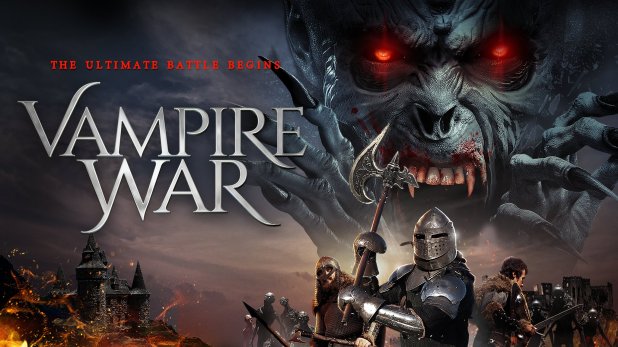
Vampire War (2017)

I love the guys at Wild Eye Releasing, not just because they often send us review copies of their films — thanks as always — but because they’re real fans of horror first. So they understand that if they released a movie called Montrak under its original title and kept it all in German, the only people that would pay for it would be maniacs like me who are obsessed with the strange corners of film.

A title like Vampire War? Now that seems like something that will get noticed on streaming services and the shelves at WalMart.

In Germany, humans are getting killed by wolves. Yes, even in our modern time this is happening, but of course, they aren’t wolves at all. Nope, this is the work of the vampire Montrak and his clan who have been transformed into the living undead by Lucifer himself! Now, however, there’s a new vampire lord, which means that the American title Vampire War is much more apt.

Writer/director Stefan Schwenk released another version of this tale, Montrak – Meister der Vampire, back in 2002. This time, he had more money and experience to, one assumes, fully deliver on his vision.

I’ve read some negative reviews on the dubbing of this film, but honestly, if bad dubbing ruins a movie for you, you’ve missed tons of films from around the world.

Thanks to Wild Eye for sending this our way.

You can find Vampire War, aka Montrak, DVDs on eBay, and at the online and brick-and-mortar outlets of Target, Walmart, and Best Buy. It also streams on Amazon Prime and Vudu.

Kuningasmies (2020)

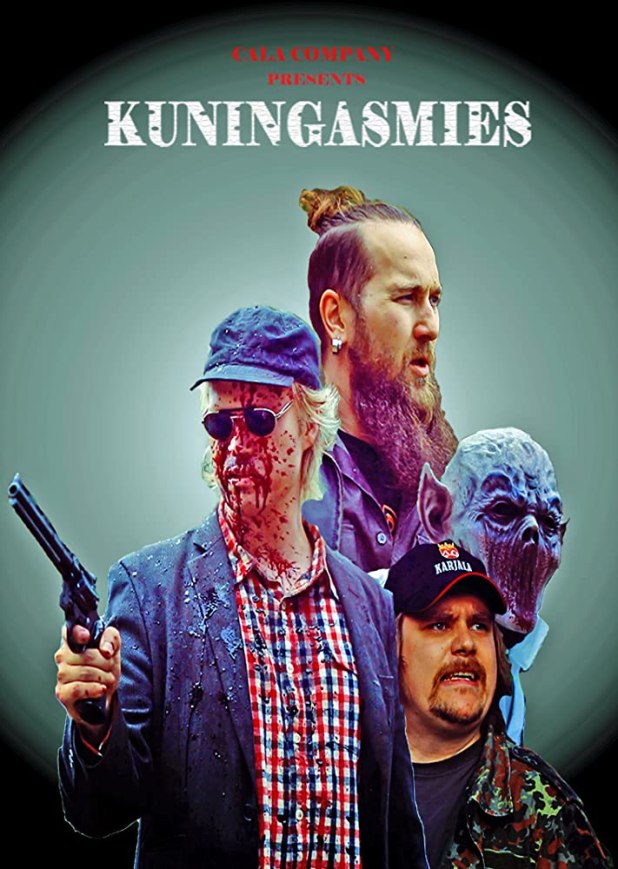
Tapio Kauma sent us Lääkekoe (Medicated) back in 2018 and now, he’s back with another strange film that translates as The KingMan. I love the sell copy that they sent me about this movie: “Viewers can see chainsaws, axes and lots of firearms in action & explosions with bloody results. However the movie also investigates the effects of toxic masculinity and what bad might result from a twisted idea of manhood.”

The writer/director also plays Raimo, who enjoys getting to kill the monstrous creatures around the cabin in the woods where he and Osku are supposedly relaxing perhaps a bit too much. Whether it’s all the drinking or the killing, he soon starts to see himself as a king, which leads to his friend accidentally killing another of their pals twice.

I also love that these guys stick to short films versus expanding out to a full-length feature. To me, less is always more and they do what so few movies do for me these days. I actually want to see more of their bloody and hilarious work.

You can watch the entire movie on YouTube and learn more on the official Facebook page.

The Rogues’ Tavern (1936)

You’ll need to cut me a lot of slack with this movie, due to its nostalgia value of watching this on the defunct Good Life TV Network with my dad — where we also watched the 1981 war epic Inchon, which was produced by the Reverend Sun Myung Moon, the head of the controversial Unification Church, who also owned the cable channel.

This is just a good ‘ol fashioned murder mystery concerning a soon-to-be-married pair of detectives (he’s a “real detective”; she’s just a “store detective”) who stopover at Red Rock Tavern on a bleak and windy night.

As they settle in and mingle with their other guests — a wild dog breaks in through an open window and attacks and kills two of the guests. The sleuthin’ is on as detectives Jimmy Kelly (Wallace Ford) and Marjorie Burns (Barbara Pepper) discover that the dog isn’t the real killer. Then all of the guests discover they’re trapped inside the tavern by locked doors and windows.

Like I said, this is just a good ‘ol fashioned murder mystery the way the used to make ’em and the way they don’t know how to make ’em anymore.

See, Pop? Making me watch those old flicks wasn’t for naught.

Oh, there’s a twist here: Barbara Pepper, a notable, flashy Hollywood “blonde dame” of the 1930s and 1940s Golden Era of cinema, became better known to us younger folks as Doris Ziffel on TV’s Green Acres and Petticoat Junction. You . . . maybe . . . might remember (I do) Wallace Ford starring as Marshal Herk Lamson in The Deputy, just one of those (many) short-lived TV westerns that didn’t live to up the likes of Bonanza and Gunsmoke.

I can’t believe this hasn’t ended up on a Mill Creek Box set. Maybe it has and we just haven’t reviewed that particular box — and we’re on our 10th box, this November 2022! Oh, and might I suggest you pair this one up with Murder by Television (1935) for an evening of retro viewing? Toss The Black Raven (1943) and The Ghost Train (1941) on the VHS fires, as well. Good stuff!

You can watch this in the public domain on You Tube.

About the Author: You can learn more about the writings of R.D Francis on Facebook. He also writes for B&S About Movies.

The Hustler (1961)

ABOUT THE AUTHOR: Jim LaMotta is one of Pittsburgh’s premiere wrestling announcers, as well as a great writer. This article originally appeared on Steel City Underground. You can follow Jim on Twitter.

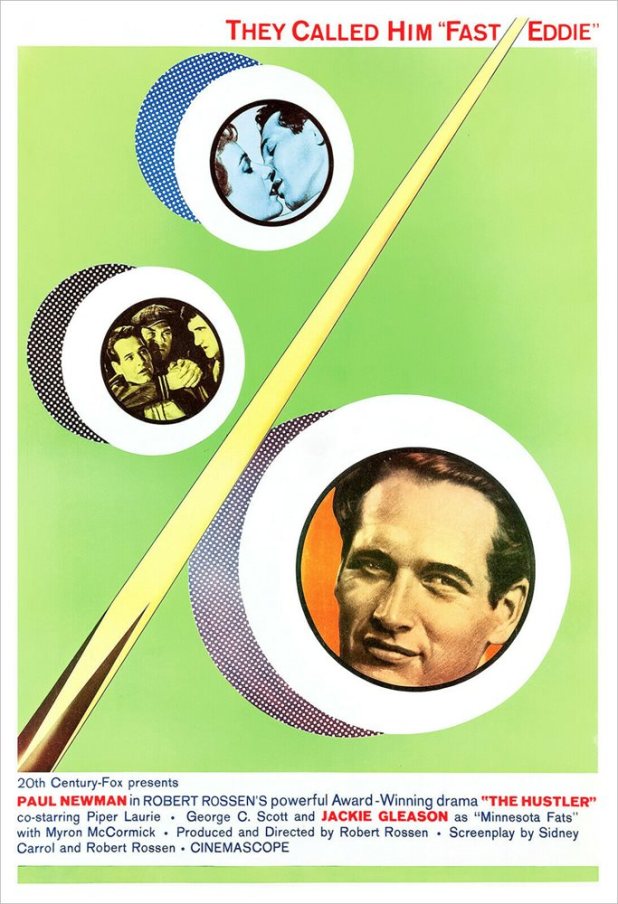
In another example of the “Mr. Braddock classics,” I originally saw The Hustler a few decades after its 1961 debut as my dad recorded it from the Turner Classic Movies channel, a network that shows films uncut and unedited, and had the name of the movie written in blue pen on the VHS tape. A side note, my uncle, the late legendary, Willie Visconti actually ran a pool room in Braddock, PA in the 1970s. The Braddock Free Press once ran a note about his birthday, January 7th, describing him as “the popular proprietor” of the Braddock Recreation Center. As mentor to my dad in many ways, Uncle Willie let him run the hall when he was busy, despite the fact that my dad was still in his teenage years. Between the Pepsi machine, pool tables, and some concessions, the venue remained popular for most of that era before Uncle Willie decided to sell the building and take part ownership in a small convenience store in Braddock until he passed in the early-90s. To this day, my dad really enjoys telling stories about his late mentor and it’s always comical when he recounts the many times that Uncle Willie would “randomly” show up to visit when he knew my dad was cooking. “Oh, Jim, you cookin?” “Yeah, Will, why don’t you come in and eat?” “Oh well, I guess so, I’m here now.” I have to say up front that this film is really an incredible example of American cinema and those much better versed in the interpretation of film have done much better analysis of the movie, but after I saw it in my middle school years, my appreciation for the complex narrative has only grown since that time. Initially seeing it more than half my lifetime ago, the Robert Rossen-directed drama went from just a cool movie about pool with charismatic characters to an example of some of the resounding themes of life as I watched it through older eyes. Based on Walter Tevis’ 1959 novel of the same name, the film unites an all-star cast to chronicle the turbulent travels of “Fast” Eddie Felson, a pool hustler brilliantly played by the legendary Paul Newman. Before he had a “Cool Hand,” made sauce for charity, or buckled up as a race car driver, Newman took aim with a pool stick to portray “Fast” Eddie, who some have speculated was based on real-life pool shark, Eddie Parker, but even before this iconic role, Newman, who has dozens of notable titles on his resume, was already considered a major name in the industry with roles in A Cat on a Hot Tin Roof, Exodus, and other films.

The opening scene is simplistic in its presentation, but reveals the theme of the film to the audience, it’s all about the hustle. Fast Eddie and his backer Charlie, played by Myron McCormick, stroll into a small bar that has “pool” advertised in the windows. The pair of pals claim they are appliance salesmen on their way to a convention in Pittsburgh the next day, but stopped off on their drive for a drink and some retreat from the muggy weather before they complete the final two hours of the trip. They start a friendly game, with Felson indulging in an occasional whiskey between shots before the supposed salesman wants to wager a few dollars against Charlie. The games continue as the two exchange wins before an apparently intoxicated Felson makes an incredibly difficult shot to finish a game. Charlie wagers that Eddie can’t hit the shot again and his near staggering pal misses before protesting that he wants to make another bet. Charlie, not wanting to take advantage of his bumbling buddy, declines and heads to the car. However, the spectators in the bar are more than eager to take some easy cash, including the hard-nosed bartender. The stumbling Felson empties his pocket of $105, a week of commission for the biggest bet of the afternoon as the bartender matches it right from the cash register, not wanting to let the chance at easy money pass him by before Felson sobers up. With the cue ball and the eight ball in place, “Fast Eddie” gives up a slight smile before he connects on the trick shot, taking the cash with him. The next shot shows Eddie with a smile as he hands Charlie his portion of the winnings, inviting the audience in on the game, the partners worked the spectators into believing that Felson was drunk, but the facade was only to get them to put their money on the table before he took them for the most money possible. It’s all about the hustle.

In a direct contrast, the next scene finds the two pool partners at their actual next destination, the next pool hall on the road to find some action. However, this particular establishment has “Billiards”  printed on the windows instead, the proper name alone suggesting it’s a more serious venue. Upon their arrival, a sign at the front desk ironically says, “no gambling allowed” and the gruff manager informs them, “no bar, no pinball, just pool” as the gullible onlookers from the previous day are replaces with unimpressed viewers around the room this time. Without booze as a potential set up, the two have to look for another angle and Felson finds it as he begins to confidently brag about how much money he’s going to win, proclaiming a goal of $10,000 in one night. One of the locals walks over and lets Fast Eddie knows the patrons of this pool room are well aware of his hustling reputation, and that if he’s there to play Minnesota Fats, the kingpin with legendary status among the smokey nine-ball tables, he should think twice about it. The gritty guy attempts to insult Charlie, who Felson fiercely defends, setting the record straight that Charlie is an equal partner, an aspect that provides some insight into their friendship. But with Felson’s pride insulted with the notion that he can’t defeat Minnesota Fats, he becomes determined to show up the well-known player.

As promised, Jackie Gleason struts into the pool hall at exactly 8 PM with a lavish overcoat and his hair slicked, nothing out of place to distract from the presence he brings to the smoke-filled room. After introductions are made, the terms of the game are agreed upon and Fast Eddie gets to square off with Minnesota Fats. Gleason’s work here is top-notch because with Fats’ introduction to the film, his lines aren’t anything profound, but the way he presents the character brings depth to the persona. When he glides around the table, finding the perfect angle for each shot and calling them in the process, his body language projects that pool isn’t a game for him, it’s a serious business. As he focused in on a shot, he put down his lit cigarette because it’s not a leisure time for him, it’s his work as he precisely dust the cue stick with chalk to ensure a clean shot.

With an upbeat jazz tune to accompany it, a montage shows the hours wear on with the shots, the racks, and the money exchanged. Gleason has the advantage before his opponent gets a chance to take over the game, but “Fast” Eddie begins to spout about his skills while he aggressively sinks shots in each pocket, suggesting this exhibition is more about ego than business for him. The jazz rejoins us and the montage continues, this time with odds tilting in Felson’s favor. When Charlie tells Eddie that he won $1,000 so far, the hustler wants to up the bet, asking Fats’ if they can wage a thousand a game. Gleason accepts, calling for a drink and the arrival of his financial backer, George C. Scott’s Bert Gordon, who arrogantly sips a glass of milk in the pool room as he viewers the game. More jazz brings along another montage of called shots, racks, and Charlie nervously chain-smoking from the sidelines. After 25 hours and $18,000 of profit, a weary Felson is slumped in a chair. Fast Eddie refuses to conclude the game until Minnesota Fats says it’s over. Despite Charlie’s pleas, Eddie angrily grabs his cue stick while he chugs more whiskey. On the flip side, Gleason is diligently washing his hands and getting cleaned up before he slips the suit jacket back on to continue the game. Felson ignored the most important rule of gambling, you have to known when to walk away. Bert Gordon smirks from his chair, knowing that Eddie is in over his head and he looks to take joy in Felson’s downfall.

Not surprisingly, Felson loses everything except his original $200 start up cash. Ironically, the actual intoxicated Felson couldn’t keep pace with the pro that Gleason was. As Eddie stumbled around the table, Minnesota Fats looks on with a combination of concern and disappointment while Bert gleefully enjoys the foolish display. Gleason rejects the offer to play a final game for the remaining $200, mercifully sparing Felson some money and leaves the pool hall. Still drunk and almost delirious from the lack of sleep, Eddie collapses, prompting Charlie to check on his fallen protegee. Back at the hotel, Eddie stays true to his word, leaving his partner half of the remaining cash and goes to the bus station, where he meets Sarah Packard at the diner. Still hung over, Felson falls asleep in the booth, but when he goes to the bar at the bus station he runs into Piper Laurie’s character again. With booze to replace the coffee from earlier, the two actually get to know each other, revealing that they both ended up at the bus station that morning simply because they had no where else to go. Sarah explains she enjoys a drink and attends a few college classes during the week, sounding as if her plan was more to pass the time than to pursue any higher education.

Without much in common other than a lack of direction in life, the two lonely souls decide to get a bottle of scotch and go to Sarah’s apartment. They kiss at her door way before she reconsiders the plan, and Eddie leaves quietly, finding a cheap dingy hotel room for the night. He hustles a few dollars at a low-end pool hall the next day before he goes back to the diner for coffee when he’s reunited with Sarah. This time they go back to her apartment and the next scene finds them discussing their plans the next day. Again, they seem to be brought together more by desperation than anything since Eddie is too embarrassed to meet up with him mentor and Sarah seems to be hopelessly lonely. With her school books, groceries, and booze in tow, Sarah arrives home the following day and we find that Eddie has brought over his belongings from the shady motel room. Despite barely knowing him, Sarah allows Eddie to stay with her. Eddie insists on paying for his share of the groceries, providing a level of depth to the character. He might be pool shark, but he believes in fairness for those not involved in the hustle. He even suggest that Sarah shouldn’t drink and get help before a knock at the door reveals that Charlie found Eddie.

A tense discussion shows that Felson wanted a rematch with Minnesota Fats while Charlie wants to go back on the road. Charlie explains that he doesn’t care about the money Eddie lost in the game, showing that their friendship isn’t just about dollars and cents. Charlie reveals that he saved some of the winnings for him, but Eddie refuses his offer to return to the road, ending their partnership in the pool rooms. With sadness in his eyes, Charlie leaves the apartment, a sign of the end of their friendship as well.

A few weeks later, we find Sarah next to a half empty bottle of scotch and as Eddie gets ready to go to the next local dive bar to find some action, even intoxicated, she finally makes some realistic statements about their relationship and the fact they don’t really know each other. Instead of finding pool, Eddie runs into Bert Gordon at the bar, who offers to become his new money backer with the proposition that takes a hefty portion of the winnings for fronting the cash. When Bert won’t budge on the percentage of the offer, Eddie refuses before Bert gives him a warning about walking into the wrong pool room. That night, Felson goes to hustle at the wrong place and a group of thugs breaks both of his thumbs, taking him out of the pool scene indefinitely.

The next scene finds Eddie at the door and when Sarah answers, she finds him bruised with the broken appendages. The next few weeks show her finding stability through caring for Eddie, as she opts not to get a drink when she writes an assignment for class. The two enjoy a picnic and Eddie discusses the possibility of defeating Minnesota Fats if he stays focused. After that we see him approach the apartment door with his hands out of the casts and his thumbs healed as he surprises Sarah with the news of his recovery. He thanks her for caring for him through the injury. She might be an alcoholic, but this sequence shows that a flaw instead of necessarily someone’s defining trait. The same way Eddie’s mishaps in the game against Fats didn’t define him as a pool hustler.

Speaking of the game with Fats, Eddie is back at the bar where the original game took place to practice, attempting to get some flexibility back in his hands. He runs into Bert Gordon, who heard about the incident at the dive bar. Bert emphasizes the importance of character in winning, offering again to back him on the road and eventually in another game with Gleason. This time, Felson accepts and tells Sarah that he will be traveling to Louisville with Bert to hustle some games against wealthy businessmen at a lavish party. Sarah gets drunk and hysterical, as she fears Eddie will decide to leave her. In the drunken rant she reveals that her father left the family when she was young and now sends her money to make up for it, but won’t be involved in her life so she has financial security, but feels completely unwanted by her family. This scene reveals just how flawed and fractured she is from the trauma in her life.

To reassure Sarah, Eddie makes arrangements for her to take the trip with them. Upon their arrival, while Eddie is practicing, Bert takes the opportunity to tell Sarah that he only tolerated her on the trip because of the money to be made from Felson’s pool hustling. After they attend some horse races, the trio meet up with Findley, played by Murray Hamilton, who famously had the role of Mayor Larry Vaughn in the 1975 classic, Jaws. Bert arranged the game with Findley, who invites his guests to the party that evening. Knowing that Eddie is being exploited, Sarah gets drunk at the party while Eddie loses, by design, to the snarky businessman. She begs him to leave, but after Eddie sends her back to the hotel, Bert agrees to back him for $1,000 a game. At the end of the night, Findley owes $12,000 and Bert looks satisfied while Eddie seems disappointed because of the argument with Sarah earlier in the night. Even getting his share of the cash, Eddie is disgusted with himself because he argued with Sarah just to win money. Despite the arrival of a cab, he opts to walk to the hotel, which meant Bert arrived first. Finally showing what a coward he is underneath the tailor-made suit, Bert takes a drink before he enters Sarah’s room and fabricates a story that Eddie wants her to leave. When Felson gets back to the hotel, he finds the authorities in his room and that Sarah committed suicide in the bathroom because she thought she was abandoned again. Bert sheepishly tries to explain what happened before Eddie jumps at him, pummeling the shady businessman before the police restrain him.

Back at the billiards hall, “Fast” Eddie shows up to challenge Minnesota Fats in a rematch at $3,000 a game, his share from the Louisville trip that led to Sarah’s death. With Bert watching from his usual spot, Eddie, focused more on a form of self redemption than proving anything to anyone else, takes Bert to task. As he sinks each pool ball with precision, Eddie tells the businessman that his lavish lifestyle doesn’t make up for his lack of character, as he only knows how to exploit others for his own personal gain without knowing the true value of anything. Eventually, Minnesota Fats hauls the games, acknowledging that Eddie is the better player on this occasion. As the pool shark puts his stick back in its case, Bert Gordon has the audacity to attempt to collect a percentage of the winnings, referencing their deal in Louisville. Gleason looks concerned for Eddie’s safety when Bert reveals that he was the one who had Felson’s thumbs broken in the dive bar. Newman does an incredible job in this scene with lines where Eddie explains that Bert could get his thugs to break his thumbs again, but he would come back to kill Bert if there was anything left of the broken pieces. Knowing the hustler was serious, Bert agrees to let Eddie walk, but cautions him that his career as a pool shark is over.

Eddie’s run as a hustler was finished anyway because he realized the value of friendship and companionship were much more important than his reputation as a pool hustler or the money that came along with it. In some ways, Eddie has to lose everything to understand what was actually important in the first place. Almost 60 years after its original release The Hustler remains one of the most stellar examples of character development, storytelling, and drama in the history of American film.

Spellbinder (1988)

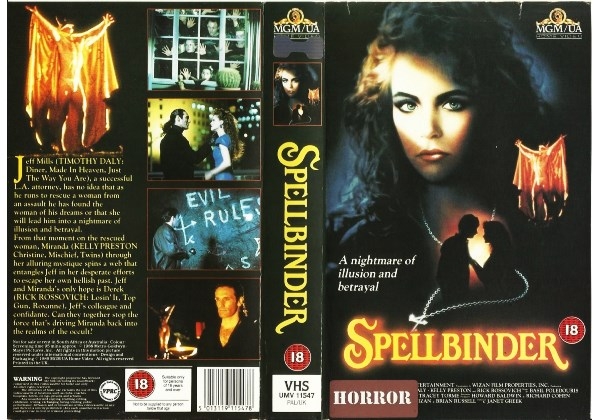
Janet Greek is best known for her TV work and for directing the first Weird Al video, “Ricky.” This is one of her few theatrical films and it’s very much of the 1988 video store get five movies for five nights era, which is by no means a bad thing.

Los Angeles attorney Jeff Mills (Tim Daly, Wings) and his friend Derek Clayton (Rick Rossovich, Top Gun) rescue Miranda Reed (the gone before her time Kelly Preston) from an abusive boyfriend who spouts Satanic epithets before running into the night. So Jeff does what any of us would — he lets her move in and take over his life. The sex is, one expects when sleeping with a witch, astounding. But then, in the cold light of day, things start to be quite frightenging.

Along the way, there are appearances by Diana Bellamy (who knows something of video store rentals with credits like Critters 3My ChauffeurD.C. CabThe Nest and Stripped to Kill), Sally Kemp (The Glove), Audra “Mrs. Roper” Lindley, Cary-Hiroyuki Tagawa (the Mortal Kombat movies) and Karen Baldwin, who along with her husband, Penguins owner Howard Baldwin, would make Pittsburgh’s second favorite movie, Sudden Death.

This movie was supposedly difficult to find for years, as the Church of Scientology kept it hidden due to Preston’s nude scenes — I call B.S. on that one, no one was keeping Mischief from anyone and that goes way further — and the fact that she plays a witch, a fact that I can more than see them being upset about.